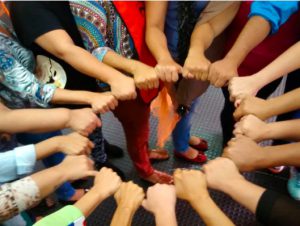
Let’s mark Canada’s 150th birthday by establishing a Department of Peace

. . DEMOCRATIC PARTICIPATION . .

An article by the Canadian Peace Initiative from Common Ground

Canada has a proud history of peacekeeping. Now, more than ever, we need Canada to take leadership and open the road to peace for the rest of the world. The call is out to establish a Department of Peace on our 150th birthday. We have the opportunity to bring a beacon of light to the fragile state of our planet, racked by war, devastation and fear.

department

This is not a far-fetched idea, but something tangible that the Canadian Peace Initiative has worked on for years. Right now, a unique opportunity is open: You can directly ask Canada to increase its capabilities in peace leadership.

Until November 25, 2016, the House of Commons is hosting the CPI’s e-petition, calling for a federal department of peace. This non-partisan petition is sponsored by MP Borys Wrzesnewskyj. It’s time for Canada to build on our international legacy of making the world less violent and more peaceful. Please support this Parliamentary Petition to create a Ministry of Peace in Canada. To sign the petition, go to http://canadianpeaceinitiative.ca/get-involved/sign-the-petition/

The Canadian Peace Initiative is a nonpartisan, non-profit organization with an aim to increase the capacity for peace-building within the Canadian federal government. Similar departments already exist in three other countries.

Canada has a greater role to play in reducing the mass suffering and death caused by war, terrorism and violence, whether domestically or around the world. Join us in demanding that our government establish a Department of Peace.

There is currently no strategic focus for peace in government, and there has rarely been a greater urgency or a better window of opportunity to consider the creation of a Department of Peace in our country. This is one of the principle aims of the Canadian Peace Initiative. We see that Canada has an important role to play in the prevention of violence and the resolution of conflicts at home and abroad.

The Canadian Peace Initiative is committed to the establishment of a Department of Peace within the Government of Canada. The Department of Peace would work towards building a new architecture of peace by establishing a culture of peace and assertive non-violence in Canada and the world. We are part of a growing international movement.

The mandate of the Minister of Peace would be to reinvigorate Canada’s role as a peacekeeper and peacebuilder as follows:

1. Develop early detection and rapid response processes to deal with emerging conflicts and establish systemic responses to post-conflict demobilization, reconciliation and reconstruction.

2. Lead internationally to abolish nuclear, biological and chemical weapons, to reduce conventional weapon arsenals and to ban the weaponization of space.

(Article continued in right column)

Question related to this article:

How can we develop the institutional framework for a culture of peace?

(Article continued from left column)

3. Implement the UN Declaration and Programme of Action on a Culture of Peace (1999) to safeguard human rights and enhance the security of persons and their communities.

4. Implement UN Resolution 1325 on the key role played by women in the wide spectrum of peace-building work.

5. Establish a Civilian Peace Service that, with other training organizations, will recruit, train and accredit peace professionals and volunteers to work at home and abroad, as an alternative to armed intervention.

6. Address issues of violence in Canada by promoting non-violent approaches that encourage community involvement and responsibility, such as Restorative Justice, Nonviolent Communication (NVC) and Alternate Dispute Resolution (ADR).

7. Support the development of peace education at all levels, including post-secondary peace and conflict studies.

8. Promote the transition from a war-based to a peace-based economy.

9. Establish processes of reconciliation with Canada’s indigenous peoples.
With a growing list of supporters, individuals and groups, our supporters now represent over two million Canadians.

“At the macro level, when the Prime Minister needs advice when making policy or program choices about peace, there is a big vacuum. There is no strategic focus for peace in government.” – Bill Bhaneja, former Senior Policy Advisor, Foreign Affairs & International Trade

“The Canadian Department of Peace Initiative is the right action at the right time… as more and more citizens and politicians recognize and act upon the human right to peace.” – The Honourable Doug Roche, former Canadian Ambassador for Disarmament

“A ministry of peace could be a place where peace-building activities could be consolidated and [where we could] develop techniques for reconciliation.” – The Honourable Lloyd Axworthy, former Minister of Foreign Affairs Canada

“Years hence, when every country has a Ministry of Peace, people will look back and ask, ‘What took us so long?’ After all, we have a ministry for almost everything else: health, education and so on. How odd that, of all things, we have no ministries of peace.” – Sakyong Mipham Rinpoche, spiritual leader, Shambhala International

“The idea of establishing a department of peace is beyond overdue. We must strive to become a beacon of hope. We must usher in a new era of conflict resolution. We know how to live harmoniously in our great country. We now need to share this knowledge with the world.” – Senator Mobina Jaffer

“The creation of a Ministry for Peace… is not the final achievement, merely the making of a road to achieve a sustainable order that would allow resolution of human conflicts without violence.” – Dr. Oscar Arias, former president of Costa Rica and Nobel Peace Laureate

Muslim Council of Elders, Anglican Church meeting ends on high note in Abu Dhabi

TOLERANCE & SOLIDARITY .

An article from the WAM Emirates News Agency

A two-day meeting of the Muslim Council of Elders and the Anglican Church ended today on a high note, with participants stressing the importance of promoting the principle of citizenship as people enjoy the same entitlements and responsibilities towards their countries and communities.

muslim-anglican
Muslim Council of Elders
(click on photo to enlarge)

They also emphasised the necessity of working on building a world that is based on understanding including the Muslim-Christian dialogue, with an aim of effectively bridging the gap that hinders the understanding of others and agreed that that the dialogue will contribute to the efforts of combating both extremism and the undermining of minority rights.

At the end of the meeting,which was co-chaired by Dr. Ahmed Al-Tayyeb Grand Imam of Al-Azhar and Chairman of the Muslim Council of Elders, and Justin Welby Archbishop of Canterbury, a joint communique was issued. The full text of the communique follows: The Delegations of both the Anglican Church and the Muslim Council of Elders in the meeting organized from 2-4 November 2016 Abu Dhabi, the United Arab Emirates.

In a historical meeting between the Episcopal/Anglican communion and the Muslim Council of Elders, chaired by the Grand Imam of Al Azhar Dr. Ahmed Al Tayyeb, and the Archbishop of Canterbury Justin Welby, took place in Abu Dhabi, the United Arab Emirates, from 2-4 November 2016 in the fourth round of meetings between elders from the East and the West titled “Towards an Integrated World”.

The two-day meeting included four sessions that focused on the dialogue between religious leaders, religious pluralism, experiences of coexistence and promoting a culture of peace. The meeting witnessed speeches from the Grand Imam of Al Azhar and the Archbishop of Canterbury on the role of religious leaders in addressing the current challenges facing the World.

The meeting included four main themes: religious pluralism, the experiences of common co-existence, the role of religion in promoting citizenship and consolidating principles of human flourishing, and the obstacles facing dialogue and co-existence and their possible remedies.

During the meeting, discussions and interventions focused on the vital role of religious leaders and adherents in peace-building, sustaining human values, disseminating religious concepts that encourage tolerance, cooperation between religious followers in combating extremism, hatred speech, and restoring hope in peoples’ hearts and minds, and empowering young people to be effective actors in their communities.

(Article continued in right column)

Question related to this article:


How can different faiths work together for understanding and harmony?

(Article continued from left column)

The participants stressed the importance of promoting the principle of citizenship as people enjoy the same entitlements and responsibilities towards their countries and communities.

We concluded with a number of recommendations as follows: – The necessity of working on building a world that is based on understanding including the Muslim-Christian dialogue, with an aim of effectively bridging the gap that hinders the understanding of others. The dialogue will contribute to the efforts of combating both extremism and the undermining of minority rights. As such, we encourage our wider communities to develop similar dialogue based initiatives as among the mostly powerful tools in consolidating societal peace in all communities.

– Organize mutual youth based meetings between Muslim and Christian university students, which embrace intellectual discourses on tolerance and coexistence.

– Produce documentary films in various languages that track, document and underline the historical and contemporary experiences of co-existence. These will be suitable materials to be broadcast or air on TV channels and other forms of social media that have been proven effective more than gatherings and meetings.

– Develop a five-year academic research program on the pillars and values of tolerance and coexistence. Researchers from both sides, Muslims and Christians, will be invited to contribute to the research and produce publications in various languages. The program will contribute to the Muslim-Christian Dialogue through articulating it with post- graduate studies in the concerned universities.

– Digitize all the Muslim-Christian dialogue initiatives, including audio-visual materials, studies, and conferences’ proceedings, and upload them on the internet, to be accessible to the participants in this conference, and other concerned people.

– Highlight and benefit from the multiple initiatives in promoting the values of tolerance, co-existence, participation, primarily the experience of the Ministry of Tolerance in the United Arab Emirates, and the experience of the House of Family in Egypt. These initiatives characterized by working on the ground through a variety of communities including work encompassing women and young generation. We affirm the work of these initiatives in establishing a model of genuine citizenship including Muslims and Christians in Egypt.

– The necessity of work promoting a culture of dialogue at different levels. We affirm the importance of respecting each other’s faith at all levels.

– We commit ourselves to work together for the common good in fighting illiteracy, poverty and disease.

– Lastly, the participants from both the Muslim Council of Elders and the Anglican Church call on all religious leaders, politicians, decision-makers and influential community leaders to encourage the values of justice, peace and cooperation for all nations and peoples regardless of the difference in religion, gender, race, or any other factor.

How can different faiths work together for understanding and harmony?

. . . Tolerance & Solidarity . . .

Zaid El-Kheir: Pope Leo XIV’s Visit to Algeria is Distinguished and Serves as a Positive Message for a More Harmonious and Stable World

Ouagadougou, Burkina Faso: Muslims and Christians United in a Collective Iftar for Peace

Spirit of Vasudhaiva Kutumbakam leads Interfaith Harmony Week

UNAOC and Religions for Peace: “A Call for Peace, the End of Wars and Respect for International Law

India: Interfaith Forum for Peace and Harmony formed in violence-hit Manipur for restoration of humanity

Working with religions for social cohesion in Chad

United Nations: Values of Compassion, Respect, Human Fraternity ‘Best Antidote to Poison of Discord, Division’, Secretary-General Tells Security Council

Kazakhstan: Congress of World and Traditional Religious Leaders to Address Social Status of Women

The Pope : “The time has come to live in a spirit of fraternity and build a culture of peace”

Tunisia: Inter-Religious Conference in Tunis On International Day for Tolerance

Lawan, Forum Task Nigerians On Religious Tolerance

Benin: Traditional kings and religious leaders pray for peace in Parakou

Different religions come together to pray for peace in Peru

Hans Küng: Towards a Global Ethic

Sabadell, Spain: Ensuring intercultural mediation and interfaith dialogue

Switzerland: Lutheran World Federation marks World Interfaith Harmony Week

UNAOC and BMW Group Announce the 10 Finalists of the Intercultural Innovation Award

Asian church leaders call for greater interfaith cooperation

Muslim World League, Patriarchate of Moscow sign cooperation deal

Geneva: Conference on ‘Promoting Peace Together’ Promoting Human Fraternity and Harmonious Co-existence through Dialogue

Fourth edition of living together in Togo

Pope hopes his Arabian trip will help Islam-Christian relations

Pakistan: Interfaith Christmas Celebration

Panel on education and peace at UN in Geneva draws faith and secular sectors together

“Peace through dialogue: Our destiny” is theme of Mindanao Week of Peace 2018

Europe’s Religious Leaders to discuss the role of multi-religious cooperation in social cohesion

Burkina Faso: Inter-religious dialogue for peace: “It is the diversity of religions that gives meaning to religion”

Brazil: Londrina to hold meeting for peace and religious tolerance

Taiwan: The sixth Buddhist-Christian talk in progress

Burkina Faso: A forum talks about peace

Historic peacebuilding program launches in Bosnia and Herzegovina

Qatar: DICID chief highlights role in spreading peace

Spain: Melilla Unesco Center will host the presentation ‘Islam: Culture of peace and non-violence’

Jewish, Christian, Muslim Leaders Feast Together for Interfaith Ramadan Break-Fast in Istanbul

Burkina Faso: Dialogue of religions and cultures: prospects for the Ouagadougou symposium

Burkina Faso: Dialogue des religions et des cultures: tenants et aboutissants du symposium de Ouagadougou

Vatican: PCID and WCC to draw up document on Education for Peace

Niger: Niamey opens a forum on the culture of peace through religious dialogue in the subregion

Reunion: Statement from the 2016 Symposium of the Interfaith Network of the Indian Ocean

Niger: Ouverture à Niamey d’un forum sur la culture de la paix par le dialogue religieux dans la sous-région

Muslim Council of Elders, Anglican Church meeting ends on high note in Abu Dhabi

There’s a Place in India Where Religions Coexist Beautifully and Gender Equality Is Unmatched

USA: Kids4Peace Boston summer programs

Beating the drum for peace: A chat with the general secretary of the South Sudan Council of Churches

A Year-long Project for “Living Together – REVE” in Niger

Un an du “Projet Revalorisation du Vivre Ensemble – REVE” au Niger

Lebanese dialogue aims to strengthen unity in diversity

– – – – Links for the following articles published prior to 2015 do not work because they were made by a version of PERL programming that is no longer supported. With three easy steps, you can find the article by its number. First, click on it before returning to this page. Your browser will say that the article is not available but in the address listed you can see that it was located at ViewArticle=xxxx where xxxx is the number of the article. Returning to this page, then click here for the listing of all years. Then click on the year that contains the number for the article you seek. It will send you to the page where you can easily search for the article by its title. – – – –

Creating Harmony in the World: Working through Our Faiths in Dialogue
Alternate Focus: Balance in Media Coverage in Middle East
The Parliament of the World’s Religions (Barcelona, Spain)
Asian Religious Leaders Urge Religions To Teach Peace
Living Faiths Together – Tool kit on inter-religious dialogue in youth work
Sharing the right to Jerusalem’s past
The Doha Pre-Forum of the United Nations Alliance of Civilizations
Peace For Childrens in Primary Schools in Iraq
Dialogue in Nigeria —  a new DVD teaching-tool for peacemakers
4th Annual International Conference on Religion, Conflict and Peace
First Religious Youth Service Project in Pakistan
World Harmony Day at the UN Highlights the Culture of Peace
Report of Diversity Talk Series 2013, in Lahore, Pakistan
Journée d’étude à Tunis: Religions et cultures au service de la paix
Workshop in Tunis: Religions and cultures in the service of peace
Out of the spotlight, Moroccan Islamic party promotes interfaith dialogue
Muslim and Christian youth come together in Mombasa, Kenya
Greeting of Peace from United Social Welfare Society, Pakistan
Interfaith Cultural Study Tour to Nepal: Pakistan Youth Explore the Mysteries of Nepal
One Nation, One Blood (Pakistan)
Teachings of Peace
Overview of the Book, Paganism an Introduction to Earth-Centered Religions
La líder de un movimiento interreligioso Dena Merriam recibirá el 31 Niwano Peace Prize
Dena Merriam, Founder and leader of The Global Peace Initiative of Women to receive the Niwano Peace Prize
Pakistan: Scholars adopt charter of peace, support coexistence

The International Society Culture of Peace: Solidarity concerts in Athens and Mytilini / Lesbos

DISARMAMENT & SECURITY .

Information taken from the website of The international Society Culture of Peace

Together with Greek refugee initiatives, trade unions and peace groups, the international Society Culture of Peace, based in Germany, is organizing solidarity concerts in Athens and Lesbos to support refugee relief efforts and peace initiatives.

zierock

Here are the programmes in Athens and Lesbos.


Programme Athens


Tuesday, 1st November 2016, 21.00h, City Plaza Hotel,
St. Acharnon 78 and Katrivanou, Athens, 104 34
Solidarity and Peace-Concert with the Afghan singers Shekib Mosadeq and
Masoud Hasanzada from Kabul/Germany. Greek music from MikisTheodorakis-Ensemble
with participation of the Peace delegation from Syria.


Wednesday, 2nd November 2016, Visits and concerts in other refugee camps in Athens
3nd November, Departure to Lesbos


Programme in Mytilene/Lesbos:


Friday, 4th November 2016, Visit of the refugee camps around Mytilene.
19.30h, Hotel Lesvion, Mytilene, “Refugee crisis or Political Crisis ?”,
Public discussion about causes of flight. With the peace delegation from
Syria, Heike Hänsel, (Member of German Parliament), Leo Gabriel
(Journalist, Austria), Members of the local community and Siniparxi in Mytilene.
Moderation by Henning Zierock (Society Culture of Peace),
Music by the Afghan singers Shekib Mosadeq, Masoud Hasanzada.
Songs from Mikis Theodorakis


(Article continued in right column)

Question for this article:

The refugee crisis, Who is responsible?

How can there be a political solution to the war in Syria?

(Article continued from left column)

Press meeting:
Saturday, 5th November 2016, 11.00h in the Hotel Lesvion, Mytilene
14.00h Manifestation, Sappho Square, “Overcoming the causes of flight –
We must win peace not war!” with international speakers and music.
Center of Mytilene, “Message from the Sea” , by boat.


Sunday 6th November 2016 visit of historical places around Mytilene
12.00h, Monument of Liberty. March to the Port of Mytilene in
commemoration of the dead refugees in the Aegean Sea. Appeal from Lesbos
for a “Culture of Peace and new relation-ship between the peoples”


Contact: Henning Zierock, Gesellschaft Kultur des Friedens, Tel. 0049 172 7406310
email: info@kulturdesfriedens.de, www.kulturdesfriedens.de


Monday, 7th November, 18.00h at the Press Center ESIEA (organized by
www.peaceinsyria.org ) with participation of leading members of the
 Syrian Civil Society,Contakt: Leo Gabriel, email:lgabriel@gmx.net


Panel discussion
”TOWARDS PEACE THROUGH A NEW CONSTITUTION IN SYRIA ?”
Given the humanitarian disaster in and around Syria and the failure of
the international community of States to produce a sustainable peace
some prominent members of the Syrian civil society got together in
Austria and elaborated the ground for a future constitutional process in
Syria.


In the context of a tour of concerts for the refugees in Greece
organized by the German based NGO Cultures of Peace the international
initiative www.peaceinsyria.org will present the results of this
conference in order to promote in Greece a Constitutional Assembly for
Syria in the upcoming months.


Speakers: Mouna Ghanem from Damascus, Madjoleen Hassan from Latakia,
Sheruan Hassan from Rojava, Evangelis Pissias from Greece and Leo
Gabriel from Austria.


Music by the Afghan singers Shekib Mosadeq, Masoud Hasanzada.
Songs from Mikis Theodorakis
Date and time: Monday, 7th November 2016 at 18.00h
Place: ESIEA (Trade Union of Journalists); Akadimias Str. No 20 (Metro
Syntagma) Athens

(Thank you to Henning Zierock for sending this to CPNN)

English bulletin November 1, 2016

RENEWABLE ENERGY IS ON THE MOVE!

Renewable sources of electricity overtook coal last year to become the largest source of installed capacity in the world, according to the International Energy Agency.

A recent graph is spectacular showing how the cost of solar energy has come down while the volume deployed has gone up. In 1975 a silicon solar energy module cost over $50 per watt, while now it is less than $1 per watt. The milliwatts installed have risen from 1 to 115,000! Since 2000 the deployment of solar has doubled seven times.

And the trend promises to continue. Dubai recently received a bid for solar installations that would produce electricity at 3 cents per kilowatt hour, four times less than the average price paid for residential electricity in the United States. And the Middle East is not alone. Projects with similar low rates are reported from Mexico and China.

Last year, for the first time, global investment in renewable energy surpassed investment in fossil fuels. This year’s graph shows $286 billion dollar investment in renewable energy (mostly solar panels and wind mills) compared to $130 billion for fossil fuels. Developing as well as developed countries are involved, including China (over $100 billion), India (over $10 billion), South Africa, Mexico, Chile, Morocco, Turkey and Uruguay (all over $1 billion).

To some extent the change is simply driven by the profit motive of investors. Presumably that is the case for the great investment by China. The Chinese are not only making the largest investment in the world (by far!) but they are advancing renewable energy in other regions besides their own, for example, in Latin America.

At the same time, sometimes the investment comes from small startup companies such as the Spanish Renewable Energy Cooperative
Also the change is due to political decisions of investors. For example, Roman Catholic institutions around the world have recently decided to divest from fossil fuel extraction, joining a large list of religious institutions that have made the same decision.

In some cases, the political decision is national. Switzerland has just adopted a new law which phases out nuclear power and puts the emphasis on cutting energy consumption and increasing the production of renewable energy. The generation of non-hydro renewable power is to grow from 1.7 TWh last year to 11.4 TWh by 2035 (nearly tenfold).

Cities are also involved. This is especially important since, according to the International Renewable Energy Association, cities accounting for 65 per cent of global energy use and 70 per cent of man-made carbon emissions. In the United States, Boulder, Colorado, announced that the community will move to 100% renewable electricity by 2030, while Utah’s Park City has committed to to the same target by 2032. Meanwhile, Los Angeles’ City Council has directed its staff to develop a plan for 100% renewable energy.

There are some surprising technical advances involved in the shift to renewable energy. For example, the government of France has decided to invest in 1000 kilometers of autoroutes composed of solar panels!

Despite the fact that the climate accord negotiated by the Member States of the UN in Paris does not promise to solve the problem of global warming, the growing progress in renewable energy may ultimately solve much of the problem.


SUSTAINABLE DEVELOPMENT

renewable

Urban leadership in the US for renewable energy

WOMEN’S EQUALITY


India: Buddhist nuns bike Himalayas to oppose human trafficking

DEMOCRATIC PARTICIPATION


El Salvador: March rejects ongoing violence and calls for a culture of peace

HUMAN RIGHTS


40,000 Create Human Chains to Protest Violence in Honduras

TOLERANCE AND SOLIDARITY


Greece: Union pushes for access to education for all refugee children

FREE FLOW OF INFORMATION


Goma, Democratic Republic of Congo: The commemoration of the International Day of Peace

DISARMAMENT AND SECURITY


March of Hope gathers 20,000 in historic Jerusalem rally

EDUCATION FOR PEACE


From pacifism to nonviolence in Berlin

International Women’s Boat to Gaza

DISARMAMENT & SECURITY .

An article by Mairead Maguire for Transcend

I was a participant onboard the Zaytouna-Oliva boat | 29 Sep-5 Oct 2016.

26 Oct 2016 – A few weeks ago, the US government agreed to give Israel $38 billion dollars, the largest military funding package the U.S. has given any nation.  This $38 billion in military and other type of Aid will be used to imprison the Palestinians of Gaza, and continue Israel’s military occupation, and imposition of an apartheid state, upon the Palestinian people.

mairead
Click on photo to enlarge

This money will be used in the training fields of Israeli military, which are in Gaza, where military experiments are done, using US military weaponry, by the Israeli Occupation Forces.  The U.S. military and government is complicit in the crimes against the people of Gaza and the Palestinian occupied territory by the use of military hardware given by USA and by the training that Israelis give to Americans and USA gives to Israel.  It is also estimated that some 70% of European humanitarian aid to Palestine ends up in Israeli pockets.

Gaza continues to suffer from the continuing Israeli blockade, naval and land, and this 25-mile-long tiny strip, 5 miles wide, with l.9 million people, living in it, is a brutal blockade and Israel controls everything including electricity, food, etc.

Indeed, everything that comes into Gaza comes through Israeli hands.  Gaza’s only airport was completely destroyed in 2002 by Israeli jets and ground forces.  Egypt continues to be a part of this blockade as they have blocked Gaza’s southern border; and Egypt continues to receive USA military funding.  Medical authorities have reported that the time for operations in Gaza now goes up to 2025 as so many are awaiting health care, and the increasing issues around food, water, sewage, electricity, all of these mounting problems have led the U.N. to declare in their latest Report, that by the year 2020 Gaza will be uninhabitable.  What hope is there for the Palestinians of Gaza, the vast majority of whom are young people?

In order to give hope to the people of Gaza by showing solidarity and support the Women’s Boat to Gaza sailed in September 2016. Also we sailed in order to challenge this illegal and immoral blockade and occupation of Palestine by Israel, and draw international attention to the fact that under Geneva Conventions it is illegal to punish civilians, which is what Israeli government policies continues to do.

The Women’s Boat to Gaza set sail from the Spanish Port city of Barcelona (Barcelona is twinned with Gaza) in mid- September 2016.  The three legs of the trip were 1715 miles from Barcelona to Ajaccio, Corsica, France and then down to Messina in Sicily, Italy. 

It was hoped to have two boats but when one developed engine trouble in Barcelona, the other 50’ sailing boat, Zaytouna-Oliva, continued alone.  At all Ports the women were greeted and hosted by mayors, officials, and supporters of the Free Palestine Movement.   Over 40 women from around the world flew to Messina in hopes of being able to sail to Gaza.

I joined the boat in Messina, and was grateful to be chosen as one of the 13 women from thirteen countries, being finally chosen to sail to Gaza.   It was sad for those of us sailing to leave behind so many wonderful women due to not enough boats to sail, but it is hoped the Palestinian Coalition will be able to get more sailings to accommodate those wishing to go on a future occasion.   The 13 chosen participants included Ann Wright, (boat leader) the captain and two crew, two Al Jazeera journalists, and women from USA, Ireland, Russia, UK, Spain, New Zealand, Norway, Sweden/Chile, Malaysia, South Africa, Australia, and Algeria.

The third leg of the journey from Messina to Gaza was almost 1000 miles and a nine-day journey.  On 29th September 2016, we set sail from Messina, Sicily, after a wonderful reception from the mayor, the Muslim community, and many Palestinian friends in Messina.

(Article continued in right column)

Question related to this article:

Presenting the Palestinian side of the Middle East, Is it important for a culture of peace?

(Article continued from left column)

The first few days sailing the weather was rough and many of us were seasick, but several days into the journey we had got our sea-legs and busied ourselves helping with the tasks to be done such as cooking, reporting, night watches with the crew, etc.  We shared our stories and held nonviolence training.   It was a wonderful experience getting to know the women whose courage was inspiring. Their love for the Palestinian people and their freedom was very deep.  Unfortunately, some 400 miles from Messina, with some 600 miles to go, we had problems with the boats rigging.  An appeal to friends in Crete resulted in a boatful of people coming out to meet us, bringing many gifts of food, and four men to fix the rigging!  This was for me one of the most moving experiences of the journey, and it proved yet again, the magnificence of the human spirit. Around 20 men and women answered our call for help and came to our aid, and all for the people of Gaza.  After the men fixed our boat rigging, we passed greetings to our rescuers from Crete and sailed in a happy and hope filled mood towards Gaza.

On Wednesday 5th October, we were contacted by the Israeli navy by phone.  A few hours earlier all communications via our own phones were cut off.  The Israeli navy communicator told Captain Madeleine that we were nearing the 20-mile military Israeli security zone and were breaking Israeli law.  They said if we did not turn back or agree to be escorted to Ashdod, they would confiscate our boat and take us to Israel.

However, we kept sailing towards Gaza.   We saw several Navy military ships on the horizon.  At 6 p.m., a Zodiac boat came alongside our boat.  There were 30 Israeli sailors including Israeli women sailors who were the first to come on board our boat. 

They were not in combat gear.  They wore baseball caps, and long sleeved jerseys.  In 2010,   I had been on the Rachel Corrie Irish/Malaysian boat, which was part of the Freedom Flotilla and when we were boarded by Israeli sailors, they were in combat gear, with rifles, and sniffer dogs, and we were handcuffed and forcibly taken to Israel.  I was surprised when this different approach was used to confiscate our boat, the Zaytouna.  In 2010, on the Mavi Marmara, the Israelis murdered nine people, and subsequently a 10th person died as 50 people were wounded.  Therefore, the treatment of our women’s boat to Gaza participants was very different from what happened on previous ones where I had travelled.

On the Zaytouna, when the Israeli navy sailors confiscated our boat, took us under protest against our will to Israel, arrested, held us for several days without contact with our families, and deported us for ten years, it was all completely illegal under international law. However, it is sad to report that no governments or international bodies have taken up our case for being hijacked, and again the Israeli government has been allowed to break international laws.

All the women were deeply saddened as we knew many people in Gaza were preparing for our visit, and yet again Israel was denying our entry into Gaza. So as we watched the coastline of Gaza in complete darkness and then the coastline of Israel fully lit up against the night sky, we were again witnessing the injustice and unfairness of the Israeli policies against the Palestinians. 

With this experience, many of us committed in our hearts to continue our support for the Palestinian people’s ongoing work to break the blockade and end the occupation. We also saw just off the coast of Gaza two huge gas rigs fully lit up and whose gas is piped to Israel. Yet Gaza has only a few hours of light, as Israeli bombings have destroyed most of its electricity and sewage infrastructures.

When we reached Ashdod, Israel, after six hours sailing, we were processed by Israeli security and searched, taken to Prison and released two days later.   All the women on board the Zaytouna, now have a ten-year deportation order. As this is my 4th time being given a 10-year deportation order, it will be 40 years before I can return to Israel or get into Palestine.  This thought reminds me that there are over 7 million Palestinian people who cannot return to their country, and this is why it is so important to campaign for the right to return for the Palestinian people.

I would like to thank the Freedom Flotilla Coalition who gave us the opportunity to participate on the journey to Gaza.  Their work of joining in solidarity with the people of Gaza is so important and I thank them for all they do.

To the Palestinian people of Gaza, please keep your hopes high and believe that freedom and peace will come. Thank you for your perseverance and ongoing inspiration to us all.

UN votes to outlaw nuclear weapons in 2017

DISARMAMENT & SECURITY .

An article by the International Campaign to Abolish Nuclear Weapons

The United Nations today [October 14] adopted a landmark resolution to launch negotiations in 2017 on a treaty outlawing nuclear weapons. This historic decision heralds an end to two decades of paralysis in multilateral nuclear disarmament efforts.

icanw

At a meeting of the First Committee of the UN General Assembly, which deals with disarmament and international security matters, 123 nations voted in favour of the resolution, with 38 against and 16 abstaining.

The resolution will set up a UN conference beginning in March next year, open to all member states, to negotiate a “legally binding instrument to prohibit nuclear weapons, leading towards their total elimination”. The negotiations will continue in June and July.

The International Campaign to Abolish Nuclear Weapons (ICAN), a civil society coalition active in 100 countries, hailed the adoption of the resolution as a major step forward, marking a fundamental shift in the way that the world tackles this paramount threat.

“For seven decades, the UN has warned of the dangers of nuclear weapons, and people globally have campaigned for their abolition. Today the majority of states finally resolved to outlaw these weapons,” said Beatrice Fihn, executive director of ICAN.

Despite arm-twisting by a number of nuclear-armed states, the resolution was adopted in a landslide. A total of 57 nations were co-sponsors, with Austria, Brazil, Ireland, Mexico, Nigeria and South Africa taking the lead in drafting the resolution.

The UN vote came just hours after the European Parliament adopted its own resolution on this subject – 415 in favour and 124 against, with 74 abstentions – inviting European Union member states to “participate constructively” in next year’s negotiations.

Nuclear weapons remain the only weapons of mass destruction not yet outlawed in a comprehensive and universal manner, despite their well-documented catastrophic humanitarian and environmental impacts.

“A treaty prohibiting nuclear weapons would strengthen the global norm against the use and possession of these weapons, closing major loopholes in the existing international legal regime and spurring long-overdue action on disarmament,” said Fihn.

“Today’s vote demonstrates very clearly that a majority of the world’s nations consider the prohibition of nuclear weapons to be necessary, feasible and urgent. They view it as the most viable option for achieving real progress on disarmament,” she said.

Biological weapons, chemical weapons, anti-personnel landmines and cluster munitions are all explicitly prohibited under international law. But only partial prohibitions currently exist for nuclear weapons.

Nuclear disarmament has been high on the UN agenda since the organization’s formation in 1945. Efforts to advance this goal have stalled in recent years, with nuclear-armed nations investing heavily in the modernization of their nuclear forces.

Twenty years have passed since a multilateral nuclear disarmament instrument was last negotiated: the 1996 Comprehensive Nuclear-Test-Ban Treaty, which has yet to enter into legal force due to the opposition of a handful of nations.

(Article continued in right column)

Question related to this article:

Can we abolish all nuclear weapons?

(Article continued from left column)

Today’s resolution, known as L.41, acts upon the key recommendation of a UN working group on nuclear disarmament that met in Geneva this year to assess the merits of various proposals for achieving a nuclear-weapon-free world.

It also follows three major intergovernmental conferences examining the humanitarian impact of nuclear weapons, held in Norway, Mexico and Austria in 2013 and 2014. These gatherings helped reframe the nuclear weapons debate to focus on the harm that such weapons inflict on people.

The conferences also enabled non-nuclear-armed nations to play a more assertive role in the disarmament arena. By the third and final conference, which took place in Vienna in December 2014, most governments had signalled their desire to outlaw nuclear weapons.

Following the Vienna conference, ICAN was instrumental in garnering support for a 127-nation diplomatic pledge, known as the humanitarian pledge, committing governments to cooperate in efforts “to stigmatize, prohibit and eliminate nuclear weapons”.

Throughout this process, victims and survivors of nuclear weapon detonations, including nuclear testing, have contributed actively. Setsuko Thurlow, a survivor of the Hiroshima bombing and an ICAN supporter, has been a leading proponent of a ban.

“This is a truly historic moment for the entire world,” she said following today’s vote. “For those of us who survived the atomic bombings of Hiroshima and Nagasaki, it is a very joyous occasion. We have been waiting so long for this day to come.”

“Nuclear weapons are absolutely abhorrent. All nations should participate in the negotiations next year to outlaw them. I hope to be there myself to remind delegates of the unspeakable suffering that nuclear weapons cause. It is all of our responsibility to make sure that such suffering never happens again.”

There are still more than 15,000 nuclear weapons in the world today, mostly in the arsenals of just two nations: the United States and Russia. Seven other nations possess nuclear weapons: Britain, France, China, Israel, India, Pakistan and North Korea.

Most of the nine nuclear-armed nations voted against the UN resolution. Many of their allies, including those in Europe that host nuclear weapons on their territory as part of a NATO arrangement, also failed to support the resolution.

But the nations of Africa, Latin America, the Caribbean, Southeast Asia and the Pacific voted overwhelmingly in favour of the resolution, and are likely to be key players at the negotiating conference in New York next year.

On Monday, 15 Nobel Peace Prize winners urged nations to support the negotiations and to bring them “to a timely and successful conclusion so that we can proceed rapidly toward the final elimination of this existential threat to humanity”.

The International Committee of the Red Cross has also appealed to governments to support this process, stating on 12 October that the international community has a “unique opportunity” to achieve a ban on the “most destructive weapon ever invented”.

“This treaty won’t eliminate nuclear weapons overnight,” concluded Fihn. “But it will establish a powerful new international legal standard, stigmatizing nuclear weapons and compelling nations to take urgent action on disarmament.”

In particular, the treaty will place great pressure on nations that claim protection from an ally’s nuclear weapons to end this practice, which in turn will create pressure for disarmament action by the nuclear-armed nations.

Do women have a special role to play in the peace movement?


The original draft of the UN Culture of Peace resolution addressed the linkage between women’s equality and the culture of peace:

“As recognized by the Fourth World Conference on Women (Beijing 1995), there is an inextricable linkage of peace with equality between women and men. Only this linkage of equality, development and peace can replace the historical inequality between men and women that has always characterized the culture of war and violence. As pointed out at the Conference, it is necessary to promote women’s political and economic empowerment and equal representation at every level of decision-making so that women’s experience, talents, visions and potential can make their full contribution to a culture of peace.

CPNN has carried many articles on the special role of women in the peace movement. Articles since 2015 include:

Lifetime premieres Peace Peace Now Now, a documentary series about women’s resistance in Latin America

‘Equal Women: Transforming Territories,’ a photographic exhibition that pays tribute to the organizations working for women’s rights in Colombia

The Struggle for Peace of Syrian Women, ICIP Peace in Progress Award 2025

Essaouira: The “Warriors of Peace” nominated for the Nobel Peace Prize 2025

These Israeli and Palestinian women who do not want to decide between Israel and Palestine

International Women’s Day: Women’s International League for Peace and Freedom

Proposal to the UN Summit of the Future from the International Alliance of Women

The women leading the fight for peace in Palestine: Women in Black

Graça Machel: Enhancing women’s participation in peacebuilding is key to building a peaceful world

Women peace-makers call for a holistic and sustainable peace

Int’l Peace and Humanity Conference commences in Amman

Women’s Peace Leadership Programme: Bojana Mumin, Bosnia and Herzegovina

Morocco: Launch from Essaouira of the Women’s World Forum for Peace

Vatican: Women raise their voices for peace

World Radio Day: Celebrating radio as a tool for feminist peace

Russian mothers oppose the war

Women from Chile and Bolivia meet in La Paz to build a “neighbor friendship

The Search for the Exceptional Women of Peace Award: A Reflection

Call for Applications: Strengthening Young Women Peacebuilders’ Capacity in Complex Crises

UN Women : Five young women on the forefront of climate action across Europe and Central Asia

Phyllis Kotite has passed away

Mexico: Women who weave communities of peace in Chihuahua

Mexico City successfully holds the World Forum of Cities and Territories of Peace

Israeli and Arab women demand peace between Israelis and Palestinians

Breizh, France: Women of Peace

Belarus: Women at the forefront of human rights struggle

Spain: First-person testimonies: this is how we fight for gender equality by activism and participation

Civil society in northeast Syria promotes women’s role to fight extremism

Women’s leadership in the struggle for Palestinian freedom

Female victims and ex-combatants graduated as peace activists in Antioquia, Colombia

Mexico: SSPC meets with 217 Networks of Women Peacebuilders

Sinaloa, Mexico: III International Congress on women and the culture of peace

The International Network of Latin American and Caribbean Women is inaugurated

United Nations: ‘Women Rise for All’ to shape leadership in pandemic response and recovery

Philippines: Women’s leadership in the time of pandemic

Webinar and Video: Young Women Fighting for Our Planet

From Nazra for Feminist Studies (Egypt): A Letter of Solidarity; Together, We Stand in Solidarity..To Build

Chile changing: transgender student leader lends voice to renewed protests

Thousands of women march in Chile again

Nobel Women’s Initiative: A strategic approach to climate action

ASEAN insists on women’s role in peacekeeping

Voices of Afghan women ‘must be heard at the table in the peace process and beyond’ UN deputy chief tells Security Council

Women Are Critical to Building a Lasting Peace in Afghanistan

Venezuela. The construction of peace must have the quality of feminism

Colombia: Scars that build peace

Emerging Feminist Leaders Are Claiming Their Space: Follow Us to Liberia!

The women who helped bring down Sudan’s president

World animal protection: Five amazing Sea Warrior women tackling ghost gear on a global scale

Over 250 prominent women leaders call on President Trump and Chairman Kim to end the Korean War

Ocasio-Cortez Delivers Powerful Call for Justice as Third Women’s March Kicks Off in New York

Ethiopian President Calls to Work for Peace and Security

Women for Yemen Network: Joint Statement in Advance of the Yemeni Peace Talks in Sweden

Claudia Sheinbaum, the first woman elected by popular vote to govern Mexico City

Madrid: Women close the Anti-Violence Forum with a message of peace

Voices from 62nd session of the Commission on the Status of Women (CSW62)

What Women Bring to the Constitution-Writing Table

Women take to the streets as the world marks International Women’s Day

India: ’Life: A Mystical Journey’- A Gathering of 500 Women Leaders To Explore Spirituality as Tool For Peace And Empowerment

Women’s March protests across America against President Trump

16 Days of Activism: Meet Felicity Ruby, Australia

16 Days of Activism: Meet Rasha Jarhum, Yemen

16 Days of Activism: Meet Bertha Zúñiga Cáceres, Honduras

16 Days of Activism: Meet Anne Marie Sam, Canada

16 Days of Activism 2017: Meet Dina Meza, Honduras

16 Days of Activism 2017: Meet Marcela Fernandez, Colombia

16 Days of Activism 2017: Meet Amanda Ghahremani, Canada

16 Days of Activism 2017: Meet Ketty Nivyabandi, Burundi

16 Days of Activism 2017: Meet Mariama Sonko, Senegal

Egypt: Women’s Conference in Gharbia organizes “Women’s Peacemaker” conference

Photos: A look at International Women’s Day marches around the world

Nonviolent Peaceforce in South Sudan: The extremes of the human spirit

A Tribute to Woman Peacemaker Joan Bernstein

USA: “Day without a woman”

Amnesty: 8 women show us why International Women’s Day is the day to declare: We won’t wait for our rights!

Ocho mujeres nos muestran por qué el Día Internacional de la Mujer es el día para proclamar: ¡No vamos a esperar más por nuestros derechos!

Amnesty: Huit portraits de femmes montrent qu’il faut profiter de la Journée internationale des droits des femmes pour affirmer : «Nous n’attendrons pas le respect de nos droits!»

ICC: Meet the justice activists breaking the mold

Women Unite for Global Action on Peacebuilding: The Women’s International “Peace Meet” (Jalgaon, India)

USA: To Counter Trump, Women Are Mobilizing for Massive March on Washington

Beirut Int’l Conference Highlights Women’s Participation in Peace, Security Initiatives

Colombia Includes Gender Focus for a Stable, Lasting Peace

Peace in Colombia Is Impossible Without Us, Women Declare

Bahrain Women Association conducted a workshop on peace for Sitra Alahleya Society – Women club

Book review: Hilary Klein’s Compañeras: Zapatista Women’s Stories

Women in Israel Fasting to Mark Gaza Anniversary

10 More Ways Syrian Women Are Building Peace and Democracy

A century of women working for peace

ICC/Judges – Women at the top at the International Criminal Court

Una argentina presidirá la Corte Penal Internacional

Women Leaders Call for Mainstreaming Gender Equality in Post-2015 Agenda

ONU Mujer: Bachelet destacó participación de mujeres en puestos de poder

Mobile Technology a Lever for Women’s Empowerment

– – – – Links for the following articles published prior to 2015 do not work because they were made by a version of PERL programming that is no longer supported. With three easy steps, you can find the article by its number. First, click on it before returning to this page. Your browser will say that the article is not available but in the address listed you can see that it was located at ViewArticle=xxxx where xxxx is the number of the article. Returning to this page, then click here for the listing of all years. Then click on the year that contains the number for the article you seek. It will send you to the page where you can easily search for the article by its title. – – – –

Gather the Women
Global Week for Womens Rights
Are Women’s Human Rights Shared Values of the African Union?
South Sudanese women take the lead in local peace building
Fundan Premio Nacional de Paz 2012 a Ana María Romero de Campero en Bolivia
National Peace Prize for 2012 Awarded to Ana María Romero de Campero in Bolivia
Ambonese activist wins 2012 Saparinah Sadli Award [Indonesia]
Sahel: La pleine participation des femmes est essentielle a la résolution des conflits et au redressement économique
Sahel Conference says women’s full participation essential to conflict resolution and economic recovery
Peace & Human Rights Training for Women at Nagpur, India
Consultation Identifies Ways to Support a Culture of Peace and Non-Violence (Fiji)
Women take ownership of Great Lakes peace efforts
Colombia lista para presentar edición 22 del festival  Mujeres en Escena por la Paz
Colombia prepares for 22nd Festival, Women on Stage for Peace
Les Femmes de Mali S’engagent pour la Paix
The Women of Mali Engage for Peace
Pak-Afghan women eye sustainable peace in region
MPP’s Much Ado About Women
Samba-Panza’s election represents a bright future for African women in politics
Announcing: Women of Congo Speak Out!
Hommage à nos femmes palestiniennes
Homage to our Women of Palestine
Dublin: les femmes, véritable pilier d’un avenir durable
Dublín: las mujeres, clave para el futuro desarrollo sostenible
Dublin: Women central to sustainable future development
Sister-to-Sister 2014 kicks off in Ottawa!
Moving beyond conflict to ‘culture of peace’: Linda Gbowee to the United Nations
Ouverture du premier Congrès international féminin à Oran
Dr. Widad Akrawi Receives the Pfeffer Peace Award
Subscribe to meet remarkable women activists during 16 Days of Activism
Women working for peace in Israel

<

Protecting women and girls against violence, Is progress being made?


Violence against women is an intrinsic aspect of the culture of war. As stated by Mary Robinson, former UN High Commissioner for Human Rights, women are not just victims of war – they must play an essential part in building peace. Here are a few excerpts from an article she published in the New York Times and which is now available on the website of The Elders.

“In war zones, rape is a weapon. We cannot claim to be serious about stopping war crimes if we do nothing to prevent and punish these heinous acts – and if women are not part of the solution every step of the way. . . . women – and men, too – are at risk of sexual abuse wherever gunfire rattles and militias roam. Like other forms of violence, sexual violence shatters people, families, and livelihoods. It leaves behind a legacy of trauma, making it more likely that the next generation will continue fighting, killing, and allow sexual violence to fester.

A history of modern warfare reveals sexual abuse at almost every turn: according to the United Nations, up to 250,000 Rwandan women were sexually assaulted in three months of genocide in 1994. In Yugoslavia, 60,000 women were abused between 1992 and 1995. Sierra Leone and Liberia jointly witnessed up to a hundred thousand cases over the course of a decade in the 1990s. . . .

Mindsets are evolving. The United Nations Security Council has passed several resolutions recognising the need to include women in peace processes. We need to push the agenda further at every opportunity. . .

The greater aspiration is that societies in conflict will know that war crimes will not go unpunished and that transitional justice can be made available to deal with these abuses swiftly. The stigma will shift from the victims to the criminals. If rape is no longer deemed a warrior’s accepted privilege, we will be one step closer to peace.”

CPNN has carried many articles on progress being made to stop violence against women, especially related to the culture of war. Articles since 2015 are listed here.

United Nations: International Women’s Day and Commission on Status of Women

International Women’s Day 2026: Rights. Justice. Action. For ALL Women and Girls.

South Africa’s G20 Women’s Shutdown – a turning point for ending gender-based violence and femicide

Violence Against Women: West Africa at a Time of Decisive Choices

Search for Common Ground supports midwife care in Afghanistan

Rwanda: Positive masculinity as a weapon of peace

A global analysis of violence against women defenders in environmental conflicts

Mexico: Tlaxcala has first place in the list of Women Builders of Peace

Hidalgo, Mexico: Networks of Women Peace-Builders created in Apan, Tula and Pachuca

Bolivia Enacts Law on Femicide, Infanticide & Rape

Mexico: The Alamo City Council promotes a culture of peace among women

Thousands demonstrate in France to stop violence against women

United Nations : UNiTE by 2030 to End Violence against Women

Black-clad women rally in Australia to demand gender violence justice

Over a Million Mobilize for International Women’s Day in Latin America

In Malawi, Chief Theresa Kachindamoto Fights against Child Marriage

Dominican Republic: Government takes action to eliminate violence against women and girls

San Luis Potosi, Mexico: Teachers of the Municipal Educational System Trained against Gender Violence

PAYNCoP Gabon Works with UNESCO to Combat Covid19 Fake News and Violence Against Women

A day without us’: What was the National Women’s Strike in Mexico and why did it take place?

The world went orange: Putting a spotlight on ending violence against women

Honouring the Me Too Movement with the 2019 Sydney Peace Prize

Nicaragua: Peace Commissions contribute to the prevention of violence against women

Dominican Republic: Youth and the United Nations promote a culture of peace

Bolivia: #NiUnaMenos demands prevention to stop violence against women

Argentina: Thousands of women march to the Plaza de Mayo to demand justice for Lucía Pérez

Israeli woman hold mass rallies to protest rising violence against women

France: More people marched in the demonstration #NousToutes than in the demonstration of the “Yellow Jackets”

Google’s ‘#metoo’ moment: Workers walk out over women’s rights

The Nobel Prize for Peace 2018

Morocco and Senegal promote gender equality through media

Mexico: Tlalnepantla Continues Work to Eradicate Gender Violence

Education unions join in the global call to end school-related gender-based violence

International Day for the Elimination of Violence against Women marked around the world

Latin America: What are other countries doing to combat femicide?

Dominican Republic, San Francisco de Macorís: Men’s march to combat violence against women

Ecuador: International Conference on Gender Violence

USA: The ‘Me Too’ Campaign Was Created By A Black Woman 10 Years Ago

Making Waves: Local radio transforming perceptions of gender-based violence in Africa

Creating a new normal, students across Bangladesh say no more sexual harassment

Brazil: Government of Espirito Santo launches movement to stop violence against women

Feminist icons join bid to upend Congo’s rape capital reputation

Mexico: Authorities agree on actions to prevent violence against women

Gravatá, Pernambuco, Brazil: Combating violence against women now in the classroom

Eliminating sexual violence in conflict through the International Criminal Court

Mozambique: Taking steps on the long road to ending violence against women

UN Women: 16 days of activism against gender violence

Mexico: Need to promote a culture of peace, to end violence against women: CEAMEG

México: Necesario promover una cultura de paz, para terminar con violencia contra las mujeres: CEAMEG

Enough is enough: Oxfam seeks to end violence against women and girls once and for all

Guatemala: 28 years of struggle for the life, dignity and rights of women survivors of genocide

India: Buddhist nuns bike Himalayas to oppose human trafficking

Hundreds of Thousands Join Saudi Women-Led Campaign to End Male Guardianship in the Kingdom

Peru: #NiUnaMenos: 50,000 protest violence against women in Lima

No Means No Kenya

Amnesty International: 10 ways we’ve defended women’s rights in the past year

PORTRAIT: Dr. Denis Mukwege, the man who repairs women in eastern DRC

“A Girl in the River-The Price Of Forgiveness”: A Pakistani Film shedding light on the Taboo of our society

Battered women support services commemorates Prevention of Violence Against Women Week

– – – – Links for the following articles published prior to 2015 do not work because they were made by a version of PERL programming that is no longer supported. With three easy steps, you can find the article by its number. First, click on it before returning to this page. Your browser will say that the article is not available but in the address listed you can see that it was located at ViewArticle=xxxx where xxxx is the number of the article. Returning to this page, then click here for the listing of all years. Then click on the year that contains the number for the article you seek. It will send you to the page where you can easily search for the article by its title. – – – –

Ending Violence against Women: Has Your Government made progress?

A Life Free of Violence Is Our Right!
Challenges to Civil Liberties in Connecticut
Celebramos la reunificación de niña migrante salvadoreña con su abuela en la Ciudad de Chihuahua.
Celebrating the reunion of a Salvadoran migrant girl with her grandmother in the City of Chihuahua
Las Abuelas de Plaza de Mayo reciben el premio Houphouët-Boigny de fomento de la Paz
Plaza de Mayo Grandmothers received Félix Houphouët-Boigny Peace Prize at UNESCO Headquarters
Les Grand-meres de la Place de mai ont recu le Prix Felix Houghouet-Boigny a l’UNESCO
16 Jours d’activisme contre la violence basée sur le genre
16 Días de activismo contra la violencia de género
16 Days of Activism against Gender Violence
La mujeres de hoy
The women of today
Women and Men Fight Domestic Violence Together
The Day of the Girl Has Come
Join us for 16 Days of Activism to End Gender Violence!
ICC Prosecutor Hails Shift in Fight Against Sexual Violence
Inició el Seminario Internacional por una Cultura de Paz: Cómo Suprimir la Violencia Contra las Mujeres
International Seminar for a Culture of Peace:  How to Stop Violence against Women [Mexico]
Tunisie: Inauguration du premier centre pilote d’accueil des femmes victimes de la violence
Tunisia: Inauguration of first shelter for women victims of violence
SEPM promove campanha educativa “Blitz da Paz” nesta quinta-feira (Brasil)
SEPM promotes educational campaign “Peace Blitz” this Thursday (Brazil)
One Billion Rising: Playwright Eve Ensler Organizes Global Day of Dance Against Sexual Abuse
When Peacemakers Become Perpetrators: Kathryn Bolkovac Introduces The Whistleblower at the UN
The Advocates for Human Rights Call for Submissions
Firman acuerdo por una cultura de paz en Sinaloa (México)
Agreement signed for a culture of peace in Sinaloa, Mexico
UN Women welcomes Agreed Conclusions at the Commission on Status of Women
Violence à l’encontre des femmes: un problème mondial de santé publique d’ampleur épidémique
Informe de la OMS destaca que la violencia contra la mujer es un problema de salud global de proporciones epidémicas
WHO report highlights violence against women as a global health problem of epidemic proportions
Change the date: combatiendo la violencia sobre las adolescentes
Change the date: fighting violence against young women
Female Circumcision Declining in Africa, but 30 Million Girls Still at Risk
Saudi Arabia passes historic domestic abuse legislation
Fighting the stigma facing Afghanistan’s women police
Voices against Violence
States Should Use ICC System to Eliminate Grave Crimes against Women
Global Campaign to End Female Genital Mutilation/Cutting (FGM/C)
Afghanistan: President Karzai blocks law protecting perpetrators of domestic violence
Take action to Orange your day: End violence against women
Europe Treaty on Violence Against Women to Take Effect
Entra en vigor tratado europeo sobre violencia contra la mujer
Le traité européen sur la violence à l’égard des femmes va bientôt entrer en vigueur
World leaders face pressure to act against sexual violence at UK summit
Women’s Rights Groups Demand that US Stop Negotiating TPP with Brunei Until the Sultan Revokes New Taliban-Like Laws
In India’s garment factories, stitching clothes and a culture of non-violence
Egalité Maintenant pleure la mort de notre amie et collègue, Efua Dorkenoo
Igualdad Ya llora la muerte de Efua Dorkenoo, amiga y compañera
Remembering our friend and colleague, Efua Dorkenoo

How can culture of peace be developed at the municipal level?


According to one strategy, cities can play the key role in the transition to a culture of peace. The state is inextricably involved with the culture of war. As a result, it has been proposed that we need a United Nations that is based not upon Member States, but upon regional associations of cities and towns. After all, cities and towns have no vested interest in the culture of war, no armies, no military contracts, no border defenses, and no recent history of maintaining power through armed force.

CPNN has carried many articles on the promotion of a culture of peace by cities. Articles since 2015 are listed below.

Spain: Documentary “International Zone of Culture of Peace” in Manzanares El Real

Cuernavaca City Council Holds the First University Conference on a Culture of Peace in the State of Morelos

From Trauma to Healing: New Book Series from International Cities of Peace

Argentina: Conference on culture of peace and coexistence in diversity for the community of the City of Rio Primero

United States: Six years as a ‘City of Peace’: Happy anniversary, Ashland!

Mayors for Culture of Peace

International Cities of Peace: May Newsletter

Mexico: Initiative for a Law on Peace in Durango

Mayors for Peace: The Hiroshima Appeal

Guest Opinion: Why become an International City of Peace?

Chihuahua, Mexico: America García proposes initiative requiring all municipalities to issue regulations on the culture of peace

Medellin, Colombia: The Week for Disarmament 2022 involved more than 1,300 participants

Mexico: The Jalisco Culture of Peace Program

France : “We, Mayors, want to be architects of Peace!”

Brazil : Juiz de Fora City Hall launches culture of peace project in schools

Mercociudades: A Latin American Network to Fight for More Inclusive, Egalitarian, Diverse and Supportive Cities

Mauritania: establishment of a new network of mayors to consolidate citizenship

Brasilia: Meeting to debate culture of peace in the public sector

From LA to Bogotá to London, global mayors unite to deliver critical city momentum to world leaders tasked with keeping 1.5 degree hopes alive at Glasgow’s COP26

Mexico: Women who weave communities of peace in Chihuahua

Pittsburgh : Black leaders seek ‘city of peace’

Mexico City successfully holds the World Forum of Cities and Territories of Peace

2021 Nanjing Peace Forum successfully concluded and released the “Nanjing Peace Consensus”

The programs of Mayor Claudia Sheinbaum to reduce violence in Mexico City

France: The best mayor in the world is in Montpellier, it is Philippe Rio, mayor of Grigny

Mexico: Saltillo promotes the culture of peace

Mayors for Peace Adopts New Vision and Action Plan

Mexico City prepares third culture of peace meeting

Brazil: Compaz invites schools to the 19th edition of the book Londrina Pazeando

Brazil: Policy for the Culture of Peace and Restorative Justice is prepared by the Municipality of Recife

Weifang, China established their City as an International City of Peace

Mayors for Peace : Report on 2020 Vision (Emergency Campaign to Ban Nuclear Weapons)

Toluca, Mexico, establishes more than 150 Peace Centers

Spain: L’Alfàs participates in a conference on the Culture of Peace organized by the Fons Valencià de la Solidaritat

Colombia: Details of the Non-Violence Secretariat to be created by the Mayor’s Office of Medellín

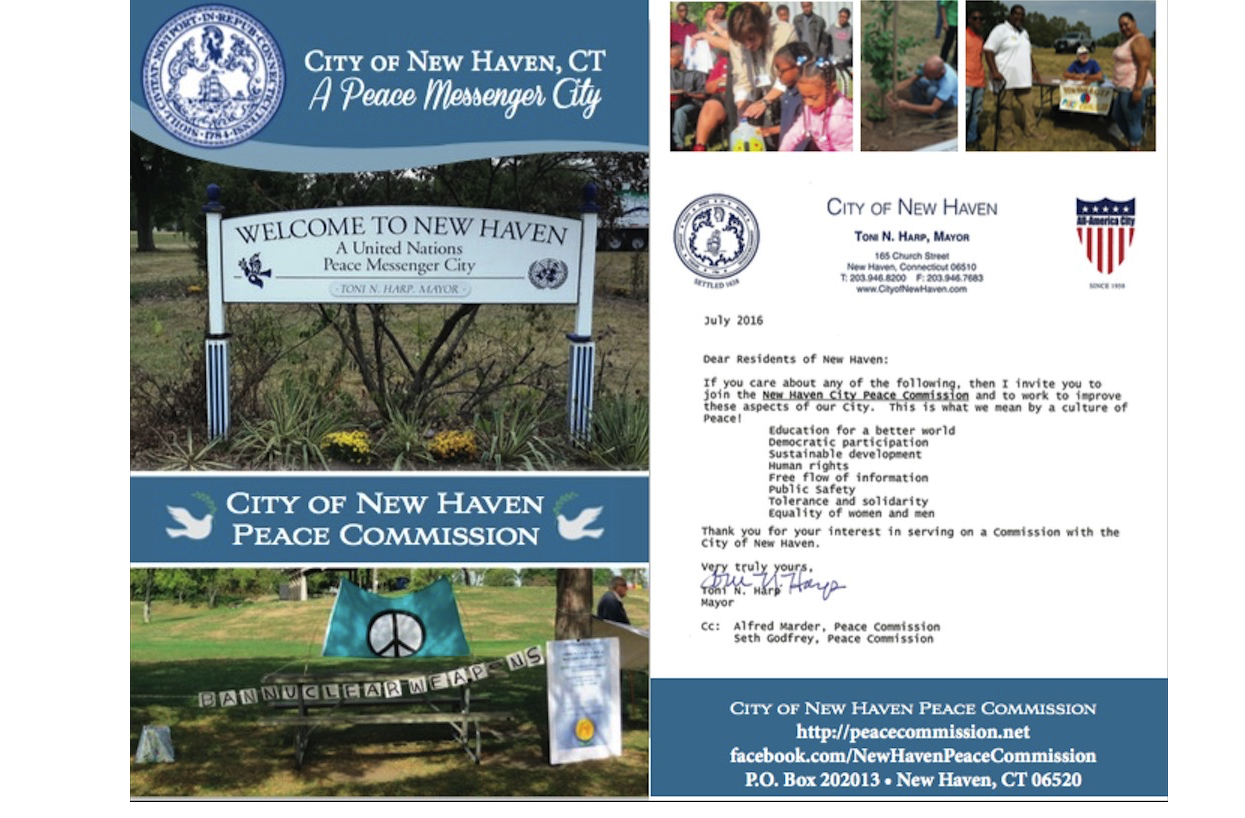
USA: New Haven Alders Put Peace On The Ballot

Mayors and Ecologists on the Left in France: A “tour de force”

US Conference of Mayors’ 2020 Vision for America: A Call to Action

Sabadell, Spain: Ensuring intercultural mediation and interfaith dialogue

Intercultural Cities: Raseborg, Finland, testing solutions to Covid crisis

Strong Cities Network: Reducing violence is not impossible, and cities are proving this

Global Parliament of Mayors: Virtual Parliament at the World Urban Forum

World Urban Forum ends with call for united action to ensure sustainable future for cities and towns

Mexico: The World Forum on Cities and Territories of Peace

UK: Oxford City Council says “no” to nuclear weapons

ICAN cities appeal : Support from Mayors for Peace

Youth representatives speak out for Nuclear Disarmament at the NY City Hall

New York City hearings pave the way for nuclear weapons divestment

Pocheon, Republic of Korea – International Cities of Peace

Londrina, Brazil: 9th edition of “A Weapon is not a Toy”

Leaders of 72 municipalities attend Mayors for Peace assembly in Tokyo

Spain: Toledo hosts the II International Forum Toledo Culture of Peace in October

Essonne, France: From Grigny to Hiroshima, the path of a high school girl for Peace

Mexico: Project Ambassadors of Peace Project in the City Hall of Tláhuac

Friendship – a Pathway to Peace

Mexico: Agreemen of municipality of Saltillo with State Attorney General to promote the culture of peace

Lajeado, Brazil: City Hall Launches Peace Pact

Spain: The policies of cooperation of the City of Toledo “are more than words”: an example for other local institutions

Mayors and parliamentarians call on Russia and the U.S. to preserve the INF Treaty

The project of Arab cultural capitals and cities: 22 years later, diagnosis and perspectives

Claudia Sheinbaum, the first woman elected by popular vote to govern Mexico City

International Cities of Peace and Rotary Peace Clubs

Madrid: Women close the Anti-Violence Forum with a message of peace

The II Forum on Urban Violence closes in Madrid with the commitment to an agenda of cities of coexistence and peace

Madrid: One week before the World Forum for Peace in Cities

Spain: Toledo seeks to become an international reference for the “culture of peace”

I Am the Flame

US Conference of Mayors Resolution for Peace

Spain: 100 Cities for Peace recognizes the town of Coria for its ties with Japan

Culture of Peace: The World Peace Flame is coming to Ashland, Oregon

Alliance in Asia: A subsidiary for International Cities of Peace in China!

First Congress of World Leaders, International Cities of Peace, at the invitation of the Fundación El Sol

Mexico: Monterrey Installs Municipal Council of Social Prevention of Violence

Mayors for Peace around the world

World Peace Flame to be lit in Ashland, Oregon (USA)

El Salvador: Project to promote a culture of peace

Gainesville, Florida, USA: Nancy Hardt: Reducing abuse, improving health go hand in hand

Madrid will again host the World Forum for Peace in 2018

USA: Ashland Culture of Peace Commission – A small town can play a big role

Ecuador: Rumiñahui for a Culture of Peace

El Salvador: Workshop for municipalities to strengthen their role in prevention of violence

The Spanish Federation of Municipalities and Provinces offers its support to the network “Mayors for Peace” and proposes future initiatives in an assembly in Japan

U.S. Conference of Mayors Opposes Military-Heavy Trump Budget

U.S. Conference of Mayors to Vote on Resolution to Move Money from the Military to Human and Environmental Needs

Brazil: Public hearing discusses culture of peace in Recife

Brasil: Audiência pública discute cultura de paz no Recife

Latest News from International Cities of Peace

Grenoble, France : Ecole de la Paix (in English)

Grenoble, France : Ecole de la Paix (in French)

USA: Video about the Ashland Culture of Peace Commission

Madrid: World Forum Against Violence and for Peace Education

New cities of peace this quarter

Madrid: Foro Mundial sobre las Violencias Urbanas y Educación para la Convivencia y la Paz

City Peace Commissions in Brazil and the US: A Comparison

Tabling for peace in the USA: A new sense of urgency

Londrina, Brazil: Fifth Municipal Conference on Culture of Peace

UK: Rochdale and Littleborough Peace Group sign Pledge to Peace

Ashland, Oregon (USA): November’s elections for peace?

The culture of peace commission of the city of Santos – SP (Brazil)

USA: Culture of Peace Commission: Compiling Ashland’s ‘Community Peacebuilders’ network

UCLG City of Bogotá Peace Prize: Finalists selected!

Madrid Mayor: “Cities can end the democratic apathy”

La alcaldesa de Madrid: “Las ciudades pueden acabar con la apatía democrática.”

The Peace Prize for city initiatives in conflict prevention, resolution or peace building

For the first time, a Peace Plan for Cali, Colombia

Mexico City: A system of mediation to be applied in all 16 delegations

La Ciudad de México: Aplicarán sistema de mediación en las 16 delegaciones

USA: Working on creating a culture of peace in Ashland

USA: Building New “Nonviolent Cities”

New Alliance: Compassionate Cities and International Cities of Peace Join Efforts

USA: New Haven Peaces Out. A Bit

Mayors for Peace – action priorities

US: Wilmington Peace Plan

Peace in Wellington, New Zealand

– – – – Links for the following articles published prior to 2015 do not work because they were made by a version of PERL programming that is no longer supported. With three easy steps, you can find the article by its number. First, click on it before returning to this page. Your browser will say that the article is not available but in the address listed you can see that it was located at ViewArticle=xxxx where xxxx is the number of the article. Returning to this page, then click here for the listing of all years. Then click on the year that contains the number for the article you seek. It will send you to the page where you can easily search for the article by its title. – – – –

Culture of Peace for Public Policies – 1st Cycle of Conferences in São
America’s Nobel Peace Laureates: They Need To Be Recognized
Mayor Welcomes Peace Forum
Olinda promove capacitação sobre cultura de paz
The City of Olinda (Brazil) Promotes the Culture of Peace
International Cities of Peace Grows to 30 Cities
A Peace Map for Eugene, Oregon (USA)
ICLEI World Congress 2012 ends with powerful message to Rio+20
New Haven (US) Votes to Cut Military Budget and Fund Human Needs  
2000th anniversary of Derbent (Russia)
Forum pour la promotion de la culture de la paix et du développement à Siguiri, Guinée
Forum for the promotion of culture of peace and development at Siguiri, Guinea
Marcharon por la Paz (Peru)
Marching for Peace (Peru)
IIPT and Skål set goal to dedicate 300 Peace Towns and Villages
Conférence des Villes pour la Paix en Méditerranée
Mediterranean Cities for Peace Conference
Schools across the World to be Linked by Livestreaming on International Day of Peace
Peace Cities: a new city-to-city interfaith networking opportunity
Growing a Culture of Peace in Eugene (Oregon, U.S.)
Se instaló el Consejo de la Cultura de Paz y No Violencia en Baja California
Council for Culture of Peace and Nonviolence established in Baja California
Peace Cities: una nueva oportunidad para establecer contacto interreligioso de ciudad a ciudad
South African Peace Towns make Progress in Building a Culture of Peace
Santos cria Comissão da Paz para evitar a violência e o preconceito (Brasil)
Santos creates a Peace Commission to avoid violence and intolerance (Brazil)
Lancement du site Internet Discover Peace in Europe
Launch of the website Discover Peace in Europe
These Four Cities Are Making Youth Empowerment a Priority
Mali : Non violence : Le combat de l’Association des municipalités de Sikasso
Mali: Nonviolence: The task of the Association of Municipalities of Sikasso