Category Archives: global

MITEI Releases Report on The Future of Solar Energy

. . SUSTAINABLE DEVELOPMENT . .

an article by Melissa Abraham, MITEI [Energy Initiative of Massachusetts Institute of Technology]

Solar energy holds the best potential for meeting humanity’s future long-term energy needs while cutting greenhouse gas emissions – but to realize this potential will require increased emphasis on developing lower-cost technologies and more effective deployment policy, says a comprehensive new study on The Future of Solar Energy released by The MIT Energy Initiative (MITEI).

solar
Click on image to enlarge
© Earth Policy Institute/Bloomberg

“Our objective has been to assess solar energy’s current and potential competitive position and to identify changes in US government policies that could more efficiently and effectively support its massive deployment over the long-term, which we view as necessary,” said Robert Armstrong, Director, MITEI.

The study’s chair, Richard Schmalensee, Howard W. Johnson Professor of Economics and Management Emeritus at the MIT Sloan School of Management, added “What the study shows is that our focus needs to shift toward new technologies and policies that have the potential to make solar a compelling economic option.”

The study group is presenting its findings to lawmakers and senior administration officials in Washington, D.C.

The Future of Solar Energy reflects on the technical, commercial and policy dimensions of solar energy today and makes recommendations to policymakers regarding more effective federal and state support for research and development, technology demonstration, and solar deployment.

Among its major themes is the need to prepare our electricity systems, both technically and from a regulatory standpoint, for very large-scale deployment of solar generation – which tends to vary unpredictably throughout the day. To this end, the study emphasizes the need for federal research and development support to advance low-cost, large-scale electricity storage technologies.

The analysis finds that today’s federal and state subsidy programs designed to encourage investment in solar systems should be reconsidered, to increase their cost-effectiveness, with greater emphasis on rewarding production of solar energy.

The group also recommends that state renewable portfolio standards, which are designed to increase generation of electricity from renewable resources, be brought under a unified national program that would reduce the cost of meeting set mandates by allowing unrestricted interstate trading of credits.

The study concludes by pointing to the urgent need for an ambitious and innovative approach to technology development, with federal research and development investment focused on new technologies and systems with the potential to deliver transformative system cost reductions.

The MIT “Future of…” studies are a series of multidisciplinary reports that examine the role various energy sources could play in meeting future energy demand under carbon dioxide emissions constraints. These comprehensive reports are written by multidisciplinary teams of MIT researchers. The research is informed by a distinguished external advisory committee.

For more information or a downloadable copy of The Future of Solar Energy study, click here.

(Thank you to Janet Hudgins, the CPNN reporter for this article.)

Question for this article:

Smallholder farmers in focus as UN Rome agencies event zeroes in on financing

. . SUSTAINABLE DEVELOPMENT . .

An article by The Food and Agriculture Organization of the United Nations

Ending hunger, achieving food security and improved nutrition, and promoting sustainable agriculture – SDG2 [Second Sustainable Development Goal of United Nations] – will require commitment and action at the national level, supported by engagement from the international community. That was the main message from a side event held in New York on 17 April on the margins of the Second drafting session of the Third International Conference on Financing for Development (FfD3).

sdg2

The panel discussion, organised by the Food and Agriculture Organization (FAO), the International Fund for Agricultural Development (IFAD) and the World Food Programme (WFP) – the Rome-based agencies of the United Nations, brought together multiple voices to explore the policies and investments needed to successfully implement SDG2 of the July 2014 proposal of the intergovernmental Open Working Group (OWG) of the UN General Assembly on Sustainable Development Goals (SDGs).

The event took place immediately ahead of a joint session (20-24 April) of the Financing for Development process and UNGA intergovernmental negotiations on the post-2015 development agenda, and less than three months before the FfD summit which takes place in Addis Ababa between 13 and 16 July.

Identifying investments that go beyond business as usual, financing mechanisms from a global partnership perspective and the challenges countries will face in financing SDG2 as an integrated package stood out among lively exchanges between panellists and participants from member states, civil society, the private sector and research institutions in the discussion chaired by Tekeda Alemu, Permanent Representative of Ethiopia to the United Nations.

“With the SDGs we have raised the level of ambition,” said keynote speaker George Wilfred Talbot, Permanent Representative of the Republic of Guyana to the United Nations, beginning his address. “I think it is absolutely imperative that we find the ways and means of addressing this challenge. Why? Because [hunger] is depriving hundreds of millions of people from the opportunity to fulfil their potential and to contribute to the progress of humanity.”

Mr Talbot, who is co-facilitator of the Financing for Development negotiations, said he and his colleague – Geir Pedersen, Permanent Representative of Norway – had flagged the SDG2 area as one requiring “special attention” in the process.

“In addressing the challenge of hunger and food insecurity, we are contributing to the potential for achieving other goals,” he said. “It is critical to poverty, as more than 75 percent of the poor live in rural areas and are heavily dependent on agriculture.

“One of the challenges we face is to transform the agriculture sector to make it viable and sustainable. We need to get youth to see a future in agriculture.”  

The relationship between SDG2 and other goals was picked up on by Susan Eckey, Minister Counsellor of the Permanent Mission of Norway to the United Nations, who focused on biodiversity, resilience, fisheries and gender equality.

“Agricultural biodiversity is critical to ensure the stability, resilience, nutrition and continuing evolution of farming and thus long-term food security and livelihoods for small-scale farmers,” she said.

(Article continued on right side of page)

Question for this article:

Can UN agencies help eradicate poverty in the world?

(Article continued from left side of page)

Guy Evers, Deputy Director of FAO’s Investment Centre, stated that the fight to eliminate poverty and hunger would be won or lost in rural areas.

“Despite significant rural to urban migration, extreme poverty is becoming more concentrated in rural areas, where there are lower levels of public and private investments, poorer infrastructure and fewer services targeted to the most vulnerable,” he said. “Growth in agriculture is more effective in reducing poverty than growth in other sectors. We need more and better investment in agriculture.”

FAO, he revealed, is updating a report that will include calculations of the level of investment needed to support the required expansion in food production for ending hunger by 2030.

While pointing out the importance of scaling up best practices, Josefina Stubbs, IFAD Associate Vice-President, highlighted the value of focusing on smallholders, who represent the biggest investors in agriculture. “Most of the food that people are consuming around the world comes from smallholder farms,” she said. “They are not the problem, but part of the solution. We see the need of smallholder farmers to have access to markets and to have access to credit.”

Amir Abdulla, WFP Deputy Executive Director, outlined the common vision the three Rome-based agencies share in “working together towards eliminating the root causes of hunger, poverty and malnutrition”.

“We stand united in the discussions and consultations that are going on around the means that are necessary to realise the new agenda,” he said before drawing attention to a Think-Piece contribution by the Rome-based agencies entitled Food Security, Nutrition, and Sustainable Agriculture at Centre Stage on the Road to the Addis Ababa Conference that had been circulated among the audience ahead of the event.

The Addis outcome is expected to have a significant bearing on means of implementation for the Post-2015 Development Agenda, which will be adopted at a Summit at Heads of State and Government level between 25 and 27 September 2015.

(Thank you to the Good News Agency for pointing out this article to us.)

Book Review: Seven Surprising Realities Behind The Great Transition to Renewable Energy

. . SUSTAINABLE DEVELOPMENT . .

An article by the Earth Policy Institute (abridged)

The global transition to clean, renewable energy and away from nuclear and fossils is well under way, with remarkable developments happening every day. The Great Transition by Lester Brown, Janet Larsen, Matt Roney, and Emily Adams lays out a tremendous range of these developments – here are seven that may surprise you.

new transition

1. Solar is now so cheap that global adoption appears unstoppable.
• The price of solar photovoltaic panels has declined 99 percent over the last four decades, from $74 a watt in 1972 to less than 70 cents a watt in 2014.
• Between 2009 and 2014, solar panel prices dropped by three fourths, helping global PV installations grow 50 percent per year. . .

2. Wind power adoption is rapidly altering energy portfolios around the world.
• Over the past decade, world wind power capacity grew more than 20 percent a year, its increase driven by its many attractive features, by public policies supporting its expansion, and by falling costs.
• By the end of 2014, global wind generating capacity totaled 369,000 megawatts, enough to power more than 90 million U.S. homes. Wind currently has a big lead on solar PV, which has enough worldwide capacity to power roughly 30 million U.S. homes. . .

3. National and subnational energy policies are promoting renewables, and many geographies are considering a price on carbon.
• Unfortunately, governments worldwide still subsidized the fossil fuel industry with over $600 billion, giving this aging industry five times the subsidy that went to renewables.
• But by the start of 2014, some 70 countries, including many in Europe, were using feed-in tariffs to encourage investment in renewables. . .

4. The financial sector is embracing renewables – and starting to turn against fossils and nuclear.
• The financial services firm Barclays downgraded the entire U.S. electricity sector in 2014, in part because in its view U.S. utilities are generally unprepared for the challenges posed by distributed solar power and battery storage.
• In January 2013, Warren Buffett gave solar energy a huge financial boost when his MidAmerican Energy Holdings Company announced an investment of up to $2.5 billion in California in what is now known as the Solar Star project. At 580 megawatts, it will become the world’s largest PV project when complete in late 2015. MidAmerican had earlier bought the Topaz solar farm in California, now tied with Desert Sunlight, another California project, as the world’s largest at 550 megawatts. As of its completion in late 2014, Topaz can generate enough electricity to power 180,000 California homes. . .

5. Coal use is in decline in the United States and will likely fall at the global level far sooner than once thought possible.
• U.S. coal use is dropping – it fell 21 percent between 2007 and 2014 – and more than one-third of the nation’s coal plants have already closed or announced plans for future closure in the last five years.
• Major U.S. coal producers, such as Peabody Energy and Arch Coal, have seen their market values drop by 61 and 94 percent, respectively, as of September 2014. . .

(Article continued on right side of page)

Questions for this article:

What is the relation between the environment and peace?

Are we making progress in renewable energy?

(This article is continued from the left side of the page)

6. Transportation will move away from oil as electric vehicle fleets expand rapidly and bike- and car-sharing spreads.
• Bike-sharing programs have sprung up worldwide in recent years. More than 800 cities in 56 countries now have fully operational bike-share programs, with over 1 million bikes. In the United States, by the end of 2012 some 21 cities had 8,500 bikes in bike-share racks. By the end of 2016, this is expected to climb to over 70 cities with close to 40,000 bikes.
• The share of carless households increased in 84 out of 100 U.S. urban areas surveyed between 2006 and 2011. And as urbanization increases, this share will only rise. . .

7. Nuclear is on the rocks thanks to rising costs and widespread safety concerns.
• For the world as a whole, nuclear power generation peaked in 2006, and dropped by nearly 14 percent by 2014.
• In the United States, the country with the most reactors, nuclear generation peaked in 2010 and is now also on the decline. . .

Chapter 1 of The Great Transition: Shifting from Fossil Fuels to Solar and Wind Energy is available online at www.earth-policy.org/books/tgt. Supporting data and a PowerPoint summary presentation are also available for free downloading.

(Thank you to Janet Hudgins, the CPNN reporter for this article.)

April 17: Farmers mobilise around the world against Free Trade Agreements and for food sovereignty

. SUSTAINABLE DEVELOPMENT .

an article by La Via Campesina

April 17, 2015: today thousands of women and men farmers of the international peasant movement La Via Campesina mobilize worldwide against Transnational Corporations (TNCs) and Free Trade Agreements (FTAs) which affect peasant and small-scale agriculture and national food sovereignty. Since April 17, 1996 La Via Campesina celebrates this day as a global day of action with allies and friends.

April17

Free Trade Agreements promote TNCs and a capitalist industrialised mode of production heavily reliant on agrochemicals. These have increased the displacement, expulsion, and disappearance of peasants. Free Trade Agreements put profit over all other rights and concerns. Currently, the most significant FTAs in history are being negotiated by the European Union, the United States, and Canada. These agreements, if finalised, will liberalize trade and investment markets in favour of transnational companies (see tv.viacampesina.org/April-17th).

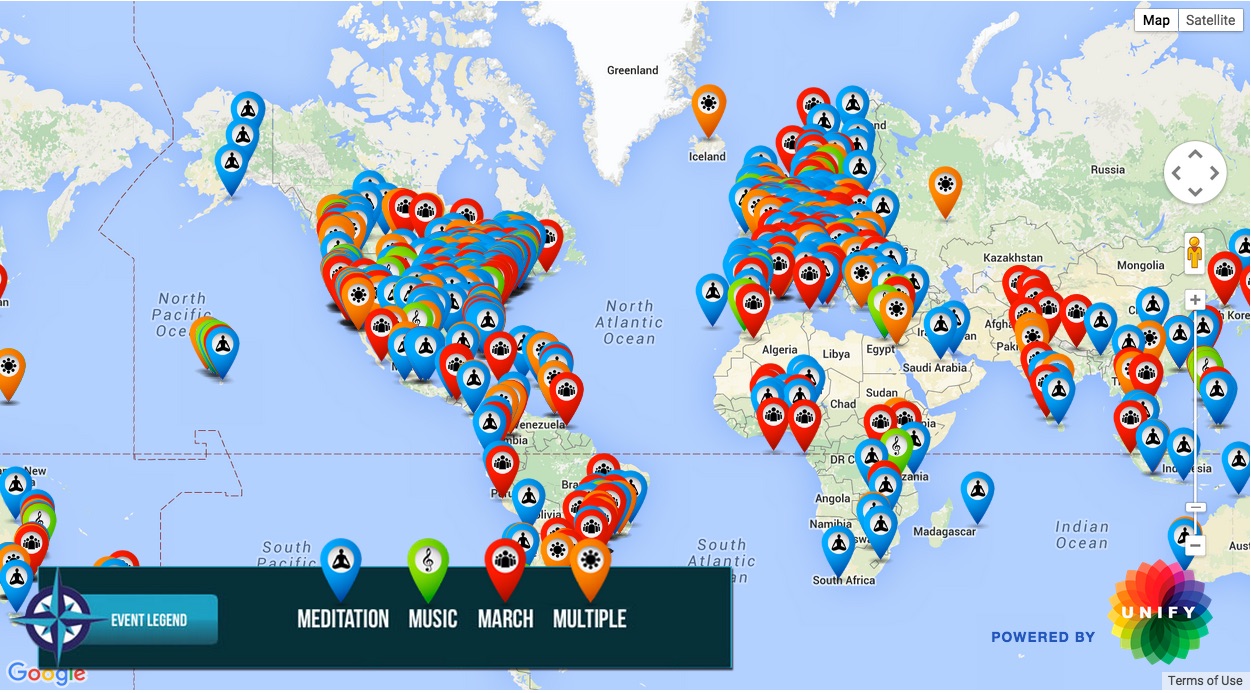
With hundreds of actions at local and global level (see our regularly updated MAP) in all continents, La Via Campesina reasserts the importance of local struggles and at the same time underlines the need of a global resistance and organization between the cities and the rural areas. Actions such as land occupations, seed exchanges, street demonstrations, food sovereignty fairs, cultural events, lobby tours and debates will be carried out until the end of the month as part of these global days of action. This year in Europe, various actions are being organised against Transatlantic Trade and Investment Partnership (TTIP), Comprehensive Trade and Economic Agreement (CETA), Trade in Services Agreement (TiSA) in Germany, Switzerland and Belgium; in Asia, a mass rally to reject the negotiation of Trans-Pacific Partnership (TTP) by Japanese government is being organised in Japan and South Korea; in South America, a big march (over 1,500 people from all continents) is being organised in Argentina during the CLOC-Via Campesina (Latin American Coordination of Rural Organizations) congress in Buenos Aires.

La Via Campesina denounces laws and interests that affect the peasant way of life, an important heritage of the people at the service of humanity. The movement promotes food sovereignty to end hunger in the world and promote social justice.

Instead of a gloomy future based on free trade and big business, La Via Campesina believes the time has come for an economy based on equity that will restore the balance between humanity and nature. Agrarian reform and sustainable agriculture are at the heart of this way of living based on peoples’ Food Sovereignty.

For Interviews please contact:

Ndiakhate Fall, CNCR – Senegal (French): + 221 77 550 89 07

Marina dos Santos, Landless movement, Brasil (Spanish) +54 92615717585

Yudhvir Singh, BKU, India (English) +54 92615717585

(Click here for the French version of this article or here for the Spanish version)

Question for this article:

Education awards go to Iraqi and Filipino leaders

EDUCATION FOR PEACE .

An article by Education International

Education International has named two teacher union leaders from Iraq and the Philippines to be awarded human rights and education prizes for their outstanding commitment, engagement and courage in promoting education for all.

educationinternational

Ms Luisa Bautista-Yu, from the Philippines, and Ahmed Jassam SalihAl-shiblawi, from Iraq, have been selected by Education International (EI)’s Executive Board to receive the Albert Shanker Education Award and the Mary Hatwood Futrell Human and Trade Union Rights Award, respectively. These two international solidarity prizes are given out every four years during EI’s Congress, and have become one of its biggest highlights.

Ms. Bautista-Yu has had a successful career marked by her engagement for the development of education in the Philippines. She has been involved in the education sector for decades, starting as a primary teacher and attaining the position of regional coordinator of Eastern Vinyasas, which she currently holds. Her engagement and courage were decisive during the recovery mission after Typhoon Haiyan hit the Philippines in 2013, devastating infrastructures and leaving thousands of children out of school.

Mr. SalihAl-shiblawi Ahmed Jassim Salih, National President of the technical sector of the Iraqi Teachers Union (ITU), has shown immense courage and determination in the promotion of human and trade union rights in his country. Despite constant threats and attacks on himself, his family and co-workers, he continues to lead the union with skill, expertise and bravery.

The awards will be presented at EI’s 7th World Congress this July in Ottawa, Canada. 

(Thank you to Janet Hudgins, the CPNN reporter for this article.)

(click here for the French version) of this article or here for the Spanish version

Question for this article:

What is the relation between peace and education?

Letter from Mohatma Gandhi to Maria Montessori

To Madame Montessori

Even as you, out of your love for children, are endeavoring to teach children, through your numerous institution, the best that can be brought out of them, even so, I hope that it will be possible not only for the children of the wealthy and the well-to-do, but for the children of paupers to receive training of this nature. You have very truly remarked that if we are to reach real peace in this world and if we are to carry on a real war against war, we shall have to begin with children and if they will grow up in their natural innocence, we won’t have the struggle, we won’t have to pass fruitless idle resolutions, but we shall go from love to love and peace to peace, until at last all the corners of the world are covered with that peace and love for which, consciously or unconsciously, the whole world is hungering.

20 Innovators Protecting the Planet #EarthDay2015

. SUSTAINABLE DEVELOPMENT .

an article by Sarah Small and Danielle Nierenberg, Food Tank

April 22nd is the 45th anniversary of Earth Day—an important opportunity to highlight solutions to some of the world’s most pressing environmental and social challenges.

earthday
Click on image to enlarge

April 22nd is the 45th anniversary of Earth Day—an important opportunity to highlight solutions to some of the world’s most pressing environmental and social challenges.

On a planet in which hunger and food waste coexist, where crops feed biofuels or animals despite water and food shortages, and where obesity in one country contrasts starvation in another, solutions and innovations to help ensure a vibrant, healthy future are more important than ever.

There are countless organizations and individuals who inspire us at Food Tank by producing creative and innovative solutions to challenges both people and the planet face including soil degradation, loss of biodiversity, climate change, poverty, industrial agriculture practices, land ownership, and food security.

Food Tank is highlighting 20 of our favorite innovators this Earth Day.

Jamila Abass—Abass is co-founder of M-Farm, a technology tool for smallholder farmers to receive information on the retail price of their products in Kenya. Farmers use SMS to buy farm inputs from manufacturers and connect to markets. The tool is innovating the way farmers access information and bring products to the marketplace.

Will Allen—Former professional basketball player, Allen, grew up on a small farm in Maryland where developed roots in farming. After returning to the United States from Belgium, Allen founded Growing Power Inc., a nonprofit organization for urban agriculture and community building. He is an innovator in methods of composting, vermicomposting, and aquaponics. Using these practices he has increased yields in urban growing spaces.

Bruno Follador—Follador is a geographer, biodynamic researcher, and specialist in biodynamic composting and chromatography. A native of San Paolo, Brazil, her first encountered biodynamics at the age of 18. According to Follador, educating and helping eaters to become conscious of their responsibility in a biodynamic system is one of the best ways to heal the food system. His work focuses on life processes and actively improving the health of farms.

Eric Holt-Giménez—An author, lecturer, agroecologist, and food system researcher, Holt-Giménez has been a vocal advocate for campesinos (peasant farmworkers) and a champion of el Movimiento Campesino a Campesino (the Farmer to Farmer Movement). The movement has now spread across Latin America with hundreds of thousands of practicing farmers in over a dozen countries.

John Georges—Georges is an entrepreneur and inventor from Arcadia, Florida. He has taken the challenges growers and farmers face in agricultural irrigation and invented a sustainable and cost effective solution. His product Tree T Pee stimulates root growth, protects trees from frost and reduces fuel, herbicide and fertilizer use, while conserving water in a major way.

Ernst Gotsch—Gotsch developed complex crop systems in the 1970s by experimenting with multi-species consortia, such as planting corn with beans or apples with cherries in Germany and Switzerland. His methods restore degraded soils, produce high yields, and eliminate the use of pesticides. “We should combine the present with the future. It must be economically viable for the present and for the future,” said Gotsch. Currently, Gotsch is developing agroecological practices in Brazil at Fazenda da Toca.

(Article is continued on right side of page)

Question for this article:

How can we encourage people to care for the environment?

(Article continued from left side of page)

Stephanie Hanson—Hanson has been the Director of Policy and Outreach at One Acre Fund since 2009, which provides smallholder farmers in Africa with support, inputs, and training, with the goal of doubling agricultural production on each acre of smallholder farmland.

Selina Juul—Danish food waste expert, Juul, founded The Stop Wasting Food (SWF) movement in 2008 and it is now the largest consumer organization fighting against food waste in Denmark. With more than 18,000 publications and thousands of supporters, Juul is inspiring business like Rema 1000 to reduce the price of food items past sell-by dates instead of throwing them out. An analysis by TNS Gallup for Agriculture showed that in 2013 half of Danes have reduced their food waste.

Byung Soo Kim—Kim pioneered organic farming in South Korea, he started with just 20 chickens and now has more than 4,000. Active in developing co-ops, Slow Food South Korea, Worldwide Opportunities on Organic Farms (WWOOF), and spreading organic farming methods, Kim has empowered others to become interested in organic farming where it previously didn’t exist.

Federica Marra—Winner of the 2012 Barilla Center for Food & Nutrition Young Earth Solutions competition in Italy, Marra created Manna From Our Roofs, an innovative organization that engages young people across the world in food cultivation, preservation, and education.

Pashon Murray—Murray is creating a more sustainable, less wasteful world in Detroit, MI. She is the owner and co-founder of Detroit Dirt, a business that takes food scraps from restaurants, cafeteria, and the Detroit Zoo and turns it into nutrient-rich compost. She is also working with the Idea Lab at the Massachusetts Institute of Technology (MIT) to optimize soil by creating blends for specific growing purposes.

Gary Paul Nabhan—Advocate, writer, and conservationist Nabhan has been honored as a pioneer and creative force in the food movement by The New York Times, TIME magazine, and more. He works with students, academics, and nonprofit to build a climate resilient food shed that covers the United States-Mexico border. Nabhan was one of the first researchers to promote using native foods to prevent diabetes and his accomplishments were featured in Food Tank’s recent short documentary, “A Man in the Maze.”

Nora Pouillon—Pouillon is a pioneer and champion of organic, environmentally conscious cuisine. She opened Restaurant Nora in 1979 and worked with farmers to supply the restaurant with seasonal organic produce. In 1999, Restaurant Nora became the first certified organic restaurant in the United States, a feat accomplished by few since.

Florence Reed—Inspired after serving as a Peace Corps Volunteer in Panama, Reed founded Sustainable Harvest International (SHI) which combats the tropical deforestation crisis in Central America. SHI provides poor farmers with sustainable alternatives to agriculture that do not degrade the environment.

Joel Salatin—A third generation alternative farmer in Virginia, Salatin returned to the farm in 1982, it currently serves more than 5,000 families, 10 retail outlets, and 50 restaurants with beef, poultry, eggs, pork, foraged-based rabbits, turkey, and forestry products. Salatin presents alternatives to conventional food production and inspires his audiences to connect with local food producers.

Sara Scherr—Scherr is the Founder and President of EcoAgriculture Partners, a nonprofit that works with agricultural communities around the world to develop ecoagriculture landscapes that enhance rural livelihoods, have sustainable and productive agricultural systems, and conserve or enhance biodiversity and ecosystem services.

Coach Mark Smallwood—Smallwood is executive director of Rodale Institute, based in Pennsylvania, which has pioneered the organic movement through its research, education and outreach since 1947. Their Farming Systems Trial is the longest running side by side comparison of organic and chemical farming approaches. Through Rodale, Smallwood, demonstrated that yields are the same in the long term, with organic yielding 30 percent higher than chemical in years of drought.

Amber Stott—Stott is on a mission to inspire kids to eat their vegetables in California. After realizing the critical need for knowledge of real food, she founded the Food Literacy Center, a community food education center focused on creating change for a healthier, more sustainable future. After three month of food literacy education, 92 percent of child participants said healthy food tastes good.

Martha Mwasu Waziri—Winner of Oxfam International’s 2012 Female Food Hero contest in Tanzania, Waziri, from the Dodoma Region, reclaimed 18 acres of land that had been eroded by a river using environmentally safe practices. It is now used as productive farmland.

Kanthi Wijekoon—A hero to other women, Wijekoon was arrested while she was trying to escape Sri Lanka to find a better life for her family. The Rural Women’s Front helped her get out of jail and she went on to lead programs reaching more than 600 women a year, increasing daily wages for women rice farmers.

Who are your favorite innovators help safeguard the planet? Share them with us!

Use #FoodTank. Are you creating your own innovations? We want to know what you are up to! Email Danielle at Danielle@foodtank.com and we might highlight your innovation in an upcoming article.

(Thank you to Janet Hudgins, the CPNN reporter for this article.)

UN Commission on the Status of Women revamps working methods

. WOMEN’S EQUALITY .

an article by ONU Mujeres

The UN Commission on the Status of Women concluded its 59th annual session today [March 20] with an agreement by UN Member States on steps to boost its efforts to advance gender equality and women’s empowerment.

csw
Click on the photo to enlarge

Governments attending the meeting agreed on new working methods for the Commission to continue setting standards related to the 1995 Beijing Declaration and Platform for Action, and strengthen its role in global policy- making and coordination of actions around implementation.

They affirmed the commission’s central contributions to shaping the landmark post-2015 sustainable development agenda slated for adoption by a global summit of heads of state and government in September.

As the primary UN body for advancing intergovernmental commitments to gender equality and follow-up to the Beijing Platform, the Commission will further align its work to the Economic and Social Council and the new UN High- level Political Forum. This will strengthen efforts to integrate gender equality across all global debates and actions on sustainable development.

Since a large number of government ministers now attend the Commission, Member States agreed to create a ministerial segment starting at the next session in 2016. It is expected to heighten the visibility of current concerns, and offer opportunities to demonstrate high-level political commitment to accelerated progress towards gender equality, empowerment and the full realization of women’s human rights.

Congratulating the Member States, civil society and the UN system for “a forceful, dynamic and forward-looking session”, UN Women Executive Director Phumzile Mlambo- Ngcuka said in her speech, “We are all aware that there are no shortcuts to realizing gender equality, the empowerment of women and the human rights of women and girls. Based on the road we have travelled, we know that there are more challenges ahead of us. We know we must continue to work, systematically and relentlessly, to bring about transformation in our families, societies, economies, and political and public spaces.”

Governments agreed to sharpen focus of the Commission’s annual review theme. Moving forward, case studies will demonstrate lessons learned in implementing commitments made in previous Commission sessions. The Secretary- General will issue a targeted report on progress on the theme, drawing on national data and other inputs. The process will help close gaps between promises made and measurable change, and offer concrete evidence of how international norms can be translated to make a major difference in the lives of women and girls.

The 59th session included a range of high-level roundtables and panels on critical topics ranging from scaled-up financing for gender equality, to responsibilities of men and boys, to improved gender-disaggregated data. Discussions on lessons from the Millennium Development Goals will further shape the post-2015 development agenda.

Learn more about the Commission on the Status of Women.

(Click here for a Spanish version of this article or here for a French version)

Question for this article

Does the UN advance equality for women?

The following article by Lyndal Rowlands in the Inter Press Service, suggests that the UN is not making much progress on its commitments for women’s equality:

2015 marks anniversaries for two significant commitments made to increasing women’s participation at peace tables.

Yet despite the Beijing Platform for Action and the Security Council Resolution 1325 both committing to increasing women’s participation in peace building 20 and 15 years ago, respectively, there has been very little progress to report.

The latest available statistics show that women made up only 9 per cent of negotiators at peace tables between 1992 and 2011. That the most recent data is from 2011 shows that more work is needed even in basic areas such as data collection and reporting of women’s participation in peace building.

IPS summarises here four reasons we should value women’s participation at the peace table more, based on discussions at the 59th Commission on the Status of Women (CSW) over the past week.

Beijing Platform for Action Section E

Women and Armed Conflict Diagnosis

Strategic objective E.1. Increase the participation of women in conflict resolution at decision-making levels and protect women living in situations of armed and other conflicts or under foreign occupation. Actions to be taken.

Strategic objective E.2. Reduce excessive military expenditures and control the availability of armaments. Actions to be taken.

Strategic objective E.3. Promote non-violent forms of conflict resolution and reduce the incidence of human rights abuse in conflict situations. Actions to be taken.

Strategic objective E.4. Promote women’s contribution to fostering a culture of peace. Actions to be taken

Strategic objective E.5. Provide protection, assistance and training to refugee women, other displaced women in need of international protection and internally displaced women. Actions to be taken.

Strategic objective E.6. Provide assistance to the women of the colonies and non-self-governing territories. Actions to be taken.
Women Bring Commitment and Experience to the Peace Table
Often the first people invited to participate in formal peace negotiations are the people holding the guns and the last are women who have expertise in building lasting peace.

Zainab Bangura, Special Representative of the Secretary-General on Sexual Violence in Conflict, told a CSW side event on Tuesday last week, “In the Central African Republic, the only community where they were not killing each other was a community where the Christian women said, ‘These Muslim women are our sisters.’

“Why? Because the women in the community said, ‘We have lived together for the last 100 years’,” Bangura said.

In the Phillipines, Irene Santiago was a member of the government panel that negotiated peace with the Moro Islamic Liberation Front. Santiago came to the table with years of experience working with Christian, Muslim and Indigenous women leaders for peace.

Speaking at a CSW side event at the International Peace Institute (IPI) on Thursday, Santiago said that she knew that her years of experience working with civil society for peace stood her in good stead to make a significant contribution to formal peace negotiations, which she did.

Speaking with IPS, Santiago said women’s voices not only have to be heard, but that they also have to be acted on.

“For women. It’s almost never always about themselves, it’s always about our children, our husbands but also about our communities,” Santiago told IPS.

In Africa, women have fought to be included in peacemaking, even when their contributions have not been recognised.

Bineta Diop, Special Envoy on Women Peace and Security to the African Union, says that mediators need to be held accountable when they only invite the people who hold guns to the peace table and ignore women’s contributions.

“I have been involved in many crises where women were knocking at the door and saying we want to be at the table,” Diop said.

Ambassador Anwarul Chowdhury, known as the father of Security Council Resolution 1325, said that the determination of African women to be involved in peace negotiations should be seen as an inspiration by other countries.

Despite serious difficulties, war and conflict, African women have shown continued determination to hold their countries accountable, Chowdhury said.

Gender Equality in Peace Time Prevents Conflict
Also speaking at the IPI, Valerie Hudson, co-author of ‘Sex and World Peace’, said that her research has shown that the way women are treated within a country is one of the most accurate indicators of the quality of relations that country will have with other countries.

Diop agreed with Hudson, saying that countries that are likely to fall into conflict have higher levels of discrimination and inequality.

“Discrimination against women, especially the non-participation and non-inclusion of women in democracy is … one of the root causes of the conflict,” Diop said.

Ambassador Choudhury agreed with these sentiments, telling IPS, “I believe that no country can claim that their country is not in conflict if women’s rights are denied, if women’s equality is not ensured, if women’s participation at all participation levels is not there.

“I think that if we women are violated, if women’s equality of participation is not there we cannot say that we are at peace, we are in conflict with ourselves. This is a conflict which is happening within ourselves and within the countries. We don’t have to go into the traditional description of conflict, civil conflict or fighting with another country,” Chowdhury added.

Dr. Youssef Mahmoud, Senior Adviser at the International Peace Institute also speaking at the IPI event said, “A world where 51 per cent are ignored is a dangerous world for everyone. I can’t imagine why any men would be indifferent to this.”

Women Are Active In Civil Society
Several discussions at the CSW questioned why militaries were the primary actors in peace building, while non-governmental organisations (NGOs) and civil society’s expertise was not called on.

Related IPS Articles

U.S. Honours 10 “Extraordinary Women” for Courage and Leadership
Meet the 10 Women Who Will Stop at Nothing
Women Walk for Peace in the Korean Peninsula
Santiago told IPS that civil society, especially women, have a lot to contribute to humanise, to concretise, and to make peace negotiations relevant to people’s lives.

Winnie Kodi from the Nuba mountains in Sudan told reporters on Monday that civil society was vital to helping indigenous communities like her own that have been affected by conflict. She said that the main way her people were able to have their voices heard was by working together with NGOs and civil society.

Chowdhury told IPS he is advocating for the U.N. and governments to hold more consultations with civil society, saying that the involvement of women and of civil society is very important.

Santiago also called for renewed focus on the important role of NGOs in the area of women, peace and security,

“Again I see that why are we focusing on the UN as the locus of change,” she said. “To me it is not, it is the means, it is an important audience, but it is not the locus of social change.

“Let us form the global civic networks that we need to bring about the local global and civil change that we need” Santiago said.

Women Challenge The Causes of Conflict
Challenging militarism and militarisation was another theme discussed during the first week of the CSW, particularly by civil society groups at the parallel NGO forum.

Choudhury told IPS that increased militarism and militarisation is slowing down efforts for equality. “Increasing militarism and militarisation has really been effecting women in a very negative way. This is something that women should stand up against, we should all stand up against,” Chowdhury said.

Militarisation is also affecting indigenous women and men. Maribeth Biano, from the Asian Indigenous Women’s Network, told reporters on Monday that Indigenous women are hugely affected by militarisation in Indigenous territories.

The 15 Journalists Putting Women’s Rights on the Front Page

. WOMEN’S EQUALITY .

an article by Lyndal Rowlands, Inter Press News Service (reprinted by permission)

Media coverage of maternal, sexual and reproductive health rights is crucial to achieving international development goals, yet journalists covering these issues often face significant challenges.

journalistsClick on the photo to enlarge.

Recognising the contributions these journalists make to advancing women and girls’ rights, international advocacy organisation Women Deliver have named 15 journalists for their dedication to gender issues ahead of International Women’s Day 2015.

Among the journalists Women Deliver recognised for their work is IPS correspondent Stella Paul from India. Paul was honoured for her reporting on women’s rights abuses through articles on such issues as India’s ‘temple slaves’ and bonded labourers.

Paul’s dedication to women’s rights is not only shown through her journalism. When she interviews communities, she also teaches them how to report abuses to the authorities and hold them accountable for breaking the cycle of violence.

Paul is herself a survivor of infanticide. She told Women Deliver, “When I was a baby, I got sick and some of my family members decided that I should die because I was not a boy.

“Decades later, I’m inspired by the courage of my mother – and countless other women – to expose and end gender- based violence and inequality.”

Among others, Paul’s story on bonded labour in the southern Indian city of Hyderabad has had a tangible impact on the lives of those she interviewed. In July she blogged about how one woman featured in the article ‘No Choice but to Work Without Pay‘, Sri Lakshmi, was released from bonded labour by her employer after a local citizen read the article on IPS and took action.

Lakshmi’s daughter Amlu, who once performed domestic labour while her parents went off to work, is now enrolled in a local elementary school.

Another journalist honoured was Mae Azango from Liberia.

Women Deliver CEO Katja Iversen told IPS, “Mae Azango deserves a Pulitzer. She went undercover to investigate female genital mutilation in Liberia. “After her story was published she received death threats and [she] and her daughter were forced into hiding. Mae’s bravery paid off though, as her story garnered international attention and encouraged the Liberian government to ban the licensing of institutions where this horrific practice is performed,” Iversen added.

Azango told Women Deliver, “Speaking the truth about female genital cutting in my country has long been a dangerous thing to do. But I thought it was worth risking my life because cutting has claimed the lives of so many women and girls, some as young as two.”

Iversen said that many of the honourees had shown incredible dedication, through their work. “For some of our journalists, simply covering topics deemed culturally taboo – like reproductive rights, domestic violence or sexual assault – can be enough to put them in danger,” she said.

(This article is continued in the discussion board on the right side of this page)

Continuation of article

However despite their dedication, journalists still also face obstacles in the newsroom.

“One of the questions we asked the journalists was: what will it take to move girls’ and women’s health issues to the front pages?” Iversen said.

“Almost all of them said: we need more female journalists in leadership and decision-making positions in our newsrooms. Journalism, like many other industries, remains a male dominated field, which can be a major obstacle to publishing stories on women’s health and rights.”

But the issue also runs deeper. There is also a lack of recognition that women and girls’ health rights abuses and neglect are also abuses of human rights, and combatting these issues is essential to achieving development for everyone, not just women and girls.
This means that women’s health is often seen as ‘soft news’ not political or economic news worthy of a front-page headline.

“Unfortunately women’s health and wellbeing is still, for the most part, treated as ‘soft’ news, despite the fact that when women struggle to survive, so do their families, communities and nations,” Iversen said.

“Every day, an estimated 800 women die in pregnancy or childbirth, 31 million girls are not enrolled in primary school and early marriage remains a pervasive problem in many countries. These are not just women’s issues, these are everyone’s issues – and our honorees are helping readers understand this link.”

As journalist Catherine Mwesigwa from Uganda told Women Deliver, “Women’s health issues will make it to the front pages when political leaders and the media make the connection between girls’ and women’s health and socio-economic development and productivity, children’s education outcomes and nations’ political stability.”

Male journalists also have a role to play and two of the fifteen journalists honoured for their contribution to raising awareness on these crucial rights were men.

Besides India and Liberia, other honorees hailed from Argentina, Cameroon, Bangladesh, Kenya, Pakistan, the Philippines, Senegal, Tanzania, Uganda, and the United States.

Readers have the opportunity to vote for their favourite journalists from the fifteen journalists selected by Women Deliver. [Editor’s note: Voting closed March 20.]

The three winners will receive scholarships to attend Women Deliver’s 2016 conference, which will be held in Copenhagen, Denmark.

[Thank you to Janet Hudgins, the CPNN reporter for this article.]

U.N. Says Maternal Mortality Rate Has Nearly Halved since 1990

. . WOMEN’S EQUALITY . .

an article by Josh Butler, Inter Press Service (reprinted by permission)

The global rate of maternal deaths is reducing faster than any time in history, according to a new report presented to the United Nations on Tuesday.

mortality
Click on the photo to enlarge.

The ‘Every Woman Every Child’ initiative has saved 2.4 million women and children since its inception in 2010, claims the report Saving Lives, Protecting Futures, presented by U.N. Secretary-General Ban Ki-moon.

The report states maternal mortality has been nearly halved since 1990, and in 2013, 6.4 million fewer children under age five died compared to 1990. Every Woman Every Child states 11 million more women have given birth in a health facility, 8.4 million more women and girls use modern contraception, and post-natal care for women increased 25 percent.

“Our task now is to maintain and build on that momentum, complete the unfinished health MDGs, end the appalling tragedy of preventable deaths and invest in the futures of women, children and adolescents,” Ban wrote in the report’s foreword.

“Yet we can and must do much more to provide access to the health care that women need… we must work to ensure that children are born into a safe environment where they will receive necessary vaccines, nutrition and care. There is still too much needless suffering.”

More than two-thirds of the $60billion pledged to the initiative by partner countries and institutions has been distributed and used. Speaking at the launch of the report, Ban said signs of progress were encouraging.

“More women are giving birth in a health facility, more women and girls are receiving the sexual and reproductive health services they want and need, and more pregnant women are receiving anti-retrovirals to prevent HIV transmission to their babies,” he said.

“Our task now is to maintain and build on that momentum, complete the unfinished health MDGs, end the appalling tragedy of preventable deaths and invest in the futures of women, children and adolescents.”

Every Woman Every Child describes itself as an “unprecedented global movement that mobilizes and intensifies global action to improve the health of women and children around the world.” The programme began in response to Millennium Development Goals (MDGs) four and five, concerning maternal health and child mortality, which were seen as the MDGs “were lagging furthest behind.”

The report urges partner to keep reproductive, maternal, newborn and child health “high on the global agenda in the post-2015 era.” The initiative has set its goal as reducing the global maternal mortality rate to 70 in 100,000 births, and newborn mortality rates to 12 per 1000 births.

[Thank you to Janet Hudgins, the CPNN reporter for this article.]

Question liée à cet article:

Does the UN advance equality for women?

The following article by Lyndal Rowlands in the Inter Press Service, suggests that the UN is not making much progress on its commitments for women’s equality:

2015 marks anniversaries for two significant commitments made to increasing women’s participation at peace tables.

Yet despite the Beijing Platform for Action and the Security Council Resolution 1325 both committing to increasing women’s participation in peace building 20 and 15 years ago, respectively, there has been very little progress to report.

The latest available statistics show that women made up only 9 per cent of negotiators at peace tables between 1992 and 2011. That the most recent data is from 2011 shows that more work is needed even in basic areas such as data collection and reporting of women’s participation in peace building.

IPS summarises here four reasons we should value women’s participation at the peace table more, based on discussions at the 59th Commission on the Status of Women (CSW) over the past week.

Beijing Platform for Action Section E

Women and Armed Conflict Diagnosis

Strategic objective E.1. Increase the participation of women in conflict resolution at decision-making levels and protect women living in situations of armed and other conflicts or under foreign occupation. Actions to be taken.

Strategic objective E.2. Reduce excessive military expenditures and control the availability of armaments. Actions to be taken.

Strategic objective E.3. Promote non-violent forms of conflict resolution and reduce the incidence of human rights abuse in conflict situations. Actions to be taken.

Strategic objective E.4. Promote women’s contribution to fostering a culture of peace. Actions to be taken

Strategic objective E.5. Provide protection, assistance and training to refugee women, other displaced women in need of international protection and internally displaced women. Actions to be taken.

Strategic objective E.6. Provide assistance to the women of the colonies and non-self-governing territories. Actions to be taken.
Women Bring Commitment and Experience to the Peace Table
Often the first people invited to participate in formal peace negotiations are the people holding the guns and the last are women who have expertise in building lasting peace.

Zainab Bangura, Special Representative of the Secretary-General on Sexual Violence in Conflict, told a CSW side event on Tuesday last week, “In the Central African Republic, the only community where they were not killing each other was a community where the Christian women said, ‘These Muslim women are our sisters.’

“Why? Because the women in the community said, ‘We have lived together for the last 100 years’,” Bangura said.

In the Phillipines, Irene Santiago was a member of the government panel that negotiated peace with the Moro Islamic Liberation Front. Santiago came to the table with years of experience working with Christian, Muslim and Indigenous women leaders for peace.

Speaking at a CSW side event at the International Peace Institute (IPI) on Thursday, Santiago said that she knew that her years of experience working with civil society for peace stood her in good stead to make a significant contribution to formal peace negotiations, which she did.

Speaking with IPS, Santiago said women’s voices not only have to be heard, but that they also have to be acted on.

“For women. It’s almost never always about themselves, it’s always about our children, our husbands but also about our communities,” Santiago told IPS.

In Africa, women have fought to be included in peacemaking, even when their contributions have not been recognised.

Bineta Diop, Special Envoy on Women Peace and Security to the African Union, says that mediators need to be held accountable when they only invite the people who hold guns to the peace table and ignore women’s contributions.

“I have been involved in many crises where women were knocking at the door and saying we want to be at the table,” Diop said.

Ambassador Anwarul Chowdhury, known as the father of Security Council Resolution 1325, said that the determination of African women to be involved in peace negotiations should be seen as an inspiration by other countries.

Despite serious difficulties, war and conflict, African women have shown continued determination to hold their countries accountable, Chowdhury said.

Gender Equality in Peace Time Prevents Conflict
Also speaking at the IPI, Valerie Hudson, co-author of ‘Sex and World Peace’, said that her research has shown that the way women are treated within a country is one of the most accurate indicators of the quality of relations that country will have with other countries.

Diop agreed with Hudson, saying that countries that are likely to fall into conflict have higher levels of discrimination and inequality.

“Discrimination against women, especially the non-participation and non-inclusion of women in democracy is … one of the root causes of the conflict,” Diop said.

Ambassador Choudhury agreed with these sentiments, telling IPS, “I believe that no country can claim that their country is not in conflict if women’s rights are denied, if women’s equality is not ensured, if women’s participation at all participation levels is not there.

“I think that if we women are violated, if women’s equality of participation is not there we cannot say that we are at peace, we are in conflict with ourselves. This is a conflict which is happening within ourselves and within the countries. We don’t have to go into the traditional description of conflict, civil conflict or fighting with another country,” Chowdhury added.

Dr. Youssef Mahmoud, Senior Adviser at the International Peace Institute also speaking at the IPI event said, “A world where 51 per cent are ignored is a dangerous world for everyone. I can’t imagine why any men would be indifferent to this.”

Women Are Active In Civil Society
Several discussions at the CSW questioned why militaries were the primary actors in peace building, while non-governmental organisations (NGOs) and civil society’s expertise was not called on.

Related IPS Articles

U.S. Honours 10 “Extraordinary Women” for Courage and Leadership
Meet the 10 Women Who Will Stop at Nothing
Women Walk for Peace in the Korean Peninsula
Santiago told IPS that civil society, especially women, have a lot to contribute to humanise, to concretise, and to make peace negotiations relevant to people’s lives.

Winnie Kodi from the Nuba mountains in Sudan told reporters on Monday that civil society was vital to helping indigenous communities like her own that have been affected by conflict. She said that the main way her people were able to have their voices heard was by working together with NGOs and civil society.

Chowdhury told IPS he is advocating for the U.N. and governments to hold more consultations with civil society, saying that the involvement of women and of civil society is very important.

Santiago also called for renewed focus on the important role of NGOs in the area of women, peace and security,

“Again I see that why are we focusing on the UN as the locus of change,” she said. “To me it is not, it is the means, it is an important audience, but it is not the locus of social change.

“Let us form the global civic networks that we need to bring about the local global and civil change that we need” Santiago said.

Women Challenge The Causes of Conflict
Challenging militarism and militarisation was another theme discussed during the first week of the CSW, particularly by civil society groups at the parallel NGO forum.

Choudhury told IPS that increased militarism and militarisation is slowing down efforts for equality. “Increasing militarism and militarisation has really been effecting women in a very negative way. This is something that women should stand up against, we should all stand up against,” Chowdhury said.

Militarisation is also affecting indigenous women and men. Maribeth Biano, from the Asian Indigenous Women’s Network, told reporters on Monday that Indigenous women are hugely affected by militarisation in Indigenous territories.
Back to top
Profile PM MAIL

ICC Judges – Women at the top at the International Criminal Court

. . WOMEN’S EQUALITY . .

an article by Hirondelle News Agency

As the world celebrated International Women’s Day, the International Criminal Court (ICC) this week got its first all- female presidency. ICC judges on Wednesday elected Judge Silvia Fernández de Gurmendi of Argentina as President of the Court for a three-year term with immediate effect, and two other female judges as her Vice- Presidents. A trained diplomat, Gurmendi has been a judge at the ICC since 2010.

ICC women
Click on the photo to enlarge

Judge Silvia Fernández de Gurmendi

Judge Joyce Aluoch of Kenya was elected First Vice- President and Judge Kuniko Ozaki of Japan as Second Vice-President. The outgoing presidency was headed by a man (Judge Sang-Hyung Song of South Korea), who was seconded by one female and one male judge.

This is the first time the ICC has had an all-female leadership. It already has a woman Chief Prosecutor, Fatou Bensouda of the Gambia.

The Presidency – consisting of the President and the two Vice-Presidents – plays a key role in providing strategic leadership to the ICC as a whole. According to the ICC, the Presidency “coordinates with the other organs and seeks the concurrence of the Prosecutor on matters of mutual concern. In accordance with the Rome Statute, the ICC’s governing treaty, the Presidency is responsible for the proper administration of the Court, with the exception of the Office of the Prosecutor.

“The Presidency oversees the activities of the Registry and provides input into a broad range of administrative policies affecting the Court’s overall functioning. Furthermore it conducts judicial review of certain decisions of the Registrar and concludes Court-wide cooperation agreements with States and international organizations.”

On Tuesday, six new ICC judges (all men) were also sworn in: Marc Perrin de Brichambaut (France), Piotr Hofmański (Poland), Antoine Kesia-Mbe Mindua (Democratic Republic of the Congo), Bertram Schmitt (Germany), Péter Kovács (Hungary) and Chang-ho Chung (Republic of Korea). They were elected for nine-year terms during the thirteenth session of the Assembly of States Parties (ASP) to the Rome Statute in December 2014.

(Click here for a Spanish version of this article.)

Question for this article

Do women have a special role to play in the peace movement?

The 30 articles in CPNN linked to this question make it clear that women indeed have a special role to play in the peace movement. See the following for an historical explanation of why this is true.