Category Archives: global

UN Commission on the Status of Women: Participant Voices

. WOMEN’S EQUALITY .

An article from UN Women

Every year thousands of activists from civil society organizations around the world come to New York to take part in the Commission on the Status of Women, the global intergovernmental body exclusively dedicated to the promotion of gender equality and the empowerment of women. More than 3,900 non-governmental representatives from 138 countries participated in 2017. See some of their messages and perspectives on women in the changing world of work below.


Click on image to enlarge

How has the world of work changed for women?

[1] Hazel Brown Executive Director of Network of NGOs for the Advancement of Women, Trinidad and Tobago

“I got married in 1962 and was told that married women who had jobs were required to give their earnings to their husbands. In 1962, the income tax law in Trinidad and Tobago considered an employed married woman in the same category of persons as children, imbeciles and people with insane mind. Eventually, we successfully advocated to change that law. But there remain other discriminatory laws that need to be amended. For example, domestic workers are not legally considered as workers and denied the benefits and the rights of all other workers, by law.”

[2] Diane Elsen, “Leontief Prize winner for Advancing the Frontiers of Economic Thought”, author, researcher and professor, United Kingdom

“Until recently, there was a rise in female labour force participation. Now that has levelled off and in some countries, it’s going down. But women’s share in unpaid and care work is not going down. In some countries there is a narrowing of the gender pay gap, and in others the progress on this has stalled. But gender pay gap only accounts for wages from formal employment; it does not factor in the earnings of millions of women who work in the informal sector or without proper contracts. When we looked at the gender earnings gap in UK, for example, it’s bigger than the gender wage gap.”

[3] Shirley Pryce, Former domestic worker, current Chair of the Caribbean Domestic Workers Network, Jamaica

“Before, only men used to sit on company boards, have the top jobs in Jamaica. Now that’s changing. More women are taking on management jobs. For domestic workers too, things have changed. We are more respected that we used to be; we are better aware of our rights and employers are more educated about our rights. But for domestic workers to be truly empowered, we need laws to protect their rights. Jamaica has ratified the ILO Convention on Domestic Workers, but now we are need to develop a national law. As the head of the Caribbean Domestic Workers Network, I am also advocating with other Caribbean countries to ratify the ILO Convention and then implement it through national laws.”

[4] Christian Mendoza Galàn, Coordinator on Economic, Social and Cultural Rights, Mexico

“In Mexico, we have social security linked with formal [waged] work, so that makes it harder for women who are not in formal labour force. We have more work, less money, and less labour rights for women. Adding women’s unpaid work to their paid work, women have more amount of work. This limits our opportunities to develop. The unpaid care work also is related to women’s sexual and reproductive rights, because if we have more children, we have more work at home. And, we need to engage in paid work too because we don’t have enough money to sustain the family.”

[5] Mariyam Mohamed Representative of Uthema, Maldives

“There are more women joining the workforce now, but 47 per cent of women are employed in informal sectors, in jobs where they don’t get pensions or other benefits. We have a new gender equality law but it doesn’t address the care work that women do. Since 1980s, we’ve been talking about state funded daycare but it has not happened. It does not endorse affirmative action or gender-responsive budgeting. We have laws, but no one knows about them. There is not enough budget allocated for the implementation of the laws.”

What will it take to bring women on equal footing with men in the world of work?

[6] Dr. Archana Integrator with Prada, India

“I am working with rural women and women farmers in India. For them, the pace of progress [in economic empowerment] is slower still. For women to have equal economic opportunities, men’s participation in the household chores and care work is essential. At the same time, women’s participation in the economic and political spheres must be promoted. There are many pro-women laws and policies in different countries, but they are not enforced.”

[7] Emma Kaliya Chairperson of FEMNET, Programme Manager of the Malawi Human Rights Resource Centre, and Equal Pay Champion, Malawi

“When it comes to bringing women equal to men, we have to make sure that the existing laws are enforced. The employment act in Malawi, for example, doesn’t allow for discrimination against women. It provides for maternity leave and other provisions. But when it comes to practice, employers may give only one week of maternity to women. Enforcement is important because if employers do not comply with the law, they can be punished and that would serve as a deterrence to others. As an Equal Pay Champion, I want to engage the minister of labour and other stakeholders in the private sector, and partner with trade unions to improve the situation of women in the informal sector. We also have to remove the barriers, such as sexual harassment at the workplace.”

(article continued in right column)

Question for this article

Prospects for progress in women’s equality, what are the short and long term prospects?

(article continued from left column)

[8] Marie Andrea Anick Jasmin, Young filmmaker, Haiti

“The biggest challenge for women in Haiti is to see themselves in decision-making positions, and in what they perceive as “male occupations’. In Haiti, girls don’t see themselves as presidents, engineers or leaders. We must change the mentality and change will come with education at primary, secondary and university levels, sexual and reproductive education, and education that improves women’s self-esteem.”

Our issues

[9] Roki Kumar Breakthrough, India

“It is not enough to say that women are working, so they are economically empowered. For a woman to be empowered, she should also be able to earn at the same level as a man. She should also have the right to spend her own money the way she wants. The biggest problem in my country is patriarchy. We cannot achieve gender equality without men playing a part.”

[10] Maria Eugenia Romero, Executive Director of Equidad de Género, Ciudadanía, Trabajo y Familia A.C., México

“In Mexico, we have free public health care. But when women try to see a doctor, there are no appointments available, or the clinic is too far away from them…or the medicines and contraceptives they need are missing. Providing healthcare to women is not seen as a right but as a luxury. We have found that generally women do not receive the contraceptive methods they want, but the one that is available.”

[11] Sandra Letio Youth entrepreneur, Uganda

“I was 23 years old and unemployed, looking for jobs, but finding none. I had USD 15 to invest and a basic recipe for making soaps. Today, my business is valued at USD 700,000. When I first started, many people refused to take me seriously, or give me contracts, because I was young. Some men even harassed me; said they would give me business if I married them. I am the ambassador for youth entrepreneurs in Uganda. We may be young, but we should be given equal opportunities.”

[12] Janneth Lozano Bustos Director of Community Support Corporation (Codacop), Colombia

“Most [indigenous] women work is in agriculture…Some of what they produce, they can sell. We work with women so that they learn to value that work as actual work. Before, they did not even recognize it as such. We are trying for women to have autonomy over their own resources. If she is the one who is raising the hen, and she is going to sell it, then she has the right to lead the negotiation and receive the money! Often it is her [male] partner who does that. If someone wants to buy something, [women] say, “I don’t know anything about that, talk to him”, and then it is the partner who would take the money, and she would never see a dime.”

[13] Patricia Munabi Executive Director of Forum for Women in Democracy, Uganda

“We need to first raise awareness about why it is important to look at a budget with a gender lens. When we began to work with citizens at grassroots levels on gender-responsive budgeting, we asked them what their actual needs were, and then taught them to track where the money is going. Because local women spoke out and said, ‘we need more funding for family planning,’ the government created specific budget lines for family planning. We’ve seen more girls going and staying in schools because communities demanded for separate toilets for boys and girls. Prior to the last election, the government promised to provide sanitary towels for girls, but then the Ministry of Education said there was no money in the budget for sanitary towels.”

[14] Dhitipriya Ghosh Head of Human Resource Management of Breakthrough, India

“Garment factories are the second largest employer for women in India. Women in garment factories are experiencing multiple tiers of violence. On the factory floor, they face rampant sexual harassment. We not only worked with the women, but also worked with the factory management, bringing the Human Resources Management team into the discussion. Once they realized that by making it a safe workspace for women, the productivity goes up, they enforced measures to make their factories safe workplaces. Within 3 years, we had a marked improvement in women’s safety in the workspace.”

[15] Lucia Makamure
Alliance and Partnerships Officer, Gender Links, South Africa

“In our part of the world, the biggest impact of climate change is access to water. Climate change has a woman’s face. It is mostly women, and young girls, who are affected. It’s girls and women who have to sacrifice the time they could use for studying and school, to go out to fetch water. They have to walk longer to find water. When it floods, it’s the women who have to now go out to look for food for the family. Gender must be at the heart of any climate change policy.”

UN report lays out concrete actions for accelerating progress towards women’s full and equal economic participation

. WOMEN’S EQUALITY .

An article from UN Women

The UN Secretary-General’s High-Level Panel (HLP) on Women’s Economic Empowerment has presented its second report with final recommendations to the UN Secretary-General António Guterres. In its report, the Panel lays out concrete actions for accelerating progress towards women’s full and equal economic participation. The report also acknowledges that gender inequalities remain stubborn across the world, but they can be overcome if systematic barriers are removed.


Click on the image to enlarge

The HLP follows up on the seven main drivers of transformation, introduced in its first report, that was published in September 2016. These are: tackling adverse norms and promoting positive role models; ensuring legal protections and reforming discriminatory laws and regulations; recognizing, reducing and redistributing unpaid work and care; building digital, financial and property assets; changing corporate culture and practice, improving public sector practices in employment and procurement; and strengthening visibility, collective voice and representation.

The second report, reflecting the work by expert groups including Panel members, identifies practical actions for taking the agenda forward. It elaborates on how economic policies, legal reforms and investments make up an enabling environment that can bring transformational change in the world of work and ensure that one billion women become economically empowered. As UN Secretary-General António Guterres has highlighted: “Women’s economic empowerment is at the heart of the 2030 Agenda. We will not achieve the Sustainable Development Goals if there is no accelerated action to empower women economically. We know that women’s participation in all spheres of life, including in the economy, is essential to sustainable and durable peace and to the realization of human rights.”

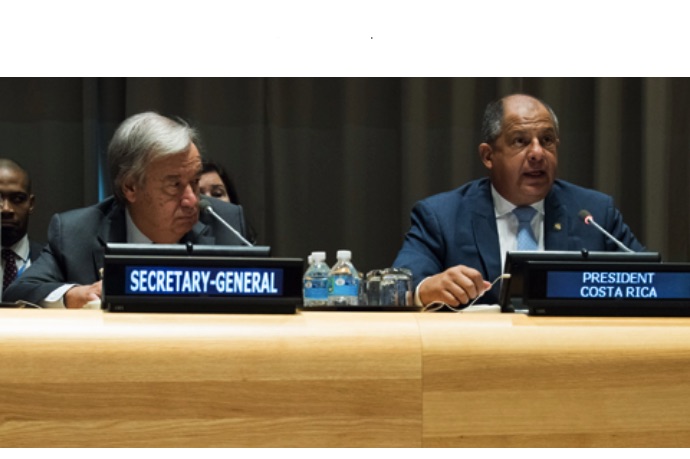
The High-Level Panel emphasizes the powerful role of public, private and civil society partnerships and encourages new collaborations, promoting new commitments that will carry this work forward. “With the second report we are also taking another step in building momentum within governments all over the world. We are about to launch a group of Champions with support from more than 20 governments who take the actions and recommendations from the panel further,” explains co-Chair Luis Guillermo Solis, President of Costa Rica.

(continued in right column)

Question for this article

Does the UN advance equality for women?

(continued from left column)

“Now is the time to act”, continues co-Chair Simona Scarpaleggia, CEO of IKEA Switzerland, and stresses the importance of demonstrating accountability. “The report is out and it shows how all sectors—public, private and civil society—can contribute to overcome systemic barriers for women’s economic empowerment,”, she says. “In IKEA Group, we are committed to doing our part by reaching gender equality in all leadership positions providing equal opportunities and equal pay by 2020.”

Individual Panel members and the many institutions they are associated with have already made significant commitments to take the agenda forward and more commitments were shared during the release of the second report, such as:

– MET Community’s commitment to promote the use of technology through [their] online platform to connect, train and provide visibility to female entrepreneurs in particular Latino rural women, Afro-American and indigenous women who want to start businesses;

– The OECD’s plans to support the G20 commitment to reduce the gender gap in labour force participation by 25 percent ahead of 2025 by setting normative standards through its gender equality recommendations on education, employment, and entrepreneurship, and public life;

– The Caribbean Domestic Workers Network’s continued advocacy across the region for the ratification of ILO Convention 189 setting labour standards for home workers and domestic workers;

– The Government of Finland’s continued support of daycare and early childhood education as essential parts of development programmes and a prerequisite for women’s economic and political empowerment and their ability to get decent work; and

Care International’s commitment to ensure that 30 million women will have greater access and control over their economic resources by 2020 through technological solutions and scaling of the its model of Village Savings and Loan Associations and the development of a new global partnership for ensuring access to financial services for the world’s poorest women.

About the UN Secretary-General’s High-Level Panel on Women’s Economic Empowerment

The HLP was established by the UN Secretary-General in January 2016 with the aim to place women’s economic empowerment at the top of the global agenda to accelerate progress of the 2030 Agenda for Sustainable Development. The HLP is supported by the Government of the United Kingdom. Its two reports will be supported by tool kits to guide the implementation of its recommendations, which are forthcoming. Link to download the report

UN commences nuclear abolition negotiations

DISARMAMENT & SECURITY .

An article by by Alyn Ware for Abolition 2000

On 16 February, approximately 100 countries gathered at the United Nations for the first session of negotiations on a legal agreement to prohibit nuclear weapons. The participants included two nuclear-armed States (China and India) and one NATO country (Netherlands) with the remaining being non-nuclear countries. (See the list of states participating below).

The negotiations are being undertaken in accordance with UN General Assembly Resolution 71/258 Taking forward multilateral nuclear disarmament negotiations, adopted on December 23 by a vote of 113 in favour, 35 opposed and 13 abstaining.

This first session of the ban treaty negotiations, which took place on Feb 16, 2017, considered procedural matters such as the election of officers, agenda for the negotiations, rules of procedure and participation of NGOs. The substantive negotiations on the proposed ban treaty will take place March 27-31 and June 17 –July 7.

Ambassador Elayne Whyte Gómez of Costa Rica was elected as Chair of the negotiations. Costa Rica has a strong track record on multilateral nuclear disarmament including being a member of the Latin America and Caribbean Nuclear-Weapon-Free Zone, being one of the leaders of the initiative which achieved an Advisory Opinion from the International Court of Justice in 1996 on the general illegality of nuclear weapons, chairing the 2013 sessions of the Open Ended Working Group on Taking Forward Nuclear Disarmament Negotiations (OEWG) which along with the 2016 sessions of the OEWG led to the UN General Assembly decision to initiate the ban treaty negotiations, and submitting a Model Nuclear Weapons Convention to the United Nations General Assembly and NPT Review Conferences as a guide to comprehensive nuclear disarmament negotiations.

One of the issues discussed was whether NGOs would be able to participate in the negotiations – meaning that they would have permission to speak and submit written papers – or whether they would only be able to attend and observe the proceedings. The vast majority of states agreed that NGOs would be able to participate. However, states might be able to object to the participation of certain NGOs they believe are not genuinely engaged in the issue, but such objection would need to be accompanied by a written explanation circulated to all participants.

Another issue was whether the proceedings should be bound by consensus or open to a vote. The majority of states supported having the option to vote in order to ensure that one or two states are not able to veto proceedings, and this was reflected in the rules of procedure.

The agenda for the March negotiations will include a general exchange of views on elements for the prohibition treaty, including: principles and objectives, preambular elements, core prohibitions, effective legal measures, legal provisions and norms, institutional arrangements and other provisions.

136 Japanese parliamentarians join nuclear disarmament statement on eve of ban treaty negotiations

On Feb 15, the eve of the first session of the ban treaty negotiations, M.P. Keisuke Suzuki (LDP), Secretary-General of the Japan section of PNND, sent to New York the endorsements of 136 Japanese parliamentarians for A Nuclear-Weapon-Free World: Our Common Good’, a joint statement of legislators and religious leaders from around the world. The endorsers were from all political parties and included former foreign ministers, ambassadors and other high level parliamentarians.

The statement warns about the risks of a nuclear catastrophe, whether by accident, intent or miscalculation, calls upon world leaders to commit to nuclear abolition and to replace nuclear deterrence with shared security approaches to conflicts, and supports a nuclear weapons convention or framework of agreements that eliminate nuclear weapons.

‘In Japan, there is broad support among the public and among parliamentarians for the effort toward a nuclear-weapon-free world,’ said Mr Suzuki (LDP), ‘The number of MPs who responded positively is very encouraging.’

(Continued in right column)

Question related to this article:

Can we abolish all nuclear weapons?

(Continued from left column)

UNFOLD ZERO consultation as ban treaty negotiations commence

Also on Feb15 in New York, UNFOLD ZERO and PNND held the fourth in a series of Consultations on nuclear disarmament negotiations and parliamentary action.

The consultation included diplomats, lawyers and representatives of disarmament NGOs, parliamentary organisations, youth networks and religious & interfaith organisations. It focused on three key multilateral processes, i.e. the ban treaty negotiations, Non-Proliferation Treaty review cycle, and the 2018 UN High Level Conference on Nuclear Disarmament.

The ban treaty negotiations were introduced by a representative of Austria, the country that submitted the draft resolution to the UN on commencing the negotiations. The 2018 UN High Level Conference was introduced by a representative of Indonesia, the country which submitted (on behalf of the non-Aligned Movement) the resolution by which the UN decided to hold the conference. Some interesting observations and suggestions were made at the consultation.
Here are a few:

The ban treaty is not an alternative to the NPT, but rather a measure where-by non-nuclear States can undertake action to implement their nuclear disarmament obligations;

The UN High Level Conference has the capacity to engage all states: nuclear-armed, allied and non-nuclear.

The 2018 UN High Level Conference could build on the ban treaty negotiations by providing a platform for states to announce their signature and/or ratification, assuming the treaty is negotiated by then;

The High Level Conference could include multiple strands, some of which everyone could agree to and be adopted by consensus, and others of which could be adopted by vote and apply to those who vote in favour;

In addition to pushing for agreements at the High Level Conference on specific multilateral measures, governments should also be encouraged to make individual voluntary commitments and offer concrete measures that they have already adopted (a ‘gift basket’ for the conference).

This approach has been very productive at the Nuclear Security Summits and other high level conferences.

Civil society and the governments leading the process for the UN High Level Conference need to step up the visibility and promotion of the conference.

States that were present at the Feb 16 organisational meeting for the ban treaty (unofficial list)

Algeria, Antigua and Barbuda, Argentina, Armenia, Austria, Azerbaijan, Bahrain, Bangladesh, Barbados, Belarus, Belize, Benin, Bhutan, Botswana, Brazil, Brunei, Burkina Faso, Cambodia, Chile, China, Colombia, Congo, Costa Rica, Cote d’Ivoire, Cuba, Cyprus, Democratic Republic of the Congo, Dominican Republic, Ecuador, Egypt, El Salvador, Eritrea, Ethiopia, Gabon, Ghana, Guatemala, Guyana, Haiti, Honduras, India, Indonesia, Iran (Islamic Republic of), Iraq, Ireland, Jamaica, Jordan, Kazakhstan, Kenya, Kuwait, Lao People’s Democratic Republic, Lebanon, Lesotho, Libya, Liechtenstein, Madagascar, Malaysia, Malta, Marshall Islands, Mexico, Mongolia, Morocco, Myanmar, Namibia, Netherlands, New Zealand, Nicaragua, Niger, Nigeria, Oman, Papua New Guinea, Paraguay, Peru, Philippines, Qatar, Republic of Moldova, San Marino, Saudi Arabia, Senegal, Singapore, South Africa, Sri Lanka, Swaziland, Sweden, Switzerland, Syrian Arab Republic, Tajikistan, Thailand, The Former Yugoslav Republic of Macedonia, Togo, Trinidad and Tobago, Tunisia, Uganda, Ukraine, United Arab Emirates, United Republic of Tanzania, Uruguay, Venezuela, Viet Nam, Yemen, Zambia, Zimbabwe

Continuation of Statement by Phumzile Mlambo-Ngcuka

. WOMEN’S EQUALITY .

Continuation of the Opening statement by Phumzile Mlambo-Ngcuka, UN Under-Secretary-General and Executive Director of UN Women for the 61st session of the Commission on the Status of Women as published by UN Women

… There is a big opportunity for this Commission to recommend changes that match the ambitions of the Sustainable Development Goals in their scale of potential change. And when we do that we will address the needs of these women.

More than half of all women workers around the world—and up to 90 per cent in some countries—are informally employed. We cannot ignore them. This sector is just too big to fail.

Informal workers themselves are mobilizing to negotiate the changes they need, for example waste pickers through their local associations in Brazil, Colombia and India, and in many cases doing that successfully.

On International Women’s Day last week, Pakistan enacted a new law that recognizes home-based workers and entitles them to social protection.

Excellencies, let us look for a moment at some of the barriers that remain to be cracked.

There is under-representation of women in decision-making at all levels. They therefore have insufficient voice to drive the nature and extent of change needed.

There is still a myriad of laws in more than 150 countries that discriminate against women. This falls right in your court as decision-makers and law makers.

And we have to address the stereotypes, norms and practices that discriminate against women and girls, and have for generations denied women career paths on a par with men.

In this Commission, you have an opportunity to assist us to turn back these practices and to introduce changed practices both in businesses and in institutions. The global pay gap, at an average of 23 per cent, means that women are clearly earning consistently less than men.

Women regard this as daylight robbery. The deficit has robbed generations of women of income, future security and just reward. Each year they work three months more than men for equivalent pay.

In the digital age, we also seek technology-enabled solutions for women. We must therefore resolve to act on gaps in the access to technology that unfortunately have been growing. There are some 200 million fewer women online than men, and the gap is worryingly widening.

In a world that has moved to technology and will move even further, this obviously has to change for women too, as it is expected that 90 per cent of future jobs will need a level of digital literacy.

This Commission can drive faster change for multitudes of young people and older people who need to be ready for this future world of work.

Too few people are impacted by the actions to date that we have been driving in the economy.

Change is not yet addressing the root causes of women’s economic injustice, nor is it fulfilling their rights.

There is now an opportunity to act on the economic front. These changes must also mean a rights-based approach in which all people also enjoy democratic rights, free to organize, free to dissent, and human rights defenders free to support their fellow workers, fellow activists and not be killed and brutalized for doing this work. And young people must be free to be activists.

Advancing women’s equality in total could bring a potential boost of 28 trillion US dollars to global annual GDP by 2025. That is five years before the 2030 Agenda endpoint. Wouldn’t it be great if we were to achieve this?

Just fixing the informal economy could impact 80 per cent of the women working outside home in sub-Saharan Africa and remove the threat of extreme poverty.

The change of discriminatory laws in over 150 countries could affect more than 3 billion women and girls in the world. And that is what tipping the scale is about. This will be game changing.

Macroeconomic policies and related laws would contribute to inclusive growth and significantly accelerate progress.

Innovations in climate-smart agriculture and the low-carbon economy envisaged in the 2030 Agenda, as well as digital economies and information communications technologies can rapidly move opportunities ahead.

Mobile cellular networks already cover an area occupied by 95 per cent of the world’s population offering huge potential for digital and financial inclusion.

Investment in a pipeline of girls well educated in STEAM subjects [science, technology, engineering, arts and math], could increase the current 25 per cent of women in the digital industries’ workforce and build skills matches for the ‘new collar’ jobs of the Fourth Industrial Revolution coupled with the anticipated demands of the green economy.

(continued in right column)

Question for this article

(continued from left column)

Women also face difficulties when it comes to access to markets. Governments and the private sector can both make a significant contribution to this. If just 1 per cent more than existing annual global public procurement spending were to be directed to women’s enterprises, women could earn an additional 60-70 billion US dollars from supplying goods and services. This can be addressed in procurement policies and practices.

We have committed to eliminating violence against women including sexual harassment at work in the next 13 years by 2030.

That would give relief to many women who are traumatized by daily harassment at work. That includes the ability for women to have a fair hearing when they report violence and harassment at work.

Paid parental leave, more men sharing care work, and safe affordable childcare services together create many possibilities for more women to be active in the economy and enhance the essential parenting role of men.

The private sector has a role to play in this too, and in enabling women’s voices to be heard in shaping products, services and policies in the new industries, supporting asset ownership, digital and financial inclusion, and infrastructure development. When companies promote women, invest in their careers, and bring their voices into decision making, there is a better future for all.

Collectives like trade unions, and networks and associations like the International Domestic Workers Federation are vital, where the fight is not just for higher wages but for higher and equal wages. They are absolutely essential to ensuring that women are adequately represented to get the changes they want.

It is ever more urgent that we respect and protect women’s sexual and reproductive health and reproductive rights, and ensure the unmet needs of family planning for women are met. This would limit unwanted pregnancies and the consequences for mothers who may wish to work outside the home, and protect their rights .

Excellencies, what you agree to do during this CSW could be the much needed accelerator for the implementation and achievement of the 2030 Agenda. We must make, and can make, the world of work, work better for women, transforming economies and realizing rights.

We now have only 13 years until 2030. Every week and every month counts. So does the scale of the change we achieve, which must also benefit the displaced persons.

This Commission on the Status of Women must not be the Commission on the Status Quo.

This week the UN Secretary-General’s High-Level Panel on Women’s Economic Empowerment will present its final report. This contains important recommendations, all in line with the work of this Commission. The report will enable us to reach and motivate the partners who are essential for success.

At the UN, under the leadership of the Secretary-General, we are also making adjustments to support women in the world of work. We are committed to gender parity at senior levels by 2021. This is a challenge faced by many partners in both public and private sectors. Our Secretary-General joins the growing number of leaders who want a solution before 2030.
Incentives in every sector will be needed to recruit and retain female workers and also to make contributions to the business culture, and the norms and values that must change for women to realize economic justice.

Lessons from countries already making change are important to share. For this Commission, 35 countries have provided input on the review theme of how lessons from the Millennium Development Goals are being reflected in national processes and policies. We also expect progress on gender to be reflected in the reports for the July 2017 UN High-Level Political Forum. We also follow with interest the actions of countries that made critical commitments at the 2015 Global Leaders Meeting attended by more than 70 heads of state.

Partnerships are essential, especially our partnership with ILO that tonight will enable us to launch the forward-looking “Equal Pay Platform of Champions”, which will be attended by trade unions, by sports heroes, by film stars, governments and by youth.

Excellencies, we need to work together. There are challenges but there are also solutions. You have boldly committed to substantive and sustainable changes by 2030.

Across the world, civil society space is shrinking, and democratic actors and human rights defenders face daunting attacks. Strong movement building continues in the face of the existential threats that both provoke and besiege it.

We know that strong and autonomous women’s movements are a corollary of effective policy change on gender equality. We will consistently promote their safety and ability to organize.

At the same time, over the last two years, a resounding global gender equality compact has been accumulated, through the Beijing+20 Review, Agenda 2030 itself, the Paris Agreement on Climate Change, the New Urban Agenda and the New York Declaration on Migrants and Refugees.

These aspirations are shared by the world, for a better world; for women, for us all.

Thank you.

Opening statement by Phumzile Mlambo-Ngcuka, UN Under-Secretary-General and Executive Director of UN Women for the 61st session of the Commission on the Status of Women

. WOMEN’S EQUALITY .

A report by UN Women

Chair of the Commission on the Status of Women, H.E. Mr. Antonio de Aguiar Patriota, Secretary-General of the UN, President of ECOSOC, President of the General Assembly, Ministers and representatives from capitals, Women and civil society representatives,

At the outset, I would like to thank the Chair of CSW, his Excellency Ambassador Patriota, and his Bureau, for all their work in preparing this complex event.

I also want to thank the UN Women team across the world for their hard work and preparations, including the important regional pre-CSW consultations that allow us all to get together in this session and be as ready as we are.


In Cape Town, South Africa, UN Women Executive Director Phumzile Mlambo-Ngcuka meets girls involved in the Grassroots Soccer SKILLZ programme, a grantee of the UN Trust Fund to End Violence against Women. Photo: Karin Shermbrucker
Click on the image to enlarge

A special thanks to the representatives of Member States, civil society and youth who have travelled from all over the world to collaborate with us. And I thank Member States for their inclusion of civil society and youth in their delegations, helping to make this meeting truly universal in its deliberations.

There are 750 young people here who on Saturday and Sunday were engaged in an assembly and a festival of ideas. What an engagement that was! We also have 8,600 pre-registrations, which means that we potentially have the largest number ever of civil society representatives with us in this CSW61.

I would also like to acknowledge our Secretary-General, at his first Commission in his new capacity. Secretary-General, it is wonderful to have you with us here. I thank him for leading the agenda on gender equality from the front and for his insightful remarks and unwavering drive to tackle gender inequality from Day One of his tenure.

This Commission concerns itself with the status of women. It reviews the progress made by women and girls, and assesses the remaining challenges. It is a barometer of the progress we are making on achieving a world that is free of gender discrimination and inequality, a world that leaves no-one behind. It will help us measure achievement of the implementation of the 2030 Agenda for Sustainable Development. It also helps us to pursue action in priority areas and benefits from the Commission’s Agreed Conclusions.

The priority theme for CSW61, as set out in the Secretary-General’s report for the session, is “Women’s Economic Empowerment in the Changing World of Work”. Inclusive economies and a positive world of work are powerful ways of breaking away from the cycles of poverty that besiege our nations.

Currently, in the gender equality agenda, we see progress in some areas, but we also see an erosion of gains. The much-needed positive developments are not happening fast enough. We also need to work together to make sure we reach a tipping point in the numbers of lives changed.

We need swift and decisive action that can be brought about by the world of work so that we do not leave women even further behind.

Excellencies, let us agree to constructive impatience.

(continued in right column)

Question for this article

Does the UN advance equality for women?

(continued from left column)

The Sustainable Development Goals give us a framework to work for far-reaching changes. In this session of the Commission we will be able to bring renewed focus to the needs of those who are currently being left behind and those who are currently furthest behind.

They include young women; some of whom were at the Youth CSW. They include refugees and migrants. They include women affected by gender-based violence, including workplace sexual harassment.

They include women who are denied sexual and reproductive health and reproductive rights and services; and women facing discrimination on multiple and intersecting fronts over and above their gender: such as sexual orientation, disability, older age, race, or being part of an indigenous community.

They include women in the informal sector, and care givers, those who provide services in the home that are much needed to sustain society.

Almost all women do some form of work. If you are a woman you are a worker—period.

Virtually all economies rely on the unpaid care and domestic work that is largely provided by women and girls. Yet this form of work positions masses of women uniquely to be “left behind”.

Positive changes in the world of work must enable care work to be valued and to be shared by parents and within the family unit. This will bring about far-reaching positive changes for women, society and economies.

Investment into the care economy of 2 per cent of GDP in just seven countries could create over 21 million jobs. That would provide child care, elderly care and many other needed services.
The Secretary-General’s report gives greater attention to women who work at the base of the pyramid, as these are the ones who are at the highest risk of being left behind.

The Commission must also look at how to increase the participation of these women, as well as women’s participation in male-dominated sectors that have meaningful economic benefits.

The Commission can make fresh gains in how we bring the informal sector into a structured and meaningful economic relationship with benefits, respecting the rights of women in this sector.

The informal sector is dominated by the millions and millions of women who are the working poor. Women workers in the informal sector are all around us.

They are in the rapidly growing urban communities, as well as in rural areas. They are the under-the radar and under-valued cogs in the bigger wheels of the formal economy. They are the low-cost farm workers, flower sellers, street food vendors, care workers, and home-based producers of garments and car parts. Almost none of them have legal or social protection.

And they are missing out on the opportunities offered by the changing world of work, which has technology as one of its advantages…

[Editor’s note: We found it too difficult to abbreviate this speech into the usual length for a CPNN article without losing important statements; hence it is continued on the following page.]

Photos: A look at International Women’s Day marches around the world

. . WOMEN’S EQUALITY . .

A photo essay by Dayana Morales Gomez for the Public Broadcasting Service

On International Women’s Day, women around the world celebrated by marching in more than 50 countries, taking off from work to make clear what “A Day Without A Woman” would look like and wearing red in solidarity. In New York, a bronze statue of a girl was installed to stare down the iconic Wall Street Bull over gender inequality.

The day was first observed in 1908 in New York City, where women marched for suffrage and workplace improvements. After several years of continuous demonstrations across the U.S. and Europe, March 8 was officially designated as International Women’s Day. The date is significant because it was the day a women’s march in Pretograd, Russia led to the start of the Russian Revolution.

This year, the United Nations used the day to shine a light on the 2030 Agenda, an ambitious plan to ensure girls and boys have equal access to education, that discrimination and violence against women are halted, and that forced marriage and female genital mutilation end.

Below, see photos of International Women’s Day demonstrations from around the world [click on photos to enlarge].


A woman holds a placard during a rally on March 8, 2017 for gender equality and against violence towards women on International Women’s Day in Kiev, Ukraine. Photo by Valentyn Ogirenko/Reuters.


Bangladeshi activists and garment workers attend a rally on March 8, outside National Press Club during International Women’s Day in Dhaka, Bangladesh. Photo by Zakir Chowdhury/Barcroft Images / Barcroft Media via Getty Images)


Thousands of demonstrators attend a rally for International Women’s Day on March 8 in Melbourne, Australia. Marchers were calling for de-colonisation of Australia, an end to racism, economic justice for all women and reproductive justice, as well as supporting the struggle for the liberation of all women around the world, inclusive of trans women and sex workers. Photo by Daniel Pockett/Getty Images


Nigerian women gather on March 8 to protest violation and sexual abuse against women during the World International Women’s Day in Lagos, Nigeria. Photo by Stringer/Anadolu Agency/Getty Images

(Article continued in the right column)

Question for this article

Do women have a special role to play in the peace movement?

(Article continued from the left column)


Costumed women shout slogans during a march on March 8 as part of International Women’s Day in Kiev. Photo by Sergei Supinsky/AFP/Getty Images


Georgian feminist supporters attend a rally on March 8 to mark the International Women’s Day in front of the Georgian parliament in central Tbilisi. Photo by Vano Shlamov/AFP/Getty Images


Palestinian women take part in a demonstration on March 8 to protest against sexual discrimination during the International Women’s Day in front of the unknown soldier’s monument in Gaza City, Gaza. Photo by Mustafa Hassona/Anadolu Agency/Getty Images


A man and his dog walk past the sculpture of a woman covered in paper and ropes as part of a performance to protest the lack of visibility of women in public spaces, on March 8, International Women’s Day in Oviedo, Spain. The covered statue is “La Pensadora” (The female Thinker) by Spanish artist Jose Luis Fernandez. Photo by Eloy Alonso/Reuters.


A statue of a defiant girl stands facing the Charging Bull sculpture in the Financial District of New York on March 8. State Street Global Advisors, a nearly $2.5 trillion investor and unit within State Street Corp., installed the bronze statue in front of Wall Street’s iconic charging bull as part of its new campaign to pressure companies to add more women to their boards. Photo by Jeenah Moon/Bloomberg via Getty Images.

Amnesty: 8 women show us why International Women’s Day is the day to declare: We won’t wait for our rights!

…. HUMAN RIGHTS ….

An article by Shiromi Pinto for Amnesty International

People across the world are joining today’s Women’s Strike, demonstrating the consequences of A Day Without A Woman. Can we afford a day without women like these eight, whose refusal to wait is the key to reversing an increasingly regressive trend for women’s rights?


Photos of the 8 women described below in order upper left to lower right
(click on photo to enlarge)

If there’s one thing we’ve learned from January’s historic Women’s March, it’s that women are fed up of waiting. Today, that fervour hits the streets again in what looks set to be a historic women’s strike. Back at the beginning of 2017, more than 3 million people – of all genders – marched worldwide for women’s rights, and many intersecting rights besides. Those motivations remain true today – spurred by US President Donald Trump’s misogynistic remarks, discriminatory travel ban and directives that have far reaching and profoundly negative implications for migrants and other minorities. His policies also specifically put women’s health and lives at risk. But this is not unique to the USA, as demonstrated by the thousands of women worldwide who are striking today. They know that when it comes to the inequalities that still afflict so many women around the world, the statistics are undeniable.

The World Economic forum predicts it will take another 169 years for the gender pay gap to close. This is just one of many shocking figures showing how long we might have to wait before women and girls can achieve equality. Across the globe, some 225 million women are unable to choose whether or when to have children. Each year, about 47,000 women die, and another 5 million are disabled, as a result of unsafe abortions. An estimated 35% of women worldwide experience physical or sexual violence. More than 32 million girls around the world – compared with about 29 million boys – are not in primary school. And 700 million women alive today were married before they were 18 years old.

With so much left to be gained, women and girls around the world are saying enough is enough. Here are eight women who are battling on the frontline to claim their rights, refusing to wait in the face of injustice.

They won’t wait and neither will we.

How about you?

AFRICA

Dr Tlaleng Mofokeng – She won’t wait… while women are still denied abortions

A medical doctor in South Africa, Tlaleng is a force to be reckoned with. Not only is she a committed medical professional, but she also fearlessly advocates for sexual health as a radio presenter, spreading her message far and wide. “I won’t stop until ​the right of women to have an abortion is respected and provided for safely,” she says. “In South Africa, women die every year due to unsafe abortions, yet politicians think they can use women’s reproductive rights as a political ping pong ball.” Tlaleng is also challenging rape culture, and championing the drive to get health practitioners to treat patients with respect and without discrimination – a true human rights defender, like all the women featured here.

“The whole world thinks they have a right to tell women what to do with our vaginas and our uteruses. Women’s health seems to be a free-for-all for everyone to have an opinion on”.

AMERICAS

Connie Greyeyes – She won’t wait… for another sister to be stolen

Connie Greyeyes is an “accidental” activist. An Indigenous Cree woman living in the province of British Columbia in Western Canada, she realized that a shocking number of Indigenous women in her community had gone missing or had been murdered. She began organizing to support the families of these women and took the demand for a national inquiry to the Canadian capital in Ottawa. According to official figures, more than 1,000 Indigenous women have gone missing or been murdered in Canada in the last three decades. The efforts of Connie and many other Indigenous women across Canada have borne fruit, with the Canadian government finally announcing an inquiry in 2016.

“When we’re together, there’s so much strength. Being able to smile even after finding out that your loved one was murdered. How can you not be inspired by women who have been to hell and back over their children? You know, fighting, trying to find justice. How can you not be inspired and want to continue fighting?”

Karla Avelar – She won’t wait… while refugees are denied safety

Karla Avelar is a survivor. She’s made it through gang attacks, murder attempts and prison in El Salvador. Today, she heads Comcavis Trans, which supports Lesbian, Gay, Bisexual, Transgender and Intersex (LGBTI) people, all of whom face threats and violence in El Salvador. Their situation is so tenuous in the country that many flee as refugees. Through Comcavis, Karla provides information and other support to help them on what is often a treacherous journey that normally takes them to the USA or Mexico. But the US’s hardline stance on refugees and migrants entering the country has thrown these LGBTI refugees into even greater jeopardy – something Karla is now tackling with energetic defiance.

“The decisions Trump is making are affecting thousands of people, particularly LGBTI people who are victims of racism, discrimination and attacks. Instead of guaranteeing the human rights of migrant people, the government of the USA is stigmatizing and criminalizing them.”
(continued in right column)

(Click here for a Spanish version of this article or here for a French version)

Question for this article

Do women have a special role to play in the peace movement?

(continued from left column)

ASIA-PACIFIC

Su Changlan – She won’t wait … to reunite another child bride with her parents

Former school teacher Su Changlan’s story is not unique. One of her closest friends says that hers is the story of many women in China. She couldn’t stand by when she heard about girls trafficked as brides or parents whose children had gone missing. She did her best to help them and many others, her activism extending to land rights issues and support for pro-democracy protests in Hong Kong. She did all this knowing that she might have to sacrifice her freedom in the process. Sadly, this is just what happened. She has been detained by the authorities since 2015.

“I hope that parents do not despair about searching for their missing children. We, civil society, should work together to help them reunite with their children. The government should also invest more in these efforts instead of hindering our work!”

Samira Hamidi – She won’t wait… while women are excluded from government

Since 2004, Samira Hamidi has been blazing a trail for women in Afghanistan. As Chairperson of the Afghan Women’s Network (AWN) she has actively tried to ensure that women’s voices and concerns are represented at the highest levels of government. At the same time, she is a staunch advocate in the international arena, reminding governments and potential aid donors that promoting and securing women’s rights in Afghanistan must be part of any conversation they may have with the country’s leaders. She faces a steep road, but she remains undaunted, championing other women human rights defenders, ensuring that their concerns are amplified.

“Women should be given an equal opportunity to make a better Afghanistan.”

EUROPE

Jeanette John Solstad Remø – She won’t wait… for the right to be recognized as a woman

Until recently, she was John Jeanette, her name signifying the dual identity she was forced to accept every day in Norway. Although this former submarine commander felt her future could only be female, Norwegian law did not allow her to change her legal gender without undergoing a compulsory “real sex conversion”. This would have involved having her reproductive organs removed, as well as a psychiatric diagnosis. She refused to put herself through any of this. As a result, her driving license, passport, medical prescriptions, even her library card, still referred to her as male. She campaigned hard against Norway’s abusive law and her actions, alongside those of her supporters – including Amnesty – scored a huge victory. In 2016, Norway finally adopted a new law on legal gender recognition, which allows transgender people to choose their gender. Today, in acknowledgement of this milestone, she has changed her name to Jeanette John.

“Everyone deserves the right to express their gender.”

MIDDLE EAST AND NORTH AFRICA

Loujain al-Hathloul – She won’t wait… for the right to drive a car

Fearless and formidable, Loujain defied Saudi Arabia’s driving ban and faced the consequences. In November 2014, she was detained for 73 days for live-tweeting herself driving into Saudi Arabia from the United Arab Emirates. Released in February 2015, she went on to stand for election in November that year – the first time women were allowed to both vote and stand in elections in the state. However, despite finally being recognized as a candidate, her name was never added to the ballot. Today, she continues her fight to create a better future for her fellow Saudis – one where women enjoy their rights as full citizens of their nation.

“I will win. Not immediately, but definitely.”

Narges Mohammadi – She won’t wait… for another woman to be disfigured in an acid attack

A passionate advocate for women’s rights in Iran, Narges actively protested against acid attacks on women. This was just one of many efforts she has made to defend human rights, including calling for the abolition of the death penalty. She has paid dearly for her work and is now serving a total of 22 years’ imprisonment for daring to speak out. The “evidence” used against her at trial included her meeting with the European Union’s former High Representative for Foreign Affairs and Security Policy on International Women’s Day 2014. “In a land where being a woman, being a mother and being a human rights defender is difficult on their own, being all three is an unforgivable crime,” she recently wrote from prison. In 2016, Narges went on hunger strike because she was refused telephone calls with her two young children, who now live in France with their father. Today her children can speak to her once a week, but face the prospect of living without their mother for many years to come.

“I am, in my own homeland, convicted and imprisoned for the crime of being a human rights defender, a feminist and an opponent of the death penalty. [But] not only have my imprisonment and my recent 16-year sentence not made me feel any regret, they have actually strengthened my convictions and commitment to defending human rights more than ever before.”

(Thank you to Janet Hudgins, the CPNN reporter for this article.)

ICC: Meet the justice activists breaking the mold

. . WOMEN’S EQUALITY . .

An article from the Coalition for the International Criminal Court (abbreviated)

This International Women’s Day – 8 March 2017 – we join the UN in calling for gender balance in the work force. To provide just that inspiration we are celebrating the women leading the fight for global justice for the worst crimes. Be brave when you find gender perspectives are missing: countless of our civil society representatives from around the world have dared to break the mold – so can you. Read their stories and be inspired.


Photos of the 8 women described below in order upper left to lower right
(click on photo to enlarge)

Adriana Maria Benjumea Rúa, Director – Corporación Humanas Colombia

Adriana Maria Benjumea Rúa is a lawyer, researcher and feminist whose work with Humanas, including on the issue of gender and political influence, has led to the organization becoming a leading advocate of inclusive perspectives in the Colombian peace process.

Adriana is the director of Corporación Humanas Colombia. As a lawyer, researcher and feminist working on the issue of gender and political influence, Adriana’s work includes the important work of monitoring public policies around care for victims and ensuring that they are not implemented without a gender perspective.

Adriana’s extensive socio-legal research on gender justice and violence against women in armed conflicts as well as her strategic litigation work in cases of sexual violence in transitional justice frameworks have contributed to the leading role of Humanas among civil society engaging in the Colombia peace talks. . .

Nancy Lopez – Lawyer – Comisión Mexicana de Defensa y Promoción de los Derechos Humanos

Together with a team of committed men and women from the Mexican Commission for the Defense and Promotion of Human Rights, as well as victims and their families, Nancy Lopez confronts issues of justice denied in Mexico, exploring possibilities for international justice before mechanisms like the ICC.

With the Comisión Mexicana de Defensa y Promoción de los Derechos Humanos, Nancy plays a critical role within Mexican civil society by bringing into focus the country’s need for the global fight against impunity – to ensure the non-repetition of international crimes like enforced displacement, enforced disappearance, torture, executions and sexual crimes in the country; but also to lay groundwork for solutions to many of Mexico’s social issues.

With the Comisión Mexicana coordinating Mexican civil society activities around the ICC, Nancy advocates for the Mexican government to honor its commitment to ensure that international justice is respected and enforced, and that the state abides by its obligations as an ICC member state. Such advocacy has included pushing Mexico to implement the Rome Statute, including its pivotal state cooperation provisions. . .

Rebecca Lozada – National Coordinator – Philippine National Coalition for the ICC

A year after Rebecca Lozada took the helm of the Philippines National Coalition for the ICC, the Philippines became the 117th ICC member state. Setting an example for the majority of states in Southeast Asia, with Rebecca’s coordination Philippines civil society has been mobilizing to ensure a framework is in place to deliver those who commit the most egregious international crimes to justice.

Under Rebecca’s leadership, the Philippines national Coalition for the ICC (PCICC) has been working to ensure individual perpetrators of the most heinous crimes – genocide, war crimes and crimes against humanity – are brought to justice. In 2010, one year after Rebecca took up the position of National Coordinator of the PCICC, the Philippines government ratified the Rome Statute to become the 117th ICC member state. . .

(Article continued in the right column)

Question for this article

Do women have a special role to play in the peace movement?

(Article continued from the left column)

Brigitte Chelebian – Executive Director – Justice Without Frontiers

Brigitte Chelebian is an Attorney at Law and the Executive Director/Founder of the organization Justice Without Frontiers (JWF), which works towards the advancement of international criminal justice– the first organization of its kind in Lebanon. In a part of the world with little support for the Rome Statute system, JWF campaigns for the ratification and implementation of the Statute within national laws, including promotion of the rights of women who are victims of armed conflict and sexual violence.

As Founder of Justicie Without Frontiers, Brigitte has led pioneering work in Lebanon and the wider Middle East to promote the rights of atrocity victims, including women and children affected by sexual violence in conflict, build stronger national and regional institutions to protect against these crimes, and create access to legal support for victims. . . .

Tetiana Pechonchyk – Chairperson – Human Rights Information Center

Tetiana Pechonchyk is a leading advocate for international justice in her home country, Ukraine, where her and her organization’s first-of-its-kind work from 2014-2016 documenting crimes in both occupied and government-controlled territories continue to make the global fight against impunity a reality in Ukraine.

As Chairperson of the Human Rights Information Centre (HRIC), Tetiana conducts one-of-a-kind work to raise awareness and seek justice for victims throughout Ukraine’s conflict-affected areas. Despite political challenges to her organization’s work, Tetiana and HRIC continue to fight for justice both on occupied and government-controlled territories of Ukraine. . . .

Brigid Inder – Executive Director – Women’s Initiatives for Gender Justice

. . .Brigid Inder, OBE, is the Executive Director of the Women’s Initiatives for Gender Justice (WIGJ). Among her many efforts with the Women’s Initiatives, Brigid’s influential advocacy with the International Criminal Court (ICC) since 2004 has been applauded for helping to establish the investigation and prosecution of sexual and gender-based crimes as a substantive priority within the work of the OTP.

As the Prosecutor’s Special Advisor on Gender from 2012-2016, Brigid co-wrote the Policy on Sexual and Gender-based Crimes with the Office of the Prosecutor, the first such policy developed by an international court or tribunal. Through WIGJ’s advocacy on the ICC’s substantive work, along with its focus on the integration of women within legal proceedings as well as the institutional development of the ICC with respect to gender and geographical diversity amongst elected officials and senior managers, Brigid supports the ICC in becoming an institution capable of delivering on its mandate and ensuring women and gender issues are included within the Court’s structures and its justice outcomes. . .

Mama Koité Doumbia – President – Malian National Coalition for the ICC and Board Member – Trust Fund for Victims

Mama Koité Doumbia has made an impressive career in promoting women’s rights and gender-justice related issues. She continues to fight tirelessly in multiple capacities to reinforce women’s access to justice and empowerment within her home country of Mali, across the African continent and in many supranational organizations.

Among her many roles and experiences, Mama Koité is well known nationally and internationally as a union leader, teacher and determined activist in finding ways to reinforce the capacities of women’s NGOs. She fights passionately against social injustice and violence. Mama Koité has worked with the Women’s Coordination of Mali, and she was President of the African Women’s Development and Communication Network (FEMNET) in Nairobi, Kenya, from 2003 to 2010. From 2005-2014 she also chaired the Gender and Related Issues Cluster and vice-chaired the Economic and Social Council of the African Union. Mama Koité also worked as a member of the Réseau Paix et Sécurité de l’Espace CEDEAO/Mali. She is a founding member of the Réseau Mondial Francophone Egalité Femmes Hommes.

Urantsooj Gombosuren – Chairperson – Asian Forum for Human Rights and Development (FORUM-ASIA)

As chairperson for FORUM-ASIA, Urantsooj works towards the strengthening of human rights and gender-equality in Asia.

Based in Bangkok, Thailand, FORUM-ASIA has worked alongside human rights defenders and other civil society organizations in Asia for over 25 years promoting and protecting human rights in the region. FORUM-ASIA works to enable a sustainable environment of peace, justice, and gender-equality based on collaboration, advocacy, and cooperation. They conduct their work throughout Asia and across the globe. . .

(Thank you to Janet Hudgins, the CPNN reporter for this article.)

CSW at UN: Supporting People’s Actions to Empower Women at the Margins

. WOMEN’S EQUALITY .

An announcement by the International Institute for Peace Education

Pasos Peace Museum and the International Institute on Peace Education invite you to join in a participatory, action-planning program to build solidarity with women’s movements to claim rights proclaimed by the world community in international human rights instruments, yet denied or ignored by national governments. Among the relevant rights instruments are: UNSCR 1325 on Women, Peace and Security; the Convention on the Elimination of All Forms of Racial Discrimination; and the Declaration on the Rights of Indigenous Peoples, all of which have the potential to empower citizens to advance their full participation in striving toward a just and peaceful world. Within the context of the potential of law and international standards the symposium will comprise action-planning discussions based on women’s experience with self-empowerment campaigns.


Click on the image to enlarge

Women’s international efforts toward the implementation of UNSCR 1325 through civil society initiatives at the local and regional levels in Africa and Asia will be introduced by Mavic Cabrera-Balleza of the Global Network of Women Peacebuilders and Asha Hans of Sanristi, India. National campaigns to assert the civil and political rights of Native Americans and African Americans will be introduced by Betty Lyons of the American Indian Law Alliance and Farah Tanisof Black Women’s Blue Print.

As the conclusion of our action planning discussions law students will reflect on how their future professional endeavors might enhance gender justice, social equity and political equality using law and international standards as practical and strategic instruments of justice.

(continued in right column)

Question for this article

Does the UN advance equality for women?

(continued from left column)

Please consider reviewing these legal instruments and important background documents in preparation for your participation.

* UNSCR 1325 on Women, Peace and Security

* the Convention on the Elimination of All Forms of Racial Discrimination

* the Declaration on the Rights of Indigenous Peoples

Book Party

You are also cordially invited to a celebration of the publication of Openings for Peace: UNSCR 1325, Women and Security in India, Edited by Asha Hans and Swarna Rajagopalan. A presentation of the book will be made by Ambassador Anwarul K. Chowdhury and Asha Hans.

The book party will begin at approximately 4:15pm and conclude at 5:30pm.

RSVP Required: Please RSVP for the book party using the registration form below.

Register / RSVP
Registration for this year’s event is $20. Registration fee covers lunch and the post-event book celebration and reception.

A two-step registration is required.

1) Please complete the registration form for each individual who will attend.

2) After registering please submit your registration fee using the PayPal button below. (Your registration fee will be paid to Pasos Peace Museum)

UN Commission on the Status of Women – 2017

. WOMEN’S EQUALITY .

A press release from UN Women (abbreviated)

The sixty-first session of the Commission on the Status of Women will take place at the United Nations Headquarters in New York from 13 to 24 March 2017. Representatives of Member States, UN entities, and ECOSOC-accredited non-governmental organizations (NGOs) from all regions of the world are invited to attend the session.


Click on the image to enlarge

Download the CSW61 Brochure for more information:
Arabic | English | French | Spanish

Themes

Priority theme: Women’s economic empowerment in the changing world of work

Review theme: Challenges and achievements in the implementation of the Millennium Development Goals for women and girls (agreed conclusions of the fifty-eighth session)

Emerging issue/Focus area:The empowerment of indigenous women

Preparations

Regional CSW61 Preparatory and Consultative Meetings

Multi-Stakeholder Forum On 30 January 2017, UN Women convened a forum to engage a range of stakeholders in the preparations for CSW61 at UN Headquarters in New York.

(continued in right column)

(Click here for a Spanish version of this article or here for a French version)

Question for this article

Does the UN advance equality for women?

(continued from left column)

Expert Group Meeting: In preparation for the sixty-first session of the Commission on the Status of Women, UN Women convened an Expert Group Meeting on the priority theme: “Women’s economic empowerment in the changing world of work.” The Expert Group Meeting was held with the technical contribution and support of the International Labour Organization (ILO) at ILO Headquarters in Geneva, Switzerland, from 26 to 28 September 2016.

Organization of the session

The Commission’s two-week session includes the following activities: Organization of work

Agreed conclusions

The outcome of the Commission’s consideration of the priority theme takes the form of agreed conclusions, negotiated by all States: Draft agreed conclusions

Official Documents

Official documents for the session

NGO Participation

Modalities of NGO participation

Eligibility

Registration

Opportunities for NGOs to address the Commission

Side events

Information about side events and activities organized outside the formal programme of the session

More information regarding the 61st session (2017) of the Commission on the Status of Women to be uploaded as it becomes available.