Category Archives: global

Amnesty International: Ignored by COVID-19 responses, refugees face starvation

. HUMAN RIGHTS .

An article from Amnesty International ( licensed under a Creative Commons attribution, non-commercial, no derivatives, international 4.0 licence)

The inhumane treatment of refugees and migrants threatens to stall progress on tackling COVID-19, Amnesty International said today, warning that overcrowded camps and detention centres will become new epicentres unless urgent action is taken. The organization said  that lockdowns and movement restrictions have exacerbated dire living conditions, leaving millions of people at risk of starvation and illness.

The organization is calling for concerted global action to ensure hundreds of thousands of people on the move are provided with adequate access to food, water, sanitation and healthcare to ensure their survival as countries prepare to come out of lockdown.

“It is impossible to properly contain this virus when so many people worldwide are living in desperately overcrowded, unsanitary camps and detention centres. At a time when we need compassion and cooperation more than ever some governments have instead doubled down on discrimination and abuse – preventing deliveries of food and water, locking people up, or sending them back to war and persecution,” said Iain Byrne, Head of Amnesty’s Refugees and Migrants Rights team.

“In many camps death by starvation is now reported to be a bigger threat than the virus itself. This is an appalling abdication of the collective responsibility to protect refugees and migrants, and we are urging states to take immediate action to prevent this becoming a human rights catastrophe.”

Many governments have taken actions driven by discrimination and xenophobia, which needlessly place refugees at risk of starvation and disease.

For example,  water supplies were deliberately cut off by local authorities in Bosnia’s Vucjuk camp  to force the relocation of the camp’s inhabitants. Many refugees live in precarious economic situations, and lockdowns and curfews are making it harder than ever to earn a living. In Jordan’s Zaatari camp, lockdowns prevent people from working at all—meaning no food or income to pay for even basic necessities. In April, residents of makeshift camps in France’s Calais settlements  were not receiving adequate deliveries of food and water due to lockdowns, and restrictions on movement made it impossible for them to shop for themselves, even if they had money to do so.

(Article continued in right column.)

(Click here for the French version of this article or click here for the Spanish version.)

Question related to this article:

How can we work together to overcome this medical and economic crisis?

(Article continued from left column.)

Many governments have continued to unnecessarily detain people seeking asylum, putting them at risk of contracting the virus. There aren’t enough tests and protective equipment for staff and people being detained, potentially igniting a powder keg of illness and fatalities. People held in immigration detention in Australia  have been begging to be released because they are frightened that staff who have not been issued with PPE will unknowingly bring the virus in.

Other governments have violated international law by forcing people back to danger under the pretext of containing COVID-19.

Fueled by an existing anti-migrant and opportunistic agenda, the U.S. has turned back over 20,000 people in violation of domestic and international legal obligations since March 20.

Similarly, Malaysia turned back  a boat of Rohingya people seeking safety; although Bangladesh eventually allowed the boat to land, at least 30 people had reportedly died when their vessel drifted at sea for two months. Presently, there are reports that several hundred people urgently need search and rescue assistance.

Forcing people back to countries where they are reasonably expected to face persecution, torture or other cruel or degrading treatment amounts to refoulement  which is illegal under international law. There are no circumstances where the principle of non-refoulement does not apply.

Amnesty International is calling on governments to:

* Provide adequate food and water supplies and health care to camps and quarantined people

* Consider temporary regularization of all migrants, regardless of their documentation status, ensure that economic stimulus packages and protections apply to asylum seekers and refugees, and continue to allow resettlement where possible

* Decongest camps, immigration detention centres and informal settlements, and rehouse residents in dignified and sanitary conditions with adequate access to healthcare, food, and water. Immigration detainees should be released if their right to health cannot be guaranteed in detention.

* Uphold the right to seek asylum and the principle of non-refoulement.

“Governments keep saying we are all in this together. This means nothing unless they step up to protect the millions of people worldwide who are experiencing this pandemic far from their homes and loved ones,” said Iain Byrne.

“Any government which allows refugees to die of starvation or thirst during lockdown has failed dismally at tackling this crisis.”

Work: Democratize, Decommodify, Remediate

. . SUSTAINABLE DEVELOPMENT . .

A manifesto from Democratizing Work

The following text was published on May 16 in 41 publications, in 36 countries around the world, in 25 languages, including publication in Le Monde, Die Zeit, The Guardian and The Boston Globe. It was signed by over 3,000 academics from 650 universities around the world, as listed here.


(Image by Juan Carlos Marin)

Working humans are so much more than “resources.” This is one of the central lessons of the current crisis. Caring for the sick; delivering food, medication, and other essentials; clearing away our waste; stocking the shelves and running the registers in our grocery stores – the people who have kept life going through the COVID-19 pandemic are living proof that work cannot be reduced to a mere commodity. Human health and the care of the most vulnerable cannot be governed by market forces alone. If we leave these things solely to the market, we run the risk of exacerbating inequalities to the point of forfeiting the very lives of the least advantaged. How to avoid this unacceptable situation? By involving employees in decisions relating to their lives and futures in the workplace – by democratizing firms. By decommodifying work – by collectively guaranteeing useful employment to all. As we face the monstrous risk of pandemic and environmental collapse, making these strategic changes would allow us to ensure the dignity of all citizens while marshalling the collective strength and effort we need to preserve our life t

Why democratize? Every morning, men and women rise to serve those among us who are able to remain under quarantine. They keep watch through the night. The dignity of their jobs needs no other explanation than that eloquently simple term, ‘essential worker.’ That term also reveals a key fact that capitalism has always sought to render invisible with another term, ‘human resource.’ Human beings are not one resource among many. Without labor investors, there would be no production, no services, no businesses at all.

Every morning, quarantined men and women rise in their homes to fulfil from afar the missions of the organizations for which they work. They work into the night. To those who believe that employees cannot be trusted to do their jobs without supervision, that workers require surveillance and external discipline, these men and women are proving the contrary. They are demonstrating, day and night, that workers are not one type of stakeholder among many: they hold the keys to their employers’ success. They are the core constituency of the firm, but are, nonetheless, mostly excluded from participating in the government of their workplaces – a right monopolized by capital investors.

To the question of how firms and how society as a whole might recognize the contributions of their employees in times of crisis, democracy is the answer. Certainly, we must close the yawning chasm of income inequality and raise the income floor – but that alone is not enough.

After the two World Wars, women’s undeniable contribution to society helped win them the right to vote. By the same token, it is time to enfranchise workers.

Representation of labor investors in the workplace has existed in Europe since the close of WWII, through institutions known as Work Councils. Yet, these representative bodies have a weak voice at best in the government of firms, and are subordinate to the choices of the executive management teams appointed by shareholders. They have been unable to stop or even slow the relentless momentum of self-serving capital accumulation, ever more powerful in its destruction of our environment. These bodies should now be granted similar rights to those exercised by boards. To do so, firm governments (that is, top management) could be required to obtain double majority approval, from chambers representing workers as well as shareholders. In Germany, the Netherlands, and Scandinavia, different forms of codetermination (mitbestimmung) put in place progressively after WWII were a crucial step toward giving a voice to workers – but they are still insufficient to create actual citizenship in firms.

(Article continued on right side of page)

(Click here for the Communiqué in French or click here for the Manifiesto in Spanish).

Question for this article:

Despite the vested interests of companies and governments, Can we make progress toward sustainable development?

How can we work together to overcome this medical and economic crisis?

(article continued from left side of page)

Even in the United States, where worker organizing and union rights have been considerably suppressed, there is now a growing call to give labor investors the right to elect representatives with a supermajority within boards. Issues such as the choice of a CEO, setting major strategies, and profit distribution are too important to be left to shareholders alone. A personal investment of labor; that is, of one’s mind and body, one’s health – one’s very life – ought to come with the collective right to validate or veto these decisions.

Why decommodify? This crisis also shows that work must not be treated as a commodity, that market mechanisms alone cannot be left in charge of the choices that affect our communities most deeply. For years now, jobs and supplies in the health sector have been subject to the guiding principle of profitability; today, the pandemic is revealing the extent to which this principle has led us blind. Certain strategic and collective needs must simply be made immune to such considerations. The rising body count across the globe is a terrible reminder that some things must never be treated as commodities. Those who continue arguing to the contrary are imperilling us with their dangerous ideology. Profitability is an intolerable yardstick when it comes to our health and our life on this planet.

Decommodifying work means preserving certain sectors from the laws of the so-called “free market;” it also means ensuring that all people have access to work and the dignity it brings. One way to do this is with the creation of a Job Guarantee. Article 23 of the Universal Declaration of Human Rights reminds us that everyone has the right to work. A Job Guarantee would not only offer each citizen access to work that allows them to live with dignity, it would also provide a crucial boost to our collective capability to meet the many pressing social and environmental challenges we currently face. Guaranteed employment would allow governments, working through local communities, to provide dignified work while contributing to the immense effort of fighting environmental collapse. Across the globe, as unemployment skyrockets, job guarantee programs can play a crucial role in assuring the social, economic, and environmental stability of our democratic societies. (VAR. EUROP) The European Union must include such a project in its Green Deal. A review of the mission of the European Central Bank so that it could finance this program, which is necessary to our survival, would give it a legitimate place in the life of each and every citizen of the EU. A countercyclical solution to the explosive unemployment on the way, this program will prove a key contribution to the EU’s prosperity.

Environmental remediation. We should not react now with the same innocence as in 2008, when we responded to the economic crisis with an unconditional bailout that swelled public debt while demanding nothing in return. If our governments step in to save businesses in the current crisis, then businesses must step in as well, and meet the general basic conditions of democracy. In the name of the democratic societies they serve, and which constitute them, in the name of their responsibility to ensure our survival on this planet, our governments must make their aid to firms conditional on certain changes to their behaviors. In addition to hewing to strict environmental standards, firms must be required to fulfil certain conditions of democratic internal government. A successful transition from environmental destruction to environmental recovery and regeneration will be best led by democratically governed firms, in which the voices of those who invest their labor carry the same weight as those who invest their capital when it comes to strategic decisions. We have had more than enough time to see what happens when labor, the planet, and capital gains are placed in the balance under the current system: labor and the planet always lose. Thanks to research from the University of Cambridge Department of Engineering (Cullen, Allwood, and Borgstein, Envir. Sci. & Tech. 2011 45, 1711–1718), we know that “achievable design changes” could reduce global energy consumption by 73%. But… those changes are labor intensive, and require choices that are often costlier over the short term. So long as firms are run in ways that seek to maximize profit for their capital investors, and in a world where energy is cheap, why make these changes? Despite the challenges of this transition, certain socially-minded or cooperatively run businesses — pursuing hybrid goals that take financial, social, and environmental considerations into account, and developing democratic internal governments– have already shown the potential of such positive impact.

Let us fool ourselves no longer: left to their own devices, most capital investors will not care for the dignity of labor investors; nor will they lead the fight against environmental catastrophe. Another option is available. Democratize firms; decommodify work; stop treating human beings as resources so that we can focus together on sustaining life on this planet.

La Via Campesina: The solution to food insecurity is food sovereignty

. . SUSTAINABLE DEVELOPMENT . .

An article by Jeongyeol Kim & Pramesh Pokharel from La Via Campesina

Human society faces a moment of reckoning. The coronavirus pandemic has brought humanity to its knees and bared its many faultlines. No country has been spared.

As scientists scramble to find a vaccine that could rein in the pandemic, many countries have imposed lockdowns requiring people to stay at home. But for many of the poor, this is a challenge.

Slum-dwellers, living in crammed shacks, cannot abide by social-distancing measures demanded by governments, nor can they follow strict hygiene, as access to running clean water is scarce. The lockdowns have deprived millions of daily wage workers in cities from their income, pushing many families to the verge of starvation.

People living in rural areas are also struggling. While many of us peasants continue to work our fields, we are finding it increasingly difficult to sell our produce. Governments have shut down local markets which has left many of our crops rotting in the fields.

Small-scale fisher-folk have also suffered. Even if they are able to get to their fishing grounds in the sea, lakes or rivers, they too are finding it difficult to distribute their fish. The same is true for pastoralists and family-owned dairy farms.

Small-scale livestock farmers and peasant families with domestic animals are also worried about finding enough feed for them.

While disruption of local small-scale food production has indeed been significant, the large-scale food industry which relies on international supply chains to function has been hit even harder because of travel bans affecting labour supply and international distribution.

Indeed, the pandemic has highlighted yet another ill of countries becoming too dependent on large international food industries. For decades, governments did little to protect small farms and food producers which were pushed out of business by these growing dysfunctional corporate giants.

They stood idle as their countries grew increasingly dependent on a few major suppliers of food who forced local producers to sell their produce at unfairly low prices so corporate executives can keep growing their profit margins. They remained silent as evidence piled up of large agribusiness contributing disproportionately more than traditional small-scale farming to greenhouse gas emissions and global warming.

Local peasant markets gave way to supermarkets, and big businesses and their commodity trading partners took control of the global food system, disregarding all principles of agroecology and food sovereignty.

(Article continued on right side of page)

Question for this article:

What is the relation between movements for food sovereignty and the global movement for a culture of peace?

How can we work together to overcome this medical and economic crisis?

(article continued from left side of page)

The aggressive expansion of industrial food production has also increasingly put human health in harm’s way. Apart from the overuse of chemicals and over-processing of foods, which makes them less nutritious and more harmful, it has also resulted in a major increase in zoonotic diseases – those caused by pathogens which jump from animals to humans (just like COVID-19).

Today, food security in countries around the world is increasingly tied to big industrial food production. Singapore, for example, imports some 90 percent of its food; Iraq, which used to be the breadbasket of the Middle East, also gets more than 80 percent of its food from abroad.

The dangers of this dependency on international food supply chains are now coming to the fore, as communities around the world are facing the prospect of hunger. The World Trade Organization (WTO) and the World Health Organization (WHO) have already warned of the risk of worldwide “food shortages”.

The COVID-19 pandemic is pushing many to recognise the importance and urgency of food sovereignty – the right of people to determine their own food and agricultural systems and their right to produce and consume healthy and culturally appropriate food.

Countries like Nepal, Mali, Venezuela and several others have already recognised food sovereignty as a constitutional right of their people. Other states should follow suit. Food sovereignty of the people is the best defence against any economic shock.

It addresses the most urgent and pressing need of the people, which is to have healthy, nutritious and climatically appropriate food, grown in a locality or a neighbourhood, where they most likely know the people who produce it. Agroecological and localised peasant production of food respects and co-exists with our natural surroundings. It keeps away from harmful pesticides and chemical fertilisers.

The hard-wired competitive logic of a free market economy should stop defining international trade. Human principles of solidarity and camaraderie should determine global trade policies and networks. For countries where local production is impossible or gravely challenging due to climatic or other conditions, trade should rely on cooperation and not competition.

That is why, for years, peasant movements, such as La Via Campesina, around the world have campaigned and demanded to keep agriculture out of all free trade negotiations.

Any order that promotes life over profits must become the bedrock of human civilisation. We are not living in such a world now, but we surely can.

As the world reels under the fallout of a pandemic, now is the time to start building an equal, just and liberal society that embraces food sovereignty and solidarity.

This article by Jeongyeol Kim & Pramesh Pokharel first appeared  on the Al Jazeera website, on 26 April 2020). The authors of this piece are also the International Coordinating Committee members of La Via Campesina.

Global military expenditure sees largest annual increase in a decade—says SIPRI

DISARMAMENT & SECURITY .

An article from the Stockholm International Peace Researh Institute

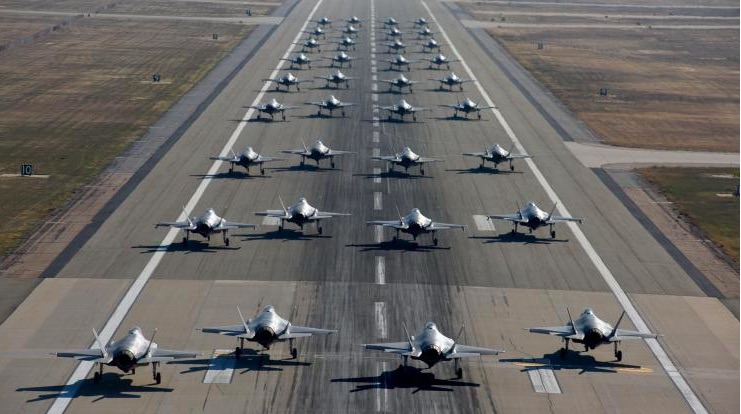
Total global military expenditure rose to $1917 billion in 2019, according to new data from the Stockholm International Peace Research Institute (SIPRI). The total for 2019 represents an increase of 3.6 per cent from 2018 and the largest annual growth in spending since 2010. The five largest spenders in 2019, which accounted for 62 per cent of expenditure, were the United States, China, India, Russia and Saudi Arabia. This is the first time that two Asian states have featured among the top three military spenders. The comprehensive annual update of the SIPRI Military Expenditure Database is accessible from today [27 April] at www.sipri.org.

(click on the image to enlarge)

Global military spending in 2019 represented 2.2 per cent of the global gross domestic product (GDP), which equates to approximately $249 per person. ‘Global military expenditure was 7.2 per cent higher in 2019 than it was in 2010, showing a trend that military spending growth has accelerated in recent years,’ says Dr Nan Tian, SIPRI Researcher. ‘This is the highest level of spending since the 2008 global financial crisis and probably represents a peak in expenditure.’
 
United States drives global growth in military spending
Military spending by the United States  grew by 5.3 per cent to a total of $732 billion in 2019 and accounted for 38 per cent of global military spending. The increase in US spending in 2019 alone was equivalent to the entirety of Germany’s military expenditure for that year. ‘The recent growth in US military spending is largely based on a perceived return to competition between the great powers,’ says Pieter D. Wezeman, Senior Researcher at SIPRI.

China and India top Asian military spending
In 2019 China and India were, respectively, the second- and third-largest military spenders in the world. China’s military expenditure reached $261 billion in 2019, a 5.1 per cent increase compared with 2018, while India’s grew by 6.8 per cent to $71.1 billion. ‘India’s tensions and rivalry with both Pakistan and China are among the major drivers for its increased military spending,’ says Siemon T. Wezeman, SIPRI Senior Researcher.
 
(Article continued on the right column)

(Click here for a version of this article in French or here for a version in Spanish.)

Question for this article:

Does military spending lead to economic decline and collapse?

(Article continued from the left column)

In addition to China and India, Japan ($47.6 billion) and South Korea ($43.9 billion) were the largest military spenders in Asia and Oceania. Military expenditure in the region has risen every year since at least 1989.
 
Germany leads military expenditure increases in Europe
Germany’s military spending rose by 10 per cent in 2019, to $49.3 billion. This was the largest increase in spending among the top 15 military spenders in 2019. ‘The growth in German military spending can partly be explained by the perception of an increased threat from Russia, shared by many North Atlantic Treaty Organization (NATO) member states,’ says Diego Lopes da Silva, Researcher at SIPRI. ‘At the same time, however, military spending by France and the United Kingdom remained relatively stable.’ 

There were sharp increases in military expenditure among NATO member states in Central Europe: for example, Bulgaria’s increased by 127 per cent—mainly due to payments for new combat aircraft—and Romania’s rose by 17 per cent. Total military spending by all 29 NATO member states was $1035 billion in 2019.
In 2019 Russia was the fourth-largest spender in the world and increased its military expenditure by 4.5 per cent to $65.1 billion. ‘At 3.9 per cent of its GDP, Russia’s military spending burden was among the highest in Europe in 2019,’ says Alexandra Kuimova, Researcher at SIPRI.
 
Volatile military spending in African states in conflict
Armed conflict is one of the main drivers for the volatile nature of military spending in sub-Saharan Africa. For example, in the Sahel and Lake Chad region, where there are several ongoing armed conflicts, military spending in 2019 increased in Burkina Faso (22 per cent), Cameroon (1.4 per cent) and Mali (3.6 per cent) but fell in Chad (–5.1 per cent), Niger (–20 per cent) and Nigeria (–8.2 per cent). Among Central African countries that were involved in armed conflict, military spending in 2019 rose overall. The Central African Republic (8.7 per cent), the Democratic Republic of the Congo (16 per cent) and Uganda (52 per cent) all increased military spending in 2019.
 
Other notable regional developments

South America: Military expenditure in South America was relatively unchanged in 2019, at $52.8 billion. Brazil accounted for 51 per cent of total military expenditure in the subregion.

Africa: The combined military expenditure of states in Africa grew by 1.5 per cent to an estimated $41.2 billion in 2019—the region’s first spending increase for five years.

South East Asia: Military spending in South East Asia increased by 4.2 per cent in 2019 to reach $40.5 billion.

The average military spending burden was 1.4 per cent of GDP for countries in the Americas, 1.6 per cent for Africa, 1.7 per cent for Asia and Oceania and for Europe and 4.5 per cent for the Middle East (in countries for which data is available).

Earth Day Communiqué – 22nd April 2020 Making Peace with the Earth

. . SUSTAINABLE DEVELOPMENT . .

A communiqué from Navdanya International for the Planetary Coalition

The Covid-19 pandemic is a Planetary wakeup call from the Earth to humanity.

It reminds us that we are one with the Earth, not separate from it, that we are not her masters, owners and conquerors, nor that we are superior to other species, as the anthropocentric dogma would have us believe.

The pandemic is reminding us that we violate the rights of the Earth and all her species at our own peril. And it would be necessary to value and learn from the ancestral knowledge, cosmo-vision and wisdom of the original peoples, guardians of the Earth down the ages, whose deep respect for the Earth is based on the awareness of the interconnectedness of all life. Harming one part means harming the whole.

This pandemic is not a “natural disaster”, just as the crisis of species extinction and climate extremes are not “natural disasters”. Emergent disease epidemics are anthropogenic – caused by human activities.

The Earth is an interconnected web of life.

The health emergency we face as a global community is connected to the health emergency the Earth is facing: its steady degradation, the extinction and disappearance of species and the climate emergency. When we use poisons and agro-toxins, such as insecticides and herbicides to kill insects and plants in the industrial model of agriculture, we produce desertification, we pollute water, soil, air, and destroy biodiversity. Agro-toxins are immunosuppressants, that weaken the body and make it more vulnerable to infections. Agro-toxins are driving species to extinction including pollinating agents, as we have seen in the decimation of bees. When we do open-pit metalliferous mining we use millions of liters of water that is essential for human and natural life. When we practice hydraulic fracturing or “fracking”, we alter the geological conformation and increase the seismic risk. When we burn fossil carbon that the earth has fossilised over 600 million years, we violate planetary boundaries. By industrialising and globalising our food systems we contribute up to 50 percent of the greenhouse gases and climate change is the consequence.

Science informs us that as we invade forest ecosystems, destroy the homes of species and manipulate plants and animals for profits, we create conditions for new disease epidemics. Over the past 50 years, up to 300 new pathogens have emerged. It is well documented that around 70 percent of the human pathogens, including HIV, Ebola, Influenza, MERS and SARS emerged when the forest ecosystems are invaded, and viruses jumped from animals to humans.

When animals are cramped in factory farms for profit maximisation, new diseases like swine flu and bird flu spring up and spread. Agrochemical-intensive industrial agriculture and industrial food systems give rise to non-communicable chronic diseases like birth defects, cancer, endocrine disruption, diabetes, neurological problems, and infertility. With COVID-19 infections, morbidity goes up dramatically with these pre-existing conditions.

While claiming to feed the world, industrial agriculture has pushed a billion humans to hunger and this number is growing with the world-wide lockdown and the destruction of livelihoods. Our health and the health of the planet is one health. Respecting planetary boundaries, ecosystem boundaries and species integrity is vital to protecting the planet and our health. The solutions to Climate Change are also solutions to avoiding new disease epidemics. The debate on the climate change issue cannot avoid considering how the dominant technological and economic model, based on fossil fuels, does not take into account the finitude of the Earth’s resources. A global economy based on the myth of limitless growth and limitless appetite for Earth’s resources is at the root of this health crisis and future crises.

The holistic and integrated response to the health emergency is to make a transition from the fossil fuel intensive, chemical intensive paradigm of agriculture and globalised trade, with its heavy ecological footprint, to local, biodiverse, ecological systems of producing and distributing food, to healing the Earth, and healing ourselves as being part of the Earth.

Our Earth Day Commitment: Return to Earth, in our minds, our lives

During the COVID-19 crisis and in the post-Corona virus recovery we must learn to protect the Earth, her climate systems, the rights and ecological spaces of diverse species, and diverse peoples – indigenous people, youth, women, farmers and workers. For the Earth there are no expendable species and no expendable peoples. We all belong to and are part of the Earth.

To avoid future pandemics, future famines and a possible scenario of expendable people, we must move beyond the globalised, industrialised and competitive economic system, which is driving climate change, pushing species to extinction, and spreading life-threatening diseases. Localisation leaves space for diverse species, diverse cultures and diverse local living economies to thrive.

We must shift from the economics of greed and limitless growth, of competition and violence, which have pushed us to an existential crisis, and move to an “Economy of Care” – for the Earth, for people and for all living species. We must reduce our ecological footprint, to leave a just share of ecological space for other species, all humans, and future generations. We must stop seeing nature’s common goods as “resources”, abandon the utilitarian, colonial, capitalist and anthropocentric vision that has taught us to name nature’s gifts as “natural resources”. Only in this way will we be able to consciously reduce our ecological footprint: by acting responsibly as the ancestors of the future.

The health emergency and lockdown has shown that when there is a political will, we can de-globalise. Let us make this de-globalisation of the economy permanent, and localise production in line with Gandhi’s philosophy of “Swadeshi” – made locally. As the Pandemic shows, it is local food communities who are able to regularly provide and distribute food while globalised food chains, in some parts of the world, collapsed and even speculated with rising food prices.

Contrary to what we are made to believe, it is not globalisation that protects people from famines, which it produces and aggravates, but peoples food sovereignty, where people at the community level have the right to produce, choose and consume adequate, healthy and nutritious food, under fair price agreements for local production and exchange. Future food systems have to be based on seed sovereignty and food sovereignty, on local circular economies giving back to the earth , and ensuring fair prices to producers .

The mechanistic mind that dominates our societies, creates corporate and personal profits through extraction and manipulation. The corporations and billionaires who through their actions have declared war against the Earth and created the world’s multiple crises, are now preparing for the intensification of industrialised agriculture through digitalisation and artificial intelligence. They are envisioning a future of farming without farmers, and a future of fake food produced in labs. Such developments will deepen the ecological crisis, destroying biodiversity and increasing our separation from the Earth.

Food is the web of life and making peace with the Earth begins with food. We return to the Earth when we take care of the soil and biodiversity. We remember we are human because we are of “humus” – of the soil. Only our minds, hearts and hands working together with the Earth, as integral parts of her creativity, can heal the Earth, providing us and all other species with healthy food.

(Article continued on right side of page)

(Click here for the Communiqué in French or click here for the Manifiesto in Spanish).

Question for this article:

What is the relation between movements for food sovereignty and the global movement for a culture of peace?

How can we work together to overcome this medical and economic crisis?

(article continued from left side of page)

As our experience together with other Earth conscious organisations and networks for Seed Freedom and Food Freedom have taught us, local, biodiverse organic food systems regenerate soil, water and biodiversity and provide healthy food for all. The biodiversity richness in our forests, our farms, our food and our gut microbiome connect the planet and her diverse species, including humans. Thus, health becomes the common thread, as does disease which the Coronavirus is so clearly showing us today.

The war against the Earth is a war against the future of humanity.

All life-threatening emergencies of our times are rooted in a mechanistic, militaristic and patriarchal world view of humans as separate from nature – as masters of the Earth who can own, manipulate and control other species as objects for profits. It is also rooted in an economic model that views ecological and ethical limits as obstructions that must be removed in the interests of unbridled corporate profit and power.

Scientific predictions indicate that if we do not stop this anthropogenic war against the Earth and her species, we will soon destroy the very conditions that allowed humans to evolve and survive. Human greed, arrogance and irresponsibility speeds us to the next Pandemic – and finally to extinction.

The Earth reflects who we are. She is showing us her inter-connectedness and calling us to start recognising her diverse living intelligences – in the soil food web, in plants and animals, and in our food.

The Earth has sent a tiny invisible virus to help us make a quantum leap to create a new planetary, ecological civilisation based on harmony with nature — today it is a survival imperative.

Our Resolve

In signing this manifesto, we commit ourselves as a planetary coalition, to urge and exhort the authorities and representatives of the governments in each one of our countries, cities, towns and communities, to shift from the paradigm of ecocide that today governs our models of productivity, to a paradigm where ecological responsibility and economic justice are central to creating a healthy and vibrant future for humanity.

Real climate change action means leaving behind our petroleum-based civilisation of extraction and greed and bringing in a new era of interconnection and care of the Earth. We call for concerted support of communities, territories and nations that put ecology at the centre of a paradigm of a new and just economy of care.

On Earth Day let us apologise for the harm we have done to the Earth through the illusion of separation, creating violent paradigms and violent tools which have waged war against the Earth. Let us commit to making peace with the Earth and all her species by co-creating with her on the basis of her laws of life.

The Earth has given us a clear message through the Coronavirus pandemic. It is our moral imperative to seize this moment in time to make a transition to an ecological civilisation so we sow the seeds of a common future for humanity and all beings.

Together we rise as Children of The Earth!

A Call to Action and Transformation – One Planet, One Health

It is time to abandon our resource intensive and profit intensive economic systems that have created havoc in the world, disrupting the planet’s ecosystems and undermining society’s systems of health, justice and democracy.

The Corona virus pandemic and consequent global economic collapse, and collapse of lives and livelihoods of millions calls us to urgently take action. Let us prepare for a post Corona Recovery where the health and wellbeing of all peoples and the planet are at the centre of all government and institutional policy, community building and civic action

Actions for sowing the seeds of a new Earth Democracy include:

> Promote and protect biodiversity richness in our forests, our farms and our food to stop the destruction of the earth and the sixth mass extinction

> Promote local, organic, healthy food through local biodiverse food systems and cultures and economies of care (farmers markets, CSAs biodistricts).

> Stop subsidising industrial agriculture and unhealthy systems that create a burden of disease. Public subsidies should be redirected to systems based on agroecology and biodiversity conservation, which provide health benefits and protect common goods.

> Halt subsidies and further investments in fossil fuels sector, including fossil fuel based agricultural inputs, as real climate action

> Stop favouring industrial junk food and unhealthy food systems based on toxic and nutritionally empty commodities.

> Put an end to monocultures, genetic manipulation of plants and factory farming of animals which are spreading pathogens and antibiotic resistance

> Stop deforestation, which is expanding exponentially through industrial monocultures for corporate interests. Forests are the lungs of the Earth.

> Practice sustainable agriculture based on integration of diversity of crops, trees and animals.

> Save, grow and reproduce traditional seed varieties to safeguard biodiversity. They need to be saved not as museum pieces in germplasm banks, but in living working seed banks as a basis of a health care system.

> Create poison free zones, communities, farms and food systems.

> Introduce policies to assess the costs of damage to health and the environment caused by chemicals and enact the polluter pays principle.

> Health must have priority over corporate interests with respect to chemical and pesticide use in food and agriculture. The precautionary principle must be enacted.

> Transition from globalisation to localisation and make permanent deglobalisation. Stop the corporate takeover of our food and health

> Introduce local circular economies which increase the wellbeing and health of people

> Support, regenerate and strengthen communities

> Create Gardens of Hope, Gardens of Health everywhere – in community gardens, institutions, schools, prisons, hospitals in the cities and countryside

> Stop using Growth’ and GDP as measures of the health of the economy. GDP is based on the extraction of resources from nature and wealth from society

> Adopt citizens wellbeing as a measure of the health of the economy..

We hope you will join us in this transformation for hope and care for the Earth. To endorse please go to this link. Please also invite your networks and friends to endorse.

* * * * *

The Planetary Coalition includes, among others, Navdanya International, Naturaleza de Derecho, Health of Mother Earth Foundation, Ifoam, Regeneration International, Third World Network, International Forum on Globalization, Biovision, Sarvodaya Movement, SAM-Sahabat Alam Malaysia and CAP-Consumers Association of Penang, Council of Canadians, Initiative for Health and Equity, Diverse Women for Diversity, Isde-International Society of Doctors for the Environment, Terra de Direitos, Conamuri – Organización de Mujeres Campesinas e Indígenas, Acción Ecológica. Also joining the call are renowned leaders, scientists and environmentalists including, Vandana Shiva, Nnimmo Bassey, Fernando Cabaleiro, Jerry Mander, Adolfo Perez Esquivel, Maude Barlow, André Leu, Hans R Herren, Satish Kumar.

Grow your own: Urban farming flourishes in coronavirus lockdowns

. . SUSTAINABLE DEVELOPMENT . .

An article by Rina Chandran for Thomson Reuters Foundation (reprinted by permission)

Coronavirus lockdowns are pushing more city dwellers to grow fruit and vegetables in their homes, providing a potentially lasting boost to urban farming, architects and food experts said on Tuesday [April 7].


A post office employee harvests vegetables on the rooftop garden of the postal sorting center in Paris, France, September 22, 2017. Reuters / Charles Platiau

Confirmed cases of COVID-19, the disease caused by the coronavirus, total more than 1.3 million, with about 74,000 deaths worldwide, according to a Reuters tally.

Panic buying in some countries during the crisis has led to empty supermarket shelves and an uptick in the purchase of seeds, according to media reports.

“More people are thinking about where their food comes from, how easily it can be disrupted, and how to reduce disruptions,” said landscape architect Kotchakorn Voraakhom, who designed Asia’s largest urban rooftop farm in Bangkok.

“People, planners and governments should all be rethinking how land is used in cities. Urban farming can improve food security and nutrition, reduce climate change impacts, and lower stress,” she told the Thomson Reuters Foundation.

More than two-thirds of the world’s population is forecast to live in cities by 2050, according to the United Nations.

(Article continued on right side of page)

Question for this article:

What is the relation between movements for food sovereignty and the global movement for a culture of peace?

How can we work together to overcome this medical and economic crisis?

Urban agriculture can be crucial to feeding them, potentially producing as much as 180 million tonnes of food a year – or about 10% of the global output of pulses and vegetables, according to a 2018 study published in the journal Earth’s Future.

The coronavirus outbreak is not be the first time that concerns about food security have led to more kitchen gardens.

During World War One, U.S. President Woodrow Wilson asked Americans to plant “Victory Gardens” to prevent food shortages.

The effort continued during World War Two, with vegetable gardens in backyards and schoolyards, on unused land, and even the front lawn of the White House.

In recent decades, the fast pace of urbanisation in developing countries is causing urban malnutrition, the Food and Agriculture Organization said, calling on planners to become “nutrition partners” and pay attention to food security.

Despite pressure on land to build homes and roads, there is more than enough urban land available within UK cities to meet the fruit and vegetable requirements of its population, researchers at the Institute for Sustainable Food at Britain’s University of Sheffield said in a study last month.

In tiny Singapore, one of the wealthiest nations in Asia that imports more than 90% of its food, urban farming including vertical and rooftop farms, is fast becoming popular.

The city-state, which ranks on top of the Economist Intelligence Unit’s global food security index for 2019, aims to produce 30% of its nutritional needs by 2030, by increasing the local supply of fruits, vegetables and protein from meat and fish.

On Monday, Singapore lawmaker Ang Wei Neng said that during the coronavirus outbreak, “it would be wise for us to think of how to invest in homegrown food”.

For Allan Lim, chief executive of ComCrop, a commercial urban farm in Singapore, the pandemic is a reminder that disruptions to food supplies can take place at any time.

“It has definitely sparked more interest in local produce. Urban farms can be a shock absorber during disruptions such as this,” he said.

(Thank you to Kiki Adams, the CPNN reporter for this article.)

Amnesty International: How human rights can help protect us from COVID-19

. HUMAN RIGHTS .

An article from Amnesty International

The way governments decide to respond to the COVID-19 pandemic will impact the human rights of millions of people.

Amnesty International is closely monitoring government responses to the crisis. These are extraordinary times, but it’s important to remember that human rights law still applies. Indeed, it will help us get through this together.

Here’s a quick look at how human rights can help protect us, and what the obligations of governments are in relation to the pandemic.

The right to health

Most governments have ratified at least one human rights treaty which requires them to guarantee the right to health. Among other things, this means they have an obligation to take all steps necessary for the prevention, treatment and control of diseases.

In the context of a spreading epidemic, this means ensuring that preventive care, goods and services are available to everybody.

In Hong Kong, one of the first places to be hit by COVID-19, a local NGO noted that nearly 70% of low-income families could not afford to buy the protective equipment the government was recommending, including masks and disinfectant. If states are endorsing the use of such items, they must ensure that everyone can access them.

Access to information

This is a key aspect of the right to health, but we have already seen governments ignoring it.

In December 2019, doctors in Wuhan, China, where the virus was first reported, shared with colleagues their fears about patients with respiratory symptoms. They were immediately silenced and reprimanded by the local authorities for “spreading rumours”.

Meanwhile, in the region of Jammu and Kashmir, authorities have ordered the continued restriction of internet services, despite a growing number of cases. This makes it extremely difficult for people to access vital information about the prevalence and spread of the virus, as well as how to protect themselves.

Everybody has the right to be informed of the threat COVID-19 poses to their health, the measures to mitigate risks, and information about ongoing response efforts. The failure to guarantee this undermines the public health response and puts everyone’s health at risk.

Rights to and at work

People in precarious forms of labour are being disproportionately affected by the pandemic, which is already starting to have a massive impact on people and the economy. Migrant workers, people who work in the “gig” economy, and people in the informal sector are more likely to see their rights to and at work adversely impacted, as a result of COVID-19 and the measures to control it.

(Article continued in right column.)

(Click here for the French version of this article or click here for the Spanish version.)

Question related to this article:

How can we work together to overcome this medical and economic crisis?

(Article continued from left column.)

Governments must ensure that everyone has access to social security – including sick pay, health care and parental leave – where they are unable to work because of the virus. These measures are also essential to help people stick to the public health measures states put in place.

Health workers are at the frontline of this pandemic, continuing to deliver services despite the personal risks to them and their families, and governments must protect them. This includes providing suitable, good quality personal protective equipment, information, training and psycho-social support to all response staff. People in other jobs, including prison staff, are also at higher risk of exposure, and should be protected.

Disproportionate impact on certain groups

Anyone can get COVID-19, but certain groups appear to be at greater risk of severe illness and death. This includes older people and people with pre-existing medical conditions. It’s also likely that other marginalized groups, including people living in poverty, people with disabilities and people in detention, including migrants and asylum seekers, will face additional challenges in protecting themselves and accessing treatment.

In designing responses to COVID-19, states must ensure that the needs and experiences of specific groups are fully addressed.

Rights to housing, water and sanitation

For people who are homeless or living in informal settlements, self- isolation, social distancing, and other protective measures are extremely difficult if not impossible to stick to.

The COVID-19 crisis has shone a spotlight on the importance of the rights to adequate housing, water and sanitation. These rights are critical for protecting oneself from the virus, for stopping its spread and also recovering from it. 

At a minimum, governments should ensure that people who are homeless, including children in street situations, are provided with emergency accommodation where they can protect and isolate themselves. Governments must also put in place measures to make sure no one is made increasingly vulnerable to COVID-19 because of a lack of housing – for example by being evicted if they can’t pay rent or mortgage.

Governments must also urgently put in place adequate, affordable and safe water and sanitation facilities that are accessible to everyone who is homeless or living in inadequate housing.

Stigma and discrimination

According to media reports, people from Wuhan have faced widespread discrimination and harassment in China. This includes being rejected from hotels or barricaded in their own flats, and having their personal information leaked online.

There have also been widespread reports of anti-Chinese or anti-Asian xenophobia in other countries, including US President Trump repeatedly calling COVID-19 a “Chinese virus”. In London, a student from Singapore was badly beaten up in a racially aggravated attack. There is no excuse for racism or discrimination. Governments around the world must take a zero-tolerance approach to the racist targeting of all people.

Meanwhile President Trump has used the pandemic to justify racist and discriminatory policies, and is reportedly planning a blanket ban on asylum-seekers crossing from Mexico.

Such an outright asylum ban would go against the government’s domestic and international legal obligations, and would serve only to demonize people seeking safety. A similar 2018 ban was swiftly declared unlawful by every court to have considered it.

Furthermore, during a public health crisis, governments must act to protect the health of all people and ensure everyone’s access to care and safety, free from discrimination. This includes people on the move, regardless of their immigration status.

The only way the world can fight this outbreak is through solidarity and cooperation across borders. COVID-19 should unite, not divide us.

(Thank you to the Good News Agency for calling this article to our attention.)

United Nations: Debt-laden countries at risk, as financial markets screech to a halt

. . SUSTAINABLE DEVELOPMENT . .

An article from United Nations News

Economists and finance experts are warning that countries with “high” or “distressed” public debt levels are at risk of severe economic shocks amid the COVID-19 pandemic and calling for restructuring plans based on the principle of solidarity.


A girl in Timor-Leste shows the online platform she will use to study while her school is closed, due to the new coronavirus pandemic. ©UNICEF/Bernardino Soares

Since the start of the pandemic, financial institutions including the World Bank Group and the International Monetary Fund (IMF) – along with UN entities, regional organizations and country groups such as the G20 – have been examining the tools available to stabilize markets, prevent job losses and preserve hard-fought development gains.

At a joint high-level meeting of the IMF and the World Bank on Mobilizing with Africa on Friday, UN Secretary-General António Guterres commended the bodies’ swift actions to support member countries, while emphasizing that more work will be needed.

“We know this virus will spread like wildfire and there are no firewalls,” he said.  “Alleviating crushing debt is absolutely crucial.”

The UN chief noted that in Africa, households and businesses were suffering liquidity challenges even before the virus gained a toehold on the continent.  As countries work to prevent millions from plunging into poverty, already unacceptable levels of inequalities are growing, fragility is increasing and commodity prices are declining.

Debt and pandemic: a ‘perfect storm’

The current health and economic emergencies sparked by COVID-19 have emerged against the backdrop of high indebtedness for many developing nations – including middle-income countries – around the globe.

Since the 2008 financial crisis, public external debt in many developing countries has spiked. Low interest rates and high liquidity boosted many countries’ access to commercial lending. By January 2020, the debt of 44 per cent of least developed and other low-income developing countries was already considered at high risk or in distress. 

(Article continued in the right side of the page)

Question for this article:

Can UN agencies help eradicate poverty in the world?

How can we work together to overcome this medical and economic crisis?

(Article continued from the left side of the page)

The COVID-19-induced contraction is having disastrous consequences. Global financial markets are coming to a standstill as investors race to pull funds out of emerging-markets and other high-risk sec­tors.  The pandemic is straining national budgets as countries struggle to meet health needs, respond to rising unemployment and support their economies.

UN experts warn that Africa may be in its first recession in 25 years, while Latin America and the Caribbean is facing the worst recession in its history. Similar decelerations are being seen in Asia and the Arab Region.

Shaping proactive responses

Against that backdrop, the UN is advocating for a comprehensive COVID-19 response package amounting to a double-digit percentage of global GDP.

It is also urging international financial institutions to do everything possible to prevent a devastating debt crisis with disorderly defaults, stressing that debt relief must play a central role in the global response to the pandemic.

Speaking at the joint IMF/World Bank meeting, the Secretary-General welcomed initial steps by the G20, including the suspension of debt service payments for all International Development Association nations. 

He also called for more resources for the IMF – including through the issuance of special drawing rights – as well as enhanced support for the World Bank and other global financial institutions and bilateral mechanisms.

Three-phase plan to tackle debt

The Organization has put forward a three-step strategy aimed at preventing heavily indebted countries from suffering the worst impacts of the COVID-19 emergency.

First, it calls for an across-the-board “debt standstill” for developing countries with no access to financial markets.  Second, it requests more comprehensive options for debt sustainability with instruments, such as debt swaps, and a debt mechanism for the Sustainable Development Goals.

Third, the plan calls for tackling structural issues in the international debt architecture, to prevent defaults.

The framework is built on a foundation of shared responsibility among debtors and creditors, as well as the understanding that debt restructuring should be timely, orderly, effective, fair and negotiated in good faith. 

“In all our efforts, we must focus on the most vulnerable and ensuring that the rights of all people are protected,” the UN Chief said.

(Thank you to Phyllis Kotite, the CPNN reporter for this article.)

Could COVID-19 give rise to a greener global future?

. . SUSTAINABLE DEVELOPMENT . .

An article from the World Economic Forum (reprinted according to terms of Creative Commons Attribution-NonCommercial-NoDerivs 4.0 Unported License “CCPL”)

The COVID-19 coronavirus has forced entire countries into lockdown mode, terrified citizens around the world, and triggered a financial-market meltdown. The pandemic demands a forceful, immediate response. But in managing the crisis, governments also must look to the long term. One prominent policy blueprint with a deep time horizon is the European Commission’s European Green Deal, which offers several ways to support the communities and businesses most at risk from the current crisis.


The COVID-19 pandemic has demonstrated that human societies are capable of transforming themselves more or less overnight.
Image: REUTERS/Muyu Xu

COVID-19 reflects a broader trend: more planetary crises are coming. If we muddle through each new crisis while maintaining the same economic model that got us here, future shocks will eventually exceed the capacity of governments, financial institutions, and corporate crisis managers to respond. Indeed, the “coronacrisis” has already done so.

The Club of Rome issued a similar warning in its famous 1972 report, The Limits to Growth, and again in Beyond the Limits, a 1992 book by the lead author of that earlier report, Donella Meadows. As Meadows warned back then, humanity’s future will be defined not by a single emergency but by many separate yet related crises stemming from our failure to live sustainably. By using the Earth’s resources faster than they can be restored, and by releasing wastes and pollutants faster than they can be absorbed, we have long been setting ourselves up for disaster.

On one planet, all species, countries, and geopolitical issues are ultimately interconnected. We are witnessing how the outbreak of a novel coronavirus in China can wreak havoc on the entire world. Like COVID-19, climate change, biodiversity loss, and financial collapses do not observe national or even physical borders. These problems can be managed only through collective action that starts long before they become full-blown crises.

The coronavirus pandemic is a wake-up call  to stop exceeding the planet’s limits. After all, deforestation, biodiversity loss, and climate change all make pandemics more likely. Deforestation drives wild animals closer to human populations, increasing the likelihood that zoonotic viruses like SARS-CoV-2  will make the cross-species leap. Likewise, the Intergovernmental Panel on Climate Change warns  that global warming will likely accelerate the emergence of new viruses.

(article continued in right column)

Question for this article:
 
Despite the vested interests of companies and governments, Can we make progress toward sustainable development?

How can we work together to overcome this medical and economic crisis?

(Article continued from the left column)

Governments that succeed in containing epidemics all tacitly follow the same mantra: “Follow the science and prepare for the future.” But we can do much better. Rather than simply reacting to disasters, we can use the science to design economies that will mitigate the threats of climate change, biodiversity loss, and pandemics. We must start investing in what matters, by laying the foundation for a green, circular economy that is anchored in nature-based solutions and geared toward the public good.

The COVID-19 crisis shows us that it is possible to make transformational changes overnight. We have suddenly entered a different world with a different economy. Governments are rushing to protect their citizens medically and economically in the short term. But there is also a strong business case for using this crisis to usher in global systemic change.

For example, there is no good reason not to be phasing out fossil fuels and deploying renewable energy technologies, most of which are now globally available  and already cheaper than fossil fuels in many cases. With the recent oil-price plunge, perverse fossil-fuel subsidies can and should be eliminated, as the G7 and many European countries have pledged  to do by 2025.

Shifting from industrial to regenerative agriculture also is immediately feasible, and would allow us to sequester carbon  in the soil at a rate that is sufficient to reverse the climate crisis. Moreover, doing so would turn a profit, enhance economic and environmental resilience, create jobs, and improve wellbeing in both rural and urban communities.

Regenerative agriculture features prominently in many of the new economic models that are now being explored by city governments around the world – all of which are based on the principle of living within our planetary boundaries. As one of us (Raworth) argues in advancing her idea of “Doughnut Economics,” the goal should be to create a “safe and just operating space for all of humanity.” In other words, we must work within the planet’s natural limits (the outer boundary of the doughnut) while also ensuring that marginalized communities do not fall behind (into the doughnut hole).

For policymakers responding to the current crisis, the goal should be to support citizens’ livelihoods by investing in renewable energy instead of fossil fuels. Now is the time to start redirecting the $5.2 trillion  spent on fossil-fuel subsidies every year toward green infrastructure, reforestation, and investments in a more circular, shared, regenerative, low-carbon economy.

Humans are resilient and entrepreneurial. We are perfectly capable of beginning again. If we learn from our failings, we can build a brighter future than the one that is currently in store for us. Let us embrace this moment of upheaval as an opportunity to start investing in resilience, shared prosperity, wellbeing, and planetary health. We have long since exceeded our natural limits; it is time to try something new.
* * * * * * *

(Editor’s note: For a more pessimistic view, see Unfortunately, Coronavirus Is Bad News For Ecology In The Long Term.)

Peace Education and the Pandemic: Global Perspectives (video now available)

… EDUCATION FOR PEACE …

An article from the Global Campaign for Peace Education

On April 13, 2020, the International Institute on Peace Education  and Global Campaign for Peace Education hosted a zoom webinar on “Peace Education and the Pandemic: Global Perspectives.”  More than 550 people from 72 different countries registered for the event, which was also live-streamed on Facebook. A dozen acclaimed peace educators from around the world shared unique perspectives on the systemic violence and injustices COVID-19 has revealed and how they are using peace education to respond to these and other critical issues. [Editor’s note: The dozen educators came from USA, Austria, Puerto Rico, South Africa, China, Nigeria, Philippines, Mexico, Colombia, Argentina and South Korea. A list with their bios, and topics can be found here].

Video of Webinar

(Continued in right column)

Question for this article:

How can we work together to overcome this medical and economic crisis?

(Continued from left column)

The webinar explored two broad agendas.  First, it presented an opportunity to hear how peace educators around the world are responding in the moment. How are peace educators facilitating the much-needed learning required for self-care, resilience, and adaptation to a changing reality?  How are we adapting pedagogically to online learning spaces such as zoom (and what new social injustices have these rapid transitions revealed related to educational inequity)?  How are we keeping safe physical distance while maintaining social connections?  How are we navigating the trauma, anxiety, and fear caused by a pandemic that exposes our somatic vulnerability, as well as the vulnerability of our social, political and economic systems?

The webinar also presented an opportunity to collectively rethink urgent future agendas for peace education.  This global pandemic has brought into sharp focus many of the concerns, possibilities, and challenges that peace education has been pursuing for decades. Presenters shared critical perspectives and developed clear connections between COVID-19 and “other pandemics” including war, poverty, patriarchy, and nationalism.  All presenters explored the role of peace education in addressing these issues.  Most importantly, most addressed how peace education might prepare citizens with the knowledge, capacities, and skills to envision, design, a build preferred social, political, and economic systems.

Watch the video of the webinar here.