Category Archives: Europe

National anti-AIDS campaign: Stepping up the pace in Bulgaria

TOLERANCE AND SOLIDARITY .

by Dr. Diana Tashkova

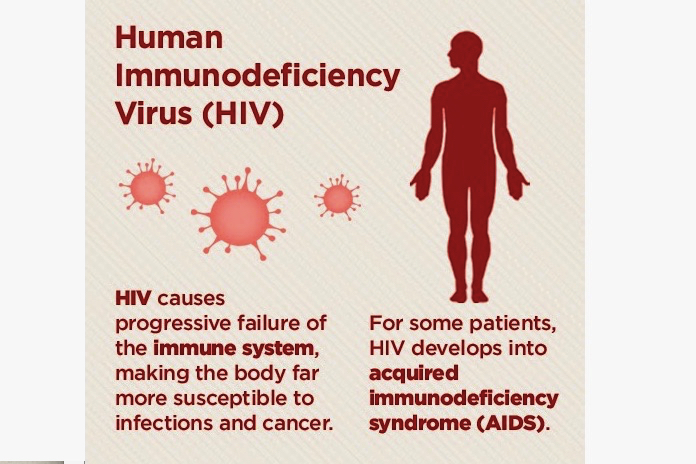
In Bulgaria, 126 new cases of HIV were diagnosed during a period of 6 months. Overall, people infected with HIV in the country are officially 2169. Importantly, over 53% of the newly registered HIV-positive persons were found in cabinets and mobile clinics that offer free and anonymous testing and counseling.

HIV

In this regard, for the twelfth consecutive time the “Prevention and Control of HIV / AIDS Programme” in collaboration with the Ministry of Health organized the national summer campaign. The testing is voluntary and anonymous, which motivates a lot of people to check their status easily and anonymously.

The initiative started on 3th of August and will last until 13th of September. Many medical centers are available to provide free counseling and testing for AIDS. Regional health inspectorates and NGOs throughout the country are involved. In addition, the initiative provides counseling for sexually safe behaviors in order to avoid sexually transmitted infections among Bulgarians and guests of the country.

The medical centers are precisely selected to be in locations with increased tourist flow as seaside resorts, swimming pools and shopping centers and main streets in large and smaller settlements as well as in Roma neighborhoods. From August 3 until August 28, 2015, over 2000 people have so far been tested for AIDS.

HIV testing is offered by medical consultants at the Black Sea, near the pools and water parks in central areas and in the laboratories.

Furthermore, in the spirit of the event for two weeks in the capital, Sofia is hosting the photographic exhibition “Fieldwork teams of Bulgarian non-governmental organizations working on HIV / AIDS among vulnerable groups”.

Traditionally, the purpose of the summer AIDS Campaign is to raise awareness of responsible sexual behavior, condom use and the importance for each person to know the current HIV status as care for his/her own health and the health of the partner.

Question for article

Solidarity with HIV-AIDS patients, Is it progressing?

UK: Is dropping more bombs on Syria way to solve refugee crisis?

TOLERANCE AND SOLIDARITY .

An article by Jackie, Radio Free Brighton

David Cameron’s attempt to exploit the refugee crisis as a pretext for UK bombing of Syria is staggering in its cynicism and callousness. Especially considering the fact that Isis militants mostly congregate in heavily populated cities, UK bombing of Syria will inevitably lead to massive civilian casualties and many more refugees. The government is already killing people in Syria, despite having lost the parliamentary mandate to do this following the vote in the House of Commons in 2012.

refugees
Photo by Nilufer Demir/DHA/Reuters.

More than any other European country, Britain bears direct culpability for the current refugee crisis. It has, along with the United States, been the chief architect of the current Middle Eastern inferno of increasing hatred and endless war. Most of the refugees are fleeing from countries Britain has invaded or otherwise militarily destabilised in recent years: Syria, Afghanistan, Iraq and Libya. Yet Britain is also among the EU countries with the lowest intake of refugees, and it imposes numerous restrictions and obstacles on people seeking refuge, breaking Article 14 of the UN Declaration of Human Rights which states that “everyone has the right to seek and to enjoy in other countries asylum from persecution”. In August 2013 The Migrants’ Files project by European Press found that 30,000 refugees and migrants had died in their attempt to reach Europe since 2000.

Our humanity is bound up with the humanity of the refugees from UK wars

Refugees Welcome Here
National Demonstration
12 September | 2pm
Assemble Marble Arch | London
March to Downing Street
Organise events where you live
Facebook Event »

(article continued on the right side of the page)

Question for this article

The refugee crisis, Who is responsible?

How can there be a political solution to the war in Syria?

Readers’ comments are invited on this question and article. See below for comments box.

(article continued from the left side of the page)

Only one heart didn’t melt at the pictures of the three-year-old Syrian Kurdish boy’s dead body washed up on a Turkish beach: David Cameron’s. He responded by refusing to take anymore refugees. But he is still promising to try and make parliament agree to more bombing of Syria. This will only force more refugees to flee Syria. And then David Cameron will let them drown too.

The refugee crisis across Europe is growing worse by the day as thousands flee war and chaos.
Many have died in the most terrible circumstances, suffocating in lorries or drowning during dangerous crossings of the Mediterranean.

They are being treated terribly by many of the government’s of Europe, including our own. The majority of these refugees are the victims of war, many of them fleeing the disasterous conflict in Syria.

David Cameron’s statement yesterday aims to justify further war and bombing rather than helping the refugees. He is refusing to take any refugees in Britain, one of the world’s richest countries.

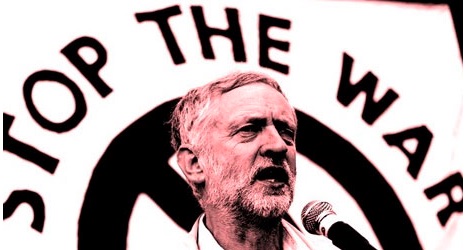
Stop the War has come together with many other organisations to call for a national demonstration in London. We are also urging our members, supporters and groups to take any action they can on that day where they live, alongside anti-racist and refugee groups.

Successive British governments have spent billions on wars in Iraq, Afghanistan and Libya, plus on covert intervention in Syria. The outcome has been destruction of infrastructure across the Middle East, the growth of terrorism in the region, and the displacement of millions.

Their only solution is further war, even though it is increasingly obvious that this option is only creating yet more chaos. Just as we oppose wars, we try to show solidarity with its victims.

Please do everything you can to support this day of solidarity with refugees. If you want any help or further information, please contact the Stop the War national office. Email: office@stopwar.org.uk | Tel: 020 7561 4830

Germany: PRO ASYL presents human rights award to U.S. AWOL soldier

… HUMAN RIGHTS …

An article by Connection e.V. – International Support of Conscientious Objectors and Deserters

On September 12, 2015, in Frankfurt/Main the foundation, PRO ASYL will present its this year’s human rights award to the U.S. AWOL soldier and asylum candidate in Germany, André Shepherd. The international conscientious objector network, Connection e.V., salutes this decision.

asylum
André Shepherd

“A tremendous amount of courage is required to oppose the Iraq War as André Shepherd did”, declared Rudi Friedrich today for Connection e.V. “Until today, André Shepherd has still unsuccessfully tendered hopes of receiving a positive ruling concerning his asylum case. With his refusal to participate in crimes against humanity, he clearly not only questions the legality of the Iraq War, but also shows that this legally legitimate decision against participation in war should be supported through a granting of asylum.”

In the invitation for the presentation of this award PRO ASYL declared: “With his application for asylum, André Shepherd assumes in this case the burden of establishing a legal precedence. Through his persistent resistance, he has risked his right to a normal existence in the United States. Almost eight years after his decision to seek asylum, André Shepherd continues to argue his case in court, knowing that his example is also that of the many servicemen resisting illegal wars. His efforts have made him a paragon of resolution and humanity. The foundation PRO ASYL gratefully presents him the 2015 PRO ASYL-Hand Award.

The award will be presented on Saturday, September 12, 2015, at 2 PM in the “Haus am Dom”, Domplatz 3, 60311 Frankfurt. Further information is available here.

(Thank you to Janet Hudgins, the CPNN reporter for this article.)

Question(s) related to this article:

Bulgaria: Care for victims of violence and psychological support for children and troubled teens

TOLERANCE AND SOLIDARITY .

An article by Diana Tashkova

At the present time, many children and their families are victims of violence, or being sexually abused in the family. In fact, European Union citizens in Romania, Hungary and Bulgaria are the most frequent victims of human trafficking in Europe. In addition, the majority of cases that were studied between 2009 and 2013 by Europol shows that 40 percent of victims of human trafficking in Europe came from Romania, 18 percent from Hungary and 11 percent from Bulgaria. The majority of victims of human trafficking are women and girls, and a high proportion of them are sexually exploited. Human trafficking is truly a global epidemic.

tashkova
Logo of the Bulgarian-Swiss Cooperation Programme

In addition, some children have had bad experiences in their families, in schools and in their communities. Therefore, the project “Trauma Center for Children and Families” was launched with financing from the Swiss-Bulgarian Cooperation Programme. It is implemented by the Foundation Animus Association. Its purpose is to provide a psychological support and recovery after traumatic situations. The Families Centre also includes a correspondence program. It provides an opportunity for children and parents to get consultations via email and remain anonymous.

The project aims to complete the model of the existing social system in Bulgaria by introducing an innovative social program. It offers a support program for children and parents, as well as a community support program.

The child support program is also beneficial for children with communication problems or difficulty adjusting to their social environment, such as those who want to overcome the loss of a parent, parental separation, domestic violence or sexual violence. They may be troubled from having been adopted, placed in foster families or reintegrated into their biological families which they express as problem behavior at home or school.

The support program is for parents who need advice on problems they have in raising their children. In addition, the community support program offers training; it uses multidisciplinary approaches that offer help. The Trauma Centre offers support to prospective adoptive parents and children. It provides opportunities for youth and adults to overcome difficulties without carrying the baggage of the past.

(Click here for the original French version of this article.)

Question for this article

Germany: Journalists around the world stand up in support of Netzpolitik after outrageous ‘treason’ investigation

FREE FLOW OF INFORMATION

An article by Trevor Timm, Freedom of the Press Foundation (this article is reprinted according to the terms of Creative Commons)

Last week, the German government informed the popular news site Netzpolitik that two of its journalists were under investigation for treason for reporting on their government’s mass surveillance programs – in other words they were being investigated for doing their job. In the days since, protests were staged in Berlin that drew thousands of participants, and the Justice Minister has commendably fired the top prosecutor who originally brought the investigation. However, it’s still unclear if the investigation has been permanently closed.

journalists

Today, in a letter organized by journalist Marie Gutbub and security researcher and journalist Jacob Appelbaum, reporters and press freedom advocates from around the world have signed on to support Netzpolitik and condemn the outrageous investigation. You can read the letter in both English and German below.

The investigation against Netzpolitik.org for treason and their unknown sources is an attack against the free press. Charges of treason against journalists performing their essential work is a violation of the fifth article of the German constitution. We demand an end to the investigation into Netzpolitik.org and their unknown sources.

Die Ermittlungen gegen die Redaktion Netzpolitik.org und ihrer unbekannten Quellen wegen Landesverrats sind ein Angriff auf die Pressefreiheit. Klagen wegen Landesverrats gegen Journalisten, die lediglich ihrer für die Demokratie unverzichtbaren Arbeit nachgehen, stellen eine Verletzung von Artikel 5 Grundgesetz dar. Wir fordern die sofortige Einstellung der Ermittlungen gegen die Redakteure von Netzpolitik.org und ihrer Quellen.

[Click here for signatures listed as of August 5.]

Question(s) related to this article:

United Cypriot economy to focus on shipping, tourism, education

DISARMAMENT AND SECURITY .

An article from Daily Sabah

The economic vision after a solution to the Cyprus issue was officially announced as part of the ongoing comprehensive negotiations between the Turkish Republic of Northern Cyprus and Greek Cyprus, and focuses on tourism, shipping and education. The Turkish Cypriot Chamber of Commerce and Greek Cypriot Chamber of Commerce and Industry (KEBE) held a joint event themed with their vision of the Cyprus economy after a solution. Representatives from the Istanbul Chamber of Commerce and Athens Chamber of Commerce attended the event as well. After the opening speeches, Turkish Cyprus President Mustafa Akıncı and Greek Cyprus President Nicos Anastasiades shared their visions about the Cyprus economy after a possible solution between two sides is reached.

cyprus
Greek Cypriot President Anastasiades (L) and Turkish Cypriot President Akıncı (R) shake hands at a meeting attended by representatives of the respective chambers of commerce.

Akıncı said in his speech that the Cyprus economy can provide for the welfare of its citizens, but this requires creating an economy that is resistant against crises and shocks, competitive and capable of being directed to different fields. “My vision of the Cyprus economy after a solution takes the welfare and prosperity of all Cypriots into account without looking at ethnic origin or background,” Akıncı emphasized.

Akıncı also touched on the economic benefits of the solution between the two sides. He stressed that Cyprus will have the potential to become a shipping center in the eastern Mediterranean and all Cypriot ships will be able to enter Turkish harbors after a solution is reached. He highlighted that a solution would provide endless opportunities for the tourism sector, which is a driving power of both economies on the island and they should devise a joint strategy of cooperation in this field.

One of the first steps to be taken in Cyprus is to establish a Federal Competition Board just like the one that exists in many European countries, Akıncı said. He added that they should invest in education at first to help foster a culture of peace and raise a new generation of children who can speak both Turkish and Greek as their mother tongues. Akıncı said that they were working to create a federation of two societies and two regions described in a joint declaration made on Feb. 11, 2014. “We have to transform our country and we need to do this with no delay. We have to cooperate to transform from the current situation to a Cyprus we want, but we have to work hard. We owe this to the younger generations,” Akıncı concluded.

Greek leader Nicos Anastasiades said the common future of the two societies is based on a united Cyprus as a EU member, which respects democratic principles, human rights and fundamental freedoms.

Anastasiades reiterated from the joint declaration that “the status quo is unacceptable and its prolongation will have negative consequences for the Greek and Turkish Cypriots.” He also mentioned the positive impacts of a settlement. “My vision is to reach a settlement that will end the anachronism related to the current situation and provide hope and the prospect of a better future for all Cypriots, in particular for the younger generations,” noted the Greek leader.

(Article continued in right column.)

Question related to this article:
 
Can Cyprus be reunited in peace?

(Article continued from left column.)

He said that a settlement would secure the full utilization of the great potential and prospect for economic growth, development and prosperity for all Cypriots. He also stated that a settlement between the two sides would provide a significant improvement to the investment climate and increase the attraction of large foreign investments and multinational companies. Stressing that it will be easier to access international finance and reach out to markets presently unexploited across the world, Anastasiades said the economic sectors that are now experiencing problems would be stimulated and this would have positive results on other sectors.

“We have committed ourselves to doing our utmost so this opportunity is not lost. We owe it to our children and the future generations of this country. We owe it to the people of Cyprus and their longing to live in a modern and thriving European country. And to this effort, the business community, as well as civil society, has an important role to play, and we call for your support and positive contribution towards this end,” Anastasiades concluded.

France: Interview with a young farmer

. . SUSTAINABLE DEVELOPMENT . .

An interview for CPNN by Kiki Chauvin

I made the following interview with Armand G., 18 years old, who wants to become a farmer on a small scale. His plans are against the trend towards the disappearance of small farms in France. Between 1970 and 2010, according to INSEE, the average size of farms in France has increased from 21 to 55 hectares. But in the same period, the number of farms has dropped from 1,600.000 to 510,000!

Armand

Question: Why do you prefer to create a small rather than a large farm on the current models?

“I was born into a family of farmers and I am immersed in this universe since childhood. The animals are familiar to me; they became my friends and accomplices. The large farms, large structures do not interest me. I’m looking to create a small farm rehabilitating a simple and healthy lifestyle by developing the artisanal side of farming. I hope to raise goats, and also have some cows. I would like to make cheese and sell it in the markets, offering good farm products. It would be nice to enjoy a high quality of life while rediscovering traditional manufacturing methods, old, for me and for the people who consume my products. I do not think ‘get rich’ but a living while respecting the environment and nature in general. I want to create a farm of human dimensions. ”

Question: Do you have contact with others who think like you?

 “I had the opportunity to travel to the USA; I had the chance to visit some farms. The size of some farms, including herds of thousands of animals, shocked me and strengthened my desire to have a small operation! In these industrial farms, the animal is only a commodity that pays. However, I also had the pleasure of meeting people from small farms of only a few hectares (with goats, cows and sheep) where there is not at all the same spirit. There is more contact, friendliness, humanity; they speak of the pleasure found in their work! As breeders they are close to their animals, they have more time to devote to the herd, which creates a shared trust and which facilitates quality work. They combine their work with the manufacture of diversified products (cheese, yoghurt, butter, weaving, tailoring and handicrafts).

“One can work alone every day, but in this new mindset one rediscovers mutual aid and solidarity.

“It is the difference between the spirit of local markets and the world of supermarkets and name brands!

“In France, I use Facebook as a link with other breeders from different regions who give me advice as I learn my trade. So far i have two goats and three young kids. ”

(Article continued on the right column)

(Click here for a version of this article in French)

Question for this article:

What is the relation between movements for food sovereignty and the global movement for a culture of peace?

(Article continued from the left column)

Question: What are the consequences of the state subsidies paid to large farms?

“The subsidies are paid in proportion to the size of the operation, which means that a large farm will get the most, while the small farmer, the person who needs it most, will have nothing!

“When the big enterprise gets financial aid, it is more likely to invest in equipment that is more ‘efficient’, tending beyond mechanization to robotization. All this develops a different relation between the quality of work and the quality of production! What matters is competition and profit.

“At the same time, the farmer becomes hostage to big brands, such as Danone, Senoble …, and plant protection products such as those of Monsanto.

“In conclusion, I am convinced that we can return to a real quality of work in the operation of a small farm with simple values. For me, I see a future in the breeding of goats with a return to respect for the earth. I became aware of the danger of robotics; I think we need to remain at the level of mechanization that serves to relieve and brings comfort to the daily work of farming which is very physical. As I have said, we need to return to an agriculture on a more human scale.”

Nonviolent Peaceforce in Ukraine

EDUCATION FOR PEACE .

An article by Nonviolent Peace Force

After multiple exploration missions that included several rounds of consultations with Ukrainian organizations, various stakeholders, and conflict-affected communities, Nonviolent Peaceforce (NP) was invited to Ukraine to introduce Unarmed Civilian Protection (UCP) methodologies to local civil society actors and their communities. In March, NP carried out a series of trainings on UCP for Ukrainian stakeholders in the ongoing conflict. Conducted alongside the Association for Middle Eastern Studies, this was the first time UCP principles had been introduced to Ukraine.

ukraine

In March of 2015,with generous support from the Human Rights Fund of the Embassy of the Kingdom of the Netherlands in Ukraine, NP and AMES were able to introduce UCP to civil society in Ukraine for the first time, conducting a series of trainings for 40 participants. Trainings were held in two locations, Odessa and Kharkiv,with participants representingUkrainian civil society organizations, civilians in conflict-affected communities(as well border regions that have potential for escalation of violence or intercommunity tensions),IDP communities and local authorities.

The trainings covered a wide array of civilian protection and violence reduction topics, with a strong emphasis on rumor control and guiding participants in developing local rumor control monitoring mechanisms.The trainings also covered the principles of UCP, conflict mapping, early warning and response systems, and different understandings of civilian protection. Stressing nonviolence, non-partisanship and the primacy of local actors, the trainings were designed to prepare participants to better protect themselves and those around them, to be able to de-escalate tensions, and to prevent further violence in their communities against civilians.

Participants in the trainings expressed that regardless of their background, work/life experience or age, all of them are ready to learn and work for peace because it is the job of every citizen to build a peaceful society where conflict can be managed by dialogue and mutual respect.

One participant best summed up the proactive and committed spirit of the groups, stating that “I am ready to step in to the shoes of each person involved in this conflict, find their needs and work with them with the hope that we can stop the suffering of the people living in the conflict zones or hundreds of people who lost their homes and became IDPs.”

The trainings had many positive outcomes, including locally designed protection tools that will be used in the coming months.These were the result of participants preparing local civilian protection risk analyses and conceptualizing the means for locally appropriate interventions and responses for their respective communities.

Importantly, participants also identified that a countrywide community-based protection mechanism could be an extremely effective tool for a unified civil society response to the protection needs of civilians in conflict-affected communities. This mechanism could then adapt to the needs of each community as well as the challenges and capacities of local civil society organizations.

NP and its partners are currently developing various interventions to support this new initiative and exploring more concrete partnership opportunities for this protection mechanism with international actors and the donor community.
The trainings were led by Atif Hameed (Director of Programs) and assisted by Salome Bakashvili (Program Manager) and other NP and AMES staff.

(Thank you to Janet Hudgins, the CPNN reporter for this article.)

Question for this article:

Can peace be guaranteed through nonviolent means?

We have the advantage of an independent evaluation of the Nonviolent Peaceforce initiative in the Philippines conducted by Swisspeace. The evaluation is very favorable, although in the end, as one reads through it, gets the impression that such initiatives can help but cannot bring peace by themselves.

Here is the executive summary:

Nonviolent Peaceforce in the Philippines can look back at more than two years of unique, relevant contributions and constructive engagement in one of the most difficult, political and volatile, contexts to work in: Being the only international non-governmental organization working with and living in close proximity to the most conflict-affected population in Mindanao, NP in the Philippines was able to support and enhance local structures of cease-fire monitoring, early warning, cross-community dialogues, human rights protection, to offer civilian protection and help to reduce the high levels of community violence.

The accepted offer to NP in the Philippines in late 2009 by the conflict parties GRP and the MILF to join the International Monitoring Team1 (IMT) and its Civilian Protection Component is a direct expression and result of its successful contributions to non-violence and violence reduction of the last two years.

To keep up the important work of NP’s project in the Philippines in the years to come, it is essential to ensure that the activities and objectives of NPP are based on a strategically and conceptually sound footing. This seems even more important given that NPP is going through a remarkable consolidation and expansion phase at the time of report-writing.

The re-focus on its key mandate, strengths and strategic advantages in Mindanao gives NP the opportunity to further enhance its unique work in the area of nonviolence, peacekeeping and peace building.

A Century of Women Working for Peace

. WOMEN’S EQUALITY .

Amy Goodman, Truthdig (reprinted according to terms of fair use)

One hundred years ago, more than 1,000 women gathered here in The Hague during World War I, demanding peace. Britain denied passports to more than 120 women, forbidding them from making the trip to suppress their peaceful dissent. Now, a century later, in these very violent times, nearly 1,000 women have gathered here again, this time from Africa, Asia and Latin America, as well as Europe and North America, saying “No” to wars from Iraq to Afghanistan to Yemen to Syria, not to mention the wars in our streets at home. They were marking the 100th anniversary of the founding of WILPF, the Women’s International League for Peace and Freedom.

wilpf
click on the photo to see the video of the WILPF conference: Shown from left to right: Nobel laureates Mairead Maguire, Leymah Gbowee, Shirin Ebadi and Jody Williams

Dr. Aletta Jacobs, a Dutch suffragist who co-founded the group a century ago, said the purpose of the original gathering in 1915 was to empower women “to protest against war and to suggest steps which may lead to warfare being an impossibility.”

Among the women here were four Nobel Peace Prize winners. Shirin Ebadi was awarded the prize in 2003 for advocating for human rights for Iranian women, children and political prisoners. She was the first Muslim woman, and the first Iranian, to receive a Nobel. Nevertheless, she has lived in exile since 2009, and has only seen her husband once since then. “Had books been thrown at people, at the Taliban, instead of bombs, and had schools been built in Afghanistan,” Ebadi said in her keynote address to the WILPF conference this week, “3,000 schools could have been built in memory of the 3,000 people who died on 9/11—at this time, we wouldn’t have had ISIS. Let’s not forget that the roots of the ISIS rest in the Taliban.”

She was joined by her sister laureates Leymah Gbowee, who helped achieve a negotiated peace during the civil wars in Liberia; Mairead Maguire, who won the peace prize in 1976 at the age of 32 for advancing an end to the conflict in her native Northern Ireland; and Jody Williams, a Vermonter who led the global campaign to ban land mines, and who now is organizing to ban “killer robots,” weapons that kill automatically, without the active participation of a human controller.

These four world-renowned Nobel laureates were joined by nearly a thousand deeply committed peace activists from around the globe. Madeleine Rees, the secretary-general of WILPF, recalled the history of the first gathering in 1915, and how it was organized: “It wouldn’t have happened, but for the suffrage movement,” she told me, “because you don’t just start a mass movement. You actually have to have an organizational structure to make that happen. That had started with the suffragette movement. … Every single one of those women who went to The Hague … were demanding the right to vote. They saw, quite rightly, that the absence of women in making decisions in government meant a greater likelihood of war.”

(Continued on right side of page)

Question for this article

Do women have a special role to play in the peace movement?

(Article continued from left side of page)

Kozue Akibayashi is WILPF’s new president. After World War II, the U.S. required that Japan’s Constitution explicitly forbid it from pursuing war to settle disputes with foreign states. “The majority of people in Japan support the peace constitution,” Akibayashi explained. President Barack Obama, however, like George W. Bush before him, is pressuring Japan to eliminate the pacifistic Article Nine from the Japanese Constitution. He hosted Japan’s prime minister, Shinzo Abe, in Washington this week, celebrating Abe as he works to restore Japan’s military to its former offensive capacity. Akibayashi and thousands of others also are protesting the planned expansion of the U.S. military presence on Okinawa.

Africa activist Hakima Abbas was also in The Hague. I interviewed her hours after mass graves were reported in Nigeria, containing victims of the militant group Boko Haram. The story of Boko Haram, she told me, “is an intersection with violent Islamist fundamentalisms, with global capitalism and with militarization … fundamentalisms, though, don’t start and end with Islamic fundamentalisms in Africa. We’ve seen Christian fundamentalisms in Uganda, and the persecution of LGBTQI people.” She then made a connection to the street protests in Baltimore this week: “In your own country,” she told me, “the white supremacist and Christian right fundamentalisms are exacerbated by the gun culture and the promotion of an armed police force, which is killing black women, men, trans people and children. … So fundamentalisms is really something that we have to address globally.”

I asked Shirin Ebadi if she had advice for the people of the world. She replied with a simple yet powerful prescription for peace, laying out the work for WILPF as it enters its second century: “Treat the people of Afghanistan the same as you treat your own people. Look at Iraqi children the same as you look at your own children. Then you will see that the solution is there.”

Syriza, Podemos, Nouvelle Donne. The alternative to the Europe of Draghi-Macron

. SUSTAINABLE DEVELOPMENT .

from the blog of Bernard Leon (reprinted by permission of the author)

[Note for non-French readers: Mario Draghi is the President of the European Central Bank, while Emmanuel Macron is the French Economy Minister.]

France

Representatives of two young political parties Podemos (Spain) and Syriza (Greece) met Friday, March 27 at the Maison des Mines in Paris to discuss their feedback with activists of Nouvelle Donne who share with them the same desire for an alternative to the political parties, both of the right and of the left, who have lost their democratic identity throughout Europe.

The results of the second round of departmental elections in France reflect the comments of the anti-Mafia Judge Roberto Scarpinato, who wrote in 2008 in “The Return of the Prince” (Contre Allée Editions), “People everywhere perceive and experience in their own flesh the pressure of social suffering that is growing day by day . . . That’s why political power today has no social respect.” Eric Alt, on behalf of Nouvelle Donne, opened the evening to a young and attentive audience, by recalling the principles that were used by Pablo Iglesias, the leader of Podemos, to carry out their work.

– No more pessimism, which is always an excuse to do nothing.

– Show courage. Have no fear to call a spade a spade. To call Macron an oligarch. Keep in mind his statement earlier this year: “We need young people who want to be billionaires,” had he told Les Echos. To the dismay of some socialists.

– Show your pride and audacity. These two qualities were the basis for the great popular movement marches called the “Tides” in Spain, as well as the events of 18 March in Frankfurt on the occasion of the inauguration of the new headquarters of the ECB, a building that costs 1.3 billion euros, to protest against the austerity imposed by the EU institutions: the ECB, the IMF, and the Commission.

– Change the look of politics which shows a “Potemkin facade,” a true optical illusion that hides a vacuum inside.

– Show empathy for our fellow man. Rise up to the level of the people. Listen to what Rosanvallon calls “the parliament of the invisibles”.

A red thread connects the three parties, Spanish, Greek and French, but in a different temporality, that of the need to free ourselves individually and collectively from the powers that control us. This implies, and I quote again Roberto Scarpinato “a deconstruction process of cultural imposititions that permeate our lives from an early age.” This requires change and Podemos and Syriz should help us.

Let’s get started. Where do Syriza and Podemos come from? Where are they now? Where are they going and where are we going? What can we imagine today that can be possible tomorrow?

(click here for continuation of article)

(click here for the original French version)

Question for this article:

Movements against governmental fiscal austerity, are they part of the global movement for a culture of peace?

Readers’ comments are invited on this question.