Category Archives: DEMOCRATIC PARTICIPATION

Mexico City prepares third culture of peace meeting

.. DEMOCRATIC PARTICIPATION ..

An article from Prensa Latina

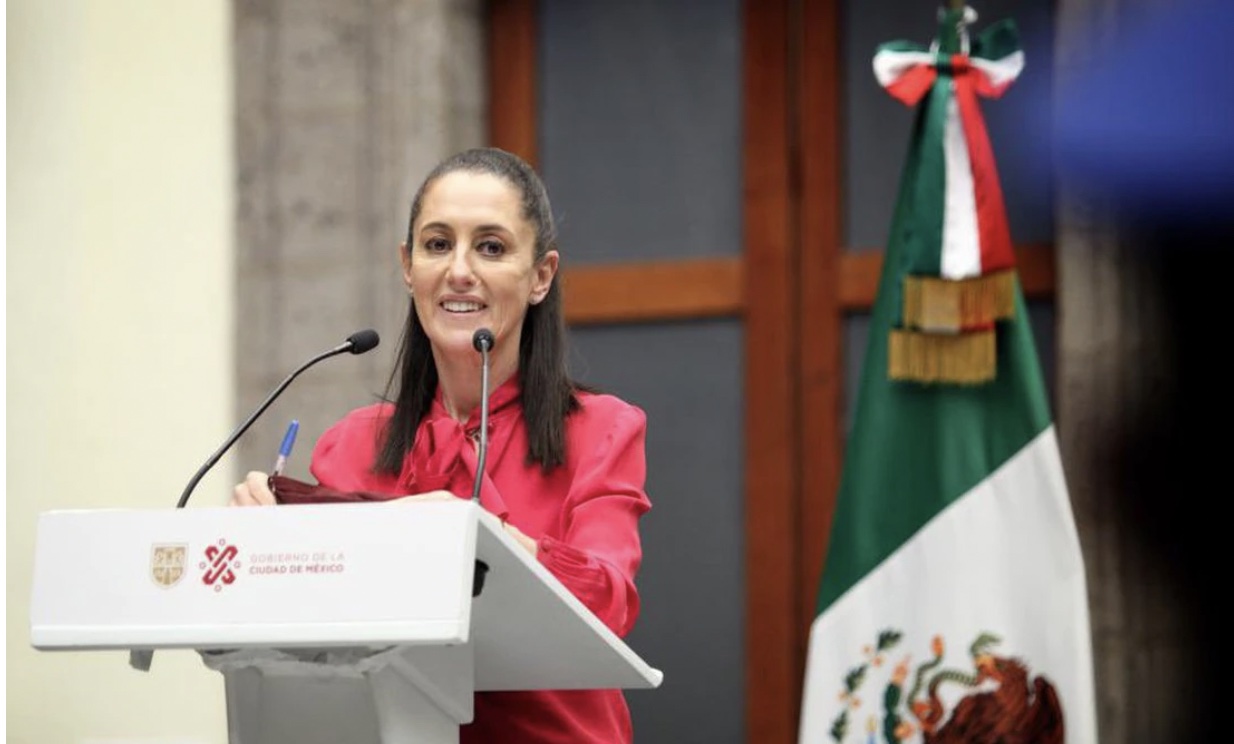
Mexico City is preparing to celebrate the Third Culture Meeting of Peace from June 12 to 25 this year through the social program “Cultivating Art and Culture in Tlalpan,” the organizers reported today.


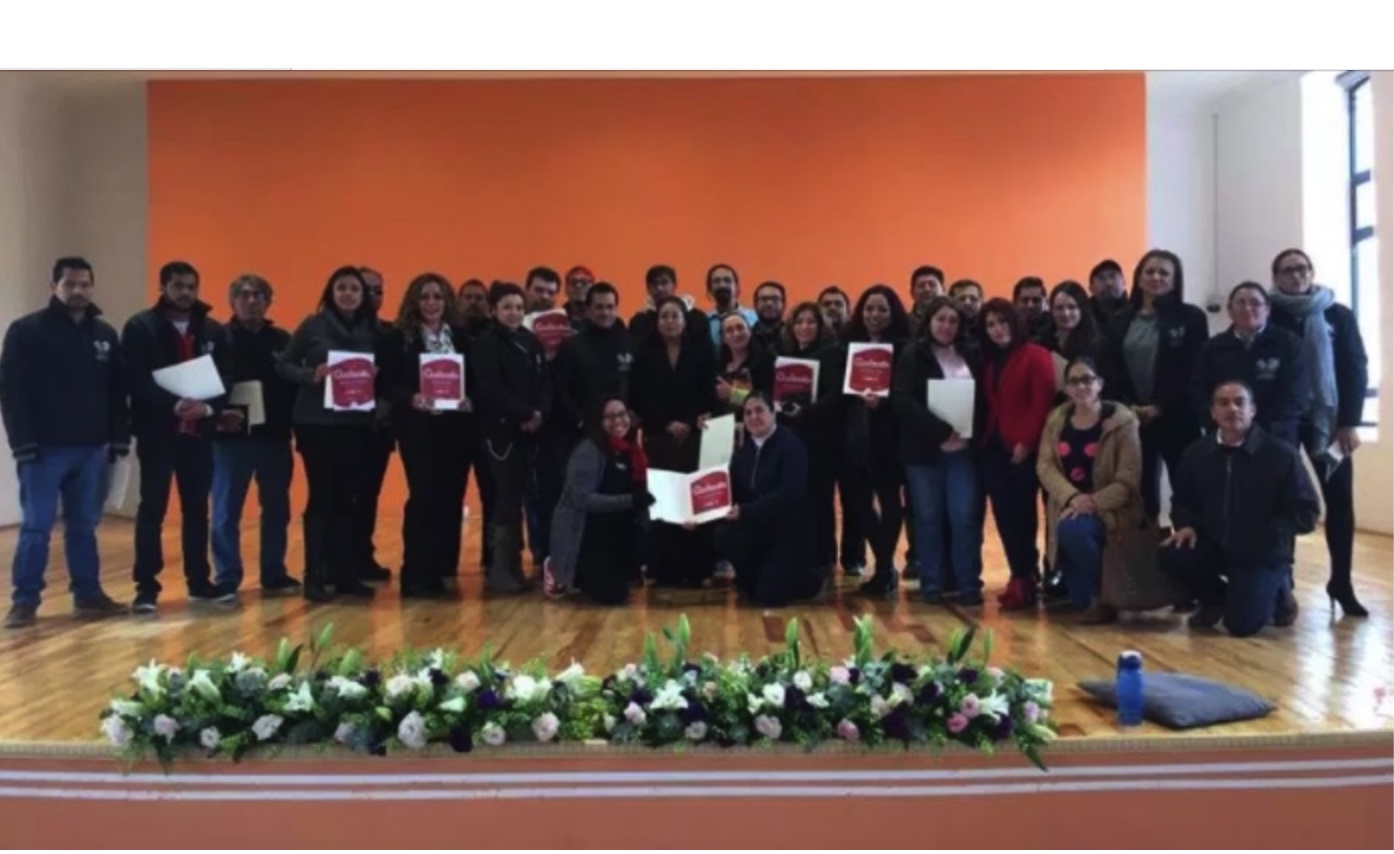
A poster from Cronica Jalisco

In a press release they indicate that the program will start with a series of activities broadcast on the social networks of the mayor of Tlalpan – one of the 13 municipalities that make up the Mexican capital. It will include three segments: videos, talks and a course-workshop , as well as the presentation of a documentary.

(continued in right column)

(Click here for the Spanish original of this article)

Questions for this article:

How can culture of peace be developed at the municipal level?

Is there progress towards a culture of peace in Mexico?

(continued from left column)

The organizers explain that there will be talks, conferences, children’s forums, audiovisuals, debates around Covid-19 and its effects on children, public space and community cultural life.

Human rights personalities, the academy of institutions such as Mexico City, the Autonomous University, the Spain Cultural Center and the Ministry of Culture, as well as local cultural managers from Querétaro and Michoacán, among others, will actively participate in the 13 days of culture.

The Mayor’s Office of Tlalpan, through the Subdirectorate of the Arts and Crafts Centers, attached to the General Directorate of Cultural Rights where this unprecedented meeting was born, will raise the issue of how the confinement has affected children, as well as vulnerable groups and what are their consequences.

They will also include the importance that art, the culture of peace, the public space have for people’s daily lives, in these moments of virtuality and massive confinement.

Other aspects to explore are the types of social relationships and affections developed by those who are in contact and in communication with some cultural or artistic social program, online during confinement, compared to those who are not.

This third Culture of Peace meeting will have the participation of Nashieli Ramírez, president of the Human Rights Commission of Mexico City, and numerous professors and researchers specializing in childhood issues and public space.

Mali: Festi Petit – a 3rd Edition Full of Surprise

. . DEMOCRATIC PARTICIPATION . .

An article by  Mohamed Kanouté in Mali 24 (translation by CPNN)

It was in a festive atmosphere that the 3rd Edition of the festival called Festi Petit, an initiative of Alagria Event and its partners, opened this Friday, May 14, 2021 at the Salamatou Maiga Sports Palace.

Objective: To instill in children the culture of peace, acceptance of the other and unity in its diversity because children are the future of this country. Also to arouse curiosity in children while developing their intelligence through attractive games.

The Festival was attended by communal authorities, local administrative authorities of commune IV of the district of Bamako and cultural actors.

(article continued in right column)

(Click here for the French version of this article)

Question related to this article:


Can festivals help create peace at the community level?

(article continued from left column)

A place of meeting, exchange and entertainment of all kinds between children, this third edition, which will last three days, has kept all its promises in terms of mobilization.

In a festive atmosphere tinged with cries of joy, children test their knowledge and intellectual capacity in attractive games to the delight of the parents who accompany them.

According to the director of the Festival Ms. Adam Samaké, Alagria Event launched the festival in 2018 as part of the development of their activities in favor of children.

“It is a festival dedicated to children without distinction with a blend of gastronomic entertainment and culture. The culture of peace, acceptance of others and unity in its diversity is our goal, because the future of the country depends on children,” she explained.

According to her, “Mali is currently going through a crisis which is shaking the very foundations of the country, and children today face the harmful consequences of this crisis, hence the idea for us to organize this festival to allow people you to recreate themselves and forget certain difficulties at least for a while ”

She also expressed the wish to perpetuate this initiative and especially to extend to children who are in the regions.

Haiti: CNDDR workshop finalizes its national disarmament strategy

. . DEMOCRATIC PARTICIPATION . .

An article from Le Nouvelliste (translation by CPNN)

The National Commission for Disarmament, Dismantling and Reintegration (CNDDR) is organizing this week, at the Karibe Hotel, a three-day workshop to finalize and validate of the national disarmament, dismantling and reintegration strategy document for the reduction of community violence . Discussions are taking place on May 12, 13 and 14. The workshop benefits from the support and logistics of the United Nations Integrated Office in Haiti (BINUH).


(article continued in right column)

(Click here for the original article in French.)

Question related to this article:

 
Are the people of Haiti making progress toward a culture of peace?

(article continued from left column)

According to the secretary general and spokesperson for the CNDDR, Greatz Sironel Charles, this workshop brings together the government bodies that are involved in disarmament work. “To carry out disarmament, there needs to be synergy between the Minister for Human Rights and the Reduction of Extreme Poverty, the Ministry of Planning and External Cooperation, the Ministry of the Interior and Territorial Communities, the Ministry of Justice and Public Security, the Ministry of National Education and Vocational Training through the INFP, the national police, the Ministry of Social Affairs, the office of the Secretary of State for the Integration of persons with disabilities, and the Ministry for the Status of Women. These are the partners who are meeting with us during the 3 days. They will be responsible for implementing the programs, while the CNDDR is a technical decision-making body, ”said the spokesperson.

Greatz Sironel Charles continued by stressing that the CNDDR will coordinate while the other bodies will implement in order to succeed in disarmament. “In an institutional approach, everyone must play their part. This will allow us to achieve the establishment of a culture of peace in the country. This will allow economic recovery at all levels, ”she said.

The secretary general and spokesperson for the CNDDR stressed that the document on the national disarmament strategy has already been submitted to the government for more than a year. “On April 6, we created a task force at the level of the ministries to monitor it. We are in the process of finalizing the document before making it public. The strategy is based on three axes: socio-cultural, economic and political… The representatives of the different bodies have made commitments in order to better facilitate the implementations ”, she declared, stressing that she hopes that the strategy will be implemented as soon as possible.

Brazil: Compaz invites schools to the 19th edition of the book Londrina Pazeando

… EDUCATION FOR PEACE …

An article from Bonde

Compaz (City Council for the Culture of Peace) and the Non-Governmental Organization Londrina Pazeando are inviting students from public and private schools to enroll in the 19th edition of the book Londrina Pazeando. Interested parties can submit their work until May 30th. The announcement with the rules and the registration form for participating are available on the council’s website ( click here ).


The theme for 2021 is “In 2040, the Londrina that we want is: Londrina Cidade da Paz. How I am contributing for this? ”. Through a collection of texts and drawings, students of basic education, their teachers and guardians of the children can send materials for selection.
(Article continued in right column)

(Click here for the article in Portuguese)

Questions for this article:

What is the best way to teach peace to children?

How can culture of peace be developed at the municipal level?

(Article continued from left column)

The intention is to fulfill the SDGs (Sustainable Development Goals), stipulated by the UN (United Nations Organization), for the years 2015 to 2032. Among them are the eradication of poverty, zero hunger, sustainable agriculture, health and well-being, quality education, gender equality, drinking water and sanitation, accessible energy clean, decent work and economic growth, industry, innovation and infrastructure, reducing inequalities, etc. Those who bring elements proposed in Municipal Law No. 12,467, which creates the Municipal Program for Restorative Practices in the Municipality of Londrina, will also be welcome.

According to the secretary of Compaz, Luiz Galhardi, the publication of the book Londrina Pazeando aims to provoke reflections on the importance of building a Culture of Peace, as well as promoting actions that contribute to the establishment of a non-violent society. “The Municipality of Londrina, through a public bidding process, hired Macroplan to carry out a Strategic Plan for the city. The suggestions of many people will be heard, in different areas, to improve the Municipality, to improve the good things we already enjoy, and to fix things that are not going so well, is necessary”, explain the organizers.

In this edition, the book will be published in digital and printed format. The content will also be available on the internet and can be shared on social networks, through the website of www.londrinapazeando.org.br. Each selected author will be presented with the book, during a ceremony on September 20, 2021, from 2pm to 4pm. Both the texts and the drawings produced, which are not published in the book, will serve as material for exhibition during the 21st Week of Peace, which should take place in September 2021, at the school itself or at other institutions.

We the Peoples : Call for Inclusive Global Governance

. . DEMOCRATIC PARTICIPATION . .

A call from We the Peoples

The biggest challenges facing humanity such as pandemics, the climate crisis, biodiversity loss, violent conflict, forced displacement, discrimination and inequality are global and cross-cutting in nature. With each passing day, they become more pressing. International collaboration and global governance need to improve significantly and become more accountable to those affected most: the world’s citizens.

On the occasion of the UN’s 75th anniversary, heads of state and government committed to making global governance more inclusive. The UN Secretary-General promised to promote a new model based on full, inclusive and equal participation in global institutions. We agree. It is time to give people a stronger voice in global affairs and at the UN.

We call on the UN and member states to implement three specific institutional changes to strengthen the inclusive and democratic character of the UN:


(Click on image to enlarge)

A World Citizens’ Initiative

The creation of the instrument of a World Citizens’ Initiative which enables people to put forward proposals on key issues of global concern for discussion and further action at the highest political level. Any proposal that reaches a certain threshold of popular support should be put onto the agenda of the UN General Assembly or Security Council.

#WorldCitizensInitiative
Study on implementation: PDF here
More details: worldcitizensinitiative.org

(Article continued in right column)

Question related to this article:

How can we develop the institutional framework for a culture of peace?

(Article continued from left column)

A UN Parliamentary Assembly

The creation of a UN Parliamentary Assembly which allows for the inclusion of elected representatives in the agenda-setting and decision-making of the UN. The assembly will act as a representative body and watchdog connecting the people with the UN and reflecting a broad diversity of global viewpoints.

#UNParliamentaryAssembly
Study on implementation: PDF here
More details: unpacampaign.org

A UN Civil Society Envoy

Setting up the office of a UN Civil Society Envoy to enable greater participation, spur inclusive convenings and drive the UN’s outreach to the public and civil society organisations. This envoy should champion the implementation of a broader strategy for opening up the UN to people’s participation and civil society voices.

#UNCivilSocietyEnvoy
Background paper: PDF here
More details: together1st.org

These new tools will help the UN and member states to tackle global challenges more effectively. They will enhance the legitimacy of global governance and facilitate its transformational potential.

Tangible changes in the UN’s functioning are urgently needed to realize the promise of the Preamble of the UN Charter which begins with the words, “We the Peoples of the United Nations”.

Endorse here

A joint initiative of Democracy without Borders, Civicus and Democracy International

International Cities Of Peace : Vision 1000 — Strategic Plan

. . DEMOCRATIC PARTICIPATION . .

Excerpts from the ICP Strategic Plan

EXECUTIVE SUMMARY

Since its founding in 2009, International Cities of Peace has achieved much success in both growth and impact. Last year, the Association of peace cities exceeded membership of 300 Cities of Peace in over 60 countries and the growth has accelerated.

Yet as organizational icon Marshall Goldsmith said, “What got you here, will not get you there.” Getting “there” is a huge challenge: to put in motion a tipping force for world peace by helping establish Cities of Peace across the globe.

History shows us that the dream of world peace is illusive. Violence and injustice continue, seemingly, unabated. The global Cities of Peace movement has potential to change that dynamic yet we must be highly innovative, committed, and organized for sustainable growth.

This Strategic Plan is intended to do the following:
• Clarify and communicate the essential nature of International Cities of Peace • Ensure the organization is sustainable over time
• Limit the liability that plagues large organizations
• Organize to achieve our Growth Goal by Year 2025

The intended audiences of this Strategic Plan are those involved in the Cities of Peace movement, including board members, volunteers, community liaisons and team members, advisors and alliances, donors, friends, and the general public.

If you have questions, comments, ideas, or especially the desire to volunteer for this monumental and historic goal, please know that we need you. Send an email describing your thoughts on peacebuilding to: info@internationalcitiesofpeace.org

STRATEGIC GROWTH GOAL

International Cities of Peace will grow to 1000 Cities of Peace by Year 2025 to put in motion a tipping force for global peace.

Based on a standard physics term, a “tipping force” is the energy necessary to overcome the status quo when the momentum of change becomes too strong to resist. It is akin to Gandhi’s “Truth Force” for nonviolent change. The strong energy of peace, so long anticipated, is being created by Cities of Peace across the globe. . . .

THE CITIES OF PEACE MOVEMENT

Understanding that the world has thousands of peace initiatives, International Cities of Peace has organized as an association rather than a hierarchical, top down enterprise. Rather than the usual NGO approach of “telling people how” to find peace, the ICP Association gathers together “in situ” (or in the situation) peacemakers and respects their understanding of community needs and solutions.

As a strategy, International Cities of Peace operates with a small, all-volunteer staff to maintain a humble and efficient organization for expanding and empowering a large network of Cities of Peace around the globe. As a not-for-profit association, International Cities of Peace forms alliances with global peace leaders, promotes free skills development, encourages City-to-City collaborations, and provides official Certificates and Recommendations for member communities. . . .

THOUSANDS OF YEARS IN THE MAKING

The Cities of Peace ideal envisions small and large communities at peace, where all citizens enjoy the three freedoms — the freedom to be safe, to prosper from hard work, and to find a quality of life that enables people to achieve their purpose.

The Association is, indeed, only a part of humanity’s evolutionary drive toward a global culture of peace. . . .

(article continued in right column)

Question related to this article:
 
How can culture of peace be developed at the municipal level?

(article continued from left column)

VISION, MISSION, AND GOALS: WHY, WHAT, AND HOW

Foundational Vision (WHY International Cities of Peace?)


To ensure everyone’s right to safety, prosperity, and quality of life, the consensus values of global peace.

• The purpose of International Cities of Peace (ICP) is to advance the cause of global peace.

• Cities, as the living center closest to people, are necessarily held accountable by their citizens to work toward peaceful communities and the public good.

• Peace is defined as a practical endeavor by ICP — the consensus values of safety, prosperity and quality of life for ALL in the community.

Essential Mission (WHAT do we do?)


To build a scalable network of “in situ” teams committed to peace-building in Cities of Peace around the world.

• International Cities of Peace provides a platform to facilitate community Action Plans to achieve personal and community transformation toward a practical, substantive culture of peace.

• To establish a City of Peace entails a unity proposition to engage diversity and all members of a community. • ICP Central works with “in situ” leaders who form working teams to develop a vision, mission and goals to facilitate practical community transformation.

Each City of Peace has a legacy of peace that is documented and valued.


• Nonviolent solutions are the only mode of operation for peacebuilding in a City. • The UNESCO Culture of Peace resolution provides guidance (see Letter of Intent) • The Golden Rule provides a way to engage all spiritual paths.

Essential Goal (HOW do we organize to achieve our vision?)
To certify and recommend thousands of self-organized municipalities as Cities of Peace in order to put in motion a tipping force for global peace.

• International Cities of Peace does not tell communities how to organize for peace, but rather relies on “in situ” leaders to know what needs to be done.

• Cities of Peace, Inc. is at every level an all-volunteer organization; volunteers do not receive monetary compensation or use ICP for personal salary or business interests.

• Official City of Peace Liaisons are not employees but independent voluntary contacts for two-way communication between their City and the Association.

• Financial goals are limited to necessary operations and efficient programming. In rare instances, ICP facilitates financial or in-kind support between Cities.

• The Valued Provider Program is a non-binding alliance between the Association and mentors who provide free services.

• The City-to-City Collaboration Program enables independent, non-binding City- to-City working alliances for a specific purpose as defined and authorized by all parties in the collaboration. . . .

THE PROCESS TO ESTABLISH A CITY OF PEACE
. . . .

1. Print and send the Letter of Intent with Peace Team signatures and contact information for quarterly newsletter. Information is secure and not distributed.

2. Develop a vision, mission, and goals statement as detailed as possible.


3. Email photos and captions of your peace team, local events, locations, or historical events. (Send with photos an email accepting liability for and releasing ICP of liability for copyrighted photos sent without permission.)


4. Send non-copyrighted photo and background information for the Liaison and/or dignitary as the single point of contact for the community.

5. Write a statement about the peace legacy of your community (advances and challenges in peace, health, education, history, etc.).

Upon completing the five-step process, as outlined above, the City receives a Certificate as a member of the Association of International Cities of Peace. In becoming a City of Peace, community working teams develop and implement Action Plans for practical peace initiatives. After one year of successful work for peace, the Liaison can submit to the Association’s Executive Facilitator the City’s Action Plan and receive a Recommendation, which can be used to approach granting organizations for special projects. Each City can renew their Recommendation by submitting their Action Plan results every three years.

USA: Department of Peacebuilding Act of 2021 deserves support

. . DEMOCRATIC PARTICIPATION . .

Special to CPNN from Anne Creter*

U.S. President Joe Biden introduced the big word “infrastructure” to the national discourse recently with his bold new bill to build concrete “infrastructures” to lift our country up from its arrested “development.” Because the U.S. suffers now from an appalling, escalating epidemic of (gun) violence and domestic terrorism, such proposed structures are urgently needed here. Sustainable development is necessary for our nation to be more safe, secure, healthy and peaceful. Because “sustainable peace” is a necessary condition for development, it is ALSO time now for the U.S. to build bold new governmental “infrastructures” for PEACE!

Infrastructures for Peace (I4P) are dynamic, architectural networks of interdependent structures, mechanisms, resources (including governmental departments, ministries and other forms such as commissions, academies etc.) which through dialogue and consultation, promote nonviolence, conflict prevention and peacebuilding in a society. They are the missing link ‘connective tissue’ between the desire for the Culture of Peace and actually making it real.

With Covid-19 still rampant our planet is at “The Great Turning” existential moment of choice. As we enter a new life-changing POST-PANDEMIC world, to survive society must develop the attitudes and responses this unchartered territory will demand. Therefore, now more than ever we MUST make “nonviolence” a solid foundation upon which our “new normal” will be built! As the pandemic breaks down dysfunctional old-paradigm structures, viable new alternative “nonviolent” ones exist at all levels that have been proven to promote peacebuilding to cultivate the Culture of Peace. To offset the destruction, we must intentionally construct the new epoch by building a global peace architecture to institutionalize peace; applying the science of nonviolence at all levels as the main organizing principle and priority of government. Peace is a basic human right and government currently is sorely inadequate in guaranteeing it for us.

Pending U.S. bill H.R 1111 just re-introduced in Congress on February 18, 2021 by Representative Barbara Lee (CA-13) is an excellent example of a governmental I4P. This historic, comprehensive, transformative bill calls for a cabinet-level Department of Peacebuilding to make peace an ongoing national focus. It addresses the interconnection of all life and the intersectionality of peace, justice, equality, planetary survival and other aspects of life. We know there are root causes of violence and root conditions of peace.  And that violence prevention saves lives and money, raising the quality of life for all.  This legislation is about addressing the root causes of violence at all levels to create the nonviolent Beloved Community.

(Continued in right column)

Question related to this article:

Is a U.S. Department of Peace a realistic political goal?

(Continued from left column)

Some 2021 provisions and updated language in the bill include:

* Confronting systemic racism in America to eliminate persistent racial inequities, including through a Commission on Truth, Racial Healing, and Transformation.

* Peace education not only anti-bullying / anti-harassment, nonviolent conflict education, mindfulness and restorative practices, but also study of U.S. civil rights and human rights movements and contributions of its diverse ethnicities, races and religious communities.

* Developing violence prevention and de-escalation training for the general public both domestically and internationally, to provide peacebuilding tools and educational skills plus promote “sustainable peace” buy-in and awareness.

* Expanding upon language in prior DoP bills relating to arms control and nuclear weapons; includes health and medical concerns; calls for prevention of hate and a culture of violence and domination — including development of non-threatening community policing strategies, mindfulness and conflict de-escalation training skills among police and other public safety officers. 

* Eradication of dehumanization, genocide and mistreatment of individuals, including by human trafficking, infectious and other diseases. 

* Provides for wide-ranging studies relating to mass shootings; police violence; the impact of war and violence on soldiers, veterans and civilians; the impact of violence, racism and inequality on many conditions of peace and rule of law; and the impact of teaching nonviolent conflict resolution skills and social emotional learning. 

* Includes Tribal Governments among entities to be consulted and collaboration to prioritize those who are most impacted by the related programs. 

* Encouraging all countries to form infrastructures for peace within and among nations!

For more information:

Text of bill.

U.S. campaign.

Global Alliance for Ministries & Infrastructures for Peace.

The author, Anne Creter, is the UN NGO Rep for Peace Through Unity, GAMIP, and the Peace Alliance National Department of Peacebuilding Committee

Brazil: Policy for the Culture of Peace and Restorative Justice is prepared by the Municipality of Recife

.. DEMOCRATIC PARTICIPATION ..

An article from the Diario de Pernambuco

On Monday [March 26], the City of Recife drafted a Bill 009/21 with a proposal for a new Municipal Policy for the Culture of Peace and Restorative Justice and sent it to the City Council. According to the press office of the City Hall, the project was the result of a broad debate with the society.


Centro Communitário de Paz, Recife

The press office also states that the capital of Pernambuco “is one of the first to have such a complete law and that it covers all areas of municipal competence.” Once the proposal is discussed and approved by Casa José Mariano, the Recife City Hall, through the Citizen Security Secretariat, will have a Municipal Council for the Culture of Peace and Restorative Practices.

(continued in right column)

(Click here for the Portuguese original of this article)

Questions for this article:

How can culture of peace be developed at the municipal level?

(continued from left column)

The formulation of the proposal started at the 1st Municipal Conference on Culture of Peace and Restorative Justice, held on December 16 and 17, 2019, at the Catholic University of Pernambuco, where public and private institutions discussed the construction of paths and solutions to the difficulties that have been encountered by in the municipality in the field of security, justice and human rights.

“According to the adviser, at the final plenary session, after two days of debate, 123 proposals were approved covering the six axes:
* The Culture of Peace;
* Restorative Practices and conflict transformations;
* Human Rights and ethnic racial relations;
* Gender, sexuality and vulnerable populations;
* Social participation and citizen protagonism;
* Communication and training.

Several proposals are foreseen in the new municipal policy, among them is the training in conflict mediation and non-violent communication for teachers and traffic agents, integrative health practices, the creation of a policy of continuous training of Culture of Peace for employees of the City Hall, conducting restorative circles in prisons, conducting workshops against bullying and other forms of violence, among other proposals.

Weifang, China established their City as an International City of Peace

. . DEMOCRATIC PARTICIPATION . .

An article by Fred Arment for International Cities of Peace

TRULY HEARTENING. The millions of citizens of Weifang, China established their City as an International City of Peace in February. They are now deeply involved in peacemaking within their community and beyond. Take a look at this extraordinary magazine focusing on their City of Peace efforts. It is in Chinese language but, from the photos, you can see the budding of global peace in their community. This morning’s email from Weifang City of Peace Liaison Sun Li:


Special issue on peace city
(Click on image to enlarge)

“Dear Mr. J. Fred Arment,

Thank you very much for the congratulations’ link you sent me. Weifang has become an international city of peace, which is of great significance to Weifang and has attracted great attention from all walks of life in China. At the same time, with the help of Professor Liu Cheng, Weifang is making great efforts to do a good job in peace propaganda activities and fulfill the responsibility of a peaceful city.

(article continued in right column)

Question related to this article:
 
How can culture of peace be developed at the municipal level?

(article continued from left column)

Recently, we have held a lot of teaching activities. Our staff have entered many schools in Weifang City, carried out peace education, and led the children to do activities related to peace. We help children understand the meaning of peace and the beautiful vision of world peace.

Website links of some activities:
https://mp.weixin.qq.com/s/8nAhZYk3a4i-2KYabMeG2g
https://mp.weixin.qq.com/s/nXaaNy-keK1zKbkJga_yBw

In addition, we have published a special issue of peace city.
Link to the website of the special issue:
https://book.yunzhan365.com/dlyu/npqi/mobile/index.html

At present, Weifang is discussing cooperation with Professor Liu Cheng, planning to hold some activities on peace, hoping to let more people understand the true meaning of peace through publicity and education activities.
With respect and appreciation,
Sun Li

Financial Press Fears Brazilians Will Be Allowed to Elect President of Their Choice

FREE FLOW OF INFORMATION

An article by Alan MacLeod from FAIR – Fairness & Accuracy In Reporting

The Brazilian Supreme Court this month  dismissed all charges  against former President Luis Inacio “Lula” da Silva. A towering figure in national politics, Lula was the country’s president for eight years between 2003 and 2011. He was later convicted on highly dubious corruption charges and spent 18 months in prison, where his plight drew worldwide attention, making him, in the estimation  of Noam Chomsky, the “world’s most prominent political prisoner.”

Lula’s incarceration directly led to far-right authoritarian Jair Bolsonaro coming to power, as Lula, the  overwhelming favorite in the polls, was barred from running against him. Sergio Moro, the judge who imprisoned Lula—and secretly worked with the prosecution to convict him—became President Bolsonaro’s justice minister. The journalist who exposed  Moro’s secret dealings, Glenn Greenwald, was charged  with cybercrimes as a result of his reporting. (The charges were later dismissed.)

The Supreme Court’s ruling leaves Lula free to run against Bolsonaro in 2022—and gives Brazilians a chance to vote for the leader of their choice. But far from celebrating the news, the financial press is very disappointed that the world’s most popular  politician is finally free again. “Stock Exchange Loses 4% and Dollar Rises After Lula Charges Annulled,” ran Forbes Brasil’s headline (3/8/21). “Markets Reacted Badly to the Announcement” wrote the Financial Times (3/8/21).

Also seemingly disconsolate at the news was Reuters (3/9/21), who went with “Brazil Markets, on Shaky Foundations, Rocked by Lula Bombshell,” telling readers that investors were “gasping for air.” The report quoted a former central banker saying that Lula’s release would have  “dire consequences.” Not for people or democracy—Reuters was not interested in that—but for “asset prices in general.”

“Lula’s Comeback Adds to Long List of Brazil Investor Woes,” read Bloomberg’s headline (3/9/21). Its article quoted one consultant warning that Lula “will seek revenge, and he will blame the markets, the media and business leaders for the downfall of the Workers’ Party.” Why these institutions are not to blame was not explained.

The financial press has long been afraid of what Lula’s liberty would mean for the profits of its readers. The “worst-case scenario,” Forbes (11/10/19) wrote in 2019, would be if he returned to politics and began “rabble rousing” people against Bolsonaro. What he had already done in undermining confidence in the administration was “deeply irresponsible,” reporter Kenneth Rapoza wrote, noting that his criticism of the government that was then imprisoning him merely increased “polarization” and “pain” throughout the country.

(Article continued in right column)

Question(s) related to this article:

The courage of Mordecai Vanunu and other whistle-blowers, How can we emulate it in our lives?

Do the financial media support democracy?

(Article continued from left column)

A great many articles characterized Lula as “polarizing”—a media codeword used extensively in reporting on the Global South, meaning “enacting policies rich people don’t like.” CNBC (3/8/21), for instance, explained that the decision to drop charges against Lula would “polarize voters,”  and that financial markets were “roiled” by the latest news.

This is in complete contrast to two years ago, when the financial press lauded the election of the fascist Bolsonaro (FAIR.org, 10/31/18). The Financial Times (10/8/18) and CNBC (10/2/18) both noted that markets were “cheering” Bolsonaro’s lead in the polls, while Bloomberg (10/30/18) excitedly reported that he would be an “extraordinarily pro-business” president. “Jair Bolsonaro is a dangerous populist, with some good ideas,” said the Economist (1/5/19). It was the Wall Street Journal (10/29/18) that went furthest, however, endorsing him as a “credible” “reformer” and an “antidote” to the greed and corruption of Lula’s Workers’ Party.

Since then, corporate media have cooled on Bolsonaro: not because of his openly declared  racism, sexism, homophobia or nostalgia for dictatorship, but mostly because he has failed to fully carry out many of his promised “reforms”—another media codeword for pro-business policies which usually hurt the majority (FAIR.org, 2/16/185/8/16; CounterSpin, 8/28/1511/29/18). What Bolsonaro’s “reforms” entailed, JP Morgan (12/13/19) helpfully explained: a firesale of state-owned assets, huge cuts to public pensions, tax cuts for the wealthy and wage reductions for state employees.

Even worse, Lula’s release, the press explained, would close the door on these policies. As CNBC wrote (3/8/21):

Financial analysts said the prospect of Lula candidacy would likely drive Bolsonaro to abandon economic reforms he ran on in 2018 and further embrace populist measures to shore up support.

To decode this: CNBC and others who similarly predicted the end of Bolsonaro’s reform agenda (Financial Times, 3/8/21; Bloomberg, 3/9/21, Reuters, 3/9/21), were tacitly admitting that free-market shock therapy is exceptionally unpopular, and has no chance of implementation unless all credible opposition to it is forcefully suppressed.

If this were purely about profits, Lula should not generate such antagonism. “The financial press’ hostility and fear is pointless,” Brazilian journalist Nathalia Urban  told FAIR:

The market performed well with him for the eight years he was president, and with Dilma Rousseff for six years afterwards. If the market wants to make money by investing in production and having a strong consumer market, it has to like a government that has one of its pillars to increase the power of expenditure of the working class.

Instead, it is Lula’s position as an independent actor who has consistently stymied US imperial ambitions in Latin America and beyond  that is the real problem. Washington was also deeply implicated in his arrest and imprisonment, although corporate media have been hesitant to explore this connection (FAIR.org, 3/8/21).

The dismay over the freeing of the world’s most prominent political prisoner illustrates the opposition of the business press to human rights and the rule of law. Financial media were all too happy to see a far-right authoritarian gain power, as long as he implemented pro-rich policies. No matter what the evidence, the press’ response suggests they think that they still believe democracy just isn’t good for business.