Category Archives: DEMOCRATIC PARTICIPATION

Toumodi, Ivory Coast: Community leaders trained in the culture of peace

. . DEMOCRATIC PARTICIPATION . .

An article from Abidjan.net

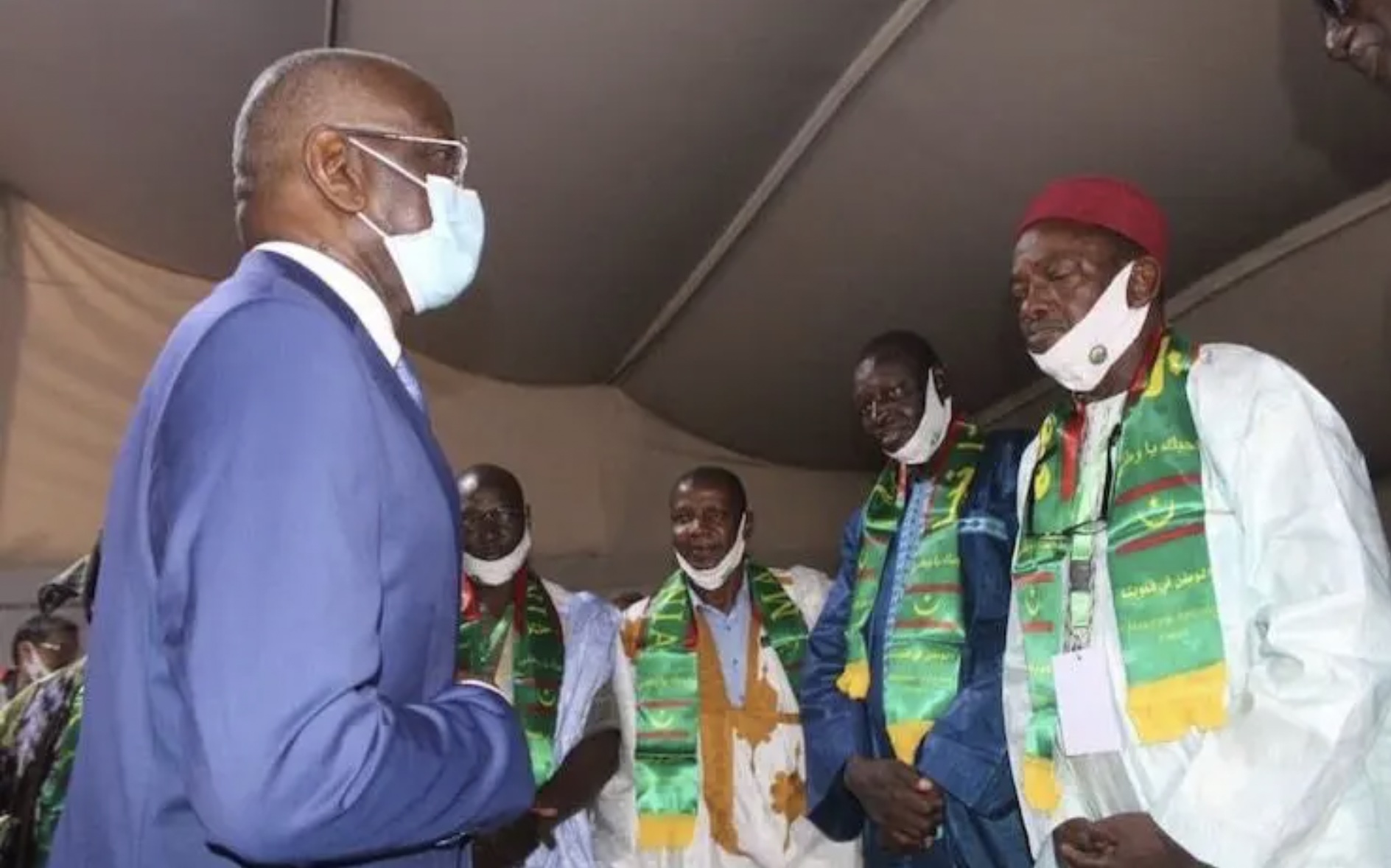
Heads of village, community and associations of women and young people of the department of Toumodi participated, Wednesday, September 1, 2021, in an awareness-raising workshop on the culture of peace and living together initiated by the National Program for Social Cohesion (PNCS).


© AIP By DR (Click on image to enlarge)

Questions related to this article:

How should elections be organized in a true democracy?

Can a culture of peace be achieved in Africa through local indigenous training and participation?

“For us, it is about sensitizing communities to the culture of living together in order to contribute to the consolidation of peace through the establishment of community income-generating activities”, explained the director general of the PNCS, Arsène Kouassi.

Toumodi is one of the six localities in the country chosen to host these workshops, because of the violence that punctuated the last presidential elections there. “Toumodi has had difficult times, but tensions have eased now. This workshop will help us build trust between populations,” explained the third deputy mayor, Célestin Sialou.

(Click here for the original French version of this article.)

United States Conference of Mayors Calls on the United States to Welcome the Treaty on the Prohibition of Nuclear Weapons and to Act Now to Prevent Nuclear War and Eliminate Nuclear Weapons

DISARMAMENT & SECURITY .

An article from Pressenza (reprinted by permission)

At the close of its 89th Annual Meeting, held virtually due to the ongoing COVID-19 pandemic, on August 31, 2021, the United States Conference of Mayors (USCM) Executive Committee unanimously adopted a bold new resolution Calling on the United States to Welcome the Treaty on the Prohibition of Nuclear Weapons [TPNW] and to Act Now to Prevent Nuclear War and Eliminate Nuclear Weapons.


The resolution calls on the United States government “to welcome the Treaty as a positive step towards negotiation of a comprehensive agreement on the achievement and permanent maintenance of a world free of nuclear weapons.” It continues: “The United States Conference of Mayors welcomes the June 16, 2021 Joint Statement by President Biden and Russian President Putin in which they ‘reaffirm the principle that a nuclear war cannot be won and must never be fought’; and calls on the Biden Administration to reduce nuclear tensions through intensive diplomatic efforts with Russia and China, and to actively pursue a verifiable agreement among nuclear-armed states to eliminate their nuclear arsenals in conformity with requirements of international law preceding the TPNW by decades.”

Observing that, “according to a report by the International Campaign to Abolish Nuclear Weapons, in 2020, the nine nuclear-armed states spent $72.6 billion on nuclear weapons, with the U.S. leading at $37.4 billion, or $70,881 per minute,” the USCM resolution opens with a stark warning from the Bulletin of the Atomic Scientists:

WHEREAS, on January 27, 2021, the Bulletin of the Atomic Scientists announced it is keeping the hands of its Doomsday Clock at 100 seconds to midnight, the closest we’ve ever been to global annihilation, stating: “By our estimation, the potential for the world to stumble into nuclear war-an ever-present danger over the last 75 years-increased in 2020,” and noting: “the existential threats of nuclear weapons and climate change have intensified in recent years because of a threat multiplier: the continuing corruption of the information ecosphere on which democracy and public decision-making depend…[T]he COVID-19 pandemic is a wake-up call.”

The USCM resolution underscores that “tensions between the United States and Russia and between the United States and China have increased dramatically, with flashpoints in Ukraine and Taiwan that could potentially spawn nuclear confrontations.”

(Continued in right column)

Question related to this article:
 
Can we abolish all nuclear weapons?

(Continued from left column)

The USCM expresses its concern that “President Biden’s budget request for Fiscal Year 2022 increases military expenditures by $11 billion and extends funding for all nuclear warhead and delivery system upgrades in his predecessor’s budget, as well as its massive investment in the nuclear weapons infrastructure, to project nuclear weapons research, development, production, and deployment well into the 21st century, in violation of United States disarmament obligations under the 1970 Nuclear Nonproliferation Treaty.”

The USCM resolution reports that “the Treaty on the Prohibition of Nuclear Weapons (TPNW) entered into force on January 22, 2021, prohibiting the development, acquisition, possession, use or threat of use of nuclear weapons for those countries that have ratified it.” But it points out that, “while the TPNW represents the total repudiation of nuclear weapons by most of the states that do not possess them, the United States, the eight other nuclear-armed states and almost all of the countries under the U.S. nuclear umbrella boycotted the negotiations and have not joined the treaty.”

The USCM makes several concrete policy recommendations in its new resolution:

“call[ing] on the Biden Administration to fully incorporate United States obligations regarding non-use and elimination of nuclear weapons under international law into its forthcoming Nuclear Posture Review”;

“call[ing] on the President and Congress to cancel the plan to replace the entire U.S. nuclear arsenal with enhanced weapons and to redirect funds currently allocated to nuclear weapons and unwarranted military spending to address decades of inaction on infrastructure, poverty, the growing climate crisis, and rising inequality”; and

“call[ing] on the President and Congress to elevate arms control and disarmament as a federal priority by reestablishing the Arms Control and Disarmament Agency.”

As recognized in the resolution, “Mayors for Peace, founded in 1982 and led by the Mayors of Hiroshima and Nagasaki, is working for a world without nuclear weapons, safe and resilient cities, and a culture of peace, as essential measures for the realization of lasting world peace;” and “Mayors for Peace has grown to 8,043 cities in 165 countries and regions, with 219 U.S. members, representing in total over one billion people.”

Noting that, “The United States Conference of Mayors has unanimously adopted Mayors for Peace resolutions for sixteen consecutive years,” the USCM “urges all of its members to join Mayors for Peace to help reach the goal of 10,000 member cities.”

The 2021 USCM resolution was sponsored by Mayors for Peace U.S. Vice-President Frank Cownie, Mayor of Des Moines, Iowa, and co-sponsored by Nan Whaley, Mayor of Dayton, Ohio and current President of the USCM; Steve Benjamin, Mayor of Columbia, South Carolina and past President of the USCM; Patrick L. Wojahn, Mayor of College Park, Maryland; Roy D. Buol, Mayor of Dubuque, Iowa; J. Christian Bollwage, Mayor of Elizabeth, New Jersey; Jon Mitchell, Mayor of New Bedford, Massachusetts; and William Peduto, Mayor of Pittsburgh, Pennsylvania.

The United States Conference of Mayors  is the official nonpartisan association of more than 1,400 American cities with populations over 30,000. Resolutions Adopted at annual meetings become USCM official policy.

Click here for the full text of the resolution.

58 Years After Historic Rally, Thousands March on Washington for Voting Rights, DC Statehood

. HUMAN RIGHTS .

An article by Julia Conley from Common Dreams (licensed under Creative Commons (CC BY-NC-ND 3.0). to republish and share widely)

A summer marked by rallies, motorcades, and pressure campaigns targeting lawmakers standing in the way of voting rights legislation culminated on Saturday in the 2021 March on Washington, where thousands demanded that Congress pass far-reaching measures to protect and expand the right to vote. 
Demonstrators traveled  from across the country to mark the 58th anniversary of the historic 1963 March on Washington for Jobs and Freedom.

As groups including the Poor People’s Campaign, Stand Up America, and Public Citizen have for months, thousands of protesters called on Congress to pass the For the People Act and the John Lewis Voting Rights Advancement Act and to eliminate the legislative filibuster to do so if necessary.

The  For the People Act  would grant statehood to Washington, D.C.; ban partisan gerrymandering; implement automatic voter registration for federal elections, and take other major steps to expand voting rights.
 

(Article continued in the right column)

Questions related to this article:

The struggle for human rights, is it gathering force in the USA?

How should elections be organized in a true democracy?

(Article continued from the left column)

The John Lewis Voting Rights Advancement Act would restore full anti-discrimination protections to the Voting Rights Act of 1965.
 
Rev. Dr. William J. Barber II, co-chair of the Poor People’s Campaign, was among  those who spoke  at the event—officially  called  “March On for Washington and Voting Rights”—as well as Reps. Cori Bush (D-Mo.) and Mondaire Jones (D-N.Y.), relatives of the late Rep. John Lewis, and family members of George Floyd.
 
Addressing the crowd about statehood for Washington, D.C., Barber said the district’s nearly 700,000 residents have “been robbed” for more than 200 years.
 
“I didn’t say a thief came in,”  said  the reverend. “A thief is different than a robber. A thief is sneaky. But a robber takes your rights right in front of you.”
 
While right-wing Democrats including Sens. Joe Manchin (D-W.V.) and Kyrsten Sinema (D-Ariz.) are threatening the passage of far-reaching voting rights legislation with their support for the filibuster and claims that the bills are too “partisan,” Republican state legislators have  introduced  more than 360 bills restricting the right to vote, and dozens are moving towards passage. 
 
Speakers including the Rev. Liz Theoharis, who co-chairs the Poor People’s Campaign with Barber, connected ongoing attacks on voting rights to the climate emergency, economic justice, and the recent actions of the right wing-led Supreme Court—which gutted the Voting Rights Act in 2013 and this week  blocked  the Biden administration’s extended eviction moratorium.

“We must protest, we must rally, we must organize and mobilize and sit in and stand up,” said Theoharis. “Not just for a day. Not just for a summer. But until all people are housed, until all people are fed, until all people earn a living wage.”

Benin: Traditional kings and religious leaders pray for peace in Parakou

. TOLERANCE & SOLIDARITY .

An article from l’Agence Benin Presse

The Ecumenical Foundation for Peace in Africa (EFPA), initiated this Saturday in Parakou, a session, during which the traditional kings and religious leaders of several countries of Benin, prayed for peace in Benin and Africa, in the presence political and administrative authorities.

(continued in right column)

(Click here for the original French version of this article)

Question related to this article:
 
How can different faiths work together for understanding and harmony?

Can a culture of peace be achieved in Africa through local indigenous training and participation?

(continued from left column)

“What can we do if we don’t make peace?” Asked Gildas Aïzannon, president of the organizing committee, before inviting everyone to cultivate peace. “Our responsibility is immense in maintaining peace in Benin,” he said.

Inoussa Chabi Zimé and Gilbert Dakè Djokess, respectively mayor of Parakou and president of EFPA, reminded everyone that peace is not an empty word but rather behavior.

“The unfortunate events that occurred during the last presidential election challenge us all,” recalled the mayor of Parakou, before inviting all social groups to promote a culture of lasting peace.

The traditional kings and religious leaders or their representatives have said prayers for the safeguard of peace in Africa in general and in Benin in particular. In their different invocations, they exhorted each other to the sense of forgiveness, of love for one’s neighbor. To do this, they especially invited everyone to have the fear of God.

Declaration for the Transition to a Culture of Peace in the XXI Century

. . DEMOCRATIC PARTICIPATION . .

An article by Roberto Emmanuele Mercadillo Caballero from the Global Campaign for Peace Education

It is time for a new step forward in the transition from the culture of war to the culture of peace.

The first step was taken in 1986 with the Seville Statement on Violence which showed that war is a cultural invention, not a biological process, and therefore a culture of peace can also be invented.

The second step forward was taken in 1999 with the Declaration and Programme of Action for a Culture of Peace, developed at UNESCO and adopted by the United Nations General Assembly, which provided a precise definition of the culture of peace.

In 2011, the 25th anniversary of the Statement was celebrated at the XXXIII International Colloquia on Brain and Aggression held in Rome, Italy. Participants included Roberto Mercadillo as a researcher from the National Council of Science and Technology, Mexico, and David Adams, as the director of the Culture of Peace News Network. Adams had been a signatory of the Seville Statement along with Federico Mayor Zaragoza. Mayor later became the Director-General of UNESCO, where he was responsible for the UN Declaration, along with Adams who was working with him at that time.

At the meeting in 2011, Adams and Mercadillo concluded it was time to take the next step to propose a specific program for the transition from the culture of war to the culture of peace through educational innovation and the participation of local governments.

The program includes proposals for radical reforms of the United Nations, that were developed in 2016 by Federico Mayor Zaragoza and David Adams including the formation of an alternative to the UN Security Council involving mayors of major cities, directed by a small volunteer secretariat.

(Article continued in right column)

Question related to this article:

How can we develop the institutional framework for a culture of peace?

(Article continued from left column)

It was thus that, in 2019, Mayor-Zaragoza, Adams, and Mercadillo undertook the task of elaborating a new Declaration following a cognitive approach of consciousness in four steps:

First, to recognize the current status;

Second, to remember what we have done so far;

Third, to understand what we have done and must do based on our present situation;

Fourth, to propose and define actions to move towards a Culture of Peace in the 21st century.

For the first step, called “we recognize”, the Declaration displays actions on the culture of peace carried out around the world during the last 20 years, as well as the violent actions and war that continue to prevail.

For the second step, called “we remember”, the Declaration reviews previous declarations and manifestos such as the Seville Statement and the Declaration and Programme of Action for a Culture of Peace, along with other declarations that emerged from the United Nations, with emphasis on those promoted by UNESCO referring to the Culture of Peace and science that can be linked to educational initiatives.

For the third step, called “we understand”, the Declaration analyses the revised previous declarations and manifestos in light of the problems, needs, and possibilities of the 21st and recovered the mention “we the peoples” that opens the Charter of the United Nations signed in 1945 to initiate future actions and consciences.

For the fourth step, called “we propose”, the Declaration describes strategies in two simultaneous routes: local and global. The local route is fundamentally pedagogical and is carried out mainly by organized civil society supported by local governments. The global route involves the expansion of the UN General Assembly and creation of councils for economic, environmental, and social affairs, along with the formation of an international security council of mayors, mentioned above, that would issue regular press releases demonstrating that the culture of peace could be achieved if the United Nations were governed by “we the peoples.”

The Declaration is available in two versions, the full version as described here, and a brief version consisting of the fourth step, “we propose.”

Download the full version of the Declaration

Download the summary version of the Declaration

Bangladesh: Dhaka to host World Peace Conference on Dec 4-5

. . DEMOCRATIC PARTICIPATION . .

An article from the Dhaka Tribune

The government has fixed December 4 and 5 to hold the planned “World Peace Conference” as part of the ongoing celebration of birth centenary of Father of the Nation Bangabandhu Sheikh Mujibur Rahman.


Foreign Minister AK Abdul Momen adressing the press in Dhaka on Thursday, May 20, 2021 Focus Bangla

“We have decided to hold the conference in the month of victory, and we are hopeful to make it in-person,” Foreign Minister Dr AK Abdul Momen told reporters at his residence on Monday.

(article continued in right column)

Question related to this article:
 
Are there countries that promote a culture of peace?

(article continued from left column)

He said that the “Bangabandhu Peace Award” would be introduced and conferred during the conference. Many countries introduce such awards after the name of their father of the nation, like Gandhi Peace Prize in India.

Momen also said Dhaka is not planning to invite any heads of states or governments to the conference, rather the government will gather the world-renowned peace activists, writers, poets, singers and global civil society figures to promote the culture of peace and tolerance.

A national committee headed by Speaker Shirin Sharmin Choudhury has already been formed to organize the peace conference successfully. The committee members sat for the first meeting on Monday.

At the conference, a special discussion would be held on the life of Bangabandhu as Bangladesh is now a model of peace following the path shown by its founding father, the minister said.

He added that Bangladesh, under the leadership of Prime Minister Sheikh Hasina, is spreading the peace message across the world, which is the “culture of peace.”

Mayors for Peace Adopts New Vision and Action Plan

. . DEMOCRATIC PARTICIPATION . .

Text taken from the Mayors for Peace PX Vsion and Actio Plan

In order to achieve a world in which all people can perpetually benefit from peace by realizing the total elimination of nuclear weapons and by attaining and maintaining peaceful coexistence between the whole of humanity, subsequent to the 2020 Vision, Mayors for Peace adopted the Vision for Peaceful Transformation to a Sustainable World (PX Vision): Peacebuilding by Cities for Disarmament and Common Security at the 12th Executive Conference in July 2021. Based on this, we will build cities where citizens act with a strong sense of solidarity for the ultimate goal of realizing lasting world peace.


Participants in 12th Executive Conference
(click on image to enlarge)

As the Vision of a global network made up of heads of local governments, whose role is to ensure citizens’ safety and security, it centers on the objective “realize a world without nuclear weapons” in the quest for the eradication of the greatest threat to our peaceful lives.

Another objective, “realize safe and resilient cities,” has been set forth as a target indispensable to ensuring citizens’ safety and security by tackling the issues distinctive to each member’s region that are threatening the coexistence of the human race.

(article continued in right column)

Question related to this article:
 
How can culture of peace be developed at the municipal level?

Can we abolish all nuclear weapons?

(article continued from left column)

While accomplishing these two objectives, we must also bring about a fundamentally important paradigm shift involving two things. Firstly, we will seek to change the “nation-minded” approach currently prevalent among global leaders, which prioritizes each country’s own interests, to a “civic-minded” approach, which values mutual aid and the recognition of shared interest. Secondly and more importantly, we will seek to build a consensus in civil society in favor of the realization of a peaceful, nuclear weapon-free world. Through the shift represented by these two things, we will urge policymakers to demonstrate decisive leadership to effect peace-oriented policy change. For this reason, we have set forth a third objective, “promote a culture of peace,” to establish a concrete base for the other two objectives. This entails cultivating peace consciousness and causing a culture of peace—a culture in which the everyday actions of each member of the public are grounded in thinking about peace—to take root in civil society. As a network composed of mayors of local governments, the most immediate presence to citizens, Mayors for Peace has concluded that promoting a culture of peace is the most significant role to fulfill both locally and internationally.

These three objectives to achieve a nuclear weapon-free world, safe and resilient cities, and a culture of peace are mutually reinforcing goals. Together, they aim to cultivate a shared sense of belonging to a single human family, regardless of our cultural, religious, or ethnic differences.

Furthermore, sustainable development of Mayors for Peace as an organization will be key to consistent implementation of various initiatives under this Vision. To that end, in conjunction with further expansion of our membership, we will enhance our members’ initiatives, work in collaboration with a diverse range of groups, strengthen the functions of the Secretariat, and improve our financial capability.

Based on the following Vision and the 2021 – 2025 Action Plan, and in solidarity with 8,037 member cities in 165 countries and regions, we hereby express our determination to continue our utmost efforts toward our goal of realizing lasting world peace.

Mediation Forum of the Vice-Government of Ceará promotes discussion for a culture of peace

.. DEMOCRATIC PARTICIPATION ..

An article from Ceará, Governo de Estado (translation by CPNN)

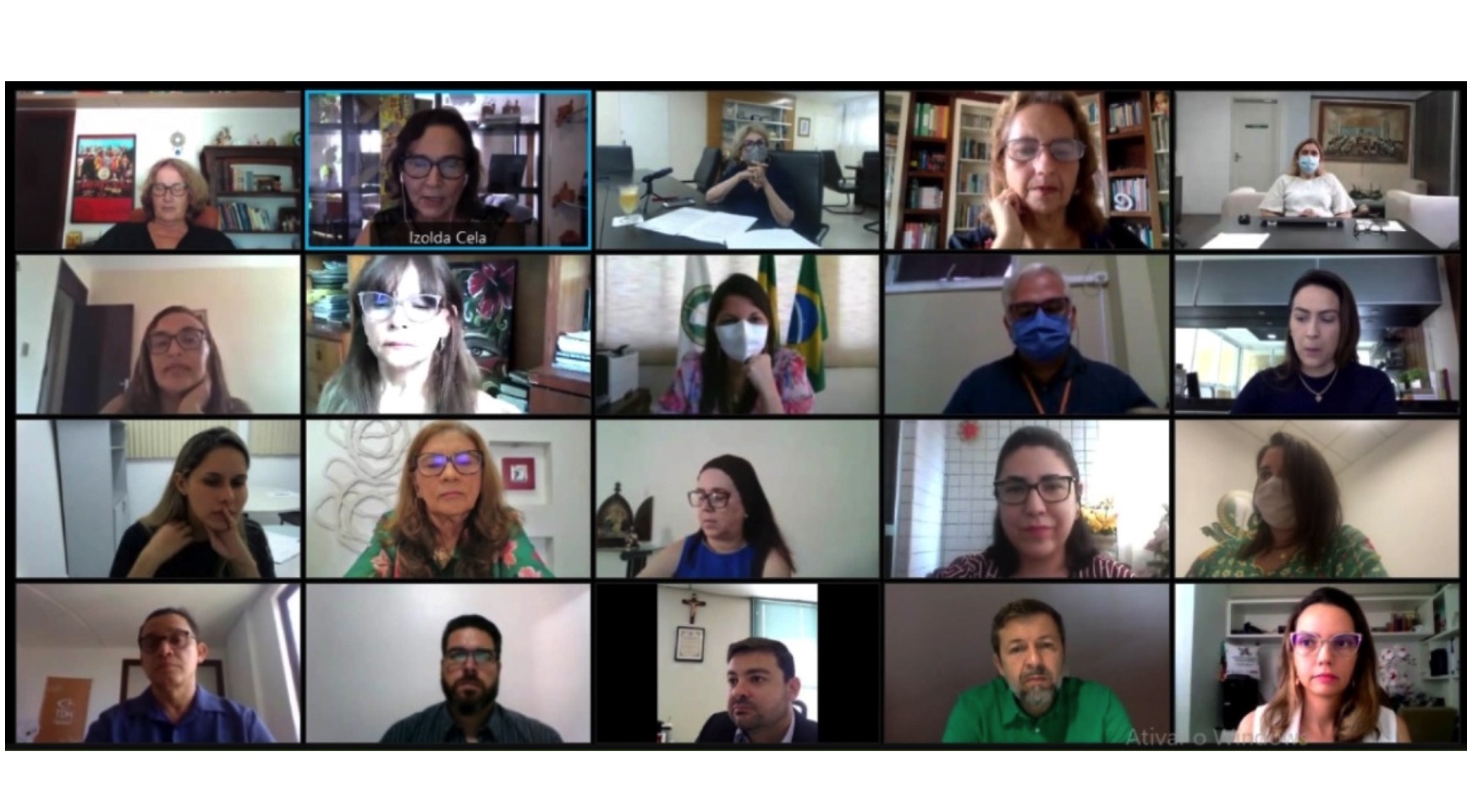
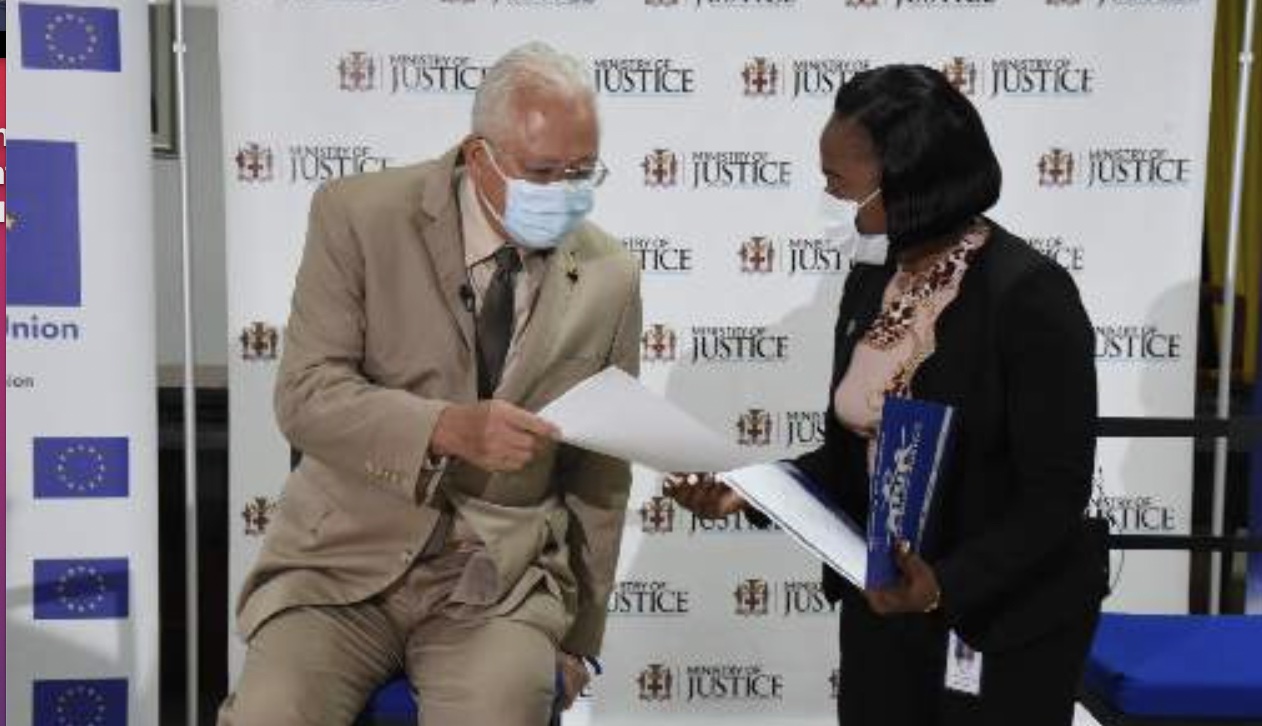
The Vice-Government of Ceará, through its State Forum of Mediation, Restorative Justice and Culture of Peace, promoted a debate this Tuesday morning (June 29) on the use of laboratories, meetings and other peaceful devices to improve the society. The event was held remotely and attended by around 50 people, who were able to participate, ask questions and have a voice in the discussion.


Among those present at the meeting were: Cristiane Holanda, coordinator of the Restorative Justice and Mediation Coordination of the Vice-Government of Ceará; Cida Medeiros, journalist and facilitator and lawyer; and Luis Zubcov, scholar of peace dynamics.

(continued in right column)

(Click here for the article in Portuguese)

Questions for this article:

The culture of peace at a regional level, Does it have advantages compared to a city level?

(continued from left column)

Cristiane Holanda commented on the importance of the Forum and its monthly meetings. “Our forum tries to be democratic, participatory. We want to creat together a new model of living, being, within a society that is ethically just.”

In his speech, Luis Zubcov highlighted the need for more participative listeners in everyday interaction. “The active role of the listener is very important. Someone who is not just a passive observer, but an active one who can make a difference within the content they receive. The word is 50% of those who speak and 50% of those who listen.”

State Mediation Forum

The State Forum of Mediation acts as a partner of the Pact for a Ceará Pacific and is composed of 35 bodies and institutions, among which are: Public Ministry (MPCE), General Public Defender of Ceará, OAB, Court of Justice (TJCE), in addition of the Vice-Governor’s Office. Meetings take place every month.

Institutions wishing to participate in the Forum should contact the Vice-Governor’s Mediation Coordination at (85) 3459.6116.

Experts identify 3 pillars for the «reunification» of Bolivians

. . DEMOCRATIC PARTICIPATION . .

An article by Nancy Castro in eju! (translation by CPNN)

The deactivation of “polarizing discourses” and the creation of an effective space for peace through the media is one of the three conclusions of the “International Seminar of Experiences for the Encounter”, organized by the Vice-Presidency of the State, United Nations and International Cooperation. The event, which took place on June 22 and 29, set out the objective of generating spaces for dialogue to strengthen peaceful coexistence in diversity.

The Vice President of the State, David Choquehuanca, in the closing speech, referred to the crucial role played by the media. “The role that the media has to play is very important, some perceptions have been gathered that the media, in some cases, like to feed the confrontation, they are looking for contradictions,” said Choquehuanca.

The other two pillars are “political will” and an “inclusive and participatory” agenda.

Regarding the first pillar, it was highlighted that the role of the government and civil society organizations is fundamental to promote a dialogue beyond differences. “Political will is essential for the construction of spaces for dialogue. We must become aware that the reunification is not just an event, but a sustained process over time, which requires the decided commitment of the leaders, “concluded one of the working groups.

The second pillar aims to open participatory meetings with an agenda that reflects the diversity of the country focused on common challenges, such as the fight against discrimination, inequalities and the eradication of violence. “The challenge is to avoid the monopolization of the debate in political spaces.”

(Article continued in right column)

(Click here for the original Spanish version of this article.)

Question related to this article:

How can we develop the institutional framework for a culture of peace?

(Article continued from left column)

Regarding the third pillar, the experts emphasized finding a favorable context for dialogue, “deactivating polarizing discourses”, and giving more space to voices that seek to build and achieve a peaceful equilibrium, a task for which the media is partly responsible.

“It is important to understand that our problems are deep and that working on these issues requires first, deactivating the feeling of threat to enable our voices,” concluded another of the work sessions.

Background.

On Tuesday, June 22, the first was held with international participants including Rigoberta Menchú Tum, 1992 Nobel Peace Prize winner, who explained that peace is not built only in meetings, but that it is necessary to build a culture of peace.

For her part, Vera Grabe, politician, ex-guerrilla commander and member of the Observatory for Peace in Colombia, stressed that peace is more than a speech, a policy, a matter for politicians, since what is really required is to dismantle violence in our practices.

There was also the participation of Carlos Borth, who spoke about the political agreements for the institutional reform of 1993, Griselda Torrico who spoke about the conflict of boundaries between the communities of Coroma and Quillacas and Carlos Romero, who related his experience around of the constituent agreements that made a new Political Constitution viable in 2009.

The participants presented their conclusions based on the experiences of national and international experts, which were received by Choquehuanca and Susana Sottoli, resident coordinator of the United Nations System in Bolivia, to build a proposal for a “National Process for the Reunification”.

Choquehuanca in his intervention made it clear that the representatives of international organizations and ambassadors of the countries are not there to please the Government and the Bolivian people. Neither is the central level of the State there to please these foreign representations and legations.

“We have become aware that we can contribute, from our embassies, as people, as professionals, as representatives or as authorities to build unity, to build brotherhood, to contribute to the construction of peace.”

During the post-electoral conflicts of 2019, members of the citizen platforms that denounced electoral fraud decided to peacefully take over state radio and television. At that time people accused these media of lying, misinforming and fueling the confrontation.

The 3rd Latin American Congress of Restorative Justice closed with more than 4,400 registered participants

. . DEMOCRATIC PARTICIPATION . .

An article published by El Litoral (translation by CPNN)

On Saturday [June 12] the closing day of the 3rd Latin American Congress of Restorative Justice took place in a format that was entirely virtual. During the three days of the event, there were more than 60 exhibitors from various countries: Argentina, Chile, Colombia, Mexico, Brazil, Peru, Honduras, Uruguay, Bolivia, Guatemala, the Dominican Republic and Great Britain.

On the last day there were keynote conferences by Austen Ivereigh entitled “How to get out of the crisis – the message of Pope Francis in Soñemos Juntos” and by Roberto Pérez “Forgiveness as a way to repair and restore the social fabric, the bond personal and with others “.

Other panels during this day included (9) Socialization of restorative experiences: advocacy for democratic and inclusive communities and (10) The Restorative Pedagogy and Culture of Peace. And, finally, the Ombudsman of Santa Fe [Argentina], Raúl Lamberto, and the Ombudsman General of Lomas de Zamora [Argentina], Eduardo Germán Bauché, gave a final word.

PANEL 9: Socialization of restorative experiences

Panel 9 had as its axis the Socialization of restorative experiences: advocacy for democratic and inclusive communities, and featured lectures by Esteban Ramos from the National Autonomous University of Honduras; Natalia Cuenca, member of the “Wheels of Coexistence” program of the Ministry of Education of the province of Santa Fe; and Silvia Vecchi, Jessica Name and Sergio Pepe, who presented the interdisciplinary judicial experience in the province of Tierra del Fuego. The table was coordinated by the member of the Latin American Institute of the Ombudsman Ana Agostino.

Kicking off the panel, Esteban Ramos spoke and addressed the importance and conclusions of the training programs developed in Honduras as a contribution to the culture of peace: “Public policies are empty without the entire population participating in them, if the recipients of these policies are not considered subjects ”.

“We developed a training program focused on peace education at the University of Honduras where we work on axes related to peace and conflict resolution, to train citizens committed to pacifist practices,” he said and added: “Its content is related with the training components: training workshops; actions based on peace composed of work phases; and the community coexistence seen with the visit to the rural community of Honduras ”.

Finally, he stated that “since Honduras is one of the most violent countries in the world, being a cross-cutting issue in Honduran society, our training programs are very important for creating a reflective space for coexistence in which those who participate can debate without fear of being judged “, and he concluded “We develop dynamic spaces to think and feel what is happening. It is a practice with each other within the program, but which are applicable to the socialization of each of the participants outside the program ”.

Then, it was the turn of Natalia Cuenca, who explained the public policy “Wheels of coexistence” that is applied in part of public secondary schools in Santa Fe [Argentina]: “We address these provincial programs and plans to guarantee the pillars of education such as inclusion and educational quality, to be able to think of school as a place of life, as a place to learn to live in the common ”.

“The Coexistence Wheels are a device that tries to democratize the institution of the school, through meetings where secondary students socialize their perceptions about school conflicts, and propose peaceful resolutions,” he explained and deepened: “They have horizontality as a point and seek improve coexistence in the classroom through dialogue. Thus the educational communities elaborate their coexistence plans, and the student is the protagonist of the legalities that govern them, which makes him part of them ”.

Closing the panel, Silvia Vecchi, Jessica Name and Sergio Pepe made a joint presentation on their role of contributing to social peace, taking clear action to achieve these objectives: “It is of great importance to be critical and identify the shortcomings to the time of not being able to resolve certain situations because, for example, a criminal court can prevent a conflict from being reconciled “.


“Perhaps the tools are not available when dealing with a victim who has vulnerabilities, that is why we believe that the values ​​and premises of Restorative Justice allow us tools that improve and humanize these processes”, they highlighted and maintained: “We must rely on, for example, the Directorate of Alternative Methods that help us provide tools for certain conflicts to know when the application of the traditional criminal law may fail to solve the conflict.”

They also explained that “public policies on access to justice are promoted as important places in developments for the transformation of culture and the pacifying possibilities of society”, and invited “members of society in general and even to our colleagues who need to talk to reflect, to dialogue with each other’s own experience, to think about possible personal and common itineraries. We encourage everyone to talk to each other seeking shared interests and to address differences ”.

Finally, they emphasized that “we must make criminal justice the application of last resort. There are other ways that we cn activate and connect with each other to resolve a social conflict sooner.”

PANEL 10: Restorative Pedagogy and Culture of Peace

Panel 10 was called The Restorative Pedagogy and Culture of Peace and was attended by Celia Maria Oliveira Passos from the Institute of Advanced Solutions of Brazil; and Rodolfo Nuñez from Network and Community Work at the Ministry of Justice and Human Rights of the Argentine Nation. The panel was coordinated by Pablo Noel, president of the Buenos Aires Province Magistrate College.

Rodolfo Nuñez analyzed the experience of social networks and restorative justice, and in that sense he stressed that “there are many points of connection between the two since both force us to understand that there are heterogeneous units, diversity of experiences, knowledge, understanding and trajectories already existing. There are plots that pre-exist us, we must abandon the belief that we create the networks ”.

He continued, “We have to get out of the judicial field to realize that the subjects are crossed by that knowledge, understanding, different experiences and that all are influenced in some way by public policies.” And to access that pre-existing knowledge we must create spaces of dialogue with other plots, which we must do with restorative justice as well ”.

Through a presentation he spoke of the community of links, which “must establish interactions between plots to understand adolescents in situations of socio-criminal vulnerability. One of them, for example, is to do community work on the same situation. In our experience working in an area of ​​high social vulnerability we were able to realize that this community has very little detailed knowledge of the State”.

(Article continued in the right column)

(Click here for the original article in Spanish)

Discussion questions

Restorative justice, What does it look like in practice?

Mediation as a tool for nonviolence and culture of peace

(Article continued from left column)

“Participants in the intervention must have a rights approach, there must be voluntariness, a community approach, territorial and local management, and it must be inter-agency. Today there are those who question voluntariness, I think it is wrong, voluntariness should not be ignored because young people have things to say, you have to listen to them. It is a restorative practice,” he concluded.

[Editor’s note: the principle of voluntariness is that which “provides that all those involved in a mediation process should have the absolute freedom to decide if they want to be or not parts of it. This translates into two aspects: first, the willingness to enter a mediation, and second, the freedom to remain in it or withdraw from the process at any time.”]

For her part, Celia María Oliveira Passos invited us to think “what is restorative justice, what type of restorative justice are we talking about”, and stated: “Restorative justice is built according to the communities, the spaces, culture, there is no single definition. Each one understands it from their world, from their perspective, so it is necessary to create new spaces to study it ”.

This introduction served to advance around the four waves that can be differentiated in restorative justice and its links with neuroscience and quantum physics: “The first two waves in restorative justice include the restoration of damage, response to pain or offense, the third wave brings us new challenges, to think of restorative justice as a way of life, a philosophy of life, as a way of being, and the fourth wave demands that we understand the current world as a cry for social justice, of outrage at inequalities “.

Regarding the link between neuroscience and restorative justice, she explained that emotions “cannot be foreseen, they arrive, arise and dominate the brain, the organism emanates adrenaline, under tension a person loses the ability to reason. On the other hand, when hormonal reactions such as oxytocin appear, there is a better procedure, there is a better reaction. When there is dialogue, when there is empathy, we can expect peaceful reactions ”.
 

Plenary speeches

The first of the lectures was given by Austen Ivereigh and was entitled “How to get out of the crisis: the message of Pope Francis in Let’s Dream Together”. The presentation focused on the journalist’s conversation with Pope Francis about the content of the pontiff’s publication.

He explained, “The book is divided into three parts that follow the classic dynamics of Latin American Catholicism, which is to see, judge and act or how the Pope prefers to reformulate it, contemplate, discern and propose. Contemplating and seeing is important because you have to see reality as it is and accept it as it is, the second step is to discern or choose and choosing is to see what humanizes us and what dehumanizes us, to see the good and to see the bad, and the third step is to act where we can propose ways of acting that reflect these new awareness of values ​​”.

“When the church speaks of the preferential option for the poor, it means that we must always take into account the impact on the poor of the decisions we make, but it also means that we must put the poor at the center of our way of thinking”, He continued: “The most moving part of the book has to do with something that you will remember, when the Pope was still in Buenos Aires as Archbishop he organized a mass every year in June in the Constitution Square of Buenos Aires and the periphery would come there”. “It says in the book that he felt the good spirit before that praying crowd, which reminded him of the humble people who followed Jesus, he says that the people always carry a promise in their hearts, an invitation that makes them walk towards something they desire despite the marginalization they suffer. The preaching of Jesus evoked ancient promises they carried in their entrails, in their blood, an ancestral awareness of the closeness of God and their own dignity, for that reason they followed Jesus because he gave them dignity ”.

The coordination of both conferences was in charge of María de los Ángeles Pesado Ricardi, a member of the General Defender of Lomas de Zamora [Argentina], who thanked Ivereigh for his participation and gave the floor to Pérez.

In turn, Roberto Perez spoke about “Forgiveness as a way to repair and restore the social fabric, the personal bond and with others:” I am convinced that we are in a moment of re-evolution of consciousness. It is about jumping to another level of conscience that humanity needs to continue to exist. And that is why, in this re-evolution of conscience, there is a path that we must never forget, and that is that generally the situations that surround us are fraught with tension and violence. ”

“There is a well-known saying: ‘Dad, if we kill all the bad guys, do we get all the good guys? No, son, we are all murderers.’ Changes are not made with violence, they are made with education. To hold an event like this is to believe in Peace, it is to believe that changes are not made with violence without education.” “ Forgiveness is the fundamental key to maintain the social fabric of community, of family. All agents of justice must have an attitude that allows for forgiveness, and forgiveness can be generated when the people who are participating in conflict situations carry this attitude of hospitality within them ”.

To conclude, Pérez pointed out that “to be able to forgive, to achieve peace, you need to love. And in this violent society we have to go back to this concept of Plato, who says that to love is to want the good. What is good? Good is the full development of what I love. Therefore to love is to want my own good and the good of others ”.

Congress closing

At the closing of the Congress, and outside the planned program, the Minister of the Supreme Court of Justice of the Province of Buenos Aires, Sergio Torres, said that “sometimes it is not enough to be right, but it is also necessary to be many and this confernce is a good example.”

“The concept of restorative justice has an extremely valuable aspect which is the role of the victim. With the appearance of the nation states and the expropriation of criminal action by the states the victim began to disappear, first languished and then disappeared” , he recapitulated and added: “The role of the State, instead of aiding the victim, diluted her, transformed her into someone anonymous and made her disappear.”

Finally, he highlighted that “this logic of restorative processes that are used successfully to address and resolve some conflicts and damages in different contexts and settings such as families, neighborhoods, schools, sports, places the victim in a central position.”

Later, Raúl Lamberto spoke, after thanking all the participants and organizers of the event, remarked that “the book that we presented yesterday is a paradigmatic change that we need and should be posted on the pages of all the organizers so that it is available of all ”, and emphasized:“ It is necessary that the restorative culture be developed, known and practiced ”.

Finally, he valued: “This congress has a virtue, no one was asked how they thought, where they came from, what their ideology was, what their spirituality was, but they asked if they shared the idea of ​​restoration as an idea of ​​a new and modern practice to deal with conflict ”.

Finally, Eduardo Germán Bauché remarked that “surely there were exhibitors outside of this program who we would have liked to hear. I invite you to the 4th Latin American Congress of Restorative Justice that will be held on August 4, 5 and 6, 2022.”, He concluded, “I am grateful, happy and convinced that the future will bear the fruit of what we are sowing today, here, in each home and in our daily tasks ”.