Category Archives: DISARMAMENT & SECURITY

Survey finds over half of pro-Putin Russians support peace negotiations with Ukraine

DISARMAMENT & SECURITY .

An article from Novaya Gazeta

Over half of Russians who support Vladimir Putin are open to peace negotiations with Ukraine according to a survey, independent Russian news outlet Meduza reported on Tuesday (October 22).


People pass a billboard showing a Russian soldier in St. Petersburg.
Photo: EPA-EFE/ANATOLY MALTSEV

Independent research project Chronicles surveyed a random sample of 800 Russians in September and found that 61% of those who supported Putin were in favour of peace negotiations with mutual concessions and 43% were in favour of restoring relations with the West.

(Continued in right column)

Questions related to this article:
 
Can the peace movement help stop the war in the Ukraine?

(Continued from left column)

Survey respondents who supported Putin overwhelmingly reported wanting the Kremlin to focus on domestic policy, with 83% stating it should shift its focus to “domestic social and economic issues”, the survey found.

Continued mobilisation proved to be unpopular with Putin’s supporters, with only a quarter of respondents stating that they would like more men to be mobilised for the war in Ukraine.

Those figures were much higher among anti-Putin Russians, according to Chronicles, with 79% in favour of a peace treaty with Ukraine and 90% wanting to restore relations with the West.

However, Putin continues to enjoy popularity among Russians, with the survey revealing 78% support.

In September, Chronicles collaborated with Extreme Scan, a non-profit international association of independent researchers, to reveal that 63% of Russians would support peace negotiations and mutual concessions between Russia and Ukraine in the next year.

– – – – – –

If you wish to make a comment on this article, you may write to coordinator@cpnn-world.org with the title “Comment on (name of article)” and we will put your comment on line. Because of the flood of spam, we have discontinued the direct application of comments.
Mexico supports the launch of the Third World March for Peace and Nonviolence

DISARMAMENT & SECURITY .

An article by Olivier Turquet on the website of The World March

The Colegio Jesús de Urquiaga I.A.P. in Mexico City joined the Third World March for Peace and Nonviolence (The 3MM). They showed their support by holding two ceremonies dedicated to Peace and Nonviolence in which the entire educational community participated (500 primary and preschool students and 200 secondary and high school students).

(Continued in right column)

(Click here for the original article in Spanish.)

Questions related to this article:
 

The World March for Peace and Nonviolence: What is its history and its effects?

Latin America, has it taken the lead in the struggle for a culture of peace?

(Continued from left column)

The two ceremonies were very emotional ceremonies as the need to unite voices was discussed, not only to denounce injustices, the horrors of war and violence, but to show the positive actions of the community to ensure that the new generations live in a world of peace and harmony. The importance of exalting values ​​such as respect and tolerance to build a culture of peace and non-violence that guarantees unity among peoples was also discussed.

In addition to the heartfelt words of the students, human symbols of Peace and Non-violence were formed. A poetic performance about the tragedy that individuals experience in violence and revenge was symbolized by a human chain. There was also a song for Peace (Imagine by John Lennon) and a joyful and hopeful dance performance called the human conquest of peace. which The activities join in spirit the start of the March on October 2 in San José, Costa Rica, the international day of non-violence and the birthday of Mahatma Gandhi.

It is worth noting that in addition to the ceremonies, a graphic exhibition prepared by the students themselves was held, showing the types of violence, raising awareness about the normalization of violence; an original recipe book for peace and inspiring phrases about building a culture of peace and non-violence.

– – – – – –

If you wish to make a comment on this article, you may write to coordinator@cpnn-world.org with the title “Comment on (name of article)” and we will put your comment on line. Because of the flood of spam, we have discontinued the direct application of comments.
Nihon Hidankyo’s Nobel Peace Prize Win Could Not Have Come at a More Important Moment

DISARMAMENT & SECURITY .

An article by Joseph Gerson from Common Dreams

The Nobel Peace Prize awarded to Nihon Hidankyo is long overdue and could not come at a more important time.

The Hibakusha (A-bomb witness/survivors) of Nihon Hidankyo have been among the world’s most courageous and steadfast advocates of nuclear disarmament. The organization has focused on three core demands: Preventing nuclear war, eliminating nuclear weapons, and obtaining essential medical care for A-bomb victims.


Members of Nihon Hidankyo, a grassroots Japanese organization of atomic bomb survivors from Hiroshima and Nagasaki attend a press conference on October 12, 2024 in Tokyo, Japan. (Photo: Tomohiro Ohsumi/Getty Images)

Hidankyo was founded in 1956, in the wake of the Bravo H-Bomb test 1,000 times more powerful that the Hiroshima A-bomb, which poisoned Japanese fishermen and Marshall Islanders.

As Wilfred Burchett, the first Western journalist to witness the ruins and suffering in Hiroshima in 1945 later reported, despite their excruciating physical and emotional suffering, the Hibakusha became the world’s most powerful and influential force for the abolition. With the award of the Nobel Peace Prize, the voices of the Hibakusha, their tortured testimonies, and their truth that human beings and nuclear weapons cannot coexist will now ring out more powerfully around the world.

Nihon Hidankyo was repeatedly nominated for its now well-earned Peace Prize, and the Nobel Committee is now to be celebrated for finally making this year’s decision. With the world, our species, facing the greatest danger of nuclear apocalypse since the 1962 Cuban Missile Crisis, this year’s Peace Prize will refocus world attention on the urgency of renewing nuclear disarmament diplomacy. In addition to Russian nuclear threats related to the continuing Ukraine War, an accident, incident, or miscalculation growing out of provocative U.S., allied, and Chinese military operations in and around the Taiwan Strait and the South China/West could ignite escalation to a nuclear cataclysm.

With uncertainties about a possible Trump election victory, there are growing demands among Japanese and South Korean elites for their nations to become nuclear powers. The U.S. and Russia have lowered their official operational thresholds for launching their nuclear weapons. All of the nuclear weapons states are upgrading their nuclear arsenals and delivery systems, with the U.S. committing an estimated two trillion dollars to “modernize” its systems when that money could be spent to stanch and reverse the climate emergency and to address other urgent human needs.

Let us marvel and learn from the reality that Hibakusha, who were literally the last people on earth, once seen by U.S. leaders and media as “vermin” to be eliminated, have awakened the conscience of the world after suffering what was probably the world’s worst war crime. And contrary to the myth propagated by President Truman, the A-bombs were not necessary to defeat Japan. Senior U.S. military officials from Eisenhower to LeMay and Leahy advised the president that “it wasn’t necessary to hit Japan with that awful thing” Secretary of War Stimson had already advised that Japan’s surrender on terms acceptable to the U.S. could be negotiated.”

Hibakusha’s friends, families and neighbors were incinerated, irradiated, and physically ripped apart by the radiation’s heat and blast waves of the world’s first A-bombs. An entire city was destroyed and burned to the ground. Midst their own agonies, Many Hibakusha were unable to save their families in their shattered and burning homes. They witnessed ghostlike figures, no longer recognizable as human beings, some holding their eyeballs or intestines in their hands marching to their deaths, often in cisterns or the city’s rivers. In the months and years that followed, many died from radiation inflicted cancers and other diseases. Memories remain of the birthing of mutant babies and of other young children whose lives were cut short by radiation diseases.

(Continued in right column)

(Click here for an article in French on this subject.)

Question related to this article:
 
Can we abolish all nuclear weapons?

The Nobel Peace Prize: Does it go to the right people?

(Continued from left column)

With initial fears that the radiation diseases might be contagious and about genetic damages, Hibakusha’s suffering was compounded by marginalization and discrimination. As a result of the U.S. military occupation which continued until 1952 and subsequently with Japan functioning as the United States’ subservient ally, essential medical and other support services were long denied to Hibakusha.

Among the achievements of Nihon Hidankyo and its allies are the collaborations they have built with other “global hibakusha.” These included forced laborers who had brought from Japanese occupied Korea who also suffered the A-bombings. Compassionately and strategically they supported and joined with nuclear weapons test victims from the Marshall Islands, the United States, Russia, Kazakhstan, Tahiti, the Christmas Islands, and other Pacific Islands.

Together with their testimonies in communities across the world and in the United Nations they forged the powerful but still inadequate taboo against the use of nuclear weapons. With their testimonies at the U.N. and elsewhere they have won the majority of the world’s governments to the understanding that for the human species to survive, priority must be given to the humanitarian consequences of nuclear weapons, not so-called “state security” interests. Hibakusha’s testimonies were essential to the successful negotiation of the Treaty on Prohibition of Nuclear Weapons which seeks to hold the nuclear weapons states accountable to their Article VI Nuclear Nonproliferation Treaty obligation to engage in good faith negotiations for the complete abolition of nuclear weapons.

That nuclear weapons have not been used since the Nagasaki A-bombing was an unfortunate misstatement in the Nobel Peace Prize Committee’s award announcement. As Daniel Ellsberg, a principal author of the United States’ nuclear war planning in the Kennedy administration. taught during many international crises and wars, the U.S. has used its nuclear arsenal in the same way that an armed robber uses his gun when pointed at his victim’s head. Whether or not the trigger is pulled, the gun has been used. Tragically, this is playbook with which the Russian government has been working from with its Ukraine-war nuclear threats.

It is worth noting that in response to the announcement of the award, Hidankyo referenced the terrible assaults on the people of Gaza. The Hibakusha have identified with victims of other holocausts and massacres going back to Vietnam when they identified with the people under the bombs. They then warned of the danger that the U.S. might resort to nuclear attack (which the U.S. prepared and threatened in 1954, 1957 and with President Nixon’s 1969 “madman” nuclear mobilization.

Numerous popular initiatives are at work in the world which will be boosted by the Peace Prize award to Nihon Hibakusha. In the U.S., the Back from the Brink campaign, initiated by Physicians for Social Responsibility, has been at the cutting edge. It’s call for negotiation of a verifiable agreement to eliminate nuclear weapons, renunciation of first-use policies, ending the president’s sole authority to launch nuclear weapons, taking U.S. nuclear weapons off hair-trigger alert, and to cancel the plan to replace the entire U.S. nuclear arsenal with enhanced weapons has been endorsed by 43 members of congress and numerous U.S. cities and states.

The Campaign for Peace, Disarmament and Common Security works to prevent nuclear war and achieve a nuclear weapons-free world via its advocacy of Common Security. This is the ancient truth that no nation can achieve security at the expense of its rival. As with the INF Treaty that ended the Cold War before the fall of the Cold War, peaceful coexistence and security can be achieved only through mutual recognition, and respectful, if difficult, win-win negotiations between rivals.

In the face of the horrors on nuclear weapons and drawing on the courage of Hibakusha, this is the paradigm on which the Hibakusha’s vison of a nuclear weapons free world can be achieved.

– – – – – –

If you wish to make a comment on this article, you may write to coordinator@cpnn-world.org with the title “Comment on (name of article)” and we will put your comment on line. Because of the flood of spam, we have discontinued the direct application of comments.
John Paul Lederach: How a Civil War Can Be Avoided in the United States?

DISARMAMENT & SECURITY .

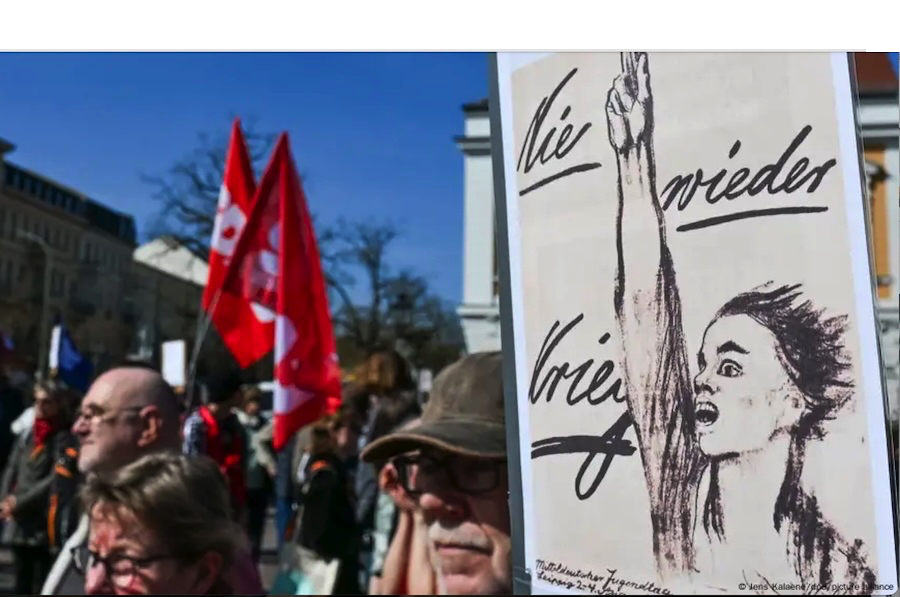
A review of The Pocket Guide for Facing Down a Civil War by John Paul Lederach

In this Pocket Guide, internationally renowned peace practitioner John Paul Lederach reflects on his experience across over four decades mediating and transforming conflicts in places including Northern Ireland, Colombia, Nepal, Somalia, South Sudan, Nicaragua, and Tajikistan, among many others. His experiences grant him a unique perspective not only on what precipitates, propels, and sustains violent conflict, but also into key understandings and approaches that help shift dynamics of harm toward practices of social healing.

Screenshot

The Guide is framed to reflect on questions increasingly posed about the likelihood of divisive polarization in the United States leading toward political violence and even civil war. To consider this question, Lederach offers a comparative view. He suggests that despite the tendency in the U.S. to hold to exceptionalism, the country is not exempt from the toxic dynamics that have been faced in other settings where open armed conflict, once unleashed, became nearly impossible to end. In each chapter, Lederach describes a challenging pattern that repeats across contexts and animates toxic polarization and sustained armed conflict. He illustrates these dynamics with stories, observations, and wisdom gathered from his work with local communities and national leaders in places impacted by such toxicity, describing how they faced down and shifted seemingly ceaseless cycles of violence. 

This Pocket Guide does not offer quick fixes. Rather, it explores the way ordinary people resisted and countered patterns of violence in their communities. Their curiosity, persistence, and creative innovation suggest that to face down a civil war and heal long-standing wounds that stoke cycles of violence, people must resist the pull of toxic polarization that legitimates violence as the only option. The challenge is to innovate pockets of vitality that embody the basic idea that politics without violence where we live is possible. Such innovation requires a web of courageous relationships that reach across divides, creating the connective tissue that fosters dignity and respect within, between, and across deep political and cultural difference.

(Continued in right column)

Question related to this article:
 
How Can a Civil War Be Avoided in the United States?

(Continued from left column)

In addition to the Pocket Guide, John Paul Lederach has written an op-ed in the Washington Post on this subject.

Based on the analysis above, his op-ed proposes three actions that we should all take:

1. We need to reach beyond our isolated bubbles and open conversations with the perceived enemies in our communities.

2. We have to rehumanize our adversaries; We must have the courage to confront dehumanizing language and behavior, especialy when it comes from within our closest circles.

3. We need to stick with it. We can’t just pull away when difficult issues emerge.

In the article he lists six websites that tell about good initiatives to overcome polarization and develop a peaceful society.

He concludes the op-ed by saying:

The best way to end a civil war is to stop it before it happens.

Will Americans have the courage to nurture these initiatives demonstrating that politics — honest partisan politics — can thrive without violence? I believe we can, and we must.

– – – – – –

(Editor’s note: One is reminded of the teachings of Mahatma Gandhi who said that we never have an enemy, what he have are opponents that we have yet to convince. And we should keep trying to convince them. Gandhi went each week to see the English viceroy who ran the occupation of his country, to tell him of the actions he was going to take for liberation, and to try to convince him that liberation was inevitable and that the British should leave and give India its freedom. In one sense he was successful. The British left without need for a violent revolution. But unfortunately, despite Gandhi’s valiant efforts, India was not able to escape an ensuing civil war between Hindus and Muslims that left a million dead and the division of India into three countries based on religious affiliation.)

– – – – – –

If you wish to make a comment on this article, you may write to coordinator@cpnn-world.org with the title “Comment on (name of article)” and we will put your comment on line. Because of the flood of spam, we have discontinued the direct application of comments.
UN chief warns of nuclear ‘danger’ as world remembers Hiroshima; urges elimination of weapons

DISARMAMENT & SECURITY .

An article from the United Nations News Service

The UN Secretary-General called for nuclear disarmament on Tuesday as the world marked 79 years since the bombing of Hiroshima, promising that the UN will “spare no effort to ensure the horrors of that day are never repeated.”


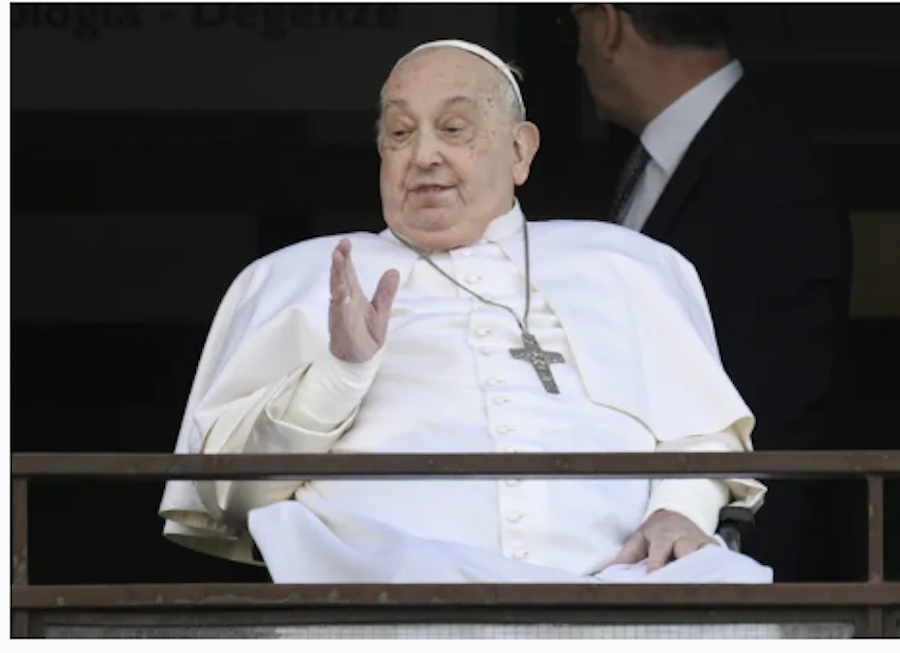
UN Photo/Yoshito Matsushige. Wounded civilians who escaped the blaze gather on a sidewalk west of Miyuki-bashi in Hiroshima, Japan, around 11 a.m. on August 6, 1945.

On 6 August 1945, the United States dropped a bomb dubbed ‘Little Boy’, on the Japanese city of Hiroshima, as World War Two continued. The bombing resulted in immense devastation which killed and injured tens of thousands of people.

The Secretary-General insisted that the threat of the use of nuclear weapons is not just “confined to history books” but a “real and present danger” today – once again looming large “in the daily rhetoric of international relations.”

(Continued in right column)

(Click here for a version in French or here for a version in Spanish

Question related to this article:
 
Can we abolish all nuclear weapons?

(Continued from left column)

The lessons of Hiroshima

In a message delivered in the Japanese city by UN disarmament chief Izumi Nakamitsu, Mr. Guterres said the lessons of Hiroshima which encourage disarmament and peace have been “pushed aside” but he recognised the people of Hiroshima’s efforts to ensure nuclear weapons are never used again.

He further insisted that the use of nuclear weapons is unacceptable and “a nuclear war cannot be won – and must never be fought.”

He said this is a lesson that shows we need disarmament now.

The message for the future

As the Hiroshima Peace Memorial ceremony continued, Mr. Guterres said that global mistrust and division have grown, but we must ensure not to “press our luck again.”

“Some are recklessly rattling the nuclear saber once more,” he said. “The world must stand together to condemn this unacceptable behaviour.”

Looking ahead to the Summit of the Future in New York next month, the Secretary-General said it is a “critical opportunity for governments to renew their commitment to multilateralism, sustainable development and peace, and adopt an actionable and forward-looking Pact for the Future.”

He said that conflict prevention, disarmament and a nuclear weapons-free world need to be at the heart of these efforts.

“We will never forget the lessons of 6 August 1945,” he said. “No more Hiroshimas. No more Nagasakis.”

Renewed determination

On Tuesday, UN disarmament chief, Ms. Nakamitsu echoed that message online.

In a statement on X, she also renewed her determination “to continue to work towards a world without nuclear weapons. For the security of all peoples.”

Hiroshima Peace Declaration 2024

DISARMAMENT & SECURITY .

An article from the City of Hiroshima

Every year on August 6, the City of Hiroshima holds a Peace Memorial Ceremony to pray for the peaceful repose of the victims, and for the abolition of nuclear weapons and lasting world peace. During that ceremony, the Mayor issues a Peace Declaration directed toward the world at large. Hiroshima’s mayor will continue to issue these declarations calling for the elimination of nuclear weapons from the face of the earth to build a world of genuine and lasting world peace where no population will ever again experience the cruel devastation suffered by Hiroshima and Nagasaki.

Peace Declaration

Citizens of the world, what do you think? Are more powerful nuclear forces necessary for national security? What about arms races, competing to maintain superiority over other nations? Russia’s protracted invasion of Ukraine and the worsening situation between Israel and Palestine are claiming the lives of countless innocent people, shattering normal life. It seems to me that these global tragedies are deepening distrust and fear among nations, reinforcing the public assumption that, to solve international problems, we have to rely on military force, which we should be rejecting. Given such circumstances, how can nations offer safety and security to their people? Is that not impossible?

Through the pillars under the Peace Memorial Museum, we can see the Cenotaph for the A-bomb Victims. Anyone praying at the Cenotaph can look straight through it to the Atomic Bomb Dome. Peace Memorial Park, with these structures on its north-south axis, was built in accordance with the Hiroshima Peace Memorial City Construction Law, enacted seventy-five years ago today. Built by the people of Hiroshima and many other seekers of peace, it has become a place to memorialize the victims and to think, talk, and make promises to each other about peace.

If, after the war, Japan had abandoned our Peace Constitution and focused on rebuilding our military, the city of peace Hiroshima is today would not exist. Standing here, we can all feel our predecessors’ determination to eliminate the scourge of war, trusting in the justice and faith of peace-loving people around the world.

Expressing that determination, one hibakusha continually communicated the spirit of Hiroshima. “Now is the time to turn the tide of history, to get beyond the hatreds of the past, uniting beyond differences of race and nationality to turn distrust into trust, hatred into reconciliation, and conflict into harmony.” This uplifting sentiment was written by a man who, as a 14-year-old boy, saw scenes from a living hell— a baby with skin peeled down to red flesh next to its mother burned from head to toe, and a corpse with its guts strewn out on the dirt.

(Continued in right column)

(Click here for a version in French.)

Question related to this article:
 
Can we abolish all nuclear weapons?

(Continued from left column)

In 1989, a massive people’s movement for democracy brought down the Berlin Wall, the predominant symbol of the Cold War. President Gorbachev expressed humanity’s collective need for peace and his determination to stop the arms race, end nuclear terror, eradicate nuclear weapons, and relentlessly pursue political solutions to regional conflicts. He and President Reagan worked together through dialogue to bring the Cold War to an end, which led to the United States and the Soviet Union concluding the Strategic Arms Reduction Treaty. They demonstrated that policymakers can overcome even critical situations through resolute commitment to dialogue.

Let us not be resigned to pessimism about the chaotic world situation. Instead, let us be as determined as our forebears, and, united as one, with hope in our hearts, take collective action. Our unity will move leaders now relying on nuclear deterrence to shift their policies. We could make that happen.

To extinguish the suspicion and doubt that create conflicts, civil society must foster a circle of trust through exchange and dialogue with consideration for others. We must spread beyond national borders the sense of safety we feel in our daily lives. The crucial step here is to share and empathize with the experiences and values of others through music, art, sports, and other interactions. Through such exchange, let us create a world in which we all share the Culture of Peace. In particular, I call on our youth, who will lead future generations, to visit Hiroshima and, taking to heart what they experience here, create a circle of friendship with people of all ages. I hope they will ponder what they can do now, and act together to expand their circle of hope. The city of Hiroshima, working with Mayors for Peace, which now has more than 8,400 member cities in 166 countries and regions, will actively support community endeavors to raise peace consciousness.

Last fiscal year, approximately 1.98 million people from around the world visited the Hiroshima Peace Memorial Museum. This record number is evidence of unprecedented interest in the atomic-bombed city and a rise in peace consciousness. My hope is that all world leaders will visit Hiroshima, experience the will of civil society, gain a deeper understanding of the atomic bombing, and hold in their hearts the hibakusha plea, “No one should ever suffer as we have.” Then, while they are here, I hope they will, with iron resolve, issue a compelling call for the abolition of nuclear weapons.

Twice in a row the Nuclear Non-proliferation Treaty (NPT) Review Conference has failed to adopt a final document. These failures have revealed a harsh reality, namely, the enormous differences among countries with respect to nuclear weapons. I hope the Japanese government, which has declared repeatedly that the NPT is the cornerstone of the international nuclear disarmament and non-proliferation regime, will exercise strong leadership, calling all countries to transcend their positions and engage in constructive dialogue toward a relationship of trust. Furthermore, I request that Japan, as a practical effort toward a nuclear-weapon-free world, participate as an observer at the Third Meeting of States Parties to the Treaty on the Prohibition of Nuclear Weapons to be held in March next year. Subsequently and as soon as possible, Japan must become a party to the treaty. In addition, I demand that the Japanese government strengthen measures of support for the hibakusha, including those living outside Japan. Now that their average age has exceeded 85, the government must accept that they are still suffering the many adverse emotional and physical effects of radiation.

Today, at this Peace Memorial Ceremony marking 79 years since the bombing, we offer our deepest condolences to the souls of the atomic bomb victims. Together with Nagasaki and likeminded people around the world, remembering once again the hibakusha struggle, we pledge to make every effort to abolish nuclear weapons and light the way toward lasting world peace. Citizens of the world, let us all, with hope in our hearts, walk with Hiroshima toward tomorrow’s peace.

August 6, 2024

Matsui Kazumi
Mayor
The City of Hiroshima

Restore the Olympic peace: Over 50 Nobel laureates have written an open letter calling for a global ceasefire for the duration of the Paris Olympics

DISARMAMENT & SECURITY .

An article from Novaya Gazeta

There are at least 55 ongoing wars around the world. Politicians have consistently failed to end the armed conflicts that are ravaging their societies, and the dangers have been multiplied by the fact that local wars no longer remain local.

The bloody conflict between Russia and Ukraine — the biggest war on the European continent since 1945 — has entered its third year and is still reverberating worldwide. The spillover effects have included increased famine in Africa, a migration crisis in Europe, and the release of harmful substances into water, food, and milk supplies that ultimately reach people on six continents.

By the end of this year, the number of people killed and injured as a result of the war in Ukraine is expected to exceed 1 million — a casualty toll not seen in Europe since World War II. In Gaza, where war has raged since last October, the United Nations puts the death toll as of January at 25,000 — but the number may well be much higher. And in Yemen, the UN says that 377,000 have died in the fighting or from disease over the past decade of civil war.

As these and other conflicts rage, defence budgets around the world are expanding substantially; and hanging over it all is the threat — repeated again and again in Ukraine — of nuclear war. The resources being mobilised are comparable to those needed to address climate change, or to eliminate hunger globally for the next 80 years.

Instead of sustaining life, resources are being wasted on spreading death.

Just think about that: No one would go hungry or die of exhaustion, and no child would be undernourished, if the money now being spent on weaponry and soldiers was instead used to better the lives of the world’s poor. Instead of sustaining life, resources are being wasted on spreading death.

The victims of today’s wars are mostly people between the ages of 30 and 40, meaning that each death represents approximately half a life that could have been. Every 100,000 people killed is another 4 million years not lived. Consider all the breakthrough discoveries that will not be made, the children who will not be born, and the orphans who will suffer alone.

We and our co-signatories (below) are not representatives of states. But if the efforts of states to establish peace are insufficient, individuals — no matter their work or their station in life — must step up. The world must confront today’s wars with one voice. That is why we are asking His Holiness Pope Francis, His Holiness the Ecumenical Patriarch Bartholomew, His Holiness the Dalai Lama XIV, and Muslim and Jewish leaders to use their moral authority to appeal to all citizens of the world and to their governments.

The 2024 Summer Olympic Games in Paris is an ideal opportunity to do this. During the Olympic Games of antiquity, the frequent wars between the Greek city-states were suspended while competition would take place between athletes in search of excellence. We hope the billions of people who watch the Paris Games will follow this example and join with the world’s religious and moral leaders in calling for peace.

The conflicts in Ukraine, Gaza, and elsewhere call for an immediate ceasefire, followed by the exchange of all prisoners, the release of hostages, the return of human remains, and the start of negotiations. Our primary duty as adults is to ensure that our children survive us. Instead of destroying each other and our societies with violence, let us devote our energies and resources to saving our planet. Let us begin by reviving the Olympic peace.

(Editor’s note: Despite the following important signatories from around the world, it is shameful that, as of July 29 according to the google search engine, this powerful statement has been ignored by the major mass media of the West although it has been republished by Ahram Online from Egypt, the Japan Times , the TCE Exchange based in the Netherlands, the Bangkok Post, the Project Syndicate, based in the United States, and, of course, here in CPNN, based in France.)

Signatories

Emmanuelle Charpentier, Nobel Prize in Chemistry 2020, Professor at Humboldt University in Berlin; Director of the Max Planck Unit for the Science of Pathogens;

Elias James Corey, Nobel Prize in Chemistry 1990, Professor of organic chemistry Harvard University;

Alan Heeger, Nobel Prize in Chemistry 2000, Professor of Physics, University of California, Santa Barbara;

Roald Hoffmann, Nobel Prize in Chemistry 1981, Professor of Humane Letters, Cornell University;

Martin Karplus, Nobel Prize in Chemistry 2013, Director of the Biophysical Chemistry Laboratory, Professor of Chemistry Emeritus, Harvard University;

Brian K. Kobilka, Nobel Prize in Chemistry 2012, Professor of Molecular and Cellular Physiology, Stanford University School of Medicine;

Yuan T. Lee, Nobel Prize in Chemistry 1986, Professor Emeritus of Chemistry, University of California, Berkeley;

Morten Meldal, Nobel Prize in Chemistry 2022, Professor Emeritus of Chemistry, University of California, Berkeley;

Jean-Pierre Sauvage, Nobel Prize in Chemistry 2016, Emeritus Professor of Chemistry, University of Strasbourg;

Richard R. Schrock, Nobel Prize in Chemistry 2005, Professor of Chemistry, University of California, Riverside;

Hideki Shirakawa, Nobel Prize in Chemistry 2000, Professor Emeritus of Chemistry, University of Tsukuba;

James Fraser Stoddart, Nobel Prize in Chemistry 2016, Chair Professor in Chemistry University of Hong Kong and Northwestern University;

(Continued in right column)

Questions related to this article:
 
Can the peace movement help stop the war in the Ukraine?

How can a culture of peace be established in the Middle East?

Where in the world can we find good leadership today?

(Continued from left column)

Finn E. Kydland, Nobel Prize in Economics 2004, Professor of Economics, University of California, Santa Barbara;

Paul R. Milgrom, Nobel Prize in Economics 2020, Professor of Humanities and Sciences, Stanford University;

Christopher A. Pissarides, Nobel Prize in Economics 2010, Professor of Economics, London School of Economics;

Svetlana Alexievich, Nobel Prize in Literature 2015, writer, journalist;

Elfriede Jelinek, Nobel Prize in Literature 2004, writer;

Werner Arber, Nobel Prize in Medicine 1978, Professor of Medicine, University of Basel, retired;

Francoise Barre-Sinoussi, Nobel Prize in Medicine 2008, Pasteur Institute, retired;

Louis J. Ignarro, Nobel Prize in Medicine 1998, Professor Emeritus of pharmacology, UCLA School of Medicine;

Barry J. Marshall, Nobel Prize in Medicine 2005, Professor of Clinical Microbiology, University of Western Australia;

Edvard Moser, Nobel Prize in Medicine 2014, Professor of Medicine, Norwegian University of Science and Technology;

May-Britt Moser, Nobel Prize in Medicine 2014, Professor of Psychology and Neuroscience, Norwegian University of Science and Technology;

Erwin Neher, Nobel Prize in Medicine 1991, Professor Emeritus of Medicine, University of Göttingen;

Sir Peter J. Ratcliffe, Nobel Prize in Medicine 2019, Clinical Research Director, Francis Crick Institute;

Charles M. Rice, Nobel Prize in Medicine 2020, Professor of virology, Rockefeller University;

Sir Richard J. Roberts, Nobel Prize in Medicine 1993, Chief Scientific Officer, New England Biolabs;

Gregg L. Semenza, Nobel Prize in Medicine 2019, Professor of Genetic Medicine, Johns Hopkins School of Medicine;

Hamilton O. Smith, Nobel Prize in Medicine 1978, Scientific director, Synthetic Genomics;
Jack W. Szostak, Nobel Prize in Medicine 2009, Professor of genetics, University of Chicago;

Torsten N. Wiesel, Nobel Prize in Medicine 1981, co-director of the Shelby White and Leon Levy Center for Mind, Brain and Behavior, Rockefeller University;

Carlos Filipe Ximenes Belo, Nobel Peace Prize 1996, Roman Catholic Bishop, Diocese of Maputo, Mozambique;

Mairead Corrigan-Maguire, Nobel Peace Prize 1976, Activist, cofounder of Community of Peace People, Northern Ireland;

Beatrice Fihn, Nobel Peace Prize 2017, Former executive director of the International Campaign to Abolish Nuclear Weapons;

Tawakkol Karman, Nobel Peace Prize 2011, Co-founder the human rights group Women Journalists Without Chains;

Denis Mukwege, Nobel Peace Prize 2018, founder and director, Panzi Hospital, Bukavu, DR Congo;

Dmitry Muratov, Co-Founder, Publisher, and former editor-in-chief of Novaya Gazeta, Nobel Peace Prize 2021;

Maria Ressa, Co-Founder and CEO of Rappler, Nobel Peace Prize 2021;

Oscar Arias Sanchez, Nobel Peace Prize 1987, Former President of Costa Rica;

Jody Williams, Nobel Peace Prize 1997, Founder of the International Campaign to Ban Landmines;

Pierre Agostini, Nobel Prize in Physics 2023, Emeritus Professor of Physics, Ohio State University;

Barry Clark Barish, Nobel Prize in Physics 2017, Professor of Physics emeritus, California Institute of Technology;

Steven Chu, Nobel Prize in Physics 1997, Former US Secretary of Energy;

Andre Geim, Nobel Prize in Physics 2010, Professor of physics, University of Manchester;

Brian D. Josephson, Nobel Prize in Physics 1973, Professor Emeritus of physics, University of Cambridge;

Takaaki Kajita, Nobel Prize in Physics 2015, President, Science Council of Japan;

Klaus von Klitzing, Nobel Prize in Physics 1985, Director, Max Planck Institute for Solid State Research;

Ferenc Krausz, Nobel Prize in Physics 2023, Director, Max Planck Institute of Quantum Optics and a professor of experimental physics, Ludwig Maximilian University of Munich;

Michel Mayor, Nobel Prize in Physics 2019, Emeritus Professor of Physics, University of Geneva;

Roger Penrose, Nobel Prize in Physics 2020, Emeritus Professor of Mathematics, University of Oxford;

William D. Phillips, Nobel Prize in Physics 1997, Professor of physics, University of Maryland.

– – – – – –

If you wish to make a comment on this article, you may write to coordinator@cpnn-world.org with the title “Comment on (name of article)” and we will put your comment on line. Because of the flood of spam, we have discontinued the direct application of comments.
Campaign Nonviolence Action Days 2024 – Calls-To-Action

EDUCATION FOR PEACE .

An article from Pace e Bene

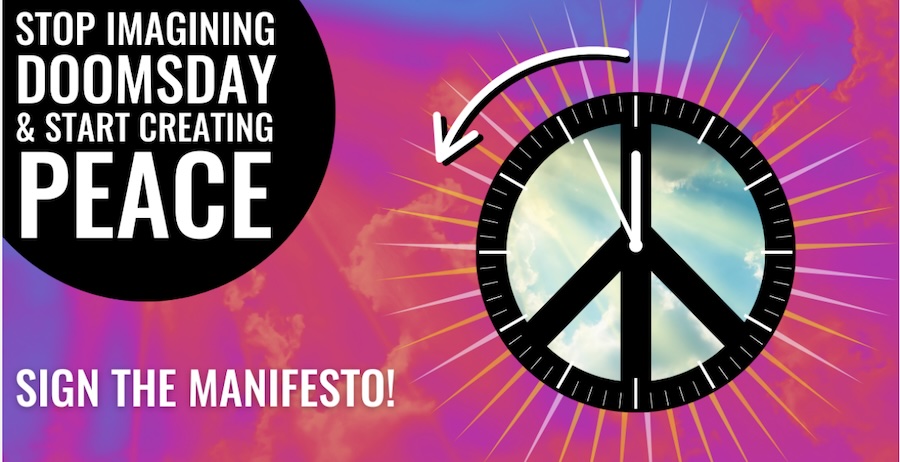
From Sept 21 to Oct 2, 2024, (Int’l Day of Peace to Int’l Day of Nonviolence), join tens of thousands of people in creatively building a culture of peace rooted in active nonviolence. Last year, people held over 5,000 actions, events, and marches across the USA and in 20 countries. Over 60,000 people participated in these events. 


In 2024, join us in advancing peace and nonviolence, and addressing the entwined issues of violence, war, poverty, racism, and environmental destruction. 

We welcome your ideas for actions. We also invite you to participate in our calls-to-action that work on specific aspects of a culture of nonviolence. Offer a teach-in on nonviolence. Call for ceasefires. Organize labor strike solidarity. Train in how to interrupt racial harassment. Connect the issues of climate and militarism. There’s something for everyone in these Campaign Nonviolence calls-to-action!

You can organize in several ways:

° Organize your own action to build a culture of peace and active nonviolence, free from war, poverty, racism, and environmental destruction. Just tell us the details and we’ll add you to the Action Days list. 

° Sign-up for one or more of our specific calls-to-action. The actions have been chosen to connect the dots between the issues and explore the many forms of nonviolence including education, constructive programs, healing work, direct action, and protests. You can join actions on Sept 21st (Int’l Day of Peace) and Oct 2nd (Int’l Day of Nonviolence). You can also choose a call-to-action that can be done any time between those dates. You pick a date that works best for you and your group, while still feeling the solidarity of others taking action in similar ways. 

Spread the word! Grow the movement by reaching out to local groups and inviting them to join in. The Campaign Nonviolence Action Days are designed to bring together the many issues, movements, and efforts working to end violence and build a world that works for all of us.

Questions? Contact Rivera Sun: rivera(at)paceebene.org

(Article continued in right column)

Question related to this article:

Can peace be guaranteed through nonviolent means?

How can the peace movement become stronger and more effective?

(Article continued from left column)

International Day of Peace: Build A Culture of Peace

° From Ukraine to Gaza, Sudan to Colombia, the need for peace is urgent and widespread. On September 21st, the International Day of Peace, take action to call for ceasefires, educate the community about peace, and honor the peacemakers on the local and global levels.  More info.

International Day of Nonviolence: Nonviolence Teach-Ins

° October 2nd is Mahatma Gandhi’s birthday and the International Day of Nonviolence. On this day, connect with as many children and adults as possible to discuss, learn about, and explore nonviolence. Use our tools and resources to host creative teach-ins. Do a Facebook live or Instagram post on the subject of nonviolence. Or put up informational posters around town. Or interrupt classes or meetings with a 5-minute speech on nonviolence. Or sidewalk chalk nonviolence principles in public places. More info.

Ending Violence: Train To Interrupt Violence & Harassment

° Train your community in bystander intervention, de-escalation, and anti-harassment skills. Prepare people to be able to stop incidents of violence and harassment at work, on public transit, in the home, at the store, or in the streets. As we approach the 2024 elections, you could also help poll workers and poll watchers prepare to de-escalate potential violence at the polls. More info.

Ending Poverty: Mutual Aid & Labor Strike Solidarity

° Organize a group to participate in mutual aid and/or labor strike solidarity, i.e. hold a bake sale for a strike fund, go to a picket line, join a boycott of a business where the workers are striking, or other ways of supporting a strike. More info.

Environment: Peace & Planet Solidarity

° Use our Peace & Planet Solidarity Toolkit to take action on the ways the climate crisis and militarism connect, or how war damages the environment. You will also find creative ideas for organizing peace and planet events with children.  More info.

° Divest From Violence—Move the Money Out of Weapons & Fossil Fuels: Take action to stop money from going into industries that manufacture war, weapons, nukes, and fossil fuels. Plan an action at a bank, public office, or university. Challenge them to reinvest in peace and planet. More info.

Racial Justice: Host a Racial Healing Circle and/or Train To Interrupt Harassment

° Help your community address racism that impacts Black, Latinx, Indigenous, Asian-American, Arab-American, and Jewish individuals. Host a Racial Healing Circle that allows personal stories to be shared and heard. Train your community in practical ways to intervene when someone is being targeted by hate. Your actions can focus on the issues your area is struggling with, such as welcoming migrants or addressing both antisemitism and Islamophobia. More info.

– – – – – –

If you wish to make a comment on this article, you may write to coordinator@cpnn-world.org with the title “Comment on (name of article)” and we will put your comment on line. Because of the flood of spam, we have discontinued the direct application of comments.
‘It’s Time To Give Peace Another Chance’: Thousands Gather for Israeli-Palestinian Peace Conference in Tel Aviv

DISARMAMENT AND SECURITY .

An article from Portside

Two hundred and sixty-eight days into Israel’s war with Hamas, thousands of Israelis queued at the entrance Tel Aviv’s Menora Mivtachim Arena on Monday night, waiting to enter an event called “It’s Time: The Great Peace Conference.” The rally was organized by a confederation of some 50 organizations and individuals from Israel’s left and pro-peace camp, with a message that revolved around the arena’s LED screens: “It’s time to reach a deal. To stop the war. To make peace.”


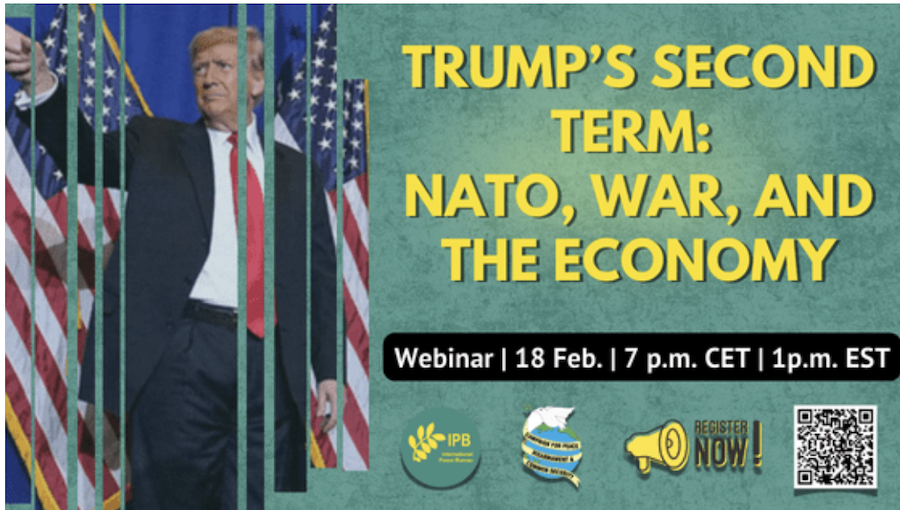
Thousands of attendees shine their lights in solidarity at ‘The Great Peace Conference’ in Tel Aviv, Israel, Monday, July 1. (Haaretz)

The attendees represented a mixture of organizations, from Peace Now and Breaking the Silence to the anti-judicial overhaul protest groups. Some wore shirts reading “Bring them home now,” a call for a deal to return the hostages to Israel; others depicted watermelons, a stand-in for the Palestinian flag, which Israel’s police largely prohibit waving. A group of high schoolers in hijabs toted iced coffees, and a man in red and yellow Buddhist monk robes climbed over the barriers into the orchestra section to greet friends.

The speaker lineup was similarly diverse. It featured Israelis who lost family to Hamas’ onslaught in southern Israel and Palestinians who lost family to Israeli air strikes in Gaza. A woman in a Jewish headscarf recited a prayer for mothers beside her friend, an observant Muslim, who repeated it in Arabic.

Screens on either side of the stage provided English, Arabic and Hebrew subtitles for the speakers, and sign language interpreters translated the Hebrew and Arabic as it was spoken. In one video presented to the crowd, former generals and security officials endorsed peace as the only viable path to safety; in another, Palestinians in the West Bank and East Jerusalem gave their blessing to the event.

“Our mutual goal here is many different organizations and movement is to build together a peace camp in Israel,” Alon-Lee Green, co-director of Standing Together, one of the groups that organized the conference, told Haaretz. “I’m not even saying to rebuild. I’m talking about building from this from the beginning – a peace camp that is grounded in reality. And in reality, millions of Palestinians are living under violent military control.

“Millions of Jews are living with no safety, not just in the south and the north; it is unsafe for people to imagine that they’ll keep living on this land. And in this reality, we also need to recognize the hegemony, and the hegemony is of the Israeli government, the Israeli military, and we must be able to look at it and to face it. So what we’re trying to do is to build a new camp in the Israeli society, a peace camp that is equal for Palestinians and Jews, and a peace camp that is courageous enough to not do the mistakes of the ones of the 90s and the beginning of the 2000s.”

Maoz Inon, whose parents were killed in the Hamas-led massacre on October 7, was one of the key organizers of the rally. “On my journey, I learned that hope isn’t something you lose, or something you find, or something that you wait for until it finds you. Hope is something you make,” he told the crowd.

Rula Hardal, a Palestinian from Peki’in who now lives in Ramallah, presented a dire forecast: She said that she and the Jewish activists she shared the stage with may have different opinions on particular issues, but they have a commonality. “We all share the same space between the Jordan River and the sea, that we, Palestinians and Israelis, Jews and Arabs, call a homeland,” she said “But this homeland is bleeding. Spirits of vengeance and bloodshed hover over it, and if we don’t stop it now, we’ll all be on the way to collective suicide.”

The event also made room for up-and-coming leadership, bringing young activists to the stage. One was Yanal Jabarin, a journalist from Jerusalem, who recounted his harrowing experience in January at a right-wing rally calling for the resettlement of Gaza.

He told Haaretz that this event is something of an antidote to the messaging coming from the far-right government. “In this show of force we have here, the thousands of people who came here, it doesn’t matter what your opinion is on ‘the day after,’ or whether you believe in two states or one, we just have to say that there’s a side that stands against all of this fascism and all of this racism and messages about transferring the Palestinian people anywhere.”

Another young leader was Josh Drill, an expat from New Jersey who found his way to activism after serving as an IDF officer in Hebron. “The amount of injustice and suffering from so many sides, and from so many different perspectives, really pushed me to understand that I’m going to be a part of this peace movement that’s going to change the reality on the ground,” he told Haaretz.

(article continued in right column)

Question related to this article:

How can a culture of peace be established in the Middle East?

(article continued from left column)

“We cannot accept this cycle of bloodshed, we cannot accept the current reality. It’s just not livable for anyone. And I think that the clear understanding that the Israelis and Palestinians are here to stay, no one is going anywhere. We need to understand how we can live amongst ourselves as Israelis, and also Israelis and Palestinians. Because if we don’t, the cycle of bloodshed will just continue and more lives will be lost.”

Elana Kaminka spoke of her son, Yannai, who was killed by Hamas terrorists on October 7 while protecting his soldiers as a platoon commander at the Zikim Base. “We have three more children, and the way that things are going now, and that people want to continue living in a consistent state of war, isn’t acceptable to us,” she said backstage. “We lost one son, we understand the pain that that involves. And for my other three children, I don’t accept that there’s no other option, that there’s no other alternative. I refuse to accept that, and I don’t accept it for Palestinians, and I don’t accept it for Israelis, we all deserve a better future.”

In speeches and private discussions, particular themes and messages reemerged. Both Israelis and Palestinians have a claim to the land, and must find ways to live with each other upon it; there must be a sea change in Israeli and Palestinian society’s perception of peace, security, self-determination and the other; enough of our parents, children and friends have died to this cycle of violence.

“War isn’t a law of nature – it is a human choice,” said Prof. Yuval Noah Harari n his keynote speech. “And at any moment, it is possible to make a different choice, and start to make peace. True, we have tried to make peace in the past, and we weren’t good at it. So what? We haven’t been that good at making war, either, which doesn’t prevent us from making another one, and another one. All these wars have led us to the abyss. It’s time to give peace another chance.”

Despite the roaring cheers of the crowd, something felt a bit empty. It is not the stadium, whose seats were almost fully booked, but perhaps the fact that it was in a stadium, an enclosed room, in the first place. The participants had all bought tickets; they were a choir being preached to. “It’s an event for us, to make us feel good,” one girl told another in the stairwell. “To make us feel like we’re on the right side.”

When asked about this, Jabarin said that it seems the organizers had already considered this aspect. “It’s going to be livestreamed and there’s a lot of media here, so any message spoken here will make its way to people around the world, not just in Israel, so it’ll have an impact.” And, he added, although the audience belongs mostly to the left, Israel’s left has long been fractured – something that has cost it elections.

“There’s a broad spectrum of people [here], between Balad voters for the most left-wing Palestinian, [Israeli leftist party] Hadash, even the National Unity Party and Benny Gantz. There’s a big chance that we have something in common, this whole audience. So it’s important for us to work together as a united community on ‘the day after’ and not argue over petty things, because that’s what we’ve been arguing over for 70 years. Now is the time, because we see that the other side is already organized. It knows what it wants. We also need to know what we want, and we need to work together.”

After about three hours of speakers and musical guests, the attendees started to make their ways out of the arena. Ibrahim Abu Ahmad, one of the hosts of the Third Narrative podcast, lingered to talk to friends. “I think it was sort of a support group to all of us to know that we’re not alone,” he said of the conference, which he described as beautiful and moving. “But maybe the next step will be to be in the masses, to not just say it in a closed auditorium, but to go and call it out on the streets to the entire country.”

He added that in the 1990s, about two thirds of both the Israeli and Palestinian populations believed in peace – but that fraction is down to less than a third. “We need to continue and push it more and more and more,” he said.

“I always say that these people didn’t vanish, they didn’t all die, they didn’t disappear. They lost hope. And if they lost hope, they can regain hope, and new people can also gain hope. And that happened right after the First Intifada, when everybody thought that there was never going to be peace out of nowhere. Somehow, we started to talk about peace. So we can do that again,” Abu Ahmad said.

“But maybe this time, not to let the extremists take control because back then they did everything they can to prevent peace. And unfortunately, they succeeded. We saw the worst terror attacks at the time in the 90s during Oslo and you know, one radical Israeli killed the Israeli prime minister. Peace died, then we can’t let that happen again.”

– – – – – –

If you wish to make a comment on this article, you may write to coordinator@cpnn-world.org with the title “Comment on (name of article)” and we will put your comment on line. Because of the flood of spam, we have discontinued the direct application of comments.
‘Glimmer of Hope’ as UN Security Council Approves Gaza Cease-Fire Resolution

DISARMAMENT AND SECURITY .

An article by Brett Wilkins from Common Dreams

In a move that boosts the three-phase plan announced by President Joe Biden late last month, the United Nations Security Council on Monday voted 14-0—with permanent member Russia abstaining—in favor of a U.S.-sponsored resolution for a cease-fire in Gaza.


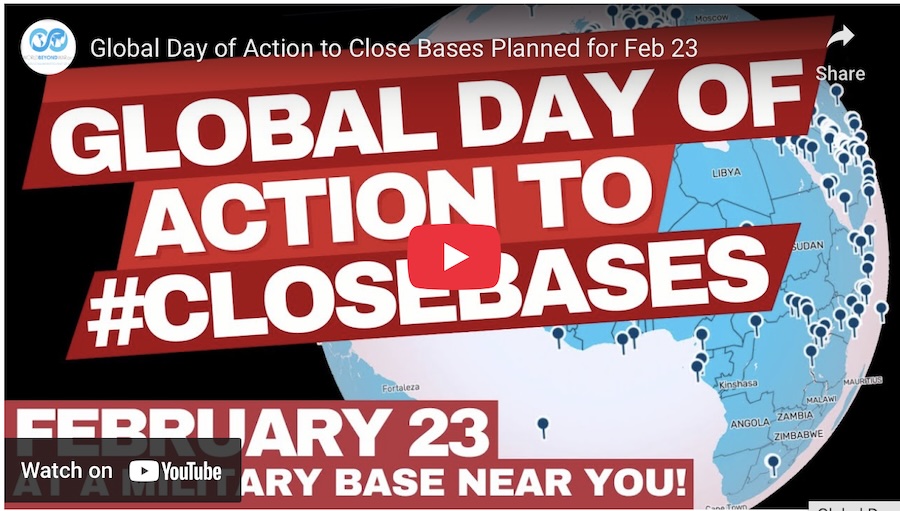
The ambassadors of the United Kingdom, United States, and Algeria raise their hands to vote in favor of a United Nations Security Council resolution for a cease-fire in Gaza in New York on June 10, 2024. (Photo: Angela Weiss/AFP via Getty Images)

Russia chose not to exercise its power to veto the resolution, which urges Israel and Hamas to “fully implement its terms without delay and without condition.”

Responding to the vote, Nihad Awad, national executive director of the Council on American-Islamic Relations, said in a statement that “although the Biden administration should have allowed the U.N. Security Council to pass a permanent cease-fire resolution many months and many slaughtered Palestinians ago, we welcome today’s development as a positive and long overdue step toward ending the genocide.”

“The Biden administration must now use American leverage to force [Israeli Prime Minister Benjamin] Netanyahu to agree to a permanent cease-fire so that the massacres of Palestinian civilians can end, all hostages and political prisoners can safely go free, international tribunals can begin holding those responsible for war crimes accountable, and the world can finally begin pursuing a credible end to the illegal occupation of Palestine that has fomented decades of injustice and oppression.”

As U.N. News explained:

Phase one includes an “immediate, full, and complete cease-fire with the release of hostages including women, the elderly and the wounded, the return of the remains of some hostages who have been killed, and the exchange of Palestinian prisoners.”

It calls for the withdrawal of Israeli forces from “populated areas” of Gaza, the return of Palestinians to their homes and neighborhoods throughout the enclave, including in the north, as well as the safe and effective distribution of humanitarian assistance at scale.

Phase two would see a permanent end to hostilities “in exchange for the release of all other hostages still in Gaza, and a full withdrawal of Israeli forces from Gaza.”

In phase three, “a major multi-year reconstruction plan for Gaza” would begin and the remains of any deceased hostages still in the strip would be returned to Israel.”

(article continued in right column)

Question related to this article:

How can a culture of peace be established in the Middle East?

(article continued from left column)

The council also underlined the proposal’s provision that if negotiations take longer than six weeks for phase one, the cease-fire will continue as long as negotiations continue.

“The only way to end this cycle of violence and build a durable peace is through a political settlement,” U.S. Ambassador to the U.N. Linda Thomas-Greenfield—who vetoed several previous Security Council cease-fire resolutions— said following Monday’s vote.

The Biden administration has provided Israel with billions of dollars in military aid, arms and ammunition sales, and diplomatic cover.

In a statement, Hamas—which led the October 7 attack on Israel that left more than 1,100 people dead and over 240 others taken hostage—welcomed the resolution’s passage and affirmed  its willingness “to enter into indirect negotiations on the implementation of these principles.”

However, Reut Shapir Ben-Naftaly, Israel’s representative at the U.N., said her country’s objectives in the war have not changed and vowed to keep fighting “until all of the hostages are returned and Hamas’ military capabilities are dismantled.”

“Israel will not engage in meaningless and endless negotiations which can be exploited by Hamas as a means to stall for time,” she added.

According to Palestinian and international agencies, at least 37,124 Palestinians—mostly women and children—have been killed by Israeli forces during the 248-day Gaza onslaught, which is the subject of an International Criminal Court genocide case  brought by South Africa and supported by more than 30 nations and regional blocs. Nearly 85,000 Palestinians have also been injured. At least 11,000 other Palestinians are missing and believed buried beneath the rubble of hundreds of thousands of bombed-out buildings.

International Criminal Court Prosecutor Karim Khan is seeking  arrest warrants for Netanyahu, Israeli Defense Minister Yoav Gallant, and three Hamas leaders for alleged crimes including extermination.

Algerian Ambassador Amar Bendjama said  after Monday’s vote that “as a free and dignified people, the Palestinians will never accept living under occupation. They will never abdicate their fight for liberation.”

“This text is not perfect, but it offers a glimmer of hope to the Palestinians as the alternative is continued killing and suffering,” he added. “We voted for this text to give diplomacy a chance. It is time to halt the killing.”

The Security Council resolution’s passage follows last month’s vote by the U.N. General Assembly to recognize Palestinian statehood—a move supported  by 143 members of the World Body but vehemently opposed by Israel and the U.S. Only nine nations voted against recognizing Palestine as an independent state.

– – – – – –

If you wish to make a comment on this article, you may write to coordinator@cpnn-world.org with the title “Comment on (name of article)” and we will put your comment on line. Because of the flood of spam, we have discontinued the direct application of comments.