Category Archives: DISARMAMENT & SECURITY

Hundreds Protest, Block Entrances to North America’s Largest Weapons Fair

DISARMAMENT & SECURITY .

An article from World Beyond War

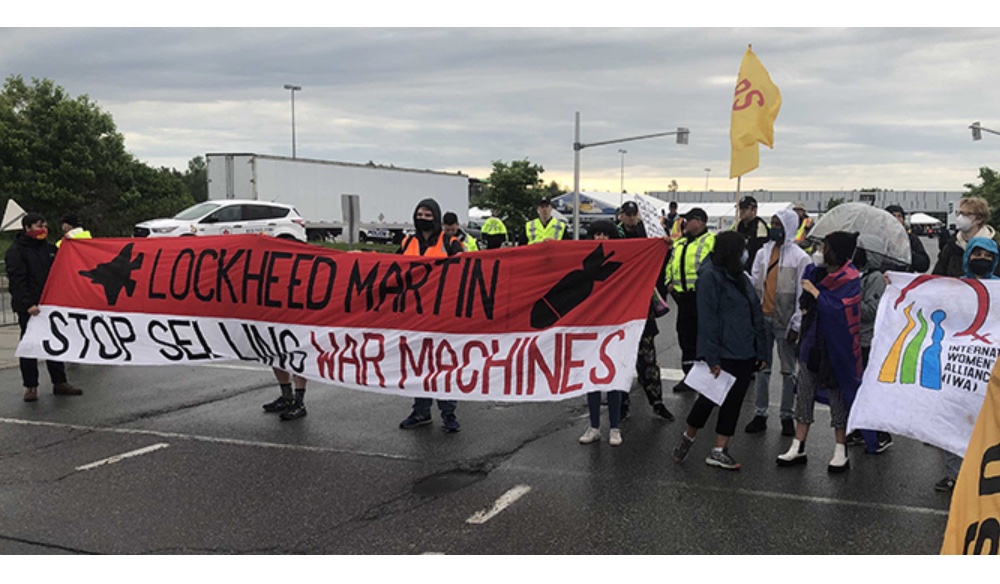
Hundreds of people have blocked access to the opening of CANSEC, North America’s largest weapons and “defense industry” convention at the EY Centre in Ottawa. 40 foot banners saying “Blood On Your Hands,” “Stop Profiting From War,” and “Arms Dealers Not Welcome” obstructed driveways and pedestrian entrances as attendees attempted to register for and enter the convention centre immediately before Canadian Defense Minister Anita Anand was slated to give the opening keynote address.


“The same conflicts around the world which have brought misery to millions have brought record profits to arms manufacturers this year,” said Rachel Small, organizer with World BEYOND War. “These war profiteers have blood on their hands and we are making it impossible for anyone to attend their weapons fair without directly confronting the violence and bloodshed they are complicit in. We’re disrupting CANSEC in solidarity with the millions of people around the world who are being killed, who are suffering, who are being displaced as a result of the weapons sold and military deals made by the people and corporations inside this convention. While more than six million refugees fled Ukraine this year, while more than 400,000 civilians have been killed in seven years of war in Yemen, while at least 13 Palestinian children were killed in the West Bank since the start of 2022, the weapons companies sponsoring and exhibiting in CANSEC are raking in record billions in profits. They are the only people who win these wars.”

Lockheed Martin, one of the major sponsors of CANSEC, has seen their stocks soar nearly 25 percent since the start of the new year, while Raytheon, General Dynamics and Northrop Grumman each saw their stock prices rise by around 12 percent. Just prior to the Russian invasion of Ukraine, Lockheed Martin Chief Executive Officer James Taiclet said on an earnings call that he predicted the conflict would lead to inflated defence budgets and additional sales for the company. Greg Hayes, CEO of Raytheon, another CANSEC sponsor, told investors earlier this year that the company expected to see “opportunities for international sales” amid the Russian threat. He added: “I fully expect we’re going to see some benefit from it.” Hayes received an annual compensation package of $23 million in 2021, an 11% increase over the previous year.

“The weapons, vehicles and technologies promoted at this arms show have profound implications for human rights in this country and around the world,” said Brent Patterson, Director of Peace Brigades International Canada. “What is celebrated and sold here means human rights violations, surveillance and death.”

Canada has become one of the world’s top arms dealers globally, and is the second biggest weapons supplier  to the Middle East region. Most Canadian arms are exported to Saudi Arabia and other countries engaged in violent conflicts in the Middle East and North Africa, even though these customers were repeatedly implicated in serious violations of international humanitarian law.

Since the beginning of the Saudi-led intervention in Yemen in early 2015, Canada has exported approximately $7.8 billion in arms to Saudi Arabia, primarily armored vehicles produced by CANSEC exhibitor GDLS. Now in its seventh year, the war in Yemen has killed over 400,000 people, and created the worst humanitarian crisis in the world. Exhaustive analysis  by Canadian civil society organizations has credibly shown these transfers constitute a breach of Canada’s obligations under the Arms Trade Treaty (ATT), which regulates the trade and transfer of weapons, given well-documented instances of Saudi abuses against its own citizens and the people of Yemen. International groups like the Yemen-based Mwatana for Human Rights, as well as Amnesty International and Human Rights Watch, have also documented the devastating role of bombs produced by CANSEC sponsors like Raytheon, General Dynamics, and Lockheed Martin in air strikes on Yemen that hit, among other civilian targets, a marketplace, a wedding, and a school bus.

(Article continued in right column)

Question related to this article:

How can the peace movement become stronger and more effective?

(Article continued from left column)

“Outside its borders, Canadian corporations plunder the oppressed nations of the world while Canadian imperialism benefits from its role as a junior partner in U.S.-led imperialism’s vast complex of military and economic warfare,” said Aiyanas Ormond, with the International League of Peoples’ Struggle. “From its plunder of the mineral wealth of the Philippines, to its support for Israeli occupation, apartheid and war crimes in Palestine, to its criminal role in the occupation and plunder of Haiti, to its sanctions and regime change machinations against Venezuela, to arms exports to other imperialist states and client regimes, Canadian imperialism uses its military and police to attack the people, suppress their just struggles for self-determination and for national and social liberation and to maintain its regime of exploitation and plunder. Let’s join together to shut down this war machine!”

In 2021, Canada exported more than $26 million in military goods to Israel, an increase of 33% over the previous year. This included at least $6 million in explosives. Last year, Canada signed a contract to purchase drones from Israel’s largest weapons maker and CANSEC exhibitor Elbit Systems, which supplies 85% of drones used by the Israeli military to monitor and attack Palestinians in the West Bank and Gaza. An Elbit Systems subsidiary, IMI Systems, is the main provider of 5.56 mm bullets, the same type of bullet that was used by Israeli occupation forces to murder Palestinian journalist Shireen Abu Akleh.

CANSEC exhibitor the Canadian Commercial Corporation, a government agency that facilitates deals between Canadian arms exporters and foreign governments recently brokered a $234 million deal to sell 16 Bell 412 helicopters to the military of the Philippines.  Ever since his election in 2016, the regime of Philippine president  Rodrigo Duterte has been marked by a reign of terror  that has killed thousands under the guise of an anti-drug campaign, including journalists, labor leaders, and human rights activists.

12,000 attendees are expected to gather for the CANSEC arms fair this year, bringing together an estimated 306 exhibitors, including weapons manufacturers, military technology and supply companies, media outlets, and government agencies. 55 international delegations are also slated to attend. The weapons expo is organized by the Canadian Association of Defence and Security Industries (CADSI), which represents more than 900 Canadian defense and security companies.

BACKGROUND

Hundreds of lobbyists in Ottawa represent arms dealers not only competing for military contracts, but lobbying the government to shape the policy priorities to fit the military equipment they are hawking. Lockheed Martin, Boeing, Northrop Grumman, BAE, General Dynamics, L-3 Communications, Airbus, United Technologies and Raytheon all have offices in Ottawa to facilitate access to government officials, most of them within a few blocks from Parliament. CANSEC and its predecessor, ARMX, have faced staunch opposition for over three decades. In April 1989, Ottawa City Council responded to opposition to the arms fair by voting to stop the ARMX arms show taking place at Lansdowne Park and other City-owned properties. On May 22, 1989, more than 2,000 people marched from Confederation Park up Bank Street to protest the arms fair at Lansdowne Park. The following day, Tuesday May 23, the Alliance for Non-Violence Action organized a mass protest in which 160 people were arrested. ARMX did not return to Ottawa until March 1993 when it took place at the Ottawa Congress Centre under the rebranded name Peacekeeping ’93. After facing significant protest ARMX didn’t happen again until May 2009 when it appeared as the first CANSEC arms show, again held at Lansdowne Park, which had been sold from the city of Ottawa to the Regional Municipality of Ottawa-Carleton in 1999.

‘We Refuse to Go On Like This’: US Students Walk Out to Demand Gun Control

DISARMAMENT & SECURITY .

An article by Julia Conley from Common Dreams (licensed under Creative Commons (CC BY-NC-ND 3.0)

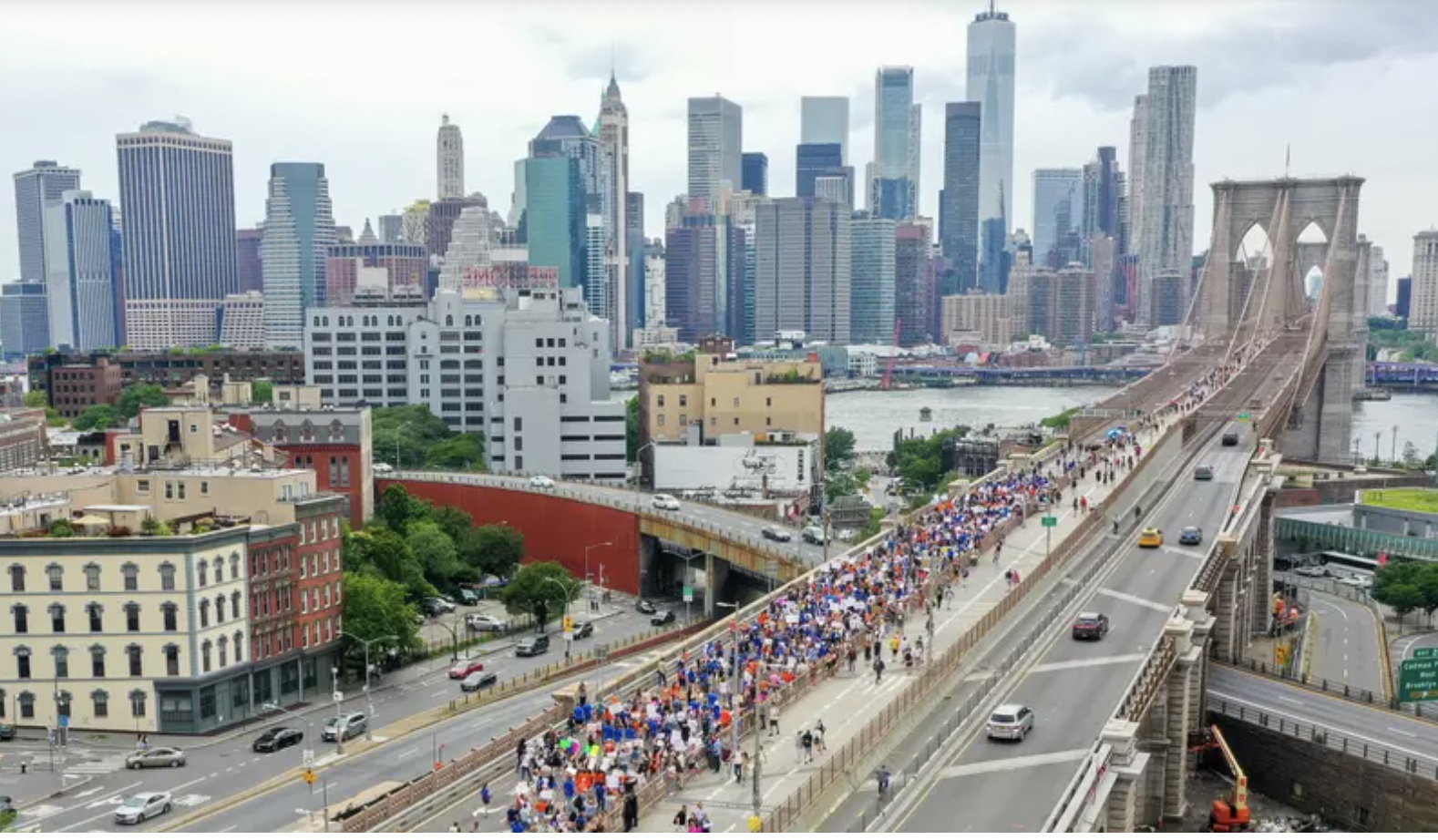
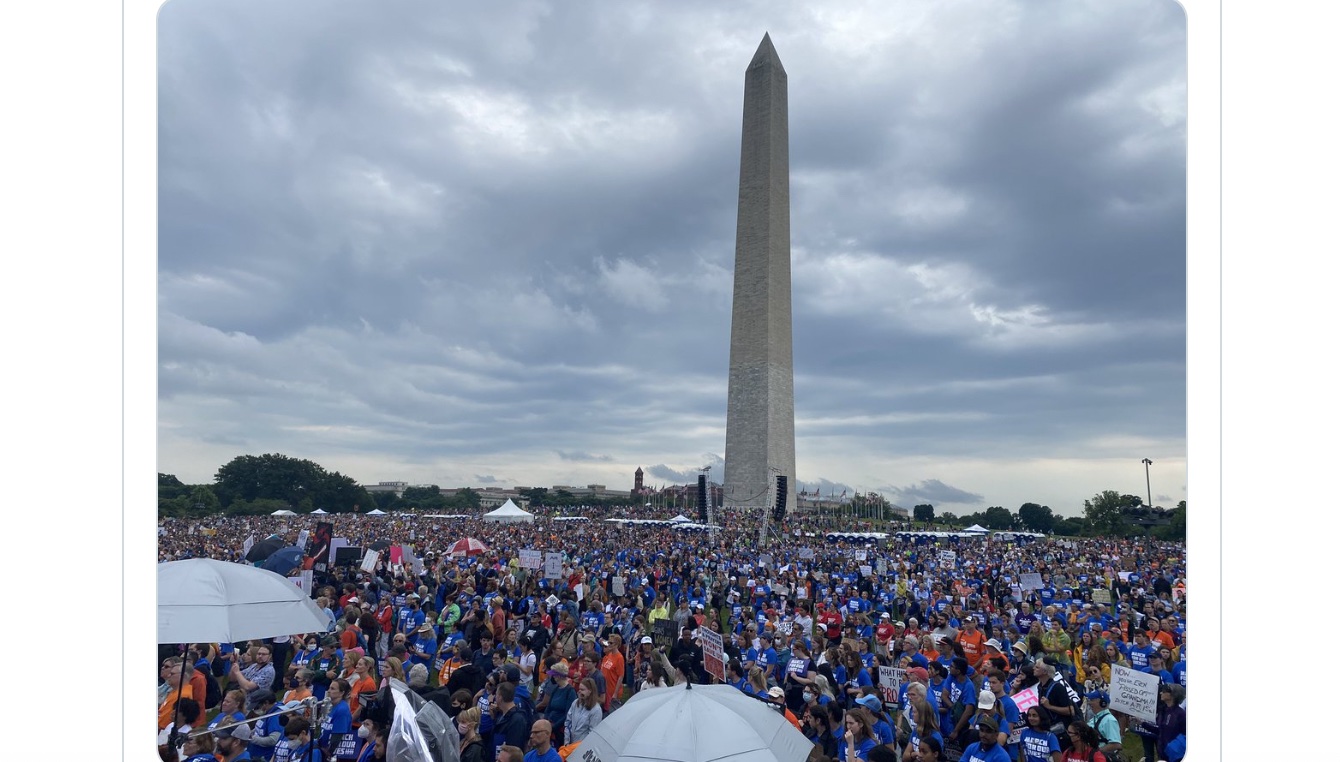
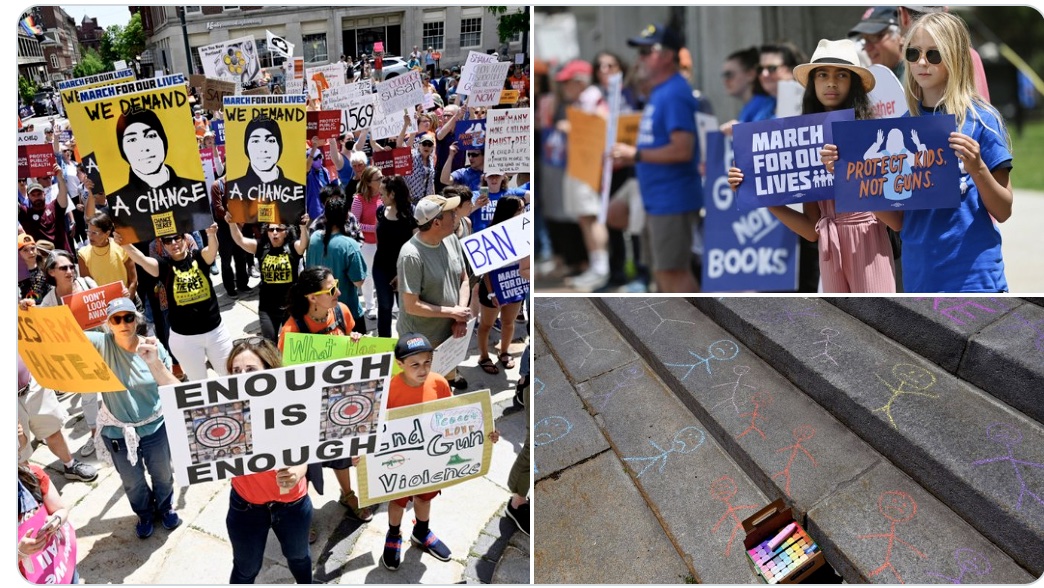
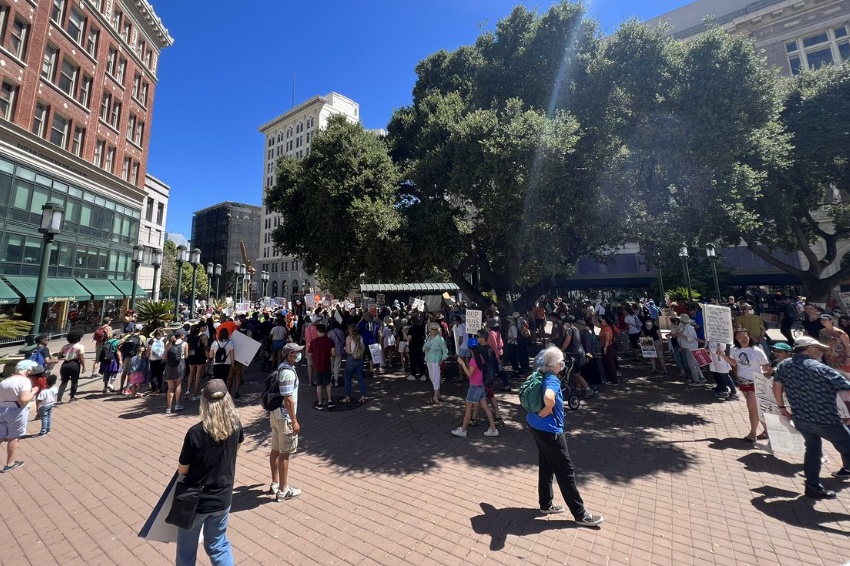
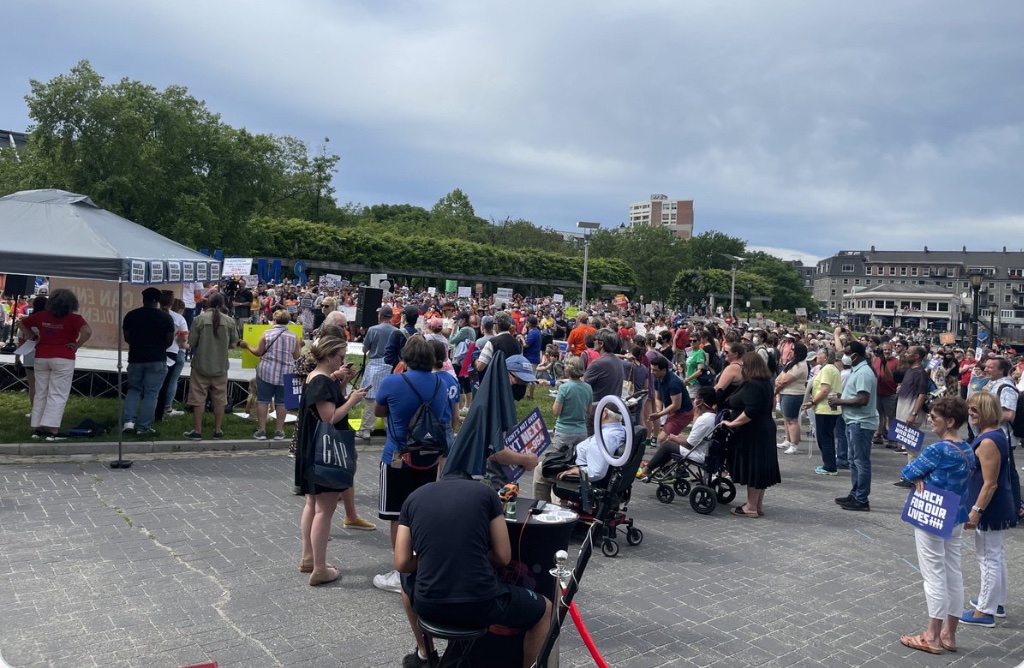
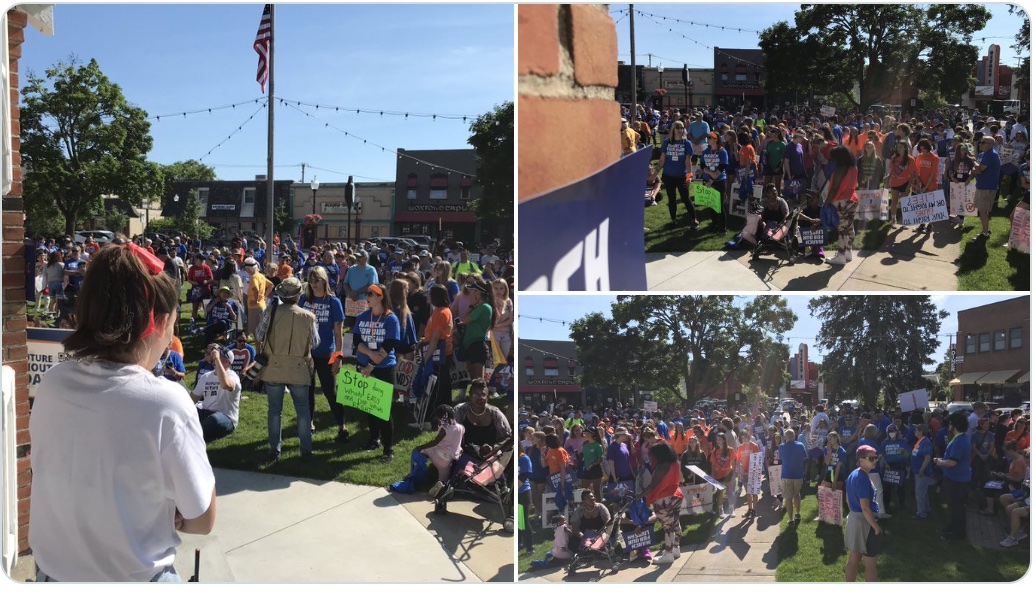
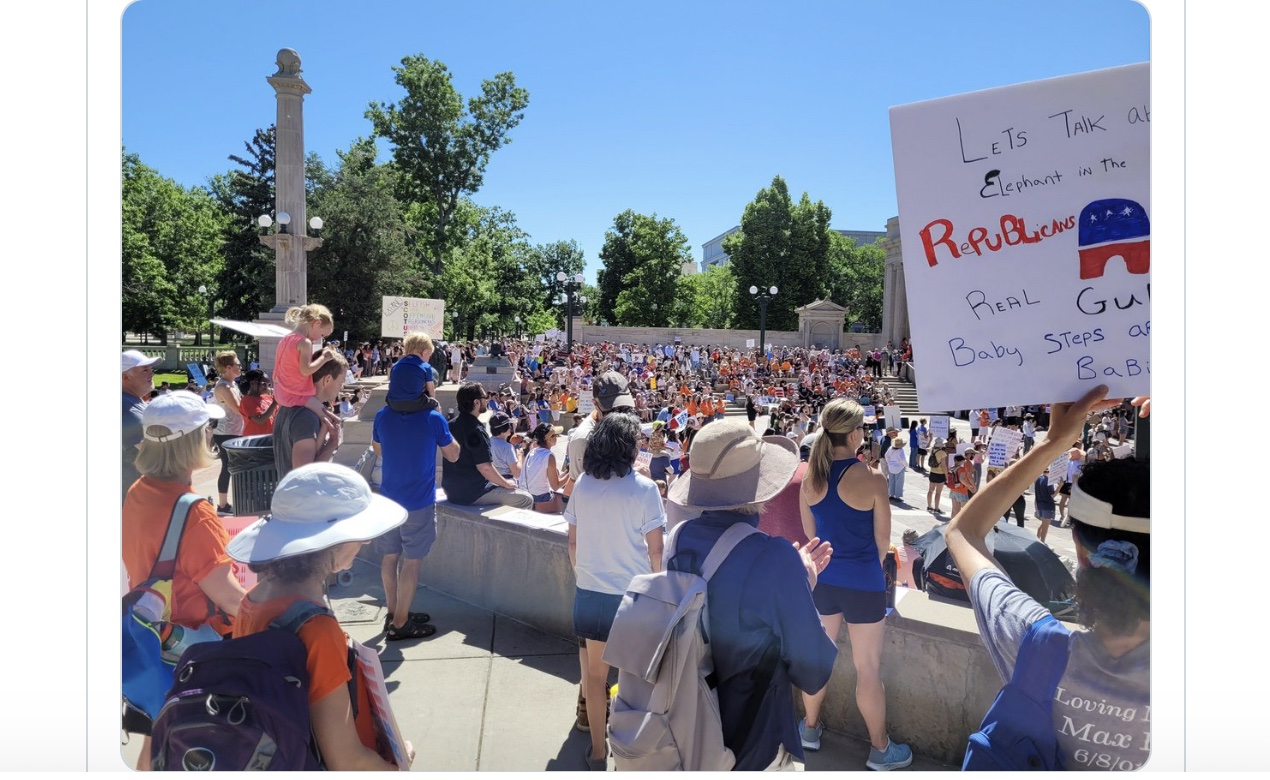
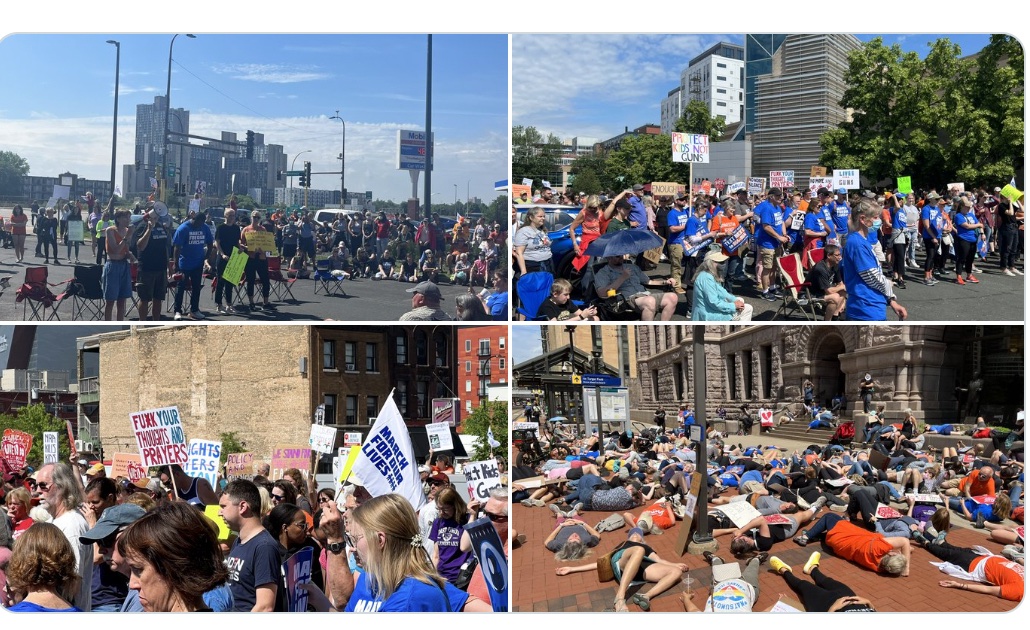
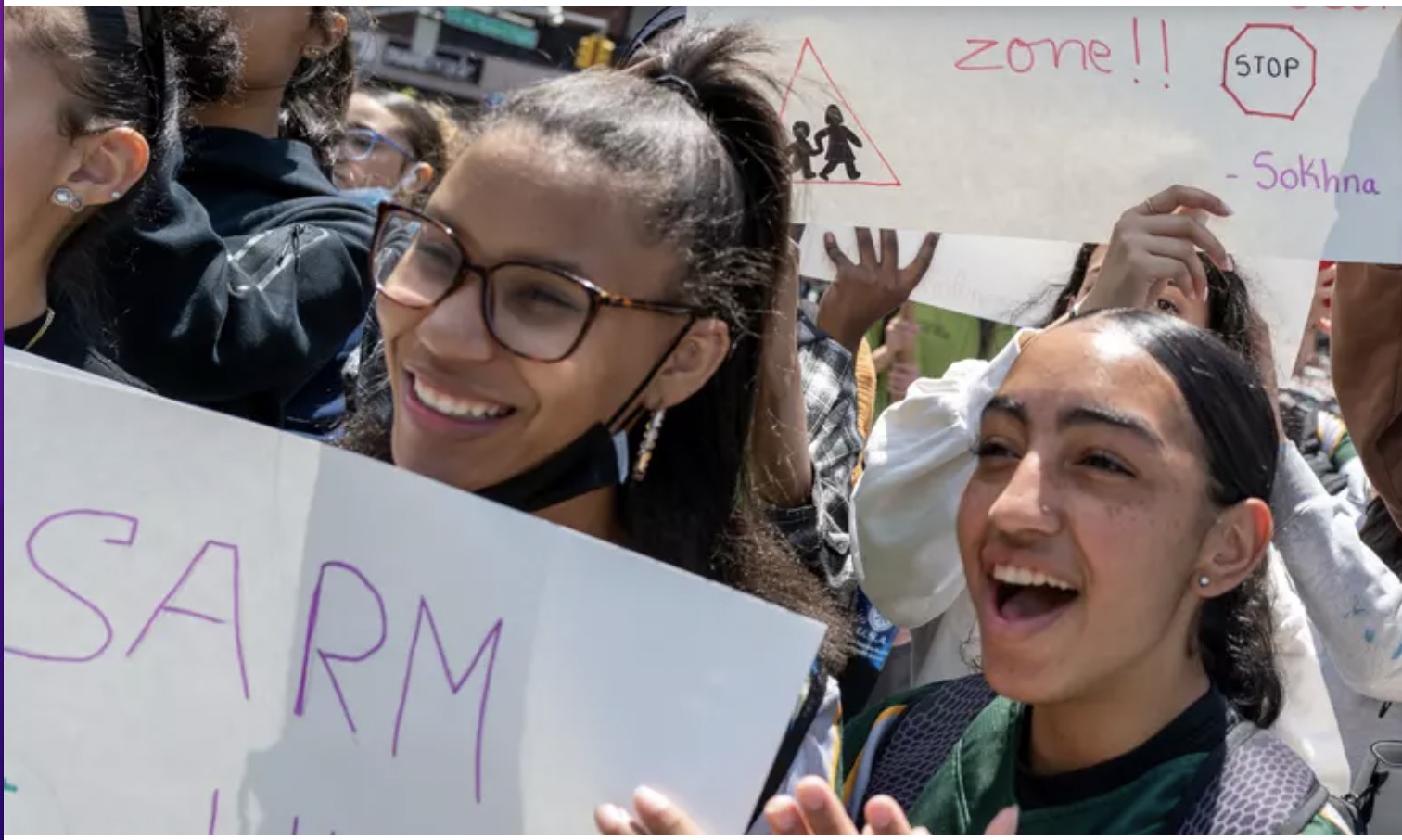
Students across the United States walked out of their classrooms Thursday to protest gun violence and years of inaction in Washington, D.C. they blame for allowing mass shootings to continue, like the one that killed 19 children and two adults at Robb Elementary School this week.

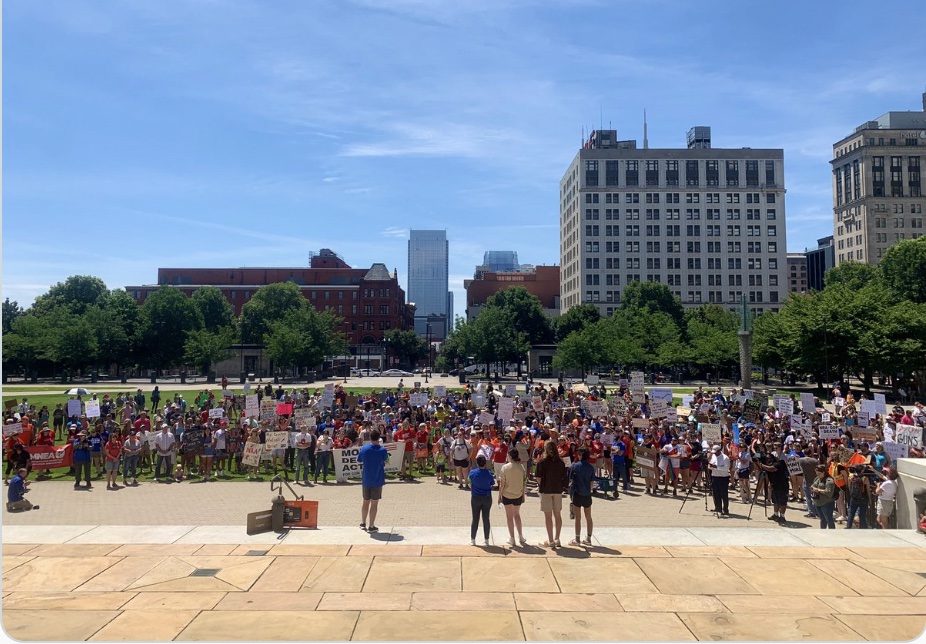
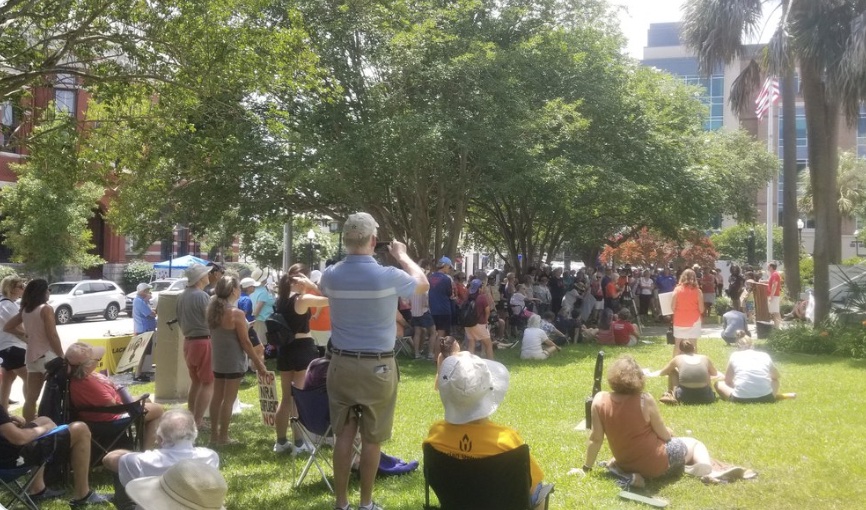
At 12:00 p.m. Eastern time, students and teachers at more than 80 elementary, middle, and high schools took part in the nationwide demonstration organized by Students Demand Action, a branch of Everytown for Gun Safety.

“We refuse to go on like this,” tweeted the organization.

“We plan to host a walkout in protest of gun violence in schools and inaction regarding gun laws this Thursday at 11 a.m. in accordance with the nationwide walkout,” wrote  students in Whitefish Bay, Wisconsin. “We believe it is very important that our community recognizes the voices of students regarding mass shootings in schools as we are the group most affected by this new reality, yet have the least say in changing the laws and statutes that impact us so much.”

Northwood High School students in Irvine, California condemned “the ‘thoughts and prayers’ of our so-called leaders” and called gun violence and mass shootings, which have taken place at 27 U.S. schools  so far this year, “a symptom of a larger disease of white supremacy, toxic masculinity, and antisemitism that often motivates deranged shooters to carry out these horrors.”

(Continued in right column)

Question related to this article:

Do you think handguns should be banned?, Why or why not?

Are we seeing the dawn of a global youth movement?

(Continued from left column)

“We strongly believe in the right of Americans, especially students in light of recent shootings in Texas, to lead a free, prosperous, and secure life in the wealthiest nation on Earth,” they wrote. “We are walking out because we refuse to accept a country where gunfire can ring out at any moment, whether it’s while grocery shopping at a supermarket in Buffalo, New York, at an elementary school in Uvalde, Texas, at a party in San Bernardino, or at graduations across the country. Enough is enough. No more thoughts and prayers.”

The walkouts are being held as representatives of Moms Demand Action, Students Demand Action, and Everytown join Democratic lawmakers at a rally in Washington, D.C. to demand passage of gun control laws  such as the Bipartisan Background Checks Act of 2021 (H.R. 8), which would expand background checks for all gun purchases and transfers, and the Enhanced Background Checks Act of 2021 (H.R. 1446), which would close a loophole that allows gun sales without a background check if three businesses days have passed.

“We ask our senators: WHO do you work for?” said  Shannon Watts, the founder of Moms Demand Action. “Do you work for the 90% of Americans who support common-sense gun safety laws? Or do you work for gun manufacturers who pad their pockets and protect their power while over 110 Americans are shot and killed every day?”

Mia Tretta, a survivor of the Saugus High School shooting in Santa Clarita, California that killed two of her classmates in November 2019, organized a walkout at her school, tweeting, “I’m sorry I couldn’t do my homework, I was planning a life-saving revolution.”

David Hogg, a survivor of the Marjory Stoneman Douglas High School shooting in Parkland, Florida in February 2018 and co-founder of March for Our Lives, called on  communities across the U.S. to hold vigils at their local elementary schools Thursday evening and suggested students hold regular walkouts until legislative action is taken.

“Legislators need to keep in mind that if we can’t vote now, they need to listen because we will be able to vote eventually,” Maddie Ahmadi, a 17-year-old advisory board member for Students Demand Action, told  Bloomberg. “And if they are not hearing us and they are not passing common sense gun legislation, we are going to vote them out of office.”

Women of the World Call for Peace

. WOMEN’S EQUALITY . .

An article from Scheerpost

Presented on May 10th, 2022, by Women Transforming Our Nuclear Legacy, a coalition of the women leaders and activists from around the world call for peace in Ukraine and and an end to the threat of nuclear war. 


Video of their videoconference

Born out of an American-Russian Women’s Dialogue and Peacebuilding Initiative founded just over a year ago, the group started with the goal of improving US-Russia relations, reducing tensions, averting a nuclear war, and working together for the disarmament and elimination of nuclear weapons.

Over the last year, they wrote multiple open letters published in both countries calling for peace. Their most recent open letter, published a week before the Russian invasion of Ukraine link stood with Ukraine calling for peace. They have issued an appeal for peace in Ukraine calling for an immediate ceasefire “to stop the killing, bloodshed, and immense human suffering.”

(continued in right column)

Question related to this article:
 
Can the peace movement help stop the Ukraine war?

Do women have a special role to play in the peace movement?

(continued from left column).

SPEAKER BIOGRAPHIES:

Mairead Corrigan Maguire is a Nobel Peace Laureate and Co-founder of Peace People, Northern Ireland. Mairead was the aunt of three Maguire children who died as a result of being hit by an Irish Republican Army getaway car after its driver was shot by a British soldier. She responded to the violence facing her family and community by organizing massive peace demonstrations appealing for an end to the bloodshed and a nonviolent solution to the conflict. Mairead was awarded the l976 Nobel Peace Prize for her courageous efforts in co-founding a movement to help bring about peace and end the violence arising out of the ethnic political conflict in Northern Ireland. Since receiving the award, she has dedicated her life to promoting peace and disarmament, both in Northern Ireland and around the world.  

Dr. Paula Garb is a Senior Fellow at the Center for Peacemaking Practice at George Mason University. For the past twenty-eight years, Dr. Garb has facilitated citizen dialogues and taught peaceful problem-solving skills in conflict zones of the South Caucasus and to gang intervention workers in Southern California. She also taught mediation and conflict resolution at the University of California, Irvine for twenty-five years.  Dr. Garb serves on the board of UCI’s Center for Citizen Peacebuilding which she co-founded and co-directed for twenty years. She has also published numerous books and journal articles on peacebuilding. 

Ambassador Elayne Whyte Gomez is a diplomat and academic who previously served as the Ambassador from Costa Rica to the United Nations in Geneva. In 2017, Ambassador Whyte presided over the UN Conference that negotiated and adopted the Treaty on the Prohibition of Nuclear Weapons.  Facing extraordinary time pressure, and, at times, contentious debate, Ambassador Whyte facilitated the adoption of this landmark agreement by a vote of 122 nations in favor, one against, and one abstention. Among her many accomplishments, she is also the first woman and the youngest person ever to serve as vice minister of Foreign Affairs in Costa Rica. 

Cynthia Lazaroff is the Senior Creative Producer for US-Russia Relations: The Quest for Stability, a seven-part multimedia documentary produced with philanthropic support from the Carnegie Corporation of New York. Over the past forty years, Cynthia has been engaged in Track II and 1.5 diplomacy with Russia and the former Soviet Union. Cynthia is the Founder & Director of Women Transforming Our Nuclear Legacy  & NuclearWakeUpCall.Earth.

Culture of Peace Foundation: We join the Global Days of Action to Reduce Military Expenditure and to demand a budget for peace

DISARMAMENT & SECURITY .

An article from Fundación Cultura de Paz

The Culture of Peace Foundation has joined the call of the Global Days of Action for the Reduction of Military Spending (GDAMS) that calls for a budget for peace policies. As noted in the appeal, that You can read here, “The $1.98 trillion spent on armies in 2020 did not provide us with true security, rather bloated budgets for weapons and war left us mired in a cycle of violence. It is time for us to come together and call on governments around the world to cut military spending and instead invest in common and human security. It is time to give peace a budget.”


We are seeing today, with the military invasion of Ukraine, that both political leaders and the media “continue to push solutions focused on military power projection and deterrence” and seem to advocate increasing already bloated military budgets. But it is clear that militarism has not brought us more security.

(Article continued in right column)

(Click here for a Spanish version of this article.)

Question related to this article:

Does military spending lead to economic decline and collapse?

(Article continued from left column)

As noted in the appeal, “The collective military spending of NATO members, which is 18 times that of Russia, did not prevent President Putin from invading Ukraine. Even so, its Member States have reaffirmed their commitment to spend 2% of their GDP on military spending in response to Russia’s war of aggression. By now it should be obvious that some countries trying to outspend others on weapons of all sizes is not an adequate defense and security strategy. It hasn’t worked in the past and it never will.”

On the other hand, the member organizations point out, “the global commitment to militarization also destroys trust and undermines cooperation efforts between countries.” Governments must invest in cooperation and multilateralism, “putting more options on the table than the threat of war and annihilation.” We suffer from many threats, such as the climate crisis or growing social inequality, in the face of which hardly any funds are allocated to face them compared to military spending, so that “the collective action necessary to face the global emergencies of our time remains in the background”.

Military spending does not guarantee our security “and prevents the global collaboration that is essential for human well-being.” For this reason, the adhering organizations call on “civil society and the media to press for large reductions in military spending, instead of the increases announced in many countries.”

“We demand that governments reduce their military spending and instead allocate funds to common and human security, investing in the true needs of people and the planet to build a just and sustainable peace.

If we want to give peace a chance, we have to give it a budget.”

The Second Level Geopolitical War in Ukraine Takes Over

DISARMAMENT & SECURITY .

A blog by Richard Falk reprinted by Transcend Media Service

. . . It has become increasingly clear to the world that there is not one, but two, actually three, distinct levels of conflict embedded in what the world’s media and political leadership deceptively insist on calling the ‘Ukraine War.’ The first level was initiated on February 24, 2022 when Russia launched an aggressive war against Ukraine imperiling the country’s most basic sovereign rights as well as its territorial integrity. The second level was difficult to discern in the first weeks of the war, but became soon evident as the NATO countries led by the United States placed an increasing emphasis on lending escalating support to Ukraine’s adopted goals of achieving an unexpected military victory. This support took various forms including the steady supply of heavy weaponry, robust financial assistance, punitive sanctions, and a drumbeat of ‘official’ demonization of Russia and its leadership. In the beginning it seemed appropriate to lend support to Ukraine as the target of aggression, and hail the resistance efforts led by President Volodymyr Zelensky, in defense of a relatively small country being overrun by a large neighbor.


Richard Falk

Even this widely endorsed narrative was deceptive and one-sided as it overlooked the provocative nature of NATO expansion, abetted in Ukraine’s case by American interference in the internal politics of the country to help turn the political tide against Russia. It is in this internal setting that on which the third level of the war persists as there is no doubt that anti-Russian elements in Western Ukraine were deeply abusive toward the majority Russian speaking population in Eastern Ukraine known as the Donbas region. The non-implementation of the Minsk Agreements negotiated in 2014-15 to protect the Ukrainians in the East and accept a high degree of autonomy led to oppressive policies by the Kyiv government giving added strength to separatist aspirations. It remains uncertain as whether the Russia/Ukraine level of combat can be resolved without serious addressing Russian and Donbas concerns at the core of this third level of conflict.

What has been apparent to critics for some time is that Western diplomacy has increasingly become primarily committed to the second level Geopolitical War even at the cost of greatly prolonging and aggravating the Ukrainian war on the ground and producing growing risks of a wider war. Only in the past few days has this priority been more or less acknowledged by high officials in the U.S. Government, most dramatically in the visit of Antony Blinken, Secretary of State, and Austin, Secretary of Defense to Ukraine and later in their meeting with NATO counterparts in Europe. What was revealed was that the number one policy goal of the U.S. was ‘the weakening of Russia’ made to military planners a credible undertaking by the unexpected resistance capabilities of Ukrainian armed forces bolstered by a show unified nationalist resolve. In keeping with this line of thinking, arms shipments to Ukraine were steadily increased in quantity and quality. More tellingly, so-called heavy armaments with offensive capabilities began to be supplied to Ukraine, with militarists in NATO countries even proposing attacking targets in Russia. As this dynamic unfolded, Germany joined in by dramatically reversed its proclaimed policy of not providing heavy weaponry. The whole tenor of assistance from NATO countries shifted from helping Ukraine resist to addressing the geopolitical agenda with its two goals: inflicting a humiliating defeat on Russia and signaling China not to indulge any doubts about Western resolve to defend Taiwan.

Despite this shift in emphasis, earlier concerns with escalating the Geopolitical War with Russia have not been entirely abandoned. Efforts continue to be made to ensure that U.S. and Russia to not engage in direct combat with opposing weapons system and to not produce situations that push Russian toward a reliance on nuclear weapons to avoid battlefield defeat. White House perceptions of what will cause such recourse to nuclear weaponry at this point seems dangerous divergent. It is widely reported that the Biden presidency continues to resist pressures to establish No Fly Zone in Ukraine because it would greatly heighten prospects for direct combat encounters between the NATO and Russia, and with it risks of this new species of cold war turning uncontrollably hot. But what of Biden’s demonization of Russia as guilty of genocide and Putin as a war criminal who should be driven from power? And what of the continuous increases of political, financial, and military assistance to Ukraine coupled with the absence of any hint that a diplomatic alternative exists that would stop the killing. This has been missing all along. There have been no indications by Washington of receptivity to a diplomacy emphasizing the primary humanitarian imperative of an immediate ceasefire and a political process of compromise and mutual security between Russia and Ukraine the overt international antagonists. It is missing because the U.S. on prosecuting the Geopolitical War as long as necessary, and this  takes precedence over the wellbeing of the Ukrainian people, or even the rationally conceived self-interest of the NATO powers.

Zelensky early in the war indicated receptivity to a ceasefire and political compromise, including an acceptance of permanent neutrality for Ukraine, signaled his willingness to meet with Putin to agree upon a process. As time passes, however, Zelensky has pulled back from this dual stance of armed resistance and peace diplomacy, and come to adopt a position that appears seamless with that of the U.S. as if his priority had also shifted to the level 2 Geopolitical War.

My conjecture is that Zelensky, although displaying great talents as a wartime resistance leader has very little sophistication about international relations in general, and seems susceptible to this more militarist line bolstered by promises of decisive support from Washington and possible pressures from his own supposedly hawkish general staff. After all, Zelensky’s background is in theater, until recently he was a performing comedian without any signs of awareness of the wider risks to Ukraine if it subordinates its national interests to the logic of going on with the Geopolitical War wherever it might lead.

As expected, Moscow has already reacted to this escalation of this second level war by warning that it will not back down, but will take all necessary steps to protect its national security interests, intimating if it comes to that, a readiness to have recourse to nuclear weapons. Such inflamed atmospherics can easily produce accidental or preemptive acts that accelerate escalation, which is especially serious in the current context that lacks crisis management links of the sort established between Moscow and Washington in the aftermath of the Cuban Missile Crisis. It took that close encounter back in 1962 with its apocalyptic war scenario that led these superpower antagonists to understand that they had averted a monumental mutual catastrophe by sheer luck, and must take steps to avoid future drifts toward nuclear war however great the crisis in their relationship.

(Continued in right column)

Questions related to this article:
 
Can the peace movement help stop the war in the Ukraine?

(Continued from left column)

While most attention is focused on the inter-governmental play of forces it is helpful to take account of other perspectives: civil society peace initiatives, the views of the Global South, and the initiatives of the UN Secretary General. These perspectives call attention to the startling fact that alternatives to aggressive war and geopolitical ambition exist. The Western media blithely hides the awkward fact that Russia is more globally supported in the Geopolitical War than is the United States, preferring the balances of multipolarity to the hegemonies of unipolarity. The Global North controls the discourse prevailing on the most influential media platforms, creating the misleading impression that the whole world, except the outliers, are content with U.S. leadership.

Civil Society Initiatives

Almost from the day the Russian attack began, peace activists and NGOs concerned in some way with peace, security, and humanitarianism urged an end to the killing by way of a ceasefire and some political process that dealt with the level 1 and 3 grievances. This is not to say there were not sharp tensions within civil society, especially surrounding how to interpret the pre-war NATO maneuvers  or the Russian manipulation of the strife in Donbas. By and large the liberal and left liberal mainstream supported outright condemnation of Russian aggression, but favored an immediate ceasefire and diplomacy to ending the war and mitigating the humanitarian emergency of death, devastation, and displacement. Those who can be crudely identified as the anti-imperial left tended to excuse or at least place major responsibility for the outbreak of war on the context largely fashioned by Western provocations (especially NATO expansion) and interference in Ukraine’s internal politics since 2014 as did some on the extreme right who identified with Putin’s authoritarianism as future wave of world politics.

What contrasted the civil society perspectives in spite of their diversity, with NATO/mainstream media postures, was their shared stress on stopping the killing, the relevance of diplomacy, and their implicit or explicit refusal to condone recourse to the Level 2 Geopolitical War. Typical examples of civil society proposals can be found in the Pugwash Peace Proposal and the Just World Education booklet distributed under the title “Ukraine: Stop the Carnage, Build the Peace”(available from Amazon or from www.justworldeducational.org, containing eight policy recommendations).

The Voice of the Global South

Given little notice in the Global North was the refusal of the greater part of the Global South to support the mobilization of coercive and punitive sanctions diplomacy directed at Russia and its leader. This split from the West first became evident in the two votes on Ukraine in the UN General Assembly. The entire world including the most of the main countries in the Global South supported the condemnation of the Level 1 Russian aggression, but either abstained or opposed support for the Level 2 Geopolitical War Initiated by the U.S. against Russia in the early stages of the attack on Ukraine. As Trita Parti of the Washington-based think tank, Quincy Institute, pointed out much of the Global South actually supported Russia in the Geopolitical War context, which was interpreted as the U.S. commitment to extending the mandate contained in a unipolar world order of the sort it had acted upon since the Soviet collapse and the end of the Cold War. The Global South greatly preferred the dynamics of a multipolar world, and regarded Russia as seeking in Ukraine to reassert its traditional geopolitical suzerainty over its ‘near abroad,’ a stand against the U.S. as the unopposed guardian of security throughout the planet. It should be appreciated that the U.S. has 97% of overseas military bases and accounts for 40% of the world’s military expenditures, greater than that of the next 11 countries.

The U.S. position is no way renounces traditional geopolitics but seeks to monopolize its implementation. In that spirit it views the attempted reassertion by China and Russia of traditional spheres of influence as an intrusion on international law, while the U.S. at the same time defends its practice of managing the first global sphere of influence in world history. Blinken has said as much, declaring spheres of influence as contrary to international law ever since World War II while simultaneously upholding the sole prerogative of the U.S. when it comes to managing security throughout such a rule-governed world (not to be confused with international law, and its efforts at rule- governance). The UN or international law are marginalized with respect to peace and security in the face of this assumption of geopolitical dominance resting on a mixture of political ambition and military capabilities.

The UN Secretary General

Throughout the Ukraine crisis Antonio Guterres, the UN Secretary General, has articulated a point of view toward the Ukraine Crisis that contrasts in fundamental ways from the positions taken by the political actors on the three levels of conflict. His words and proposals are much closer in spirit to the calls emanating from civil society and the Global South. He expressed the spirit of his endeavors concisely shortly after Russia attacked: “End the hostilities now. Silence the guns now. Open the door to dialogue and diplomacy.” “The ticking clock is a time bomb.”

Traveling in Moscow to meet with Putin and the Foreign Minister, Sergei Lavrov, the SG’s message was more in keeping with diplomatic style, yet similar in content: Focus on ways to end war, and desist from carrying the fight against Russia a day longer. He told Lavrov that “We are extremely interested in finding ways to create the conditions for effective dialogue, create conditions for a ceasefire as soon as possible, create conditions for a peaceful solution.” Putin in the one-on-one meeting with Guterres given the aggressiveness of his counterpart in Washington seemed guardedly receptive to allowing the UN and Red Cross to play a humanitarian role in Ukraine and seemed cautiously receptive to seeking a negotiated end to the conflict on the ground. Of course, it would be premature to have much confidence in any assessment until deeds follow words. At the same time we seem entitled to lament the failure to hear a comparable level of peace-mindedness in Biden’s public statements, which so far seem calculated to stir anti-Russian fury and war-mindedness rather than to set the stage for ending this frightening multi-level conflict.

The stark difference between the UN SG’s approach and that of the geopolitical leadership of the world, should make many persons dedicated to a better future initiate a campaign to set the UN free from its Charter framework that accords primacy explicit primacy to its geopolitical actors.

Concluding Observation

Unraveling the intertwined nature of these three levels of conflict bound up in the ambiguities of the Ukraine War is crucial for an understanding of its complexity and to analyze whether responses and proposals are of service to the general betterment of humanity. It also facilitates the identification of unresponsive policies and proposals that hearken back to the days when matters of war and peace could be left to the discretion of politicians guided by neither ethics nor prudence, but rather have risen to power because they serve the material interests of elites in the private sector. On this basis, I believe that two overriding assessments emerge from an examination of the current interplay of forces in these Ukraine wars: stop the killing by all means available and unconditionally repudiate the Geopolitical War.

A Nordic Initiative for Peace in Ukraine and Lasting World Peace

DISARMAMENT & SECURITY .

A proposal by Fredrik S. Heffermehl in Transcend Media Service

To: The Honorable Prime Ministers of the five Nordic countries: Magdalena Anderson, Mette Frederiksen, Katrín Jakobsdóttir, Sanna Marin, and Jonas Gahr Støre

Oslo, 27 April, 2022 – The war in Ukraine once again shows that the world is like a city with brutal gangs constantly roaming the streets, looting and fighting with loads of heavy weapons. No one will ever feel safe in such a city. The same applies at the international level. No amount of weaponry can make us safe. No country will be safe until also neighboring countries can feel safe. The present international system is broken; to avoid future wars we need deep reforms.


Fredrik S. Heffermehl

Once again, now in Ukraine, we have seen that arms cannot prevent war. We should not, in the present state of shock, expand or prolong the militarist traditions that guarantee eternal war and, in the nuclear age, a constant risk of annihilation. Our recommendation is that the five Nordic countries together take an initiative to activate the UN goals of global democracy and collective security. In a renewed UN, the member nations should act in loyal co-operation and take their charter obligations seriously. A most promising step here was yesterday´s resolution in the General Assembly curbing the Security Council veto.

A way out of stalled negotiations can be a major shift of perspective or arena. Mindful that Mikhail Gorbachev called for a disarmament race, and Vladimir Putin has repeatedly proposed a law-based international order, it seems to us that an end to the Ukraine war might be reached by making it part of ending the wider, geopolitical war between the US and Russia.

Fear of US expansion does, of course, not justify Russia´s attack on Ukraine. And yet, it is troubling that the US, with a 40% share of the world’s military budgets and 97% of the military bases abroad, seems to be seeking more influence. The Nordic countries should carefully consider whether four US bases (Norway), NATO membership (Finland, Sweden), further arms purchases (all), will improve their security. Only a year ago the outgoing US president released an attack on Congress. The US power of coercive diplomacy is waning. It is imperative to take the time necessary to thoroughly evaluate the developing world situation and the legitimacy and dangers of taking irreversible steps to increase US power.

(Continued in right column)

Questions related to this article:
 
Can the peace movement help stop the war in the Ukraine?

(Continued from left column)

Facing a stream of global crises, humanity can no longer afford wars. We need to cooperate, build solidarity and trust with effective, common enforcement of international law. Instead of complicity in future war crimes, how much more tempting must it not be to instead engineer a Nordic initiative to realize the collective security provisions of the UN Charter?

The Nordic countries enjoy trust and credibility in the world. They are particularly well positioned for an initiative to empower the Security Council and enable it to fulfill its responsibility for maintaining peace. This will require nations to transfer a part of their sovereignty, which Norway and Denmark already have prepared for.* Instead of more NATO, the world urgently needs to unite across all borders, ethnic and religious divisions, political and economic systems, to rebuild, empower and recommit to the United Nations, build peace, and reallocate the expenditures for war to serve the needs of people and nature.

With reverent greetings,

NOBEL PEACE PRIZE WATCH
Fredrik S. Heffermehl, Oslo

***

We agree in the essence and would welcome a Nordic peace initiative:

Richard Falk, Santa Barbara

Bruce Kent, London

Tomas Magnusson, Gothenburg

Mairead Maguire, Belfast

David Swanson, Virginia

Alfred de Zayas, Geneva

Jan Öberg, Lund

Hans Christof von Sponeck,

Klaus Schlichtmann, Tokyo

* Two of the Nordic countries already have provisions enabling such transfers of power in their constitutions, Denmark (§ 20), and Norway (§ 115). Similar provisions have also been adopted by Austria (§ 9), Belgium (§ 25), Germany (§ 24), Greece (§ 28), Italy (§ 11), Portugal (§ 7), Spain (§ 93). In Asia: India (§ 51), and Japan (§ 9).

Statement of The Ukrainian Pacifist Movement Against Perpetuation of War

DISARMAMENT & SECURITY .

A statement published in Pressenza

Ukrainian Pacifist Movement is gravely concerned about the active burning of bridges for a peaceful resolution of the conflict between Russia and Ukraine on both sides and signals of intentions to continue the bloodshed indefinitely to achieve some sovereign ambitions. We condemn the Russian decision to invade Ukraine on 24 February 2022, which led to a fatal escalation and thousands of deaths, reiterating our condemnation of the reciprocal violations of the ceasefire envisaged in the Minsk agreements by Russian and Ukrainian combatants in Donbas prior to the escalation of Russian aggression.

We condemn the mutual labeling of parties to the conflict as Nazi-alike enemies and war criminals, stuffed into legislation, reinforced by the official propaganda of extreme and irreconcilable hostility. We believe that the law should build peace, not incite war; and history should give us examples of how people can return to peaceful life, not excuses for continuing the war. We insist that accountability for crimes must be established by an independent and competent judicial body in due process of law, in the result of unbiased and impartial investigation, especially in the most serious crimes, such as genocide. We emphasize that the tragic consequences of military brutality must not be used to incite hatred and justify new atrocities, on the contrary, such tragedies should cool the fighting spirit and encourage a persistent search for the most bloodless ways to end the war.

We condemn military actions on both sides, the hostilities which harm civilians. We insist that all shootings should be stopped, all sides should honor the memory of killed people and, after due grief, calmly and honestly commit to peace talks.

We condemn statements on the Russian side about the intention to achieve certain goals by military means if they cannot be achieved through negotiations.

(Continued in right column)

Questions related to this article:
 
Can the peace movement help stop the war in the Ukraine?

How can we be sure to get news about peace demonstrations?

Free flow of information, How is it important for a culture of peace?

(Continued from left column)

We condemn statements on the Ukrainian side that the continuation of peace talks depends on winning the best-negotiating positions on the battlefield.

We condemn the unwillingness of both sides to a ceasefire during the peace talks.

We condemn the practice of forcing civilians to conduct military service, to perform military tasks, and to support the army against the will of peaceful people in Russia and Ukraine. We insist that such practices, especially during hostilities, grossly violate the principle of distinction between militaries and civilians in international humanitarian law. Any forms of contempt for the human right to conscientious objection to military service are unacceptable.

We condemn all military support provided by Russia and NATO countries for militant radicals in Ukraine provoking further escalation of the military conflict.We call on all peace-loving people in Ukraine and around the world to remain peace-loving people in all circumstances and to help others to be peace-loving people, to collect and disseminate knowledge about a peaceful and nonviolent way of life, to tell the truth, that unites peace-loving people, to resist evil and injustice without violence and debunk myths about necessary, beneficial, inevitable, and just war. We don’t call for any particular action now to ensure that peace plans will not be targeted by hatred and attacks of militarists, but we are confident that pacifists of the world have a good imagination and experience of practical realization of their best dreams. Our actions should be guided by hope for a peaceful and happy future, and not by fears. Let our peace work bring closer the future from dreams.

War is a crime against humanity. Therefore, we are determined not to support any kind of war and to strive for the removal of all causes of war.

UPM
Fb.com/PeaceUkraine
yuriy.sheliazhenko@gmail.com
Tverskyi tupyk street, 9, app. 82
01042
Kyiv
Ukraine

Abolition 2000 Member organizations oppose Russian invasion of Ukraine

FREE FLOW OF INFORMATION

An article from Abolition 2000

Many Abolition 2000 Member organizations and networks have released statements opposing the Russian invasion of Ukraine. Included below are links to some of these. A number of the statements have highlighted that the invasion is not only an act of aggression that violates the rights of Ukraine and is inflicting suffering on its people, but also that it threatens to expand to regional war, increases nuclear tensions and raises the risk of nuclear war by accident, crisis escalation or miscalculation.


Photo: Volodymyr Melnyk – Ukraine 123RF

There were also many statements released by Abolition 2000 members prior to the invasion (not included here) calling for diplomacy to resolve the conflict and prevent an outbreak of war. And there are many statements opposing the war by Russian civil society organizations, as well as from the main opposition party in Russia Yabloko party), municipal legislators, musicians, internationally recognized filmmakers, TV hosts, actors, sportspeople, and businesspeople. Click here to see a collection of these in Russian and English.

And there is an international appeal which everyone is invited to endorse Do NOT use nuclear weapons in the Ukraine conflict ; which was launched by Tadatoshi Akiba, former Mayor of Hiroshima and fromer President of Mayors for Peace, an affiliated network of Abolition 2000.

International organizations/networks

Youth Fusion (Youth Network of Abolition 2000): Youth Fusion’s statement on the current situation in Ukraine.
Condemns Russia’s military attack, notes increased nuclear tensions from Putin’s nuclear-capable missile test, and reminds the P5 of their statement that ‘a nuclear war cannot be won and must never be fought.’

IALANA: Russia’s Invasion of Ukraine: An Illegal War of Aggression
Highlights that Russia’s invasion is an illegal act of aggression, that leaders of an aggressor state may be individually responsible for the crime of aggression which is one of the core crimes set out in the Rome Statute for the International Criminal Court, and that Putin’s thinly veiled references to resort to nuclear weapons should other states intervene militarily are unlawful threats of force under the UN Charter and according to the 1996 International Court of Justice Advisory Opinion on nuclear weapons.

World Future Council. World Future Council condemns acts of aggression and calls for restoration of peace and international law

Condemns Russian invasion as illegal, highlights that President Putin has committed a Crime Against Peace for which he is personally accountable as Head of State, calls for non-military means to reverse the aggression as outlined in Articles 33-41 of the UN Charter, warns of the risk of regional war and nuclear war, and supports Russians, Ukrainians and others opposing the war and calling for peace.

World Federalist Movement: Statement on Ukraine.
Calls for adherence to international law as underscored in Article 2(4) of the United Nations Charter and to ensure the safety and protection of all civilians.

United Religions Initiative. A Reflection on Ukraine from United Religions Initiative

Expresses concern for the he Ukrainian people, the Russian people – their families, their children, and their communities, noting that war hurts all people, and has destructive ramifications on nature and our environment.

International Peace Bureau. IPB Statement on Ukraine
Calls for a comprehensive ceasefire, the withdrawal of all troops and a return to the negotiating table. Notes that there is no military solution, only a political solution based on the principles of common security.

Parliamentarians for Global Action: PGA firmly condemns the aggressive war launched by the Russian Federation against Ukraine

Calls the invasion an illegal war of agression by the Russian Federation which involves individual criminal responsibility of the Russian leaders, and notes that this responsibility also extends the the eladers of Belarus who are complicit in the invasion. Notes that the Rome Statute of the International Criminal Court (ICC) is applicable in the context of the conflict between the Russian Federation and Ukraine, which is a continuum from the situation of unlawful occupation of Donbass and of the illegal Russian annexation of Crimea regarding which Ukraine has accepted the jurisdiction of the ICC.Calls for a range of measures whihc could be taken to address the situation.

National/regional organizations and affiliated networks

Peace Action USA. Peace Action Condemns Russia’s Invasion Into Ukraine
Calls for an immediate and comprehensive ceasefire, the withdrawal of all troops, and a return as soon as possible to diplomatic negotiations. Calls on the US government to contribute generously to humanitarian aid programs to support displaced persons and other victims of this war.

Mayors for Peace European Section. Statement on the War in Ukraine
Urges the Russian government and perpetrators of the current escalation and territorial agression in Ukraine to put an end to hostilities, respect international law and commit to reinvigorated diplomatic efforts. Expresses solidarity with all Mayors, local governments and residents who have been suffering and will now suffer more from this war. Recalls the risk of a nuclear escalation inherent in the conflict, which would result in catastrophic humanitarian consequences not only for our shared continent but the whole world.

Parliamentarians for Nuclear Non-proliferation and Disarmament, Japan Section. Statement at Russia’s Aggression against Ukraine.

Condemns Russia’s aggression against Ukraine, Putin’s threats to possibly use nuclear weapons and his actions of putting the Russian nuclear forces on high alert. The statement laments the Russian violation of the Budapest memorandum which will have serious implications for nuclear non-proliferation.

PNND Japan Statement (English, Japanese).

(Continued in right column)

Questions related to this article:
 
Can the peace movement help stop the war in the Ukraine?

How can we be sure to get news about peace demonstrations?

(Continued from left column)

People for Nuclear Disarmament (Australia). Time for de-escalation not escalation as Putin puts nuclear forces on highest alert.

Notes the move by President Putin to put Russian nuclear forces on highest alert. Outlines how this might lead to nuclear war by miscalculation, malfunction, malware or further escalation. Calls on all nuclear weapon states to reduce risks of nuclear war by announcing no-first-use policies.

Gensuikyo (Japan). Letter of Protest to President Putin

Opposes the invasion as a criminal offence and against the UN Charter. Expresses concern at Russian threats to use nuclear weapons and recalls the P5 statement that a nuclear war cannot be won and must never be fought.

Peoples Solidarity for Participatory Democracy and 400 other South Korean NGOs (Republic of Korea). Stop the War in Ukraine! Give Peace a Chance!
Calls on Russia to stop the war and withdraw its troops. Calls on the international community to provide humanitarian support for Ukraine. Notes that all countries, including Russia and Ukraine, have interests related to security assurance, but that these interests should be achieved only by peaceful means and through diplomacy.

Project Ploughshares (Canada). Statement on Russia’s Invasion of Ukraine
Calls for an immediate cease to Russian military operations in Ukraine, the unequivocally rejection by all nuclear-armed states of the threat or use of nuclear weapons, pursuit of diplomatic solutions, and the provision of humanitarian assistance by the international community.

Pax Christi USA. Statement on Russia’s invasion of Ukraine
States that the invasion of Ukraine is a direct violation of international law, and that war is always a defeat for humanity. Expresses concern about the implied threat of the use of nuclear weapons in the conflict. Calls on the U.S. Catholic community to refuse to beat the drums of war and to not support efforts to justify U.S. or NATO military action nor increase the flow of arms into the conflict. Announces Day of Prayer and Fasting for Peace in the Ukraine on March 2.

DFG-VK (German Peace Society). DFG-VK Press release Feb 24, 2022
Calls on all countries to reject Russia’s breach of international law, and the outlawing and prohibition of wars of aggression worldwide and legal consequences for those responsible. Expresses concerns at Putin’s threats to those trying to stop him that he could respond with « the likes of which have never been seen in history »;.

United Nations Association of New Zealand. UNANZ condemns Russian acts of aggression and calls for restoration of peace and international law.
Supports UN Secretary-General’s assessment that the Russian invasion “…is wrong. It is against the Charter. It is unacceptable. But it is not irreversible.” Calls on the United Nations and the international community to use all non-military means possible, particularly those outlined in Articles 33 – 41 of the UN Charter, to contain and reverse the invasion of Ukraine, and to hold President Putin criminally responsible for the act of aggression (Crime Against Peace), along with other Russian officials who are complicit.

Peace Pledge Union (UK). Peace Pledge Union condemns Russian invasion of Ukraine
Expresses solidarity with peace activists in Russiawho are challenging the actions of the Russian government and armed forces, and concern that many of them have arrested as a result. Applauds any Russian soldiers who refuse to obey orders. Affirms that militarism and war cannot be defeated with more militarism and war.

Western States Legal Foundation (USA). The Peace Movement and the Ukraine War: Where to Now?
Analyzes Russia’s invasion of Ukraine as an illegal war of aggression. Calls for immediate and unconditional negotiations to end hostilities. Discusses what the war has revealed about the realities of nuclear arsenals and their uses. To address the deeper issues, calls for a global peace movement aligned with no states. Emphasizes the need to develop a better understanding of the root causes of resurgent authoritarian nationalisms, arms racing, and war.

European No to War – No to NATO network. No to nuclear war
Condemns the Russian military aggression against Ukraine, calls for the bombing to stop immediately, the withdrawal of all troops and a return to the negotiating table. Promotes common security based on the principles of the Helsinki Final Act, and an end to NATO enlargement.

Coalition for Nuclear Disarmament and Peace (India). Statement on Ukraine
Calls for an immediate end to the invasion and for wide-ranging peace talks covering all the relevant issues—including security guarantees for the Russian Federation, the freedom and rights of the people of Ukraine which includes the legitimate concerns of the Russian-speaking regions in Ukraine. Expresses concerns about the threats of nuclear weapons use, and about radiation from Chernobyl and possible military damage to other nuclear reactors in Ukraine.

Canadian Voice of Women for Peace. VOW Statement on Ukraine
VOW condemns all acts of war and military aggression in Ukraine and denounces any threats to use nuclear weapons. VOW urgently calls for a comprehensive ceasefire in the region, for the Government of the Russian Federation, Ukraine, and the North Atlantic Treaty Organization (NATO) to immediately demilitarize and de-escalate the conflict, and to resume multilateral diplomatic negotiations based on the United Nations Charter in order to ensure lasting peace and security in Ukraine, Russia, and Eastern Europe

Quaker Peace and Service (UK). Quakers in Britain condemn attack and call for end to fighting
Condemns the Russian invasion and calls for a cessation of fighting and for all parties to observe international law, including international humanitarian law. Calls for humanitarian corridors allowing civilians to flee the fighting, and for efforts to engage in dialogue and preparing the ground for the return of people to their homes.

Mouvement de la Paix (France). Le Mouvement de la Paix condamne fermement les actes de guerre de la Russie
Condemns Russia’s acts of war and calls for action to say no to war. Calls for non-violent, political, diplomatic and negotiated solutions in the spirit of the United Nations Charter. Urges reduction in arms spending and elimination of weapons of mass destruction. Promotes common security framework in Europe as envisaged by the OSCE.

Canadian Pugwash Group (Canada). Canadian Pugwash Group Condemns the Russian Attack on Ukraine
Calls on the Russian Federation to cease all hostilities and to withdraw all its forces from the territory of Ukraine. Encourages all European countries through the OSCE to further refine a European security architecture based on the renunciation of force and resolution of disputes exclusively through peaceful means. Expresses deep concern about the indirect threat of the use of nuclear weapons invoked by the Russian President and strongly affirms that nuclear weapons should have no place in international security.

Nuclear Age Peace Foundation (USA). On the Invasion of Ukraine
Condemns the invasion of Ukraine. Holds hope that Russia will not succeed and that the wishes of Ukrainian people for peace and freedom will prevail. Includes information on ways people can give humanitatian support as well as solidarity and political support to Ukrainians in their opposition to the war.

Russians are against the war on Ukraine

FREE FLOW OF INFORMATION

A Google Document

Click here for the Russian text

A huge number of Russian citizens are against the Russian invasion of Ukraine. Many express their position through open letters and appeals or simply publications on social media. The Yabloko party, the majority of opposition politicians and activists, many municipal deputies across the country, and even several deputies of the State Duma and the Federation Council have publicly condemned the war. More than 1,100,000 people have subscribed under the anti-war petition written by a human rights activist Lev Ponomarev. Representatives of many professional communities — doctors, IT-specialists, teachers, designers, scientists, journalists, philanthropists, and various cultural workers — have signed collective open letters. In interviews and social networks a large number of famous Russians: nationally beloved musicians, internationally recognized filmmakers, TV hosts, actors, sportspeople, and businesspeople speak out against the war. Various independent media outlets have published statements against the war, and several print media outlets have come out with special covers. The list of the people and the organizations which publicly oppose the war grows every day.


Video statement from young scientists against the war with Ukraine


This list is constantly being updated. If you want to help us update it with new data, write an email to stopwarua22@gmail.com.

(Editor’s note: Sources marked with an asterisk are no longer available as of March 13. In some of these cases I have been able to find other sources still available – put in parenthesis. For those in the left column blocked after March 13, I have provided backup versions.)

Political movements and civil activists

  • The opposition party Yabloko openly opposed the war with Ukraine. As early as February 13, the party began collecting signatures against a possible escalation of the conflict, and over 84,000 people have signed it so far. After the full-fledged war began, the Federal Political Committee of Yabloko also demanded that Putin immediately stop the military actions

    The Yabloko party considers the war with Ukraine the gravest crime. <…> We are sure that millions of Russians are against the war. Yabloko demands that President Putin immediately cease hostilities and urgently start internationally mediated peace negotiations

    Yabloko, Feb 24

  • Human rights activist Lev Ponomaryov’s petition against the war with Ukraine has gathered more than 1,100,000 signatures in a week and the number is growing


    Change.org, Feb 24

  • Human rights activist and politician, member of the federal political committee of Yabloko, Lev Shlosberg has published a ‘petition to the people of the world,’ calling on Russians for a ‘peaceful, non-violent civil resistance to war’

    This day will go down in the history of Russia as one of the most horrific. It is a day of disgrace, a day of shame, a day of a global-scale tragedy

    Echo of Moscow, Feb 24*

  • Municipal deputies from different Russian cities spoke out against the war with Ukraine. A collective open letter to the citizens of Russia was signed by more than 270 people

    We, people’s elected deputies, unequivocally condemn the Russian army’s attack on Ukraine. This is an unprecedented atrocity that has and can have no justification. The decision to attack was made personally by President of Russia, Vladimir Putin. We are convinced that the citizens of Russia did not give him such a mandate


    Novaya Gazeta, Feb 24*

    (available here in google docs)

  • An appeal by Russian intellectuals against a possible war with Ukraine, published on January 30, was signed by 90 people, including chairman of the Yabloko party Grigory Yavlinsky, politician and economist Andrei Nechayev, sociologist Lev Gudkov, and film director Garri Bardin

    Echo of Moscow, Jan 30*

    (available on the wayback machine)
  • Chairman of the unregistered opposition Libertarian Party of Russia Boris Fedyukin has released an appeal to libertarians with the condemnation of Russia’s aggression against Ukraine

    LPR Telegram channel, Feb 24

  • Eleven public figures have announced the creation of the Anti-War Committee of Russia. It includes politician and entrepreneur Mikhail Khodorkovsky<, politician and chess player Garry Kasparov, politicians Dmitry Gudkov and Vladimir Kara-Murza, economists Sergey Aleksashenko and Sergey Guriev, historian Yury Pivovarov, journalist Yevgeny Kiselev, entrepreneurs Boris Zimin and Yevgeny Chichvarkin, and writer Viktor Shenderovich

    Khodorkovsky’s Telegram channel, Feb 27

  • More than 30 members and deputies of the Communist Party of the Russian Federation and the Leninist Communist Union of Youth of the Russian Federation, including CPRF candidate for the Duma Mikhail Lobanov, have signed an open letter against the war with Ukraine

    Google Forms, Mar 2

  • Social democratic organization Russian Socialist Movement has called for the immediate withdrawal of Russian troops from Ukraine

    RSM, Feb 25*

Russian anti-militarist movements have also opposed the war:

Appeals of professional communities

Representatives of many professions have published collective open letters to Vladimir Putin or Russian citizens condemning the war in Ukraine:

  • Open letter from Russian culture workers, artists, curators, architects, art critics, art managers) against the war with Ukraine — more than 17,000 signatures

    Meduza, Feb 26

  • Appeal by famous theater workers, published by theater activist Maria Revyakina, was signed by 17 people, including nationally famous conductor Vladimir Spivakov, actors Alisa Freindlich, Yevgeny Mironov, Konstantin Raikin, Nina Usatova, and Oleg Basilashvili

    Revyakina’s Facebook, Feb 26

  • Appeal demanding an immediate end to the invasion of Ukraine, published by the Union of Cinematographers and Professional Film Organizations and Associations of Russia — more than 80 cinematographers, including the chairman of the Union, filmmaker Alexey Popogrebsky and its board members, filmmakers Boris Khlebnikov, Vitaly Mansky, Andrei Proshkin, and also filmmaker Alexander Lungin and actor Yury Borisov

    Kinosoyuz, Feb 24

  • Open letter from Russian scientists and science journalists against the Russian aggression in Ukraine — more than 5,400 scientists, including Yury Apresyan, Mikhail Gelfand, Alexey Gippius, Sergei Guriev, Alexander Markov, Svetlana Tolstaya, Boris Trushin, and Fyodor Uspensky

    Troitsky Variant — Nauka, Feb 24

    (no longer available directly as of March 17 but available on CPNN)

  • Open letter from economists of Russian origin against the war with Ukraine — more than 210 people, including co-founder of Yandex Ilya Segal, Sergey Aleksashenko, Konstantin Sonin

    Google Sites, Feb 27

  • Open letter from representatives of the Russian scientific diaspora against the war with Ukraine, initiated by the International Association of Russian-Speaking Scientists — more than 48 people, including 2010 Nobel Prize-winning physicist Andre Geim

    Troitsky Variant — Nauka, Feb 25*

    (text in t-variant)

  • Open letter from students and professors of Russian universities against the war in Ukraine — more than 14,000 people

    It is generally accepted that science and the Academy should be free from politics. But the time has come when this freedom has no place to exist. War will affect all aspects of life, including science and education. Free science and academic activities are not to be combined with bloodshed and suffering

    Znak, Feb 24*

    (available here on the wayback machine

  • Appeal of cultural figures demanding an end to the war with Ukraine, published by journalist Mikhail Zygar — 13 people, including famous writers Boris Akunin, Dmitry Bykov, Dmitry Glukhovsky< and Vladimir Sorokin, journalists Leonid Parfyonov and 2021 Nobel Peace Prize winner Dmitry Muratov, publisher Irina Prokhorova, actress Chulpan Khamatova, and filmmakers Andrei and Ilya Khrzhanovsky

    The war that Russia has launched against Ukraine is a disgrace. It is our shame, but, unfortunately, the responsibility for it will fall on our children, the generation of very young and even unborn Russians. We do not want our children to live in an aggressor country, to be ashamed that their army had attacked a neighboring independent state. We call upon all citizens of Russia to say ‘no’ to this war


    Meduza, Feb 24

  • An open letter from Russian journalists and correspondents who write about Russian foreign policy, with the condemnation of Russia’s ‘military operation’ in Ukraine, published by journalist Elena Chernenko who was soon expelled from the Kremlin pool for this), signed by 100 journalists from the following media outlets: Novaya Gazeta, Dozhd, TASS, RBC, RTVi, Kommersant, Important Stories, Echo of Moscow, Doxa, and many others


    Chernenko’s Telegram channel, Feb 24

  • Appeal of journalists of independent Russian media from< Syndicate-100 against the ‘massacre’ waged by the Russian authorities

    Pain, anger, and shame — these are the three words that reflect how we feel about what is happening. <…> Ever since the Cuban Missile Crisis the world has never been so close to a global catastrophe. We, journalists of independent Russian media outlets, declare that we are against the massacre waged by the Russian authorities. We promise to report honestly about what is happening as long as we have the opportunity to do so


    Wayback Machine, Feb 24

    (original article in Novaya Gazeta is now censored by the Prosecutor-General’s Office and Roskomnadzor)

  • Open letter from representatives of major Russian charities and nonprofit organizations demanding an end to the war in Ukraine, published by Nyuta Federmesser, founder and member of the governing board of the Vera Hospice Charity Fund — more than 560 people

    Forbes Live, Feb 26

  • Open letter from IT workers against Russia’s war with Ukraine, published by the product manager of HeadHunter, Natalia Lukyanchikova — more than 30,000 people

    VC.ru, Feb 26

  • Open letter from Russian doctors, nurses, and paramedics demanding an end to the military actions in Ukraine — more than 11,000 people

    We took an oath to help all people, regardless of their nationality, religion or political views. But right now, our help is not enough. The fighting will take so many lives and cripple so many lives that we will not be able to help in all our efforts. Cries of pain and calls to mothers are all in the same language


    Meduza, Feb 26

  • Open letter from Russian teachers against the war in Ukraine — more than 4,500 people

    Meduza, Feb 26

  • Open letter from designers and illustrators from Russia against the war with Ukraine — more than 10,000 people

    Meduza, Feb 27

  • Open letter from architects and urban planners of Russia against the military actions in Ukraine — more than 6,500 people

    Project Russia, Feb 26

  • Open letter of workers of the Russian fashion and beauty industry, as well as lifestyle media against the war with Ukraine — more than 4,300 people

    The Blueprint, Feb 28*

    (available in the wayback machine
  • Open letter from Russian psychologists and psychiatrists against the military actions in Ukraine — more than 4,900 people

    Google Docs

  • Open letters from Russian lawyers against military actions in Ukraine — more than 4,300 people

    Google Forms

    Mari Davtyan’s Facebook*

  • Appeal by the members of the Council of the Russian Federal Bar Association

    RFBA, Feb 27*

    (available on the wayback machine)

  • Open letter from employees and alumni of the Higher School of Economics, Moscow against the war with Ukraine — more than 4,400 people

    Google Docs, Feb 27*

  • Open letter from current and former students of Moscow Institute of Physics and Technology against the war in Ukraine — more than 2,500 people

    Doxa, Feb 27

  • Open appeal from students, employees, and alumni of Moscow State Institute of International Relationsagainst the military actions in Ukraine — more than 1,100 people

    Google Docs

  • Appeal by the students and employees of Skolkovo Institute of Science and Technology to the university’s administration with a demand to publicly condemn the military actions in Ukraine

    Meduza, Mar 1

  • Open letter from Russian game industry workers against the war with Ukraine — more than 2,100 people

    TJournal, Feb 27

  • Open letter from Russian intellectual game club participants against Russia’s invasion of Ukraine — more than 1,500 Russians

    Google Docs, Feb 28*

  • Open letter of Russian geographers against the military actions in Ukraine — more than 1,400 people

    Doxa, Mar 1

  • Petition of Russian translators against the invasion of Ukraine — than 1,400 people

    Change.org, Feb 26

  • Open letter from the Russian advertisement and PR industry against the war with Ukraine — more than 1,200 people

    Google Docs, Feb 27

  • Open letter from Russian ecologists, ecoactivists, and ecojournalists against the military actions in Ukraine — more than 1,000 people

    Google Docs*

  • Открытое письмо российских историков против войны с Украиной — более 1 100 человек

    Google Forms*

  • Open letter of Russian writers and poets against the invasion of Ukraine — more than 630 people

    Doxa, 1 мар

  • Open letter from the educational community of Russia against the aggression on Ukraine — more than 900 people

    Google Docs*

    (Facebook)

  • Open letter from the Russian podcast industry against the military actions in Ukraine — more than 450 people

    Podcasts.ru, Feb 26
    (no longer available directly on March 17 but available here as a backup copy.)


  • Open letter from Russian animators against the invasion of Ukraine  — more than 390 people

    Animation, and all art in general, has always been imbued with an anti-war spirit. We believe that today’s military actions are directed not just against our Ukrainian friends and colleagues but against all people, humanity, and Human in general


    Novaya Gazeta, Feb 25*

    (Facebook)

  • Open letter from Russian comedians against the war in Ukraine — more than 260 people

    Meduza, Feb 27

  • Open letter from Russian anthropologists against the military actions in Ukraine — more than 600 people

    Change.org, Feb 27

  • Appeal by members of the Interdisciplinary Clinical Association of Reproductive Medicine against Russian military actions in Ukraine, published by its head, biologist Ilya Volodyaev, — more than 220 people

    Volodyaev’s Facebook, Feb 25*

  • Appeal by clergymen of the Russian Orthodox Church against the war in Ukraine — more than 190 people

    We, the priests and deacons of the Russian Orthodox Church, each on his own behalf, appeal to all on whom the fratricidal war in Ukraine depends for reconciliation and an immediate cease-fire. We send this appeal after the Last Judgment Sunday and in anticipation of the Forgiveness Sunday


    Meduza, Mar 1

Questions related to this article:
 
Can the peace movement help stop the war in the Ukraine?

(Continued from left column)

Statements of celebrities and organizations

Many well-known Russians have appealed to the citizens and spoken out against the war with Ukraine through social networks and interviews. Among them are opposition politicians, activists and human rights activists

  • politician and political prisoner Alexey Navalny, former mayor of Yekaterinburg Yevgeny Roizman<, lawyer and former head of an association of lawyers and journalists Team 29 Ivan Pavlov

    Meduza, Feb 24

  • politician and former State Duma deputy Dmitry Gudkov

    Dozhd, Feb 24*

  • politician and human rights activist Marina Litvinovich<, who, after the announcement of a spontaneous protest rally against the war with Ukraine in various Russian cities on the first day of the war, was detained by police

    RBC, Feb 24*

  • politician and entrepreneur Mikhail Khodorkovsky

    Khodorkovsky’s Telegram channel, Feb 24

  • politician Ilya Yashin

    Radio Svoboda, Feb 25

  • politician Irina Fatyanova

    Wonderzine, Feb 25*

Businesspeople

  • entrepreneur, one of the richest businesspeople
     of Russia Oleg Deripaska

    RBC, Feb 27*

  • entrepreneur, founder of Tinkoff Bank Oleg Tinkov

    Tinkov’s Instagram, Feb 28

  • entrepreneur Yevgeny Chichvarkin

    Chichvarkin’s Facebook, Feb 25

  • entrepreneur, co-owner of Alfa-Bank Mikhail Fridman, publisher Boris Kupriyanov

    Meduza, Feb 27

  • entrepreneur, co-owner of Severstal and supermarket chain Lenta Alexey Mordashov, founder of tech shop chain M.Video Alexander Tynkovan, co-owner of Tekhnonikol Igor Rybakov, businessman David Yakobashvili

    RBC, Feb 28*

  • co-founder of Qiwi, Boris Kim<, media manager and former Meduza publisher Ilya Krasilshchik, entrepreneur Nikolai Davydov, HR specialist Alyona Vladimirskaya

    Forbes, Feb 24

Scientists

  • political scientist Ekaterina Schulmann, sociologist Viktor Vakshtayn

    Meduza, Feb 24

  • linguist Svetlana Tolstaya, writer Leo Tolstoy’s great-granddaughter, with her daughters, linguist Marfa Tolstaya and journalist Fyokla Tolstaya

    Svetlana’s Facebook, Feb 27

Writers and poets

Musicians and music industry workers

  • Valery Meladze, Zemfira Ramazanova, Lolita Milyavskaya, Boris Grebenshchikov, Yury Shevchuk DDT), Miron Fyodorov Oxxxymiron), Sergey Lazarev, Svetlana Loboda, Ivan Alexeyev Noize MC), Vladi Kasta), Aigel Gaisina Aigel), Kirill Ivanov SBPCh)

    Meduza, Feb 24

  • Elizaveta Gyrdymova Monetochka), Ekaterina Kishchuk, Yanis Badurov Yanix), Fyodor Insarov Feduk), Alexander Smirnov Gone.Fludd), Daniel Bumagin White Punk), Yury Drobitko 104), hip hop group Grot

    The Flow, Feb 24*

  • Alisher Morgenshtern, Manizha Sangin, the bands Little Big and Bi-2, Danil Prytkov Niletto), Darya Shikhanova Dora)

    Dozhd, Feb 25*

  • Egor Kreed

    Znak, Feb 24*

  • Leonid Agutin

    Agutin’s Instagram, Mar 2

  • Olga Buzova, Natasha Korolyova, band Pornofilmy

    Rosbalt, Feb 25*

  • bands Kino, Affinazh, Tarakany, Lumen

    Reproduktor, Feb 26

  • Roman Khudyakov Loqiemean), Oleg Nesterov Megapolis), bands Cream Soda, KDIMB

    The Village, Feb 24*

  • Vera Brezhneva, Natalia Ionova Glukoza), Musya Totibadze

    RBC, Feb 25*

  • band Mumiy Troll, which has suspended all concerts

    Lenta.Ru, Mar 3

  • Yana Rudkovskaya

    Dozhd, Feb 24*

  • Andrei Makarevich Mashina Vremeni)

    Meduza, Feb 25

  • band ГШ / Glintshake

    VKontakte, Feb 28*

  • lead singer of the band Shortparis Nikolay Komyagin, who was fined for participating in an anti-war protest in St. Petersburg

What is happening right now is pure madness. The people who started this war are insane. They are a disgrace to Russia — Boris Grebenshchikov, musician

I was sure that war was impossible. I really feel that Ukrainians are our family and our brothers, between whom war is impossible. I have been reading the assurances of this made by the current government with my own eyes. <…> I wish everyone to live to see the time when Russia will officially list and acknowledge the crimes of the current government — Vladi Kasta), musician


Apologiya Protesta Telegram channel, Feb 26

Television celebrities, hosts, and showpeople
:

I’m ashamed I was born on this day — Alexander Gudkov, showman

Actors and actresses

Filmmakers and other cinematographers

  • Alexander Rodnyansky, Kantemir Balagov, Roman Volobuyev, Viktor Kosakovsky

    Meduza, Feb 24

  • Andrei Zvyagintsev, Yury Bykov, Kira Kovalenko, Mikhail Mestetsky, Nigina Sayfullaeva, Oksana Karas, Roman Vasyanov

    Meduza, Feb 26

Comedians and stand-up artists

Other culture workers and celebrities

  • ballet dancer Anastasiya Volochkova

    Rosbalt, Feb 25*

  • conductor Ivan Velikanov, who gave an anti-war speech before a performance at the Nizhny Novgorod Opera House and was subsequently suspended from performing at the Golden Mask Festival for this speech

    Znak, Mar 2*

  • players of the TV intellectual game ‘What? Where? When?’ Denis Galiakberov and Nikolai Krapil, who have refused to participate in the game on Channel One

    Krapil’s Facebook, Feb 28

  • former director of the Meyerhold Center, who had resigned on the first day of the war in protest, Elena Kovalskaya

    The Village, Feb 24

  • theater director Dmitry Volkostrelov, fired from his position as artistic director of the Meyerhold Center for his anti-war statements

    Meduza, Mar 1

Sportspeople

  • figure skater and two-time world champion Yevgenia Medvedeva
    figure skater and four-time world champion Alexey Yagudin
    national soccer team player Fyodor Smolov
    CSKA coach Vasily Berezutsky
    footballer and Zenit defender Yaroslav Rakitsky
    footballer and Rubin halfback Konstantin Kuchayev
    Zenit coach Sergey Semak
    biathlete Larisa Kuklin
    mixed martial arts fighter and interim UFC champion Pyotr Yan

    RBC, Feb 25*

  • tennis player
    Andrei Rublyov, ATP No. 1 ranked tennis player
    Daniil Medvedev
     

    CNN, 25 Feb

  • tennis player Yevgeny Kafelnikov

    Sports.ru, Feb 24

  • hockey player, captain of the Washington Capitals Alexander Ovechkin

    RBC, Feb 25*

  • chess player Ian Nepomniachtchi

    Dozhd, Feb 24*

YouTube bloggers

Journalists

Media

Today we all met early in the newsroom. We are in grief. Our country, by the order of President Putin, has started a war with Ukraine. <…> We will publish this issue of Novaya Gazeta in two languages, Ukrainian and Russian. Because we do not recognize Ukraine as an enemy, and Ukrainian language as the language of the enemy. And we will never recognize it this way. And one last thing. Only the anti-war movement of Russians can save life on this planet

Other organizations

  • Russian Direct Investment Fund, exporter of the Sputnik vaccine
     to foreign countries


    Meduza, Mar 2

  • Garage Museum of Contemporary Art, which stopped working on exhibitions as a protest against the invasion of Ukraine

    Meduza, Feb 26

  • Strelka Institute for Media, Architecture, and Design, which also suspended its work due to hostilities in Ukraine

    Strelka Mag, Feb 28

  • cultural and educational center in Yekaterinburg, Yeltsin Center

    Meduza, Feb 26

  • Internet project Suffering Middle Ages

    VK, Feb 24*

  • «Titanic’s Historical Research Community»

    VK, Feb 24*

  • ecological movement in Arkhangelsk «42»

    7×7, Feb 27

  • pharmacy chain Ozerki

    TJournal, Mar 1

Former Minister of Foreign Affairs of Russia (1990—1996) Andrey Kozyrev has publicly condemned the invasion of Ukraine and the possibility of a nuclear war

Dozhd, Feb 28*

Founders of the Immortal Regiment movement, Igor Dmitriev, Sergey Lapenkov, and Sergey Kolotovkin, spoke out against the war with Ukraine

The problem is that few people think that the great-grandchildren of those who fought back then who we call The Immortal Regiment today) are thrown into this war, on one side or the other. I think our great-grandfathers would probably curse us for what has happened — Sergey Lapenkov


ТV2, Feb 24*

(Moscow Times)

On January 28th, Colonel General Leonid Ivashov, Chairman of the ‘Assembly of the Russian Officers,’ had published an appeal to the President and the citizens of Russia entitled ‘The Eve of War,’ in which he condemned the possible recognition of the Donetsk and Luhansk republics and the escalation of the conflict in Ukraine

Echo of Moscow, Feb 6*

Former head of a popular Russian news aggregator Yandex.Novosti Lev Gershenzon has spoken out against the war and urged his colleagues not to suppress information about Russia’s war with Ukraine in the service’s news feed

Gershenzon’s Facebook, Mar 1

Founder of a website The Question, former Yandex employee Tonya Samsonova has quit her job to protest Yandex.Novosti’s concealment of the information about the shelling of civilians by the Russian military

Due to the fact that Yandex does not display the information that Russian troops are shelling Ukrainian cities and killing civilians on the main page of Yandex, I ask that I be fired at my own request. I consider the company’s actions a crime and a complicity in the war and the murder — Tonya Samsonova


Samsonova’s Facebook, Mar 2

Statements of some government officials

Some government officials have spoken out against the war as well:

  • State Duma deputy from the Communist Party of the Russian Federation Oleg Smolin has spoken out against Russia’s military actions in Ukraine. Despite the fact that he had voted for the recognition of Donetsk and Luhansk, the deputy said that he was ‘shocked when he heard about the beginning of large-scale hostilities’

    Dozhd, Feb 25*

    (Business Insider)
     

  • Another Duma deputy from the CPRF, Mikhail Matveyev, who had also voted for the recognition of the republics, has spoken out against the war, too

    Dozhd, Feb 26*

    (Business Insider)
     
  • Then, Duma deputy from the CPRF Vyacheslav Markhayev has also condemned the war with Ukraine, explaining that by voting for the recognition of the republics he had hoped for peace rather than war

    To my great regret, the entire campaign of the recognition of the DPR and LPR had a completely different plan and intent, which was initially concealed, and as a result we have found ourselves in a full-scale confrontation and war between the two states. After recognizing the republics of the DPR and LPR, we had neither the stamina nor the political will to try to continue to reclaim their positions peacefully. Has there been no other means for ‘denazification’ and ‘demilitarization’ than military actions? — Vyacheslav Markhaev


    Meduza, Feb 28

  • Federation Council member Lyudmila Narusova has condemned military censorship and militaristic state propaganda and called for the creation of a humanitarian corridor for the removal of killed Russian soldiers’ bodies

    Novaya Gazeta, Mar 2*

  • Deputy of the State Council of the Komi Republic and head of the local CPRF faction Viktor Vorobyov has spoken out against the war with Ukraine

    Region-Expert, Mar 1
  • Deputy head of Rossotrudnichestvo< Federal Agency for the Commonwealth of Independent States Affairs, Compatriots Living Abroad, and International Humanitarian Cooperation), former prosecutor of the Republic of Crimea and State Duma deputy from United Russia Natalya Poklonskaya has spoken out against the war in Ukraine

    Dare to doubt yourself and have human compassion for the world, which is on the line. We have gone too far. And it seems to me that it is time we take responsibility in our own hands, not hand it over to those who have guns. I appeal to everyone, Russians and Ukrainians alike — Natalia Poklonskaya

    Wonderzine, Mar 2

  • The Council of Deputies of Moscow’s Yakimanka District has unanimously spoken out against the military actions in Ukraine

    deputy Andrey Morev’s Facebook, Feb 28*

  • The Council of Deputies of Moscow’s Krasnoselsky District has spoken out against the military actions in Ukraine as well

    chairman Ilya Yashin’s Facebook, Mar 2

  • Former deputy chairman of the Krasnodar Public Chamber Igor Kolomiytsev, left his position in protest against the war in Ukraine. He has also resigned from his position as deputy editor-in-chief of the pro-government outlet Krasnodarskiye Izvestiya

    93.Ru, Feb 25

In social networks, the children of some Russian politicians and businessmen close to the government have spoken out against the war with Ukraine. Anti-war statements were published by the daughter of the Press Secretary for the President Dmitry Peskov Yelizaveta Peskova she soon deleted the statement), the daughter of businessman Roman Abramovich Sofia Abramovich, the daughter and granddaughter of former Russian President Boris Yeltsin Tatiana Yumasheva and Maria Yumasheva

Mediazona, Feb 25

Ukraine: UNESCO statement following the adoption of the UN General Assembly resolution

DISARMAMENT & SECURITY .

A press release March 3 from UNESCO

Following the adoption by the United Nations General Assembly of the Resolution on Aggression against Ukraine, and in light of the devastating escalation of violence, UNESCO is deeply concerned by developments in Ukraine and is working to assess damage across its spheres of competence (notably education, culture, heritage and information) and to implement emergency support actions.

The UNGA Resolution reaffirms the paramount importance of the UN Charter and commitment to the sovereignty, independence, unity, and territorial integrity of Ukraine within its internationally recognized borders, and it demands “that the Russian Federation immediately cease its use of force against Ukraine.”

The Director-General, Audrey Azoulay, fully concurs with the opening remarks made by the Secretary-General at the Special Session of the General Assembly, during which he said that “this escalating violence — which is resulting in civilian deaths, including children – is totally unacceptable.”

In addition, she calls for the “protection of Ukrainian cultural heritage, which bears witness to the country’s rich history, and includes its seven World Heritage sites – notably located in Lviv and Kyiv; the cities of Odessa and Kharkiv, members of the UNESCO Creative Cities Network; its national archives, some of which feature in the UNESCO Memory of the World Register; and its sites commemorating the tragedy of the Holocaust.”

Consistent with its mandate, UNESCO demands the immediate cessation of attacks on civilian facilities, such as schools, universities, memorial sites, cultural and communication infrastructures, and deplores civilian casualties, including students, teachers, artists, scientists and journalists. These include women and children, girls especially, disproportionately impacted by the conflict and displacement. 

In the field of education, Resolution 2601 adopted in 2021 by the UN Security Council states that UN Member States are to “prevent attacks and threats of attacks against schools and ensure the protection of schools and civilians connected with schools, including children and teachers during armed conflict as well as in post-conflict phases”. The General Assembly Resolution of 2 March expresses grave concern at reports of attacks on civilian facilities including schools. In this regard, UNESCO strongly condemns attacks against education facilities, with the damaging of at least seven institutions in the past week, including the attack on 2 March on Karazin Kharkiv National University.

The nationwide closure of schools and education facilities has affected the entire school-aged population — 6 million students between 3 and 17 years old, and more than 1.5 million enrolled in higher education institutions. The escalation of violence hampers the protective role of education, and the impact may be far-reaching including in neighbouring countries.

(Continued in right column)

(Click here for a French version of this article.)

Questions related to this article:
 
Can the peace movement help stop the war in the Ukraine?

(Continued from left column)

In the field of culture, UNESCO underlines the obligations of international humanitarian law, notably the 1954 Hague Convention for the Protection of Cultural Property in the Event of Armed Conflict and its two (1954 and 1999) Protocols, to refrain from inflicting damage to cultural property, and condemns all attacks and damage to cultural heritage in all its forms in Ukraine. UNESCO calls also for the full implementation of UN Security Council Resolution 2347.

In this respect, UNESCO is gravely concerned with the damages incurred by the city of Kharkiv, UNESCO Creative City for Music, and the historic centre of Chernihiv, on Ukraine’s World Heritage Tentative List. UNESCO deeply regrets reports of damage to the works of the celebrated Ukrainian artist, Maria Primachenko, with whose anniversary UNESCO was associated in 2009.

UNESCO condemns also the attack that affected the Babyn Yar Holocaust memorial, the site of one of the largest mass shootings of Jews during World War II, and calls for the respect of historic sites, whose value for education and remembrance is irreplaceable.

In order to prevent attacks, UNESCO, in close coordination with the Ukrainian authorities, is working to mark as quickly as possible key historic monuments and sites across Ukraine with the distinctive emblem of the 1954 Hague Convention, an internationally recognised signal for the protection of cultural heritage in the event of armed conflict.  In addition, UNESCO has approached the Ukrainian authorities with a view to organising a meeting with museum directors across the country to help them respond to urgent needs for safeguarding museum collections and cultural property. In cooperation with UNITAR/UNOSAT, UNESCO will be monitoring the damages incurred by cultural sites through satellite imagery analysis.

In the field of access to information and freedom of expression, UNESCO recalls its previous statement  underlining obligations under UN Security Council Resolution 2222 to protect media professionals and associated personnel. It further notes, as in the same resolution, “media equipment and installations constitute civilian objects, and in this respect shall not be the object of attack or of reprisals, unless they are military objectives”.

In this respect, UNESCO is deeply concerned about reports of the targeting of media infrastructure, including the shelling of Kyiv’s main television tower on 1 March 2022, with multiple reported fatalities, including at least one media worker, as well as cases of violence against journalists and attempts to restrict access to the Internet.

In a conflict situation, free and independent media are critical for ensuring civilians have access to potentially life-saving information and debunking disinformation and rumours.

At the request of a group of Member States, the UNESCO Executive Board will hold a Special Session on 15 March “to examine the impact and consequences of the current situation in Ukraine in all aspects of UNESCO’s mandate”.

UNESCO designations and sites in Ukraine

UNESCO World Heritage Sites
Elements on UNESCO Intangible Cultural Heritage Lists
UNESCO Biosphere Reserves
10 UNESCO University Chairs
78 UNESCO Associated Schools
UNESCO Creative Cities
UNESCO Learning Cities
UNESCO Category 2 Institute
Inscriptions on the UNESCO Memory of the World Register

Media contact :

Lucia Iglesias Kuntz,+33 1 45 68 17 02, l.iglesias@unesco.org
Thomas Mallard, + 33 1 45 68 22 93, t.mallard@unesco.org