Category Archives: FREE FLOW OF INFORMATION

The Elders: World leaders must reject the path of chaos

FREE FLOW OF INFORMATION .

An article from The Elders

In our latest newsletter, Juan Manuel Santos reflects on his new role as Chair of The Elders, highlights discussions from the recent board meeting in London and calls on world leaders to act responsibly amid escalating global conflicts.
 
 Adapted from The Elders’ monthly newsletter. Sign up for regular email updates from The Elders.
 

Dear friends,

I am deeply honoured to be writing to you in my new role as Chair of The Elders. Assuming this position is an incredible privilege and I am truly grateful to follow in the footsteps of Archbishop Tutu, Kofi Annan and Mary Robinson.

As I assume this new role, the return of Donald Trump to the White House in January 2025 will have worldwide repercussions, not all of which we can yet predict. As the President of Colombia during President Trump’s first term, I have worked closely with him and I am certain that The Elders will work with his administration to uphold our core values of promoting peace, justice, human rights, and a sustainable planet, inspired by the mandate Nelson Mandela gave us at our founding in 2007.

I am particularly grateful to my predecessor as Chair, Mary Robinson, for her continued support. Mary was a founding member of our group and for the past six years has guided us with unwavering leadership and an enduring commitment to our mission. She has played a pivotal role in our organisation’s history and will be an active member of The Elders in the months and years ahead.

It is also a pleasure to be supported by Ban Ki-moon and Graça Machel, who will continue to serve as Deputy Chairs. With their partnership, and that of our fellow Elders, I am confident that we can drive meaningful change in today’s troubled world.

(Article continued in the column on the right)

Questions related to this article:

Where in the world can we find good leadership today?

(Article continued from the column on the left)

Last month, the Elders gathered for our bi-annual board meeting in London. Our discussions focused a lot on the ongoing conflicts in the Middle East and Ukraine. As we voiced in our statement, we are revolted by the scale of the killings, not only in Gaza and Lebanon, but also in Sudan and the Democratic Republic of the Congo, that stems from a growing disregard for international rule of law.

Our message to world leaders is clear: reject this path of chaos and act for the common good.

From my experience in negotiating peace in Colombia, I learnt that true peace demands a persistent commitment to dialogue and compromise. This same dedication is essential in addressing other global challenges, such as climate change, where collaboration and upholding the rule of law are vital for a sustainable and secure future.

As Elders, we are continuing to take proactive steps to translate this dedication into action. In London, we met the new UK Foreign Secretary David Lammy to discuss pressing issues such as the ongoing conflicts in the Middle East, de-escalation with Iran, arms sales to Israel, and climate finance ahead of COP29. My fellow Elders Ban Ki-moon, Helen Clark and Denis Mukwege also participated in a fruitful discussion with global health experts at Chatham House about the world’s preparedness for the next pandemic.

As we continue to confront these existential threats, I want to end with a message of hope. One of the most important lessons I learnt from Mandela is the vital role that hope plays in our lives. He believed that hope is humanity’s most precious commodity and our strongest weapon, even when all seems lost. In today’s world, with its many challenges, we need hope more than ever to drive bold, progressive changes toward a better, safer, and more just future.

With thanks for your ongoing support,

Juan Manuel Santos

Former President of Colombia; a Nobel Peace Laureate who led complex peace negotiations, ending over 50 years of intractable civil war; Chair of The Elders.

– – – – – –

If you wish to make a comment on this article, you may write to coordinator@cpnn-world.org with the title “Comment on (name of article)” and we will put your comment on line. Because of the flood of spam, we have discontinued the direct application of comments.
Côte d’Ivoire: Radio de la Paix

FREE FLOW OF INFORMATION .

Excerpt from Radio de la Paix

Radio de la Paix has been broadcasting on Ivorian territory since March 1, 2017. It is ​​run by the Félix Houphouët Boigny Foundation for Peace Research in Yamoussoukro.

(continued in right column)

(Click here for the French original of this article.)

Question(s) related to this article:

How can peace be promoted by radio?

(continued from left column)

Radio de la Paix took over from ONUCI FM, the radio station of the United Nations Operation in Côte d’Ivoire (ONUCI). This initiative was part of the transfer of residual activities of ONUCI in order to consolidate the achievements in the field of communication. It was recommended by the Secretary-General of the United Nations in his special report on ONUCI, on March 31, 2016, to the Security Council, which accepted it.

Radio de la Paix meets professional requirements that guarantee editorial independence, exclusivity and impartiality in the treatment of information. Radio de la Paix’s missions are to promote social cohesion, reconciliation, gender and respect for human rights in the service of peace in Côte d’Ivoire.

Radio de la Paix welcomes listeners who wish to know its information and programs and contribute to the dissemination of the culture of peace in Côte d’Ivoire, but also in French-speaking Africa.

Head of Nuke Abolition Group Decries Gaza Suffering After Winning Nobel Peace Prize

. . HUMAN RIGHTS . .

An article by Julia Conley from Common Dreams

Calling for peace in war zones around the world and an end to the proliferation of nuclear weapons, a grassroots group organized by survivors of the United States’ atomic bombing of Hiroshima and Nagasaki in 1945 was awarded the Nobel Peace Prize on Friday.

Nihon Hidankyo was established in 1956 after a number of local organizations of hibakusha, the Japanese name for “bomb-affected people,” joined together.

Toshiyuki Mimaki, the group’s leader, was three years old when the U.S. killed 100,000 people in Hiroshima with a nuclear weapon, and his message after learning Nihon Hidankyo was the 2024 Peace Prize winner was straightforward.

“I am not sure I will be alive next year,” said  Mimaki, 82. “Please abolish nuclear weapons while we are alive. That is the wish of 114,000 hibakusha.”

Mimaki focused not only on the plight of the estimated 650,000 Japanese people who survived the Hiroshima and Nagasaki attacks, but also people—particularly children—facing war now.

“It has been said that because of nuclear weapons, the world maintains peace. But nuclear weapons can be used by terrorists,” said  Mimaki. “For example, if Russia uses them against Ukraine, Israel against Gaza, it won’t end there. Politicians should know these things.”

“In Gaza, bleeding children are being held [by their parents],” he added. “It’s like in Japan 80 years ago.”

Mimaki said he had believed “the people working so hard in Gaza” would be awarded the Peace Prize, referring to the United Nations Relief and Works Agency for Palestine Refugees in the Near East (UNRWA), which was also nominated.

The U.N. agency has struggled  to continue providing humanitarian services to Palestinians in Gaza this year after unverified claims by Israel that 12 UNRWA workers were involved in a Hamas-led attack last year prompted countries including the U.S. to suspend its funding. A majority of countries—but not the U.S., the agency’s biggest donor—have restored funding after an independent probe found Israel had not provided evidence  for its accusations.

(continued in right column)

Question related to this article:

Presenting the Palestinian side of the Middle East, Is it important for a culture of peace?

Where in the world can we find good leadership today?

(continued from left column).

Kazumi Matsui, the mayor of Hiroshima, said that with the average age of hibakusha now 85, “there are fewer and fewer people able to testify to the meaninglessness of possessing atomic bombs and their absolute evil.”

“People in coming generations must know that what happened is not just a tragedy for Hiroshima and Nagasaki, but one that concerns all humanity that must not be repeated,” said Matsui.

The International Campaign to Abolish Nuclear Weapons (ICAN), which won the Nobel Peace Prize in 2017 for its efforts to ensure countries comply with the U.N. Treaty on the Prohibition of Nuclear Weapons, applauded  the Nobel Committee for recognizing Nihon Hidankyo’s “lifelong work to bring the world’s attention to what nuclear weapons actually do to people when they are used.”

Several years after the nuclear bombings, rates of leukemia diagnoses rose considerably  in Japan among survivors. After a decade, other cancers were also detected at higher-than-normal rates. Pregnant women who were exposed to radiation from the bombings also had higher rates of miscarriage and their infants were more likely to die.

Cancer rates have continued to increase among hibakusha throughout their lives.

“It is particularly significant that this award comes at this time when the risk that nuclear weapons will be used again is as high, if not higher, as it has ever been,” said Melissa Parke, executive director of ICAN.

As Nihon Hidankyo was honored “for its efforts to achieve a world free of nuclear weapons and for demonstrating through witness testimony that nuclear weapons must never be used again,” the North Atlantic Treaty Organization (NATO) announced  it would be holding its annual nuclear exercise, “Steadfast Noon,” on October 14 over Western Europe.

On “Democracy Now!” on Friday, Joseph Gerson, president of the Campaign for Peace, Disarmament, and Common Security, said  the award “could not come at a better time.” [See CPNN ]

“What most people don’t understand is the increasing danger of nuclear war at this point,” said Gerson. “Among all the nuclear powers, the threshold for nuclear use is decreasing, and all the nuclear powers are in the process of so-called ‘modernizing’ their nuclear arsenals. This is a very dangerous moment.”

“We must, as the hibakusha say, recognize that human beings and nuclear weapons cannot coexist,” Gerson added, “and we have to work for their abolition.”

– – – – – –

If you wish to make a comment on this article, you may write to coordinator@cpnn-world.org with the title “Comment on (name of article)” and we will put your comment on line. Because of the flood of spam, we have discontinued the direct application of comments.
Han Kang declines press conference, refuses to celebrate Nobel prize while people die in wars

FREE FLOW OF INFORMATION .

An article friom Korea Times

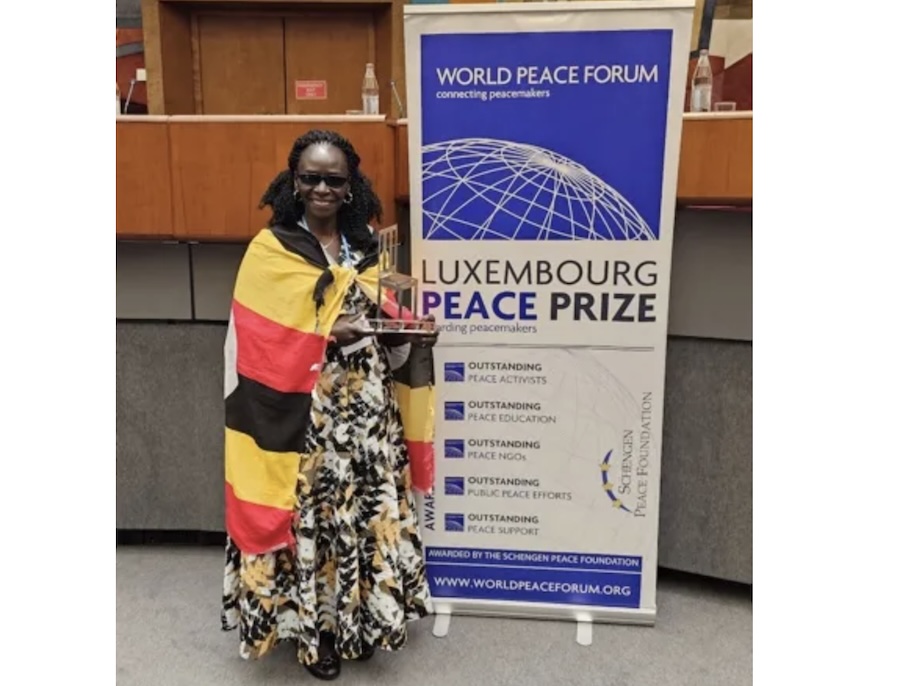
Han Kang, the first Korean to win the Nobel Prize in literature, has declined to hold a press conference, citing the global tragedies of the Ukraine-Russia war and the Israel-Palestine conflict.


Han Kang, the Korean recipient of 2024 Nobel Literature Prize.
The Atlantic

Her father, the renowned novelist Han Seung-won, 85, conveyed her message during a press conference at the Han Seung-won Literary School in Jangheung, South Jeolla Province.

“(Han Kang) told me, ‘With the war intensifying and people being carried out dead every day, how can we have a celebration or a press conference?’ She said she won’t hold a press conference,” he said.

After the Nobel Prize in literature was announced on Thursday evening, Han Seung-won spoke with his daughter and advised her to select a publishing house to hold a press conference.

Initially, she agreed, saying she would “give it a try,” but changed her mind overnight.

(Article continued in the column on the right)

Questions related to this article:

Where in the world can we find good leadership today?

(Article continued from the column on the left)

“Her perspective has shifted from being a writer living in Korea to a global (writer’s) consciousness. I, however, could not shake off the feeling of being the father of a prizewinner living in Korea, so I ended up arranging this press conference,” he said.

Han Kang also discouraged her father from holding a celebratory banquet at the literary school.

Her father said, “I was planning to throw a party here for the local people, but my daughter told me not to do it. She said, ‘Please don’t celebrate while witnessing these tragic events (referring to the two wars). The Swedish Academy didn’t give me this award for us to enjoy, but to stay more clear-headed.’ After hearing that, I was deeply troubled.”

After receiving news of her award in a phone call with the Nobel committee on Thursday, Han Kang expressed that she was “very surprised and honored,” but has not made any further statements.

Multiple publishing houses, including Changbi Publishers, which published her notable novels “Human Acts” (2014) and “The Vegetarian” (2007), and Munhakdongne Publishing, which published her poetry collection and novel “The Wind Is Blowing” (2010), had suggested holding a press conference, but as of Friday afternoon, she had not responded.

This article from the Hankook Ilbo, the sister publication of The Korea Times, is translated by a generative AI system and edited by The Korea Times.

(Thank you to Transcend Media Service for bringing us this news.)

– – – – – –

If you wish to make a comment on this article, you may write to coordinator@cpnn-world.org with the title “Comment on (name of article)” and we will put your comment on line. Because of the flood of spam, we have discontinued the direct application of comments.
Mexico: Libraries, key to building a peace-building citizenship

… EDUCATION FOR PEACE …

An article by Laura Lucía Romero Mireles in Gaceta UNAM (translation by CPNN)

For peace, the great challenge is to transform the current culture of violence into one of dialogue, understanding and solidarity, characterized by respect for life and the dignity of people, social harmony founded on the principles of freedom, justice, democracy and solidarity, and rejection of all forms of violence,. This is the conclusion of the first session of the VI Virtual Forum Agenda 2030, libraries as drivers of a peaceful and sustainable future.

The keynote address was delivered by Ana Dolores Barrero Tiscar, director of the Culture of Peace Foundation in Spain. She said that developing a culture of peace is the only way to address the complexity of current needs and insecurities. However, carrying out this transformation is not an easy task, because violence has existed since the beginning of humanity; it is learned, socially constructed throughout history.

In her address, she mentioned that the United Nations Agenda 2030, in its 17 sustainable development goals and its 169 targets – which aim to eradicate poverty, protect the planet and ensure peace and prosperity for all people – recognizes the transversal and multidimensional scope of the culture of peace.

At the opening ceremony, Verónica Elena Solares Rojas, deputy director of Education, Training and Updating for Sustainability of the University Coordination for Sustainability, representing Tamara Martínez Ruiz, secretary of Institutional Development, highlighted that libraries are key players in building an environmental, peace-building, informed and proactive citizenry, by providing access to scientific, humanistic, reliable and quality knowledge.

More and more higher education institutions and spaces for the dissemination of knowledge around the world are recognizing their central role in the transition towards sustainability, she added at the meeting held from September 25 to 27.

UNAM, in its Institutional Development Plan, proposes sustainability as a cross-cutting axis for its substantive tasks. “Education strategies cannot be carried out without the existing material resources that are in the library collections; thus, from the Coordination we seek to strengthen education for sustainability at all levels.”

(Article continued in right column)

(click here for the original version in Spanish).

Questions for this article:

Is there progress towards a culture of peace in Mexico?

(Article continued from left column)

Elsa Margarita Ramírez Leyva, general director of Libraries and Digital Information Services, described these facilities as living centers where learning, innovation, creativity, recreation, and enjoyment coexist, and which until now have been places of peace and harmony.

In this Directorate and the 140 libraries that make up the UNAM library and information system, she added, they have long been contributing to sustainable development through different actions. An example of this is that they all facilitate efficient and broad access to physical and digital collections, and open access resources, which also benefits other communities.

Rocío Cázares Aguilar, head of the Acquisitions Department of the National Library of Mexico, explained that for some years now this agency has had an annual program of donation of bibliographic materials to the Eastern Preventive Men’s Prison, and it has been very successful.

“We have received comments from inmates commenting on how their lives have changed by being sent stimulating materials of interest, of a legal or literary nature, which encourages us to continue sowing those seeds of peace among those citizens who also have the right to the information and recreation that libraries can offer.”

The coordinator of the Graduate Program in Library Science and Information Studies, Lina Escalona Ríos, commented that from the library education “we reflect on what we have done for the training of professionals, teachers and doctors, who must contribute to the achievement of the objectives of peace and sustainability.”

For his part, Gerardo Zavala Sánchez, coordinator of the College of Library Science and Archives, of the Faculty of Philosophy and Letters, stressed that the education of librarians in training is relevant at this historical moment, and it is necessary to have a comprehensive vision in the quality study plans and programs, where respect and harmony between society and the planet must be paramount.

Máximo Román Domínguez López, president of the National College of Librarians, highlighted the commitment to society to rebuild the social fabric with the active participation of librarians, and how libraries can be agents of peace in a country where violence prevails.

Finally, Daniel Jorge Sanabria Barrios, president of the National College of Librarians, highlighted the commitment to society to rebuild the social fabric with the active participation of librarians, and how libraries can be agents of peace in a country where violence prevails.

– – – – – –

If you wish to make a comment on this article, you may write to coordinator@cpnn-world.org with the title “Comment on (name of article)” and we will put your comment on line. Because of the flood of spam, we have discontinued the direct application of comments.
Mexico: Is peace possible or is it just an illusion?

… EDUCATION FOR PEACE …

An article by Luis Reyes from Universidad Iberoamericana (translation by CPNN)

The Department of Interdisciplinary Reflection of the Universidad Iberoamericana (IBERO) presented the book Reconciliation: A Possible Path to Peace, by Dr. Mónica Chávez Aviña, a work that addresses the context of violence that people, families and communities experience daily in Mexico. The book provides a reflective dialogue with different authors who have addressed the origin and the causes of the violence. causes of this scourge, where it began to develop and whether it is possible to eradicate it.


Photo: Luis Reyes

Is peace an illusion or a naive utopia? Is reconciliation and forgiveness possible? Is there hope or is everything already lost? These are questions that the text written by Dr. Chávez Aviña seeks to answer. The context is the wave of violence that looms daily in the country makes us look at the terror that has been experienced for a month in Culiacán or the recent execution of the mayor of Chilpancingo, Alejandro Arcos Catalán, at the hands of organized crime.

During the presentation held at the Martín Buber Auditorium of the IBERO, the moderator was Maestro (Mtro.) Alberto Segrera Tapia, who gave the floor to several personalities who were invited to make comments and reflections on the volume.

Maestro (Mtra.) Lucila Servitje Montull said that, as a response to violence, reconciliation is complex; it is a personal and social problem that originates from unjust structures and the serious lack of justice for reparation of damages.

“What Monica chooses is reconciliation as a response to violence (…) When violence is not recognized, one is complicit in injustice. Monica underlines that we can speak of a resentful memory, but also of a happy memory, which can recover the past, follow the present and glimpse into the future.”

(Article continued in right column)

(click here for the original version in Spanish).

Questions for this article:

Is there progress towards a culture of peace in Mexico?

(Article continued from left column)

Miguel Álvarez Gándara, National Human Rights Award 2017, pointed out that the logic that dominates today is that of force, where patriarchy, exploitation of resources, neoliberalism and dispossession are exercised with violence and who has to change this situation is the power, which is totally exhausted.

“The possibility of forgiveness is in reconciliation (…) Where we are capable of dialogue, we initiate processes of reconciliation. Dialogue has depth because it has to do with the causes, not only with the effects. Peace is a process that does not come from outside, it is built from within with local actors,” he said.

The Director of the Department of Interdisciplinary Reflection, Dr. Fernando de la Fuente S.J., reflected that there is no reconciliation without justice because it is evident that the person who commits harm must compensate for it. However, he pointed out that Dr. Chávez Aviña’s text rethinks this situation from different angles and provides an alternative for reconciliation.

“That is fundamental. If we do not believe this, we will not be able to move forward and open ourselves to hope. We must narrate from the truth so that we can empathize with the suffering of the victims, know the social causes that led to these unjust and violent acts so that they are not repeated. In some way this is present throughout the text,” he stressed.

Dr. Chávez Aviña, author of the book, explained that the text asked questions that challenge and try to give different answers so that whoever reads it can dialogue with different authors and propose reconciliation as a possible path to peace.

She pointed out that there are still many challenges to achieve this, such as caring for people in vulnerable situations and connecting with people, groups, foundations and educational centers to build a culture of peace, ensuring that people live with dignity and their human rights are respected.

“Reconciliation first implies moving from silence to words based on truth. We have to transmit hope to the next generations and create a culture of peace, where we can live with reconciliation, fraternity and solidarity. We must commit ourselves to creating new narratives of justice, of reconciliation to create bridges that make this horizon possible,” she noted.
– – – – – –

If you wish to make a comment on this article, you may write to coordinator@cpnn-world.org with the title “Comment on (name of article)” and we will put your comment on line. Because of the flood of spam, we have discontinued the direct application of comments.
Mexico: UABC advances in the culture of peace

… EDUCATION FOR PEACE …

An article from Lindero Norte Noticias (translation by CPNN)

The University Council of the Autonomous University of Baja California (UABC), the highest collegiate body representing the Cimarron community, approved the report on activities and the 2025 Work Plan of the Institutional Program for the Culture of Peace (PICP).

The report was presented by the coordinator of the unit for Gender, Diversity and Educational Inclusion (UGDIE), Yessica Martínez Soto, who highlighted that it reports on the actions carried out in five areas: educational inclusion; gender and violence; diversity and interculturality; mainstreaming of the culture of peace; and collaboration networks.

Among the activities presented by Dr. Martínez Soto is the formation of the LSM-UABC Commission made up of 16 people from the university community, who were in charge of interpreting the university motto in Mexican Sign Language (LSM).

Other notable actions include the publication, on November 25, 2023, of the “Declaration by which the Pronouncement of Zero Tolerance is issued for any situation or expression that violates the well-being and rights of people at UABC”; the ÚNETE and ORGULLODIVERSA UABC campaigns.

Discussions on university experiences were also organized, in which topics such as the inclusion of people with disabilities at UABC, women in academia, and the implications of trans identity in the classroom were addressed.

In addition, workshops, training sessions and discussions were held on topics such as inclusive language, autism, art and gender, prevention and eradication of violence, interculturality and higher education, suicide prevention, teaching, culture of peace and human rights.

In collaboration with BBVA and the Vice-Rectorate of the Tijuana Campus, the Job Fair for People with Disabilities was held. Likewise, work was done on training peace agents, through the integration of the Reading Circle for Peace.

(Article continued in right column)

(click here for the original version in Spanish).

Questions for this article:

Is there progress towards a culture of peace in Mexico?

(Article continued from left column)

Likewise, the project “Daily Steps for Peace” was implemented, through which, through a monthly digital calendar, each day an informative and dissemination resource is offered related to the main dimensions that contribute to the construction of a culture of peace, such as human rights, gender, diversity and inclusion.

The UGDIE coordinator explained that, among the actions scheduled in the PICP 2025 Work Plan, are the preparation of guides, decalogues and protocols that establish guidelines for inclusion from language, disabilities, for the construction of peace actions in university instances, attention to sex-gender diversity and harmonious coexistence.

The university violence meter will also be created, a program to prepare trainers in non-violent communication, a MOOC course on peace culture, a toolbox for self-care and personal peace, and a network of young people for peace.

Likewise, a university consultation will be held on violence and discrimination rates; the route for reissuing documents due to change of identity will be outlined, and a day of intercultural self-determination will be organized.

Modifications in the educational program and academic unit

Likewise, with the purpose of responding to the needs demanded by the global context, the University Council approved modifications of the educational program of the doctorate in Administrative Sciences.

Finally, at the request of the Technical Council of the Faculty of Sports, the Faculty was divided into three independent academic units, one for each campus. The split is based on the socioeconomic and cultural conditions and needs presented by the Faculty. In addition, it will contribute both to the efficient decentralization of the university’s resources and functions and to the promotion and development of the region.

– – – – – –

If you wish to make a comment on this article, you may write to coordinator@cpnn-world.org with the title “Comment on (name of article)” and we will put your comment on line. Because of the flood of spam, we have discontinued the direct application of comments.
Felipe Mac Gregor and the culture of peace

FREE FLOW OF INFORMATION .

An article by Rudecindo Vega Carreazo in Otramirada (translation by CPNN)

This October 2nd marks the 20th anniversary of the journey into eternity of RP Felipe Mac Gregor SJ, the former rector of the PUCP (Pontifical Catholic University of Peru) and the United Nations University, the creator of the concept “Culture of Peace”, universalized by UNESCO and enshrined in a Universal Declaration of the UN. It is a shame that in Peru this universally valuable achievement is little known and recognized. Hopefully it can be taken up and valued today in a crisis of violence, insecurity and crime. Hopefully the PUCP, which owes so much of its development and institutionalization to him, can promote a permanent project of this type.

I was a PUCP student when he was no longer Rector, but his image was of validity and admiration, distant and unattainable for a student from the barrios and small towns (in my case, Camporredondo). Thanks to my teacher Marcial Rubio Correa (former PUCP rector as well) I had the good fortune and honor of working with MacGregor for 12 years, first at the Peruvian Association of Peace Studies (APEP) and then at TRANSPARENCIA. I have hundreds of teachings, anecdotes, life lessons as simple as they are profound.

Thanks to his generosity and that of Marcial, I shared with them, at APEP, the central team of multidisciplinary research on “Structural violence in Peru” (for me they were a master’s degree and a doctorate without a degree together), “Violence in the Andean Region: Bolivia, Colombia, Peru and Venezuela” (another master’s degree and doctorate on Latin American reality) and; the investigation into drug trafficking and cocaine that developed proposals from Peru, Bolivia and Colombia that were presented at the summit of Presidents Barco, Alan García and Paz Zamora with Bush Sr. in 1990 (another specialized master’s degree).

Between 1988 and 1992 I learned about another of MacGregor’s concerns, little developed, the concept of “Human Security.” He said, always ahead of time, that it was one of the great problems that the world would face in the coming decades. Imagine how valuable his advice would be in times like the present where insecurity, violence and crime reign everywhere. Father Felipe moved with incredible ease in that world of influencing decision-making for worthy causes. I was very happy, running from my house in SMP to the PUCP in Pueblo Libre, then to the Colegio Inmaculada in Surco (where he was also Rector and resided) and the Universidad del Pacífico in Jesús María where he presided over the Institute for Peace.

In TRANSPARENCIA he was equally valuable and wonderful. I got to know his love for Peru and the future of Peru, his vocation for human rights and democracy. To take advantage of his prestige, he was invited by Fujimori to create and preside over the High Commissioner for Human Rights, but he rejected it in front of the ministers and presidents of the PJ (judiciary) and MP, pointing out that those functions were already in those constitutional bodies.

(Article continued in the column on the right)

(Click here for the original Spanish version of the article)

Questions related to this article:

How can we carry forward the work of the great peace and justice activists who went before us?

(Article continued from the column on the left)

I also remember, because I accompanied him to an event organized by the JNE (National Elections Jury) controlled by Fujimori in 1999, in which the central speaker and honoree was him as a member of TRANSPARENCIA. Before the full JNE, politicians, judicial authorities, prosecutors, congressmen and the executive, his conference focused on the autonomy and independence of the JNE, the role of the rule of law and the defense of democracy and why electoral power could not be manipulated by the government. superb master class, I was an eyewitness, we left together, this time alone, without company protocol, he leaning on my arm, in the elevator with a sweet, half-broken voice he said to me “Was I right? I had to tell them what Peru deserves, but let’s get out quickly, otherwise they will only understand and not let us leave.” In TRANSPARENCIA he was a voice that gave institutional personality, how necessary his knowledge and voice would be for our Peru today, which suffers its worst moral, institutional, political, electoral crisis. Many times I comfort myself with his teachings and anecdotes.

One time he asked me what my promotion was at the Colegio Inmaculada, I told him I had studied at the GUE Nicolas de Piérola in El Agustino, that my primary school I studied at the School Center N°131 of Chachapoyas and that I was from Camporredondo; Without being surprised, with a naturalness that reached my bones, he told me “that is why we understand each other, that is why we get along so well, you are a Jesuit without being a Jesuit and I am a civilian being a Jesuit.” I admired him more, much more. He asked me again, why was I an atheist or perhaps agnostic? I told him that I was not an atheist, nor an agnostic nor a nihilist, that I was just a young man confused about his beliefs and that I had not yet found my way. Again, without any gestures of surprise, he told me that he “was also a confused priest and continued to search for his way”; and, quoting Machado, he told me “each of us will make our own way as we go.” He was a sublime teacher, a priest teaching a disciple to find his own way, not to follow his own.

I did not see him much during the last years of his life, but we were aware of each other. His death did not surprise me, but it did surprise me; At his wake, in his church, Our Lady of Fatima, without realizing it, but with much peace and security, after many years, I prayed again, for the joy of having known him, for his earthly life, for his eternal life. Today I continue to do so, sporadically it is true, and his image and name always come to my mind. He will continue to build his path in eternity, while I continue trying to build my earthly path, knowing that “that is why we understand each other, that is why we get along so well.” Glory to you, Father Felipe Emilio Mac Gregor Rolino S.J.; in my memory and heart always.

(Editor’s note: As described here Felipe MacGregor launched the initiative for a culture of peace at UNESCO.)

– – – – – –

If you wish to make a comment on this article, you may write to coordinator@cpnn-world.org with the title “Comment on (name of article)” and we will put your comment on line. Because of the flood of spam, we have discontinued the direct application of comments.
Coop-medias, the citizen cooperative that wants to give “a real breath of fresh air” to independent media

FREE FLOW OF INFORMATION . .

An article by Mathilde Picard in Verts (translation by CPNN)

Coop a festive atmosphere. On Wednesday, October 9, the world of the Social and Solidarity Economy (SSE) and that of independent media met at the Académie du Climat in Paris to launch the Coop-medias cooperative. The goal: to consolidate the finances of the independents and strengthen the links between them in the face of the concentration of the press in the hands of a few billionaires.


Public radio broadcast on the occasion of the launch evening of the Coop-medias cooperative, at the Académie du Climat in Paris. © Margot Desmons/Vert

“Coop-medias creates a bridge between two worlds that did not speak to each other: that of the social and solidarity economy and that of independent media,” according to Mathieu Molard, editor-in-chief of Streetpress.

On Wednesday, October 9, the launch of this cooperative was a sell-out at the Climate Academy in Paris. The platform dedicated to financing independent media is now accessible to citizens so that they can take shares starting at €100. The goal? “To raise €500,000 in three months,” hopes Lucie Anizon, CEO of Coop-medias and Secretary General of the renewable energy cooperative Enercoop.

Politis, Vert, Blast, Médiacités, Les Jours…. Already 22 media and around ten companies from the Social and Solidarity Economy (SSE) have become members. Thanks to this fundraising, it will be possible to distribute initial financial aid in 2025 in the form of a call for projects.

To present how the cooperative works, journalists, members of the SSE and civil society took the microphone. The evening was broadcast as a public radio show, on the website of the cooperative media “Le moment”, in the form of a round tables to imagine a new economic model for independent media.

The general director of Coop-médias, Lucie Anizon, explained to Vert the origin of the project: “I was surprised that no independent media had said: let’s raise capital funds and pool our resources. They told us that they didn’t have the time, the energy or the know-how, so we did it with them by bringing our know-how from the SSE.”

“Taking information out of market logic”

In the room, everyone shared the observation of a critical weakening of media plurality. 81% of press sales are now held by eleven billionaires, according to the video launching the platform. Faced with this, Julia Cagé, an economist specializing in media, encourages us to “take information, which is a public good, out of the logic of the market and shareholders”.

At Coop-médias, there are no paid shareholders, and the governance for allocating funding is based on the model of one member = one vote. The result: “a real breath of fresh air” so as not to depend solely on calls for donations and “no longer be on life support”, says Paloma Moritz, a journalist at Blast.

The forum discussed the need to strengthen the finances and visibility of independent media, an advertising agency for the SSE, the presence of independents on TNT channels and the role of social networks in the dissemination of their content.

(continued on right column)

(Click here for the French original of this article.)

Questions related to this article:

Free flow of information, How is it important for a culture of peace?

How can we develop the institutional framework for a culture of peace?


Robin Saxod, co-founder of Coop-medias and Lucie Anizon, CEO of Coop-medias. © Mathilde Picard/Vert

(continued from left column)

Strengthening ties to fight against the far right

This rapprochement between independent media comes from the rallies against the far right, organized on June 27 and July 3 at Place de la République in Paris, on the occasion of the legislative elections (see our report). The cooperative is therefore “nonpartisan but deeply political,” says Robin Saxod, co-founder of Coop-médias.

Throughout the evening, the speakers encouraged us to continue the fight against the increasingly numerous reactionary speeches in the media bought by billionaires Vincent Bolloré and Pierre-Edouard Stérin. Speakers called for stopping the criminalization of political and social protests and for fighting against disinformation on climate change and feminism.

To strengthen the resources of journalists, Coop-médias proposes to pool certain services such as accounting, website management and legal aid… A welcome idea for Eloïse Lebourg, co-founder of Médiacoop, a local media outlet based in Clermont-Ferrand: “When I was threatened by fascist groups after investigating them, I was very happy to have someone who knew a lawyer. When you investigate the far right in a medium-sized town, you are more easily spotted, you sometimes feel isolated.” For her, Coop-médias must be an opportunity to “get out of the pattern of very Parisian independent media, there are independent structures everywhere in France, I would like us to have more visibility and to cooperate more.”

At the end of the evening, conversations continued around the buffet. Yan Pierre le Luyer, co-founder of Grow Studio, which produces podcasts, decided to take a share in the cooperative as he explains, to “rebalance the discourse in the media and therefore equip ourselves with the same means as our opponents”. The radio show will be broadcast on Aligre FM (93.1) and Radio Campus Paris (93.9) next Wednesday.

Vert has become a member of Coop-médias to help strengthen the ecosystem of independent media.

(Editor’s note: CPNN took part in this event and has also become a member of Coop-médias, for the same reason.)

– – –

If you wish to make a comment on this article, you may write to coordinator@cpnn-world.org with the title “Comment on (name of article)” and we will put your comment on line. Because of the flood of spam, we have discontinued the direct application of comments.

Start of the 3rd World March for Peace and Nonviolence: A global call for unity

FREE FLOW OF INFORMATION

An article from Pressenza

On October 2, Gandhi’s birthday, the 3rd World March for Peace and Nonviolence started in Costa Rica, an initiative launched by the organization “World Without Wars and Violence”. The march began in a country that has been committed to peace since 1948 The opening ceremony took place at the University for Peace (UPAZ), the only institution of its kind in the world. Founded in 1980 by United Nations General Assembly Resolution 35/55, it is dedicated to training students from over 120 nations to create a peaceful future.


Photo by Energia per i diritti umani

Francisco Rojas Aravena, the rector of the UPAZ, opened the event and emphasized the transformative power of education in building peace. Giovanny Blanco, coordinator of the “World Without Wars and Violence” in Costa Rica, expressed his pride that Costa Rica was chosen as the venue for the start and finish of the 3rd World March. He called for unity to create a new era of peace through active nonviolence.

Federico Monge, representative of the Office of the Ombudsman, also spoke and emphasized that peace is a universal right that belongs to all people. Raquel Zeledón Sánchez, Vice President for Student Life at the Universidad Estatal a Distancia (UNED), emphasized the role of education and women in promoting peace and developing communities.

(Article continued in right column)

(Click here for a version in Spanish of this article or here for a version in French.)

Question(s) related to this article:

Latin America, has it taken the lead in the struggle for a culture of peace?

The World March for Peace and Nonviolence: What is its history and its effects?

(Article continued from left column)

Rafael de la Rubia, initiator of the World March for Peace and Nonviolence, called on those present to dedicate themselves to personal and social growth. He called on everyone “to contribute something inspiring to this joint effort that the World March represents”. The speeches concluded with a collective reading of the ethical commitment to not use knowledge against humanity, led by Vanessa Vaglio of “World Without Wars and Violence” (MSGSV).

The ceremony ended with a symbolic act in which the members of the grassroots team from Costa Rica, Chile, Ecuador, Guadeloupe, Honduras, Italy, Poland, Germany and Suriname, together with representatives of the authorities, students and teachers, formed a large peace symbol by holding signs with the word “peace” in different languages.

The event was accompanied by a rousing cultural performance involving the Duo Contrapunto (Alejandra Espinoza and Gerardo Cascante), the rhythm group of the Liceo Diurno from Ciudad Colón, and children from the Quizarco School, who performed dances from the Huetar de Quitirrisí indigenous community. This celebration marked the beginning of a global day of action dedicated to the promotion of peace and nonviolence, issues of vital importance in today’s world.

After the opening ceremony, the march continued from the university to the Escuela del Rodeo, where children with small Costa Rican flags welcomed the World March. A caravan of buses and vehicles then led the march to the center of the capital, San José. There, the city’s mayor, Yariela Quirós, and local government representatives joined the march, which finally led to the Costa Rican parliament. At the Parliament, the deputies presented Rafael de la Rubia with a motion in support of the 3rd World March for Peace and Nonviolence.

Finally, a collection of signatures was launched for a declaration of support from the entire population of Costa Rica, with the female parliamentarians* being the first signatories.

The event ended with a symbolic tribute to the Costa Rican Declaration of Peace to All the Peoples of the World and the Abolition of the Army. This took place in the Plaza de la Abolición Militar (Military Abolition Plaza), located next to the Costa Rican Parliament building.

– – – – – –

If you wish to make a comment on this article, you may write to coordinator@cpnn-world.org with the title “Comment on (name of article)” and we will put your comment on line. Because of the flood of spam, we have discontinued the direct application of comments.