Category Archives: TOLERANCE & SOLIDARITY

United Nations Online Volunteering – an excellent service for NGOs, government entities and others

TOLERANCE AND SOLIDARITY .

From Gert Ceville-Danielsen, UNV Portfolio Manager, Latin America and the Caribbean Development Programming Section

Dear CPNN,

I know you have a tremendous international network of peace educators, NGOs, CBOs and other organisations, and I thought our Online Volunteering service could be very useful for many of them .

Best regards,
Gert

unv
Image from video about UN Online Volunteering

1. FOR INDIVIDUALS

The United Nations Volunteers (UNV) programme is the UN organization that promotes volunteerism to support peace and development worldwide. Volunteerism can transform the pace and nature of development, and it benefits both society at large and the individual volunteer. UNV contributes to peace and development by advocating for volunteerism globally, encouraging partners to integrate volunteerism into development programming, and mobilizing volunteers.

For information on how to become an online volunteer please visit https://onlinevolunteering.org/en/vol/faq.html. The UNV Online Volunteering service connects volunteers and development organizations to collaborate online for peace and development. On this dedicated website, development organizations post their online volunteering opportunities. Interested individuals identify opportunities that match their interests, expertise, and skills, and submit their applications directly to the organizations, which select the volunteers they would like to engage in their activities.

Please contact info@onlinevolunteering.org for any questions you may have about online volunteering.

(Click here for a version of this article in Spanish)

(Article continued in right column)


(Article continued from left column)

2. FOR ENTITIES, NGOS, CBOS, UN AGENCIES, GOVERNMENTAL INSTITUTIONS AND OTHER ORGANISATIONS

The United Nations Volunteers (UNV) programme is the UN organization that promotes volunteerism to support peace and development worldwide. Volunteerism can transform the pace and nature of development, and it benefits both society at large and the individual volunteer. UNV contributes to peace and development by advocating for volunteerism globally, encouraging partners to integrate volunteerism into development programming, and mobilizing volunteers.

The UNV Online Volunteering service (www.onlinevolunteering.org) is a free service that puts volunteers into contact with organizations worldwide to work together for peace and development – over the Internet.

Online volunteers can support your activities in many ways. They can research information, design websites, translate publications, provide expert advice, and much more. For an impression of the diversity of volunteer opportunities organizations can publish, you may wish to visit the opportunity database at http://www.onlinevolunteering.org/en/org/opportunity_search/
Or explore the Stories section to read about the substantive contributions online volunteers have been making to the projects of development organizations across the globe.

This is how it works:

1. Register your organization on www.onlinevolunteering.org
2. Post a volunteer opportunity
3. Receive applications from online volunteers 
4. Select the volunteers with whom you would like to collaborate 
5. Start the online collaboration

We encourage you to visit the Resources section of the Online Volunteering service website for more information on how online volunteering works.

If you have any questions, please do not hesitate to contact info@onlinevolunteering.org

We look forward to hearing from you and to receiving your organization’s application for registration.

Beating the drum for peace: A chat with the general secretary of the South Sudan Council of Churches

TOLERANCE AND SOLIDARITY .

An article by Claus Grue, World Council of Churches

“Securing peace for South Sudan”. That is how Fr James Oyet Latansio describes today’s main challenge for the South Sudan Council of Churches. Since he was appointed general secretary six months ago, he has been on a tireless journey, beating the drum for peace throughout his war-torn country.

sudan

“It is important to reach out to people on both a grassroots and elite level”, he explains.

Together with local churches around the country, he has gathered people from different tribes and literally beaten the drum.

“When they hear a drumbeat people come and listen. Our message of peace and reconciliation must be heard everywhere, so that we all can work together to implement the peace agreement signed in July. We must plan for peace and focus on building a future for our young country. We must look forward”, concludes Fr James.

He likens the fragile situation in his country to a house which he calls the “House of South Sudan, where the foundation is our faith in God”, the walls are the injuries and pains that his people have endured, while the ceiling resembles repentance and forgiveness.

“That’s where we are right now,” he says, ”working on the ceiling by beating the drum for peace, not only in villages all over the country, but also in front of the elite. It is crucial that the churches and their voices for peace and reconciliation are heard everywhere and at every level in society.”

The roof will be put in place when reconciliation starts taking place. He envisions a time when a man from one tribe can marry a girl from another tribe, despite earlier atrocities. “My hope will never dilute me. We must look forward and nurture a culture of peace rather than a culture of war”, he says. He counts on the World Council of Churches and its member churches as facilitators of the peace process.

“The churches should always be in the frontline”, Fr James emphasizes.

The SSCC is headquartered in Juba and represents 7 member churches spread out over South Sudan:

Episcopal Church of South Sudan

Catholic Church in Republic of South Sudan

SSPEC South Sudan Presbyterian Evangelical Church

PCOS Presbyterian Church of South Sudan

Africa Inland Church

Sudan Pentecostal Church

Sudan Interior Church

Question related to this article:


How can different faiths work together for understanding and harmony?

Can peace be achieved in South Sudan?

This discussion question applies to the following articles:

Creating Harmony in the World: Working through Our Faiths in Dialogue
Alternate Focus: Balance in Media Coverage in Middle East
The Parliament of the World's Religions (Barcelona, Spain)
Asian Religious Leaders Urge Religions To Teach Peace
Living Faiths Together – Tool kit on inter-religious dialogue in youth work
Sharing the right to Jerusalem's past
The Doha Pre-Forum of the United Nations Alliance of Civilizations
Peace For Childrens in Primary Schools in Iraq
Dialogue in Nigeria — a new DVD teaching-tool for peacemakers
4th Annual International Conference on Religion, Conflict and Peace
First Religious Youth Service Project in Pakistan
World Harmony Day at the UN Highlights the Culture of Peace
Report of Diversity Talk Series 2013, in Lahore, Pakistan
Journée d'étude à Tunis: Religions et cultures au service de la paix
Workshop in Tunis: Religions and cultures in the service of peace
Out of the spotlight, Moroccan Islamic party promotes interfaith dialogue
Muslim and Christian youth come together in Mombasa, Kenya
Greeting of Peace from United Social Welfare Society, Pakistan
Interfaith Cultural Study Tour to Nepal: Pakistan Youth Explore the Mysteries of Nepal
One Nation, One Blood (Pakistan)
Teachings of Peace
Overview of the Book, Paganism an Introduction to Earth-Centered Religions
La líder de un movimiento interreligioso Dena Merriam recibirá el 31 Niwano Peace Prize
Dena Merriam, Founder and leader of The Global Peace Initiative of Women to receive the Niwano Peace Prize
Pakistan: Scholars adopt charter of peace, support coexistence
Lebanese dialogue aims to strengthen unity in diversity
Un an du “Projet Revalorisation du Vivre Ensemble – REVE” au Niger
A Year-long Project for “Living Together – REVE” in Niger
Beating the drum for peace: A chat with the general secretary of the South Sudan Council of Churches

Greenpeace honouring courage and compassion: Peace Day 2015

TOLERANCE AND SOLIDARITY .

An article by Dr Kumi Naidoo, Executive Director of Greenpeace International

I was 22 years old when I had to leave my homeland, South Africa. I had no choice. I was living underground for a year by then, to avoid being arrested. This was 1987, in the midst of one of the most bloody and violent periods in the history of Apartheid South Africa. The green peaceful streets of Oxford, where I was lucky enough to end up, seemed like a cartoon to me. They seemed unreal, while the violence I left behind felt very real and near. I stayed awake at night thinking of friends and relatives left behind.

greenpeace

I remember these feelings now every time I look at the heartbreaking images of people fleeing devastation – whether floods in Bangladesh or war in Syria. The images of desperate parents holding on to their children, trying to get them through barbed wired fences, or off small inflatable boats. I see them and I think about my own daughter. How would I feel if I was one of these parents? When I fled, I had only myself to care for.

‘No one leaves home’ writes Kenyan born Somali poet Warsan Shire, ‘unless home is the mouth of a shark’. ‘No one puts their children in a boat unless the water is safer than the land’.

21st September marks the International Day of Peace. And this year, again, there is not much peace around to celebrate.

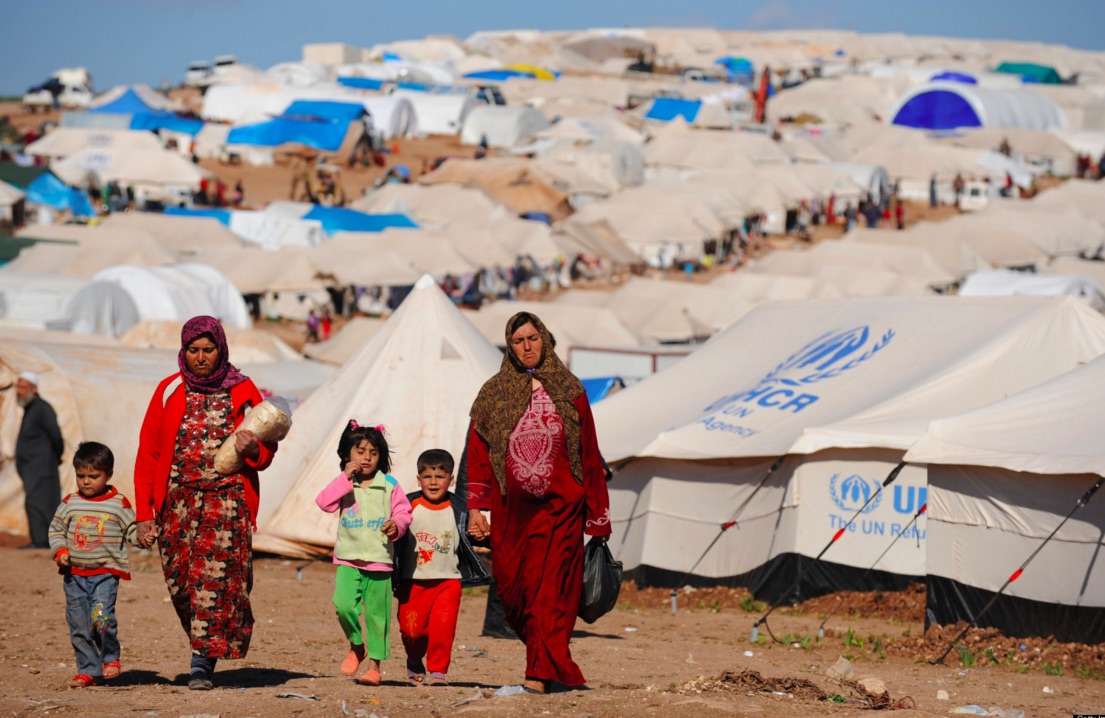
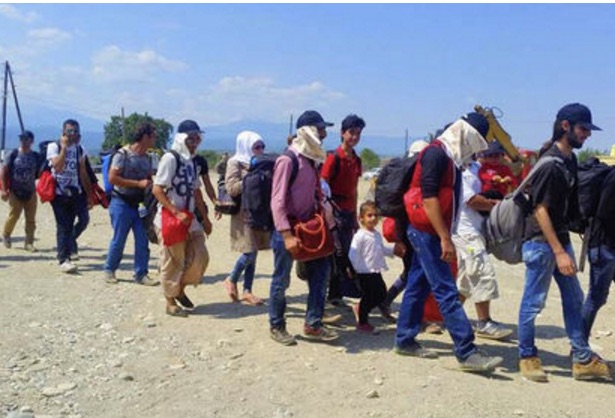
In Syria alone – according to some estimates one of two Syrians has died or fled home since the war began. According to the UN 7.6 million are internally displaced. 4.1 million refugees are abroad. Most of them in countries surrounding Syria. Some are turning to Europe as a safe haven.

(article continued on the right side of the page)

Question for this article

The refugee crisis, Who is responsible?

Readers’ comments are invited on this question and article. See below for comments box.

(article continued from the left side of the page)

There are times when drawing borders between countries, people, between politics and the environment must stop. There comes a time when all that matters is humanity and solidarity. This is such a time. The acts of courage and compassion shown by so many individuals and communities across Europe I find deeply inspiring.

Many of my colleagues in Greenpeace are also trying to reach out and support refugees. In Hungary and Croatia, volunteers have joined the humanitarian effort, including practical things like setting up a solar charging station in hot spots so that people can recharge their phones and access WiFi. In Greece, our office is in close contact with international relief NGOs ​to support their efforts ​and is working with local groups to collect and send relief packages to the Islands where many refugees are stranded.

I want to personally thank all who are reaching out to help. In this moving ocean of solidarity, every drop matters. We must all join together and say loud and clear: #Refugeeswelcome!

Tomorrow I travel to New York to attend the UN Summit on Sustainable Development Goals. My trip will be an easy one, but I will remember those times when my journeys, too, were journeys of fear. I will think of those facing days, months and years of relentless, life threatening journeys, with no guaranteed safety at the end of the road.

As fellow human beings we owe it to them to raise our voices, to stand in solidarity and to address the root causes of global insecurity. We need to insist on finding real solutions – including getting off fossil fuels. Conflicts are always complex. But looking at current conflicts from Iraq, Ukraine, Sudan, the South China Sea to Nigeria it is clear that the access, the transport and thus the dependence on fossil fuels do play a role.

“Resource wars” are not new. But today we can overcome them. In New York, I will argue for a world powered by 100% renewables for all by 2050. This world is in our grasp, our latest Energy Revolution scenario shows that without doubt. It is also the world we must choose if we want peace. Wind turbines, photovoltaic systems, insulation materials or double glazed windows are the “weapons” we must deploy to help create a safer world.

I was lucky enough to see Apartheid ended by people power and international solidarity a few years after I was forced to leave South Africa. Apartheid was abolished, and I am now free to return. Will those displaced now ever have that privilege? I do not know. But we must work for the peaceful, safe world for all, that would make this possible.

2015 MacBride Prize to Lampedusa (Italy) and Gangjeon Village, Jeju Island (S. Korea)

TOLERANCE AND SOLIDARITY .

A press release by The International Peace Bureau

The International Peace Bureau is delighted to announce its decision to award the annual Sean MacBride Peace Prize to two island communities who, in different circumstances, show proof of a profound commitment to peace and social justice.

ipb prize

LAMPEDUSA is a small island in the Mediterranean and is the southernmost part of Italy. Being the closest part of the territory to the African coastline, it has been since the early 2000s a primary European entry point for migrants and refugees. The numbers of persons arriving has been rapidly increasing, with hundreds of thousands at risk while travelling, and over 1900 deaths in 2015 alone.

The people of the island of Lampedusa have given the world an extraordinary example of human solidarity, offering clothing, shelter and food to those who have arrived, in distress, on their shores. The response of the Lampedusans stands out in stark contrast to the behaviour and official policies of the European Union, apparently intent only on reinforcing their borders in the attempt to keep these migrants out. This ‘Fortress Europe’ policy is becoming more and more militarised.

Aware of its multi‐layered culture, which epitomizes the evolution of the Mediterranean region where over the centuries different civilizations have blended and built on each others’ developments, with mutual enrichment, the island of Lampedusa also shows the world that a culture of hospitality and respect for human dignity are the most effective antidotes to nationalism and religious fundamentalism.

To give but one example of the heroic actions of the people of Lampedusa, let us recall the events of the night of 7‐8 May 2011. A boat full of migrants crashed into a rocky outcrop, not far from the shore. Although it was in the middle of the night, the inhabitants of Lampedusa turned out in their hundreds to form a human chain between the shipwreck and the coast. That night alone more than 500 people, including many children, were carried to safety.

At the same time the people of the island are very clear that the problem is a European one, not theirs alone. In November 2012, Mayor Nicolini sent an urgent appeal to Europe’s leaders. She expressed her outrage that the European Union, which had just received the Nobel Peace Prize, was ignoring the tragedies occurring on its Mediterranean borders.

The IPB believes that the dramatic situation in the Mediterranean – constantly visible in the mass media ‐ must be at the top of Europe’s urgent priorities. Much of the problem springs from social injustices and inequalities resulting in conflicts in which the West has – over centuries ‐‐ played an aggressive role. We recognise that there are no easy solutions, but as a guiding principle, Europe should be honouring the ideals of human solidarity, over and above the cynical considerations of governments and profit/power/resource‐seeking entities. When Europe contributes to the ruining of the livelihoods of people, as for instance in Iraq and Libya, Europe will have to find ways to help rebuild those livelihoods. It should be below the dignity of Europe to spend billions on military interventions, and yet not to have the resources available to meet the basic needs. The most vital question is how to develop cooperation between people of goodwill on both sides of the Mediterranean in a long‐term, constructive, gender‐sensitive and sustainable process.

(article continued on the right side of the page)

Question for this article

The refugee crisis, Who is responsible?

Readers’ comments are invited on this question and article. See below for comments box.

(article continued from the left side of the page)

GANGJEON VILLAGE is the site of the controversial 50‐hectare Jeju Naval Base being constructed by the South Korean government on the southern coast of Jeju Island, at a projected cost of nearly $1 billion. The waters around the island are protected by international law as they are within a UNESCO Biosphere Reserve (in October 2010, nine geological sites on on the island were recognised as Global Geoparks by the UNESCO Global Geoparks Network). Even so, the construction of the base continues, although building work has been halted many times by mass protests of people concerned about the base’s environmental impact. These people see the base as a US‐driven project aimed at containing China, rather than enhancing South Korean security In July 2012, the South Korean Supreme Court upheld the base’s construction. It is expected to host up to 24 US and allied military vessels, including 2 Aegis destroyers and 6 nuclear submarines, plus occasional civilian cruise ships on completion (now scheduled for 2016).

Jeju Island has been dedicated to peace ever since around 30,000 were massacred there from 1948‐54, following a peasant uprising against US occupation. The South Korean government apologized for the massacre in 2006 and the late President Roh Moo Hyun officially named Jeju an “Island of World Peace”. This violent history helps to explain why the people of Gangjeon Village (population 2000) have been protesting non‐violently for around 8 years against the naval base project. According to Medea Benjamin of Code Pink, “About 700 people have been arrested and charged with hefty fines that amount to over $400,000, fines that they cannot or will not pay. Many have spent days or weeks or months in jail, including a well‐known film critic Yoon Mo Yong who spent 550 days in prison after committing multiple acts of civil disobedience.” The energy and commitment shown by the villagers has attracted the support (and participation) of activists from around the world. We endorse the construction of a permanent Peace Center on the site which can act as a focus for activities reflecting alternative views to those represented by the militarists.

IPB makes the award in order to increase the visibility of this exemplary non‐violent
struggle at a crucial time. It takes great courage to physically oppose the government’s growing aggressive and militaristic policies, especially as they are backed by, and at the service of, the Pentagon. It takes even more courage to maintain that struggle over a period of many years.

CONCLUSION
There is an important connection between the two situations. Not only do we recognise the common humanity of those who resist without weapons the forces of domination in their own island. We make the argument that public resources should not be spent on massive military installations that only increase the tension between nations in the region; rather they should be devoted to meeting human need. If we continue devoting the world’s resources to military rather than humanistic purposes, it is inevitable that we will continue to witness these inhuman situations with desperate people, refugees and migrants, at risk while crossing the seas and at the prey of unscrupulous gangs. Thus we repeat also in this context the basic message of IPB’s Global Campaign on Military Spending: Move the Money!

Youth Congress of Esperanto held in Germany

TOLERANCE AND SOLIDARITY .

Special to CPNN by Klara Ertl

From the 2d to 9th of August 2015, the 71st International Youth Congress of Esperanto (a.k.a. “Internacia Junulara Kongreso” or IJK) took place in the city of Wiesbaden, Germany. There were 300 participants from 35 countries, mainly young adults but also children, teenagers and older adults. They all had one common language: Esperanto.

esperanto

Esperanto was initiated as an international bridge language with no country to be attached to, simple and easy to learn, and fair to everyone. Its initiator, L. L. Zamenhof from Poland, grew up in a country torn by cultural conflicts. The idea of peace was his chief motivation to dedicate all his efforts to this ambitious project, and peace still lies at the core of the Esperanto movement worldwide.

During one week, in and around the youth hostel of Wiesbaden, participants gave presentations and courses on various subjects, played music, sports and games, danced, talked, joked, debated and organized, bought and sold Esperanto books, magazines and music. They shared their knowledge, their skills and above all, their friendship. Young or old, poor or rich, and no matter which of the five continents they were from and how proficient they were at Esperanto – everyone was given a chance to express themselves, and listened to. Equality was also explicitly promoted: For example, some of the participants made an ongoing initiative to inform about and promote acceptance for transgenderism. There is a growing tendency among Esperanto speakers to add a new, gender-neutral pronoun (“ri”) to the traditional pronouns for male (“li”) and female (“ŝi”).

In 1985, at its General Conference in Sofia, UNESCO acknowledged the results obtained by the use of Esperanto in mutual understanding between peoples, and its potential for contributing to it in the future. It also invited all its Member States to introduce the study of Esperanto in schools and institutions of higher education. Though this is rarely done, it can easily be learned by informal means, especially through the Internet.

The next IJK will take place next summer in Wroclaw, Poland. But Esperanto meetings take place all year, and no matter where in the world, they create a space for cultural exchange, openness, and equality.

—-

Some links:

Homepage of TEJO (Worldwide Esperanto Youth Organization), which organizes this congress: www.tejo.org

Information about Esperanto: www.esperanto.net

Learning Esperanto: www.lernu.net

Main Esperanto Facebook group: www.facebook.com/groups/esperanto.grupo/

Question for this article

National anti-AIDS campaign: Stepping up the pace in Bulgaria

TOLERANCE AND SOLIDARITY .

by Dr. Diana Tashkova

In Bulgaria, 126 new cases of HIV were diagnosed during a period of 6 months. Overall, people infected with HIV in the country are officially 2169. Importantly, over 53% of the newly registered HIV-positive persons were found in cabinets and mobile clinics that offer free and anonymous testing and counseling.

HIV

In this regard, for the twelfth consecutive time the “Prevention and Control of HIV / AIDS Programme” in collaboration with the Ministry of Health organized the national summer campaign. The testing is voluntary and anonymous, which motivates a lot of people to check their status easily and anonymously.

The initiative started on 3th of August and will last until 13th of September. Many medical centers are available to provide free counseling and testing for AIDS. Regional health inspectorates and NGOs throughout the country are involved. In addition, the initiative provides counseling for sexually safe behaviors in order to avoid sexually transmitted infections among Bulgarians and guests of the country.

The medical centers are precisely selected to be in locations with increased tourist flow as seaside resorts, swimming pools and shopping centers and main streets in large and smaller settlements as well as in Roma neighborhoods. From August 3 until August 28, 2015, over 2000 people have so far been tested for AIDS.

HIV testing is offered by medical consultants at the Black Sea, near the pools and water parks in central areas and in the laboratories.

Furthermore, in the spirit of the event for two weeks in the capital, Sofia is hosting the photographic exhibition “Fieldwork teams of Bulgarian non-governmental organizations working on HIV / AIDS among vulnerable groups”.

Traditionally, the purpose of the summer AIDS Campaign is to raise awareness of responsible sexual behavior, condom use and the importance for each person to know the current HIV status as care for his/her own health and the health of the partner.

Question for article

Solidarity with HIV-AIDS patients, Is it progressing?

Amman, Jordan: #youth4peace – Redefining Youth as Peacebuilders

TOLERANCE AND SOLIDARITY .

An article from Peace Is Sexy

There is a widespread perception that youth are trouble makers. Economists believe a large youth population to be problematic for a country. Police forces (notably in the US) distrust youth and often target youth. Youth are considered to be particularly susceptible to violent extremism. And even governments consider youth as too young and inexperienced to have any kind of value added in political participation.

amman
video of Global Forum

But there is a movement that is gaining traction to cast youth not as trouble makers, but as peace makers. And there is evidence to back it up. According to the 2015 Global Peace Index, “Poverty and youth bulges are typically considered risk factors for urban violence. However these factors were found not to be statistically significant in this study.”

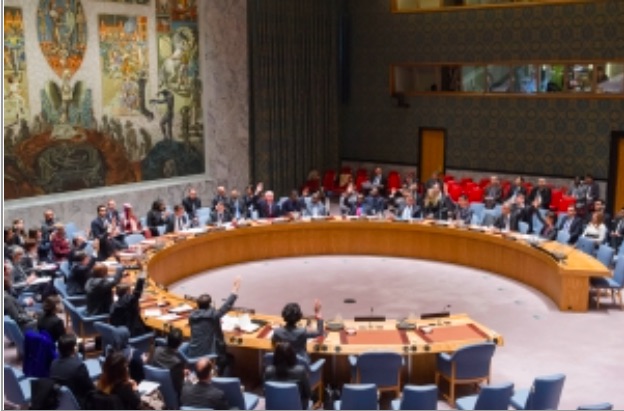
Indeed, the Global Forum on Youth, Peace and Security which occurred on August 21 and 22 in Amman, Jordan was a watershed moment for shining light on how youth contribute to peace. The forum comes on the heels of Jordanian Crown Prince al Hussein bin Abdullah II, at the age of 20, being the youngest person to chair a UN Security Council meeting. Appropriately, the April 2015 session focused on discussing youth participation in peacebuilding and countering violent extremism.

The high point of the Global Forum was the adoption of the Amman Declaration which begins with the following:

We, young people from around the world, gathered here in Amman, Jordan on 21-22 August 2015 at the Global Forum on Youth, Peace and Security, express our commitment to live in a peaceful global society. Today, with more young people than ever globally, it is a demographic imperative to include us in working to achieve stability and security. […]

With this Declaration, we present a common vision and roadmap towards a strengthened policy framework to support us in transforming conflict, preventing and countering violence and building sustainable peace.

(article continued in right column)

Question for this article

Is there a renewed movement of solidarity by the new generation?

(article continued from left column)

This Declaration was developed by youth and is the outcome of an extensive consultation process with young people from all over the world to ensure an inclusive and integrated approach.

The Amman Declaration then builds upon existing frameworks including the UN Sustainable Development Goals and the Guiding Principles on Young People’s Participation in Peacebuilding. It goes on to list four key pillars for implementation and list specific action items under each one:

– Youth Participation and Leadership in Issues of Peace and Security

– Youth Preventing Violence and Building Peace

– Gender Equality

– Young People’s Socio-Economic Empowerment

While the Global Forum is a highly visible event, it barely encapsulates the decades of work that the conference’s organizers, Search for Common Ground, United Network of Young Peacebuilders and UN Peacebuilding Support Office, let alone all the other actors in the field, have put into peacebuilding and empowering youth. Nor does it show what has been happening since the Forum: participants sharing the Amman Declaration in their home countries, teams monitoring the implementation of the declaration, the effort to get a UN Resolution passed based on the contents of the Amman Declaration and all the programs that youth peacebuilders continue to implement around the world.

Some of those youth-focused and youth-led peacebuilding programs were highlighted during the Global Forum. Participants heard from Yousef Assadiq, a young Norwegian who converted to Islam, became radicalized and now works to de-radicalize Muslims in Norway and prevent them from joining ISIS. Seventeen year-old Brenda Torres Garcia discussed her work with the National Movement of Children in Colombia and Victor Ochen shared his story of going from a child refugee in Uganda to an advocate for reconciliation and inclusion.

Perhaps one of the greatest achievements of the Global Forum on Youth, Peace and Security was to bring together not only youth and policy makers, but also youth from around the world who might not otherwise have the chance to exchange and learn from colleagues. For some, this was the first time they traveled outside their country. But now, thanks to the Facebook groups and listserves that have been created, they are highly plugged into a global youth-led movement for peace.

Search for #youth4peace on Twitter and on Facebook to see what participants themselves and doing and saying about the Forum and the Amman Declaration.

UK: Is dropping more bombs on Syria way to solve refugee crisis?

TOLERANCE AND SOLIDARITY .

An article by Jackie, Radio Free Brighton

David Cameron’s attempt to exploit the refugee crisis as a pretext for UK bombing of Syria is staggering in its cynicism and callousness. Especially considering the fact that Isis militants mostly congregate in heavily populated cities, UK bombing of Syria will inevitably lead to massive civilian casualties and many more refugees. The government is already killing people in Syria, despite having lost the parliamentary mandate to do this following the vote in the House of Commons in 2012.

refugees
Photo by Nilufer Demir/DHA/Reuters.

More than any other European country, Britain bears direct culpability for the current refugee crisis. It has, along with the United States, been the chief architect of the current Middle Eastern inferno of increasing hatred and endless war. Most of the refugees are fleeing from countries Britain has invaded or otherwise militarily destabilised in recent years: Syria, Afghanistan, Iraq and Libya. Yet Britain is also among the EU countries with the lowest intake of refugees, and it imposes numerous restrictions and obstacles on people seeking refuge, breaking Article 14 of the UN Declaration of Human Rights which states that “everyone has the right to seek and to enjoy in other countries asylum from persecution”. In August 2013 The Migrants’ Files project by European Press found that 30,000 refugees and migrants had died in their attempt to reach Europe since 2000.

Our humanity is bound up with the humanity of the refugees from UK wars

Refugees Welcome Here
National Demonstration
12 September | 2pm
Assemble Marble Arch | London
March to Downing Street
Organise events where you live
Facebook Event »

(article continued on the right side of the page)

Question for this article

The refugee crisis, Who is responsible?

How can there be a political solution to the war in Syria?

Readers’ comments are invited on this question and article. See below for comments box.

(article continued from the left side of the page)

Only one heart didn’t melt at the pictures of the three-year-old Syrian Kurdish boy’s dead body washed up on a Turkish beach: David Cameron’s. He responded by refusing to take anymore refugees. But he is still promising to try and make parliament agree to more bombing of Syria. This will only force more refugees to flee Syria. And then David Cameron will let them drown too.

The refugee crisis across Europe is growing worse by the day as thousands flee war and chaos.
Many have died in the most terrible circumstances, suffocating in lorries or drowning during dangerous crossings of the Mediterranean.

They are being treated terribly by many of the government’s of Europe, including our own. The majority of these refugees are the victims of war, many of them fleeing the disasterous conflict in Syria.

David Cameron’s statement yesterday aims to justify further war and bombing rather than helping the refugees. He is refusing to take any refugees in Britain, one of the world’s richest countries.

Stop the War has come together with many other organisations to call for a national demonstration in London. We are also urging our members, supporters and groups to take any action they can on that day where they live, alongside anti-racist and refugee groups.

Successive British governments have spent billions on wars in Iraq, Afghanistan and Libya, plus on covert intervention in Syria. The outcome has been destruction of infrastructure across the Middle East, the growth of terrorism in the region, and the displacement of millions.

Their only solution is further war, even though it is increasingly obvious that this option is only creating yet more chaos. Just as we oppose wars, we try to show solidarity with its victims.

Please do everything you can to support this day of solidarity with refugees. If you want any help or further information, please contact the Stop the War national office. Email: office@stopwar.org.uk | Tel: 020 7561 4830

Brazil: Cardinal Turkson in Rio: Peace is a fruit of justice

TOLERANCE AND SOLIDARITY .

An article from Radio Vaticana

Cardinal Peter Turkson, the President of the Pontifical Council of Justice and Peace, on Tuesday said “peace is a fruit of justice” during an international symposium on Promoting a Culture of Peace in a World of Conflict being held in Rio de Janeiro, Brazil.

turkson

“Since peace is inconceivable without justice, a culture of peace requires a culture of justice; and both must begin with a commitment to respect radically the basic demands of all relationships in which we live, to live non-violently in the world and to care for the earth,” said Cardinal Turkson. “Such conduct is strengthened when different groups in society resolve conflict and differences with this approach.”

Cardinal Turkson also said for the Christian, faith is of paramount importance.

“For a Christian, the beginning and the goal of all building is Christ, the Alpha and the Omega,” he said.

“Our vision is entirely shaped by God’s salvific plan for the world – as set out in Scriptures and definitively expressed in the life and mission of Christ, continued through time in the Church – and at its centre is the human person,” continued Cardinal Turkson. “This is the foundation of our life and work.”

Click here for the full text of Cardinal Turkson’s interventions.

(Click here for a version of this article in Portuguese

Question for article

Bulgaria: Care for victims of violence and psychological support for children and troubled teens

TOLERANCE AND SOLIDARITY .

An article by Diana Tashkova

At the present time, many children and their families are victims of violence, or being sexually abused in the family. In fact, European Union citizens in Romania, Hungary and Bulgaria are the most frequent victims of human trafficking in Europe. In addition, the majority of cases that were studied between 2009 and 2013 by Europol shows that 40 percent of victims of human trafficking in Europe came from Romania, 18 percent from Hungary and 11 percent from Bulgaria. The majority of victims of human trafficking are women and girls, and a high proportion of them are sexually exploited. Human trafficking is truly a global epidemic.

tashkova
Logo of the Bulgarian-Swiss Cooperation Programme

In addition, some children have had bad experiences in their families, in schools and in their communities. Therefore, the project “Trauma Center for Children and Families” was launched with financing from the Swiss-Bulgarian Cooperation Programme. It is implemented by the Foundation Animus Association. Its purpose is to provide a psychological support and recovery after traumatic situations. The Families Centre also includes a correspondence program. It provides an opportunity for children and parents to get consultations via email and remain anonymous.

The project aims to complete the model of the existing social system in Bulgaria by introducing an innovative social program. It offers a support program for children and parents, as well as a community support program.

The child support program is also beneficial for children with communication problems or difficulty adjusting to their social environment, such as those who want to overcome the loss of a parent, parental separation, domestic violence or sexual violence. They may be troubled from having been adopted, placed in foster families or reintegrated into their biological families which they express as problem behavior at home or school.

The support program is for parents who need advice on problems they have in raising their children. In addition, the community support program offers training; it uses multidisciplinary approaches that offer help. The Trauma Centre offers support to prospective adoptive parents and children. It provides opportunities for youth and adults to overcome difficulties without carrying the baggage of the past.

(Click here for the original French version of this article.)

Question for this article