Category Archives: TOLERANCE & SOLIDARITY

United Nations: Inter-Religious Coalition Aims For Peace in the Middle East

. TOLERANCE & SOLIDARITY .

An article by Joan Erakit from the International Press Syndicate

There is a famous bible passage that alludes to the unfortunate kinship between siblings; a child is questioned by God about his brother and he, at the time having killed his brother, denies allegiance by asking: “Am I my brothers keeper?” Some may interpret the parable about Cain and Able as follows: being humans, we are brothers by birth meant to look out for one another, yet circumstances have arisen that have turned us against each other. In the end, it is religion that is called upon to solidify bonds, bringing people from various backgrounds and points of view, together on the same page.

Religion, an often complex topic within political arenas, found its way to the United Nations Headquarters in New York for a political panel around the role of religious leaders in the peace building process in the Middle East.


Photo: Religious Leaders from Israel and Palestine pose with UN Secretary-General António Guterres (6th from left) and UNAOC High Representative Nassir Abdulaziz Al-Nasser (6th from right). Credit UN Photo
(Click on photo to enlarge)

With the support of the government of Spain, represented by the Minister of Foreign Affairs and Cooperation Alfonso Maria Dastis, and the United Nations Alliance of Civilizations (UNAOC), led by High Representative Nassir Abdulaziz Al-Nasser, religious leaders from Israel and Palestine converged on July 18 at the UN to defend and demand their seat at the peace building table, emphasizing the need for the UN to formally acknowledge that religion could no longer be kept out of the Israeli-Palestinian conflict.

Representatives of the three monolithic faiths in the region – Christianity, Islam and Judaism — attended the meeting in New York, and in a show of support, the UN Secretary-General António Guterres joined the discussion.

He delivered his remarks to a packed room that also consisted of the esteemed panelists: Sheikh Raed Badir, member of the Palestinian Ulama Council; Patriarch Theophilos III of Jerusalem, Patriarch of the Holy City of Jerusalem and all Palestine, Syria and beyond the Jordan River; Dr. Adina Bar Shalem, founder and president of the Haredi College in Jerusalem, Rabbi Avraham Giesser, Rabbi of Ofra and Council Head for the State religious educational system of Israel and finally, Rabbi Michael Melchoir, the community Rabbi of Jerusalem and president of the Mosaica Religious Peace Initiative.

Unfortunately, due to unforeseen circumstances, one of the panelists, Sheik Imad Abed Al-Hamid Al-Falouji, chairman of the Adam Center for Dialogue of Civilizations in Palestine and a collaborator of Rabbi Melchoir, could not obtain a visa to the U.S. and thus joined the discussion via videoconference.

“The Holy Land has a special place in the hearts of billions of people around the world,” Guterres said, later adding, “With every passing day, frustration grows, hope diminishes, and the perspective of a peaceful resolution of the Israeli-Palestinian conflict seems more distant.”

The Secretary-General’s words were well received given that the speakers gathered had spent time together in Spain for the Alicante Declaration, a summit for religious peace in the Middle East hosted by the Spanish government and UNAOC in November of 2016.

The Declaration itself was devised as proof that religious leaders from all three monolithic faiths had agreed to partner and become responsible for creating a peaceful existence among their followers, more specifically stating:

“We vehemently call for the cessation of incitement, misrepresentation and distortion of the image of the other and of the neighbor. We commit ourselves to educate future generations to uphold mutual respect. Drawing upon the religious traditions, and our understanding of what is best for our communities and peoples, we call for a solution that recognizes the right of the two peoples to exist with dignity.”

(Article continued in right column)

Question related to this article:
 
How can different faiths work together for understanding and harmony?

(Article continued from left column)

It cannot be denied that the Israeli-Palestinian conflict has troubled the Middle East and thus the entire world, for years and that various initiatives have been undertaken by groups and individuals on both sides to mediate a solution – almost always failing.

At the same time, it cannot be denied that religion, at its core, has the power to influence people. “We firmly believe that Religion is not the source of the problem. On the contrary, religion can be part of the solution,” according to Al Nasser.

Thus in an effort to offer a new avenue for which to broker mediation, UNAOC has approached the situation differently by working with religious leaders on both sides of the conflict in hopes of securing them a seat at the peace building table.

“The Alliance is one of the UN’s main leading entities promoting interfaith and intercultural dialogue. We recognized that peace cannot be in attained through the endeavors of politicians alone. For this reason, we value the partnership and engagement of various players such the civil society, the private sector, the academia and most of all, the Religious Leaders and faith-based organizations,” Al-Nasser said.

Given that religious leaders are there to provide guidance to those who seek its solace and understanding, and because their status in society tends to hold extreme gravitas, it is only fitting that they play an important role in shaping the spiritual journey’s of humanity – especially when it comes to conflict.

Whether it was the passionate words of Al-Falouji, who himself shared in a videoconference his personal experience of working across religious lines or the poetic words of the Patriarch Theophilos who confidently deemed Jerusalem as the common home for Jews, Christian and Muslims – one thing was certain: religion is a political tool, and in this case, one that is seeking to bridge peace between two historically fraught sides.

“As I have continuously stressed, the two-state solution is the only path to ensure that Palestinians and Israelis realize their national and historic aspirations and live in peace, security and dignity. The expansion of illegal settlements, or the violence or the incitement undermine this prospect,” said Guterres.

Speaking with candor, the Secretary-General urged religious leaders in the audience not to dismiss the opportunity for which they had to change the narratives about their respective faiths – narratives that had been distorted by extremism and radicalization. Instead, it was his solemn plea that religious leaders, local and regional might utilize their influence to foster messages of peace, resolution and commonality among congregants.

By appealing to the core values of all three monolithic faiths irrespective of both conflict lines through the Religious Peace Initiative, Guterres believed that a dialogue could at least be started.

In theory, this is a promising desire that would hopefully do just as the Secretary- General hopes. In practice, it will require a concrete action plan that not only holds religious leaders in the region accountable for their declarations, but also provides them with capacity building, tools and spaces to begin these dialogues among their followers.

“We firmly believe that religion is not the source of the problem. On the contrary, religion can part of the solution,” Al-Nasser concluded.

Sitting in the room at the UN Headquarters, one could not help but notice the sense of urgency possessed by the panelists to engage in the peace building process – they were all thoroughly prepared with passionate statements of a life that would see no conflict in the Middle East, “a dream” as Rabbi Melchoir put it.

After a fruitful summit in Spain and a productive meeting at the United Nations, the coalition of religious leaders ready to bring Muslims, Christians and Jews together must prepare to develop not only a cohesive message, but a method of dialogue that speaks to all three faiths and that is felt by men, women and children in such a way that they look upon each other as a brothers keeper, and not his enemy.

Jewish, Christian, Muslim Leaders Feast Together for Interfaith Ramadan Break-Fast in Istanbul

TOLERANCE & SOLIDARITY .

Excerpt from an article in Breaking Israel News

Last Thursday [June 8], a delegation of rabbis joined Adnan Oktar, a prominent Turkish Muslim cleric, at the Çırağan Palace Ballroom in Istanbul for his traditional iftar feast ending a day of fasting during Ramadan. More than 750 people from different religions and nationalities, including Jewish and Christian clergy and lay leaders, joined Oktar for the annual event hosted by Oktar’s organization, the Movement for the Culture of Peace and Reconciliation.


(Click here to enlarge image and caption)

The guest list included a number of illustrious attendees, several of them Israeli: the chief rabbi of the city of Shoham, Rabbi David Stav; retired Chief Justice of the Supreme Rabbinical Court of Israel Rabbi Abraham Sherman; Anglican priest Todd William Kissam from Maryland; and Co-Chairman of the Muslim–Jewish Friendship Organization in France, Imam Mohamed Azizi.

Read more at https://www.breakingisraelnews.com/89564/israeli-delegation-joins-iftar-feast-istanbul-prominent-pro-israel-muslim-cleric/#KOeX07EqCGTAQ8gJ.97

Question related to this article:

Côte d’Ivoire: Preservation of the peace in Port-Bouët: Communal youth give their recipes

TOLERANCE AND SOLIDARITY .

An article from Unité.ci

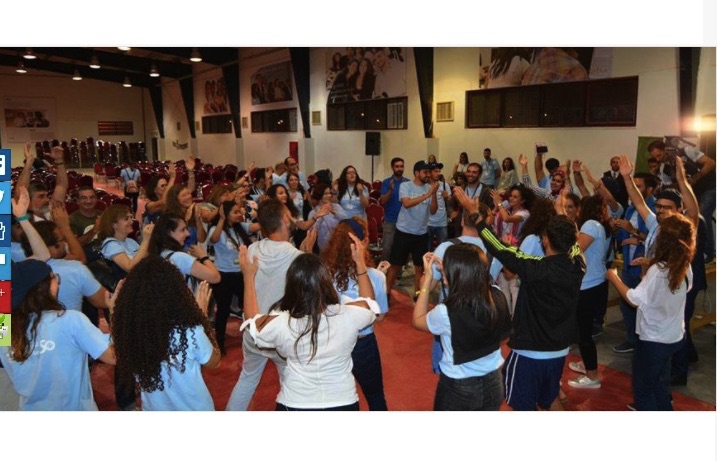
The Union of Youth of the commune of Port-Bouët, in collaboration with the NGO “Acting for peace and well-being” (ONGAPBE), organized on Saturday 10 June 2017 at the Hotel Communal, a seminar on “How can youth develop the culture of peace in the commune of Port-Bouët? “.


Photo legend : Seminar participants sit in a circle

Samuel Kouassi, President of the Youth Union, gave the reasons for holding such a seminar. According to him, it is the young people who in times of acute crisis are instrumentalized to commit acts of violence. “Youth can become the armed fist of people with troubled and selfish purposes. We must therefore work to ensure that this important segment of the population in our commune in particular and in the country in general find ways to protect themselves in case of crisis, disorder or disorder.” That is why he invited the leaders of young people from all parts of the commune to listen carefully to the message delivered today and put it into practice if necessary.

(continued on right side)

(Click here for the original French version)

Question for this article

Youth initiatives for a culture of peace, How can we ensure they get the attention and funding they deserve?

(continued from left side)

Mr Koffi Amani, President of ONGAPBE, gave some suggestions for young people to be peace actors in their families, neighborhoods, communities and, in turn, in Côte d’Ivoire. According to him, the seminar establishes an interactive methodology, “Collective intelligence, listening to others and networking among all the youth groups makes it possible to involve young people in the search for peace,” he said. For him, it is essential to avoid suspicions and dissension. Young people should think together by listening to each one, giving positions and listening to those of others. “The culture of peace must not be an isolated action, since it concerns everyone. With us 1 + 1 is not equal to 2, but to 11. For 11 is the figure of force, while 2 is division. Our methodology is to bring everyone together to produce the desired results, “said Koffi Amani.

He recalled that the NGO he runs has been functioning since December 2012. In January 2013, the NGO trained its facilitators who are people who publicly animate seminars, meetings or training sessions. The facilitator is called the “host.” Their methodology consists in having the participants set up in a circle. “The circle has a specificity in the sense that it allows everyone to see each other during the exchanges. Each point of the circle constituted by each participant has equal value. That is, each participant has the same importance as the others in the debate. There is no leader and everyone has the right to speak. Each one can not speak more than another and each participant can not see the right to speak back. He who has not the word should listen attentively to the one who is speaking. These are the rules we have set ourselves to inculcate certain values ​​to all those who take part in our trainings, “said the president of the NGO.

Participants talked about their experience of peace and how they once worked in their lives to bring harmony into the family, neighborhood, school, etc. It is this experience that they have been asked to remember, the day when they will be faced with a situation that requires them to commit themselves to peace.

Mexico: Colima will host the Meeting of Youth Peace Leaders

TOLERANCE AND SOLIDARITY .

An article from El Pulso de Colima (translated by CPNN)

Youth Leaders for Peace will meet on May 9 in the Administrative Complex of Government of the State. A total of four forums will be set up to discuss the culture of peace and education for peace, according to Gamaliel Haro Osorio, state secretary of Youth.

The Youth Secretary invites all young people to attend this event that will feature international celebrities, along with the state government led by José Ignacio Peralta Sánchez, who has always been an ally for youth.

The celebrities include Mrs. Dolly Hirsh, survivor of the Holocaust; Rubén Pacheco Inclán, president of the Inter-American Bar of Lawyers; Francisco J. Guerra González, national coordinator of the World Embassy of Activists for Peace (EMAP); Max Trejo Cervantes, secretary general of the Ibero-American Youth Organization and Jorge Montemayor Paz, director of the EMAP National Orchestra.

Haro Osorio stated that the event will be totally free and will start at 08:30 in the morning, For further information contact 01 312 3145099 with staff of the Youth Secretariat and EMAP.

The official spokesman of the World Embassy for Peace Activists, Mario Moreno Contreras, said that more than 3,000 young people are expected to attend the project that is being presented for the first time in Colima. It encourages young people to develop not only as professionals, but in all the fields in which human being interact. “It’s about giving them the necessary tools to be good young people in a space that is open for ideas.”

Through a press release, the Secretaría de la Juventud mentions that Erika Arely Moreno Hernández, a youth leader from the center area, was present at the press conference to announce this event. She highlighted that through different projects they want to create and promote a Culture of peace among young people.

(Click here for the original Spanish version)

Question for this article

Beirut Declaration enhances role of religions in promoting human rights

TOLERANCE & SOLIDARITY .

An article from the Office of the United Nations High Commissioner of Human Rights

​​​A “Faith for Rights” initiative launched at a recent gathering of faith-based and civil society actors from around the world aims to unite religious communities of various faiths to counter discrimination and religious-based violence through a shared objective to promote human rights and to uphold the freedom of religion or belief.

“Our objective is to foster the development of peaceful societies, where diversity is not just tolerated but fully respected and celebrated,” UN High Commissioner for Human Rights Zeid Ra’ad Al Hussein said in a video message to participants at the two-day meeting hosted by the UN Human Rights Office in Beirut.

“Religious leaders, with their considerable influence on the hearts and minds of millions of people, are potentially very important human rights actors,” said Mr. Zeid.

Building on the 2012 Rabat Plan of Action that laid out religious leaders’ core responsibilities in countering incitement to hatred, the Beirut Declaration (pdf) expands those responsibilities to the full spectrum of human rights. It calls on believers of all faiths to join hands and hearts in articulating ways in which they can stand together in defending fundamental rights against discrimination and violence.

Sheikh Maytham Al Salman, a religious leader and rights defender from Bahrain, urged religious leaders and faith-based organizations to assume leading roles in countering hate campaigns targeting particular religious groups. “Religious hostility has risen to alarming stages,” he said.

(continued in right column)

Question related to this article:
 
How can different faiths work together for understanding and harmony?

(continued from left column)

Linked to the Beirut Declaration are 18 Faith for Rights commitments (pdf) to uphold human rights, including pledges to avoid invoking “State religion” in order to justify discrimination against any individual or group, to ensure gender equality and minority rights, to refrain from oppressing critical voices and to engage with children and youth.

The UN Special Rapporteur on the freedom of religion or belief Ahmed Shaheed said he was concerned about the explicit targeting of youth “by those who would prey on young minds.” He called on religious leaders to pay particular attention to the vulnerability of young people subjected to hate speech.

“Youths look up to religious leaders for guidance, mentoring, support and advice. Therefore there is a need to engage with those communities at a very early age and provide a mind-set that is tolerant, broad-minded and has respect for others,” said Mr. Shaheed. “It is important to go beyond the human rights council chamber out into the field and to engage people and ensure we develop solidarity and cross-community collaboration to mobilize people to support the freedom of religion or belief.”

Ibrahim Salama, chief of the UN Human Rights Treaties Branch, hailed the Beirut Declaration as a rights-based call to people of all faiths around the world to promote peaceful societies based on mutual respect.

“Rather than focusing on theological and doctrinal divides, the Beirut Declaration favours the identification of common ground among all religions and beliefs to uphold the dignity and worth of all human beings,” he said.

(Thank you to Böðvar Jónsson of Akureyri, Iceland, the CPNN reporter for this article)

Gandhi Peace Award to Omar Barghouti and Ralph Nader

TOLERANCE AND SOLIDARITY .

An article compiled by Arab America

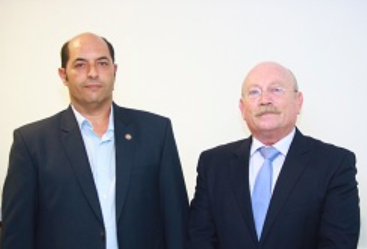
Palestinian activist Omar Barghouti and Arab American consumer rights crusader, Ralph Nader received the 2017 Ghandi Peace Award from the Connecticut group, Promoting Enduring Peace. Barghouti was honored for his work as the co-founder of Boycott, Divestment, Sanctions (BDS) and Nader for his five decades of work regarding consumer and civic activism and his human rights advocacy for the Palestinian peace movement.


Ralph Nader, left, and Omar Barghouti, right. Photo Credit: Don LaVange and intal

Barghouti was initially banned by Israel to travel to the U.S., but on Sunday, he was allowed entry to the U.S after winning a temporary suspension of the ban.

Barhgouti dedicated the award to the more than 1,000 Palestinian prisoners who are on a massive hunger strike in Israeli jails.

At the ceremony, he stated, “As I humbly accept the Gandhi Peace Award for 2017, I dedicate it to the heroic Palestinian political prisoners on hunger strike in Israel’s apartheid dungeons and to every Palestinian refugee yearning to return home to Palestine to reunite with the land and the homeland.”

Barghouti leads the Palestinian Boycott, Divestment, Sanctions National Committee, which organizes the BDS movement worldwide. The committee demands an end to Israel’s occupation, calls for ending racial discrimination and advocates the right of Palestinian refugees to return to their homeland.

Nader is the founder of the Center for Study of Responsive Law, which focuses on environmental issues, consumerism, and safety. In addition, the center hosts numerous conferences, focusing on government and corporate accountability empowering citizens.

In his remarks, Nader spoke of “state terrorism”, saying it was more widespread than terrorism by individuals. He added that U.S. forces can kill anyone; as well as, U.S. presidents can commit “state terrorism” with no declaration of war by Congress.

Arab America congratulates Palestinian activist Omar Barghouti and Arab American consumer rights crusader, Ralph Nader for receiving the 2017 Ghandi Peace Award.

Question for this article

Egypt : Launch of the 27th session of the International Conference on Islamic Affairs

TOLERANCE AND SOLIDARITY .

An article in Nile International (translated by CPNN)

The Islamic Affairs Council launches the work of the 27th session of the International Conference on Islamic Affairs in the Ministry of Waqfs under the name of “the role of leaders and decision-makers in the spread of the culture of peace and the fight against terrorism and its challenges “.

The work of the international conference on Islamic affairs will take place for two days under the auspices of President Abdel Fatah El-Sissi.

The inaugural meeting was attended by the Minister of Waqfs Mohamed Mokhtar Gomaa, the Mufti of the Republic Dr. Chawki Gomaa, and ambassadors from many Islamic countries, both Arab and foreign.

The conference focuses on how to combat terrorism and extremism, the role of political and parliamentary leaders, international organizations, media and religious leaders in the spread of peace and the confrontation of terrorism and the role of political parties in consciousness-raising among young people.

A tourist, cultural and religious tour will be organized for the participants of the conference.

Also, foreign participants will organize a press conference to review their impressions of the situation in Egypt.

(Click here for the original French version of this article.)

Question for this article

Burkina Faso: Dialogue of religions and cultures: prospects for the Ouagadougou symposium

, TOLERANCE & SOLIDARITY .

An article from Fasozine

On the eve of the opening of the international symposium on the dialogue of religions and cultures in Ouagadougou, Burkina Faso, the two main initiators of the meeting, Filippe Sawadogo* and Lazare Ki-Zerbo*, discuss in this interview the substance and the highlights of this important meeting on education for the culture of peace.


Lazare Ki-Zerbo* and Filippe Savadogo*

Fasozine.com: Ouagadougou is hosting an international symposium on the dialogue between religions and cultures from 3 to 7 March. Does this mean that the dialogue does not yet exist?

Lazare Ki-Zerbo: It is simply that the situation today invites us to remobilize the mechanisms of dialogue that exist and that have always existed. The Burkinabe people like to stand up to fight against injustices, andviolations. But there are times when we must also know how to fight for peace and for national cohesion. In the light of current events, you will agree that we must really mobilize to preserve and anticipate. We can not sit idly by while our neighboring countries deteriorate and disintegrate.

The initiative aims to strengthen the culture of peace in Burkina Faso and in Africa. What do you think are the ingredients of this culture of peace?

Filippe Savadogo: First of all, peaceful coexistence, which we express through living together. And this is reflected in several mechanisms and sources. By considering our traditional endogenous values, we observe, for example, that joking alliances – which we call “sinagouya” or “rakire” – have been able to temper many concerns during certain crises. Moreover, Africa has always been a continent where the culture of dialogue is a constant part of the education of young people from early childhood: respect for others, initiation to values, etc., and we must revisit all these questions in a world where challenges are only multiplying.

Finally, we also have external supports, such as democracy, good governance, human relations … which we can cultivate by adding new dimensions to build the African man of the new century, a century in which culture becomes engagement and contribution on several horizons towards a better future.

In the face of growing incivility, what place do you give to civic education in this process?

Lazare Ki-Zerbo: The growing incivility reflects the fact that there is a break in the intergenerational bond. In response, our initiative promotes education for peace, a process that should begin at school from a very young age. This is where the mechanisms of living together are learned. The roots of incivility, intolerance and violence must therefore be attacked by an intensive dissemination of the principles of peaceful cohabitation and acceptance of the other. These are the real mechanisms. The problem can not be solved by coercion and brutality.

How would you describe the level of coexistence among different religions in Burkina Faso at the present time?

Filippe Savadogo: In Burkina Faso, the recognition of religious pluralism is a reality. There are also consultations between religious leaders. A good example is the association “faitiere” which is presided by his majesty the Mogho Naaba and which initiates searches of endogenous solutions when there is crisis or misunderstanding.

However, we can also say that nothing should be taken for granted. We must therefore continue to cultivate respect and to understand that the acceptance of difference is an added value. Burkina Faso, a country in the heart of West Africa, has always been a crossroads for dialogue, peaceful cohesion, welcoming and learning about the positive values ​​of other peoples.

Faced with the extremist and terrorist threats, what answers does the Ouagadougou symposium intend to bring?

Lazare Ki-Zerbo: Burkina Faso, is, in effect, at the head of the great old Sahel – the Niger loop, the great empires. To the south we are in relation with the coastal countries, to the west we have this long Border with the Mandingo world … I think that’s what makes us rich. A bit like Cameroon, Burkina is also an Africa in miniature and that is our strength. The fact that we have been at the center of all these great influences has allowed us to take advantage of their contributions and to become stronger.

The message of the symposium is thus: consolidate this capital, which is at the same time social, cultural, historical. A capital that is our wealth and can be a bulwark against the forces of division and separation.

(continued in right column)

(Click here for the original French version of this article)

Question related to this article:
 
How can different faiths work together for understanding and harmony?

(continued from left column)

Several well-known personalities take part in this meeting. What do you expect from their participation?

Filippe Savadogo: I believe that the presence of those who gained experience in the generation of independence, as well as scholars and scholars from several disciplines, reflects the fact that we want to put at the center of this symposium a framework of reflections that can lay the foundation for an action plan for the years to come. That is why we are thinking first of all of the major groups in our region, including personalities from ECOWAS countries (Sahelian countries) and the ECOWAS (Economic Community of West African States) West African Economic and Monetary Union. We will have many high-ranking personalities from these countries who will share their experiences.

The symposium welcomes, among others, a professor who comes from Central Africa, a country emerging from a crisis, which is now better, and who should share his experience with the participants. We can also mention the presence of the former President of the Transition in Burkina Faso, Michel Kafando, a great witness of his time, who will explain, from the first day of the symposium, the sources and resources that allowed the transition to overcome its obstacles.

Finally, the presence of the Secretary General of the International Organization of the Francophonie, Michaëlle Jean – who is staying in Burkina Faso as part of a visit – brings us the helpful dimension of the Fez process. Indeed, the question of interreligious and intercultural dialogue is a concern for all of the Francophonie. And at the last summit, heads of state and government still encouraged this kind of symposium …

So, are there bridges to be established between the “Libres ensemble” of La Francophonie and this symposium?

Absolutely! To the extent that everything leads to good governance, to democracy, but also to living together, which is a segment of being “free together” with the help of youth and women. Unesco also plays a significant role, since it has a tradition of researching the culture of peace. We also have Isesco with Dr. Cheikh Boubacar Doukouré, who has participated in the Baku process of the Alliance of Civilizations, as well as many others who will share their experiences with stakeholders from across our subregion. The press is also included because we have a large theme of “Media and Society”.

What do you think of the recent measure taken by the Beninese authorities to prohibit any religious grouping in public spaces? Is it, in your opinion, desirable? Exportable?

I think that a dialogue has been established on this issue with a pause for better reflection. But in another dimension, we can talk about the secularity of our states and the organization of all these issues. So we can find a solution in time, knowing that history is also a projection of the future.

Following the symposium of Cotonou, of which this is the continuation, how will you judge whether the symposium of Ouagadougou is successful or redundant?

Lazare Ki-Zerbo: We received a mandate from the Cotonou symposium to hold the national meeting in Burkina Faso because we know we have our own specificities. We will do it with local players, knowing that very often our human wealth is not sufficiently valued.

Thus, as an example, Cheikh Boubacar Doukouré, who is the president of Isesco’s executive committee (Unesco for the Muslim world), is also the president of the assembly of African ulemas, created recently in Morocco. He is a reference in this field, taking part in this symposium, which is also honored by the presence of Mr. Halidou Ouédraogo, President of the Human Rights Foundation. There is therefore considerable knowledge and know-how related to Burkina that will be highlighted in the symposium.

And all this will contribute to the drafting of the action plan …

Absolutely! The main thrusts of a plan for a peace education will emerge from the debates. We already have some ideas with the media and the researchers, so that we can arrive at an action plan. Its implementation will be supervised by a follow-up committee.

* Filippe Savadogo

Former Minister of Culture, Tourism and Communication, Filippe Savadogo, 63, is the coordinator of a French-speaking platform called Continental Horizon. He has served as the ambassador from Burkina Faso in France and then permanent representative of La Francophonie to the United Nations in New York. He was awarded the “Visionary Award” at the Pan-African Film Festival in 2013 in Los Angeles. The Burkina Faso diplomat is also the coordinator for Burkina Faso of the African Initiative for Education for Peace and Development through Inter-religious and Intercultural Dialogue.

* Lazare Ki-Zerbo

Author and actor in the Pan-African Movement and member of several civil society organizations – Manifesto for Freedom – Movement of Intellectuals, Joseph Ki-Zerbo International Committee for Africa and its Diaspora (Cijkad), Bandung Spirit Network – Lazare Ki -Zerbo was special advisor to the promoter of the African Initiative for Education for Peace and Development through Interreligious and Intercultural Dialogue led by Albert Tévoèdjrè. A graduate of the Institute of Federalism of Freiburg and the Austrian Center for Peace and Conflict Resolution of Burg Schlaining, he was also a program specialist at the Organization internationale de la francophonie from 2004 to 2014.

Vatican: PCID and WCC to draw up document on Education for Peace

, TOLERANCE & SOLIDARITY .

An article from Vatican Radio

Educating for peace is the theme of a proposed joint document to be drawn up by the Pontifical Council for Interreligious Dialogue and the World Council of Churches’ Office of Interreligious Dialogue and Cooperation.

The proposal was the main subject under discussion at a meeting of staff members of the Pontifical Council and colleagues from the WCC office this week. During the encounter in the Vatican on Monday and Tuesday, participants also discussed recent and future activities, underlining the urgency of interfaith dialogue “in today’s global context”.

Below please find the full statement:

The staff-members of the Office of Interreligious Dialogue and Cooperation (IRDC) of the World Council of Churches (WCC) as well as their colleagues from the Pontifical Council for Interreligious Dialogue (PCID), held their annual meeting at the PCID Offices on 30th-31st January 2017.

Both the delegations expressed their appreciation for the opportunity to meet a few days after the conclusion of the Week of Prayer for Christian Unity. They gave thanks to God for their friendship and fruitful cooperation in promoting constructive relations with individuals and communities belonging to other religious traditions.

The principle agenda of the meeting was to discuss and to deliberate upon a proposed joint document on Education for Peace, following similar joint projects in the past.

It was followed by the exchange of news and views on their respective activities over the past year and planned activities.

Both the PCID and the IRDC agreed to continue their collaboration, in particular, the work relating to the joint document on Education for Peace, given the urgency of the matter in today’s global context.

(Thank you to the Newsletter of the Global Campaign for Peace Education for bringing this article to our attention.)

Question related to this article:

2015-16 Recipients of UN Youth Solidarity Fund, Africa and Middle-East

TOLERANCE AND SOLIDARITY .

From the website of the United Nations Alliance of Civilizations

The Youth Solidarity Fund (YSF) supports youth-led organizations that foster peaceful and inclusive societies by providing direct funding to outstanding projects promoting intercultural and interfaith dialogue. Established in 2008, the Fund responded to calls for action made by youth-led organizations around the world on the importance of establishing funding mechanisms for youth. Today, the Fund is more relevant than ever: As the global agenda increasingly speaks of youth’s participation and contribution to peace, development and security, it is critical to support this participation and contribution through funding and partnership opportunities.


Foto from AFCIG
(Click on the photo to enlarge)

The funded projects are youth-led and youth-focused (18-35 years) but have an impact on entire communities, often involving religious or political leaders, policy-makers, educational institutions and media organizations. The Fund also links small scale and local work to larger movements for social and global change, for a broader and deeper impact.

UNAOC offers technical support and capacity building to the organizations during and/or after the implementation of funded projects in the areas of gender mainstreaming, media relations, advocacy, financial management, networking, sustainability, monitoring and evaluation.

Since 2008, UNAOC has launched four editions of the YSF and provided funding to youth-led organizations based in Africa, the Americas, Asia and Europe. A total of 43 projects were completed as of 2015 reaching a total of over 800,000 persons (youth and non-youth) in over 30 countries.

Here are the five projects chosen in 2015-2016 to be supported (text abbreviated):

1) Action Foundation Common Initiative Group (AFCIG)

AFCIG, based in Cameroon, enables youth to attain independence through self-help, good health and entrepreneurship, in a culture of excellence, gender sensitivity, leadership and innovation. Its key areas of work are: conducting research; developing and implementing programs and projects to promote the development of youth; and advocating for the creation of an enabling environment within which youth can develop. Their projects focus of human and electoral rights, culture and peacebuilding, health and HIV/AIDS, education and entrepreneurship and the environment. . .

One Cameroon (OC) seeks to promote tolerance, respect and acceptance of different religions, cultures and languages by Cameroonian youth. The project encourages youth to leverage the advantages inherent in both cultures and different religions, such as the ability to speak both French and English. It will promote unity among youth from all backgrounds, reject secessionist tendencies and promote peace and unity between Muslims, Christians and Traditionalists in the context of increasing islamophobia. By the end of the project AFCIG expects to:

– Organize 3 workshops to train 60 peer educators to develop their capacity to promote the strength of their country’s diversity, religious and cultural tolerance amongst youth and other Cameroonians;

– Develop a media campaign on peace, religious and cultural tolerance, especially with respect to the Anglophone-Francophone cultures and the Christian-Muslim religions to reach over 2 million Cameroonians in the form of social media posts, spots broadcast on national television, music and radio debates promoting religious and cultural tolerance broadcast on local radio.

2) Approches Locales pour le Développement Durable (ALDED)

ALDED, based in Cameroon, aims to contribute to improving the living conditions of disadvantaged and marginalized populations through the valorization of local initiatives for sustainable development. Its key areas of work are: support for socio-economic integration of young people of all categories; independent monitoring of public policies at local level; promotion and protection of human rights and the fight against corruption. . .

ALDED proposed a project that would contribute to strengthening religious tolerance and constructive dialogue in this context, especially among youth. The project aims to contribute to improving the understanding and the culture of interreligious tolerance in the young population of central, southern and eastern regions Cameroon. By the end of the project ALDED expects to:

– Organize 3 radio roundtables between representatives of different religious faiths and local boards of the Youth in target regional capitals on issues of religious tolerance in Cameroon;

– Create a Facebook forum of around 3000 young people to exchange on challenges and opportunities of religious, cultural and ethnic diversity in Cameroon;

– Produce awareness raising and educational materials (streamers, bilingual comic strips) on interreligious stigma and discrimination and on the difference between the principles of peace promoted by religions such as Islam and acts of religious extremism made by extremist groups such as Boko Haram;

– Train 90 youth leaders on interreligious and intercultural dialogue and tolerance;

– Establish a network of 90 focal points monitoring and managing conflicts arising from interreligious stigma and discrimination.

(Article continued in right column)

Question for this article

Youth initiatives for a culture of peace, How can we ensure they get the attention and funding they deserve?

How can just one or a few persons contribute to peace and justice?

(Article continued from left column)

3) Leadership Initiative for Youth Empowerment (LIFE)

LIFE works in Nigeria since 2012 to empower young people with life skills, information and capacity building to promote their self-actualization. The organization’s key areas of work are: human rights, leadership, peacebuilding and intercultural learning. . .

Leadership Initiative for Youth Empowerment (LIFE) through its Volunteer Corps intends to intervene in this challenge. Specifically, LIFE will train young people from the Muslim community of internally displaced persons and young people from the local community, including Christians and others, to serve as Intercultural Ambassadors. These ambassadors will serve as interns in churches and mosques and will implement community events to promote understanding and tolerance. The project aims at promoting intercultural learning as a key element for peace in Lagos State. By the end of the project LIFE expects to:

– Train 60 youth representatives to act as intercultural ambassadors and increase intercultural learning among internally displaced persons and community residents in 6 Local Government Areas (LGAs) in Lagos State Nigeria;

– Raise awareness on the importance of intercultural and interreligious learning for peaceful co-existence for 3,000 young people and 30,000 community members in 6 LGAs;

– Organize 5-month internships for the 60 intercultural ambassadors in 30 religious organizations;

– Offer 4 awareness-raising sessions on intercultural learning for peaceful co-existence to 1,200 participants in 6 LGAs.

4) Palestinian Center for Communication and Development Strategies (PCCDS)

PCCDS works since 2009 in the West Bank in the areas of youth, human rights and development. They build the capacity of youth on the issues of democracy, justice, social accountability, non-violence and human rights. . .

PCCDS’s project proposes to open new doors of dialogue among Palestinian Islamist, Secular and Liberal youth, animated by the belief that young men and women have a strong power to change themselves and effect positive social change. It also aims to further empower young Palestinians to be part of the solution to the Israeli-Palestinian conflict and contribute to peacebuilding. By the end of the project, they expect to:

– Train 50 students from 2 universities on intellectual and cultural dialogue;

– Sensitize 390 young Islamist, Secular and Liberal young people on the necessity of intellectual and cultural dialogue;

– Issue two booklets written by young Islamist, Secular and Liberal participants on intellectual and cultural dialogue and distribute them in cooperation with university administrations;

– Launch an online forum for intellectual and cultural dialogue giving space to the multiple perspectives and a platform for their interaction;

– Hold an anti-extremism youth national dialogue conference and mainstream its outcomes with the media, government, political parties and community leaders.

5) YaLa Palestine

YaLa believes in the power of education to empower young Palestinians and Middle Easterners to build a better, more peaceful future for themselves and for the region. YaLa works since 2011 to develop on- and off-line educational projects in the areas of citizen journalism, community organizing, youth empowerment, dialogue and peacebuilding. YaLa believes that citizen journalism is a powerful tool to provide a counter voice to the traditional media that often inflames conflict and tensions. Citizen journalism can be used to create a space for individuals to promote nuanced perspectives that underpin the processes of understanding, peace and reconciliation. . .

YaLa proposed a project that would harness new media activism as an unprecedented opportunity for influencing the younger generation and the wider public in MENA in favor of greater understanding, coexistence and peace. Through citizen journalism training and practice, the project seeks to enable Arab and Israeli youth to engage new media more effectively to promote positive messages of understanding and peace, and to develop acquaintance, empathy and trust via online and face-to-face learning and collaboration opportunities. Ultimately, the youth will be motivated to develop and share – with each other and the world – original and fresh citizen journalism pieces on their identity, religion, traditions, daily life, aspirations and other issues of importance to them as a way to increase mutual understanding and cooperation and reduce conflict and polarization. By the end of the project, YaLa expects to:

– Conduct a 4-month online training program in Citizen Journalism for Coexistence for 55 Palestinian, Israeli and MENA youth, meeting on a bi-weekly basis;

– Hold two face-to-face workshops on storytelling and videomaking for 20 Palestinian and 20 Israeli youth participants;

– Produce a video of the storytelling and videomaking workshops to offer as an online learning resource for MENA participants and other youth;

– Post and disseminate online and in mainstream and non-mainstream media some of the journalism pieces produced by the participants in order to advocate for and foster a more inclusive and diverse practice of media production and consumption.