Category Archives: HUMAN RIGHTS

‘A part of history’: Calm prevails over D.C.’s biggest George Floyd protest

… . HUMAN RIGHTS … .

An article from Thomson Reuters (reprinted by permission)

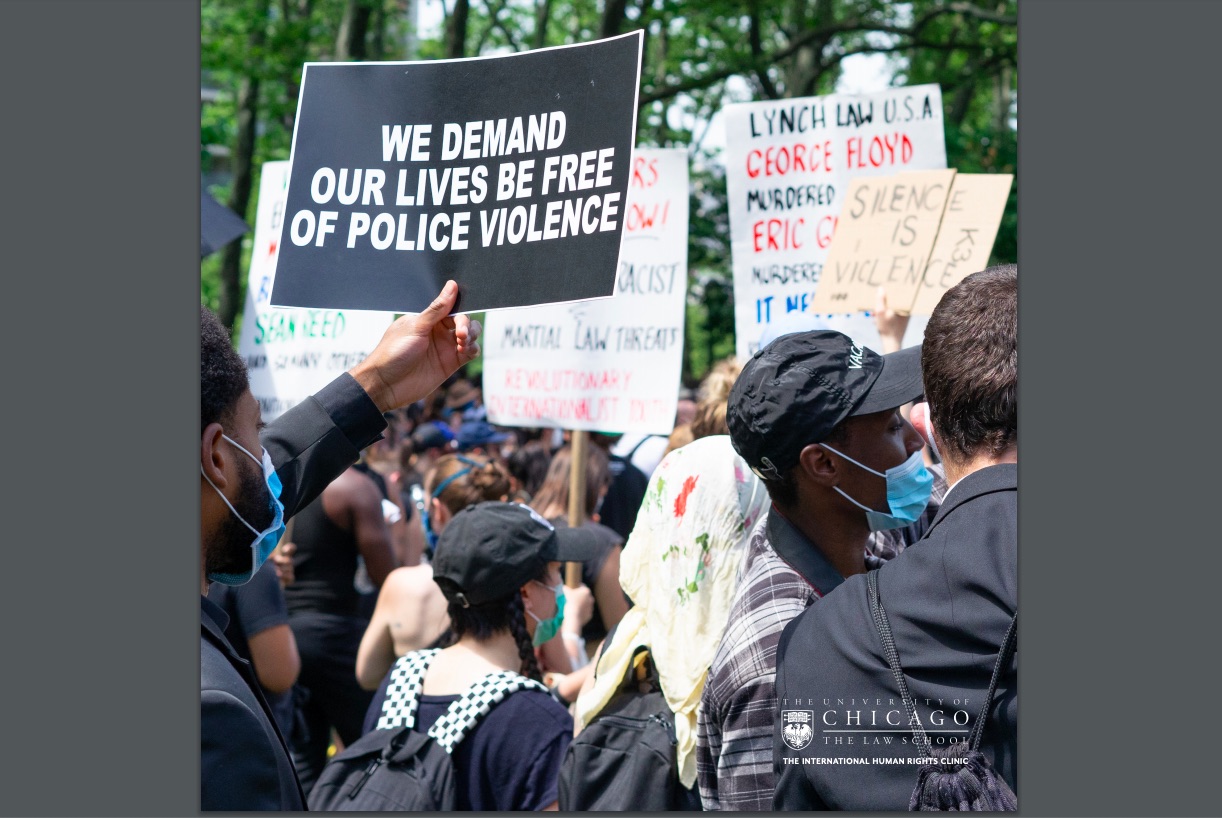
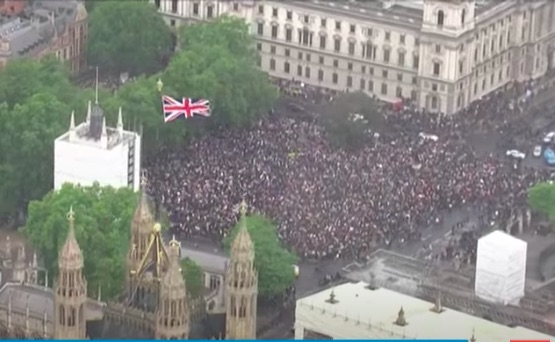
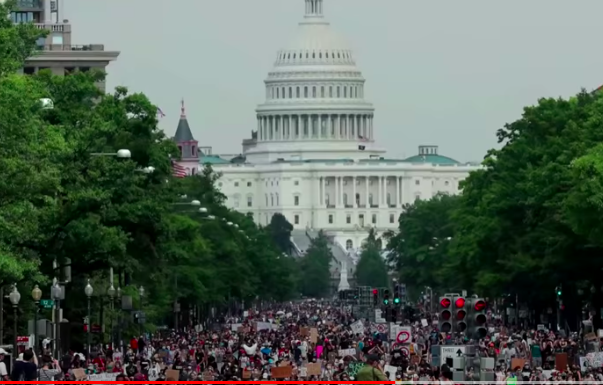
Tens of thousands of demonstrators amassed in Washington and other U.S. cities on Saturday [June 6] demanding an end to racism and brutality by law enforcement, as protests sparked by George Floyd’s fatal encounter with Minneapolis police stretched into a 12th day.

Reuters Video of Washington demonstations

A Lincoln Memorial rally and march to the White House marked the largest outpouring yet of protests nationwide since video footage emerged showing Floyd, an unarmed black man in handcuffs, lying face down and struggling to breathe as a white police officer knelt on his neck.

Demonstrators rallied on Saturday in numerous urban centers – among them New York, Atlanta, Philadelphia, Chicago, Los Angeles, San Francisco, Boston and Miami – as well as in small, rural communities across the country.

“It feels like I get to be a part of history and a part of the group of people who are trying to change the world for everyone,” said Jamilah Muahyman, a Washington resident at a demonstration near the White House.

One of the more surprising Black Lives Matter rallies was a gathering of 150 to 200 people in the east Texas town of Vidor, notorious for its long associations with the Ku Klux Klan.

Floyd’s May 25 death has sparked a storm of protests and civil strife in the midst of the coronavirus pandemic, thrusting the highly charged debate over racial justice back to the forefront of the political agenda five months before the Nov. 3 U.S. presidential election.

With the notable exception of Seattle, where police used flash-bang grenades in a confrontation with demonstrators in the city’s Capitol Hill district, Saturday’s protests on the whole took on a relaxed tone compared with those of recent days.

The week began with sporadic episodes of arson, looting and vandalism in several cities that authorities and activists have blamed largely on outside instigators and criminal elements.

Police have at times resorted to heavy-handed tactics as they sought to enforce curfews in some cities, including New York and Washington, where baton-swinging officers in riot gear dispersed otherwise orderly crowds.

Those clashes have only galvanized the focus of the protests into a broader quest for reform of the criminal justice system and its treatment of ethnic minorities.

“I’m just hoping that we really get some change from what’s going on. People have been kneeling and protesting and begging for a long time, and enough is enough,” said Kartrina Fernandez, 42, a protester near the front of the White House.

“We can’t take much more.”

The intensity of protests over the past week began to ebb on Wednesday after prosecutors in Minneapolis had arrested all four police officers implicated in Floyd’s death. Derek Chauvin, the white officer seen pinning Floyd’s neck to the ground for nearly nine minutes as Floyd repeatedly groaned “I can’t breathe” was charged with second-degree murder.

But Saturday marked the largest demonstration over Floyd’s killing to date.

Crowds numbering in the tens of thousands converged on the nation’s capital, despite health risks posed by the coronavirus, though official estimates of the turnout were unavailable.

The rallies in Washington, as elsewhere, were notable for drawing racially mixed crowds.

(Article continued in right column)

Question(s) related to this article:

Are we making progress against racism?

(Article continued from left column)


Another website with many photos of the demonstrations throughout the United States

“Especially as a white person, I benefit from the status quo, and so not showing up and actively working to deconstruct institutional racism makes me complicit,” said Michael Drummond, 40, a government employee, explaining his reason for taking part.

Hundreds of miles to the south, in Floyd’s birthplace of Raeford, North Carolina, hundreds lined up at a church to pay their respects during a public viewing of Floyd’s body prior to a private memorial service for family members.

Floyd’s funeral is scheduled for Tuesday in Houston, where he lived before relocating to the Minneapolis area.

In New York, a large crowd of protesters crossed the Brooklyn Bridge into lower Manhattan on Saturday afternoon, marching up a largely deserted Broadway. Thousands of others gathered in Harlem near the northwest corner of Central Park to march downtown, about 100 blocks, to the city’s Washington Square Park.

In Philadelphia, demonstrators gathered on the steps of Philadelphia Art Museum steps chanting, “No justice, No peace.” Others marched along Benjamin Franklin Parkway, through John F. Kennedy Plaza, and around Philadelphia City Hall.

On the West Coast, protesters briefly blocked traffic on San Francisco’s Golden Gate Bridge as motorists honked in solidarity.

An almost festive atmosphere prevailed among protesters assembled at an outdoor strip newly rechristened Black Lives Matter Plaza – the phrase “Black Lives Matter” painted in large yellow letters on the pavement – a block from the White House.

It was near the spot where U.S. Park Police and military personnel cleared Lafayette Square of peaceful demonstrators with chemical spray and smoke grenades on Monday night, paving the way for President Donald Trump to walk from the White House through the park to a church to hold a bible aloft for cameras.

On Saturday, Washington, D.C., Mayor Muriel Bowser, a vocal critic of Trump’s response to the protests this week, was spotted in the crowd while songs such as “Sweet Caroline” by Neil Diamond and “Alright” by Kendrick Lamar blared from loudspeakers.

The demonstrators included families and people of all ages carrying signs with slogans such as “Fed up,” “All lives do not matter until black lives do,” and “My black son matters.”

Police officers were present but in smaller numbers than earlier in the week. They generally assumed a less aggressive posture, wearing patrol uniforms rather than body armor and helmets.

In another sign of easing tension, Major General William Walker, commander of the D.C. National Guard, told CNN that the nearly 4,000 additional Guard troops deployed to the city from 11 states at the Pentagon’s request were likely to be withdrawn after the weekend.

“They will be redeploying this week, probably as early as Monday,” Walker said.

Reporting by Nandita Bose and Makini Brice in Washington and Lucas Jackson in New York; Additional reporting by Linda So, Mike Stone, Suzanne Barlyn, Barbara Goldberg, Scott Malone, Raphael Satter and Andrew Hay; Writing by Frank McGurty and Steve Gorman; Editing by Daniel Wallis, Robert Birsel
Our Standards:The Thomson Reuters Trust Principles.

Herstory of Black Lives Matter

… . HUMAN RIGHTS … .

Excerpt from the website of Black Lives Matter

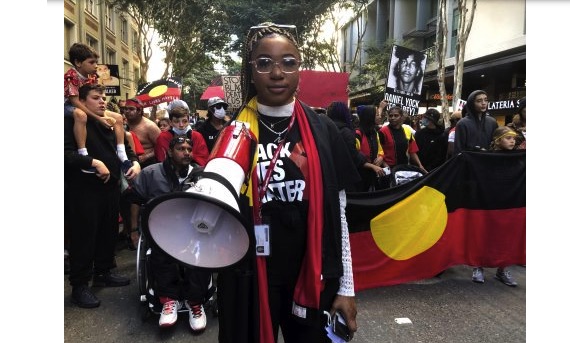
In 2013, three radical Black organizers — Alicia Garza, Patrisse Cullors, and Opal Tometi — created a Black-centered political will and movement building project called #BlackLivesMatter. It was in response to the acquittal of Trayvon Martin’s murderer, George Zimmerman.

The project is now a member-led global network of more than 40 chapters. Our members organize and build local power to intervene in violence inflicted on Black communities by the state and vigilantes.

Black Lives Matter is an ideological and political intervention in a world where Black lives are systematically and intentionally targeted for demise. It is an affirmation of Black folks’ humanity, our contributions to this society, and our resilience in the face of deadly oppression.

As organizers who work with everyday people, BLM members see and understand significant gaps in movement spaces and leadership. Black liberation movements in this country have created room, space, and leadership mostly for Black heterosexual, cisgender men — leaving women, queer and transgender people, and others either out of the movement or in the background to move the work forward with little or no recognition. As a network, we have always recognized the need to center the leadership of women and queer and trans people. To maximize our movement muscle, and to be intentional about not replicating harmful practices that excluded so many in past movements for liberation, we made a commitment to placing those at the margins closer to the center.

(Article continued in right column)

Question(s) related to this article:

Are we making progress against racism?

(Article continued from left column)


Painting a street near the White House on June 6, 2020 (click on image to see video)

As #BlackLivesMatter developed throughout 2013 and 2014, we utilized it as a platform and organizing tool. Other groups, organizations, and individuals used it to amplify anti-Black racism across the country, in all the ways it showed up. Tamir Rice, Tanisha Anderson, Mya Hall, Walter Scott, Sandra Bland — these names are inherently important. The space that #BlackLivesMatter held and continues to hold helped propel the conversation around the state-sanctioned violence they experienced. We particularly highlighted the egregious ways in which Black women, specifically Black trans women, are violated. #BlackLivesMatter was developed in support of all Black lives.

In 2014, Mike Brown was murdered by Ferguson police officer Darren Wilson. It was a guttural response to be with our people, our family — in support of the brave and courageous community of Ferguson and St. Louis as they were being brutalized by law enforcement, criticized by media, tear gassed, and pepper sprayed night after night. Darnell Moore and Patrisse Cullors organized a national ride during Labor Day weekend that year. We called it the Black Life Matters Ride. In 15 days, we developed a plan of action to head to the occupied territory to support our brothers and sisters. Over 600 people gathered. We made two commitments: to support the team on the ground in St. Louis, and to go back home and do the work there. We understood Ferguson was not an aberration, but in fact, a clear point of reference for what was happening to Black communities everywhere.

When it was time for us to leave, inspired by our friends in Ferguson, organizers from 18 different cities went back home and developed Black Lives Matter chapters in their communities and towns — broadening the political will and movement building reach catalyzed by the #BlackLivesMatter project and the work on the ground in Ferguson.

It became clear that we needed to continue organizing and building Black power across the country. People were hungry to galvanize their communities to end state-sanctioned violence against Black people, the way Ferguson organizers and allies were doing. Soon we created the Black Lives Matter Global Network infrastructure. It is adaptive and decentralized, with a set of guiding principles. Our goal is to support the development of new Black leaders, as well as create a network where Black people feel empowered to determine our destinies in our communities.

The Black Lives Matter Global Network would not be recognized worldwide if it weren’t for the folks in St. Louis and Ferguson who put their bodies on the line day in and day out, and who continue to show up for Black lives.

Amnesty International: Ignored by COVID-19 responses, refugees face starvation

. HUMAN RIGHTS .

An article from Amnesty International ( licensed under a Creative Commons attribution, non-commercial, no derivatives, international 4.0 licence)

The inhumane treatment of refugees and migrants threatens to stall progress on tackling COVID-19, Amnesty International said today, warning that overcrowded camps and detention centres will become new epicentres unless urgent action is taken. The organization said  that lockdowns and movement restrictions have exacerbated dire living conditions, leaving millions of people at risk of starvation and illness.

The organization is calling for concerted global action to ensure hundreds of thousands of people on the move are provided with adequate access to food, water, sanitation and healthcare to ensure their survival as countries prepare to come out of lockdown.

“It is impossible to properly contain this virus when so many people worldwide are living in desperately overcrowded, unsanitary camps and detention centres. At a time when we need compassion and cooperation more than ever some governments have instead doubled down on discrimination and abuse – preventing deliveries of food and water, locking people up, or sending them back to war and persecution,” said Iain Byrne, Head of Amnesty’s Refugees and Migrants Rights team.

“In many camps death by starvation is now reported to be a bigger threat than the virus itself. This is an appalling abdication of the collective responsibility to protect refugees and migrants, and we are urging states to take immediate action to prevent this becoming a human rights catastrophe.”

Many governments have taken actions driven by discrimination and xenophobia, which needlessly place refugees at risk of starvation and disease.

For example,  water supplies were deliberately cut off by local authorities in Bosnia’s Vucjuk camp  to force the relocation of the camp’s inhabitants. Many refugees live in precarious economic situations, and lockdowns and curfews are making it harder than ever to earn a living. In Jordan’s Zaatari camp, lockdowns prevent people from working at all—meaning no food or income to pay for even basic necessities. In April, residents of makeshift camps in France’s Calais settlements  were not receiving adequate deliveries of food and water due to lockdowns, and restrictions on movement made it impossible for them to shop for themselves, even if they had money to do so.

(Article continued in right column.)

(Click here for the French version of this article or click here for the Spanish version.)

Question related to this article:

How can we work together to overcome this medical and economic crisis?

(Article continued from left column.)

Many governments have continued to unnecessarily detain people seeking asylum, putting them at risk of contracting the virus. There aren’t enough tests and protective equipment for staff and people being detained, potentially igniting a powder keg of illness and fatalities. People held in immigration detention in Australia  have been begging to be released because they are frightened that staff who have not been issued with PPE will unknowingly bring the virus in.

Other governments have violated international law by forcing people back to danger under the pretext of containing COVID-19.

Fueled by an existing anti-migrant and opportunistic agenda, the U.S. has turned back over 20,000 people in violation of domestic and international legal obligations since March 20.

Similarly, Malaysia turned back  a boat of Rohingya people seeking safety; although Bangladesh eventually allowed the boat to land, at least 30 people had reportedly died when their vessel drifted at sea for two months. Presently, there are reports that several hundred people urgently need search and rescue assistance.

Forcing people back to countries where they are reasonably expected to face persecution, torture or other cruel or degrading treatment amounts to refoulement  which is illegal under international law. There are no circumstances where the principle of non-refoulement does not apply.

Amnesty International is calling on governments to:

* Provide adequate food and water supplies and health care to camps and quarantined people

* Consider temporary regularization of all migrants, regardless of their documentation status, ensure that economic stimulus packages and protections apply to asylum seekers and refugees, and continue to allow resettlement where possible

* Decongest camps, immigration detention centres and informal settlements, and rehouse residents in dignified and sanitary conditions with adequate access to healthcare, food, and water. Immigration detainees should be released if their right to health cannot be guaranteed in detention.

* Uphold the right to seek asylum and the principle of non-refoulement.

“Governments keep saying we are all in this together. This means nothing unless they step up to protect the millions of people worldwide who are experiencing this pandemic far from their homes and loved ones,” said Iain Byrne.

“Any government which allows refugees to die of starvation or thirst during lockdown has failed dismally at tackling this crisis.”

Amnesty International: How human rights can help protect us from COVID-19

. HUMAN RIGHTS .

An article from Amnesty International

The way governments decide to respond to the COVID-19 pandemic will impact the human rights of millions of people.

Amnesty International is closely monitoring government responses to the crisis. These are extraordinary times, but it’s important to remember that human rights law still applies. Indeed, it will help us get through this together.

Here’s a quick look at how human rights can help protect us, and what the obligations of governments are in relation to the pandemic.

The right to health

Most governments have ratified at least one human rights treaty which requires them to guarantee the right to health. Among other things, this means they have an obligation to take all steps necessary for the prevention, treatment and control of diseases.

In the context of a spreading epidemic, this means ensuring that preventive care, goods and services are available to everybody.

In Hong Kong, one of the first places to be hit by COVID-19, a local NGO noted that nearly 70% of low-income families could not afford to buy the protective equipment the government was recommending, including masks and disinfectant. If states are endorsing the use of such items, they must ensure that everyone can access them.

Access to information

This is a key aspect of the right to health, but we have already seen governments ignoring it.

In December 2019, doctors in Wuhan, China, where the virus was first reported, shared with colleagues their fears about patients with respiratory symptoms. They were immediately silenced and reprimanded by the local authorities for “spreading rumours”.

Meanwhile, in the region of Jammu and Kashmir, authorities have ordered the continued restriction of internet services, despite a growing number of cases. This makes it extremely difficult for people to access vital information about the prevalence and spread of the virus, as well as how to protect themselves.

Everybody has the right to be informed of the threat COVID-19 poses to their health, the measures to mitigate risks, and information about ongoing response efforts. The failure to guarantee this undermines the public health response and puts everyone’s health at risk.

Rights to and at work

People in precarious forms of labour are being disproportionately affected by the pandemic, which is already starting to have a massive impact on people and the economy. Migrant workers, people who work in the “gig” economy, and people in the informal sector are more likely to see their rights to and at work adversely impacted, as a result of COVID-19 and the measures to control it.

(Article continued in right column.)

(Click here for the French version of this article or click here for the Spanish version.)

Question related to this article:

How can we work together to overcome this medical and economic crisis?

(Article continued from left column.)

Governments must ensure that everyone has access to social security – including sick pay, health care and parental leave – where they are unable to work because of the virus. These measures are also essential to help people stick to the public health measures states put in place.

Health workers are at the frontline of this pandemic, continuing to deliver services despite the personal risks to them and their families, and governments must protect them. This includes providing suitable, good quality personal protective equipment, information, training and psycho-social support to all response staff. People in other jobs, including prison staff, are also at higher risk of exposure, and should be protected.

Disproportionate impact on certain groups

Anyone can get COVID-19, but certain groups appear to be at greater risk of severe illness and death. This includes older people and people with pre-existing medical conditions. It’s also likely that other marginalized groups, including people living in poverty, people with disabilities and people in detention, including migrants and asylum seekers, will face additional challenges in protecting themselves and accessing treatment.

In designing responses to COVID-19, states must ensure that the needs and experiences of specific groups are fully addressed.

Rights to housing, water and sanitation

For people who are homeless or living in informal settlements, self- isolation, social distancing, and other protective measures are extremely difficult if not impossible to stick to.

The COVID-19 crisis has shone a spotlight on the importance of the rights to adequate housing, water and sanitation. These rights are critical for protecting oneself from the virus, for stopping its spread and also recovering from it. 

At a minimum, governments should ensure that people who are homeless, including children in street situations, are provided with emergency accommodation where they can protect and isolate themselves. Governments must also put in place measures to make sure no one is made increasingly vulnerable to COVID-19 because of a lack of housing – for example by being evicted if they can’t pay rent or mortgage.

Governments must also urgently put in place adequate, affordable and safe water and sanitation facilities that are accessible to everyone who is homeless or living in inadequate housing.

Stigma and discrimination

According to media reports, people from Wuhan have faced widespread discrimination and harassment in China. This includes being rejected from hotels or barricaded in their own flats, and having their personal information leaked online.

There have also been widespread reports of anti-Chinese or anti-Asian xenophobia in other countries, including US President Trump repeatedly calling COVID-19 a “Chinese virus”. In London, a student from Singapore was badly beaten up in a racially aggravated attack. There is no excuse for racism or discrimination. Governments around the world must take a zero-tolerance approach to the racist targeting of all people.

Meanwhile President Trump has used the pandemic to justify racist and discriminatory policies, and is reportedly planning a blanket ban on asylum-seekers crossing from Mexico.

Such an outright asylum ban would go against the government’s domestic and international legal obligations, and would serve only to demonize people seeking safety. A similar 2018 ban was swiftly declared unlawful by every court to have considered it.

Furthermore, during a public health crisis, governments must act to protect the health of all people and ensure everyone’s access to care and safety, free from discrimination. This includes people on the move, regardless of their immigration status.

The only way the world can fight this outbreak is through solidarity and cooperation across borders. COVID-19 should unite, not divide us.

(Thank you to the Good News Agency for calling this article to our attention.)

Coronavirus reveals need to bridge the digital divide

FREE FLOW OF INFORMATION

An article from the United Nations Conference on Trade and Development (UNCTAD)

The global crisis brought on by the coronavirus pandemic has pushed us further into a digital world, and changes in behaviour are likely to have lasting effects when the economy starts to pick up. But not everyone is ready to embrace a more digitized existence.

new analysis from UNCTAD  maps the changing digital landscape since the last major global calamity, the 2008/09 financial crisis. It looks at how a digitally enabled world is working for some, but not all equally.

According to the analysis, the coronavirus crisis has accelerated the uptake of digital solutions, tools, and services, speeding up the global transition towards a digital economy.

However, it has also exposed the wide chasm between the connected and the unconnected, revealing just how far behind many are on digital uptake.  
 
“Inequalities in digital readiness hamper the ability of large parts of the world to take advantage of technologies that help us cope with the coronavirus pandemic by staying at home,” said UNCTAD’s technology and logistics director, Shamika Sirimanne.

“This situation has significant development implications that cannot be ignored. We need to ensure that we do not leave those who are less digitally equipped even further behind in a post-coronavirus world.”

The power of digital revealed

The analysis provides snapshots of how technology is being used as a critical tool in maintaining business and life continuity.

Measures to contain the coronavirus pandemic have seen more businesses and governments move their operations and services online to limit physical interaction to contain the spread of COVID-19.

Digital platforms are also thriving as consumers seek entertainment, shopping opportunities and new ways of connecting during the crisis.

“There are incredible positives emerging that show the potential of a digitally transformed world,” notes Ms. Sirimanne.

Digitalization is allowing telemedicine, telework and online education to proliferate. It is also generating more data on the expansion of the virus and helping information exchanges for research.

There has been a leap in teleworking and online conferencing, amplifying the demand for online conferencing software such as Microsoft Teams, Skype, Cisco’s Webex and Zoom, the analysis says.

According to Microsoft, the number of people using its software for online collaboration climbed nearly 40% in a week.

(Article continued in right column.)

Question related to this article:

Is Internet freedom a basic human right?

(Article continued from left column.)

In China, the use of digital work applications from WeChat, Tencent and Ding took off at the end of January when lockdown measures started to take effect.

Other benefits include using artificial intelligence to help find a cure and a significant shift to e-commerce, benefitting small and big businesses alike.

However not all technology companies are profiting and there are some serious consequences of the rush to online platforms. These include mounting security and privacy concerns, according to UNCTAD.

The downside and the digital divide

The fast-paced shift towards digitalization is likely to strengthen the market positions of a few mega-digital platforms, the analysis finds.

This finding echoes the conclusions drawn in UNCTAD’s 2019 Digital Economy Report, which pointed out that the world’s top seven digital platforms already accounted for two-thirds of the value of digital platforms globally in 2017.

They have benefitted from network effects and from their ability to extract, control and analyse data, then transform it into digital intelligence that can be monetized.

“This situation will now be amplified as more people come or are forced online due to the coronavirus crisis,” said Torbjörn Fredriksson, UNCTAD’s digital economy head. “Those that do not have access are at risk of being left further behind as digital transformation accelerates, especially those in least developed countries.”

The least developed countries (LDCs) are the most vulnerable to the human and economic consequences of the pandemic, and they also lag farthest behind in digital readiness.

Only one in five people in LDCs use the Internet, and in most developing countries, well below 5% of the population currently buy goods or services online.

Lack of Internet access at home also limits connectivity, cramping, for example, the possibilities for students to be connected if schools are closed. “The education gap may also expand in developing countries, compounding inequalities,” said Sirimanne.

Low broadband quality hampers the ability to use teleconferencing tools. Mobile data costs also remain expensive across the developing world.

A development opportunity?

The coronavirus pandemic’s ability to show fractures can, hopefully, be turned into an opportunity, said Ms. Sirimanne. “More developing countries are exploring e-commerce and other digital solutions that can help build local resilience to future shocks,” she said.

The main policy takeaway from the analysis is that much more attention should be given to bridging existing and emerging digital divides to allow more countries to take advantage of digitalization.

New policies and regulations are needed to ensure a fair distribution of the gains from digital disruptions.

“If left unaddressed, the yawning gap between under-connected and hyper-digitalized countries will widen, thereby exacerbating existing inequalities,” she added.

“As with the coronavirus crisis and other development challenges, the world will need a coordinated multilateral response to deal with the challenge of digitalization.”

International Criminal Court Offers Hope to Afghanistan’s Victims

. HUMAN RIGHTS .

An article by Patricia Gossman from Human Rights Watch (reprinted according to Creative Commons License)

Afghans who are skeptical about whether the US-Taliban agreement  and planned intra-Afghan peace talks  can deliver a better future, now have reason to believe that justice might not be squandered in the process. Today, judges on the International Criminal Court  (ICC) authorized the court’s prosecutor to investigate possible war crimes and crimes against humanity in Afghanistan since May 1, 2003. 


Afghan family leaves site of attack in Kabul, Afghanistan, December 22, 2016.  © 2016 Reuters

It was a rocky road to get here. In November 2017, after a more than 10-year analysis of the Afghanistan situation, ICC Prosecutor Fatou Bensouda asked the court to approve an investigation  into alleged crimes, including targeted attacks on civilians by the Taliban and other insurgents; torture, rape, and enforced disappearances by Afghan police and security forces; and torture by the United States military and Central Intelligence Agency (CIA). 

(Article continued in right column.)

Question related to this article:

Can the International Criminal Court provide justice?

(Article continued from left column.)

Despite acknowledging the court’s jurisdiction over the crimes and that Afghanistan was making no effort to seek accountability, an ICC pre-trial chamber rejected the investigation  as not being in the “interests of justice.” In the ruling, the judges noted that “changes within the relevant political landscape” – likely referring to the US-Taliban talks as well as the Trump administration’s public attacks  on the ICC – would make an investigation too difficult. 

But in today’s decision, the appeals chamber overruled the lower court’s interpretation of the court’s founding treaty – which had been widely criticized, including by Human Rights Watch  – and allowed the investigation to go ahead. 

Coming amidst genuine movement toward peace talks, the ruling is an important reminder of the costs of impunity. The Bonn Agreement, signed in December 2001 after the defeat of the Taliban government, failed to provide justice for rights violations by all sides and fueled further atrocities by allowing serious human rights abusers to maintain official and unofficial positions of power. 

Today’s decision reaffirms the ICC’s role as an institution that might change these dynamics by challenging entrenched impunity. It has offered Afghans who have long sought justice hope that they may one day see it realized.  

Amnesty International: New generation of young activists lead fight against worsening repression in Asia

… . HUMAN RIGHTS … .

An article from Amnesty International

A wave of youth-led protests across Asia is defying escalating repression and a continent-wide crackdown on freedom of expression and peaceful assembly, Amnesty International said today as it published its annual report on human rights in the region.

‘Human Rights in Asia-Pacific: A review of 2019’, which includes a detailed analysis of human rights developments in 25 countries and territories, describes how a new generation of activists are fighting back against brutal crackdowns on dissent, poisonous social media operations and widespread political censorship.

“2019 was a year of repression in Asia, but also of resistance. As governments across the continent attempt to uproot fundamental freedoms, people are fighting back – and young people are at the forefront of the struggle,” said Nicholas Bequelin, Amnesty International’s Regional Director for East and South-East Asia and the Pacific.

“From students in Hong Kong leading a mass movement against growing Chinese encroachment, to students in India protesting against anti-Muslim policies; from Thailand’s young voters flocking to a new opposition party to Taiwan’s pro LGBTI-equality demonstrators. Online and offline, youth-led popular protests are challenging the established order.” 

Hong Kong’s defiance echoes across the world

China and India, Asia’s two largest powers, set the tone for repression across the region with their overt rejection of human rights. Beijing’s backing of an Extradition Bill for Hong Kong, giving the local government the power to extradite suspects to the mainland, ignited mass protests in the territory on an unprecedented scale.

Since June, Hong Kongers have regularly taken to the streets to demand accountability in the face of abusive policing tactics that have included the wanton use of tear gas, arbitrary arrests, physical assaults and abuses in detention. This struggle against the established order has been repeated all over the continent.

In India, millions decried a new law that discriminates against Muslims in a swell of peaceful demonstrations. In Indonesia, people rallied against parliament’s enactment of several laws that threatened public freedoms. In Afghanistan, marchers risked their safety to demand an end to the country’s long-running conflict. In Pakistan, the non-violent Pashtun Tahaffuz Movement defied state repression to mobilize against enforced disappearances and extrajudicial executions.

Dissent met with crackdown

Peaceful protests and dissent were frequently met with retribution by the authorities.

Protesters faced arrest and jail in Vietnam, Laos, Cambodia and Thailand as repressive governments across South-East Asia took severe steps to silence their opponents and muzzle the media.

In Indonesia, several people were killed as police clamped down on protests with excessive force. Yet few steps were taken to hold anyone to account for the deaths; no police were arrested nor were any suspects identified. 

In Pakistan and Bangladesh, activists and journalists alike were targeted by draconian laws that restrict freedom of expression and punish dissent online.

(Article continued in right column)

(Click here for a Spanish version of this article or here for a French version.)

Question(s) related to this article:

What is the state of human rights in the world today?

(Article continued from left column)

And in Hong Kong, police deployed reckless and indiscriminate tactics to quell peaceful protests, including torture in detention. Demands for a proper investigation into the conduct of the security forces have yet to be met.

“The authorities’ attempts to crush any form of criticism and suppress freedom of expression were as ruthless as they were predictable, with those daring to speak out against repressive governments often paying a high price,” said Biraj Patnaik, South Asia Director.

“Asians are told their aspirations for fairer societies are fantasies; that economic disparities can’t be addressed; that global warming is inexorable and natural catastrophes unavoidable. Most emphatically of all, they are told that challenging this narrative will not be tolerated,” said Biraj Patnaik.

Minorities feel the weight of intolerant nationalism

In India and China, the mere risk of insubordination in nominally autonomous areas has been enough to trigger the full force of the state, with minorities conveniently deemed a threat to “national security.”

In the Chinese province of Xinjiang, up to a million Uyghurs and other predominantly Muslim ethnic minorities have been forcibly detained in “de-radicalization” camps. 
 
Kashmir, India’s only Muslim-majority state, saw its special autonomous status revoked as authorities imposed a curfew, cut access to all communications and detained political leaders.

In Sri Lanka, where anti-Muslim violence erupted in the wake of the Easter Sunday bombings, the election of President Gotabaya Rajapaksa dimmed hopes of human rights progress. Another self-styled strongman, Philippine President Rodrigo Duterte, continued his murderous “war on drugs.”

Governments have tried to justify repression by demonizing their critics as pawns of “foreign forces” and to bolster that repression through sophisticated social media operations. Neither ASEAN nor SAARC, the two main regional bodies, tried to hold their members to account, even in the case of gross human rights violations.

It has been left to the International Criminal Court to investigate crimes against humanity committed by the Myanmar military in Rakhine State against the Rohingya in 2017. The court is also looking into the thousands of killings carried out by police in the Philippines, and hearing an appeal on its decision not to authorize an investigation into war crimes and crimes against humanity in Afghanistan.

Meanwhile, Australia’s egregious offshore detention policies left refugees and asylum-seekers languishing in deteriorating physical and mental condition on the Pacific islands of Nauru and Manus, Papua New Guinea.

Progress against the odds

People speaking out against these atrocities were routinely punished, but their standing up made a difference. There were many examples where efforts to achieve human rights progress in Asia paid off.

In Taiwan, same-sex marriage became legal following tireless campaigning by activists. In Sri Lanka, lawyers and activists successfully campaigned against the resumption of executions.

Brunei was forced to backtrack on enforcing laws to make adultery and sex between men punishable by stoning, while former Malaysian prime minister Najib Razak took the stand on corruption charges for the first time.  

The Pakistani government pledged to tackle climate change and air pollution, and two women were appointed as judges on the Maldivian Supreme Court for the first time.

And in Hong Kong, the power of protest forced the government to withdraw the Extradition Bill. Yet, with no accountability for months of abuses against demonstrators, the fight goes on.

“Protesters across Asia in 2019 were bloodied, but not broken. They were stifled, but not silenced. And together, they sent a message of defiance to the governments who continue to violate human rights in pursuit of tightening their grip on power,” said Nicholas Bequelin.

Iran: Children from 41 countries participated in the Global Campaign for the Prevention of Child Marriage

. HUMAN RIGHTS .

Sent to CPNN by Mr. Daniel Petrosiyan

Child Marriage is fundamental violation of human rights, which depriving children from their right to education, health and safety. The U.N. children’s agency, UNICEF, estimates more than 650 million women alive today had been married off when they were before the age of 18. The statistical analysis show that If child marriage had continued, more than 150 million girls will marry by 2030. The Sustainable Development Goals (SDGs) have set a target To eliminate child, early or forced marriage by 2030.

According to SDG 5.3 which has targeted the end child of marriage by 2030, Shahin Gavanji and Jahangir Gavanji launched a new international program in 2019 which is called “Painting your dreams for your future”, and invite all children in world to stand against child marriage. In this program they asked all children in the world to paint their dreams for their future.

In the campaign all children in the world were invited to Join the program in taking action to advance gender equality and end child marriage, and children announced that they are artists of their life, and let them to paint their dreams for their future.

Question related to this article:

How can this program help societies to end child marriage?

The campaign received 1869 painting from 41 countries in the world (Iran, Afghanistan, Pakistan, Nigeria, Mauritius, Azerbaijan, Portugal, Turkey, Thailand, Tanzania, Ethiopia, Kazakhstan, Armenia, Egypt, Lebanon, Canada, Romania, Sri Lanka, Somalia, The United States, Iraq, Philippines, The United Arab Emirates, Switzerland, Sierra Leone, Sweden, Malaysia, Italy, Zimbabwe, Croatia, Finland, India, Indonesia, Bahrain, Uganda, Qatar, Kuwait, Oman, Tajikistan, Uzbekistan and Kenya), and children send a united message that Child marriages should be banned and together we can make world free of child marriage.

The goals of this campaign:

Raising awareness on child marriage and declares the negative impacts on overall development, prosperity, and stability.

Send a message that education is a powerful strategy in keeping girls from child marriage, since educated youth paves the way for a better future for the country and every child has the right to dream for his or hers future and it’s a duty of parents to help and encourage them.

Calling the attention of governments to reinforce their commitment to end child marriage by 2030.

(Editor’s note: the World Academy of Medical Sciences informs us that “In this program, more than 31000 brochure were delivered to people in 31 cities in Iran and helped Iranian people getting them informed in full knowledge of the harmful effects of child marriage on physical and mental health. The campaign encourages people to read the brochure thoroughly and share it with families and friends.”)

The People of Colombia Are Cracking Up the Walls of War and Authoritarianism

. HUMAN RIGHTS .

An article by Justin Podar in Citizen Truth (licensed under a Creative Commons Attribution-Share Alike 3.0 License. )

The protests that started with the national strike called by Colombia’s central union on November 21 to protest pension reforms and the broken promises of the peace accords have persisted for two months and grown into a protest against the whole establishment. And the protests have continued into the new year and show no signs of stopping.

The end of the decade has seemed to bring an unstoppable march of the right wing in Latin America as elsewhere. The 2016 coup in Brazil  that ended with fascist Jair Bolsonaro in power, the  2019 coup in Bolivia, the continuously rolling coup in Venezuela, all showcased the ruthlessness of the U.S. in disposing of left-wing governments in the region.

Right-wing victories at the ballot box occurred in Chile in 2017 and in Colombia in 2018, where the electorate rejected the left-wing Gustavo Petro and embraced Iván Duque, a protege of the infamous former president Álvaro Uribe Vélez. But with the new wave of protests, the unstoppable right-wing juggernaut is facing many challenges.

In Chile, three months of protests, still going on, are demanding the resignation of President Sebastián Piñera and the reversal of a range of neoliberal policies. Even in the face of the police and army using live fire against protesters, they have not let up.

Ecuador is another peculiar case, in which Lenín Moreno ran as a candidate who would continue left-wing policies, but who promptly reversed course upon reaching power in 2017, including revoking the asylum of Julian Assange, who is now in a UK prison. Reopening drilling in the Amazon, opening a new U.S. airbase in the Galapagos, getting rid of taxes on the wealthy, and doing a new package of International Monetary Fund austerity measures was enough to spark a sustained protest. Moreno’s government was forced to negotiate with the protesters and has withdrawn some of the austerity measures.

In Haiti, protests have gone on for over a year. Sparked in July 2018 by a sharp increase in fuel prices (the same spark as for the Ecuador protests), they have expanded to call for the president’s resignation. In Haiti, as the protests have dragged on, some of the country’s elite families have joined the call for the president’s resignation, which will make it even more difficult to find a constitutional exit from the crisis.

In Colombia, after winning the runoff in 2018, President Duque may have felt that he had a mandate to enact right-wing policies, which in Colombia have usually included new war measures in addition to the usual austerity. But combining pension cuts with betraying the peace process was simply stealing too much from the future: Young people joined the November 21 protests in huge numbers (the lowest estimates are 250,000).

The sustained nature of the protests is striking. Rather than one-offs, the protests have been committed to staying on until change is won. We may hear more this year from post-coup Brazil and Bolivia as well.

At the heart of Colombia’s protest is the issue of war and peace. To say Colombians are war-weary is an understatement. The war there  that began (depending on how you date it) in 1948 or 1964 has provided the pretext for an unending assault  on people’s rights and dignities by the state. Afro-Colombians were displaced from their lands under cover of the war. Indigenous people were dispossessed. Unions were smeared as guerrilla fronts and their leaders assassinated. Peasants and their lands were fumigated with chemical warfare. Narcotraffickers set themselves up inside the military and intelligence organizations, creating the continent’s most extensive paramilitary apparatus. Politicians signed pacts with these paramilitary death squads. The war gave the establishment an excuse for the most depraved acts, notably the “false positives” in which the military murdered completely innocent people and dressed their corpses up as guerrillas to inflate their kill statistics.

(Article continued in right column)

Questions related to this article:

How effective are mass protest marches?

(Article continued from left column)

Even though the guerrillas, with their kidnapping and too-frequent accidental killings of innocents, were never popular with the majority, Colombians have backed peace processes when given the chance. And Colombians didn’t look kindly at the major betrayals of peace processes in the past, like the one in the 1980s, when ex-guerrillas entering politics were assassinated by the thousand. From 2016, when the new peace accords were affirmed, until mid-2019, the Revolutionary Armed Forces of Colombia (FARC) tallied  138 of their ex-guerrillas murdered; more than 700 other activists were killed in the same period, including more than 100 Indigenous people since Duque came to power in 2018.

At the end of August, a group of FARC members led by their former chief negotiator, Iván Márquez, announced that they were returning to the jungle and to the fight. They argued that the assassination of their members and the refusal of the government to comply with the other aspects of the accords demonstrated that there was no will for peace on the side of the government. Those FARCs who announced they were giving up on the accords were treated as having gone rogue: The government labeled them as criminal groups. Aerial bombardment (a war measure not normally the first recourse in dealing with “criminals”) quickly followed. When a bombing (also in August) by the Colombian air force of one of these rogue groups in Caquetá killed eight children and Duque labeled it “strategic, meticulous, impeccable, and rigorous,” he was greeted with much-deserved public revulsion. Duque was shaping up to deliver the same kind of war as always, only now under the flag of peace, its victims labeled criminals instead of guerrillas.

Eternal war does benefit some: those in the arms and security business especially, and those who want to commit crimes under the cover of war. But despite the many benefits of eternal war for the elite, normalcy also exerts a powerful draw. When Duque’s mentor Álvaro Uribe Vélez was elected president in 2002 and 2006, it was with the promise of normalcy—of peace—through decisive victory over the guerrillas. Instead, he delivered narco-paramilitarism, false positives, and, very nearly, regional wars with Ecuador and Venezuela.

One of Uribe’s early acts was to negotiate a peace agreement with the paramilitaries. Since the paramilitaries were state-backed, organized, and armed, this was a farcical negotiation of the government with itself. But when some of the paramilitary commanders began to speak publicly about their relationships with the state and multinational corporations, they found themselves deported to the U.S. At the time, the scandal was given a name—“para-política.” But to some of the investigators, it was better-termed “para-Uribismo.” Paramilitary commander Salvatore Mancuso—who had the temerity to talk about the Chiquita banana corporation  and who is apparently going to return to Colombia  sometime soon—is just the best-known name. Many others have found that being a paramilitary leads to a considerably shortened lifespan. Uribe, mayor of Medellín and governor of Antioquia during the heyday of the cartels, is named in numerous official documents as being close to both the narcotraffickers and the paramilitaries. The evidence keeps coming, as courts, now trying Uribe’s brother, keep getting closer to the man himself.

After the first round of “Uribismo,” it was time to try a peace process. The betrayal of that process, initiated in 2012, and the new president Duque’s promise of yet another decade of “Uribismo,” has been a motivating force of the recent protests.

Uribismo entangles endless war with austerity and inequality. In a recent Gallup poll, 52 percent of Colombians surveyed said the gap between rich and poor had increased in the past five years; 45 percent struggled to afford food in the previous 12 months; and 43 percent lacked money for shelter. The social forces that typically fight for social progress and equality—unions and left-wing political parties—have traditionally been demonized as proto-guerrillas. With the government declaring the war over—and with great fanfare—people want the freedom to make economic demands without being treated as civil war belligerents.

But when faced with the November 21 protests, the government went straight to the dirty war toolkit, murdering 18-year-old protester Dilan Cruz on November 25, imposing curfew, detaining more than 1,000 people, and creating “montajes,” the time-tested use of agents provocateurs to commit unpopular and illegal acts to provide a pretext for state repression. Government officials have also tried to claim that Venezuela and Russia (of course) were behind the protests.

Part of the dirty war toolkit is to negotiate, and the government has been doing so  with the National Strike Committee. No doubt hoping that the protests will exhaust themselves and any agreements can be quietly dropped as numbers dwindle, the government is dangling the possibility of dropping some austerity demands. Meanwhile, the negotiators are being threatened by paramilitary groups, and another mass grave of those murdered as military “false positives” has been unearthed. Uribismo has wormed its way into every structure of the state: Real change will have to be deep. By not giving up easily, the protesters have shown the way. These protests could be a crack in the walls of fascism that seem to have sprung up everywhere in the past decade.

This article was produced by Globetrotter, a project of the Independent Media Institute.

(Thank you to Alicia Cabezudo for sending this article to CPNN.)

Iran: Educational program for parents was held by the First National Campaign to Prevent Child Abuse in IRAN

. HUMAN RIGHTS .

Sent to CPNN by Mr. Daniel Petrosiyan

Child abuse is one of the most ignored issues in IRAN. The First National Campaign to Prevent Child Abuse in IRAN (FNCPCA) has held street classes by Shahin Gavanji and Jahangir Gavanji for more than 15000 parents in 31 cities of Iran. In this plan they made small changes in teaching and the parents got familiar with many forms of child abuse and important points to prevent abuse and ways to help their child.

Some parents don’t have free time to attend in classes or conference about this delicate issues so,the purpose of this campaign was to use the time of parents in street and educate them between 5 to 10 minutes with the important ways to protect children and ask them to get involved with other parents in their communities.

(article continued in right column)

Question related to this article:

Rights of the child, How can they be promoted and protected?

(article continued from left column)

In these classes the important points to prevent child abuse were put in an A4 brochure and presented to parents in the main parks and square of each province. The content of brochures include the:

* Different types of child abuse

* Identifying signs of child abuse

* How to support children including psychological and emotional support

* What we should do when we are the witness of child abuse

We tried to explain all information in the short time and asked them to read the brochure,

The goals of this campaign:

* Face to face meetings with parents and creating supportive environments to empower parents and help them to access with the necessary information to raise and protect their children in a safe place.

* Calling attention to child abuse

* Helping communities to reduce child abuse

* Using the times of parents availability for them to learn important points about prevention of child abuse