Category Archives: WOMEN’S EQUALITY

Women in school to promote a sustainable peace in Cameroon

. WOMEN’S EQUALITY .

An article from Media Terre (translation by CPNN)

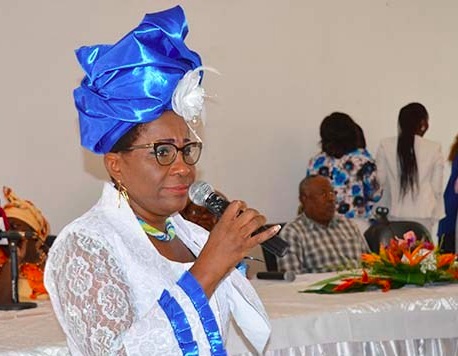
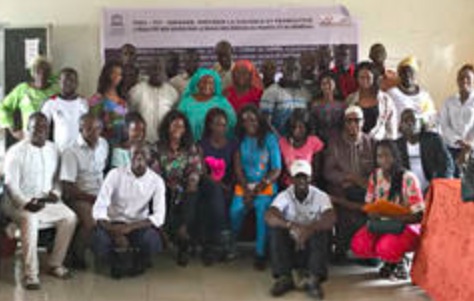
“The role of women in conflict resolution and in the construction of a lasting peace in Cameroon”: This was the theme of the program “Ladies Hours” held by the Friedrich Ebert Stiftung for Cameroon and Central Africa in Bastoson July 24, 2018. The program is a platform for exchange, information and training of women on the issues of the hour. Twenty-five women decision-makers from the government, political parties, civil society, cultural and professional associations and the media were invited to this quarterly meeting. They shared their experiences and worked for reforms to improve the status of women to be better partners in building sustainable peace and development in Cameroon.

(Article continued in right column)

(Click here for the original French version)

Question for this article

Can the women of Africa lead the continent to peace?

(Article continued from left column)

What role do women play in today’s conflicts?

An inventory of women’s activity in the current security situation in our country indicates that it is women and girls who suffer the most in conflicts because of their vulnerability: poverty, rape, destruction of their homes. sometimes their relocation, loss of loved ones. Women are absent in decision-making bodies. They are not involved in socio-political activity and do not confront the different crises such as Boko Haram and the Anglophone crisis. Women in the English-speaking regions have formed an awareness and mediation group for a return to calm.

What can women do in building lasting peace?

The education of a society is mainly based on women. They are life givers, protectors of life, initiators of life. They therefore have a very great responsibility in the culture of peace through the initiation of children and society to justice, to peace. The culture of peace is a set of acts and attitudes that give precedence to social harmony and that have as a prerequisite social justice. Women must therefore be agents of peace and actors of peacebuilding in Cameroon through their attitudes, the language they hold, the positions and analyses they make of different situations in life. Justice and equity must govern their actions. For this, they must use all the means at their disposal to build peace in Cameroon, and advocate for the protection of women and girls in times of conflict. In addition, women must work together to engage in an inclusive dialogue on the culture of peace.

In conclusion, an invitation was made to women decision-makers for awareness-raising and ongoing training of women members of their organization on the context and the need for women to be key players in building lasting peace in the world in general and in Cameroon in particular.

An unprecedented upsurge of movements for women’s rights: UN Women annual report 2017-2018

. WOMEN’S EQUALITY .

Foreward to Annual Report by UN Women Executive Director Phumzile Mlambo-Ngcuka

In 2017 we saw an unprecedented upsurge of movements for women’s rights, equality, safety and justice. The tireless work of activists has been central to this global drive, and women all over the world continue to demonstrate the power of many voices speaking as one. Together, we are calling for opportunity and accountability, drawing momentum from grass-roots networks and forging coalitions that stretch right up to the leaders of governments, businesses and civic institutions.


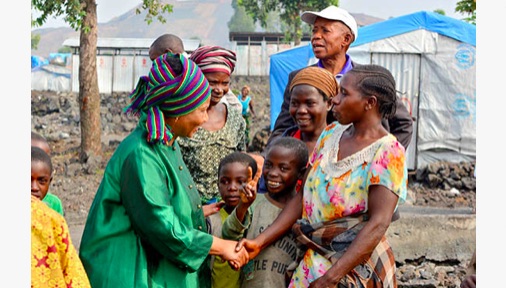
UN Women Executive Director Phumzile Mlambo-Ngcuka visited a camp for people displaced by conflict in the Democratic Republic of the Congo. Despite the terrors of war and sexual violence, women leaders are forging ahead to make new, better lives for themselves and other women in the camp.

There is a profound hunger for change in women’s lives, and a growing recognition that when women band together they can achieve it—whether online through social media or offline through more traditional mobilization. They are confronting, challenging and condemning the practices that have normalized gender inequality, poverty, sexual miscon- duct, exclusion and discrimination across every area of life.

As our Annual Report shows, UN Women is supporting women politicians, electoral officials, voters, lawmakers, civil society activists and many others to claim their equal right to lead and be heard. The report highlights the experiences of a multitude of formidable women, from individuals like Alice Wahome, Kenyan parliamentarian, to the combined success story of the 14,000 Nepalese women who won an unprecedented 41 per cent of local government seats in 2017.

We salute these women leaders in formal positions as well as all those who have bravely spoken out against sexual harassment and violence through the #MeToo movement, and others. We commend the women who spoke out in the International Criminal Court against those who used rape as a weapon of war. We celebrate activists who campaigned for equal rights for lesbian, gay, bisexual, transgender and intersex people.

We recognize those who advocated for legal reform in countries such as Tunisia, to end a provision that allowed rapists to escape persecution if they married their victims. We acknowledge those who have taken to the streets in India to condemn the murder and rape of young children, turning protests into broader-based movements that engage entire communities. We honour the indigenous leaders who have stood up for their custodial rights to land and traditional practices, and the human rights defenders who have even lost their lives for their cause.

(continued in right column)

Question for this article

Does the UN advance equality for women?

(continued from left column)

Through our report we celebrate individuals we have supported, whose life experiences represent hundreds of thousands of others like them, and whose achievements are accelerating progress towards gender equality. Small business owner Olga Macz of Guatemala told us about the increased income, independence and mobility that came with learning professional production and marketing skills.

Training also brought her increased understanding and assertion of her rights. In Egypt, more than 17,000 women from the poorest and most marginalized rural areas now have their first access to community-based village savings and loan associations, building not just savings and busi- ness opportunities but confidence and increased autonomy.

The time is now to end all forms of gender inequality. The culture of gender-based poverty, abuse and exploitation has to end with a new generation of equality that lasts for all women and girls, no matter where they live, or how they live. We must leave no one behind.

UN Women has a special relationship with the women’s movement; we arose from that activism. Civil society has had a historically crucial role in leading global action on gender equality by promoting reform, highlighting the complexities of the challenges facing women, influencing policies, participating in monitoring, and upholding ac- countability. We are working to create stronger support for women’s political activism and a broader space for women’s civil society voices so that our efforts combine to benefit those who truly need change most.

At the same time, we also need a movement of male feminists, and young men and boys who value and respect women and girls. Today’s activism needs to alter the way we listen to women and the way we look at them, recog- nizing the power of stereotypes to influence how we value people. Activists and leaders in the HeForShe movementin 2017 found tangible and scaleable solutions for inequal- ities, like the 3,500 child marriages annulled in Malawi by local chiefs, or the practical accountability actions taken in Iceland to make sure that companies put the equal pay law into practice.

At the 2018 UN Commission on the Status of Women, youth captured the urgency of the moment. They highlighted the importance of being present and participating fully in all the issues that affect their lives. They emphasized working in an intergenerational context so that they can learn from those who have been around for much longer and contrib- ute to giving us direction for the future.

The time is now to hold ourselves and our leaders accountable for progress, for all women.

Canada and partners announce historic investment in education for women and girls in crisis and conflict situations

. WOMEN’S EQUALITY .

An article on the web page of The Prime Minister of Canada

Gender equality is a fundamental human right and a top priority for Canada and its G7 Presidency. To make gender equality a reality, all women and girls around the world must have equal access to quality education and learning opportunities. When women and girls have an equal chance to learn, grow, and succeed, they help build an economy that works for everyone.

Canada, along with the European Union, Germany, Japan, the United Kingdom, and the World Bank, today announced an investment of close to $3.8 billion CAD, marking a fundamental shift toward improving access and reducing barriers to quality education around the world. Today’s announcement represents the single largest investment in education for women and girls in crisis and conflict situations. It has the potential to make a difference in the lives of millions of the world’s most vulnerable women and girls.


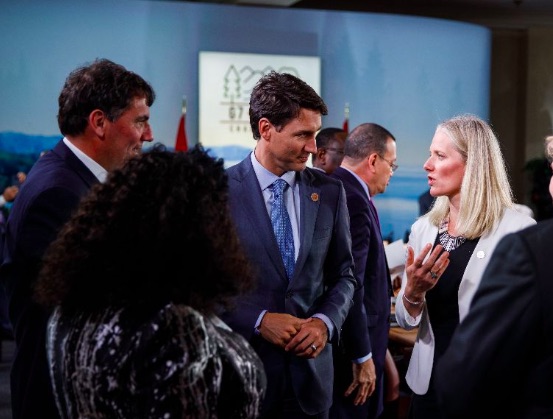
Prime Minister Trudeau participates in the working session of the G7. Photo by Adam Scotti (CPM)

These investments will support global action to:

* Equip women and girls with the skills needed for the jobs of the future

* Improve training for teachers to provide better curriculum for women and girls

* Improve the quality of available data on women’s and girls’ education

* Promote greater coordination between humanitarian and development partners

* Support innovative education methods, especially for vulnerable and hard to reach groups, including refugees and displaced people

* Support developing countries in efforts to provide equal opportunities for girls to complete at least 12 years of quality education, from primary to secondary school

Canada will work with these partners along with others to support women’s and girls’ education around the world. They will also make sure the voices of women and girls are included when decisions are made on education and employment.

(Article continued in right column)

(Click here for the French version)

Question for this article

Gender equality in education, Is it advancing?

(Article continued from left column)

Quote

“We need to work together to ensure all women and girls have access to quality education and modern skills training. From primary school to secondary school and beyond, women and girls in crisis and conflict situations must have the same opportunities to succeed. Investing in their education is not just the right thing to do, it’s the smart thing to do. Given the chance, we know women and girls will drive positive change, and help build better lives for themselves, their families, their communities, and, in turn, the world.”

—The Rt. Hon. Justin Trudeau, Prime Minister of Canada

Quick Facts

Of the total funding announced today, international partners committed to make the following investments:

* Canada is investing $400 million CAD over three years, in addition to the $180 million we provided in January 2018 to the Global Partnership for Education for 2018-2020.

* The European Union is investing 72 million euros over three years.

* Germany is investing 75 million euros.

* Japan is investing $200 million USD in girl’s and women’s quality education, including in emergencies or in conflict-affected or fragile states.

* The United Kingdom is investing £187 million, which builds on Prime Minister May’s announcement at the Commonwealth Heads of Government Meeting in April when she pledged £212 million to get almost one million girls in developing countries across the Commonwealth learning.

* The World Bank is investing $2 billion USD over five years.

In February 2018, France committed to provide 200 million euros to the Global Partnership for Education to support girls’ education and help strengthen education systems in developing countries.

At the end of 2016, globally there were 65.5 million forcibly displaced people, over half of whom were under 18 years of age, with little to no access to quality education and learning opportunities.

Girls are more likely to be taken out of school due to displacement-related poverty, more likely to be forced into early marriage, and are disproportionately affected by gender and sexual-based violence.

Canada holds the G7 Presidency for 2018, and is advancing domestic and international priorities framed under the following five key themes:

* Investing in growth that works for everyone

* Preparing for jobs of the future

* Advancing gender equality and women’s empowerment

* Working together on climate change, oceans, and clean energy

* Building a more peaceful and secure world

(Thank you to the Good News Agency for calling this article to our attention)

Panafrican Women’s Network for Culture of Peace and Sustainable Development

. WOMEN’S EQUALITY .

An article from Pyramid Media Gabon

Victoire Lasseni-Duboze was elected head of the Panafrican Women’s Network for Culture of Peace and Sustainable Development-Gabon section, at their Constitutive General Assembly which took place last weekend at the Libreville Chamber of Commerce. The Assembly was supported by the United Nations System in Gabon and the Doupambi-Matoka Foundation for Solidarity Development.


Victoire Lasseni- Duboze during her speech / DR.

This the culmination of a long process launched in 2017 with the implementation of the project “Support to the contribution of women to the promotion of the culture of peace and the objectives of sustainable development in Gabon” , initiated by the mediator of the Republic. It consisted of the realization of several women’s activities including the celebrations of International Women’s Day (8 March) and Peace (21 September).

(Article continued in right column)

(Click here for the original French version)

Question for this article

Can the women of Africa lead the continent to peace?

(Article continued from left column)

The purpose of the activities is to promote the conditions for harmonious and peaceful living together for women from civil society and the artistic, cultural and scientific worlds. More than 200 women committed to creating a national network for a culture of peace and sustainable development during the first celebration. In 2017, during the international day of peace, the network was formalized by the establishment of a temporary office, which has started to elaborate the draft statutes, rules of procedure and action plan.

At the meeting, Stephen Jackson, coordinator of the United Nations System in Gabon, said: “I therefore welcome the convening of this constituent General Assembly of the Pan-African Women’s Network for the Culture of Peace and Development. sustainable-section Gabon. It testifies not only to the strength of conviction and commitment of Gabonese women but also it highlights, in line with the National Decade of Women (2015-2025 ), the awareness and recognition in this country of the necessary contribution of women to national development “.

After her election Victoire Lasseni-Duboze announced that the network will be set up in the nine provinces of Gabon. Because, she added: “we need peace throughout the territory”. The Panafrican Network of Women for Culture of Peace and Sustainable Development will aim to mobilize the women of Gabonese and African civil society in accordance with the “Plan of Action for a Culture of Peace in Africa- Take Action for Peace, adopted in Luanda, Angola, in March 2013, following the Pan-African Forum “Sources and Resources for a Culture of Peace”.

Mexico: Tlalnepantla Continues Work to Eradicate Gender Violence

. . WOMEN’S EQUALITY . .

An article from Ordenador

To raise awareness among citizens about the importance of eradicating gender violence and promoting a culture of peace throughout the municipal territory, the Tlalnepantla government continues to carry out activities of comprehensive attention to women, including a variety of services.

Each month the Municipal Institute for Women’s Equality and Development (IMIDM) carries out an average of 12 days of activities in various communities to prevent more women from being victims of some type of violence.


At their stands, attendees are given information on this topic, and it is expected that they in turn replicate this knowledge among their families and neighbors, to detect situations of violence in their communities.

During conferences, psychologists specialized in this subject offer a talk in which they teach the definition of violence and how to detect it; what is the gender violence alert, and what is the cycle of violence. Attendees are provided with emergency numbers to be called in case of violence.

(Article continued in the right column)

(Click here for the original in Spanish.)

Question for this article

Protecting women and girls against violence, Is progress being made?

(Article continued from the left column)

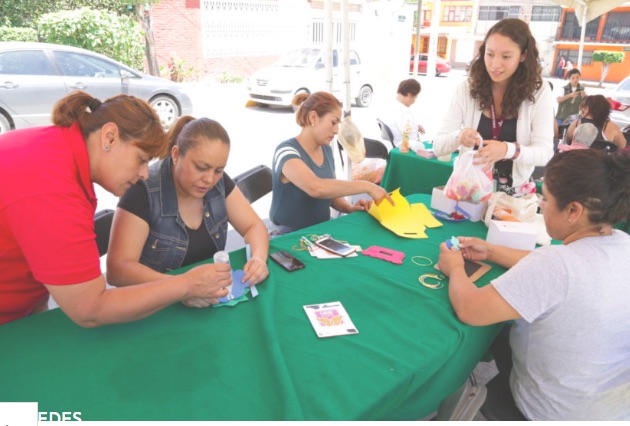
After the presentation, attendees have the opportunity to participate in a “Workshop to promote self-employment”, which is carried out free of charge, with the purpose of empowering women to generate their own economic resources to access a better quality of life.

Among the activities carried out in this workshop, crafts are taught for the preparation of candy, bags, baskets, portraits and key rings, as well as the manufacture of products for cleaning the home, which can then be marketed to obtain additional income

Those interested in participating in this workshop should contact the IMIDM, gather a group of at least 25 people and have an adequate space for the preparation of food.

It is worth mentioning that these days are carried out in coordination with the Municipal Health Institute and with the Municipal DIF System, which is why services such as eye examinations, pressure collection and vital signs, dental check, among others, are also available.

For his part, Edgar Mauricio Zepeda Montes, a resident of Santa Monica, acknowledged that this type of conference serves to raise awareness among people about gender violence and the way in which it harms the development of society.

Monica Bribiesca Barrera, from Valle Ceylán, said that these activities contribute to improve the environment in their communities “because there should be no violence of any kind, at any age, not even towards animals. Violence denigrates all of us as living beings.”

Women, Peace and Security Focal Points Network meets in Berlin to promote women’s role in peace processes

. WOMEN’S EQUALITY .

An article from UN Women

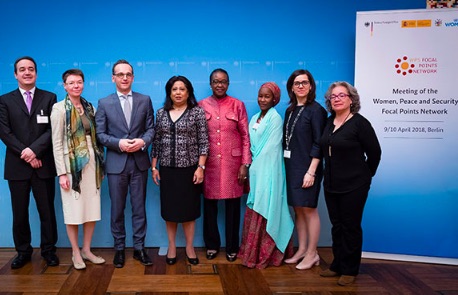
About 150 representatives from UN Member States, regional and international organizations and civil society from around the world met in Berlin, Germany, for the annual capital-level Women, Peace and Security Focal Points Network (WPS-FPN) meeting on April 9-10, 2018.


UN Women Deputy Executive Director Yannick Glemarec with German Foreign Minister Heiko Maas and other participants at the Women, Peace and Security Focal Points Network meeting in Berlin. Photo: Xander Heinl/photothek.net

The Network, initiated by Spain in 2015 during the high-level review of the implementation of Security Council resolution 1325 and launched in 2016, serves as a cross-regional forum to exchange experiences and best practices to advance the implementation of the UN agenda on women, peace and security, and to improve coordination of funding and assistance to programmes.

Today, women remain a minority in all peace processes, representing only 4 per cent of the military component of UN peacekeeping missions, and 10 per cent of the police component. Despite increases since 2010, the percentage of gender-specific provisions in peace agreements declined in 2016. Violations against women human rights defenders persist and access of women and girls to justice and security remains hindered. In addition, harmful gender norms and structural barriers continue to contribute to inequalities and violence. Women in peacekeeping operations have been found to increase the credibility of forces, gain access to communities and vital information, and lead to an increase in reporting of sexual and gender-based crimes.

In his opening address, Heiko Maas, German Foreign Minister, emphasized that “Women can and must play an active role in conflict prevention, peace talks, reconstruction, reconciliation in societies and particularly in post­conflict situations.”

(Article continued in right column)

Question for this article:

UN Resolution 1325, does it make a difference?

(Article continued from the left column.)

He noted that one objective of the meeting was to “highlight how alliances can promote this agenda – alliances with regional organizations or strong partners such as the G7, with other networks and initiatives, but also, and very importantly, with civil society.”

Organized by Germany as current Chair of the Network, in close collaboration with Spain, Namibia and UN Women, the meeting focused on “Building Alliances to Advance the Women, Peace and Security Agenda” deepening the discussion on accountability mechanisms for conflict-related sexual and gender-based violence. Resources, professionalization of data collection and evidence finding were highlighted as key to promoting accountability, while comprehensive gender-sensitive conflict analysis and budgeting processes were highlighted as mechanisms to help ensure the implementation of strategic priorities and appropriate financing for the women, peace and security agenda across sectors.

In her keynote address on the second day, Swedish Foreign Minister Margot Wallström underlined that “Gender equality is the issue of our time. It is not a women issue, it is a peace and security issue.”
UN Women Deputy Executive Director for Policy and Programme, Yannick Glemarec, urged participants to seize the opportunities offered by the Network to effect tangible changes in the way challenges of implementing the Women, Peace and Security agenda are addressed.

During the meeting, the Focal Points reflected on the critical need for streamlining the different reporting mechanisms and consultation processes on women, peace and security to foster an enabling environment for accountability by Member States and regional organizations. At the local level, they advise for specific timelines, aligned indicators, adequate budgets and the active involvement of civil society actors as key components for successful national action plans.

The Focal Points agreed on key actions for the Network from the meeting, which is reflected in a joint communiqué  which will be issued as an official document of the UN Security Council.

In closing remarks, Selma Ashipala-Musavyi, Permanent Secretary of the Ministry of International Relations and Cooperation of Namibia, who will Chair the Network in 2019, said of the Network, “We are there to show the way for women to never give up hope.” The Network is expected to host additional meetings in New York in the coming months and during the 73rd session of the United Nations General Assembly.

(Thank you to the Good News Agency for calling our attention to this article.)

Voices from 62nd session of the Commission on the Status of Women (CSW62)

. . WOMEN’S EQUALITY . .

A article from UN Women

The Commission on the Status of Women (CSW) is the UN’s largest annual gathering on gender equality and women’s rights. It brings together governments, women’s rights, gender experts and other actors to build consensus and commitment on policy actions to advance women’s rights.

More than 4,300 civil society representatives from 130 countries participated in the 62nd session of the Commission, which focused this year on rural women and girls. Why do they come and what do they take back with them from this UN meeting? Here are some of their voices and perspectives.


Video of Catherine Mbukwa

Catherine Mbukwa, Project Officer with the Centre for Youth Empowerment and Civic Education, Malawi

“I’m here to learn from others. Being here means [learning] new skills. Let’s say in Malawi, we are tackling child marriage, and our friends [in another country] are in the forefront of ending child marriages, what is it that they are doing in their country to promote and empower women?”

Alice Lesepen, representing the Rendille peoples of Marsabit County, Kenya

“I’m here to represent the rural women from the indigenous community of Rendille. [Coming] from a pastoral community, our livelihood depends entirely on the land. [Rural and indigenous women] need to know how we can rightfully use our land without any interference. When we talk about food security, women are the ones providing for their families. Without land, we cannot do anything…we cannot keep our animals…we would lose our identity.”

Otilia Lux de Cotí, Advisor to MADRE and part of UN Women’s Civil Society Advisory Group in Latin America and the Caribbean, Guatemala

“Socialization of the CSW agreed conclusions is very important. This is how women activists in their respective areas of specialties learn about the commitments that Member States have pledged to achieve. It allows them to hold governments accountable, and ask for those commitments to be transformed into social policies. We have to drive this change in order to really make a difference for rural women and girls.”

Marija Andjelkovic, Director and founder of the Serbian NGO, ASTRA-Anti trafficking action, Serbia, grantee of UN Trust Fund to End Violence against Women

“In our part of the world, the government listens more when there are recommendations from the UN, the EU, or the US State Department report on trafficking. For example, for years now, we have been advocating for compensation for victims of trafficking. Only two out of all identified victims (500 identified in Serbia) have received a decision of compensation in their favour. We have submitted a draft law on compensation for victims of violent crime, and included trafficking. Then, the Council of Europe and the CEDAW Committee adopted the recommendation for compensation for victims. That helped us. Now the government is working on a strategy for victims of crime and have said they will look into compensation as part of that. These recommendations, such as the CSW (agreed conclusions) give us tools to advocate with our own government. We produce shadow reports before CSW, and provide our own recommendations, and then we see if our recommendations are included.”

Zoneziwoh Mbondgulo, Rural women’s rights activist, Cameroon

“Among several challenges, one is access to credit. They are not talking about petite grants or microcredit, but macro credit…Rural women also want better sexual and reproductive health services, with better access to contraceptives and family planning products. Even basic education in these areas will help them.”

Sepali Kottegoda, Academic, activist and Technical Advisor on Women’s Economic Rights and Media, Sri Lanka

“Rural women want equal pay for the work they do. They also want more sharing of work within the house. There’s a lot of emotional rhetoric around women’s unpaid work—that they do this out of love for the family. But the reality is that women do much more unpaid work and have to also take part in paid work. The rural women from Sri Lanka also want land rights. The first preference is still given to men and the male child in terms of inheritance, and especially in government settlement schemes.”

Maria Leyesa (Daryl), Rural Women Coordinator for Philippine Peasant Institute and Convention Leader for the 1st National Rural Women Congress, Philippines

“They want their voices to be heard. They want their rights to be recognized as equally as men and boys have their rights recognized. To have control over their lives, land, water resources and their bodies, to have access to education and other services, to be protected against climate change and natural disasters, and to protect their countryside against rapid urbanization and encroachment by corporations.”
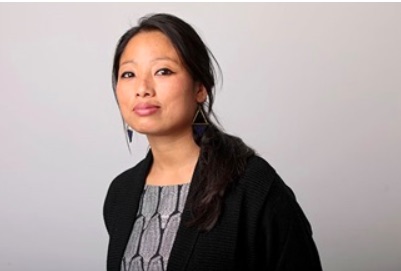
Wekoweu (Akole) Tsuhah, North East Network, Nagaland, India

“Women in rural communities want to be recognized for their contribution to food and nutrition security for their families and the nation. Everyone does farming in my community, but women don’t have the status of “farmers” because they don’t own land and resources. They want a platform where they can be heard. They want access to technology that can alleviate the drudgery of their work and support for small-scale, sustainable, climate-resilient agriculture.”

(Article continued in the right column)

Question for this article

Do women have a special role to play in the peace movement?

(Article continued from the left column)

Rukmini Rao, Founder of Gramya Resource Centre for Women, India

“Rural women have the knowledge to change the world, but most of the work they do is unseen and unpaid. One of our demands at Gramya Resource Centre for Women is that women should have land titles in their names. So, we are pressing the government to recognize that women are farmers and to give them access to markets, economic goods, and all the other things that they need as farmers. Widows are particularly vulnerable to sexual violence. And when she is non-literate, she doesn’t even know where to access any government scheme. A widow is considered to be a bad omen. We ask widows not to follow all the customary practices…We find that by organizing women, many issues can be addressed.”

Helda Khasmy, Chair of SERUNI, Indonesia

“Most members of SERUNI are in rural areas, and one of their biggest challenges is access to land and ownership of land. There’s a monopoly of land ownership by big corporations in Indonesia. Women don’t inherit land as equals to men, but now their men too have very little or no land. This makes women even poorer. They go on to become low-wage workers in the palm oil, sugar or tobacco plantations, where they often work in poor conditions, for low wages, and are exposed to harmful pesticides that affect their health. When women menstruate, they can ask for holiday, but the plantation officials ask them to take off their pants to prove that they are menstruating.”

Mireille Tushiminina, Shalupe Foundation, the Democratic Republic of Congo

“If you ask the Congolese people, what is peace for them, they will tell you that they want to live in a peaceful environment, where they can live in any neighbourhood, and not be afraid to walk to school or fetch water. Gender-based violence is not only happening in eastern Congo, it’s a disease that has spread to every corner of DRC. Mothers and fathers have watched their girls being raped at gun point. How can a girl grow up to push the African vision of progress and development, the African Agenda 2063, if all she learns today is to become a seamstress? We need to invest in girls’ empowerment in the Democratic Republic of Congo.”

Nehad Abo El-Komsan, Lawyer, Co-founder and Chairwoman of the Egyptian Center for Women’s Rights, Egypt

“In the recent years, there have been many positive developments in Egypt. Women’s rights were included in our constitution in 2014 and since then many legislations have been changed, especially in relation to violence against women. The Egyptian Center of Women’s Rights developed a national strategy for stopping violence against women. Sexual harassment, female genital mutilation and child marriage have been included in the law, with harsh penalties. Although these good developments have taken place, women still face challenges. Implementation of the law is a major challenge. It is very important to raise awareness of law enforcement authorities and [help them] understand it is not just a women’s issue, it is protection for the whole society.”

Nandini Chami, IT for Change, India

“Information and communication technologies are a vital part of the enabling technologies that women need for opening up various pathways to political and socio-economic empowerment. The most basic question we can start with is the question of access, because there is still a huge gender digital divide that needs to be bridged. We also know that there is a rural-urban divide. Rural women are less likely to be using the internet compared to let’s say urban educated and employed women. This intersectional divide is something we need to address. [In the meantime] governance is going digital by default. You need the internet for your basic services. Also, we have to think about the fact that many people don’t speak global languages such as English, and so how do you create context-appropriate content for women and girls?”

Purity Soinato Oiyie, Maasai girl and anti-FGM activist, Kenya

“I was only 10 or 11 years old, when my father decided to circumcise me. I talked to my class teacher and she informed the police chief. Just two hours before the cutting ceremony, the police came and took me away. Today, I work with World Vision and the Kenyan anti-FGM Board to help raise awareness among people in the villages. It’s difficult to convince people to stop FGM because it’s a cultural practice. I go to the schools and talk to the girls and the teachers, I talk to the Maasai people in our language…I tell them about the importance of education. What we need is free education for girls. The Maasai are pastoral people and many parents don’t have money to send their girls to school.”

Sohini Shoaib, Jan Jagran Shakti Sangathan, Bihar, India

“There are huge farmer uprisings that are happening [in India] and they are mostly people who don’t own land. Recently there were some 40-50,000 peasants who went on a long march to Mumbai, the capital city. They walked there to ask for their rights and highlight the farmers plight and ask for climate justice. I come from the Kosi flood basins in Bihar, and every year there are massive floods in the area, on a scale that hasn’t been seen before. In most cases, floods are triggered by or escalated by manmade reasons; one of the factors is climate change. This has made the communities very vulnerable, so every year they have to start from scratch. Women are rising up, and not just women, all these people who feel they have been silenced. For so many years farmer suicides have been going on…Then there’s large scale displacement because of the huge dams that are being built and the land being taken over, GMOS being introduced, leading to a lot of changes in the environment, which has affected farming. I pushed for our friends who are actually from rural communities to be able to participate [in CSW]. But there were so many issues, from language barriers to visa procedures. And so who gets to come? I do. That’s not fair, but hopefully things will change.”

Note: All photos by UN Women/Ryan Brown
Mexico: Tlalnepantla hosts the “Encounter of Women for Peace”

. . WOMEN’S EQUALITY . .

An article by Lauro Galicia for Acustiko Noticias

In the ‘Encounter of Women for Peace’ in Tlalnepantla, State of Mexico, successful women shared local and international experiences to counter scenarios of violence and insecurity .


(Click on photo to enlarge)

In leading this meeting, the mayor Denisse Ugalde Alegría recognized the work of Rosa Cristina Parra Lozano, specialist in communication for development and citizen activism, as well as Margarita Solano Abadía, promoter of peace journalism, who participated as speakers and have been leaders in their respective areas.

She emphasized that each women of this municipality, whether operating in the field of politics, business, restaurant, sports and social, can lay the foundations for peace building and make a difference in their community.

She recalled that in order to make a common front against violence and crime, in Tlalnepantla the Neighborhood Networks of Security program was launched, an initiative that engages the citizenry in the construction of safe and peaceful environments.

(Article continued in the right column)

(Click here for the original in Spanish.)

Question for this article

Do women have a special role to play in the peace movement?

(Article continued from the left column)

One week after the installation of the first alarm system in the municipality, about 14 thousand citizens of Tlalepantla have already been organized in neighborhood security networks, defining 199 points of installation of the 324 alarms, which means an advance of 61.5 percent.

She pointed out that daily meetings are held for the formation of these networks, which are composed of 70 neighbors on average. The networks aim to strengthen the capacities of organization, collaboration and solidarity, to promote and address violence and insecurity that afflict the municipality .

Ugalde Alegría added that about 500 public servants from all areas of the administration, have already been sensitized and trained in these issues of attention to citizenship, in addition to having held work meetings aimed at restoring public confidence.

She explained that among the communities that have already installed the alarm systems, are Santa María Tlayacampa, Jardines de Santa Mónica, Electra, Cuauhtémoc, Unidad Habitacional El Tenayo, Lázaro Cárdenas, San Juan Ixhuatepec, Leandro Valle, Los Pirules and Prensa Nacional, to name a few.

The meeting was moderated by Angélica Garnica Sosa, integrator of Culture of Peace. Colombian journalist Margarita Solano shared her experience of what she experienced in Ciudad Juárez, considered at one point as the most dangerous and violent city in the world.

Also, activist Rosa Cristina Parra narrated her experience as coordinator of the worldwide mobilization against the FARC and the work she promoted so that Colombia regains peace.

Women of Tlalnepantla exchanged points of view with the speakers, and expressed their interest in continuing to work in this municipality to consolidate a culture of peace and thereby build a safe place for their families.

What Is CSW and Why Are We in New York to Be Part of It?

. WOMEN’S EQUALITY .

An article from the Intenational Women’s Development Agency

CSW is the largest gathering of the 193 UN Member States and other stakeholders that’s focused on the promotion of gender equality and the empowerment of women. This annual forum can have huge real-world applications to the lives of millions of women around the world. It’s a place where those with power come together to make decisions that affect real women’s lives. 

A BIT OF HISTORICAL CONTEXT

In its 61 years, CSW has contributed to huge progress for women. CSW is where conventions and guidelines that are still used today to protect the political, social and economic rights of women were passed, like the United Nations Convention on the Elimination of all forms of Discrimination of Women (otherwise known as CEDAW). Before CSW, ‘men’ was still used as a synonym for all of humanity. It was also the place where, in 1975, the 8th of March was formally recognised as International Women’s Day. Over the years, CSW has also been critical in recognising rape as a weapon of war, a view that was then formalised at the International Criminal Court.

WHAT ACTUALLY HAPPENS AT THE COMMISSION ON THE STATUS OF WOMEN?

The first week is a time for UN Member States, Civil Society Organisations (this just means organisations like us and other not-for-profits) and other stakeholders to deliver large plenary presentations on the year that was in gender equality, discuss innovations in this space and share recommendations for the coming year.

Week one of CSW is jam-packed full of debate, strategising and planning. Governments of the world come together in high level meetings to discuss the myriad of issues affecting women. Everything is up for discussion, but this year’s focus is on women’s economic empowerment. Ministers and Heads of State will gather and discuss how they will further the full and equal participation of women in their economies.

Leaders will share ideas and strategies about how to improve women’s economic participation through clearer policy and formal governmental commitments to gender equality. Civil Society Organisations will attend meetings, lobby Governments, liaise with decision makers and ensure the voices of diverse women are represented.

After the first week of meetings, discussions and debate among delegates, the week two of CSW is all about negotiating the “agreed conclusions”, which sets out Governments’ commitments to advance women’s rights post-CSW. It sounds simple enough, but the policy agenda that comes out of CSW requires feedback from many different people – and just about every word is hotly contested.

The “agreed conclusions” is a huge document, but an important one to get right – it’s designed to inform policy on women’s human rights across the world. If a government signs up, they’re obligated to deliver on it, which is why so much time is spent in discussions, negotiations and debate to reach an outcome that can be agreed on.

(continued in right column)

Question for this article

Does the UN advance equality for women?

(continued from left column)

WHY DO WE GO?

Women’s rights organisations and networks, both at home and abroad, have a key role to play in ensuring that the priorities of women on the ground are taken into account. But despite the importance of reflecting real women’s circumstances in the decisions that come out of CSW, women’s rights organisations and other Civil Society Organisations aren’t allowed to be involved in the formal negotiations of the “agreed conclusions”. This is reserved for governments. That’s why we need to show up and be as vocal as we can about the key issues that affect women’s lives and where women’s rights remain at risk.

We’ve seen true progress come out of CSW. But it’s always been a fight to get things passed, and over the past five to six years, we’ve seen a group of states coming together to push back against the gains we’ve made in gender equality and women’s human rights. Sexual health and reproductive rights are being impinged, comprehensive sex education to halt HIV isn’t always happening, and interested parties with fundamentalist ideas about women’s role in society are advocating for abstinence. Action to address these issues has already been agreed upon in the past, but these issues are still being contested and pushed back on.

If women’s rights advocates are not there to speak up, CSW gives states, lobbyists and those who wish to maintain the status quo of gender inequality a chance to push us backwards. We need to be there to hold the line and keep the discussion moving forward.

WHAT DOES A DAY AT A BIG GLOBAL CONFERENCE LOOK LIKE?

It starts early. It ends late. We don’t stop.

Days start at 7am with teams touching base and sharing information about what’s happening in the negotiating rooms. We check in to see how everyone is travelling, what we need to achieve for the day, and figure out conversations to pursue with decision makers.

Over the course of day we meet with Government delegations; catch up with fellow activists and make plans for the future; work with our colleagues to find ways to contribute to debate around the “agreed conclusions”; and meet with funders to share results and attempt to secure more funding for the women’s rights movement.

Our colleagues have told us that CSW can be personally challenging. They say it’s confronting to see the denial of women’s humanity and rights, particularly by legitimised groups like UN Nation States. As an organisation that works in research, policy, advocacy and programs, we know the impacts these decisions can have on the lives of women. We can see ahead. At the moment, we’re seeing the disturbing rise of rhetoric around women’s primary role being motherhood and caregivers. This is something that needs to change. We’re seeing countries decriminalising violence. We’re seeing women’s rights at risk.

WHAT DOES IT MEAN FOR THE PEOPLE INVOLVED?

When the UN can’t back criminalisation of domestic violence, it lets national governments decriminalise domestic violence. If the UN can’t back comprehensive sexuality education, it allows National Governments and conservative groups to withhold education and resources around pregnancy and protection against STIs. When the UN can’t back the human rights of people with diverse sexualities and gender identities, it creates environments in which states can create laws which make homosexuality punishable by death.

We go to CSW because we want to change the laws and policies around the world to achieve gender equality, and CSW is the preeminent global policy space in which to do this. We go to get in front of Governments and funders of the world to ensure their political and financial commitment to women’s rights. We also go to build the global alliances between women’s activists, organisations, and feminists. We go because it isn’t just a lofty political event – it effects real women’s lives. We go to create change.

UN Commission on the Status of Women (CSW62)

. WOMEN’S EQUALITY .

An article from UN Women

The Issue: Empowerment of rural women and girls

She works from daybreak until sundown, and often beyond. She tills the land and grows the food that feeds families and nations, but often without land rights, or equal access to finances and technology that can improve her livelihood. She is working as hard, or more, as the man next to her, but have less income. She has much to contribute, but will her rights, voice and experience shape the policies that affect her life?

Without rural women and girls, rural communities and urban societies would not function. Yet, on almost every measure of development, because of gender inequalities and discrimination, they fare worse than rural men or urban women.

(continued in right column)

Question for this article

Does the UN advance equality for women?

(continued from left column)

Less than 13 per cent  of landholders worldwide are women, and while the global pay gap between men and women stand at 23 per cent, in rural areas, it can be as high as 40 per cent.

For far too long, rural women’s and girls’ rights, livelihoods and wellbeing have been overlooked or insufficiently addressed in laws, policies, budgets and investments. They lack infrastructure and services, decent work and social protection, and are left more vulnerable to the effects of climate change. Gender-based violence and harmful practices continue to limit their lives and opportunities.

The 62nd session of the United Nations Commission on the Status of Women (CSW62), the UN’s largest gathering on gender equality, is taking place at the United Nations Headquarters in New York from 12 – 23 March 2018. It will focus on the theme, “Challenges and opportunities in achieving gender equality and the empowerment of rural women and girls”.

The Commission is one of the largest annual gathering of global leaders, NGOs, private sector actors, United Nations partners and activists from around the world focusing on the status of rights and empowerment of all women and girls, everywhere. Check out CSW62 events.

Join us to learn more about rural women’s lives, their priorities and accomplishments. Follow the unfolding conversation at the United Nations and in rural communities worldwide.