Category Archives: SUSTAINABLE DEVELOPMENT

300 Participants from 60 Countries Attend Annual Forum of China and Globalization

. . SUSTAINABLE DEVELOPMENT . .

Excerpts from an article from the Center for China and Globalization

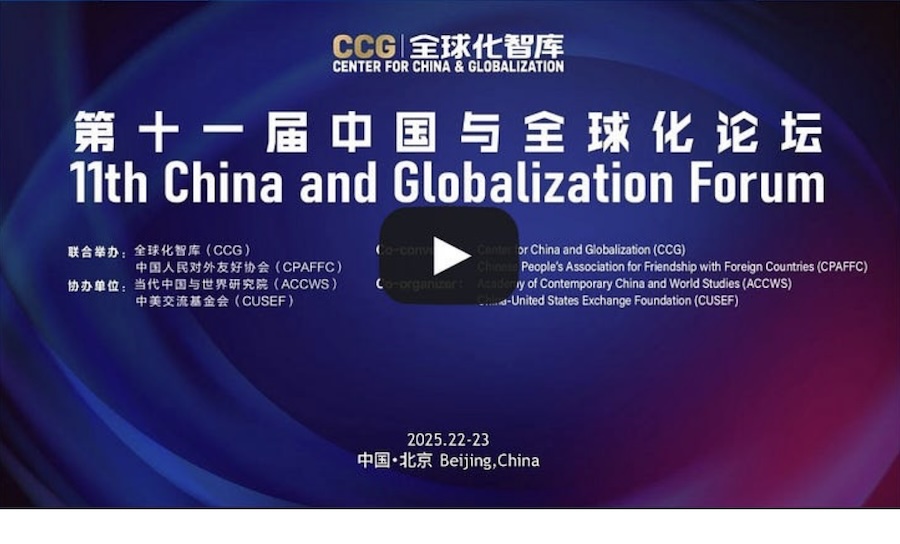
The 11th Annual China and Globalization Forum, jointly convened by the Center for China and Globalization (CCG) and the Chinese People’s Association for Friendship with Foreign Countries (CPAFFC), and co-organised by the Academy of Contemporary China and World Studies (ACCWS) and the China-United States Exchange Foundation (CUSEF), concluded successfully in Beijing after a three-day agenda from May 22 to 24.


Video of conference

The forum brought together over 300 participants from nearly 60 countries across five continents, including former policy-makers, ambassadors, policy experts, scholars, international organisation representatives, and media professionals.

The opening session took place on the morning of May 22 at the Grand Millennium Beijing and was moderated by Mabel Lu Miao, Co-founder and Secretary General of CCG. . . .

Following the opening, the first roundtable session titled “Renewing Global Governance and Multilateralism in Uncertain Times” was co-chaired by Henry Huiyao Wang and Mabel Lu Miao. . . .

In the afternoon, the forum continued with three thematic roundtables. The first, titled “US-China Trade War Narratives in an Era of Great Power Competition,” was held in partnership with the Asia Society. The session was co-chaired by:

– Henry Huiyao Wang

– Jing QIAN, Co-founder and Managing Director, Center for China Analysis (CCA) at Asia Society Policy Institute . . .

The second roundtable in the afternoon, themed “Reshaping Frameworks for Global Governance: The Role of China and the Global South,” was held in partnership with the Doha Forum. The session was chaired by Mabel Lu Miao and featured special remarks from Henry Huiyao Wang and Maha Al Kuwari, General Manager, Doha Forum. . . .

(article continued in right column)

Question for this article:

Does China promote a culture of peace?

(Article continued from the left column)

The last roundtable of the day was themed “Maintaining International Regulatory Cooperation in A Multipolar World.” Held in partnership with the Centre on Regulation in Europe (CERRE), the session was chaired by Zach Meyers, CERRE Director of Research. . . .

On May 23, the Ambassadors’ Roundtable focused on the theme “Multilateralism in a Multipolar World” and was co-chaired by Henry Huiyao Wang, James Chau, and Tammy Tam, Editor-in-Chief, South China Morning Post. . . .

This was followed by a policy dialogue roundtable themed “EU-China at 50: The State of the Bilateral Relationship in a Changing World.” It was co-organised with the European Policy Centre (EPC) and chaired by Henry Huiyao Wang and Declan Kelleher. . . .

The afternoon was dedicated to the Middle East Forum, held in partnership with the Amersi Foundation, which comprised two sessions:

Panel 1: The Emerging New Middle East Order – moderated by Henry Huiyao Wang and Mohamed Amersi, Founder and Chairman, The Amersi Foundation

Panel 2: Key Challenges – covering three topics: Iran nuclear talks, the Israel-Palestine conflict, and state fragility.

The sessions were moderated by Henry Huiyao Wang, Mabel Lu Miao, Zoon Ahmed, Research Fellow, CCG, and Mohamed Amersi, Founder and Chairman, The Amersi Foundation. . . .

In parallel, a closed-door roundtable under the EU-China Think Tank Exchanges project was held, moderated by SHEN Wei, Qiushi Distinguished Chair Professor at Zhejiang University and Nonresident Senior Fellow at CCG, and Victor de Decker, Research Fellow for the Europe Program at the Egmont Institute. . . .

On May 24, CCG and the Alliance of Global Talent Organizations (AGTO) arranged a field visit for over 30 international participants from nearly 20 countries.

Participants visited the CCG Beijing Academy, Beijing’s sub-centre in Tongzhou, including the “Two Zones” [National Integrated Demonstration Zone for Greater Openness in the Services Sector and the China (Beijing) Pilot Free Trade Zone] exhibition hall, and AGTO Beijing Office.

The group also visited historical landmarks in the Grand Canal Cultural Tourism Zone and the Han Meilin Art Museum. These activities provided international guests with insights into Beijing’s cultural heritage and openness, while also exploring opportunities for future cooperation.

– – – – – –

If you wish to make a comment on this article, you may write to coordinator@cpnn-world.org with the title “Comment on (name of article)” and we will put your comment on line. Because of the flood of spam, we have discontinued the direct application of comments.
78% of Russian students consider climate change to be a problem

. . SUSTAINABLE DEVELOPMENT . .

Special to CPNN

In a study conducted as part of the annual international youth festival “VuzEkoFest”, 78% of students expressed concern about climate change and noted that global warming is a problem. The festival is organized by the Autonomous Non-Governmental Organization Territory of Sustainable Development with the information support of the Ministry of Science and Higher Education and the Ministry of Natural Resources and Ecology of the Russian Federation.

1,669 Russian university students took part in the survey. The study was conducted from March 12 to April 25. 40% of respondents noted that they are worried about climate change processes, however, 35% of respondents believe that everything is solvable and the right approach to risk management, mitigation and adaptation to climate change will allow future generations to get out of a difficult situation.

The respondents noted the following climate change adaptation measures that they have recently observed in their region. The most common of these is monitoring compliance with fire safety regulations (26.6%), in second place is clearing riverbeds and shorelines (12.4%) and in third place is the improvement of forest roads and reservoirs (11.6%). 

“As part of the “VuzEkoFest-2025″, it was important for us to address issues of adaptation to climate change, including at the level of the regions where universities operate. It is worthwhile not only to know the existing concepts of the triple planetary crisis (environmental pollution, climate change and loss of biodiversity), planetary borders and others, but also to understand what is happening in your country, in the regions and what the cost of damage may be in the event of extreme weather events, what solutions can be proposed the scientific community and business in the context of adaptation. The festival helped to increase the interest of young people in the topic and strengthen the desire to share their ideas and scientific developments,” said Anastasia Okorochkova, Director of the Autonomous Non–Profit Organization Territory of Sustainable Development.

“The study clearly highlights the measures to adapt to climate change that have been implemented in the regions. Their analysis shows that they are aimed at solving those problems to which it is already impossible not to react. But it is equally important to provide solutions to the problems that may arise on the horizon of 20-50 years, taking into account possible climate changes. This applies to industry, cities, transport and energy infrastructure, agriculture and forestry.

(article continued in right column)

Question for this article:

Despite the vested interests of companies and governments, Can we make progress toward sustainable development?

(Article continued from the left column)

And, of course, the scale of the problems arising from the increasing climate change raises the question of how to accumulate financial resources – public and private – to solve them,” noticed Sergey Sementsov, Scientific Director of the Center for Sustainable Development at the VEB Institute.

According to respondents, it is possible to solve problems related to climate change with the help of international organizations (21.3%), federal (17.9%) and regional (13.8%) authorities. Many also noted that responsibility lies with each individual (20.7%). At the same time, some of the respondents believe that business is responsible for eliminating the consequences of climate change, including for finding solutions (8.4%).

In order to reduce their carbon footprint, students monitor electricity consumption (19.6%), reduce plastic consumption (17.9%), use water efficiently (17.6%), use public transport, bike or carsharing (17.4%) and participate in tree planting campaigns (7.6%).

​​”The climate changes taking place on the planet are becoming more and more obvious, even at the household level, so it is not surprising that young people, on whose shoulders the main burden of the consequences of climate change will fall, see this as a problem. An important prerequisite for solving this problem is environmental education and scientific refutation of established myths,” commented Alexander Chernokulsky, PhD, Deputy Director of the Obukhov Institute of Atmospheric Physics of the Russian Academy of Sciences.

“Climate change is our reality and our future. Therefore, it is very valuable that the most important global topic is not perceived by students as something apocalyptic or abstract. In general, I believe that there is a big flaw in the wording “combating climate change”. It is necessary to deal not with climate change, but with negative decisions, processes and consequences of human activity that have a detrimental impact on the environment. And in this sense, a future specialist in any field can bring tangible benefits – to develop any product based on the principles of a closed-loop economy. I really believe in the generation of the “Territory of Sustainable Development” – young people already understand the scale of the problem today, and their inclusion and motivation will certainly benefit the climate, the region, the country, and humanity as a whole,” reported Svetlana Bik, author of the telegram channel 100% Green, head of the INFRAGRIN platform.

– – – – – –

If you wish to make a comment on this article, you may write to coordinator@cpnn-world.org with the title “Comment on (name of article)” and we will put your comment on line. Because of the flood of spam, we have discontinued the direct application of comments.
2025 Goldman Environmental Prize Winners ‘Serve as Powerful Reminders of What Is Possible’

. . SUSTAINABLE DEVELOPMENT . .

An article by Jessica Corbett from Common Dreams

Seven grassroots Earth defenders from around the world were announced on Monday as the 2025 Goldman Environmental Prize winners.

“It’s been a tough year for both people and the planet,” said Jennifer Goldman Wallis, vice president of the Goldman Environmental Foundation, in a statement. “There’s so much that worries us, stresses us, outrages us, and keeps us divided. However, for me, these environmental leaders and teachers—and the global environmental community that supports them—are the antidote.”


2025 Goldman Prize winner Carlos Mallo Molina (right) and the Innoceana team work on scuba gear. (Photo: Goldman Environmental Prize)

“If we apply the same passion and logic that we use in the protection of our own families to our broader communities and ecosystems, then we will win,” she continued. “In these difficult times for environmental activists, these seven individuals serve as powerful reminders of what is possible through determination, resilience, and hope.”

Since 1989, the foundation has awarded the annual prize to individuals from the world’s six inhabited continental regions “for sustained and significant efforts to protect and enhance the natural environment, often at great personal risk.”

Africa: Semia Gharbi of Tunisia

Gharbi, a 57-year-old scientist and environmental educator, led a campaign against a corrupt waste trafficking scheme between Italy and Tunisia that led to the arrest of over 40 people from both countries and stronger European Union export rules.

(article continued in right column)

Question for this article:

Despite the vested interests of companies and governments, Can we make progress toward sustainable development?

(Article continued from the left column)

Asia: Batmunkh Luvsandash of Mongolia

After being born to a nomadic herder family and working as an electrical engineer for construction and mining projects, 81-year-old Luvsandash used his expertise to fight to protect 66,000 acres of Dornogovi province from extractive activities.

Europe: Besjana “Besi” Guri and Olsi Nika of Albania

The efforts of Guri, a 37-year-old who trained as a social worker, and Nika, a 39-year-old biologist and aquatic ecologist, to safeguard the Vjosa River from a hydropower dam development led to Albania and Europe’s first new national park protecting a wild river and its tributaries.

Islands: Carlos Mallo Molina of the Canary Islands

Mallo Molina, a 36-year-old born in mainland Spain, left his job as a civil engineer specializing in port construction to launch the conservation group Innoceana, which fought to protect the Canary Islands’ marine ecosystem from the proposed Fonsalía Port.

North America: Laurene Allen of the United States

Allen, a 62-year-old clinical social worker, campaigned for the closure of the Saint-Gobain Performance Plastics plant in Merrimack, New Hampshire, and continues to fight for cleanup efforts and stricter regulations regarding per- and polyfluoroalkyl substances (PFAS), commonly called “forever chemicals” because they persist in the environment and people’s bodies for long periods.

South and Central America: Mari Luz Canaquiri Murayari of Peru

Canaquiri Murayari is the 56-year-old president of the Kukama women’s organization Asociación de Mujeres Huaynakana Kamatahuara Kanawon, which won a landmark Rights of Nature court ruling that granted legal personhood to the Marañón River.

This year’s prize winners are set to be celebrated on Monday at an in-person and livestreamed ceremony in San Francisco, California, at 5:30 pm Pacific Daylight Time.

– – – – – –

If you wish to make a comment on this article, you may write to coordinator@cpnn-world.org with the title “Comment on (name of article)” and we will put your comment on line. Because of the flood of spam, we have discontinued the direct application of comments.
Ministers approve BRICS Environment declaration

. . SUSTAINABLE DEVELOPMENT . .

An article by Mayara Souto from BRICS News

BRICS Environment ministers approved a ministerial declaration on Thursday, April 3, at a high-level meeting in Brasilia. In the letter, the countries reiterate the importance of “environmental multilateralism” and “balanced and inclusive global governance” to achieve common goals to protect the environment. “We recognize the urgent need to address global and regional environmental challenges in a collaborative and science-based way,” reads an excerpt from the text.


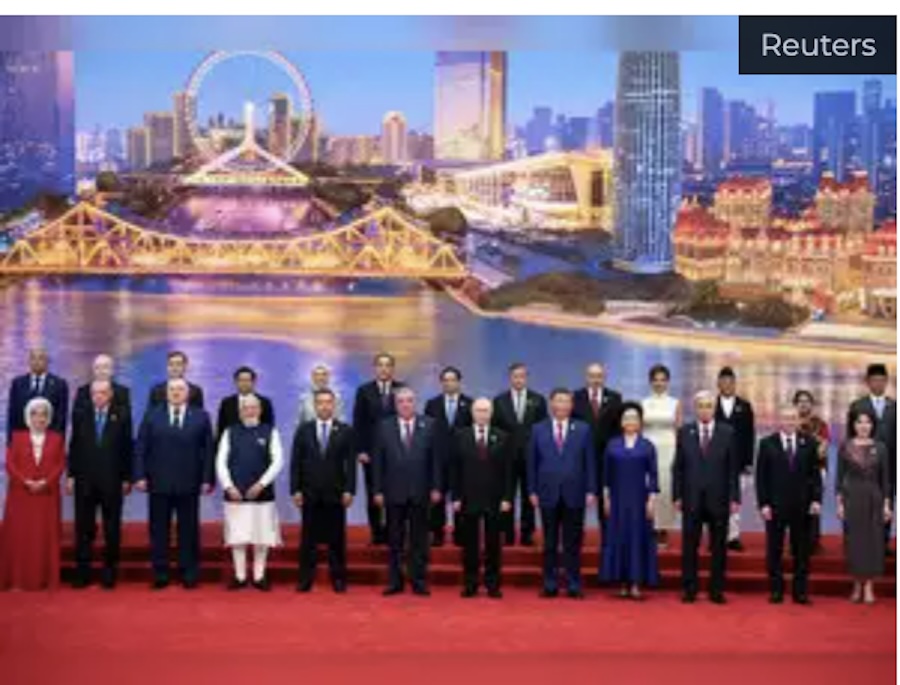
Environment ministers from the 11 BRICS member countries approved the final declaration of the Environment Working Group on Thursday (March 3). Image: Isabela Castilho/BRICS Brasil

In her opening speech, Brasil’s Environment Minister Marina Silva highlighted the importance of the Global South to multilateralism and international cooperation.
“In the coming decades, the strength of our [BRICS] economies will make us even more influential. Today, we represent about half of the world’s population and 39% of the global GDP [Gross Domestic Product]. More than ever, BRICS is an increasingly fertile space for innovation, rich in cultural diversity, with strategic resources, and an immense quantity and quality of natural capital,” said the minister.

“Our countries are providers of services and ecosystems that are essential to the planet’s balance. They are also essential support to nature-based solutions that are in tune with the Earth’s capacity to assimilate. We are in a good position to lead a fair ecological transition that strengthens a more cooperative and less unequal multipolar world,” continued Marina Silva, who also welcomed the group’s new member countries: Egypt, Ethiopia, Indonesia, Iran, Saudi Arabia, and the United Arab Emirates.

Global warming

The ministerial declaration on the Environment includes the seven proposals that resulted from discussions regarding the four priority axes presented by the Brazilian presidency — desertification, land degradation, and drought; preservation, restoration, and enhancement of ecosystem services; plastic pollution and waste management; and collective leadership for climate action, in synergy with the United Nations 2030 Agenda for Sustainable Development.

The group highlights the impacts of climate change, and the “need to accelerate mitigation and adaptation actions” through the transition of economies to low carbon. The Paris Agreement is recognized in the declaration as an important commitment to the establishment of Nationally Determined Contributions (NDCs) — which seek to reduce greenhouse gas emissions to limit global warming to 1.5ºC.

Minister Marina Silva highlighted that BRICS is essential to maintaining this goal, especially in the current international context. “The rise of unilateralism and extremism is jeopardizing global stability and deepening injustices, affecting the most vulnerable populations in particular. This instability is further aggravated in the context of the climate emergency in which we are living. We have broken successive temperature records. Last year was the hottest in history, surpassing the critical limit of 1.5ºC for the first time. In this context, President Luiz Inácio Lula da Silva has reiterated the strategic role of BRICS as a space for dialogue and collective construction of solutions,” she declared.

(Article continued in the right column)

Question for this article:

What is the contribution of BRICS to sustainable development?

(Article continued from the left column)

Nevertheless, the BRICS WG also draws attention to the “national capacities and circumstances” of the group’s countries to combat climate change. The text encourages technology transfer and “adequate climate finance for developing countries,” which is the main challenge of COP30 (the United Nations Climate Conference), also under Brazilian presidency and to be held in November in Belém, Pará.

“BRICS represents almost 50% of the world’s population and almost 40% of the world’s GDP. Therefore, it is an absolutely important group from both a geopolitical and economic standpoint. And, naturally, when we talk about economics, it has everything to do with the issue of climate change — because solutions to climate change are naturally connected to changes in countries’ economies,” said Ambassador and president of COP30 André Corrêa do Lago, who was also present at the event.

The president of COP30 also highlighted the Brazilian presidency at COP for a new type of climate fund. “Financing has been a challenge since the beginning of the Climate Convention negotiations — and it is an extremely difficult and controversial issue. The fund that Brasil is proposing — the Tropical Forests Forever Facility (TFFF) — is especially innovative. There are different ways to finance forests for each type of activity. There was no formal mechanism designed specifically for forest conservation, and the TFFF addresses exactly that. It seeks to solve a problem that has not yet been solved,” he said.

Technical cooperation

Technical cooperation was highlighted as essential for the BRICS countries to advance in sustainable development. Strategic partnerships and the sharing of initiatives and technologies are being planned towards the group’s objectives. In this sense, the ministers established investment in “research and innovation for the development of green technologies and sustainable solutions.” There is also a provision for the creation of platforms to facilitate the exchange of information and experiences on the subject.

The conservation of biodiversity and the sustainable use of countries’ natural resources were also presented as a BRICS commitment to “combating the degradation of terrestrial and marine ecosystems.” Moreover, the group urged for the implementation of the Kunming-Montreal Global Biodiversity Framework — signed at the 15th Conference of the Parties to the UN Convention on Biological Diversity in Montreal, Canada, in 2022. The agreement establishes targets to reverse biodiversity loss by 2050.

Circular economy and integrated waste management were also included in the declaration as a way to reduce plastic and promote recycling. “We reiterate our commitment to eliminating environmental pollutants and developing sustainable value chains,” the document states.

Finally, the BRICS Environment ministers pledge to increase environmental education and raise public awareness regarding environmental responsibility through campaigns, educational programs, and community projects.

According to the text, the initiatives that were jointly signed by BRICS countries will be monitored regularly. “We conclude this Declaration by reaffirming our determination to work together towards a sustainable and prosperous future for all BRICS countries and for the world,” the document concludes.

Marina Silva added that, in addition to the ministerial declaration, the representatives of the 11 member countries also approved a work plan that includes a memorandum of understanding on environmental cooperation for the 2024-2027 period. The document provides for around 50 practical activities in strategic fields such as air quality, environmental education, biodiversity, waste and chemical management, water resources, coastal and marine areas, and climate change.

– – – – – –

If you wish to make a comment on this article, you may write to coordinator@cpnn-world.org with the title “Comment on (name of article)” and we will put your comment on line. Because of the flood of spam, we have discontinued the direct application of comments.
Brazil hosts first BRICS Sherpas meeting with expanded membership

. . SUSTAINABLE DEVELOPMENT . .

An article from bne Intellinews

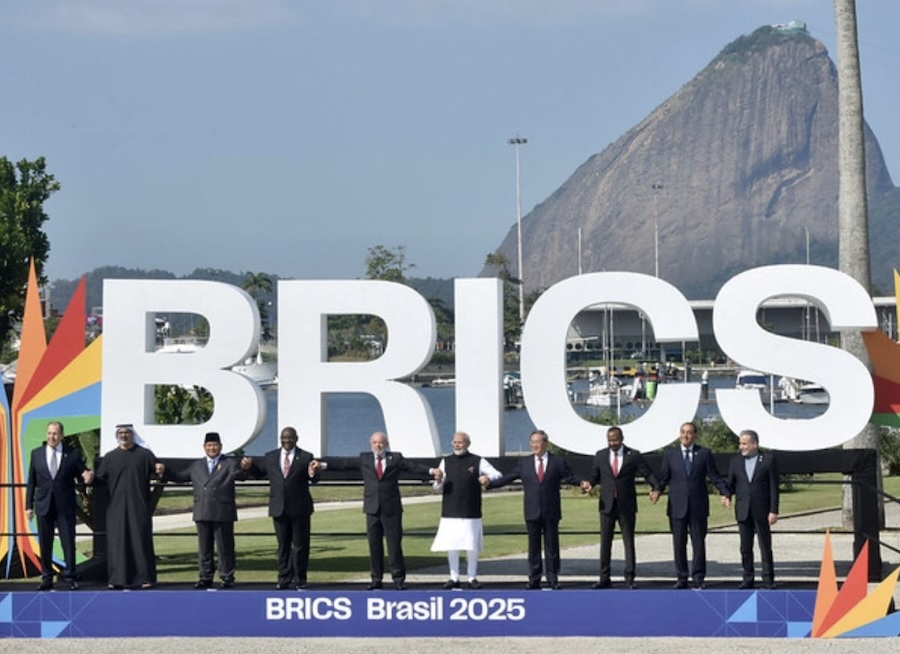
Brasilia hosted the first BRICS Sherpas meeting under the Brazilian Presidency on February 24-25, bringing together representatives from all 11 member countries at the Itamaraty Palace, the Foreign Ministry headquarters.

The event, which laid the groundwork for the bloc’s summit taking place in Rio de Janeiro on July 6-7, marked the beginning of an ambitious agenda focused on strengthening multilateralism, promoting cooperation among Global South countries, and reforming international governance structures to better reflect the needs and aspirations of developing nations.


(click on image to enlarge)

Brazil’s Foreign Affairs Minister Mauro Vieira delivered an opening speech underscoring the bloc’s relevance during a period of profound global transformations.

“It is a great honour to welcome you to this inaugural meeting of the Brazilian BRICS Presidency. We are gathered in a crucial moment — of profound transformations, in which the principles of multilateralism and cooperation are being tested by crises that demand urgent and collective action,” Vieira stated.

In his address, Vieira affirmed that the response to the crisis of multilateralism “is more multilateralism, stronger and more inclusive in all spheres” and noted that the international order is undergoing radical changes while existing institutions struggle to adapt, even as emerging economies demand greater participation in global decisions.

“In this evolving scenario, BRICS plays a fundamental role in promoting a more just, inclusive and sustainable world order. A multipolar world is not only an emerging reality, but a shared objective,” he said.

(Article continued in the right column)

Question for this article:

What is the contribution of BRICS to sustainable development?

(Article continued from the left column)

This is the first meeting since last year’s major BRICS expansion to include Saudi Arabia, Egypt, the UAE, Ethiopia, Iran, and Indonesia, alongside original members Brazil, Russia, India, China and South Africa.

The Brazilian presidency will prioritise cooperation with the Global South and an agenda focusing on social, economic and environmental development, with emphasis on six key areas: health, trade, climate change, artificial intelligence, reform of the multilateral security system, and institutional strengthening of the bloc.

Ambassador Celso Amorim, serving as Head Adviser to President Luiz Inácio Lula da Silva, outlined his perspective on the bloc’s significance during a recent interview with BRICS Brasil’s press team. The veteran diplomat, drawing on his extensive experience as foreign minister across multiple administrations, presented BRICS as a platform for developing nations to coordinate their efforts “on energy, on the monetary field, and even on the field of peace and security.”

Countering claims of anti-Western bias, Amorim was forthright: “How can anyone say that Brazil is against the West when we have just concluded an agreement with the European Union [Mercosur-EU deal]? There is no point. Being subordinated to a particular leading country, we don’t want that.”

The Sherpas meeting’s second day included a special session with President Lula, who delivered an upbeat speech about the bloc’s outlook.

“I am convinced that BRICS will continue to be a driver of positive change for our nations and the world. Acting in a coordinated manner for the success of the South African presidency of the G20 and the Brazilian presidency of COP30 is defending the shared future of this planet,” said Lula.

The Brazilian leader also called for collective efforts to promote peace and a multilateral security system, warning that “unilateralism undermines the international order” and that negotiating “on the basis of power” leads to instability and conflict.

“We will have an intense presidency, which will lead us to a beautiful Summit of Heads of State and Government, in Rio. We must live up to the chosen motto: strengthening Global South cooperation and reforming international governance structures.”

Touching on an issue that resonates with many members, Lula has welcomed BRICS nations’ efforts to expand local currency payment options to reduce economic vulnerabilities. In this regard, he argued that rising protectionism necessitates greater economic integration. The renewed push comes amid threats from US President Donald Trump of 100% tariffs on the bloc’s nations “if they want to play with the mighty dollar.”

While Lula previously floated plans for a full-fledged common BRICS currency, he now advocates for expanding existing bilateral payment mechanisms, shelving the idea of ditching the dollar entirely – as confirmed by various diplomats who said a shared currency is not currently on the agenda. This puts Brazil at odds with other members such as Iran and Russia, which feel a bigger pressure to dedollarise their economy due to wide-reaching sanctions imposed on them by Western countries.

– – – – – –

If you wish to make a comment on this article, you may write to coordinator@cpnn-world.org with the title “Comment on (name of article)” and we will put your comment on line. Because of the flood of spam, we have discontinued the direct application of comments.

China’s Renewable Energy Boom: A Record-Breaking Shift or Still Chained to Coal?

.. SUSTAINABLE DEVELOPMENT ..

An article from Carbon Credits

China is making record-breaking progress in renewable energy. The country has already achieved its 2030 clean energy goal six years early. With massive investments and policy support, China is set to remain the global leader in renewable energy expansion. But can it sustain this rapid momentum while balancing energy security and economic growth?


Beating the Clock on Clean Energy: Surpassing Renewable Energy Targets

In 2020, China set a goal to install at least 1,200 gigawatts (GW) of solar and wind power by 2030. By the end of 2024, China had already surpassed this target, reaching this milestone 6 years ahead of schedule. This was made possible by aggressive investments, government policies, and a surge in solar and wind installations.

China’s solar capacity grew by an incredible 45.2% in 2024, adding 277 GW.  Wind capacity also saw a strong increase of 18%, with an additional 80 GW installed. Overall, total power generation capacity rose by 14.6% in 2024, driven mainly by renewables.

One major milestone was the completion of the Ruoqiang photovoltaic (PV) project. This massive 4-GW solar farm in the Taklamakan Desert is one of the world’s largest solar power projects. It is part of China’s broader strategy to peak emissions  before 2030 and transition toward cleaner energy sources.

This rapid progress is due to strong government support, record investments, and local manufacturers producing affordable solar and wind components.

Leading the World in Renewable Investments

China is the world’s largest market for low-carbon energy investment. In 2024, the country attracted $818 billion in clean energy investments—more than the combined total of the U.S., the European Union, and the UK. This accounted for ⅔ of the global increase in clean energy investments that year.

The world’s biggest carbon emitter’s commitment to renewables is reshaping its energy mix. In June 2024, wind and solar power combined surpassed coal in installed capacity for the first time. 

China’s 14th Five-Year Plan set a goal for renewables to supply 33% of its electricity by 2025. By 2026, solar capacity alone is projected to overtake coal as China’s leading energy source, with 1.38 terawatts (TW) of solar power expected—150 GW more than coal.

Remi Eriksen, CEO of energy consultancy DNV, once remarked that:
“Intense policy focus and technological innovation are transforming China into a green energy powerhouse.”

And one of these innovations is in the field of nuclear power.

Nuclear Power and SMRs: A Game-Changer for China’s Energy Future?

China is also investing heavily in nuclear power, with 29 reactors under construction, totaling 33 GW of capacity. This makes up nearly half of all new nuclear projects worldwide. By 2030, China will surpass the U.S. as the largest nuclear power producer, with a projected capacity reaching up to 320 GW by 2050.

Small Modular Reactors (SMRs) are a key part of China’s nuclear strategy. The country’s first SMR, a high-temperature gas-cooled reactor (HTR-PM), began operations in 2023. Other SMR designs, including the ACP100 and NHR200, are under development. 

(Continued in right column)

Question for this article:

Are we making progress in renewable energy?

(Continued from left column)

These compact reactors will support industrial heating, electricity supply, and district heating. By 2050, China’s SMR capacity is expected to reach 35 GW, making it the leading global market for this next-generation nuclear technology.

China is quickly growing its renewable energy and advancing nuclear power. This makes it a leader in clean energy worldwide. Even though it still uses coal, the focus on renewables and nuclear is cutting carbon emissions a lot.

The Road to Net Zero: Can China Meet its 2060 Goal?

China has set ambitious climate goals. The country aims to peak its carbon emissions by 2030 and reach net zero by 2060. A key driver of this transition is energy independence, as China seeks to reduce reliance on imported fossil fuels.

A recent report from DNV highlights China’s rapid progress. The country had 1.45 TW of renewable energy capacity online by the end of 2024 and is on track to increase its clean energy capacity fivefold by 2050.

By that time, renewables are expected to supply 60% of China’s energy needs, although fossil fuels will still account for around 40% of the mix.

Challenges and the Role of Coal

Despite this rapid progress, coal remains a significant part of China’s energy system. The country still consumes over 50% of the world’s coal and continues to build new coal-fired power plants. In 2022, China approved 6x more new coal capacity than the rest of the world combined.

The heavy reliance on coal is partly due to energy security concerns. Events like Russia’s invasion of Ukraine and reduced rainfall affecting hydropower have made alternatives like gas and hydroelectric power more expensive.

Coal remains a backup energy source to support the country’s rising electricity demand, which increased by 6.8% in 2024.

However, China’s long-term goal is to reduce this dependence. The government is implementing policies to phase out fossil fuels gradually while ensuring energy stability. By 2050, China’s emissions are expected to drop by 70% compared to current levels, marking significant progress in its clean energy transition.

Future Outlook: A Renewable Superpower

China’s energy transition is at a critical turning point. The country’s investments and policy shifts indicate a strong commitment to clean energy.
By 2030, China’s total energy consumption is expected to peak and then decline by 20% in 2050 due to increased efficiency and electrification.

China aims for net zero by 2060, which is ten years later than the UN’s 2050 target to keep global warming under 1.5°C. So, while progress is strong, more efforts are needed to speed up the shift from fossil fuels.

Overall, China is leading the world in renewable energy expansion, breaking records in solar and wind installations. The country’s rapid growth in clean energy capacity is reshaping its power mix and reducing its reliance on coal. 

– – – – – –

If you wish to make a comment on this article, you may write to coordinator@cpnn-world.org with the title “Comment on (name of article)” and we will put your comment on line. Because of the flood of spam, we have discontinued the direct application of comments.
UN-Tourism Candidate is Placing Tourism at the Heart of Peace and Reconciliation

. . SUSTAINABLE DEVELOPMENT . .

An article from eTurboNews

Mouhamed Faouzou Deme from Senegal has made headlines in Africa, wanting to become Africa’s choice in the upcoming UN Tourism election for Secretary-General.

He is the only one of the four competing candidates for the highest UNWTO post who provided feedback to eTurboNews on the role of tourism for peace. Once Secretary-General Zurab took his helm in 2018, UNWTO’s long-year relationship with the International Institute for Peace of Tourism was eliminated, forcing IIPT chairman Louis D’Amore to cancel his carefully planned summit in Montreal. IIPT never fully recovered from this disappointment after this.

Its former Secretary-General, Dr. Taleb Rifai, fostered this unique relationship between UNWTO and IIPT. Mouhamed pledged to reinstate this, should he become Secretary-General, and responded to WTN. He stated:

Tourism stakeholders, professionals, and political actors have continued to recall the importance of placing tourism at the heart of peace and reconciliation programs to enable the sector to mobilize its capacity for action.

This is often in favor of investment, development, and social inclusion.

Adherence to freedom, justice, democracy, tolerance, solidarity, cooperation, pluralism, cultural diversity, dialogue, and understanding promotes peace.

(article continued in right column)

Questions related to this article:
 
How can tourism promote a culture of peace?

(article continued from left column)

Tourism is a vector of peace, respect, openness, and dialogue.

Tourism has the value of peace because it is only built and carried out in an environment of security, stability, and conviviality.

The main idea behind the concept of peace in tourism is that peace exists when people travel freely around the world.

It helps travelers to get to know new people, cultures, and values.

This experience can increase mutual understanding between people who have lived in diverse cultural contexts.

Furthermore, peace tourism aims to reduce the root causes that create situations where violence is perceived as inevitable.

It does not replace other types of tourism practices but rather aims to facilitate their improvement.

Its impact goes far beyond economic benefits. It is interesting to look at tourism as a social force rather than an industry and see how we can use it to establish a culture of peace.

Tourism connects people and the planet. It is a vector of trust and goodwill.

Understanding culture can change behavior and consolidate peace.

Tourism’s role in supporting peace is also reflected in its contribution to the fight against poverty, the preservation of culture, and protecting the environment.
– – – – – –

If you wish to make a comment on this article, you may write to coordinator@cpnn-world.org with the title “Comment on (name of article)” and we will put your comment on line. Because of the flood of spam, we have discontinued the direct application of comments.

The International Institute for Peace through Tourism: A personal memoire

. . SUSTAINABLE DEVELOPMENT . .

Excerpts from the reflections by Timothy Marshall, Chairman, IIPT Board of Directors

As we end this year, I have been asked to share some reflections on my journey with our Brother Lou D’Amore. . . When launching IIPT, Brother Lou’s vision was and is to make the world’s largest industry, travel and tourism, the first global peace industry; with the belief that every traveler is potentially an ambassador for peace.


Lou D’Amore, left, and Timothy Marshall, right, with Tukwini Mandela

THE BEGINNING YEARS: LAUNCH OF SUMMITS, CONFERENCES AND CHAPTERS

As the creator and global leader of the ‘Peace Through Tourism’ movement, IIPT launched its first global conference on Sustainable Tourism Development in Vancouver in 1988. The theme was: “Tourism: A Vital Force for Peace”. Eight hundred persons from sixty-eight countries were in attendance; and Pope John Paul II and U.S. President Ronald Reagan were featured in video-taped messages. The Vancouver Conference first introduced the concept of ‘Sustainable Tourism Development’ four years prior to the U.N. Conference on Environment and Development in Rio de Janeiro, Brazil. The Vancouver conference also introduced a new paradigm for a ‘Higher Purpose of Tourism’ which incorporated the Mission of IIPT. Today, we hear this concept espoused all over the globe. However, nearly 40 years ago when IIPT was founded, the industry’s focus was almost exclusively on economics and finance, and these concepts were very foreign.

Approximately 6 months after our first global conference, the first Caribbean conference on socially and environmentally responsible tourism was held in 1989 in the Bahamas. It featured Dr. D’Amore; along with Mr. Stanley Selingut, who established the first Caribbean eco-tourism resort based in St. John, U.S. Virgin Island; as well as representatives from Indonesia and the Pacific, who all gave case studies. This led to two subsequent conferences on eco-tourism in the Caribbean, and a major new focus on sustainable tourism by the Caribbean Tourism Organization . . .

Our first Global Summit was held in Amman, Jordan in 2000. King Abdullah II was our Royal Patron; and Mr. Harvey Golub, Chairman of American Express, and Chairman of WTTC, served as our first Summit Chair. I was asked to convene our first Coalition of Partners meeting which was attended by thirty-two organizations from around the world; each of whom committed to a Millennial Project. Many good initiatives came out of this, and it is our hope to resurrect this body with a new gathering of like-minded NGO’s and other organizations going forward.

Our first African Conference was held in Nelspruit, South Africa in 2002, eight years after Mr. Mandela became President. It included a host of Ministers of Tourism throughout the African continent. . .

PEACE WITH OUR CREATOR

IIPT has played a meaningful role in the spirituality and tourism sector— from a major conference at the site of St. Francis of Assisi’s home in Assisi, Italy… to sacred Himalaya travel and treks in Bhutan… to dedicating a global peace park at Bethany Beyond the Jordan, site of Christ’s baptism in the Jordan River…to the dedication of a global peace park at the martyrs trail in Uganda, where record crowds flocked to Uganda for the 50th anniversary of the canonization of 32 Christian martyrs who were burned to death for their refusal to denounce Christianity. The Uganda Martyrs Trail was dedicated as a legacy of IIPT’s 4th African Conference and is an important tourist attraction. This event has also been designated as a national holiday in Uganda and has become a major event on the global catholic calendar.

(article continued in right column)

Questions related to this article:
 
How can tourism promote a culture of peace?

(article continued from left column)

Through these and other initiatives, IIPT has been fortunate to have interfaith forums at our events around the world. These gatherings have facilitated interfaith and intercultural dialogues. At our second global conference in Montreal, eight different religions gathered at the top of Mount Royal overlooking the City of Montreal. That conference profoundly demonstrated that when we focus on the importance of love, mutual respect, and living in peace, it becomes clear that our similarities are much greater than our differences.

PEACE WITH EACH OTHER

. . . Over the years, we have assembled a wonderful network of industry strategic partner organizations like PATA and the Africa Travel Association who signed an historic MOU at our 2005 Summit in Thailand. This MOU promoted travel between the African and Asian continents. One of our closest partners, Skal International, has joined forces with us to establish peace cities and towns in wonderful places around the world. Under the principle of ‘healing wounds of conflict’, one of our Board members, Don King, led an IIPT initiative to support the Al-Awon Charity in Azraq, Jordan, which provides educational services for 160 Syrian refugee children who, along with their families, fled the conflict in Syria. This special IIPT project is one way that we try to bring our principles to life and make a tangible impact in the lives of people who are hurting.

The theme of our 25th Anniversary celebration at World Travel Market in London was “Building a Culture of Peace Through Tourism”. . . .

‘PEACE WITH NATURE AND THE EARTH’

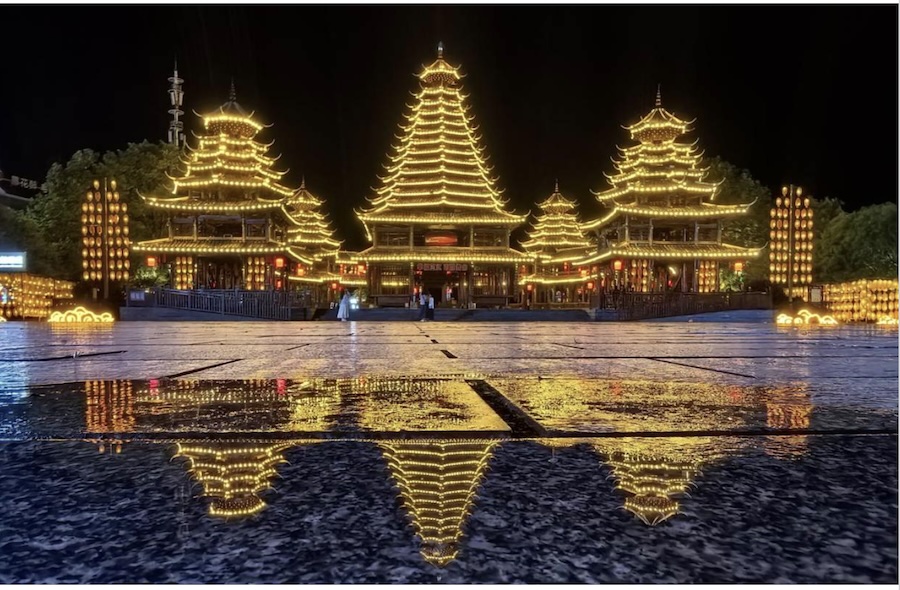
This can be seen in almost everything we have done; but can most directly be seen through the dedication of over 450 global peace parks in Africa, Asia, Central America, Europe, the Middle East, Australia, the Indian Ocean and the Pacific, Canada, the United States, and Mexico. This initiative was launched in Canada on its 125th Birthday with 350 peace parks across Canada. It has now spread to six of the seven continents around the world. In addition to Victoria Falls, a world heritage site and one of the seven wonders of the world located on the border of Zambia and Zimbabwe, IIPT has dedicated a major global peace park at the renown Puer National Park in China, along with the dedication of a global town of peace in the Danzhai Wanda village of China, which is an international tourism destination dedicated to poverty reduction. . . .

One of our most impactful initiatives regarding peace with nature was the hosting of one of the world’s earliest global summits on Climate Change in Lusaka, Zambia in 2011. This Summit brought together some of the top thought leaders and practitioners from every major sector around the world and led to the adoption of the Lusaka Declaration which is housed at the United Nations.

THE BUILDING OF A WONDERFUL FAMILY

During the month of September 2023, I was pleased to Chair our Global Strategic Planning Retreat in New York where members of the IIPT Family gathered to begin the process of transitioning from Lou’s presidency to Ajay Prakash becoming the newly elected President of the Institute. The weekend began on Friday evening with food and drinks in a beautiful setting on the Hudson River as family members were welcomed to New York and celebrated being together once again. . . .

As I prepare to close these reflections, it seems appropriate to return to our beginning days where the ‘CREDO OF THE PEACEFUL TRAVELER’ became our anchor:

“GRATEFUL FOR THE OPPORTUNITY TO TRAVEL AND EXPERIENCE THE WORLD AND BECAUSE PEACE BEGINS WITH THE INDIVIDUAL, I AFFIRM MY PERSONAL RESPONSIBILITY AND COMMITMENT TO:
– JOURNEY WITH AN OPEN MIND AND HEART,
– ACCEPT WITH GRACE AND GRATITUDE THE DIVERSITY I ENCOUNTER,
– REVERE AND PROTECT THE NATURAL ENVIRONMENT WHICH SUSTAINS ALL LIFE,
– APPRECIATE ALL CULTURES I DISCOVER,
– RESPECT AND THANK MY HOSTS FOR THEIR WELCOME,
– OFFER MY HAND IN FRIENDSHIP TO EVERYONE I MEET,
– SUPPORT TRAVEL SERVICES THAT SHARE THESE VIEWS AND ACT UPON THEM,
– AND BY MY SPIRIT, WORDS AND ACTIONS,
– ENCOURAGE OTHERS TO TRAVEL THE WORLD IN PEACE.”

(Editor’s note: Thank you to Bea Broda for sending us the IIPT End-of-year newsletter that contained this memoire)

– – – – – –

If you wish to make a comment on this article, you may write to coordinator@cpnn-world.org with the title “Comment on (name of article)” and we will put your comment on line. Because of the flood of spam, we have discontinued the direct application of comments.
Slow Peace: Three Lessons from Grassroots Peacebuilders in Colombia

.. SUSTAINABLE DEVELOPMENT ..

An article by Angela Lederach from Peace News (reprinted by permission)

Since 2014, I have had the privilege of learning from grassroots social leaders at the forefront of building peace in Montes de María, Colombia – one of the territories prioritized by the 2016 peace agreement between the FARC (Revolutionary Armed Forces of Colombia) and the government. 


Youth Peace Provokers March for Peace 2016, photo by author

A human rights lawyer who works closely with the Colombian transitional justice tribunal told me in June 2024 that one of the biggest challenges for the Special Jurisdiction for Peace (JEP) was that the peace process was rushed. I have heard grassroots organizers frequently echo the sentiments of this human rights lawyer, admonishing the state for operating with “too much prisa [hurry].” 

As an anthropologist who studies the politics of peacebuilding, I was initially puzzled by the widespread critique of “prisa/hurry”. Indeed, sluggish, bureaucratic delays  have characterized the postaccord implementation  process across rural Colombia. Clearly, when grassroots peacebuilders criticize the state for operating with “too much prisa/hurry,” they are not suggesting that the accords are being implemented rapidly. What claims, then, are campesino peacebuilders making? And what does their approach to “paz sin prisa / peace without hurry” entail?

As I traversed the everyday landscapes of campesino peacebuilding, I began to realize that the call to “slowness” does not negate the pressing needs that animate the collective struggle for peace in Colombia. There is, in fact, a fierce urgency in the campesino call to slow down, take notice, and tend territorial relations of care in the wake of violence. Grassroots peacebuilders do not limit their understanding of time to speed (acceleration and deceleration) or duration (short and long-term frameworks). Instead, slowness is understood as a mode of attention and practice of presence. Slow peace  offers a relational framework that locates peacebuilding as a multigenerational, multispecies, and permanent process to cultivate a more just and livable world.
 
I have identified three lessons for building slow peace. 

First, slow peace is a multigenerational process

In August 2016, I interviewed Jorge, a campesino [small farmer] leader, in his palm-thatched home. Jorge did not begin his life history with the war. Instead, he recounted the ancestral history of the territory, emphasizing how nonviolent resistance and solidarity led to the formation of campesino communities across Montes de María as people sought refuge from enslavement and colonization. He closed our interview with a song he had composed. The war formed neither the opening nor closing stanza. Instead, Jorge sang about the multigenerational “campesino struggle” to “defend life and the right to life.”

Hours later, I learned that the Colombian government and the FARC-EP had reached a peace deal. With no internet or electricity, the historic announcement did not reach Jorge’s house. Jorge’s intimate recollections set against the distant and inaccessible backdrop of the government’s declaration of peace reflect the paradox of proximity that grassroots leaders face. 

Popular depictions of Montes de María, limited only to violence, erase the long histories of campesino organizing. A multigenerational lens challenges linear accounts that locate peace as something that comes after a negotiated agreement. Grafting their work into a wider struggle, campesino peacebuilders articulate an understanding of peace as an active, social process. In giving primacy to everyday life, slowing down widens the lens and focuses the frame of peacebuilding on the historical and material conditions that peace demands.

(Article continued in the right column)

Questions for this article:

What is the relation between the environment and peace

What is happening in Colombia, Is peace possible?

(Article continued from the left column)

Second, slow peace centers social-environmental relations 

“The earth suffered, too,” Jocabeth, a young campesina organizer reflected, detailing her experience of war. The violence of forced displacement disrupted multispecies relations  of care, forged through the daily labor of caretaking forest and soil life in Jocabeth’s community. The violent severing of humans from these ecological relations resulted in the death of the avocado forest, upending the social, economic, and ecological sustenance of her community. For Jocabeth, place-based peacebuilding practices that regenerate multispecies relations are vital for peace. 

As part of an intergenerational social movement, Jocabeth has worked with the Youth Peace Provokers to combine traditional ecological knowledge, reforestation, and agroecology with peace advocacy, nonviolent direct action, and community organizing. Here, slow peace cultivates moral dispositions attuned to the existence of the nearly imperceptible processes of life that persist amid violence – what I call an ethics of attention. As Ricardo Esquivia, the director of the local organization Sembrandopaz  reflected, “the work of the base (grassroots) is to see, feel, and grow the tree held within the seed – to be so close to the ground that you can feel the grass grow.”

Finally, slow peace demands a shift from technical projects to social movements. Campesinos cite the “clash in times” between their community processes and external peace interventions as one of the most difficult challenges they must overcome. Technocratic interventions  that rely on measurable outcomes and helicopter interactions designed to meet donor demands reduce peace to paper. In contrast, slow peace situates peacebuilding as an ongoing political process that prioritizes sustained proximity.

For example, the Regional Space for Peacebuilding in Montes de María  – a broad-based coalition that brings representatives from Afrodescendant, Indigenous, Campesino, youth, women, and LGBTQIA+ movements together – facilitates a sustained, monthly dialogue between these diverse grassroots peace organizations. The coalition has also convened unlikely encounters between community members and generals, paramilitary commanders, FARC representatives, and multinational corporations. These “improbable dialogues” have resulted in the formation of farming cooperatives between former combatants and victims, the return of dispossessed land, and formal apologies. The Regional Space’s approach to sustained dialogue demonstrates how a temporal shift from technical projects to community organizing deepens processes of social repair. The multigenerational, place-based, and permanent commitment to peacebuilding through sustained dialogue – exemplified in the work of the Regional Space – also allows grassroots organizations to build collective power desde la base – from the ground up.

In Montes de María, there is a traditional saying: “Slow down, because there is hurry.” Slowness emerges through an immersion into everyday life where the seeds of peace are continuously cultivated, cared for, and nurtured. “Slow peace” does not offer a prescriptive blueprint. However, reflecting on the relational practices, modes of attention, and quality of presence  that shape peoples’ experiences of time, relations, and power is vital for cultivating sustainable peace – with lessons for peacebuilders globally. 

– – – –

Angela J. Lederach (she/her/hers) is Assistant Professor of Peace and Justice Studies at Chapman University. She is the author of Feel the Grass Grow: Ecologies of Slow Peace in Colombia (Stanford University Press 2023) and co-author of When Blood and Bones Cry Out: Journeys Through the Soundscape of Healing and Reconciliation (Oxford University Press 2010). As a cultural anthropologist and peace studies scholar-practitioner, Lederach has worked on peacebuilding and restorative justice processes in Sierra Leone, Philippines, Colombia, and the United States.

– – – – – –

If you wish to make a comment on this article, you may write to coordinator@cpnn-world.org with the title “Comment on (name of article)” and we will put your comment on line. Because of the flood of spam, we have discontinued the direct application of comments.

Ecuador: culture of peace and democracy through the strengthening of Indigenous Justice

. . SUSTAINABLE DEVELOPMENT . .

An article from Manos Unidas

After almost four years (from March 2021 to November 2024) we have reached the end of the project “Promoting a culture of Peace and Democracy through the strengthening of Indigenous Justice”, developed in Ecuador and co-financed by the European Union and Manos Unidas.


In this project we have had four local partners, the Ecuadorian Central for Agricultural Services (CESA), the Indigenous and Peasant Movement of Cotopaxi (MICC), the Central University of Ecuador (UCE) and the Council of the Judiciary (CJ), the latter being equivalent to the General Council of the Spanish Judiciary.

The reason for this project arose in a context of a serious conflict in Ecuador in 2019, when indigenous peoples and the most vulnerable populations saw their rights and the possibility of having a dignified life increasingly limited (rising prices for basic goods, failures in public services, etc.). One of the most serious situations was the criminalization (arrest and prison sentences) of indigenous leaders for the application of Indigenous Justice. Hence the title of the project is to promote a culture of peace and democracy, seating both parties (indigenous peoples and the State) at the same table, with the support of civil society (CESA and Manos Unidas) and the Academy (UCE).

Let’s put some context to better understand the demands of the peoples and nationalities of Ecuador:

(Article continued in right column)

(Click here for the original Spanish version of this article.)

Question for this article

Indigenous peoples, Are they the true guardians of nature?

(Article continued from left column)

The Ecuadorian Constitution of 2008 explicitly recognizes the rights of indigenous peoples, marking a milestone in the history of the country. In this regard, the Magna Carta establishes several provisions that seek to guarantee equality, justice and respect for the cultural, social and economic diversity of indigenous peoples. Among the most notable points we can point out the recognition of the plurinationality of the State (art. 1); the recognition of collective rights (art. 57), which includes the right to practice and promote their own forms of justice and traditional legal systems within their communities, as long as they do not contravene human rights; and finally, an intercultural justice system is established (art. 171) in which the possibility of indigenous peoples managing their own system of justice and conflict resolution is recognized, based on their traditions and customs, as long as they do not contravene constitutional principles and human rights.

High participation of women

The project has achieved great successes, as more than a thousand people from indigenous organizations have been trained in Indigenous Justice, Gender and New Masculinities and Community Communication, with a participation of women of more than 40%. A manual on Indigenous Justice with a gender perspective has been developed. Three public policies on intercultural dialogue, cooperation and coordination of dialogue systems between ordinary and indigenous jurisdictions have been approved, printing and distributing 3,000 copies of these policies so that they reach all ordinary justice operators in the country. Four courses on strategic litigation have been held in various regions of the country, with the participation of 200 people, and the project has closed with the II International Congress “Beyond Legal Pluralism”, with the collaboration of seven universities and more than 800 participants, including students, academics, professionals and authorities of indigenous peoples and nationalities.

The project was born in an attempt to reduce social tension and resolve cases of criminalization of indigenous leaders in the province of Cotopaxi. Unfortunately, we have been able to resolve few cases and the current context of Ecuador is not easy, but by building bridges we have generated a movement that will transform the entire country. The seed we planted is bearing fruit with the first applications of the policies of cooperation and coordination between ordinary and indigenous justice, allowing judges to delegate their powers to indigenous justice. The Indoamerican University has already committed to holding the third edition of the congress on legal pluralism and we have 20% more women in leadership positions in the communities.

– – – – – –

If you wish to make a comment on this article, you may write to coordinator@cpnn-world.org with the title “Comment on (name of article)” and we will put your comment on line. Because of the flood of spam, we have discontinued the direct application of comments.