All posts by CPNN Coordinator

About CPNN Coordinator

Dr David Adams is the coordinator of the Culture of Peace News Network. He retired in 2001 from UNESCO where he was the Director of the Unit for the International Year for the Culture of Peace, proclaimed for the Year 2000 by the United Nations General Assembly.

Toward a Culture of Peace Commission for Ashland, Oregon (USA)

.. DEMOCRATIC PARTICIPATION ..

by Eric Sirotkin, Ashland Culture of Peace Initiative

[Editor’s note: The following remarks were submitted on February 2 by Eric Sirotkin on behalf of the the Ashland Culture of Peace Initiative to the City Council Study Group on a City of Ashland Culture of Peace Commission.]
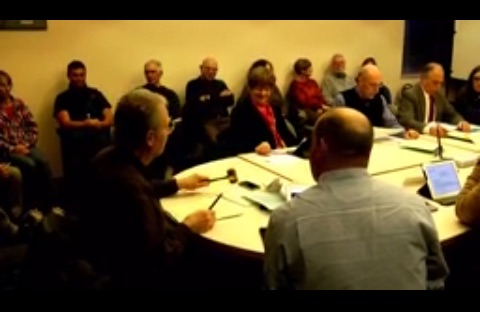
Ashland

Scene from Ashland proposal video

If you could have one chance to speak to the world’s most powerful political body, what would you say? When Václav Havel, the former political prisoner and then President Poet/playwright of the Czech Republic, got his invitation to speak to a joint session of the United States Congress he said that “the salvation of the this human world lies nowhere else than in the human heart, in the human power to reflect, in human meekness and in human responsibility.”

He told people preoccupied with getting reelected that they should “put morality ahead of politics, science, and economics” and that “the only genuine core of all our actions–if they are to be moral–is responsibility.”

Responsibility is “that fundamental point from which all identity grows” Thus, Havel declares, “I am responsible for the state of the world,” and he calls it a “responsibility not only to the world but also ‘for the world,’ as though I myself were to be judged for how the world turns out.”

A CULTURE OF PEACE

In 1999 the United States along with the International Community approved the adoption of the Declaration and Programme of Action on a Culture of Peace which defined the culture of peace as a goal much broader than the traditional idea of peace as the absence of war or violence. It called upon individuals and government to take actions to build and expand a culture of peace.

What is a culture of peace? In your discussions today you may want to share what it means to you. But also respect that it’s not the same for everyone and it’s not always easily translated. For us it has meant many things, but primarily it is a “way of life” that solves problems through dialogue and works to balance and expand respectful relations, even between people who disagree.

It is an idea whose time has come. Over 75 million people signed the Manifesto 2000, committing themselves to cultivate a culture of peace in daily life.

You don’t hear about these efforts in the traditional media.

But on the Transition to A Culture of Peace Blog website (http://decade-culture-of- peace.org/blog/), it mirrors the words of Vaclav Havel to Congress some decades before:

“…over the past few decades, the consciousness is growing that we must cultivate and create a culture of peace to replace the culture of war. If you believe, as I do, that the ultimate force in world history is the consciousness of people, then you can see why I believe that the world is on the verge of a great transformation. What is still lacking, however, is an institutional framework outside of the nation-state to make it possible.”

This is where we believe that you all play an essential and historic part.

(Continued into discussion)

ASHLAND CULTURE OF PEACE COMMISSION

(Continued from main article)

As a group of concerned citizens we have been engaged in a process that not only is intended to institute a Culture of Peace Commission in Ashland, but also has been meant to model it. We know we could go to the voters and get this approved, but as we told you in our packet we want to work with you and use our collective wisdom to come up with something that works for everyone.

In our individual meetings with you over the past month we have worked hard to resist charging forward, learning to apply the very principles inherent in the culture of peace to our own process. We’ve listened deeply and reflected individually and as a group, on your suggestions and your wise input gleaned from years of working within the City. It has convinced us that we all want the same thing.

COMMONALITY

Few disagree that we want to be embody a culture of peace. Adrienne Rich once said: “We all go to sleep dreaming of a common language.”

In many ways Ashland has key elements of a culture of peace:

Hundreds gathering each year for the International Day of Peace Feast for Peace;

Annual commemorations of Hiroshima and Nagasaki that question aggression and strongly urge us to remember something greater;

Mediation school Programs that help children look at conflict differently; • Courses in Compassionate Listening, Restorative Justice Circles;

• Local programs produced like Immense Possibilities that help us to listen
and build a more connected community;

Since 1998 Ashland has been part of the Global Mayors for Peace 6,538 member cities in 160 countries & regions; http://www.mayorsforpeace.org/english/index.html

We are as Mayor Stromberg said in his State of the City address a city in the “quality of life business”…it’s in our” lifeblood. “ A community that institutionalizes a culture of peace becomes one that, in the Mayor’s words “attracts students and their

families regionally and nationally to this extraordinary and celebrated community.” We have listened to the important goals set out by the Mayor and all of you over the past months

A city that attracts young people

b) A city Council that in reality is working every day to build a peaceful culture;

c) The complications and limitations of the current commission process.
So we are more and more convinced from our discussions with you that we all want the same thing.

So what do we do?

We wish to hold off on a vote on any permanent Culture Peace Commission or in holding an election to implement it and follow some of your advice.

#1 – FORM AN INDEPENDENT ASHLAND CULTURE OF PEACE COMMISSION: This entity formulated outside of City Government would choose representatives from all sectors of the community – Like the Peace Wheel – Education Business Culture Science Environment Religion
Law Habitat

It would hopefully have a Liaison from the City Council and I understand that Pam Marsh has been willing to serve in such a capacity.

. …more.
Nigeria: Why we facilitated Abuja peace accord —Ben Obi

. . DEMOCRATIC PARTICIPATION . .

an article by Nigerian Tribune

The Special Adviser to the President on Inter Party Affairs, Senator Ben Obi, has stressed the need for political stakeholders at all levels to buy into the key ingredients of the peace accord, which was recently signed in Abuja, by presidential candidates and chairmen of registered political parties, including President Goodluck Jonathan of the Peoples Democratic Party (PDP) and General Muhammadu Buhari of the All Progressives Congress (APC).

2041 Nigeria

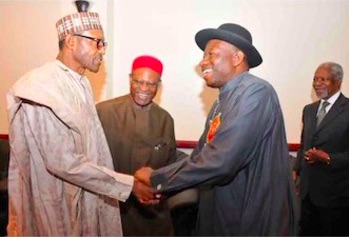
Presidential candidates Muhammadu Buhari (left) and Goodluck Jonathan (right)

Speaking with newsmen in Abuja, Senator Obi whose office and that of National Security Adviser (NSA) created the platform and facilitated the epochal event, stressed that the Abuja ceremony was not meant to be an event in itself but the beginning of a wider nationwide process involving all political stakeholders, security institutions, civil society bodies and youth group across the country.

He stated that in developing the programme of the Peace Accord,they had in mind the implementation of a broad range of strategic objectives that would be co-owned by the major campaign organs of the leading political parties at the national, zonal, state, local government and ward levels.

The presidential adviser reiterated that key components of the peace accord included public sensitisation, youth education, peace building projects and community-wide awareness campaigns involving not just all the tiers of political campaigns but also traditional rulers, community and religious leaders.

He said some of the processes would involve workshops, seminars and town hall meetings on a continuous basis until the culture of peace and non-violent conducts during and after elections were inculcated into the Nigeria people, especially the youth.

He further charged that even though his office and that of the NSA took the lead in facilitating the Peace Accord, the responsibility now lies with the leaders and the people to own the agenda and drive it forward to its logical conclusion.


Latest Discussion

How should elections be organized in a true democracy?

Latest reader comment:

CPNN receives more and more articles from Africa about initiatives that contest the European model of “winner-takes-all” elections, and demand that elections should only be part of a broader democratic process that seeks consensus and compromise.

This fits with the pre-colonial systems of justice in Africa, when there was no monotheism and no single supreme god, no single supreme law, no single “truth” provided by divine intervention, but rather a compromise among many different “gods,” perspectives and “truths” arrived at through a process of mediation, for example, the “palabra.”

Here are some of the articles:

Ghana Youth Coalition wants politicians to commit to peace in 2012

Women’s World in Nationwide Sensitization [Sierra Leone]

Varsities vouch for peace ahead of general elections (Kenya)

Zimbabwe: Christian denominations launch peace initiative

Rethinking Post-Election Peacebuilding in Africa

Nigeria: Why we facilitated Abuja peace accord —Ben Obi

Mobile Technology a Lever for Women’s Empowerment

.. WOMEN’S EQUALITY ..


an article by A. D. McKenzie, Inter Press Service News Agency (reprinted by permission and abridged)

Providing women with greater access to mobile technology could increase literacy, advance development and open up much-needed educational and employment opportunities, according to experts at the fourth United Nations’ Mobile Learning Week conference [in Paris].

2039-mobile

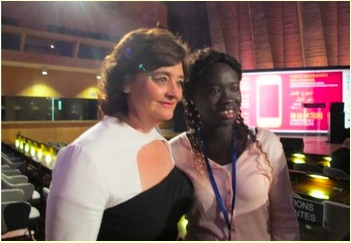
For Cherie Blair (left), founder of the Cherie Blair Foundation for Women and wife of former British Prime Minister Tony Blair, “empowering women and girls to access education isn’t an option, isn’t a nice thing to do, it’s an imperative”. Credit: A.D. McKenzie/IPS

Click here to enlarge photo

“Mobile technology can offer learning where there are no books, no classrooms, even no teachers. This is especially important for women and girls who drop out of school and need second chances,” said Phumzile Mlambo-Ngcuka, Executive Director of UN Women.

The agency, which focuses on gender equality and the empowerment of women, joined forces with its “sister” organisation, the U.N. Educational, Scientific and Cultural Organisation (UNESCO) to host the Feb. 23-27 conference this year.

The aim, UNESCO said, was to give participants a venue “to learn about and discuss technology programmes, initiatives and content that are alleviating gender deficits in education.”

Participants from more than 70 countries shared so-called best practices and presented a range of initiatives to address the issue, including reducing the costs of access to mobile services in some developing countries, and providing training and free laptops to women teachers in countries such as Israel.

“There is still a persistent gender gap in access to mobile technology,” said keynote speaker Cherie Blair, founder of the Cherie Blair Foundation for Women and wife of former British Prime Minister Tony Blair.

In an interview on the side-lines of the conference, she told IPS that “anything that encourages the education of girls is important” and that it was “particularly significant” that UNESCO and UN Women had joined forces to work together in this area to achieve results.

“We need to encourage women to use technology and we also need to involve men to provide support,” Blair said. She cited research showing that a woman in a low- or middle-income country is 21 percent less likely than a man to own a mobile phone. In Africa, the figure is 23 percent less likely, and in the Middle East and South Asia 24 percent and 37 percent respectively.

“The reasons women cite for not owning a mobile phone include the costs of handsets and data plans, lack of need and fear of not being able to master the technology,” Blair said.

Yet, according to the International Telecommunications Union (ITU), mobile phones are the “most pervasive and rapidly adopted technology in history”, with six billion of the world’s seven billion people now having access.

If there existed gender parity in this access, women could benefit from the technology in a number of ways, including getting information about healthcare and other services, experts said. . .

Both UNESCO Director General Irina Bokova and Cherie Blair described education as a “human rights imperative” as well as a development and security imperative.

They stressed that the goal of achieving gender equality in education will continue for the post-2015 development agenda, and that technology has an important role to play. “Empowering women and girls to access education isn’t an option, isn’t a nice thing to do, it’s an imperative,” Blair said.

[Thank you to Janet Hudgins, the CPNN reporter for this article.]

Latest Discussion

South Africa: International Training Program for Human Rights

… HUMAN RIGHTS …

an article by UNESCO Chair in Human Rights

Over the past 10 years, the UNESCO Chair & Institute of Comparative Human Rights has held summer leadership training fora for young leaders from all regions of the world. In conjunction with its annual fora at the University of Connecticut, it has conducted three regional leadership training programs in Rwanda, Italy, and Thailand. In partnership with the African Studies Centre at the University of Cape Town, the main goals of the upcoming Forum are to bring both outstanding participants from past Leadership Training Programmes and new leaders to launch a global intergenerational leadership organization, if not movement. Young leaders with demonstrated commitment to human rights are strongly urged to attend.

2042-Uconn

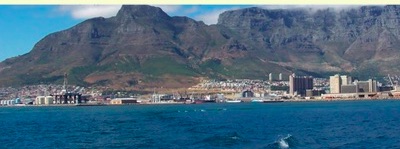
View of Table Mountain and the Cape Town Skyline — Courtesy of Marita McComiskey

The program seeks to

• Provide a platform to launch a Global Intergenerational Leadership Association

• Provide tools and resources to continue to build upon knowledge from the International Leadership Training Programme: A Global Intergenerational Forum and effect real change

The registration fee is $800 (USD) and includes: dormitory housing for 10 days, meals, ground transportation in Cape Town, cultural excursions, resource materials and a certificate of participation. Participants will be responsible for providing their own airfare to Cape Town, South Africa. The UNESCO Chair & Institute of Comparative Human Rights is unable to provide scholarships or grant fee waivers.  Upon acceptance to the Forum, participants will receive instructions for submitting program fees directly to the University of Cape Town Conference Management Centre to cover the following:

• Shared dormitory accommodation at UCT residence halls for 10 days (check-in June 18, 2015 and check-out June 28, 2015)

• Bath Towels and soap

• Meals (Dinner on Day 1; Breakfast, Lunch, and Dinner for Days 2-9; and Breakfast on Day 10), a Cocktail function, and a Gala dinner

• Conference program space

• Ground transportation from airport to conference facilities

• Registration materials (programme book, conference bags, t-shirt)
• Museum passes and transportation to the District Six Museum and Robben Island

The International Leadership Training Programme: A Global Intergenerational Forum, originally organized as an Intergenerational Global Forum seeks to empower young leaders by involving them in finding solutions to emerging human rights problems, and by nurturing individuals to be effective leaders in the field of human rights. To this end, the Forum has sought to introduce participants to the United Nations Development Agenda and Universal Declaration of Human Rights, build a network of solidarity among human rights leaders, expand knowledge relevant to human rights practice, provide tools and a platform for open debate, develop human rights leadership, and promote sharing of experiences and understanding. The Forum has showcased speakers on such topics as: health, education, the environment, the plight of child soldiers, the use of media, fundraising, conflict resolution and transformation, litigation, advocacy, and other emerging human rights issues to name a few.

Latest Discussion

Is there a new international generation of human rights activism?

Latest reader comment:

CPNN has been enriched over the years by the young human rights activists who take part in the Annual UNESCO International Leadership Forum. This is truly the hope for our future!

Projet Revalorisation du Vivre Ensemble – REVE au Niger

LIBERTE DE L’INFORMATION

an article by NIANDOU Ibrahim

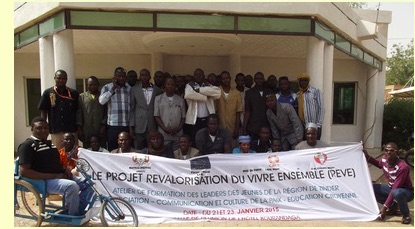
Le Projet REVE (Présentation du Projet Revalorisation du Vivre Ensemble) est une initiative conjointe de CARE et de l’ONG nationale SOS Civisme Niger financé pour 20 mois (janvier 2014 à Août 2015). Il s’inscrit dans la 4e composante dite « Promotion de la tolérance et du dialogue intra et interreligieux » du Programme « Instrument de stabilité» financé par l’Union Européenne. Ce Programme est mis en œuvre sous la maîtrise d’ouvrage de la Haute Autorité à la Consolidation de la Paix et participe d’une approche préventive à l’égard des menaces qui pèsent sur le Niger. L’action du projet REVE complète celle d’autres initiatives qui visent le renforcement de la résilience (emploi des jeunes, empowerment des femmes, adaptation aux changements climatiques, sécurité alimentaire, urgences). Après 12 mois de mise en œuvre, le projet vient de faire une revue qui démontre des principales réalisations suivantes :
2036-REVE Niger

Les cadres institutionnels

• Une assistance au Ministère de l’intérieur, de la décentralisation, de la sécurité publique et des affaires coutumières et religieuses à se diagnostiquer et à doter sa direction des affaires religieuses d’un plan stratégique et d’un plan prioritaire

• Une assistance au Conseil Supérieur de la Communication à se doter d’un plan stratégique et à initier un programme d’appui aux médias

• Une assistance au Conseil Islamique du Niger pour conduire son diagnostic et se doter d’un plan stratégique et d’un plan prioritaire

Dialogue Inter religieux

• Une Revue des cadres régionaux de dialogue inter religieux existants et l’élaboration de leurs plans stratégiques

• Une assistance aux instances de coordination des Eglises Catholiques et Eglises/missions Evangéliques pour le renforcement du dialogue pour la paix.

Dialogue intra religieux

• Les répertoires des organisations religieuses sont établis dans les 4 régions afin de faciliter les relations

• Des rencontres entre organisations et leaders locaux sur des thématiques comme « les impacts des prêches sur la stabilité »

• Des subventions aux projets de communication pour le renforcement de la paix, portés par les organisations religieuses

L’engagement des jeunes pour la paix

• L’élaboration du répertoire des organisations de jeunes porteuses de projets pour le dialogue

• La Formations de 120 jeunes leaders formateurs sur la culture de la paix,

• Des subventions aux projets d’associations de jeunes pour le renforcement de la paix

A l’unanimité, les institutions et les organisations (religieuses et jeunes) estiment que ces résultats importants en si peu de temps sont dus à la transparente communication et l’ambiance de confiance instaurées dans les rapports entre les acteurs.

Le projet conduira un processus de mesures et de capitalisation qui permettront , en août 2015, d’en tirer et communiquer les résultats pour une meilleure contribution future de CARE et ses partenaires aux côtés de l’Etat, dans la prévention des conflits, causes profondes identifiées de vulnérabilités au Sahel.

Latest Discussion


In the face of armed conflicts in the Sahara-Sahel, Can a culture of peace be established?

Latest reader comment:

As often occurs, in the Sahara-Sahel, in the face of the terrible violence of religious extremists in Mali, there is a dialectic so that the more the violence, the more the demand for a culture of peace.

Beirut, Lebanon: Citizenship, Gender and Democracy Building International Roundtable Discussion

DISARMAMENT & SECURITY .

an article by Euromed Feminist Initiative (abridged)
The international roundtable Citizenship, Gender and Democracy Building took place on the 9-10th of February 2015 at the American University of Beirut in Lebanon, organized by Euromed Feminist Initiative (IFE-EFI) in partnership the Syrian League for Citizenship (SLC) and the Asfari Institute for Civil Society and Citizenship. This event was held in the frame of the program “Towards a Democratic Transition in Syria through an inclusive Constitution Building Process” supported by Sweden.

2017 BeirutRoundtable participants

Click here to enlarge photo

The roundtable brought together over 100 participants representing various civil society organizations, women’s rights groups, academics, researchers, legal scholars and media representatives. It provided a platform to collectively think, share experiences and foster solutions to common challenges of gender-inequality, the on-going conflicts, occupation and patriarchal domination. It broadened the concept of citizenship and came up with recommendations to be adapted as a base for future work. The roundtable examined theoretical and practical dimensions of citizenship and gender equality and addressed common challenges of exclusion, discrimination, negative stereotypes, violence and armed conflict. Furthermore, the event was a powerful expression of international networking, civil society alliance building and solidarity with the Syrian civil rights organizations.

The roundtable was opened by Mrs. Diana Janse, the Swedish Ambassador to Syria, who stressed the value of a concept of citizenship, which is based on mutual trust and positive collective habits of citizens. Mr. Fateh Azzam, of the Asfari Institute of Civil Society and Citizenship, emphasized the importance of having a clear vision for effective and active citizenship in order to direct the activities and goals of civil society actors. Mrs. Lilian Halls French, for the Euromed Feminist Initiative IFE-EFI, articulated the common goals of the participants: the realization of true equality for women, the enjoyment of their full rights and their freedom of movement and action in the public and private sphere. Mr. Hassan Abbas of the Syrian League for Citizenship addressed the conference by urging participants to conceive of citizenship as a culture and practice rather than a mere formal legal status.

During the roundtable presentations and discussion, all speakers emphasized the need to move towards effectively implementation of international human rights and in particular women’s rights frameworks in the local contexts. Though the event explicitly addressed the Syrian context, it also drew on the experiences of women from the MENA region and Europe in its theoretical presentations and practical discussions. While the central focus was on broadening the concept of citizenship to include gender-equality and democratic participation, it tackled a range of other related issues. The main themes that were addressed in the discussions included women’s common experiences of exclusion from full citizenship rights and discrimination in public and private life; challenges faced in their effective political participation; experiences of violence at the hand of the patriarchal domination; the rights of refugees; and experiences of women during armed conflict. . . .

Latest Discussion


How can there be a political solution to the war in Syria?

In the following article, Wilhelm Langthaler, a Co-convener of PeaceinSyria.org comments on the spirit emerging from the “All Sides Consultation for Political Solution” in Vienna.

Now that the “All sides Consultation for a Political Solution in Syria” is accomplished and is being recognized by all the participants as a success that deserves continuation, the time has come to draw a balance not only of the conference itself, but also of its wider significance. The very fact that around two dozen people from the most diverse and conflicting backgrounds of Syrian society came together and consulted how to overcome the civil war tearing apart the country is extraordinary. But the spirit emerging from the debates reaches far beyond the objective of this single event, giving hope that a movement for a political solution is gaining momentum.
Exchange among the people – not power-brokering

First of all, let us recall the aim of the “All Sides Consultation for a Political Solution” which took place in the “Peace Castle Schlaining” close to Vienna, Austria, from 7-10 March, 2014. The idea was to give a voice to Syrian society in its full diversity, voices emerging from the people who have been silenced and excluded by the powerful. It was not intended to hold negotiations between the conflicting sides and their global and regional sponsors as has failed in Geneva. A consultative forum of personalities not directly representing the sides involved but indeed representing the societal richness was called upon to explore ways to stop the catastrophic bloodshed.

Thus we were not in search of sophisticated and well-balanced formulae of compromise pleasing the foreign powers involved (something which might, however, be necessary to reach in other places), but to give answers concerning how the full rights of the people might be guaranteed. The quest for these rights is what is thought to have sparked the conflict and is at the same time key to ending what has turned into a fratricidal war pitting the components of society against the other, a conflict additionally fuelled by massive international involvement. As Naser al Ghazali, one of the Syrian members of the preparatory committee hailing from Daraa, put it in his introduction: “Democratic rights are not negotiable. It is like pregnancy – you cannot be half pregnant as we will not accept less than full rights.”

The meeting was all about understanding the grievances of the diverse social, political, cultural and confessional components and to develop the mutual trust necessary to reach a ceasefire and to maintain it. . “We are contemplating elements of a new social contract,” as Serbest Nabi, a Kurdish professor of philosophy teaching in Erbil and Mardin, commented.

Tokens of mutual acceptance

“Once when I had to relocate, I donated my library for the use of the community by giving it to the local mosque. So together with my pious friend I checked the books one by one to see whether they were suited or not.” This allegory was recounted to the consultation by the Syrian filmmaker Nidal al Dibs from Sweida, reminding us of a contemporary version of Lessing’s ring parable which happens to be a symbol of European enlightenment.

This cautious but all the more powerful message was understood and adopted by all sides and can exemplify the spirit of the event. . …more.


Move the Money! The Global Campaign on Military Spending

. SUSTAINABLE DEVELOPMENT .

an article by Colin Archer, Secretary-General, International Peace Bureau (abridged)

The idea that the world spends too much on war and militarism is widely shared among peace activists. And when they care to think about it, millions of ordinary people around the world share this opinion. But it has yet to become a major political debating point. We aim to change all that!

2038 ipb

The issue is especially crucial in a period in which tensions between major states (Japan v. China…) and between governments and violent fundamentalists (US v ISIS…), are becoming increasingly militarised. Pressure to spend more taxpayers’ money on warfare is growing. The current situation is also the result of decades of past investments in the military, and the insatiable appetites of war profiteers.

A new global campaign

In December 2014, the International Peace Bureau (IPB) announced the launch of a permanent, global, year- round campaign to tackle the worldwide issue of excessive military spending. In 2013 the world’s governments spent over USD 1700 billion on the military sector. This is money that could instead be spent on creating jobs for young people, feeding the hungry, protecting us all from the effects of climate change, tackling ebola…and much more. IPB has for several years called for annual reallocations of (minimum) 10% from the military budgets of all states; and for a process to be started to reduce arms production as well as the international weapons trade.

The campaign builds on over a decade of work done by IPB and others on the theme of ‘Disarmament for Sustainable Development’. It incorporates the Global Day of Action on Military Spending (GDAMS) – now in its 5th year), whose goals it shares and which is also coordinated by the IPB.

What are our goals?

The overall goal is to achieve major re-allocations of military expenditures (especially in high-spending countries). But how should that money be spent, if it can be ‘liberated’? To keep things relatively simple, we propose a reallocation to 4 broad alternative areas:
° Peace: disarmament, conflict prevention and resolution, human security;
° Sustainable development and anti-poverty programmes;
° Climate change and biodiversity loss – for mitigation and adaptation;
° Social justice/welfare: public services, human rights, gender equality, green job-creation.

We view the above shifts as part of a wider global transformation towards a culture of peace.

In 2015 we intend to have an influence on key international debates in two of these areas:

* Development: to ensure the inclusion of language relating to military spending and disarmament in the UN’s Post 2015 Development Agenda; to be adopted at the UNGA in the autumn.

* Climate: to ensure that the target of $100 bn in annual governmental contributions to the Green Climate Fund is met by the date of the COP 21 climate conference in December. These contributions should come from reductions in military budgets. . . .

All are welcome to join! Just drop us a line at: mailbox@ipb.org.

Latest Discussion

Does military spending lead to economic decline and collapse?

Latest reader comment:

I think it was Marx who said that military spending is like throwing money into the sea, since it does not produce anything of value for people.

We could saw this previously in the case of the Soviet Union that was driven into bankruptcy by the arms race, which was a deliberate and successful strategy of NATO.

But now, if we look clearly, we can see it is now the case for the United States which produces very little for export and imports enormously (especially from China), while it spends most of its wealth on arms production.

Arms production is hidden in the official government budget of the United States. First, the government adds in social security which does not come from taxes, but which is simply a form of saving by those who pay into the system. Then it hides much of military spending in other budgets (for example nuclear production is hidden under energy). And finally, it fails to mention that most of the enormous budget item of debt payment is actually the payment for previous wars and arms production.

According to the careful research of the War Resisters League, almost half of the federal budget of the United States is for present and past military expenses. This amounts to over 1.3 trillion dollars a year!

A Year-long Project for “Living Together – REVE” in Niger

TOLERANCE AND SOLIDARITY .

an article by Niandou Ibrahim

The REVE Project (Presentation of the Revaluation Project Living Together) is a joint initiative of CARE and the national NGO SOS Civic Niger financed for 20 months (January 2014 to August 2015). It is part of the fourth component called “Promotion of tolerance and dialogue” of the program “Instruments for Stability” funded by the European Union. This program is implemented under the project management of the High Authority for Peacebuilding and is part of a conflict prevention approach in Niger. The full REVE project includes other initiatives as well aimed at building resilience (youth employment, women’s empowerment, climate change adaptation, food security, emergencies). After the first 12 months of implementation, the project has achieved the following key accomplishments:

2036-REVE Niger

Click here to enlarge photo.

Institutional frameworks

• Assistance to the Ministries of Interior, Decentralization, Public Safety and Religious Affairs to diagnose and provide advice concerning religious affairs within a strategic and priority plan

• Assistance to the Higher Communication Council to develop a strategic plan and initiate a media support program

• Assistance to the Niger Islamic Council to conduct diagnosis and develop a strategic and priority plan

Inter-religious dialogue

• A review of existing regional frameworks for inter- religious dialogue and the development of strategic plans

• Assistance with coordinating mechanisms for Catholic churches and Evangelical churches/missions to reinforce dialogue for peace.

Intra-religious dialogue

• A directory of religious organizations has been established in four regions to facilitate intra-religious relations

Meetings between organizations and local leaders on topics such as “the impact of sermons on political stability”

• Grants to communication projects for strengthening peace initiatives by religious organizations

Youth engagement for peace

• A directory of youth organizations with projects for dialogue

• The training of 120 young leaders as trainers for the culture of peace,

• Grants to youth association projects for peace building

Unanimously, these institutions and organizations (religious and youth) feel that important results have been obtained in such a short time thanks to open communication and an atmosphere of trust established among the actors.

The project will conduct a process of measurement and capitalization that will, in August 2015, draw upon and communicate the results contributing to a better future for CARE and its partners alongside the state, for conflict prevention and identification of the root causes of vulnerabilities in the Sahel.

(Click here for a French version of this article)

Latest Discussion


In the face of armed conflicts in the Sahara-Sahel, Can a culture of peace be established?

Latest reader comment:

As often occurs, in the Sahara-Sahel, in the face of the terrible violence of religious extremists in Mali, there is a dialectic so that the more the violence, the more the demand for a culture of peace.

Amnesty International: L’année 2014 a été terrible

.. DROITS DE L’HOMME ..

an article by Salil Shetty, secrétaire général d’Amnesty International

Ainsi que nous l’avons montré dans le rapport annuel, l’année 2014 a été terrible pour ceux et celles qui cherchent à défendre les droits humains, et aussi pour les hommes, les femmes, les enfants qui vivent dans des régions en proie à la guerre.

amnesty-french

Les gouvernements profèrent de belles paroles sur la nécessité de protéger les civils. Cependant, dans le monde entier, les dirigeants politiques se sont montrés incapables de protéger les personnes qui en ont le plus besoin. Amnesty International est convaincue que cette situation peut et devra changer.

Le droit international humanitaire, qui s’applique aux situations de conflit armé, est parfaitement clair. Les attaques ne doivent jamais viser les civils. Le principe de la distinction entre civils et combattants est une garantie fondamentale pour celles et ceux qui sont pris dans la tourmente des guerres.

Et pourtant, à maintes reprises, les civils ont été durement touchés par les conflits. En cette année du 20e anniversaire du génocide rwandais, les responsables politiques ont souvent foulé aux pieds les règles de protection des civils, ou se sont gardés d’intervenir lorsque d’autres qu’eux commettaient des violations meurtrières de ces règles. . .

En 2014, 30 ans s’étaient écoulés depuis l’adoption de la Convention contre la torture des Nations unies. Pour ce traité-là également, Amnesty International avait fait campagne pendant de longues années, et c’est en partie grâce à cette action que le prix Nobel de la paix lui a été décerné en 1977.

Cet anniversaire méritait d’être célébré, mais il a aussi permis de souligner que la torture est toujours monnaie courante dans le monde entier, ce qui a incité Amnesty International à lancer sa grande campagne Stop Torture en 2014.

Le message formulé contre la torture a acquis une résonance particulière après la publication en décembre d’un rapport du Sénat américain, d’où se dégageait une propension à approuver le recours à la torture au cours des années suivant les attentats du 11 septembre 2001 aux États-Unis. Il était étonnant de voir que certains responsables d’actes de torture semblaient encore penser qu’ils n’avaient nullement à en avoir honte.

De Washington à Damas, d’Abuja à Colombo, de hautes personnalités gouvernementales ont justifié d’atroces violations des droits humains en expliquant qu’elles répondaient à un impératif de « sûreté ». Mais c’est l’inverse qui est vrai. Si nous vivons aujourd’hui dans un monde si dangereux, c’est notamment à cause de ces violations. Une sécurité réelle ne peut être instaurée sans le respect des droits humains.

Nous avons bien souvent constaté que, même dans des périodes qui semblent de mauvais augure pour les droits humains – et peut-être tout particulièrement dans ces conditions – il est possible de susciter des changements remarquables.

Nous devons nourrir un espoir : au cours des années à venir, lorsque nous nous souviendrons de 2014, ce que nous avons vécu cette année-là sera jugé comme le point le plus bas, d’où nous nous serons élevés vers un avenir meilleur.

(Cliquez ici pour une version espagnole de cet article, ou ici pour une version anglaise.)

Question(s) related to this article:

What is the state of human rights in the world today?

Latest reader comment:

Each year we get overviews of the state of human rights in the world from Amnesty International and Human Rights Watch.

Amnistía Internacional : Un año demoledor

. . . . . DERECHOS HUMANOS . . . . .

un articulo de Salil Shetty, secretario general de Amnistía Internacional (abreviado)

Como se refleja en nuestro informe anual, 2014 ha sido un año demoledor para quienes intentaron defender los derechos humanos y quienes quedaron atrapados en el sufrimiento de las zonas en guerra.

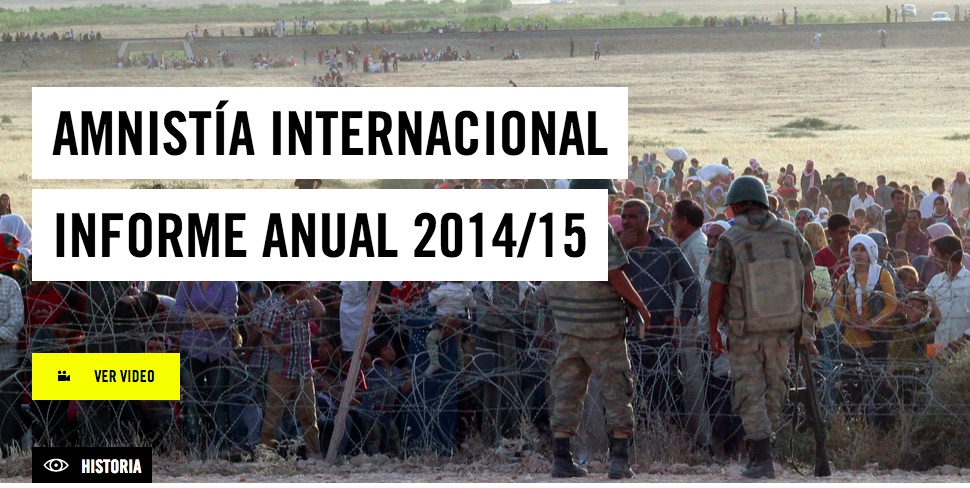
amnesty-spanish
Haga clic en la foto para ampliarla

A los gobiernos se les llena la boca hablando de la importancia de proteger a la población civil. Y, sin embargo, los políticos del mundo han fracasado lamentablemente a la hora de proteger a las personas que más lo necesitan. Amnistía Internacional considera que se puede y se debe cambiar esto de una vez por todas.

El derecho internacional humanitario, que regula la conducta de las partes en los conflictos armados, no puede ser más claro al respecto. Los ataques no deben dirigirse nunca contra civiles. El principio de distinción entre civiles y combatientes es una salvaguardia fundamental para las personas atrapadas en los horrores de la guerra.

Sin embargo, una vez más, la población civil volvió a llevarse la peor parte del conflicto. En el año en que se conmemora el vigésimo aniversario del genocidio de Ruanda, los políticos pisotearon reiteradamente las normas que protegen a los civiles o miraron hacia otro lado ante quienes infringían estas normas con consecuencias letales. . .

En 2014 se cumplieron 30 años de la adopción de la Convención de la ONU contra la Tortura, otra convención en favor de la cual Amnistía Internacional hizo campaña durante muchos años, y uno de los motivos por los que en 1977 la organización recibió el premio Nobel de la Paz.

Este aniversario fue, por un lado, algo que celebrar, pero fue también una ocasión para señalar que la tortura sigue estando muy extendida en todo el mundo, motivo por el cual Amnistía Internacional lanzó este año su campaña mundial Stop Tortura.

Este mensaje contra la tortura adquirió especial resonancia tras la publicación en diciembre de un informe del Senado de Estados Unidos que demostraba que, durante los años posteriores a los atentados del 11 de septiembre de 2001 contra el país, existió una disposición a justificar la tortura. Asombrosamente, algunas de las personas responsables de los actos criminales de tortura aún parecían seguir creyendo que no tenían nada de qué avergonzarse.

Desde Washington a Damasco y desde Abuja a Colombo, los líderes gubernamentales han justificado terribles violaciones de derechos humanos arguyendo la necesidad de mantener la “seguridad” en el país. En realidad, ocurre lo contrario. Esas violaciones de derechos humanos son un motivo importante por el que hoy en día vivimos en un mundo tan peligroso. Sin derechos humanos no puede haber seguridad.

Hemos visto una y otra vez que, aun en épocas que parecen funestas para los derechos humanos —y quizá especialmente en esas épocas—, es posible generar un cambio extraordinario.

Debemos esperar que, cuando en años venideros miremos hacia 2014, lo que hemos vivido este año se considere un nadir —el punto más bajo alcanzable— a partir del cual nos hayamos alzado y creado un futuro mejor.

( Clickear aquí para la version inglês y aquí para la version francês )

Pregunta(s) relacionada(s) al artículo

What is the state of human rights in the world today?

Comentario más reciente: :

Each year we get overviews of the state of human rights in the world from Amnesty International and Human Rights Watch.