Tag Archives: global

Progress in Participatory Budgeting

. .DEMOCRATIC PARTICIPATION. .

Based on information on the website of the Participatory Budgeting Project

Participatory budgeting (PB) is a different way to manage public money, and to engage people in government. It is a democratic process in which community members directly decide how to spend part of a public budget. The process was first developed in Brazil in 1989, and there are now over 1,500 participatory budgets around the world. Most of these are at the city level, for the municipal budget.

participative budgeting
Video: Real money, real power: participatory budgeting

Though each experience is different, most follow a similar basic process: residents brainstorm spending ideas, volunteer budget delegates develop proposals based on these ideas, residents vote on proposals, and the government implements the top projects. For example, if community members identify recreation spaces as a priority, their delegates might develop a proposal for basketball court renovations. The residents would then vote on this and other proposals, and if they approve the basketball court, the city pays to renovate it.

There are so many cities and institutions implementing Participatory Budgeting that it is almost impossible to keep track of them all. However, the Participatory Budgeting Project presents a map showing twenty of the most developed and interesting PB processes in North America, Latin America and Europe that illustrate the diversity of PB models. Readers can click on the markers or view the tables underneath the map to see basic information about each process.

Here are seven of the twenty examples.

Brazil: Porto Alegre, with nearly 1.5 million residents, was the first city to launch a full PB process, in 1989. Since then, up to 50,000 residents have turned out each year to decide how to spend as much as 20% of the city’s annual budget. Participants attend a series of local assemblies, and after months of discussions budget delegates deliver a participatory budget to the city for implementation.

(Article continued in right column)

Questions for this article:

Participatory budgeting, How does it work?

(Article continued from left column)

Brazil: Belo Horizonte, population 2.5 million, has had a district-level PB since 1993, a Housing PB since 1996, and a digital PB (e-PB) since 2006. Through both local assemblies and online voting, residents allocate over $50 million per year.

Argentina: Rosario’s PB consists of an annual cycle in which over 87,000 city residents decide how to allocate around $9 million of the city budget. In this city of 1 million people, residents discuss spending ideas at neighborhood assemblies, elected delegates develop full budget proposals, and then residents vote on the proposals at another round of voting assemblies. The funds can be spent on both capital projects and services or programs.

USA: In 2009, PBP and Chicago alderman Joe Moore launched the first PB process in the U.S., in the city’s 49th Ward. In the current process, residents of three Wards decide each year how to spend $3 million of taxpayer money.

USA: New York City is host to the largest PB in the U.S. in terms of participants and budget amount. First introduced in 4 council districts in 2011, the annual PBNYC process now spans 24 Council Districts and lets residents directly decided how to spend $25 million in capital discretionary funds. 

Canada: Since 2001, Toronto’s public housing authority has engaged tenants in allocating $5 to $9 million of capital funding per year. Tenants identify local infrastructure priorities in building meetings, then budget delegates from each building meet to vote for which priorities receive funding.

Spain: Seville (pop. 700,000) is the largest European city to implement PB. From 2004-2013, residents decided on roughly 50% of local spending for their city districts, for capital projects and programs. They submitted project proposals online or in neighborhood assemblies, and after a series of meetings, locally elected budget delegates delivered the participatory budget to city hall for implementation.

Kofi Annan, Foreign Ministers Pledge Support for a Mine-Free World by 2025

DISARMAMENT & SECURITY .

An article from the International Campaign to Ban Land Mines

Former Secretary-General of the United Nations Kofi Annan joined Foreign Ministers from Canada, Chile and Colombia in a packed room of Geneva’s Palais des Nations on 2 March 2016, pledging support for the Mine Ban Treaty as states embark on the “final stretch” towards a mine-free world. More than 35 donor states and states with landmine contamination, as well as mine clearance experts and UN bodies, explained how they will work towards this goal.

landmines

Other eminent personalities lending their support during the high-level panel opening the First International Pledging Conference for the Implementation of the Anti-Personnel Mine Ban Convention included the President of the International Committee of the Red Cross, the Director of the United Nations Office in Geneva, the Head of Danish Demining Group, and the Campaign Manager of the International Campaign to Ban Landmines.

The half-day conference highlighted the need for sustained financial resources and political support to meet the goals of the Mine Ban Treaty to the fullest extent possible by 2025, an aspirational deadline embraced by States Parties to the treaty during an international meeting in Maputo in 2014. It also aimed at ensuring sufficient resources for the treaty’s Implementation Support Unit.

Chile hosted the event, as current President of the Mine Ban Treaty, announcing that “Much remains to be done but the end is in sight. We are now in the last stretch towards a mine-free world!”

Sri Lanka surprised the audience with the announcement that the Cabinet had approved accession to the Mine Ban Treaty, a major development in South Asia where only three states (India, Nepal and Pakistan) will remain outside the treaty after Sri Lanka formally accedes.

1 March 2016 marked 17 years since the entry into force of the Mine Ban Treaty, a historical instrument of disarmament and humanitarian law. Under the treaty, states have stopped using, producing and selling antipersonnel mines, they have destroyed some 49 million stockpiled mines, cleared vast tracts of land, and taken steps to provide assistance to victims of the weapon. With 162 States Parties, the Mine Ban Treaty is one of the most universally accepted treaties.

More about the Pledging Conference:

Highlights from the conference storified by Michael P. Moore from Landmines in Africa

Canada Recommits to a Mine-Free World while Sri Lanka Approves Accession to Ottawa Treaty, Mines Action Canada

A Mine-Free World Is Possible, Danish Refugee Council / Danish Demining Group

(Thank you to the Good News Agency for calling this to our attention.)

Question for this article:

Education International and other Global Union Federation delegations begin their work at the 60th Session of the UN Commission on the Status of Women

. WOMEN’S EQUALITY .

An article from Education International

The full labour delegation present in New York, USA, is made up of an unprecedented 150 women union leaders from 34 countries. The Education International (EI) delegation to the 60th session of the UN Commission on the Status of Women (CSW60) has joined the other Global Union Federations (GUFs) delegations for the first week of the Commission’s deliberations (March 14th-18th).

csw unionists
Click on the photo to enlarge

The EI delegation got to work already on Sunday 13th, in conversation with Nora Fyles, Head of Secretariat of the UN Girl’s Education Initiative (UNGEI). Fyles gave a short presentation on ‘Policy Advocacy: UNGEI Speaking Out for Girls’ Education’, which was followed by a conversation with the EI delegates about their respective unions’ advocacy around girls’ education, and other gender and education issues.

Later in the day, EI delegates joined the full labour delegation for a briefing session, in which seasoned and new delegates alike were given information about the first week of CSW60, and the events planned by the GUFs, the ILO and key allies among the thousands of women’s rights organisations that are currently in New York for CSW60.

The CSW60 priority theme is Women’s Empowerment and its Link to Sustainable Development; and the review theme is The Elimination and Prevention of all Forms of Violence against Women and Girls (the Agreed Conclusions from CSW57). The priority theme is auspicious because CSW60 is the first major UN event to take place since the 2030 agenda for sustainable development was agreed, and the new sustainable development goals (SDGs) were adopted in September 2015. CSW60, therefore, presents a unique opportunity to bring the gender and education community for dialogue around the interlinkages between SDG 4 on education, and SDG 5 on gender equality.

On Wednesday March 16th, together with the Mission of Norway to the UN and UNGEI, EI will jointly host a side event entitled ‘Financing for Education: A Key to Empowering Women and Girls’. The EI President, Susan Hopgood, will speak on the panel, as will Ms Tone Skogen, Deputy Minister of Foreign Affairs, Norway, Ms Geeta Rao Gupta, Deputy Executive Director, UNICEF, Ms Meighan Stone, President, Malala Fund and Mr Justin van Fleet, Director, International Commission on Financing Global Education Opportunity. The event will be moderated by Mr Yannick Glemarec, Deputy Executive Director Policy & Programmes, UN Women, and introductory remarks will be offered by Ms Alice Albright, CEO, Global Partnership for Education.

Read the joint official GUF CSW60 statement, and keep up to date with what the labour delegates are up to here.

Follow the GUF delegation at the UNCSW on Twitter: https://twitter.com/unioncsw

(Thank you to Janet Hudgins, the CPNN reporter for this article)

(Click here for a French version of this article)

Question for this article

Does the UN advance equality for women?

The following article by Lyndal Rowlands in the Inter Press Service, suggests that the UN is not making much progress on its commitments for women’s equality:

2015 marks anniversaries for two significant commitments made to increasing women’s participation at peace tables.

Yet despite the Beijing Platform for Action and the Security Council Resolution 1325 both committing to increasing women’s participation in peace building 20 and 15 years ago, respectively, there has been very little progress to report.

The latest available statistics show that women made up only 9 per cent of negotiators at peace tables between 1992 and 2011. That the most recent data is from 2011 shows that more work is needed even in basic areas such as data collection and reporting of women’s participation in peace building.

IPS summarises here four reasons we should value women’s participation at the peace table more, based on discussions at the 59th Commission on the Status of Women (CSW) over the past week.

Beijing Platform for Action Section E

Women and Armed Conflict Diagnosis

Strategic objective E.1. Increase the participation of women in conflict resolution at decision-making levels and protect women living in situations of armed and other conflicts or under foreign occupation. Actions to be taken.

Strategic objective E.2. Reduce excessive military expenditures and control the availability of armaments. Actions to be taken.

Strategic objective E.3. Promote non-violent forms of conflict resolution and reduce the incidence of human rights abuse in conflict situations. Actions to be taken.

Strategic objective E.4. Promote women’s contribution to fostering a culture of peace. Actions to be taken

Strategic objective E.5. Provide protection, assistance and training to refugee women, other displaced women in need of international protection and internally displaced women. Actions to be taken.

Strategic objective E.6. Provide assistance to the women of the colonies and non-self-governing territories. Actions to be taken.
Women Bring Commitment and Experience to the Peace Table
Often the first people invited to participate in formal peace negotiations are the people holding the guns and the last are women who have expertise in building lasting peace.

Zainab Bangura, Special Representative of the Secretary-General on Sexual Violence in Conflict, told a CSW side event on Tuesday last week, “In the Central African Republic, the only community where they were not killing each other was a community where the Christian women said, ‘These Muslim women are our sisters.’

“Why? Because the women in the community said, ‘We have lived together for the last 100 years’,” Bangura said.

In the Phillipines, Irene Santiago was a member of the government panel that negotiated peace with the Moro Islamic Liberation Front. Santiago came to the table with years of experience working with Christian, Muslim and Indigenous women leaders for peace.

Speaking at a CSW side event at the International Peace Institute (IPI) on Thursday, Santiago said that she knew that her years of experience working with civil society for peace stood her in good stead to make a significant contribution to formal peace negotiations, which she did.

Speaking with IPS, Santiago said women’s voices not only have to be heard, but that they also have to be acted on.

“For women. It’s almost never always about themselves, it’s always about our children, our husbands but also about our communities,” Santiago told IPS.

In Africa, women have fought to be included in peacemaking, even when their contributions have not been recognised.

Bineta Diop, Special Envoy on Women Peace and Security to the African Union, says that mediators need to be held accountable when they only invite the people who hold guns to the peace table and ignore women’s contributions.

“I have been involved in many crises where women were knocking at the door and saying we want to be at the table,” Diop said.

Ambassador Anwarul Chowdhury, known as the father of Security Council Resolution 1325, said that the determination of African women to be involved in peace negotiations should be seen as an inspiration by other countries.

Despite serious difficulties, war and conflict, African women have shown continued determination to hold their countries accountable, Chowdhury said.

Gender Equality in Peace Time Prevents Conflict
Also speaking at the IPI, Valerie Hudson, co-author of ‘Sex and World Peace’, said that her research has shown that the way women are treated within a country is one of the most accurate indicators of the quality of relations that country will have with other countries.

Diop agreed with Hudson, saying that countries that are likely to fall into conflict have higher levels of discrimination and inequality.

“Discrimination against women, especially the non-participation and non-inclusion of women in democracy is … one of the root causes of the conflict,” Diop said.

Ambassador Choudhury agreed with these sentiments, telling IPS, “I believe that no country can claim that their country is not in conflict if women’s rights are denied, if women’s equality is not ensured, if women’s participation at all participation levels is not there.

“I think that if we women are violated, if women’s equality of participation is not there we cannot say that we are at peace, we are in conflict with ourselves. This is a conflict which is happening within ourselves and within the countries. We don’t have to go into the traditional description of conflict, civil conflict or fighting with another country,” Chowdhury added.

Dr. Youssef Mahmoud, Senior Adviser at the International Peace Institute also speaking at the IPI event said, “A world where 51 per cent are ignored is a dangerous world for everyone. I can’t imagine why any men would be indifferent to this.”

Women Are Active In Civil Society
Several discussions at the CSW questioned why militaries were the primary actors in peace building, while non-governmental organisations (NGOs) and civil society’s expertise was not called on.

Related IPS Articles

U.S. Honours 10 “Extraordinary Women” for Courage and Leadership
Meet the 10 Women Who Will Stop at Nothing
Women Walk for Peace in the Korean Peninsula
Santiago told IPS that civil society, especially women, have a lot to contribute to humanise, to concretise, and to make peace negotiations relevant to people’s lives.

Winnie Kodi from the Nuba mountains in Sudan told reporters on Monday that civil society was vital to helping indigenous communities like her own that have been affected by conflict. She said that the main way her people were able to have their voices heard was by working together with NGOs and civil society.

Chowdhury told IPS he is advocating for the U.N. and governments to hold more consultations with civil society, saying that the involvement of women and of civil society is very important.

Santiago also called for renewed focus on the important role of NGOs in the area of women, peace and security,

“Again I see that why are we focusing on the UN as the locus of change,” she said. “To me it is not, it is the means, it is an important audience, but it is not the locus of social change.

“Let us form the global civic networks that we need to bring about the local global and civil change that we need” Santiago said.

Women Challenge The Causes of Conflict
Challenging militarism and militarisation was another theme discussed during the first week of the CSW, particularly by civil society groups at the parallel NGO forum.

Choudhury told IPS that increased militarism and militarisation is slowing down efforts for equality. “Increasing militarism and militarisation has really been effecting women in a very negative way. This is something that women should stand up against, we should all stand up against,” Chowdhury said.

Militarisation is also affecting indigenous women and men. Maribeth Biano, from the Asian Indigenous Women’s Network, told reporters on Monday that Indigenous women are hugely affected by militarisation in Indigenous territories.

New Alliance: Compassionate Cities and International Cities of Peace Join Efforts!

.. DEMOCRATIC PARTICIPATION ..

Excerpts from the websites of International Peace Cities and Charter for Compassion

    A compassionate city is an uncomfortable city! A city that is uncomfortable when anyone is homeless or hungry. Uncomfortable if every child isn’t loved and given rich opportunities to grow and thrive. Uncomfortable when as a community we don’t treat our neighbors as we would wish to be treated.”
    ~Karen Armstrong, Founder of the global movement, The Charter for Compassion

Charter for Compassion International and International Cities of Peace are now working together. In coordination, the organizations wil help you self-define and get to work in making your neighborhood, city, or state a more compassionate place for all citizens to thrive.

compassion
Video: Charter of Compassion Toolbox

The Compassionate network has an amazing Tool Box to help you get a baseline of needs, then create an action plan for progress. Every Compassionate City, due to their current work, will be added to our City of Peace network upon request. Every City of Peace can have direct access to the Charter for Compassion’s director, Marilyn Turkovich, and their Tool Box. Get in touch and start the good work of compassion. For details, send an email to info@internationalcitiesofpeace.org

The Charter TOOL BOX is a four-part model or framework for building a Compassionate Community. Every city of peace would benefit from this: How to Assess, Commit, Launch, and Sustain your compassionate action plan.

The text of the Charter for Compassion:

The principle of compassion lies at the heart of all religious, ethical and spiritual traditions, calling us always to treat all others as we wish to be treated ourselves. Compassion impels us to work tirelessly to alleviate the suffering of our fellow creatures, to dethrone ourselves from the centre of our world and put another there, and to honour the inviolable sanctity of every single human being, treating everybody, without exception, with absolute justice, equity and respect.

(Continued in right column)

Questions for this article:

How can culture of peace be developed at the municipal level?

(Continued from left column)

It is also necessary in both public and private life to refrain consistently and empathically from inflicting pain. To act or speak violently out of spite, chauvinism, or self-interest, to impoverish, exploit or deny basic rights to anybody, and to incite hatred by denigrating others—even our enemies—is a denial of our common humanity. We acknowledge that we have failed to live compassionately and that some have even increased the sum of human misery in the name of religion.

We therefore call upon all men and women to restore compassion to the centre of morality and religion ~ to return to the ancient principle that any interpretation of scripture that breeds violence, hatred or disdain is illegitimate ~ to ensure that youth are given accurate and respectful information about other traditions, religions and cultures ~ to encourage a positive appreciation of cultural and religious diversity ~ to cultivate an informed empathy with the suffering of all human beings—even those regarded as enemies.

We urgently need to make compassion a clear, luminous and dynamic force in our polarized world. Rooted in a principled determination to transcend selfishness, compassion can break down political, dogmatic, ideological and religious boundaries. Born of our deep interdependence, compassion is essential to human relationships and to a fulfilled humanity. It is the path to enlightenment, and indispensable to the creation of a just economy and a peaceful global community.

Participating cities

Almost 70 cities [in 45 countries] globally have affirmed the Charter for Compassion through city, community councils or other govenment entities. Affirming the Charter means that a community has identified issues on which they are working, and committed to a multi-year action plan.

Click here for list of participating countries and cities

Nonviolent Peace Force Nominated for 2016 Nobel Peace Prize

. EDUCATION FOR PEACE .

A press release from the American Friends Service Committee

Nonviolent Peaceforce, an unarmed, paid civilian protection force which fosters dialogue among parties in conflict and provides a protective presence for threatened civilians, has been nominated for the 2016 Nobel Peace Prize by the American Friends Service Committee (AFSC).

nvpf

“Unarmed civilian protection is a method for direct protection of civilians and violence reduction that has grown in practice and recognition. In the last few years, it has especially proven its effectiveness to protect women and girls,” according to a UN report of October 2015 cited in its nominating letter by AFSC, a Quaker organization working for peace and justice across the U.S. and around the world.

“Awarding the Nobel Peace Prize to Nonviolent Peaceforce would highlight and strengthen their work and the work of other similar organizations, at a time when worldwide tensions seem to be at a boiling point, and their work is vital and relevant,” AFSC wrote.

“We are honored to be nominated. We are especially honored to have this nomination come from the American Friends Services Committee. This is a tribute to our courageous civilian peacekeepers who are at the frontline of violent conflicts around the world,” said Mel Duncan, co-founder, and Doris Mariani, CEO of Nonviolent Peaceforce.

Founded in 2002, Nonviolent Peaceforce (NP) fielded its first intervention team one year later, in Sri Lanka. With headquarters in Brussels and an office in Minneapolis MN, NP field teams are presently deployed in the Philippines, in South Sudan, Myanmar, and the Middle East. Their field staff include veterans of conflict zones, experienced peacekeepers, and those new to the field.

Aware of the danger of neocolonial models of intervention, Nonviolent Peaceforce only serves in areas where they have been invited, and they conduct extensive and thorough interviews and research with all parties to a conflict before they decide whether or not to deploy teams to a conflict area.

NP is also clear that their goal is “to arrive to leave,” not intending to establish long-term presence, but seeking to address the conflict that caused their invitation, see it through to resolution, and then withdraw.

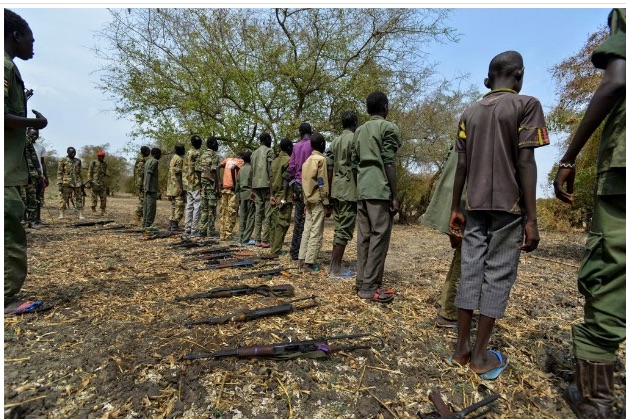
As part of its work, NP has reunited child soldiers with their families and helped create weapons-free zones in conflict areas. NP mitigates gender violence through their Women’s Security Teams, “which have dramatically lessened the number of rapes that South Sudanese women experience while gathering water or firewood for their families. In the past year, (NP) provided over 1,000 accompaniments for vulnerable people, primarily women and children, throughout South Sudan,” the AFSC wrote.

In 1947, AFSC and the British Friends Service Council accepted the Nobel Peace Prize on behalf of “Quakers everywhere.” Peace Prize laureates have the privilege to nominate candidates for this honor. The AFSC Nobel Nominating Committee includes a representative of Quaker Peace and Social Witness, the AFSC’s counterpart in Great Britain. For more on the nomination criteria, visit http://quakernobel.org/

(Thank you to Janet Hudgins, the CPNN reporter for this article.)

Question for this article:

Amnesty International: 10 ways we’ve defended women’s rights in the past year

. . WOMEN’S EQUALITY . .

An article from Amnesty International

March 8th is International Women’s Day and we’re taking a moment to reflect on how your support has changed women’s lives around the world in the past year. From policy breakthroughs to freedom for courageous women human rights defenders, here are just a few of the ways you’ve defended women’s human rights and helped break down barriers for women and girls:

amnesty

1. The Canadian government announced an inquiry into missing and murdered Indigenous women and girls

For well over a decade, Amnesty International has stood alongside Indigenous women, families who have lost loved ones to violence, and so many others to call for an end to the disturbingly and unacceptably high rates of violence experienced by Indigenous women and girls. We have published reports, written letters, gathered petition signatures, joined vigils, and spoken out in the media, in Parliament and at the United Nations. And throughout it all we have stood with Indigenous women and families and let them know they are not alone in the struggle to end the violence.

Together, with your help, we are making strides. The tireless work of Amnesty supporters has helped generate a groundswell of public support for concrete action to end the violence.

In December, we welcomed the federal government’s announcement of a public inquiry into missing and murdered Indigenous women and girls. The announcement was a major breakthrough after years of government inaction.

So much lies ahead. We need your help to make sure that government commitments truly lead to an end to the violence. And your solidarity is crucial to making sure Indigenous women and families know they are not alone in their struggle to end the violence.

TAKE ACTION: Sign the pledge to stand with Indigenous women and families to end the violence

Learn more: No More Stolen Sisters

2. Burkina Faso has made commitments to end early and forced marriage

In December 2015, Burkina Faso adopted a national strategy and a three-year action plan to prevent and eliminate child marriage in the country. The strategy and plan came after the government committed to address the obstacles that women and girls face when trying to access sexual and reproductive health services and information. And in February, Burkina Faso’s Ministry of Justice, Human Rights and Civic Promotion committed to raise the legal age of marriage for girls to 18 years and to ensure that forced marriage is clearly defined in Burkina Faso’s criminal code. The government also committed to introducing free healthcare for pregnant women in an effort to reduce the number of maternal deaths.

Prior to these announcements, on December 10th, Amnesty International supporters Canada and around the world sent thousands of letters, emails and tweets to the government of Burkina Faso as part of our global Write for Rights letter-writing marathon. The government acknowledged in their February announcement that they have been receiving messages from around the world urging them to take immediate action to end this practice.

While these promises are a step in the right direction, we need your help to ensure these plans turn into real action.

TAKE ACTION: Sign our action calling on Burkina Faso to turn their plans to end early and forced marriage into real action

Learn more: Ending early and forced marriage in Burkina Faso

3. Miscarriage is not a crime: Justice for Guadalupe in El Salvador

In 2007, at just 18 years old, Carmen Guadalupe Vasquez was sentenced to 30 years in prison after suffering a miscarriage. She was wrongly accused of having an abortion, which is outlawed in all circumstances in El Salvador. She was one of 17 women in jail with lengthy sentences for being accused of having an abortion.

In January 2015, thanks to years of hard work by dedicated activists in El Salvador, El Salvador’s Legislative Assembly took a vote on whether to pardon Guadalupe. Amnesty International condemned the outcome of the vote and international pressure led to a re-vote being scheduled. In the days leading up to the re-vote, Amnesty supporters took to the internet to send a wave of messages to Assembly members urging them to release Guadalupe and the other jailed women. Guadalupe was finally pardoned and walked free from prison in February 2015.

Her exoneration is a victory in the long fight for women’s rights, but her story is tragically not unique. El Salvador continues to condemn thousands of women to death or decades behind bars by criminalizing pregnancy-related complications and prohibiting abortion even when a woman’s life depends on it. As part of our My Body My Rights campaign, Amnesty International has been campaigning to end El Salvador’s total ban on abortion.

TAKE ACTION: Sign our action calling for Teodora del Carmen Vásquez, another woman jailed in El Salvador for pregnancy-related complications, to be released now.

Learn more: Read our report on violations of sexual and reproductive rights in Latin America and the Caribbean

4. Five women’s rights defenders released on bail in China

Five Chinese activists decided to mark International Women’s Day in 2015 by launching a campaign against sexual harassment. They had made stickers to distribute, printed with slogans like “Go police, go arrest those who committed sexual harassment!”

Just before March 8th, authorities arrested them on suspicion of “picking quarrels and provoking troubles.” Amnesty International swung into action, mobilizing our letter-writing Urgent Action Network to join the voices of activists from around the world.

The outcry secured the release of the five on April 13, 2015. However, the charges have yet to be removed and they still face a possible five year sentence. In fact, the Chinese government continues to harass and silence women’s rights defenders by threatening and arresting activists, even shutting down women’s rights organizations.

Women’s rights defenders can pay a high price for their dedication to advancing women’s human rights and empowerment. One such defender is Bahareh Hedayat, an Iranian student activist in prison for 10 years on charges including “insulting the president.” Bahareh is with a group known as the One Million Signatures campaign (also known as the Campaign for Equality), a grass-roots initiative to end legal discrimination against women in Iran.

TAKE ACTION: Sign our action calling on Iranian authorities to immediately and unconditionally release Bahareh Hedayat

5. You stood with sisters threatened with sexual punishment in India

In May 2015, 23-year-old Meenakshi Kumari and her 15-year-old sister fled their village in Baghpat, Utter Pradesh, to Delhi, fearing a backlash after their brother, Ravi, eloped with a married woman from a higher caste.

Sadly, their fears were confirmed when just days later their house was ransacked. Two months on, the village’s male-only unelected council (khap panchayat) ruled that Meenakshi and her teenage sister should be raped and paraded naked with their faces blackened as punishment for their brother’s actions.

(Article continued in right column)

Question related to this article:

Protecting women and girls against violence, Is progress being made?

Abortion: is it a human right?

(Article continued from left column)

Meenakshi, a Dalit woman, courageously reported the human rights violations. When Amnesty International India learned about their case, they rallied more than 500,000 Amnesty supporters worldwide to call for their protection.

The authorities took the concerns seriously. On September 16, India’s Supreme Court ordered Delhi police to provide protection for the two sisters and their family. Amnesty International continues to call for justice and reparation for Meenakski and her family. If they are unable to return to their village, they must also receive support to rebuild their lives in another community.

Learn more: Read their story and learn more about Amnesty International India’s work to end gender discrimination in India

6. A Sudanese court overturned the conviction of a teenager sentenced for “indecent dress”

On August 16, 2015 Ferdous Al Toum was found guilty of “indecent or immoral dress” and sentenced to 20 lashes and a fine of 500 Sudanese pounds.

She was arrested as part of a group of 11 young women on June 25th who were leaving a church ceremony at the Evangelical Baptist Church in Khartoum North. The women were all wearing skirts or trousers, yet were accused of “indecent or immoral dress.” Incredibly, Ferdous was charged again for the clothes she wore in the courtroom at her trial. She was sentenced to a large fine for her appearance in court (paid on her behalf by activists and supporters), as well as the lashes.

In light of this news, more than 16,000 Canadians joined Amnesty International supporters from around the world to condemn the sentence. Following an appeal by Ferdous’ lawyers, her conviction was finally quashed by the Court of Appeal on October 14, 2015. She was the second last woman to be released, and eventually all 11 women were freed.

Sudan’s “indecent dress” law applies to women and men on paper, but it is used exclusively against women. Women and girls around the world face discrimination in law and practice simply because of their gender. Women and girls can face harsher punishments for the same “offences,” such as the case of Atena Farghadani. In 2015, Atena, a young painter and activist, drew a cartoon critical of proposed laws that would make it difficult for women to obtain contraception or seek a divorce in Iran. She was arrested for her peaceful activism and sentenced to 12 years and nine months in prison.

TAKE ACTION: Call on Iranian authorities to release Atena Farghadania now!

7. Justice for a Courageous Torture Survivor

In 2012, marines broke into the home of Claudia Medina Tamariz. They took her away to a local naval base. There, Claudia suffered terrible torture, including electric shocks and sexual assault.

The torture was aimed at forcing Claudia to incriminate herself in drug-related crimes. To make the torture stop, Claudia signed a piece of paper put before her. She later discovered it was a “confession” to crimes she had not committed.

More than 300,000 people, including thousands of Canadians, sent letters to the Mexican Attorney General. Claudia is now free. In reviewing her case, a judge confirmed that after her arrest Claudia was tortured and sexually assaulted by marines in order to force her to incriminate herself and others in drug-related crimes. On February 6, 2015, that judge informed her that the last remaining charge was dropped.

Despite everything she’s gone through, Claudia is filled with determination to help others: “After this long process I had to go through I felt the need to become a human rights activist, to show that I’m not a criminal, as authorities portrayed me. I will not allow even one more woman to be tortured in Mexico.”

Torture, including sexual assault, is the preferred crime investigation technique for some Mexican police and military officers. They torture people into signing false statements and use them as evidence to prosecute. Claudia and Amnesty International continue to speak out for other torture survivors in Mexico, like Yecenia Armenta. Police hung Yecenia upside down, asphyxiated and brutally raped her until she signed a “confession,” while still blindfolded, to her husband’s murder. She’s been in prison ever since.

TAKE ACTION: Call on the Mexican authorities to drop the charges against Yecenia, release her immediately and bring her torturers to justice.

Learn more: Amnesty’s Stop Torture campaign

8. Amnesty activists rallied for a domestic violence victim sentenced to death

Li Yan in China made repeated calls to the police about her abusive husband, Tan Yong, who frequently beat her. He stubbed out cigarettes on her face. He locked her, near-naked, on the balcony of their apartment for hours at a time during the freezing Sichuan winter. On one occasion, he cut off her finger.

After repeated ignored requests for help, in late 2010, isolated, afraid and denied protection by the authorities, Li Yan resorted to violence and beat her husband to death with a gun.

She was sentenced to death. But thanks to international support, her sentence has since been commuted to the death sentence with a two-year reprieve. Under the Chinese law, death sentences with a two-year reprieve should be commuted to life imprisonment upon the expiration of the two-year period, as long as the prisoner does not commit another crime during the period of suspension.

This tragic outcome could have been avoided. “The reprieve for Li Yan could prove a landmark verdict for future cases where domestic violence is a mitigating factor. With her case, the highest court in China has sent a clear message that judges must not ignore domestic violence,” said William Nee, China Researcher at Amnesty International.

This may not feel like a landslide victory for Li Yan, but it remains an important moment of shedding light upon the issue of domestic violence in China.

Activists still face serious risks for speaking out about violence against women and other women’s rights issues in China. One such women’s rights activist is Su Changlan, a former teacher in prison since October 2014 for her peaceful activism. She is being held in deplorable conditions and faces life imprisonment simply for calling on the government to respect human rights.

TAKE ACTION: Write a letter to Chinese authorities to immediately and unconditionally release Su Changlan

9. You helped put women’s rights on the Canadian federal election agenda

Amnesty International Canada was a proud member of the Up for Debate campaign to promote women’s rights and gender equality in the lead up to Canada’s federal election in 2015. Our goal was to make sure that all federal political party leaders explained how they would build a more equal Canada for us all, and make meaningful commitments to change the lives of women and girls for the better at home and around the world. And we succeeded!

Learn more: The Up for Debate campaign helped bring meaningful change

10. You helped break the silence around sex, relationships and reproduction in many countries

In 2013, Amnesty International launched its My Body My Rights campaign, founded on the principle that people of all genders have the right to make decisions about our health, body, sexuality and reproductive lives without fear or force.

Thanks to educational materials and training materials produced through the campaign, 100,000 young people have challenged discriminatory attitudes and gender-based violence through workshops, video, theatre, debates, poetry, song and dance. In rural Zimbabwe, activists opened empowerment centres in schools as a safe space for young girls to talk about sex, relationships and pregnancy.

Learn more: Visit our My Body My Rights campaign webpage

(Thank you to Janet Hudgins, the CPNN reporter for this article.)

2015: When Global Governments Trampled Human Rights in Name of National Security

…. HUMAN RIGHTS ….

An article by Andrea Germanos, senior editor and staff writer at Common Dreams. (reprinted according to principles of Creative Commons)

Governments worldwide in 2015 capitalized on supposed national security threats to trample over human rights. That’s Amnesty International’s assessment of global human rights in its latest report.

amnesty
Photo caption:
Protesters in London take part in a November 2015 action to protest a visit by Egypt’s president Abdel Fattah al-Sisi. (Photo:  Alisdare Hickson/flickr/cc)

“Your rights are in jeopardy: they are being treated with utter contempt by many governments around the world,” said Salil Shetty, Secretary General of Amnesty International.

Driving some of the government attacks on human rights are “misguided reactions… to national security threats,” including “the crushing of civil society, the right to privacy and the right to free speech; and outright attempts to make human rights dirty words, packaging them in opposition to national security, law and order and ‘national values.’ Governments have even broken their own laws in this way,” he continued.

“Millions of people are suffering enormously at the hands of states and armed groups, while governments are shamelessly painting the protection of human rights as a threat to security, law and order or national ‘values.'”

Looking at abuses “by the numbers,” the watchdog group found that:

• At least 122 countries tortured or otherwise ill-treated people;

• At least 30 or more countries illegally forced refugees to return to countries where they would be in danger;

• Over 60 million people were displaced from their homes;

• At least 113 countries arbitrarily restricted freedom of expression and the press; and

• At least 156 human rights defenders died in detention or were killed.

(Article continued in the right column)

Question(s) related to this article:

What is the state of human rights in the world today?

(Article continued from the left column)

In addition to rights and rights defenders being under attack, so “are the laws and the system that protect them,” Shetty said.

The new report covers a wide range of abuses, such as Ireland’s restrictions on and criminalization of abortion and Australia’s disproportionate jailing of Indigenous people and its denial of rights to asylum-seekers.

The United States and some of its allies fared poorly as well.
Saudi Arabia continued its crackdown on freedom of expression and association, locked up human rights defenders, and tortured prisoners. Women also faced discrimination by law and lacked protections from sexual and other violence.

Israel continued its “military blockade of Gaza and therefore collective punishment of the 1.8 million inhabitants there.”

The UK repealed its Human Rights Act and pushed forth surveillance laws. “The UK is setting a dangerous precedent to the world on human rights,” said Amnesty International UK Director Kate Allen.

And Egypt arrested thousands “in a ruthless crackdown in the name of national security.”

As for rights abuses in the U.S., the report states:

There was no accountability nor remedy for crimes under international law committed in the secret detention program operated by the CIA. Scores of detainees remained in indefinite military detention at the US naval base at Guantánamo Bay in Cuba, while military trial proceedings continued in a handful of cases. Concern about the use of isolation in state and federal prisons and the use of force in policing continued. Twenty-seven men and one woman were executed during the year.

“President Obama has often said the right thing but failed to turn his rhetoric into an agenda that makes human rights, in fact, a national priority,” said Margaret Huang, interim executive director of Amnesty International USA.

While numerous abuses are cataloged, Shetty stresses in the foreward that the report “cannot convey the full human misery of the topical crises of this last year, notably the refugee crisis—even now exacerbated in this northern winter. In such a situation, protecting and strengthening systems of human rights and civilian protection cannot be seen as optional.

“It is literally a matter of life and death.”

Where to Study Peace Education: A Global Directory

EDUCATION FOR PEACE .

An announcement by the Global Campaign for Peace Education

All around the world there is a growing demand for peace education, yet few know of the learning opportunities that exist for gaining knowledge, developing capacities, and building the fundamental pedagogical skills for teaching peace. In support of this need, the Global Campaign for Peace Education, in partnership with the International Institute on Peace Education and the Peace Education Initiative at The University of Toledo has developed “Where to Study Peace Education: A Global Directory.”

peaced

This online catalog provides an easy to search inventory of formal and non-formal programs, courses, workshops and recurring conferences in peace education from around the world.
Peace studies programs are abundant in the US and abroad, however, few of these programs focus on educational theory or practice. Therefore, our directory is unique in its focus on programs, courses and trainings specific to research and the study of peace education, and the preparation of formal and non-formal educators to teach for peace. Current listings are oriented towards adult learners or educators, not programs offered directly to students in schools.

Listings in the directory fall into two broad categories:

1) The study of education (systems, philosophy, pedagogy) and its role in building peace

2) Teacher and learning facilitator training and preparation in peace education (theory, methodology, pedagogy)

The Directory thus far includes programs, courses and trainings focused on the study of the philosophy of education, critical pedagogy, democratic education / citizenship education, emergency education, social justice education, restorative practices, conflict resolution education (and peer mediation), educational development studies, human rights education and learning, and education for gender equity / equality and women’s empowerment.

Visit – Where to study Peace Education: A Global Directory

We need your help to grow the directory!

We know there are many more programs out there. If you are running a program, teaching a course, or are currently a student studying peace education, or have the necessary information about such a program, please take a few moments to complete our online submission form. We are interested in gathering details about current formal (university based), informal (conferences, non-university based trainings) and non-formal (independent, citizen-based) programs of study and ongoing trainings and workshops. Programs submitted should go beyond the content of peace and conflict studies courses and should emphasize pedagogy or practice, teaching theory, educational policy, or research related to peace education.

Question for this article:

Asia and the Middle East lead rise in arms imports; the United States and Russia remain largest arms exporters, says SIPRI

DISARMAMENT & SECURITY .

A press release by the Stockholm International Peace Research Institute (SIPRI)

The volume of international transfers of major weapons has grown continuously since 2004 and rose by 14 per cent between 2006–10 and 2011–15, according to new data on international arms transfers published today (22 February 2016) by the Stockholm International Peace Research Institute (SIPRI).

SIPRI

Six of the top 10 largest arms importers in the 5-year period 2011–15 are in Asia and Oceania: India (14 per cent of global arms imports), China (4.7 per cent), Australia (3.6 per cent), Pakistan (3.3 per cent), Viet Nam (2.9 per cent) and South Korea (2.6 per cent). Viet Nam’s arms imports rose by 699 per cent. Arms imports by states in Asia and Oceania increased by 26 per cent between 2006–10 and 2011–15, with states in the region receiving 46 per cent of global imports in 2011–15.

‘China continues to expand its military capabilities with imported and domestically produced weapons,’ said Siemon Wezeman, Senior Researcher with the SIPRI Arms and Military Expenditure Programme. ‘Neighbouring states such as India, Viet Nam and Japan are also significantly strengthening their military forces.’

Imports by Middle Eastern states on the increase

Arms imports by states in the Middle East rose by 61 per cent between 2006–10 and 
2011–15. In 2011–15 Saudi Arabia was the world’s second largest arms importer, with an increase of 275 per cent compared to 2006–10. In the same period, arms imports by the United Arab Emirates rose by 35 per cent and those by Qatar went up by 279 per cent. Egypt’s arms imports increased by 37 per cent between 2006–10 and 2011–15, primarily due to a steep rise in 2015.

‘A coalition of Arab states is putting mainly US- and European-sourced advanced arms into use in Yemen,’ said Pieter Wezeman, Senior Researcher with the SIPRI Arms and Military Expenditure Programme. ‘Despite low oil prices, large deliveries of arms to the Middle East are scheduled to continue as part of contracts signed in the past five years.’

Arms exporters: the USA remains well ahead

With a 33 per cent share of total arms exports, the USA was the top arms exporter in 
2011–15. Its exports of major weapons increased by 27 per cent compared to 2006–10.

(Article continued on the right column)

(Click here for a version of this article in French or here for a version in Spanish.)

Question for this article:

Does military spending lead to economic decline and collapse?

(Article continued from the left column)

Russian exports of major weapons increased by 28 per cent between 2006–10 and 2011–15, and Russia accounted for 25 per cent of global exports in the recent 5-year period. However, in 2014 and 2015 Russian exports returned to the lower annual levels observed in 2006–10.

Chinese exports of major arms were just above those of France in 2011–15, growing by 
88 per cent compared to 2006–10. French exports decreased by 9.8 per cent and German exports halved over the same period.

‘As regional conflicts and tensions continue to mount, the USA remains the leading global arms supplier by a significant margin,’ said Dr Aude Fleurant, Director of the SIPRI Arms and Military Expenditure Programme. ‘The USA has sold or donated major arms to at least 96 states in the past five years, and the US arms industry has large outstanding export orders, including for a total of 611 F-35 combat aircraft to 9 states.’

Other notable developments

Between 2006–10 and 2011–15 imports by states in Africa increased by 19 per cent. Algeria and Morocco remained the two largest arms importers in the region with a combined total of 56 per cent of African imports.

Due to economic constraints most sub-Saharan African states imported only small volumes of arms in 2011–15, despite many being involved in armed conflicts during that period.

Mexico’s arms imports grew by 331 per cent in 2011–15 compared with 2006–10.

Azerbaijan increased its arms imports by 217 per cent between 2006–10 and 
2011–15.

Arms imports by Iraq rose by 83 per cent between 2006–10 and 2011–15.

France concluded several major arms export contracts in 2015, including the first two firm contracts for its Rafale combat aircraft.

Imports by states in Europe decreased by 41 per cent between 2006–10 and 
2011–15.

Search for Common Ground: Take Action to End Violence against Civilians

TOLERANCE AND SOLIDARITY .

An email from Shamil Idriss, President and CEO of Search for Common Ground

Violence against civilians – from mass shootings to genocide – is a horror we all want to prevent. Such terrible tragedies should be unconscionable. Learn more and take action:

1. Save lives from Boko Haram

Recently, Boko Haram murdered at least 86 individuals, kidnapped children, and burned down homes in Dalori, Nigeria. It happened just 11 miles one of our bases of operation. Click here for Program Manager Gideon Poki’s take as he speaks with TIME Magazine about the violence. Thankfully, none of our staff or their families was harmed. But, Boko Haram has killed about 20,000 people and driven 2.5 million Nigerians from their homes in 6 years. They’ve been gaining momentum, with deep roots in economic desperation and grievances. Boko Haram’s increasing attacks terrorize civilians in northeast Nigeria, leaving broken families, widespread loss of life and property, breakdown of basic services, hunger, and increased poverty.

idriss

Right now, Search is piloting an early warning system in two communities at the heart of the attacks. Think of it like Paul Revere’s ride or a tornado siren, using trained volunteer community responders. Check out a similar system we used to help stop violence around Nigeria’s elections last year. We need to expand this vital warning system to more communities. We also need to bring civilians and government officials together, building trust so they can anticipate threats and prevent them together. Give now to stop violence against civilians.

2. Urge U.S. Congress to take action

After mass violence, the world looks back in shame. Why did we allow it to happen? Couldn’t we have saved thousands, even millions, of lives? Genocide and other mass violence is an unspeakable crime that can be prevented. If you’re a U.S. citizen, here’s a chance to join the effort.

(article continued on the right side of the page)

Question for this article

Islamic extremism, how should it be opposed?

Readers’ comments are invited on this question and article. See below for comments box.

(article continued from the left side of the page)

The Genocide and Atrocities Prevention Act will create opportunities for civilian-led efforts to prevent mass violence:

• Authorizes the President to establish an Atrocities Prevention Board (APB). It will coordinate the U.S. government’s efforts to prevent and respond to atrocities.

• Trains all Foreign Service Officers in recognizing early warning signs of emerging conflict or atrocities – similar to how Search is training Nigerian community responders (above).

• Makes mass violence prevention the U.S.’s official policy, so that resources and political will may be mobilized in time to save lives.
Through the Peace Alliance, you can easily send letters to your representatives in Congress. Urge them to support the bill.

3. Listen and share radio spots

Radio can cut across diverse landscapes to the most rural areas. It can divide people and stir up hate, as it was used in the Rwandan genocide. Or it can dispel rumors and build peace. Our fearless radio partners around the world are an objective voice in a biased news cycle. In celebration of World Radio Day, we’ve rounded up some of the most critical ways we used radio in 2015 to stop violence and bring people together. From Burundi’s political violence to Nepal’s earthquake response to Niger’s refugee tensions, radio is a powerful tool to prevent violence from spinning out of control. Check out our radio spots.

We can all agree that violence against mothers and fathers, boys and girls who are simply going to work and school, living their lives, is wrong. We’re getting smarter, as people, as countries, and as a global community, about how to stop mass atrocities before they happen. Understand what’s at stake and what we can do. Then let’s come together and get it done.
  
Thank you for your tireless efforts,