Tag Archives: global

United Nations: Time to Ban the Bomb

DISARMAMENT & SECURITY .

An article by Alice Slater for World Beyond War

This week [on May 22], the Chair of an exciting UN initiative formally named the “United Nations Conference to Negotiate a Legally Binding Instrument to Prohibit Nuclear Weapons, Leading Towards their Total Elimination” released a draft treaty to ban and prohibit nuclear weapons just as the world has done for biological and chemical weapons.  The Ban Treaty is to be negotiated at the UN from June 15 to July 7 as a follow up to the one week of negotiations that took place this past March, attended by more than 130 governments interacting with civil society.  Their input and suggestions were used by the Chair, Costa Rica’s ambassador to the UN, Elayne Whyte Gómez to prepare the draft treaty. It is expected that the world will finally come out of this meeting with a treaty to ban the bomb!

This negotiating conference was established after a series of meetings in Norway, Mexico, and Austria with governments and civil society to examine the catastrophic humanitarian consequences of nuclear war.  The meetings were inspired by the leadership and urging of the International Red Cross to look at the horror of nuclear weapons, not just through the frame of strategy and “deterrence”, but to grasp and examine the disastrous humanitarian consequences that would occur in a nuclear war.   This activity led to a series of meetings culminating in a resolution in the UN General Assembly this fall to negotiate a treaty to ban and prohibit nuclear weapons. The new draft treaty based on the proposals put forth in the March negotiations requires the states to “never under any circumstances … develop, produce, manufacture, otherwise acquire, possess, or stockpile nuclear weapons or other nuclear explosive devices … use nuclear weapons …  carry out any nuclear weapon test”. States are also required to destroy any nuclear weapons they possess and are prohibited from transferring nuclear weapons to any other recipient.
None of the nine nuclear weapons states, US, UK, Russia, France, China, Indian, Pakistan, Israel and North Korea came to the March meeting, although during the vote last fall on whether to go forward with the negotiating resolution in the UN’s First Committee for Disarmament, where the resolution was formally introduced, while the five western nuclear states voted against it, China, India and Pakistan abstained.   And North Korea voted for the resolution to negotiate to ban the bomb! (I bet you didn’t read that in the New York Times!)

By the time the resolution got to the General Assembly, Donald Trump had been elected and those promising votes disappeared.  And at the March negotiations, the US Ambassador to the UN, Nikki Haley, flanked by the Ambassadors from England and France, stood outside the closed conference room and held a press conference with a number of  “umbrella states”  which rely on the US nuclear ‘deterrent” to annihilate their enemies (includes NATO  states as well as Australia, Japan, and South Korea)  and announced that “as a mother” who couldn’t want more for her family “than a world without nuclear weapons” she had to “be realistic” and would boycott the meeting and oppose efforts to ban the bomb adding, “Is there anyone that believes that North Korea would agree to a ban on nuclear weapons?”

(Continued in the right column)

Question related to this article:

Can we abolish all nuclear weapons?

(Continued from the left column)

The last 2015 Non-Proliferation Treaty (NPT) five year review conference broke up without consensus on the shoals of a deal the US was unable to deliver to Egypt to hold a Weapons of Mass Destruction Free Zone Conference in the Middle East.  This promise was made in 1995 to get the required consensus vote from all the states to extend the NPT indefinitely when it was due to expire, 25 years after the five nuclear weapons states in the treaty, US, UK,  Russia, China, and France, promised in 1970 to make “good faith efforts” for nuclear disarmament.  In that agreement all the other countries of the world promised not to get nuclear weapons, except for India, Pakistan, and Israel who never signed and went on to get their own bombs. North Korea had signed the treaty, but took advantage of the NPT’s Faustian bargain to sweeten the pot with a promise to the non-nuclear weapons states for an “inalienable right” to “peaceful” nuclear power, thus giving them the keys to the bomb factory. North Korea got its peaceful nuclear power, and walked out of the treaty to make a bomb.    At the 2015 NPT review, South Africa gave an eloquent speech expressing the state of nuclear apartheid that exists between the nuclear haves, holding the whole world hostage to their security needs and their failure to comply with their obligation to eliminate their nuclear bombs, while working overtime to prevent nuclear proliferation in other countries.

The Ban Treaty draft provides that the Treaty will enter into effect when 40 nations sign and ratify it.  Even if none of the nuclear weapons states join, the ban can be used to stigmatize and shame the “umbrella” states to withdraw from the nuclear “protection” services they are now receiving.    Japan should be an easy case.   The five NATO states in Europe who keep US nuclear weapons based on their soil–Germany, Netherlands, Belgium, Italy, and Turkey– are good prospects for breaking with the nuclear alliance.  A legal ban on nuclear weapons can be used to convince banks and pension funds in a divestment campaign, once it is known the weapons are illegal.   See www.dontbankonthebomb.com

Right now people are organizing all over the world for a Women’s March to Ban the Bomb on June 17, during the ban treaty negotiations, with a big march and rally planned in New York.   See https://www.womenbanthebomb.org/

We need to get as many countries to the UN as possible this June, and pressure our parliaments and capitals to vote to join the treaty to ban the bomb.   And we need to talk it up and let people know that something great is happening now!    To get involved, check out www.icanw.org

Countries for and against the UN resolution to launch negotiations for a treaty to prohibit nuclear weapons

DISARMAMENT & SECURITY .

A synopsis of the analysis made by the International Campaign to Ban Nuclear Weapons.

In addition to the vote on resolution 71/71 last December, the following analysis is based on whether or not a country is participating in the ongoing negotiations for the treaty and whether or not it has made a public commitment in favor of a ban on nuclear weapons.

FOR THE TREATY

The treaty is supported by all of the African countries except Mali (unclear), all of the Latin American countries except Nicaragua (unclear), and all countries of the Arab region except Morocco, Sudan and Syria (all unclear). No country from these regions is clearly against the treaty. With the exception of the nuclear countries, Japan and South Korea, the other countries of South and East Asia are for the treaty, as well as countries of the Pacific other than Australia and Micronesia.

AGAINST THE TREATY

Here are the countries that are clearly against the treaty:

All of the nuclear countries: China, France, India, Israel, North Korea, Pakistan, Russia, United Kingdom, United States

Most European countries: Albania, Belgium, Bosnia & Herzegovina, Bulgaria, Croatia, Czech Republic, Denmark, Estonia, Germany, Greece, Hungary, Iceland, Italy, Latvia, Lithuania, Luxembourg, Montenegro, Norway, Poland, Portugal, Romania, Serbia, Slovakia, Slovenia, Spain, Ukraine.

Other allies of Europe and the U.S.: Australia, Canada, Japan, Micronesia, South Korea, Turkey.

Austria, Ireland, Sweden, Netherlands and Switzerland are the only major European countries that are not clearly against the treaty. Austria, Ireland and Sweden clearly support the treaty. Netherlands and Switzerland abstained from the vote and, unlike most other European countries, they are participating in the ongoing negotiations.

UNCLEAR POSITION

Many former republics of the Soviet Union are unclear about their position: Armenia, Belarus, Georgia, Kyrgyzstan, Moldova, Uzbekistan

Other countries that are unclear about their support are Andorra, Finland, Mali, Monaco, Morocco, Nicaragua, Sudan, Syria.

Question related to this article:

United Nations: WILPF statement to the 2017 NPT Preparatory Committee

DISARMAMENT & SECURITY .

Statement published on the website of Reaching Critical Will

This statement was delivered by Ms. Ray Acheson, Director of WILPF’s disarmament programme Reaching Critical Will, to the 2017 nuclear Non-Proliferation Treaty Preparatory Committee in Vienna, Austria on 3 May 2017.

All of the nuclear-armed states—including those that are states parties to the NPT—are investing in the expansion, development, or so-called modernisation of their nuclear arsenals. These programmes are not just about “increasing the safety and security” of nuclear weapon systems, which is what the nuclear-armed states claim. The “upgrades” in many cases provide new capabilities to the weapon systems. They also extend the lives of these weapon systems beyond the middle of this century, ensuring that the arms race will continue indefinitely.

China is transitioning from liquid-fueled slow-launching missiles to solid-fuel, quicker-launching road-mobile missiles, to make the force more “useable”. Recently China has also sped up the modernisation of its sea-based strategic force, replacing its first generation ballistic nuclear missile-carrying submarines.[i]

France has replaced its sea-launched ballistic missiles for its current class of submarines,[ii] and is also planning to develop new missiles for a new class of submarines.[iii] It has carried out studies for a next-generation air-launched cruise missile.[iv] Half of its nuclear bomber force has been upgraded so far.

Russia is modernising its main silo- and road-mobile ICBM.[v] It is also developing a new silo-based ICBM,[vi] and is upgrading its ballistic missile submarine force.[vii] It’s also working on its nuclear attack submarines and nuclear-capable cruise missiles,[viii] as well as its bombers.[ix]

The UK parliament voted in favour in July 2016 of renewing its Trident nuclear weapon system. This means that the UK’s Vanguard-class submarines will be replaced with the “Dreadnought”-class of submarines.[x] In 2019, the UK will also make a decision about the design of a new warhead.[xi]

The United States is developing a new class of ballistic missile submarines, a new long-range bomber with nuclear capability, a new air-launched cruise missile, a next-generation land-based ICBM, and a new nuclear-capable tactical fighter aircraft. It will also include work on warheads and nuclear command and control facilities.[xii]

(Continued in right column)

Question related to this article:

Can we abolish all nuclear weapons?

(Continued from left column)

More examples, including from non-NPT states parties, can be found in WILPF’s updated study Assuring destruction forever.[xiii]

The only way to prevent states from modernising their nuclear weapons is to prohibit and eliminate these weapons. In the meantime, NPT states parties are already legally obligated to end the nuclear arms race and achieve nuclear disarmament.

This NPT outcome should reflect the serious concern expressed by many states parties about modernisation and development of nuclear weapon systems, and call for the cessation of such programmes, which violate article VI of the NPT and entrench double standards.

[i] “Annual Report to Congress – Military and Security Developments Involving the People’s Republic of China 2014,” Office of the Secretary of Defense, 24 April 2014, http://www.defense.gov/pubs/2014_DoD_China_Report.pdf.
[ii] Julien Bonnet, “Tir d’essai réussi pour le missile nucléaire M51,” L’UsineNouvelle, 1 July 2016; “Successful M51 Ballistic Missile SLBM Test by French Defense Procurement Agency DGA,” Navy Recognition, 30 September 2015.
[iii] Speech by François Hollande, Visit to the Strategic Air Forces, 25 February 2015, http://basedoc.diplomatie.gouv.fr/vues/Kiosque/FranceDiplomatie/kiosque.php?fichier=baen2015-02-25.html.
[iv] JeanYves Le Drian, Defense Minister, Closing Remarks – Symposium for 50 Years of Deterrence, 20 November 2014, http://www.defense.gouv.fr/ministre/prises-de-parole-du-ministre/prises-de-parole-de-m.-jean-yves-le-drian/discours-de-cloture-du-colloque-pour-les-50-ans-de-la-dissuasion.
[v] Hans M. Kristensen and Robert S. Norris, “Russian nuclear forces, 2017,” The Bulletin of Atomic Scientists, Vol. 73, No. 2, pp. 119–120; Pavel Podvig, “Flight tests of Barguzin rail-mobile ICBM are said to begin in 2019,” Russian strategic nuclear forces, 19 January 2017.
[vi] Hans M. Kristensen and Robert S. Norris, op. cit., p. 120.
[vii] Hans M. Kristensen and Robert S. Norris, op. cit., p. 121.
[viii] Hans M. Kristensen and Robert S. Norris, op. cit., p. 123.
[ix] Hans M. Kristensen and Robert S. Norris, op. cit., p. 122.
[x] John Ainslie, The Trident shambles, Scottish CND, March 2016, http://www.banthebomb.org/images/stories/pdfs/shambles.pdf.
[xi] National Security Strategy and Strategic Defence and Security Review 2015, op. cit., p. 35.
[xii] Kristensen and Norris, op. cit., p. 49.
[xiii] See http://reachingcriticalwill.org/images/documents/Publications/modernization/assuring-destruction-forever-2017.pdf.

United Nations: Women’s Rally and March to Ban the Bomb

DISARMAMENT & SECURITY .

From the website of Women Ban the Bomb

In one of its final acts of 2016, the United Nations General Assembly adopted with overwhelming support a landmark resolution to begin negotiations on a treaty prohibiting nuclear weapons. This historic decision heralds an end to two decades of paralysis in multilateral nuclear disarmament efforts.


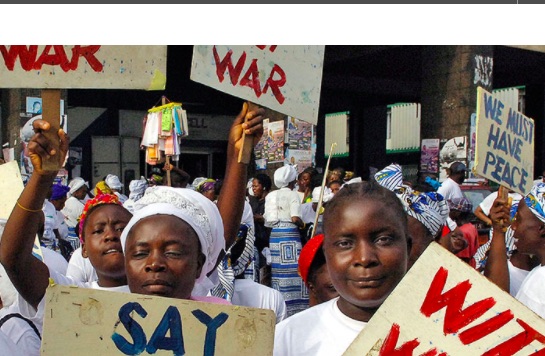
(click on image to enlarge)

Throughout June and July of 2017, governments will negotiate a ban on nuclear weapons at the United Nations. WILPF and our coalition are hitting the streets to celebrate and also demand a good treaty that prohibits these weapons of mass destruction once and for all!

The Women’s March to Ban the Bomb is a women-led initiative building on the momentum of movements at the forefront of the resistance, including the Women’s March on Washington. It will bring together people of all genders, sexual orientations, ages, races, abilities, nationalities, cultures, faiths, political affiliations and backgrounds to march and rally at 12 PM – 4PM Saturday, June 17th 2017 in New York City!

Times

12:00 PM meet at the assembly point outside of Bryant Park along W40th Ave street. Join the movement, get inspired, build solidarity, make some friends and get ready to march!

12:30 PM march begins along the route outlined above ending at Dag Hammarskjold Plaza where the rally begins!

1:15 PM-4:00 PM Rally at Dag Hammarskjold Plaza with speakers, booths and musical performances.

Speakers & Musical Performances

More details to come!

Question related to this article:

Draft UN nuclear weapon ban released

DISARMAMENT & SECURITY .

An article from ICAN, the International Campaign to Ban Nuclear Weapons

The first draft of the United Nations treaty to prohibit nuclear weapons was released in Geneva, Switzerland, on 22 May. Elayne Whyte Gómez, the Costa Rican ambassador who is presiding over negotiations of the historic accord, presented the text to diplomats and members of civil society, before answering questions from the media.

The draft was developed on the basis of discussions and input received during the first round of negotiations, held at the UN headquarters in New York from 27 to 31 March 2017, with the participation of 132 nations. The negotiations will resume on 15 June and continue until 7 July, with the draft as the basis.

ICAN welcomes the release of the draft as an important milestone in the years-long effort to ban these indiscriminate weapons of mass destruction in light of their inhumane and catastrophic impacts. Once adopted, the treaty will constitute an major step towards the total elimination of nuclear weapons.

The draft provides a solid basis for a strong, categorical prohibition of nuclear weapons. ICAN expects further constructive debate on certain provisions as the process moves forward, and will be campaigning to ensure the strongest possible treaty. We are confident that the treaty can be agreed by 7 July.

“We are particularly happy that the text is rooted in humanitarian principles and builds on existing prohibitions of unacceptable weapons, such as the conventions banning biological and chemical weapons, anti-personnel landmines and cluster munitions,” said Beatrice Fihn, the executive director of ICAN.

Nuclear-armed and nuclear alliance states should engage constructively in these discussions, she said. “Whilst they will be able to join the treaty once it has been agreed, failure to participate in the negotiations undermines their claims to be committed to a world without nuclear weapons.”

“Nuclear weapons are morally unacceptable. They are intended to kill civilians indiscriminately,” Ms Fihn said. “Their continued existence undermines the moral credibility of every country that relies on them. A treaty to ban them, as a first step towards their elimination, will have real and lasting impact.”

(Thank you to Janet Hudgins, the CPNN reporter for this article.)

Question related to this article:

World Environment Day 2017

. . SUSTAINABLE DEVELOPMENT . .

An article from World Environment Day

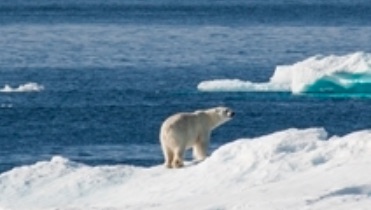
‘Connecting People to Nature’, the theme for World Environment Day 2017, implores us to get outdoors and into nature, to appreciate its beauty and its importance, and to take forward the call to protect the Earth that we share.


(Click on photo to enlarge)

World Environment Day is the biggest annual event for positive environmental action and takes place every 5 June. This year’s host country Canada got to choose the theme and will be at the centre of celebrations around the planet.

World Environment Day is a day for everyone, everywhere. Since it began in 1972, global citizens have organized many thousands of events, from neighbourhood clean-ups, to action against wildlife crime, to replanting forests.

This year’s theme invites you to think about how we are part of nature and how intimately we depend on it. It challenges us to find fun and exciting ways to experience and cherish this vital relationship.

The value of nature

In recent decades, scientific advances as well as growing environmental problems such as global warming are helping us to understand the countless ways in which natural systems support our own prosperity and well-being.

For example, the world’s oceans, forests and soils act as vast stores for greenhouse gases such as carbon dioxide and methane; farmers and fisher-folk harness nature on land and under water to provide us with food; scientists develop medicines using genetic material drawn from the millions of species that make up Earth’s astounding biological diversity.

Billions of rural people around the world spend every working day ‘connected to nature’ and appreciate full well their dependence on natural water supplies and how nature provides their livelihoods in the form of fertile soil. They are among the first to suffer when ecosystems are threatened, whether by pollution, climate change or over-exploitation.

Nature’s gifts are often hard to value in monetary terms. Like clean air, they are often taken for granted, at least until they become scarce. However, economists are developing ways to measure the multi-trillion-dollar worth of many so-called ‘ecosystem services’, from insects pollinating fruit trees in the orchards of California to the leisure, health and spiritual benefits of a hike up a Himalayan valley.

(continued in right column)

Question for this article:

Despite the vested interests of companies and governments, Can we make progress toward sustainable development?

(continued from left column)

Hit the park

This year’s World Environment Day is an ideal occasion to go out and enjoy your country’s national parks and other wilderness areas. Park authorities in some countries may follow Canada’s example and waive or reduce park entry fees on June 5 or for a longer period.

Once you are there, why not set yourself a challenge (seek out a rare mammal, identify five butterflies, reach the remotest corner of the park). Record what you see, and send us a photo of yourself and/or your discoveries so we can post it on our digital channels and encourage others to go exploring too.

You could join the growing number of citizen scientists. More and more smartphone apps help you log your sightings and connect with others who can identify the species. The records feed into conservation strategies and map the effects of climate change on biodiversity.

Nature up close

Connecting to nature can involve all the physical senses: why not take off your shoes and get your feet (and hands) dirty; don’t just look at the beautiful lake, jump in! Take a hike at night and rely on your ears and nose to experience nature.

You can also connect with nature in the city, where major parks can be a green lung and a hub of biodiversity. Why not do your bit to green the urban environment, by greening your street or a derelict site, or planting a window box? You could put a spade in the soil or lift a paving slab and see what creatures live beneath.

Wherever you are, you could vow to pick up 10 (or 100) pieces of trash, or take inspiration from the citizens of Mumbai, India, and organize a mass beach clean-up.

Your activity doesn’t have to take place on 5 June itself. UN Environment, for instance, will soon begin testing your knowledge and raising your appreciation of a healthy environment with competitions and online quizzes and provide a whole menu of ideas to help you celebrate the day.

In the age of asphalt and smartphones and among the distractions of modern life, connections with nature can be fleeting. But with your help, World Environment Day can make clearer than ever that we need harmony between humanity and nature so that both are able to thrive.

Check this space in the coming weeks for details of this year’s campaign, and please sign up  to receive all of our updates in the run-up to World Environment Day 2017.

(Thank you to Janet Hudgins, the CPNN reporter for this article)
 

Abolition 2000 Annual Meeting: Supports Women’s March. Calls for Nuclear Risk Reduction

DISARMAMENT & SECURITY .

An article from Abolition 2000

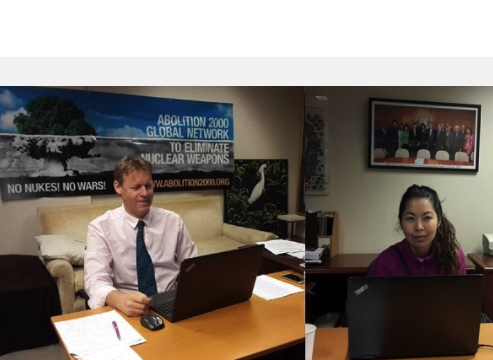
Abolition 2000 held its 22nd Annual Assembly on May 1 as governments arrived in Vienna for a 2-week conference on nuclear non-proliferation and disarmament; the 2017 Preparatory Committee for the 2020 Review Conference of the Parties to the Treaty on the Non-Proliferation of Nuclear Weapons (NPT Prep Com).


(click on photo to enlarge)

Abolition 2000 members from around the world discussed the current political environment; a time of great uncertainty and concern about the risks of nuclear war, but also the opportunities for progress that are emerging, such as the UN negotiations for a nuclear prohibition treaty and the 2018 UN High Level Conference on Disarmament.

There were dynamic reports on Abolition 2000 projects, working groups and affiliated campaigns, including De-alerting and nuclear risk reduction, Don’t Bank on the Bomb, Economic Dimensions of Nuclearism, ICAN, Interfaith action, International law and nuclear weapons, Mayors for Peace, Missile control, Nuclear Weapon Free Zones, Nukes Out of Europe, Parliamentary Outreach, Peace and Planet, UNFOLD ZERO and Weapons and Nuclear Power in Space. (To join a working group contact info@baselpeaceoffice.org).

New working group

The Assembly established a new working group to build support from civil society and governments for the United Nations High Level Conference on Nuclear Disarmament, which will take place in 2018. This follows on from successful UN High Level Conferences on Sustainable Development (2015) which achieved agreement on 17 Sustainable Development Goals, Climate Change (2015) which achieved the Paris Agreement and Refugees and Migrants (2016) which achieved the New York Declaration.

(Continued in right column)

Question related to this article:

Can we abolish all nuclear weapons?

(Continued from left column)

Action statements

The participants at the assembly adopted a statement alerting governments and civil society to the risks of nuclear weapons being used by accident, miscalculation or even by intent. The statement calls on governments to take all nuclear weapons off alert, and adopt additional measures to reduce the risks of nuclear weapons being used pending their elimination.

The Assembly also gave support to an exciting Women’s March and Rally to Ban the Bomb which will be held in New York on June 17, during the United Nations negotiations for a nuclear ban treaty. The March and Rally will bring together people of all genders, sexual orientations, ages, races, abilities, nationalities, cultures, faiths, political affiliations and backgrounds to support the negotiations. Abolition 2000 has contributed financially to the march, and member organisations are promoting the March and associated events including a conference in New York on June 18 entitled No Nukes, No Wars, No Walls, No Warming, organised by Peace and Planet.

Abolition 2000 dynamic new website

The Abolition 2000 Annual Meeting was happy to note the recent launch of the newly designed abolition 2000 website which is available in English and Spanish, and shortly in French. Expressions of interest in working on other languages should be sent to Tony Robinson tonymrobinson@gmail.com. The Assembly also affirmed a Global Council of over 60 nuclear disarmament activists from around the world, and a coordinating committee of 12 members.

Latest News from International Cities of Peace

. . DEMOCRATIC PARTICIPATION . .

Newsletter May 2017 from International Cities of Peace

The following are new cities of peace this quarter!

Mathare, Kenya

They know her as “Mama”. Dedicated teacher Emily Makokha founded the Motherway Education Center, and now she and colleagues such as Michael Ochieng Nyawino have established Mathare, Kenya: City of Peace. Mathare is a slum area in Nairobi with 180,000 people, many in great poverty and need. “Mama” has followed her passion for delivering education to this at-risk area. The group’s objectives are amazing, generous, practical, and will bring much peace to a very needy part of Kenya.
WEB PAGE

 Jenin, Palestine

IN PALESTINE, a gift to us all. We celebrate a city in northern Palestine as our first City of Peace in that part of the world. Jenin is the home base of Youth Initiative for Peace with leader Osama Rbayah saying, “we work to educate young people and all people in the importance of peace in their lives and we announce Palestine state peace to be the peace springboard to all the world… all the world deserve to live in peace.” The announcement came on Christmas morning — Peace, Om Shanti, Salaam, Shalom — and all of us at International Cities of Peace wish you peace this year and offer good news about a rising grassroots movement to educate rather than retaliate.
WEB PAGE
 
Durango, Mexico

What better motto could a city of peace envision: “IN THE DEFENSE OF THE RIGHTS OF WOMEN AND THEIR FAMILIES TRAINING FOR WORK AND HUMAN DEVELOPMENT.” Generous of spirit and tireless in her work, Francis Francisca Fernandez and her colleagues have now established Durango City, Mexico as the 154th City of Peace. Francis is President at Federacion De Mujeres Trabajadoras De Oficios Varios Ac, an organization that provides food, medical attention and human rights advocacy for adults and children. I’m not sure how she stretches herself so far, but the photos and stories of her work are extensive and heartfelt. Her vision for the future is an example of how to ensure a person-to-person culture of peace.
WEB PAGE

Herat, Afghanistan

Welcome Abdul Bari Zarifi and his colleagues who have established — through their amazing work in education and human rights — the 3rd largest city in Afghanistan as a city of peace. Profound news! They have formed the Afghanistan 3rd Generation for Human Rights (AGHRO) and have been working for women’s rights, education for children and providing basic necessities. A sophisticated program that might amaze and alter your view of this beleaguered country. Here is their mission in the director’s words: “We felt the pain of war and we know the real necessity and meaning of peace. We are living in the middle of a war zone. Every day hundreds of our people are killing and being killed in front of our eyes. We want to put an end to this killing. We want to bring the voice of our people to the world, saying the Afghan nation wants peace. Afghans need constructive help to make peace a reality.”
WEB PAGE

 Banjul, The GAMBIA

Amidst the recent crisis in Gambia where a President would not give up power, peace prevailed due to the demand of the people for democracy. Welcome to Cheikh Top, who with other citizens of the Gambia have created Banjul: City of Peace. Their initiative Peace December “is our way of shining a more proverbial light into the darkness of winter by creating programming aimed directly at combating the darkness within our society. Instead of the darkness of violence, hatred and intolerance, we hope to promote the light of peace, respect, and diversity.”
WEB PAGE
 
(article continued in right column)

Question related to this article:

 
How can culture of peace be developed at the municipal level?

(article continued from left column)

Kasonga-Lunda, D.R. Congo

Welcome to Saki k Jean Claude and his colleagues who have established Kasongo-Lunda, D.R. Congo as a city of peace. “Confronted with conflicts, divisions, regionalism, wars, violence of all kinds, endemic corruption,” said Jean Claude “we decided to create the Cercle des Jeunes Leaders pour la Paix(Circle of Young Leaders for Peace), CJLP in June 2008 in Kinshasa. A non-governmental organization (NGO / NPO involved in various fields PEACE, GENDER, GOVERNANCE, MANAGEMENT OF CONFLICT PREVENTION AND RECONCILIATION & NON-VIOLENCE, HUMAN RIGHTS AND RURAL AND COMMUNITY DEVELOPMENT (training, education, rehabilitation, supervision, safety food, community development, strengthening the technical and organizational capacity).Our actions for peace are carried out with several other independent, denominational and non-denominational organizations.”
WEB PAGE

 Lafia, Nigeria

Free HIV/AIDs testing, dialogues on ethno-religious conflicts, youth training — extraordinary real, on-the-ground peace work! Lafia, the capital of Nasarawa State in Nigeria is now a city of peace due to the work of Emmanuel Peter Dadean and his colleagues. With extensive peace-building program, the Foundation for Peace and Meditation is a non-partisan and non-religious service group that helps adults and youth throughout the community. Dadean has a Masters in Peace Studies and Conflict Resolution from the National Open University of Nigeria. Welcome to Dadean and fellow Nigerians. Build the peace in Africa!
WEB PAGE
 
Amsterdam, The Netherlands

AMSTERDAM, 159! The Netherlands has a long legacy of peacemaking, and now Amsterdam’s Mayor and Council has officially declared as an International City of Peace. Thanks to Mayor Eberhard van der Laan (a Mayor for Peace) as well as peace ambassador Catharina van Staveren who facilitated the Proclamation. Self-proclaiming as a city of peace is a powerful way for the large cities of the European Union to elevate their legacies of peace and to prevent the inaction that led to centuries of war. Remember history, yes, but to take action for peace is needed now more than ever. Please welcome and glorify the Netherland’s and the City of Amsterdam’s great legacy of safety, prosperity and quality of life!
WEB PAGE

 Mambasa, D.R. Congo

This movement is definitely changing our future, especially in Africa! We welcome Aimé Waka and the students of the Bankoko Institute as well as the citizens of Mambasa who have established their community in D.R. Congo as a city of peace. Waka is headmaster at the Institute and has a vision to form four peace clubs with 72 schools peace leaders. They hope to train and provide peace education for 1600 students — what an impact that will make on the Democratic Republic of Congo.
WEB PAGE

Islamabad, Pakistan

Welcome to Ambassador Rubina H. ALi and her colleagues of the Global Learning Trust, a multidisciplinary NGO/Trust which started its operations in Gawadar and later on expanded its operations with headquarters in Islamabad. “Our mission is to help build a vibrant community by providing accessible, Educational and Health Programs in an area that can enhance the quality of life for global citizens. We would foster services and activities that will encourage connections among neighbors and inspire civic involvement.” Take a look at the extensive work for peace as they courageously declare Islamabad as a peace city.
WEB PAGE
 
Berlin, Germany

 Welcome to Margret Hoffmann, Sandra Schiermeyer and all the citizens of Berlin, Germany, our newest City of Peace. Margret and her colleagues are from Clans of Peace, a movement dedicated to finding common purpose in healing, community, conscious business, and unity. Germany’s capital is the second most populous urban area in the European Union. Botanical gardens, Sanssouci, Punk music, 138 museums, Berlin is where John F. Kennedy said “Ich bin ein Berliner!” and 26 years later the Wall came down! Celebrating and emphasizing the rich history and legacy of peacebuilding will inspire Berlin’s future generations.
WEB PAGE

Nonviolence Charter: Progress Report 10 (Apr 2017)

EDUCATION FOR PEACE .

An article by Robert J. Burrowes, Anita McKone & Anahata Giri for the Transcend Media Service (abbreviated)

Dear fellow signatories of the Nonviolence Charter, How are you all? And welcome to our most recent signatories and organizations!

This is the latest six-monthly report on progress in relation to ‘The People’s Charter to Create a Nonviolent World’ together with a sample of news about Charter signatories and organizations.

Our collective effort to build a worldwide consensus against the use of violence in all contexts continues to make progress, even against rather overwhelming odds!

charter

Since our last report on 18 October 2016 – which Antonio C. S. Rosa kindly published in the TRANSCEND Media Service Weekly Digest – we have gained our first individual signatories in another five countries – Azerbaijan (Nigar Rasulzade), Paraguay (Fernando Juan Cabrera Tarragó), Vietnam (Greg Kleven), Iran (Professor Manijeh Navidnia) and Venezuela (Antonio Gutiérrez Rodero) – a total of 101 countries now. We also have 109 organizations/networks from 35 countries. If you wish, you can see the list of organizational endorsements on the Charter website.

If you wish to see individual signatories, click on the ‘View signatures’ item in the sidebar. You can use the search facility if you want to look for a specific name.

The latest progress report article ‘International Collaboration to End Violence’ was recently distributed to many progressive news websites: it was published by a number of outlets in 14 countries, thanks to very supportive editors (several of whom are Charter signatories: special thanks to Antonio Rosa at TRANSCEND, Gifty Ayim-Korankye at ‘Ghana web Online’, Korsi Senyo at ‘Awake Africa’ and Pía Figueroa at ‘Pressenza’). If you like, you can read the article in English and Spanish, the latter translated by signatory Antonio G. Rodero in Venezuela, on ‘TRANSCEND’.

If you feel inclined to do so, you are welcome to help raise awareness of the Nonviolence Charter using whatever means are easiest for you: email, articles, Facebook, Twitter…. Thanks to Anahata, the Nonviolence Charter is on Facebook and it has links to some useful articles.

You may remember that in previous Charter progress reports we have reiterated our promise to report on those of you about whom we know less by asking you to send us some information about yourself and the reminder that you don’t have to be world famous to be valued here. Well, the good news is that, once again, a number of people responded and, in addition, we did some more research ourselves. However, as we continue to find, extraordinary people seem to invariably consider themselves ‘ordinary’. So, irrespective of how you consider yourself, we would love to hear about you for the next report!

In addition to those signatories mentioned in the article ‘International Collaboration to End Violence’ cited above, here is another (inadequate) sample of reports of the activities of ‘ordinary’ people and organizations who are your fellow Charter signatories.

So first: A couple of recent websites for those of you who are interested in nonviolent strategy for your campaign or liberation struggle (and now with photos of several Charter signatories):

Nonviolent Campaign Strategy

Nonviolent Defense/Liberation Strategy

(Article continued in right column)

Question for this article:

Can peace be guaranteed through nonviolent means?

(Article continued from left column)

[Editor’s note: Here are a few of the news items from individual signatories of the Charter. For all of the news items, go to the original article here

Sadly, Professor Glenn D. Paige, inspirational founder of the Center for Global Nonkilling in Honolulu passed away, after a struggle with declining health, on 22 January 2017. Communications with Glenn and Glenda in the final days revealed a man at peace with himself after a lifetime of effort to end killing. Rather than publishing a tribute written by someone else, you are welcome to read the text of Glenn’s acceptance speech when receiving an Honorary Doctorate of Humanities from Jagran Lakecity University in Bhopal, India in December. Your inspirational example will not be forgotten Glenn.

Our first signatory in Iran is Professor Manijeh Navidnia, professor of sociology at the Islamic Azad University in Teheran. The focus of much of Manijeh’s research is security studies. You can read a little about her and some of her research articles here. Welcome Manijeh! . . .

Antonio Gutiérrez Rodero is our first signatory in Venezuela. . . . ’In Venezuela we are now living a very hard time. I think we are really paying the price for having rebelled against the American-Zionist Empire interests and we are “guilty” of possessing and wanting to preserve for our people the largest oil reserve on earth, in addition to other mineral resources, water, climate, landscapes and biodiversity. Violence harasses us on all fronts, particularly the media. The opposition, in defense of the interests of US corporations, violently fights against the pro-socialist government of Nicolas Maduro.’ . . .

Sovannarun Tay has almost completed the Khmer translation of the Nonviolent Defense/Liberation Strategy website as part of his effort to raise awareness of the potential of nonviolent strategy to liberate Cambodia from its dictatorship. If you fancy your Khmer, you can see his translation here. . . .

We asked Greg Kleven, our first signatory in Vietnam, for some information about himself. Continuing the tradition of great people signing the Nonviolence Charter, here is what Greg wrote: ‘My name is Greg Kleven and I am a 68 year-old American living and teaching English in Viet Nam. I was 18 years old when I was here as a soldier in 1967 and thought that what I was doing was right. But after a few months in country I realized that I had made a huge mistake. The war was wrong and I should never have participated. After I went home I had a hard time adjusting back into society. I couldn’t get the war out of my mind. In 1988 I came back to Viet Nam as a tourist and realized I had a chance to make up for what I had done. For the next two years I helped organize return trips for veterans who wanted to go back and see Viet Nam as a country, not a war. In 1990 I started teaching English in Ho Chi Minh City and have been doing it ever since. I admire your work in trying to establish a nonviolence charter that can some day put an end to all wars and violence in the world. I have forwarded your website to some friends and hope that they will sign. Keep up the good work. Hoa binh (peace), Greg’. . . .

Working in extraordinarily difficult circumstances in the Democratic Republic of the Congo, Christophe Nyambatsi Mutaka is the key figure at the Groupe Martin Luther King. The group, based in Goma in the east of the country in Central Africa, promotes active nonviolence, human rights and peace. They particularly work on reducing sexual and other violence against women.

Also based in Goma, the Association de Jeunes Visionnaires pour le Développement du Congo headed by Leon Simweragi is a youth peace group that works to rehabilitate child soldiers as well as offer meaningful opportunities for the sustainable involvement of young people in matters that affect their lives and those of their community. . .

Beirut Declaration enhances role of religions in promoting human rights

TOLERANCE & SOLIDARITY .

An article from the Office of the United Nations High Commissioner of Human Rights

​​​A “Faith for Rights” initiative launched at a recent gathering of faith-based and civil society actors from around the world aims to unite religious communities of various faiths to counter discrimination and religious-based violence through a shared objective to promote human rights and to uphold the freedom of religion or belief.

“Our objective is to foster the development of peaceful societies, where diversity is not just tolerated but fully respected and celebrated,” UN High Commissioner for Human Rights Zeid Ra’ad Al Hussein said in a video message to participants at the two-day meeting hosted by the UN Human Rights Office in Beirut.

“Religious leaders, with their considerable influence on the hearts and minds of millions of people, are potentially very important human rights actors,” said Mr. Zeid.

Building on the 2012 Rabat Plan of Action that laid out religious leaders’ core responsibilities in countering incitement to hatred, the Beirut Declaration (pdf) expands those responsibilities to the full spectrum of human rights. It calls on believers of all faiths to join hands and hearts in articulating ways in which they can stand together in defending fundamental rights against discrimination and violence.

Sheikh Maytham Al Salman, a religious leader and rights defender from Bahrain, urged religious leaders and faith-based organizations to assume leading roles in countering hate campaigns targeting particular religious groups. “Religious hostility has risen to alarming stages,” he said.

(continued in right column)

Question related to this article:
 
How can different faiths work together for understanding and harmony?

(continued from left column)

Linked to the Beirut Declaration are 18 Faith for Rights commitments (pdf) to uphold human rights, including pledges to avoid invoking “State religion” in order to justify discrimination against any individual or group, to ensure gender equality and minority rights, to refrain from oppressing critical voices and to engage with children and youth.

The UN Special Rapporteur on the freedom of religion or belief Ahmed Shaheed said he was concerned about the explicit targeting of youth “by those who would prey on young minds.” He called on religious leaders to pay particular attention to the vulnerability of young people subjected to hate speech.

“Youths look up to religious leaders for guidance, mentoring, support and advice. Therefore there is a need to engage with those communities at a very early age and provide a mind-set that is tolerant, broad-minded and has respect for others,” said Mr. Shaheed. “It is important to go beyond the human rights council chamber out into the field and to engage people and ensure we develop solidarity and cross-community collaboration to mobilize people to support the freedom of religion or belief.”

Ibrahim Salama, chief of the UN Human Rights Treaties Branch, hailed the Beirut Declaration as a rights-based call to people of all faiths around the world to promote peaceful societies based on mutual respect.

“Rather than focusing on theological and doctrinal divides, the Beirut Declaration favours the identification of common ground among all religions and beliefs to uphold the dignity and worth of all human beings,” he said.

(Thank you to Böðvar Jónsson of Akureyri, Iceland, the CPNN reporter for this article)