Tag Archives: global

Nonviolence Charter: Progress Report 12 (April 2018)

EDUCATION FOR PEACE .

An article by Robert J. Burrowes, Anita McKone & Anahata Giri in the Transcend Media Service (abridged)

This is the latest six-monthly report on progress in relation to ‘The People’s Charter to Create a Nonviolent World’ together with a sample of news about Charter signatories and organizations.


Robert J. Burrowes, Anita McKone & Anahata Giri

Our collective effort to build a worldwide consensus against the use of violence in all contexts continues to make progress, even against rather overwhelming odds!

Our last report on 5 October 2017 was kindly published by Antonio C. S. Rosa in the TRANSCEND Media Service Weekly Digest. At the time of today’s report, we have signatories in 104 countries with our first signatories in Bolivia, Rwanda and Slovakia since the last report. We also have 114 organizations/networks from 36 countries with our first organization in Rwanda. If you wish, you can see the list of organizational endorsements on the Charter website.

If you wish to see individual signatories, click on the ‘View signatures’ item in the sidebar. You can use the search facility if you want to look for a specific name.

The latest progress report article ‘Nonviolence or Nonexistence? The Legacy of Martin Luther King Jr.’ was recently distributed to many progressive news websites: it was published by a number of outlets in 15 countries, thanks to very supportive editors (several of whom are Charter signatories: special thanks to Antonio Rosa, Gifty Ayim-Korankye, Korsi Senyo and Pía Figueroa). If you like, you can read the article (in English and Spanish), published on the anniversary of the assassination of Rev. Martin Luther King Jr. here: ‘Nonviolence or Nonexistence? The Legacy of Martin Luther King Jr.’ and ‘¿No violencia o No existencia? El legado de Martin Luther King Jr.’

If you feel inclined to do so, you are welcome to help raise awareness of the Nonviolence Charter using whatever means are easiest for you. Given recent revelations of the corruption of Facebook, this Charter account has been closed.

And our usual invitation and reminder: You are most welcome to send us a report on your activities for inclusion in the next report. We would love to hear from you!

Anyway, here is another (inadequate) sample of reports of the activities of individuals and organizations who are your fellow Charter signatories.

Given that dysfunctional parenting is ultimately responsible for the behaviour of those individuals – including political, corporate, military and religious leaders – who generate and perpetuate violence, a number of Charter signatories are now making ‘My Promise to Children’ so that we start to produce a higher proportion of functional individuals who know how to powerfully resolve conflicts in their lives without resort to violence. Still other signatories are now prioritizing their own recovery from childhood violence by ‘Putting Feelings First’.

Some other signatories are developing more sophisticated nonviolent strategies to deal with peace, environment and social justice issues more effectively, or so they can be more strategic in their liberation struggle. If you are interested in nonviolent strategy for your campaign or liberation struggle, these websites (which include photos of several Charter signatories) will be helpful:

Nonviolent Campaign Strategy

Nonviolent Defense/Liberation Strategy

(continued in right column)

Question for this article:

Can peace be guaranteed through nonviolent means?

(continued from left column)

If any of you have high quality photos of nonviolent actions that you are willing to have published on these sites, please send them to Robert All photos will be acknowledged where published.

If you would like to see Venezuelan Antonio Gutiérrez Rodero’s Spanish translation of the Nonviolence Charter, it is available here.

Deciding to recognize some of the many fine peace and justice leaders around the world, Charter signatory Professor Kathleen Malley-Morrison and her colleague Professor Anthony J. Marsella researched the efforts of hundreds of fine activist leaders. They compiled these names into a succession of ‘lists of 100’ and had these lists published. You can see the names of the people they decided to recognize, including many Charter signatories, in the first three lists here:

‘In Pursuit of Peace and Justice: 100 Peace & Justice Leaders and Models’.

‘In Pursuit of Peace and Justice: 100 Peace & Justice Leaders and Models (List #2)’.

‘100 Living Peace and Justice Leaders and Models (List #3)’.

Thank you for all your work Kathie and Tony.

Daniel Dalai’s visionary initiative Earthgardens, originally based in Bolivia and now in Guatemala, provides opportunities for girls to realize and practice their inherent leadership potential, particularly as part of Eco Teams in preserving natural biodiversity. Their beautiful website has just been updated and the stunning photos alone will tell you much about what these remarkable girls are doing. See Earthgardens.

The Afghan Peace Volunteers, mentored by Hakim, continue their visionary work in ‘Pursuing Peace Despite Everything’ in war-torn Afghanistan. Recently, on 21 March – which was ‘Nao Roz’ or ‘New Day’, the Afghan New Year – a suicide bomb attack occurred near Kabul University, not very far from the Borderfree Nonviolence Community Centre of the Afghan Peace Volunteers; it killed 32 people. ‘Despite the complicated fears and emotions that arise with each security incident, Zekerullah, Bismillah, Nisar and others gathered at the Centre, built a peace sign and lifted it up into the air with multi-coloured balloons.’ You can see their beautiful achievement and beautiful faces in the photos at the link above.

Among her ‘endless’ activist commitments, including with the Afghan Peace Volunteers, Kathy Kelly still manages to write regularly to tell us what she is experiencing and, often enough, what others are experiencing as a result of being targeted by the US military. This thought-provoking article ‘From the Ground Up’ begins by describing the experience of Afghan mothers living in a perpetual war zone.

Pía Figueroa in Chile is Co-Director of ‘Pressenza International Press Agency’, ‘a site that feeds media every day for free with news, opinions, interviews and contributions regarding peace, nonviolence, disarmament, human rights, nondiscrimination and humanism in eight different languages, thanks to the volunteer work of more than 100 people based in 25 different countries.’ Pía is also a writer; her books have been published in several languages and presented in more than forty places. She specializes in Silo’s proposals on inner development and the creation of a Universal Human Nation, where all kinds of violence and discrimination will be surpassed. Pía presently lives in Santiago de Chile, where she is an active member of the Humanist Party and the Frente Amplio political coalition. Nevertheless, she travels a lot, participating in public events and journalistic forums as well as in nonviolent gatherings, since she considers herself a global activist for peace. In a recent insightful commentary on politics in Chile, Pía wrote The era is decisive’. . . .

Click here for additional reports from Cambodia, Morocco, West Papua, Slovakia, Russia, Malaysa, USA, Nigeria, Ghana, Iraq, Brazil, Palestine, Australia, Canada, Ethiopia, D.R.Congo, New Zealand, Myanmar, India, Denmark, UK, Rwanda and Bolivia,

(Click here for the Spanish version of this article)

United Nations General Assembly Concludes High-Level Debate on Sustaining Peace

FREE FLOW OF INFORMATION

A press release from the United Nations

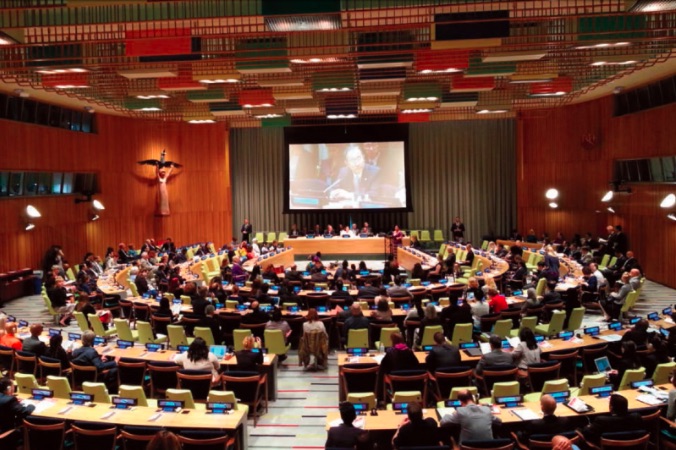
The General Assembly capped its high-level debate on peacebuilding and sustaining peace today [April 26] with a consensus resolution welcoming the Secretary-General’s January 2018 report on those activities and deciding to further discuss his recommendations to address existing gaps.

Adoption of the text, titled “Follow-up to the report of the Secretary-General on peacebuilding and sustaining peace”, coincides with the passage of a similar one in the Security Council (please see Press Release SC/13319), both encouraging action by Member States and the United Nations to implement the “twin” sustaining peace resolutions of 2016.

By its terms, the Assembly invited the relevant United Nations bodies and organs — including the Peacebuilding Commission — to further advance, explore and consider implementation of the report’s recommendations and options during its current and upcoming sessions.

By other terms, the 193-member body requested the Secretary-General to present, during its seventy-third session, an interim report elaborating on his recommendations and options, including for financing United Nations peacebuilding activities.

During the seventy-fourth session, he was requested to submit a report in connection with the next comprehensive review of the United Nations peacebuilding architecture, focusing on continued implementation of resolution 70/262 and progress in the implementation of his recommendations and options contained in his report (document A/72/707-S/2018/43).

Throughout the day, delegates commended United Nations peacebuilding assistance as an important instrument for helping States overcome conflict and preventing its recurrence, while calling for more coordinated efforts among United Nations agencies and structures. Expressing concerns about sovereignty, several speakers called for interventions to be carried out in line with the United Nations Charter and according to the desires of Member States.

Calling for more national ownership, several underscored that peacebuilding and sustaining peace were the primary responsibility of Governments. Among them was Indonesia’s representative, who said that if the affected countries did not take charge of their destiny, lasting peace could not be achieved on the ground. The international community must listen to those countries, especially as they transitioned into the post-conflict phase.

(continued in right column)

Question(s) related to this article:

What is the United Nations doing for a culture of peace?

(continued from left column)

Other speakers said national efforts would only succeed with predictable and sustained financing. Calling for increased contributions to help countries with capacity-building, several delegates underscored the importance of aligning resources and working effectively with regional and local partners.

In that context, Sudan’s representative called for structural changes to humanitarian assistance and a new generation of peacekeeping, with a view of boosting development. Noting that the lack of development was a main reason behind the conflict in his country, he said investment was needed to help achieve the 2030 Agenda for Sustainable Development, adding that the transfer of peacekeeping assistance towards that agenda would have a major impact on States.

Trinidad and Tobago’s delegate highlighted the unique security concerns of small island developing States, which must rely on the rule of law, strict observance of the Charter, and collective security mechanisms to guarantee their right to a secure, sovereign and peaceful existence. In her country, sustainable development was intricately linked to the safety and security of its people.

Meanwhile, the speaker from the University for Peace stressed that without education, societies would be condemned to repeating cycles of conflict and violence. That involved education for non-violence, for social inclusion and for the rule of law, with a focus on promoting skills, values and behaviours.

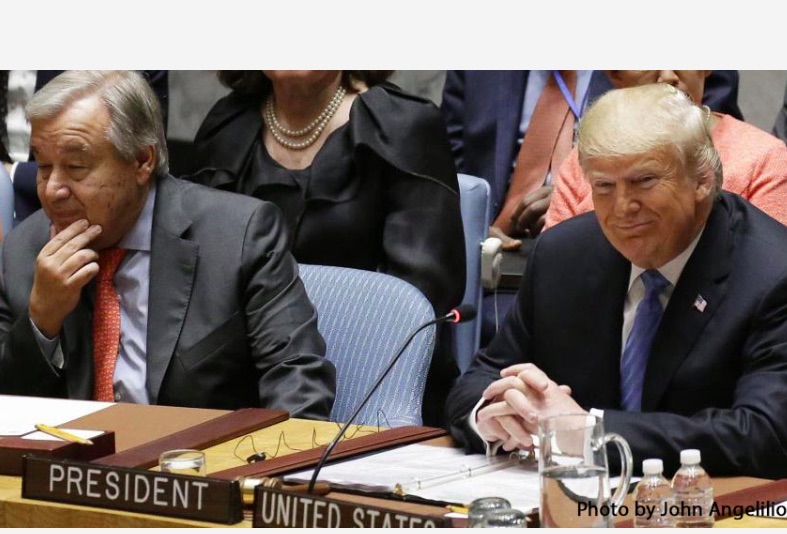
Reflecting on the success of the high-level meeting, Miroslav Lajčák (Slovakia), President of the General Assembly, said the international community had recognized that holistic approaches and a culture of peace were needed for sustaining peace. While that goal was a difficult task, the international community had not shied away. Indeed, amid conflict and crises, it had a shared responsibility to bring sustaining peace to the people on the ground.

In other matters, the Assembly adopted a draft decision titled “United Nations high-level international conference on nuclear disarmament”, postponing the conference and its one-day organizational meeting to a date to be determined.

Subsequently, the Assembly elected Chad and Italy as members of the Committee for Programme and Coordination for a term beginning on the date of election and expiring on 31 December 2020.

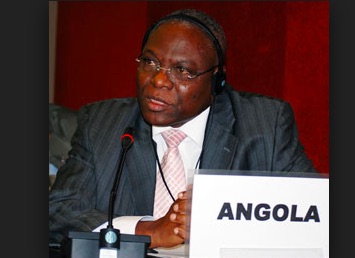
Also speaking were representatives of Burkina Faso, Kazakhstan, Russian Federation, Serbia, Angola, Namibia, Ethiopia, Andorra, United States, Bahrain, Tunisia, Algeria, Belarus and Syria, as well as the Permanent Observers of the Holy See and the State of Palestine.

Speakers from the Inter-Parliamentary Union and International Development Law Organization also addressed the Assembly.
The representatives of Iran, Turkey and Syria spoke in exercise of the right of reply.

The Assembly will reconvene at 3 p.m. on Monday, 30 April, for the International Law Commission.

[Note: Individual Statements are available here.]

Earth Day 2018 Events Popping Up Worldwide

. . SUSTAINABLE DEVELOPMENT . .

An article from Earth Day

Earth Day Network, the organization that coordinates Earth Day events worldwide, today [April 20] released a highlights list of Earth Day events that are taking place from Karnataka in India to Seattle in the United States of America.

“Every organization from the Smithsonian to the government of Quebec and local organizations in Rome are holding meaningful events that encompass the Earth Day spirit – global reach, local action,” said Kathleen Roger, President of Earth Day Network.

Here are just a sample of events for Earth Day 2018 that show the breath and the depth of involvement on Earth Day of government, organizations, businesses and individuals:

Earth Day The Gambia 2018, coordinated mainly by volunteers, will bring in the town of Bansang, 100 public officials, experts, teachers, extension workers, community leaders, students and citizens together to learn and develop action plans to improve waste management practices. A rally at the Bakoteh Dumpsite and a beach cleanup at Serekunda Beach are part of the program. 

On Earth Day, Sunday April 22, 2018 the Earth Day Global Broadcast will air globally on PeaceChannel.com, in collaboration with Earth Day Network. Actor and environmentalist Ed Begley, Jr. and Rachel Carson-Begley will host. 

From the 21st through the 25th of April in the Villa Borghese (Rome, Italy) an event will take place organized by Earth Day Italia and the Focolare Movement. The event will include five days of music, sport, culture and activities dedicated to the protection of the planet. The 2018 event will focus in particular on the 2030 Agenda and the United Nations Sustainable Development Goals through 5 talk shows dedicated to the 5Ps of sustainability: People, Planet, Prosperity, Partnership, Peace.

Sappraiwan Elephant Sanctuary in Thailand has committed to planting 300 trees on this Earth Day.  They are partnering with the Phitsanulok Province Government to give 300 trees to the community on Earth Day and help them plant the trees. Residents may choose to plant the tree at their home or at the Sanctuary.

Tokyo, Japan joins the world in celebrating Earth Day with an array of events coordinated under the Green Room Festival that attracts thousands of people.  NGO’s and other charities are spreading the word. The events include beach clean ups, music presentation, arts exhibits and yoga classes. 

Earth Day Network has relaunched its Billion Acts of Green campaign in China for Earth Day 2018 with the theme of ‘End Plastic Pollution’. Events will the held with the participation of schools, college student associations, museums and local nonprofits to educate and activate people to prevent plastic pollution from affecting human’s health and littering our environment. As of now there are 37 events registered in 22 cities in China and they are expecting at least 20,000 participates.

The US Army Corps of Engineers has 37,000 personnel involved in Earth Day. The USACE is comprised of nine divisions and 45 districts covering the entire United States and more than 91 foreign countries. 

(continued in right column)

Question for this article:

Despite the vested interests of companies and governments, Can we make progress toward sustainable development?

(continued from left column)

A “No-Plastic” pop-up event will take place in Karnataka State in India. The event will bring together organizations that are champions of environmental sustainability in fields including electric vehicles, solar power, and zero-waste living. The event will include workshops led by these leaders who will talk about their journey in low pollution living and equip the audience with methods through which they can start their own journeys.

Now live for Earth Day, the #StirCrazy campaign aims to eradicate plastic stirrers from the world by 2020.  It combines chains (coffee and food stores and suppliers) and the public and government including Romania and UK. 

The Native American Student Association at Mississippi Southern State University will be holding an Earth Day Fair on April 20, with tabling and live music in front of the Billingsly Student Union in Hattiesburg, MS, USA.

The Great American Clean Up will take place in Palm Beach, FL, USA to encourage citizens to get involved with efforts to remove waste from the environment and drastically improve their communities. 

The Bi-State Watershed Cleanup is an annual event taking place along the Hackensack River Watershed to clean waste and debris from the waterbodies in both New York and New Jersey, USA. The Park Ridge Green Team received the 2013 State of NJ Clean Water Award and the 2015 Collaboration Award from Sustainable Jersey. 

A zero-waste recycling expo will take place on Earth Day in Colchester, UK. Its goals are to inspire and promote the repair, reuse, and recycling of all materials to a wider audience. 

In an event titled Earth Day – A Day on Environmental Protection for the Benefit of All, in London, UK on the 22nd of April, there will be an event including world renowned speaking topics related to the preservation of our planet, global/local issues like sustainability, and plastics pollution. There will also be a panel discussion, short films, and stalls promoting local green businesses, and fun activities for all ages. 

Earth Day by the Bay will take place in San Francisco, California, USA and around the greater Bay Area. The planned event is a family friendly, sustainable and educational expo celebrating Earth Day! 

Earth Day at the Finnish Embassy co-sponsored by Earth Network, “A Dialogue on Ending Plastic Pollution – Opportunities for the Public and Private Sectors,” will take place on Monday, April 23 in Washington, DC, USA.
The National Museum of Natural History in Santiago, Chile has invited citizens to participate on Friday 20 and Saturday 21 April to celebrate Earth Day with talks on biodiversity conservation, extension and trees. 

Earth Day, New York University, and the government of Quebec event April 20 in New York, USA co-sponsored by Earth Day Network will explore ways to stem plastic pollution, especially from plastic bags.

Bullitt Foundation Earth Day 2018 – Denis Hayes, the original coordinator of Earth Day 1970 and Chair Emeritus of Earth Day Network as well as President and CEO of the Bullitt Foundation in Seattle, USA, held an Earth Day event on April 17.  

The Sierra Club has released its list of things people can do on Earth Day.

ABOUT EARTH DAY NETWORK

The first Earth Day on April 22, 1970, activated 20 million Americans from all walks of life and is widely credited with launching the modern environmental movement. Growing out of the first Earth Day, Earth Day Network (EDN), the world’s largest recruiter to the environmental movement, works with tens of thousands of partners in 192 countries to build environmental democracy and to broaden, diversify and mobilize the environmental movement. For more information, visit  www.earthday.org

Snapshots of March for Science Signs Across the Globe

. . SUSTAINABLE DEVELOPMENT . .

A photo essay by Kimberly M. S. Cartier from Eos: Science policy and funding (abbreviated)

For the second year in a row, people across the United States and on all seven continents held rallies in support of science. Speakers and marchers at more than 230 events around the world advocated for increasing diversity in science, defending science from funding cuts and government interference, and promoting science literacy and trust.

Saturday’s March for Science events [April 14] may have drawn smaller crowds than last year, but the participants were as enthusiastic as ever about the advancement of science. Here are some of our favorite posters that captured the spirit of these marches.


Demonstrators holding signs at the 2018 March for Science in Washington, D. C. Credit: Peter Weiss


@WIRED Science Siyu Feng, a PhD student in biology at UCSF, is one of many participants at San Francisco’s #MarchforScience today.


Marchers in New York City, this time with a math pun. @jonathanrlarkin. Happened to stumble across the #marchforscience2018 today. Loved this sign.


Signs from Philadelphia, Pa. @guertin. So excited to have @PSUBrandywine students supporting science at @PHLScienceAct #RallyforScience! #STEMstudents #MarchForScience #Philly


In Los Angeles, Calif., a protester brings on the biology. @jaimecor_94 It’s @march4sciencela time y’all! #MarchForScience #MarchForScienceLA


Marchers in San Antonio, Texas, with a touch of magic. @MaremaAnne @ScienceMarchSA #MarchforScienceSA18

One protester in Colorado, calling out federal science agencies that have been known to censor information.@alibranscombe Baby’s first march in Colorado #MarchForScience2018

(continued in right column)

Question for this article:

Despite the vested interests of companies and governments, Can we make progress toward sustainable development?

(continued from left column)

And in Sacramento, Calif., one demonstrator turned her attention to scientific misconduct on the international stage. Her sign translates to “No to the adjustment of science in Argentina.” @NeCesiTo1TiemP0 Make Science Great Again ! #marchforscience2018 #Sacramento

In Abuja, Nigeria, scientists and advocates marched to promote public trust in science and to emphasize that scientific advancement benefits the entire population. @ScienceAlly Standing up for science — Abuja, Nigeria. @OFABnigeria @Nigerians4GMO #marchforscience2018

Marchers of all ages in Narrandera in New South Wales, Australia, with signs saying “Science, not silence,” “Heads in books, not heads in sand,” and “Science…the spectrum of awesome.” @FionaMagic Narrandera has now been added as an official #MarchForScience location!

One marcher in London simultaneously raised awareness of rising sea levels and promoted gender diversity in science.@jfabrombacher #MarchForScience

Demonstrators at an event in Vancouver in British Columbia, Canada. @SPINSciPolicy Powered by science and strengthened by diversity! Speaking up for science at the #marchforscience2018 @ScienceMarchYVR today with fellow supporters!

In Quezon City in the Philippines advocates held signs proclaiming “Climate justice” and “March for science, march for the people.” In Blantyre, Malawi, supporters’ signs read “Science not silence” and “Mad scientist.” And in Chennai, India, activists marched with placards urging “Science unites! Stand up for science!” and “Defend science and scientific outlook.”@luckytran Happy #MarchforScience day! One of my favorite parts of waking up today is seeing so many photos of communities standing up for science, equity, & justice all around the world. See you in the streets! #KeepMarching

Meanwhile in Antarctica, the team of climate scientists at Neumayer Station III proclaimed, in the translated words of Prussian naturalist Alexander von Humboldt, “Knowledge and recognition are the joy and the right of humanity.”@AWI_Media
Message of support from Antarctica: overwinterer at the Neumayer Station support the #MarchForScience @ScienceMarchDC

Voices from 62nd session of the Commission on the Status of Women (CSW62)

. . WOMEN’S EQUALITY . .

A article from UN Women

The Commission on the Status of Women (CSW) is the UN’s largest annual gathering on gender equality and women’s rights. It brings together governments, women’s rights, gender experts and other actors to build consensus and commitment on policy actions to advance women’s rights.

More than 4,300 civil society representatives from 130 countries participated in the 62nd session of the Commission, which focused this year on rural women and girls. Why do they come and what do they take back with them from this UN meeting? Here are some of their voices and perspectives.


Video of Catherine Mbukwa

Catherine Mbukwa, Project Officer with the Centre for Youth Empowerment and Civic Education, Malawi

“I’m here to learn from others. Being here means [learning] new skills. Let’s say in Malawi, we are tackling child marriage, and our friends [in another country] are in the forefront of ending child marriages, what is it that they are doing in their country to promote and empower women?”

Alice Lesepen, representing the Rendille peoples of Marsabit County, Kenya

“I’m here to represent the rural women from the indigenous community of Rendille. [Coming] from a pastoral community, our livelihood depends entirely on the land. [Rural and indigenous women] need to know how we can rightfully use our land without any interference. When we talk about food security, women are the ones providing for their families. Without land, we cannot do anything…we cannot keep our animals…we would lose our identity.”

Otilia Lux de Cotí, Advisor to MADRE and part of UN Women’s Civil Society Advisory Group in Latin America and the Caribbean, Guatemala

“Socialization of the CSW agreed conclusions is very important. This is how women activists in their respective areas of specialties learn about the commitments that Member States have pledged to achieve. It allows them to hold governments accountable, and ask for those commitments to be transformed into social policies. We have to drive this change in order to really make a difference for rural women and girls.”

Marija Andjelkovic, Director and founder of the Serbian NGO, ASTRA-Anti trafficking action, Serbia, grantee of UN Trust Fund to End Violence against Women

“In our part of the world, the government listens more when there are recommendations from the UN, the EU, or the US State Department report on trafficking. For example, for years now, we have been advocating for compensation for victims of trafficking. Only two out of all identified victims (500 identified in Serbia) have received a decision of compensation in their favour. We have submitted a draft law on compensation for victims of violent crime, and included trafficking. Then, the Council of Europe and the CEDAW Committee adopted the recommendation for compensation for victims. That helped us. Now the government is working on a strategy for victims of crime and have said they will look into compensation as part of that. These recommendations, such as the CSW (agreed conclusions) give us tools to advocate with our own government. We produce shadow reports before CSW, and provide our own recommendations, and then we see if our recommendations are included.”

Zoneziwoh Mbondgulo, Rural women’s rights activist, Cameroon

“Among several challenges, one is access to credit. They are not talking about petite grants or microcredit, but macro credit…Rural women also want better sexual and reproductive health services, with better access to contraceptives and family planning products. Even basic education in these areas will help them.”

Sepali Kottegoda, Academic, activist and Technical Advisor on Women’s Economic Rights and Media, Sri Lanka

“Rural women want equal pay for the work they do. They also want more sharing of work within the house. There’s a lot of emotional rhetoric around women’s unpaid work—that they do this out of love for the family. But the reality is that women do much more unpaid work and have to also take part in paid work. The rural women from Sri Lanka also want land rights. The first preference is still given to men and the male child in terms of inheritance, and especially in government settlement schemes.”

Maria Leyesa (Daryl), Rural Women Coordinator for Philippine Peasant Institute and Convention Leader for the 1st National Rural Women Congress, Philippines

“They want their voices to be heard. They want their rights to be recognized as equally as men and boys have their rights recognized. To have control over their lives, land, water resources and their bodies, to have access to education and other services, to be protected against climate change and natural disasters, and to protect their countryside against rapid urbanization and encroachment by corporations.”

Wekoweu (Akole) Tsuhah, North East Network, Nagaland, India

“Women in rural communities want to be recognized for their contribution to food and nutrition security for their families and the nation. Everyone does farming in my community, but women don’t have the status of “farmers” because they don’t own land and resources. They want a platform where they can be heard. They want access to technology that can alleviate the drudgery of their work and support for small-scale, sustainable, climate-resilient agriculture.”

(Article continued in the right column)

Question for this article

Do women have a special role to play in the peace movement?

(Article continued from the left column)

Rukmini Rao, Founder of Gramya Resource Centre for Women, India

“Rural women have the knowledge to change the world, but most of the work they do is unseen and unpaid. One of our demands at Gramya Resource Centre for Women is that women should have land titles in their names. So, we are pressing the government to recognize that women are farmers and to give them access to markets, economic goods, and all the other things that they need as farmers. Widows are particularly vulnerable to sexual violence. And when she is non-literate, she doesn’t even know where to access any government scheme. A widow is considered to be a bad omen. We ask widows not to follow all the customary practices…We find that by organizing women, many issues can be addressed.”

Helda Khasmy, Chair of SERUNI, Indonesia

“Most members of SERUNI are in rural areas, and one of their biggest challenges is access to land and ownership of land. There’s a monopoly of land ownership by big corporations in Indonesia. Women don’t inherit land as equals to men, but now their men too have very little or no land. This makes women even poorer. They go on to become low-wage workers in the palm oil, sugar or tobacco plantations, where they often work in poor conditions, for low wages, and are exposed to harmful pesticides that affect their health. When women menstruate, they can ask for holiday, but the plantation officials ask them to take off their pants to prove that they are menstruating.”

Mireille Tushiminina, Shalupe Foundation, the Democratic Republic of Congo

“If you ask the Congolese people, what is peace for them, they will tell you that they want to live in a peaceful environment, where they can live in any neighbourhood, and not be afraid to walk to school or fetch water. Gender-based violence is not only happening in eastern Congo, it’s a disease that has spread to every corner of DRC. Mothers and fathers have watched their girls being raped at gun point. How can a girl grow up to push the African vision of progress and development, the African Agenda 2063, if all she learns today is to become a seamstress? We need to invest in girls’ empowerment in the Democratic Republic of Congo.”

Nehad Abo El-Komsan, Lawyer, Co-founder and Chairwoman of the Egyptian Center for Women’s Rights, Egypt

“In the recent years, there have been many positive developments in Egypt. Women’s rights were included in our constitution in 2014 and since then many legislations have been changed, especially in relation to violence against women. The Egyptian Center of Women’s Rights developed a national strategy for stopping violence against women. Sexual harassment, female genital mutilation and child marriage have been included in the law, with harsh penalties. Although these good developments have taken place, women still face challenges. Implementation of the law is a major challenge. It is very important to raise awareness of law enforcement authorities and [help them] understand it is not just a women’s issue, it is protection for the whole society.”

Nandini Chami, IT for Change, India

“Information and communication technologies are a vital part of the enabling technologies that women need for opening up various pathways to political and socio-economic empowerment. The most basic question we can start with is the question of access, because there is still a huge gender digital divide that needs to be bridged. We also know that there is a rural-urban divide. Rural women are less likely to be using the internet compared to let’s say urban educated and employed women. This intersectional divide is something we need to address. [In the meantime] governance is going digital by default. You need the internet for your basic services. Also, we have to think about the fact that many people don’t speak global languages such as English, and so how do you create context-appropriate content for women and girls?”

Purity Soinato Oiyie, Maasai girl and anti-FGM activist, Kenya

“I was only 10 or 11 years old, when my father decided to circumcise me. I talked to my class teacher and she informed the police chief. Just two hours before the cutting ceremony, the police came and took me away. Today, I work with World Vision and the Kenyan anti-FGM Board to help raise awareness among people in the villages. It’s difficult to convince people to stop FGM because it’s a cultural practice. I go to the schools and talk to the girls and the teachers, I talk to the Maasai people in our language…I tell them about the importance of education. What we need is free education for girls. The Maasai are pastoral people and many parents don’t have money to send their girls to school.”

Sohini Shoaib, Jan Jagran Shakti Sangathan, Bihar, India

“There are huge farmer uprisings that are happening [in India] and they are mostly people who don’t own land. Recently there were some 40-50,000 peasants who went on a long march to Mumbai, the capital city. They walked there to ask for their rights and highlight the farmers plight and ask for climate justice. I come from the Kosi flood basins in Bihar, and every year there are massive floods in the area, on a scale that hasn’t been seen before. In most cases, floods are triggered by or escalated by manmade reasons; one of the factors is climate change. This has made the communities very vulnerable, so every year they have to start from scratch. Women are rising up, and not just women, all these people who feel they have been silenced. For so many years farmer suicides have been going on…Then there’s large scale displacement because of the huge dams that are being built and the land being taken over, GMOS being introduced, leading to a lot of changes in the environment, which has affected farming. I pushed for our friends who are actually from rural communities to be able to participate [in CSW]. But there were so many issues, from language barriers to visa procedures. And so who gets to come? I do. That’s not fair, but hopefully things will change.”

Note: All photos by UN Women/Ryan Brown

Book review: World Parliament: Governance and Democracy in the 21stCentury

EDUCATION FOR PEACE .

By Richard Falk, reprinted by Transcend.org

This is a brief promotional comment to call attention to the publication of a truly outstanding contribution to creative and restorative world order thinking. The book is entitled A World Parliament: Governance and Democracy in the 21stCenturyby Jo Leinen and Andreas Bummel, translated from German by Ray Cunningham, and published in 2018 in Berlin under the imprint of Democracy Without Borders. The book is currently available for purchase from Amazon.


I hope at a later time to do a serious review of this urgent plea for what might be called ‘cosmopolitan rationalism,’ the undergirding of a populist movement dedicated to overcoming the menace of the war system and predatory capitalism, placing a great emphasis on the potential of institutional innovation beyond the level of the state, above all, through the establishment of a world parliament with legislative authority. This would be a revolutionary step in the governance of humanity, and if it happens, is likely to be preceded in the evolutionary agenda of the authors by a global assembly endowed with recommendatory powers but lacking a mandate to make and implement binding decisions, and hence incapable of resolving conflicts or solving challenges of global scope.

The authors are both dedicated advocates of the institutionalization of governmental authority of regional and global scope. Leinen has been a leading member of the European Parliament since 1999 as well as a German government official. Bummel is an internationally known and respected champion of world federalism incorporating democratic values. He is co-founder and director of the NGO, Democracy Without Borders.

(Continued in right column)

Question for this article:

What are the most important books about the culture of peace?

(Continued from left column)

What makes this book a great gift to humanity at a time of global emergency, is what I would call its ‘informed global humanism’ that sheds light on the long and distinguished history of proposals for global parliamentary authority.  The institutional focus is greatly expanded and deepened by an erudite consideration of why global problems, as varied as food, water, environment, climate change, and economic justice cannot be solved without the presence and help of a world parliament capable of generating enforceable law. The authors bring to bear an astonishing range of knowledge to support their conclusions, drawing on the accumulated wisdom of philosophers, scientists, social scientists, moral authority figures, and statesmen to illuminate the question of how to meet the formidable challenges of the age. This enlargement of concerns lends weight to their commitment to clear the path of obstacles currently blocking the formation of a world parliament.
 
Indeed, while building their central case for a world parliament, Leinen and Bummel, have authored a book that tells you all you need to know to understand with some depth what is wrong with the world as it now functions, how it can best be fixed, and by whom. Their central political faith is rooted in an espousal of democratic values that they project as a positive global trend. Only here do I have some reservations, reflecting my reactions to the militarization of democracy in the United States and to the strong trends favoring autocracy in most leading countries. I do share with the authors a skepticism about the capacity of existing elites to promote the necessary reforms, as well as their sense that the time of a transnational revolution of the industrial proletariat has passed, with hopes now resting in the eruption of a transnational democratic and cosmopolitan democratic movement promoting progressive and humane forms of global governance.
 
I strongly recommend this book as a source of wisdom, thought, and the fashioning of a positive vision of the human future. Pasted below is the table of contents of A World Parliament to give a more concrete picture of the scope and grandeur of this extraordinary scholarly contribution with manifold activist implications for those of us who consider themselves citizen pilgrims.

First Congress of World Leaders, International Cities of Peace, at the invitation of the Fundación El Sol

.. DEMOCRATIC PARTICIPATION ..

Notice from International Cities of Peace

You are invited as a world leader for peace to this Convention in order to share your experiences and those of other leaders about unique ways to create a community culture of peace.

Video of invitation

Questions for this article:

How can culture of peace be developed at the municipal level?

The grand event will be held from June 4 to 8, 2018, in the Plaza Mayor Convention and Exhibition Center. Green Room, Medellín, Antioquia, Colombia.

We thank the organizer of the Congress, Sol Mary Valencia Acevedo, founder of Fundación El Sol and leader of Medellín: City of Peace.

SCHOLARSHIPS ARE AVAILABLE. Support includes air travel, accommodations, meals, and transport to and from airport. Please send your inquiries to: mailto:arment@fredarment.com

FUNDACIÓN EL SOL, Sede administrativa Carrera 80C # 34A-71 Barrio Laureles. Medellin, Colombia.

Cell (+57) 3113427410 • (+57) 3176473933 e-mail: fundacionelsol.org@gmail.com

(Click here for a version in Spanish)

Global Anti-war Protests Against US-led Aggression in Syria

DISARMAMENT & SECURITY .

An article from Telesur TV

Leftists and anti-war protesters took to the streets in many cities around the world over the weekend against to renounce and reject the U.S.-led assault against Syrian government structures with the support of France and United Kingdom.


Demonstrators protest after the missile strikes on Syria, outside the White House in Washington, U.S., April 14, 2018. Photo | Reuters

In the U.S. hundreds of protesters gathered in major cities, including New York City, Washington, Chicago and Portland. In Manhattan, people demonstrated in front of the Trump Tower to protest the president’s decision.

In Mexico City, activists met outside of the U.S. embassy and hung banners and flags on the protection fence to demand rights for everyone, regardless of their country of origin, and in rejection of the wall being built between Mexico and the U.S.

In Santiago de Chile demonstrators held a rally outside the U.S. embassy, waving Syrian flags and chanting slogans. They were confronted by the Chilean police and some protesters were arrested.

In London, members of the Stop the War Coalition (STWC) protested Friday outside Prime Minister Theresa May’s residence to demand she refrains from joining any attack on Syria. The protest was joined by people of several backgrounds, including Syrians residing in the United Kingdom.

The protesters read a letter signed by politicians, celebrities, academics and unionists, declaring that “further military intervention, as proposed by Trump, May, or Macron, is not the solution.”

Question for this article:

How can we be sure to get news about peace demonstrations?

In Greece, thousands of people showed up for a rally organized by the Greek Communist Party in Athens to protest the attack on the Syrian government.
According to Greek police, between 6,000 and 7,000 people marched from Syntagma Square to the U.S. embassy, chanting anti-imperialist slogans. Anti-riot police blocked access to the embassy and protesters painted “Americans, murderers of people” in front of it. No clashes were reported and protesters left peacefully.

Dimitris Koutsoumbas, the head of the Communist Party in Greece, criticized Greek politicians for believing the U.S.’s “flimsy excuses about the use of chemical weapons” by Bashar Assad in order to attack Syria.
“The imperialists once again spill the blood of the local people. They destroy and splinter states by using fabricated evidence,” said Koutsoumbas.

In India, members of the Socialist Unity Center of India-Marxist (SUCI-M) and anti-war activists met Sunday in Kolkata to protest the airstrikes, and burned an effigy depicting Donald Trump, with sketches of Macron and May sticked to it.

Protesters held signs reading messages such as “rise up, protest against U.S. missile attack against Syria” and “”in protests against US missile attack on Syria.”

In Cyprus, left-wing activists also protested Sunday at the gates of the RAF Akrotiri, a British royal air force military base in an “overseas territory” in the Mediterranean island, near Limassol.

The United States, United Kingdom and France fired early Saturday over 100 missiles into Syria according to the Syrian government, Russia and the U.S. military. The Syrian army said that more than 70 missiles of the 105 fired at its structures were intercepted by its air defenses.

The United Nations Security Council rejected Saturday a resolution proposed by Russia seeking to condemn the U.S.-led attack in Syria. Only Russia, Bolivia and China voted in favor of the resolution.

Meanwhile global chemical weapons watchdog OPCW inspectors arrived in Syria Saturday and were due to try to reach the site of a suspected poison attack in the Syrian town of Douma in eastern Ghouta.

Photos: #FreeAhedTamimi and #FreePalestine in Brussels, Berlin, Athens, Amsterdam, London, Jaipur, Manchester, Naples, Milan, Dortmund

TOLERANCE AND SOLIDARITY .

A photo essay from Samidoun, Palestinian Prisoner Solidarity Network

Dozens of organizations around the world joined a global call for actions to free Ahed Tamimi, fellow Palestinian child prisoners like Abdul-Khalik Burnat, her family members Nariman and Nour Tamimi, and all Palestinian prisoners on 22 December.


Brussels, Belgium – 22 December 2017 (Photo: Myriam De Ly)

This call coincided with the ongoing large demonstrations around the world in defense of Palestine and Jerusalem following U.S. President Donald Trump’s declaration that the U.S. is recognizing Jerusalem as the capital of Israel, and the upsurge inside Palestine against Zionism and U.S. imperialism. It was also marked by the 128-9-35 vote at the United Nations against the Trump declaration and Israeli colonialism in Jerusalem.

Protests around the world demanded freedom for the prisoners, joining the day of action, and stood with Jerusalem and Palestine. In addition to the photos below, protests also took place in Hamburg, Koblenz, Stuttgart, Gottingen, Kalmar, Brescia, Viareggio and Lodi.

Please email us at samidoun@samidoun.net or message us on Facebook to let us know about your protests to free Ahed Tamimi and Palestinian prisoners and to stand with Jerusalem and with Palestine!


New York City, US – 22 December 2017 (Photo: Bud Korotzer/Desertpeace)


Berlin, Germany – 22 December 2017 (Photo: Afif El-Ali)


London, UK – 23 December 2017 (Photo: Yaya Aurora- Facebook)

(Photos continued in the right column)

Question for this article

Presenting the Palestinian side of the Middle East, Is it important for a culture of peace?

(Photos continued from the left column)


Manchester, UK – 23 December 2017 (Photo: Mebz Malji)


Naples, Italy – 22 December 2017


Milan, Italy – 23 December 2017 (Photo: Francesco Emilio Giordano)


Dortmund, Germany – 23 December 2017 (Photo: Mahmoud Salem)


Jaipur, India – 22 December 2017 (Photo: Adv Kuldeep Vyas)


Amsterdam, Netherlands – 24 December 2017

Mayors for Peace around the world

. . DEMOCRATIC PARTICIPATION . .

An article by CPNN based on the news flash of Mayors for Peace

The March 2018 news flash of Mayors for Peace describes initiatives around the world.

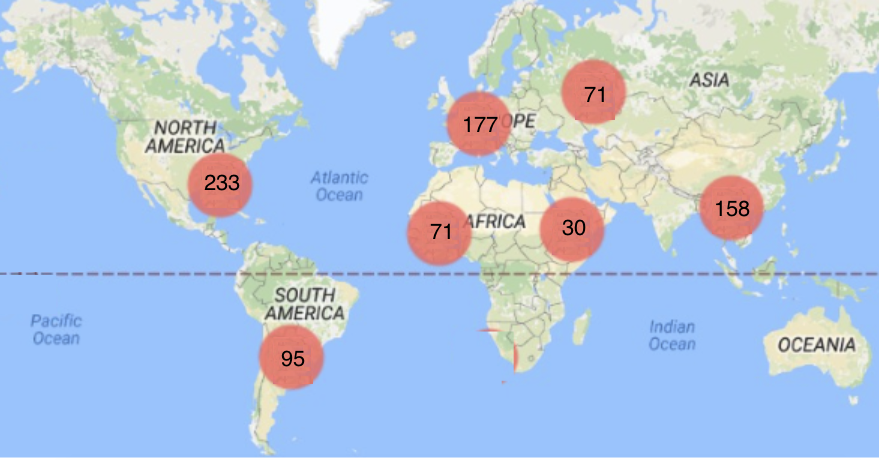
16 new members were added, bringing the total membership to 7,558 cities in 163 countries. Seven of these came from Iran where there are now 997 member cities. Six came from Italy, where there are now 504 member cities. Two new cities came from Germany and one from Japan.


(click on photo to enlarge)

(article continued in right column)

Question related to this article:

 
How can culture of peace be developed at the municipal level?

(article continued from left column)

Mayors for Peace is now running a project to distribute seeds from A-bombed trees to all member cities wishing to receive them. It is hoped that the acts of raising the second-generation A-bombed trees will help raise citizen’s awareness of peace. As of November 2017, seeds or seedlings had been distributed to cities in Belgium, Spain, Germany, Norway, Australia, Russia, Canada, UK, Switzerland, slovenia, Switzerland, France, Italy, USa, Bosnia and Herzegovina, Kazakhstan and Korea.

Youth are invited to apply for the 2018 Youth Exchange Programe for the “Hiroshima and Peace” course. Click here for details.

The UK & Ireland Mayors, Provosts and Leaders for Peace Chapter will hold its Chapter meeting on Friday, March 23, in Leeds Civic Hall. At the meeting, it is planned to encourage Mayors, Provosts and senior councillors that attend the meeting to also sign the ICAN pledge to work for a nuclear weapons free world that has been developed for local and national politicians.

Visit the following links for articles from the Hiroshima Peace Media Center of the CHUGOKU SHIMBUN:

. – A-bomb survivor Shigeaki Mori to visit U.S. for first time in May
31 officials from 9 nations attend training in Hiroshima
Hiroshima mayor criticizes new U.S. nuclear strategy
Criticism mounts against comment by Japanese foreign minister
A-bomb survivor donates late sister’s belongings to Peace Museum