Tag Archives: Mideast

With Israel’s destruction of Kamal Adwan Hospital, UN rapporteur calls for global medical boycott

. . HUMAN RIGHTS . .

An article from Nation of Change

Francesca Albanese, the UN Special Rapporteur for the Israeli-Occupied Palestinian Territories, reacted forcefully to the complete destruction by the Israeli military of Kamal Adwan Hospital at Beit Lahia in northern Gaza and the arrest and abuse of its patients and its director. She called for a world-wide medical boycott of Israel, writing at “X” :

“I urge medical professionals worldwide to pursue the severance of all ties with Israel as a concrete way to forcefully denounce Israel’s full destruction of the palestinian healthcare system in Gaza, a critical tool of its ongoing genocide.”

She was concurring with San Francisco-based physician and author Rupa Marya.

Muhammad Muhsin Watad at the Israeli newspaper Arab 48 explained that last Friday, “the Israeli army stormed Kamal Adwan Hospital after hours of besieging it. They burned its facilities, mistreated those inside, including patients, the injured, and medical staff, before taking into custody several individuals and forcing others [including women] to strip in the severe cold and undergo forced evacuation, all while gunfire and tank shelling occurred in the surrounding area.” Some 350 staff and patients were illegally detained by Israeli forces, though most were subsequently released.

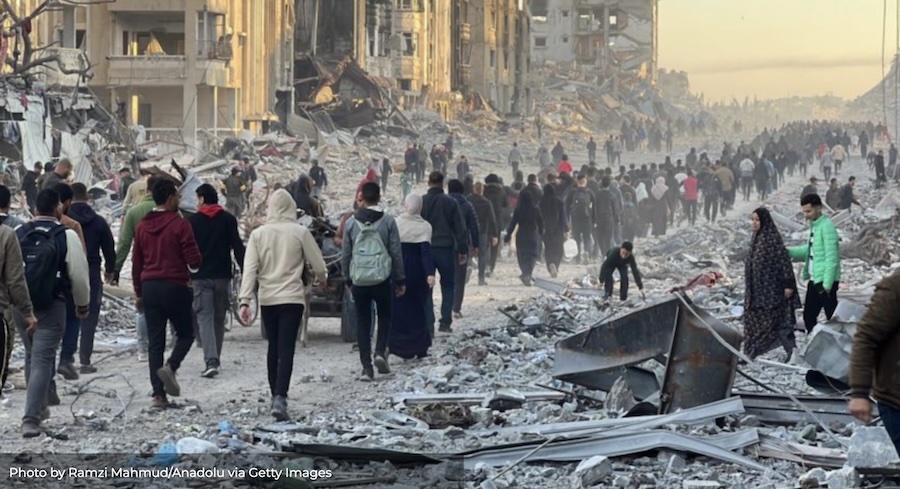
The actions were part of Israel’s strategy of forcibly displacing 400,000 Palestinians from northern Gaza and making it uninhabitable for them, as the occupying army systematically detonates buildings and destroys neighborhoods. The forced displacement of an occupied population is a war crime. Gaza Palestinians are huddling in tents or sleeping rough amid heavy downpours and frigid temperatures in which several babies are known to have died in recent days.

Also on Friday, having emptied and burned the hospital, the Israelis detained its director and other medical staff.

(continued in right column)

Question related to this article:

How can war crimes be documented, stopped, punished and prevented?

How can a culture of peace be established in the Middle East?

(continued from left column)

Watad at Arab 48 says that the Government Media Office in Gaza is alleging that Abu Safieh was subjected to physical and psychological abuse. He was forced to strip out of his medical coat and clothing and was used as a human shield. His children called on the international community to pressure Israel to release their father, whose fate remains unknown.

He was last seen walking outside the ruined hospital toward the turret of an Israeli tank.
When dissidents in other countries have faced tanks, they have been celebrated widely in U.S. media. American mass media “news” for the most part have ignored Abu Safieh and his fate.

Medical boycotts are not unprecedented. Physicians in the allied victor states of WW I boycotted  the German scientific and medical establishment on the grounds that German researchers and physicians were guilty of praising German militarism and denying German war guilt. They even founded alternative associations, such as the one to fight tuberculosis set up in Berlin, and held international congresses only in French and English, excluding German-speakers.

Medical boycotts of Israel have also been proposed  previously, as with the 2007 call of some British physicians for non-cooperation with the Israeli Medical Association for failing to uphold ethical standards in their treatment of Palestinians in the Occupied Territories. They urged that the IMA be kicked out of the World Medical Association.

As I have noted before, the Rome Statute  underpinning the International Criminal Court, which went into effect in 2002, lists among “War Crimes” “ix) Intentionally directing attacks against buildings dedicated to religion, education, art, science or charitable purposes, historic monuments, hospitals and places where the sick and wounded are collected, provided they are not military objectives.” The Israeli army’s allegations that hospitals in Gaza are armed camps and weapons depots is ridiculous, and such assertions have been disproven whenever newspapers of record such as the Washington Post have investigated them.

– – – – – –

If you wish to make a comment on this article, you may write to coordinator@cpnn-world.org with the title “Comment on (name of article)” and we will put your comment on line. Because of the flood of spam, we have discontinued the direct application of comments.
Activists Occupy Canadian Parliament Building to Protest Gaza War & Arming of Israel

. . HUMAN RIGHTS . .

An article from Democracy Now (licensed under a Creative Commons Attribution-Noncommercial-No Derivative Works 3.0 United States License)

“Canada needs to stop arming Israel and implement an immediate arms embargo.” In Ottawa, over 100 Jewish activists began a sit-in inside a Canadian parliamentary building Tuesday to demand Canada stop arming Israel.

Rachel Small, a member of the Jews Say No to Genocide Coalition and a member of the sit-in, says that the Canadian government’s claims that it is halting arms shipments to Israel are obfuscating the fact that Canadian weapons are still being transported via the United States. “We’re here to make sure that they … actually cut off the flow,” says Small. Such protest “is what we should be seeing more of,” adds Israeli journalist and former conscientious objector Haggai Matar.

Transcript of video

AMY GOODMAN: Haggai, you asked if people are doing enough. I want to break into this conversation with this breaking news. In Canada, about 150 Jewish activists and allies have just launched a protest inside the Canadian Parliament in Ottawa to demand Canada stop arming Israel.

We’re joined now by Rachel Small, a member of the group Jews Say No to Genocide Coalition.

Rachel, can you describe where you are and what you’re doing and what you’re calling for?

RACHEL SMALL: Thank you. We are in a Parliament Hill building. Right now we have completely taken over the lobby of this building, that has hundreds of parliamentarians’ office in here.

Our demand is clear: Canada needs to stop arming Israel and implement an immediate arms embargo. We know that every F-35 fighter jet, every Boeing Apache helicopter dropping bombs on Lebanon and Gaza right now is full of hundreds of Canadian components. We’re here as Jews to say this violence cannot continue in our name. And we’re here as people of conscience to say that the absolute bare minimum Canada needs to be doing right now is stop arming a genocide.

JUAN GONZÁLEZ: Haggai Matar, your response to these kinds of actions occurring abroad? Does this have an impact on the Israeli public?

HAGGAI MATAR: Well, first of all, I want to commend the activists on the ground now in Ottawa. It’s incredible. This is the exact kind of protest that people should be taking on in Canada, definitely in the U.S., which is the biggest supplier of weapons and funding and diplomatic support to Israel. So, yes, this is what we should be seeing more of.

I’m afraid that in Israel, again, these protests are usually seen as antisemitic or, in the case of Jews protesting, of self-hating Jews or people that are unhinged. That’s the way it’s being perceived. It’s our job as Jewish Israelis on the ground, talking in Hebrew, talking to people in our communities, to try and help them understand that it’s not the world that has gone mad, it’s us.

(continued in right column)

Question related to this article:

How can war crimes be documented, stopped, punished and prevented?

How can a culture of peace be established in the Middle East?

(continued from left column)

AMY GOODMAN: Interesting that the prime minister, Justin Trudeau, just met with President-elect Trump in Mar-a-Lago in Florida. Rachel Small, we’re looking at the group of people. One of them, I think, says “Jews for a Free Palestine.” What has been Trudeau’s position? And what’s going to happen to you this morning?

RACHEL SMALL: We have seen an unprecedented wave of resistance across Canada over the past 13 months, many, many thousands of people across the country not only petitioning their MPs, not only protesting, not only meeting with them, but actually holding blockades at weapons factories, doing just really everything we can to get Canada to stop arming Israel.

And that pressure has resulted in the Canadian government taking a stance that we would have not thought possible a year or two ago. They have committed to stop arming Israel. They have, in fact — the foreign affairs minister recently, in fact, said that Canadian weapons are not going to be going and used in Gaza.

Unfortunately, it’s not true. Unfortunately, we know that they have not tackled all the permits, and they have continued to conveniently send weapons to the U.S. without even requiring a permit. Those are going into every F-35 Israel is using. That is going into Israel’s primary weapons of war.

So we have backed the Canadian government into a corner where they know what the right stance is. They know they need to stop arming Israel. And we’re here to make sure they do it. The broad Arms Embargo Now coalition has come together across the country and has, in fact, gotten 45 parliamentarians to formally endorse the call for an arms embargo. We just need the government to step up and take that action to actually cut off the flow of all weapons to and from Israel. It’s the bare minimum they need to be doing.

AMY GOODMAN: That’s Rachel Small, member of Jews Say No to Genocide Coalition. If you’re having a little trouble understanding her, she’s inside the Canadian Parliament in Ottawa. There are scores of people behind her, lead Canadian organizer with World — with the group World Beyond War. And in the studio with us in New York, though usually in Tel Aviv, is Haggai Matar, Israeli journalist, activist, executive director of +972 Magazine, a conscientious objector himself. Juan?

JUAN GONZÁLEZ: Yeah, Haggai, we only have about a minute left, but I wanted to ask you about President-elect Trump’s decision to select former Arkansas Governor Mike Huckabee as the next U.S. ambassador to Israel. Huckabee is not only a leading U.S. Christian Zionist who’s openly advocated for Israel’s annexation of the West Bank and Gaza Strip, he declared in 2008 that there’s really no such thing as a Palestinian. What do you expect from this kind of ambassador from the new Trump administration?

HAGGAI MATAR: So, obviously, Trump appointments and Trump policies are terrifying to us and should be, too, to anyone who cares about the rights of Palestinians. I do want to also point out, however, Trump policies have an inherent contradiction. As an isolationist, Trump does not want to get involved in too many wars. As someone who wants to break deals with Saudi Arabia and Arab Gulf states, he may want to ensure that they don’t drift into the Iran-China field of influence. And those two policies, being pro-annexation and pro-settlements and pro-Israel and being pro-war and wanting to sign deals, they collide. And I think it’s our role on the left to kind of put a wedge in there and try and make sure that it becomes more and more apparent how those policies conflict with each other.

AMY GOODMAN: Haggai Matar, I want to thank you so much for being with us, Israeli journalist, activist, executive director of +972 Magazine, former conscientious objector, refused to serve in the Israeli army.

– – – – – –

If you wish to make a comment on this article, you may write to coordinator@cpnn-world.org with the title “Comment on (name of article)” and we will put your comment on line. Because of the flood of spam, we have discontinued the direct application of comments.

C­o­m­p­a­n­i­e­s P­r­o­f­i­t­i­n­g f­r­o­m t­h­e G­a­z­a G­e­n­o­c­i­d­e

. . HUMAN RIGHTS . .

An analysis by the American Friends Service Committee

The companies listed here have provided Israel with weapons and other military equipment used in its attacks on Gaza, the West Bank, Lebanon, and Syria since October 2023.

Last updated on June 6, 2024

*Companies marked with (*) are included in our divestment list. The list below is not intended to be used as either a divestment list or a boycott list, as it includes many privately-owned companies as well as companies with a very minor or one-time involvement.

Since October 2023, Israel has waged unprecedented aerial and ground attacks on Gaza after Hamas-led attacks on Israel. Tens of thousands of Palestinians in Gaza have been killed at a historic pace, mostly unarmed civilians, and most of the Gaza population has been displaced. These attacks may amount to a genocide, according to a preliminary ruling by the International Court of Justice, a , as well as dozens of U.N. experts and legal scholars. Israel’s attacks in Gaza have been accompanied by a surge of Israeli violence against Palestinians in the occupied West Bank, clashes between the Israeli military and militant groups in Lebanon, and Israeli aerial strikes in Syria.

Shortly after Oct. 7, the U.S. government started transferring massive amounts of weapons to Israel. By Dec. 25, Israel received  more than 10,000 tons of weapons in 244 cargo planes and 20 ships from the U.S. These transfers included more than 15,000 bombs and 50,000 artillery shells within just the first month and a half. These transfers have been deliberately shrouded in secrecy to avoid public scrutiny and prevent Congress from exercising any meaningful oversight. Between October and the beginning of March, the U.S. approved more than 100 military sales to Israel, but publicly disclosed only two sales. A list of known U.S. arms transfers is maintained by the Forum on the Arms Trade.

Much of these weapons were purchased using U.S. taxpayers’ money through the Foreign Military Sales program, while some were direct commercial sales purchased through Israel’s own budget.  An undisclosed amount of weapons was also transferred from U.S. military stockpiles already stored in Israel, known as War Reserves Stock Allies-Israel (WRSA-I). The use of WRSA-I to provide Israel with weapons serves to further obfuscate the full picture of U.S. arms transfers, as there is no public record of these stockpiles’ inventory.

The scale of destruction and war crimes in Gaza would not be possible without this continued flow of weapons from the U.S. Despite massive public protests, the Biden administration has been working to give Israel over $14 billion to buy more weapons. This is on top of the $3.8 billion the U.S. already gives to the Israeli military annually. Israel is required to use this money to buy U.S.-made weapons. This is a form of corporate welfare not only for the largest weapons manufacturers, like Lockheed Martin, RTX, Boeing, and General Dynamics, which have seen their stock prices skyrocket, but also for companies that are not typically seen as part of the weapons industry, such as Caterpillar, Ford, and Toyota (see below).

As a Quaker organization with a long history of work in Palestine and Israel, including in Gaza, AFSC supports a full arms embargo to both Israeli and Palestinian militant groups. This list focuses on weapons used by Israel because all Palestinian militant groups are already sanctioned and receive no support from Western governments or corporations.

(continued in right column)

Question related to this article:

How can war crimes be documented, stopped, punished and prevented?

How can a culture of peace be established in the Middle East?

(continued from left column)

This research relies on media sources, social media, and other open sources. Information was also collected by Who Profits and the Database of Israeli Military and Security Export, a project of the Israeli organization New Profile. We welcome any additional information, please contact us.

(Editor’s note: The AFSC website includes descriptions for each of the following companies. The links below to these descriptions do not work, but there is an index of links on the left side of the AFSC website that go directly to the descriptions.)

  • AeroVironment (NASDAQ: AVAV)
  • Agilite
  • Aimpoint
  • AM General
  • *BAE Systems (LSE: BA)
  • *Boeing (NYSE: BA)
  • *Caterpillar (NYSE: CAT)
  • *Colt (PSE: CZG)
  • Corsight
  • Day & Zimmermann
  • DJI
  • *Elbit Systems (NASDAQ & TASE: ESLT)
  • Emtan
  • Flyer Defense
  • Ford (NYSE: F)
  • *General Dynamics (NYSE: GD)
  • *General Electric (NYSE: GE)
  • General Motors (NYSE: GM)
  • Ghost Robotics
  • Google/Alphabet (NASDAQ: GOOG)
  • *Honeywell (NASDAQ: HON)
  • Hyundai (KRX: 329180)
  • InfiniDome
  • Israel Aerospace Industries
  • JCB
  • *L3Harris Technologies (NYSE: LHX)
  • *Leonardo (BIT: LDO)
  • Leupold & Stevens
  • *Lockheed Martin (NYSE: LMT)
  • MDT Armor
  • Mercedes (FWB: MBG)
  • NextVision
  • Nordic Ammunition Company
  • *Northrop Grumman (NYSE: NOC)
  • Oshkosh (NYSE: OSK)
  • *Palantir (NYSE: PLTR)
  • *Paz Oil (TASE: PZOL)
  • Plasan
  • Rafael
  • *Renk (FRA: ZAR)
  • Rheinmetall (FWB: RHM)
  • *Rolls-Royce (LSE: RR)
  • *RTX (NYSE: RTX)
  • Shield AI
  • SK Group
  • Skydio
  • SMARTSHOOTER
  • SpearUAV
  • *Textron ( NYSE: TXT)
  • *ThyssenKrupp (FWB: TKA)
  • – – – – – –

    If you wish to make a comment on this article, you may write to coordinator@cpnn-world.org with the title “Comment on (name of article)” and we will put your comment on line. Because of the flood of spam, we have discontinued the direct application of comments.
    Head of Nuke Abolition Group Decries Gaza Suffering After Winning Nobel Peace Prize

    . . HUMAN RIGHTS . .

    An article by Julia Conley from Common Dreams

    Calling for peace in war zones around the world and an end to the proliferation of nuclear weapons, a grassroots group organized by survivors of the United States’ atomic bombing of Hiroshima and Nagasaki in 1945 was awarded the Nobel Peace Prize on Friday.

    Nihon Hidankyo was established in 1956 after a number of local organizations of hibakusha, the Japanese name for “bomb-affected people,” joined together.

    Toshiyuki Mimaki, the group’s leader, was three years old when the U.S. killed 100,000 people in Hiroshima with a nuclear weapon, and his message after learning Nihon Hidankyo was the 2024 Peace Prize winner was straightforward.

    “I am not sure I will be alive next year,” said  Mimaki, 82. “Please abolish nuclear weapons while we are alive. That is the wish of 114,000 hibakusha.”

    Mimaki focused not only on the plight of the estimated 650,000 Japanese people who survived the Hiroshima and Nagasaki attacks, but also people—particularly children—facing war now.

    “It has been said that because of nuclear weapons, the world maintains peace. But nuclear weapons can be used by terrorists,” said  Mimaki. “For example, if Russia uses them against Ukraine, Israel against Gaza, it won’t end there. Politicians should know these things.”

    “In Gaza, bleeding children are being held [by their parents],” he added. “It’s like in Japan 80 years ago.”

    Mimaki said he had believed “the people working so hard in Gaza” would be awarded the Peace Prize, referring to the United Nations Relief and Works Agency for Palestine Refugees in the Near East (UNRWA), which was also nominated.

    The U.N. agency has struggled  to continue providing humanitarian services to Palestinians in Gaza this year after unverified claims by Israel that 12 UNRWA workers were involved in a Hamas-led attack last year prompted countries including the U.S. to suspend its funding. A majority of countries—but not the U.S., the agency’s biggest donor—have restored funding after an independent probe found Israel had not provided evidence  for its accusations.

    (continued in right column)

    Question related to this article:

    Presenting the Palestinian side of the Middle East, Is it important for a culture of peace?

    Where in the world can we find good leadership today?

    (continued from left column).

    Kazumi Matsui, the mayor of Hiroshima, said that with the average age of hibakusha now 85, “there are fewer and fewer people able to testify to the meaninglessness of possessing atomic bombs and their absolute evil.”

    “People in coming generations must know that what happened is not just a tragedy for Hiroshima and Nagasaki, but one that concerns all humanity that must not be repeated,” said Matsui.

    The International Campaign to Abolish Nuclear Weapons (ICAN), which won the Nobel Peace Prize in 2017 for its efforts to ensure countries comply with the U.N. Treaty on the Prohibition of Nuclear Weapons, applauded  the Nobel Committee for recognizing Nihon Hidankyo’s “lifelong work to bring the world’s attention to what nuclear weapons actually do to people when they are used.”

    Several years after the nuclear bombings, rates of leukemia diagnoses rose considerably  in Japan among survivors. After a decade, other cancers were also detected at higher-than-normal rates. Pregnant women who were exposed to radiation from the bombings also had higher rates of miscarriage and their infants were more likely to die.

    Cancer rates have continued to increase among hibakusha throughout their lives.

    “It is particularly significant that this award comes at this time when the risk that nuclear weapons will be used again is as high, if not higher, as it has ever been,” said Melissa Parke, executive director of ICAN.

    As Nihon Hidankyo was honored “for its efforts to achieve a world free of nuclear weapons and for demonstrating through witness testimony that nuclear weapons must never be used again,” the North Atlantic Treaty Organization (NATO) announced  it would be holding its annual nuclear exercise, “Steadfast Noon,” on October 14 over Western Europe.

    On “Democracy Now!” on Friday, Joseph Gerson, president of the Campaign for Peace, Disarmament, and Common Security, said  the award “could not come at a better time.” [See CPNN ]

    “What most people don’t understand is the increasing danger of nuclear war at this point,” said Gerson. “Among all the nuclear powers, the threshold for nuclear use is decreasing, and all the nuclear powers are in the process of so-called ‘modernizing’ their nuclear arsenals. This is a very dangerous moment.”

    “We must, as the hibakusha say, recognize that human beings and nuclear weapons cannot coexist,” Gerson added, “and we have to work for their abolition.”

    – – – – – –

    If you wish to make a comment on this article, you may write to coordinator@cpnn-world.org with the title “Comment on (name of article)” and we will put your comment on line. Because of the flood of spam, we have discontinued the direct application of comments.
    ‘Keep Your Eye On Calendar, Palestine Will Be Free’: Arundhati Roy’s PEN Pinter Prize Speech

    . . HUMAN RIGHTS . .

    An article from the Timeline Daily

    “They fight on because they know that one day—From the river to the sea Palestine will be Free. It will. Keep your eye on your calendar. Not on your clock. That’s how the people – not the generals – the people fighting for their liberation measure time,” asserts Arundhati Roy, the noted Indian author and activist, during her PEN Pinter Prize acceptance speech delivered on October 10 at the British Library.

    After announcing her name for the prize that English PEN established as an annual award in honor of playwright Harold Pinter, Roy declared her share of the prize money will be donated to the Palestinian Children’s Relief Fund.

    During her award acceptance speech after he thanked the members of English PEN and the jury for the Prize, Roy began by greeting Egyptian author and activist, Alaa Abd El-Fattah, writer of courage, and her fellow awardee. She said she was speaking of her friends and comrades in prison in India—lawyers, academics, students, journalists – Umar Khalid, Gulfisha Fatima, Khalid Saifi, Sharjeel Imam, Rona Wilson, Surendra Gadling, Mahesh Raut we well as thousands of incarcerated people in Kashmir and across the country.

    Speaking about the ongoing Israeli offensive in Gaza, the Indian author said the US and Israel unflinching ongoing “televised genocide in Gaza and now Lebanon in defence of a colonial occupation and an Apartheid state”

    Describing the fatalities of over 42000 lives including women and children, Roy stated the US and Europe have prepared the ground for another situation to assuage their collective guilt for their early years of indifference towards one genocide—the Nazi extermination of millions of European Jews.

    “Hostilities could end right this minute. Israeli hostages could be freed, and Palestinian prisoners could be released. The negotiations with Hamas and the other Palestinian stakeholders that must inevitably follow the war could instead take place now and prevent the suffering of millions of people,” she affirmed.

    The Indian author goes on saying that like every state that has carried out ethnic cleansing and genocide in history, “Zionists in Israel – who believe themselves to be “the chosen people”—began b by dehumanising Palestinians” before driving them off their land and murdering them.

    Roy quoted statements of former Israeli ministers to show how the Jewish state treated Palestinians as a justification to dehumanise them. Former Israeli Prime Minister Menachem Begin called Palestinians ‘two-legged beasts’. Yitzhak Rabin called them ‘grasshoppers’ who ‘could be crushed’. Golda Meir, the fourth Prime Minister of Israel said ‘There was no such thing as Palestinians’.

    (continued in right column)

    Question related to this article:

    Presenting the Palestinian side of the Middle East, Is it important for a culture of peace?

    Where in the world can we find good leadership today?

    (continued from left column).

    Former British Prime Minister Winston Churchill, the so-called famous warrior against fascism, said, ‘I do not admit that the dog in the manger has the final right to the manger, even though he may have lain there for a very long time’ and then went on to declare that a ‘higher race’ had the final right to the manger. Once those two-legged beasts, grasshoppers, dogs and non-existent people were murdered, ethnically cleansed, and ghettoised, a new country was born, Roy said, quoting the zionists and their supporters

    Roy went on how the West and their media support, arm, applaud Israel, despite floods of evidence for Israeli brutalities. “No wonder Israeli soldiers seem to have lost all sense of decency,” she says, adding that for them the history only began when the Hamas attack Israel on October 7, killing Israeli civilians, triggering the ongoing genocidal war.

    “I refuse to play the condemnation game. Let me make myself clear. I do not tell oppressed people how to resist their oppression or who their allies should be,” Roy says. Noting that when US President Joe Biden met with Prime Minister Benjamin Netanyahu and the Israeli war cabinet during a visit to Israel in October 2023, he said, ‘I don’t believe you have to be a Jew to be a Zionist, and I am a Zionist,’ Roy says she is not going to  declare myself or define myself in any way that is narrower than her writing.

    The celebrated Indian writer then poses some questions; I ask you, which of us sitting in this hall would willingly submit to the indignity that Palestinians in Gaza and the West Bank have been subjected to for decades? What peaceful means have the Palestinian people not tried? What compromise have they not accepted—other than the one that requires them to crawl on their knees and eat dirt?

    Roy then asserts Israel is not fighting a war of self-defence. “It is fighting a war of aggression. A war to occupy more territory, to strengthen its Apartheid apparatus and tighten its control on Palestinian people and the region.”

    Roy says not all the power and money, weapons and propaganda on earth can any longer hide the wound that is Palestine. She notes the polls to shows that majority of  the citizens in the countries whose governments enable the Israeli genocide have made it clear that they do not agree with their government’s support to the Zionist atrocities, including a younger generation of Jews. She cites increasing number of protest in the Europe against Israeli aggression in Gaza.

    “The war that has now begun will be terrible. But it will eventually dismantle Israeli Apartheid. The whole world will be far safer for everyone – including for Jewish people – and far more just. It will be like pulling an arrow from our wounded heart,” the award winning author said, underscoring that the war could stop today if the US government withdrew its support of Israel.

    “When Benjamin Netanyahu holds up a map of the Middle East in which Palestine has been erased and Israel stretches from the river to the sea, he is applauded as a visionary who is working to realize the dream of a Jewish homeland. But when Palestinians and their supporters chant ‘From the river to the sea, Palestine will be free’, they are accused of explicitly calling for the genocide of Jews,” Roy said.

    The PEN Prize awardee concluded her speech expressing her conviction that From the river to the sea Palestine will be Free.

    – – – – – –

    If you wish to make a comment on this article, you may write to coordinator@cpnn-world.org with the title “Comment on (name of article)” and we will put your comment on line. Because of the flood of spam, we have discontinued the direct application of comments.
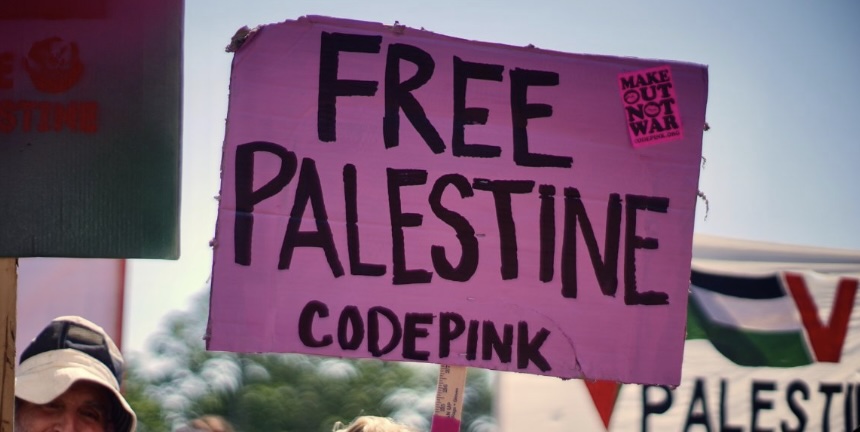
    From Paris to Caracas, thousands march in support of Gaza around the world, one year after October 7

    . TOLERANCE AND SOLIDARITY . .

    An article from Le Parisien (translated by google)

    “Freedom and justice for the Palestinians!” Thousands of people demonstrated in support of Gaza across Europe and South Africa on Saturday for the first anniversary of the bloody conflict between Israel and the Palestinian Islamist movement Hamas.

    Holding placards and Palestinian and Lebanese flags, several thousand protesters marched through the centre of the British capital late in the morning. Leading the march were former Labour leader Jeremy Corbyn (now an independent) and former Scottish Prime Minister Humza Yousaf.


    London, October 5, 2024. Many protesters wore keffiyehs, symbols of the Palestinian struggle. Reuters/Chris J Ratcliffe

    “Stop the bombing”, “Free, free Palestine” and “Stop bombing hospitals” were among the most popular slogans chanted in London by protesters, who marched peacefully. “We need a ceasefire now. How many more innocent Palestinians or Lebanese people have to die?” asked Sophia Thomson, 27, who was demonstrating with friends. “The fact that there are so many of us shows that the government is not speaking for the people,” she added.

    A demonstration in memory of the 1,205 people killed in the unprecedented Hamas attack in Israel on October 7 is also due to be held in London on Sunday.

    In Dublin, the Irish capital, several hundred people demonstrated in support of the Gazans, shouting “freedom and justice for the Palestinians”.

    In Berlin, a pro-Palestinian demonstration brought together more than a thousand people and another pro-Israeli demonstration brought together around 650, according to the police. Outside the procession of this last demonstration, 26 people who had accosted the demonstrators were arrested, a police spokesperson told AFP.

    In Rome, pro-Palestinian youth clashed with the police, with bottles thrown, firecrackers, tear gas and water cannons used, after a demonstration that brought together thousands of people. “Italy must stop selling and sending weapons to Israel”, “Free Palestine” and “Israel, a criminal state”, the demonstrators shouted.

    During the offensive led in response by Israel, at least 41,825 Palestinians have been killed in Gaza, the majority of them civilians, according to data from the Hamas government’s Ministry of Health, deemed reliable by the UN. In Lebanon, according to the authorities, more than 2,000 people have been killed since October 2023.

    Representatives of LFI at the Paris demonstration

    In France, several thousand people marched in Paris and several other cities to show their “solidarity with the Palestinian and Lebanese peoples” and to ask the French government to do more.

    In Paris, 5,000 demonstrators, according to the police, marched from Place de la République to Place de Clichy, shouting “Palestine will live, Palestine will win”. At the head of the procession were several political figures from the radical left, including representatives of La France Insoumise Jean-Luc Mélenchon and Manon Aubry. Among them, MP Thomas Portes, interviewed by AFP, once again asked President Emmanuel Macron to “recognise the State of Palestine”.

    At the microphone of a truck present in the procession, Jean-Luc Mélenchon reiterated his call for students to “flaunt the colors of Palestine” and “Lebanon” from October 8, in response to a ministerial circular on maintaining order in universities on the eve of October 7, the anniversary of the Hamas attack in Israel.

    (continued in right column)

    (Click here for the original article in French.

    Question related to this article:

    Presenting the Palestinian side of the Middle East, Is it important for a culture of peace?

    (continued from left column)

    But for Mohammed Ghili, 52, a member of the association Solidarité Palestine, if “it’s good news, it comes far too late” in the face of what he calls “genocide”. In the crowd, Maya, 37, a French-Lebanese physics researcher who arrived from Beirut a week ago, said she was “stunned by the media coverage” of the escalation in Lebanon. “We don’t hear about the bombing of civilians”.

    Among the thousand people who also marched in Lyon according to the prefecture, Jérôme Faÿnel, president of a local collective supporting the Palestinian people, said that it was an opportunity for him to denounce the anniversary of “one year of unheard-of brutality”.

    In Toulouse, 300 demonstrators chanted the name of “Georges Abdallah”, in reference to the Lebanese pro-Palestinian activist Georges Ibrahim Abdallah, imprisoned for 40 years for complicity in murder. His 11th request for release is to be examined on 7 October. “How can a court decision be issued on 7 October?” exclaimed Soraya, 50, who did not wish to give her last name. She denounces “a bias” on the part of the justice system, one year to the day after the unprecedented attack by Hamas.

    Flo, 22, an unemployed resident of Vienne (Isère), who did not wish to give his last name, came to demonstrate as he has been doing for a year, and for him, it is a “fight”: not a “symbolic fight”, but a “fight for justice” for the Palestinian and Lebanese people.

    In Nantes, two marches bringing together some 350 people in total, according to an AFP journalist, marched through the streets of the city center. In Strasbourg, there were 200 demonstrators, as in Bordeaux, where they observed a minute of silence “in homage to the martyrs” before walking peacefully, chanting “Palestine will live, Palestine will win”.

    Gatherings in Switzerland and South Africa

    In Basel, Switzerland, thousands of people also gathered in a park near the train station for a national pro-Palestinian demonstration called by the Swiss-Palestine Federation and a hundred or so organizations.

    In Madrid, 5,000 people, according to the authorities, demonstrated at the call of the Solidarity Network against the Occupation of Palestine (RESCOP), with placards saying “Boycott Israel” or “Humanity is dead in Gaza”. The demonstrators called on Prime Minister Pedro Sanchez, who has taken a number of critical positions against Israel in recent months, to break off diplomatic relations with the country.

    In Venezuela, hundreds of supporters of the government of Nicolás Maduro and members of the Arab community demonstrated in front of the UN headquarters in Caracas. Carrying a 25-metre-long Palestinian flag and shouting “Long live free Palestine” or “Iran, Iran, strike Tel Aviv”, the Chavistas presented the UN with a document calling for an end to the “genocide” of the Palestinian people and for “concrete actions” against Israel.

    In South Africa, in central Cape Town, hundreds of people demonstrated, waving Palestinian flags and chanting anti-Israel slogans at a pro-Gaza rally. Holding placards accusing Israel of genocide and racism, the protesters – many wearing keffiyehs, a symbol of the Palestinian struggle against Israel – marched toward the South African parliament.

    “Israel is a racist state” and “We are all Palestinians,” protesters chanted. Some of them said they supported South Africa’s complaint to the International Court of Justice (ICJ). Pretoria maintains that Israel’s offensive in Gaza violates the 1948 UN Genocide Convention.

    Many South Africans compare Israel’s stance toward the Palestinians to apartheid, the segregationist regime imposed by the white minority in the country until the first multiracial elections in 1994.

    (Editor’s note: The video of the rally in New York City is especially impressive.)

    – – – – – –

    If you wish to make a comment on this article, you may write to coordinator@cpnn-world.org with the title “Comment on (name of article)” and we will put your comment on line. Because of the flood of spam, we have discontinued the direct application of comments.

    Arab and Middle Eastern States: International Day of Peace

    FREE FLOW OF INFORMATION .

    A survey by CPNN

    The following 23 actions in 13 Arab and Middle Eastern countries were listed in Google during the week of September 17-28 this year under the key words “International day of peace” “peace day”, “journee internationale de la paix” and اليوم الدولي للسلام .


    Djibouti

    Here are excerpts from the articles.

    BAHRAIN

    In celebration of the United Nations International Day of Peace, the organization “this is Bahrain” launched its annual event under the theme “Cultivating a Culture of Peace” at the Cultural Hall in Manama. . . The evening’s performances, which included contributions from various cultural groups, reflected Bahrain’s thriving culture of peace. Participants included Father Richard Fermer, Dean of Saint Christopher’s Cathedral, the YMCA Choir and the Al Hidd Fajeiri Band, The ISKON Community and The Ghana Community Group.

    DJIBOUTI

    Like countries around the world, the Republic of Djibouti celebrated the International Day of Peace on Saturday, September 21. Under the theme “Cultivating Peace”, the event jointly organized by the UNESCO branch under our skies, the National Agency for the Promotion of Culture (ANPC), UNDP and the DERE Institute, served as a platform for collective reflection and commitment to peace. . . The ceremony was held in the auditorium of the National Library. It brought together experts, diplomats, young people and cultural actors to discuss various topics related to the theme proposed this year, including conflict resolution mechanisms and the contribution of women and young people to preserving peace. . . The activities dedicated to this day ended with a concert entitled “Cultivating Peace”, bringing together local and international artists. A strong emotional moment was the presentation of the song “Sing Peace”, specially composed for the occasion by national artists.

    EGYPT, CAIRO COPTIC MUSEUM

    The Coptic Museum administration announced the display of a unique artifact on the occasion of the celebration of the International Day of Peace. The artifact is a lamp in the shape of a dove, which symbolizes peace, and has a chain for hanging, made of bronze and dating back to the Byzantine era.

    EGYPT, CAIRO LIBRARY

    The Greater Cairo Library, headed by writer Yehia Riad Youssef, is organizing a celebration on the occasion of the International Day of Peace, at 4 pm next Thursday, September 19, in cooperation with the activities of the “I am from this country” cultural salon, under the patronage of Dr. Ahmed Heno, Minister of Culture, and the supervision of director Khaled Galal, Head of the Cultural Production Affairs Sector. The celebration will be hosted by: Major General Hamdi Bakhit, Major General Ahmed Wanis, and Major General Dr. Mahmoud Khalifa, and the evening will be managed by Dr. Fawzia Mohamed.

    EGYPT, CAIRO RADIO

    Egypt’s Radio Cairo International Presents Special International Day of Peace Talk by Amal El Disuki, Friday September 20, 2024

    EGYPT, HELIOPOLIS

    Dr. Nabil Helmy, Chairman of the Heliopolis Association, announced the opening of an exhibition entitled “Culture of Peace” at 12 am today, Saturday, at the Heliopolis Library, one of the association’s cultural platforms, with the participation of 15 artists from different age groups. . The Future Library, one of the association’s cultural platforms, will organize a symposium entitled (Internal and External Peace and its Relationship to the Mental Health of Individuals and Peoples) at 6 pm next Thursday, September 26, on the occasion of the International Day of Peace. . .
The symposium will address the meaning of peace, the importance of peace for individuals and societies, the relationship between peace and mental health, and practical steps to help individuals achieve psychological peace.

    EGYPT, ISMAILIA

    The Ismailia Culture Branch organized a number of cultural and artistic activities within the agenda of the General Authority for Culture Palaces, under the supervision of writer Mohamed Abdel Hafez Nasef, Vice President of the Authority, within the framework of the Ministry of Culture’s programs. In celebration of the International Day of Peace, Abu Suwayr Library organized a meeting to discuss the book “Peace of My Country” by Salwa Al-Anani.

    EGYPT, MINYA

    Today, Saturday, the Peacemakers Committee in Minya Governorate celebrated the International Day of Peace, which falls on September 21 of each year, under the slogan “Blessed are the Peacemakers.” Father Paul Nassif, of the Catholic Diocese of Minya, says that the Peacemakers Committee calls on everyone to spread the culture of tolerance, peace, acceptance of others, instilling good values and noble morals, and rejecting hatred, violence, and extremism. . . Sheikh Gamal Abdel Hamid Ibrahim, a scholar of Al-Azhar Al-Sharif and a member of the Peacemakers Committee, stressed that national unity is the most prominent pillar of patriotism . . The members of the Peacemakers in Minya called on all officials, religious opinion leaders, thinkers, writers and intellectuals to unite efforts to instill the values of tolerance and coexistence and to reject hatred, fanaticism and terrorism.

    IRAQ

    Iraqi young men and women sent a message on the International Day of Peace, as part of the “Peace Against War” photography workshop established by the United Nations Development Program. Asia, Abdulrahman, Ayat, Nour Eldin, Zaid, Hawra, and other young men and women from Anbar, Diyala, Salah Al-Din, Nineveh, and Kirkuk came together to send a message on the International Day of Peace. These groups are present in five areas in Iraq that were liberated from ISIS invasion: Anbar, Diyala, Salah al-Din, Nineveh and Kirkuk, according to a UN report. Funded by the governments of Denmark, Canada and Germany, members of these groups work together to solve problems related to peace, help people reintegrate into their communities, and even extend their work to solutions to address climate change. . . The UN report quotes Asia Salam from Diyala as saying, “Through photography, drawing, or speaking, we seek to build dialogue with each other. Openness and empathy are key to understanding our differences and creating peaceful societies.” Nour Al-Hamdani from Anbar explains, “60% of our country is made up of young people. Without our active participation, we have no future. We, the youth, are the driving force for change, and our creativity is the key to a more peaceful world.”

    ISRAEL

    On Saturday Sep 21, International Day of Peace, the Plum Village sangha in Jerusalem will be offering a Peace Walk at 5pm local time. We invite you to send the energy of peace and healing to Israel and Palestine at the same time. You’re also welcome to join a simultaneous session of sitting meditation, chanting and walking meditation led by Blue Cliff Monastery online.

    MOROCCO, MARAKECH

    Video of celebration of International Day of Peace by children of Planete Montessori School, Marrakech

    MOROCCO, RABAT

    Rabat – The Islamic World Educational, Scientific and Cultural Organization (ICESCO) called on Friday the international community to adopt innovative strategies and pool efforts to promote the culture of peace. In a statement on the occasion of the International Day of Peace (21 September), which this year is themed “Let us cultivate a culture of peace”, ICESCO calls for more coordinated efforts to guide, cultivate and promote the culture of peace in order to make societies more resilient and prosperous in the face of growing challenges to peace and security, as well as environmental, economic and social crises affecting a number of countries around the world.

    Question for this article

    What has happened this year (2024) for the International Day of Peace?


    Syria, Manbig Canton

    (Survey continued from left column)

    QATAR

    Doha, QNA/ On Tuesday, the Shura Council participated in a parliamentary event organized by the Inter-Parliamentary Union (IPU) via videoconference. The event, themed “Peace and Democracy: Can Ballot Boxes Replace Bullets?”, marked the International Day of Democracy (15 September) and the International Day of Peace (21 September).

    SAUDI ARABIA

    The Intellectual Awareness Department of the General Administration of Education in Taif Governorate organized a remote seminar entitled (Safety is a Value and Behavior) as part of the activities celebrating the International Day of Peace.  The symposium included a number of topics, peace is the greeting of Islam, the role of education in achieving peace, messengers of peace from the Kingdom of Islam, stories about peace inspired by prophecy and building peace in the future, and a poem entitled the Kingdom is the source of peace. . . For its part, schools activated this event with many activities and events targeting students and their staff.

    SOMALIA

    UN University for Peace Celebrates International Day, Pledges to Provide Inspiring Education for Future Generations. On this occasion, Professor Samuel Ewusi, Regional Director of the University for Peace in Africa, said: “If the United Nations University for Peace should be anywhere, it should be in Somalia.” . . Since its establishment in Mogadishu in 2018, the University of Peace in Somalia has graduated over 250 students, increasing the capacity of Somali leadership to define and develop a culture of peace. . . At the recent graduation ceremony at the University for Peace, the head of the UN mission in SOMALIA commented: “This is the only educational institution with an exclusive mandate to deliver peace education, and it is of particular importance here in Somalia.”

    SYRIA, MANBIJ CANTON

    The Syrian Women’s Council in Manbij Canton organized a dialogue seminar on the International Day of Peace, in which members of the Democratic Autonomous Administration of Manbij Canton, political parties, and independent women’s figures participated, in the hall of the Muhammad Manla Ghazil Library in the center of Manbij city. The symposium began with a minute of silence, then the spokesperson for the Syrian Women’s Office in Manbij Canton, Maryam Hayani, explained the concept of international peace and the urgent need for it, especially in light of the conflicts the world is witnessing between international powers that seek their interests by igniting conflicts between peoples. Then the floor was opened for discussion in front of the attendees, who stressed the necessity of resolving the Syrian crisis, establishing peace there, and liberating the occupied territories.

    SYRIA, NORTHEAST

    The Confederation of Democratic Society Organizations in Northeast Syria issued a written statement on the occasion of International Peace Day.vThe statement stressed: “We call on all international civil society organizations and human rights institutions to fulfill their duty to support sustainable peace-building efforts in Syria and to cooperate to spread a culture of dialogue instead of violence and discrimination. We see differences as a source of diversity, not as a tool to spread values or to fuel wars. Respect for diversity and acceptance of others is the key to building a strong society based on justice and equality. We therefore call on all peoples of the world to use this day as an opportunity to rethink the need for peace as the only way to resolve the crisis.

    TURKEY, ANKARA

    The International Day of Peace was observed at Botanik Park in Ankara with a Peace Bell Ringing Ceremony organized by Turkish Japanese Foundation and UN Türkiye. The ceremony was attended by members of diplomatic community, academia, civil society and UN Türkiye staff. Dr. Babatunde Ahonsi, the UN Resident Coordinator in Türkiye, emphasized this year’s theme, “Cultivating a Culture of Peace” . . Assoc. Prof. Dr. Emin Özdamar echoed these sentiments, recalling the painful legacy of the atomic bombings of Hiroshima and Nagasaki nearly 80 years ago. . . The ceremony concluded with the ringing of the Peace Bell, a powerful symbol of hope and a call to action for peace, reminding all present of the responsibility to foster a culture of peace in their communities and the world.

    TURKEY, IZMAR

    On Saturday, the western Turkish city of Izmir witnessed a march in solidarity with the Palestinian people, on the occasion of the International Day of Peace, which falls on September 21. Dozens of demonstrators gathered in Konak Square, where some protesters wore costumes and masks symbolizing different cultures. The demonstrators carried lanterns and walked to the nearby Republic Square, chanting various slogans while playing many musical instruments and beating drums.

    UNITED ARAB EMIRATES, DUBAI

    The Sustainable Humanitarian Organization DIHAD organized a humanitarian campaign that included several activities on the occasion of the International Day of Peace, in cooperation with Index Media and the International School of Creative Science. . . 
A group of Emirati students shared their vision of peace with the world, with the aim of promoting the values of tolerance and love among all people on earth by creating artistic paintings that express their concept of peace, using colors to convey their messages to the world.

    UNITED ARAB EMIRATES, MINISTRY OF THE INTERIOR

    The Ministry of Interior, represented by its Human Rights Department, in collaboration with the National Committee for International Humanitarian Law, marked the “International Day of Peace” by hosting a virtual workshop. . . In his opening remarks, Brigadier Mohammed Ali Al Shehhi, Director of the Human Rights Department, emphasized the Ministry’s commitment to participating in global events, particularly those centered on humanitarian values and the promotion of peace and tolerance. . . Major Dr. Hamad Al Shamili, an accredited lecturer by the International Committee of the Red Cross, elaborated on the concept of world peace and its noble goals. He discussed the protection of civilians and peaceful societies under international law, emphasizing the restriction of hostile actions.


    UNITED ARAB EMIRATES, SHARJAH

    Sharjah Girls Chess and Culture Club organized the International Peace Day event for the club’s players aged 5 to 12 years, in cooperation with the Sharjah Social Services Department, at the club’s headquarters, in which a large number of players participated. . . Najla Al Shamsi, Chairwoman of the Board of Directors of the club, confirmed that the event coincides with the International Day of Peace, “Through the event, we wanted to consolidate the meaning and values of peace for all generations of our society,

    YEMEN, AMIDEAST

    On the International Day of Peace, celebrated on September 21, AMIDEAST-Aden organized a dialogue session today, Sunday, September 22, that brought together seven young men and seven women from the EASP program to discuss the topic of “Peacemaking” from the perspective of women and youth. . . The session included presentations about the International Day of Peace and an extensive explanation of Resolution 1325, stressing the need to implement these resolutions on the ground to enhance the role of women and youth in achieving sustainable peace.

    YEMEN, PEACE PATH FOUNDATION

    An event was held on the occasion of the “International Peace Day”, implemented by the Peace Path Foundation under the slogan (Peace for All of Us) and with the participation of elite female cadres, which lasted for only one day, and members of the Women’s Solidarity Network in  Aden Governorate . The event was opened via Zoom with a speech by the Country Director of the Peace Path Initiative Foundation – Lawyer / Afraa Al-Hariri, “in which she congratulated all attendees on the occasion of the International Day of Peace, which falls in September of each year… wishing that security, safety, peace and prosperity would prevail in all parts of the country through the combined efforts of everyone, regardless of their affiliation and spectrum, and to come out with a beautiful vision for a bright tomorrow with peace. . . The event concluded with an interactive dialogue, and the most important issues discussed revolved around the status of women and the importance of reflecting their priorities and needs in the Beijing Report, advocacy plans and how to develop them, challenges, difficulties, and proposals for analyzing the context, identifying advocacy groups, and taking into account the targets, influencers, and decision-makers.

    Israeli General Strike Protests Netanyahu’s ‘Cabinet of Death’

    . . HUMAN RIGHTS . .

    An article by Jake Johnson from Common Dreams

    Workers across Israel walked off the job and took to the streets on Monday to protest Prime Minister Benjamin Netanyahu’s refusal to agree to a cease-fire and hostage-release deal after Israeli forces recovered the bodies of six people who were held captive by Hamas in the Gaza Strip.

    Teachers, local government employees, transit workers, and others took part in the strike, which halted departures from Israel’s largest airport, shut down universities and shopping malls, and disrupted the flow of traffic as outraged Israelis blocked roads.


    Israelis gather in the center of Tel Aviv on September 2, 2024 to demand a hostage-release agreement. (Photo: Mostafa Alkharouf/Anadolu via Getty Images)

    The strike was called by Histadrut, Israel’s largest trade union. Arnon Bar-David, the union’s chairman, said  ahead of the action that “this is not a matter of right or left; it is a matter of life and death.”

    “All the heads of the security establishment support the deal, and it is the government’s responsibility to bring our hostages home,” he continued. “It is inconceivable that our children will not return because of narrow considerations and interests.”

    Yair Lapid, Israel’s opposition leader, expressed support for the strike, saying  that “Netanyahu and the cabinet of death decided not to save” the six hostages whose bodies were recovered from Rafah. The Israel Defense Forces (IDF) said Sunday that Hamas fighters killed the hostages, including Israeli American Hersh Goldberg-Polin.

    Hamas said in a statement  that “we hold the criminal terrorist Benjamin Netanyahu and the biased American administration responsible for the failure of the negotiations to stop the aggression against our people and to release the prisoners in an exchange.”

    “We also hold him fully responsible for the lives of the prisoners who were killed by his army’s bullets,” Hamas added.

    The IDF’s announcement Sunday intensified the fury that hostages’ families and much of Israeli society have directed at Netanyahu, who has repeatedly sabotaged cease-fire talks  with hardline demands in recent weeks. Israeli officials believe around 100 hostages remain in captivity in Gaza, including roughly 35 who are believed to be dead.

    At least some of the hostages have been killed by Israeli forces. In April, Hamas released a brief video  in which Goldberg-Polin appealed to the Netanyahu government for a cease-fire agreement and said at least 70 hostages had been killed in IDF attacks.

    (continued in right column)

    Question related to this article:

    How can war crimes be documented, stopped, punished and prevented?

    How can a culture of peace be established in the Middle East?

    (continued from left column)

    B’Tselem, an Israeli advocacy organization, said in a statement  Sunday that “the six Israeli hostages whose bodies were recovered from Gaza this morning could have been saved if the Israeli government had heeded the pleas of their families and the Israeli public to reach a cease-fire and an exchange deal.”

    “The Israeli government places no value on human life—whether of its Gazan subjects or of its own citizens,” the group added.

    Labor unions in the United States—Israel’s main ally and weapons supplier—expressed solidarity with Israeli workers who walked off the job Monday, with American Federation of Teachers president Randi Weingarten applauding  “this action to halt Israel’s economy to send a message to the Netanyahu government to end this war.”

    “We are devastated by the murder of the six innocent hostages by Hamas, young people, most of whom were at the Nova dance festival,” said Weingarten. “But it is unconscionable that Israeli Prime Minister Netanyahu has refused to seal a cease-fire deal with Hamas that would bring the hostages home and end the humanitarian crisis of Gaza. We have called for an end to this war since January. In Netanyahu’s obstinance, he has refused to listen, even to his own military and security experts.”

    The strike kicked off amid reports that the U.S. “has been talking to Egypt and Qatar about the contours of a final ‘take it or leave it’ deal that it plans to present to the parties in the coming weeks,” according to The Washington Post.

    “Biden officials said it was not immediately clear whether the discovery of the six hostages would make it more or less likely that Israel and Hamas could come to an agreement in the coming weeks,” the Post added.

    Drop Site’s Jeremy Scahill noted  Sunday that “rather than insisting on upholding what [U.S. President Joe] Biden said was Israel’s own proposal in May, the U.S. has appeased Netanyahu’s efforts to allow an indefinite presence of Israeli forces in Gaza and an open-ended campaign of military attacks.”

    Update:

    The chairman of Histadrut, Israel’s largest trade union, instructed workers  to return to their jobs following an order by an Israeli court to end the general strike on Monday afternoon.

    (Editor’s notes:

    In a related development on August 31, “in Tel Aviv, tens of thousands of demonstrators, including relatives of those held hostage in Gaza, gathered at the Hostages Square for a rally demanding their loved ones’ return and pled with the prime minister and negotiating team to reach an agreement before time runs out.”

    A list of businesses affected by the general strike has been published by the Times of Israel.)

    – – – – – –

    If you wish to make a comment on this article, you may write to coordinator@cpnn-world.org with the title “Comment on (name of article)” and we will put your comment on line. Because of the flood of spam, we have discontinued the direct application of comments.
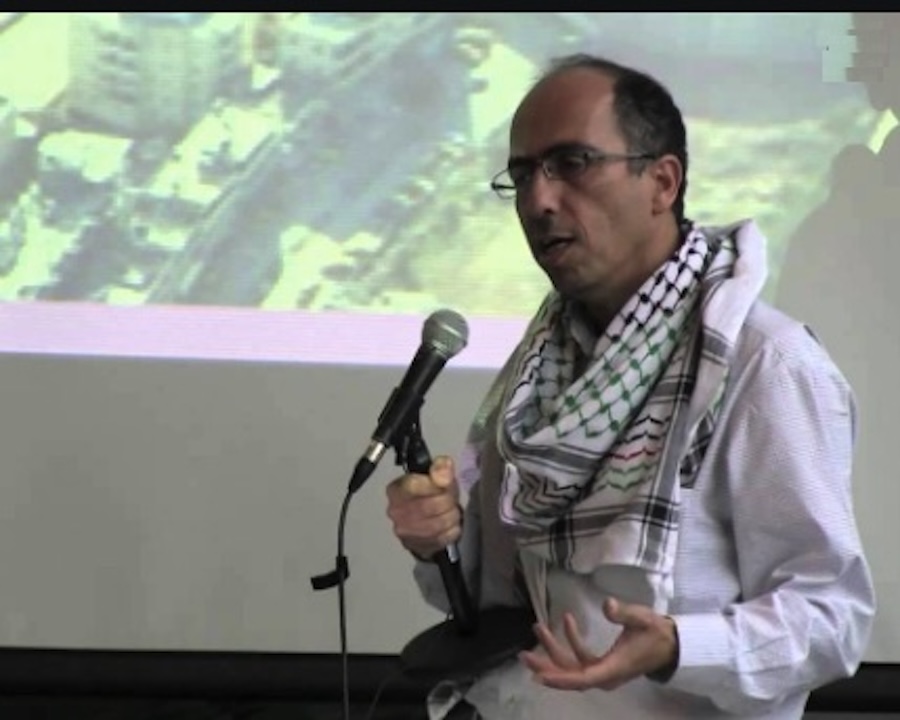
    US Labor Unions Call on Biden Administration to Immediately Halt All Military Aid to Israel

    . . DEMOCRATIC PARTICIPATION . .

    An article from United Electrical, Radio & Machine Workers of America

    A group of 7 unions have sent a letter  to President Biden calling on him to “immediately halt all military aid to Israel” in advance of Israeli Prime Minister Benjamin Netanyahu’s visit to the U.S. next week. The letter states that the unions “believe that immediately cutting US military aid to the Israeli government is necessary to bring about a peaceful resolution to this conflict.”


    Union banner against visit of Netanyahu

    The unions that signed on to the letter include the Association of Flight Attendants (AFA), American Postal Workers Union (APWU), International Union of Painters (IUPAT), National Education Association (NEA), Service Employees International Union (SEIU), United Auto Workers (UAW) and United Electrical Workers (UE). 
    (article continued in right column)

    Question related to this article:
     
    What is the contribution of trade unions to the culture of peace?

    How can a culture of peace be established in the Middle East?

    (article continued from left column)

    “Our unions are hearing the cries of humanity as this vicious war continues,” said APWU President Mark Dimondstein. “Working people and our unions are horrified that our tax dollars are financing this ongoing tragedy. We need a ceasefire now, and the best way to secure that is to shut off US military aid to Israel.”

    The unions expressed hope that President Biden’s three-part ceasefire proposal that he outlined in the final week of May would bear fruit, but expressed concern that it hasn’t been fully accepted yet while the violence continues. The letter states that “large numbers of Palestinian civilians, many of them children, continue to be killed, reportedly often with US-manufactured bombs. Rising tensions in the region threaten to ensnare even more innocent civilians in a wider war. And the humanitarian crisis deepens by the day, with famine, mass displacement, and destruction of basic infrastructure including schools and hospitals. We have spoken directly to leaders of Palestinian trade unions who told us heart-wrenching stories of the conditions faced by working people in Gaza.”

    The letter declares that “the time to act decisively to end this war is now. Stopping US military aid to Israel is the quickest and most sure way to do so, it is what US law demands, and it will show your commitment to securing a lasting peace in the region.”

    Contact: Media@seiu.org

    – – – – – –

    If you wish to make a comment on this article, you may write to coordinator@cpnn-world.org with the title “Comment on (name of article)” and we will put your comment on line. Because of the flood of spam, we have discontinued the direct application of comments.
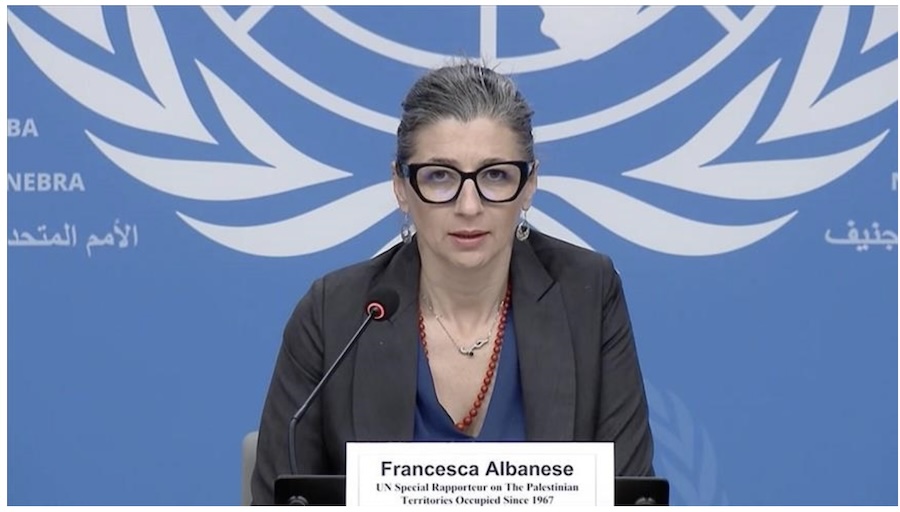
    World Court Condemns Israeli Apartheid

    . . HUMAN RIGHTS . .

    A press survey by CPNN

    Human Rights Watch: The following quote can be attributed to Tirana Hassan, Human Rights Watch Executive Director:

    In a historic ruling the International Court of Justice has found multiple and serious international law violations by Israel towards Palestinians in the Occupied Palestinian Territory, including, for the first time, finding Israel responsible for apartheid. The court has placed responsibility with all states and the United Nations to end these violations of international law. The ruling should be yet another wake up call for the United States to end its egregious policy of defending Israel’s oppression of Palestinians and prompt a thorough reassessment in other countries as well.


    Judges for the International Court of Justice rise before delivering a non-binding ruling on Israeli rule in the West Bank and East Jerusalem at the ICJ in The Hague on July 19, 2024. (Nick Gammon/AFP)

    Amnesty International: Responding to the historic advisory opinion delivered today by the International Court of Justice (ICJ) on the legality of Israel’s policies and practices in the Occupied Palestinian Territories (OPT) and the consequences of Israel’s conduct for other states and the UN, Erika Guevara Rosas, Amnesty International’s Senior Director for Research, Advocacy, Policy and Campaigns, said . . .

    “The international community, and in particular Israel’s allies, must now take unequivocal action to ensure Israel ends its unlawful occupation, starting with the immediate halting of the expansion of Israeli settlements and reversing the annexation of Palestinian territory, including East Jerusalem, and dismantling its brutal system of apartheid against Palestinians. Ending the occupation is crucial in order to stop the recurrent pattern of human rights violations across Israel and the Occupied Palestinian Territories. 

    (continued in right column)

    Question related to this article:

    Israel/Palestine, is the situation like South Africa?

    How can a culture of peace be established in the Middle East?

    (continued from left column)

    “Israel must withdraw its forces from all parts of the occupied territories, including the Gaza Strip and remove all settlers from the West Bank, including from the illegally annexed East Jerusalem. Israel must also relinquish control over all aspects of Palestinians’ lives, as well as ceding control of borders, natural resources, air space and territorial waters of the occupied territory. This means lifting the illegal blockade of Gaza and allowing Palestinians to travel freely between Gaza and the West Bank.” 

    The Times of Israel quoted the ICJ ruling extensively and reported the reactions of Israeli political leaders:

    “Prime Minister Benjamin Netanyahu, numerous cabinet ministers as well as settler leaders roundly denounced the ruling, with some calling for the immediate formal annexation of the West Bank in response. . . . Members of left-wing opposition parties insisted, however, that Israeli policy was at fault, with Labor MK Gilad Kariv stating that the government’s “de facto annexation” of the West Bank, “theft of land” and refusal to conduct negotiations with the Palestinians meant that it would by definition be unable to preserve “Israel’s status as an accepted democratic country.”

    As reported by Reuters, the official response of the United States was negative:

    “The U.S. criticized “the breadth” of the top U.N. court’s opinion that Israel’s occupation of Palestinian territories is illegal, with Washington saying it would complicate efforts to resolve the conflict.”

    The Guardian says that the ICJ decision will have a profound impact:

    “Thorough, detailed and all encompassing, the international court of justice’s advisory ruling on the illegality of the Israeli occupation of Palestinian territory and settlement building represents a stark refutation of Israel’s claims, and will have a profound impact for years to come. . . . While numerous UN reports and resolutions in the general assembly have made the same point, the ICJ ruling, by virtue of being made in reference to treaty and individual laws, represents a judgment that will be hard to ignore. . . . While non-binding, the ruling will provide ample ammunition for government lawyers already actively examining future sanctions against those linked to Israeli settlement.

    The mention of sanctions by the Guardian brings to mind the important historical precedent that sanctions were of critical importance in the victory over apartheid in South Africa.

    – – – – – –

    If you wish to make a comment on this article, you may write to coordinator@cpnn-world.org with the title “Comment on (name of article)” and we will put your comment on line. Because of the flood of spam, we have discontinued the direct application of comments.