Tag Archives: Mideast

Joint Statement on Palestine by Seven European Countries

FREE FLOW OF INFORMATION .

A press release from the Ireland central website for government services and information

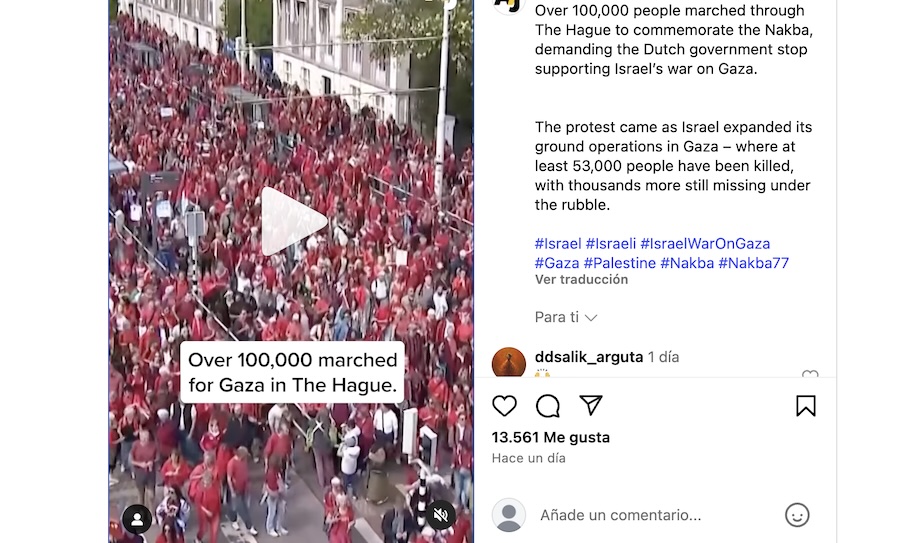
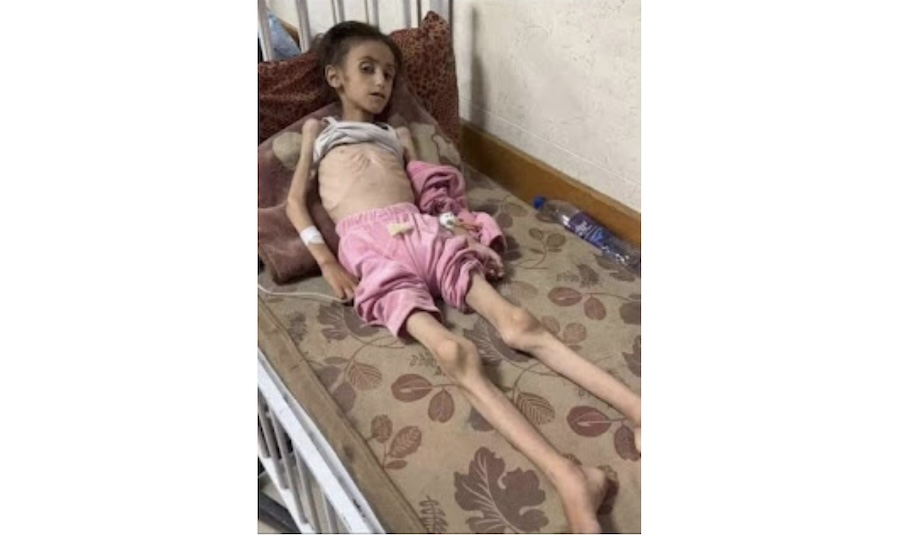
May 16: We will not be silent in front of the man-made humanitarian catastrophe that is taking place before our eyes in Gaza. More than 50.000 men, women, and children have lost their lives. Many more could starve to death in the coming days and weeks unless immediate action is taken.

Photo by © Abood Abo Salama / SIPA

We call upon the government of Israel to immediately reverse its current policy, refrain from further military operations and fully lift the blockade, ensuring safe, rapid and unimpeded humanitarian aid to be distributed throughout the Gaza strip by international humanitarian actors and according to humanitarian principles. United Nations and humanitarian organizations, including UNRWA, must be supported and granted safe and unimpeded access.

We call upon all parties to immediately engage with renewed urgency and good faith in negotiations on a ceasefire and the release of all hostages, and acknowledge the important role played by the United States, Egypt and Qatar in this regard.

(article continued in right column)

Question related to this article:

Presenting the Palestinian side of the Middle East, Is it important for a culture of peace?

Where in the world can we find good leadership today?

(article continued from left column)

This is the basis upon which we can build a sustainable, just and comprehensive peace, based on the implementation of the two-State solution. We will continue to support the Palestinian people’s right to self-determination, and work in the framework of the United Nations and with other actors, like the Arab League and Arab and Islamic States, to move forward to achieve a peaceful and sustainable solution. Only peace can bring security for Palestinians, Israelis and the region, and only respect for international law can secure lasting peace.

We also condemn the further escalation in the West Bank, including East Jerusalem, with increased settler violence, the expansion of illegal settlements and intensified Israel military operations. Forced displacement or the expulsion of the Palestinian people, by any means, is unacceptable and would constitute a breach of international law. We reject any such plans or attempts at demographic change.

We must assume the responsibility to stop this devastation.

Kristrún Frostadóttir, Prime Minister of Iceland; Micheál Martin, Taoiseach, Ireland; Luc FRIEDEN, Prime Minister of the Grand Duchy of Luxembourg; Robert Abela, Prime Minister of the Republic of Malta; Jonas Gahr STØRE, Prime Minister of the Kingdom of Norway; Robert Golob, Prime Minister of the Republic of Slovenia; Pedro Sánchez, President of the Government of Spain

– – – – – –

If you wish to make a comment on this article, you may write to coordinator@cpnn-world.org with the title “Comment on (name of article)” and we will put your comment on line. Because of the flood of spam, we have discontinued the direct application of comments.
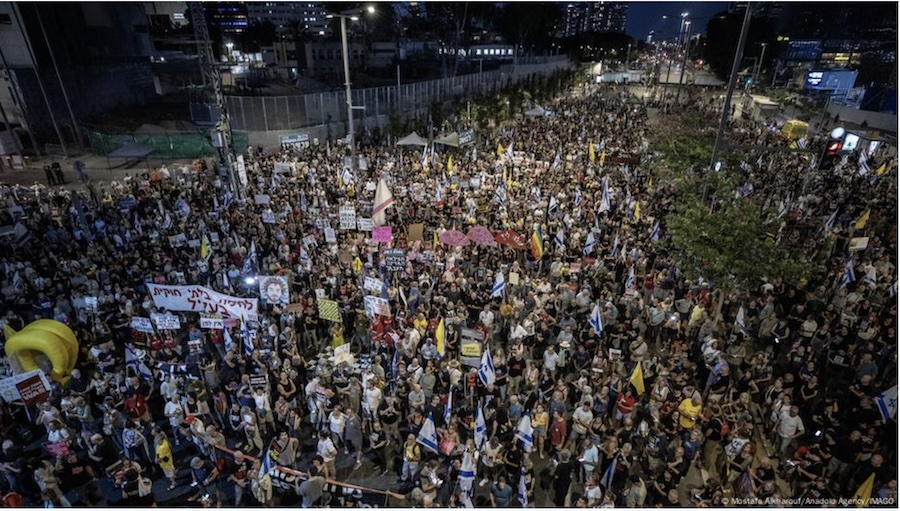
The People’s Peace Summit in Jerusalem, final day. Israelis and Palestinians together to say ‘Peace now’

DISARMAMENT & SECURITY .

An article from Pressenza

(Editor’s note1: Is there a zionist censorship in the main-line English media? Why wasn’t this event reported by them?)

Thousands of people filled every available space at the International Convention Centre in Jerusalem yesterday for the People Peace Summit – and it was a great success, with a full house, enthusiastic applauses from the audience for all the speakers, and a clear and unanimous declaration against war and for a political solution.

Organised by the It’s Time Coalition (an alliance of over 60 organisations for peace, reconciliation and coexistence), it was the largest civil gathering against the war since October 7th: a two-day event that began on Thursday 8 May with a programme packed with cultural events throughout the city, film screenings, concerts, art exhibitions by Jewish and Arab artists, and of course debates and meetings (list of events here: https://www.timeisnow.co.il/thursday-english).

And yesterday, Friday, there was the main event at the Jerusalem International Convention Centre, with 12 simultaneous sessions following the plenary in the morning and more than 5,000 participants, including several Israeli military personnel opposed to the ongoing war, families of hostages, survivors of terrorist attacks, relatives mourning their dear ones who have been victims of the war, residents of the Gaza border region, legal experts, artists, diplomats, opinion leaders, Jews and Arabs, all united in a strong collective appeal: ‘It is time to end the war’.

“We are here to rebuild a strong peace camp” said Israeli actor and presenter Yossi Marshek as he opened the morning session. He was followed by the testimony of the pilots who, a few weeks ago, promoted a much-discussed letter (widely reported in the international press) signed by hundreds of Israeli military personnel currently (or no longer) in service, denouncing the unacceptability of war operations against civilian targets and calling for an immediate ceasefire.

Many ideas emerged during the opening session entitled ‘There are partners and there is a way’: too many to be summarised in a single article. But undoubtedly the main focus of the morning session was the debate on the various solutions on the table, for a political and stable solution to the conflict. A point that in particular was addressed by former Israeli Prime Minister Ehud Olmert and former Palestinian Foreign Minister Nasser al-Qidwa, who presented their long-standing ‘peace plan’.

“Peace is essential, but we must offer the international community and our two peoples a plan that can be feasible” said Olmert “and the only option is the two-state solution. There are other ideas, such as the ‘one-state solution’, which we do not agree with because we believe it would lead to endless conflict between the two peoples. We are in favour of a solution that can bring about real change between the two peoples, and that solution is to guarantee the Palestinians the right to self-determination and freedom of movement and voting in their own state, alongside the State of Israel, with complete equality for all its citizens. Our plan therefore envisages a two-state solution based on Israel’s pre-1967 borders: when the Likud party first came to power, no one believed that Menachem Begin would make peace with Egypt and that Israel would withdraw from the Sinai, but it happened!”

“This conference is undoubtedly important” added Nasser al-Qidwa in a video message from the West Bank. “But since the Israeli establishment will do everything in its power to boycott this solution, it is up to us to believe in coexistence and the redistribution of territories as the only guarantee of a common future. And there is no doubt that settlement colonialism must be brought to an end. A choice must be made: either we believe that this land already belongs entirely to Israel, which therefore has the right to colonise it and expel the people who live there from the West Bank and Gaza; or we must create the conditions for coexistence between the two states, believing in the division of the territories without excluding forms of cooperation. (…) The first thing to resolve, however, is Gaza. It is urgent to reach an agreement on the release of hostages in parallel with the release of Palestinian prisoners. Clearly, the governing structure will have to be linked to the Palestinian National Authority, which will be responsible for the reconstruction of Gaza.

(…) Of course, many things will need to be negotiated: settlements, refugees, security measures on both sides. But nothing will be possible unless we create a new culture between Israelis and Palestinians. Today we are here to say that we must move forward and build a possible future together.”

(Editor’s note2: It’s not war, it’s genocide! writes a Palestinian critic.)

(Click here for the article in French or here for the article in Spanish.

(Continued in right column)

Question related to this article:
 
How can a culture of peace be established in the Middle East?

(Continued from left column)

Just a few minutes earlier, Palestinian journalist Mohammed Daraghmeh had described a situation in the West Bank as almost completely ‘Israelised’: “Going from Ramallah to Nablus, there is a whole geography and infrastructure – bridges, roads, signage, farms, solar energy plants – that makes you feel like you are in Israel. Israel has used the war in Gaza as a cover to effectively annex the West Bank. Sixty per cent is now subject to settlement schemes under Smotrich’s plan, which has created a department to facilitate the expansion of the settlers, while the Palestinian communities have become cantons. (…) If Israel and Palestine are left to their own devices, there is no hope. They have been negotiating unsuccessfully for 30 years, with Israel continuing to eat the cake put on the negotiating table. Without sufficient external pressure to stop the settlements, there is no future for a Palestinian state. But I would like to say to the Israelis that the expansion of settlements would be also counterproductive for them, because in the end we will inevitably have to talk about a single state, with all the problems that we can foresee. (…) It is therefore important that the international community get involved in this issue, with sanctions in order to discourage settlements and curb this expansion, which in fact makes a two-state solution increasingly difficult.”

Rula Hardal, co-director (together with Israeli May Pundak) of the organisation A Land for All, also spoke on the issue: “There is talk of two states, but the reality that has developed on the ground over decades is not one of separation. We are interconnected in so many ways and we must understand that another plan is needed to respond to this situation of interdependence. This is why we propose a confederal solution, with shared institutions and solutions, for example in the areas of health, environment, education, in other words… we need to work on coexistence. Then there are difficult issues that the two sides have never really addressed, such as the right of return. What happened on October 7th and the genocidal war that followed have been points of no return, both for the Palestinians and for the Israelis…”

May Pundak echoed this sentiment: “We must consider the issue of climate change, or related to water… we must understand that segregation does not guarantee a secure future for either side. Israeli-Palestinian interdependence is an important point.”

From Ramallah, Palestinian President Mahmoud Abbas sent a video statement: ‘Through justice, we can guarantee security and a future for all the peoples of the region: peace is possible and it will be up to all of us to make it possible.’

Representing the much-evoked ‘international community’, French President Emmanuel Macron intervened in a video message 5 min long: ‘Our hearts are with both Israeli and Palestinian families. We support with the utmost conviction this peace process that has made these two days in Jerusalem possible, coinciding with the celebrations of the end of the war 80 years ago in Europe. We promise to stand by your side for any future initiative.” He also mentioned a meeting that is expected to take place in Saudi Arabia in June. (link to the message on You Tube here: https://www.youtube.com/watch?v=zkkDBUfo7gc)

Among the many speeches, there were also those from the people who have been personally affected by the war: Maoz Inon (one of the main organisers of this event), who lost both his parents on October 7th; Liat Atzili, whose husband Aviv was killed in the Nir Oz Kibbutz; Sigalit Hilel, mother of Ori, who was killed at the Nova Music Festival; Elana Kaminka, mother of Yannai, who was also killed on October 7th. “We have been victims of this cycle of violence for over a century” said Elana. ’It is time to use all our resources of humanity and creativity to resolve this conflict. We owe it to our children.”

Words echoed by the Palestinian Soumaya Bashir, from the organisation Women Wage Peace, while the smiling portrait Vivien Silver (founder of the same organization and victim of the Octeber 7th massacre as well) was projected on the main screen: “As women, we affirm life against those who only want death and destruction. We must not take refuge in silence and pain, it is time for everyone to unite in action.”

And from Makbula Nassar, journalist and activist, came the appeal: “Let us listen to the cries of the hungry children of Gaza. Let us put an end to the cruelty and crimes we have witnessed for too long, because there will be no ‘day after’ for our consciences. We all deserve to be freed from this endless oppression and we can do it only choosing peace.”
Both days were broadcast live to dozens of solidarity rallies in more than 20 cities around the world, including London, Berlin, Sydney, New York and Boston.

List of articles previously published on Pressenza on the People’s Peace Summit in Jerusalem:

Interview with Maoz Inon: https://www.pressenza.com/2025/04/towards-the-peoples-peace-summit-in-jerusalem-8th-and-9th-may-interview-with-one-of-the-organisers-maoz-inon/

Interview with Aziz Abu Sarah: https://www.pressenza.com/2025/04/towards-the-peoples-peace-summit-in-jerusalem-may-8-9-interview-with-aziz-abu-sarah/

Interview with Nivine Sandouka: https://www.pressenza.com/2025/04/towards-the-peoples-peace-summit-in-jerusalem-may-8-9-our-full-support-to-the-civil-society-says-the-palestinian-activist-nivine-sandouka/

Interview with Mika Almog, May Pundak and Maya Savir: https://www.pressenza.com/2025/05/towards-the-peoples-peace-summit-in-jerusalem-8-9-may-women-can-make-the-difference/

Event program: https://www.pressenza.com/2025/05/peoples-peace-summit-in-jerusalem-may-8-and-9-what-kind-of-peace-are-we-talking-about/

– – – – – –

If you wish to make a comment on this article, you may write to coordinator@cpnn-world.org with the title “Comment on (name of article)” and we will put your comment on line. Because of the flood of spam, we have discontinued the direct application of comments.

Despite Threats, Nearly 1,000 Israeli Air Force Reservists Demand End of Gaza War, Hostage Deal

. HUMAN RIGHTS .

An article from Haaretz

Nearly 1,000 Israel Air Force current and former reservists published a letter on Thursday morning (April 10) calling for the return of all hostages even at the cost of ending the war.

In the letter, signed by reserve and retired aircrew fighters, they wrote: “Currently, the war serves mainly political and personal interests, not security interests. The continuation of the war does not contribute to any of its declared goals and will lead to the deaths of the hostages, Israeli soldiers and innocent civilians, and to the attrition of the IDF reserve forces.”


IAF Commander Tomer Bar speaks at a graduation ceremony for Air Force pilots, in June.Credit: IDF Spokesperson’s Unit

The signatories to the letter added that “as has been proven in the past, only a deal can bring back the hostages safely, while military pressure mainly leads to the killing of the hostages and the endangerement of our soldiers.”

They also called on all Israeli citizens to mobilize to action and demand the end of the war and the return of all hostages. “Every day that passes puts their lives at risk,” they wrote.

The 970 signatories include many active reservists, some of them senior officers and pilots, and some who are no longer in active reserve duty.

After the full list of the signatories was leaked earlier this week, senior air force officers of the rank of brigadier general held phone calls with the signatories to urge them to retract on orders from IAF commander Tomer Bar.

(article continued in right column)

Question related to this article:

How can a culture of peace be established in the Middle East?

(article continued from left column)

On Tuesday, Bar met personally with reservists from the force to warn them against signing the letter, which was drafted and distributed by former air force members.

At these meetings, Bar warned that if they signed the letter, they would be dismissed from service. But he agreed with reservists that it would make sense to sign a cease-fire and hostage release deal in the near future.

IDF Chief of Staff Eyal Zamir also participated in one of these meetings.

Only 25 of the 970 Israel Air Force reservists who signed the letter protesting the renewed fighting in Gaza agreed to a retraction, despite being told they would be ousted if they didn’t.

Moreover, eight additional reservists added their signatures to protest the ouster threat, while additional reservists have yet to decide to retract their signature from the letter.

The letter’s drafters criticized Bar harshly during one meeting for threatening to oust the signatories. They said this crossed a legal and moral red line and infringed on the reservists’ right to voice their political opinions.

But Bar said this wasn’t a punishment. Rather, he said, “anyone who signs a text claiming that renewing the war is primarily political and undermines the hostages’ return isn’t capable of carrying out his missions in the reserves.”

Bar also charged that signing such a letter during wartime is illegitimate. He added that the Air Force is convinced its airstrikes aren’t hitting any hostages, and that in his view, military pressure on Hamas will further their release.

– – – – – –

If you wish to make a comment on this article, you may write to coordinator@cpnn-world.org with the title “Comment on (name of article)” and we will put your comment on line. Because of the flood of spam, we have discontinued the direct application of comments.
Essaouira: The “Warriors of Peace” nominated for the Nobel Peace Prize 2025

. . WOMEN’S EQUALITY . .

An article from Hespress (translation by CPNN)

As a symbolic space for all dialogues and all possibilities, Dar Souiri has made a date with Peace on January 17 with the premiere screening in Morocco of the film “Résister pour la paix”.

Released in 2024, the film is “resolutely committed and militant to give a new chance to peace that gives the same rights to the Israeli and Palestinian peoples.” The film, produced at the initiative of Sabrina Azoulay, retraces the journey of Hanna Assouline and Sonia Terrab founders of the collective “Guerrières de la Paix” that was launched at the “World Forum of Women for Peace” meeting in Essaouira on March 8, 2023.


The film gives a voice and offers a platform to “Palestinian and Israeli activists working hand in hand to build bridges and promote a Peace that does justice to the fundamental rights of both peoples.” It was screened at Dar Souiri in front of a packed room listening to these moving testimonies nourished by “truth stories” strong embodiment of the resilience and the determined and courageous commitment of the founders of the Guerrières de la Paix” all of Moroccan origin.

At the end of the screening, a debate full of promises and hopes allowed the leaders of this movement to share with the public their motivations and the meaning given to their approach. They insisted, in this regard, on “the urgency of giving a voice to those who refuse the fatality of weapons to privilege the spirit and culture of a peace that combines for all the universality of rights to the same dignity, the same justice and the same freedom”.

(Article continued in right column)

(Click here for the original article in French.)

Questions related to this article:

Do women have a special role to play in the peace movement?

How can a culture of peace be established in the Middle East?

(Article continued from left column)

Hanna Assouline was delighted in this perspective of holding this screening in Essaouira, which she described as a “symbolic” moment, emphasizing that it “was part of a historical context coinciding with the ceasefire agreement in Gaza and the nomination of the “Warriors of Peace” in the prestigious list of candidates selected for the “Nobel Peace Prize 2025”.

The evening brought together a large audience, made up of cultural actors, community activists, as well as Moroccan and foreign personalities from various backgrounds, demonstrating the unanimous interest in the values ​​of peace and dialogue highlighted by the event.

Led by the Essaouira-Mogador Association, the initiative is part of the constant efforts of the Cité des Alizés to promote the values ​​of openness, tolerance, rapprochement and peaceful coexistence that are part of its DNA.

As a reminder, the French movement “Les Guerrières de la Paix”, founded in 2022, brings together Jewish and Muslim women committed to peace, justice and equality. In March 2023, this collective organized the World Forum of Women for Peace in Essaouira, launching a universal Call for Peace from the Cité des Alizés, a global symbol of intercultural exchanges and interreligious dialogue.

The forum brought together prominent women activists such as Jessica Mwiza (Rwanda), memory activist, Huda Abu Arquob, President of the Alliance for Middle East Peace (Palestine), and Nurith Hagragh, representative of Women Wage Peace (Israel). Together, they united their voices to convey a universal message of peace to the world, reaffirming the crucial role of women in reconciliation and social justice processes.

– – – – – –

If you wish to make a comment on this article, you may write to coordinator@cpnn-world.org with the title “Comment on (name of article)” and we will put your comment on line. Because of the flood of spam, we have discontinued the direct application of comments.
Mazin Qumsiyeh: Old story- new twist

FREE FLOW OF INFORMATION .

A blog Jan 24, 2025 by Mazin Qumsiyeh (abbreviated)

Will history repeat itself but now with a very different outcome especially in the era of global environmental catastrophe powered by greed and militarism? To review reality locally and globally helps us find answers. Locally, Israeli apartheid forces are now doing in our parts of the West Bank what they did to Gaza. Ethnic cleansing, destruction of property, and massive violations of human rights ranging from right to move right to worship, right to simple dignified life.  People here are scared that this is merely the beginning of accelerated genocide and ethnic cleansing  as perpetrated in Gaza.  

We have repeatedly warned of the consequences of Western collusion with genocide and ecocide.  The fate of Gaza will be the fate of humanity if not enough people wake up in time to the global reality of simply unsustainability of “might makes right” colonial policies.  

At Trump’s inauguration, the billionnaires were in the front row while his picks for secretaries were behind them. This image sums the momentous transformations gripping our planet. It used to be argued that the deep state consist of moneyed interests, largely hidden. Now we reached a point that murderous moneyed interests no longer work behind the scenes. The ultraright and fascists and neoNazis and Zionists are front and centre and openly cause millions to suffer with impunity. They even brag about their “common interests”.

For example, let us take the spectacle of the “World Economic Forum”  this past week (for a run-in I had with this forum in 2006, see http://qumsiyeh.org/theworldeconomicsforumcontroversy/). The right wing CEOs and government officials like the President of Argentina openly declared building an alliance of leaders around the world who believe and practice policies of “money trumps people”. At the same forum convicted felon Donald Trump delivered a belligerent, triumphalist, and (textbook) colonialist speech touting a vision of the world where elite business interests trump human rights.

(article continued in right column)

Question related to this article:

Presenting the Palestinian side of the Middle East, Is it important for a culture of peace?

The fate of Gaza, will it be the fate of humanity?

(article continued from left column)

Eisenhauer warned US citizens in his farewell speech: “In the councils of government, we must guard against the acquisition of unwarranted influence, whether sought or unsought, by the military–industrial complex. The potential for the disastrous rise of misplaced power exists, and will persist. We must never let the weight of this combination endanger our liberties or democratic processes. We should take nothing for granted. Only an alert and knowledgeable citizenry can compel the proper meshing of the huge industrial and military machinery of defense with our peaceful methods and goals so that security and liberty may prosper together.”

Eisenhauer did not anticipate how horrific it would be in the 21st century nor did not anticipate an alliance of neocolonial powers reinvigorated and working towards the same  goals: making the rich richer, the poor poorer, and wrecking the global environment while unleashing militarism and wars in unprecedented cruelly like we see in Palestine (genocide and ecocide). Our species is at a pivotal moment in history never experienced before. We are then many, they are the few. If more of the many mobilize quickly we may still have a chance to save ourselves and our planet. . . .

Stay Humane and keep hope alive

Mazin Qumsiyeh
A bedouin in cyberspace, a villager at home
Professor, Founder, and (volunteer) Director
Palestine Museum of Natural History
Palestine Institute of Biodiversity and Sustainability
Bethlehem University
Occupied Palestine
http://qumsiyeh.org
http://palestinenature.org
facebook pages
Personal https://www.facebook.com/mazin.qumsiyeh.9
Institute https://www.facebook.com/PIBS.PMNH

– – – – – –

If you wish to make a comment on this article, you may write to coordinator@cpnn-world.org with the title “Comment on (name of article)” and we will put your comment on line. Because of the flood of spam, we have discontinued the direct application of comments.
New Realities of Israel/Palestine in the Trump Era: Settler Colonial Destinies in the 21st Century

. . HUMAN RIGHTS . .

A blog by Richard Falk

[Prefatory Note: This post modifies and updates an interview with Mohammad Ali Haqshenas, a journalist with the International Quran News Agency, published under its auspices on January 22, 2025. It is affected by the assumption of the US presidency by Donald Trump and the early days of the Israel-Hamas ceasefire agreement negotiated during the Biden presidency more than seven months earlier.]  


1. How do you assess Donald Trump’s public and behind-the-scenes efforts as the U.S. President-elect to advance the ceasefire agreement and prisoner exchange?

For Trump a major incentive of achieving the ceasefire and prisoner exchange was to show America that he gets things done as contrasted with Biden who let this same ceasefire agreement sit on the shelf for more than six months.

The ceasefire is publicized as a demonstration of Trump’s and US leverage with respect to Israel when it actively seeks results rather than merely wants to make a rhetorical impression, but there is more to this ceasefire that is immediately apparent. In addition to a promise to Netanyahu of unconditional support, Trump may well have given confidential assurances of backing Israel’s high priority strategic ambitions.

Number one would be to give cover if Israel chooses to annex all or most of the West Bank. Almost as important would be Trump’s promise that it would do his best to persuade the government of Saudi Arabia to normalize relations with Israel. This would represent a continuation of the arrangements brokered by the US to induce the UAE, Bahrain, Sudan, and Morrocco at the end of first presidential term in 2020 to reach normalization agreements with Israel.

It is also significant that numerous Washington officials in the Trump entourage have unconditionally promised to support Israel if the ceasefire arrangements collapse regardless of which side is at fault. There is not even a pretension of being objective in the sense of seeking to discern where the evidence of responsibility points.

Netanyahu is rumored to have given his hardline cabinet members, Ben Gvir and Smotrich, assurances that the military campaign will resume at the end of the six-week first phase. These assurances were probably necessary to avoid the collapse of Israel’s shaky governing coalition.

2. How do you view the relationship between Trump and Netanyahu, as well as U.S. political considerations, in light of this ceasefire?

I think the relationship of these two autocratic leaders is based on their shared transactional style, ideological agreement, and shared strategic interests. Both leaders are defenders of the West against the rest, being especially hostile to Islamic forces in the Islamic world. The Palestinian struggle is on one level the core expression of this geopolitical rivalry, with all the complicit supporters of Israel coming from the white dominant countries, that is, the European colonial powers and the breakaway British colonies in North America, Australia, and New Zealand. On the Palestinian side, except for Iran, which is indirectly supportive of the Palestinian struggle, the political actors siding with the Palestinians are Islamic non-governmental movements and militias in the Middle East, most militantly the Houthis in Yemen and Hezbollah in Lebanon, both materially and diplomatically aided by Iran. Islamic governments in the Arab world have condemned Israel for committing genocide but have refrained from acting materially or even diplomatically in ways that might exert pressure on Israel. The alignments in this ‘clash of civilizations’ correspond closely to the political vision of Trump and Netanyahu, and recall the prophetic pronouncements of Samuel Huntington shortly after the end of the Cold War. 


3. Previous ceasefire agreements between Israel and Hamas were violated due to clashes between the two sides and ultimately failed. Do you think this agreement signifies a permanent end to the war or merely a temporary halt in conflicts?

I believe that Israel will not end the conflict until it satisfies at least one of its two strategic goals, both of which are outside of Gaza—the primary goal of Israel is the annexation of the West Bank coupled with a declaration of Israel’s victory over the Palestinians, signified by the formal establishment of Greater Israel as an exclusivist Jewish state from ‘the river to the sea.’ The secondary goal is to normalize relations with Saudi Arabia as a political foundation for the formation of an aggressive coalition that adopts policies to achieve regime change in Iran. Israel seems prepared to risk a major war in the course of doing so, while Saudi Arabia appears more cautious. The Trump presidency is clearly disposed to join Israel if it makes such an effort, indirectly if possible, directly if necessary. General Keith Kellogg, appointed by Trump as his Special Envoy to Ukraine in keeping with such conjectures is publicly advocating the revival of a policy of ‘maximum pressure’ on Iran as a priority of American foreign policy under Trump.

I think the Hamas side will do its best to uphold commitments to release hostages and abide by the ceasefire while Israel will pragmatically weigh its interests as the process goes forward, but seems far more likely to break the ceasefire agreement after the first 42 days, perhaps as Netanyahu’s way of keeping his coalition from collapsing, or even before as several violent incidents provoked by Israeli military forces have already occurred.

 Nothing short of a total Hamas political surrender including the willingness to give up whatever weapons the resistance movement possesses might induce Israel to give temporily up its unmet goals of annexation and Saudi normalization by way of a peace treaty. Even if the ceasefire is more or less maintained in its first phase, Israel seems unlikely to remain within the ceasefire framework once the six weeks of phase one is completed, which means that the latter two latter phases of ending the campaign and IDF withdrawal phases of the ceasefire will never happen. In this event, it is all but certain that Israel would then resume the full fury of its genocidal campaign, provoking Hamas to react. Israel would then use its influence with mainstream media and support in Washington to shift blame to Hamas to avoid any responsibility for the breakdown in the courts of public opinion while resuming its genocidal campaign in Gaza that never was truly abandoned despite the claims made on behalf of the ceasefire diplomacy..

4. The Israeli finance minister, referring to his discussions with Netanyahu, stated that Israel has not yet achieved its objectives in the war. Can it be argued that this agreement will undermine Israel’s security?

I believe the Israeli response was never primarily about security. It was main about land and demography, more specifically about gaining sovereignty over the West Bank, and giving the settler militants a green light to make life unlivable for the Palestinians so that they would die or leave. This anticipated and indulged settler rampage has gathered momentum with its undisguised agenda of dispossessing and killing enough Palestinians so as to restore a Jewish majority population. By such means, settler violence serves an undisguised prelude to the incorporation of the West Bank into Israel, likely with Trump’s endorsement.

Prior to October 7, Palestinians and Israelis were almost evenly split in the overall population of 14 or 15 million inhabiting Israel and the occupied Palestinian territories of the West Bank and Gaza. The higher Palestinian birthrate means that it is only a matter time until a majority of Palestinians are living under Israeli apartheid control and long dubious claims made by Israel to being a democracy would become delusional.

In the background of my response is the growing evidence that Israel allowed the October 7 attack to happen because it wanted to initiate massive violence against the Palestinians with the justification of acting in a retaliatory mode that would excuse the death and  expulsion of large number of Palestinians, a lethal process more or less repeating the expulsions of an estimated 750.000 Palestinians in 1948, what is known to Palestinians as the nakba or catastrophe.

(continued in right column)

Question related to this article:

How can war crimes be documented, stopped, punished and prevented?

How can a culture of peace be established in the Middle East?

(continued from left column)

The Israel government received several extremely reliable warnings preceding the October 7 attack, including from US intelligence sources. In addition, Israel possessed advanced surveillance capabilities throughout Gaza to monitor Hamas resistance moves. These technical capabilities were reportedly reinforced by informers making the supposed ‘surprise’ nature of the attack hardly possible to believe. Under such circumstances it is inconceivable that Israel, at the very least, should have prepared to defend its borders and nearby Israeli communities. This is not to say that Israel was necessarily privy to the details or scope of the attack and might have been genuinely surprised by its sophistication and severity. This might explain the widespread support in Israel and indulgence throughout the world for an excessive military retaliation that lasted for several months. During this period protests were small and were hardly noticed despite the genocidal features of the Israeli attack. As the violence and denial of the necessities for Palestinian subsistence went on month after month civil society opposition grew more intense and widespread, an impression furthered by agitated by repeated Israeli lethal interferences with humanitarian aid deliveries and accompanying aid workers, including even the targeting of ambulances, rescue vehicles, and the supplies sent for the relief of desperately hungry, sick, and injured Palestinians. 

5. The release of prisoners is a critical step in the course of the war. Israel has incurred significant costs by agreeing to release Hamas members and individuals convicted of violent actions, which has sparked disputes within the Israeli cabinet. In your view, what challenges will this stage of the ceasefire face?

I think the main humiliation for Israel was not the release of so many Palestinian prisoners, but the need to negotiate as equals with Hamas to recover 33 hostages in a military campaign justified from the beginning as dedicated to the destruction and elimination of Hamas as a political actor and the reconfiguring of governance in Gaza.

Anyone following these events would also have hardly known from the one-sided media coverage that Palestinian prisoners were being released as the near exclusive media focus, especially that of the leading platforms in the West, was on the plight of the ‘hostages,’ while ignoring the far worse plight of the civilian population of Gaza or the many Palestinian women and children subjected to far worse treatment while under confinement. The release of more than 90 Palestinians prisoners on the first days of the ceasefire, many of whom had endured extremely abusive treatment and were innocent of any involvement in the October 7 attack was deemed hardly newsworthy. By the end of the six-week Phase One of the Ceasefire Arrangement nearly 2,000 Palestinians are scheduled for release. True, it is a direct violation of the law of war to hold innocent civilians or even captured enemy soldiers as hostage, but considering the disparity of weaponry and given the long history of Israel’s violence against civilians in Gaza, it becomes understandable why the Hamas resistance would seek at least the so-called ‘bargaining chip’ of hostages.

This underlying disparity in the relation between the hostage release and prisoner release reinforced the long-nurtured Israeli discourse that Israel values the life and freedom of its citizens so much than does Hamas that it is willing to make to agree to an unequal exchange with its enemy. Such state propaganda is consistent with the reverse disparity in media treatment, showing a human interest in each Israeli hostage released while viewing the Palestinian prisoner releases as a purely impersonal matter of statistics, a portrayal movingly contradicted by the crowds in the West Bank celebrating the prisoner releases, heeding their words of anguish about their detention experience (often held for long periods without charges) and their joyous embrace of ‘freedom.’

Those of us with experience of the two political cultures are struck by the closeness of Palestinian families and the absence of any sacrificial ethos comparable to Israel’s Hannibal Directive that instructs IDF soldiers to kill Israelis at risk of being captured rather than allowing them to become prisoners who will be traded for a disproportionate number of Israels. Living under conditions of an apartheid occupation or oppression allows Palestinians few satisfactions in pattens of existence most of us would regard as a life of misery other than personal intimacy of family and friendship.


6. How do you evaluate the future of Palestine, particularly the Gaza region? Some observers believe that Gaza’s current generation of children, who have lost their homes and families in this war, might take action against Israel in the future. What is your analysis?

Given the present correlation of forces, including the Trump assumption of the US presidency, I see little hope for a just resolution of Palestinian grievances soon. A further period of struggle, including a continuing process of Israeli delegitimation is underway. Israeli as a result of the Gaza genocide has been rebranded as a pariah state whose lawlessness has undermined it sovereign rights, and even drawn into question its entitlement to remain a member of the UN that its leaders regularly defame as ‘a cesspool of antisemitism.’ Israel also faces increased pressures from the impact of a rising tide of global solidarity initiatives generated by civil society activism, and taking the form of boycotts, divestment, sanctions, taxpayer revolt, and reinforce by reductions of trade with and investment in Israel. Such developments are bound to have economic and psycho-political impacts over time on the quality of life in Israel. Few doubt that such a campaign caused apartheid South African elites to experience the anguish of being excluded from international sporting events or of by having lucrative invitations refused by performing international musicians.

If the dynamics of delegitimation lead a significant number of Israelis to leave the country, choose to live elsewhere it would be a signal of the imminent collapse of Zionism as the state ideology of Israel, if not of Israel itself. Suddenly, the phantasies of veteran residents of Palestinian refugee camps are becoming real political possibilities. In other words, the Palestinians are winning the nonviolent Legitimacy War as measured by the Palestinian capture and global control of the high moral and legal ground of the conflict, and by the vitality of its national resistance under the most extreme pressures exerted by Israeli recourse to apartheid and now genocide. The dynamics of delegitimation may take decades of further suffering for Palestinians to feel vindication by the success of their prolonged resistance, above all by its translation into a political outcome that finally realizes Palestinian self-determination in a form that the Palestinians favor, and not by an arrangement pre-packaged and imposed by the UN or outside forces.

If this path to the realization of basic rights is effectively blocked by Israel’s apartheid tactics of domination, even should the genocidal jagged edges no longer are present, it will undoubtedly stimulate armed Palestinian resistance especially from survivors of the Gaza genocide who lost parents and children, and in some cases, whole families, or are living as amputees or with maimed bodies. It is impossible to imagine the depths of grief, which over time will give way to a sense of rage and resentment that will seek political expression in the form of violent anti-Israel acts and movements, as well as fuel global surges of genuine antisemitism, the opposite of the weaponized variants used so opportunistically to shield Isreal from criticism, censure, and sanctions.


7. From the international law perspective, what can be done to stop the Israeli occupation, which is basically the source of years-long conflicts in Palestine?

As should have become clear after decades of Israeli efforts to convert Palestinians into persecuted strangers in their own homeland, there is no path to a secure Israeli future even if the oppressor maintains its harsh apartheid regime. If that does not achieve political surrender or at least sullen acquiescence, then as a final effort to deal with resistance, then the settler elites are quite likely to engage in a last-ditch recourse to genocide. Israel is following the same path that the colonial West chose when compelled to deal with native peoples in the countries settled, who were dehumanized, slaughtered, and permanently marginalized. These pre-modern aggressions were most often rationalized by international law that until the last century generally legitimated colonial conquest and claims of sovereignty. In contrast, international law has since 1945 formally declared apartheid and genocide as high international crimes, but such a reclassification has proved inadequate in the face of Israeli defiance reinforced by the geopolitical complicity of the West, especially as led by the US.

The test of Palestinian resistance may emerge shortly and can be reduced to whether the remarkable steadfastness (samud) of the Palestinian people can withstand a final Israeli effort to transfer, eliminate, or kill the resident Arab population. There are already indications that the Trump leadership favors bizarre ethnic cleansing operations such as that mentioned by Trump’s newly appointed Middle East Envoy, Steve Witkoff. He recently proposed transferring a portion of the surviving population of Gaza to Indonesia.  Even if such a bizarre proposal is discounted as mere rhetoric it exhibited an intention to aid, abet, and facilitate Israel’s version of ‘a final solution’ that left the Jewish state in unobstructed control of historic Palestine. If we assume the Israeli willingness to implement such a plan and Indonesia agreeing in exchange for being lavishly subsidized, the very idea of such a proposal contradicts the proclaimed ethos of the 21st century. Channeling Trump, Witkoff is talking as if the world of states was a chess board on which the US could shift the pieces at will, an assert of hegemonic prerogatives.

– – – – – –

If you wish to make a comment on this article, you may write to coordinator@cpnn-world.org with the title “Comment on (name of article)” and we will put your comment on line. Because of the flood of spam, we have discontinued the direct application of comments.
The Elders warn Gaza ceasefire and recovery at risk if UNRWA is not protected

. HUMAN RIGHTS .

An article from The Elders

January 24: The Elders warn today that a sustained ceasefire and recovery in Gaza are at risk if Israel ends cooperation with UNRWA on 30 January, in line with the legislation passed by the Israeli Knesset in October.

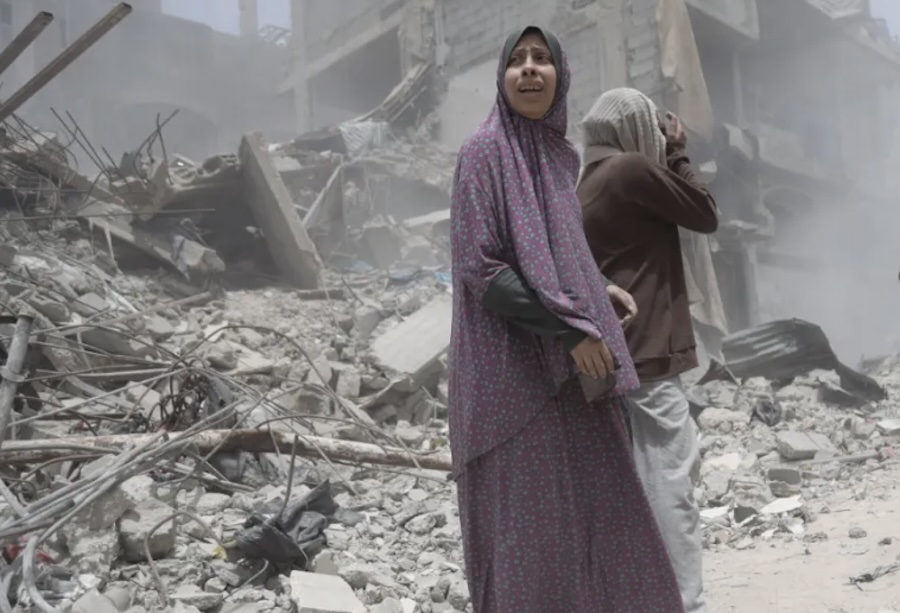
After fifteen months of war and at least 46,000 Palestinians killed, the massive surge in humanitarian relief and the restoration of essential services that are so urgently needed now rely on UNRWA as the indispensable agency in Gaza. 


Photo by Ramzi Mahmud/Anadolu via Getty Images

If implemented, the legislation would prohibit contact between UNRWA and Israeli authorities, ending the de-confliction needed for safe operations in Gaza. It could also end UNRWA’s ability to operate across the Occupied Palestinian Territory.  

To do so at the very moment when a ceasefire is opening the way for recovery in Gaza and the welcome release of all Israeli hostages would be morally reprehensible.   

UN member states have a duty to defend UNRWA against this serious attack, which violates the UN Charter. A mandate given by the General Assembly, and reaffirmed in the resolution passed on 5 December, cannot be revoked by a national parliament. UNRWA remains essential until there is a just solution for Palestinian refugees, and its functions are transferred to a Palestinian entity as part of a peace settlement.

Member states should impose targeted sanctions if the Israeli government implements the legislation, given it constitutes a clear violation of international law with grave consequences. 

We regret that US funding to UNRWA remains suspended, and that Sweden decided to stop funding the agency in December. European and Arab states must stand by their commitments to provide political and financial support to UNRWA at this critical time. UNRWA has been independently investigated and is taking action in light of those investigations to ensure its continuing neutrality.

There is a stark choice ahead: a pathway to peace and mutual security for Israelis and Palestinians, or deepening occupation, annexation and renewed bloodshed.

(article continued in right column)

(Click here for the original Spanish version.)

Question related to this article:

How can a culture of peace be established in the Middle East?

(article continued from left column)

We welcome the support of President Trump for the ceasefire. We urge him to apply effective pressure on the conflict parties to move towards a peace settlement based on a two-state solution. We also encourage him to reconsider his reversal of US sanctions on extremist Jewish settlers in the West Bank. Provocative settler violence threatens Israel’s security and jeopardises the chance for a real breakthrough following the ceasefire.

Regional stability and prosperity can never be achieved without a just and lasting settlement to the Palestinian question. All parties must comply with their obligations to bring an end to both Israel’s unlawful occupation and attacks on Israeli civilians, and ensure security and self-determination for Palestinians and Israelis alike.

ENDS

Juan Manuel Santos, former President of Colombia, Nobel Peace Laureate and Chair of The Elders

Ban Ki-moon, former UN Secretary-General and Deputy Chair of The Elders

Graça Machel, Founder of the Graça Machel Trust, Co-founder and Deputy Chair of The Elders

Gro Harlem Brundtland, former Prime Minister of Norway and former Director-General of the WHO

Helen Clark, former Prime Minister of New Zealand and former head of the UN Development Programme

Elbegdorj Tsakhia, former President and Prime Minister of Mongolia

Zeid Ra’ad Al Hussein, former UN High Commissioner for Human Rights

Hina Jilani, Advocate of the Supreme Court of Pakistan and co-chair of the Taskforce on Justice

Ellen Johnson Sirleaf, former President of Liberia and Nobel Peace Laureate

Denis Mukwege, physician and human rights advocate, Nobel Peace Laureate

Mary Robinson, former President of Ireland and former UN High Commissioner for Human Rights

Ernesto Zedillo, former President of Mexico

For media inquiries, please contact William French, Head of Communications (+44 7795 693 903) or email: media@theElders.org

– – – – – –

If you wish to make a comment on this article, you may write to coordinator@cpnn-world.org with the title “Comment on (name of article)” and we will put your comment on line. Because of the flood of spam, we have discontinued the direct application of comments.
CODEPINK Celebrates the Announced Ceasefire in Gaza

DISARMAMENT AND SECURITY .

An article from the X account of Codepink

CODEPINK celebrates the news of a ceasefire agreement in Gaza. As reported, as of now only the first stage of the ceasefire agreement has been accepted by both Israel and Hamas. We hope all stages are also accepted as soon as possible to ensure a permanent ceasefire and the ability for Palestinians to rebuild with freedom from Israeli attacks.

For fifteen months, the world community has demanded an end to the slaughter, only to witness Israel’s continued bombings and siege, with full backing from the United States. This ceasefire agreement is a welcome development, and we will continue to demand accountability for the war crimes Israel committed over the past 15 months and the past 75 years. This agreement is virtually the same agreement Israel has been rejecting for months, reaffirming that this could have been accomplished long ago, with fewer Palestinians killed.

We hope that Israel and the United States respect the terms of the ceasefire so that Palestinians can rebuild their lives in Gaza. We will continue to organize toward a future that includes a free Palestine with no border fences, checkpoints, or blockades. In this important moment, we are rejoicing alongside our Palestinian siblings in Gaza who have been waiting for far too long for this moment to arrive.

It’s been reported that the Israeli government was pressured to agree to the terms of the ceasefire in a meeting with the incoming Trump administration’s Middle East envoy. If it’s true that the Trump administration finally pushed Netanyahu to end the constant and indiscriminate slaughter of civilians on a daily basis, then President Biden’s legacy as an architect of genocide is set in stone. He was not working “tirelessly” for a ceasefire. He was not willing to use any of his leverage to force a ceasefire. He let the genocide continue because he had no interest or care to stop it. Our deepest hope is that the ceasefire lasts, without Israel breaking ceasefire agreements as they’ve done in the past, and progresses to the final stages of prisoner swaps.

(article continued in right column)

Question related to this article:

How can a culture of peace be established in the Middle East?

(article continued from left column)

The crisis in Gaza did not happen in a vacuum. The people of Gaza were not all of a sudden in a state of war or siege. When the current genocide campaign began, over half of the population in Gaza were children – born there and never able to leave. For years, Israel let only the minimum caloric value of food into Gaza to keep the entire population on the brink of starvation. Periodically, Gaza would face brutal and extended periods of bombing campaigns carried out by the Israeli military. If world leaders are serious about peace, they must also confront the material reality that launched us into this current moment. If we want peace, we also need to demand justice. Neither peace nor justice looks like a return to the status quo pre-October 7. The news of a ceasefire gives us a reason for optimism, and we hope it’s the start to a chapter of accountability, reconciliation, and true peace.

We continue to demand:

• An end to all US military “aid” to Israel

• The reinstatement of USAID and UNRWA funding to Gaza so that Palestinians who are recovering from 15 months of bombardment can be able to feed and shelter themselves, as well as ensuring secured open and uninterrupted access to humanitarian aid trucks

• The freedom of Palestinians who were taken as political prisoners since October 7, 2023, and before, such as Dr. Hossam Abu Safiya, who Israel kidnapped in recent weeks

• Accountability for war criminals, including Benjamin Netanyahu and other Israeli officials, by supporting prosecutions in international courts for Israel’s repeated violations of international law.

• Removal of Israeli troops from the Gaza Strip, Lebanon and Syria

• An end to the siege on Gaza and Israel’s settler colonial occupation of Palestine

• The right of return for all Palestinians barred from their homeland

• A free Palestine from the river to the sea

– – – – – –

If you wish to make a comment on this article, you may write to coordinator@cpnn-world.org with the title “Comment on (name of article)” and we will put your comment on line. Because of the flood of spam, we have discontinued the direct application of comments.
Michael Moore: From the Rubble Rises 22 Powerful Voices

. . HUMAN RIGHTS . .

An article by Michael Moore

Last week, I, as an Executive Producer of FROM GROUND ZERO: STORIES FROM GAZA, was quoted across the country as stating the following: “No filmmaker, writer or artist should ever have to tell the story of their own extermination.”

And yet…

As I write this, in a scattered group of cinemas across the country, movie-goers are watching this anthology of stories captured on camera by Palestinian filmmakers in Gaza amidst Netanyahu’s reign of terror over the past year. This collection of 22 short films of his shameless extermination attempt — the unending barrage of bombs and bullets, the forced starvation — is what the people of Gaza are facing every single day.

And during this hour and fifty-two minutes on the screen, you will feel the pulse of the Palestinian people. Their resilience. And you are right there with them. 

They are not Hamas. They are not rapists. They are not lying in wait to murder Israelis. They are not a threat to any human or to Democracy as certain propagandists are hoping you’ll be brainwashed into believing.

They are taxi drivers and mothers, toddlers and teachers, comedians and artists — finding ways to survive. To feed their families. To bathe their children. To retain a sense of self and normality. To bring joy to their community. To keep warm at night. To keep hope alive. 

The review from Variety  said it best: 

“Their stories, and their essence, live within these pixels the way the Holocaust was captured on celluloid. The images of the latter that are the most familiar to the public were snapped either by perpetrators or liberators. “From Ground Zero” exists more in the tradition of photographers Henryk Ross and Mendel Grossman, inhabitants of Poland’s Jewish ghettos who not only documented daily life with their cameras, but imbued it with a familiar, beating humanity. In that vein, it’s hard to ignore just how much “From Ground Zero” feels like history unfolding, and tragedy being memorialized, right before our eyes.”
Every American needs to see this film. 

This genocide, though executed by the Israeli government, is Made in the USA. Manufactured in places like San Diego and South Bend, Fort Worth and Fairfax and bankrolled with our tax dollars. Yours and mine. It’s disgusting. It’s shameful. But it also means we hold immense power in our hands at a time when we still have the power to change the outcome. 

We have been in this position before as a nation. And we failed. We turned away ships carrying thousands of Jewish refugees who fled Germany as the Holocaust was unfolding. We let fear and bigotry overtake our humanity — “We have no idea who these Jews are!” — and turned our backs, refusing to let them dock, and sealing their fate. Let’s not accept the fate of the Palestinian people as decreed by Netanyahu and his racist Likud party hacks (“Between the Sea and the Jordan there will only be Israeli sovereignty!”) any more than we will accept the fate of the 13 million immigrants who have come to this country to work, raise their children and pay taxes — human beings that Trump and his racist MAGA sycophants have decreed will be rounded up and dragged back across the border beginning nine days from now.

(continued in right column)

Question related to this article:

How can war crimes be documented, stopped, punished and prevented?

Presenting the Palestinian side of the Middle East, Is it important for a culture of peace?

Do the arts create a basis for a culture of peace?

(continued from left column)

Art has always been a powerful weapon of the oppressed — Philosopher Viktor Frankl honed his theory that our primary motivation for living as humans is to find meaning while imprisoned in Dachau and other concentration camps for being Jewish. Oscar Wilde wrote “De Profundis” while imprisoned in England for the crime of loving a man. Martin Luther King Jr. wrote his famous “Letter from Birmingham Jail” while imprisoned for protesting against racist segregation. There is no better means of cultivating understanding and empathy than through art. And for me, there’s no better outlet to convey truth and inspire resistance than the art of the moving image.

I believe that one great movie can change the world. 

This is that movie. 

You are that audience. 

Don’t look away. Find a way to watch this work of art by these 22 artists imprisoned in Gaza and see the Palestinian people for who they are. 

Right now FROM GROUND ZERO: STORIES FROM GAZA is playing in theaters across the United States from San Fransisco and San Diego to Louisiana and Tennessee, from Chicago to New York City. It is not playing everywhere, as you can imagine just how hard it is to convince theaters to play a movie like this. Even though it is currently the best-reviewed film in the U.S. — 98% on Rotten Tomatoes! Motion Picture Academy voters two weeks ago declared it to be one of the 15 best international feature films in the world for this year’s Oscars. It has already been placed on the shortlist for nomination consideration for the Academy Awards. At New York City’s Quad Cinema last week, it was the third highest grossing film in the last 12 months. And yet…

And yet… In the land of free speech and freedom of expression you will be hard-pressed this weekend in certain parts of the country to find the much-acclaimed FROM GROUND ZERO: STORIES FROM GAZA.

This is one of the reasons that I have stepped in as an Executive Producer, to see that as many Americans as possible get the chance to watch this brilliant movie.

Please know that I and others are doing our best to jump every hurdle placed in front of us to guarantee your right to go to the movies and experience the truth.

Please ask your local independent theater to book FROM GROUND ZERO. For Theatrical, Non-Theatrical & Festival Booking/Screening inquiries: bookings@watermelonpictures.com

And go here for the most up-to-date locations and showtimes for you to see it:

https://fromgroundzero.url.film/

If you live in the vicinity of a showing, or have the means to get to one, please go and support these courageous storytellers. Help their voices be heard. We will do our best to make sure that the forces which would prefer you not see this movie are defeated. In a true Democracy, it’s as easy as that.

– – – – – –

If you wish to make a comment on this article, you may write to coordinator@cpnn-world.org with the title “Comment on (name of article)” and we will put your comment on line. Because of the flood of spam, we have discontinued the direct application of comments.

For Nobel Peace Prize: Professor Mazin Qumsiyeh, Bethlehem, Palestine

FREE FLOW OF INFORMATION .

A press release from Mairead Corrigan of the Peace People

Nobel Peace Laureate, Mairead Corrigan Maguire, to-day nominated Professor Mazin Qumsiyeh for the Nobel peace prize.   Maguire said ‘I have great pleasure in nominating Prof. Mazin Qumsiyeh for the 2025 Nobel peace prize. 


Mazin Qumsiyeh

“I have met professor Mazin and have followed his inspiring peace work for many decades.    Prof. Mazin Qumsiyeh is a life scientist, teacher and activist for peace, nonviolence and the sustainability of human and natural communities over the past 50 years. 

Qumsiyeh was born in Beit Sahour, the Shepherds’ field on the outskirts of Bethlehem.  He got his formal education in Jordan and the USA in areas of biology and medical genetics.  Yet the pressures of the Israel occupation on his people and the pressure on the environment that culminated in genocide and ecocide ensured Qumsiyeh pursued a life focused on peace-making, non-violent resistance, service to people, and service to nature. 

(article continued in right column)

Question related to this article:

Presenting the Palestinian side of the Middle East, Is it important for a culture of peace?

Where in the world can we find good leadership today?

(article continued from left column)

In the l990 he created peace groups like the Triangle Middle East dialogue and led the Palestinian American congress.  He activated and led a chapter of the American Arab anti-discrimination committee receiving the Raymond Jallow award for activism.  He organized a petition garnering over one million signatures supporting the right of Palestinian refugees.  He was the key founder of the Palestine right to return coalition.  (PRRC).  He organized what was at that time the largest demonstrations for Palestine in Washington DC with over 5000 attending (only in 2024 during the genocide in Gaza did larger demonstrations happen).  

He founded the Wheels of Justice bus tour promoting non-violence with justice.  Between 2000 and 2006 the tour team reached 48 states speaking at over 1200 colleges and universities over 400 schools and hundreds of community centers, churches and mosques.  (more background on prof. Qumsiyeh on;   www.//qumsiyeh.org   
 
He oversaw many conservation projects including formulating the national biodiversity strategy and action plan and creating a new protected area network and landscape for nature conservation.  But perhaps his most enduring legacy is the tens of thousands of children empowered in peacemaking and environmental stewardship including with the mobile educational unit.  More background is;   https://palestinenature.org 

(Editor’s note: Mairead Maguire is a laureate of the Nobel Peace Prize.)

– – – – – –

If you wish to make a comment on this article, you may write to coordinator@cpnn-world.org with the title “Comment on (name of article)” and we will put your comment on line. Because of the flood of spam, we have discontinued the direct application of comments.