Tag Archives: Europe

Delia Mamon: peace through education (Switzerland)

… EDUCATION FOR PEACE …

An article by Stéphane Bussard in Le Temps (translation by CPNN)

Delia Mamon, 65, founded the NGO Graines de Paix in 2005 to rethink education systems because they do not sufficiently integrate the values ​​of humanity and peace. A mission all the more urgent as societal violence multiplies
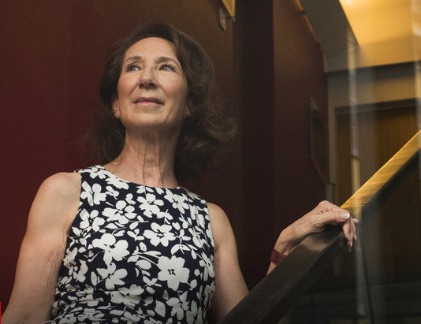

The 2030 Development Agenda of the United Nations includes 17 Sustainable Development Goals (SDGs), which “Le Temps” illustrates this week through five personalities.

In March 2003, in Verbier, nearly 250 people gathered on the village square. Delia Mamon remembers it as if it were today: “The American invasion of Iraq got me active. The reasons that led to the war were a blatant falsification of reality. “What particularly angered her is the fact that public opinion” seemed to swallowed everything.” Delia Mamon refuses passivity. To be a citizen, she suggests, is to assume a social responsibility.

In 2005, she created the non-governmental organization Graines de Paix in Geneva, awarded in 2019 by the Smart Peace Prize of the Leaders for Peace Foundation, created by former French Prime Minister Jean-Pierre Raffarin. Objective: to rethink education to pacify social relations and the planet and to develop the students’ faculty of discernment [“skepticism, judgement, free thinking, questioning, and understanding”].

“I learned discernment with my father, an inventor of technological solutions for large companies,” said Delia Mamon, who had the taste to teach at a very young age. She enjoyed learning to read to her brother. With her NGO, of which she is president, she believes that at a time when violence of all kinds is increasing, especially at school, it is time to “educate minds in the culture of peace.” She does not go so far as to say that Dick Cheney, US Vice President at the time of the invasion of Iraq, was reportedly brutalized in school, but she considers the quality of the educational path of each as a major contribution to a less violent society. Graines de Paix focuses on two Sustainable Development Goals in the United Nations 2030 Agenda: Quality Education (SDG 4) and Peacebuilding (SDG 16).

“Peace begins with learning to speak and listen”

A woman of conviction, a former economist at the OECD, before being responsible for strategic marketing for several companies, including Honeywell Europe, which earned her the President’s Award in 1984, Delia Mamon is as clear in her ideas as she is independent. At the age of 15, she went on holiday alone. Even today, she travels without fear.

(This article is continued in the column on the right.)

(click here for the French original of this article)

Question for this article:

What is the relation between peace and education?

(Article continued from left column)

Although she serves as president on a volunteer basis, Delia Mamon is fully committed to her mission. She believes that she has “never stumbled on a glass ceiling” although she has long worked in marketing. However it is her personal experience in the American and French education systems, her discovery of other systems in Africa and the Middle East that have shaped her reflections on education. Born in the United States of a Russian-speaking father from Samarkand, in present-day Uzbekistan, and a mother from Kiev, she has furthered her experience in several countries, including France, Belgium and Italy.

In the United States, with which she is no longer attached, she enjoyed her school curriculum in a public school in New Jersey, especially with a black teacher: “There was no physical violence . The director of the establishment loved his work. We were in the 1960s. We were evaluated in oral presentations (show and tell). In comparison, the French system, lacking humanity, did not allow me to flourish, it almost destroyed me. Today, I have a very clear vision of what needs to be done or not to be done. “The priority now is to insert more human values, to develop societal cohesion and intercultural understanding, to favor the acquisition of social skills and critical thinking in school curricula. “Peace,” she says, “begins by learning to speak and listen.”

The emotional intelligence of children

Her desire to develop a pedagogical methodology has one goal: to increase the level of education in the broad sense in order to prevent violence and radicalization. Delia Mamon’s commitment to education and peace reflects the oriental influence of her father, and family from Samarkand imbued with the values ​​of openness evoked by the Silk Road, the love for others and Persian hospitality.

Specifically, with its educational specialists and a scientific committee including Professor Philippe Jaffé, a member of the UN Committee on the Rights of the Child, Graines de Paix is ​​developing educational materials for schools, including a collection entitled Growing Up in Peace. In Switzerland, the cantons of Vaud, Friborg and Valais have validated these textbooks of the Geneva NGO. Delia Mamon greatly appreciates the culture of the Swiss consensus. She warns, however, that that there are signs of erosion. The education system must take this into account. In this respect, she welcomes the Romandian School Programme of French-speaking Switzerland, which incorporates notions of “creative thinking”, solidarity and self-esteem. Through a traveling educational exhibition, “Leon and his emotions,” which should soon appear as a book, Graines de Paix considers it essential to develop the emotional intelligence of children.

“We are very active in Ivory Coast, where we are developing a multi-year project,” adds the president. Ivory Coast has been for forty years, like the Yugoslavia of Tito, a benevolent state although authoritarian under the aegis of Felix Houphouet-Boigny. Since the end of the civil war in 2011, the Ivorian authorities have realized the need to restore the culture of peace to avoid a new war. “It starts with school,” says Delia Mamon. Although the practice was banned in 2011, teachers continued to beat students with whips. To remedy this, we developed new educational tools including “Learning in peace, educating without violence”. Globally, physical, sexual and emotional violence affected 50% of children in 2016, nearly one billion people. That’s why our work, says Delia Mamon, is also about helping teachers with tools to prevent such violence. ”
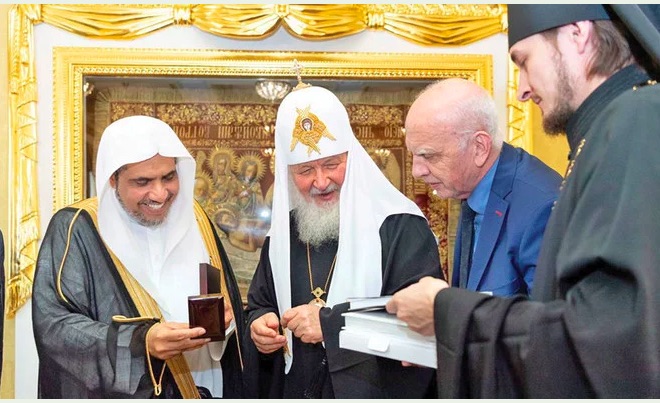
Muslim World League, Patriarchate of Moscow sign cooperation deal

TOLERANCE & SOLIDARITY .

An article from Arab News

MOSCOW: The Muslim World League (MWL) and the Patriarchate of Moscow and All Russia signed on Wednesday an agreement to promote interreligious and intercultural dialogue, as well as a culture of peace and constructive coexistence.


Muslim World League Secretary-General Dr. Mohammed bin Abdul Karim Al-Issa meets Patriarchate of Moscow and All Russia Kirill I. (SPA)

The agreement, which also rejects all forms of extremism and hatred, was co-signed in Moscow by the MWL’s undersecretary of relations and communication, and the head of the Department for External Church Relations.

It was signed in the presence of MWL Secretary-General Dr. Mohammed bin Abdul Karim Al-Issa and Patriarch Kirill I.

The agreement reflects the two sides’ belief in the importance of interreligious dialogue and the role of religious institutions in resolving international conflicts, as well as the desire of Muslims and Christians to promote peaceful and constructive coexistence.

Al-Issa and Kirill I held a historic summit on Wednesday at the Russian Orthodox Church in Moscow.

It is considered the largest independent Eastern Orthodox Church, with more than 250 million followers.

The summit, attended by senior religious leaders, included fruitful discussions on issues of mutual interest.

Kirill I said he was “very happy” with Al-Issa’s visit to Russia, noting the significant and enlightened role of the MWL.

(continued in right column)

Question related to this article:
 
How can different faiths work together for understanding and harmony?

(continued from left column)

“You’re helping many needy people in Asia and Africa, and this is the subject of our deep concern and appreciation,” the patriarch added.

“Owing to your personal contribution to the MWL’s activities, the league has become well-known in the Christian world, which appreciates these remarkable activities,” he said.

“The Orthodox Church has a great network of relations with Islamic societies and communities, and there’s communication with Muslims in our country. The history of Russia has never seen wars or conflicts with Muslims,” Kirill I added.

“Since Orthodox Christians and Muslims belong to the Eastern civilization, we share many commonalities. My job … has made this fact very clear to me.”

Kirill I underscored the Russian people’s unity regardless of religion, sect or ethnicity. “Russia can serve as an example for countries and representatives of faiths and sects,” he said.

Al-Issa said: “I’m happy to visit the Russian Orthodox Church and to meet with His Holiness Patriarch Kirill I, who is known for his outstanding efforts in promoting religious harmony and coexistence as well as love and tolerance.”

Al-Issa added. “We in the MWL, and on behalf of all Muslim people, appreciate the humanitarian and moral efforts of the Orthodox Church, and value its fair feelings toward Islam.”

He said: “We appreciate your describing terrorism as having no religion and stating that Islam … has nothing to do with terrorism.”

He added: “I’ve met with a number of Muslims, especially Muslim scholars in Russia, and they hold great esteem for the Orthodox Church for its efforts to preserve religious harmony, which are appreciated historic efforts.”

Al-Issa said: “The commonalities we share are many, especially the convergence of Eastern culture with its human and moral values.”

He said: “There won’t be a cultural shock between us because we belong to one Eastern culture and have several humanitarian goals.”

Al-Issa said: “With your wisdom, we can promote religious and ethnic cooperation. We, in the Muslim world, believe in your great role and are sure of its importance and impact.”

Greek Cypriot and Turkish Cypriot educators and activists speak about building peace

… EDUCATION FOR PEACE …

An article from In Cyprus

Greek Cypriot and Turkish Cypriot educators and activists shared their efforts to build peace in Cyprus in the context of an open day plenary meeting of the 43rd International Institute for Peace Education which is taking place in the Nicosia buffer zone this week [July 23-28].


In 2018, a total of 328 Greek Cypriot and Turkish Cypriot pupils together with 47 accompanying teachers were given the opportunity to visit Strasbourg in the context of the Euroscola programme, head of the European Parliament’s office in Cyprus Andreas Kettis told the conference, in his address.

Kettis said that Euroscola is a pioneering programme implemented by the European Parliament. It is addressed to high school pupils between 16 and 18 years of age, who travel to Strasbourg and in essence perform the duties of MEPs from all 28 EU member states. Teachers, he added, also have the opportunity to mingle and exchange best practices.

He also informed the conference of “together. eu”, a platform introduced by the European Parliament at the end of May. We want to listen to you, to hear your views about how the EU should function in the future, he told participants who hail from EU countries.

Association for Historical Dialogue and Research (AHDR) Co- President and board member of the Home of Cooperation Kyriakos Pachoulides outlined the idea behind the association’s establishment and the Home of Cooperation. The association, he said, envisioned a society in which dialogue on issues of history, historiography, history teaching and history learning is welcomed as an integral part of democracy and is considered as a means for the advancement of historical understanding and critical thinking.

He showed photos from the 1960s where it is evident that the road outside the Home of Cooperation, located in the buffer zone in Nicosia, used to be a scene of armed conflict. Referring to the symbolic reason behind the decision to operate the Home of Cooperation in the buffer zone he noted that “we wanted to show to the people in Cyprus that peace is an option.” Questioning the conflict and the results of the conflict is an option, he said, adding that “we can build a better future for our children.” Our decision, he noted, was to change the “dead zone” as it is known in the Greek Cypriot community and to transform it to a zone for cooperation.

Huseyin Akansoy and Christos Efthymiou spoke of the work done by their bicommunal initiative “Together We Can”. It is a team of relatives of missing persons who in Akansoy’s words “carry a message of change by bringing people together.”

(Continued in right column)

Question for this article:

Can Cyprus be reunited in peace?

Where is peace education taking place?

(Continued from left column)

“The pain of relatives of missing persons is the same and has nothing to do with ethnicity,” he noted, adding that the alternative to hatred is “finding our truth.” Together, as Turkish and Greek Cypriots, he said, it is important to be aware of each-others pain.

On his part, Christos Efthymiou said the initiative is a common platform of dialogue and action to raise public awareness regarding the events surrounding the violence which took place in the past and work towards minimising the exploitation of the common suffering to promote nationalism.

“Coming to terms with the violence of our past is very significant,” he said. In the context of the initiative relatives of victims from both sides working together develop a sense of common pain. When relatives of victims talk to open bicommunal meetings the results are remarkable, he added.

Zuhal Mustafaogullari and Stavros Stavrou spoke about their experience as teachers when taking part in the project “Imagine”, a confidence building measure implemented by AHDR which brings school students together from both communities.

Mustafaogullari said she teaches history in Turkish occupied Famagusta. She said that the project was a dream which would become reality with difficulty. When it was announced, she remembers that everyone wanted to take part and they had to have a draw. In the end, it was an outstanding day, she said, adding that on the way back in the bus the students were singing songs of peace. She spoke of the need for the programme to continue and to even have exchange programmes between schools.

Stavrou who teaches in a lyceum in Paphos said that many of Greek Cypriot students had never met Turkish Cypriots. We spoke with all students and found 25 participants and that before the day they travelled to Nicosia and the Home of Cooperation they had workshops to prepare the students. He said that he would not have believed it if he had been told before that in less than 3 hours the students would become friends.

Sener Elcil from KTOS union of Turkish Cypriot teachers and Apostolos Skouroupatis on behalf of POED union of Greek Cypriot elementary school teachers spoke of the cooperation between the unions and the work done to promote a culture of peace.

Elcil said that we need to internalise the peace culture. Peace means dialogue, tolerance, communication, equality, gender equality, he noted, adding that it has a holistic meaning and is embedded in our daily lives. According to Elcil education is the most influential instrument to promote peace among people. He went on outlining all the bicommunal action the union takes in cooperation with other Turkish Cypriot and Greek Cypriot teachers’ unions.

On his part, Skouroupatis said that much has been achieved in recent years with teachers organising activities which have to do with things Greek Cypriots and Turkish Cypriots have in common. The programme Imagine, he said, was a very successful effort, because through it, students had an experience of been in touch in a setting of mutual respect and mutual understanding. He also said that unions make an effort to be in close contact and to issue joint declarations and organise joint marches, adding that there still room for improvement.

The meeting which brings together 75 participants from 35 countries is organised by the Association for Historical Dialogue and Research and the International Institute on Peace Education, is under the aegis of European Parliament President, it is supported by the office of the European Parliament in Cyprus and it is funded by the German Ministry of Foreign Affairs.

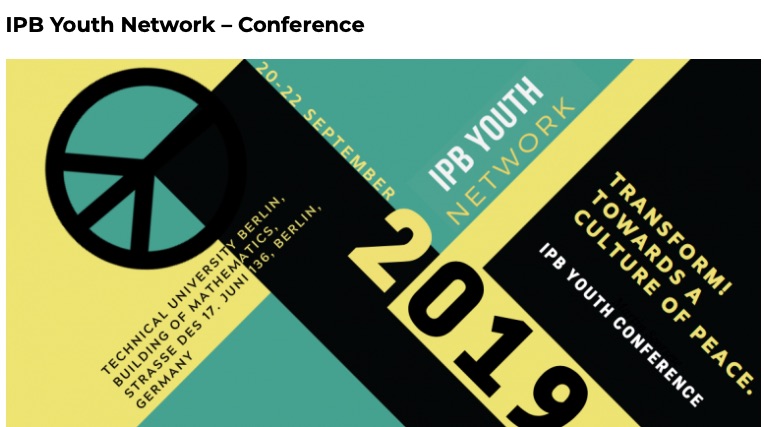
IPB Youth Network Conference – Transform! Towards a Culture of Peace – Sept 20-22

FREE FLOW OF INFORMATION

An announcement from the International Peace Bureau

In the 21st century, we experience multiple wars, destruction and injustice. Challenges and problems are becoming more visible at both small and large scales, ranging from threats with the potential to end human life itself to diverse destruction of the environment and other foundations of life. Militarism and injustice drive these potentials on multiple levels. Aspects of societies – i.e. lack of democracy, distribution of wealth, gender inequalities or the belief in infinite profit maximization – are at the base of many challenges and problems.

Young people are agents of change and need to discuss and exchange on these matters much more. We want to organize to amplify our voices and to engage much more in peace processes and struggles for societal progress.

The world youth congress is a youth-led congress, contributing to the vision of a world in peace and without war and to the vision of a more peaceful, just and sustainable future.

The idea of the youth congress derives from the preparatory process of the youth gathering of the IPB World Congress “Disarm! For a Climate of Peace – Creating an Action Agenda” (www.ipb2016.berlin). Some of the discussions of this Congress as well as of an international working meeting on the weekend of the international day of peace 2018 (https://ipb-youthnetwork.org/2018/08/ipbyn-event-on-international-day-of-peace/) will be continued at the world youth congress.

The congress will focus on transformation towards a more peaceful, just and sustainable future. This will be achieved by informal learning to develop a sense of personal responsibility, by developing plans for concrete actions in day-to-day life as well as in societal processes. The Youth Congress will engage youth from various different backgrounds and with varying perspectives and approaches to peace, justice and sustainability as well as diverse experts and lays from different fields related to the Congress’ issues.

Objectives

The overall objective of the world youth congress is to build bridges and foster discussions among youth with different perspectives on and approaches to peace, justice and sustainability alongside non-youth stakeholders active in the peace movement and in the various fields. Voices of youth against war and for peace should be increasingly and strongly heard. Among others, the specific objectives are:

To speak out and act against war, militarism, injustice, and planetary destruction.

To equip young people with the confidence and competencies to build peace, sustainability, and justice.

To bring young people into regional national and international decision-making processes.

To facilitate intergenerational and interdisciplinary approaches to a global culture of peace, justice and sustainability.
 

(Article continued in right column)


Question related to this article.

Youth initiatives for a culture of peace, How can we ensure they get the attention and funding they deserve?

(Article continued from left column)

Programme
 
Friday, 20 September 2019

19:00 Public Evening Event

“Transformation – how fundamental and how fast do we need change”

With: Joachim Spangenberg (Helmholtz Institute / INES), NN ITUC Youth, Joseph Gerson (AFSC / IPB), Sara Medi Jones (CND)
Greetings and moderation: Reiner Braun (IPB), Marie Cucurella (IPB Youth)
 
Saturday, 21 September 2019
 
9:30 – 12:00 Exchange of experience and information in smaller groups

Floor for meaningful exchange between the participants and floor for open discussions in the framework of the topics of the congress:

Exchange of expectations: Why are you here? How do you see your participation in the congress, what can you bring?
Exchange of knowledge and experience: What is your local day to day situation and work? How and in which ways are you active for peace, sustainability, and justice? What are your best practices and lessons learnt from your activism/work?

12:00 – 13:30 Lunch

13:30 – 15:00 Panel discussions on the themes of the congress

Transformation from militarism to non-violence
Organized by IPB. With Arielle Denis (IPB), Kevin Martin (Peace Action USA), Emma Pritchard (IPB Youth), Matt de Vlieger (IPB Youth) (tbc), NN WILPF

Transformation from environmental destruction to sustainability
Michael Müller (Naturfreunde Deutschlands), Tamara Lorincz (IPB), Jagoda Munic (Friends of the Earth Europe), Greta Thunberg (tbc)

Transformation from injustice to global justice
Organized by ITUC and ITUC Youth with Philipp Jennings (former UNI)
 
15:00 – 15:45 Break

15:45 – 18:00 Parallel working groups deepening the panel discussions

19:30 Social Event
 
Sunday, 22 September 2019
 
9:30 – 11:00 Developing of strategies & actions for a transformation towards a culture of peace
Which strategies and actions can be applied and developed?
What can we do together?

11:00 – 11:30 Break

11:30 – 13:30 Panel discussion with open mic: How do we transform our societies?
With: Sharan Burrows (ITUC), Lisa Clark (IPB), NN Fridays for Future, Angelo Cardona (IPB Youth)
End
 
Organizational Information:

Please register for the congress at info@ipb-office.berlin
We would like to ask participants for a financial contribution to the conference in the amount of 5 Euro / 20 Euro / 40 Euro. You may submit a contribution upon arrival or via bank/ PayPal transfer (/donate/). European bank account holders may transfer a contribution to Bank Account Holder: Unterstützung des Internationalen Friedensbueros e.V.; IBAN: DE23 1005 0000 0190 6331 58; Bank: Berliner Sparkasse. PLEASE give the following reference: IPBYN congress 2019.

How to get there: TU Berlin is located close to S-Bahn station Tiergarten and U-Bahn station Ernst-Reuter-Platz. The entrance to the Mathematician Building is right next to Mathe Café. Geographic coordinates 52.513392, 13.326323

Accommodation: for cheap accommodation check www.booking.com or www.hrs.de. Around S-Bahn station Zoologischer Garten are various hostels and hotels. Furthermore, we will be able to offer limited private accommodation. Please contact us for more details.

World Peace Award: International Peace Conference Stockholm

FREE FLOW OF INFORMATION      

An announcement from World Peace Sweden

Welcome to a conference celebrating human fellowship and the search for peace. We invite representatives from different religions, peace activists and artists to share their insights about the path to peace. Central to this is the search for universally shared values.

Three-day event

The event is in three parts.

Morning session: to discuss the agenda for how to share a mutual responsibility to create a culture of peace.

Afternoon session: we will have a cultural festival and an award ceremony at the famous Stockholm City Hall.

• July 1-3rd a two-day cruise to Estonia to visit Tallinn’s World Heritage.

The importance of universally shared values

World Peace is something which concerns all aspects of life. Even though the world is more integrated, there is also growing mistrust and division. A religion which has been the driving force in all civilizations has been increasingly marginalized in the modern world and accused of causing conflict and war. With or without religion, however, the conflicts continue. Within the political world, there is more polarization, increasing social confrontation, and growing nationalism.

(Article continued in the column on the right)

Questions related to this article:

Where in the world can we find good leadership today?

(Article continued from the column on the left)

The challenge is how to find a model for peace which transcends all religious, political, social and national interests. Such a model can be found in the recognition of universally shared values. Through this religious people can engage in new level of dialogue. Politicians can be guided by a higher level of responsibility. Social activists who seek to empower people, will not only oppose what is wrong bust strive for constructive solution. A healthy society is after all the ability to work together based on mutual trust and care. Indispensable of our national, ethnical and religious identities we can retain our own unique characteristics, but also recognize we are part of one human family. For such dialogue to be successful we need to recognize the values that we all share. This is the focus of the conference: to explore what universally shared values are and how they can contribute to a world of peace and provide hope for the future of humankind.

Schedule

29 June Arrival day. From Arlanda airport bus to Quality Hotel™ Globe Arenaslingan 7, 12126 Stockholm , Sweden.

30 June 09.00-12.00, morning session at Quality Hotel™ Globe Main Theme: Exploring the path of Peace by recognizing universally shared values that transcends cultural and religious differences. 16.00-19.00 World Peace Award and performance in Stockholm City Hall Address : Hantverkargatan 1, 111 52 Stockholm

1 July 14.00 Transportation from Quality Hotel™ Globe to Boat terminal. 17.30 Cruise ship depart to Tallinn, Estonia.

2 July Visit Tallinn World Heritage

3 July 10.15 Arrival Stockholm Transportation to Quality Hotel™ Globe / Arlanda Airport

Hotel room, transportation and Cruise with breakfast are included in the price.

Please contact us if you have some special request

More information will be available later.

Invitation to share your vision

Do you have a message to share with others?

Please contact us and explain about your activities if you like to share it with others.

The World Forum for the Culture of Peace in the Hague

… EDUCATION FOR PEACE …

An article from the International Peace Institute

The definition of peace has shifted in the United Nations community from the absence of conflict to a more active, “positive peace.” Looking at peace from this perspective requires a shift in focus from identifying and combating the causes of wars to understanding the factors that foster peace and inclusivity. To view a holistic perspective of peace, it is necessary to explore the connections among culture, peace, security, and development.


The “culture of peace” recognizes the link between peace, development, and human rights. Defined in 1999, the term seeks to tackle the root causes of conflicts emphasizing the importance of dialogue, negotiation, and cooperation among individuals, groups, and nations.

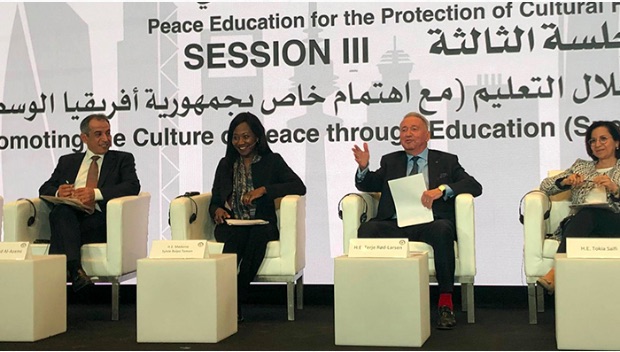
On June 13, 2019, the first annual World Forum for the Culture of Peace took place in The Hague on “Peace Education for the Protection of Cultural Heritage.” It was organized by the Abdulaziz Saud Albabtain Cultural Foundation with support from IPI, the International Committee of the Red Cross, the University of Leiden, and the Carnegie Foundation.

High-level representatives from around the world discussed the importance of peace education for the protection of cultural heritage with a particular focus on Iraq, Yemen, and the Central African Republic. The day-long forum ended with “Messages for Peace” from global leaders including:

María Fernanda Espinosa Garcés, President of the 73rd Session of the UN General Assembly (Video Message)
Marzouq Al-Ghanim, President of the Kuwaiti National Assembly
Abdulaziz Saud Albabtain, Chairman, Abdulaziz Saud Albabtain Cultural Foundation
Faustin-Archange Touadera, President of the Central African Republic
Marie-Louise Coleiro Preca, President Emeritus of Malta
Abdullah Gül, Former President of Turkey
Hassan Arfaoui, Representative of the President of Tunisia
Laurence Konmla, Special Envoy of the President of Liberia
Ammar al-Hakim, President of the Reform and Reconstruction Alliance of Iraq

(Article continued in right column)

Questions for this article:

What is the relation between peace and education?

(Article continued from left column)

In Session III of the forum, IPI President Terje Rød-Larsen moderated a panel on Promoting the Culture of Peace through Education.

Other Attendees Included:

Joke Brandt, Representative of the Dutch Government and the Secretary-General of the Ministry of Foreign Affairs
Erik de Baedts, President, Peace Palace / Carnegie Foundation
Prince Turki Alfaisal Alsaud
George Vella, President of Malta
Haris Silajdžiž, Former President of Bosnia and Herzegovina
Yousef bin Ahmad Al-Othaimeen, Secretary-General, Organization of Islamic Cooperation
Taieb Baccouche, Secretary-General of the Arab Maghreb Union and Former Minister of Foreign Affairs of Tunisia
Khaled al-Yamani, Minister of Foreign Affairs of Yemen
Peter Maurer, President, International Committee of the Red Cross
Hilal Al Sayer, President of the Red Crescent Society, Kuwait
Leoluca Orlando, Mayor of Palermo
Shaikh Mohammed Sabah Al-Salem Al-Sabah, Former Deputy Prime Minister and Minister of Foreign Affairs, Kuwait
Ali Al-Shukri, Representative of President of Iraq
Shaikha Mai bint Mohammed Al-Khalifa, President, Bahrain Authority for Culture and Antiquities, Kingdom of Bahrain
Abdullah Lamlas, Minister of Higher Education and Scientific Research, Government of Kurdistan Region, Iraq
Yusuf Goran, Minister of Higher Education and Scientific Research, Government of Kurdistan Region, Iraq
Michael Frendo, Speaker Emeritus of the Parliament of Malta and former Minister of Foreign Affairs
Hamed Al-Azemi, Minister of Education of the State of Kuwait
Madame Sylvie Baipo Temon, Minister of Foreign Affairs, Central Republic of Africa
Tokia Saïfi, Member of the European Parliament
Moukadas Noure, Minister of Education of the Central African Republic
Mounir Bouchenaki, Advisor to UNESCO for Cultural Heritage
Abdulqawi Ahmed Yusuf, President of the International Court of Justice
Carl Stolker, President of the University of Leiden

Council of Europe: Culture of peace preventing violence and terrorism

.. DEMOCRATIC PARTICIPATION ..

A written declaration from the Parliamentary Assembly of the Council of Europe

We, the undersigned, declare the following:

We recall Parliamentary Assembly Doc. 13407 of 29 January 2014, Written Declaration No. 562 and the Council of Europe “White paper on intercultural dialogue” and the European Cultural Convention of 1954, as well as the support of members of the Assembly for the United Nations General Assembly resolutions on the culture of peace and the Sustainable Development Goals (SDGs).

We consider that efforts to achieve peace in areas of conflict and to prevent extremist radicalism in all nations require commitment by national parliaments to mandate core education for a culture of peace and the SDGs in all levels of society and effective legislative measures and monitoring to prohibit incitement to terrorism in all sectors of society and media by “constructing the defenses of peace in the minds of men” (UNESCO preamble).
(continued in right column)

(Click here for a version in French>

Questions for this article:

How can parliamentarians promote a culture of peace?

(continued from left column)

We call upon the Assembly to support the initiative of the Inter-Parliamentary Coalition for Global Ethics as a strategic partner to promote implementation of the United Nations resolutions on the culture of peace and the SDGs through:

* national legislation in Council of Europe and United Nations member States for mandatory education on the culture of peace and the SDGs at all levels of education,

* strict legislative measures to prevent incitement to extremist violence and terrorism.

Written declaration No. 688 | Doc. 14939 | 28 June 2019

Signatories: Mr Antonio GUTIÉRREZ, Spain, SOC ; Ms Ulviyye AGHAYEVA, Azerbaijan, FDG ; Mr Jokin BILDARRATZ, Spain, ALDE ; Mr José CEPEDA, Spain, SOC ; Mr Boriss CILEVIČS, Latvia, SOC ; Mr Corneliu Mugurel COZMANCIUC, Romania, EPP/CD ; Ms Olivia DELGADO, Spain, SOC ; Ms Miren GORROTXATEGUI, Spain, UEL ; Mr Sabir HAJIYEV, Azerbaijan, SOC ; Mr Attila KORODI, Romania, EPP/CD ; Ms Carmen LEYTE, Spain, EPP/CD ; Mr Georgii LOGVYNSKYI, Ukraine, EPP/CD ; Mr Pere LÓPEZ, Andorra, SOC ; Ms Yuliya LOVOCHKINA, Ukraine, SOC ; Mr Marco NICOLINI, San Marino, UEL ; Ms Melisa RODRÍGUEZ HERNÁNDEZ, Spain, ALDE ; Mr Stefan SCHENNACH, Austria, SOC ; Mr Samad SEYIDOV, Azerbaijan, EC ; Mr Günter VOGT, Liechtenstein, ALDE ; Mr José ZARAGOZA, Spain, SOC

EDUCATION: Imagine programme helping to reconcile divided Cyprus

TOLERANCE & SOLIDARITY .

An article from Financial Mirror

Educational programme “Imagine” which addresses primary, lower and upper secondary and vocational schools managed to bring together 3665 students and 397 teachers from more than a 100 Turkish Cypriot and Greek Cypriot schools from across Cyprus in the last two academic years.

The Bi-communal Technical Committee on Education, which was established after the agreement between the two leaders, Nicos Anastasiades and Mustafa Akinci, in December 2015, continues its efforts to implement confidence-building measures in schools of the two educational systems and promote contact and co-operation between students and educators from the two communities.

Also, a new initiative to advance the programme was introduced this academic year that includes island-wide study visits.

Study visits are designed in a way to provide students with an opportunity to collaborate with each other and integrate new perspectives with cultural heritage environments to enhance learning initiatives.

A total of 150 students from 3 Turkish Cypriot and 3 Greek Cypriot schools joined the pilot phase of the study visit initiative ‘Learning from Nicosia’ that took place in both parts of the Nicosia walled city.

(This article is continued in the column on the right.)

Question related to this article:

Can Cyprus be reunited in peace?

Solidarity across national borders, What are some good examples?>

(This article is continued from the column on the left.)

Another new initiative to advance the efforts of the committee, training of teachers, was introduced this academic year.

The overall aim of the teacher training is to help increase contact and cooperation between teachers of the two communities in Cyprus, based on a holistic understanding of developing their knowledge, skills and attitudes on education for a culture of peace and non-violence.

A total of ten mono-communal training sessions took place with the participation of 254 teachers from all districts of Cyprus and two bi-communal training sessions by international experts took place with the participation of 50 Greek Cypriot and 50 Turkish Cypriot teachers.

“Imagine”, taking place under the auspices of the Bi-Communal Technical Committee of Education and implemented by the Association for Historical Dialogue and Research (AHDR) and the Home for Cooperation (H4C) with the support of the Federal Foreign Office of Germany and the UN Peacekeeping Force in Cyprus has just successfully completed the second year on June 21.

Grounded in a holistic understanding of a culture of peace and non-violence, the programme is being implemented in two stages: in the first stage, experienced trainers visit the schools of participating students and teachers in both communities to facilitate activities that deal with stereotypes, extremism and intolerance, paving the way for voluntary bi-communal contact at the Home for Cooperation (H4C).

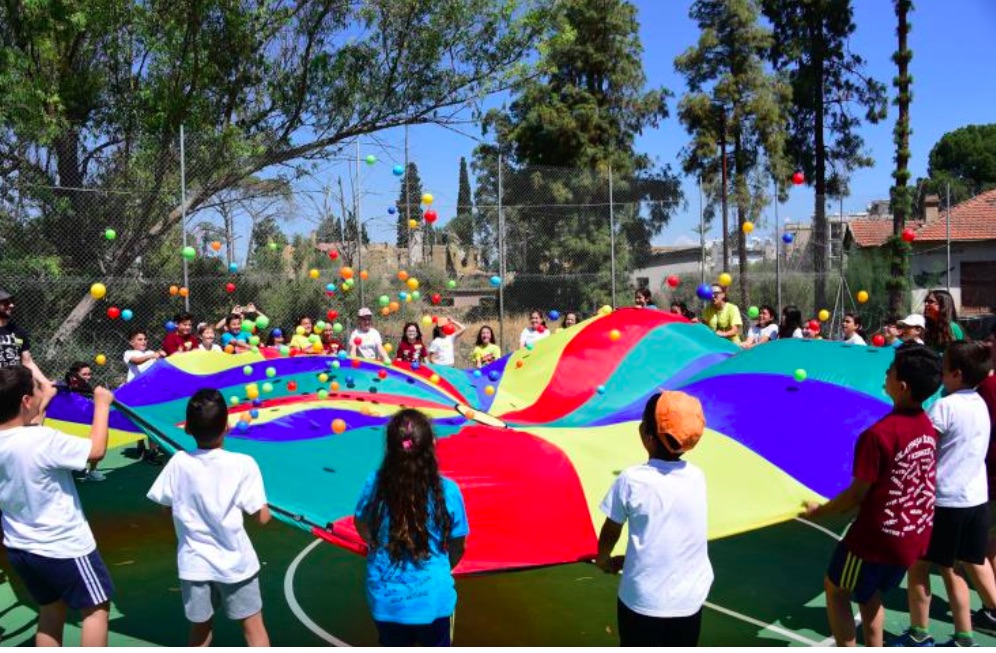
Then, in the second stage, groups of students from the two communities, who wish to participate, are paired and meet in the buffer zone where they take part in either peace education workshops with the Association for Historical Dialogue and Research (AHDR) or sports activities with Peace Players International.
All teachers who have participated in “Imagine” were invited for a ceremony and were awarded certificates of participation.

Efforts of the technical committee on education and particularly the ‘Imagine’ peace education programme has received special praise by the UN Secretary-General in his latest Reports on the United Nations operation in Cyprus.

The projects to be showcased at the Paris Peace Forum 2019

FREE FLOW OF INFORMATION

Press release from the Paris Peace Forum

In response to its annual Call for Projects, the Paris Peace Forum received more than 700 applications from project leaders in 115 countries seeking to expand their impact by participating in the 2019 Forum event. The one hundred projects chosen by the Selection Committee reflect a truly global perspective, representing all regions of the world. This year, nearly half (48%) are already implementing their projects across several continents or globally. Others are predominantly concentrated in Africa (12%), Asia (11%), Central and Latin America (10%), and the Middle East (7%).


A diversity of actors

Multi-stakeholder solutions are the key to addressing today’s complex global challenges. Crafting solutions together is the only path forward. The selected projects are led by several types of organizations, in particular states (8 projects), international organizations (17 projects), NGOs (34 projects), foundations (4 projects), and think tanks (6 projects) – reflecting some of the many actors that are actively working to make change happen.

Solutions to go beyond rhetoric

The Forum is centered on those who implement concrete solutions to the cross-cutting challenges of today’s world. From 11 to 13 November at la Grande Halle de La Villette in Paris, these selected project leaders will be able to showcase their innovative work in areas of peace and security, development, environment, new technologies, inclusive economy, and culture & education. It will be an opportunity for them to develop, energize, and raise visibility to their project by reaching thousands of actors from across sectors and specialties. Their participation will also bring invaluable practical insight to the Forum and facilitate the exchange of best practices on the most pressing challenges the world faces.

Project selected to participate include:
 
Wan Fambul = National Framework for Inclusive Governance and Local Developpement by Office of the Vice President of Sierra Leone
 Peace and security | Africa (Sierra Leone)

Wan Fambul Framework is designed to facilitate inclusive governance, community-centered, sustainable rural development leading to resilient and cohesive communities across Sierra Leone. The process has built structures to resolve long-standing conflict and engage communities to champion their own recovery and Development.

(continued in right column)

Click here for the version in French)

Question(s) related to this article:

Global meetings, conferences, assemblies, What is the best way for delegates to interact afterwards?

(continued from left column)
 
D50 Enterprise Digital Economy Summit by China Electronics Chamber of Commerce (CECC)
Inclusive Economy | Asia (China)

Based on the Charter of the United Nations and established international norms, the Entreprise Digital Economy Summit of Fifty Countries (D50) advocates for the principles of equity and justness, openness and transparency, co-negotiation, co-construction and mutual sharing, jointly establishing a consensus platform for dialogue, communication, cooperation and development among the global digital economies.
 
OKA: facilitating migrant access to information by Igarapé Institute
New Technologies | Latin and Central America (Brazil
)
Information is one of the first casualties of displacement crises. The OKA mobile phone app fills part of this knowledge gap by providing up to date geolocated data on federal-level public services in Brazil in areas such as housing, education, health, social, and legal assistance, communities, employment, and emergencies for voluntary and forces migrants.
 
Ecosystems, Companies, Sustainable Development: Rating in Protection the Earth by Socio-Ecological Union (SEU)
Environment | Eastern Europe and Central Asia

In line with the achievement of the Sustainable Development Goals (SDGs), the objective is to assess the environmental impact of companies on the biosphere. The major companies of Russia and Kazakhstan have already been evaluated. The project can contribute to more social responsibility and corporate transparency of business in each country of the world, for each transnational company.
 
Akhlaquna by Qatar Foundation 
Culture and education | Middle East (Qatar)

How can we encourage people to continue doing good in the face of encumbering challenges? How do we ensure that virtue and morality are leading? Akhlaquna aims to award and support youth individuals to seek out change. It is a notion that can bring about a ripple-effect worldwide, and that can be replicated and sustained given that it depends on human effort.
 
Model Drug Law – national engagement in West Afrique and replication in one region by Global Commission on Drug Policy
Development | Africa

The project will target national policy makers, key civil society organizations, and journalists to significantly and sustainably strengthen the capacity for improved drug laws in West Africa. Given significant similarities, a replication for Eastern and Southern Africa where countries are affected by a heroin trafficking route is planned.
 
DISCOVER THE COMPLETE LIST HERE

Czech Republic: Prague crowds demand PM Andrej Babis step down

…. HUMAN RIGHTS ….

A report by Emmanuelle Chaze from Deutsche Welle (reprinted by permission)

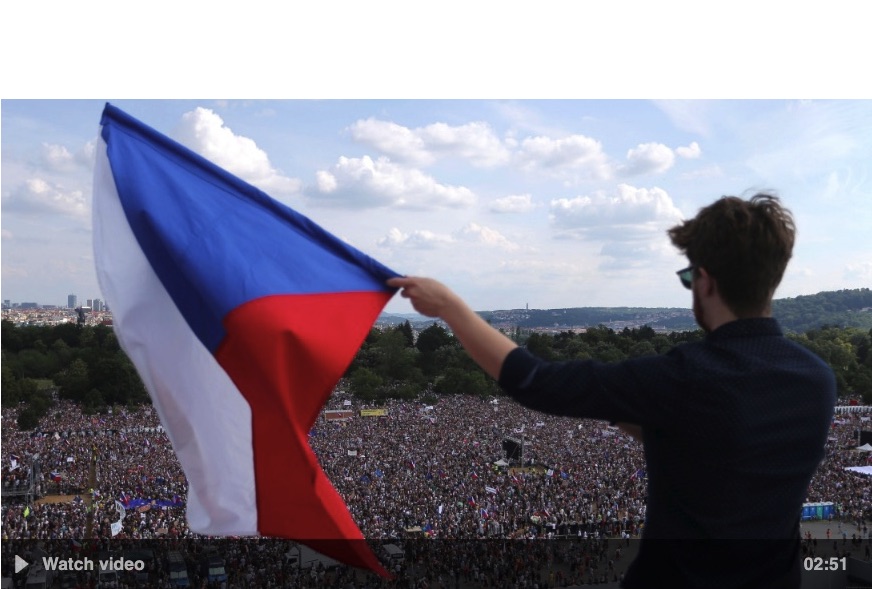
Hundreds of thousands of anti-Babis activists flooded the center of Prague on Sunday [June 23] in the culmination of anti-government protests.

“Judging from the aerial photos, it looks like we’re about 250,000,” said Mikulas Minar, head of Million Moments for Democracy, the NGO organizing the protest, as crowds were filling Prague’s central Letna square earlier on Sunday.


(click on image to enlarge)

Carolina, a flight attendant from the south of the country, told DW she had traveled to Prague to take part in the protests because it “has simply become too much.”

“That’s why people from all across the country came here today, to show that it isn’t simply the people in the capital that are angry.”

Hannah, 31, a saleswoman, said she no longer agrees with the government: “Even in his own party (ANO), there are people against Babis who didn’t want him as a prime minister … now I think it is our turn to show that we disagree with how things are done.”

Previously, some 400,000 people signed a petition calling on billionaire Prime Minister Andrej Babis to step down amid allegations of fraud. The rallies were triggered after Babis appointed a close ally as the country’s new justice minister at a time when prosecutors are deciding on a potential indictment against him.

Many Babis opponents also claim the 64-year-old politician had collaborated with the communist secret police before the 1989 Velvet Revolution.

(Article continued in the right column)

Questions related to this article:

How effective are mass protest marches?

(Article continued from the left column)

Corruption and anti-corruption

Babis has built his reputation as the founder and head of his business empire Agrofert, which started in the early 1990s and grew to become the Czech Republic’s biggest private employer, encompassing over 250 companies.

The billionaire entered politics in 2011 by founding the ANO (YES) party on an anti-corruption platform, becoming finance minister and deputy prime minister in 2014. He was forced out of the Cabinet in 2017 over allegations of tax fraud and suspicious business dealings. However, the crisis brought down the government and triggered a parliamentary election, which saw Babis’ ANO place far ahead of its rivals.

During the campaign, Babis was hounded by charges of defrauding the EU for around €2 million ($2.28 million) in 2007. He has denied any wrongdoing.

In April this year, police said Babis should stand trial over the alleged fraud. Babis rejected the move as a political plot against him. When Justice Minister Jan Knezinek resigned over the probe, Babis replaced him with his own longtime adviser Marie Benesova.

Last month, Babis found himself fending off another crisis when preliminary results of a European Commission audit were leaked to the public. According to the draft document, Babis has a conflict of interest as his companies benefit from EU funding. Specifically, it found that Agrofert should not have received €17.4 million in EU subsidies. The prime minister dismissed it as “an attack on the Czech Republic.”

He also pledged not to resign.

Risky vote of no confidence

The opposition has called a no-confidence vote for next week. To oust Babis, the opposition would need to have his coalition partners, the Social Democrats, side against him, or have the Communist Party revoke their parliamentary support for the government.

However, some observers believe Babis could also turn to the far-right Freedom and Direct Democracy party to stay in power.

A state attorney is set to decide whether Babis will go on trial over subsidies later this year.