Tag Archives: Mideast

Freedom Flotilla will sail until the blockade of Gaza is permanently and fully lifted

DISARMAMENT & SECURITY .

An article by the Women’s Boat to Gaza

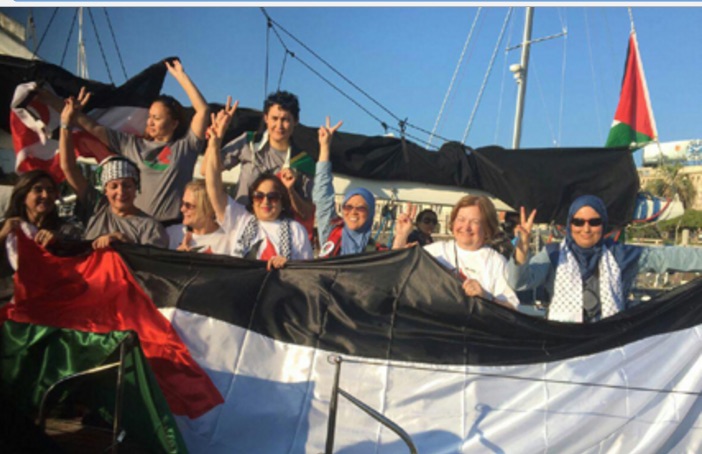
September, Cigdem Topçuoglu, whose husband was killed by Israel on board of Mavi Marmara in 2010, will be sailing with women from all over the world on the Freedom Flotilla Coalition’s latest mission, the Women’s Boat to Gaza (WBG). Ms. Topçuoglu’s action symbolizes Freedom Flotilla Coalition’s (FFC) position regarding the Israeli blockade of Gaza. It must be fully and unconditionally lifted.

gaza
Click on photo to enlarge

The Gaza Strip is the largest open air prison in the world. More than 1.8M persons have been living under an inhuman an illegal Israeli blockade since 2007. The blockade is killing Gaza. Five UN special rapporteurs found that the blockade of Gaza is illegal collective punishment.

MK Haneen Zoabi, who participated in the 2010 on board the Mavi Marmara, said that the reconciliation agreement between the two countries is a clear “admission of murder” by Israel. Ms. Zoabi called for more flotillas in order to remove “the criminal siege on Gaza”.

Laura Arau, an organizer with the FFC and herself a Mavi Marmara passenger said, “Keep in mind that the FFC is not affiliated with any government or political party,” and made a call to civil society: “Nothing can justify the suffering of the families of the activists who were murdered on board the Mavi Marmara in 2010 nor the daily violations of the human rights in Palestine. We, people of the world, must take action when our governments remain silent and are complicit to war crimes.”

Husein Oruç, member of IHH Humanitarian Relief Foundation and also an organizer with the FFC, said that “all the participants, all the families, all the members of Mavi Marmara are saying we are not looking for apologies, we are not looking for compensation.Our main purpose for going to Gaza was to end the blockade. If the agreement does not have this, it is unacceptable.”

In mid September the Women’s Boat to Gaza will sail with the same goal which is to break the illegal and inhumane blockade of Gaza. The Freedom Flotilla will continue until the port of Gaza is open, and Palestinians of Gaza have the ability to fish, to import and export freely, and to lead a normal life without daily fear and suffering. Norwegian organizer Gerd von der Lippe asserts that “the Freedom Flotilla will continue to sail until the illegal and inhumane blockade of Gaza is permanently lifted.”

Question related to this article:

Presenting the Palestinian side of the Middle East, Is it important for a culture of peace?

Readers’ comments are invited on this article and question. See comments section below.

The Elders welcome Paris conference as step towards two-state solution for Israel-Palestine

DISARMAMENT AND SECURITY .

An article by The Elders

The Elders welcome the international conference being convened in Paris on 3 June by the French Government, aimed at reviving efforts to end the Israeli-Palestinian conflict.

conference
French President Hollande speaks to the Paris conference. Photo from AFP/Stephane de Sakutin, Pool.
Click on photo to enlarge

The last 18 months have seen worsening violence, a hardening of political rhetoric and a diplomatic impasse. The international community must push decisively to shift the dynamics on the ground and secure lasting peace for Israelis and Palestinians alike. A two-state solution that respects international law, addresses legitimate security concerns and upholds human rights remains the only way forward.

Kofi Annan, Chair of The Elders, said:

“This conference is an opportunity to revitalise international engagement on the Israeli-Palestinian conflict. After so many decades of conflict, people deserve to live in peace and dignity. This requires an end to occupation, and self-determination for the Palestinian people. The Elders call on all those involved to work constructively and in good faith towards this goal.”

The Elders note the conflicts raging in much of the wider Middle East and argue this makes it even more important that diplomatic efforts for a two-state solution are intensified.

Jimmy Carter, former President of the United States and Honorary Elder, said:

“The world cannot afford to forget about the Israeli-Palestinian conflict. Palestinians continue to be denied justice and human rights, and their leaders remain divided and disengaged from the search for lasting peace. This stokes resentment and support for extremism across the region. Equally, Israelis are ill-served by a government that promotes illegal settlements and flouts international law.”

(See right column for Final Communique)

Question related to this article:

Presenting the Palestinian side of the Middle East, Is it important for a culture of peace?

How can a culture of peace be established in the Middle East?

(continued from left column)

[Editor’s note: The final communique from the summit includes an urgent call for a two-state solution, as demanded by the Elders and by the the Arab Peace Initiative.]:

“The Participants met in Paris on June 3, 2016 to reaffirm their support for a just, lasting and comprehensive solution to the Israeli-Palestinian conflict.

“They reaffirmed that a negotiated two-state solution is the only way to achieve an enduring peace, with two states, Israel and Palestine, living side by side in peace and security. They are alarmed that actions on the ground, in particular continued acts of violence and ongoing settlement activity, are dangerously imperiling the prospects for a two-state solution.

“The Participants underscored that the status quo is not sustainable, and stressed the importance of both sides demonstrating, with policies and actions, a genuine commitment to the two-state solution in order to rebuild trust and create the conditions for fully ending the Israeli occupation that began in 1967 and resolving all permanent status issues through direct negotiations based on resolutions 242 (1967), 338 (1973), and also recalling relevant United Nations Security Council resolutions and highlighting the importance of the implementation of the Arab Peace Initiative.

“The Participants discussed possible ways in which the international community could help advance the prospects for peace, including by providing meaningful incentives to the parties to make peace. The Participants also highlighted the potential for regional peace and security as envisioned by the Arab Peace Initiative.

“The Participants highlighted the key role of the Quartet and key regional stakeholders. They welcomed the interested countries’ offer to contribute to this effort. They also welcomed France’s offer to coordinate it, and the prospect of convening before the end of the year an international conference.”

Mediterranean meeting on mediation to be held in Tangier, Morocco

… EDUCATION FOR PEACE …

An article in Libération (translated by CPNN)

The city of Détroit de Gibralter [Morocco] is home on 2 and 3 June 2016 to the fifth meeting of Mediterranean mediation. A legal-social forum is expanding on the south side of the Mediterranean. Following the previous meetings, and considering the growing importance of mediation in the social reality around all of the Mediterranean as an alternative means of dispute resolution, this event is of great importance. It provides a good opportunity for debate and reflection for actors on both sides of the sea.

mediation

The city of Détroit de Gibralter [Morocco] is home on 2 and 3 June 2016 to the fifth meeting of Mediterranean mediation. A legal-social forum is expanding on the south side of the Mediterranean. Following the previous meetings, and considering the growing importance of mediation in the social reality around all of the Mediterranean as an alternative means of dispute resolution, this event is of great importance. It provides a good opportunity for debate and reflection for actors on both sides of the sea.

The event aims to promote the culture of mediation in the Mediterranean, creating a network of peace mediators and conflict resolution including the southern Mediterranean.

Indeed, mediation is playing an increasingly important role in resolving conflicts in the family, commercial, and intercultural business. It is a useful and necessary tool.

According to a statement from organizers, the event aims to promote the exchange of information on mediation, considered in its broadest sense and in the service of exchanging experiences between Mediterranean countries.

Bringing together many prominent scholars and experts belonging to several countries in the region, this forum is designed as a deductive approach, starting from the general to the specific, expanding from mediation in general to its different fields of application. The various interventions will address various topics of mediation relating to commercial, family, intercultural and business applications.

Organized by the University of Abdelmalek Essaadi of Tetouan, the National University for Distance Education (UNED), the University Pablo Olavide, the Research Group on Contemporary Arab Studies of the University of Granada, the Three Cultures Foundation of the Mediterranean and the national Association of Mediators (Paris), the meeting intends to spread the culture of conflict resolution through mediation and its consolidation in the Mediterranean to help promote the culture of peace.

(click here for the French version)

Question for this article:

IWPR’s Syria Coordinator Wins Landmark Freedom of Speech Prize

FREE FLOW OF INFORMATION

An article by the Institute for War and Peace Reporting

IWPR Syria project coordinator Zaina Erhaim has been awarded the 2016 Index on Censorship Freedom of Expression Award for journalism. Erhaim, 30, returned to the war-torn Syria in 2013. Based in Aleppo, she has since trained about 100 citizen reporters, around a third of them women, who are now among the very few able to provide eyewitness accounts of events on the ground.

Syria
Zaina Erhaim. (Photo: Hayyan Alyousouf)
Click on the image to enlarge

Accepting the award at a gala ceremony in London on April 13, she dedicated it to “the journalists and citizen journalists still taking this dangerous, difficult path, sacrificing everything, playing hide and seek with death to get the stories of the Syrian people out”.

In 2015 Erhaim filmed a ground-breaking documentary, Syria’s Rebellious Women, telling the stories of young activists helping their country in the midst of conflict.

At a screening the night before the awards ceremony at London’s Frontline Club, Erhaim told the audience that she wanted to ensure these women’s work was remembered.

“The main reason I made the films is because I am Syrian, and I’m a woman,” she said. “I tried to do some research six years ago about Syrian women who participated in Syrian history and I couldn’t find anything.

“So I felt like we had to capture this work that the women are doing because in the future the men are going to be writing the history and these heroines are going to be forgotten.”

Last year Erhaim won another landmark prize, the Peter Mackler Award for Courageous and Ethical Journalism.

Zaina also writes regularly for The Economist and has contributed to the Guardian and Arabic-language media like Orient TV, Al-Hayat and Al-Quds Al-Arabi.

Born in Idlib and educated in Damascus, Erhaim was finishing a degree in international journalism in London just as unrest began in Syria in 2011. She spent two years as a broadcast journalist with the BBC before joining IWPR and returning to northern Syria.

IWPR has worked in Syria since 2007, supporting journalists, civil society groups, and youth and female activists. Its Damascus Bureau platform is a space for news, comment and reportage written by Syrians. Since February 2015, the Women’s Blog has carried pieces by new writers with no background in professional journalism, talking about the hardship of daily life and the horrors of war. Erhaim has been instrumental in bringing these stories out.

Another IWPR contributor, Azerbaijani journalist Idrak Abbasov, won the 2012 Index On Censorship prize for journalism.

Abbasov was recognised for his investigative reports on corruption and violence in Azerbaijan.

Questions related to this article:

Red carpet film festival asserts Gaza’s pride and talent

…. HUMAN RIGHTS ….

An article by Lara Aburamadan in Electronic Intifada

A grand red carpet ran between rows of destroyed apartment blocks and houses in the Gaza City district of Shujaiya last week, temporarily transforming one of the areas most devastated during Israel’s 51 days of bombing last summer. Dozens of men, women and children were massacred in Shujaiya on 20 July 2014. The red carpet occasion was the Karama Human Rights Film Festival, produced by the Gaza-based production company Lama Film.

gaza
Click on photo to enlarge

Khalil al-Mozayen, a film director and the manager of the festival, stated at a press conference that “The red carpet symbolizes equality — that not only celebrities and high profile personalities or politicians deserve to walk on red carpets but also the people who witnessed the brutal war and experienced the loss of a family member or the imprisonment of another.”

The festival audience was mainly made up of residents of Shujaiya, including many children.

Attendees walked down the red carpet nearly 500 meters away from the militarized boundary with Israel and the army sniper towers. Stepping foot on the red carpet stirred up both joy and sorrow for Shujaiya’s residents, as well as pride and dignity, and a reminder that they are not forgotten.

The approximately two dozen festival selections mainly concerned human rights.

Spokesperson Saud Aburamadan told The Electronic Intifada that the festival is the first of its kind in Gaza and that it sends a message that “in spite of siege and destruction, we have our minds and talents and creativity. We want to reflect an image that the darkness of wars can never hide Gaza’s shine because people love life.”

Al-Mozayen said, “Gaza embraces cinema despite the war and siege. Cinema is our gate to the world and we hope that next year we will be able to make the festival in West Bank and Jerusalem.”

Carol Scheller replied on Wed, 05/20/2015 – 07:40

This event is the most powerful and human statement as to what Israel wreaked on Gaza last summer and to what everyone there yearns for: just a life that includes going to the movies ! The three days of films restored dignity and recognition to the people of Gaza who in their great majority detest all politics. It gave hope and joy: many young Gazans have never been to the cinema; older ones remember by-gone days when Palestinians there adored going to films. The Karama Film Festival will long be remembered when the ruins of Shijahiya are no more. It has gone a long way towards reconstructing Gaza, more than reports and empty déclarations – it has given its people the inner strength they need to continue to demand justice.

Questions related to this article:

Bahrain Women Association conducted a workshop on peace for Sitra Alahleya Society – Women club

. WOMEN’S EQUALITY .

Bahrain Women Association

As part of the activities of ‘Women embracing peace’ project to promote culture of peace in the community, BWA organized a training workshop on the culture of peace entitled ‘Sustainable peace .. from inside out’ at ‘Sitra Alahleya Society’ – Women Club on Wednesday, September 17th. The workshop aimed to introduce the concept of culture of peace and inner peace, and to discuss how to practice peace and finally to present ways and mechanisms to promote peace.

bahrain

The workshop explained the concept of peace in family and ways and means of applying it, and peace in community which explained that the relations between human beings are based on ground of peace and that the difference between people should lead to integration and development not to conflict and disharmony. The workshop emphasized on the importance of inner peace to achieve any other peace on the external level, be it the family or community.

At the end of the workshop, participants expressed their desire to participate in more events organized by BWA in the field of peace and tolerance, to enhance their role and their ability in promoting positive change in their communities.

Question for this article

Tunisia: Appeal for massive particiption in the first international meeting on education for peace

… EDUCATION FOR PEACE …

An article from Babnet Tunisie (translated by CPNN)

The president of the Association Sawtouna, Hédia Ben Jemaa El Bhiri, has called on the government, political parties, civil society and parents to participate in the first international meeting on peace education to be held in Tunis in the month of July.

tunisia
Photo TAP

Speaking at a national conference held at the initiative of the association on Saturday at the Congress Palace, under the slogan Together for Peace Education, the President of Sawtouna said the objective of the event is to examine the role of education in anchoring the values ​​of dialogue, tolerance and peace in the younger generations.

The purpose of the first international meeting on peace education is to provide a forward-looking vision of the future of education in 2030, she added.

The dissemination of the culture of peace in schools is a priority of the Ministry of Women, Family and Children according to Nizar Kharbech, Chief of the Ministry of Women .

The official said the holding of the first international meeting on peace education coincides with the launch by the Ministry of a comprehensive program of care for children, particularly in priority areas to help them respond to terrorism.

For his part, the Secretary of State of Egypt for children, Ashraf Ameur said that the Arab world and the Third World need to coexist peacefully within the framework of mutual understanding and respect for the law, citing in this context, the many conflicts afflicting Arab society.

On the sidelines of the conference, a reading was given to a peace pact for children,a text emphasizing the need for values ​​of solidarity, tolerance, freedom and dialogue among younger generations.

At the close of the event, a competition will be held among students of 20 primary schools to choose the best poster on peace.

(click here for the French version of this article.

Question for this article:

Muslims Advance Consensus for Citizenship for All: The Marrakesh Declaration

TOLERANCE & SOLIDARITY .

A press release by Religions for Peace, Marrkesh, 27 January 2016

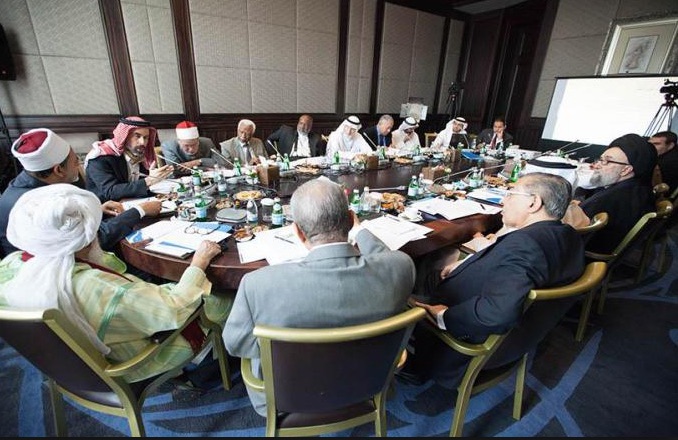
At the invitation of His Majesty King Mohammed VI, 250 of the world’s eminent Islamic leaders convened to discuss the rights of religious minorities and the obligation to protect them in Muslim majority states.

Marrakesh
 Shaykh Abdullah bin Bayyah, President, Forum for Promoting Peace and Co-Moderator, Religions for Peace, addressing the gathering

This position has historic roots dating to the time of Prophet Mohammed and the Medina Charter. Today’s Declaration was issued at a time of heightened social hostility fueled by violent extremism, widespread Islamophobia and the denial of rights, sometimes justified by misrepresentations of Islamic teachings.
 
The conference was organized by the Moroccan Ministry of Religious Endowments and Islamic Affairs and the Forum for Promoting Peace in Muslim Societies based in Abu Dhabi. His Eminence Shaykh Abdullah bin Bayyah, the President of the Forum for Promoting Peace and Co-Moderator of Religions for Peace (RfP), offered the keynote address that set the framework for deliberation among the Islamic leaders. Fifty senior leaders from the world’s diverse religious traditions other than Islam were invited as observers of the Islamic deliberations.
 
A summary of the Marrakesh Declaration includes:
 
• “The objectives of the Charter of Medina provide a suitable framework for national constitutions in countries with Muslim majorities, and are in harmony with the United Nations Charter and related documents, such as the Universal Declaration of Human Rights.”
 
• “Affirm[s] that it is impermissible to employ religion for the purpose of detracting from the rights of religious minorities in Muslim countries.”
 
• “Call[s] upon representatives of the various religions, sects and denominations to confront all forms of religious bigotry, vilification and denigration of what people hold sacred, as well as all words that promote hatred and racism.”
 
The fifty religious leaders other than Muslims:
 
• Expressed their gratitude to the Islamic leaders for their unflinching courage and devotion to their tradition and for welcoming non-Muslims among them as observers;
 
• Affirmed values shared with the Islamic leaders;
 
• Asked forgiveness for past and current injuries for which their communities are complicit;
 
• Shared particular concerns over violence in the name of religion, limitations of citizenship, restrictions on freedom of religion or belief, and xenophobia, especially Islamophobia;
 
• Committed to follow-up work in solidarity with Muslim brothers and sisters to build a culture of peace; and,
 
• Respectfully expressed the hope that this convening of Islamic leaders will be continued by future regional conferences.
 
Every attack, every hate crime, every insult, every humiliation is amplified in the media and sends out a polarizing wave, fueling the rise in hostility. Only religious communities cooperating — standing shoulder-to-shoulder in solidarity — can transform this vicious cycle into a virtuous one, in which the good deeds of each community call out to and reinforce the good deeds of the others. RfP is committed to supporting all religious communities in collaborative efforts to build a virtuous cycle for Peace.
 
Read the Marrakesh Declaration Summary in Arabic Here.

Read the Marrakesh Declaration Summary in English Here


Question related to this article:

How can different faiths work together for understanding and harmony?

This discussion question applies to the following articles:

Creating Harmony in the World: Working through Our Faiths in Dialogue
Alternate Focus: Balance in Media Coverage in Middle East
The Parliament of the World's Religions (Barcelona, Spain)
Asian Religious Leaders Urge Religions To Teach Peace
Living Faiths Together – Tool kit on inter-religious dialogue in youth work
Sharing the right to Jerusalem's past
The Doha Pre-Forum of the United Nations Alliance of Civilizations
Peace For Childrens in Primary Schools in Iraq
Dialogue in Nigeria — a new DVD teaching-tool for peacemakers
4th Annual International Conference on Religion, Conflict and Peace
First Religious Youth Service Project in Pakistan
World Harmony Day at the UN Highlights the Culture of Peace
Report of Diversity Talk Series 2013, in Lahore, Pakistan
Journée d'étude à Tunis: Religions et cultures au service de la paix
Workshop in Tunis: Religions and cultures in the service of peace
Out of the spotlight, Moroccan Islamic party promotes interfaith dialogue
Muslim and Christian youth come together in Mombasa, Kenya
Greeting of Peace from United Social Welfare Society, Pakistan
Interfaith Cultural Study Tour to Nepal: Pakistan Youth Explore the Mysteries of Nepal
One Nation, One Blood (Pakistan)
Teachings of Peace
Overview of the Book, Paganism an Introduction to Earth-Centered Religions
La líder de un movimiento interreligioso Dena Merriam recibirá el 31 Niwano Peace Prize
Dena Merriam, Founder and leader of The Global Peace Initiative of Women to receive the Niwano Peace Prize
Pakistan: Scholars adopt charter of peace, support coexistence
Lebanese dialogue aims to strengthen unity in diversity
Un an du “Projet Revalorisation du Vivre Ensemble – REVE” au Niger
A Year-long Project for “Living Together – REVE” in Niger
Beating the drum for peace: A chat with the general secretary of the South Sudan Council of Churches

Iraqi teachers’ campaign strives to end violence against women

. . WOMEN’S EQUALITY . .

An article from Education International

In conjunction with the United Nations’ recent 16 Days of Activism against Gender-Based Violence, Iraqi teachers organised a number of activities under the theme of “Home Peace to World Peace, Peaceful Education for All.”

iraqi
Activities organised during the campaign to end violence against women in an Iraqi school

To bring awareness and generate concrete steps to eliminating violence against women, Iraq’s Kurdistan Teachers’ Union (KTU) launced a series of initiatives to mobilise the public. 

“In addition to these activities, and in coordination with KTU representatives in all schools following KTU guidelines, we raised awareness about the importance of giving equal education opportunities for all,” said KTU President Abdalwahed M. Haje.
Local culture sometimes becomes a barrier to these opportunities, however, and the KTU asked parents to support the effort towards reducing the rate of uneducated children which stands at 12 per cent. The KTU also asked the government and the Education Ministry to provide more tools to reduce the rate of uneducated adults.

Events organised by the KTU included the following: 

• Participating in a large community event in the presence of the President of the Council of Ministers and his deputy, MPs, ministers, women’s organisations, and civil society at the start of the national campaign on 16 November

• Organising five meetings in the governorates of Erbil, Duhok, Sulemanyah, and Kirkuk, in which hundreds of women participated. These meetings emphasised the importance of the campaign, respecting women, enforcing equality, and explaining applied international regulations

• Organising two seminars with key speakers and civil activists Newroz Hawezy and Hero Kamal. A lot of data and statistics on violent acts and solutions to them were presented, as well as human rights regulations. In terms of employment opportunities, it was stressed that education fares well with a ratio of female to male teachers of 53:47

• Setting up two photography exhibitions. The first one in Erbil featured numerous pictures and graphs stressing the role of women in society in the past, and also highlighted the violence they can experience. The second exhibition in Sulemanyah displayed photographs about women’s role in organising their families, management, economic, and agricultural roles. Both exhibitions highlighted that a healthy community is a community with an equal participation for both genders.

(click here for the article in Spanish or here for the article in French.)

Question related to this article:

Join the Palestine Museum of Natural History: Why doing so is so important

DISARMAMENT & SECURITY .

From the website of the Palestine Museum of Natural History

You are invited to join Global Friends of Bethlehem University (BU) Palestine Museum of Natural History (PMNH) and Institute of Biodiversity and Sustainability (PIBS). We are excited to announce this 2016 initiative so fill out this form http://goo.gl/forms/Z7nmOGFC9i (if you have difficulty email us at info@palestinenature.org) to tell us your location and a bit on your background so that we can connect you with other friends of BU-PMNH/PIBS in your country. We will send you more information about HOW YOU can become part of such a global network.

For now let us explain WHY doing so is important.

Mazin-3
Frame from video about museum

PMNH/PIBS team members and volunteers work locally and globally to protect our environment, educate people around the world on environmental threats in Palestine (such as effect of apartheid wall, industrial and other Israeli colonial activities), and implement programs of environmental and agricultural sustainability on the ground especially in marginalized Palestinian areas. With limited resources and time, we have already achieved much:

– Published many research papers on areas from environmental health to biodiversity

– Held over 20 workshops on areas ranging from permaculture to cancer

– Over 1000 students visited us either in the science festival programs held at the museum or outside

– We developed our museum and its botanical garden in terms of infrastructure, human resource, and volunteers. This includes a wetland ecosystem, an aviary, a green house, three aquaponic systems, beginnings of an exhibit hall, a local tree garden, and more.

– Implemented projects of recycling, up-cycling, composting, green walls, and other permaculture projects.

– Developed projects for transfer of technology in our experimental garden to farmers and potential farmers.

– Undertook outreach and partnerships with hundreds of local, regional, and global entities (governments, schools, universities, NGOs, etc.) and had several hundred internationals visit the museum grounds (Prof. Qumsiyeh also traveled to five countries promoting the museum work and discussing potential collaborations during invited speaking tours). Several join projects are already underway as a result.

The museum (palestinenature.org) and its botanical garden are also important in providing young people with options, directions, and a new way of looking at themselves and their environment (empowerment and nature conservation). We now have an integrated system for research and education to address areas in need in Palestine: healthcare, environment, and agriculture (especially permaculture). We have dozens of volunteers but we can accelerate our progress with YOUR help and accomplish much more. So fill out this form http://goo.gl/forms/Z7nmOGFC9i (if you have difficulty email us at info@palestinenature.org) to tell us you can help from your location (any and all countries including Palestine). Tentative name is “Network for Palestine Nature” (your suggestions on name would be appreciated).

Question for this article: