France: More people marched in the demonstration #NousToutes than in the demonstration of the “Yellow Vests”

. . WOMEN’S EQUALITY . .

An article from the Huffington Post (translated by CPNN)

SEXISM – “Down with Rape!”: Tens of thousands of women and men, according to the organizers, took to the streets in France this Saturday, November 24 at the call of a collective that had called for a “feminist tidal wave” against sexist and sexual violence a year after the start of the #MeToo movement.


Video of the demonstration

In contrast to the “yellow vests“, demonstrations in France [editor’s note: demonstrations against the rise in gasoline prices that turned to violence], the women’s demonstrations are adorned with purple, the color chosen by the movement #NousToutes for the actions organized on the eve of the International Day for the Elimination of Violence to women.

Similar events took place in other European cities, including Rome, Athens and Geneva.

“This is the biggest feminist mobilization that we have known in France,” said its organizer, Caroline De Haas, who announced that 50,000 people took to the streets, including 30,000 in Paris. Last year, there were 2000 in the Paris demonstration, according to police source.

On Saturday, police and prefectures estimated 12,000 demonstrators in Paris between Opera and Republic, 2400 in Lyon, 1500 in Marseille, 950 in Rennes, 850 in two processions in Nantes, 600 in Toulouse …

Many demonstrators carried placards “Down with rape!”, demanding the end of “the impunity of the aggressors” and “sufficient financial means” for the fight against this violence.

Muriel Robin, Eva Darlan and Vanessa Demouy were present

Personalities from diverse backgrounds, including actresses Muriel Robin, Eva Darlan and Vanessa Demouy, joined the Parisian march.

“I’m here to support all the victims and continue this fight that began well before me,” said Muriel Robin, wearing a purple scarf on her arm. She had gathered more than a thousand women in Paris in October against domestic violence.

(article continued in right column)

Click here for the original in French)

Questions related to this article:

Protecting women and girls against violence, Is progress being made?

How effective are mass protest marches?

(article continued from left column)

From Rennes to Lyon and Toulouse, the processions were composed mostly of women of all generations, but also of men. For Tanguy, a 19-year-old Rennes student, “it’s a movement that has no sex”, “a fight of both men and women, together, against inequalities”.

Rirette, 84, came to protest in Lyon for “equality of pay, rights and sexual behavior.” “Non-consent is a horrible thing and it is judged (by the courts) too lax,” denounced this former administrator.

“The street is ours”

“Sexism kills”, “You are not alone”, “The street is ours”, “No means no”, could be read on the signs in Lille, along with flags of political movements (Generations , EELV) and trade unions (CGT and Sud).

In Toulouse, the entire event sang with one voice several slogans carefully prepared: “Proud, ‘venerable’, not ready to be silent!”, “Freedom, equality, sorority”, “Your hand on my ass, my fist in your mouth “,” Tax cons, not tampons”…

Born in September and supported by a number of associations, the #NousToutes movement was “moving from testimony to action” one year after #MeToo, which boosted the number of sexual violence cases reported to the police by 23%.

In France, in 2016, 123 women were killed by their spouse or ex-companion, about one every three days. Each year, nearly 220,000 women experience violence from their spouses or ex-companions, according to official 2017 figures. In addition, more than 250 women are raped each day, and one in three has been harassed or sexually assaulted at work.

Equality between women and men “great cause of the five-year electoral period” Macron

A year ago, President Emmanuel Macron decreed equality between women and men “great cause of the next five year electoral period”, during a speech at the Elysee.

But “if there is no money, public policies will not follow,” said Caroline De Haas. Funds earmarked to help women who are victims of domestic violence are expected to rise to at least € 506 million a year from 79 today, five organizations including the Economic, Social and Environmental Council (EESC) said this week.

Hundreds of personalities and trade unionists – women and men – joined Saturday’s movement.

In Paris, men were excluded from a “small non-mixed space” to reassure” women victims of various forms of violence who did not feel comfortable to march with men around them. This initiative was criticized on social networks, including by feminist activists, and it attracted only five people, according to the person in charge of this space.

March For Our Lives wins International Children’s Peace Prize 2018

DISARMAMENT & SECURITY .

An article from Kids Rights

The March for Our Lives initiators, who started the American mass youth movement for safer schools and communities and against gun violence, have won the International Children’s Peace Prize 2018.


Watch a short documentary about March For Our Lives 

Today [20 November], on Universal Children’s Day, David Hogg, Emma González, Jaclyn Corin and Matt Deitsch, received the prize from Archbishop Desmond Tutu during a special ceremony held in Cape Town, South Africa in the presence of distinguished guests and the world press. The International Children’s Peace Prize is an initiative of the international children’s rights organization KidsRights. The young winner’s message each year reaches millions of people worldwide.

During the ceremony, Archbishop Desmond Tutu, who has been the patron of The International Children’s Peace Prize and KidsRights for more than a decade, said that March For Our Lives is one of the most significant youth-led mass movements in living memory. “The peaceful campaign to demand safe schools and communities and the eradication of gun violence is reminiscent of other great peace movements in history. I am in awe of these children, whose powerful message is amplified by their youthful energy and an unshakable belief that children can, no must, improve their own futures. They are true changemakers who have demonstrated most powerfully that children can move the world.”

(Continued in right column)

Questions related to this article:

Do you think handguns should be banned?, Why or why not?

Youth initiatives for a culture of peace, How can we ensure they get the attention and funding they deserve?

(Continued from left column)
 
March For Our Lives

David, Emma, Jaclyn and Matt co-initiated March For Our Lives alongside more than 20 other students, after their school was the scene of a mass shooting in Parkland, Florida this past February, with 17 fatal casualties. Personally affected by the tragedy, they responded by organizing the March For Our Lives event in the spring of 2018 to demand safer schools and communities and to protest gun violence. Hundreds of thousands participated in the rally and more than 800 sister marches took place that same day across the US and beyond. For David, Emma, Jaclyn and Matt, this was only the beginning. In the summer of 2018 the group took to the road, visiting 80 communities in 24 states leading discussions and advocating for the creation of safer communities.

They lobbied, held town hall rallies, and motivated thousands of young people to register to vote. The March For Our Lives movement has continued to be highly vocal and very successful.

Since its advent, over 25 US states have passed more than 50 pieces of legislation in line with their cause.
 
A call on the international community to halt violence in schools

Marc Dullaert, founder of KidsRights and the International Children’s Peace Prize, said that out of the extremely impressive group of nominees, March For Our Lives was this year’s most deserved winner, if only due to the sheer size of the movement that it inspired in 2018: “March For Our Lives has transformed a local community protest into a truly global youth-led and peaceful protest movement. The initiators have utilized the skills and knowledge of young people to generate positive change, whilst mobilizing millions of their peers, controlling the public narrative on the issues that matter to them, and making people in power listen. This will shape the way in which children’s rights are campaigned in the future.”

During the ceremony today, Mr. Dullaert called upon the international community to halt the surge in school violence witnessed internationally. “Schools must be protected as safe havens for children. KidsRights calls upon the international community to halt this issue and to prevent schools from becoming battlegrounds.”

Macron, Merkel defend multilaterism as Trump avoids peace forum

. .DISARMAMENT & SECURITY. .

An article from Thomson Reuters

German Chancellor Angela Merkel opened the Paris Peace Forum, which followed a ceremony in the French capital to mark the centenary of the end of World War One, with a warning that “blinkered” nationalism was gaining ground in Europe and beyond.


German Chancellor Angela Merkel and French President Emmanuel Macron hold hands after leaving books at the peace library at the Paris Peace Forum. REUTERS/Gonzalo Fuentes/Pool

Echoing comments made by Macron, she said there was a worrying readiness by some to promote self-interest and ignore ties that have underpinned peace since the end of World War Two.

“Most of the challenges today cannot be solved by one nation alone, but together. That’s why we need a common approach,” Merkel told the audience. “If isolation wasn’t the solution 100 years ago, how can it be today in such an interconnected world?”

Macron hopes the forum can lead help avoid falling into the traps of the past by promoting multilateralism. He wants it to demonstrate the power of reconciliation a century after Europe was torn apart by one of history’s bloodiest conflicts.

Leaders including Russian President Vladimir Putin and his Turkish counterpart Tayyip Erdogan were among those who listened as Merkel, Macron and United Nations Secretary General Antonio Gutteres lauded the U.N. and institutions like it that seek multilateral solutions to global problems.

Trump, who champions a policy of ‘America first’ and has said he is proud to be a nationalist, snubbed the event. Air Force One departed Paris for Washington shortly after the peace forum opened.

(Continued in right column)

Question related to this article:

Can the culture of peace be established at the level of the state?

(Continued from left column)

Macron has repeatedly called for “collective action” to tackle crises ranging from the environment, Islamist militancy and nuclear proliferation to anti-Semitism.

“Will today be a symbol of lasting peace or a last moment of unity before the world falls into more disorder?” The French leader Macron asked the gathering. “It depends solely us.”

Earlier on Sunday, Macron led a solemn ceremony to commemorate the centenary of the armistice that brought the Great War to an end, and appeared to take aim at Trump as he warned of the perils of resurgent nationalism.

Trump, who champions a policy of ‘America first’ and has said he is proud to be a nationalist, snubbed the event. Air Force One departed Paris for Washington shortly after the peace forum opened.

Macron has repeatedly called for “collective action” to tackle crises ranging from the environment, Islamist militancy and nuclear proliferation to anti-Semitism.
“Will today be a symbol of lasting peace or a last moment of unity before the world falls into more disorder?” The French leader Macron asked the gathering. “It depends solely us.”

Earlier on Sunday, Macron led a solemn ceremony to commemorate the centenary of the armistice that brought the Great War to an end, and appeared to take aim at Trump as he warned of the perils of resurgent nationalism.

Justin Vaisse, who organized the forum, told Reuters it was not intended to mediate solutions to existing conflicts, but seek ways to create strengthen multilateral organizations.

It is designed to be held annually and bring together a mixture of politicians, foreign policy experts, non-governmental organizations and representatives of civil society, he said.

Can the culture of peace be established at the level of the state?

At least one analysis responds to this question by saying that the culture of peace cannot be established with states, because the states have become themselves the culture of war. Here is the argument.

“The state devotes its resources and is more or less controlled, overtly or covertly, by the military throughout the world. This is not new but has been true throughout history.

“Let us begin with the Great Powers. The United States, which we may more appropriately refer to as the “American empire” devotes more than half of its national budget to the military and now maintains hundreds of military bases throughout the world. Countries without an American military base are exceptional. Now we learn that almost every African country has one. A Nobel peace laureate, Barak Obama, aided in this expansion.

“Where is the ultimate power in China if it is not with the Red Army?

“Not one of the world’s nuclear powers, the U.S., Britain, France, China, Russia, Israel, India, Pakistan and North Korea, took part in the negotiations at the United Nations for nuclear disarmament.

“Should we have been surprised when the Arab Spring was cut short by a military coup in Egypt?

“At one time it was believed that believed that peace could be obtained by converting the state from capitalism to socialism. And indeed, in the 20th Century, we saw many examples where capitalist states were indeed overthrown by socialist revolutions. But what ensued was not peace. What ensured was a socialist culture of war instead of a capitalist culture of war.

“And we can see why socialism has failed. A socialist culture of war will alway lose in competition with a capitalist culture of war. Socialists tend to share wealth with their client states, while capitalists exploit their client states. In the long run, it is the capitalist states that win the economic competition. The socialist states must either submit (as was the case of the USSR) or become capitalist (as in the case of China).

“If socialism is to succeed it cannot be based on the state. If peace is to be obtained, it cannot be based on the state.”

Here are the CPNN articles on this subject:

Macron, Merkel defend multilaterism as Trump avoids peace forum

2018 “World Beyond War” Toronto Conference Included Workshop on Departments and Infrastructures for Peace

Discussion question: Does Costa Rica have a culture of peace?

Film: Costa Rica Abolished its Military, Never Regretted it

– – – – Links for the following articles published prior to 2015 do not work because they were made by a version of PERL programming that is no longer supported. With three easy steps, you can find the article by its number. First, click on it before returning to this page. Your browser will say that the article is not available but in the address listed you can see that it was located at ViewArticle=xxxx where xxxx is the number of the article. Returning to this page, then click here for the listing of all years. Then click on the year that contains the number for the article you seek. It will send you to the page where you can easily search for the article by its title. – – – –

Survey of national measures and unilateral efforts toward disarmament

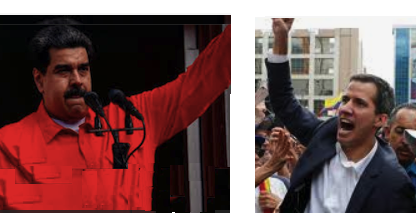
Consolidation as a zone of peace is the aim of Venezuela

Consolidarse como una zona de paz es el objetivo de Venezuela

Suisse 2013: Un Nid pour la Paix – Sixième Sommet de l’Alliance Globale pour les Ministères et Infrastructures pour la Paix

Switzerland 2013: Nesting Peace – Sixth Summit of the Global Alliance for Ministries and Infrastructures for Peace

Outgoing Rep. Dennis Kucinich: With 2 Parties Failing U.S., It’s on Us to Build a

Lema de Cumbre ASPA: Una cultura de paz, inclusión y desarrollo

Slogan of the ASPA Summit: A culture of peace, inclusion and development

The PRI to propose a National Commission for the Culture of Peace in Mexico

Plantea PRI crear Comisión Nacional para la Cultura de la Paz

The Fifth Summit of the Global Alliance for Ministries and Departments

Peace Boat brings anti-war message to Cuba

. .DISARMAMENT & SECURITY. .

An article from Granma

The danger posed to the world by the existence of nuclear weapons marked the focus of the debate in the Forum for Peace and Revolution, organized by the Japanese Non-Governmental Organization (NGO), Peace Boat, which this November docked at the port of Havana for the nineteenth time, and the second this year.

A message, signed by several civil society organizations, including the Cuban Institute of Friendship with the Peoples, the Cuban Movement for Peace, and the Cuban Association of the United Nations, reiterated Cuba’s firm commitment to strengthening and consolidating international treaties on disarmament.


Departure of the Peace Boat, November 4, 2018, with 1,200 passengers from 22 countries on board. The Boat headed to Jamaica after its stay in Havana. Photo: Orlando Perea

“Seventy-three years have passed since the criminal atomic bombings of the cities of Hiroshima and Nagasaki, and humanity continues to be threatened by the existence of more than 14,400 nuclear weapons, of which 3,750 are deployed and almost 2,000 are on operational alert,” read the text released in the presence of two survivors of the 1945 attacks on Japan.

In addition, young people were called on to join this struggle, raise awareness regarding the threat of a nuclear disaster, and defend humanity’s right to a future of peace. “Together with the nations that long for an end to all wars, and with the power of civil society at the international level, we will continue to demand that nuclear weapons prohibition agreements be complied with until their total elimination, and we will contribute to the construction of a culture of peace around the world,” highlighted the Cuban message.

The heartbreaking and eloquent testimony of those who experienced the horrors of the atomic attacks on Hiroshima and Nagasaki, known as hibakushas, moved those present in the forum, as they described horrific images of walking among a multitude of corpses and burned people, whose faces no longer resembled those of human beings, screaming desperately for water.

Michiko Tsukamoto and Tamiko Sora were just girls at the time of the explosion, but it remains present in their memory. They suffered the loss of their loved ones, and today are among the few remaining survivors. They continue to talk about the tragedy because they recognize that the magnitude of the atomic attack has not yet been fully understood by all.

The Forum was also attended by Mako Ando, a Japanese youth representative committed to a world free of nuclear weapons, who works to raise awareness of the dangers posed if humanity fails to denuclearize. Referring to the hibakushas, she noted: “They suffer when they tell their stories, but they do so again and again because they do not want anyone else to experience such barbarism.”

(Continued in right column)

(Click here for the Spanish version of this article)

Question related to this article:

Peace Boat: Building a Culture of Peace around the World

(Continued from left column)

Speaking on the panel, D.Sc Leyde Rodríguez Hernández condemned the atrocities of Hiroshima and Nagasaki: “We live in a time of enormous threats to international peace and security. The United States, the same power that has imposed an unjust and illegal economic, commercial, and financial blockade on the Cuban people, causing enormous human and material damages, has taken the initiative to destroy multilateralism in international relations and, with its devastating policy, dismantle the system of international treaties and agreements that served as a foundation for peace and security after WWII.”

He explained that nuclear weapons and missile defense systems today represent a serious threat to humanity, and the fight for their prohibition and total elimination should be of the highest priority, as a duty and a right of the peoples.

“The maintenance and modernization of nuclear weapons consumes much of the resources that could and should be destined for economic development, job creation, the reduction of poverty and hunger, health, education, and to prevent and combat natural disasters caused by global climate change. These resources should be redirected toward the development and fulfillment of the Sustainable Development Goals included in the 2030 Agenda,” the vice-rector of the Higher Institute of International Relations added.

The Forum for Peace and Revolution was dedicated to commemorating the 60th anniversary of the Cuban revolutionary triumph, the 73rd anniversary of the criminal U.S. bombings of Hiroshima and Nagasaki, and to the memory of Comandante en Jefe Fidel Castro, who received members of the boat twice (in 2010 and 2012).

Natsue Onda, director of this Peace Boat trip, condemned the interventionist policy of the U.S. blockade against Cuba, and said she was pleased to hold the event aboard the ship, in the presence of so many Cubans. She highlighted the friendship between Cuba and the organization, who share the same commitments in this field.

The Peace Boat has been visiting Cuba since 1989, and this is its 99th voyage around the world, carrying a message of peace and friendship. On this occasion, the ship was carrying 1,200 passengers of 22 nationalities (most of them Japanese), who toured different historic and tourist sites of Havana, and exchanged with community organizations related to senior citizens, culture, and with students.

In a press conference, travel coordinator Adrián Godínez stressed that passengers were very interested in visiting the island, thanks to the stories of previous participants, who highlighted the warm welcome received. Other motivations to visit include the popularization of Cuban culture on the Asian continent, especially salsa music, and interest in the history of the Cuban Revolution and its leaders.

The Peace Boat promotes its voyages online, on posters in public spaces, and through the 11 friendship with Cuba organizations that operate in Japan. The NGO Peace Boat received the Order of Solidarity awarded by the Council of State of the Republic of Cuba in 2009.

As a result of the first meeting with passengers of the ship in 2010, the historic leader of the Revolution, Fidel Castro, wrote a reflection titled “We will never forget,” in which he noted: “Now, as for your slogan – which, in my view has very special value, ‘Learn from past wars to build a future of peace,’ will undoubtedly always have meaning – at this moment it is more relevant than ever. I would dare say, without fear of being mistaken, that never in the history of humanity was there such a dangerous moment as this…”


How can we ensure that science contributes to peace and sustainable development?


This discussion question applies to the following articles:

Brazil mulls deforestation patterns as Lula government launches new action plan

Peace Dividend Signatories: Over 50 Nobel laureates and presidents of learned societies

Climate change widespread, rapid, and intensifying – IPCC

Scientists Found A New Way To Break Down the Most Common Plastic

The end of plastic? New plant-based bottles will degrade in a year

Moroccan Researcher Karima El Azhary Wins International Sustainable Development Award

Environmental damage is a war crime, scientists say

Youth for climate: 130 scientists support the youth climate strike

Spain: A group of professors creates ‘Manifesto for the Survival of the Planet’

Researchers Develop Artificial Photosynthesis System that Generates Both Hydrogen Fuel and Electricity

Città della Pieve, Italy: The Declaration of the Scientists for Peace

Tunis: Strengthening the scientific partnership between Iran and the Arab countries

Jordan: Peace through science

The Senegalese winners of the “Next Einstein Forum” present the results of their scientific work

– – – – Links for the following articles do not work because they were made by a version of PERL programming that is no longer supported. With three easy steps, you can find the article by its number. First, click on it before returning to this page. Your browser will say that the article is not available but in the address listed you can see that it was located at ViewArticle=xxxx where xxxx is the number of the article. Returning to this page, then click here for the listing of all years. Then click on the year that contains the number for the article you seek. It will send you to the page where you can easily search for the article by its title. – – – –

Science for Everyone, for More Democracy

Les sciences pour tous, pour plus de démocratie (France)

International Symposium 2013 “Science, Technology and Culture of Peace (France)

Gender equality in education, Is it advancing?

Here are the CPNN articles on this subject:

Mexico: Curricular Strategy on Gender Equality to be implemented in public schools

Education for girls projects in Jamaica and Egypt win UNESCO prize

Canada and partners announce historic investment in education for women and girls in crisis and conflict situations

– – – – Links for the following articles do not work because they were made by a version of PERL programming that is no longer supported. To find the article, click on it before returning to this page. Your browser will say that the article is not available but in the address listed you can see that it was located at ViewArticle=xxxx where xxxx is the number of the article. Return to this page and click here for the listing of all years. Then click on the year that contains the number for the article you seek. It will send you to the page where you can easily search for the article by its title. – – – –-

Day of the Girl Child — Writings by Afghan women

In education, girls deserve what works

Launch of World Atlas of Gender Equality in Education

Is a U.S. Department of Peace a realistic political goal?

Anne Creter, the author of the article listed below about the Toronto Conference, responds as follows:

“We need a whole new system of governance devoted to the culture of peace.

One logical way would be to enhance the existing global movement calling for governmental Departments and Infrastructure for Peace (I4P) worldwide.

“The current U.S. bill in Congress (H.R.1111) to establish a Department of Peacebuilding is a great example of your points. See https://www.congress.gov/115/bills/hr1111/BILLS-115hr1111ih.pdf and https://peacealliance.org/issues-advocacy/department-of-peace/ .

“The UN Development Programme has much evidence of governmental I4P effectiveness in certain countries where they are operational and have been shown to reduce violence. (Journal of Peacebuilding & Development Special I4P Issue, volume 7, Number 3, 2012 ISSN: 1542-3166).

“So let us develop a viable institutional framework for peace. Let us advocate our legislators for governmental Departments & I4P NOW.”

Here are the CPNN articles on this subject:

USA: Department of Peacebuilding Act of 2021 deserves support

Why I Work for a U.S. Department of Peacebuilding With Its Rich History

Marianne Williamson: U.S. needs Department of Peace

2018 “World Beyond War” Toronto Conference Included Workshop on Departments and Infrastructures for Peace

– – – – Links for the following articles published prior to 2015 do not work because they were made by a version of PERL programming that is no longer supported. With three easy steps, you can find the article by its number. First, click on it before returning to this page. Your browser will say that the article is not available but in the address listed you can see that it was located at ViewArticle=xxxx where xxxx is the number of the article. Returning to this page, then click here for the listing of all years. Then click on the year that contains the number for the article you seek. It will send you to the page where you can easily search for the article by its title. – – – –

Creating culture of peace is goal of New Mexico Senate Bill 374

Kucinich Prepares for Peace

Can peace be achieved in Mindanao?

It would seem from the following excerpt from the CPNN bulletin of September 2018 that peace is possible in Mindanao:

On July 27, Philippine President Duterte signed into law the Bangsamoro Basic Law (BOL) which aims to complete the peace agreement between the government and the Moro Islamic Liberation Front (MILF) in the Southern Philippines. The agreement gives the Moro people greater autonomy in ruling their homeland in Mindanao.

Following the ratification of both the Senate and the House of Representatives. Senator Juan Miguel “Migz” Zubiri, who chairs the Senate subcommittee on the BOL said “It’s a new dawn for Bangsamoro in Mindanao.” “The MILF and the MNLF (Moro National Liberation Front) are ready to work with the Philippine Government especially in the conduct of the plebiscite that will be held around November.”

Four years of lobbying for the inclusion of peace education in the BOL was crowned with success. Under Article IX, the Education provision of the BOL, second paragraph says: “The Bangsamoro government shall institutionalize peace education in all levels of education” Some 6,000 new teachers are deployed in five southern provinces and they are now actively helping propagate interfaith solidarity among schoolchildren in support of the government’s Mindanao peace efforts.

Putting the new law into practice, in an historic solidarity event, the Philippine military and the Moro Islamic Liberation Front (MILF) gathered together to celebrate the muslim holiday of Eid Al-Adha.

Here are the CPNN articles on this subject:

Peace Education among top priorities in the new Bangsamoro Government

“Peace through dialogue: Our destiny” is theme of Mindanao Week of Peace 2018

A ‘new dawn’ for Mindanao’s Bangsamoro

6,000 teachers deployed to promote peace in Mindanao (Philippines)

Philippines: Hope, compassion reign over at the peace month culmination in Iligan

The Mindanao-Sulu Peace and History Education Project (Philippines)

Philippines: Local Bangsamoro films show peaceful, harmonious side of Mindanao

– – – – Links for the following articles published prior to 2015 do not work because they were made by a version of PERL programming that is no longer supported. With three easy steps, you can find the article by its number. First, click on it before returning to this page. Your browser will say that the article is not available but in the address listed you can see that it was located at ViewArticle=xxxx where xxxx is the number of the article. Returning to this page, then click here for the listing of all years. Then click on the year that contains the number for the article you seek. It will send you to the page where you can easily search for the article by its title. – – – –

Philippines: Mindanao mayors back Bangsamoro Basic Law

Interfaith dialogue vs. ‘spoilers’ of Mindanao peace set in Cotabato

Nonviolent Peaceforce opens protection site in Lanao del Norte (Philippines)

Philippines: Schools of Peace: Antidote to culture of war, violence

Philippines: Bangsamoro peace pact a major contribution to country, world

Nonviolent Peaceforce Statement On Framework Agreement On The Bangsamoro (FAB) Signing (Philippines)

One Step Closer to Peace in the Philippines

Why peace has a foothold in the Philippines

Peace Initiatives in SOCSARGEN-Philippines

Thousands call on UN to prevent massive war in Philippines

Understanding the culture of peace, What are the key videos?

To begin this discussion, see the videos from three people who first developed the culture of peace concept at UNESCO and the United Nations, Federico Mayor Zaragoza, Anwarul Chowdhury and David Adams:

This discussion question applies to the following articles:

Johan Galtung: The Fall of the US Empire

– – – – Links for the following articles do not work because they were made by a version of PERL programming that is no longer supported. With three easy steps, you can find the article by its number. First, click on it before returning to this page. Your browser will say that the article is not available but in the address listed you can see that it was located at ViewArticle=xxxx where xxxx is the number of the article. Returning to this page, then click here for the listing of all years. Then click on the year that contains the number for the article you seek. It will send you to the page where you can easily search for the article by its title. – – – –

Culture of Peace: Interview with Mr. Federico Mayor Zaragoza, ex-Director-General of UNESCO

The Secret of the 5 Powers – A documentary about nonviolent heroes

Federico Mayor: Culture of Peace

Federico Mayor: Cultura de Paz

David Adams: Culture of Peace

Anwarul Chowdhury: Building a Culture of Peace Lecture