Mozambique: Maputo Declaration of African Civil Society on Climate Justice

. SUSTAINABLE DEVELOPMENT .

An article by Antonio C. S. Rosa, editor – TRANSCEND Media Service

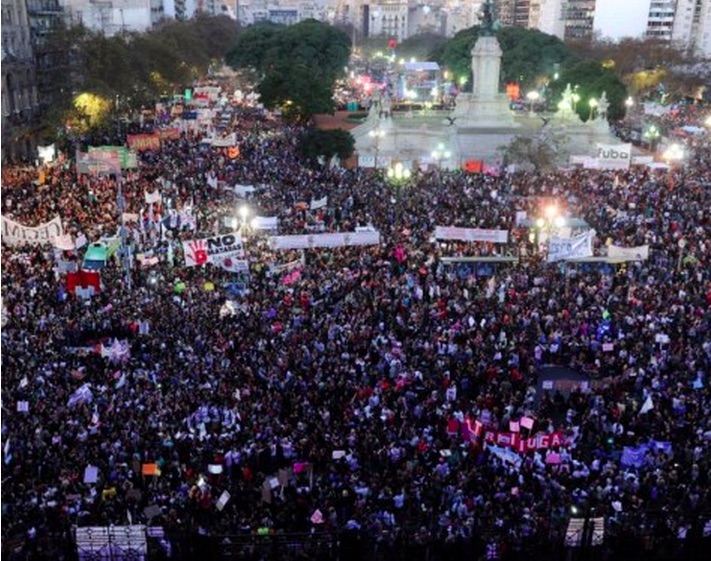
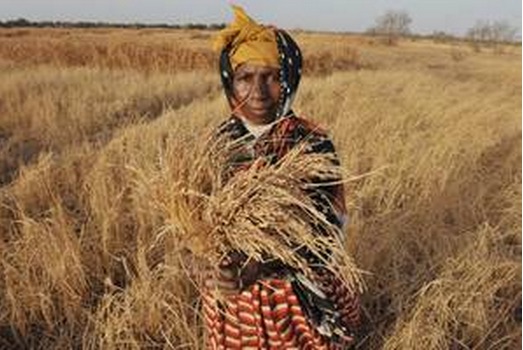
Climate justice advocates, community peoples and mass movements’ representatives met in Maputo, Mozambique from 21-23 April 2015 to consider the roots, manifestations and impacts of climate change on Africa and to consider needed responses to the crises.

Maputo
Click on photo to enlarge
Photo by Radio Mundo Real

At the end of the deliberations it was agreed that Africa is disproportionately impacted by the climate crisis although she has not significantly contributed to the problem. The conference also noted that the climate crisis is systemic in nature and is a result of defective economic and political systems that require urgent overhaul. In particular, the meeting considered that Africa has been massively plundered over the centuries and continues to suffer severe impacts from resource exploitation and related conflicts.

The meeting noted that the Africa Rising narrative is based on the faulty premises of neoliberalism using tools like discredited measures of GDP and is presented as a bait to draw the continent deeper into extractivism and to promote consumerism.

The meeting further noted human and environmental rights abuses on the continent, as well as the ecological, economic, financial crises, all adversely affect her peoples and impair their capacity to adapt to, mitigate impacts and build collective resilience to climate change.

The meeting frowned at the widening gap between our governments and the grassroots and the increasing corporate capture of African governments and public institutions. These constitute obstacles to the securing climate justice for our peoples.

The long walk to climate justice requires mass education of our populace, as well as our policy makers, on the underpinnings of the climate crisis, the vigorous assertion of our rights and the forging ahead with real alternatives including those of social and political structures and systems. It also demands collective and popular struggles to resist neo-colonialism, new forms of oppression and new manifestations of violence including criminalisation of activists and social movements, and xenophobia. We recognise that as climate change worsens, it will increase the resource crunch and migrations and will lead to more conflicts between people. We also recognise that the exploitation of migrant labour by corporations often leads to conflicts between neighbouring countries.

With justice and equality as the irreducible minimum, the conference further noted and declared as follows:

All nations must act together to ensure that global average temperature rise does not go beyond 1.5 degrees Celsius above preindustrial levels as anything beyond that will mean a burning of Africa.

In Paris COP21, we demand that African governments defend positions that benefit Africans not the World Bank or corporations.

We reject carbon markets, financialisation of land and natural resources, consumerism and commodification of nature, and all forms of carbon slavery.

We reject all false solutions to climate change including, Reducing Emissions from Deforestation and forest Degradation (REDD), industrial tree plantations, genetic engineering, agrofuels and geoengineering, noting, for example, that clean coal does not exist.

We reject the false notion of “green economy” that is nothing but a ploy to commodify and hasten the destruction of nature.

Renewable energy that is socially controlled must be promoted across the continent.

We call for the creation of financial systems that promote and facilitate clean energy options including by supporting subsidies, facilitated loans, research and development.

We demand an end to financial systems built on extensive subsidies, externalisation of costs, over-optimistic projections, and corruption.

We resolve to work towards reclaiming energy as a public good that is not for profit and reject corporations-driven energy systems.

We say no to mining as we lived better without extreme extractive activities.

Our land is our present and our future livelihood and we reject land grabbing in all its forms including particularly for so-called “investment” projects that are setting the path beyond land grabbing to a full continent grab.

(Continued on right side of page)

Question for this article:

What is the relation between the environment and peace?

(Article continued from left side of page)

There must be full, transparent and prior informed consent of communities before the use of their lands for any sort of projects.

In all cases the welfare of local communities and our environment must come be prioritised over the profits of investment companies.

In line with the above and through other considerations, the conference demands as follows:

Governments must ensure that the energy needs and priorities of local households, local producers and women – including with regard to social services, transport, health, education and childcare – should be privileged over those of corporations and the rich.

We demand that no new oil exploration permits or coal mines should be granted in order to preserve our environment and to keep in line with demands by science that fossil fuels be left in the ground if we are to avoid catastrophic climate change.

We call for and support public and social control of the transition to renewable energy, including by community-based cooperatives, civil society collectives and the provision of local level infrastructure.

Governments must dismantle the barriers of privilege and power including those created and reinforced by financial institutions such as the International Monetary Fund (IMF) and the World Bank.

We demand urgent technology transfer for clean energy production, the abolishment of intellectual property and increased research and development funds to tackle climate change.

We demand full recognition of local community knowledge of forests, food production, medicinal and cultural uses of land and forests; funding of research in this area and use as part of the public education system.

We demand an urgent transition from dirty energy forms to clean energy systems while ensuring that workers are properly equipped and provided with new healthy jobs created by this shift.

Governments must support agro-ecological food production in the hands of small scale producers, prioritise food production over cash crops in order to promote food security in the context of food sovereignty.

Governments to ensure the protection and recognition of farmers’ rights to save, sell and exchange their seeds while rejecting genetic engineering and synthetic biology, including of those seeds manipulated and presented as being climate smart.

Ensure access, security, control, and right to use land for women. We recognise land as a common good.

Tree plantations must not be misrepresented as forests and trees must not be seen simply as carbon stocks, sinks or banks.

Community forest management systems should be adopted across the continent as communities have a genuine stake in preserving the health of forests.

The right to clean water should be enshrined in the constitutions of all African countries.

Governments must halt the privatisation of water and restore public control in already privatised ones.

Governments should halt the building of big dams, other mega structures and unnecessary infrastructure.

Governments should be responsible for holding corporations accountable for all environments degraded by ongoing or historical extractive and other polluting activities. Corporations who have created this contamination must pay to clean it up, but their payment does not constitute ownership of these environments.

Governments to ensure the cost of social and health ills by using energy derived from fossil fuels are not externalised to the people and the environment.

Governments must take up the responsibility of providing hospitals, schools and other social services and not leave these for corporations to provide as corporate social responsibility or other green washing acts.

Conference participants resolved to work with other movements in Africa and globally for the overturning of the capitalist patriarchal system promoted and protected by the global financial institutions, corporations and the global elite to secure the survival of humans and the rights of Mother Earth to maintain her natural cycles.

Signed by: All the civil society organisations, representatives of social movements and communities from Mozambique and southern Africa, and students present at the meeting.

A Century of Women Working for Peace

. WOMEN’S EQUALITY .

Amy Goodman, Truthdig (reprinted according to terms of fair use)

One hundred years ago, more than 1,000 women gathered here in The Hague during World War I, demanding peace. Britain denied passports to more than 120 women, forbidding them from making the trip to suppress their peaceful dissent. Now, a century later, in these very violent times, nearly 1,000 women have gathered here again, this time from Africa, Asia and Latin America, as well as Europe and North America, saying “No” to wars from Iraq to Afghanistan to Yemen to Syria, not to mention the wars in our streets at home. They were marking the 100th anniversary of the founding of WILPF, the Women’s International League for Peace and Freedom.

wilpf
click on the photo to see the video of the WILPF conference: Shown from left to right: Nobel laureates Mairead Maguire, Leymah Gbowee, Shirin Ebadi and Jody Williams

Dr. Aletta Jacobs, a Dutch suffragist who co-founded the group a century ago, said the purpose of the original gathering in 1915 was to empower women “to protest against war and to suggest steps which may lead to warfare being an impossibility.”

Among the women here were four Nobel Peace Prize winners. Shirin Ebadi was awarded the prize in 2003 for advocating for human rights for Iranian women, children and political prisoners. She was the first Muslim woman, and the first Iranian, to receive a Nobel. Nevertheless, she has lived in exile since 2009, and has only seen her husband once since then. “Had books been thrown at people, at the Taliban, instead of bombs, and had schools been built in Afghanistan,” Ebadi said in her keynote address to the WILPF conference this week, “3,000 schools could have been built in memory of the 3,000 people who died on 9/11—at this time, we wouldn’t have had ISIS. Let’s not forget that the roots of the ISIS rest in the Taliban.”

She was joined by her sister laureates Leymah Gbowee, who helped achieve a negotiated peace during the civil wars in Liberia; Mairead Maguire, who won the peace prize in 1976 at the age of 32 for advancing an end to the conflict in her native Northern Ireland; and Jody Williams, a Vermonter who led the global campaign to ban land mines, and who now is organizing to ban “killer robots,” weapons that kill automatically, without the active participation of a human controller.

These four world-renowned Nobel laureates were joined by nearly a thousand deeply committed peace activists from around the globe. Madeleine Rees, the secretary-general of WILPF, recalled the history of the first gathering in 1915, and how it was organized: “It wouldn’t have happened, but for the suffrage movement,” she told me, “because you don’t just start a mass movement. You actually have to have an organizational structure to make that happen. That had started with the suffragette movement. … Every single one of those women who went to The Hague … were demanding the right to vote. They saw, quite rightly, that the absence of women in making decisions in government meant a greater likelihood of war.”

(Continued on right side of page)

Question for this article

Do women have a special role to play in the peace movement?

(Article continued from left side of page)

Kozue Akibayashi is WILPF’s new president. After World War II, the U.S. required that Japan’s Constitution explicitly forbid it from pursuing war to settle disputes with foreign states. “The majority of people in Japan support the peace constitution,” Akibayashi explained. President Barack Obama, however, like George W. Bush before him, is pressuring Japan to eliminate the pacifistic Article Nine from the Japanese Constitution. He hosted Japan’s prime minister, Shinzo Abe, in Washington this week, celebrating Abe as he works to restore Japan’s military to its former offensive capacity. Akibayashi and thousands of others also are protesting the planned expansion of the U.S. military presence on Okinawa.

Africa activist Hakima Abbas was also in The Hague. I interviewed her hours after mass graves were reported in Nigeria, containing victims of the militant group Boko Haram. The story of Boko Haram, she told me, “is an intersection with violent Islamist fundamentalisms, with global capitalism and with militarization … fundamentalisms, though, don’t start and end with Islamic fundamentalisms in Africa. We’ve seen Christian fundamentalisms in Uganda, and the persecution of LGBTQI people.” She then made a connection to the street protests in Baltimore this week: “In your own country,” she told me, “the white supremacist and Christian right fundamentalisms are exacerbated by the gun culture and the promotion of an armed police force, which is killing black women, men, trans people and children. … So fundamentalisms is really something that we have to address globally.”

I asked Shirin Ebadi if she had advice for the people of the world. She replied with a simple yet powerful prescription for peace, laying out the work for WILPF as it enters its second century: “Treat the people of Afghanistan the same as you treat your own people. Look at Iraqi children the same as you look at your own children. Then you will see that the solution is there.”

Premios de educación concedidos a líderes de Irak y Filipinas

. . EDUCACIÓN PARA LA PAZ . .

Un artículo del Internacional de la Educación

La Internacional de la Educación ha concedido a dos dirigentes de sindicatos docentes de Irak y las Filipinas los premios de derechos humanos y educación por su compromiso, participación y valor extraordinarios en la promoción de la educación para todos/as.

educationinternational

Luisa Bautista-Yu, Filipinas, y Ahmed Jassam SalihAl-shiblawi, Irak, han sido seleccionados por el Consejo Ejecutivo de la Internacional de la Educación (IE) para recibir el Premio Albert Shanker de Educación y el Premio Mary Hatwood Futrell de Derechos Humanos y Sindicales respectivamente. Estos dos premios solidarios internacionales se entregan cada cuatro años durante el Congreso de la IE y se han convertido en uno de sus momentos más destacados.

La Sra. Bautista-Yu ha tenido una carrera de éxito marcada por el desarrollo de la educación en las Filipinas. Ha trabajado en el sector de la educación durante décadas, al principio como profesora de enseñanza primaria hasta convertirse en coordinadora regional de las Visayas orientales, puesto que ocupa actualmente. Su compromiso y valor fueron decisivos durante la misión de recuperación después de que el tifón Haiyan azotara las Filipinas en 2013, devastando infraestructuras y dejando a miles de niños/as sin escuela.

El Sr. SalihAl-shiblawi Ahmed Jassim Salih, presidente nacional del sector técnico del Iraqi Teachers Union (ITU), ha mostrado una valentía y determinación inmensas en la promoción de los derechos humanos y sindicales en su país. A pesar de las amenazas y ataques constantes contra él, su familia y sus compañeros/as, continúa dirigiendo el sindicato con destreza, pericia y valor.

Los premios se entregarán en el 7º Congreso Mundial de la IE en julio en Ottawa, Canadá.

( Clickear aquí para la version francês o aquí para la version inglês)

Question for this article:

What is the relation between peace and education?

Letter from Mohatma Gandhi to Maria Montessori

To Madame Montessori

Even as you, out of your love for children, are endeavoring to teach children, through your numerous institution, the best that can be brought out of them, even so, I hope that it will be possible not only for the children of the wealthy and the well-to-do, but for the children of paupers to receive training of this nature. You have very truly remarked that if we are to reach real peace in this world and if we are to carry on a real war against war, we shall have to begin with children and if they will grow up in their natural innocence, we won’t have the struggle, we won’t have to pass fruitless idle resolutions, but we shall go from love to love and peace to peace, until at last all the corners of the world are covered with that peace and love for which, consciously or unconsciously, the whole world is hungering.

Les Prix de l’Education seront décernés à des dirigeants syndicaux irakien et philippin

. . EDUCATION POUR LA PAIX . .

Un article par Internationale de l’Education

L’Internationale de l’Education a sélectionné les responsables syndicaux irakien et philippin pour l’attribution des prix des droits humains et de l’éducation, afin de récompenser leur engagement, leur dévouement et leur courage exceptionnels en faveur de la promotion de l’éducation pour tou(te)s.

educationinternational

Le Bureau exécutif de l’Internationale de l’Education a sélectionné Luisa Bautista-Yu des Philippines pour recevoir le Prix Albert Shanker de l’Education et  Ahmed Jassam Salih Al-shiblawi d’Irak) pour le Prix Mary Hatwood Futrell des droits humains et syndicaux. Ces deux prix internationaux de solidarité sont décernés tous les quatre ans à l’occasion du Congrès de l’IE et sont devenus l’un des moments forts de l’événement.

La brillante carrière de Bautista-Yu est marquée par son engagement en faveur du développement de l’éducation aux Philippines. Active dans le secteur de l’éducation depuis plusieurs décennies, elle a commencé sa carrière en tant qu’enseignante dans le primaire et occupe actuellement le poste de coordinatrice régionale d’Eastern Vinyasas. Son engagement et son courage ont été déterminants dans la mission de reconstruction après le passage du typhon Haiyan qui a balayé les Philippines en 2013, détruisant les infrastructures et entraînant la déscolarisation de milliers d’enfants.

M. Salih Al-shiblawi Ahmed Jassim Salih, Président national du département technique de l’Iraqi Teachers Union (ITU), a fait preuve d’un courage et d’une détermination immenses pour défendre les droits humains et syndicaux dans son pays. Bravant les menaces et les attaques dirigées contre lui, sa famille et ses collègues, il a continué à diriger le syndicat avec courage et expertise.

Les deux Prix seront remis lors du 7e Congrès mondial de l’IE, qui se tient cette année à Ottawa, au Canada.

(Merci à Janet Hudgins, la reporter pour cet article.)

(cliquez ici pour la version anglaise) de cet article ou ici pour la version espagnole

Question pour cet article:

What is the relation between peace and education?

Letter from Mohatma Gandhi to Maria Montessori

To Madame Montessori

Even as you, out of your love for children, are endeavoring to teach children, through your numerous institution, the best that can be brought out of them, even so, I hope that it will be possible not only for the children of the wealthy and the well-to-do, but for the children of paupers to receive training of this nature. You have very truly remarked that if we are to reach real peace in this world and if we are to carry on a real war against war, we shall have to begin with children and if they will grow up in their natural innocence, we won’t have the struggle, we won’t have to pass fruitless idle resolutions, but we shall go from love to love and peace to peace, until at last all the corners of the world are covered with that peace and love for which, consciously or unconsciously, the whole world is hungering.

Education awards go to Iraqi and Filipino leaders

EDUCATION FOR PEACE .

An article by Education International

Education International has named two teacher union leaders from Iraq and the Philippines to be awarded human rights and education prizes for their outstanding commitment, engagement and courage in promoting education for all.

educationinternational

Ms Luisa Bautista-Yu, from the Philippines, and Ahmed Jassam SalihAl-shiblawi, from Iraq, have been selected by Education International (EI)’s Executive Board to receive the Albert Shanker Education Award and the Mary Hatwood Futrell Human and Trade Union Rights Award, respectively. These two international solidarity prizes are given out every four years during EI’s Congress, and have become one of its biggest highlights.

Ms. Bautista-Yu has had a successful career marked by her engagement for the development of education in the Philippines. She has been involved in the education sector for decades, starting as a primary teacher and attaining the position of regional coordinator of Eastern Vinyasas, which she currently holds. Her engagement and courage were decisive during the recovery mission after Typhoon Haiyan hit the Philippines in 2013, devastating infrastructures and leaving thousands of children out of school.

Mr. SalihAl-shiblawi Ahmed Jassim Salih, National President of the technical sector of the Iraqi Teachers Union (ITU), has shown immense courage and determination in the promotion of human and trade union rights in his country. Despite constant threats and attacks on himself, his family and co-workers, he continues to lead the union with skill, expertise and bravery.

The awards will be presented at EI’s 7th World Congress this July in Ottawa, Canada. 

(Thank you to Janet Hudgins, the CPNN reporter for this article.)

(click here for the French version) of this article or here for the Spanish version

Question for this article:

What is the relation between peace and education?

Letter from Mohatma Gandhi to Maria Montessori

To Madame Montessori

Even as you, out of your love for children, are endeavoring to teach children, through your numerous institution, the best that can be brought out of them, even so, I hope that it will be possible not only for the children of the wealthy and the well-to-do, but for the children of paupers to receive training of this nature. You have very truly remarked that if we are to reach real peace in this world and if we are to carry on a real war against war, we shall have to begin with children and if they will grow up in their natural innocence, we won’t have the struggle, we won’t have to pass fruitless idle resolutions, but we shall go from love to love and peace to peace, until at last all the corners of the world are covered with that peace and love for which, consciously or unconsciously, the whole world is hungering.

Boletín español, el 01 de mayo 2015

.. PRIMAVERA ANTI-AUSTERIDAD ..

Hace unos años tuvimos la Primavera árabe. Este año se podría decir que tenemos la “Primavera anti-austeridad.”

La impresionante victoria electoral del partido Syriza en Grecia ha sorprendió a los medios de comunicación. Como historiadora Frances Fox Piven nos recuerda, esta victoria no es sólo un reflejo de un partido político, sino también la de un movimiento social contra las políticas de austeridad del gobierno. En sus palabras: “A diferencia de muchos izquierdistas americanos, Syriza no dice que hay dos caminos diferentes – por un lado el camino de los partidos políticos y por el otro el camino de los movimientos. Sin embargo, ellos trabajan juntos… vemos una dinámica en la que los movimientos pueden crear espacio para un partido político, sobre todo para un partido político de la izquierda”.

El éxito electoral de Syriza alentó otros partidos políticos europeos luchar contra la austeridad. En España, el partido Podemos se ha convertido rápidamente en una fuerza política importante. Como Ryan Rappa e Irene Fernández Pañeda explican, “Podemos como Syriza, nació de la frustración desarrollado con la austeridad fiscal, la corrupción endémica y el fracaso de los partidos políticos ya establecidos desde hace mucho tiempo que no hicieron nada”.

Como Syriza, Podemos ha surgido de un movimiento social, el movimiento de anti-austeridad “15-M” de 2011. En Francia, el nuevo partido político de la lucha contra la austeridad Nouvelle Donne, surgió de un movimiento social llamado “Roosevelt Colectiva”, en referencia al New Deal de los años 1930 del presidente estadounidense Franklin Delano Roosevelt. Un artículo muy interesante describe una reunión en París con el Nouvelle Donne, donde los representantes de los partidos Syriza y Podemos explicaron sus tácticas a una audiencia de jóvenes activistas.

En Irlanda, nació otro partido político de la lucha contra la austeridad, el AAA (Alianza de Irlanda para el anti-austeridad). Como Syriza (Alexis Tsipras, 41) y Podemos (Pablo Iglesias, 37), su líder es un dinámico joven activista, Paul Murphy, que es aún más joven, tiene 32 años.

Piven establece que los partidos políticos deben hacer concesiones, mientras que los movimientos sociales siguen siendo militantes. En la misma idea, CPNN publica los informes de los movimientos sociales de lucha contra la austeridad procedentes de Alemania y Canadá. En Frankfurt, Alemania, hubo manifestaciones llamadas “Blockupy”, inspirados en el ‘Occupy Wall Street’ hace unos años en los EE.UU. En Montreal, Canadá, los estudiantes han organizado y pusieron en marcha una importante huelga contra las políticas de austeridad.

Por último, Raffaele Morgantini y Tarik Bouafia nos recuerdan que los países de América Latina, especialmente Argentina, Bolivia, Ecuador y Venezuela se han vuelto en contra de las políticas de austeridad impuestas por el Banco Mundial y el FMI desde hace años. En consecuencia, fueron condenados por los principales medios de comunicación que siguen la línea de los grandes bancos internacionales y sus socios de gobierno, y fueron saboteados por las mismas fuerzas imperialistas que controlaban su país hace unas décadas.

En conclusión, hacemos esta pregunta: “¿son los movimientos contra la austeridad fiscal del gobierno parte del movimiento global hacia una cultura de paz?” Esperamos que los lectores respondan a CPNN.

Teniendo en cuenta las inversiones que siguieron a la Primavera Árabe y el aplastamiento del movimiento Occupy Wall Street en los Estados Unidos, los movimientos anti-austeridad pueden no tener un camino fácil por delante de ellos. Pero teniendo en cuenta la iniciativa tiene a la cabeza América Latina, el movimiento puede seguir fuerte. Si es así, proporcionará un buen modelo para el movimiento global para una cultura de paz.

      
DERECHOS HUMANOS

teheran

Premio WACC-SIGNIS de Derechos Humanos 2014 a “Taxi”

WOMEN’S EQUALITY


International Conference: Building Global Support for Women Human Rights Defenders

DISARMAMENT AND SECURITY


London: Confronting a world at war conference

SUSTAINABLE DEVELOPMENT


Latin America in perspective: Between successes and new challenges

FREE FLOW OF INFORMATION


World Social Forum in Tunis: Another world is possible, without the 1%

PARTICIPACIÓN DEMOCRATICA


Ecuador: 19 jueces de Paz trabajan en 12 provincias del país

TOLERANCE AND SOLIDARITY


USA: Discipline Reformers Get A “Restorative” Lesson

EDUCATION FOR PEACE


Nonviolent Peaceforce: Women’s Peacekeeping Teams incorporated into South Sudan communities

Bulletin English May 1, 2015

. . THE ANTI-AUSTERITY SPRING . .

A few years ago we had the Arab spring. This year one might say we have the “Anti-austerity spring.”

It hit the major news media with the astonishing electoral victory of the Syriza political party in Greece. As the historian Frances Fox Piven reminds us, the victory reflects not only a political party but also a social movement against government austerity policies. As she puts it: “unlike a lot of American leftists, Syriza doesn’t say there are two different tracks—there are political parties and then there are movements. Instead, they work together. . . you see a dynamic in which movements can create space for a political party, especially a political party of the left.”

The electoral success of Syriza has encouraged other European political parties to take up the struggle against austerity. In Spain, Podemos has rapidly become a major political force. As Ryan Rappa and Irene Pañeda Fernández explain, “Podemos, like Syriza, rose out of widespread frustration with fiscal austerity, endemic corruption, and the failure of longstanding political parties to do anything about it.” Also like Syriza, it arose out of a social movement, the 2011 “15-M” anti-austerity movement . In France, the new anti-austerity political party, Nouvelle Donne, has grown out of a social movement named after the 1930’s New Deal of the American President at that time: “Le Collectif Roosevelt”. An especially interesting article describes a meeting in Paris where representatives of Syriza and Podemos described their tactics to a young audience of activists with Nouvelle Donne.

In Ireland, the new anti-austerity political party is the AAA (the Irish anti-austerity Alliance). Like Syriza (Alexis Tsipras, 41) and Podemos (Pablo Iglesias, 37), its leader is a dynamic young political figure, Paul Murphy, who is even younger (32).

Piven reminds us that political parties will have to make concessions, while social movements can remain militant. In that regard, CPNN carries reports from anti-austerity social movements in Germany and Canada. In Frankfurt, Germany, there have been demonstrations called “Blockupy”, inspired by the Occupy Wall Street movement a few years ago in the US. And in Montreal, Canada, the students have held demonstrations and launched a major student strike against austerity policies.

The anti-austerity movements were well represented last month at the World Social Forum where progressive social movements meet each year. This was the second year that the Forum took place in Tunisia, showing that the Arab spring is not completely dead!

We are reminded by Raffaele Morgantini and Tarik Bouafia that Europe is just confronting what Latin American countries, especially Argentina, Bolivia, Ecuador and Venezuela have been dealing with for decades now. Over the years, they turned against the imposed austerity policies of the World Bank and IMF. Because of this, they have been denounced by the major mass media who follow the line of the big international banks and their governmental partners, and they have been subjected to sabotage by the same imperialist forces that controlled their countries a few decades ago.

We have posed the question, “Movements against governmental fiscal austerity, are they part of the global movement for a culture of peace?” and we hope that CPNN readers will respond. Considering the reversals that followed the Arab spring, and the crushing of the Occupy Wall Street movement in the United States, the anti-austerity movement may not have a smooth road ahead of it. But taking a lead from Latin America, it may also be strong enough to prevail. If so, it will provide a good model for the global movement for a culture of peace.


SUSTAINABLE DEVELOPMENT

France

Syriza, Podemos, Nouvelle Donne. The alternative to austerity

WOMEN’S EQUALITY


International Conference: Building Global Support for Women Human Rights Defenders

DISARMAMENT AND SECURITY


London: Confronting a world at war conference

HUMAN RIGHTS


WACC-SIGNIS Human Rights Award 2014 goes to “Taxi”

FREE FLOW OF INFORMATION


World Social Forum in Tunis: Another world is possible, without the 1%

DEMOCRATIC PARTICIPATION


Closing of the World Social Forum: Citizens of the world versus terrorism and oppression

TOLERANCE AND SOLIDARITY


USA: Discipline Reformers Get A “Restorative” Lesson

EDUCATION FOR PEACE


Nonviolent Peaceforce: Women’s Peacekeeping Teams incorporated into South Sudan communities

Bulletin Français 1 mai 2015

. LE PRINTEMPS ANTI-AUSTERITÉ .

Il y a quelques années naissait le printemps arabe. Cette année nous pourrions dire que nous avons “le printemps de l’Anti-austérité.” 

!

 La victoire électorale stupéfiante du parti politique Syriza en Grèce a frappé les principaux médias . Comme l’historien Frances Fox Piven nous le rappelle, cette victoire est non seulement le reflet d’un parti politique, mais également celui d’un mouvement social contre les politiques d’austérité gouvernementales. Selon ses propres termes : “contrairement à beaucoup de gauchistes américains, Syriza ne dit pas qu’il y a deux pistes différentes, les partis politiques d’une part et ensuite les mouvements. Au lieu de cela, ils travaillent ensemble … vous assistez à une dynamique dans laquelle les mouvements peuvent aménager l’espace pour un parti politique, particulièrement pour un parti politique de gauche.”

Le succès électoral de la Syriza a encouragé d’autres partis politiques européens à prendre la lutte contre l’austérité.

En Espagne, Podemos est rapidement devenu une force politique majeure. Comme Ryan Rappa et Irene Pañeda Fernández l’expliquent, “Podemos, comme Syriza, est né de la frustration développée avec l’austérité fiscale, la corruption endémique et l’échec de partis politiques installés depuis longtemps et qui n’ont rien fait”. Comme Syriza, Podemos a surgi d’un mouvement social, le mouvement d’anti-austérité “de 15-M” 2011. En France, le nouveau parti politique d’anti-austérité, Nouvelle Donne, a émergé d’un mouvement social nommé “Collectif Roosevelt”, en référence au New Deal des années 1930 du Président américain Franklin Delano Roosvelt. Un article particulièrement intéressant décrit une réunion à Paris avec Nouvelle Donne. où les représentants de Syriza et de Podemos ont expliqué leurs tactiques devant une audience de jeunes activistes.


En Irlande, un autre parti politique d’anti-austérité, est né, l’AAA (l’Alliance irlandaise pour l’anti-austérité ). Comme Syriza (Alexis Tsipras, 41 ans) et Podemos (Pablo Iglesias, 37 ans), son leader est une jeune figure politique dynamique, Paul Murphy, qui est encore plus jeune, puisqu’ âgé de 32 ans.

Piven prévoit que les partis politiques devront faire des concessions, tandis que les mouvements sociaux resteront militants. Dans la même idée, CPNN publie les rapports des mouvements sociaux de l’anti-austérité venant de Allemagne et du Canada. À Francfort en Allemagne, il y a eu des manifestations appelées “Blockupy”, inspirées par le ‘’mouvement Occupy Wall Street’’ d’il y a quelques années aux Etats Unis. Et à Montréal au Canada, les étudiants ont organisé et lancé une grande grève contre les politiques d’austérité .

Finalement, Raffaele Morgantini et Tarik Bouafia nous rappellent que les pays d’Amérique latine, en particulier l’Argentine, la Bolivie, l’Équateur et le Venezuela se sont retournés contre les politiques d’austérité imposées par la Banque mondiale et par le FMI depuis des années maintenant. En conséquence, ils ont été condamnés par les grands médias qui suivent la ligne des grandes banques internationales et de leurs partenaires gouvernementaux et ils ont été sabotés par les mêmes forces impérialistes qui contrôlaient leurs pays il y a quelques décennies.


En conclusions, nous posons cette question : “les Mouvements contre l’austérité fiscale gouvernementale font-ils partie du mouvement mondial pour une culture de paix?” Nous espérons que les lecteurs de CPNN répondront.

Considérant les renversements qui ont suivi le printemps arabe et l’écrasement du mouvement d‘Occupy Wall Street aux États-Unis, les mouvements d’anti-austérité ne peuvent pas avoir une route lisse devant eux. Mais en tenant compte de l’ avance prise par l’Amérique Latine, nous pouvons y croire avec force.

S’il en est ainsi, il fournira un bon modèle pour le mouvement mondial pour une culture de paix.


DEVELOPPEMENT DURABLE

France

Syriza, Podemos, Nouvelle Donne. L’alternative à l’austerité

WOMEN’S EQUALITY


International Conference: Building Global Support for Women Human Rights Defenders

DISARMAMENT AND SECURITY


London: Confronting a world at war conference

DROITS DE L’HOMME


Le Prix WACC-SIGNIS pour les Droits de l’Homme 2014 décerné à “Taxi Téhéran

FREE FLOW OF INFORMATION


World Social Forum in Tunis: Another world is possible, without the 1%

PARTICIPATION DEMOCRATIQUE


Clôture du Forum social mondial : Les citoyens du monde contre le terrorisme et l’oppression des peuples

TOLERANCE AND SOLIDARITY


USA: Discipline Reformers Get A “Restorative” Lesson

EDUCATION FOR PEACE


Nonviolent Peaceforce: Women’s Peacekeeping Teams incorporated into South Sudan communities

Continuation de Syriza, Podemos, Nouvelle Donne. L’alternative à l’Europe des Draghi-Macron

(continuation de l’article)

Syriza
 
Vangelis Goulas, membre de Syriza, nous a expliqué que son parti vient des luttes altermondialistes et n’est donc pas né en un jour et récemment. Sa première apparition date des élections législatives de 2004, fruit d’une alliance électorale de plusieurs partis de gauche, partiellement initié déjà pour les élections locales de 2002. En 2006, rien de significatif ne sort des élections municipales, le positionnement étant peu clair. Syriza, allié en 2007 au mouvement communiste KOE, dépasse les 5% aux élections législatives et obtient 14 sièges, principalement dans les grandes villes. La jeunesse se rallie de plus en plus après 2008 à Syriza qui a soutenu les manifestations faisant suite à la mort d’un adolescent de 15 ans tué par un policier.

On arrive en 2010, année où se met en place le ‘’soutien’’ (sic) de l’Europe à la Grèce. « En échange de grands sacrifices », comme l’a titré La Tribune du 3 mai 2010. Un mémorandum est signé entre la Troïka et la Grèce. « Je l’ai signé sans le lire », avouera le ministre du développement Michalis Chryssochoïdis. Une espèce de Michel Sapin grec.

Puis la situation s’accélère en même temps qu’elle se dégrade.
Syriza devient en 2012 la première force de gauche aux élections législatives anticipées. Une force à la fois contestataire et constructive, proposant des solutions alternatives. Mais la droite fait alliance avec le Pasok et la gauche démocrate pour continuer de complaire au programme de la Troïka.

Arrive les élections législatives de 2015. Syriza, après avoir fait un travail de pédagogie politique, l’emporte avec un programme anti-austérité. Alexis Tsipras est nommé Premier ministre.
 
Où en est Syriza aujourd’hui ?
Un pays comme la Grèce peut-il être souverain ?
 
Sur la souveraineté de la Grèce, comme de tout autre pays en Europe aujourd’hui, force est de reconnaître que le dogme européen de l’austérité pèse, avant toute velléité nationale. Dans des termes certes différents, les Institutions, nouveau nom de la Troïka, s’adressent de la même façon à Tsipras et à Valls.

Ce qui nous permets de lire dans La tribune du 24 mars : « Ce qui importe pour Berlin comme pour Bruxelles, c’est avant tout de dissimuler cette stratégie du « nœud coulant » où l’on laisse le patient grec s’asphyxier de plus en plus jusqu’à ce qu’il accorde tout ce qu’on lui demande ».

Et dans La Croix du 26 janvier : « Il est évident que la France doit redoubler d’efforts, que ce soit au niveau des réformes budgétaires ou des réformes structurelles », a déclaré mercredi 25 février au soir le vice-président de la Commission européenne chargé de l’euro, Valdis Dombrovskis ».

Sauf que les grecs ont choisi, nous dit Vangelis Goulas, de décider de leur avenir et parlent plus fort. En maintenant un plan anti-austérité et humanitaire, notamment.

Un risque existe, c’est certain. Car l’oligarchie européenne, représentée par Mario Draghi, ancien Président pour l’Europe de Goldman-Sachs et Président de la BCE, a pour principal objectif, non pas de sauver la Grèce mais de préserver les intérêts des banques. Ce qui a été fait une fois déjà, en repassant des banques aux Etats une partie de la dette grecque.

Mario Draghi qui n’hésite pas aussi à demander aux banques grecques de ne plus acheter de bons du trésor grec, histoire de faire plier à Athènes ceux qui pourraient être un mauvais exemple de démocratie en Europe, montre le coté inhumain de ceux qui servent la finance avant tout. Peu lui importe la conséquence de ses décisions sur le peuple grec.

Vangelis Goulas nous apprend au passage que la Grèce se retrouve à devoir gérer, vu la situation internationale perturbée à l’Est et au Moyen Orient, un flux migratoire clandestin important, comme doit le faire aussi l’Italie. Une question que l’Europe, grande pourvoyeuse de leçons aux pays du sud, refuse de mettre à son ordre du jour.
 
Podemos. Ganemos. Mouvement des Indignados.
Espagne. Ce n’est pas une crise, c’est une arnaque.
 
En Espagne, la situation a priori n’est pas la même qu’en Grèce, mais a eu les mêmes conséquences dramatiques pour la population.

Le pays était donné en exemple la veille encore de la crise de 2008, ce qui n’a pas empêché la bulle immobilière, soutenue activement par les banques, de s’écrouler. De grands projets, toujours liés à une corruption importante des élus, ont été stoppés net. Les banques ont donc du être sauvées. Car ici comme ailleurs, « il faut sauver le système ». Qui profite, ici comme ailleurs, à la seule oligarchie financière et politique.

Le déficit public explose. Un plan d’austérité est mis en place par la gauche au pouvoir. Les expulsions se multiplient. Le chômage monte à 25%. Celui des moins de 25 ans explose à 50%. En 2011 la droite remporte les élections.

Les espagnols ont calculé que 168,4 milliards leur avaient été volés sous les gouvernements successifs, en fraude fiscale, (80 milliards), pour être donnés aux banques (36 milliards), à l’église (10 milliards), en intérêts de la dette (39 milliards), etc. Alors que le budget de la santé en 2013 était de 3,8 milliards, celui de l’éducation de 1,9 milliards, celui de l’emploi de 26 milliards.

Fin de l’article:

C’est sur ce terrain qu’est né le grand mouvement des indignés espagnol, (Los Indignados, émules ibériques de Stephane Hessel), appelé aussi M15, qui occupe durant plusieurs semaines la Puerta des Sol, à Madrid en 2011. Mouvement assembléiste, non violent, fortement démultiplié dans les autres régions.

Ruben Borlado, membre du M15 et de Ganemos, un mouvement de transformation sociale, nous en a retracé l’histoire. Une histoire qui s’arrête sans avoir pu, et sans avoir voulu, mettre en place un relai politique, mais qui se prolonge depuis, de manière très vivante, de différentes façons. Ce qu’illustre le propos de Ruben, qui nous dit ne parler au nom de personne, mais en son nom propre, comme  un activiste social.

C’est ainsi que se sont développées une multitude de mouvements locaux, s’impliquant, sous divers noms, en réseaux, socialement, dans la défense des expulsés, dans l’organisation de marches, dans des élections municipales.

Comme Ganemos le tente à Zaragoza et dans quelques autres villes. Comme le fait de son coté Podemos, qui ne se présente pas toujours sous son drapeau mais sous celui de mouvements associatifs. 
 
Podemos.
 
C’est en janvier 2014 qu’est créé Podemos, avec pour objectif de donner un débouché politique aux mouvements nés du M15 de la Puerta Del sol. Ses initiateurs appartiennent à la frange intellectuelle espagnole, issus pour partie de l’université, dont quelques professeurs d’économie et de sciences politiques.

Première tentative, première réussite, à l’occasion des élections européennes. Podemos dépasse les 10% des voix dans certaines régions d’Espagne, et obtient, avec une moyenne nationale de 8%, 5 élus au Parlement de Strasbourg. Un coup de canon dans la politique espagnole et dans les autres pays d’Europe.

Marco Albert, de Podemos,  nous a montré qu’il n’y avait pas de réponses simple à une situation au départ hétérogène, et donc complexe à gérer, celle des Indignados du 15 mai. C’est pourquoi, outre les ingrédients dégagés plus haut par Eric Alt, il faut bien comprendre que le succès de Podemos vient d’un mélange subtil, et qui n’a pas convenu à tous, de pratiques encore idéalistes, comme un financement participatif, et de pratiques organisationnelles jugées indispensables pour lutter sur le front des élections.

Il y a eu lutte entre tendance mouvementiste et tendance organisationnelle, cette dernière étant portée par le jeune et déjà célèbre Pablo Iglesias, qui l’a emporté. Sa tendance juge que le passage par l’Etat est indispensable pour une transformation sociale. Laquelle passe par une lutte prioritaire contre la corruption qui éclabousse largement à droite comme à gauche. (1700 dossiers sont en cours d’instruction), et par une bataille culturelle, d’accord en tous points avec notre ami le juge sicilien Scarpinato.
 
Réseaux, communication, mobilité intellectuelle.
 
Parmi d’autres éléments ayant contribué au succès de Podemos, il faut citer :

Tout d’abord son positionnement au dessus du clivage droite gauche, pour le remplacer par un clivage ‘’gens d’en haut’’ ‘’gens d’en bas’’.

Puis ensuite, la bataille de la communication menée par Pablo Iglesias, dans sa propre émission de débats sur une chaine locale madrilène universitaire ‘’La Tuerka’’, ce qui lui a ouvert un accès aux autres chaines.

Et c’est certainement aussi son  travail en réseau avec des centaines de clubs locaux, associations, mouvements participatifs, dont les importants mouvements des « Marées sociales », organisées sur les thèmes de la santé, du système éducatif, des personnes expulsées, des retraités précarisés, de la défense de l’eau comme ressource publique, qui lui assure un lien permanent avec ce qui bouge au niveau des citoyens.

Enfin, il faut reconnaître à Pablo Iglesias des facilités de communication lui permettant de se réapproprier dans l’actualité les thèmes sensibles, au point d’être traité par certains de populiste.

Ce qui n’est plus une injure lorsque cela vient de ceux dont la politique consiste à entretenir chez les citoyens les reflexes conditionnés de la peur. Peur de perdre son emploi, peur de perdre son logement, peur de la précarité, peur de se faire remarquer, peur de l’autre, voisin ou émigré. Des reflexes créés par ce que Naomi Klein a appelé « La stratégie du choc ».
 
Information additionnelle.

Eric Alt a donné la parole en fin de réunion à Sophie Wahnich, venue présenter l’association française « Interdemos : De peuple à peuple », une initiative visant à collecter des fonds pour manifester la solidarité des peuples français et européens avec la Grèce dans le moment critique vécu par ce pays.
 
Cercle Podemos Paris.
http://podemosparis.com/blog/
http://podemosparis.com/quienes-somos/que-es-un-circulo-podemos/

Syriza à Paris
http://syriza-fr.org
 
Nouvelle Donne

Home