Clasificación Mundial de la Libertad de Prensa 2016: la paranoia de los dirigentes frente a los periodistas

.. LIBERTAD DE INFORMACIÓN .

Un artículo de Reporteros sin Fronteras

Reporteros sin Fronteras (RSF) publica la edición 2016 de la Clasificación Mundial de la Libertad de Prensa. El desempeño global muestra un clima de miedo generalizado y de tensiones, que se suma a una creciente influencia de los Estados y de los intereses privados en las redacciones.

press-freedom
Haga clic en la foto para verla más grande

La edición 2016 de la Clasificación Mundial de la Libertad de Prensa muestra la intensidad de las acometidas de los Estados, de ciertas ideologías y de intereses privados contra la libertad y la independencia del periodismo.

Esta lista –que constituye una referencia en todo el mundo– muestra las posiciones que ocupan 180 países de acuerdo al margen de acción de sus periodistas. Al observar los índices regionales, encontramos que Europa (índice de 19,8 puntos) sigue siendo la zona en la que los medios de comunicación cuentan con mayor libertad, seguida –a gran distancia– por África (36,9) que, hecho inédito, pasa delante de América (37,1), debido a que América Latina se encuentra sumergida una creciente violencia contra los periodistas. Siguen las zonas de Asia (43,8), Europa del Este y Asia Central (48,4). Al final se encuentra África del Norte/Oriente Medio (50,8), que sigue siendo la región del mundo donde los periodistas enfrentan más vicisitudes y de todo tipo.

Tres países de Europa del Norte se encuentran a la cabeza de la Clasificación: Finlandia (1er. lugar desde 2010), los Países Bajos (2o, +2 lugares) y Noruega (3o, 1). En lo que respecta a las evoluciones más notables, encontramos el caso de Túnez (96o, +30), cuya situación mejoró porque disminuyeron las agresiones y los procesos legales contra periodistas, así como el de Ucrania (107o, +22), que ascendió en la Clasificación gracias a una relativa calma en el conflicto.

(El artículo continúa en el lado derecho de la página)

( Clickear aquí para la version inglês o aquí para la version francês)

Question(s) related to this article:

Free flow of information, How is it important for a culture of peace?

(Artículo continúa desde la parte izquierda de la página)

En el caso opuesto encontramos a Polonia (47o, 29), que sufrió una fuerte caída debido a que el partido ultraconservador retomó el control de los medios de comunicación. Mucho más abajo se encuentra Tayikistán, que sufrió una gran caída a causa de los excesos autoritarios del régimen (150o, 34). El Sultanato de Brunei también sufrió un retroceso espectacular (155o, 34), imputable a la instauración de la sharia y a las acusaciones de blasfemia, que provocan una fuerte autocensura. Burundi se hundió (156o, 11) debido a que fue escenario de actos de violencia contra periodistas tras la cuestionada candidatura y, más tarde, reelección, del presidente Pierre Nkurunziza. En la parte más baja de la Clasificación se encuentra el trío infernal, conformado por Turkmenistán (178o), Corea del Norte (179o) y Eritrea (180o).

“Desafortunadamente, es un hecho notable que numerosos dirigentes en el mundo han desarrollado una especie de paranoia frente al ejercicio legítimo del periodismo” señaló Christophe Deloire, Secretario General de RSF. “El clima general de miedo acarrea un odio creciente al debate y al pluralismo, un bloqueo de los medios de comunicación por parte de gobiernos en plenos excesos autoritarios y liberticidas, así como una influencia creciente de los intereses particulares en la información, en el sector privado. Es esencial defender el periodismo digno de ese nombre frente al incremento de la propaganda y de la información dictada o patrocinada por intereses particulares. Garantizar el derecho de los ciudadanos a una información independiente y confiable es una de las soluciones a los problemas locales y globales que enfrentamos” añadió

La Clasificación Mundial de la Libertad de Prensa, publicada cada año por RSF desde 2002, es una herramienta de promoción esencial, basada en el principio de emulación entre Estados. Su prestigio le ha permitido adquirir una influencia cada vez mayor ante los medios de comunicación, las autoridades públicas de los Estados y las organizaciones internacionales.

La Clasificación se sustenta en una evaluación de la situación de la libertad de prensa, basada en una valoración del pluralismo, de la independencia de los medios de comunicación, de la calidad del marco legal y de la seguridad de los periodistas en 180 países. Ésta se elabora a través de un cuestionario traducido en veinte lenguas enviado a expertos del todo el mundo. A este análisis cualitativo se suma un registro cuantitativo de los actos de violencia cometidos contra periodistas en el periodo tomado en cuenta.

La Clasificación no es un indicador de la calidad de la producción periodística ni un palmarés de las políticas públicas, incluso si los gobiernos tienen una gran responsabilidad en la situación.

Renewable Energy Investments: Major Milestones Reached, New World Record Set

.. SUSTAINABLE DEVELOPMENT ..

An article by the United Nations Environment Program

Coal and gas-fired electricity generation last year drew less than half the record investment made in solar, wind and other renewables capacity – one of several important firsts for green energy announced today in a UN-backed report. Global Trends in Renewable Energy Investment 2016, the 10th edition of the UN Environment Programme’s (UNEP’s) annual publication, launched today by the Frankfurt School-UNEP Collaborating Centre for Climate & Sustainable Energy Finance and Bloomberg New Energy Finance (BNEF), says the annual global investment in new renewables capacity, at $266 billion, was more than double the estimated $130 billion invested in coal and gas power stations in 2015.

renewables
Data source: Frankfurt School-UNEP Centre / BNEF Global Trends in Renewable Energy Investment 2016

All investments in renewables, including early-stage technology and research and development as well as spending on new capacity, totalled $286 billion in 2015, some 3 per cent higher than the previous record in 2011. Since 2004, the world has invested $2.3 trillion in renewable energy (unadjusted for inflation).

(All figures for renewables in this release include wind, solar, biomass and waste-to-energy, biofuels, geothermal, marine and small hydro, but exclude large hydro-electric projects of more than 50 megawatts).

Just as significantly, developing world investments in renewables topped those of developed nations for the first time in 2015.

Helped by further falls in generating costs per megawatt-hour, particularly in solar photovoltaics, renewables excluding large hydro made up 54 per cent of added gigawatt capacity of all technologies last year. It marks the first time new installed renewables have topped the capacity added from all conventional technologies.

The 134 gigawatts (GW) of renewable power added worldwide in 2015 compares to 106GW in 2014 and 87GW in 2013.

Were it not for renewables excluding large hydro, annual global CO2emissions would have been an estimated 1.5 gigatonnes higher in 2015.

UNEP Executive Director Achim Steiner said, “Renewables are becoming ever more central to our low-carbon lifestyles, and the record-setting investments in 2015 are further proof of this trend. Importantly, for the first time in 2015, renewables in investments were higher in developing countries than developed.”

“Access to clean, modern energy is of enormous value for all societies, but especially so in regions where reliable energy can offer profound improvements in quality of life, economic development and environmental sustainability. Continued and increased investment in renewables is not only good for people and planet, but will be a key element in achieving international targets on climate change and sustainable development.”

“By adopting the Sustainable Development Goals last year, the world pledged to end poverty, promote sustainable development, and to ensure healthier lives and access to affordable, sustainable, clean energy for all. Continued and increased investment in renewables will be a significant part of delivering on that promise.”

Said Michael Liebreich, Chairman of the Advisory Board at BNEF: “Global investment in renewables capacity hit a new record in 2015, far outpacing that in fossil fuel generating capacity despite falling oil, gas and coal prices. It has broadened out to a wider and wider array of developing countries, helped by sharply reduced costs and by the benefits of local power production over reliance on imported commodities.”

(Continued on right side of page)

Question for this article:

Are we making progress in renewable energy?

(Article continued from left side of page)

As in previous years, the report shows the 2015 renewable energy market was dominated by solar photovoltaics and wind, which together added 118GW in generating capacity, far above the previous record of 94GW set in 2014. Wind added 62GW and photovoltaics 56GW. More modest amounts were provided by biomass and waste-to-power, geothermal, solar thermal and small hydro.

In 2015, more attention was drawn to battery storage as an adjunct to solar and wind projects and to small-scale PV systems. Energy storage is of significant importance as it is one way of providing fast-responding balancing to the grid, whether to deal with demand spikes or variable renewable power generation from wind and solar. Last year, some 250MW of utility-scale electricity storage (excluding pumped hydro and lead-acid batteries) was installed worldwide, up from 160MW in 2014.

Developing countries on the rise led by China and India

In 2015, for the first time, investments in renewable energy in developing and emerging economy nations ($156 billion, up 19 per cent compared to 2014) surpassed those in developed countries ($130 billion, down 8 per cent from 2014).

Much of these record-breaking developing world investments took place in China (up 17 per cent to $102.9 billion, or 36 per cent of the world total).

Other developing countries showing increased investment included India (up 22 per cent to $10.2 billion), South Africa (up 329 per cent to $4.5 billion), Mexico (up 105 per cent to $4 billion) and Chile (up 151 per cent to $3.4 billion).

Morocco, Turkey and Uruguay all joined the list of countries investing more than $1 billion.

Overall developing country investments last year were 17-times higher than in 2004.

Among developed countries, investment in Europe was down 21 per cent, from $62 billion in 2014 to $48.8 billion in 2015, the continent’s lowest figure for nine years despite record investments in offshore wind projects.

The United States was up 19 per cent to $44.1 billion, and in Japan investment was much the same as the previous year at $36.2 billion.

The shift in investment towards developing countries and away from developed economies may be attributed to several factors: China’s dash for wind and solar, fast-rising electricity demand in emerging countries, the reduced cost of choosing renewables to meet that demand, sluggish economic growth in the developed world and cutbacks in subsidy support in Europe.

Still a long way to go

That the power generation capacity added by renewables exceeded new capacity added from conventional sources in 2015 shows that structural change is under way.

Renewables, excluding large hydro, still represent a small minority of the world’s total installed power capacity (about one-sixth, or 16.2 per cent) but that figure continues to climb (up from 15.2 per cent in 2014). Meanwhile actual electricity generated by those renewables was 10.3 per cent of global generation in 2015 (up from 9.1 per cent in 2014).

“Despite the ambitious signals from COP 21 in Paris and the growing capacity of new installed renewable energy, there is still a long way to go,” said Prof. Dr. Udo Steffens, President of the Frankfurt School of Finance & Management.

“Coal-fired power stations and other conventional power plants have long lifetimes. Without further policy interventions, climate altering emissions of carbon dioxide will increase for at least another decade.”

The recent big fall in coal, oil and gas prices makes conventional electricity generation more attractive, Dr. Steffens added. “However, the commitments made by all nations at the Paris climate summit in December, echoing statements from last-year’s G7 summit, require a very low- or no-carbon electricity system.”

(Thank you to the Good News Agency for sending us this article.)

Democracy Spring: Thousands Descend on US Capitol, Over 400 Arrested

. . DEMOCRATIC PARTICIPATION . .

An article by Scott Galindez, Reader Supported News (reprinted by permission)

Thousands of Americans have descended on Washington to launch one week of civil disobedience [as of April 12] under the banner Democracy Spring. Over 400 people were arrested today, and over 3,000 have pledged to risk arrest over the next week. Their main demand is to get money out of politics. Before the marchers made their way to the Capitol, Cenk Uygur of the Young Turks thanked the 200 people who walked 140 miles over 10 days from Philadelphia. Uygur pointed out that the mainstream media has ignored Democracy Spring and explained that the reason is that they are part of the establishment. Uygur said that the media don’t want money out of politics, they depend on that money when it is used to buy campaign ads. Uygur declared that while this is just the beginning, they are no longer coming for us, but we are coming for them.

democracy
Click on photo to enlarge and to see photo credit

Kai Newkirk, a lead organizer of the event, told the crowd that if “we don’t have a democracy that represents all of us, we are in danger of losing what makes America great.” Newkirk went on to say, “We are here to send a message that there will be a political price to pay for siding with the moneyed interests over the people.” The organization’s website says: “This week we began the process of taking back our democracy, with hundreds arrested in our first mass sit-in at the Capitol on Monday, April 11. Now day after day through Saturday, April 16th, we will continue to reclaim the Capitol in a show of hope and for the truly representative democracy we see in our hearts. Over 3,500 people, coming to DC from near and far, have pledged to risk arrest this week.”

Thousands marched from Columbus Circle to the east side of the Capitol, where hundreds of people, including Cenk Uygur and Kai Newkirk, made their way to the Capitol steps. They sat down and received warnings from the Capital Police to move away from the steps or be arrested. Many heeded the warning and moved away from the building. Hundreds, in what is being billed as the largest civil disobedience action ever at the Capitol Building, remained and were arrested one by one over five hours.

Before the arrests were made, Uygur addressed the crowd with a bull horn and the people’s mic from the Capitol steps. “It’s time for civil disobedience. They think they have all the power, but we have the people. We are tired of the corruption. We want free and fair elections. We want our democracy back! We want our government back! We want our country back! We want our Constitution back! We want our Congress back! Thank you all for fighting back!

(Article continued in right column)

Question related to this article:

How should elections be organized in a true democracy?

(Article continued from left column)

Why Democracy Spring? And Why Now?

According to the group’s website:

Every American deserves an equal voice in government. That is our birthright of freedom, won through generations of struggle. But today our democracy is in crisis. American elections are dominated by billionaires and big money interests who can spend unlimited sums of money on political campaigns to protect their special interests at the general expense. Meanwhile, as the super-rich dominate the “money primary” that decides who can run for office, almost half of the states in the union have passed new laws that disenfranchise everyday voters, especially people of color and the poor.

This corruption violates the core principle of American democracy – “one person, one vote” citizen equality. And it is blocking reform on virtually every critical issue facing our country: from addressing historic economic inequality, to tackling climate change and ending mass incarceration. We simply cannot solve the urgent crises that face our nation if we don’t save democracy first.

But if the status quo goes unchallenged, the 2016 election – already set to be the most billionaire-dominated, secret money-drenched, voter suppression-marred contest in modern American history – will likely yield a President and a Congress more bound to the masters of big money than ever before. And our planet and people just can’t afford that. But there is another possibility.

Democracy Spring is calling on Congress to pass four bills:

– The Government by the People Act and Fair Elections Now Act

– The Voting Rights Advancement Act of 2015

– The Voter Empowerment Act of 2015

– The Democracy for All Amendment

As the week goes on, many more high profile activists will risk arrest, including Mark Ruffalo, Gaby Hoffman, Lawrence Lessig, Talib Kweli, and Zephyr Teachout. The coalition putting on the event is endorsed by groups like the AFL-CIO, National Organization of Women, and MoveOn.org. On April 16th, Democracy Spring will be joined by Democracy Awakening, a broad coalition of organizations representing the labor, peace, environmental, student, racial justice, civil rights, and money-in-politics reform movements. According to their website, they “share a firm belief that we will not win on the full range of policy issues we all care about until we combat attacks on voting rights and the integrity of the vote by big money.”

They are fighting to protect voting rights, get big money out of politics, and demand a fair hearing and an up or down vote on President Obama’s Supreme Court nominee. Speakers will include Jim Hightower, William Barber II, and Annie Leonard.

On Earth Day, Commit To The Great Turning

. . SUSTAINABLE DEVELOPMENT . .

An article by Rivera Sun, Peace Voice (reprinted according to Creative Commons)

Viewing the destruction of the planet and our natural systems as a form of violence, Campaign Nonviolence – a long-term movement to build a culture of nonviolence – engages people across the country in working toward sustainability, renewable energy, lowering meat consumption, supporting local food, and many other practices of living nonviolently on this beautiful Earth.

earthday

As we commemorate Earth Day on April 22, we are called upon to recommit to protecting our planet to ensure that the human species and our fellow beings will have a long-term future. Founded in 1970, Earth Day is an internationally celebrated day, honoring the natural systems of the planet, and a day of action in support of climate protection. The commemoration was first proposed by two different people, peace activist John McConnell, who created the iconic Earth Flag, and Senator Gaylord Nelson.

In an era of climate crisis, Earth Day reminds us of the urgency and importance of transforming our way of life . . . today! One resource for this is to reimagine these times as an epochal period of great change, one that many people are calling the Great Turning.

The Great Turning is a phrase popularized by many people including Joanna Macy and David Korten that describes our current time period as a massive shift from the industrial growth society to a life-sustaining civilization. We may not make this transition in time to prevent catastrophic climate change . . . but billions of people around the globe are engaged in the three types of actions that support the Great Turning.

These three types of actions are:

Holding actions to slow the destruction of human-based systems on the Earth and other beings. These activities include all the political, legislative, and legal work required to reduce the destruction, as well as direct actions–blockades, boycotts, civil disobedience, and other forms of noncooperation and nonviolent intervention.

These are important to stop the worst of the destruction, but they are not enough on their own; they must be supported by . . .

Creating new systems that support a life-affirming society, including local agriculture, reducing meat consumption, switching to renewable energy, creating mass transit systems, watershed protection and restoration, cooperative housing and eco-villages. And, to support the movement toward these visionary goals, it is also necessary to engage in a . . .

Shifting beliefs away from old concepts of domination, separateness, greed and destruction. We must move towards new understandings of interconnection, general and living systems theory, deep ecology, cooperation, and collaboration.

The three dimensions of the Great Turning are equally vital. Look around your community and notice how many people are engaged in one or several aspects of this work! Question your own participation – how do you contribute? What more could you engage in? What excites and intrigues you? For the Great Turning to be successful, we need all hands on deck! How will you be a part of this historic moment?

Question for this article:

Central Africa: ICGLR Summit On Formal Peace Education in the Great Lakes Region Concludes in Nairobi

. TOLERANCE & SOLIDARITY .

An article from conference website

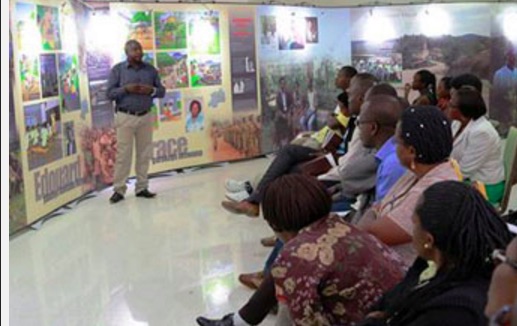
The International Conference on the Great Lakes Region (ICGLR) has concluded a two-day Regional Peace Education Summit, which it co-organised with Interpeace and UNESCO in Nairobi, Kenya. Delegates at the summit, held from 3-4 March 2016, included officials of Government Ministries responsible for Education, Gender and Youth members of the national parliaments and provincial governments, and practitioners from Burundi, the DRC, Rwanda and Uganda, as well as technical experts in peacebuilding and peace education from Interpeace and UNESCO.

summit

Ambassador Josephine Gaita, ICGLR National Coordinator of the Republic of Kenya, officially opened the summit on March 3rd. The summit focused on the implementation of formal peace education in three ICGLR member states, namely Burundi, the Democratic Republic of Congo (DRC), and Rwanda. The Republic of Uganda was also present as an active observer, while the Republic of South Sudan was represented by the country’s ICGLR National Coordinator.

Proceedings included presentations on the state of peace education in Burundi, the DRC, Rwanda and Uganda, expert presentations on the policy and practice of peace education, plenary discussions and sessions where each delegations could reflect on their country specific ideas on the way forward for effective implementation of formal peace education. Participants expressed the need for regional level peace education strategies to respond to conflicts in the Great Lakes which have often had a cross border dimension.

The summit was premised by two prior occasions. The first was an Extraordinary Summit of ICGLR Heads of States on Youth Unemployment, held on 24 July 2014 in Nairobi, which emphasized the important role of the youth in the pursuit of peace, security and stability within the region. The second was a 2014 participatory action research process carried out by Interpeace and its six partner organisations in Rwanda, Burundi and the eastern DRC. The research was based on consultations with diverse actors across the Great Lakes region and revealed that most people considered identity-based stereotypes and manipulations as a fundamental obstacle to sustainable peace in the region. The research participants suggested that peace education could serve as a priority intervention to address challenges related to identity-based stereotypes and manipulation, arguing that peace education could both strengthen existing peacebuilding efforts and help in the prevention of conflict among future generations.

(Article continued in right column)

Question related to this article:

Solidarity across national borders, What are some good examples?>

(Article continued from left column)

Interpeace’s Regional Director for Eastern and Central Africa (ECA), Johan Svensson, lauded the national delegations and the ICGLR for taking into account the sentiments of the local populations in their efforts to achieve sustainable peace and security both in their countries and in the region.

“Your commitment as stakeholders is inspiring because you are responding directly to your people’s call for peace education,” Mr Svensson remarked at the summit.

The summit revealed that peace education efforts already existed in all the three countries, albeit at varying levels of implementation. Among some of the challenges discussed was the need to develop comprehensive peace education frameworks and to foster a pedagogy that would create harmony in the understanding of integration of peace education in the three countries. These findings were emphasized by ICGLR Executive Secretary, Professor Ntumba Luaba, who called for the creation of a regional ICGLR peace education programme and acknowledged the delegates for making the first steps in the regional cause for peace education. Ministry representatives of the country delegations committed to sharing the findings of the summit with the concerned actors in their respective countries, in order to make sure that the summit results will inform future peace education efforts.

“Peace education has the potential to create a new generation of women, men and youth who will be the guardians of peace in the region,” Professor Ntumba told participants at the summit.

Professor Luaba also lauded ICGLR’s partnership with Interpeace, which made it possible for the summit to take place, and suggested the organisation of a similar Peace Education summit with participation from all the twelve ICGLR Member States. The ICGLR Member States include the Republic of Angola, the Republic of Burundi, the Central African Republic, the Republic of Congo, the Democratic Republic of Congo, the Republic of Kenya, the Republic of Rwanda, the Republic of Sudan, the Republic of South Sudan, the United Republic of Tanzania, the Republic of Uganda and the Republic of Zambia.

(Thank you to the newsletter of the Global Campaign for Peace Education for sending us this news.)

USA: Five Years After Occupy Wall Street, Bernie Sanders Continues Its Fight

. . SUSTAINABLE DEVELOPMENT . .

An article by Reno Berkeley in Inquisitr

On September 17, 2011, the Occupy Wall Street movement exploded onto the scene. Peaceful protestors set up tents and sleeping bags in New York City’s Zuccotti Park. The movement’s slogan was “We are the 99 percent.” Protestors railed against big banks, the growing foreclosure scandal, and political corruption. Five years later, the Occupy movement finally has the leader it never really had: Bernie Sanders.

occupy

In the years since the movement was squelched by a chillingly multi-pronged alliance between various U.S. government agencies and private enterprise, resentment toward those who retain a chokehold on power and money has simmered just below the surface, ready to boil over.

Enter Bernie Sanders, who has been widely embraced by those hungry for substantial change, unsatiated by simple platitudes. Did Occupy really fuel the fire of Sanders’ popularity? I asked asked members of various Bernie Sanders Facebook groups for their opinions. Approximately 20 people answered the question of whether Occupy Wall Street helped influence the election by making voters more ready to hear Bernie Sanders’ message.

Most of those who answered believed that the Occupy Movement had at least some impact in helping propel Bernie into the spotlight. Only three people did not believe the movement influenced his popularity at all. While some folks believed that Occupy didn’t change anything substantially in terms of government and policy, they did believe that it made the public more amenable to his message.

One Sanders supporter believed that Occupy is the only reason Bernie is running for president. Without Occupy to stir the pot and force a national conversation about income inequality, would the public be ready to listen to his message? Another user gave a little more detail as to why she believes it has influenced the primary race: “Occupy accomplished one thing, and that was making public dialogue out of part of the message Senator Sanders had been saying his whole career. I don’t think that the issues Occupy brought up (regarding Wall Street) would have been discussed without Bernie’s candidacy.”

When the Inquisitr interviewed Jordan Martin, the young woman behind Bernie Journey, we asked her about the Occupy Movement. She also believed that it helped raise awareness to the issues Sanders has advocated for his entire career: “Yes I do believe that the Occupy Movement has helped Bernie’s campaign. He’s the only candidate that stands against Wall Street and is not afraid to speak out against the corruption.”

(Article continued in right column)

Questions for this article

The peace movement in the United States, What are its strengths and weaknesses?

(Article continued from left column)

A December 2012, investigative story in The Guardian provided an Orwellian view of what happened with Occupy. In the first paragraph of Naomi Wolf’s piece, she reveals that the FBI, Department of Homeland Security, and local police coordinated together to crush the movement. What’s worse, the very banks the movement was protesting against were also behind it.

A document procured through the Freedom of Information Act by the Partnership for Civil Justice Fund shows just how wide the web of oppression spreads: “The document…shows a terrifying network of coordinated DHS, FBI, police, regional fusion center, and private-sector activity so completely merged into one another that the monstrous whole is, in fact, one entity: in some cases, bearing a single name, the Domestic Security Alliance Council.”

The well-oiled coordination between multiple agencies and businesses are exactly the kind of corruption Sanders has rallied against since he protested against racial segregation in the 1960s. And he continues to battle the machine, only this time, it’s corporate media outlets, chiefly, CNN, whose parent company, Time Warner, is one of Hillary Clinton’s top donors. Sanders has also had to battle the Democratic National Committee and Debbie Wasserman-Schultz, who not long ago told a news outlet the purpose for superdelegates was to prevent grassroots candidates from winning elections.

Bernie Sanders, is a grassroots candidate, but he’s become a powerhouse the likes of which the DNC can’t ignore. His most recent rallies in Utah and Arizona attracted tens of thousands of supporters waiting to hear his speeches. And Bernie might not have gotten very far if not for the attention Occupy brought to the very issues Sanders has held close to his heart since he chained himself to a young Black woman back in 1962.

Whereas the Occupy Movement lacked real leadership and cohesion, Bernie Sanders has essentially stepped forward to become the defunct movement’s de facto leader through his presidential campaign. Part of his appeal is that he hasn’t usurped the public sentiment against corruption in government and big business. Rather, his appeal stems from the fact that he has worked toward the very things the Occupy Movement symbolized: economic equality, racial equality, equality in educational access, immigration reform. The list goes on.

For five years, the movement’s fire was dimmed, never quite flickering out. Last year, Bernie Sanders stepped up to the glowing embers, added kindling to the fire, and began speaking to the proverbial empty room. Slowly, one by one, voters heard his message. Eleven months later, neither the government, the big banks, nor billionaires can can stop the fire that Bernie Sanders stoked. Indeed, Bernie’s political revolution has his supporters feeling the Bern.

Mediation as a tool for nonviolence and culture of peace


This question pertains to the following CPNN articles.

Mediation injects new impetus of peace into a turbulent world

Chile: Transforming conflicts: USS promotes a culture of peace

Fostering a Culture of Peace. Member Spotlight: Dr. Stephanie Myers

International dialogue for peer mediation

Argentina: International Meeting of Participatory Conflict Resolution Methods

Brazil Federal District: Management of Culture of Peace and Mediation completes one year this Wednesday

Mexico: UAEMéx and the Judiciary promote a culture of peace

Bolivia: XVIII World Mediation Congress

Argentina : Federal Network of Centers for Community Mediation and Training in School Mediation with an Example from Province of Buenos Aires

Granada, Spain : The Mediation Group shows members how to put the transformative model into practice

Panama : Management results in 2021 of the Coordination Office of the Community Mediation Program

Centers for Mediation, Conciliation and Restorative Justice in the State of Mexico

Indian Ministry of Law and Justice : The Mediation Bill, 2021

Dominican Republic: 11 Thousand People Train in Conflict Resolution and Culture of Peace in 2021

Mexico: Municipal Mediation Unit of the City of Merida to promote a Culture of Peace

The 3rd Latin American Congress of Restorative Justice closed with more than 4,400 registered participants

Oaxaca, Mexico: Judicial Power privileges culture of peace with alternative justice

Argentina: Conflicts: Positive Balance of Community Mediations

Spain: Professor Marta Gonzalo Quiroga recognized for her impetus to the culture of peace

Querétaro, Mexico: Mediation has benefited almost 8 thousand people in the capital

Argentina: The T20 Summit and the 14th World Congress of Mediation and a Culture of Peace: Integrating approaches

PAYNCoP Gabon organizes a conference on the challenges of building peace in Africa

Bangui opens training workshop on mediation and conflict resolution

Mexico: Culture of Peace Congress – Necessity of the XXI Century

Argentina: XIV World Congress of Mediation and Culture of Peace

Petropolis-Peace celebrates one year and 400 mediations

Tandil, Argentina: Municipal Mediation Center participates in the Provincial Meeting of Mediators

Peru: Launch of the national extrajudicial conciliation campaign

Mexico: Marcos Aguilar Inaugurates Forum “Towards a Culture of Peace”

Argentina: Participants and Themes Announced for the IV Meeting of the International Peace Observatory

Mexico: UAT teaches university students “Mediation for a Culture of Peace”

México: Imparte UAT a universitarios “La mediación para una cultura de paz”

Mexico: Sixteenth National Congress of Mediation inaugurated in Tlalnepantla

México: Inauguran en Tlalnepantla el XVI congreso nacional de mediación

Spain: The Second Latin American Congress makes Vila-real the international capital of police mediation

España: El II Congreso Iberoamericano sitúa a Vila-real como capital internacional de la mediación policial

Mediterranean meeting on mediation to be held in Tangier, Morocco

Guatemala: Se Da A Conocer El III Congreso Internacional De Mediación

The Third International Conference on Mediation to take place in Guatemala

México: Promueve la SEGOB la mediación como alternativa para solución de conflictos

Mexico: The government promotes mediation as an alternative for the resolution of conflicts

Colombia: Siga en vivo el XII Congreso Mundial de Mediación y Cultura de Paz

Colombia: Follow live the 12th World Congress of Mediation and Culture of Peace

Honduras: OEA recibirá a facilitadores judiciales en el diálogo de hoy

Honduras: OAS to receive report about judicial facilitators

Bolivia: Los conciliadores se forman a contrarreloj en cultura de paz

Bolivia: Mediators are formed in culture of peace

Johan Galtung, recognized as a leading peace educator, has this to say with regard to mediation, addressed in particular to the question of mediation by police:

[There are] different levels of “crime” mainly for the lower classes; “scandal”, “tragedy” for those higher up. . . .The special police for economic crimes are not present at board meetings where super-crimes are concocted. Yet, the local police “on the beat” are often there when lower class crimes are in the making.

How can they mediate? By talking with them, identifying what they want, telling very clearly that crime is illegitimate, and then suggesting other ways of meeting legitimate needs with a new reality.

Case 1: Economic crimes, or with economic roots. A dirt poor family not knowing where the meal next day may come from. The son brings in some money through petty thefts, the daughter by selling her body. Sooner or later they are captured, brought to court, or to “foster homes” to become law-abiding–and the family sinks into more poverty.

New reality: lifting the economic bottom up, meeting the basic needs for food and water, clothes and a roof, health services and education–for dignity, and for participation in the economy as consumers and producers. The police can help organize basic need cooperatives for the poorest in the poorest local communities–with potential and real law-breakers like the boy and the girl mentioned– with sales points directly to neighbors with some money. In a couple of years dignity is restored, the credit is paid back, the whole economy has improved.

Case 2: Crimes for a risky, less boring life. They want to beat the police, playing games at the limit or beyond of legality: fame for a day. Others want to use their bodies in a society designed for the minds of the educated (who can study how to profit from lower class countries and peoples in the Departments of Economics e.g. as “comparative advantages” and “laws of the market”). Alternatives are badly needed.

New reality: Sports, team sports like football for cooperation, using the body, taking risks at the limits of the lines, winning and losing, with a second chance next Sunday. Instant fame. Great.

Another way is Politics, Democracy, organizations, meetings, resolutions, demonstrations, all nonviolent, not using wars, winning and losing, with a second chance in four years or so. Great.

Dear Police Officers, please go ahead– with this, and more. And tell Military Officers about mediation to remove wars and build peace.

Spain: The Second Latin American Congress makes Vila-real the international capital of police mediation

EDUCATION FOR PEACE .

An article from the Castellón Journal (translated by CPNN)

The town of Vila-real has again become these days the “world capital of police mediation” thanks to the second edition of the Ibero-American Congress of Police Mediation held until Friday [April 15] ]at the Municipal Auditorium Músic Rafael Beltrán Moner with more than 400 congressmen and 40 speakers. The mayor, José Benlloch, the president of the Generalitat, Ximo Puig, the rector of the Universitat Jaume I, Vicent Climent, and the chief of the local police, José Ramón Nieto, inaugurated this morning the congress, organized by the city of Vila-real collaboration with the UJI, which aims to “deepen the values ​​of dialogue and agreement” as effective and efficient tools for conflict resolution and “peace-building”.

mediacion
The mayor, the president of the Generalitat and the rector of the Universitat Jaume I inaugurate an event that brings together more than 400 delegates and 40 speakers

Benlloch highlighted especially the role of local police in Vila-real, through the Unit of Police Mediation and the Department of Police Mediation of the University which are consolidating “a methodology still in its infancy but which has already shown its full potential “. “The police unit that was born as a pioneer in 2004, has given new answers to different realities. Today it marks the way forward for police forces around the world,” says the mayor. To further strengthen this discipline, from the theoretical and practical level, Benlloch advocates a reform of regional laws concerning local police that “gives greater means to our bodies of municipal security, who are closest to the problems of people, that incorporate a culture of mediation as an intrinsic part of their work”; this is a reform on which, he points out, the Generalitat of Valencia has been working in recent months.
   
(Article continued in right column)

(click here for the Spanish version)

Questions for this article:

Mediation as a tool for nonviolence and culture of peace

Where are police being trained in culture of peace?

(Article continued from left column)

The president of the Consell stressed in his speech the support of the Regional Administration for the practice of mediation as an example of “social innovation” that addresses conflict resolution as “diversity management ensuring equal between the parties”. “Police mediation extends the value of the police at the municipal level, with the added value of proximity,” says Puig, for whom the Second Latin American Congress of Police Mediation “is a demonstration of the role of local goverment to participate in global debates. The City of Vila-real has opened a fundamental debate about police mediation as prevention with the training of security forces for dialogue and consensus.”

In the same vein, the rector of the Universitat Jaume I stressed the importance of meetings such as the Ibero-American Congress to consolidate a discipline that is “still emerging” and to “advance values ​​such as respect, freedom and justice, which are the values of peaceful coexistence. ” Rector Climent considers the Congress and the work done by the Department of Police Mediation of the city Vila-real to be a “reference in the international arena, as an example of” inter-agency collaboration, through the transfer of innovative knowledge.”

After the inaugural presentations, the mayor of Vila-real delivered the first lecture of the conference, which in its first day featured speakers such as Peter Blasco, on behalf of the NGO Messengers for Peace, the inspector general commissioner of the National Police of Panama, General Willington Zambrano, and the human rights activist Mamadou Dia. The morning session, included the award of the Josep Redorta prize to deepen the implementation of mediation in police forces in Latin America, while on Friday the Alternative Nobel Laureate and founder of les Peace Studies, Johan Galtung, spoke at the closing session.

España: El II Congreso Iberoamericano sitúa a Vila-real como capital internacional de la mediación policial

. . EDUCACIÓN PARA LA PAZ . .

Un articulo de Castellón Diario

La ciudad de Vila-real vuelve a convertirse estos días en la “capital mundial de la mediación policial”, en la segunda edición del Congreso Iberoamericano de Mediación Policial que se celebra hasta el viernes en el Auditorio Municipal Músic Rafael Beltrán Moner con más de 400 congresistas y 40 ponentes. El alcalde de la ciudad, José Benlloch, el presidente de la Generalitat, Ximo Puig, el rector de la Universitat Jaume I, Vicent Climent, y el intendente general jefe de la Policía Local, José Ramón Nieto, han inaugurado esta mañana el congreso, organizado por el Ayuntamiento de Vila-real con la colaboración de la UJI, que persigue “profundizar en los valores del diálogo y el acuerdo” como instrumentos efectivos y eficaces para la resolución de conflictos y la “construcción de paz”.

mediacion
El alcalde, el presidente de la Generalitat y el rector de la UJI inauguran un certamen que reúne hasta el viernes a más de 400 congresistas y 40 ponentes

Benlloch ha querido destacar sobre todo el papel de la Policía Local de Vila-real, a través de la Unidad de Mediación Policial y la Cátedra de Mediación Policial de la UJI, para consolidar “una metodología todavía incipiente pero que ya ha demostrado toda su potencialidad”. “Aquella unidad policial que nacía de manera pionera en 2004, dando respuestas nuevas a realidades diferentes, hoy marca el camino a seguir para cuerpos policiales de todo el mundo”, señala el alcalde. Para seguir consolidando esta disciplina, desde el punto de vista teórico y práctico, Benlloch aboga por una reforma de la ley autonómica de Policía Local que “permita dotar de mayores medios a nuestros cuerpos de seguridad municipales, los más próximos a los problemas de la gente, incorporando la cultura mediadora como parte intrínseca del trabajo de los agentes”; una reforma en la que, puntualiza, la Generalitat Valenciana ya viene trabajando en los últimos meses.

(El artículo continúa en el lado derecho de la página.)

( Clickear aquí para la version inglês.)

Question for this article:

Mediation as a tool for nonviolence and a culture of peace

(Artículo continúa de la parte izquierda de la página)

El propio presidente del Consell ha destacado en su discurso el apoyo de la Administración autonómica a la práctica mediadora como un ejemplo de “innovación social” que aborda la resolución de conflictos como “gestión de la diversidad garantizando condiciones de igualdad entre las partes”. “La mediación policial supone, además, ampliar el valor de la policía desde el ámbito municipal, que es el del valor añadido de la proximidad”, afirma Puig, para quien el II Congreso Iberoamericano de Mediación Policial “es una demostración del papel del poder local para participar en debates globales y en particular del Ayuntamiento de Vila-real por abrir un debate fundamental como es el de la mediación policial como prevención y capacitación de las fuerzas de seguridad a favor del diálogo y del acuerdo”.

En la misma línea, el rector de la Universitat Jaume I ha incidido en la importancia de encuentros como el congreso iberoamericano para consolidar una disciplina “todavía incipiente” y “avanzar en valores como el respeto, la libertad y la justicia, que son los valores de la convivencia pacífica”. Climent ha puesto el congreso y el trabajo realizado por la Cátedra de Mediación Policial Ciutat de Vila-real, “referente en el ámbito internacional, como ejemplo de “la colaboración interinstitucional, mediante la transferencia de conocimientos innovadores” que la UJI ha venido implementando desde su nacimiento, hace ahora 25 años.

Tras los parlamentos inaugurales, el alcalde de Vila-real ha impartido la primera conferencia del congreso, que en su primera jornada cuenta con ponentes como Pedro Blasco, en representación de la ONG Mensajeros por la Paz, el comisionado inspector general de la Policía Nacional de Panamá, general Willington Zambrano, o el activista de derechos humanos Mamdou Dia. La jornada de mañana, que contará con la entrega del premio Josep Redorta, profundizará en la implementación de la mediación en cuerpos policiales de Iberoamérica, mientras que el viernes el premio Nobel alternativo y fundador de les Estudios de la Paz, Johan Galtung, centrará las ponencias de la sesión de clausura.

Nonviolence Charter: Progress Report #8 (April 2016)

EDUCATION FOR PEACE .

An article by Robert J. Burrowes, Anita McKone and Anahata Giri in the TRANSCEND Media Service (abbreviated)

Here is the latest six-monthly report on progress in relation to ‘The People’s Charter to Create a Nonviolent World’ and a sample of news about Charter signatories. Building a worldwide consensus against the use of violence in all contexts is quite a challenge but we are making solid progress!

charter

Since our last report on 14 October 2015 –which Antonio C. S. Rosa kindly published in the TRANSCEND Media Service Weekly Digest—

–we have gained our first signatories in another four countries – Argentina, Costa Rica, Kazakhstan and West Papua – a total of 93 countries now. We also have 104 organisations from 33 countries, the latest of which is the Associação Internacional de Poetas based in Brazil. If you wish, you can see the list of organisational endorsements on the Charter website.

If you wish to see individual signatories, click on the ‘View signatures’ item in the sidebar. You can use the search facility if you want to look for a specific name.

The latest progress report article ‘Ending Human Violence is a Task for Each of Us’ was recently distributed to many progressive news websites and mainstream newspapers: it was published by a number of progressive outlets in fourteen countries, thanks to very supportive editors–several of whom are Charter signatories. . .

You may remember that in the last Charter progress report we repeated our promise to report on those of you about whom we knew less by asking you to send us some information about yourself and the reminder that you don’t have to be world famous to be valued here. Well, the good news is that a number of people responded and, in addition, we did some more research ourselves. However, as we continue to find, extraordinary people seem to invariably consider themselves ‘ordinary’. So, irrespective of how you consider yourself, we would love to hear about you for the next report!

(Editor’s note: The news of charter signatories is too long to be printed here, so reader’s are encouraged to see them here in the full report.

Question for this article: