Mali: The struggle against terrorism: Towards the creation of a global network of Ulemas

TOLERANCE AND SOLIDARITY .

An article from Malijet (translated by CPNN)

The Malian Association for Peace and Well-being (AMPS) returns to its quest for a peaceful and tolerant Islam in Mali. The first attempt was postponed after the terrorist attack of November 20, 2015 against the Radisson Blue hotel. This time, the organizers have set a new date for the conference to be held from 14 to 16 May 2016 in the Bamako International conference Centre.

Mali

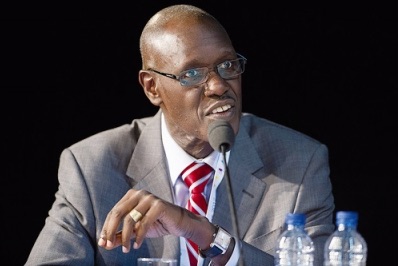
According to the president of AMPS, Mamadou Moussa Diallo, the objective of this meeting is to understand and claim Islam as a factor of peace, tolerance, solidarity and sharing. To achieve this goal, he explains, speakers will come from several countries to discuss topics such as “violence as seen by Islam”, “Islam: the relationship between religious extremism and poverty”, “Islam, peace and development “,” the media and the culture of peace.”

“On the sidelines of the conference, we also intend to set up a global network of religious leaders to prevent the rise of extremism in Africa and the world,” said the president of the association. “We need such a global network of Ulemas to struggle against the terrorist forces that have have gained strength by their international cooperation.”

(Click here for the original French version of this article.)

Question for this article

Building peace from Colombian universities

FREE FLOW OF INFORMATION

An article from Fundacion Escuelas de Paz, reprinted by the Global Campaign for Peace Education

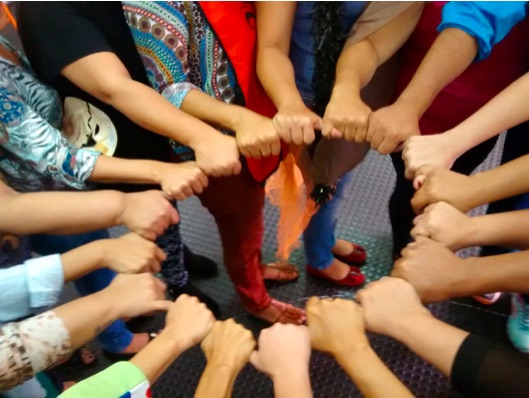
“Peacebuilders” is a program that seeks the integral formation of 1,200 university students in Colombia, involved in the scholarship program “Dreams of Peace” of Bancolombia Foundation, in knowledge, skills, abilities and attitudes conducive to building Cultures of Peace.

Colombia
Click on the photo to enlarge

Peacebuilders is carried out by Escuelas de Paz (Schools of Peace) Foundation based on the six components proposed by UNESCO in the 2000 manifesto for a culture of peace and non-violence. Also it works on the six pillars raised by the methodology of education for peace, known as “The Flower for the Culture of Peace”. Finally, as a transversal axis the Guiding Principles of UN Secretary General on the Participation of Youth in Peace Building were taken.

These participants will implement impact actions on their university communities through collective nonviolent actions that enable a more just society. Due to the national situation of peace talks between the government and the FARC guerrilla in Havana, Cuba, it was formed a group of 70 students leaders in building and advocacy of cultures of peace, historical memory and reconciliation, with capabilities for replication in the next semesters and to design and implement new actions for peace within the institutions in which they were formed.

In a first stage, 320 students have been trained in three cities in the country: Bogotá D.C, Cartagena y Manizales since July 2015. The scholarship program of Bancolombia Foundation is an initiative developed from the line of social management of Bancolombia, who have an interest in developing a program of high social impact, which aims to provide resources and conditions that allow students with specific characteristics as vulnerable conditions, to access to higher education in technical, technological and university programs nationwide.

Question(s) related to this article:

Court victory gives momentum to long struggle against London arms fair

DISARMAMENT & SECURITY .

An article byJavier Gárate, Waging Nonviolence (abbreviated)

After a week-long trial that ended on April 15, a judge from the Stratford Magistrate Court in London found me and seven co-defendants not guilty for our actions last September to shut down the Defence Security and Equipment International arms fair, or DSEI, on the basis that we were preventing a greater crime. This is a huge victory in the long struggle to shut down one of the largest arms fairs in the world, which takes place in east London every other year.

armsfair
The activists celebrated when their not guilty verdict was announced outside the court on April 15. (WNV/Andrew Dey)
Click on the photo to enlarge

The last fair was in September 2015, and it saw more than 1,500 exhibitors from around the world displaying the latest technology of the war industry. DSEI is an invitation-only event, where invites go to governments, industry representatives and specialized press. Delegations from repressive regimes and countries violating human rights — such as Saudi Arabia, Turkey and Israel — walk through its corridors every other year browsing the latest weaponry. This huge event is not just to showcase the latest technology, but also to facilitate new sales. . .

It all started on September 7 with a day of action to stop arming Israel. The first action was a blockade — for hours — of an armored vehicle that was heading to the Excel Centre. On the days that followed there were actions focused on faith groups against war profiteering, the arms trade and climate change, academics against the arms trade, and freedom of movement, not of weapons. The week concluded with a “Big Day of Action.” The Stop the Arms Fair coalition and Campaign Against Arms Trade, or CAAT, provided the general frame for the different focuses each day and supported groups taking actions, but each group doing an action was self-organized.

By connecting the issue of the arms trade to other struggles — such as Palestinian solidarity, climate change and refugees — it meant that a diversity of groups got involved during the week. Important bridges were built between movements, and the arms trade was seen not as an isolated problem but rather as part of the wider struggle for social justice. . . .

We decided to do our action on the Big Day of Action called for on September 12, which had the aim of gathering as many people as possible to continue to disrupt preparations for the arms fair. During the morning of the action there were speeches from a wide range of groups and organizations. As the day progressed, we took the streets and the police began to remove us to let the traffic pass. At one point, the police were taking longer to act, and the three of us took our gear, ran to the road and got on the ground, locking ourselves together using the arm tubes.

This meant we had secured the blockade for some time, as the police in the United Kingdom — in most cases — will not just move you if you are locking on. The blockade provided a perfect place for people to gather, and a loudspeaker was used to continue with presentations. During the hours that we were on the blockade we heard from Isa Alaali, a Bahraini citizen, about the torture he experienced, as well as the U.K. military’s support of the Bahraini regime. We also heard from Mexican activists about the Ayotzinapa struggle for justice and the militarization of Mexican society.

From the beginning, the police came to tell us that if we didn’t unlock ourselves they would arrest us. But they didn’t seem to be in much of a hurry. Hours passed and there was no sign that they were going to cut our tubes and arrest us. After several hours the police finally made their move, clearing the road of all the other protesters. In the end, they arrested the three of us on charges of willful obstruction of the highway.

Even though at any moment we could have released ourselves and avoided arrest, we wanted to maintain the blockade to disrupt the preparations of the arms fair for as long as possible. We were also aware that arrest could mean being charged and put on trial, but we didn’t really think much about it at the time. Our focus was on the action itself. After the arrest we were in custody for only a few hours before being given an order to come back to court a month later.

Putting the arms trade on trial

That court appearance was crucial. We could either plead guilty and pay a fine or plead not guilty and face a trial. It was not just the three of us in court, but everyone who had been arrested during the week of action against DSEI. For some time I was unsure what to plea. I wasn’t really in the position to face a long trial, and it seemed that the chances of winning in court were small. But at the same time I saw it as an opportunity to learn how to use the court in campaigning, as I had been arrested in the past but never gone to court. The fact that all the other arrestees were clear on pleading not guilty helped me make the decision. This was a collective action and we would treat the trial collectively as well. The goal was to put the arms trade on trial by facing trial ourselves. . . .

During the trial, which was scheduled to last five days, we heard evidence from all eight co-defendants. Among them was Alaali, who was forced to flee Bahrain after being imprisoned and tortured for his participation in the 2011 protests. During the uprising, thousands of Bahrainis protested and were crushed by force with a violent intervention from Saudi Arabia. Thousands were arrested and hundreds killed. Isa told the court that he was arrested three times in 2013, and that police held a gun to his head. He was taken to the police station and stripped and beaten until he became unconscious. The police tied his hands behind his back, beat him and threatened to cut off his penis in an effort to force him to give false confessions. Bahrain has purchased nearly $65 million of weapons from the United Kingdom since the 2011 uprising. Needless to say, Isa felt compelled to protest at DSEI.

(continued in right column)

Question for this article:

How can the peace movement become stronger and more effective?

(continued from left column)

Lisa Butler, another co-defendant, highlighted the ongoing mass killings of the Kurdish people by Turkey. Having visited Kurdistan recently, she explained to the judge about the violent curfews that have been imposed on Kurdish cities. Tanks and rockets have been firing shells and mortars into the cities and snipers have been gunning people down on the street, including children. Instead of banning Turkey from DSEI, the British government welcomed these war criminals with open arms.

Other defendants stated that they were particularly concerned with the sales of arms to countries such as Saudi Arabia, Pakistan and Israel. As such, they were compelled to act because illegal weapons, such as torture equipment, have been found at previous DSEI events.

“In every single previous arms fair, at least since 2005, illegal activity has been found to be happening,” co-defendant Tom Franklin told the court. “We have evidence of that. We have parliamentary reports. We have reports from Amnesty International. We have reports from Caroline Lucas, the Green MP, listing illegal weapons being sold.”

When my turn came to give evidence I was quite nervous. The entire time that I was being cross-examined by the prosecution I felt like I was giving the wrong answers, undermining my case. But at the same time, I knew that it was the right thing to do — to stand there and denounce the crimes happening at DSEI. My statement also focused on growing up in Chile under the military dictatorship of Augusto Pinochet and the impact this had on me as a kid.

“I lived under a dictatorship for nearly 10 years. I remember curfews and a general sense of fear of the police and the military due to the horrible regime’s repression,” I testified. “The father of my school classmate was murdered by the secret police when I was six years old.” I also mentioned in court that for many years I had been protesting in different ways against DSEI and that for me the action was not just about ending the sale of illegal weapons, but to shut down the fair as a step toward stopping the war machine. After giving evidence, there was a huge weight taken off me.

We were joined in court by expert witnesses. Among them was Oliver Sprague from Amnesty International, who talked about the illegal weapons that have been sold at every DSEI arms fair. He also highlighted the “legal” weapons that are used illegally. In his report, Sprague gave evidence of arms being used in the Yemen war. “[The Yemen] conflict has cost at least 3,000 civilian lives, 2.5 million people [have been] displaced and 82 percent of the population — some 21.2 million people — currently require some form of humanitarian assistance,” he testified. “Importantly, official delegations from countries directly involved in military action in Yemen were in receipt of official U.K. government invitations to the event, including Saudi Arabia, the United Arab Emirates, Egypt, Kuwait, Bahrain, Morocco and Jordan.”

Sprague told the court that Saudi Arabia is the largest recipient of U.K. arms. Indeed, from July to September 2015, the British government granted export licenses for bombs — of the type being used in Yemen by Saudi Arabia — worth $1.7 billion. This was four times greater than the total exported to all countries in the previous four years.

A key moment in the trial happened when the defense asked Sprague what difference all the evidence he has given to Parliament and other official committees about the crimes taking place at DSEI has made. “I have to say all this has made zero difference,” he replied, which supported our argument that it was necessary to take direct action to stop these illegalities from happening.

Kat Hobbs of CAAT gave the court an overview of Clarion Events, the company that organizes DSEI. “Sixty-one countries were formally invited to DSEI in 2015 by the government, and many more were invited by Clarion, who advertised the fair as the ‘place to do business,’” she said. “Of those 61 countries, 14 are classified as being authoritarian and six are at war, including Saudi Arabia and Turkey.”

Acquitted for preventing a greater crime

After the week-long trial it was time for the judge to present his judgement. “The defendants belief that weapons were being sold unlawfully at DSEI was supported by the detailed expert evidence on this point,” he stated. “I was impressed by the evidence of each defendant … as to how they came to the conclusion that the form of direct action which they chose to adopt was the only effective method left to them in seeking to prevent the unlawful sale of arms which they believed was occurring at the 2015 DSEI … I believe that the defendants were perfectly sincere in their conclusions first that the unlawful sale of arms would almost certainly be occurring at DSEI and, secondly, that their intervention was necessary to seek to prevent this.”

We were acquitted of all charges on the basis that our actions were justified in order to prevent a greater crime. It was “a wonderful moment in which research, activism and the law came together to produce a crucial decision,” said arms trade expert and former member of the South African Parliament Andrew Feinstein. “It is in this way that we will ultimately change the nature of the global arms trade.”

Since the trial verdict there has been extensive media coverage and interest in the case. There have also been calls for the government and the Metropolitan Police to investigate DSEI, but investigations have happened in the past, and as Sprague said, they have made zero difference. Therefore, it is crucial to continue to take action to shut down the fair.

The day of the verdict CAAT sent out a pledge for people to take action in 2017 and already nearly 500 people inspired by the court verdict have signed it. Among activists, there is a belief that next time, if we have enough people willing to put their bodies on the line — combined with other forms of actions — we can actually shut the arms fair down for good.

USA: Father Daniel Berrigan, z’l dead at 94

FREE FLOW OF INFORMATION

Distributed by email from Rabbi Michael Lerner, Tikkun Magazine

Daniel Berrigan was one of  the most inspiring figures of the anti-war and social justice movements of the past fifty years. He died on Saturday, April 30, 2016, and will be sorely missed by all of us who knew him. I was first introduced to him by my mentor Abraham Joshua Heschel in 1968 when he and Heschel and Martin Luther King had become prominent voices in the Clergy and Laity Against the War in Vietnam. He told me that he had been inspired by the civil disobedience and militant demonstrations that were sweeping the country in 1966-68, many of them led by Students for a Democratic Society (at the time I was chair of the University of California Berkeley chapter). . .

Berrigan

Over the course of the ensuing 48 years I was inspired by his activism and grateful for his support for Tikkun magazine. Heschel told me how very important Dan was for him–particularly in the dark days after Nixon had been elected and escalated the bombings in Vietnam, Cambodia and Laos. Those of us who were activists were particularly heartened by his willingness to publicly challenge the chicken-heartedness and moral obtuseness of religious leaders in the Catholic, Protestant and Jewish world who privately understood that the Vietnam war was immoral but who would not publicly condemn it and instead condemned the nonviolent activism of the anti-war movement because we were disobeying the law, burning our draft cards, disrupting the campus recruitment into the CIA and the ROTC, and blocking entrance into army recruitment centers and the Pentagon!

Here is a brief summary of Berrigan’s achievements as written for the Catholic magazine AMERICA   He co-founded the Catholic Peace Fellowship and the interfaith group Clergy and Laity Concerned about Vietnam, whose leaders included Martin Luther King Jr., Richard John Neuhaus and Abraham Joshua Heschel.

Berrigan regularly corresponded with Thomas Merton, Dorothy Day and William Stringfellow, among others. He also made annual trips to the Abbey of Gethsemani, Merton’s home, to give talks to the Trappist novices.

In Conjectures of a Guilty Bystander (1966), Merton described Berrigan as “an altogether winning and warm intelligence and a man who, I think, has more than anyone I have ever met the true wide- ranging and simple heart of the Jesuit: zeal, compassion, understanding, and uninhibited religious freedom. Just seeing him restores one’s hope in the Church.”

A dramatic year of assassinations and protests that shook the conscience of America, 1968 also proved to be a watershed year for Berrigan. In February, he flew to Hanoi, North Vietnam, with the historian Howard Zinn and assisted in the release of three captured U.S. pilots. On their first night in Hanoi, they awoke to an air-raid siren and U.S. bombs and had to find shelter.

As the United States continued to escalate the war, Berrigan worried that conventional protests had little chance of influencing government policy. His brother, Philip, then a Josephite priest, had already taken a much greater risk: In October 1967, he broke into a draft board office in Baltimore and poured blood on the draft files.

Undeterred at the looming legal consequences, Philip planned another draft board action and invited his younger brother to join him. Daniel agreed.

On May 17, 1968, the Berrigan brothers joined seven other Catholic peace activists in Catonsville, Md., where they took several hundreds of draft files from the local draft board and set them on fire in a nearby parking lot, using homemade napalm. Napalm is a flammable liquid that was used extensively by the United States in Vietnam.

Daniel said in a statement, “Our apologies, good friends, for the fracture of good order, the burning of paper instead of children, the angering of the orderlies in the front parlor of the charnel house. We could not, so help us God, do otherwise.”

(Article continued in the column on the right)

Question(s) related to this article:

Where in the world can we find good leadership today?

(Article continued from the column on the left)

Berrigan was tried and convicted for the action. When it came time for sentencing, however, he went underground and evaded the Federal Bureau of Investigation for four months.

“I knew I would be apprehended eventually,” he told America in an interview in 2009, “but I wanted to draw attention for as long as possible to the Vietnam War and to Nixon’s ordering military action in Cambodia.”

The F.B.I. finally apprehended him on Block Island, R.I., at the home of theologian William Stringfellow, in August 1970. He spent 18 months in Danbury federal prison, during which he and Philip appeared on the cover of Time magazine.

The brothers, lifelong recidivists, were far from finished.

On Sept. 9, 1980, Daniel and Philip joined seven others in busting into the General Electric missile plant in King of Prussia, Pa., where they hammered on an unarmed nuclear weapon—the first Plowshares action. They faced 10 years in prison for the action but were sentenced to time served.

In his courtroom testimony at the Plowshares trial, Berrigan described his daily confrontation with death as he accompanied the dying at St. Rose Cancer Home in New York City. He said the Plowshares action was connected with this ministry of facing death and struggling against it. In 1984, he began working at St. Vincent’s Hospital, New York City, where he ministered to men and women with H.I.V.-AIDS.

“It’s terrible for me to live in a time where I have nothing to say to human beings except, ‘Stop killing,’” he explained at the Plowshares trial. “There are other beautiful things that I would love to be saying to people.”

In 1997 he was nominated for the Nobel Peace Prize.

Berrigan’s later years were devoted to Scripture study, writing, giving retreats, correspondence with friends and admirers, mentorship of young Jesuits and peace activists, and being an uncle to two generations of Berrigans. He published several biblical commentaries that blended scholarship with pastoral reflection and poetic wit.

“Berrigan is evidently incapable of writing a prosaic sentence,” biblical scholar Walter Brueggemann wrote in a review of Berrigan’s Genesis (2006). “He imitates his creator with his generative word that calls forth linkages and incongruities and opens spaces that bewilder and dazzle and summon the reader.”

From 1976 to 2012, Berrigan was a member of the West Side Jesuit Community, later the Thompson Street Jesuit Community, in New York City. During those years, he helped lead the Kairos Community, a group of friends and activists dedicated to Scripture study and nonviolent direct action.

Even as an octogenarian, Berrigan continued to protest, turning his attention to the U.S. wars in Afghanistan and Iraq, the prison in Guantánamo Bay and the Occupy Wall Street movement. Friends remember Berrigan as courageous and creative in love, a person of integrity who was willing to pay the price, a beacon of hope and a sensitive and caring friend.

(This summary of one part of his achievements was written by Luke Hansen, S.J., a former associate editor of America, now a student at the Jesuit School of Theology of Santa Clara University, Berkeley, Calif.).

We at Tikkun magazine, the voice of Jewish progressives, liberals, radicals and anti-capitalist non-violent revolutionaries, will deeply mourn the loss of our brother Daniel Berrigan. Dan was a true spiritual progressive, and it was a great honor for us when he joined the Advisory Board of the Network of Spiritual Progressives. His memory will always be a blessing (z’l=zeycher tzadik liv’racha).
–Rabbi Michael Lerner

Myanmar’s Aung San Suu Kyi Pushes for Peace With Ethnic Rebels

DISARMAMENT & SECURITY .

Roshni Kapur in The Diplomat

Democratic icon and National League for Democracy (NLD) leader Aung San Suu Kyi has reached out to some of the oldest ethnic rebel groups in Myanmar. Her goal is clear: she wants to push for a wide-ranging peace accord with all insurgent groups, including those that refused to participate with the previous government.

Myanmar
Image Credit: Wikimedia Commons/ Claude TRUONG-NGOC

Friction between minority groups and the government have been ongoing for decades. Myanmar is one of the most ethnically and religiously diverse countries in Asia. While the majority of the population is the Burman (Bamar) ethnic group making up an estimated 68 percent of the population, the remaining 32 of the population comprises a number of different groups, including the Shan (9 percent), Kayin (7 percent), Rakhine (3.5 percent), Chinese (2.5 percent), Mon (2 percent), Kachin (1.5 percent), Indians (1.25 percent), and Kayah (0.75 percent).

The tensions and antagonism are attributed to this heterogeneous composition. Myanmar’s ethnic groups are divided in terms of religion, language, and ideology, as well as being separated geographically. The British rulers tried to unite the variant ethnic groups before officially pulling out in 1947. Suu Kyi’s father, General Aung San, was a respected military leader who worked to unite various groups across the country for a democratic reform.

However, the Communist Party of Burma led firefights against some ethnic groups to maintain territorial control and a monopoly of power. As a result, many ethnic groups picked up arms to safeguard their states from majority rule. These ethnic rebel groups are located in remote parts of the country that do not receive sufficient international attention and are often simply labeled as “rebel armies” without any understanding the nuances of the situation.

Almost all ethnic groups have their own armies, which they have been using to protect their people and push for fundamental rights within their territory. The Karen National Liberation Army (KNLA), one of the oldest rebel groups in the world, have demanded autonomy and ethnic rights for the Karen people since 1949. In 1961, the Kachin rebels formed the Kachin Independence Army (KIA), the military wing of the Kachin Independence Organization (KIO).

(continued in right column)

Question related to this article

Is there progress towards democracy and respect for human rights in Myanmar?

(continued from left column)

Many rebel groups have complained about the unrestrained force used by the state army. Around 3,700 villages have been destroyed in eastern Myanmar in the past 15 years.

Each tribe wants to protect its individual languages, customs, roots, and natural resources. Some ethnic groups have historical ties to China. The Kokang, who are ethnic Han, speak Mandarin and their militia leader, Phone Kyar Shin, lived in China for years. The United Wa State Army, which controls one of the largest holdout territories in Myanmar, reportedly has Chinese backing too. They use the Chinese currency and have named Mandarin an official language.

The previous government, under the leadership of Prime Minister Thein Sein, pushed for a ceasefire with some holdout militias in October 2015, but only eight of the 15 militant groups turned up to sign the proposal. The armed wings of the Kachin, Wa, and Shan refused to cooperate until all ethnic rebel groups agreed to be a part of the government’s initiative.

However, the NLD’s accession into power marks signs of optimism for the country. People are hopeful that a permanent peace accord is possible, since many ethnic groups have welcomed the newly elected government and are willing to join renewed peace talks. Suu Kyi’s vision of a peaceful reconciliation is similar to her late father’s. She wants to bring all ethnic groups together for a nonviolent means of reconciliation that will pave way for a democratic society. The Kachin and Karen rebels may trust Suu Kyi and the NLD’s vision of a peaceful reconciliation more the military junta and its political arm, National Unity Party (NUP).

“We are eager to start peace talks,” La Nan, a spokesman of the Kachin Independent Army, was quoted as saying in an online article by Thailand’s Nation Multimedia.

Other insurgent groups such as the United Wa State Army and the Shan State Army (SSA) have also welcomed the NLD’s triumphant victory and sent positive signals. Suu Kyi may take additional steps to reassure ethnic minorities that their vested interests will be represented in the NLD-led government for an inclusive and participative democracy.

Boletín español: el 01 de mayo 2016

LA NO-VIOLENCIA HACE HISTORIA

La no-violencia está en las noticias actuales estos días. Para empezar, recordemos las palabras del gran estrategita de la no violencia, Martin Luther King, hablando de Mahatma Gandhi: “La resistencia no-violenta no es un método para cobardes; es lo contrario. Si uno usa estos métodos porque tiene miedo o simplemente porque carece de los instrumentos de la violencia, no se es verdaderamente no-violento. Por eso que a menudo Gandhi dijo que si la cobardía es la única alternativa a la violencia, es mejor luchar… la resistencia no violenta no es un método estático de pasividad … Para el resistente no-violento es pasiva en el sentido de que no se es físicamente agresivo con su oponente, pero su mente y emociones están siempre activas, constantemente tratando de persuadir a su oponente de su error. El método es pasivo físicamente, pero espiritualmente muy activo. No es una resistencia pasiva al agravio, es una resistencia activa no-violenta al agravio”.

Tal vez el practicante más activo de este enfoque es ahora sea el Nonviolent Peaceforce. Ellos fueron nombrados recientemente para el Premio Nobel de la Paz en reconocimiento por sus equipos “en el terreno” en varios “puntos calientes” de todo el mundo. Además, esta ONG está activamente tratando de persuadir a las Naciones Unidas y varios gobiernos para que adopten la no-violencia como modelo: “¡Uno de los cambios más dramáticos han tenido lugar cuando el mundo se dará cuenta de que está mal pensando que un hombre armado sólo puede ser derrotada por la fuerza de las armas.”

Todo esto es parte de la estrategia a largo plazo del Nonviolent Peaceforce que recientemente anunció: “Nosotros protegemos a los civiles en los conflictos violentos a través de estrategias sin armas. Nosotros construimos paz junto con las comunidades locales. Y, nos promovemos la adopción más amplia de estos enfoques para la protección de la vida humana y la dignidad”.

Otro principal actor de la no violencia es el Comité Central Menonita, que recientemente presento iniciativas en siete países de cuatro continentes.

Mientras tanto, Pax Christi y otros activistas convocaron recientemente una reunión en el Vaticano para unirse a la Iglesia Católica con el enfoque de la no violencia, pidieron a la iglesia que revierta su apoyo a las “guerras justas”.

También hay que mencionar la Carta de No-violencia que fue firmado por 104 organizaciones de 33 países, así como la nueva iniciativa que mencionamos el mes pasado por ciudades no violentas.

Celebrando el Día de la Tierra este mes, la Campaña de la No-violencia nos recuerda que, para proteger nuestro planeta debemos vivir “sin violencia”, con prácticas como la sostenibilidad, energías renovables, reducir el consumo de carne y apoyar la producción local de alimentos.

Una de las principales tácticas de la no-violencia es la mediación. Recientemente, hemos presentado documentos sobre el entrenamiento de la policía para la mediación, así como otras iniciativas específicas en México y Bolivia.

Estas iniciativas no se presentan en los titulares de los medios de comunicación comerciales, donde se considera más noticiable la violencia, pero a largo plazo, las iniciativas para la no violencia hacen la historia, mientras que la violencia sólo impide la historia.


EDUCACIÓN PARA PAZ

mediacion

España: El II Congreso Iberoamericano sitúa a Vila-real como capital internacional de la mediación policial

IGUALDAD HOMBRES/MUJERES


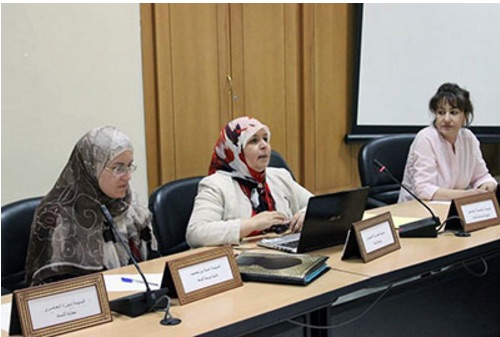
Bahrain Women Association conducted a workshop on peace

DESARME Y SEGURIDAD

trident

Desarme! – Congreso Internacional sobre los Gastos Militares y Sociales – International Peace Bureau

DERECHOS HUMANOS


USA: Prisoners in Multiple States Call for Strikes to Protest Forced Labor

TOLERANCIA Y SOLIDARIDAD


Landmark Vatican conference rejects just war theory, asks for encyclical on nonviolence

DESAROLLO SUSTENTABLE


On Earth Day, Commit To The Great Turning

LIBERTAD DE INFORMACIÓN


Clasificación Mundial de la Libertad de Prensa 2016: la paranoia de los dirigentes frente a los periodistas

PARTICIPACIÓN DEMOCRATICA


Democracy Spring: Thousands Descend on US Capitol, Over 400 Arrested

Bulletin français 1 mai 2016

LA NON VIOLENCE FAIT L’HISTOIRE

La non violence est d’actualité ces jours-ci.  Commençons par rappeler les paroles du grand tacticien de la non-violence, Martin Luther King, en parlant du Mahatma Gandhi:. “La résistance non-violente n’est pas une méthode pour les lâches ; elle résiste vraiment.  Si un individu utilise cette méthode parce qu’il a peur ou simplement parce qu’il ne dispose pas de moyens de violence, il n’est pas réellement non-violent. Voilà pourquoi Gandhi dit souvent que si la lâcheté est la seule alternative à la violence, il est préférable de se battre … la résistance non violente … n’est pas une méthode de passivité statique … Pour beaucoup, la résistance non-violente est passive dans le sens qu’elle n’est pas physiquement agressive envers l’adversaire, mais son esprit et ses émotions sont toujours actifs, cherchant constamment à persuader l’autre qu’il a tort.  La méthode est passive physiquement mais fortement active spirituellement. Ce n’est pas la non-résistance passive au mal, c’est la résistance active et non-violente au mal”.

Peut-être l’acteur le plus actif dans cette approche est aujourd’hui la ‘’Nonviolent Peaceforce’’ qui a récemment été nominée pour le Prix Nobel de la paix en reconnaissance du travail de ses équipes “sur le terrain” dans les différents “points chauds” partout dans le monde.  En outre, cette ONG tente activement de convaincre l’Organisation des Nations Unies et divers gouvernements à adopter la non-violence comme modèle : “L’un des changements les plus spectaculaires aura eu lieu quand le monde se rendra compte qu’il est faux de penser qu’un Homme armé ne peut céder que face à une autre arme !”

Tout cela fait partie de la stratégie à long terme de la Nonviolent Peaceforce annoncée récemment par cette organisation : “Nous protégeons les civils dans les conflits violents à travers des stratégies non armés Nous construisons la paix côte à côte avec les communautés locales.  Nous préconisons l’adoption plus large de ces approches pour la sauvegarde des vies humaines et de la dignité.”

Un autre acteur majeur de la non-violence est le Comité Central Mennonite, qui a récemment diffusé des initiatives dans sept pays sur quatre continents.

Pendant ce temps, Pax Christi et d’autres militants ont récemment convoqué une réunion au Vatican afin d’enrôler l’Eglise catholique dans l’approche de la non-violence, en demandant que l’église inverse son soutien aux “guerres justes”.

Il faut aussi mentionner la Charte de la Non-violence qui a été signée maintenant par 104 organisations de 33 pays, ainsi que la nouvelle initiative que nous avons mentionnée le mois dernier pour les villes non-violentes.

En célébrant la Journée de la Terre ce mois-ci, la Campagne Nonviolence nous rappelle que pour protéger notre planète nous devons vivre «sans violence» avec des pratiques telles que l’économie durable, les énergies renouvelables, en réduisant la consommation de viande, et en soutenant la production de nourriture locale.

L’une des principales tactiques de la non-violence est la médiation.  Récemment, nous avons présenté des articles sur la formation de la police pour la médiation, ainsi que des initiatives spécifiques au Mexique et en Bolivie.

Ces initiatives ne sont pas présentées dans les gros titres des médias commerciaux, où la violence est considérée comme plus dignes d’intérêt, mais à long terme, les initiatives pour la non-violence feront l’histoire, alors que la violence lui met des entraves..


ÉDUCATION POUR LA PAIX

paradigm
Nonviolent Peaceforce: A paradigm shift?

ÉQUALITÉ HOMMES/FEMMES


Bahrain Women Association conducted a workshop on peace

DISARMAMENT ET SECURITÉ

trident

Disarm! World Congress 2016 of International Peace Bureau

DROITS DE L’HOMME


USA: Prisoners in Multiple States Call for Strikes to Protest Forced Labor

TOLERANCE ET SOLIDARITÉ


Landmark Vatican conference rejects just war theory, asks for encyclical on nonviolence

DÉVELOPPEMENT DURABLE


Nuit Debout à Paris

LIBERTÉ DE L’INFORMATION


Classement mondial de la liberté de la presse 2016 : la paranoïa des dirigeants contre les journalistes

PARTICIPATION DÉMOCRATIQUE


Democracy Spring: Thousands Descend on US Capitol, Over 400 Arrested

English bulletin May 1, 2016

. NONVIOLENCE IS MAKING HISTORY .

Nonviolence is in our news these days. Let us begin by recalling the words of the great tactician of nonviolence, Martin Luther King, speaking of Mahatma Gandhi: “nonviolent resistance is not a method for cowards; it does resist. If one uses this method because he is afraid or merely because he lacks the instruments of violence, he is not truly nonviolent. This is why Gandhi often said that if cowardice is the only alternative to violence, it is better to fight… nonviolent resistance … is not a method of stagnant passivity… For while the nonviolent resister is passive in the sense that he is not physically aggressive toward his opponent, his mind and his emotions are always active, constantly seeking to persuade his opponent that he is wrong. The method is passive physically but strongly active spiritually. It is not passive non-resistance to evil, it is active nonviolent resistance to evil.”

Perhaps the most active practitioner of this approach today is the Nonviolent Peaceforce. They have recently been nominated for the Nobel Peace Prize in recognition of their teams “on the ground” in the various “hotspots” around the globe. In addition, they are actively trying to convince the United Nations and various governments to adopt nonviolence as a paradigm shift: “One of the most dramatic shifts will have taken place when everyone realizes that, the assumption that an armed actor will not yield to anything except a weapon has been proven to be untrue.”

All of this is part of the long-term strategy announced recently by Nonviolent Peaceforce: “We protect civilians in violent conflicts through unarmed strategies. We build peace side by side with local communities. We advocate for the wider adoption of these approaches to safeguard human lives and dignity.”

Another major practitioner of nonviolence is the Mennonite Central Committee, which recently publicized initiatives in seven countries on four continents.

Meanwhile, Pax Christi and other activists recently convened a meeting at the Vatican to enlist the Catholic Church in the approach of nonviolence, requesting that the church reverse its support for “just wars.”

We should also mention the Nonviolence Charter which has now been signed by 104 organisations from 33 countries, as well as the new initiative that we mentioned last month for nonviolent cities.

In celebrating Earth Day this month, the Campaign Nonviolence reminds us that to protect our planet we need to live “nonviolently” with such practices as sustainability, renewable energy, lowering meat consumption, and supporting local food.

One of the major tactics of nonviolence is mediation. Recently, we have featured articles on the training of police for mediation, as well as specific initiatives in Mexico and Bolivia.

These initiatives may not be featured in the headlines of the commercial media, where violence is considered more newsworthy, but in the long run the initiatives for nonviolence are making history, while violence is only impeding it.


EDUCATION FOR PEACE

paradigm

Nonviolent Peaceforce: A paradigm shift?

WOMEN’S EQUALITY


Bahrain Women Association conducted a workshop on peace

DISARMAMENT AND SECURITY

trident

Disarm! World Congress 2016 of International Peace Bureau

HUMAN RIGHTS


USA: Prisoners in Multiple States Call for Strikes to Protest Forced Labor

TOLERANCE AND SOLIDARITY


Landmark Vatican conference rejects just war theory, asks for encyclical on nonviolence

SUSTAINABLE DEVELOPMENT


On Earth Day, Commit To The Great Turning

FREE FLOW OF INFORMATION


2016 World Press Freedom Index ­– leaders paranoid about journalists

DEMOCRATIC PARTICIPATION


Democracy Spring: Thousands Descend on US Capitol, Over 400 Arrested

Paris: A standing orchestra !!!

… EDUCATION FOR PEACE …

Special for CPNN by Kiki Chauvin

In the spirit of the movement “Nuit Debout” [“Night Standing in Place”] that continues to exist in Paris, thanks to coordination rather than hierarchical power, their creativity continues to develop through sharing rather than individualism.

orchestre
Click on the photo to enlarge

A call on social networks brought out no less than 350 musicians from all backgrounds and all levels, from amateurs to conservatory professors.

On Wednesday, April 20, the orchestra performed in the Place de la Republique, before an audience of several thousand people (plus 16000 spectators on the live webcast). They played three movements of the New World Symphony by Anton Dvorak.

The musicians included 40 trumpets, as many flutes, oboes fifteen, 60 violins, as well as unusual instruments like the saxophone, mandolin and ukulele (who had to innovate by writing their own scores). Musicians who did not know before took only 2 hours to rehearse and agree. The biggest difficulty was the choice of the direction of a conductor: how to lead such a group within the spirit of the movement, ie no leader! After discussions, votes and eventual consensus, the coordination was be resolved with three different conductors, one for each movement of the symphony. One of them was a woman violinist who conducted for the first time!

After the success of the evening, the orchestra decided to offer another concert. The chosen date is Saturday, April 30. Between “The chorus of slaves of Nabucco” by Verdi and Beethoven’s 9th Symphony, their votes will decide …

In the spirit of this spontaneous militancy, other initiatives have appeared such as a stand for free legal advice “Lawyers standing” available to 18h every evening. An infirmary, a distributive canteen, a “standing TV”, a “Radio standing” and a “Biblio standing” are installed and removed each night.

On April 30 perhaps we will hear the birth of a “standing choir”?

Here is a heart that beats to a different world, a world of social justice, sharing, recognition of human values, independent of the “money god”, a world of solidarity in a universal culture of peace.

(Click here for a French version of this article)


Question related to this article:

Paris: Un orchestre debout !!!

. . EDUCATION POUR LA PAIX . .

Pour CPNN par Kiki Chauvin

Dans l’esprit du mouvement “Nuit debout” qui continue d’exister par les coordinations et non par un pouvoir directif, la créativité se conjugue dans le partage et non dans l’individualisme.

orchestre
Clique sur l’image pour l’élargir

Ainsi, l’appel lancé sur les réseaux sociaux a permis de rassembler pas moins de 350 musiciens de tous horizons et de tous niveaux, de l’amateur au professeur de conservatoire.
Mercredi 20 avril, cet orchestre a interprété , sur la place de la République, devant une audience de plusieurs milliers de personnes (y ajouter les 16000 spectateurs de la transmission en direct sur Internet) trois mouvements de la Symphonie du Nouveau Monde d’Anton Dvorak pour un concert symbolique.

Composé entre autres de 40 trompettes, d’autant de flûtes traversières, d’une quinzaine d’hautbois, de 60 violons, cette hétéroclite harmonie auto-organisée a joué d’instruments inhabituels comme le saxophone, la mandoline et plus inattendu encore le ukulélé, qui ont dû innover en écrivant leurs propres partitions  !!! Les musiciens qui ne se connaissaient pas ont eu 2 h pour s’accorder. La difficulté est venue du choix de la direction de l’orchestre : comment mener un tel groupe en restant dans l’esprit du mouvement, c’est à dire pas de chef.. même d’orchestre ! Après discussions, consentements et votes, la coordination résolue se fera à trois têtes, trois baguettes différentes, une pour chaque mouvement de la symphonie interprétée. L’un des trois meneurs est d’ailleurs une femme violoniste qui a dirigé pour la première fois !

Après le succès de cette soirée, l’orchestre a proposé un autre concert. La date retenue est le samedi 30 avril. Entre “Le chœur des esclaves de Nabucco” de Verdi et La 9ème Symphonie de Beethoven, les votes décideront…

A l’image de cet esprit militant, sont apparus différents lieux d’informations citoyennes, comme ce stand de consultations juridiques gratuites “Avocats debout” dressé sur le place à 18h chaque soir. Une infirmerie, une cantine distributive, une “TV debout”, une “Radio debout” et une “Biblio debout” sont installés puis démontés chaque nuit.

Le 30 avril y aura t-il la naissance d’un “chœur debout” ?

Un cœur qui bat pour un monde différent, un monde de justice sociale, de partage, de reconnaissance des valeurs humaines excluant le “dieu argent”, un monde de solidarité dans une Culture universelle de Paix.

( Cliquez ici pour une version anglaise)


Question related to this article: