Category Archives: EDUCATION FOR PEACE

Organizations sign agreement to promote a culture of peace in Dominican Republic

… EDUCATION FOR PEACE …

An article of Listin Diario (translated by CPNN)

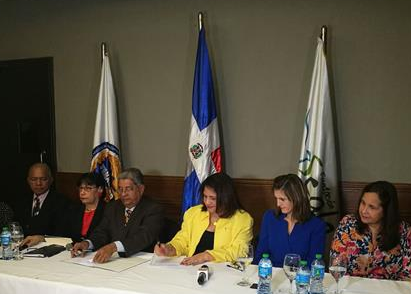
The National Federation of Merchants and Entrepreneurs of the Dominican Republic (Fenacerd) and the Scala Foundation signed yesterday an agreement to promote a culture of peace in the country, as well as to develop programs of training and citizen coexistence.

 “On this occasion, we understand that it is time to strengthen the culture of peace, good practice and the common good through a dialogue with our consumers and suppliers that fosters cooperation and solidarity,” said Manuel Ortiz, President of Fenacerd, during the ceremony.

He added, furthermore, that this agreement will positively impact on an improvement of coexistence between merchants and citizens in general.

Meanwhile, the president of the Scala Foundation, Raisa Ruiz, stressed that this agreement promotes the construction of a culture of peace from a focus on rights and gender equality, values ​​and ethics of care.

In the first stage, both institutions are planning to organize activities to train the members of Fenacerd, through training workshops in the process of building peace and citizenship at the national level.

“It is time to promote attitudes of values ​​and good behavior especially in an environment like the one where violence prevails, which in the end degenerates into delinquency,” Ortiz said.

(click here for the original Spanish version)

Question for this article:

Côte d’Ivoire: National Police: 639 staff trained in culture of peace

… EDUCATION FOR PEACE …

An article by Daniel Assouman for Fraternité Matin (translated by CPNN)

In order to strengthen socio-security dialogue, the National Police School has strengthened the operational capacities of police officers. The program of five months was initiated by the Director General of the National Police, Kouyaté Youssouf..


(Click on photo to enlarge)

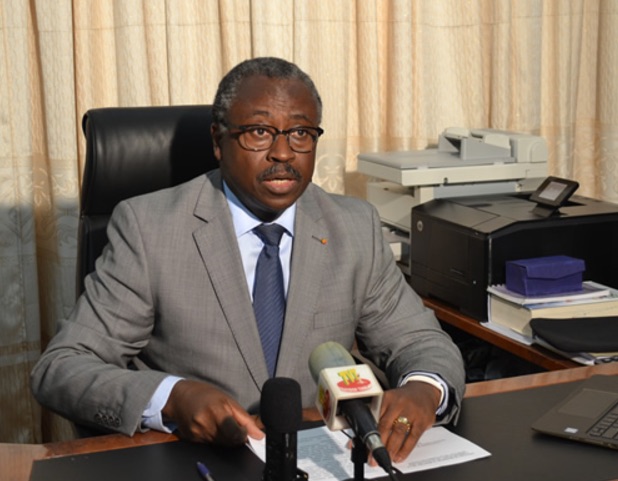
The director general of the national police, Commissary Major, Kouyaté Youssouf, plans to strengthen the dialogue within the institution and also between the police and the population, in order to guarantee security.

To this end, he has signed a partnership with “Verbatims”, a training and support institute for the prevention of conflicts related to identity. By means of 24 refresher and training sessions, 639 police officers, including 79 women and police of all ranks, received capacity building on culture of peace techniques.

These sessions, which began in November 2016 and ended on March 10, 2017, were structured around six modules. These included:
* the notion of ethnicity,
* prejudices and stereotypes,
* identities and conflicts at the micro-social level,
* identities and conflicts at the macro-social level,
* the notion of nationality,
* elections and political candidacies
   
(Article continued in right column)

(click here for the original French version)

Question for this article:

Where are police being trained in culture of peace?

(Article continued from left column)

Marie Stenbock-Fermor, Chair of the Verbatims Board of Directors, recalled that the Project, called “Support the Strengthening of Socio-Security Dialogue” (Pards) is financed by the European Union and Implemented by the United Nations Development Program (UNDP). Its general goal is to bring the police and the population closer together, in particular, through the organization of police-population dialogue workshops and public forums in order to reduce considerably the mistrust between the population and the police.

During the course of the work, the participants concentrated on reflections on the internal cohesion of the police and the image of the police within the population, according to the Marie Stenbock-Fermor. With regard to internal cohesion, she noted that within the police some deviant behaviors were observed by the hierarchy. For example, questioning colleague with regard to ethnicity and mentioning ethnic prejudices and stereotypes.

According to her, these behaviors that stem from different crises are sources of frustration, mistrust, contempt, withdrawal, fear between colleagues and they severely harm the efficiency of service to the population. That is why she found it necessary to carry out the training.

Returning to the image of the police within the population, she was reassuring. She pointed out that through training, there will be a real improvement in respect for the police by the population., especially to the extent that they perceive new behaviors on the part of the police officers both in terms of reception of complaints and treatment of persons who have committed offenses.

The Director of Training and the National Police School, Chief Police Commissioner Touré Kouacou Albert, who represented the Director General of the National Police, urged the participants to put into practice what had been learned . He transmitted the encouragement of the Director General of the National Police.

Peru: Art in the streets to promote the culture of peace

… EDUCATION FOR PEACE …

An article for El Peruano (translated by CPNN)

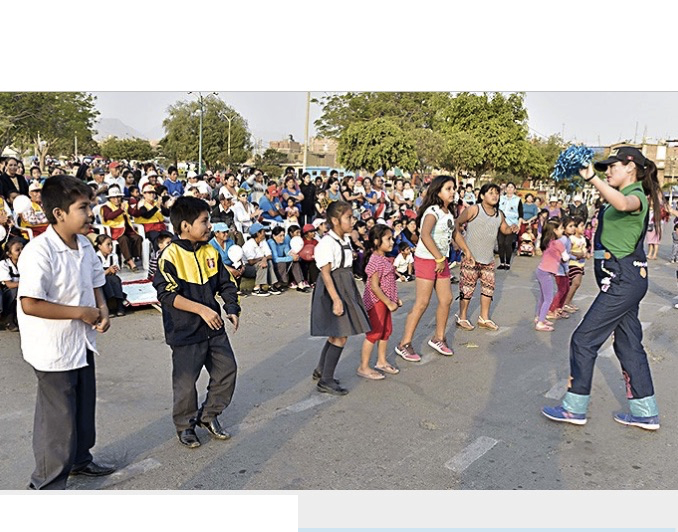
The Punto de Cultura program of the Ministry of Culture has linked up with the strategy of Barrio Seguro of the Ministry of Interior to promote and develop actions from the arts and other cultural expressions that help to encourage the participation of youth and vulnerable populations in promoting a culture of peace.


(Click on image to enlarge)

The deputy minister of cultural heritage of the Ministry of Culture, Jorge Arrunátegui, stressed the importance of the multisectoral strategy Barrio Seguro. “We consider that culture aids development and within that concept what we are looking for is a greater articulation. This articulation between the two ministries is designed to reach into neighborhoods, especially those that needan impulse to promote a culture of peace and expression of art and culture, “he said.

The purpose of the multi-sectoral strategy Barrio Seguro is to improve conditions for security and peaceful coexistence in vulnerable neighborhoods of Peru and to increase people’s confidence in the National Police of Peru.

It was explained that one of its strategic partners is the Ministry of Culture, through its Punto de Cultura program, which will contribute to the reduction of victimization and the strengthening of peaceful coexistence, through the positive use of free time.

Estefanía Lay, one of the leaders of the program, said that the idea is to foster opportunities for “positive use of public space”, where people feel safe and meet their neighbor in a park or square.

“It is precisely the Punto de Cultura program, through its proposals of art and culture that can generate those possibilities,” he said.

Since Puntos de Cultura was begun in 2011 to expand the exercise of cultural rights in the community, with special emphasis on children, youth and vulnerable population, it has reached 271 communities.

(Click here for the original Spanish article.)

Question for this article:

Nuevo León, Mexico: The State Commission on Human Rights seeks to foster peace in schools through workshops

EDUCATION FOR PEACE .

An article from Hora Cero Web

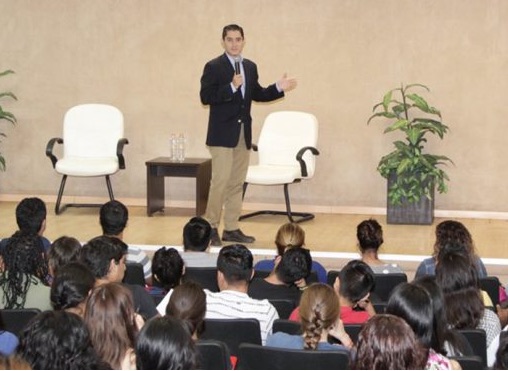
The State Commission on Human Rights (ECHR) seeks through a series of workshops to promote a culture of peace in schools at all levels of education. It consists of the Seminar on Education for Peace and Human Rights, which began last February 20 and concludes this Tuesday [February 28], which seeks to promote a culture of peace through activities that combat school violence.


Click on photo to enlarge

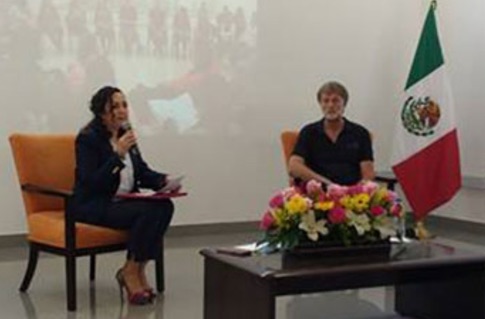
About 56 teachers from all levels of education, mainly primary, participated in this activity and were taught by activist Frans Limpens.

According to Limpens, this workshop is based on coexistence and conflict resolution without the need for violence, so that teachers can transmit these behaviors to students through the dynamics that involve them. “With these games we build a series of skills and potentialities to work.”

For her part, Sofía Velasco, president of the Commission, expressed her desire that this activity be implemented in all schools of the State. “It depends on the decision of the Ministry of Education, if we are able to continue to give this workshop course,” she said.

(Click here for the original version of this article in Spanish)

Question for this article:

Education for Culture of Peace in Cyprus: Sharing Best Practices

… EDUCATION FOR PEACE …

An announcement from the Global Campaign for Peace Education

As part of the project Education for a Culture of Peace as a Vehicle for Reconciliation in Cyprus, Education for a Culture of Peace is organising an International Conference entitled “Education for Culture of Peace: Sharing Best Practices” on 24th and 25th February 2017 at Fulbright Center in Ledra Palace Buffer Zone in Nicosia.


On 24th of February, Friday from 4.00pm to 8.00pm, there will be a conference session examining best practices in Peace Education in two panel discussions. The first panel entitled “Local Practices on Education for a Culture of Peace” will feature representatives of the Scientific Committee of the project who will present the practices of critical education and schooling in Cyprus.

The second panel entitled “Alternative Education: Methodology and Teaching or Different Pedagogical Approaches and Schooling?” will feature international experts who will talk about the methodologies, principles and practices of literacy for peace culture and the actualisation of peace education.

On 25th of February, Saturday, there will be three parallel workshops to be held all day from 9.30am until 5.00pm at three different venues in the Buffer zone. These two-hour workshops will be limited to a group of 20 educators each and will be facilitated by the academic guest experts.

Limited seats available on first come first serve basis. RSVP at +3922276843 or +357 97743074 or at postresearchinstitute@gmail.com or info@postri.org by 20th February, Monday.

For the details of the conference, please visit the event page on facebook: https://www.facebook.com/events/269974243435439/ – Education For a Culture of Peace (E4CP) and also the websites of the project: www.e4cp.org and/or postri.org.

Questions for this article:

Rwanda: Peace Education Added to National Curriculum

EDUCATION FOR PEACE .

An article from KT Press

Twenty three years ago, Rwanda was at the extreme of destruction – a million lives were lost in a genocide against Tutsi. However, when the Rwanda Patriotic Front stopped the genocide and defeated government army, it embarked on a battle to build a peaceful country.

Next year, students in Primary, secondary and university will begin studying ‘peace building’ as part of their curriculum. Students are considered important change agents including; educators, decision makers and researchers. Government has found it necessary to integrate Peace education into the National Education Curriculum under a new program ‘Education for Sustainable Peace in Rwanda(ESPR)’.


Fidele Ndayisaba, the Executive Secretary of the National Unity and Reconciliation Commission
Click on photo to enlarge

ESPR program was launched today by the Ministry of Education during a three day Peace Education conference that is taking place in Kigali from February 20-22.

Over 100 local and international peace building experts, researchers, are holding panel discussions exchanging through existing tools , methodology and content contributing to a stronger base for peace education.

Based on the genocide history, Rwanda is taken as a good example that peace education can have a great impact.

“Rwanda has a lot to share on peace education but also in other areas of progress,” said Johan Debar, in charge of Affairs of the Kingdom of Belgium Embassy to Rwanda, also one of speakers.

(continued in right column)

Question for this article:

Peace Studies in School Curricula, What would it take to make it happen around the world?

(continued from left column)

Kenny Osborne, Deputy Head of Department For International Development in Rwanda and also one speakers said that Rwanda continues to invest in basic education to take these lessons to regional level.

Isaac Munyakazi, the Minister of State in charge of primary and secondary education told participants that he was confident the program would achieve its aim – by catalysing pluralistic and constructive exchange.

“We need to equip our teachers to make sure the program will be implemented,” Munyakazi said.

The Rwanda Peace Education Program(RPEP) was launched through collaborative efforts between Aegis, Institute of Research and Dialogue for Peace, Radio La Benevolencia and USC Shoah Foundation.

Under RPEP, 7500 students and 300 teachers were across the country trained.

“Through this program we saw successful integration of peace and values. Lessons from RPEP will be taught to students in a every class in the country,” Munyakazi told participants.

Fidele Ndayisaba, the Executive Secretary of the National Unity and Reconciliation Commission told participants, “intergeneration transmission and trauma are still issues to deal with; however reconciliation is a continuous process.”

The Peace Education Conference was for the first time organised by Aegis Trust – that campaigns to prevent genocide worldwide; with the support of the UK, Sweden and US governments.

(Thank you to the Newsletter of the Global Campaign for Peace Education for bringing this article to our attention.)

Africa: The Festival of Amani strengthens our ability to live together

. EDUCATION FOR PEACE .

An article from Radio Okapi (translated by CPNN)

The 4th edition of the Amani Festival ended on Sunday (February 12th) in Goma (North Kivu). Over its three days, more than 30,000 people from all walks of life took part in this great cultural event for the promotion of peace in the Great Lakes region. Music, dance, exhibition of works of art, promotion of entrepreneurship … there was a diversity that pleased everyone.

The organizers of the festival are pleased with the success of this event, which they believe is contributing to peace building efforts in the region.

“Our goal is to reinforce our ability to live together. And in a post-conflict region, like the [Great Lakes] region, where many of the young people who attended the festival have lived through traumatic times, the festival fits in with its theme of being able to encourage living together” explained Vianney Bisimwa, the festival administrator.

The event provided an opportunity to strengthen the links between people and to help alleviate the trauma that the young people have lived through, he continued.

When people gather at this festival, they do not see themselves as ethnic groups, or other forms of identity differences, but “on the contrary, they look at each other in relation to what they have in common. It means the love of music and dance and the attachment to entrepreneurship. ”

One of the positive results of the festival, according to Vianney Bisimwa, are opportunities in the entrepreneurship sector:

“We have previously seen the success of the project CIGOM, a project funded by the Amani festival, which engages in the production of chalk. And we have many artists who, after the festival, have undertaken [some projects]. ”

[Note: For CPNN articles about the previous three editions of the Amani festival, see here for 2016, here for 2015 and here for 2014.]

(Click here for the original French version of this article)


Question related to this article:

Live long and protest: the power of mass action is alive in Romania

. . . EDUCATION FOR PEACE . . .

A Blogpost by Irina Bandrabur for Greenpeace

At the beginning of this month, the biggest mass protest in Romania since the fall of communism in 1989 unfolded across the country. Hundreds of thousands of people in the capital, Bucharest, and every major city in Romania took to the streets against a decree that would have decriminalised abuses of public office. After a week of peaceful protests, the government withdrew the controversial law


Photo (c) Mihai Stoica / Greenpeace
Click on photo to enlarge

You don’t see mobilisation like this every day, but it happens when the stakes are high – and it can be extremely powerful. Previous mass demonstrations highlighted cyanide open-pit mining in Rosia Montana (2013), forest protection (2015) and again corruption, after a horrible fire in a nightclub that could have been prevented if the people responsible had applied the law (Colectiv, autumn 2015).

Greenpeace Romania joined protesters because we believe the consequences of the emergency ordinance decree would have affected our work to protect the environment. It would have indirectly allowed companies to choose less costly and environmentally-damaging alternatives for their projects without fear of legal repercussions. The recently-passed executive order also threatened the already limited checks and balances against environmental crimes.

(Article continued in right column)

Questions for this article:

Can peace be guaranteed through nonviolent means?

How effective are mass protest marches?

(Article continued from left column)

The reasons that hundreds of thousands of people so vocally rejected this decree may vary in tone from one to the next, but we knew the country needed to stand together against corruption: in a country that decriminalises corruption, there is no protection against environmental crimes.

Crowds all over Romania braved a bitter winter chill to protest. With creativity and humour on the banners displayed they inspired many more to join in and add their own – or even fly in from other countries where they now live – to show solidarity. Because of the pressure exerted by the large number of people that took to the streets to protect democracy, the Government repealed the ordinance.

Each time people demonstrate for something is a reminder that we must act together to protect our fundamental rights and that we have the power to change unjust actions. We are experiencing challenging times and the clock is ticking on the health of the planet. Now, more than ever, we need to unite in the fight to protect our planet from the threats posed by climate change.
Protests are going on, all over the world. If you are reading this and you feel that all might be lost, remember that someone, somewhere is just now realising that it’s time to act and is not giving up hope. There’s simply too much to lose now. We resist and insist on the fact that holding political office does not give anyone the right to exploit it to legitimise environmental, or any other kind of abuse. We are used to hard fights and improbable victories. We are stronger together. Take action now and get involved in a local active group to make your voice heard.

Book Review: Towards Less Adversarial Cultures by Ray Cunnington

EDUCATION FOR PEACE .

Book description from Amazon and biography from Gail Rappolt (for Culture of Peace Hamilton)

Towards Less Adversarial Cultures shows how the cultures into which people are born can exert a lifelong grip on what they believe and how they act. Rather than feeling free to follow their mature consciousness, many are driven to implement the same ideas they were taught as children. What goes unnoticed is that what was deemed an eternal truth in the time of the Pharaohs may appear quite different in today’s world, particularly in matters relating to war, law, money and the media. For the sake of future generations it is vital that humans reflect upon their evolutionary heritage and matters like climate change, and not remain locked in narrow national animosities, battling it out for the last fish, the last tree, and the last piece of land. It is strongly suggested that ordinary people will swing the balance back to a more cooperative, less violent, society.


Ray Cunnington receives the YMCA Peace Medal
(Click on photo to enlarge)

Biography

It isn’t often that someone aged 96 writes and publishes a book. But that is just what Ray Cunnington, a resident of Dundas, has done. He is a founding member of Culture of Peace Hamilton, a member of the Hamilton Board of the United Nations Association in Canada, and a member of the Department of Peace Initiative — to name a few of his involvements in peace and social justice over the last decade and a half.

Two years ago at 94 he established the United Nations Culture of Peace Fund with the Hamilton Community Foundation. At 95 he was awarded the Hamilton Burlington YMCA Peace Medal, and this year he has written and published a book that is not only about peace, but infused with a generally optimistic view of human evolution, in spite of the wars and conflict all around us

Where did the drive to write this book come from? Such questions aren’t easily answered, but old age certainly creates perspective if a person is still willing and able to learn. For Ray the book’s genesis came from the discussions he had with members of Culture of Peace Hamilton and the Hamilton Peace Think Tank. This latter group is made up of a few remarkable academics and individuals who have lived their lives in quest of peace. Other strands that influenced Ray’s thinking came from United Nations examples, Quaker practices, and the non-violence of Gandhi and Martin Luther King. In his book he asks why so many seemingly loving people attack each other so viciously. In a world under threat of climate change and nuclear war he wonders why so many call for deliberate harm to be inflicted on other people without concern for the planet. His book, Towards Less Adversarial Cultures, is readily available at Amazon book

Ray Cunnington was born in England and educated at a British boarding school. From 1941 to 1946 he served as a medical orderly in the Royal Air Force, mostly in India. After demobilization he was a keen supporter of the movement to ‘Ban the Bomb’ initiated by Einstein and Bertrand Russell. Later he worked in the British film industry and knew many of the stars of the time such as Elizabeth Taylor and Deborah Kerr.

(Continued in right column)

Question for this article:

What are the most important books about the culture of peace?

(Continued from left column)

Ray came to Canada in 1953 with his wife and their small son and daughter. They chose Canada at least partly because it did not have conscription, unlike Britain and the U.S.. Settling first in Montreal, Ray did many jobs in films, on radio and in advertising before moving to Ontario and being hired as a Communications teacher at Loyalist College Belleville

Many years later, by that time a college administrator, he prepared himself for retirement by taking a college program at night in what for him was the new and intriguing field of human relations. After five years of becoming a student at night and taking night and weekend courses, he graduated with a diploma. Months later he helped to found a local agency designed to end violence against women by working with abusing men. Because of this experience he was invited to teach a course to men at a federal jail.

Family reasons took Ray and his wife to Winnipeg for a few years. They returned to Ontario in 1998 and Ray renewed his association with the peace community by attending Hamilton’s Gandhi Peace Festival. The millennium was coming to a close and there was much hope for world peace.

When the U.N. proclaimed its Manifesto for a Culture of Peace with its six great pathways to more peaceful societies, Ray was among the founding members who helped to establish Culture of Peace Hamilton.

It was a bitter blow when, in the very first year of the new century, the twin towers were attacked on 9/11, the U.S. invaded Afghanistan, and hate crimes were committed in Hamilton. As a response, members of Culture of Peace and United Nation Association, came together with a plan to protect immigrants and the vulnerable from becoming victims of harassment.

It took another year to raise funds, but Ray was among those who, in 2002, obtained a $120,000 grant from the National Crime Prevention Centre to create ‘safe havens’ in public buildings downtown. When that proved to be impractical because it would increase the cost of public insurance, Ray was still determined to ‘Wage Peace’.

He helped to develop ‘Peace Dollars’, a democratic fundraising effort that did not rely on the capricious support of big foundations and fund raisers. Priced at only a dollar, he reminded donors that if everyone in Hamilton bought one it would raise half a million. Over ten years he wrote many op-ed pieces about peace in the Hamilton Spectator.

Ray and Culture of Peace have worked with many groups in their efforts to help Hamilton become a safer and more inclusive city. Collectively they have worked closely with Environment Hamilton, the Gandhi Festival, McMaster Centre for Peace Studies and a whole cluster of other compassionate groups and individuals. They hold regular meetings, provide a Peace Luncheon twice a year and, to make the idea of peace more tangible, have planted a number of Peace Poles and donated a thousand narcissi bulbs to the city’s Peace Garden

To create what he hopes will be a sustaining source of funding at the Hamilton Community Foundation, Ray has established the United Nations Culture of Peace Hamilton Fund. It will receive the profits from Ray’s book. He can be reached at ray.c@cogeco.ca

Benin to introduce education for culture of peace

EDUCATION FOR PEACE .

An article from aContonou

Some 100 actors in the Beninese education system have been examining since Thursday in Cotonou the practical modalities of introducing, in the national education system, the manual on education for peace, human rights, citizenship, democracy and regional integration prepared by the Economic Community of West African States (ECOWAS).


Paulin Hountondji, President of the National Council of Education © Autre presse by DR
Click on photo to enlarge

Speaking at the opening of the national workshop on education for a culture of peace in Benin, Paulin Hountondji, chairman of the National Council of Education of Benin, deplored the fact that this manual, published by the ECOWAS, is not in use in schools in the subregion and particularly in Benin while the need is urgent on the ground.

“Recognizing the limitations of the security approach that privileges military responses, ECOWAS has deemed it opportune and even imperative to develop, for all member countries of its space, this manual “to construct the defenses of peace in the minds of men.”

He also felt that with the exacerbation of religious terrorism and the tragedies that it brings to life on a daily basis in the world, in Africa and particularly in the West African subregion, the approach to peace by another path becomes a categorical imperative

(Click here for the original version of this article in French)

Question for this article: