Category Archives: EDUCATION FOR PEACE

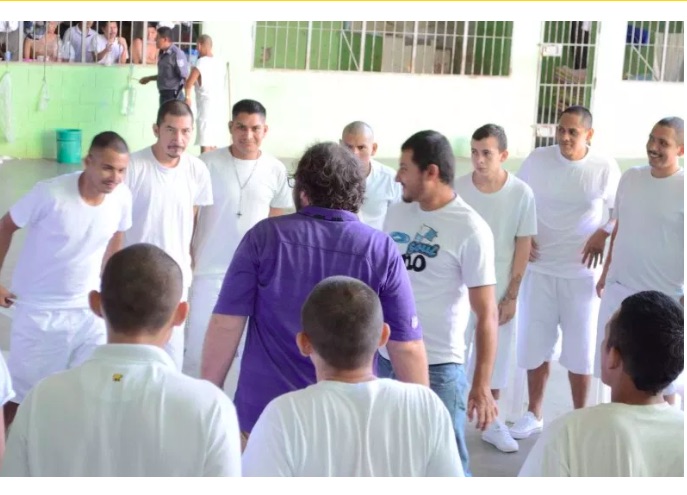
Testimonies from the First Advanced AVP Workshop in Apanteos Prison, El Salvador

… EDUCATION FOR PEACE …

An article by Antonio Salomón Medina Fuentes, National Coordinator of AVP El Salvador for Friends Peace Teams

All people should have the opportunity to be able to change and redeem themselves. Often, it is considered too late, especially when someone is completing some type of punishment because there are stigmas. Many people have prejudice and contempt for people who are in a prison.

Going back and realizing that there have been some interesting and significant changes in the lives of the incarcerated men is very rewarding. It motivates us to continue in everything we do to contribute and strengthen a Culture of Peace and Non- violence in vulnerable sectors, especially in places often excluded and sometimes even forgotten, like the jails of our country.


(Click on photo to enlarge)

The theme that we defined with this group was: A dialogue based on the Non-violence in human relations

It was an excellent and challenging topic! It allowed us the possibility of finding answers to some of the needs that the inmates of this penitentiary center currently have, which is evidenced by some of the testimonies that we share below:

“Well, what I learned from this workshop is to use dialogue to be able to resolve a conflict without violence. What I want to put into practice is to continue changing my attitude. The AVP program is an excellent program to continue transforming lives through Him. My testimony is that through AVP, I have been able to understand that one should respond before acting, that is, a conflict can be resolved without violence. I will think in the positive and discard the negative.”

(Continued in right column)

Question for this article:

Where is peace education taking place?

(article continued from left column)

“I learned to work on a team, about companionship, and to respect small and big people. I liked the games because it’s fun and I forget everything that hurts me psychologically. I would like to have more time to learn more. For me, this workshop is excellent because it has helped me to put my values ​​into practice and it has also helped me to solve problems in the best way.”

“It is totally and without any doubt an experience to live life fully well. To live without malice, remembering the good that I can give to others without expecting anything in return. I learned to always expect the best from others and always give the best of me. God bless the fantastic 4!”

“The truth is that this workshop has taught us many values ​​to be able to face any conflict or problem that we find ourselves, to always be positive. What I liked is that it taught us to respect everyone and to act wisely so as not to make mistakes. I would love to teach the other incarcerated men. For me, the workshop has been a great learning opportunity.While cultivating my values, ​​I have managed to learn that in any problem or situation, we always have or could use dialogue to solve all conflicts. Thanks for bringing the program here in the prison and sector!”

“One of the things I learned and will put into practice is to solve any problem through dialogue and not with violence, to think before acting to be able to do good to others in the future. My testimony is that thanks to the AVP workshop I have been able to relate more with my colleagues and to respect them and be able to help others without expecting something in return.”

“I learned to respect my fellow inmates, not to disrespect any security guards, to seek dialogue to avoid violence, and to listen to colleagues. I am grateful to the 4 facilitators for taking us into account. I thank God for bringing AVP to the penal centers. Actually when I found myself with no exit, without encouragement in this sector, God opened the doors to 4 excellent teachers, for which there were values ​​that we had forgotten. I learned how to recover the forgotten by thinking before acting, because everyone has the right not to be attacked. AVP has taught me to love my neighbor.”

“I learned to think before acting and to know how to value my friendships and empathize in order to give good advice to my friends. I liked the whispered affirmations because I remembered what my parents advised me. It has helped me to recover my lost values ​​and to remember again the advice that my parents gave me when I was little. It has allowed me to be able to control my emotions. I am grateful to the AVP workshops since they have come and dedicated their time to help me live my life as before.”

Once again as a facilitator team, we are very grateful for this valuable opportunity to serve the inmates considered emotionally unstable, with whom we had the enormous privilege of sharing their lives and experiences of how AVP has helped them and will continue to help them in the midst of of everything they live.

Film from South Africa: Everything Must Fall

. EDUCATION FOR PEACE .

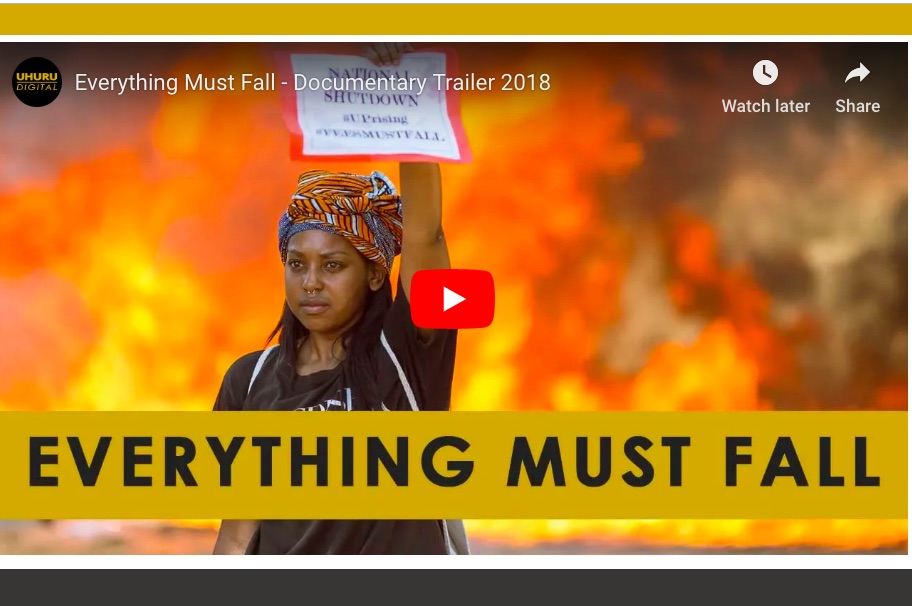
Film publicity for Everything Must Fall

A Feature length film : 84 min – TV hour – 48 & 58 min directed by Rehad Desai


An unflinching look at the #FeesMustFall student movement that burst onto the South African political landscape in 2015 as a protest over the cost of education.


film trailer

Short Synopsis

The story is told by four student leaders at Wits University and their Vice Chancellor, Adam Habib, a left-wing, former anti-apartheid student activist. When Habib’s efforts to contain the protest fail, he brings 1000 police on to campus. There are dire consequences for the young leaders. By blending dramatic unfolding action with a multi-protagonist narrative, much of the drama lies in the internal struggles the activists have around the weight of leadership. Threaded through the film is a pulse of anticipation, shared across the generational divide, that somehow these youth have reached breaking point and won’t back down until they achieve the kind of social transformation that previous generations had long given up on.

Question(s) related to this article:

What are some good films and videos that promote a culture of peace?

Long Synopsis


An unflinching look at the #FeesMustFall student movement that burst onto the South African political landscape in 2015 as a protest over the cost of education, and morphed into the most militant national revolt since the country’s first democratic elections in 1994. The story is told by four student leaders at Wits University and their Vice Chancellor, Adam Habib, a left-wing, former anti-apartheid student activist. When Habib’s efforts to contain the protest fail, he brings 1000 police on to campus. There are dire consequences for the young leaders: Mcebo Dlamini is arrested and charged with serious offences, Shaeera Kalla is shot 13 times with rubber-coated bullets; others, fearing the involvement of the state security agencies, are forced into hiding.

At the heart of the film sits an intergenerational conflict connecting us to an important contemporary discourse on the conceptualisation of higher education as a public good. To date there have been unprecedented numbers involved, three deaths and 800 arrests. By blending dramatic unfolding action with a multi-protagonist narrative, much of the drama lies in the internal struggles the activists have around the weight of leadership. Threaded through the film is a pulse of anticipation, shared across the generational divide, that somehow these youth have reached breaking point and won’t back down until they achieve the kind of social transformation that previous generations had long given up on.

Contact information

UHURU PRODUCTIONS PTY LTD
6th Floor, SAMRO House
20 De Korte Street
Braamfontein
2001
011 339 1063
ziviaATmweb.co.za

Nicaragua: Technical students promote the culture of peace through murals

EDUCATION FOR PEACE .

An article from Viva Nicaragua

More than 50 students participated in the National Muralism Contest promoting peace held by the National Technological Institute where 27 centers participated.


video

(continued in right column)

(Click here for the original Spanish version of this article.)

Question for this article:

Do the arts create a basis for a culture of peace?, What is, or should be, their role in our movement?

(continued from left column)

The best works were exhibited and presented as part of the promotion of values, under the motto: “Technical students promoting peace”.

The objective of the contest is to promote dialogue and peace in technology centers, through different actions that promote spaces to strengthen artistic and creative attitudes.

The parameters to participate were to reflect the theme of promotion of a culture of peace, average size of the mural of 2 by 6 meters, it had to be elaborated in teams made up of 5 active technical students, working as a team, organization and creativity.

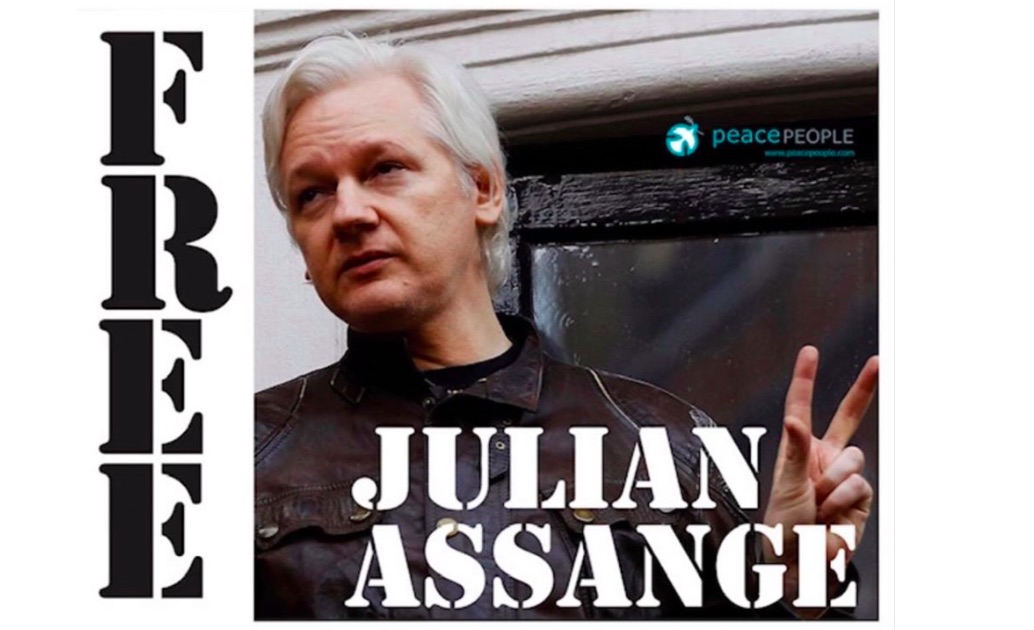
Nobel Peace Laureate Maguire Requests UK Home Office for Permission to Visit Her Friend Nobel Peace Nominee Julian Assange ln Prison in London

… EDUCATION FOR PEACE …

A press release from the Peace People

`Mairead Maguire has requested UK Home Office for permission to visit her friend Julian Assange whom this year  she has nominated for the Nobel Peace Prize’

     ‘I want to visit Julian to see he is receiving medical care and to let him know that there are  many people around the world who admire him and are grateful for his courage in trying to stop the wars and end the suffering of others’

  ‘Thursday 11th April, will go down in history as a dark day for the Rights of humanity, when Julian Assange,  a brave and good man, was  arrested,  by British Metropolitan Police, forcibly removed without prior warning,  in a style befitting of a war criminal, from the Ecuadorian  Embassy, and bundled into a Police Van.  It is a sad time when the UK Government at the behest of the United States Government, arrested Julian Assange, a symbol of Freedom of Speech as the publisher of Wikileaks, and the worlds’ leaders and main stream media remain silent on the fact that he is an innocent man until proven guilty, while the UN working Group on Arbitrary Detention defines him as innocent. The decision of President Lenin Moreno of Ecuador who under  financial pressure from the US has withdrawn asylum to the Wikileaks founder, is a further example of Unites States’ global currency monopoly, pressurizing other countries to do their bidding or face the financial and possibly violent consequences for disobedience to the alleged world Super Power, which has sadly lost  its moral compass. Julian Assange had taken asylum in the Ecuadorian Embassy seven years ago precisely because he foresaw that the US would demand his extradition to face a Grand Jury in the US for mass murders carried out, not by him, but by US and NATO forces, and concealed from  the public.

(Articles continued in right column)

Questions for this article:

Where in the world can we find good leadership today?

Julian Assange, Is he a hero for the culture of peace?

Free flow of information, How is it important for a culture of peace?

(continued from left column)

Unfortunately, it is my belief that Julian Assange will not see a fair trial.    As we have seen over the last seven years, time and time again, the European countries and many others, do not have the political will or clout to stand up for what they know is right, and will eventually cave into the Unites States’ will. We have watched Bradley Manning being returned to jail and to solitary confinement, so we must not   be naive in our thinking: surely, this is the future for Julian Assange.

I visited Julian on two occasions in the Ecuadorian Embassy and was very impressed with this courageous and highly intelligent man.  The first visit was on my return from Kabul, where young Afghan teenage boys, insisted on writing a letter with the request I carry it to Julian Assange, to thank him, for publishing on Wikileaks,  the truth about the war in Afghanistan and to help stop their homeland being bombed by planes and drones. All had a story of brothers or friends killed by drones while collecting wood in winter on the mountains.

I nominated Julian Assange on the 8th January 2019 for the Nobel Peace Prize.  I issued a press release hoping to bring attention to his nomination, which seemed to have been widely ignored, by Western media.  By Julians courageous actions and others like him, we could see full well the atrocities of war.  The release of the files brought to our doors the atrocities our governments carried out through media.   It is my strong belief that this is the true essence of an activist and it is my great shame I live in an era where people like Julian Assange, Edward Snowden, Chelsea Manning and anyone willing to open our eyes to the atrocities of war, is likely to be haunted like an animal by Governments, punished and silenced.   Therefore, I  believe that the British government should oppose the extradition of Assange as it sets a dangerous precedent for journalists, whistle-blowers and other sources of truth the US may wish to pressure in the future. This man is paying a high price to end war and  for peace and nonviolence and we should all  remember that.

(Editor’s Note: This press release was reprinted without attribution by David Swanson on his website. Google News does not list either one, despite the fact that the original is clearly labeled as a press releases.)

Dominican Republic: Ministry of Education to promotes a culture of peace and guarantes security in schools

… EDUCATION FOR PEACE …

An article from Noticias Sin (translation by CPNN)

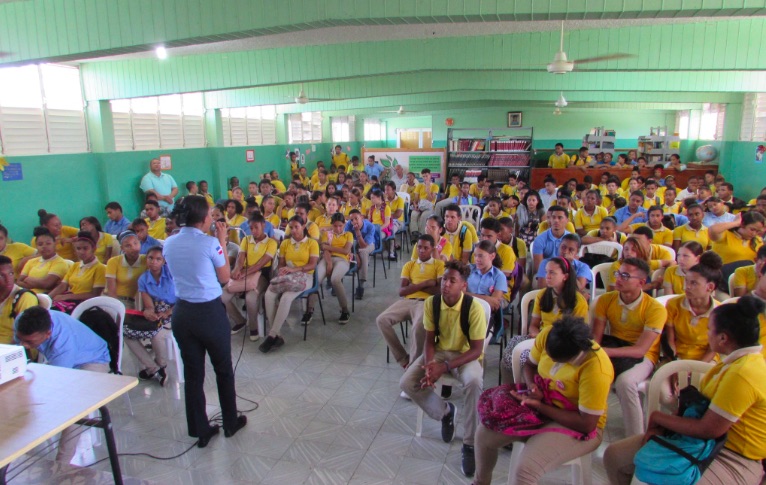
In order to foster a culture of peace and a better emotional environment that facilitates the teaching-learning process, the Ministry of Education has ordered the implementation of a comprehensive national program of accompaniment and psychological guidance through the Directorate of School Police, directed to students, teachers, educational technicians and administrative staff of public educational centers


“We need our students to have the opportunity to take full advantage of the efforts made by the Educational Revolution of President Danilo Medina, with an unprecedented investment in the different edges that make up a good education, with better trained teachers and modern infrastructure, and that is only possible in a total environment of peace, tranquility and security, “said Peña Mirabal to instruct the plan to the School Police, said Antonio Peña Mirabal.

The official called the families represented in the associations of parents, mothers and friends of the school (APMAE), as well as the other entities that work on education, to join this great purpose of improving the environment of schools.

(Continued in right column)

(Click here for the original Spanish version of this article.)

Question for this article:

Where is peace education taking place?

(Continued from left column)

After receiving instructions, the director of the School Police, Colonel Giovanni de Jesus Gil Suarez, immediately launched the peace plan, with simultaneous meetings held in different public schools in the provinces of Duarte and Valverde, belonging to the Northeast regions and Northwest of the country, where expert security officers and a team of experienced psychologists exchanged impressions with students, teachers and administrative staff about the realities that are experienced in the schools.

Likewise, actions were coordinated and agreed upon with the directors, the teaching staff and with the different leaderships of the educational communities, in order to achieve, in the shortest possible time, a peaceful coexistence among all the actors involved in teaching.

The first schools played by the program were the Educational Center Juan de Jesus Reyes Aranda, in the municipality of Mao, Valverde, and the Liceo Américo Lugo, located in San Francisco de Macorís, where the security experts of the School Police, and experienced Behavioral professionals, knew the concerns expressed by students, teachers and other actors, as well as the problems that are most worrisome.

Among the issues addressed are the use of social networks as a valuable tool for the individual and collective development of people, as well as talks on the risks of physical and emotional abuse that are caused through the harmful practice of bullying, in addition to group dynamics oriented towards the need to cultivate values, good customs and respect for legal norms.

Among those participating in the activity are the professors and directors Celidania Rosario, Midalba Ureña, Virgilio Alberto and Apolinar Alejo, of the school district 07-05, as well as the colonels Rafael Encarnación Santos, Juan Francisco Gatón and Diego Pesqueira; the psychologists Miosotis Feliz and Luisa Terrero, and also Colonel Humberto Flores, representing General Boris Goyco Campagna, director of the Northwest Regional located in the city of Mao.

National Campaign for Peace Education launched in Cameroon

… EDUCATION FOR PEACE …

An article from the Global Campaign for Peace Education

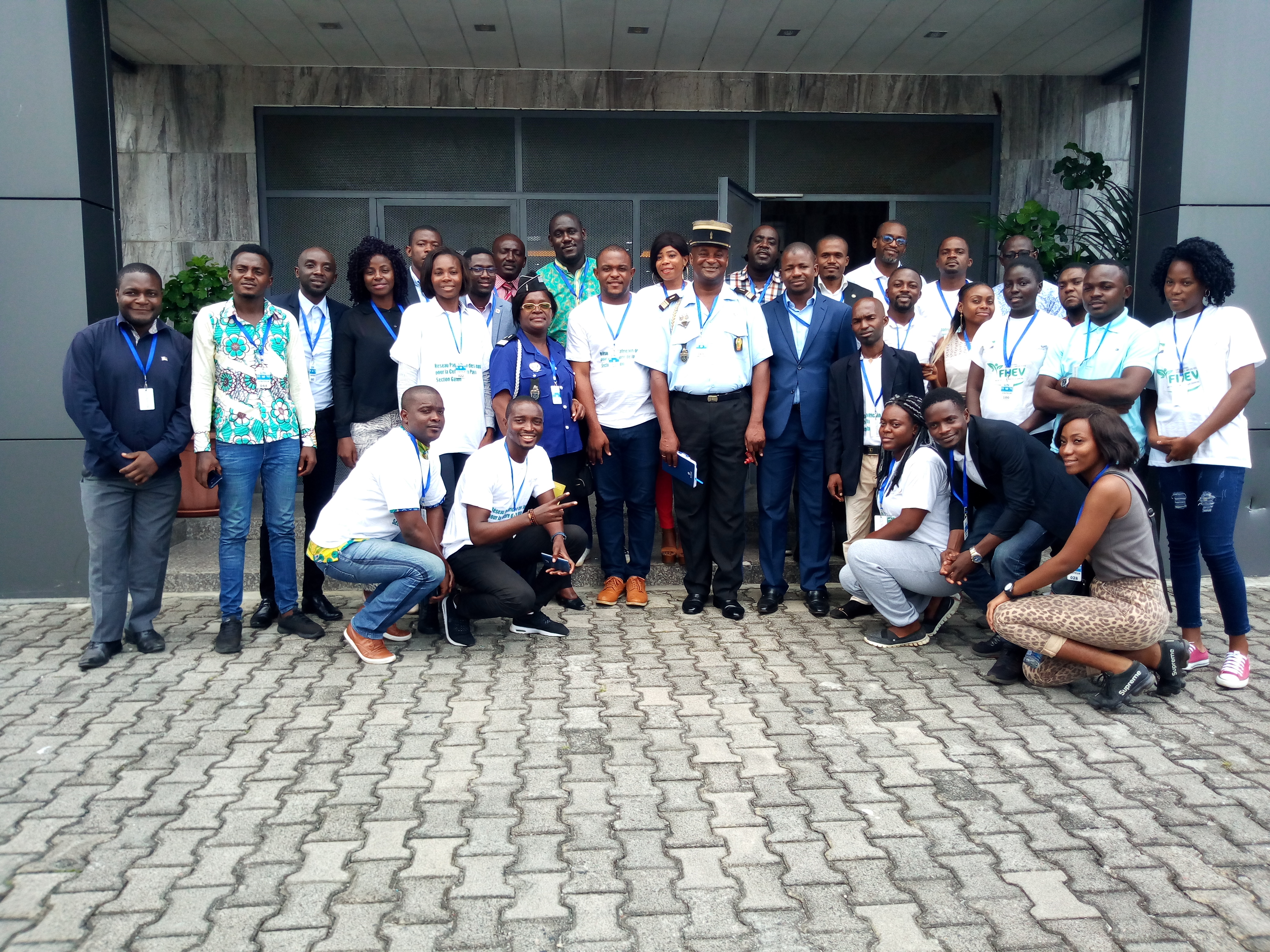
On Wednesday, 6th March 2019, Cameroon Peace Foundation Association, in collaboration with the Global Campaign for Peace Education, launched a National Campaign for Peace Education in Buea. The Campaign brought together religious leaders, lecturers, teachers and police officers.


(Continued in right column)

Question for this article:

Where is peace education taking place?

(Continued from left column)

The purpose of the campaign is to create awareness about the need to introduce peace in Cameroon schools. With Cameroon facing a very critical moment in its history, when everything has failed to bring back the peace that is desired and cherished, Cameroon needs to review its educational system. Peace education is a timely intervention and the best weapon to fight against terrorism and violence.

“Peace education is education for human dignity, and is capable of dismantling a culture of war that is pervading Cameroonian society,” said Mforndip Ben Oru, the coordinator of the Cameroon Peace Foundation.

At the close of the launching, it was agreed that peace education is the pathway to a culture of peace. The next stop for the Campaign will be in Bamenda in the North West Region of Cameroon. The Campaign intends to visit all 10 regions of Cameroon.

The Cameroon Peace Foundation is seeking $5000 to support the next steps of the Campaign. If you are able to donate, please contact Mforndip Ben Oru: ben.mforndip@gmail.com

(Thank you to Janet Hudgins, the CPNN reporter for this article.)

The resurrection of Dr. King

… EDUCATION FOR PEACE …

An essay by John Dear for Waging Nonviolence

Over the last fifty years, there have been thousands of nonviolent movements for peace and justice that have made huge strides, and at the heart of every one of those movements stands the life, death and teachings of Rev. Dr. Martin Luther King, Jr., the global apostle of Gospel nonviolence.

Because of his legendary work in the Civil Rights movement, Dr. King’s stand against systemic poverty, institutionalized racism, permanent war and nuclear weapons, and his steadfast insistence on Gospel nonviolence as the best methodological tool for political change and the bottom line for human decency, thousands of nonviolent movements have sprung to life around the world. Dr. King’s courageous life and life-giving death have born tremendous fruit around the world in new unparalleled breakthroughs for justice and peace.

Yet few know this. Few understand it. Few realize the global debt we owe to Martin King. Few see the transformative power of global, bottom up, grassroots people-power movements of active nonviolence.

Long ago, Jesus said, “Unless a seed falls to the ground and dies, it cannot bear good fruit.” Apparently, this is the way positive social change happens. When people give their lives in nonviolent movements for justice and peace, the spirit of nonviolence gets unleashed and becomes contagious. Anything can happen, even peace.

From Jesus to Dr. King, those who give their lives in the nonviolent struggle for justice, disarmament and peace, even though they appear to fail, bear tremendous good fruit in the long haul. That’s the way nonviolent change happens. That’s the lesson of Martin Luther King, Jr. That’s the undertaking we’re all called to support. That’s the path ahead.


I grew up in Washington, D.C. in the late 1960s, where my father was a leader of the National Press Club. Though I was a boy, I was extremely politicized. I understood the evils of the Vietnam War and the hope of the Civil Rights movement. When Dr. King was killed, and two months later, Robert Kennedy, I knew then and there, that the world had changed for the worse, that the powers that be had destroyed the best voices for hope and change.

From then on, I saw a direct line from the U.S. killings of MLK and RFK to Nixon, Vietnam, Reagan, the Central American Wars, the Bushes, the wars in Iraq and Afghanistan and the blatant fascism of the Trump Administration, and with them, a new sick world of permanent war, systemic poverty and racism, nuclear weapons and environmental destruction.

For years, I pondered the lives of Dr. King and Bobby Kennedy. In college, I felt that the best response I could make after their assassinations was to give my life to Jesus, become a priest and then, a public peacemaker.

In the 1980s, I lived for a while in El Salvador, and worked in a refugee camp in the war zone, under the direction of the Jesuits who were later assassinated. During those difficult days, people around me spoke in hushed tones about Archbishop Romero, as if he were alive. They had a vibrant theology of resurrection, which inspired their steadfast commitment to justice and peace. They knew he lived on in them, and because of his courage, they too spoke out.

Romero is now canonized as a saint, and its easy to see his power, but back then, even the mention of his name was risky.

I have never heard anyone speak of Dr. King that way. No one speaks of the resurrection of Martin Luther King, Jr. Unlike the suffering people of El Salvador, we have no theology of resurrection. We do not yet understand how our saints and martyrs have risen and continue to inspire us to work for a new culture of peace and nonviolence. Yet that is the way resurrection works.

Martin is alive and well and risen, and continues to inspire us to practice nonviolence, organize for justice and peace, and give our lives for God’s reign of peace.

Over the past forty years, I have been involved full time in the global grassroots, bottom up, people power movements of nonviolence, inspired by Dr. King. Along the way, I have befriended many of Dr. King’s friends and colleagues—Coretta Scott King; Jim Lawson; Vincent Harding; John Lewis; Dorothy Cotton and Bernard Lafayette. All of them, along with thousands of others, have continued Dr. King’s work of teaching and promoting active nonviolence as our one last hope, as our last ditch effort, our best way out of the madness, the best methodology for positive social change, the way of the nonviolent Jesus.

I think the time has come to claim Dr. King’s resurrection as the power beneath our active, creative, organized nonviolence, just as we claim the resurrection of the nonviolent Jesus as the basis for our very lives.

When the nonviolent Jesus rose from the dead, he remained as gentle, loving, nonviolent and determined as ever. He was not bitter or angry, vengeful or retaliatory. He did not get mad at the disciples for abandoning him. Instead, he blessed them with his gift of peace, breathed the holy spirit upon them, and sent them forth to carry out his mission of active nonviolence into the culture of violence.

(Articles continued in right column)

Questions for this article:

Where in the world can we find good leadership today?

What’s the message to us today from Martin Luther King, Jr.?

(continued from left column)

In other words, the risen Jesus was the embodiment of peace and nonviolence. As I reflect on that, I conclude that resurrection means having nothing to do with death, which means having nothing to do with violence, which means, resurrection is all about nonviolence.

If we want to get ready for resurrection, and follow the nonviolent Jesus, we practice resurrection by trying to be as nonviolent as possible—to ourselves, to every human being we meet, to every creature on earth, to Mother Earth, and through our participation in the local/global grassroots movements of nonviolence for justice and peace.

The night before the government killed him, Dr. King told thousands of people in Memphis this short summary of his life’s work: “The choice is no longer violence or nonviolence; it’s nonviolence or non-existence.”

That’s where we are today, on the break of global destruction with permanent war and systemic poverty and racism, nuclear weapons and catastrophic climate change, a whirlwind of global violence that infects every aspect of society, in every corner of the world.

Dr. King’s core message was the wisdom and way of nonviolence. His daily call was a passionate plea for us to become people of creative nonviolence who work for a new nonviolent world without war, poverty, racism, sexism, nuclear weapons or environmental destruction, a whole new culture of nonviolence which he understood as the coming of the Kingdom of God on earth. He said we do this no matter what, that we keep going no matter what, that we struggle for justice and peace and never give up.

From the Montgomery Bus Boycott through the Freedom Rides and the Birmingham Campaign to his March on Washington and Selma March through his organizing projects in Chicago and the Poor People’s Campaign and his public denunciation of the Vietnam War—Dr. King lived, breathed, taught and modeled Christian nonviolence.

“Nonviolence is a powerful and just weapon which cuts without wounding and ennobles the one who wields it,” Dr. King wrote. “It is a sword that heals.”

If we want to take Dr. King seriously, I suggest we start studying, teaching, practicing, organizing and renewing nonviolence in our lives and communities. The more we promote and practice nonviolence, the more Dr. King rises among us, just as Oscar Romero continues to rise in his people.

“I’m committed to nonviolence absolutely,” Dr. King said about a year before his death. “I’m just not going to kill anybody, whether it’s in Vietnam or here. I’m not going to burn down any building. If nonviolent protest fails, I will continue to preach it and teach it. I plan to stand by nonviolence because I have found it to be a philosophy of life that regulates not only my dealings in the struggle for racial justice, but also my dealings with people, with my own self. I will still be faithful to nonviolence.”

As we go forward in these difficult times, we can let Dr. King rise in us, if we dare, by daring to rise to the occasion, and becoming the people of active nonviolence he hoped for. Let’s do it.

Last September, Pace e Bene organized our fifth national week of action, from Sept. 15-24, 2018, with over 2650 events, marches and actions across the USA, involving a hundred thousand people, speaking out for a new culture of nonviolence. We were trying to put nonviolence into action, to get the grassroots movement moving. 

On top of this, we gathered in Washington, D.C. at the Dr. King statue, and marched past the Lincoln Memorial to the White House for a vigil against war, racism, greed, nuclear weapons and environmental destruction. Ten of us committed civil disobedience, holding out signs right at the gates. It was daring, public, exciting, and meticulously nonviolent, for we walked in silence, in prayer, in peace, like Gandhian satyagrahis. We tried to step up to the plate and carry on the witness of Dr. King, in our own turbulent times, come what may.

That’s not all. Our group, www.campaignnonviolence.org  has called for cities around the nation to become “Nonviolent Cities,” where every aspect of civic society is nonviolent, so that people are not hungry or impoverished, there are no guns and killings, no violence or racism, that the schools teach nonviolence, the churches preach nonviolence, and the city councils and mayors work for a nonviolent society. We think this takes Dr. King to a new level. It can’t be measured, but it’s happening, and with this quiet grassroots organizing, Dr. King rises and so do we.

On top of this, some friends and I have been working with the Vatican over the last few years to ask the Pope to write an encyclical on nonviolence. During our historic April 2016 conference on nonviolence at the Vatican, we took turns speaking about Jesus’ way of nonviolence and the need for the universal Church to advocate nonviolence. After the conference, Pope Francis wrote a world day of peace message calling for nonviolent alternatives to war and violence. It was the first statement on nonviolence in the history of the Church. What a sign of hope!

Around the world, there are many signs of hope, signs of resurrection—the Black Lives Matter movement, the #MeToo movement, the Plowshares movement, the Parkland Students’ “March for our Lives,” resistance to the Trump administration, the International Campaign to Abolish Nuclear Weapons, the environmental movement, the anti-death penalty movement and so forth. In particular, I take heart because for the first time since the early days of the church, Christians are beginning to discover the nonviolence of Jesus and make it a central aspect of their own lives.

How did Dr. King carry on in the darkness around him? As he arrived in Memphis, in the weeks before the U.S. government killed him, he gave us his answer. One night, he told the crowd his definition of hope. “Hope,” he said, “is the final refusal to give up.”

That’s the path to resurrection, the way forward. We are not going to give up. We are going to keep practicing nonviolence, resisting systemic violence, speaking truth publicly and organizing the grassroots movements for positive social change. As we do, Dr. King rises among us, as does Jesus, and we experience the breakthroughs of God’s reign in our midst. Hope indeed!

Mexico: authorities sign agreement for peace in Tecomán

… EDUCATION FOR PEACE …

An article from AF Medios (translated by CPNN)

Municipal authorities, federal and civil society, have signed the Partnership for Peace Agreement which seeks to promote and promote a culture of peace in the municipality of Tecomán. Signatories include the municipal president of Tecomán, Elías Antonio Lozano Ochoa, the federal deputy, Hugo Rafael Ruíz Luster, along with the state delegate of Programs for the Development of the State of Colima, Indira Vizcaíno Silva, and the president of the Citizen Council AC, Nazario Rodríguez Guerra.


Participants in the event held on Wednesday [March 6] included the federal deputy Rosa María Bayardo Cabrera, the general director of Economic Development, Rubén Reyes Ramírez, the head of Economic Promotion, José de Jesús Figueroa Cuevas, officials of the administration and representatives of various social organizations.

(Article continued in right column)

(Click here for the original article in Spanish)

Questions for this article:

Can peace be guaranteed through nonviolent means?

(continued from left column)

Ruíz Lustre pointed out that society has a culture of war that leads it to commit acts by imitation.

“Therefore, every day at a younger age crimes are committed; That is why this agreement is being signed, which we started in Colima, the smallest and most violent state in the country. “Ruíz Lustre also mentioned that his main decision will be to promote, along with the Human Rights Commission of the Chamber of Deputies, an agreement for the previous military installations of the 20th Military Zone to become a Training Center for the Western Zone Police.

For its part, Indira Vizcaíno Silva said that the initiative coincides with the vision of the President of Mexico, Andrés Manuel López Obrador, to focus on prevention and promote a culture of peace and reconciliation.

Nazario Rodríguez Guerra, president of the Citizen Council said he was very worried about what has happened in Tecomán. “We must return to inculcate values, because we have fallen into consumerism and neglect. We need to achieve a peaceful society.”

To conclude, the mayor of Tecomán said he was convinced that peace is important for the development of communities, peoples and nations. “We are in this situation because we have stopped doing some important things, but I am also convinced that we will soon be able to reverse it and achieve better living conditions for all.”

[Editor’s Note: According to news reports, Tecomán has the highest crime rate in Mexico with with 164.5 homicides per 100,000 inhabitants.
 

CJP co-founder and first director John Paul Lederach awarded Niwano Foundation Peace Prize

… EDUCATION FOR PEACE …

An article from the Eastern Mennonite Univeraity

Internationally renowned peacebuilder John Paul Lederach, who has committed his life and work to nonviolent approaches to conflict for more than 40 years, has been awarded the 36th Niwano Peace Foundation Peace Prize.


 (Photo courtesy of the Kroc Institute)

Lederach, currently a senior fellow at Humanity United, is a co-founder and the first director of the Eastern Mennonite University’s Center for Justice and Peacebuilding, which celebrates its 25th anniversary in 2020. He holds the title of distinguished scholar and sits on CJP’s Board of Reference. Lederach is also professor emeritus of international peacebuilding at the University of Notre Dame’s Kroc Institute for International Peace Studies, where he taught for 15 years.

The prize recognizes Lederach’s scholarly and practice work in “mediating conflicts, building peace, and fostering international reconciliation,” according to a Niwano Peace Foundation release. “He has developed training in conflict transformation and provided direct conciliation support services in some of the most violently conflicted regions across five continents.”

“His books, lectures, workshops and conversations offers grounded, practical insights into the complex nature and dynamics of conflict and how to transform it,” said committee member Ahn Jae Woong, immediate past president of the YMCA of Korea and former general secretary of the Christian Conference of Asia.  As with his teaching, his approach is one that encourages people to embody the core principles of the faith tradition that guides them.”

Nominations are solicited annually. Selected by a committee of 11 global religious and spiritual leaders, recipients are honored for their leadership to interreligious cooperation in the cause of peace.

“EMU has benefited greatly from the visionary peace-building leadership of John Paul Lederach, and we extend our congratulations to him on the occasion of this prestigious award,” said President Susan Schultz Huxman.

Lederach will attend a ceremony May 8 in Tokyo, where he will be presented with a gold medal and the subsidiary prize of $180,000. He will also address the Niwano Peace Foundation, dignitaries and global peace leaders.

“It is a profound honor to receive this 36th Niwano Peace Prize,” Lederach said, in his acceptance letter. “Your recognition gives us courage that our global beloved family can move beyond hate, division, and exclusion and create the bonds that truly heal.”

Lederach expressed thanks for the support and commitment of his family as well as many others, in the Mennonite tradition and those of diverse faiths, who have influenced his practice, writing and scholarship.

(Articles continued in right column)

Questions for this article:

Where in the world can we find good leadership today?

(continued from left column)

“Peacebuilding is not about a single person but rather how whole collectives cohere, how communities rise and respond to challenges, and how families stay strong,” he said.

Aiding in his own work at building cohesive peacebuilding collectives, Lederach named several EMU practitioners. The urging of Vernon Jantzi, then professor of sociology and social work (now professor emeritus) at EMU, convinced Lederach to return to academia after many years in the field with Mennonite Central Committee and other organizations.

The duo, with several other contributors from Colombia, Kenya and the United States, helped to found the Conflict Transformation Program at EMU, now known as the Center for Justice and Peacebuilding, and the Summer Peacebuilding Institute, in response to demand and need among practitioners for training and generative conversations in the areas of conciliation, peacebuilding and restorative justice.  

This award “helps us all appreciate more fully the magnitude of the sea change that John Paul has helped create here at EMU and in the global peacebuilding field,” said Jantzi. “His low-key, inclusive approach has partially obscured how revolutionary his vision and practice have been.  A people-centered practitioner, down-to-earth philosopher, artist, and engaging teacher, he has always believed that durable peacebuilding happens when we manage to bring the best of our humanity to bear on our most inhumane behavior and structures.”

Jantzi particularly praised Lederach’s “articulation, enrichment and expansion” of the concept of peacebuilding through his life of service, pedagogy and practice.

Among the other “extraordinary people” Lederach credits with helping him to “understand patient accompaniment and courage in forging peace” are several accomplished CJP graduates and Summer Peacebuilding Institute participants and instructors:Hizkias Assefa, Babu Ayinde MA ‘98, Rose Barmasai, Dekha Ibrahim, and Florence Mpaayei, of Kenya, Emmanuel Bombande MA ‘02, from Ghana; Joe Campbell MA ‘02, from Northern Ireland; Ameet Dhakal MA ‘02 and Preeti Thapa, from Nepal; Sam Doe MA ‘98, from Liberia; and Myla Leguro, from Mindanao.

Lederach also urged inclusive participation of youth and women in national negotiations, conference panels or locally led peace efforts in his acceptance letter.

He also lifted up a unified and faith-filled commitment to discovering, sharing and practicing nonviolent alternatives to conflict: “For me, the deepest aspirations of my faith tradition provided inspiration to move beyond barriers and boundaries. The infinite, boundless, and audacious love of the Divine toward humanity stirs us to notice and learn from this gifted diversity, to build lasting and improbable friendships across our brokenness, and to fearlessly seek to understand those with whom we disagree.”

Recent recipients of the Niwano Peace Prize include the Adyan Foundation, Lebanon, 2018; Bishop Dr. Munib A. Younan, Palestine, 2017; the Center for Peace Building and Reconciliation, Sri Lanka, 2016; and Pastor Esther Abimiku Ibanga, Nigeria, 2015.

(Editor’s note: The methodologies developed by John Paul Lederach during the 1980’s in Central America and Africa were an important contribution to the development of the Culture of Peace Programme at UNESCO in the 1990’s.)

Dominican Republic: Reflections on the search for a culture of peace in schools

… EDUCATION FOR PEACE …

An article from Acento (translation by CPNN)

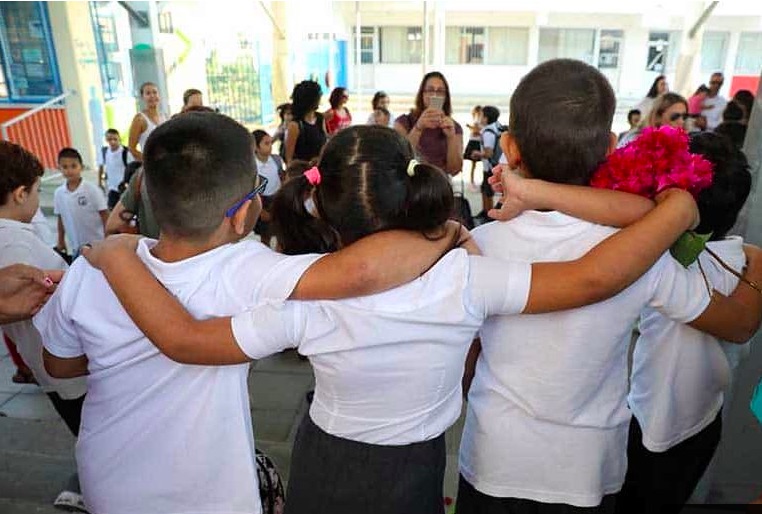
For three days the Ministry of Education held the National Forum for a Culture of Peace. With the enthusiastic presence of Minister Andrés Navarro, some 360 ​​students represented the 18 educational regions at the national level contributed proposals to address the increase in violence in Dominican schools.


We appreciate that Minister Andrés Navarro dedicates time and focus attention to this issue, and that the students of the country have been considered an essential part of the search for solutions in a subject that directly involves them.

Violence in schools is an old problem. The schools are located within communities that also have problems of violence: structural violence of society, family violence, gender violence, social violence. The violence that worries us today has always been in schools, but it is only now that we have instruments to recognize this violence, and show it outside the classroom, through social networks, and from there to more formal means of communication .

We never before had an education minister who discussed three days with students, listening to their concerns and suggestions on how to deal with violence. It’s a breakthrough. The Ministry of Education should make decisions about how to take on new technologies in schools, especially smartphones, which in some schools are forbidden while in others are allowed. They should not be instruments for distraction, but they can be instruments for information, for school work. New technologies should be incorporated as a support and not as an enemy.

(Article continued in right column)

(Click here for the original article in Spanish)

Questions for this article:

What is the relation between peace and education?

Where is peace education taking place?

(continued from left column)

The other important issue is that students who go to school and are violent, or are victims of violence, or are spectators of acts of violence, come from homes with permanent or systematic violence, where there are aggressors and victims. These families can not be left out of the solutions. The school must find a way to incorporate the families of the students to solve the problem and to promote a culture of peace and respect.

The Ministry of Education will not be able to do anything with students who in the classrooms are instructed for a culture of peace if a culture of violence continues around them in the streets and in their homes.

There are working methods that the Ministry of Education could well assume in addition to this three-day meeting promoting a culture of peace. They should establish a dynamic that will involve teachers, school district coordinators, school directors and high schools.

The specialist Vanesa Espaillat, deputy director of the Lux Mundi School and professor at UNIBE University, has established that in any act of violence in the school context there are three actors: An aggressor, a victim and a public spectator. The public should be incorporated as part of the solution, and not left out as a simple observer.

No one who witnesses abuse or victimization in the school setting can remain indifferent. Teachers must be trained to deal with these events, and when they occur they should take advantage of them to nuance and emphasize the culture of peace, self-control, rejection of violence and taking responsibily.

The Ministry of Education needs to obtain an in-depth view to provide far-reaching solutions to this problem. It cannot solve it alone, because it does not depend only on the authorities, but it can help to find the door for its reduction.

We congratulate the Minister of Education, Andrés Navarro, for initiating the search for answers to an issue that worries the whole society. These initiatives can bring tranquility and serenity to the sector of education which so vital for families and for society.