Category Archives: DEMOCRATIC PARTICIPATION

World Peace Flame to be lit in Ashland, Oregon (USA)

. . DEMOCRATIC PARTICIPATION . .

An article from the Ashland Culture of Peace Commission

On September 21, 2018, the International Day of Peace, the World Peace Flame will be lit in the Thalden Pavilion, Sustainability Center on the Southern Oregon University (SOU) campus. A delegation from the World Peace Flame Foundation will come to Ashland for the lighting ceremony, together with our State and City dignitaries. This symbol of peace, unity, freedom and celebration aims to inspire people everywhere that the individual plays a crucial role in creating peace at every level. From a few feet to less than a mile from the World Peace Flame Monument reside Walker Elementary School, Ashland Middle School, Ashland High School, and Southern Oregon University. The World Peace Flame will provide hope and inspiration to our future leaders, and light the hearts of all who visit it.


(click on image to enlarge)

There are few opportunities in our lifetimes to make contributions which have local, national and international significance, directly impact the aspirations of people of our daily lives and the lives of future generations, and become a proud part of our own legacy. This need has never been greater than it is right now. Establishing the World Peace Flame Monument in Ashland, Oregon is that opportunity through which we can recognize and work toward our commonalties, rather than our differences. This is “One Flame – uniting people worldwide”, the tag line from the World Peace Flame Foundation, The Hague, Netherlands.

(article continued in right column)

Question related to this article:

 
How can culture of peace be developed at the municipal level?

(article continued from left column)

On September 2015, Irene Kai, co-founder of the Ashland Culture of Peace Commission (ACPC) discovered the World Peace Flame Monument deep in the Snowdonia Mountain in Wales. She was told the history of the World Peace Flame and was offered a candle to light from the flame to bring back to Ashland. Irene lit the candle during the inauguration of ACPC on the International Day of Peace, September 21, 2015.
 
Local philanthropists Barry and Kathryn Thalden invited Ashland Culture of Peace Commission to put the World Peace Flame in the outdoor pavilion they had endowed at SOU. The World Peace Flame complements the pavilion’s goals of advancing innovation in sustainability and the arts. The eternal flame will be placed near the base of the obelisk encased in glass. It is flanked by two 24-foot cedar carvings by local Native American sculptor, Russell Beebe. He called one of the carvings the “teaching pole”. He said, “at this moment in history, we are at a crossroad; we must choose either the sacred path to wholeness or the path of destruction.” It is fitting for the World Peace Flame to be at the heart of the obelisk, to serve as the living flame igniting the flames in the hearts of all people to commit to walk our sacred path in peace.
 
The only other World Peace Flame in the United States resides in the Civil Rights Museum, the Lorraine Motel, Memphis, Tennessee, the assassination site of Dr. Martin Luther King. As the City of Ashland had proclaimed itself an International City of Peace, the Ashland monument will be known throughout the Cities of Peace all over the world. Visitors from Oregon, across the United States and from other countries will also be drawn to this flame of peace and carry it in their hearts back to their homes and communities.
 
We all have a role to play in bringing greater peace and well-being into our lives and that of our community. Please make a donation to ensure that the installation, lighting ceremony and ongoing care of the World Peace Flame will prevail.

(Olympics) Top organizer says ‘world became one’ during PyeongChang Winter Olympics

.. DEMOCRATIC PARTICIPATION ..

An article from Yonhap News

The PyeongChang Winter Olympics brought the world together “in peace and harmony,” the event’s top organizer said during the closing ceremony on Sunday [Feb. 25].


Athletes from South and North Korea march together at the closing ceremony of the 23rd Winter Olympics at the Olympic Stadium in PyeongChang, Gangwon Province, on Feb. 25, 2018. (Yonhap)

“In PyeongChang, the world became one,” said Lee Hee-beom, head of the PyeongChang Organizing Committee for the 2018 Olympic Winter Games (POCOG), during the ceremony at PyeongChang Olympic Stadium. “Transcending the differences of race, religion, nation and gender, we smiled together, cried together, and shared friendship together. Even though we are now saying goodbye to each other, PyeongChang 2018 will be long remembered with beautiful and unforgettable memories.”

(Articles continued in right column)

Questions for this article:

Can Korea be reunified in peace?

(Articles continued from left column)

Lee pointed to athletes from South and North Korea in particular, as they marched in together behind the Korean Unification Flag during the opening ceremony and agreed to form a unified women’s hockey team. Lee said these acts “showcased much bigger possibilities beyond sport.”

“When marching together, and even competing together as a unified Korean team, it constituted a strong identity of one single nation,” Lee said. “The world paid its high tribute of admiration for the athletes of South and North Korea, who marched and competed together during the games.”

Lee had long pushed the vision of holding a “Peace Olympics” in PyeongChang, and he said the presence of both Koreas at these Olympic Games has laid a solid foundation for the future of the two Koreas.

“The seed of peace you have planted here in PyeongChang will grow as a big tree in the not-distant future,” he said. “The hope and aspirations of South and North Korean athletes together with cheerleaders will definitely serve as a cornerstone of the unification of the Korean Peninsula.”

Lee saluted all the athletes as “true winners,” and thanked PyeongChang residents, POCOG staff members, volunteers and other Olympic partners as “patriots and heroes.”

UN chief in Pyeongchang; Olympic message of peace is universal, beacon for human solidarity, culture of peace

.. DEMOCRATIC PARTICIPATION ..

News story and press release from the United Nations News Centre

Following is the text of UN Secretary‑General António Guterres’ video message for the pre‑ceremony at the PyeongChang Olympic Winter Games, in the Republic of Korea today [PyeongChang, February 9]:


Secretary-General António Guterres (left) and Thomas Bach, President of the IOC, hold a joint press encounter at the IOC office in Pyeongchang, Republic of Korea. UN Photo/Mark Garten

안녕하십니까 Ahn-nyoung Ha-shim-nikka, PyeongChang.

The world gathers on the Korean Peninsula today, united by the Olympic spirit:  in solidarity, mutual respect and friendly competition.  The Olympics and Paralympics showcase the best of the world’s athletic achievements.

 And the best of humanity.

Let the Olympic flame shine as a beacon to human solidarity.  Let the Olympic Truce help spread a culture of peace.  Let the Olympic spirit guide our actions today and every day.

Thank you.  Gahm-sah Hahm-ni-da 감사합니다.

(Articles continued in right column)

Questions for this article:

Can Korea be reunified in peace?

(Articles continued from left column)

. . . United Nations Secretary-General António Guterres called on everyone to recognize and promote the Games’ universal message of peace and tolerance.

“The Olympic spirit allows people to be together, from all over the world, to respect each other, to assert the values of tolerance, of mutual understanding that are the basic elements for peace to be possible,” Mr. Guterres told journalists in Pyeongchang.

Obviously, in the present context, he said, there is a lot of attention for this message of peace in relation to the Korean Peninsula, but the Olympic message of peace is not local.

“It is universal. It’s for the world. It is valued in Korea as it is valued everywhere where we struggle to try to address the many complex conflicts that we are facing,” he said.

The UN chief also extended his appreciation and pride to be at the Winter Olympics and highlighted the cooperation between UN and the International Olympic Committee (IOC), as well as the values for which the IOC and its sister organization, the International Paralympic Committee, stand.

The Winter Olympics opened earlier today (local time) with cultural and artistic performances as well as the customary parade of athletes, which was the delegations from the Democratic People’s Republic of Korea and the Republic of Korea under one flag, carried together by a sportsperson from each team.

Also today, the opening ceremony saw the conclusion of the long journey of the Olympic Torch that started in November 2017.

In the last leg of its journey, the flame was carried, among others, by Miroslav Lajčák, the President of the UN General Assembly and Thomas Bach, the President of the IOC.

Outlining the commonalities between sport and diplomacy – both about peace and bringing people together – Mr. Lajčák highlighted that the Olympic torch is “probably the best symbol in our times in our world.”

“[It] is a symbol of peace, a symbol of youth, a symbol of sport, communication, a symbol of tradition, a symbol of hope.” he said.

(Thank you to Phyllis Kotite, the CPNN reporter for these articles.)

UN chief in Pyeongchang; Olympic message of peace is universal, beacon for human solidarity, culture of peace

.. DEMOCRATIC PARTICIPATION ..

News story and press release from the United Nations News Centre

Following is the text of UN Secretary‑General António Guterres’ video message for the pre‑ceremony at the PyeongChang Olympic Winter Games, in the Republic of Korea today [February 9]:


Secretary-General António Guterres (left) and Thomas Bach, President of the IOC, hold a joint press encounter at the IOC office in Pyeongchang, Republic of Korea. UN Photo/Mark Garten

안녕하십니까 Ahn-nyoung Ha-shim-nikka, PyeongChang.

The world gathers on the Korean Peninsula today, united by the Olympic spirit:  in solidarity, mutual respect and friendly competition.  The Olympics and Paralympics showcase the best of the world’s athletic achievements.

 And the best of humanity.

Let the Olympic flame shine as a beacon to human solidarity.  Let the Olympic Truce help spread a culture of peace.  Let the Olympic spirit guide our actions today and every day.

Thank you.  Gahm-sah Hahm-ni-da 감사합니다.

. . . United Nations Secretary-General António Guterres called on everyone to recognize and promote the Games’ universal message of peace and tolerance.

“The Olympic spirit allows people to be together, from all over the world, to respect each other, to assert the values of tolerance, of mutual understanding that are the basic elements for peace to be possible,” Mr. Guterres told journalists in Pyeongchang.

(Articles continued in right column)

Questions for this article:

Can Korea be reunified in peace?

(Articles continued from left column)

Obviously, in the present context, he said, there is a lot of attention for this message of peace in relation to the Korean Peninsula, but the Olympic message of peace is not local.

“It is universal. It’s for the world. It is valued in Korea as it is valued everywhere where we struggle to try to address the many complex conflicts that we are facing,” he said.

The UN chief also extended his appreciation and pride to be at the Winter Olympics and highlighted the cooperation between UN and the International Olympic Committee (IOC), as well as the values for which the IOC and its sister organization, the International Paralympic Committee, stand.

The Winter Olympics opened earlier today (local time) with cultural and artistic performances as well as the customary parade of athletes, which was the delegations from the Democratic People’s Republic of Korea and the Republic of Korea under one flag, carried together by a sportsperson from each team.

Also today, the opening ceremony saw the conclusion of the long journey of the Olympic Torch that started in November 2017.

In the last leg of its journey, the flame was carried, among others, by Miroslav Lajčák, the President of the UN General Assembly and Thomas Bach, the President of the IOC.

Outlining the commonalities between sport and diplomacy – both about peace and bringing people together – Mr. Lajčák highlighted that the Olympic torch is “probably the best symbol in our times in our world.”

“[It] is a symbol of peace, a symbol of youth, a symbol of sport, communication, a symbol of tradition, a symbol of hope.” he said.

(Thank you to Phyllis Kotite, the CPNN reporter for these articles.)

PyeongChang Winter Olympics to Serve as Platform for Sustainable World

.. DEMOCRATIC PARTICIPATION ..

An article by Oh Soo-young, KBS World Radio News.

Anchor: With three days left until the PyeongChang Winter Olympics, an event in Seoul on Tuesday aimed to shine a spotlight on how the global sporting event can bring the world together in efforts to achieve social and environmental sustainability. Our Oh Sooyoung was at the event.

Report: The Olympics are not just a stage of athletic skill and sportsmanship but a global platform to build a better and more sustainable world. 

That was the over-arching theme of a “talk concert” held on Tuesday in central Seoul, co-hosted by the PyeongChang Olympics Organizing Committee, the South Korean government and seven UN agencies in South Korea. 

Former Olympians and various opinion leaders emphasized how the Olympic Games can contribute to the United Nations’ 17 Sustainable Development Goals(SDGs) which include improving livelihoods and empowering women and youth. 

(Article continued in right column)

Questions for this article:

Can Korea be reunified in peace?

(Article continued from left column)

United Nation Development Programme(UNDP) Seoul Policy Centre Director Balázs Horváth said a core principle of sustainable development is “leaving no one behind” – a value that resonates with the spirit of the Olympics. 

UNDP Seoul Policy Centre’s Director Balázs Horváth: “Sports is a valuable tool for promoting a just, peaceful and inclusive society. They help promote social inclusion, build trust and foster a culture of peace between groups, even groups that are in conflict. Help empower individuals and communities, especially for women and young children.” 

Beyond the sporting events, achieving sustainable peace and development are critical objectives for the games in PyeongChang. 

The PyeongChang Olympic Committee strives to preserve nature, revitalize local communities by supporting tourism and job creation as well as regional development using clean and affordable energy, according to the UN director. 

UNDP Seoul Policy Centre’s Director Balázs Horváth: “It contributes towards building industry and infrastructure. The KTX train that takes people to the Olympics. It contributes to clean water and sanitation – another SDG. Affordable and clean energy. Also, the way they are placing great emphasis on renewable energy and saving energy contributes to climate action, another SDG.” 

Organizers hope the PyeongChang Olympics will serve as an opportunity for the world to come together to create a better future.

Spain: Junta of Andalucía highlights commitment of the community to dialogue and solidarity in the ‘School Day of Peace’

.. DEMOCRATIC PARTICIPATION ..

An article from 20 Minutos (reproduced according to terms of Creative Commons)(translated by CPNN)

The 271 educational centers of the province of Almería integrated into the Network ‘School: Space of Peace’ have celebrated this Tuesday [January 30] the ‘School Day of Peace and Non-Violence’ with a program of recreational and cultural activities to promote the democratic values of equality, respect for diversity and tolerance.


Click on photo to enlarge

More than 100,000 students and 6,000 teachers participate in Almería in these initiatives to promote coexistence among the educational community. The delegate of the Junta, Grace Fernandez, who has highlighted the commitment of the educational community to solidarity and dialogue, has taken part along with the students of Las Norias de Daza and IES Aguadulce in the events they have organized to commemorate this international event.

Some thirty NGOs participated in the ‘VII Volunteering, Participation and Solidarity Day’ at the IES Aguadulce. The meeting, which puts students in direct contact with the work carried out by the associations in different areas, has been inaugurated by the Government delegate of the Junta, Gracia Fernández, who has visited the information tables of the different groups installed in the center accompanied by the delegate of Education, Francisca Fernández, and by the director of the institute, Amparo García.

During her visit, Gracia Fernández pointed out that this day highlights “the joint work of the educational community of the IES Aguadulce in promoting the values ​​of solidarity, social justice and equal opportunities and its promotion among students”.

The day, which celebrates its seventh edition, includes an exhibition area located in one of the covered courtyards of the center where, from 9 in the morning and until 13.30, the associations have shown the work they do through brochures, panels and other information material.

The program is completed with a series of lectures and workshops given by the different participating NGOs, aimed at students of ESO, Baccalaureate and Computer Training Cycles.

The delegate of the Government has explained that this type of meeting “contributes to make visible to society the work of the volunteer and their altruistic and solidary commitment. It reinforces the contents of these topics that are included in the Andalusian educational curriculum”.

Fernandez referred to the role of volunteering “as an instrument of participation of society and as a space from which citizenship is built and democracy is strengthened”. “Solidarity, social responsibility, justice and equal opportunities are values ​​that voluntary action and the public education system of Andalusia share”, explained the delegate.

(Article continued in right column)

(Click here for the article in Spanish)

Questions for this article:

How important is community development for a culture of peace?

(Article continued from left column)

She encouraged young people to participate in the associative movement “to combat exclusion, fight for equality, for education, for the integration of people with disabilities, for culture and for the environment, in short, for a more just society “.

Amnesty International, Proyecto Hombre, Greenpeace, Posidonia, Manos Unidas, Asalsido, Colega, Cáritas, Posidonia and A Toda Vela are some of the thirty associations that participated, together with the Andalusian Institute of Youth (IAJ) in this VII Volunteer Day of the IES Aguadulce, a center with 1,630 students and 75 teachers, which develops, among other programs, the Youth Formation and the Espacio de Paz School.

CAREER FOR SOLIDARITY IN LAS NORIAS

The delegates of the Government and Education, Gracia Fernández and Francisca Fernández, also visited this morning Las Norias de Daza to share with the students of the educational centers of this ejidal neighborhood the activities organized by the Local Board of Education and Community on the occasion of the ‘School Day of Peace’, including a charity race in favor of the NGO ‘Save the Children’.

Gracia Fernández thanked the educational community and the members of the Local Committee “their generous collaboration in the process of permanent improvement of the public education system.”

The Local Board of Education and Community of Las Norias was created in 2012 under the Intercultural Intervention Project promoted by the Social Work of La Caixa and on the initiative of the Association of Cooperation and Development with North Africa (Codenaf) with the support of the Junta and the City Council of El Ejido.

It has the participation of the five educational centers of Las Norias and a mixed group of technicians and professionals from social services, health, sports and education.

Its objective is to be a forum for reflection to collectively manage the cultural diversity of Las Norias and promote social cohesion and coexistence.

The delegate of Education has stressed that “the work of the Local Board of Education has paid off in improving the academic results of all students and in the development of an educational project that is enriched with multiculturalism and diversity.”

SCHOOL DAY OF PEACE

The School Day of Peace and Nonviolence has been celebrated on January 30 since 1964, when it emerged as an initiative of the Spanish teacher Llorenç Vidal for the dissemination of education for tolerance, solidarity, concord and respect for human rights. In 1993 it received the support of UNESCO. The anniversary coincides with the date of the death of Mahatma Gandhi, murdered in 1948.

The delegate of Education, Francisca Fernández, stressed that “the culture of peace is not only a transversal content but is one of the ultimate goals of the public educational system in Andalusia that is specified in the Andalusian Plan for Education for the Culture of Peace and which involved the creation in the 2002-2003 academic year of the School Network: Space of Peace “.

Nigeria: Federal government rallies support of stakeholders to promote peace, security

.. DEMOCRATIC PARTICIPATION ..

An article from Vanguard Nigeria

The Minister of Information and Culture, Alhaji Lai Mohammed, says sustenance of peace and security in Nigeria is the responsibility of traditional rulers, media, religious bodies and civil society organisations as stakeholders.

Mohammed said this on Tuesday at the opening of a two-day conference on “Culture, Peace and National Security: The Role of Traditional Rulers”, held at the University College Hospital (UCH), Ibadan.


Lai Mohammed

The conference was organised by the National Institute for Cultural Orientation (NICO) in collaboration with the United Nations Educational, Scientific and Cultural Organisation (UNESCO).

Represented by the Director of International Cultural Relations in the ministry, Mr Richard Maku, Mohammed restated the Federal Government’s commitment to ensuring peace and security.

“It’s also a fact that until we are able to entrench a culture of peace and non-violence in our body polity, all efforts geared towards development would be a mirage,” he said.

Also speaking, Gov. Abiola Ajimobi of Oyo State advised state Houses of Assembly to identify a specific day for the conduct of their proceedings in the dominant language spoken in every state, saying such a practice would help in promoting the indigenous culture of the people.

“Also, our mode of dressing should be promoted culturally to enhance our esteemed culture; all of us should join hands to promote our different cultures so that it will not go into extinction,” he said through his Chief of Staff, Dr Gbade Ojo.

(Article continued in right column)

Questions for this article:

How important is community development for a culture of peace?

(Article continued from left column)

The Chairman of the occasion, Prof. Ayo Banjo, identified peace as a critical factor for steady development of any society, emphasising that a society must place a premium on its collective effort to foster peace and unity.

Earlier, NICO Executive Secretary, Mr Louis Eriomala, said the institute was established to harness the country’s rich cultural heritage for national development.

Eriomala noted that the conference was conceptualised in 2012 to underscore the importance of cultural dimension in the quest for sustainable peace and security in Nigeria.

He said peace as well as security of lives and property result in meaningful progress and development of every society, adding that urgent steps must be taken to address factors responsible for escalating conflicts such as poverty, ethno-religious bigotry and political violence.

“Failure to address these issues will lead to channelling of resources, which should have been used for human development, to military and security interventions.

“If Nigerians are adequately sensitised to appreciate the critical importance of peace and security to the fulfilment of their yearnings, threats to peace and security will be drastically reduced,” he said.

He maintained that remarkable achievements would be recorded if peace and security challenges faced by the country were adequately tackled from people’s cultural dimension.

“A constitutional role for traditional rulers is imperative, a bottom-up mobilisation approach steered by our highly esteemed monarchs will greatly complement the efforts of the nation’s security agencies,” he said.

Participants at the conference included traditional rulers as well as personnel of National Orientation Agency, Nigerian Police, other security agencies and National Commission for Museum and Monuments.

Honduras: Culture of peace promoted in 200 young people from “hot” areas

.. DEMOCRATIC PARTICIPATION ..

An article from La Tribuna (translated by CPNN)

200 young people from different neighborhoods and colonies of the Central District came to the headquarters of the Scout Movement, to participate in the “Honduras Motivate” event, promoting kills for life and leadership, from outdoor play activities,.

The activity was developed within the framework of the comprehensive security strategy program of the government, through the Secretariat of Security in the Office of Prevention and the Cabinet of Prevention, Peace and Coexistence.

During the activities, from 9:00 in the morning until 12:00 noon, the youth practiced and developed different group activities to learn to participate and create shared objectives in the construction of a culture of peace, harmony and coexistence.

(continued in right column)

(Click here for the Spanish original of this article)

Questions for this article:

How can sports promote peace?

(continued from left column)

These activities are carried out in strategic neighborhoods to help young people and try to remove them from the risky situation that leads them to fall into the hands of organized criminal groups.

Deputy Minister of Security, Alejandra Hernández, said that “Honduras Motívate is a project promoted by the government of President Hernández, within the framework of the comprehensive security strategy.”

In different parks for a better life, this type of activity is carried out so that young people and children can keep themselves occupied and, above all, develop habits of coexistence.

Young people participate in traditional games to try to recover the culture that has been lost. These games are little known and rarely practiced by children, adolescents and young people, explained Hernández.

They also carry out competitions where they learn and understand that there is no superiority between men and women, by valuing and seeing that each one possesses abilities and strengths different from the others.

Hernandez added that “much remains to be done, the country must advance, and harmonize in the construction of a culture of peace, we are not going back because we are on the right track and we will continue the struggle.”

Peace Museums flourish around the world

.. DEMOCRATIC PARTICIPATION ..

An article by CPNN based on the newsletter of the International Network of Museums for Peace

The December 2017 newsletter of the International Network of Museums for Peace describes initiatives around the world.

Ban the Bomb is the title given to the exhibition at the Nobel Peace Center in Oslo, Norway, celebrating the award of the 2017 Nobel Peace Prize to the International Campaign to Abolish Nuclear Weapons (ICAN). At the heart of the exhibition, which will be shown until 25th November 2018, are artefacts from Hiroshima, Nagasaki, and Kyoto that are being shown in Europe for the first time, thanks to cooperation with the Japanese Peace Museums.


Andrew Young with statue of M. L. King (Credit: Newcastle Chronicle)

The travelling exhibition, Everything You Treasure – For a World Free From Nuclear Weapons was shown in Mexico City in August 2017, at an event commemorating the 50th anniversary of the Treaty for the Prohibition of Nuclear Weapons in Latin America and the Caribbean (Treaty of Tlatelolco). The exhibition was jointly created by Soka Gakkai International (SGI) and the International Campaign to Abolish Nuclear Weapons (ICAN).

The Gandhi Museum at Aga Khan Palace in Pune, India, showcases the history of Gandhi’s strategies to wage his final struggle for freedom from foreign rule. The hall dedicated to Gandhi contains, his writing desk and spinning wheel, as well as a painting of his wife, resting her head on Gandhi’s lap. There is also the Sarojini Naidu library with over one thousand books and journals on Gandhian philosophy and practice.

The Anti-War Museum in Berlin is featuring an exhibition on Henry David Thoreau, American writer and opponent of war and slavery who was one of the key influences on the life and thought of Gandhi through his essay on the Duty of Civil Disobedience. The exhibition consists of 52 text-andillustration panels, and is in English and German. It includes comments on Thoreau by Gandhi, Tolstoy, M.L. King and Martin Buber.

(article continued in right column)

Question for this article:

Peace Museums, Are they giving peace a place in the community?

(article continued from left column)

In Newcastle, UK, an exhibition shown in the University Library, tells the inside story of King’s remarkable visit to the city in November 1967 to accept an honorary degree from the city’s university. On 6th September 2017, the university bestowed an honorary degree on Andrew Young, King’s close friend and colleague who had accompanied him on that memorable visit. Young, later US ambassador to the UN, unveiled a two metre tall bronze statue of King that the university had commissioned to mark the occasion.

A new Civil Rights Museum was inaugurated on 9th September in Jackson, the state capital of Mississippi. The Civil Rights Museum’s eight interactive galleries show the systematic, brutal oppression of black Mississippians and their struggles for equality and justice that transformed the state and nation. For a concise description of each gallery, and images, please consult this website.

Construction of the building for the Cambodia Peace Museum in Battambang began in September 2017 with a target to open already in 2018. The exhibit on weapons reduction will highlight how Cambodia addressed the high prevalence of guns following decades of war. A central piece of this initiative were the Flames for Peace ceremonies whereby communities would collectively turn in their guns to be destroyed in bonfires, symbolising a community’s decision to reject gun violence.

The Tehran Peace Museum (TPM) held a summer school on ‘Youth Dialogue and Peacebuilding’ from 19th to 23rd September in cooperation with the Berghof Foundation in Germany; in the same period, four student volunteers from TPM joined the 96th global voyage of the Peace Boat and participated in educational programmes and workshops. TPM held its first autumn school for young peacebuilders from 13th to 16th November with the participation of fourteen young students and civil society activists.

In Okinawa, from 1st December 2017 until 31st March 2019 the Himeyuri Peace Museum is showing a special exhibition entitled Passing on the Experience of War to the Future – Our Trip to Europe and the Himeyuri Future Generation Project. For more information please visit the museum’s website.

In Toronto, Canada, a press conference held on 25th September announced plans for the opening in 2019 of an Asia-Pacific Peace Museum and Education Centre in the city. It will promote historical awareness of the atrocities of World War II in Asia, while emphasizing peace, reconciliation, and global citizenship in the present

The Association of Japanese Museums for Peace (AJMP) organised its 24th annual meeting at Okinawa Prefectural Peace Memorial Museum on 7th & 8th December 2017. AJMP consists of ten relatively influential museums including Hiroshima Peace Memorial Museum and Nagasaki Abomb Museum. The annual meeting was attended by all member museums to exchange experiences and discuss matters for consultation.

Brazil: State Government of Acre establishes union with institutions for the culture of peace

.. DEMOCRATIC PARTICIPATION ..

Un artigo das Notícias do Acre

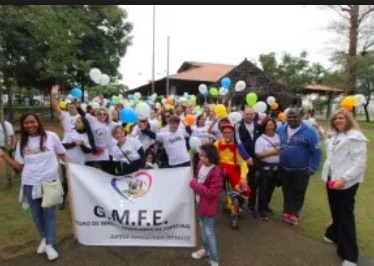
Governor Tião Viana received in the Civil House, on Thursday, 7, the institutions that form the group Walk for Peace in Acre that is led by the Rotary Club of Penápolis. The meeting was an initiative to express the government’s support for the group’s actions and to propose new actions for the culture of peace.


Tião Viana proposed the creation of a permanent committee to discuss public security (Photo: Sérgio Vale / Secom)

The governor thanked the determination of all who, together, have worked the involvement of society in the debate for public safety. “We have to unite and fight to win with peace and truth. We only have one way to combat violence, it is to have a culture of peace in our society. The biggest problem is the drug trade that is invading our country,” said Tião Viana.

The governor’s proposal is that a permanent committee be set up with these institutions to discuss various public security issues. The idea was accepted by the representatives and an agenda for joint debate will soon be established.

(continued in right column)

(Click here for the article in Portuguese)

Questions for this article:

The culture of peace at a regional level, Does it have advantages compared to a city level?

(continued from left column)

The group has been running for three years a trip through the city of Rio Branco in order to bring the message of peace and harmony. The last edition was held on November 30. “We need to cultivate a harmonious coexistence in society. For this, we have to make people aware that there is no other path than peace, “said Manoel de Jesus Lima, popularly known as “Garrincha”, a member of Rotary and coordinator of the Walk.

Institutions

Several institutions of the civil society of Acre are involved, as well as government agencies such as the Military Police. They are: Scouts of Brazil, State Public Ministry, House of Friendship, Brazilian Bar Association, Apae, Diocese of Rio Branco, Brazilian Army, Federation of Acre Industries, Masonry, among others.

“Here we have countless institutions seeking to build a culture of peace, which necessarily begins at home and then radiates to the streets, through schools and various environments. Here we are building an environment that can definitely contribute, now with a permanent meeting, “said Emylson Farias, Secretary of Security.

“Governor, you put something at the Meeting of Governors [held in Rio Branco in October this year] that needs to be considered: the issue of public security is affecting our sovereignty. In this sense, we begin to question whether our mission is being well fulfilled. Providing a sense of security is also our mission, so we are always willing to work in partnership with the Secretariat of Public Security in coping with crime, “said Colonel Wellington Valone, commander of the Acre Border Command / 4th Battalion of Jungle Infantry. He pointed out that because Acre is a border area, the Army has legal responsibility to address cross-border crime which interferes directly with security.