Category Archives: DEMOCRATIC PARTICIPATION

Launch of the 2nd World March for Peace and Nonviolence at the 2nd World Forum of Peace Cities in Madrid

. . DEMOCRATIC PARTICIPATION . .

An article from Pressenza  (reprinted according to Creative Commons Attribution 4.0 International license)

On 7 November from 6pm to 8pm in the Auditorium of the Casa del Reloj at the Matadero Cultural Centre, the 2nd World March for Peace and Nonviolence will be launched. This action will start on October 2, 2019, International Day of Nonviolence and finish on March 8, 2020, International Women’s Day,

It will be 10 years since the 1st WM that travelled through 97 countries on 5 continents. In this new edition, Madrid will be the beginning and end point for the 159-day circumnavigation of the planet. It will depart to the south of Spain, continuing through Africa, America, Oceania, Asia and Europe, estimating to pass through more than 100 countries.

In the launch event, the invited speakers will give the basic profile of this 2nd WM on the central themes that will be developed on its journey:

– International launch of the Campaign “Cities support the Treaty on the Prohibition of Nuclear Weapons -TPNW”. Beatrice Fihn, ICAN Nobel Peace Prize 2017.

– Refoundation of the United Nations. Federico Mayor Zaragoza. Culture of Peace Foundation.

– 100 years of pacifist feminism. Carmen Magallón. President of WILPF Spain.

– The role of armies in the 21st century. Int. Conf. Costa Rica. Julio Rodríguez, ExJEMAD.

(Article continued in the right column)

(Click here for a original version of this article in Spanish or here for a version in French .

Questions related to this article:

The World March for Peace and Nonviolence: What is its history and its effects?

How effective are mass protest marches?

(Article continued from the left column)

– International Network of Parliamentarians in Support of the TPNW. Deputy Pedro Arrojo.

– The culture of nonviolence: Alberto Amman. Actor

– Municipalism and Peace. Antonio Zurita. Global Citizenship.

– The TPNW and the World March. Carlos Umaña. Latin America Coordinator ICAN

– Mediterranean Sea of Peace. Tiziana Volta. World without Wars and Violence

– Processes of pacification. David Nassar. Colombia

– Twinning of the children. Sabina Colona-Preti and Isabel Bueno. Pequeñas Huellas and C.P: Nuñez de Arenas.

– The term “nonviolence”. Montserrat Prieto. World without Wars and Violence

– Routes and confluences 2WM. Martine Sicard. Coor. Int. World without Wars and Violence.

– Base Team 2WM. Luis Silva. Councillor.

– Marches in Central and South America. Sonia Venegas. Ecuador

– Human Symbols. Jesús Arguedas and Charo Lominchar. E.P. of Madrid 2WM

– The 2nd World March, a new attempt. Rafael de la Rubia. Coordination 2WM

The Mayors of Madrid, Manuela Carmena and Barcelona, Ada Colau, are invited to the event.

One of the objectives that is gaining more and more strength in this 2nd WM is to ensure that at its completion there are the conditions for the Treaty on the Prohibition of Nuclear Weapons to enter into force, a treaty being promoted by 122 countries in the United Nations.

In order to attend you must register on the web: http://www.ciudadesdepaz.com/

Press statement: World Without Wars and Violence, Cities of Peace Madrid

Madrid: One week before the World Forum for Peace in Cities

.. DEMOCRATIC PARTICIPATION ..

An article by Natale Salvo for Pressenza (reprinted according to Creative Commons Attribution 4.0 International license)(translation by CPNN)

Everything is ready for Madrid to host the “World Forum on Urban Violence and Education for Coexistence and Peace”.

“Organizers say that cities are the main space for interaction between people, collectives, businesses, ideas and values. But they are also spaces that generate inequalities and the proliferation of different types of violence. Cities and local authorities have the duty, the responsibility, to work for peace, against violence as a means of conflict resolution and for education, peace as a means of coexistence and future well-being. We need inclusive, safe and sustainable cities.”


(Photo credit: Ayuntamiento de Madrid CC by)

On Monday, November 5, at 4:30 pm, the Matadero Cultural Center will welcome local leaders, international and civil society organizations and networks to open a joint process of debate, brainstorming and building solutions that foster urban environments that can put an end to the manifestations of violence.

(continued in right column)

(Click here for the Spanish version of this article or click here for the French version)

Questions for this article:

How can culture of peace be developed at the municipal level?

(continued from left column)

Madrid Mayor Manuela Carmena, Vice President of the Government Carmen Calvo and Nobel Peace Prize winner Wided Bouchamaoui as well as many members of social organizations will attend the opening ceremony. Among the guests are Ada Colau, Mayor of Barcelona and ​​Gabriela Firea, Mayor of Bucharest.

Representatives of social organizations, among others, will be: Federico Mayor Zaragoza – Foundation for a Culture of Peace; Patrick Keuleers – the United Nations Development Program, Mpho Franklyn Parks Tau -UCLG, the global advocacy association of local and regional governments and José Graziano da Silva, Director General of FAO. The Mayor of Vigo, Abel Caballero, will represent FEMP, the Federation of Spanish Municipalities.

Among the few hundred participants from all continents, Italy is not represented by a mayor, but exclusively by the writer and activist Patrizia Fiocchetti, who will participate in the debate on “Violence for radicalization, extremism and international terrorism “.

The Forum’s work, which will end on Thursday November 8, will include 12 debates on topics such as violence in sport, aporophobia [N.d.T. an attitude of hostility, more or less visible, towards people who live in poverty or precariousness] and social exclusion, violence against women, international terrorism, violence against children, racist and xenophobic violence, phobia against LGTBI, lack of access to housing, corruption and interreligious dialogue against violence.

With this initiative, now in its second year, the city of Madrid hopes to become known as the “capital of peace”.

Pressenza Italia will be present at the event and will endeavor to inform its readers.

2018 “World Beyond War” Toronto Conference Included Workshop on Departments and Infrastructures for Peace

. . DEMOCRATIC PARTICIPATION . .

Special to CPNN by Anne Creter

I am a long-time advocate within the U.S. “Peace Alliance” Department of Peacebuilding Campaign for the current bill in Congress to establish a cabinet-level Department of Peacebuilding (H.R.1111).  Thus I am thrilled to report my favorite topic of Departments and Infrastructures for Peace (I4P) was featured at this September’s international “World Beyond War” (WBW) conference in a workshop my Canadian Department of Peace counterpart, Dr. Saul Arbess and I co-presented there.  It was a logical collaboration, in that for the last decade Saul and I have worked together promoting governmental I4P within an international organization known as the Global Alliance for Ministries and Infrastructures for Peace or GAMIP (currently in transition).  


Frame from the conference video: Karen Johnson gives report from workshop on Departments of Peace

The ambitious conference intent, as stated by its planners, was to “explore how to re-design systems to abolish the institution of war by examining existing and potential legal models, modes of governance and frameworks that can be used to curb and abolish war, such as treaties like the Kellogg-Briand Pact, Peoples’ Tribunals, peace tax funds, departments of peace, civil disobedience, the use of universal jurisdiction and the International Criminal Court.”

Our workshop was timely because it meshed with above and also with my UN NGO work whose focus this year has been on “seeking global solutions to global problems”  — per the UN 2030 “Sustainable Development Goals” (SDGs).  The UN Development Program, which oversees both the SDG’s and I4P, has conducted studies showing evidence that a viable solution to the global problem of “violence” is establishing governmental departments and other I4P worldwide.  This relatively new peacebuilding concept of “governmental I4P” is already operational in countries where violence has been shown to decrease (Journal of Peacebuilding & Development Special I4P Issue, volume 7, Number 3, 2012 ISSN: 1542-3166). 

Thus if I4P are a viable global solution to the global problem of “violence,” then establishing them in governments should be encouraged to provide the (missing) connective tissue links necessary to build the culture of peace.  That this topic was deemed relevant to the WBW’s provocative conference theme of Designing a World Beyond War:  Legalizing Peace was promising.  For it offered a unique international forum for how governmental I4P may be a viable alternative to war providing a “legal” institutional framework for peace that could be the “blueprint” for redesigning a world beyond war.  

(Article continued in right column)

Question related to this article:

How can we develop the institutional framework for a culture of peace?

Is a U.S. Department of Peace a realistic political goal?

(Article continued from left column)

The conference was held September 21-22 to coincide with the International Day of Peace celebrating the 70th anniversary of the Universal Declaration of Human Rights, whose focus this year was “The Right to Peace.”  It was held outside the U.S. in Toronto, Canada to demonstrate WBW’s belief that for the global peace movement to succeed in redesigning a world beyond war, it must broaden its scope to build one unified coalition in solidarity worldwide with other peace groups.   

Most attendees were Canadian yet other countries were represented, as far away as New Zealand — home of my UN NGO, Peace Through Unity Charitable Trust — which as a founding member of the Global Alliance for Ministries and Infrastructures for Peace has long advocated for a New Zealand “Ministry for a Culture of Peace” and passage of a UN Resolution urging I4P in all member states (see PeaceNow.com).  To quote Gita Brooke, Peace Through Unity founder:  New instruments are in the planning for carrying out the guidelines contained in the UN Declaration and Programme of Action on a Culture of Peace:  ministries and departments of peace will serve as meeting places for closer, more comprehensive and effective cooperation between peoples and governments; peace academies will teach and help develop communication, peacebuilding and peacemaking skills of individuals and groups within society; and the general public will hold themselves, their governments, as well as the UN, accountable for implementing promises that have been made. 

The U.S. Constitution preamble beautifully articulates the primary purpose of government – which in a nutshell is to ensure humanity’s basic Human Rights (ie. the Right to Peace). Because we live in an ever-escalating global culture of violence, government needs vital help meeting this essential purpose. My advocacy for governmental 14P stems from my conviction that I4P can greatly assist government fulfilling its fundamental “Peace” mandate.  Yet how I4P relate to the compelling WBW idea of “legalizing peace” needs further exploration.  While we only had time to scratch the surface there, our group began a lively interactive dialogue on I4P basics, such as the lack of political will for peace and on how the mere mention of I4P in some countries puts I4P advocates at risk of harm.

We are grateful to UN Ambassador Anwarul Chowdhury for his short video on the conference theme, with mention of how I4P promote the Culture of Peace; also to Congressional sponsor of H.R. 1111 Rep. Barbara Lee for her welcoming letter where she states: “Now is the time to put an end to needless wars and violence and to establish a Department of Peacebuilding in the U.S. and violence prevention infrastructures throughout the globe.”  Visit WBW website to see the Ambassador’s video and Congresswoman’s letter, plus our power point and other valuable conference details at https://worldbeyondwar.org/nowar2018 … and while there, be sure to access your copy of their scholarly publication – A GLOBAL SECURITY SYSTEM:  An Alternative to War.

In conclusion, I learned of other possible frameworks that could redesign a world beyond war which I found hopeful at this time of unprecedented global political upheaval.  They included such compelling models as: Kellogg-Briand Pact (WBW Director David Swanson), Divestment from War Profiteers (Medea Benjamin), Peace Education  Approaches (Tony Jenkins), World Citizenship & Global Rule of Law (David Gallup) to mention a few.  Participating gave the U.S. “Peace Alliance” National Department of Peacebuilding Campaign the opportunity to enlarge an important “peace education” dialogue alongside our Canadian Department of Peace brothers and sisters.  Hopefully it will continue so “Departments and I4P” may appear inside next year’s 2019-2020 edition of A Global Security System!

To continue this conversation, please write with comments or questions to Anne at annecrets@aol.com .

Inter-Parliamentary Union: 139 parliaments demand immediate action on climate change

.. DEMOCRATIC PARTICIPATION ..

An article from the Inter-Parliamentary Union

With catastrophic climate change threatening to hit many parts of the world in just over a decade, 149 national parliaments have adopted an emergency resolution calling for decisive action. Concluding the 139th Assembly of the Inter-Parliamentary Union (IPU), the resolution, called Climate change – Let us not cross the line, follows the report published last week by the UN Intergovernmental Panel on Climate Change (IPCC). According to the IPCC report, limiting global warming to 1.5°C requires urgent and unprecedented changes in all aspects of society.

The emergency resolution was adopted in the context of the Assembly’s umbrella theme of science, technology and innovation to bridge the widening gap between policy-making and science.

Gabriela Cuevas, IPU President, said “I believe that more than ever, the international community must center the majority of its efforts to attain the urgent transformation our world requires if we are to avert the environmental crisis foreseen by the UN and by the scientific community. Through the adoption of the emergency item on Climate Change, the IPU expresses its commitment to supporting national parliaments in the implementation of all relevant public policies, budgeting strategies and resource mobilization for the efficient and adequate adoption of the Paris Agreement. Time is of the essence for this situation; we call on all our parliamentarians to act now to preserve environmental balance.“

Martin Chungong, IPU Secretary General, said “Parliaments are instrumental in preventing the world from crossing the line of no return. This resolution is a call to action for MPs to translate the Paris Agreement into concrete national legislation and adequate budget allocations. The global parliamentary community owes it to the people it represents, especially the younger generations, to take action now.”

(continued in right column)

Questions for this article:

How can parliamentarians promote a culture of peace?

Despite the vested interests of companies and governments, Can we make progress toward sustainable development?

(continued from left column)

Led by a coalition of Small Island Developing States (SIDS), the IPU resolution urges all parliaments to spearhead national efforts to combat climate change. It calls for IPU member parliaments to support the implementation of the 2016 Paris Agreement, included mobilizing resources and simplifying procedures for accessing climate change funding. The resolution calls for all countries to work more closely with SIDS to meet ambitious targets to mitigate the worst effects of climate change.

SIDS face major and specific challenges in the next few years. MPs at the IPU Assembly presented various examples of climate change that are already affecting the lives of the people they represent. Villages are being relocated because of rising sea levels in Fiji and other small Pacific island states; scarcity of water and desertification are threatening the well-being and survival of many in Africa and the Middle East.

Special guest, Henk Rogers, Founder of the Blue Planet Foundation in Hawaii, spoke of the power of children to change the way we live by influencing their families and communities. He also emphasized the importance of strong partnerships. For example, Hawaii has passed legislation to encourage clean energy in partnership with electricity companies.

For many years, the IPU has been calling for legislative action on climate change and risk reduction. Since 2009, it has organized parliamentary meetings at each Global Conference of the Parties to the United Nations Convention on Climate Change (COPs) to increase the parliamentary contribution to global negotiations. With the adoption of this emergency resolution, the IPU will mobilize its member parliaments at the COP24 taking place in Krakow, Poland, later this year.

The 139th IPU Assembly brought together over 1500 delegates including 56 Speakers of Parliament, 52 Deputy Speakers, and over 750 MPs. Women MPs accounted for 33% of the total number of MPs in attendance, one of the highest percentages at an IPU Assembly. Young MPs under 45 made up 19% of the parliamentarians, the first time that the IPU is tracking this statistic.

Spain: Toledo seeks to become an international reference for the “culture of peace”

.. DEMOCRATIC PARTICIPATION ..

An article published by El Diario (translated by CPNN)

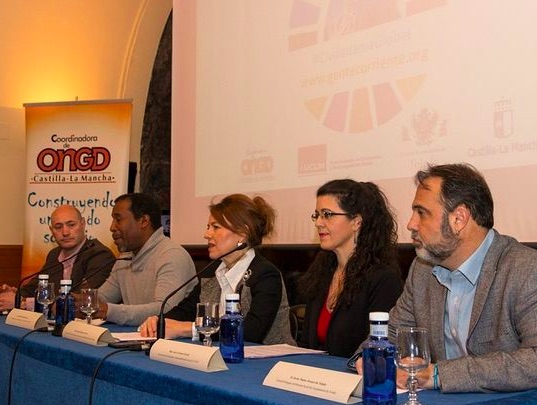
A reference for tolerance and dialogue to eradicate violence in society: This is the objective that the Toledo City Council has proposed in the organization of the First International Forum of Migrations and Citizen Coexistence ‘Toledo Culture of Peace’. The Forum will be held on September 5, 6 and 7 at the Palacio de Congresos in the city of Toledo.

According to the Councilor for Youth, Cooperation and Education for Development, Diego Mejías, this theme should become a permanent vocation of the city. This has been advanced in a press conference with the president of COPRODELI, Meik Garay; the spokesperson for the 365 + 1 campaign, Esmeralda Pérez, and the provincial secretary of CCOO, José Luis Arroyo.

In the organization of this international event, the City Council has worked hand in hand with the local Cooperation Council, the NGOs of the city, the 365 + 1 Solidarity campaign and many other organizations, as well as the promotion of the Voix Vives Poetry Festival and the newspaper Castilla-La Mancha as ‘media partner’. According to councilor Mejías, they want to create “a space for collective reflection that turns Toledo into a benchmark of work in the pursuit of peace, social justice and interculturality.”

During the three days of the Forum there will be plenary sessions, debates, reflections, exhibitions and activities that fight against different forms of violence suffered by disadvantaged groups. “A debate and reflection that does not remain within these walls. We want it to be transferred to society as a whole, through the media, social networks and participating organizations to achieve an awareness effect that promotes changes and transformations in society, and to combat dehumanization and promote human rights,” said Mejías.

The Forum will recognize people and organizations for their solidarity efforts with the Toledo Culture of Peace Award. Its first edition will recognize the mayor of Madrid, Manuela Carmena, for her work in favor of “coexistence and peace”; the television presenter Jesús Vázquez, for his work with the United Nations High Commissioner for Refugees (UNHCR); Father Ángel, for his well-known solidary work in several areas; the newspaper Castilla-La Mancha, for its commitment to social justice and for making visible realities related to tolerance and non-violence; the Union of Iberoamerican Capital Cities (UCCI), for promoting neighborhood rights and citizen participation; and the Book-Tavern El Internacional de Toledo, for making interculturality a reality and being a meeting space always open to all activities that foster a culture of solidarity of peace and critical reflection.

(continued in right column)

(Click here for the Spanish original of this article)

Questions for this article:

How can culture of peace be developed at the municipal level?

(continued from left column)

Mejías has indicated that during these days there will be debates, reflections, exhibitions and cultural activities to raise awareness about the different forms of violence suffered by the most disadvantaged groups. The mayor stressed that during the plenary sessions, the congress will have three moderators of media Toledo as the journalist of El Diario Alicia Avilés; the journalist of La Tribuna Marta García and the journalist of SER Toledo Juncal Roldán.

In addition, according to Garay, the forum will have academic, cultural, awareness and participation spaces; as well as artists such as Carlos Ávila or Manuel Maestro, as well as the collaboration of Voix Vives or the ETR Theater Company. Diego Mejías has assured that, to date, the 1st International Forum on Migrations and Citizen Coexistence ‘Toledo Culture of Peace’, has around 200 entries, which can be done through social networks or on the website of the City of Toledo.

For its part, the provincial secretary of CCOO Toledo, José Luis Arroyo, stressed that the phenomenon of migration “shoulc be considered as an opportunity that society has, “as social groups and municipalities are those who are taking charge of coexistence that so enriches society “.

A program “very well worked out”

The programming on September 5 will start at 11.15 with a plenary session in the Toledo Room of the Palace of Congress in which Andres Amayuelas, Jira Bulahi, Hector Ramos and Juan Miguel Ortega Terol will participate. From 2:30 p.m. there will be cultural activities in the multipurpose space Zocodover. At 5:00 pm it will be the turn of an experience table in the Toledo Room with the participation of Rosa López Sánchez, Braulio Freyre and José Taboada. The program of this first day will be closed with cultural activities such as the concert of Manuel Maestro or that of Carlos Ávila and his guitarist Ariel Acevedo, starting at 20:45.

On September 6, the day will begin, at 10.00 am in the Toledo Room, with a plenary session in which Fernando Perez del Olmo, Alfonso Iglesias or Khadija Afkir will participate. This activity will give way, at 12.15, to an experience table with Amparo Herreros, Helia del Rosario, Vanesa Lopez, Nacho Peinado, Nicolás Ost, Alicia Es Martínez Juan or José Antonio Orihuela.

Throughout the day there will be workshops and cultural activities. An experience table with Carolina Elías and Jaldía Abubakra will be held from 4:30 p.m. While at 18.10, it will be the turn of a new plenary session with the participation of Manuela Mesa, Idoia Urgarte or Pilar Gutiérrez.

As of 20.20 there will be cultural activities in the Zocodover multipurpose space, including the screening of the film ‘Mujeres extranjeros’ or the flamenco concert by Diego Mejías and Juan Ignacio González. Finally, the 7th will begin with a plenary session, at 10:00 am, with the participation of José Manuel Álamo, Beatriz Plaza, Antonio Zurita or Alejandro Alder. After 12.15 hours, an experience table will be opened with Ricardo Gayol and Pablo Martínez.

During the afternoon of this day there will be workshops and cultural activities, among which the presentation of the book ‘Territories in democracy’ or the Voix Vives recital with Ágel Calle, Antonio Orihuela, Eddi and Alicia Es. Martínez stand out. From 8:00 pm there will be the closing ceremony where there will be an artistic intervention of the company ETR, the delivery of the ‘Toledo Culture of Peace’ awards, a cocktail and the show ‘Luz Toledo’.

Brazil: Cotia organizes the 1st Walk for the Culture of Peace

.. DEMOCRATIC PARTICIPATION ..

An article from Visão oeste

The first Walk for the Culture of Peace, organized by the Sports, Culture and Leisure Secretariat of Cotia, is scheduled for Sunday (26/08) in partnership with a commission of representatives from different religious groups in the city.

The objective of the event is to spread peace, respect and interreligious dialogue, bringing, through culture, respect for the other, showing that intolerance has generated daily suffering around the world.

(continued in right column)

(Click here for a Portuguese version of this article)

Questions for this article:

Can festivals help create peace at the community level?

(continued from left column)

The event will begin at 9:30 am in Praça da Matriz, with departure scheduled at 10:00 am. The course will feature music, poetry and dances. The arrival point will be at Joaquim Nunes Square and participants will be welcomed by a cultural feast with food stalls, handicraft exhibitions, open microphone, dance performances, capoeira wheel, samba wheel, among other attractions.

“The proposal is to pave the way for the promotion of respect for cultures. The involvement of different religions in a single event is a way to combat prejudices with expression, fight against segregation, and combat prejudice in a general way, “said Gilmar de Almeida, deputy secretary of the Ministry of Culture.

Still according to him, the goal is that this is a movement that perpetuates in Cotia.

Brazil: Petropolis-Peace celebrates one year and 400 mediations

. . DEMOCRATIC PARTICIPATION . .

An article from Diario de Petrópolis

The Community Mediation project of Petropolis is celebrating one year of activity in the municipality. There have been more than 400 visits among students, education professionals and family members. The project began on August 17, 2017, as an initiative of the Mayor Bernardo Rossi through Law n ° 7,532. According to the coordinator of the Municipal Program for the Restoration of Peace Petrópolis da Paz, Elsie-Elen Carvalho, the main objective of the project is to seek solutions to conflicts that are presented and to search for inclusion and social peace.

The major success of the program has been the work in the Public Chamber, located at Av. Koeler, 206, Center. The site, an arm of the project, serves people who are referred by partners such as the Reference Center for Women’s Assistance (CRAM), the community and people who seek the service spontaneously. The Chamber receives cases to be mediated such as conflicts in families and among neighbors, among others. The action consists of listening to both sides and seeking a satisfactory, peaceful solution for both. Mediations can sometimes take more than three months to complete.

(article continued in right column)

(Click here for the original article in Portuguese)

Discussion question

Mediation as a tool for nonviolence and culture of peace

(article continued from left column)

“In a year, we have had a lot of results with the mediation here in the Public Chamber. It is a free tool, using voluntary mediators, including some with legal expertise,” said the coordinator.
The program has three projects: School Mediation, Community Mediation and Restorative Justice. The work begins with teaching units, where the team assists and empowers students and teachers in a social and emotional way. Existing conflicts are mediated and guided by the volunteers of the program.
This benefits the school as a whole, since the students themselves learn to solve conflicts by means of the tools presented by the project.
Three schools participate in the school mediation actions: Carlos Chagas Liceu Municipal School, Amélia Antunes Rabello Municipal School and Governador Marcelo Alencar Municipal School. Restorative Justice is practiced in the Municipal Schools Germano Valente, Hercilia Henriques Moret, Pope John Paul II and Professor Nilton Coast.

“The main idea of ​​School Mediation is to stimulate a collaborative atmosphere in schools by creating the habit of dialogue and conflict resolution through solutions presented by those involved who are the main stakeholders. It is hoped that through the use of conflict mediation, the culture of peace will be diffused in school, and in life in society,” according to the pedagogue and psychologist and head of the Department of School Mediation, Vanessa Siqueira.

The program has partnerships with the Secretariat of Health and Citizenship Office, in addition to the Court of Justice, Petropolis police stations, the State and Municipal Councils of Public Security, Procon, Tutelar Council and Universities.

European Parliament Calls for a United Nations Parliamentary Assembly and a UN Reform Summit in 2020

DISARMAMENT & SECURITY .

An article from the DWFed, Democratic World Federalists

In a resolution adopted today [July 27], the European Parliament called on the EU’s governments to advocate “the establishment of a United Nations Parliamentary Assembly” (UNPA) and to support a “UN 2020 summit” that will consider “comprehensive reform measures for a renewal and strengthening of the United Nations.”

TAccording to the European Parliament, a UNPA should be established “within the UN system in order to increase the democratic character, the democratic accountability and the transparency of global governance and to allow for better citizen participation in the activities of the UN and, in particular, to contribute to the successful implementation of the UN Agenda 2030 and the Sustainable Development Goals.”

The directly elected parliament of the EU’s citizens called on the EU’s 28 member states represented in the Council of the EU to advocate the creation of a UNPA at the upcoming 73rd session of the United Nations General Assembly which will start in September.

European parliamentarian Jo Leinen (S&D) who had initiated the call for a UNPA said that “the UN urgently requires more openness and stronger democratic foundations.” He added that “the European Parliament therefore calls for the establishment of a Parliamentary Assembly within the United Nations system” and that “the European Union and its member states should now play an active role in the implementation of this innovation.”

The European Parliament’s rapporteur on this year’s recommendations on the EU’s UN policy, Eugen Freund (S&D), said that since he first encountered UN reform forty years ago “unfortunately, not much has changed.” He added that “the General assembly has more members now, but it is still a body of unelected diplomats. Therefore, the idea of eventually complementing them with elected parliamentarians is a very appealing one. They would certainly be closer to the populace and thus would have to regularly answer to their constituency. Whether that would also streamline the decision-making processes remains to be seen.”

Other supporters of the call for a UNPA in the parliament’s committee on foreign affairs included Elmar Brok (EPP), Soraya Post (S&D), Juan Fernando López Aguilar (S&D), Helmut Scholz (GUE/NGL), and Andrey Kovatchev (EPP).

(continued in right column)

Question for this article:

Proposals for Reform of the United Nations: Are they sufficiently radical?

(continued from left column)

The European Parliament’s resolution was welcomed by Ivone Soares, a parliamentarian from Mozambique and a member of the African Union’s Pan-African Parliament. “With resolutions passed by the European Parliament, the Pan-African Parliament and the Latin-American Parliament, the time has come for progressive governments in these three major world regions to consider the creation of a United Nations Parliamentary Assembly,” Soares said.

Daniel Jositsch, a member of the Swiss Council of States commented that “the escalating crisis in international cooperation shows that new ways must be found to combat global problems. It is therefore very positive that the European Parliament is calling on the European states to speak out in favour of the creation of a UN Parliament. It is important that they will not simply pay lip service to this goal, but that concrete implementation measures are being taken.”

“From the many initiatives in favor of a more peaceful, fair and democratic world the creation of a UN Parliamentary Assembly is the decisive one. The recent support given by the European Parliament to this proposal shows that the members of the most important supranational parliamentary body are ready to work for its creation,” commented Fernando Iglesias, a member of the Chamber of Deputies of Argentina.

Jo Leinen, Ivone Soares, Daniel Jositsch and Fernando Iglesias are co-chairs of the parliamentary advisory group of the international Campaign for a UNPA which has been endorsed by over 1,500 elected representatives worldwide. The campaign’s secretary-general, Andreas Bummel, said that the European Parliament’s call for a UNPA was “a bold and important step at a time when multilateralism is under attack.” “Governments interested in defending and strengthening the UN and democracy worldwide should urgently work for the democratisation of global institutions and a UN Parliamentary Assembly is a key to achieve this,” he added. Recently, the Irish foreign minister Simon Coveney stated that Ireland was “open minded” relative to proposals for a UNPA.

The European Parliament’s resolution on the EU’s UN policy also recommended, among other things, the establishment of “an open and inclusive intergovernmental preparatory process under the auspices of the UN General Assembly for a UN 2020 summit, on the occasion of the UN’s 75th anniversary” that would consider “comprehensive reform measures for a renewal and strengthening of the United Nations.”

Earlier this year Jo Leinen and Andreas Bummel published a book on the history, today’s relevance and future implementation of the proposal of a world parliament and on improving democratic world governance.

Honduras: New health clinic in gang-ridden suburb of San Pedro Sula rebuilds community

.. DEMOCRATIC PARTICIPATION ..

An article from the United Nations High Commissioner for Refugees / Canada

On a sweltering afternoon, an elderly couple sit in the waiting room at the free health clinic holding hands, while a young mother waits for a medical appointment with her toddler napping in her lap.

“We welcome anyone in this clinic, we don’t turn anyone away,” says Wendy Espinoza, the health centre’s nurse, who knows everyone in town.

Keeping doors open to all may sound like a simple achievement. But it is a feat in some of the high risk neighbourhoods in San Pedro Sula, Honduras’ second city.


Local residents visit the medical clinic at the UNHCR-backed Holy Trinity Comprehensive Support Centre in Chamalecon, San Pedro Sula, Honduras.

The patchwork of streets in Chamelecón has for years been an arena for rival street gangs MS-13 and 18th Street, who control their respective territories with an iron grip, destroying communal spaces and severing neighbourly bonds.

Since opening its doors April 30, the Holy Trinity Comprehensive Support Centre has assisted roughly 100 patients per month, most young or elderly and suffering from high blood pressure, diabetes, and respiratory illnesses. But this space, which is located between the gangs’ fiercely contested territories but beholden to none, is more than just a health clinic.

“We don’t just want to cover basic medical services and medications,” says Father Luis Estévez, the local Catholic priest behind the project. “We want this to be a holistic support center for the community.”

Such support is very much needed in Chamelecón which came to world attention in 2004, when gang thugs sprayed a bus with automatic weapons fire, killing 28 passengers as they returned from the centre of San Pedro Sula, just ten minutes’ drive away.

The clinic – founded by Father Estévez, community leaders, and UNHCR, the UN Refugee Agency – has a key role to play in rebuilding this community, as part of a comprehensive regional support and protection plan.

Known by its Spanish acronym MIRPS, the plan developed by regional governments with UNHCR’s support, seeks to tackle the root causes of displacement in crime-wracked neighbourhoods, as well as strengthening asylum systems and working on durable solutions.

“It’s a place where people can feel safe, where they can be open with each other and they can be protected,” says Yolanda Zapata, the head of the UNHCR office in San Pedro Sula.

As an important first step, the clinic welcomes anyone, regardless of what part of Chamelecón they are from or whether they or their family have any gang affiliation.

This inclusivity is important for nurse Espinoza, who has lived in the area her whole life and splits her work hours between the clinic and the trauma unit of a major public hospital. Gang members and their victims are regular patients there.

(Article continued in right column)

Questions for this article:

How important is community development for a culture of peace?

(Article continued from left column)

The clinic provides comprehensive primary care, including help to address the mental health needs of the countless local residents who have suffered or witnessed violence.

Since opening its doors earlier this year, it has an on-site psychologist on Saturdays, who now has a dozen local youth as patients. The waiting list to see the psychologist is now more than a month because of such high demand.

“Our patients often have some kind of trauma they are dealing with,” says Karina Ugarte, the young resident physician at the clinic. “Sometimes it’s severe but sometimes it’s just a little frustration they want to get off their chest. But there’s no other space for them to just talk around here.”

Living with violence, or the constant threat of it, has made many residents fearful and reluctant to open up. The clinic prioritizes privacy and discretion.

“Everywhere else there’s always a fear you’re being listened to so you constantly censor yourself,” says nurse Espinoza. “That barrier is broken inside here.”

For the fragile community, the Support Centre is seeking to play a wider role than simply providing comprehensive primary care. Upstairs offices and meeting rooms are quickly becoming a hub for rebuilding the community of Chamelecón from the inside.

As part of a push to reverse years of gang rule, the centre has also begun to reach out to local youth, who are particularly affected by high crime and poverty, and are under constant pressure to join one or other of the criminal groups.

“Young people really aren’t allowed to express themselves because from a young age you learn to stay quiet, and that bleeds over into every aspect of life,” explains Angel Sandoval, a teacher at a local school and the coordinator of the center’s budding youth program. “They need a place where they can express themselves and feel free.”

In their first youth outreach, leaders brought together 1,200 young people and organized a talent show in the park. It was the biggest community event in Chamelecón in recent memory.

Community workers and youth leaders are also organizing technical skills training, art and dance classes, and reproductive health workshops at the centre for young people.

And the leaders – Father Estévez, Sandoval and others – are building a growing network of protection for locals since gang control means victims have nowhere to turn when they are at risk.
“People will come to us and say ‘The gang told us we have 48 hours to leave’ but we as community leaders didn’t know what to tell them,” says Father Estévez.

In response, community leaders are using the support center as a training site to teach local leaders how to refer those in need to UNHCR and other support groups that can assist those who have been displaced from their home.

In this neighborhood, beset by gangs and with a limited government presence, a new generation of local leaders is hoping to change the future.

“Our hope is that in the future when people have any sort of problem or threat, they automatically think of the Support Centre as the place they can come,” he says.

(Thank you to Janet Hudgins, the CPNN reporter for this article.)

II World Forum on Urban Violence and Education for Coexistence and Peace: Madrid, 5-8 November

.. DEMOCRATIC PARTICIPATION ..

Information from the website of the Forum (Translation by CPNN)

The Organizing Committee

On Monday, June 11, the Organizing Committee of the II World Forum on Urban Violence met in Madrid. The Forum will be held in the Spanish capital from November 5 to 8, 2018, with the aim of designing an integrated program capable of serving the expectations generated by this new edition of the Forum.

The invocation of the Forum was announced by the mayor of Madrid and co-president of the Union of Ibero-American Capital Cities (UCCI), Manuela Carmena, attended by representatives of the various organizations and platforms that take part of the Organizing Committee. They shared expectations for the organization of the Forum, raising, among other challenges, how to establish Madrid as the permanent seat of the Cities of Peace Forum and turn it into an annual event on the international agenda. The need to open a space to measure the results of the first Forum and its impact on interpersonal violence in territories and cities was also analyzed, as well as a discussion on how local leaders can contribute to “saving lives” with public policies that promote education for coexistence and peace in cities and territories.

The organizing committee currently is composed of: the city councils of Madrid, Barcelona and Paris; the Ibero-American General Secretariat (SEGIB); different United Nations agencies (UN Women, UN Habitat and the United Nations Development Program (UNDP), the World Health Organization (WHO), networks of cities such as the global network of United Cities and Local Governments (UCLG) ), the Spanish Federation of Municipalities and Provinces (FEMP), Metropolis, the Union of Iberoamerican Capital Cities (UCCI), Mayors for Peace and other platforms representing civil society such as the Spanish Association for Peace Research (aiPAZ); the Regional Federation of Neighborhood Associations of Madrid (FRAVM), the NGO Network of Madrid, the FAPA Giner de los Ríos and the Association of Educating Cities (AICE), as well as other collaborating entities that are committed to the organization and development of the forum process.

The meeting discussed the possibility of incorporating, in addition to debates and dialogues, other more dynamic ways of describing how cities, together with their citizens, confront the various forms of interpersonal violence. These include violence in sport, violence in social networks, juvenile violence, school violence, racism and xenophobia, international terrorism, LGTBIFobia, urban inequality and public space, violence against displaced persons and refugees and other more recent violence, such as the most current “aporophobia” (fear, rejection or aversion to poor people). These issues were integrated into the first draft of the working agenda.

(continued in right column)

(Click here for the Spanish original of this article)

Questions for this article:

How can culture of peace be developed at the municipal level?

(continued from left column)

PRE-REGISTRATION OF INITIATIVES / PROPOSALS FOR PARTICIPATION

Only one card can be registered per user. If you want to send more than one proposal, you must do so with another user / e-mail.

[The following information must be entered on the forum’s website:]

First Name

Last name

Email

Nationality

ID Number-Passport

Organization-Institution

Why did you decide to participate?

TITLE of the initiative

PLACE (City/country/region)

THEME/SPHERE (Type of violence / population affected

WHAT TYPE OF URBAN VIOLENCE DOES IT SEEK TO ERADICATE OR PREVENT?

STAKEHOLDERS INVOLVED (Impulse/collaboration)

DESCRIPTION (Summary of the main actions carried out)

RESULTS/IMPACTS/PERSPECTIVES

MORE INFORMATION (Details of the contact person, webpage, links, materials)/

PROPOSED PRESENTATION FOR THE INITIATIVE AT THE MADRID FORUM (5-8 NOVEMBER 2018)

TECHNICAL AND SUPPORT REQUIREMENTS TO PRESENT THE PROJECT IN MADRID (material and technical characteristics)

DETAILS OF THE PERSON RESPONSIBLE FOR THE PRESENTATION IN MADRID