Category Archives: DISARMAMENT & SECURITY

The UN Summit of the Future: a fight at the end of the tunnel?

DISARMAMENT AND SECURITY .

An article by Richard Gowan for Friedrich Ebert Stiftung

Ongoing crises keep multilateralism in turmoil, but ambitious reforms are still on the table. What to expect from the September 2024 UN Summit of the Future?

Germany faces a tough task trying to build consensus among members of the United Nations on how to strengthen multilateralism in the year ahead. The German mission in New York is working with Namibia to facilitate preparations for the Summit of the Future, an event that will take place during the annual high-level week of UN meetings in September 2024.

UN Secretary-General António Guterres originally proposed this summit in 2021 as an opportunity for presidents and prime ministers to debate improvements to the global system in the wake of the COVID-19 pandemic. But with arguments over Ukraine and Gaza simmering at the UN, diplomats fear it will be hard to make new agreements on international cooperation this year.

The right summit at the wrong time?

Guterres and his advisers argue that it is necessary to take a hard look at the state of multilateralism for three main reasons. Firstly, it is clear that existing international institutions lack the mechanisms and authority necessary to deal with challenges such as pandemics and climate change effectively. Secondly, there are as yet no serious global regimes to regulate new technologies such as Artificial Intelligence (A.I.), which the Secretary-General predicts will profoundly reshape societies, economies and international relations. Lastly, many non-Western countries feel that they lack real influence at the UN and in other international organizations, where the U.S. and European countries often still dominate decision-making.

The mood at the UN is currently very sour

In a best-case scenario, the Summit for the Future would be an opportunity for UN members to tackle these challenges simultaneously, reforming existing institutions to make them more inclusive and effective, and establishing new bodies to fill gaps in the system. Guterres has, for example, floated the idea of establishing a new international agency to regulate the uses of A.I., as the International Atomic Energy Agency (IAEA) oversees the uses of nuclear power.

While diplomats acknowledge the Secretary-General’s breadth of vision, many question whether this is a propitious moment to tackle such big issues. The mood at the UN is currently very sour. Developing countries have become increasingly vocal in criticizing richer states’ failures to meet past pledges to invest more in development aid and climate adaptation. The war between Hamas and Israel has reopened old wounds in the UN General Assembly. The bulk of states from the so-called “Global South” have condemned the U.S. and many European countries for failing to show solidarity with the Palestinians. Arab diplomats ask how the UN can hold talks on “the future” when there is no future for young people in Gaza.

A ‘Pact for the Future’: Germany and Namibia taking the lead

Germany and Namibia have volunteered for the unenviable task of managing preparations for the Summit of the Future against the bleak backdrop. The two co-facilitators are working on the initial draft of a Pact for the Future for leaders to adopt in September. Once they circulate this text – which is meant to be ready by the end of January – negotiations on the document will begin in earnest. This is likely to be a grinding and protracted process, as the General Assembly has agreed that UN members will have to agree the final Pact by consensus.

An opportunity for civil society groups that advocate a stronger multilateral system

This is not a prospect that fills New York-based diplomats with glee. Many see the existence of the summit as a problem to be solved, not an opportunity to be seized. But this may be a mistake.  For as long as hostilities drag on in Gaza, it will be difficult to focus on the Pact of the Future.

But if and when the war recedes, talking about improving the international system – even in quite technical ways – could be one pathway to restoring some sense of common purpose among UN members, although it is unlikely to erase memories of recent disputes. The Summit is also an opportunity for civil society groups that advocate for a stronger multilateral system to focus attention on global issues, even if they cannot secure big reforms.

Mind the gaps: climate change and human rights missing

While Germany and Namibia led preparatory talks on the substance of the Pact last year, UN members were only able to agree on a skeletal outline. There will be chapters on: peace and security; development; science and technology; future generations and global governance. UN officials and diplomats say that they expect the paper to be 20 to 30 pages in length at most, and to be pitched at the strategic level. This means that even if negotiators do agree to some big reforms in principle through the Pact, it won’t go deep into the details.

The exact contents are still up for debate

Some observers have highlighted two potentially worrying gaps in this outline. One is climate change, which Guterres has previously argued should be an overarching theme for the organization.  UN officials say that they hope the Pact will endorse existing agreements and processes for dealing with global warming, even if it doesn’t propose any new ones. The second notable omission from the outline is a dedicated chapter on human rights, although the Pact is supposed to refer to the rights-related dimensions of the other topics it covers. Many Western diplomats worry that the UN system as a whole is paying less attention to rights issues than in the early post-Cold War period, and are likely to insist that the Pact refers to common values and freedoms.

(Article continued in right column)

Question for this article:

What is the United Nations doing for a culture of peace?

(Article continued from left column)

More broadly, the exact contents of the Pact are still up for debate. The negotiators have no shortage of material. In the course of 2023, Guterres released a series of eleven policy briefs  on issues ranging from education to the governance of outer space to stimulate the negotiations. He also convened a High-Level Advisory Board on Effective Multilateralism  which released a report on potential reforms to international institutions last summer. But everyone involved in the process recognizes that UN members will pick and choose topics.

Reforming the international financial architecture

It seems certain that developing countries will want to focus a lot of upcoming discussions around the Pact on the oversight and activities of international financial institutions, including the World Bank and the International Monetary Fund (IMF). Many non-Western officials would like to gain a greater share of decision-making power in these institutions, which are currently still dominated by the U.S., the EU and other major Western economies.  They would also like to see these global lenders make it easier for poor countries to access financing. While the Biden administration and European governments agree that it is necessary to get money flowing to vulnerable nations, it may be harder to get a deal on governance reforms.

UN Security Council reform

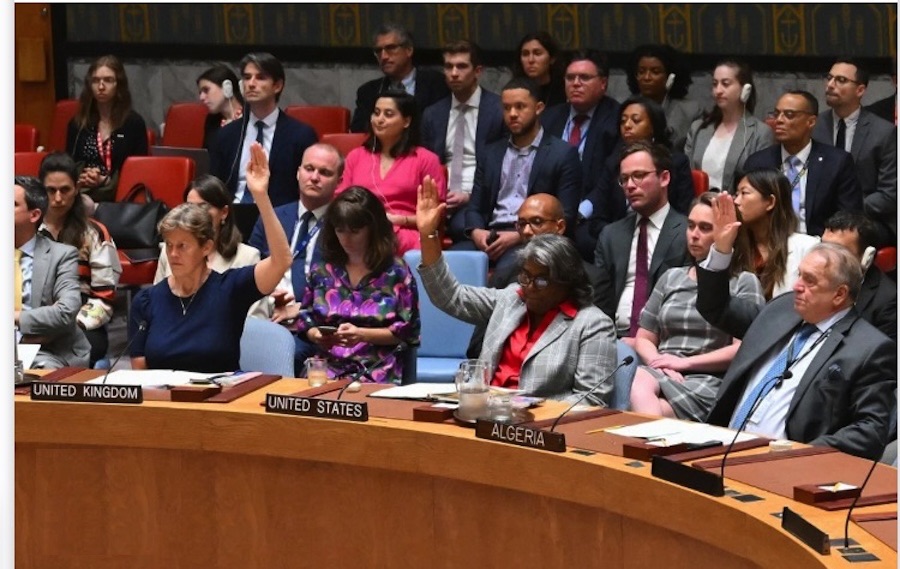
Another tricky global governance issue waiting in the wings is UN Security Council reform. Since Russia used its veto to block criticism of its all-out aggression against Ukraine in 2022, many UN members have argued that it is time to overhaul the membership and rules of the Council. While the Biden administration has also used its veto to protect Israel from pressure over its campaign in Gaza, the U.S. still claims to want reform. Germany, as a long-time aspirant to a permanent Council seat, might like to see progress too. There is, however, no chance that UN members will agree on a broadly acceptable model for reform in the next nine months. The best possible outcome may be for member states to agree to hold a set of high-level talks on the issue pegged to the 80th anniversary of the UN Charter in 2025.

Governing A.I. and other new technologies

If Security Council reform is a well-worn subject for UN diplomacy, the planned chapter of the Pact on “science and technology” could open up new fields for discussion.  In addition to his proposal for an IAEA-type body to oversee A.I., Guterres has proposed  that UN members agree a treaty banning Lethal Autonomous Weapons Systems (LAWS) by 2026, and establish new mechanisms to manage biotechnologies. Some powerful players at the UN agree that it is time to start developing more international rules of the road in this area. The U.S. has floated a non-binding UN General Assembly resolution on the use of A.I. to promote sustainable development. In parallel with the main Pact for the Future process, Sweden and Zambia are co-facilitating talks on a Global Digital Compact  which could also be adopted in September; this agreement would outline guiding principles for managing the internet, A.I., and data.

Coalitions of member states may table more ambitious side agreements

But if this is a good time to talk about new technologies, diplomats and scientific experts seem less convinced that this is the right moment to establish new institutions and binding agreements around those new technologies. Marietje Schaake, a former Member of the European Parliament who participated in a panel advising Guterres on A.I. last year, recently argued  that it is premature to start designing new agencies to govern this evolving field. Instead, she argues that governments and A.I. developers need to hammer out the basic principles and laws that should govern A.I. before building international frameworks to monitor them. The Summit of the Future offers a hook for exploratory discussions of this type, but it is probable that UN debates about how to govern such new technologies will extend well into the future.

Given the many obstacles to agreeing major reforms in the Pact of the Future, some UN members are already predicting that the document will prove fairly insubstantial. This does not mean that the Summit of the Future will necessarily be a dud. As I have argued elsewhere, coalitions of member states may table more ambitious side agreements – which would not require all UN members to assent – on advancing priorities such as women’s rights that can be signed off in September. As a leading advocate for focusing on the security implications of climate change, to take another example, Germany could well be part of a coalition pushing for greater UN engagement on climate and peace, even though Russia – which vetoed a 2021 resolution on the topic in the Security Council – would want to keep this out of the Pact.

The role of civil society

While UN member states will formally take the lead on these initiatives, civil society organizations can also add some extra energy to the pre-Summit process. Many diplomats, especially from smaller missions in New York, admit that they have had little time to think in depth about what the Summit can deliver. The Secretary-General has put a significant number of complex issues on the table for discussion while other urgent issues such the war in the Middle East, have sucked up time. In the coming month, non-governmental actors can step in to advise UN members on what the Summit can achieve on issues like new tech.

Civil society can add some extra energy pre-summit

Civil society actors can also use their global networks to focus more global attention to the Summit of the Future. UN officials admit that they have struggled to get the international media to focus on the event, given the sheer flow of bad news stories coming out of the UN in recent times. While Guterres would like to draw political leaders into this discussion about global issues (and gave visiting heads of state and government packs of his policy briefs at the UN last September) very few capitals are prioritizing UN reform.  A push by international civil society networks in the coming months to raise awareness of the Summit would be welcome.

The way forward

Nonetheless, Germany and Namibia must make the best of their roles in preparing the Pact of the Future. There will surely be arguments among member states along the way.  But the co-facilitators can at least aim to frame this process as an opportunity to promote diplomatic dialogue among UN members about the future of multilateralism after a very divisive period. It may be possible to agree on common starting principles and begin long-term dialogues on issues such as new technologies and international financing which, even if they do not lead to spectacular results in 2024, could pave the way for more substantive deals down the road. 

About the author 

Richard Gowan is the UN Director of the International Crisis Group (ICG) and oversees the organization’s advocacy work at the United Nations in New York.

Proposal to the UN Summit of the Future for a UN Council of Peace

DISARMAMENT AND SECURITY .

A submission on the UN Website for the Summit of the Future

From Global Alliance for Ministries and Infrastructures for Peace (GAMIP), https://gamip.org Organizational sponsor: Paul Maillet, Board Member, pmaillet48@gmail.com

Chapeau

Project – Creation of a UN Council of Peace

The challenge of our times is in daring to create new thinking about peace.

Our proposal is to incrementally increase a focus of peace away from the existing central attention to global security through military means, with the establishment of a UN Council of Peace. This council will require enough resources so it will be sustainable and effective with sufficient authority and leadership so that over time it will help bring a new paradigm/worldview of peace.

In the preamble for the UN Charter, to achieve its stated ends, it is written that UN members are to practice tolerance and live together in peace as good neighbours, followed by a goal to unite our strength to maintain international peace and security.
`
Sadly, the maintenance of international peace has been constructed through a perpetual threat of military dominance and annihilation.

The UN Charter was developed with two world wars as background history. At that time, the victors of the Second World War chose to become the leaders of global security. In retrospect, it would have been difficult not to place peace within the security framework at that time. For 75 years, these leading states have practiced “tolerance of one another” by imposing a nuclear threat regime upon the world.

Why Now?

The UN needs to strengthen itself to better face the onset of the climate crisis, war and conflict, the erosion of democracies, and the current dominance of military security.

Peace is often an after-thought, for when military affairs of conflict get settled. Since the inception of the UN , the priorities and rivalries managing current affairs have failed Peace. The world is desperate for a UN Council of Peace, as part of UN fiscal priorities, so that nations can prioritize the establishment of new, effective peace-driven institutions.

What is Peace?

We agree that “peace is a human right. It is essential to the realization of human rights. Peace is also a product of human rights: The more a society promotes, protects and fulfils their obligations towards these rights, the greater the chances for curbing violence and resolving conflict peacefully.”

In the current worldview of security, peace is narrowly defined as the absence of hostility, violence, conflict or war; and now perceived as “stable” by nuclear deterrence.

However, a worldview of peace as an intrinsic state of relationships, becomes an intergenerational vision of freedom, political social justice, harmonious co-existence, and a movement away from the primacy of military means.

Question for this article:

What is the United Nations doing for a culture of peace?

What is missing at the UN?

There exists many initiatives regarding UN and peace, such as the Agenda for Peace, the New Agenda for Peace and UN A/RES/52 -243. “Declaration and Programme for a culture of peace”; all that require structure to be effective.

The UN project of “Transforming our world: the 2030 Agenda for Sustainable Development”, with its 17 Sustainable Development Goals (SDGs) and 169 targets have integrated peace into their objectives. It “seeks to strengthen universal peace in larger freedom.” It reveals a determination “to foster peaceful, just and inclusive societies which are free from fear and violence. There can be no sustainable development without peace and no peace without sustainable development.”

In particular, goal SDG 16 is to promote peaceful and inclusive societies for sustainable development, provide access to justice for all and build effective, accountable and inclusive institutions at all levels.

However, there is abundant proof for the need to do much better. The creation of a UN Council of Peace could provide a means to help fulfill the original and optimistic ideals of the UN Charter. We believed that peace must be the foundational framework for global decisions and not an elusive outcome of the present-day “primacy of military” security context.

Potential Organizational Factors

Both the General Assembly (Chapter 4, article 22) and the Security Council (Chapter 6, article 29) can establish subsidiary organs as they deem necessary for the performance of their functions.

Usually, membership of UN organs has been provided through UN Member representation. However, other bodies such as credible academic institutions, peace movements or expert individuals should be welcome, and their participation in a founding Council of Peace would be encouraged.

For example, one could envision the inclusion of The Elders group, whose engagements and values would benefit the elevation of peace as a primary, hopeful value, together with their commitments towards Multiculturalism, Human Rights, Gender equality and Women in Leadership and intergenerational dialogue.

One could envision a fulsome reform of the UN Trusteeship Council to focus on codifying new major principles of international relations, centering on peace first, prohibition of the use of force in international relations, and a commitment to disarm the planet.

Lastly, one could envision a wider public citizen engagement for partnership and funding, recognizing that citizens rarely have a say in priorities and spending for national and international security.

Potential Status

The vision of this project would see the UN Council of Peace initially empowered as an advisory group and ultimately with decision making authorities within the United Nations, in relation to the Secretary General, the General Assembly and Security Council. We believe that the time is now, for the Creation of the UN Council of Peace. In the name of humanity, let us “Give Peace a Chance.”

We remain available should you have any questions on this proposal, Paul Maillet, pmaillet48@gmail.com, Canada Dr. Sylvie Lemieux, slemieux3599@rogers.com, Canada

(Editor’s note: On the UN website, the proposal is accompanied by footnotes citing the documents that are mentioned.)

Exclusive: Putin’s suggestion of Ukraine ceasefire rejected by United States, sources say

DISARMAMENT & SECURITY .

An article from Reuters (reprinted by permission)

Russian President Vladimir Putin’s suggestion of a ceasefire in Ukraine to freeze the war was rejected by the United States after contacts between intermediaries, three Russian sources with knowledge of the discussions told Reuters.

The failure of Putin’s approach ushers in a third year of the deadliest conflict in Europe since World War Two and illustrates just how far apart the world’s two largest nuclear powers remain.


Frame from video about proposal

A U.S. source denied there had been any official contact and said Washington would not engage in talks that did not involve Ukraine.

Putin sent signals to Washington in 2023 in public and privately through intermediaries, including through Moscow’s Arab partners in the Middle East and others, that he was ready to consider a ceasefire in Ukraine, the Russian sources said.

Putin was proposing to freeze the conflict at the current lines and was unwilling to cede any of the Ukrainian territory controlled by Russia, but the signal offered what some in the Kremlin saw as the best path towards a peace of some kind.

“The contacts with the Americans came to nothing,” a senior Russian source with knowledge of the discussions in late 2023 and early 2024 told Reuters on condition of anonymity due to the sensitivity of the situation.

A second Russian source with knowledge of the contacts told Reuters that the Americans told Moscow, via the intermediaries, they would not discuss a possible ceasefire without the participation of Ukraine and so the contacts ended in failure.

A third source with knowledge of the discussions said: “Everything fell apart with the Americans.” The source said that the Americans did not want to pressure Ukraine.

The extent of the contacts – and their failure – has not previously been reported.

It comes as U.S. President Joe Biden has for months been pushing Congress to approve more aid for Ukraine, but has faced opposition from allies of Republican presidential nomination frontrunner Donald Trump.

The Kremlin, the White House, the U.S. State Department and the Central Intelligence Agency (CIA) all declined to comment.

U.S. SAYS ‘NO BACK CHANNEL’

Putin sent thousands of troops into Ukraine in February 2022, triggering a full-scale war after eight years of conflict in eastern Ukraine between Ukrainian forces on the one side and pro-Russian Ukrainians and Russian proxies on the other.

Ukraine says it is fighting for its existence and the West casts Putin’s invasion as an imperial-style land grab that challenges the post-Cold War international order.

(Continued in right column)

Questions related to this article:
 
Can the peace movement help stop the war in the Ukraine?

(Continued from left column)

Ukrainian President Volodymyr Zelenskiy says he will never accept Russia’s control over Ukrainian land. He has outlawed any contacts with Russia.

A U.S. official, speaking in Washington on condition of anonymity, said that the U.S. has not engaged in any back channel discussions with Russia and that Washington had been consistent in not going behind the back of Ukraine.

The U.S. official said that there appeared to have been unofficial “Track II” conversations among Russians not in the government but that the United States was not engaged in them.

The U.S. official said Putin’s proposal, based on what has been publicly reported, was unchanged from past demands that Russia hold on to Ukrainian territory. The official suggested that there appeared to be frustration in Moscow that Washington had repeatedly refused to accept it.

Putin told U.S. talk-show host Tucker Carlson last week that Russia was ready for “dialogue”.

CONTACTS

Intermediaries met in Turkey in late 2023, according to three Russian sources.

A fourth diplomatic source said that there had been Russian-U.S. unofficial contacts through intermediaries at Russia’s initiative but that they appeared to have come to nothing.

The U.S. official said he was unaware of unofficial contact through intermediaries.

According to three Russian sources, Putin’s signal was relayed to Washington, where top U.S. officials including White House National Security Adviser Jake Sullivan, Central Intelligence Agency Director Bill Burns and U.S. Secretary of State Antony Blinken met.

The idea was that Sullivan would speak to Putin’s foreign policy adviser, Yuri Ushakov, and set out the next steps, one of the Russian sources said.

But when the call came in January, Sullivan told Ushakov that Washington was willing to talk about other aspects of the relationship but would not speak about a ceasefire without Ukraine, said one of the Russian sources.

The U.S. official refused to be drawn on any details of Sullivan’s purported calls, or whether such a conversation with Ushakov took place.

PUTIN ‘READY TO FIGHT ON’

One of the Russian sources expressed frustration with the United States over Washington’s insistence that it would not nudge Ukraine towards talks given that the United States was helping to fund the war.

“Putin said: ‘I knew they wouldn’t do anything’,” another of the Russian sources said. “They cut off the root of the contacts which had taken two months to create.”

Another Russian source said that the United States did not appear to believe Putin was sincere.

“The Americans didn’t believe Putin was genuine about a ceasefire – but he was and is – he is ready to discuss a ceasefire. But equally Putin is also ready to fight on for as long as it takes – and Russia can fight for as long as it takes,” the Russian source said.

The Kremlin sees little point in further contacts with the United States on the issue, the Russian sources said, so the war would continue.

Writing by Guy Faulconbridge in Moscow; Additional reporting by Steve Holland in Washington; Editing by Alex Richardson

American Attitudes about the Conflict in Ukraine

DISARMAMENT & SECURITY .

A survey by the Gallup Poll

STORY HIGHLIGHTS

° Republican support for Ukraine war has withered since start of conflict

° 41% of Americans say U.S. is doing too much to support Ukraine

° Democrats remain steadfast in support of current approach to Ukraine

° 64% of Americans say neither side is winning the war

1. Helping Ukraine Too Much or Too Little?

As the harsh winter months approach in Ukraine, Americans’ views on the war there have shifted, with a plurality now saying the U.S. is doing too much to help Ukraine. Forty-one percent of Americans overall say the U.S. is doing too much, which has risen from 24% in August 2022 and 29% in June 2023. Thirty-three percent, down from 43% in June, say the U.S. is doing the right amount, while 25% believe the U.S. isn’t doing enough.

2. The Partisan Divide on the War Effort

Both Republicans (62%) and independents (44%) increasingly see the U.S. as doing too much to support Ukraine compared with when Gallup began asking this question in August 2022.

(Continued in right column)

Questions related to this article:
 
Can the peace movement help stop the war in the Ukraine?

(Continued from left column)

3. Ending the War or Going Long?

Another key question that has loomed over the conflict since it began is how it ends. In August 2022, a majority (66%) of Americans believed the U.S. should support Ukraine in reclaiming its former territory, even if this resulted in a prolonged conflict. That view has waned but not completely shifted, as 54% of Americans maintain that view. Forty-three percent now favor the U.S. trying to help end the war quickly, even if that means Ukraine cedes territory to Russia.

4. Partisans on “Staying the Course”

Partisan shifts have been significant on the question of how to end the war, with a majority of Republicans (55%) now preferring to end the conflict as soon as possible. Independents have also shifted notably on this question and are now divided evenly between those who support a prolonged conflict, with Ukraine regaining all lost territory, and those who would like to see the war end as soon as possible. Democrats continue to favor helping Ukraine regain its lost territory.

5. Financial Aid and Its Limits

While nations across Europe have contributed to the war effort in Ukraine, the U.S. has provided the lion’s share of support, which has become a hot political topic among some congressional leaders calling for limits on the funds being committed to Kyiv. Today, 61% of Americans say the financial aid Ukraine receives from Washington should have limits, with over eight in 10 Republicans sharing this view. Thirty-seven percent of Americans, including 65% of Democrats, believe the U.S. should continue to provide aid as long as Ukraine requests it.

6. Who’s Winning the War?

And finally, a question Gallup began asking in June of this year is who, if anyone, is winning the war? Today, 64% of Americans say neither side is, a seven-percentage-point increase in this view since the summer, when the world was awaiting a Ukrainian counteroffensive that stalled because of Russia’s military entrenchment across the Donbas. Interestingly, the view that neither side is currently winning the war is the only question on the war where there is at least some consistency across party ID, with little to no differences among Democrats, independents and Republicans. Democrats, however, are far more likely than Republicans and independents to believe Ukraine, rather than Russia, is winning.

Russian Attitudes about the Conflict with Ukraine

DISARMAMENT & SECURITY .

A survey by the Levada Center

(Editor’s note: Although we cannot be certain that these polls are not controlled by the Russian government, the fact that prominent dissident Sergey Aleksashenko quotes the polls suggests that we should take them seriously.)

About half of the respondents follow the Ukrainian events. The level of support for the actions of the Russian armed forces remains high(74%). Most of the respondents believe that the “special military operation” is being carried out successfully. At the same time, the share of Russians advocating peace talks continues to grow (up to 57% in November). This opinion is more common among women, respondents who trust information from social networks and YouTube channels, who do not approve of V. Putin’s activities as president of the Russian Federation, as well as those who believe that the country is moving on the wrong path.

What is happening mainly causes respondents to be proud of Russia or alarm, fear and horror. One in four respondents (same as a year ago) donated clothes and belongings to refugees from Ukraine. At the same time, the share of respondents who collected money and things to help the participants of the “special military operation” increased to 40%.

The level of attention to Ukrainian events has not changed significantly in the last four months. So in November, 18% of respondents said that they were watching the events “very closely” and another 35% were watching them “quite closely”. 34% of respondents follow events without much attention, and 13% do not follow them at all. People aged 65 and older are following the events in Ukraine most closely (31% – very closely, 49% quite carefully).

The level of support for the actions of Russian troops in Ukraine has remained consistently high over the past year and a half of observations. The majority of respondents (74%) support the actions of the Armed Forces of the Russian Federation in Ukraine, 18% of respondents do not support them.

Older age groups are more likely to support the actions of the Armed Forces of the Russian Federation in Ukraine (89% among 65+ respondents); viewers (84%); those who believe that things in the country are going in the right direction (86%); those who approve of the activities of V. Putin as president (83%).

The level of support for the actions of Russian troops is lower among younger age groups (24% under the age of 24); viewers of YouTube channels (31%); those who believe that the country is moving on the wrong path (47%); those who disapprove of the actions of V. Putin as president of Russia (62%).

The share of Russians who believe that peace talks should be started repeated the highest figures for the entire observation period – just as in October 2022 (after the announcement of partial mobilization) 57% of respondents stated the need to start peace talks (24% definitely start peace talks, 33% – rather start peace talks). 36% of respondents are in favor of continuing military operations (21% – definitely continue military operations, 15% – rather continue military operations).

(Continued in right column)

Questions related to this article:
 
Can the peace movement help stop the war in the Ukraine?

(Continued from left column)

The opinion on the need to move to peace negotiations is more widespread among women (64%); youth (73% under the age of 24); villagers (59%); respondents who trust information from social networks (67%) and YouTube channels (68%); those who disapprove Activity V. Putin as President of the Russian Federation (79%) & those who believe that the country is moving on the wrong path (80%).

Men are more likely to believe that military operations should continue (48%) as well as those who trust information from television (42%); respondents 55 years and older (43%); those who approve of the president’s activities (41%); those who believe that things are going well in the country in the right direction (46%). Moscow stands out somewhat from other localities. Muscovites are less willing to move on to peaceful negotiations – only 43%, while in other localities about half of the respondents believe that it is necessary to start peace negotiations.

Over the past five months, the proportion of respondents who believe that the special operation is progressing successfully has continued to grow. In November of this year, 66% of respondents thought so (55% in June).

Those who trust the information from television (78%), those who believe that things in the country are going in the right direction (79%), those who approve of the activities of V. Putin (74%) are more likely to be confident that the special operation is going well.

Russia’s military actions in Ukraine mainly cause Russians to be proud of Russia (45%) or alarm, fear and horror (32%), these feelings have prevailed among respondents since the beginning of the conflict. Since September, the share of Russians feeling proud of Russia has increased – 45% (38% in September).

Pride in Russia is mainly felt by men (47%) and older people (52% aged 55 and older). Anxiety, fear and horror are experienced more often by women (42%) and younger Russians (43% under the age of 24).

One in four respondents gave clothes and belongings to refugees from Ukraine free of charge (as well as a year ago). At the same time, the share of respondents who collected money and things to help the participants of the special operation increased in November – 40% (+13% compared to December last year).

Despite the fact that Moscow residents are more likely to talk about supporting the special operation and the continuation of hostilities, over the past 12 months they have been less likely to donate money for generally useful purposes (22%) and collected money and things to help participants in the special operation (25%), compared with residents of other localities.

In general, one in three respondents has donated money to socially useful purposes in the last 12 months, and their share has been gradually increasing since March 2020.

METHODOLOGY

The all-Russian survey by the Levada Center was conducted November 23 – 29 2023, among a representative sample of all Russian urban and rural residents. The sample consisted of 1625 people aged 18 or older in 137 municipalities of 50 regions of the Russian Federation. The survey was conducted as a personal interview in respondents’ homes. The distribution of responses is given as a percentage of the total number of respondents.

The statistical error of these studies for a sample of 1600 people (with a probability of 0.95) does not exceed:
3.4% for indicators around 50%
2.9% for indicators around 25%/75%
2.0% for indicators around 10%/90%
1.5% for indicators around 5%/95%

Proposal to UN Summit of the Future from Fabrica dos Sonhos, Brazil

DISARMAMENT AND SECURITY .

A submission on the UN Website for the Summit of the Future

From Fábrica dos Sonhos and Right to Dream Movement, www.fabricadossonhos.org / www.fabricadossonhos.net, Myrian Castello, Executive Director, mcastello@fabricadossonhos.net

Chapeau:

Embracing the urgency of our interconnected challenges and dreaming of the world we want to live in, we propose a Pact for the Future that amplifies commitment and action. Our vision is action-oriented, concrete, and transformative, fostering inclusivity, innovation, regenerative solutions and sustainability. By uniting nations and generations, we forge a path to a future where no one is left behind.

Chapeau:

Embracing the urgency of our interconnected challenges and dreaming of the world we want to live in, we propose a Pact for the Future that amplifies commitment and action. Our vision is action-oriented, concrete, and transformative, fostering inclusivity, innovation, regenerative solutions and sustainability. By uniting nations and generations, we forge a path to a future where no one is left behind.

Chapter I. Sustainable Development and Financing for Development:

1. Transform the global financial architecture to be more inclusive, just, and responsive, investing upfront in SDGs, climate action, and future generations. Re-soul and open space for new economies supporting initiatives and grassroots movements.

2. Reform global economic governance to enhance the voice and representation of developing countries, fostering coherence under the United Nations.

3. Ensure fair and diverse representation, and data based driven in decision-making.

4. Partnership and commitment of 1st, 2nd and 3rd sector, also between countries and generations.

5. Incentivize family agriculture to prevent food deserts and create opportunities so that people want to stay and work with the soil and food production.

6. Support indigenous communities including the demarcation of indigenous lands to protect their rights and preserve biodiversity.

Chapter II. International Peace and Security:

1. Reform the Security Council to reflect the global South’s diversity and ensure equitable representation.

2. Promote the New Declaration for a Culture of Peace in the XXI Century

Question for this article:

What is the United Nations doing for a culture of peace?

3. Strengthen collective security through regional and local approaches and invest in sustainable development to address underlying drivers of conflicts.

4. Promote disarmament, prevent weaponization in emerging domains, and enhance peace operations with a focus on responsible innovation.

5. Invest in education and in a culture of peace.

6. Take care of the environment.

7. Exchange for good, knowing different realities is easier to empathize with and commit to make a change.

Chapter III. Science, Technology and Innovation, and Digital Cooperation:

1. Foster a culture of innovation, recognizing dreaming as a Universal Human Right and a new SDG.

2. Prioritize racial equality as a new SDG and human right, ensuring the inclusion of diverse voices in shaping the digital future.

3. Phase out fossil fuels, limiting global warming to 1.5°C, while supporting indigenous communities and embracing evidence-based decision-making.

Chapter IV. Youth and Future Generations:

1. Establish dedicated national youth consultative bodies to empower young voices in decisionmaking.

2. Create public policies and actions so that all can feel safe and with that they can dream and achieve more.

3. Recognize Dreaming as a Universal Human Right, infusing hope and aspirational thinking into policymaking.

4. Enshrine racial equality as a new SDG and human right, affirming our commitment to a diverse and inclusive global governance.

5. Cultivate opportunities for youth, mainly the ones living in outskirts and the countryside, ensuring their active participation in shaping the future.

Chapter V. Transforming Global Governance:

1. Decentralize decision-making to the local level, employing evidence-based approaches to address unique challenges.

2. Cultivate a culture of peace for all, emphasizing diplomacy, dialogue, and conflict resolution.

3. Bring culture and art to the local and global level.

4. Re-Humanize global leaders and people in power beyond their titles.

This concise document outlines actionable recommendations that, when implemented, will propel us toward a future characterized by sustainability, inclusivity, and a culture of peace.

We want to be part of the creation of the future that will make a better world for us all. Present and future generations.

Wives of Russian soldiers descend on Putin campaign office to demand demobilisation

DISARMAMENT & SECURITY .

An article from Novaya Gazeta

The wives of Russian men called up to fight in the war in Ukraine visited Vladimir Putin’s re-election campaign office in Moscow on Saturday (January 20) to demand the return of their husbands from the front line, independent news outlet SOTA reported.


frame from video in telegram social media

(Continued in right column)

Questions related to this article:
 
Can the peace movement help stop the war in the Ukraine?

(Continued from left column)

Upon arriving at the office, the women were reportedly met by members of a pro-Putin “Volunteer Squadron” and anti-extremism police.

In a heated exchange, footage of which was quickly made available by Russian Telegram channels, the women asked staffers when Putin would sign a demobilisation order that would allow their husbands to return home.

In response to their demands, one campaign staffer replied that demobilising the troops would “damage male dignity,” and that men should fight as if they were “warriors and God’s unique creations.”

The women, part of demobilisation campaign group The Way Home, were watched by around 10 police officers as they laid flowers at the Tomb of the Unknown Soldier outside the Kremlin before entering the Putin campaign’s election office nearby. One journalist covering the protest was detained but later released.

The gesture came in the wake of similar actions earlier this month, when around 15 women also laid flowers at the Tomb of the Unknown Soldier and picketed government buildings around Moscow to demand the return of their husbands from the front.

“Culture of Peace” Recommendation for UN summit “Pact for the Future”

DISARMAMENT AND SECURITY .

Received at CPNN from Anne Creter, Peace Through Unity Charitable Trust

Today’s New Year’s Day opens with sharing the following “Culture of Peace “recommendation our UN NGO Global Movement for the Culture of Peace sub-group submitted yesterday (New Years Eve) as input to the big September 23-24, 2024 UN Summit of the Future “Pact for the Future” being developed now. 

The “actionable” evolutionary UN Declaration and Programme of Action on a Culture of Peace A/RES/53/243 adopted by the General Assembly (GA) in 1999 must be integrated into A Pact for the Future (PACT) for greater UN innovation and synthesis, as it can provide a missing link helping the UN fulfill its mission to “end the scourge of war.” Aligned with the science of nonviolence, Culture of Peace is a comprehensive, UN established “blueprint” or “roadmap” of actions necessary at all levels of existence to manifest sustainable peace. If utilized in the PACT, Culture of Peace could provide a new, unified global structure for the UN to connect and coordinate worldwide peace actions for greater synergy and effectiveness. War will be inevitable until a better, rational, productive system is solidly in place providing the structure and platform for conflict resolution to routinely happen.

Chapter II: International peace and security:

The UN’s 75-year-old quest “to end the scourge of war” has paradoxically devolved into a worldwide culture of violence at this most dangerous inflection point in history. Thus, it is imperative that the advanced peacebuilding concept of the Culture of Peace be a focal point within this futuristic PACT, for it has received growing understanding and appreciation both at the UN and within civil society in the last 25 years. In keeping with its recently evolved history at the UN, A/RES/53/243 adds clear “actionable” guidance aligned with the relatively new field of peace studies at a time when the world is hopelessly paralyzed by the existential escalation of violence at all levels which, in becoming normalized, threatens even greater planetary peril. Examples of civil society “Infrastructures for Peace” based on A/RES/53/243 now making a difference in the world are the Ashland Culture of Peace Commission in Oregon USA and Rotary International showing great progress of peace at local city levels.

The landmark UN Declaration and Programme of Action on a Culture of Peace (A/RES/53/243) was adopted by the GA on 13 September 1999 after nine months of hard negotiations skillfully led by Bangladesh Ambassador Anwarul K. Chowdhury, Former Under-Secretary-General and High Representative of the UN; Founder of the Global Movement for the Culture of Peace, who said: “I believe this document is unique in more than one way. It is a universal document in the real sense, transcending boundaries, cultures, societies and nations. Unlike many other GA documents, it is action-oriented and encourages actions at all levels, be they at the level of the individual, the community, the nation or the region, or at the global and international levels.” It defines Culture of Peace as a set of values, attitudes, modes of behavior and ways of life that reject violence and prevent conflicts by tackling their root causes to solve problems through dialogue and negotiation among individuals, groups and nations. Per the A/RES/53/243 mandate, the Programme of Action by its pure “action” structure speaks to the PACT’s goal of “action-oriented” recommendations, citing actions at all levels that are necessary to build the Culture of Peace within the following Eight Areas of Action:

1) Fostering a culture of peace through education
2) Promoting sustainable economic and social development
3) Promoting respect for all human rights
4) Ensuring equality between women and men
5) Fostering democratic participation
6) Advancing understanding, tolerance and solidarity
7) Supporting participatory communication & free flow of information & knowledge
8) Promoting international peace and security

UNESCO was charged with writing the “Declaration and Programme of Action” led by David Adams, Former Director, UNESCO Unit for International Year for Culture of Peace. It is not by accident that the term originated at UNESCO (the United Nations Educational, Scientific and “Cultural” Organization) at a meeting in Africa in 1989. For Culture appears in the very name of UNESCO which was established as the UN’s cultural organization. Culture here is defined in the broad anthropological sense, not in the narrow popular sense restricted to music, dance, and other arts. UNESCO was not concerned with culture for its own sake, but culture for the sake of peace. It made a distinction between the old concept of peace between sovereign states and a new concept of peace between peoples. UNESCO’s constitution preamble declared in 1946: “That a peace based exclusively upon the political and economic arrangements of governments would not be a peace which could secure the unanimous, lasting and sincere support of the peoples of the world, and that the peace must therefore be founded, if it is not to fail, upon the intellectual and moral solidarity of mankind.” As UNESCO stated: “Each of these areas of action have been priorities of the UN since its foundation; what is new is their linkage through the culture of peace and non-violence into a single coherent concept. This is the first time all these areas are interlinked so the sum of their complementarities and synergies can be developed.”

Question for this article:

What is the United Nations doing for a culture of peace?

A/RES/53/243 gives clear guidelines on a new mode of governance which calls on the entire UN system; all governments, and all peoples to work together to build a more free, fair, and peaceful global neighborhood through a positive, dynamic participatory process where dialogue is encouraged, and conflicts are solved in a spirit of mutual understanding and cooperation. It was a watershed moment when A/RES/53/243 was passed as never before had an “action-oriented” template been created based on the science of nonviolence articulating all the peacebuilding actions needed at every level from inner to international for world peace to take shape. A/RES/53/243 is innovative because it embodies this new peace knowledge by design, stating all the multi-dimensional, congruous actions that need to happen for the Culture of Peace to materialize. These preventative, multi-level actions by individuals and groups must be implemented and monitored in Member States to “end the scourge of war” – a function the UN could oversee by creating a “Culture of Peace Council” equal in status to the Security Council to balance its two main purposes of peace and security through developing national “Culture of Peace” Action Plans.

Culture of Peace is a clarion call for individual and collective transformation, indispensable for the safety, security and development of planet earth. Therefore, to make the PACT truly transformational, the concept of Culture of Peace must be integrated within it, reflective of the “new” positive view of peace. “Negative” peace is the absence of violence. Peace has traditionally been thought of simply as that. But we know now that peacebuilding is so much more. “Positive” peace is defined as the attitudes, institutions and structures that create and sustain peaceful societies, like better economic outcomes, measures of well-being, levels of inclusiveness and environmental performance. “Positive” peace is transformational in that it is a cross-cutting factor for progress. Use of the word ‘Peace’ connotes “negative” peace, old paradigm thinking whereas ‘Culture of Peace’ connotes a new-paradigm “positive” peace mindset.

Culture of Peace has a recent rich history of evolution at the UN in the last 25+ years since A/RES/53/243 was first adopted in 1999. We are told it takes between ten to twenty years from the time UN resolutions are passed for them to be fully understood and utilized. Culture of Peace is no exception. The term was hardly ever used at the UN in the first ten years of its passage (the first decade of the new millennium). It took 12 years before the major breakthrough of the first High Level Forum on the Culture of Peace took place in 2012. That big milestone was first conceived back in the year 2000 when the International Year for the Culture of Peace was declared, along with its 2000 Manifesto for a Culture of Peace and Nonviolence crafted by Nobel Laureates. Then from 2001 to 2010 there was the International Decade for a Culture of Peace and Nonviolence for the Children of the World, producing Mid-Decade and End-of-Decade Culture of Peace Progress Reports, including a continuously running virtual Culture of Peace News Network of actions taken each month around the world in all eight of the Culture of Peace Areas of Action. Also, a UN NGO Culture of Peace Working Group which morphed into the Global Movement for the Culture of Peace NGO Coalition, along with 12 annual Culture of Peace High Level Forums with yearly self-standing GA Culture of Peace resolutions passed. Now that these milestones have been achieved, it is time for A/RES/53/243 to be fully utilized by being integrated within this forward-looking PACT.

Integrating Culture of Peace wisdom into the PACT would make that document more UN synthesized and wholistically complete, better enabling full implementation of A/RES/53/243. Culture of Peace is a state-of-the-art concept in human consciousness aligned within the powerful new discipline of peace studies. A/RES/53/243 provides a currently missing overarching peacebuilding framework on how to construct true and lasting world peace. Rendering it essential to the PACT would endow this major futuristic document genuine “new paradigm” relevance. So let Culture of Peace (already existing in the heart of humanity) become the foundation upon which our children and their children’s children can continue building the future civilization. As unleashing the knowledge of how to cultivate world peace in this way will accelerate desperately needed UN reform and transformation.

Chapter V: Transforming global governance:

Article 5 of A/RES/43/243 states that “governments have an essential role in promoting and strengthening a culture of peace.” Per the 2023 UN New Agenda for Peace Action #3 – one recommendation is to develop national prevention strategies to address the different drivers and enablers of violence and conflict in societies and strengthen national “Infrastructures for Peace.” Further that Member States seeking to establish or strengthen national “Infrastructures for Peace” should be able to access a tailor-made package of support and expertise. Uniting these 2 UN guiding principles “Culture of Peace and “Infrastructures for Peace” together would be an impactful step forward in UN fulfillment of its peace mission. For Culture of Peace establishes this UN peace vision as normative and prescribes the roadmap of actions needed at all levels to actualize it. Governmental “Infrastructures for Peace” such as “Departments and Ministries of Peace” are the roadways or platforms of peace architecture that support essential peace actions (like diplomacy) to readily occur so peace can take root and grow. Coupled together these two constructs give shape, form, and substance to building the “capacity” for peace by operationalizing and institutionalizing peacebuilding as the missing connective layer needed to sustain peace. Both principles are designed to prevent and reduce violence thus are mutually reinforcing. Integrated within the PACT, their synergistic impact of collaborative connection would facilitate significant UN reform and transformation.

UN NGO “Global Movement for the Culture of Peace” Signatories:

Peace Through Unity: Kate Smith, Director; Iris Spellings, UN NGO Representative; Anne Creter, UN NGO Alternate Representative

Pathways to Peace: Tezikiah Gabriel, Executive Director; David Wick, President

The Good News Agency – Associazione Culturale dei Triangoli e della Buona Volontà Mondiale: Georgina Galanis, UN NGO Representative

Comments

If you wish to make a comment on this article, you may write to coordinator@cpnn-world.org with the title “Comment on (name of article)” and we will put your comment on line. Because of the flood of spam, we have discontinued the direct application of comments.
Revista CoPaLa, Constructing Peace in Latin America, July-December 2023

DISARMAMENT & SECURITY .

Extracts from the Revista núm. 18, introduction by Roberto Mercadillo and David Adams

. . . after long reviews and discussions, between 2019 and 2021, the three of us (Roberto Mercadillo, David Adams and Federico Mayor) undertook the task of shaping a new Declaration for the Transition towards a Culture of Peace in the 21st century following a cognitive approach to human consciousness with four axes: recognize, remember, understand and act. . . . (with regard to action) we propose 12 strategies that can be acted on in two simultaneous routes: local and global. The local route is fundamentally pedagogical to be carried out, mainly, by organized civil society supported by local governments. The global route involves the creation of a “Security Council of Mayors” made up of representatives of the major cities in all regions of the world and the expansion of the General Assembly of the United Nations to integrate citizens of the world in the analysis, proposals and resolutions of the problems that affect us.

In February 2022, with Cristina Ávila-Zesatti, Correspondent of Paz – Mexico, Myrian Castello from Fábrica dos Sonhos – Brazil, and Alicia Cabezudo from the Global Alliance for Peace Ministries and Infrastructures – Latin America and the Caribbean, we formed a group of academics, construction companies, peace educators and journalists in Latin America to discuss the relevance of the Declaration in this region of the world and join efforts for its dissemination. . . .

In September 2002, CoPaLa Magazine opened the call to publish a special issue that would give space to experiences, Latin American thoughts and proposals focused on culture and peacebuilding that coincide with the premises set forth in the Declaration for the Transition towards a Culture of Peace in the 21st Century. As a result of this effort, the current Number 18 of the CoPaLa Magazine provides Spanish-speaking readers with 15 texts with a diversity of ways of communicating and thinking about peace . . .

(1) The first essay exposes cognitive and universalist positions on the human mind. In “Culture of peace: A selfish paradox”, Clemens C.C. Bauer reflects on Nietzsche and the life of the Bodhisattva to argue that understanding our feelings and thoughts leads us to recognize our own well-being intertwined with the well-being of others. . .

(2) It is precisely from the historical approach and from his own experience, that Edgardo Carabantes Olivares writes “Peace and Human Rights in Chile fifty years after the overthrow of Allende”. Half a century after the coup d’état in 1973, the author wonders about the inadequacies of the political, social and cultural system that keeps the people Chile in a space that is neither dictatorship nor democracy, but rather a hybridocracy characterized by hidden violence, a negative peace and manipulation of the exercise citizen. He emphasizes civil disobedience, active nonviolence, and hope as acts of resistance to always choose life and peace.

(3) Meanwhile, in “Total Peace: A New Opportunity for Peace Initiatives ex-combatants of the FARC”, Laura C. Fuentes and Juan D. Forero analyze peace initiatives from and for ex-combatants of the Revolutionary Armed Forces of Colombia. These initiatives form resistance to the Colombian conflict and constitute peacebuilding strategies. The “Total peace”, proposal of the recent and current administration of the Colombian government, could provide – the authors suggest – a stable framework for the construction of a more just and equitable society . . .

Citizen organizations

(4) In “The (re)construction of peace in Mexico through communication”, Lucía Calderón observes and analyzes the violence experienced in the state of Tamaulipas, Mexico. She describes how the population became managers of information that kept them safe from the actions of criminals. She emphasizes that, to a large extent, the recovery of peace depends on the willingness of the society to rebuild itself and to become aware of the alliances they can build with their peers.

(5) From Mexico City, Arturo Ramírez Ruíz writes “Rodar el pueblo: structures of youth learning and community reception”. He describes and analyzes youth actions organized to ride bicycles and, with this, to build learning structures, community centers and spaces to coexist and live with others. Pedaling the bicycle, says the author, becomes a political act of resistance and vindication of rights that imply knowledge and know how to organize ourselves, know how to take care of ourselves, know how to show solidarity, know how to resist, know how to transform and know how to sustain ourselves.

(6) In “Chiapanecas moving collectively towards a life free of violence: challenges and learning”, Mónica Carrasco Gómez shows us a meticulous and daring participatory ethnography of a collective project of women to build economic independence and live free of violence in San Cristóbal de Las Casas, Chiapas, Mexico. After searching and creating safe spaces to express their voices, women reestablished a collaborative environmentthat favored their economic independence, becoming aware of their power relations and learning new ways of relating in which the intention to act or speak had no
objective of imposition, but rather the possibility of cooperation.

(7) Carolina Escudero gives us “Culture of peace in the TEB campaign on forced disappearances in Spain.” Through qualitative research, she analyzes the “We Are Here” campaign with families who are victims of the forced disappearance of babies in Spain. She describes the alliances between organizations that ensure Truth, Justice and Reparation that lead to, as one of the participants says, accepting that “We are all equal, we are a family”. The TEB campaign contributes to managing conflict, by denouncing and recognizing the abuses by the State and institutions during the dictatorship, by placing democracy as an antidote to violence, and by strengthening cohesion and group action.

(Continued in right column)

(Click here for the original article in Spanish.)

Questions related to this article:
 
Latin America, has it taken the lead in the struggle for a culture of peace?

(Continued from left column)

Education

(8) In “Teaching ethics in the face of the Technological Revolution (CRI). A hermeneutics-analogue perspective”, Alfonso Luna Martínez raises relevant ethical dilemmas for the assimilation if technological and industrial change in education. He concludes with an ethical proposal, presenting us with the need to overcome the neoliberal capitalist world and to regulate access to the data about people’s interests, so that they are not used in mass manipulation to define market and consumption trends.

(9) Jair Alejandro Vilchis Jardón writes “Thinking about neoliberalism. A critical view from analogical pedagogy of everyday life.” The author calls us to understand that the capitalist model not only acts in the economic sector, but has managed to permeate the educational system through excessive loads and/or work hours justified under the logic of production. He also invites us, collectively, to think about more humane ways of doing science with aspiration of social justice and not as productive agents of knowledge.

(10) In “Understandings about interculturality and its pedagogical implications”, Ximena Marin Hermann reflects on the relationships between interculturality and pedagogy. Interculturality, she suggests, emerges from the need to build public policies focused on social differentiation and globalization, from the resistance and defense of cultural particularities and their identities, and from the investigation to understand the problems of diversity and cultures. Its pedagogical implications lead to the construction of an inclusive intercultural citizenship that would allow us to answer the question “Can we talk about citizen and social construction based on pluriversity and what would be the keys to being able to travel this path?”

(11) Elia Calderón Leyton presents “Education for peace: reflections from literacy criticism”. Her text shows us the importance of writing and critical reading in education. Alluding to the thought of Husserl, Arendt, Habermas, Foucault and Cortina, she points out the need to practice the confrontation of knowledge and experience, as well as to distinguish inequalities in pedagogical practices. Critical thinking contributes to the pedagogy of peace and the ability to listen to others as a political act, because it places the individual in a community to transform doubt into truth, to understand and achieve authentic dialogue in Latin America.

(12) In “Educating towards a culture of peace in the 21st century: Guidelines for thinking and acting”, Anita Yudkin Suliveres proposes a positive vision of peace and a critical approach to education that prioritizes creative thinking, awareness of local problems and global, novel ways of investigating, experiencing and knowing, the cultivation of empathy and solidarity, the arts and the generation of spaces for participation. As educators, we must rethink what happens in educational processes, the experiences of training at all levels and reconsider both the study contents and the capabilities and knowledge that we aspire to promote.

(13) Mónica Lizbeth Chávez González in “School violence and interstitial spaces in Mexico. An ethnographic approach in Uruapan, Michoacán” presents an ethnography of focus groups in a secondary school. She describes how young people, through pedagogy of violence, build relationships and spaces of risk, vulnerability, impunity and defenselessness. Youth are presented as perpetrators of school violence and power through threats, certain criminal practices or the exercise of violent sexual-affective behavior. She urges us to attend to the intersection between these manifestations of violence to collectively them as daily problems.

Action and innovation

(14) In “Culture of peace, service-learning and citizen training: Experiences and reflections”, Benilde García-Cabrero, Alejandro R. Alba-Meraz and María Montero-López Lena reveal to us their proposal for education-action arising from the analysis of three psychosocial interventions carried out by themselves in Mexico. They describe the philosophical underpinnings and pedagogical methods of service-learning as an alternative to promote a culture of peace and citizen training in higher education institutions. With this, they deploy the transformative role of higher education for social awareness, the assumption of collective responsibility and the sense of responsibility. Service-learning enables groups who have a peace or social justice mission to reap the benefits of mutual support and collective action.

(15) In “Psicocalle Colectivo: A university proposal for education and construction of peace”, Lorena Paredes, Mosco Aquino and Roberto E. Mercadillo narrate the trajectory of a transdisciplinary university initiative to understand by means of neuroscience, anthropology and psychology the phenomena of street life and psychoactive substance use. They propose an action research model framed in the culture of peace and compassion as ways to connect with others and to use scientific knowledge in everyday life. Compassionate feeling and acting should motivate our action when confronted with the suffering of others. The culture of peace leads to actions towards the construction of an
active peace, conciliatory, emancipatory and resistant for life on the street and in the use of psychoactive substances.

Issue 18 of CoPaLa closes with a review of two relevant books

“The right to peace and its developments in History” (2022) published by Tirant lo Blanch, edited by María de La Paz Pando Ballesteros and Elizabeth Manjarrés Ramos: a review written by Erika Tatiana Jiménez Aceros. The book covers the history of Human Rights and the history of peace and peace research, thereby, unfolding the methodologies and objects of study of peacebuilding and allowing us to understand our history with new configurations.

“The other in the sand: 20 glances and a blink at Western Sahara” (2014) published by Gedisa and by the Metropolitan Autonomous University and coordinated by Roberto E. Mercadillo and Ahmed Mulay. This book, reviewed by Luis Guerrero, presents the vision of academics, activists and journalists from Latin America on the war, the conflict and the peace strategies developed in the Sahrawi Arab Democratic Republic. With this review, we stand in solidarity with the Sahrawi circumstance, we remember it and make it visible in Latin America in this year 2023 that commemorates the 50th anniversary of the Polisario Front, an organization that has maintained the survival of the Sahrawi people, their quest for peace and their demand for autonomy

Message from Ukrainian pacifist Yurii Sheliazhenko

DISARMAMENT & SECURITY .

Text of Youtube video by Yurii Sheliazhenko

Dear friends, greetings from Kyiv. Air raid alerts, cold shelter in the nearest underground parking and tragic updates about new deaths are my daily life under martial law during the criminal Russian invasion of Ukraine.

Additionally to regular pains of war experienced by all relatively lucky citizens who managed to survive mass killing, life of a pacifist is full of additional hardships. I am talking not only about everyday nonviolent resistance to war and militarism in words and deeds, burden of responsibility for a better future depending on conscience and efforts of a few enthusiasts who dare to dream and work for a world without wars in a hostile environment.


Frame from video

More painful is that peace dreamers are repressed. Conscientious objectors are jailed. I am under house arrest and risk to be tried and jailed for up to five years for alleged justification of Russian aggression in antiwar statement which condemns it. My letter to President Zelensky was dangerous, they say, because nonviolent resistance is utopia and the army don’t like conscientious objection.

See, you can’t dream about peace, you must adopt utopian ideas of the propaganda of war to make all people soldiers and to wipe Russia out from the world map. You should also think that Putin just bluffed when he said these horrible things about nukes and why he would not need the world without Russia. You must want to defeat Russia, they call it “morale.”

(Continued in right column)

Questions related to this article:
 
Can the peace movement help stop the war in the Ukraine?

(Continued from left column)

And if you live in Russia, the same sort of immoral “morale” requires to kill Ukrainians, portrayed as Nazi, and defeat Ukraine. A picture with woman showing heart by hands from behind the bars in Saint Petersburg captured my imagination: Sasha Skochilenko said “When you imprison pacifists, you delay peace,” and she was jailed for 7 years.

More than a half million people were killed, but that don’t stopped Presidents Putin and Zelensky from announcements of more military recruitment to sacrifice more lives in endless, pointless and senseless war. No equivalence here, of course: aggressor must be held accountable and reasonable self-defense is right thing to do, though I would rather do it without violence.

When you respond violently to violence, suffering and destruction multiplies. People feel it and knew it, that’s why people vote by foot against the war when it is possible. More than a million of Russians escaped Putin’s tyranny, not to mention those who fled from his complicit dictator Lukashenko, and more than a half million of Ukrainian refugees hide in Europe from cruel conscription, from abduction of draftees on the streets.

Every person saved from the meat grinder of war is a triumph of life and a step towards peace. That’s why we need to support Object War Campaign aimed at providing protection and asylum to all those who risk to be repressed for  refusal to kill in Russia, Belarus and Ukraine.

Right to refuse to kill is absolute, because human life and dignity is sacred. I wish the serfdom of conscription could be prohibited by international law, because without such an authoritarian tool it would be hard to wage long and monstrous wars.

Peace is human right, it demands care instead of hate towards others, and war is no excuse for violations of freedom of conscience. We should remember and advocate that on the eve of Human Rights Day. I congratulate you with this meaningful date coming, and I wish you peace and happiness.

Never give up your hopes and your efforts for the world where people will forget how to wage wars.