Category Archives: DISARMAMENT & SECURITY

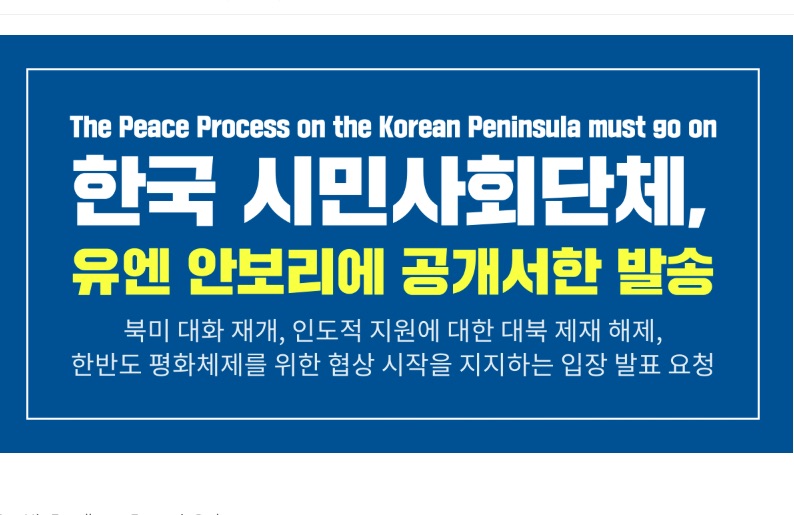
UNESCO proposes concrete projects to implement inter-Korean reconciliation

. .DISARMAMENT & SECURITY. .

An article from UNESCO

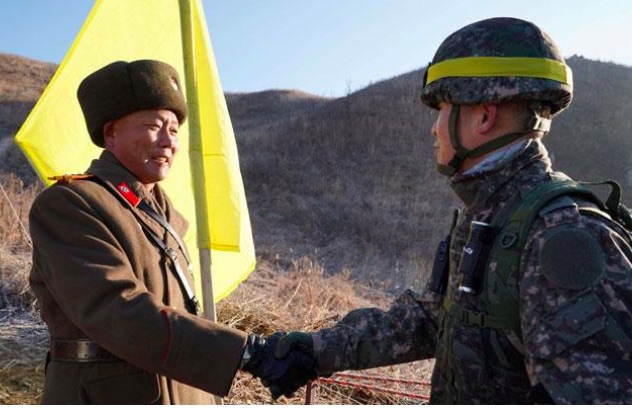
The Director-General of UNESCO, Audrey Azoulay, today met Moon Jae-in, President of the Republic of Korea, for the first time, and expressed the Organization’s determination to bolster cooperation with the Korean Peninsula.

“UNESCO wishes to commit its support to inter-Korean reconciliation through concrete projects,” declared the Director-General. “We can help restore the links between peoples through shared heritage, educational programmes and cooperation in natural resources management. Facilitating, even accelerating, the construction of durable peace in the Korean Peninsula through culture, education and the sciences is both the ambition and core mandate of UNESCO.”

(continued in right column)

Question for this article:

Can Korea be reunified in peace?

(continued from left column)

To that end, UNESCO intends to focus on projects that are at once concrete and symbolic. In her talk with the President of the Republic of Korea, the Director-General spoke of her will to reinforce cooperation in the three area of cultural heritage, education and science. These proposals will be discussed with the authorities of the Democratic People’s Republic of Korea.

With regard to cultural heritage, discussions are expected to concern cooperation with a view to identifying shared nominations for inscription on the World Heritage List and on UNESCO’s lists of Intangible Cultural Heritage. Work will also be undertaken to publish a first dictionary of Korean etymology.

In education, UNESCO will lend its support to teachers by reinforcing global citizenship education. Educational programmes to be implemented across the Peninsula could also be developed.

Finally, Ms Azoulay and President Moon Jae-in also envisaged scientific cooperation with regard to water and environmental preservation. Discussions notably focused on initiatives that could be implemented to facilitate joint access, sharing and management of transboundary water resources, and the preservation of biodiversity and its sustainable use for the benefit of local communities.

UK Nationwide Public Meeting Tour: Stop Bombing Yemen, Stop Arming Saudi

. .DISARMAMENT & SECURITY. .

From the website of Stop the War Coalition

The Saudi regime is one of the most brutal and authoritarian anywhere in the world. Its ruler Mohammed Bin Salman is implicated in the murder of journalist Jamal Khashoggi in Turkey and has rounded up and tortured opponents at home. His government is also the main protagonist of the terrible war on Yemen.

The Saudi led war has already devastated Yemen and killed tens of thousands of people. Aid agencies warn that if it continues it will cause the worst humanitarian catastrophe since World War Two.

Yet the British government continues to back the regime. Earlier this year Theresa May welcomed Bin Salman to Britain, claiming he was a reformer. Really the British government stays close to Saudi Arabia because Saudi buys more arms from Britain than any other country, because it is a major oil supplier to the West and because it has long been a key ally in a region the West is desperate to control.

(continued in right column)

Question for this article:

How can we be sure to get news about peace demonstrations?

(continued from left column)

Ending arms sales to Saudi Arabia is essential and urgent. It could help to avert catastrophe. Come to one of our public meetings near you and join us in our campaign to make it happen:

>> 08 Nov | York | Stop Arming Saudi Arabia

>> 12 Nov | Brent | Break Links with Saudi Arabia: End the War in Yemen

>> 15 Nov | Cardiff | Vigil 4 Yemen

>> 27 Nov | London | Stop Arming Saudi – Stop Bombing Yemen

>> 27 Nov | Portsmouth | Stop Bombing Yemen, Stop Arming Saudi

>> 30 Nov | Norwich | Stop Bombing Yemen, Stop Arming Saudi

>> 01 Dec | Merseyside | Justice For Palestine: Freedom, Human Rights and a Lasting Peace

>> 04 Dec | Manchester University | Stop Arming Saudi – Stop Bombing Yemen

>> 04 Dec | Sheffield | Stop Bombing Yemen, Stop Arming Saudi

>> 06 Dec | Basingstoke | Stop Bombing Yemen, Stop Arming Saudi

>> 07 Dec | Liverpool Hope University | Stop Arming Saudi – Stop Bombing Yemen

>> 08 Dec | Edinburgh | Stop Arming Saudi, Hands Off Yemen Protest

>> 13 Dec | Lewisham | Stop Arming Saudi – Stop Bombing Yemen

Peace and disarmament on the streets of Germany

. .DISARMAMENT & SECURITY. .

An article from Pressenza

During the Days of Protest for Peace and Disarmament, actions were carried out in almost 50 German cities and thousands of signatures were collected.

The days of protest from 1 to 4 November 2018, organised by the national initiative “disarm instead of rearm”, have not yet ended. Some actions in different cities will last until 10.11.2018. In many places they were actively supported by trade unions. The cooperation at national level in the initiative “disarm instead of improve” continued in many places. This action was supported by the two big networks of the peace movement “Cooperation for Peace” and the Committee of the Federal Peace Council.

The days of protest were held almost exactly one year after the foundation of this initiative and more than 120,000 signatures had already been obtained on the days of action. Among the first signatories were four trade union leaders, the presidents of major environmental associations, scientists, including a German Nobel laureate, church leaders*, politicians from various parties and peace activists. The exact list of initial signatories can be found at https://abruesten.jetzt/

Some of the first points of this successful action can already be mentioned:

We have intervened actively and with commitment in the budgetary debate of the German Bundestag, we have said no to armament, to mad increases in the armament budget to 85 billion. Between 2018 and 2019 alone, the defence budget is expected to increase by 11.8%, and no other budget line even has an approximate increase in this percentage.

(continued in right column)

Question for this article:

How can we be sure to get news about peace demonstrations?

(continued from left column)


In thousands of debates we have been able to point out the link between armaments and social affairs, we have made it clear time and again that every euro can only be spent once, either on armaments and war or on the people. Never in recent years have we had such a coordinated offensive of national dialogue from the peace movement towards the people of our country.


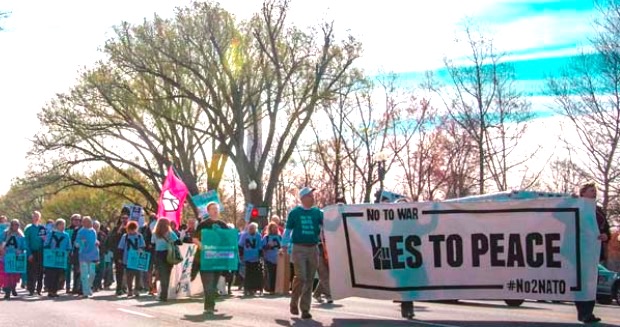
In almost 50 places in the republic, actions took place in the streets. They were often well-designed information booths with active collectors of signatures. Up to 1000 participants demonstrate the possibilities of decentralized actions. The “peace question” and disarmament were present in public.


In many places the collection was combined with rallies and demonstrations. In large cities, several hundred people participated in these events. Speakers from the peace movement and trade unions support the call for disarmament.


Several thousand were collected, in the end probably as many as 10,000 new signatures. The collection of signatures was welcomed with great sympathy and support from the population.


The days of protest have led us to take a good step forward. We were able to converse simultaneously with many people in many places and with an active presence. We were able to provide intensive information and clarification about the dangers and costs of updating. We have also shown in many small towns and villages that something is happening for peace.

The actions of local peace alliances in the streets and squares were supported by committed people from trade unions, environmental associations and Christian initiatives. Members of various political parties and movements were present and actively supported our protests.

For future actions we need many more participants and even better cooperation. Peace, climate and environmental protection go hand in hand. Disarmament frees funds to finance the International Climate Fund.

By calling for an end to arms exports and wars, we are making the causes of leakage a problem. Every euro can only be spent once on education, schools, science, health and care or on arms and war. We need a new policy of détente in Europe and also with Russia. These common positions are shared by many millions of people. Let us build on this foundation and move even more active street activities into public space over the next few years. Let us take advantage of the good experiences of the protest days for wider and more central actions.

Ethiopia Kicks Off “Jegnit” National Campaign. Aims to Establish Women-Led Network for Peace

. .DISARMAMENT & SECURITY. .

An article from the Addis Standard

A national campaign dubbed “ጀግኒት” (Jegnit), loosely translated “She, the Brave One”, was launched yesterday [October 30] at the Hilton Hotel in Addis Abeba in the presence of senior women officials and other invited guests. The launching ceremony was attended by most of the recently appointed women ministers including Mufarihat Kamil, the Minister of Peace. The program, which is launched by the ministry of women’s, children’s and youth in collaboration with various stakeholders, is expected to kick off on November 4, 2018.

Jegnit is aimed at creating a movement of women networks with the major goal of fostering the culture of peace in Ethiopia so as to ensure the protection of women and children, where the case is evidently meager by far. The launching event brought together nine political leaders in the cabinet of PM Abiy Ahmed (with the exception of Dagmawit Moges, minister of transport), leading women artists, and other leading public faces to rally around the campaign, which will be advocated through a series of peace-conferences bringing women representatives from all the nine regional states and two city administrations together.

(continued in right column)

Question for this article:

Can peace be achieved between Ethiopia and Eritrea?

(continued from left column)

“Every ministry led by women should give the utmost attention to peace. They need to stand [to ensure that] the vulnerability of women in social equity and violence on the unprivileged groups is not a case in the country,” Yalem Tsegaye, minister of women’s, children’s and youth, said during the event, adding that “It is crucial to lead (the reform) with access to quality multi-sectoral services, inclusive to women and children, is ensured.”

By the end of the peace-campaign a network of women is expected to be established aimed at giving a flavor of strength to the stakeholders working on women and children in the country. Said to be part of this advocacy and the later planned successful programming, the network will work through women who can make sustainable peace and cope with the recent reforms in the country.

“There is an untapped potential of women and young girls everywhere in this country, which we need to unlock. The approach to peace should include women together with multi-pronged approaches at different levels,” Mufarihat noted.

The women-led peace conference will have a leading motto of *“She, the Brave One, Dreams, Plans and Accomplishes.”


Nearly half of the women in Ethiopia, 48% in 2016, have had no education, according to a report from the Demographic Health Survey of Ethiopia (DHS). According to a 2017 data from the Ministry of Health, 13% of adolescent women aged 15-19 are already mothers or pregnant with their first child. Women also constitute the highest number of victims in violence which gripped various parts of the country in the last six months alone. In her maiden speech at the joint session of the two parliaments, Ethiopia’s newly appointed President Sahle-Work Zewde promised to make the safety of women in conflict prone situations one of her top priorities as the first female president of the republic.

A divided UN General Assembly votes on nuclear disarmament resolutions

.DISARMAMENT & SECURITY.

Article by Unfold Zero sent to their email mailing list

Last week (Oct 24-30) was UN Disarmament Week, when member states vote on a range of disarmament decisions and resolutions. Decisions are binding on the United Nations. Resolutions are indications of governments’ positions and intent – they are not binding but can be very authoritative and influential if supported by key countries.

The deliberations and votes took place in an environment of increasing tensions between nuclear armed States, and also an increasing divide between non-nuclear countries and those countries which rely on nuclear weapons for their security.


Here is a short summary:

Nuclear risk-reduction:

A resolution Reducing nuclear danger submitted by India received 127 votes in favour (mostly non-aligned countries). It failed to get support of nuclear-armed or European countries, primarily because it only calls for nuclear risk reduction measures by China, France, Russia, UK and USA – leaving out the other nuclear armed States – India, Pakistan, DPRK and Israel.

A resolution Decreasing the operational readiness of nuclear weapons systems submitted by a group of non-nuclear countries, was much more successful receiving 173 votes in favour, including from most of the NATO countries and from four nuclear armed States (China, DPRK, India, Pakistan).

Nuclear prohibition:

A resolution on the Treaty on the Prohibition Nuclear Weapons (TPNW) was supported by 122 countries. This is more than the number who have signed the Treaty (which is 50). The vote indicates that more signatures are likely. However, the resolution was not supported by any of the nuclear-armed countries, nor any of the countries under nuclear deterrence relationships, i.e. NATO, Australia, Japan, South Korea. The opposition of nuclear-armed and allied States to the resolution is another indication that they do not intend to join the new treaty nor be bound by it.

A resolution on the prohibition of the use of nuclear weapons submitted by India received 120 votes in favour, including from themselves and another three nuclear-armed States (China, DPK and Pakistan). Oddly enough, opposition to this resolution came not only from the other nuclear-armed States (who wish to maintain the option of using nuclear weapons), but also from some of the States supporting the TPNW. Why would these non-nuclear countries not want the nuclear-armed States to prohibit the use of nuclear weapons? UNFOLD ZERO will explore this question in a future update.

(Continued in right column)

Question related to this article:

Can we abolish all nuclear weapons?

(Continued from left column)

UN Conferences:

A resolution affirming a previous decision to hold a UN High-Level Conference (Summit) on Nuclear Disarmament was supported by 143 countries. The resolution, entitled Follow-up to the 2013 high-level meeting of the General Assembly on nuclear disarmament, also promotes negotiations on a Nuclear Weapons Convention – a treaty to prohibit nuclear weapons that includes nuclear-armed States (unlike the TPNW which does not include them). Despite getting a strong vote in favour, including from some nuclear armed states, the proposed conference does not yet appear to have enough political traction to be held. The resolution did not set a date for the conference.

The UNGA adopted a Decision to convene a conference no later than 2019 on the establishment of a Middle East zone free of nuclear weapons and other weapons of mass destruction. Despite the objective of a Middle East Zone being supported by most UN members in a separate resolution (supported by 174 countries), the decision to convene a conference in 2019 to ‘elaborate a legally binding treaty’ was supported by only 103 countries. The hesitation by many countries to support the resolution was due to the fact that they believed that concrete preparations and negotiations for a Middle East Zone Treaty would require the participation of all countries in the region, and currently there is at least one country (Israel) that is not ready to work on such a regional treaty.

Humanitarian consequences and the law

A resolution on the Humanitarian consequences of nuclear weapons, was supported by 143 countries, including one nuclear armed State (India) and one of the nuclear allied States (Japan). Most other nuclear-armed and allied States abstained or opposed because the resolution states that ‘awareness of the catastrophic consequences of nuclear weapons must underpin all approaches and efforts towards nuclear disarmament.’ The nuclear armed and allied States accept that humanitarian impact shoud be considered, but they argue that security reasons for nuclear deterrence must also be addressed in order to relinquish nuclear weapons and achieve a nuclear-weapon-free world.

A resolution on the legal requirement to achieve nuclear disarmament through multilateral nuclear disarmament negotiations was supported by 131 countries. In previous years the resolution, which draws upon the 1996 International Court of Justice (ICJ) Advisory Opinion, found greater support (137 countries in favour), including from some of the nuclear armed States. Previously, the primary call of the resolution had been for negotiations leading to a nuclear weapons convention which would include the nuclear armed and allied States. However, the resolution has been amended to call instead for nuclear disarmament through the Treaty on the Prohibition of Nuclear Weapons, which none of the nuclear-armed or allied countries support. This has led to a drop in support for the resolution.

Other discussions and resolutions

There were other disarmament discussions at the UN General Assembly last week – included a heated discussion between Russia and the United States over the Intermediate Nuclear Forces Treaty (INF). Both US and Russia claim that the other party is in violation of the treaty, and last week President Trump announced that the US was initiating procedures to withdraw from the treaty.

In addition there were a number of other disarmament resolutions that were introduced, some of which were adopted and some of which will be actioned this coming week.

For more information see UNGA First Committee

Press releases: Nov 1 and Nov 2.

Reaching Critical Will UN First Committee

USA: Update on March For Our Lives

DISARMAMENT & SECURITY .

Exerpts from the websitre of March For Our Lives

This summer, the students of March For Our Lives made stops across America to get young people educated, registered, and motivated to vote. We called it March For Our Lives: Road to Change. We visited over 80 communities in 24 different states in 60 days.

We went to places where the NRA has strongholds — and visited a number of communities that have been affected by gun violence to meet fellow survivors. At each stop, we registered young people to vote and talk about how we can stand up to anyone that is a blockade to gun safety – including the NRA and corrupt leaders.


Map of communities visited this summer. For detailed list, click here.

When people across the country rallied at the March For Our Lives just over 2 months ago, we showed our politicians that we refuse to accept gun violence as an unsolvable issue. Now, we’re turning our energy into action.

(Continued in right column)

Question related to this article:

Do you think handguns should be banned?, Why or why not?

(Continued from left column)

Fall Tour dates!

11/3 Tempe, AZ – Vote For Our Lives homecoming block party with free food, games and giveaways, Arizona State University, Fulton Center, starts at 9am

11/4 Orange County, CA – Vote For Our Lives Rally at UC Irvine, free food, special guests, candidates, music & voting, Pacific Ballroom, 311 W Peltason Dr, Irvine, 4-6pm Bus to the Polls, UC Irvine, 2-4pm and 6-8pm – RSVP –

11/4 St. Augustine, FL – Vote For Our Lives tour stop, Plaza De La Constitucion, 23 Orange St., Saint Augustine, FL, 32084, 2pm

11/5 Tallahassee and Gainesville, FL – Message to the Young People of America, Press Conference at the Tallahassee Capitol historic front steps, 400 S Monroe St, Tallahassee, FL 32399, 1pm Vote For Our Lives dorm storm, FAMU and FSU, starting at 1:30pm Vote For Our Lives dorm storm, University of Florida, starting at 5:30pm

11/6 Parkland, FL – Phone Banking, 7am-7pm Vote For Our Lives celebration

For more information about the Road to Change, text CHANGE to 977-79.

[For background, see previous CPNN article on March For Our Lives]

Nuclear Abolition Day: Security Council session clashes with UN High-Level Meeting

DISARMAMENT & SECURITY .

An article from Unfold Zero

The UN General Assembly held a high level meeting on nuclear disarmament on Wednesday last week (September 26) to commemorate the International Day for the Total Elimination of Nuclear Weapons.

Presidents, prime ministers, foreign ministers and other leaders from around the world used the opportunity to promote key initiatives and measures for nuclear disarmament including the comprehensive nuclear test ban treaty, nuclear-weapon-free zones, de-alerting, no-first-use, stockpile reductions, the Korean peace and denuclearization process, the Iran nuclear nonproliferation deal, the recently adopted treaty on the prohibition of nuclear weapons and the global elimination of nuclear weapons through a nuclear weapons convention.

However, apart from India and Pakistan, the nuclear armed States were noticeably missing from the meeting. The P5 (China, France, Russia, UK and the USA) were instead down the hall in the Security Council chambers for a competing event on non-proliferation of weapons of mass destruction chaired by US President Donald Trump. Their absence from the High Level Meeting highlighted the fact that the P5 place very little priority on their obligations to eliminate their own weapons of mass destruction, focusing instead on preventing others from acquiring such weapons.


Photo by John Angelilio

Youth activist calls on states to ‘Move the Nuclear Weapons Money’

‘The United Nations and its member countries should focus more on disarmament for sustainable development’, says 18 year old environmental activist and youth leader Kehkashan Basu who was selected by the President of the UN General Assembly as one of the two representatives of civil society to address the September 26 UN High Level Meeting.

(Continued in right column)

Question related to this article:

Can we abolish all nuclear weapons?

(Continued from left column)

‘Every second, a person dies of hunger. Which means that by the time I finish speaking, 500 more people would have died of hunger and starvation,’ Ms Basu told the UN session. ‘And yet the nuclear-armed States continue to spend billions of dollars for building nuclear stockpiles, ostensibly in the name of security, but in reality threatening current and future generations and violating the rights of children to a peaceful and non-irradiated planet.’

‘Our banks, universities, cities, pension funds and governments continue to invest in the corporations manufacturing and promoting the nuclear arms race for their own personal gain with no consideration for the ethics of investing in death,’ she said.

‘Civil society organisations, in cooperation with parliamentarians from around the world, have launched the Move the Nuclear Weapons Money campaign to cut the $100 billion annual nuclear weapons budget and reallocate these resources into the Sustainable Development Goals and other areas of human and environmental need. This includes direct cuts to nuclear weapons budgets, and divestment from the nuclear weapons industry. Already four governments and a number of cities, banks and investment funds have adopted nuclear weapons divestment policies.’ (Click here to read the full speech and see the video of Ms Basu’s speech).

Ms Basu was also a keynote speaker at Youth, disarmament and sustainable devlopment, an international youth forum held in New York to commemorate UN Peace Day (Sep 21) and International Day for the Total Elimination of Nuclear Weapons.

Special screenings of ‘The Man who saved the World’

The International Day for the Total Elimination of Nuclear Weapons is held on September 26, the anniversary of the incident in 1983 when a nuclear war almost erupted by accident. On this day, the Soviet nuclear early warning center Serpukhov-15 detected ballistic missiles heading towards Moscow. Stanislav Petrov, duty officer at the time, reported a ‘false alarm’ despite the information, and probably averted a nuclear ‘retaliation’ from the Soviet Union.

The story of this incident, and the follow-up visit by Stanislav Petrov to the USA 30 years later, is told in the award winning movie ‘The Man Who Saved the World.’ The movie was shown in a number of special screenings around the world to commemorate the International Day.

USA: Campaign Nonviolence

. .DISARMAMENT & SECURITY. .

An article from Common Dreams

On Saturday, Sept. 22 at 9 a.m., hundreds will rally and march [in Washington] from the Dr. King Statue (on the Southside of the Lincoln Memorial), to the White House for a vigil and nonviolent direct action. Speakers will call for an end to U.S. wars and nuclear weapons, racist policies, rampant greed and growing poverty, and ongoing environmental destruction, and for a new direction toward justice, disarmament and environmental protection. Some will engage in nonviolent direct action.


(Article continued in right column)

Question for this article:

The peace movement in the United States, What are its strengths and weaknesses?

(Article continued from left column)

At 10 a.m., everyone will walk in silence with signs from the Dr. King statue in procession past the Lincoln Memorial to Lafayette Park across from the White House, where they will gather for a legal vigil, to continue their call for an end to racism, greed, war and environmental destruction, and for new leadership and a new culture of nonviolence, with respect, dignity, rights for everyone and for the earth. Some people will then engage in nonviolent direct action at the White House.

This will be the first ever march from the Dr. King Statue to the White House.
The Sept. 22 rally and march to the White House culminates the fifth annual Campaign Nonviolence national week of action, from Sept. 15-22, when a hundred thousand people across the US will speak out publicly against war, poverty, racism, and environmental destruction, and for the coming of a new culture of peace and nonviolence in over 2600 events and march. For a list of events and contact information, see: www.campaignnonviolence.org.

“This week, the president said that protests should be illegal. The right to protest peacefully is at the heart of our country. In that spirit of peaceful dissent, we gather at the Dr. King statue to reclaim Dr. King’s peaceful vision of a new culture of justice and nonviolence, to denounce the violence, greed, racism, wars, and environmental destruction which the United States government is relentlessly pursuing, and to call for a new direction, where our country seeks to make justice and peace for every human being and environmental protection its first priority,” said Rev. John Dear, long time activist and co-founder of Campaign Nonviolence.

Philippine troops, Muslim rebels mark Eid Al-Adha

. .DISARMAMENT & SECURITY. .

An article by Maecy Alviar for the Andalou Agency

In a historic solidarity event, the Philippine military and the Moro Islamic Liberation Front (MILF) gathered on Saturday [25 August] to celebrate a Muslim holiday in the southern Philippines.  


Moro Muslims perform the Eid Al-Adha (Feast of Sacrifice) prayer at the orphanage opened by Turkey’s IHH Humanitarian Relief Foundation in Cotabato, Philippines on August 21, 2018. ( Ahmet Furkan Mercan – Anadolu Agency )

Maminta Dimakuta, the mayor of Tagoloan Lanao, welcomed the government troops and the country’s largest Moro separatist group to the del Norte province, touting the harmonious relationship of Christians and Muslims in the town despite cultural and religious differences.

(continued in right column)

Question for this article:

Can peace be achieved in the Philippines?

(continued from left column)

Brig. Gen. Ramiro Manuel Rey and Col.Thomas Sedano, representatives from the soldiers’ side, expressed their gratitude to the town officials for organizing the celebration of the Muslim holiday of Eid Al-Adha.

“I’ve long been dreaming of joining with MILF fighters in an event like this,” Sedano said, as quoted by GMA News.

The joint celebration also served to pay thanks for the milestone in the peace process in the southern Philippines, said Dimakuta.

The Bangsamoro Organic Law, the fulfillment of the 2014 peace deal between the national government and the MILF, was signed in June by President Rodrigo Duterte.

The measure for greater autonomy creates the Bangsamoro Autonomous Region, a region with more political and fiscal powers including a bigger annual block grant equivalent to 5 percent of the total national internal revenue collection.

Eritrea hosts peace meeting between Ethiopia govt and Tigray ‘rebels’

. .DISARMAMENT & SECURITY. .

An article by Abdur Rahman Alfa Shaban for Africa News

Eritrea on Tuesday [28 August] hosted reconciliation meeting between the Ethiopian government and a rebel group belonging to the far north Tigray region.  

According to Information Minister Yemane Meskel, representatives from Addis Ababa led by the Director of the National Intelligence and Security Service met with a delegation of the Tigray People’s Democratic Movement, TPDM.

Whiles the Ethiopian intelligence chief led the government team, the TPDM was led by its chairman Mokonen Tesfay.

(continued in right column)

Question for this article:

Can peace be achieved between Ethiopia and Eritrea?

(continued from left column)

This is a continuation reconciliation efforts led by Asmara between Addis Ababa, Ethiopian regional governments and rebel groups that have been based in Eritrea.

So far, Asmara has been the venue of meetings between Ethiopia and rebel groups from the Oromia and Amhara regions.

On August 16, representatives of the Amhara Region and the Amhara Democratic Forces Movement, (ADFM), signed a Reconciliation Agreement in Asmara today. The Agreement provided for the ADFM to pursue its political activities in Ethiopia through peaceful means.

In early August, Ethiopia and the Oromo Liberation Front, OLF signed a Reconciliation Agreement.The deal was reached between President of the Oromo Region, Mr. Lemma Mergesa & OLF Chairman, Mr. Dawd Ibsa.

It provided for i) termination of hostilities; ii) that the OLF will conduct its political activities in Ethiopia through peaceful means. The two sides also agreed: (iii) to establish a Joint Committee to implement the agreement. Foreign Minister Workneh Gebeyehu participated in the meeting.