Category Archives: FREE FLOW OF INFORMATION

At the Fête de l’Huma, independent media in full swing

FREE FLOW OF INFORMATION . .

An article by Juliette Quef in Vert.eco (translation by CPNN)

It’s urgent: in the face of the extreme right and the “bollorisation” of information, the ecosystem of “Indés” is joining forces by means of the Village of Independent Media at the Fête de l’Huma, the launch of a cooperative to finance them and a House of Free Media.

“It’s great that you’re here”, “it’s nice to see the independent media gathered together”: this weekend, La déferlante, Basta, Blast, Politis, Streetpress, Fakir, Reporterre, l’Age de Faire, Au poste, Mediapart, Socialter, Le média, Le chiffon, Reporters sans frontières, Acrimed, and of course Vert, were gathered under a huge 400 m² marquee, in the heart of the Fête de l’Huma, in Plessis-Pâté (Essonne). The 89th edition of the Fête attracted more than 450,000 participants in three days.

In the Village, at the center of the twenty or so stands, the conference space was filled with people and hosted rich discussions on sexist and sexual violence, freedom of the press and environmental mobilizations against the far right.


From September 13 to 15 at the Fête de l’Huma, the Village of Independent Media brought together around twenty media outlets. © Margot Desmons / Vert

Fight against the far right and the “bollorization” of the world

This first edition of the Independent Media Village at the Fête de l’Huma has its roots in the rallies against the far right, which were held on June 27 and July 3, Place de la République, in Paris. Organized in just a few days by the “Indés” and civil society, each of them brought together some 30,000 participants (our report).

“At that point, the priority was no longer our media but the event itself,” says Mathieu Molard, editor-in-chief of Streetpress, one of the initiators of the rallies. The unity of the organizers was very strong and we had the impression of having contributed, through these rallies and our investigations, to preventing the far right from gaining power.” With these links strengthened in the face of the emergency, the newspaper L’Humanité then offered to host the “Indés” at the Fête de l’Huma.

“The Independent Media Village was a huge success, we were always full,” rejoices Agnès Rousseaux, director of Politis. For me, it is a sign of a strong demand from the public for places where the press converges and an awareness on the part of the media that there is a need to strengthen and support each other. The Village gave us visibility that we would never have had on our own. Uniting allows us to increase our impact and our audience tenfold.”

(continued on right column)

(Click here for the French original of this article.)

Questions related to this article:

Free flow of information, How is it important for a culture of peace?

(continued from left column)

Coop-media: financing the “Indés”, the nerve of the war

Faced with the rise of the extreme right, the actors of the social and solidarity economy (ESS) have also mobilized to accelerate their Coop-media project, a cooperative intended to finance independent media. Its launch is scheduled for October 9, at the Climate Academy, in Paris.

“Between ESS and independent media, we have the same challenges,” says Lucie Anizon, general secretary of Enercoop and one of the coordinators of Coop-media. We are facing behemoths and the alternatives are struggling.” The idea is to raise funds to participate in the financing of committed media that carry “humanist and progressive values ​​for a more ecological, united and democratic society.”

Starting October 9, citizens, media and businesses will be able to take shares in Coop-media and participate in the governance of the cooperative according to the principle of 1 person = 1 vote. The fundraising will then make it possible to open calls for projects from 2025.

“I discovered a very disunited ecosystem of independent media,” confides Lucie Anizon. In the cooperative community, we know how to organize ourselves and we know that solidarity is the key to resilience.”

The initiative that has been rather well received by information professionals. “We lack structures that come to finance our media,” notes Mathieu Molard. “Banks do not understand our economic models. For example, they think that donations are not reliable. We have difficulty finding money, even public money, to develop ourselves, and this forces us to turn to private patrons.”

A House of Free Media to Welcome Everyone

After ten years of effort and an aborted project, the Paris Council has now voted unanimously to sell a building located at 70 boulevard Barbès, in the 18th arrondissement of Paris, to the left-wing millionaire Olivier Legrain, patron of the independent press and several refugee aid associations, and to the Bellevilles real estate company, to create a House of Free Media.

With a surface area of ​​4,000 m², it should accommodate, from the end of 2026, the premises of dozens of independent media and their ecosystem, video studios, as well as a café-bookstore and coworking spaces. The goal: to contribute to the defense of freedom of the press and pluralism in the media. “We want to create an emblematic place for freedom of the press in Paris,” explains Agnès Rousseaux. A space of excitement and abundance to wage the cultural battle and experiment with new ways of producing and disseminating information.”

– – –

If you wish to make a comment on this article, you may write to coordinator@cpnn-world.org with the title “Comment on (name of article)” and we will put your comment on line. Because of the flood of spam, we have discontinued the direct application of comments.
Secretary-General’s remarks to the UN Peace Bell Ceremony

FREE FLOW OF INFORMATION

An article from the United Nations

Excellencies, ladies and gentlemen,
 
We come together today to sound the call for peace. 

Here at the United Nations, peace is our raison d’être, our guiding light, and our founding creed. 


Secretary-General António Guterres rings the Peace Bell during the ceremony in observance of the International Day of Peace. PHOTO:UN/Cia Pak

Yet peace is under threat.

War is on the march. 

From the Middle East, to Sudan, Ukraine, and beyond, we see bullets and bombs maim and kill; bodies piled high; populations traumatised; and buildings reduced to rubble.  

Meanwhile, the foundations of a peaceful world are fracturing. 

Geo-political divisions are widening. 

Inequalities are growing. 

Disinformation is fanning the flames of hate. 

New technologies are being weaponised with no guardrails. 

And the climate crisis is fuelling instability: depleting resources, and forcing people from their homes. 

International institutions must be better positioned to respond. 

(continued in right column)

Question(s) related to this article:

What is happening this year (2024) for the International Day of Peace?

(continued from left column)

And we have a chance for change. 

Later this month, at the Summit of the Future, we can begin the process of reform and revitalisation: 

By adapting multilateral institutions to today’s reality, instead of the reality of the Second World War; 

By advancing a New Agenda for Peace;

By revitalising the Sustainable Development Goals; 

By protecting human rights;  

By tackling the point where climate and security meet;

By agreeing guardrails on new technologies in conflict; 

By defending and advancing gender equality; 

By combatting racism and discrimination;

And by securing full and meaningful participation in civic life and peacebuilding –particularly young people, women and girls, and other historically marginalised communities. 

In short, we must “cultivate a culture of peace.”

That is the theme of this year’s International Day of Peace. 

And it is a cause all us devotees of peace and justice must rally behind, this day and everyday – through the Summit of the Future and beyond. 

That is the call we make today. 

May it ring out around the world.  

Before I sound the peace bell, please join me in a moment of silence to reflect on the meaning and necessity of peace – and the way in which each of us can nurture the conditions needed for a peaceful world to flourish.

– – – – – –

If you wish to make a comment on this article, you may write to coordinator@cpnn-world.org with the title “Comment on (name of article)” and we will put your comment on line. Because of the flood of spam, we have discontinued the direct application of comments.
The Contribution of Gabon to UNESCO and the Culture of Peace

FREE FLOW OF INFORMATION

Excerpt from the website of the Gabon Review (translation by CPNN)

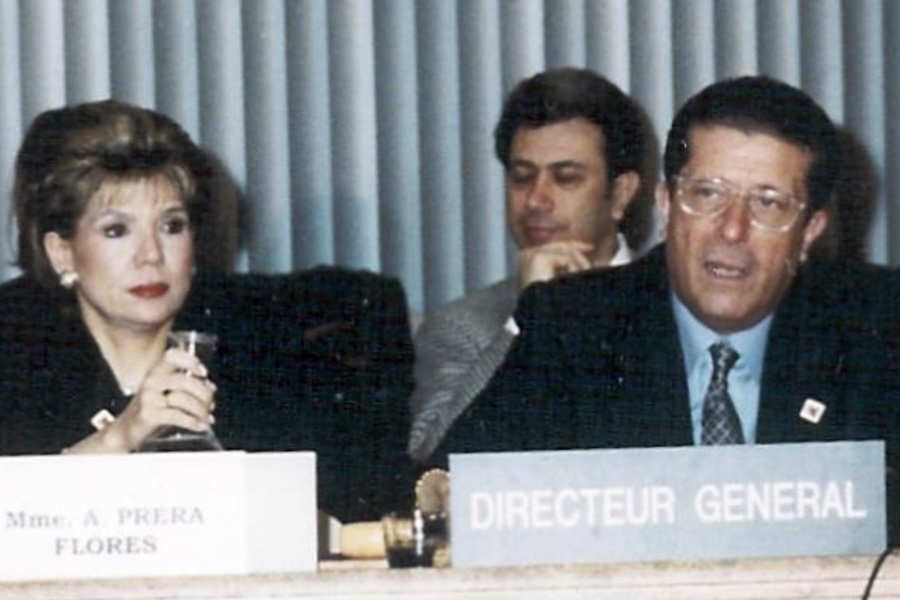
Drawing on his experience as a former actor in cooperation between Gabon and UNESCO, Juste Joris Tindy-Poaty takes stock of Gabonese initiatives in three key areas: the appropriation of international scientific programs, the implementation of the Program for the Management of Social Transformations (MOST), and the contribution to the Action Plan for a Culture of Peace in Africa. His analysis offers a unique perspective on Gabon’s past achievements and proposes concrete avenues for consolidating its diplomatic position within this international organization. . . .


Doctor Juste Joris Tindy-Poaty, Assistant Professor in Philosophy, Former Secretary General of the Gabonese National Commission for UNESCO (2011-2015). © DR

On the eve of the 43rd session of the General Conference, which could (we fervently hope) confirm the election of one of our own, in the person of Ambassador Noël Nelson Messone, to the post of Director-General of UNESCO, we intend to provide here some answers to the following question: what has been Gabon’s presence at UNESCO to date and what could this presence be beyond? It is as a former actor in our country’s cooperation with UNESCO that we authorize ourselves to make this contribution. . . .

The national contribution to the implementation of the “Action Plan for a Culture of Peace in Africa/Let’s Act for Peace”

Designed to call for the creation of a “Continental and Sustainable Movement for Peace”, the “Action Plan for a Culture of Peace in Africa/Let’s Act for Peace” was adopted at the end of the Pan-African Forum “Sources and Resources for a Culture of Peace”, organized jointly with the Angolan Government, UNESCO and the African Union, in Luanda (Angola), from 26 to 28 March 2013. The objective of this forum, which eventually became a Biennale of the Culture of Peace [2] , was “to draw on the sources of inspiration and the potential of the continent’s cultural, natural and human resources to identify concrete courses of action to build sustainable peace, understood as the cornerstone of endogenous development and Pan-Africanism.”

(Continued in right column)

(Click here for the original French version of this article.)

Question related to this article:

The Luanda Biennale: What is its contribution to a culture of peace in Africa?

(Continued from left column)

Represented at the Pan-African Forum in Luanda in 2013, and as such a stakeholder in the implementation of the action plan calling for the creation of a “continental and sustainable movement for peace”, Gabon immediately worked to contribute to the creation, under the aegis of UNESCO and the AU, of a certain number of networks of civil society organizations in Africa and the Diaspora, namely: (i) the “Network of foundations and research institutions for the promotion of a culture of peace in Africa” (September 2013); the “Pan-African Youth Network for the Culture of Peace” (December 2014) and the “Pan-African Women’s Network for the Culture of Peace and Sustainable Development” (June 2018). Made up of more than 50 organizations, including UNESCO chairs, the first network has its permanent secretariat provided by the “Félix Houphouët-Boigny Foundation for Peace Research”, and its headquarters is therefore based in Côte d’Ivoire, more precisely in Yamoussoukro. Initiatives of Gabon, the other two networks have their respective headquarters in Libreville.

The “Pan-African Youth Network for the Culture of Peace”, made up of about 60 organizations, including National Youth Councils, was formalized at the end of the Pan-African Forum “African Youth and the Challenge of Promoting a Culture of Peace” organized from 11 to 13 December, jointly by the Omar Bongo Ondimba Foundation for Peace, Science, Culture and the Environment and the Gabonese National Commission for UNESCO with the support of UNESCO and the participation of the AU. The general objective of this forum was to mobilize and unite African youth, particularly through a number of representative field structures, with a view to promoting a culture of peace in Africa. Since its creation, the “Pan-African Youth Network for the Culture of Peace” has been involved in all major initiatives involving youth organized by UNESCO, not only in the sub-region, but also at the continental level, including the now traditional youth forum, one of the institutionalized segments of the “Luanda Biennale. Pan-African Forum for Culture”.

– – – – – –

If you wish to make a comment on this article, you may write to coordinator@cpnn-world.org with the title “Comment on (name of article)” and we will put your comment on line. Because of the flood of spam, we have discontinued the direct application of comments.
Peace Day in San Francisco, A milestone in Cultivating a Culture of Peace

FREE FLOW OF INFORMATION

Special to CPNN from David Wick*

“As you think, so you become”, is an ancient and timeless message for humanity. A similar wake-up call is expressed in the preamble of UNESCO (UN Educational, Scientific, and Cultural Organization). “Since wars begin in the minds of men, it is in the minds of men that the defenses of peace must be constructed.” Both the Declaration and Programme of Action on a Culture of Peace, and the UN International Day of Peace are dedicated to assisting humanity in consciously living this reality.

The United Nations in a series of resolutions and programs for the 21st Century, called for a transition from the culture of war to a culture of peace. In 1999 the United Nations General Assembly unanimously adopted the Declaration and Programme of Action on a Culture of Peace (A/RES/53/243). During the International Year for the Culture of Peace in the Year 2000, one percent of the world’s population (75 million people) took part in the signature campaign on the Manifesto 2000.

Pathways To Peace (PTP) is an international Peacebuilding, educational, and consulting organization. For over four decades, PTP has been actively making Peace a lived reality. PTP is a UN-designated Peace Messenger Organization and has Consultative Status with the United Nations Economic and Social Council (ECOSOC). PTP works locally and globally, inter-generationally and multi-culturally, to support Peacebuilding, Peacebuilders, and to collaborate with other organizations in initiatives that advance the Culture of Peace.

Since its inception in 1981, Pathways To Peace has worked with the UN to expand awareness of and engage in the International Day of Peace (Peace Day), which is held annually on September 21. Peace Day has grown from a single event of a few hundred people in San Francisco on September 18, 1984, into a global movement that reaches hundreds of millions to billions of people. Peace Day provides a globally shared date for all humanity to commit to Peace above all differences and to contribute to building a Culture of Peace. For Pathways To Peace, the overarching mission is cultivating a Culture of Peace for all of humanity with the International Day of Peace serving as a day for all nations and people to honor a cessation of hostilities, and to commemorate Peace Day through all means of education and communication.
(continued in right column)

Question(s) related to this article:

What is happening this year (2024) for the International Day of Peace?

(continued from left column)

The sound of silence reverberated at high noon in every time zone across the globe on September 18, 1984, as it rode a PeaceWave launched from San Francisco.

On that day, Pathways To Peace (PTP) coordinated a Peace Day in San Francisco (the birthplace of the UN) to celebrate the first large-scale, civil society organized, International Day of Peace. As the PeaceWave circled the globe that first year, citizens from 52 countries responded to the invitation from San Francisco to participate in the celebration of the International Day of Peace.

Those numbers have grown exponentially over the past 40 years. This year, organizers are expecting upwards of three billion people to observe the noon minute of silence and to participate in peace building events held in over 200 countries. Major international cities such as Geneva, Hiroshima, and New York will join San Francisco in livestreaming their Peace Day events to a global audience, with more cities to be announced in the weeks to come.

To celebrate the 40th anniversary of the first United Nations International Day of Peace gathering and the launch of the PeaceWave from The City by the Bay, Pathways To Peace is hosting the Peace Day gathering at the Civic Center Plaza in San Francisco this September 21, 10:30 am – 4:00 pm PDT. Tezikiah Gabriel, Executive Director of PTP, said, “As it was 40 years ago, the purpose of the Peace Day initiative is to foster cooperation at all levels of our local-global communities and to demonstrate the difference each individual, group, organization, or nation makes when acting in concert with one another… enough of a difference to change the course of history!”

Additional information can be found on Pathways to Peace . If you cannot attend in person please register to join us online for the Live Global Broadcast at ptp.events/broadcast and join in virtually.

Our shared goal of cultivating a Culture of Peace is doable and right before us. As international futurist and past President of the Institute of Noetic Sciences Willis Harman said, “Perhaps the only limits to the human mind are those we believe in.”

* David Wick is the President of Pathways To Peace and Executive Director of the Ashland Culture of Peace Commission.

– – – – – –

If you wish to make a comment on this article, you may write to coordinator@cpnn-world.org with the title “Comment on (name of article)” and we will put your comment on line. Because of the flood of spam, we have discontinued the direct application of comments.
Statement by the European Union to the United Nations High-Level Forum on the Culture of Peace

FREE FLOW OF INFORMATION

An e-statement from the United Nations High-Level Forum on the Culture of Peace

Statement on behalf of the European Union and its Member States by Ambassador Hedda Samson, Deputy Head of Delegation of the European Union to the United Nations High-level Forum on the Culture of Peace: Cultivating and nurturing the culture of peace for present and future generations

(Editor’s note: The following statement is a welcome change from the opposition of the European Union when the culture of peace resolution was submitted by UNESCO to the UN General Assembly in 1998.)


EU Spokesperson, Hedda Samson. Frame from minute 44 in the video of the Forum

New York, 2 August 2024

– CHECK AGAINST DELIVERY –

(Editor’s note: By checking the published e-statement against the delivery in the video of the Forum, one can see that it was delivered as written here including five minor additions to the e-statement marked here in boldface and three minor omissions marked in italics.)

Mr President,

I have the honour to speak on behalf of the European Union and its Member States.

The Candidate Countries North Macedonia, Serbia, Albania, the Republic of Moldova, Bosnia and Herzegovina and Georgia, as well as Andorra, Monaco and San Marino align themselves with this statement.

As we commemorate the 25th anniversary of the adoption of the Declaration and Programme of Action on a Culture of Peace, the European Union expresses its full support for the Culture of Peace agenda.

This agenda not only reflects our history and core values, but it also guides our actions – within and beyond our borders.

– Concretely, this means that we are deeply committed to the respect for life and dignity of each human being without discrimination or prejudice.

– It means that we are attached to non-violence, the peaceful settlement of conflicts and to democratic participation. North Macedonia, Serbia, Albania and Bosnia and Herzegovina continue to be part of the Stabilisation and Association Process.

– It also means that we are deeply committed to solidarity and cooperation for development, and to the promotion and respect of human rights as well as equal rights and opportunities for all.

The Declaration and Programme of Action on a Culture of Peace with its eight pillars remains as valid today as it was in 1999. Even if we have witnessed tremendous change in societies worldwide. Even if we are facing new global challenges.

(continued in right column)

Question(s) related to this article:

What is the United Nations doing for a culture of peace?

(continued from left column)

As we have gathered at this high-level event, let me convey three messages:

– First, pursuing a Culture of Peace can help us bridge the divides across and within societies worldwide. And it can help to advance the full implementation of the Sustainable Development Goals.

– Second, we have all committed in the Declaration on a Culture of Peace to support the free flow of information and knowledge, to support the important role of the media, to ensure freedom of the press and freedom of information and communication and protection of civic space (online and offline).

– Third, if we really want to be faithful to this agenda, we need effective multilateralism, founded on values and principles embedded in international law, the UN Charter, and the Universal Declaration of Human Rights, with a strong United Nations at its core. This is the only way to respond collectively and efficiently to global crises, challenges and threats that no one can tackle alone.

Mr President,

In line with the theme of today’s event, the European Union fully agrees that we must cultivate and nurture a Culture of Peace for present and future generations.

As we have said before, the Summit of the Future will be a milestone, but our journey will continue beyond it. If we have a strong and ambitious Pact, we can fully seize the opportunity to pave the way for current and future generations.

The Pact should recommit to the UN Charter and its values, which is crucial in these times of widespread violations. We have all committed, and must again recommit to maintaining international peace and security, taking effective collective measures for the prevention of conflict, for peace operations, and for the suppression of acts of aggression.

There can be no Culture of Peace for present or future generations without respect for human rights, democratic participation and the rule of law. We must do away with all forms of discrimination and prejudice:

– Let us join efforts to achieve gender equality and the full enjoyment of all human rights by all women and girls.

– Let us safeguard the freedom of religion or belief for all. We must strive towards democratic societies, where freedom of opinion and expression prevails, in a spirit of respect, acceptance, tolerance and dialogue, and where we stand united against all forms of racism and extremism.

– Let us foster a Culture of Peace with children and youth through inclusive quality education that promotes acceptance, that empowers them as agents of change, and that safeguards their rights to protection from violence and discrimination.

Mr. President, to succeed in all this, strong partnerships with civil society are vital. That is why it is so important to ensure a safe and enabling environment where civil society can thrive. And that is why we also encourage enhancing the meaningful and effective engagement of civil society throughout the work of the UN System.

To conclude, Mr President, you can count on the EU’s full commitment to contribute to the effective implementation of the UN Culture of Peace agenda.

I thank you.

– – – – – –

If you wish to make a comment on this article, you may write to coordinator@cpnn-world.org with the title “Comment on (name of article)” and we will put your comment on line. Because of the flood of spam, we have discontinued the direct application of comments.
2024 United Nations High Level Forum on the Culture of Peace

FREE FLOW OF INFORMATION

An article by CPNN based on the videos of the forum at UN Web TV part 1 and UN Web TV part 2

The United Nations held its annual High Level Forum on the Culture of Peace on August 2.

The following article is based on the videos of the Forum because it seems that the United Nations did not publish a general article about the forum. There is a UN webpage for the Forum, but it contains only the concept note, the program, video excerpts, three photos and a link to the 1999 resolution on a culture of peace.


Scene at beginning of Forum, taken from UN video. (Note that in previous years, the room was filled with representatives of civil society and Member States)

A concept note with background about the culture of peace was published this year prior to the forum by the President of the General assembly saying that it would be dedicated to the theme “Promoting Culture of Peace in the Digital Era.”

The program consisted of a three-hour opening session beginning at 10:00 with four presentations available in the UN journal.

H.E. Mr. Dennis Francis, President of the UN General Assembly began by commemorating the 25th anniversary of the adoption of the Declaration and Programme of Action on a Culture of Peace, and thanking the Permanent Mission of Bangladesh for its continued stewardship of the High-Level Forum. He quoted Mahatma Gandhi that “there is no way to peace, peace is the way,” and Nobel Peace Laureate Muhammed Yunus that “Peace should be understood in a human way – in a broad social, political way. Peace is threatened by unjust economic, social and political order, absence of democracy, environmental degradation and the absence of human rights.”

Mr. Guy Ryder, Under-Secretary-General for Policy also spoke about the “enduring legacy” of the Declaration and Programme of Action on a Culture of Peace, and he looked forward to the Declaration on Future Generations to be agreed upon at the Summit of the Future.

Mrs. Lily Gray, UNESCO Liaison Office to the UN said that the digital age demands that we update and refine the concept of a culture of peace, and she referred to UNESCO’s Recommendation on the Ethics of Artificial Intelligence.

Ms. Andrea Carstensen, Representative of Global Youth Caucus on SDG 16 referred to the Secretary-General’s New Agenda for Peace, and Security Council Resolution 2250 — unanimously adopted in 2015 and reaffirmed in 2018. The resolution acknowledges the traditionally-overlooked role of youth in peacebuilding and conflict resolution and calls for the inclusion of young people in decision-making processes at all levels.

Then followed a plenary session with statements by 31 countries, the European Union and 2 observers, the Holy See and the Sovereign Order of Malta. Their statements are available here.

(continued in right column)

Question(s) related to this article:

What is the United Nations doing for a culture of peace?

(continued from left column)

As you may see from the list of countries, there were statements posted from eight countries in Latin America, seven from Asia and five from Africa, but no remarks from the United States or from its allies in Japan, Canada or Australia. China did not issue a statement but is represented, along with 17 other countries, by the statement of Venezuela On Behalf of the Group of Friends in Defence of the Charter of the United Nations

The statement by the European Union in favor of the culture of peace is published here separately because it marks a welcome change from their previous opposition to the culture of peace.

Vietnam and the Holy See also published articles on the Internet about their statements.

In the afternoon there was a one-hour panel session from 15:00 until 16:07 that can be seen in the second video listed above.

The panel session was moderated by Melissa Fleming, Under-Secretary-General for Global Communications. She introduced remarks by the following four panelists:

Mr. Felipe Paullier, Assistant-Secretay-General for Youth Affairs.

Ms. Naureen Chowdhury Fink from the Global Internet Forum to Counter Terrorism. Her remarks are published here. According to Wikipedia, the NGO was founded in 2017 by a consortium of companies spearheaded by Facebook (now known as Meta), Google/YouTube, Microsoft and Twitter (now known as X). It provides a database of videos and images related to terrorism.

Mr. Francisco Rojas Aravena, rector of the University of Peace. His remarks are published here.

Ms Amanda Dixon from the NGO Heavenly Culture, World Peace and Restoration of Light. Her remarks are published here. She spoke about her organization, saying “Our 94-year-old chairman, a global messenger of peace, established our organization over a decade ago to leave peace as a legacy to future generations.” According to Wikipedia, HWPL was founded in 2013 by Lee Man-hee in South Korea, and is classified as a sect according to eight listed sources.

Comments were then requested from the member states and observers, for which there were two: Costa Rica and the NGO Man Up Campaign.

The floor was given again to the four panelists for their final remarks.

Concluding remarks of the panel session were delivered by the Permanent Representative of Bangladesh, Mr. Muhammad Abdul Muhith. He returned to the opening theme of the Forum, commemorating the Declaration and Programme of Action on a Culture of Peace, and looking forward to the Pact to be agreed upon at the Summit of the Future. He thanked all of the Forum participants with a specific mention of the organization Heavenly Culture, World Peace and Restoration of Light.

A closing session at 16:45 is listed in the UN Journal, but there was no video of this published on the UN Web TV, no account in UN News and no statements published in the UN journal.

This year’s Forum continues a trend that began with the Forum last year. Unlike the first ten Forums from 2012 to 2022, when Anwarul Chowdhury was involved in the planning, there is very little role for the civil society and not much media coverage, not even by UN News.

– – – – – –

If you wish to make a comment on this article, you may write to coordinator@cpnn-world.org with the title “Comment on (name of article)” and we will put your comment on line. Because of the flood of spam, we have discontinued the direct application of comments.
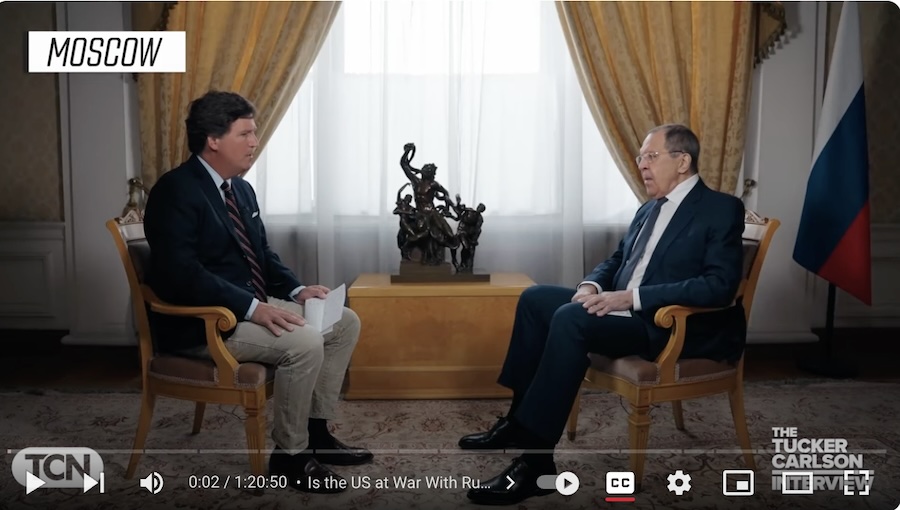
Video about Ukraine war by US Presidential Candidate Kennedy

FREE FLOW OF INFORMATION .

Text from X video republished on July 12 by Transcend Media Service

(Editor’s note: The following is the text of a video interview with Robert F. Kennedy, Jr., independent candidate for President in the United States. It completely contradicts the usual news from the mass media that justifies American involvement in the Ukraine War. We could not find the text anywhere on the Internet, but only a critique of it by the Washington Post.)

You know, Putin every day says, I want to settle the war. Let’s negotiate. And Zelensky said, we’re not going to negotiate. But Zelensky didn’t want to start that way. I don’t want to,  you know, belabor the history, but Russia was invaded three times through Ukraine. The last time Hitler killed one out of every seven Russians. They don’t want to have Ukraine join NATO.

So when the wall came down in the Soviet Union, Europe, Gorbachev destroyed himself politically by doing something that was very, very courageous. He went to Bush and he said, I’m going to allow you to reunify Germany under a NATO army. I’m going to remove 450,000 Soviet troops. But I want your commitment.  After that, you will not move NATO one inch to the east. And we solemnly swore that we wouldn’t do it.

Well, then in 97, Zbigniew Brzezinski, who was the first of the bneocons said, we’re going to move NATO a thousand miles to the east and take 15 countries into it and surround the Soviet Union.  So then we not only move it into 14 new nations, but we unilaterally walk away from our two nuclear weapons treaties with the Russians.  And we put Aegis missile systems in Romania and Poland 12 minutes from Moscow.

When Russians did that to Cuba in 62, we came this close to nuclear war until they removed them. So the Russians don’t want nukes 400 miles from Moscow.

We then overthrow the Ukraine government in 2014, their elected government,  and put in a Western sympathetic government.

(Continued in right column)

Question related to this article:

Is the media an arm of the culture of war?

(Continued from left column)

Russia then has to go into Crimea because they have a port, because they’re only warm water port and they know the new government that we just installed is going to invite the US Navy into their port. So Russia then went into Crimea without firing a shot because the people of Crimea are Russian.

Then the new Ukrainian government we installed started killing ethnic Russians in Donbas and Lugansk, and they voted to leave and join Russia.  Putin said, I don’t want them.  Let’s give them protection and give them semi-autonomy and make an agreement to keep NATO out of Ukraine.

That treaty was written by Germany, France, Russia and England, the Minsk accords. And the Ukrainian parliament, which is controlled by ultra-rightists, and that’s a nice way of talking about them, refused to sign it.

Zelensky runs in 2019.   He’s an actor.   Why did he get elected, with 70 % of the vote?   Because he promised to sign the Minsk accords.  He promised peace. He gets in there and he pivots.  Nobody can explain why, but we know why. Because he was threatened with death by ultra-rightists in his government and a withdrawal of support by the United States, by Victoria Nuland, who’s the leading Neocon in the State Department. We told him he could not sign it.

So then the Russians go in. They don’t send a big army. They only send 40,000 people. It’s a nation of 44 million people. They clearly do not intend to conquer Ukraine, but they want us back at the negotiating table.

We won’t allow Zelensky to go back, so he goes to Israel and Turkey and says will you please help me negotiate a treaty. The Russians just want a guarantee that Ukraine won’t join NATO. Zelensky signs a treaty. Putin’s people sign the treaty. And Putin starts withdrawing the Russian troops in good faith.

What happens? Joe Biden sends Boris Johnson, the British Prime Minister, over to Ukraine in April and forces him to tear up the treaty.

Since then, 450,000 kids have died. Not one of them should have died. For every one Russian that dies, five to eight Ukrainians die. They don’t have any men left! You know, we’re giving them all these weapons, but they don’t have men left. It’s a catastrophe! And we look kind of like the aggressor, that’s the way the rest of the world sees us.

– – – – – –

If you wish to make a comment on this article, you may write to coordinator@cpnn-world.org with the title “Comment on (name of article)” and we will put your comment on line. Because of the flood of spam, we have discontinued the direct application of comments.

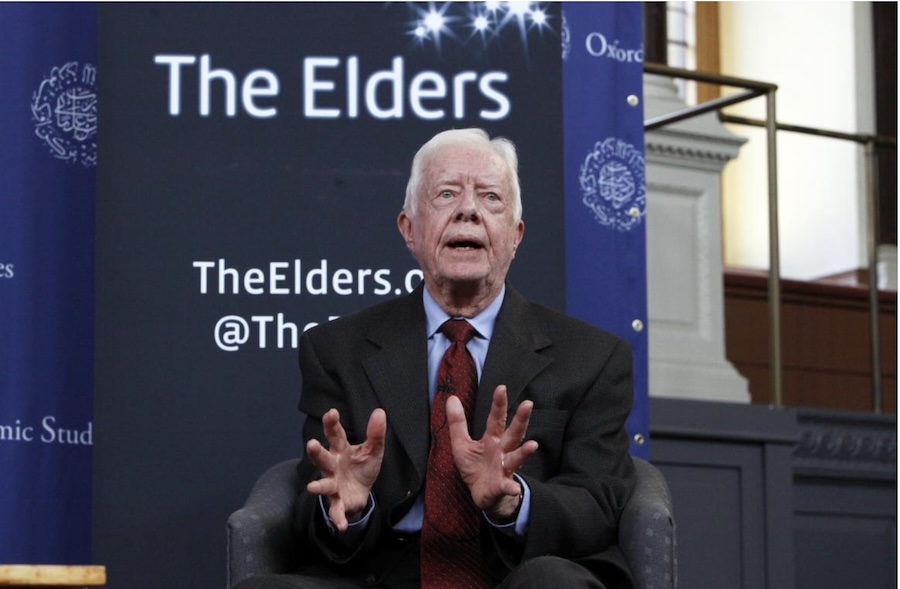
The Elders: A message from Ernesto Zedillo, Former President of Mexico

FREE FLOW OF INFORMATION .

A message from The Elders

Dear friends,

The Elders is an organisation profoundly committed to international law and diplomacy. We believe that the challenges facing humanity, from cruel and protracted conflicts to the climate and nature crisis, pandemics and the threat posed by nuclear weapons, can only be overcome by nations working together.

This is why we believe in a strong multilateral system, underpinned by an unshakeable will to uphold the rule of law, where power is balanced by responsibility and decisions are taken on a long-term and strategic basis.

This is the message we took last month to the headquarters of the United Nations in New York, for a series of public and private meetings with the Secretary-General, the President of the General Assembly, the members of the Security Council and other senior leaders.

The Elders’ delegation – our Chair Mary Robinson, Deputy Chair Ban Ki-moon and former UN High Commissioner for Human Rights, Zeid Ra’ad Al Hussein, and myself – emphasised in all our meetings that as the UN approaches its 80th anniversary, it is needed more than ever but is also facing unprecedented threats from a growing trend of unilateralism and impunity.

Ban Ki-moon highlighted the devastating human cost of the failure of leadership at a public debate of the UN Security Council on the plight of children in armed conflict. Speaking alongside the Special Representative of the Secretary-General who presented the annual report of the Secretary-General on the scale of the crisis, Ban Ki-moon deplored the increase in the number of children killed and maimed in conflicts worldwide over the past year, from Gaza and Israel to Ukraine, Sudan to Myanmar, the Democratic Republic of the Congo to Yemen, to name but a few.

He confronted the Security Council with a painful truth: it is patently ineffective, and failing to perform its most fundamental function of upholding peace and security, and protecting innocent lives.  

(Article continued in the column on the right)

Questions related to this article:

Where in the world can we find good leadership today?

(Article continued from the column on the left)

Even when the Council does reach agreement, as it did when passing Resolution 2735 on the Israeli-Palestinian conflict on 10 June, significant challenges remain in pressuring the conflict parties to implement the resolution in full. To secure a lasting ceasefire, the release of Israeli hostages and Palestinian political prisoners, and the safe and effective distribution of aid throughout Gaza as the resolution requires, all Council members must act in good faith and with persistence, in line with the values of the UN Charter.

The sentiments of Ban Ki-moon’s speech were echoed across all our conversations in New York, including with representatives from China, Russia, Ukraine and Iran, and the Permanent Observer of the State of Palestine.

We also raised and discussed specific proposals on how the UN and member states could be more effective. These included: engagement on finding political pathways to resolve specific conflicts, such as the Israeli-Palestinian conflict; strengthening the effectiveness and representation of the Security Council and the role of the General Assembly; using the UN Charter to its fullest; and strengthening the role of women leaders in peace-building.

The current failure of the UN Security Council members with veto power to honour their responsibility not only deepens the misery of innocent civilians but damages unfairly the effectiveness and reputation of the entire UN system.

All Council members, and indeed all UN member states, have a degree of culpability for the current difficulties encountered by the UN organisation but the greatest responsibility lies with the five Permanent Members of the Security Council. For this reason, in our conversation with the President of the General Assembly and a number of ambassadors, we emphasised the need for the General Assembly to be more proactive in advocating the regulation of the veto power to limit its abuse by the P5.

The Security Council, and in particular the veto power, must evolve if the UN system is to prove itself fit for purpose in the 21st century. We were encouraged by some of the innovative reform proposals we heard, and we hope that the Summit of the Future in September will be an opportunity to sow the seeds for lasting, positive change in the years ahead.

With thanks as always for your ongoing support,

Ernesto Zedillo

– – – – – –

If you wish to make a comment on this article, you may write to coordinator@cpnn-world.org with the title “Comment on (name of article)” and we will put your comment on line. Because of the flood of spam, we have discontinued the direct application of comments.
In Remembrance of James Lawson, a Force for Good and Champion of Peace

FREE FLOW OF INFORMATION .

An article by Ethan Vesely-Flad in Common Dreams (licensed under Creative Commons CC BY-NC-ND 3.0)

Rev. Dr. Martin Luther King, Jr. called him “the leading theorist and strategist of nonviolence in the world.” To Rep. John Lewis, he was “the architect of the nonviolence movement.” Jesse Jackson simply called him “the Teacher.” We at the Fellowship of Reconciliation are blessed to have counted him among our core team of organizers. It is with reverence that we remember his life and time with us.


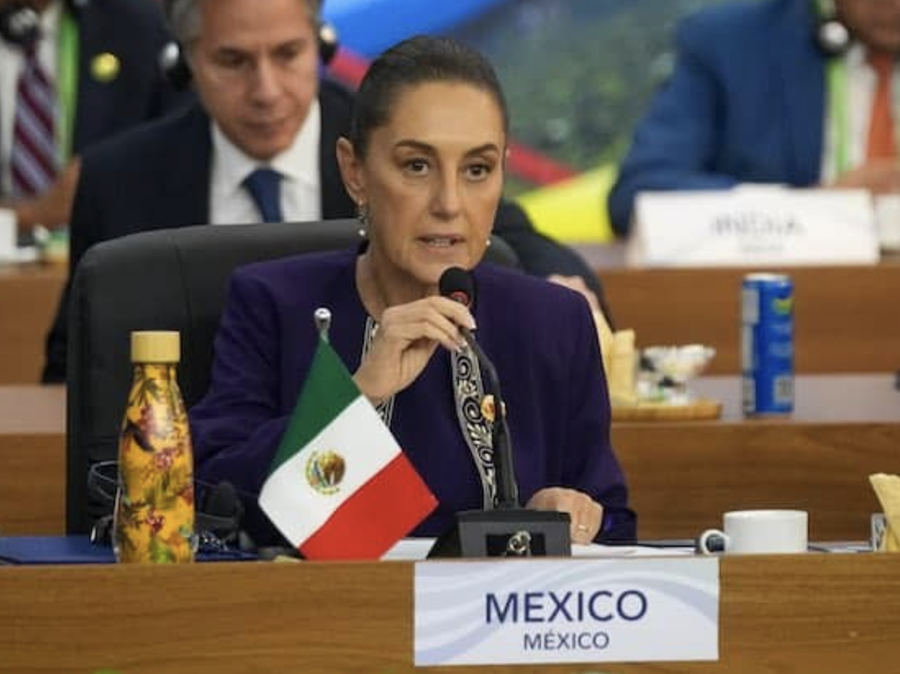
James Lawson at work with the Fellowship of Reconciliation in 1960. (Photo credit: FOR archives)

Rev. James M. Lawson, Jr., who died Sunday at age 95, was born in Uniontown, Pennsylvania, and moved with his family to Massillon, Ohio, shortly after. As part of a deeply Christian family, James began regularly reading the bible and developed a prophetic and liberatory interpretation of the gospels at an early age. In a 2014 interview published by  Fellowship  magazine, Lawson told Diane Lefer, “By the end of my high school years, I came to recognize that that whole business – walk the second mile, turn the other cheek, pray for the enemy, see the enemy as a fellow human being – was a resistance movement. It was not an acquiescent affair or a passive affair. I saw it as a place where my own life grew in strength inwardly, and where I had actually seen people changed because I responded with the other cheek. I went the second mile with them.”

While attending Baldwin-Wallace College, Lawson met A.J. Muste, the Fellowship of Reconciliation’s executive secretary, a renowned pacifist and nonviolent direct action strategist. Deeply inspired, Lawson immediately joined the FOR. Graduating college in 1950, as the Cold War grew, Lawson determined that he would refuse the military draft. Instead of Korea, he was sent to prison, where he served 13 months.

In 1953, Lawson accepted an offer from Hislop College in Nagpur, India, to teach and coach athletics, giving him the opportunity to, like FOR members Howard Thurman and Bayard Rustin had done before him, explore the connections between the Indian self-determination movement and the African-American freedom struggle. Lawson spent the next three years on the subcontinent studying Gandhi’s life and the Satyagraha movement. “I combined the methodological analysis of Gandhi with the teachings of Jesus, who concludes that there are no human beings that you can exclude from the grace of God,” Lawson described to Lefer.

(Article continued in the column on the right)

Questions related to this article:

How can we carry forward the work of the great peace and justice activists who went before us?

(Article continued from the column on the left)

Lawson was completing a graduate degree at the Oberlin School of Theology when Dr. Martin Luther King Jr., while visiting the campus, recruited him. King insisted to Lawson that his expertise was needed, not eventually, but immediately! “I mentioned to [King] that while in college I had long wanted to work in the South – especially because of segregation – as a place of work, and that I wanted to do that still,” Lawson told Fellowship magazine editor Richard Deats in 1999. “His response was: ‘Come now! Don’t wait! Don’t put it off too long. We need you NOW!”

When Lawson told A.J. Muste of his decision to move South, Muste quickly offered him a position as FOR’s Southern Field Secretary. Basing himself initially in Nashville, Lawson began working throughout the South, initially with FOR and then the Southern Christian Leadership Conference (SCLC). He focused especially on recruiting and training a generation of nonviolent direct-action activists. Those young people then launched the sit-ins and Freedom Rides and founded the Student Nonviolent Coordinating Committee (SNCC).

In 1965, while representing SCLC on an International FOR delegation to Vietnam, Lawson met Thich Nhat Hanh. This encounter significantly affected Lawson, inspiring him to facilitate a meeting between the Buddhist monk and Dr. King, and ultimately led to King’s dramatic public stance against the U.S. war in Vietnam. Lawson’s profound assessment of U.S. militarism and what he called “plantation capitalism” shaped not only the interweaving of the 1960s civil rights and anti-war struggles but ultimately how our intersectional social movements are shaped today.

In 1974, in Los Angeles, Lawson continued his solidarity with impoverished low-wage workers. He founded Clergy and Laity United for Economic Justice to enlist faith communities in this struggle and pushed direct action campaigns for which he was arrested “more [times] than [during] all his work in the South.”

Lawson spent his last decades both working within peace circles while offering critiques that their movements devoted too much of their focus outside U.S. borders. He believed that true change could only come from within. “Only by engaging in domestic issues and molding a domestic coalition for justice can we confront the militarization of our land,” he argued to Lefer in 2014. “We must confront that here – not over there.”

Whether prophetically interpreting the scriptures, challenging America’s original sin with the fierce power of nonviolent direct action, or strategically connecting with other monumental peace leaders, Lawson’s commitment to social justice was relentless and unwavering. We at the Fellowship of Reconciliation are blessed to have worked with and been mentored by him. As we continue to confront the injustices of our times, we know that Lawson’s spirit is walking beside us.

(Editor’s note: You may find a more detailed biography on the website of The Nation, but we have no budget to pay for reproduction.)

– – – – – –

If you wish to make a comment on this article, you may write to coordinator@cpnn-world.org with the title “Comment on (name of article)” and we will put your comment on line. Because of the flood of spam, we have discontinued the direct application of comments.
2024 Theme for the International Day of Peace: Cultivating a Culture of Peace

FREE FLOW OF INFORMATION

An article from the United Nations

The 2024 Theme for the International Day of Peace is “Cultivating a Culture of Peace”.

This year marks the 25th anniversary of the United Nations General Assembly’s adoption of the Declaration and Programme of Action on a Culture of Peace.

In that declaration, the United Nations’ most inclusive body recognized that peace “not only is the absence of conflict, but also requires a positive, dynamic participatory process where dialogue is encouraged and conflicts are solved in a spirit of mutual understanding and cooperation.”

In a world with rising geopolitical tensions and protracted conflicts, there has never been a better time to remember how the UN General Assembly came together in 1999 to lay out the values needed for a culture of peace. These include: respect for life, human rights and fundamental freedoms; the promotion of non-violence through education, dialogue and cooperation; commitment to peaceful settlement of conflicts; and adherence to freedom, justice, democracy, tolerance, solidarity, cooperation, pluralism, cultural diversity, dialogue and understanding at all levels of society and among nations.

(Click here for the article in French or click here for the article in Spanish.)

(continued in right column)

Question(s) related to this article:

What is the United Nations doing for a culture of peace?

(continued from left column)

In follow-up resolutions, the General Assembly recognized further the importance of choosing negotiations over confrontation and of working together and not against each other.

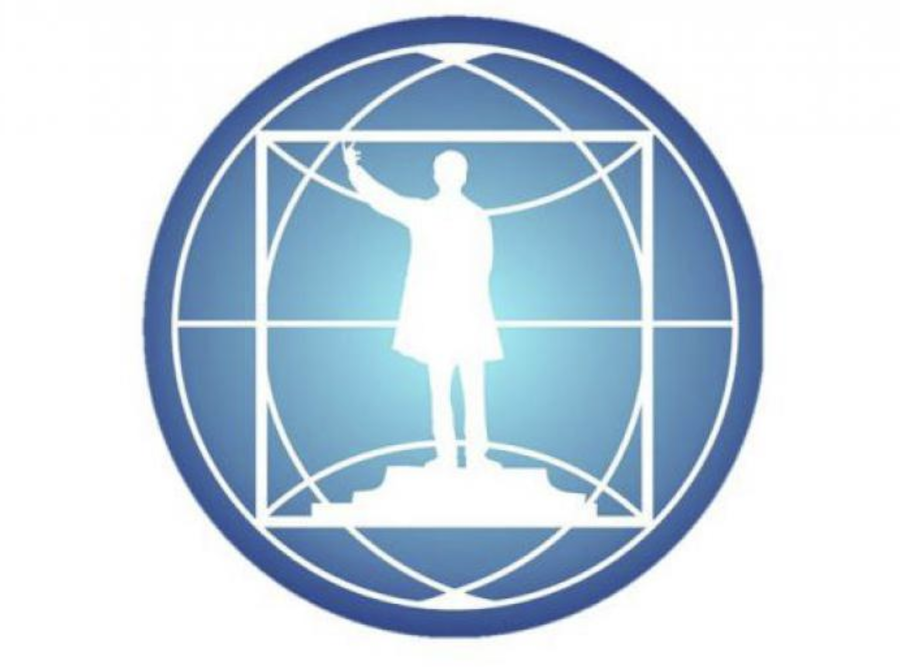
The Constitution of the United Nations Educational, Scientific and Cultural Organization (UNESCO) starts with the notion that “wars begin in the minds of men so it is in the minds of men that the defences of peace must be constructed”. It is this notion that framed the theme and logo of this year’s observance of the International Day of Peace. The ideas of peace, the culture of peace, need to be cultivated in the minds of children and communities through formal and informal education, across countries and generations.

The International Day of Peace has always been a time to lay down weapons and observe ceasefires. But it now must also be a time for people to see each other’s humanity. Our survival as a global community depends on that.

Background

The International Day of Peace was established in 1981 by the United Nations General Assembly. Two decades later, in 2001, the General Assembly unanimously voted to designate the Day as a period of non-violence and cease-fire.

– – – – – –

If you wish to make a comment on this article, you may write to coordinator@cpnn-world.org with the title “Comment on (name of article)” and we will put your comment on line. Because of the flood of spam, we have discontinued the direct application of comments.