Category Archives: TOLERANCE & SOLIDARITY

Reunion: Statement from the 2016 Symposium of the Interfaith Network of the Indian Ocean

, TOLERANCE & SOLIDARITY .

An article from Temoignages (translated by CPNN)

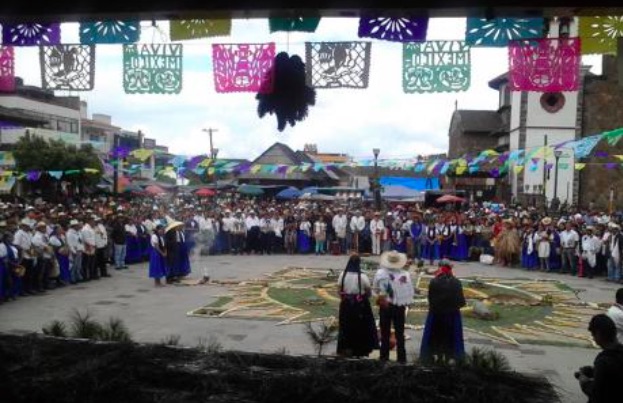
Idriss Issop-Banian, president of GDir (Interreligious Dialogue Group of Reunion), just sent us the Final Declaration of the 3rd Symposium of the interfaith Network of the Indian Ocean, which took place from 22 to 24 September in Saint-Denis . Here is the full text of the statement that contains a slogan defended for over 40 years by the Reunion Communist Party: “Indian Ocean zone of peace”.

Reunion
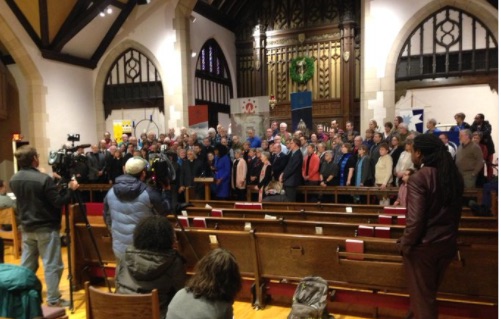
The closing ceremony of the 2016 Symposium of the Interfaith Network of the Indian Ocean

Preamble: We reaffirm our common spiritual conviction that we are one family. All human beings are inhabited by the same light of God and have the same dignity. Life is sacred and the same Golden Rule governs our fundamental relationships: “Do unto others the good that you wish for yourself.”

We, the delegates of interreligious dialogue groups from Madagascar, Mauritius, Seychelles and Reunion, all the members of the Interfaith Network Indianocéanie,

– strengthened by the Port-Louis Declaration following the first symposium held in Mauritius in 2009,

– consolidated by Victoria Declaration following the second symposium held in the Seychelles in 2012,

– reaffirming our conviction that dialogue between religions is an essential vector for coexistence of people and nations, and in doing so eager to engage other actors in human societies for the arrival of peace,

– having at heart to develop peace and cohesion in solidarity and sharing an ethical humanist,

(Article continued in right column)

(Click here for the original French version of this article.)

Question related to this article:


How can different faiths work together for understanding and harmony?

(Article continued from left column)

– meeting from 22 to 24 September 2016 in Saint-Denis de La Reunion have reflected on Peace in the Indian Ocean and have covered the following topics:

Indian Ocean zone of peace;

Peace in our societies;

The challenges of climate change – ecology and spirituality;

Indianocéanité.

Following deliberation, the Symposium of of the Interreligious Network of the Indian Ocean, adopts the following resolutions:

Resolution No. 1, We call upon politicians and governments to put into practice resolution 70/22 adopted by the UN General Assembly on 7 December 2015, making the Indian Ocean a Zone of Peace.

Resolution No. 2: We call upon all actors of society to be aware of the implications of climate change in the region of the Indian Ocean.

Resolution No. 3: We call for reflection on spirituality in the activities of daily living, concerning respect for the environment and populations.

Resolution No. 4: We reaffirm our commitment to fight against the scourges of poverty, corruption, racism and xenophobia and in favor of a fair and supportive co-development in the Indian Ocean region.

Resolution No. 5: We upport the desire of the observer from Mayotte to create a group of interfaith dialogue in Mayotte.

Resolution No. 6: We support the desire of the observer from the Comoros to create a group of interfaith dialogue in the Comoros.

Resolution 7: We reeaffirm the right of the Chagossians to return and live on their land.

“Lord God, make us peacemakers and keep us in the light.”

Done at Saint-Denis, Reunion, September 24, 2016.

Follow the signatures of delegations PLeROC (Madagascar) – CoR (Mauritius) – SIFCO (Seychelles) – GDir (Reunion)

Greece: Union pushes for access to education for all refugee children

TOLERANCE AND SOLIDARITY .

An article from Education International (reprinted according to provisions of Creative Commons)

Confronted with a dramatic increase of refugees from neighbouring countries in conflict, the Greek Federation of Secondary State School Teachers is calling for solidarity to see that all children receive an education.

The Greek Federation of Secondary State School Teachers (OLME) President and General Secretary are urging the Greek Government to seek special funding to cover the costs of creating proper reception and accommodation centres for refugees. These centres are to provide food, health care, translation and legal services in decent living conditions. The OLME also asked the Government to ensure access to education for all children who will remain in Greece, adding that the necessary infrastructure and proper conditions should be provided for their smooth transition.

Greece
Photo © UN

A lost generation

The union’s call comes as a recent UNICEF report, ‘Education Under Fire,’ exposed the harsh reality facing refugees, in particular children. It stated that, due to the wars in the Middle East and North Africa, 13 million children have been left without access to education. In addition, 9,000 schools in the Middle East are not operating and about 700,000 refugee children do not attend school because the existing school facilities cannot accommodate the increased number of additional schoolchildren.

Since the Balkan states closed their borders in March, thousands of refugee children in Greece have had little or no access to education. Rights organisations have warned of a “lost generation” of refugee children missing out on education.

OLME: Call for solidarity and dialogue

“We invite the local teacher unions and the teachers to lead the way once again,” said the OLME leadership in its 18 September statement. “We invite them to show their solidarity to refugees and immigrants in a concrete manner by organising or joining actions that aim to provide all kinds of material and moral support to refugees. At the same time, we invite them to lead discussions within the school community aiming to make young people aware of the issues pertaining to refugees and immigrants. Racist perceptions and discrimination against refugees and immigrants have no place within the education system nor within the Greek society.”

In response, local teacher unions, schools, and students have undertaken various initiatives showing their solidarity towards refugees.

(Article continued in right column)

(Click here for a French version of this article or here for a Spanish version)

Question for this article

The refugee crisis, Who is responsible?

(Article continued from left column)

Financial assistance

The OLME Executive Board has allocated funding to local teacher unions directly experiencing a higher influx of refugees; this funding is to be used to secure humanitarian aid. OLME intends to support mobilisations along with the people’s movement, to support every effort stemming either from schools or the wider social context to consolidate a society of freedom, equality and respect for human rights.

“Funding is key to the implementation of the above-mentioned educational plan,” said the OLME leadership. To date, €7 million has been used for the construction of host centres, training of teachers and teacher trainers, and the production of school textbooks. Moreover, €2.8 million is to be provided by the International Organisation for Migration to pay for children’s transportation to and from reception classes and school cleaning until December 2016.

Long-term plans

In addition, the Greek Ministry of Education hasdeveloped an induction programme for refugee children within the Greek formal educational system, addressing educational and pedagogical considerations. Of the 27,000 refugee children stranded in Greece, at least 18,000 are thought to be of school age. For the past seven months, children in camps have only had access to casual volunteer-run classes. The Ministry estimates that, towards end-September, the first reception classes will begin and other ‘regular’ classes will gradually follow, with thousands of refugee and migrant children being enrolled in Greek schools.

Meanwhile, teachers appointed to refugee reception classes and host centres for the education of refugees are receiving special training. Since the number of Greek teachers qualified to teach the children’s native languages is not sufficient, the Ministry has invited NGOs to contribute human resources.

The OLME is adamant, however, that this initial stage of reception classes should be followed by the integration of all refugee children within the mainstream school community.

EI refugee conference

Education International will be holding a conference, on the theme “Education of refugee children – Fast track to equal opportunities and integration” from 21-22 November in Stockholm, Sweden. This event will be a unique opportunity to showcase education unions’ work worldwide to ensure that refugee and migrant children get a proper education. It will also highlight unions’ efforts to ensure that refugee and migrant teachers receive good training and work and living conditions. And it will reaffirm that education is a human right of which nobody should be deprived, regardless of their circumstances.

(Thank you to Janet Hudgins, the CPNN reporter for this article)
United Nations: Inauguration of the Parliamentary Multi Track Initiative Council for the SDG’s and the Culture of Peace

TOLERANCE AND SOLIDARITY .

An article from Cotidianul (abridged)

At the UN headquarters in New York on September 14, the conference entitled “Inauguration of the Parliamentary Multi Track Initiative Council for the SDG’s and the Culture of Peace” was organized by the Inter-Parliamentary Coalition for Global Ethics. Emil Constantinescu [former President of Romania] was the chairman of the conference and gave the opening speech entitled “Global Peace Initiative from the Levant, the foundation for a new culture of peace,” his press office announced in a statement.

Romanian

The presidium of the conference included Ambassador Ion Jinga, Permanent Representative of Romania to the United Nations, Ambassador Katalin Bogyay, Permanent Representative of Hungary to the United Nations, Lily Valchanova Liaison Officer UNESCO, Garry Jacobs, president of the World Academy of Art and Science and the World University Consortium, and S. Bekerman, secretary general of the Interparliamentary Coalition for Global Ethics.

Participants in Sessions 1 and 2, led by President Constantinescu included Giandomenico Picco, former Under-Secretary General of the United Nations and adviser to the Oxford Research Group, Master Jun Hong Lu, president and director of the Oriental Media Buddhist Association, Rabbi Elie Abadie, Director of the Jacob E. Safra Institute of Sephardic Studies at Yeshiva University, Imam Agha Jafri, founder of the American Muslim Congress, Wafik Moustafa, president of the Conservative Arab Network, Dr. Lahoucine Khabid, president of the Atlas Center for Diplomatic Studies, ZH Khurram, secretary general of the International Youth Forum, Dr. Boris Pincus, President of Religions in Dialogue, and Rabbi Yaakov D. Cohen, founder of the Institute for Noahide Code. . .

Speech given by Emil Constantinescu:

Global Peace Initiative from the Levant, the foundation for a new culture of peace

At its annual conference in 2011 in Berlin, the Academy for Cultural Diplomacy launched a project for a new type of relations between nations and states based on understanding instead of military pressure or economic conditions. . . It seems that this kind of relationship that gives peace a chance in the globalized world can find inspiration in the ancient world of the Levant. This is not only because the Levant was the cradle of cultural diplomacy, but also because many civilizations including the Egyptian, Jewish, Assyrian, Babylonian, Phoenician, Greek, Arabic empires Roman, Byzantine and Ottoman empires were created in the Levant where they expanded exchanges of goods and ideas. South-East Europe has long been in contact with North Africa and the Middle East, and the people who live here have a long and extensive experience in intercultural dialogue.

In 2012, the Inter-Parliamentary Coalition for Global Ethics took up the initiative and expanded it globally. In 2013, at the end of the conference organized in Bucharest with a wide range of religious, academic and parliamentary representatives, a joint project was set up for the initiative. Considering that the Global Peace Initiative from the Levant could serve as a benchmark and model to achieve peace in all areas of conflict around the globe, on 24 and 25 June 2013, the Inter-Parliamentary Coalition for Global Ethics organized a conference at United Nations headquarters in New York dedicated to promoting this initiative. The Romanian Parliament endorsed it with a message of support.

(Article continued in right column)

Question for this article

Religion: a barrier or a way to peace?, What makes it one or the other?

(Article continued from left column)

In March 2014, the Inter-Parliamentary Coalition for Global Ethics organized a new conference in New York together with the Foundation for the Culture of Peace, headed by Federico Mayor.

It is planned to present the Global Peace Initiative from the Levant to the Congress of the United States, the British Parliament, the Knesset of Israel and to many other parliaments, including those of Japan and Palestine. . . .

This project, dedicated to promoting a culture of peace, invites the participation of researchers and scholars in the humanities, theologians, writers, artists, architects, musicians to build a space of knowledge and understanding through co-operation and mutual respect. A culture of peace is based on a new type of relations, not only between states, but especially between peoples who share common values that were born long before the current nation-states.

The time has come for cultural diplomacy and recognition of the old legacy of the Levant, an alternative reading of the history of this region, especially prior to the wars and conflicts of the present millennium. It offers a new approach, emphasizing what we have in common and what can unite us: principles, values ​​and skills practiced in the past, that can now be harnessed to ensure not only the stability of this region as a whole, but also building a model of cooperation and trust for all countries. It does not mean that we should deny our past, but to assume it in its tragic dimension. . .

For quite some time international organizations such as UN, UNESCO and civil society have been trying to create a political culture of security through negotiation and cooperation. To promote peace and understanding in the world they have been looking for the lowest common denominator around which we can agree. It is a welcome step and especially in the face of the many immediate threats.

My belief is that we should propose much more. If we want to achieve true peace and understanding between people we should not focus on the lowest common denominator, but to refer to the highest common denominator – faith.

Modern and postmodern societies of the 20th century have promoted equal rights and freedoms regardless of racial and ethnic differences and equal opportunities for women. But all this tends to divide society rather than unifying it. A peace based on a common ideal would be ideal, although it is a difficult task, not a peace imposed under the pressure of fear, but a peace springing from the depths of consciousness of millions of people. The treasure of the philosophical, literary, artistic millenary history of the Levant can help inspire a spiritual revolution with a profound knowledge of the human being who has been torn for millennia in the struggle between the aspiration to love one’s neighbor and the tendency to use power to oppress them or to oppress others in their own interest. We can turn this vast pedagogy of suffering into a pedagogy of reconciliation.

Twenty years ago, millions of people in Eastern Europe with empty hands, were ready to fight and die for freedom and democracy against the greatest war machine in history. In a new millennium, we can rediscover faith. Not to use it one against another, as has been done throughout the long history of mankind, but to understand our purpose on Earth. Peace is the name of God, whether we are Christian, Muslim, Jewish or faiithful to Asian religions. Only human arrogance has made us forget the Lord’s message, whatever name we give it to him in the language or our faith.

If the Levant, the cradle of the great monotheistic religions, will carry out a political and visionary project adapted the great challenges of today, it will contribute not only to a new identity of the area, but also hdlp to create a different concept of the future world called into a new humanism.”.

The Elders hail Germany’s engagement on refugee and migration issues

TOLERANCE AND SOLIDARITY .

A press release from The Elders

The Elders today welcomed Germany’s engagement and efforts on refugee and migration issues, and called for greater European and global responsibility-sharing as part of a wider, comprehensive approach.

Kofi Annan, Martti Ahtisaari and Lakhdar Brahimi made their call following meetings with German Foreign Minister Frank-Walter Steinmeier, Federal President Joachim Gauck, business leaders, civil society groups and refugees themselves during the two-day visit to Berlin – the first official visit to Germany by The Elders.

germany

Kofi Annan, Chair of The Elders, said:

“We applaud Germany’s leadership on refugees and migration, and the bold decisions taken by Chancellor Merkel, Foreign Minister Steinmeier and the coalition government. These are complex, long-term issues that require far-sighted, compassionate leadership. The answer can never be to erect walls, or to claim that militarised borders or detention of migrants will stem the flow of desperate people.

We have been heartened by our meetings with political and business leaders, and especially with refugees themselves and the volunteers from all sections of German society who have made such selfless efforts to help people in need.”

The Elders also launched a new report on refugees and migration during their visit, setting out four key principles that should govern the world’s approach to these complex issues. They believe that:

1. Response mechanisms to large flows of people must be developed and properly coordinated, both regionally and internationally.

2. Assistance to major refugee-hosting countries must be enhanced.

3. Resettlement opportunities must be increased, along with additional pathways for admission.

4. Human rights and refugee protection must be upheld and strengthened.

The Elders will continue to advocate these positions at a global level, including at the United Nations General Assembly and Refugee Summit next week in New York, and seek to ensure that the voices of refugees and migrants themselves are heard and respected as part of a truly compassionate, comprehensive policy approach.

Question for this article

Global Youth Rising 2016 – Reflections

TOLERANCE AND SOLIDARITY .

An article from Global Youth Rising

This year, from the 10-20th of July, PATRIR and its partner organisations brought together 70 peacebuilders and activists from around the world. Coming from Argentina, Armenia, Bangladesh, Belgium, Canada, the Czech Republic, Egypt, France, Germany, Guatemala, India, Iraq, Ireland, Italy, Lebanon, Libya, Mexico, the Netherlands, Norway, Philippines, Romania, Serbia, Spain, Switzerland, Ukraine, the UAE, the UK, the USA and Vietnam, some of our participants and trainers represented organisations, while others came because of their personal interest and journeys towards peace.

global youth rising
Click on photo to enlarge

The International Youth Forum took place in the mountains of Transylvania, where the mornings brought stunning sunrises over the valleys and the nights brought clear night skies and campfires (when they didn’t bring thunderstorms and rain!). Such a peaceful setting was perfect for morning strolls, for those who didn’t take part in morning yoga or enjoy a coffee on the terrace.

We started our journey by coming together to talk about the challenges facing the world today, and we were able to hear about what had brought each person here – what they were passionate about, what changes they wanted to make in the world, and what they wanted to get out of Global Youth Rising. Some had come because they were passionate activists in their own countries, others because they wanted to learn more about peace. We heard about human rights abuses, discrimination, environmental challenges and peace education from around the world as each of us shared our motivations for coming to Global Youth Rising.

After a day of reflection, where our reflection groups were first created, participants were able to get to know each other in the evening through a Living Library exercise. Looking back on the experiences that had shaped and defined them, everybody wrote down the title that they would have if their life were a book. Others selected the book they would most like to read and were able to “borrow” that person to hear their stories; a beautiful way to start truly getting to know each other.

The following days brought together an array of workshops – often too many to choose from! Participants were given the chance to focus on peacebuilding, learning lessons from the field and inspiring examples of real change; about Monitoring and Evaluation; Peace Education; EU Advocacy; Conflict Analysis, and many other topics. Those who wanted to learn to manage their emotions and develop inner peace were able to sign up to a 3-day workshop from the International Association of Human Values, who specialise in using breathing techniques to help people in the field of peacebuilding deal with trauma and difficult emotions.

In the evenings, we shared campfires, danced together, watched documentaries and heard some moving and inspiring stories from some of our trainers. Jo Berry, Bjørn Ihler and Asma Khalifa shared their experiences of trauma, but each one shared how they had learnt to humanise the person or people who had caused their suffering – a powerful reminder that those of us who commit to peacebuilding need to practice peace not only in our everyday lives but when we are faced with painful, and at times life-shaking, situations.

(Article continued in right column)

Question for this article

Is there a renewed movement of solidarity by the new generation?

(Article continued from left column)

The following morning, we woke up to news of the attack in Nice; another stark reminder of why we are doing what we do. Later that evening, news of the military coup in Turkey arrived. In the mountains, where things were safe and peaceful, we might have felt detached and a million miles away from everything; but when members of our group were from France or lived in Turkey, the reality didn’t feel very far from home. Some of us reported feeling small – as if nothing we did could make a difference. In response to that, some of us came together with Erika Kulnys (a powerful singer-songwriter who focuses on social justice themes) and wrote a song. While a song can’t always change the world, it can remind us that most people in the world want peace, and that we are always able to turn to each other when the skies are stormy. . . .

Over the next few days, PAX joined us and brought some of their Activist Hive workshops to Global Youth Rising, including the Activist Lab where participants created campaigns in 30 minutes and Activist TV, where powerful 1-2 minute films were made over the course of a couple of hours. Workshops gradually gave way to action groups as a lot of our participants and trainers were fired up and ready to start building plans and projects to actually do something. In just two days, we filmed a solidarity video for Black Lives Matter, worked on a statement as a response to events in Nice, learnt and filmed choreography for the Break the Chain dance (for One Billion Rising), while several new ideas and collaborations were formed and will continue to be worked on over the coming months.

Our evenings were inspired by some participants’ TED-style talks, where we learnt about Nineveh under Da’esh occupation, how social media brought about revolutionary change in Guatemala, about V-day and One Billion Rising’s campaign to end sexual violence against women, a community created for peace in Portugal, peace journalism in Lebanon, the Black Lives Matter movement in the US, the Japanese government’s Ship for Youth Peace programme, and the creation of the Peace Science Digest. We also shared an Open Mic night where we were able to discover how talented so many of our participants and trainers are – it turns out we have a lot of talented poets, singers, and dancers in the world of peacebuilding!

On the last day, we heard about all the new ideas and projects that are being dreamt up and started, but it
was also a day to reflect on what we had learnt and what we would take forward with us both personally and professionally. We ended with a beautiful graduation ceremony, where 1-2 people were invited to give appreciation to each person as they received their certificate. The result was a lot of hugs, and a lot of love being shared – a lot of solid friendships were definitely created during our 10 days in the mountains!

Now, as we return back to our ‘real lives’ post-GYR, we have heard that a few people have felt down, lonely, perhaps frustrated as their enthusiasm is dismissed as naïve idealism by friends or family members. It can be difficult to keep the momentum going, to stay motivated in our quest to make the world a better place when we are not surrounded with people just as passionate as we are. But we will all stay in touch via the Facebook group and our working groups focusing on specific issues, and we will always be able to support and motivate each other when things seem tough. And, of course, we can always meet again… at Global Youth Rising 2017!

Petition: Another Route to Peace

TOLERANCE AND SOLIDARITY .

A message received by CPNN concerning the Petition for Peace

Dear Members of the Network of the Felix Houphouet-Boigny Foundation for Peace Research,

We announce the call to sign the petition for the creation of an appropriate structure of the UN in charge of interreligious and intercultural dialogue for peace. This international initiative, called “another route to peace” was initiated July 3, 2016 by the Pan-African Centre for Social Prospects (CPPS) headed by Professor Albert Tevoedjre.

petition
Click on the photo to enlarge

For more information on this petition, we urge you to go to the link below: http://www.petitionpourlapaix.com/index.php/the-petition

To sign the petition, click on the following link: http://www.petitionpourlapaix.com/#gkMainbodyTop

* * * * * * * * * * *
Petition: Another Route to Peace

It has now been a little more than one year since the initiative was taken by Professor Albert Tévoédjrè – an African scholar, a Beninois political figure, President and founder of the Pan-African Social Prospects Centre (CPPS), former special representative of the UN Secretary General in Côte d’Ivoire – and other prominent experts from diverse fields (including culture and social engagement) and with varied professional experiences agreed to foster international support for the African Education Initiative for Peace and Development through Interreligious and Intercultural Dialogue.

In light of the tragic impasse of military response to the terrorist threat that plunges our planet into mourning every day, these figures have agreed to offer their experience, their reputation and their lucid generosity with the aim of sharing intelligence and knowledge in the interest of public safety. In each country, they want a unifying focal point of creative energies to stand out and to shine, thus helping the African Initiative become a new chain of human security that goes beyond short-lived survival and defence operations. Other figures in the fight for human life will be welcome to help build the resolute and powerful network of engineers expected to come forth from this credible peace-bringing mechanism that will operate through collective and communal action, responding to the immediate needs of populations.

(continued in right column)

(Click here for the French version of this article.)

Question for this article

Islamic extremism, how should it be opposed?

(continued from left column)

Through this movement, we wish to connect this initiative to citizens of the world who are fuelled by the same desire for peace and living together despite our differences.

The objective is to collect as many signatures as possible in Africa and across the globe to get the UN Secretary General to act by creating an appropriate federative structure for interreligious and intercultural dialogue for peace to:

– Create a framework for interreligious and intercultural dialogue within the Member countries;

– Promote meetings between young people from diverse socio-cultural and religious backgrounds to facilitate and strengthen the mechanisms of “living together”;

– Create a network of focal points in each country and give priority to joint actions for development with have been established and administered by inter-religious and intercultural groups;

– Develop joint social innovation projects, based on interreligious and intercultural dialogue which, within each country of African and the world, will culminate in a common minimum level of social development for all citizens;

– Increase the number of training centres and university institutions specifically focused on interreligious and intercultural dialogue specifically dedicated to joint actions of inclusive development;

– Contribute to the shaping of the proposal for an international day for interreligious and intercultural dialogue to foster development.

Appeal made in Cotonou, Benin, on Sunday, 3 July 2016

USA: Refugee Orchestra Project Showcases Refugees” Impact through Music on World Refugee Day

TOLERANCE AND SOLIDARITY .

Press release from Refugee Orchestra Project

As the world grapples with the most severe global refugee crisis since World War II, musicians convened by conductor Lidiya Yankovskaya, herself a refugee who found asylum in the U.S., are coming together to provide a voice to refugees in the United States.

orchestra
Lidiya Yankovskaya, of the former Soviet Union, conducts the Refugee Orchestra Project on World Refugee Day
Click on photo to enlarge

On World Refugee Day (Monday, June 20), Yankovskaya and other musicians whose friends and families have fled to the United States to escape violence and persecution will perform a free benefit concert at the St. Ann The Holy Trinity Church (157 Montague Street) in Brooklyn. The 8 p.m. concert will feature soloists, including Syrian opera singer Lubana Al Quntar, who use music to showcase the impact on American culture and society by those who have come to this country seeking safety and a better life.

“I organized the Refugee Orchestra Project as a way to demonstrate, through music, the critical role that these individuals play in our cultural landscape,” said Refugee Orchestra Projects Conductor and Artistic Director Lidlya Yankovskaya. “In light of the negative rhetoric we regularly read and hear in the news today, I felt it important for all of us to once again be reminded of the essential role that refugees play in making American culture vibrant and strong.”

Admission is free. All proceeds from donations will go toward the International Rescue Committee (IRC); HIAS, the global Jewish nonprofit that protects refugees; and Episcopal Migration Ministries (EMM) in support of those seeking asylum in the United States and abroad.

The program will highlight of a variety of musical styles and texts including traditional Syrian music, excerpts from Gian Carlo Menotti’s The Consul, Sergei Rachmaninoff’s Aleko, and Polina Nazaykinskaya’s new opera, The Magic Mirror,(and “God Bless America,” written by Irving Berlin in 1918 during his service in the U.S. Army. This iconic piece will be performed by the entire orchestra and chorus as a powerful testament to the positive contribution refugees have made to the culture of the United States throughout history. The concert will also feature works by composers including Kurt Weill, Paul Hindemith, Darius Milhaud, and Irving Berlin – all of whom were themselves refugees.

(press release continued on the right side of the page)

Questions for this article

The refugee crisis, Who is responsible?

What place does music have in the peace movement?

(press release continued from the left side of the page)

Featured soloists include:

Mikhail Svetlov: Russian bass praised for his rare technique in the bel canto style, winner of the prestigious Viotti International Competition, principal soloist with the Bolshoi Theater, and soloist with the Metropolitan Opera

Lubana Al Quntar: Acclaimed soprano awarded the title of Syria’s first Opera Singer

Zhanna Alkhazova: Award-winning, New York City-based soprano who has earned critical acclaim performing lyric and dramatic operatic repertoire

Percy Martinez: New York-based, Peruvian -born tenor, acclaimed for his powerful and dramatic vocalism

Korin Kormick: New York-based dramatic soprano skilled in opera, oratorio, and art song, praised for her unique voice and vivid theatricality

Ralph Iverson: Multi-instrumentalist with two awards for composition in Bulgaria and specializing in the music of international and Eastern European folk traditions

Yelena Dudochkin: Award-winning Ukrainian American soprano acclaimed for her shimmering voice and dramatic intelligence, accomplished in both operatic work and jazz performance, principal with New Opera NYC and Commonwealth Lyric

The Refugee Orchestra Project was conceived by conductor Lidiya Yankovskaya, herself a refugee who found asylum in the United States. In the wake of the Syrian refugee crisis Yankovskaya realized many of her own closest colleagues and friends were unaware of her own history as a refugee. In addition to raising funds for organizations supporting refugees worldwide, the Refugee Orchestra Project gives voice to refugees in the United States . The concert seeks to build support, human connections, and understanding within the larger community. More information at refugeeorchestraproject.org, and on Twitter at @RefugeeOrchProj and Facebook.

Togo in the struggle against terrorism: The “Pacific Magazine” plays its part

TOLERANCE AND SOLIDARITY .

An article from agence AFreePress (translated by CPNN)

The fight against religious extremism and terrorism in vogue in the world and particularly in the West African sub-region was at the heart of a forum organized on Saturday [June 4] in Lome by the “Pacific Magazine” supported by the Embassies of Egypt and Libya, according to the Afreepress news Agency.

togo

According to El Hadj Moitapari Kouko, publication director of the organizing magazine, the peace forum under the central theme “Convergence for the Culture of Peace” aims to promote exchanges around the issue of peace, enlighten the public about the moral values ​​of Islam, and promote the contribution of the media to the concepts of peace and tolerance. It also aims to bring all communities to actively join the culture of peace, to share a good way of living together and to strengthen an open dialogue.

In the various panels of the forum, several personalities came to the podium to address the fight against terrorism.

In his speech, the Minister of Security and Civil Protection, Colonel Damehame Yark reported that sub-regional security environment, with borders that are porous borders to the proliferation of light weapons and small arms, is more threatened with various terrorist attacks in Mali, Burkina Faso and Côte d’Ivoire. This, according to him, will double the “legitimate” fear of the population due to the proliferation of terrorist groups and the volatility and elusiveness of terrorists themselves.

“Today more than ever, strengthening the security of our territories is needed and it first passes internally through open collaboration between civil society, opinion leaders, religious leaders, in short the whole population and the defense and security forces, “he added.

For Atcha-Dedji Affo, CEO of the mobile company, Togocel, if the protection of populations and territories lies with law enforcement and security, success in the fight against this scourge requires the participation of each and every religion. “The terrorist has no religion, neither rich nor poor,” he noted while emphasizing that the fight against terrorism through weapons costs more than a policy of prevention.

“Islam is not a violent religion,” argued El Hadj Inoussa Bouraima, President of the Muslim Union of Togo (UMT). For him, the terrorist is a “rapist” and a “thief of peace.”

Mohamed Karim Sherif, Egyptian Ambassador to Togo is convinced that to counter terrorism, “the solution is the friendship and the action in trade.”

In total four (4) panels were developed for several hours under the themes: “geopolitical crisis in relations with the Muslim world”, the “Jihad and terrorism”, “Islam and the fight against terrorism” and “spiritual values, the guarantee of peaceful coexistence.”

The panelists included Archbishop Nicodemus Barrigah Bénissan, two academics (a Togolese and an Egyptian) and an Islamic scholar.

After the forum which is in its first edition, a united front for peace was established.

(Click here for the original French version of this article.)

Question for this article

MOAS & EMERGENCY NGO partner up to provide rescue and medical care to migrants in the Mediterranean

TOLERANCE AND SOLIDARITY .

An article by MOAS, Migrant Offshore Aid Station

A joint operation by Migrant Offshore Aid Station (MOAS) and EMERGENCY NGO, humanitarian organisation which provides medical care, will leave Malta today [6th June] aboard the Responder, one of the two MOAS’ search and rescue vessels which will patrol the world’s deadliest migrant crossing: the central Mediterranean.

MOAS
Click on photo to enlarge

The Italian Red Cross will provide post-rescue care aboard the second MOAS boat – the Phoenix – which will also set sail today alongside the Responder.

More than 2,510 people have already died in 2016 attempting the crossing: In May, 1,138 people died or went missing in a single week attempting to reach Europe. With today’s launch, more desperate people seeking refuge in Europe will be rescued and given expert medical care.

EMERGENCY NGO will be operating from the MOAS vessel Responder to guarantee the post rescue assistance, in particular medical care and cultural mediation for the rescued migrants. The team is composed by 6 people including doctors, nurses, cultural mediators and a coordinator.

MOAS’ vessels Phoenix and Responder are, respectively, 40-metre & 52 metres long. Phoenix is equipped with two Schiebel CAMCOPTER S-100 (drones), and both ships have two high-speed rescue boats, a 20-strong professional crew of seafarers, rescuers, doctors and paramedics as well as a fully-stocked clinic to provide emergency search, rescue and medical care.

(article continued on the right side of the page)

Question for this article

The refugee crisis, Who is responsible?

(article continued from the left side of the page)

“No one deserves to die at sea and yet last month was one of the deadliest on record with as many as 1,000 having perished in the Mediterranean. Hundreds more will continue to die unless we bolster the professional search and rescue effort,” said MOAS founder Christopher Catrambone. “Our partners on board ensure that excellent post rescue care is provided to migrants who have already endured severe trauma”.

So far, the Migrant Offshore Aid Station has saved the lives of over 13,000 people.

“For more than 20 years, EMERGENCY has been working in war and poverty stricken countries. Thus, we know very well what these people are fleeing from when they take a boat in the attempt to reach Europe”, said EMERGENCY President, Cecilia Strada. “For two years, we’ve been working at the Sicilian ports offering socio-medical assistance to who lands. And today we are happy to bring our experience and expertise at sea, together with MOAS”.

So far, EMERGENCY NGO has assisted over 20,000 migrants landed in Sicily, with its team working in the ports of Pozzallo, Augusta and Porto Empedocle.

MOAS is a registered foundation consisting of professional search and rescue crew, onshore staff and supported by a global network of supporters. It works to mitigate the loss of life at sea along the world’s deadliest migrant routes because no one deserves to die at sea. Since its inception MOAS has assisted over 13,000 migrants and refugees in distress.

EMERGENCY NGO is an independent organization that provides free, high quality medical and surgical treatment to the victims of war, landmines and poverty and promotes a culture of peace and respect for human rights. Since its inception, over 7 million people have received free, high quality health care by EMERGENCY NGO.

Further Information
For interviews requests please to MOAS team please contact: Anne Kennedy, +35679900097, akennedy@moas.eu;
For interviews requests to EMERGENCY team please contact:
Simonetta Gola +39 348 3034282 simonetta.gola@emergency.it; Valeria Brigida +39 348 9582943 valeria.brigida@emergency.it, www.emergency.it;

Georgia: Training Report: “Education for Peace – Developing Competences for Peace Education in the Youth Field”

TOLERANCE AND SOLIDARITY .

A report from the Global Campaign for Peace Education

The European Intercultural Forum e. V. just finalised the narrative report of their 1st training course in the frame of the Training Programme “Education for Peace – Developing Competences for Peace Education in the Youth Field” (Misaktsieli, Georgia – April 10-18, 2016)

Georgia
Click on photo to enlarge

You can find the report here and can find more information about the project on the project webpage.

Project Background

To aid communities and individuals affected by these conflicts, peace education – defined as a holistic, multidisciplinary and transformative process to develop competences in nonviolent conflict transformation, respect for human rights and active participation – is one approach of peace-building measures that aims at strengthening nonviolence and participatory means of conflict transformation to ensure human rights protection, nonviolence and participation as fundamental principles of societal life allowing young people to not only grow up in a peaceful environment without their personal development potentials being jeopardise, but also to contribute conflicts to be addressed nonviolently without making use of direct, structural and cultural violence.

Against this background, the project proposal aims to strengthen the competences of youth workers and youth educators in peace education for young people in order to empower young people to become pro-active agents of peaceful change via local community initiatives addressing societal conflicts.

Therefore, the youth workers and youth educators will participate in two e-learning modules and two training courses in Georgia on conflict transformation, peace education and training delivery. As a result the participants shall be enabled to design, implement and evaluate their own training courses and workshops on peace education for young people in their communities.

According to the Call for Participants, the project is funded by the European Union and the participating organizations are:

European Intercultural Forum e. V. (Germany)

Helsinki Citizens’ Assembly- Vanadzor (Armenia)

Academy for Peace and Development (Georgia)

Bridge to the Future (Azerbaijan)

Vinnytsia Regional Center for Information KREATIV (Ukraine)

The ASHA Foundation (United Kingdom)

Humana People to People (Latvia)

United Network of Young Peacebuilders (Netherlands)

Question for this article