Category Archives: WOMEN’S EQUALITY

Hundreds of women trade unionists gather for world conference in Vienna

. . WOMEN’S EQUALITY . .

An article from industri-all global union

Some 300 women trade unionists from over 60 countries are gathering in Vienna, Austria for IndustriALL Global Union’s first-ever Women World Conference.

new women

The inaugural event, hosted by Austrian trade union PRO-GE, takes place from 14 to 16 September in the capital.

Austria’s President, Dr. Heinz Fischer, will address the opening ceremony, together with the minister for health, Sabine Oberhauser, the minister for labour, Rudolf Hundstorfer and the secretary of state, Sonja Stessl.

IndustriALL Global Union, which represents 50 million workers in the metal, chemical, energy, mining, textile and related industries, is bringing together women trade unionists from across five continents to address some of the issues most affecting women in the workplace.

“Vienna has opened its arms to our trade union colleagues and we are delighted to welcome so many women to Austria for IndustriALL’s first World Women Conference. It promises to be a lively and informative conference from which we will emerge stronger and better equipped to improve the lives of women through the trade union movement,” said IndustriALL’s assistant general secretary Monika Kemperle.

A key theme of the conference will be unions’ role in preventing violence against women, with a new campaign launched on the occasion. Gender-based violence and discrimination whether at work or not, limits women’s potential at work and is therefore a trade union issue.

Women panelists from countries as diverse as Australia, Colombia, Iraq, Myanmar, the Ukraine and South Africa, will be sharing their experiences and expertise in improving health and safety, increasing maternity protection, preventing HIV/AIDS, building membership, fighting precarious work, ending gender discrimination, and achieving a work/life balance, among other topics.

An Equality Charter advocating women’s rights will be proposed for adoption at the Conference. Trade unions, especially in male-dominated sectors, have not always been inclusive of women or taken their concerns seriously.

Participants will also be examining IndustriALL’s own leadership structures with a motion to increase women’s representation from 30 to 40 per cent.

The event is due to be streamed live on www.industriall-union.org and can be followed on twitter at @IndustriALL_GU and #WWCVienna.

For more information, please contact Leonie Guguen, Communications Officer at IndustriALL Global Union. Email: lguguen@industriall-union.org. Tel: +41 (0)79 137 54 36.

(Thank you to Janet Hudgins, the CPNN reporter for this article.)

(Click here for a Spanish version of this article or here for a French version)

Question for this article:

At the UN: Women, Peace and Security Agenda Still Hitting Glass Ceiling

. WOMEN’S EQUALITY .

Nora Happel, Inter Press Service (reprinted by permission)

This October will mark the 15th anniversary of the adoption of U.N. Security Council Resolution 1325. The landmark resolution on Women, Peace and Security (WPS) recognises not only the disproportionate impact armed conflict has on women, but also the lack of women’s involvement in conflict resolution and peace-making.

1325
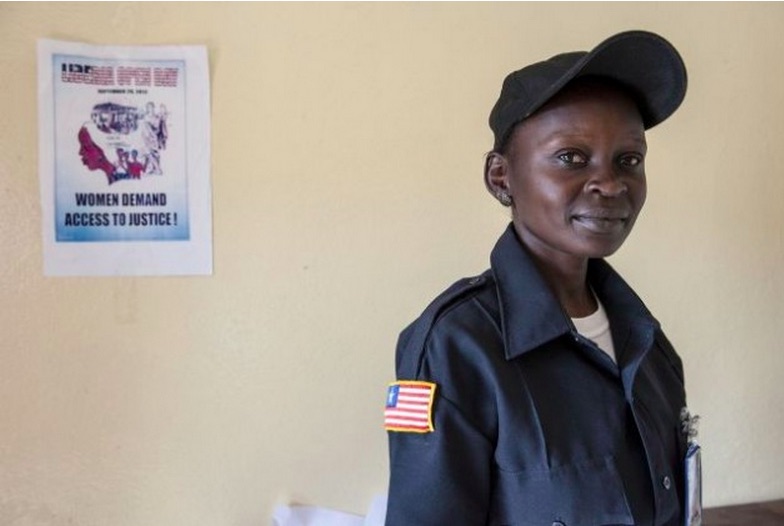
Liberian National Police Officer Lois Dolo provides security at the third annual commemoration of the Global Open Day on Women, Peace and Security in Liberia. Credit: UN Photo/Staton Winter

It calls for the full and equal participation of women in conflict prevention, peace negotiations, humanitarian response and post-conflict reconstruction and urges member states to incorporate a gender perspective in all areas of peace-building and to take measures to protect women from sexual violence in armed conflict.

Since its passage, 1325 has been followed by six additional resolutions (1820, 1888, 1889, 1960, 2106 and 2122).

But despite all these commitments on paper, actual implementation of the WPS agenda in the real world continues to lag, according to humanitarian workers and activists.

Data by the U.N. and NATO show that women and girls continue to be disproportionately affected by armed conflict.

Before the Second World War, combatants made up 90 percent of casualties in wars. Today most casualties are civilians, especially women and children. Hence, as formulated in a 2013 NATO review, whereas men wage the war, it is mostly women and children who suffer from it.

Kang Kyung-wha Assistant Secretary-General for Humanitarian Affairs and Deputy Emergency Relief Coordinator at the U.N. Office for the Coordination of Humanitarian Affairs (OCHA), who spoke at a recent lecture series on WPS, cited as example the situation of women and girls on the border between Nigeria and Niger, where the average girl is married by 14 and has two children by age 18.

Secondary education for girls is almost non-existent in this area and risks of violence, sexual abuse, exploitation and trafficking are particularly high, she said.

“Thus marginalised and disempowered, [these women and girls] are unlikely to play any part in building stable communities and participate in the socio-economic development of their societies and countries,” Kang said.

“Despite 1325 and the successor resolutions…women and girls continue to be routinely excluded from decision-making processes in humanitarian responses as well as in peace-negotiations and peace-building initiatives.”

High expectations are placed on the World Humanitarian Summit, scheduled to take place in May 2016 in Istanbul. Activists hope that the summit will help turn the numerous rhetorical commitments into concrete actions.

Marcy Hersh, Senior Advocacy Officer at Women’s Refugee Commission, who also spoke on the panel, told IPS: “Women and girls are gravely implicated in peace and security issues around the world, and therefore, they must be a part of the processes that will lead to their protection.”

(Article continued in right column)

Question for this article:

UN Resolution 1325, does it make a difference?

(Article continued from the left column.)

“The key challenges in protecting women and children in emergencies, and ensuring women are able to participate in these processes, is not related to knowing what needs to happen…We need a commitment to do it. We need to see leadership and accountability in the international community for these issues.”

“If humanitarian leadership, through whatever mechanisms, can finally collectively step up to the plate and provoke the behavioral change necessary to ensure humanitarian action works with and for women and girls, we will have undertaken bold, transformative work.”

Another challenge in making the women, peace and security agenda a reality is linked to psychological resistance and rigid adherence to the traditional status quo. Gender-related issues tend to be handled with kid gloves due to “cultural sensitivity”, according to Kang Kyung-wha.

“But you can’t hide behind culture,” Kang said.

Also, women activists continue to face misogyny and skepticism in their communities and at the national level. Christine Ahn, co-founder of the Korea Policy Institute and former Senior Policy Analyst at the Global Fund for Women, told IPS that often enough the involvement of women in peace-keeping processes seems inconceivable to some of the men in power who hold key positions in international relations and foreign policy.

“They are calling us naive, dupes, fatuitous. Criticism is very veiled of course, we are in the 21st century. But even if it is a very subtle way in which our efforts are discounted, it is, in fact, patriarchy in its fullest form.”

Christine Ahn spoke at the second event of the lecture series at the United Nations. She is one of the 30 women who, in May 2015, participated in the Crossing of the De-Militarised Zone (DMZ) between North and South Korea as part of a one-week long journey with North and South Korean women.

The project aimed at fostering civil society contacts between women in North and South Korea and promoting peace and reconciliation between the countries.

The symbolic act for peace at one of the world’s most militarised borders can be seen as a practical example of Security Council resolution 1325.

Ahn told IPS: “We will use resolution 1325 when we advocate that both of Korean women are able to meet because under each government’s national security laws they are not allowed to meet with the other – as it is considered meeting with the enemy.”

(Thank you to Janet Hudgins, the CPNN reporter for this article.)

To Hell and Back: How Rwanda’s Women Helped It Become a World Leader

. WOMEN’S EQUALITY .

An article by Shaya Tayefe Mohajer, Takepart (reprinted by permission)

The Swiss may be known for their mastery of clocks, perfecting fine chocolates, and running trains on time—but when it comes to running an efficient government, Rwanda has them beat. The small, landlocked Central African nation has topped the Swiss by two ranks to come in seventh in the world in government efficiency, according to the World Economic Forum. The U.S. doesn’t even make the top 10.

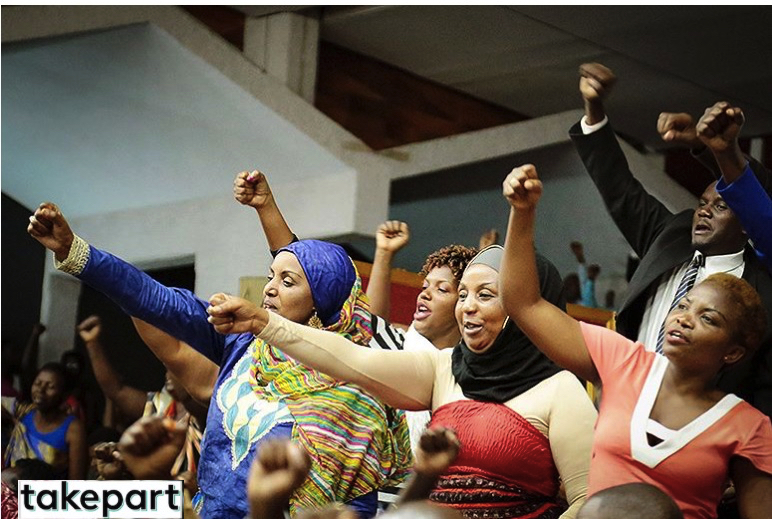
rwandaRwandan women react during the constitutional amendment debate in parliament in Kigali on July 14. (Photo: Cyril Ndegeya/Getty Images)

Through a rigorous look at dozens of factors, the nonprofit global organization credits Rwanda’s low level of waste in government spending and a factor called labor market efficiency for the country’s overall high ranking—noting that the nation of 10.6 million has seen dramatic improvements in economic life: A GDP that hovered at around $200 per capita in 2000 rose to nearly $700 in 2013. 

Something perhaps even more remarkable about Rwanda is buried in these stats: It ranks third out of the 144 countries scored for the ratio of women in the labor force. For every man working in Rwanda, 1.02 women are employed. To boot, Rwanda is also the only country on Earth where more women than men serve as elected officials. 

In part, that’s because the country created a constitutional quota in 2005 that women must make up at least 30 percent of leadership in decision-making organs. That means women compose about 64 percent of the nation’s lower parliament and 38 percent of its senate. By comparison, the U.S. has never elected a Congress that’s more than 20 percent women.

When President Barack Obama was in Kenya on a state visit last weekend, he gave a speech extolling the virtues of letting women lead.

“Any nation that fails to educate its girls or employ its women and allowing them to maximize their potential is doomed to fall behind in a global economy,” Obama told the audience.

Rwanda may be the best proof of just how right he is.

(Article continued in right column.)

Question for this article:

Can the women of Africa lead the continent to peace?

(Article continued from the left column.)

There’s a less uplifting reason, however, for the droves of women working and leading in Rwanda. They are a reflection of a de facto population—namely, those who survived the 1994 genocide. During several bloody months, Hutus laid waste to Tutsis, and nearly a million people were slaughtered, including the systematic and targeted killing of those who were educated, those who were leaders—those who were crucial parts of the social fabric. The bloodshed left behind a population that was 70 percent women and a country that was in desperate need of functional leadership at every level. 

By now, the male-female ratio has mostly evened out. Yet, the mark left by the genocide is as indelible as it is invisible, in many ways, according to Azeb Tadesse, the deputy director for the African Studies Center at the University of California, Los Angeles. Tadesse has visited Rwanda a number of times, spending most of her time in the capital city of Kigali—which she describes as a clean and modern place—as the U.S. director for the Women’s Leadership Project, a global effort to improve gender equality for women through advanced education and improved access.

The genocide doesn’t come up explicitly in conversation, but it’s an unspoken part of the national psyche. 

“I think when you go through such a traumatic experience as a society, you start questioning everything. And maybe one of the things is, ‘Has it really done us much good to keep women out of the leadership and the professional life of the nation?’ ” Tadesse said in an interview with TakePart. 

Rwanda’s rare moment of reckoning has, in some way, helped lead to a remarkable 20-year transformation since the genocide—something Tadesse attributes, in part, to the broad-minded conversation about how to move forward and shape a national identity that goes beyond inclusion for Hutus and Tutsis and also looks at men and women as equals. 

“Something that you would notice if you’re working in Rwanda is the number of female colleagues you will have at the different levels,” said Tadesse. “Not to say it has surprised me—but it is something to take note of.”

Rwanda’s authoritarian leadership, headed by President Paul Kagame, may also claim credit for the order and high efficiency ranking of the country. Though he counts among his fans globe-trotting philanthropists from Bill Clinton to Bill Gates, Kagame has been called a strongman. Still, he’s credited for rebuilding the broken country after the genocide. Perhaps it takes a very strong man to advocate for such a powerful female presence. 

Kagame isn’t alone in drawing criticism as far as human rights go. The countries that top the World Economic Forum’s list of most efficient nations are a mixed bag. Leaders in top-ranked Qatar have faced criticism for treatment of low-paid migrant workers since their successful bid to host the 2022 FIFA World Cup, and there is some domestic dissent over free expression. Singapore may rate highly for efficiency, but caning and corporal punishment are still common there.

Neither enjoys the stats that Rwanda does when it comes to the rights and inclusion of half the population—women.

(Thank you to Janet Hudgins, the CPNN reporter for this article.)

Women in Israel Fasting to Mark Gaza Anniversary

. . WOMEN’S EQUALITY . .

An article by Rochelle G. Saidel and Sonja M. Hedgepeth, Womens E-News

A group of women from the Women Wage Peace movement in Israel have been holding a vigil outside the prime minister’s residence in Jerusalem since last week, part of their 50-day fast to mark the anniversary of last summer’s Operation Protective Edge in Gaza.

israel-small
Hadar Kluger at the Women Wage Peace tent near the prime minister’s residence in Jerusalem. Credit: Sonja M. Hedgepeth

The group of Israeli Jewish and Arab women are calling upon the government of Israel to return to the negotiating table and initiate a resumption of the peace talks with Israel’s neighbors as the only way to ensure a safe and secure future for today and future generations.

Most of the women are wearing the organization’s white T-shirts with the turquoise and black “Women Wage Peace” logo in Hebrew, Arabic and English.

The women are taking turns fasting, and those who do so are also wearing small turquoise signs around their necks that say “I am fasting.” Every day at 11 a.m. the women ending their fasting period give these tags to the next group of fasting women.

The group’s numbers are hard to know since the fasters come and go. There are at least a couple of dozen and they could number as many as 60.

The movement, which is much larger than those staging this fast, was founded after last summer’s Gaza operation when thousands of Israeli women rose up and said “No more!” They state that their symbolic action is not a protest, but a sign of the support for a creative initiative towards a political self-sustaining agreement.

One participant, Hadar Kluger, told us: “Arab-Israeli women are part of this movement from all over the country and we share a common understanding. We should create an understanding between left, right and center that keeping negotiations and going back to the table is a shared goal. This is the first level. Most people want peace and quiet and this can increase hope.”

The group’s mission statement says its main goals are to influence politicians and opinion makers to work vigilantly towards achieving a political agreement, as well as to give women leadership roles in planning, decision-making and the negotiating process.

Rochelle G. Saidel is founder and executive director of Remember the Women Institute and was named a Women’s eNews 21 Leaders for the 21st Century in 2015. Sonja M. Hedgepeth is a professor at Middle Tennessee State University.

Question for this article

Book review: Voices against Violence

. . WOMEN’S EQUALITY . .

A book review from UN Women

“Voices against Violence” is a co-educational curriculum developed by the World Association of Girl Guides and Girl Scouts (WAGGGS) and UN Women, with inputs from young people. Designed for various age groups ranging from 5 to 25 years, it provides young people with tools and expertise to understand the root causes of violence in their communities, to educate and involve their peers and communities to prevent such violence, and to learn about where to access support if violence is experienced.

WAGGS-ENGLISH

The curriculum includes a handbook for peer educators that will help them deliver age-appropriate sessions, as well as age-appropriate non-formal educational activities. The youngest groups may start out with storytelling and games that prompt them to think about gender bias and stereotypes, while older age groups can organize poster competitions, visit and volunteer with local shelters, or develop local community-based campaigns and projects to address specific forms of violence against girls and women.

“Voices against Violence” is a tool for young people around the world. It can be adapted to national contexts, translated into local languages, and rolled out in schools and communities in partnership with youth organizations, UN partners and governments.

For more information on the curriculum and how to deliver it among children and young people, please visit: Our solutions.

View online/download

Handbook

How to deliver [ enesfr ]

Sample activities 

(Thank you to Janet Hudgins, the CPNN reporter for this article.)

(click here for the original article in Spanish)

Question related to this article:

Egypt: Women’s Voices Initiative for the Local Councils

. WOMEN’S EQUALITY .

Press release from Egyptian Center for Women’s Rights

The local councils are the cornerstone of political life, as they are directly responsible for all the services and the living conditions of citizens. Given the importance of the local councils, the 2014 Constitution granted new powers and parliamentary monitoring tools, so that the members of the local councils can effectively monitor the executive authority and ensure their accountability.

Egypt
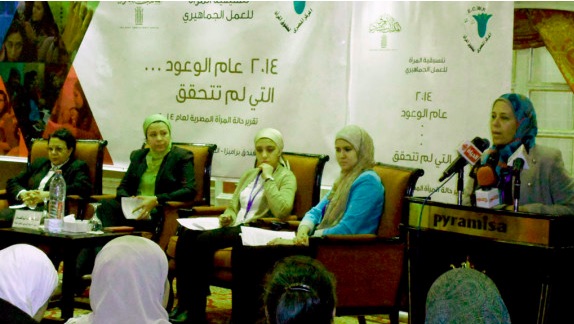
Press conference by the Egyptian Center for Women’s Rights, Cairo, March 20, 2015

The 2014 Constitution allocates that 25% of the local councils’ seats for women and 25% of seats for young people (young men and women) under the age of 35. This means women are allocated 13,000 seats, which is almost one third of the local councils. Therefore, it is necessary to unite the efforts of all societal organizations, including political parties, civil society organizations and initiatives to build the capacities and support women to become members of the local councils.

From this perspective, ECWR launches an initiative titled “Women Voices for the Local Councils.” This initiative seeks building the capacities and coordinating the efforts of active young women in the society in order to prepare a generation of young women leaders.

The initiative aims to:

Build the capacities of 1000 young women leaders from all Egypt’s 27 governorates to become members of the local councils.

Raise the awareness on the importance of the local councils.

Raise the awareness on the importance of women’s participation in the local councils

Female candidates would be selected according to the following criteria:

The age between 21 to 35

Young women active in public work through either being a member of a political party, NGO, youth initiative and are clearly active in their governorates.

To be provided with a Training of Trainers (TOT)

Each village, city, and governorate will be represented during the selection process

Educational attainment of the women should be a minimum of a diploma

Thereby, ECWR welcomes any nominations from political parties, civil society organizations, or initiatives for women with the aforementioned criteria.

Question related to this article:

Argentina: Massive march against gender violence in front of the Congress

. . WOMEN’S EQUALITY . .

An article from Diario La Prensa (translated by CPNN)

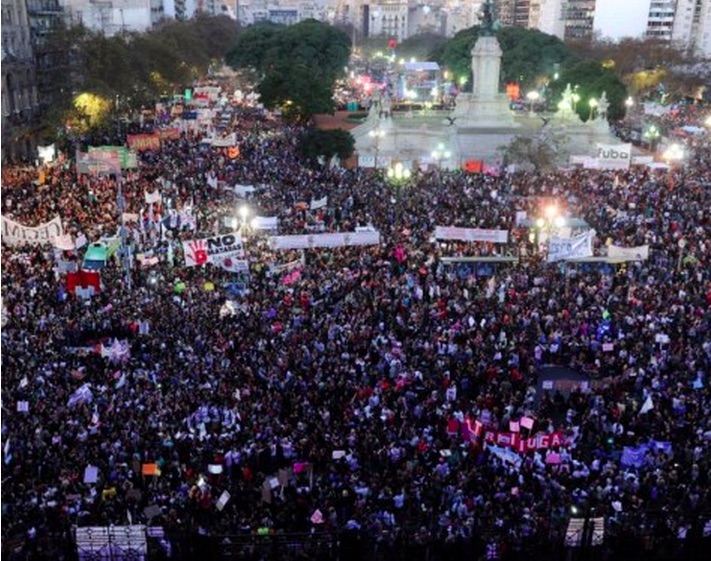
The petition circulated within the #NiUnaMenos march against femicide called for “comprehensive” implementation of the law against Gender Violence, enacted in 2009 and regulated a year later. Thousands of people marched today [03.06.2015] in the main cities of the country against the femicide that has taken the life of 277 women and girls in 2014. The main march took place in front of the National Congress where protesters demanded the implementation of the law against gender violence.

BuenosAires
click on photo to enlarge

The march in the city of Buenos Aires, led by women’s organizations and a group of actresses, journalists and activists who had made the call on social networking sites with the slogan #NiUnaMenos was also replicated in Uruguay, Chile and Miami.

At he ceremony in the Plaza de los Dos Congresos the noted cartoonist Maitena Burundarena and the actors Juan Minujín and Erica Rivas read a document to be signed by legislators and politicians as a compromise in the implementation of actions to prevent violence gender and femicide. The text highlighted what is missing in the missing in the Law 26.485 against Gender Violence, enacted in 2009, including the establishment of a National Action Plan for the Prevention, Assistance and Eradication of violence against women.

“As it stands the law is insufficient to prevent an increase in gender violence,” said Minujín as part of the reading of the document. He demanded implement of the initiative “with all necessary resources and monitoring”.

Furthermore, they demanded that the victims’ access to justice be guaranteed, that prosecutors and police have staff “trained and qualified to receive complaints”, unification of the civil and criminal jurisdictions, and access by victims to free legal support throughout their process.

Another demand referred to the development of a single official record of victims of violence against women and femicide with official and updated information on statistics, because “only by measuring what happens can allow the design of effective public policies.”

They also requested the guarantee and improvement of comprehensive sex education at all educational levels, “to teach equality and freedom from discrimination and gender violence and to sensitize and train teachers and principals”.

“Ensuring the protection of victims of violence and implementation of electronic monitoring of offenders to ensure they do not violate restrictions, are other demands put forward.

In this context, the text emphasized that “the judiciary is not sufficiently helping victims” who should receive “the contribution of witnesses and evidence” and that the judiciary “does not sufficiently guarantee effective measures” to prevent gender violence.

(click here for the original article in Spanish)

(article continued in right column)

Question related to this article:

Protecting women and girls against violence, Is progress being made?

(article continued from left column)

“This is institutional violence,” said Minujín, and received applause from the protesters, just as when he said that “many victims have already made allegations”.

The text also referred to women victims of trafficking in persons “whose fate remains unknown. For them also we ask for justice”. There was also reference to the treatment of victims of gender violence in the media.

The event began with a video on gender violence and it included participation by survivors and relatives of victims, who had previously begun to focus on the area and tell their experiences to the media.

Among the posters were “No to violence against women”, “Stop femicide”, “Right to Life” and “For you, Iris, Marcela, killed by femicide”.

One participant said that “for us it is a great triumph of the women’s movement. The state leaves us completely alone” and urged that we unite “together to prevent violence and defend our rights.”

Among the participants were politicians, actors, actresses, activists, journalists, the Madres del Dolor and relatives of the Argentine teenager, Lola Chomnalez, who was murdered in Uruguay.

The mobilization surged on May 12 after the femocides of the pregnant adolescent, Chiara Paez, in the town of Santa Fe Rufino, whose body was found buried in the house of her boyfriend two days before the convening of the march, and the lawyer Gabriela Parra, who was murdered by her former partner in a candy store in the neighborhood of Caballito, on 3 March.

(Thank you to the Good News Agency for alerting us to this event.)

10 More Ways Syrian Women Are Building Peace and Democracy

. . WOMEN’S EQUALITY . .

An article by Kristin Williams for The Institute for Inclusive Security

What does bravery look like? What strength and character does it take to risk imprisonment, torture, and even death for the sake of a future you may not see?
I know what it looks like. I’ve witnessed it in Syrians of all ages, religions, and ethnicities. I’ve seen it in hundreds of simple and not-so-simple acts of defiance, retold to me matter-of-factly over tea. I marvel at it every time the women who travel from inside Syria to attend our trainings manage to laugh or smile, which is often. When they willingly return to their besieged country vowing to work even harder for peace, its presence overwhelms me.
syria
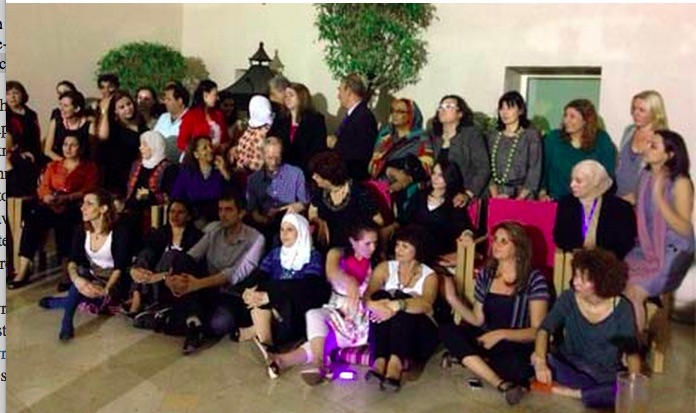
Participants at a Syrian Women’s Peace initiative (Photo: Nada El-Kouny)

Syrian women have made the exceptional ordinary. The stories I’ve heard over the last few years are only a fraction (in case you missed it, here’s another 10 Ways Syrian Women Are Building Peace and Democracy), yet they epitomize what is possible in this “intractable” conflict.

So what does bravery look like? It looks like this.
Note: because of the security risks, all names and exact locations have been omitted.

1. Stopping child marriage

To cope with the economic devastation of war, many Syrian families are selling their teenage daughters into marriage. In one ISIS-controlled city—where foreign fighters, in particular, offer hefty dowries—an estimated two in ten girls are victims of this practice.

There, a group of female activists is going house to house to convince families that early marriage is damaging to girls’ physical and mental health. If ISIS finds out, they’ll execute the women. But the group uses this conservatism to their advantage—under the full-length abayas they’re forced to wear, the women are free to move through checkpoints without being identified. They’ve saved at least 50 young girls over the course of three months.

2. Uniting refugees and host communities

Four million Syrians have fled the country to seek safety in Turkey, Jordan, Lebanon, and Iraq. This influx, now going on four years, has understandably caused tensions between refugees and the communities that host them. It costs governments significant money to host large refugee populations, and Syrians may compete with locals for employment.

One group of female refugees in southern Turkey is trying to bridge the gaps between their Turkish and Syrian classmates at university. They’ve developed activities to help students recognize and discuss common areas of interest, such as literature and history. Another group is providing refugees with Turkish language training, the first step toward communicating across divides.

3. Policing the streets

By now, you’ve heard about the female Kurdish peshmerga fighters who are battling the Islamic State in both Syria and Iraq. But there are other women providing much-needed security and rule of law in one opposition-held city. Two years ago, 20 of them banded together to form an all-female police brigade. At first, the community shunned them; but now they’ve gained trust, respect, and even their own station.

They’ve proven particularly adept at working with female victims—especially of gender-based violence—who report crimes more often to the women’s brigade. Unlike policemen, they can enter conservative households when only women are present, providing families with critical services.

4. Listening to marginalized groups

Women in rural villages face a unique set of challenges. Their political, economic, social, and security needs may be different from those of women in large and small cities. Yet, because of their remote location, they are often overlooked.

Female activists in one region controlled by the al-Nusra Front organized a campaign to conduct a series of consultations with 10 villages in the neighboring mountains. They found out about many problems, including that al-Nusra militants were randomly arresting young men from one of the villages. With the local women, they staged a sit-in; the detainees were released two days later. They are also developing economic empowerment programs for rural women to address crippling poverty.

(Continued on right side of page)

Questions for this article

Do women have a special role to play in the peace movement?

How can there be a political solution to the war in Syria?

(Article continued from left side of page)

5. Reopening schools

In ISIS-controlled areas, where one of the extremists’ first actions was to stamp out education, opening a school is among the riskiest endeavors anyone can undertake. Despite that danger, one group of women negotiated to open two private schools. They marched to the office of a local leader and convinced him that Islamic scripture favors education.

They can only keep the schools open two hours a day because the electricity is out the rest of the time. But they’ve enrolled hundreds of children who had been denied education for much of the last year; thus far, ISIS has left them alone to teach.

6. Helping families survive

The lack of job opportunities inside Syria and within refugee communities makes women and children particularly vulnerable. In addition, women are not always able to work outside the home, both because of their family duties and because their movement may be more restricted.

Several groups of activists are developing women’s professional skills, teaching them computing, first aid, English, and how to make handicrafts and clothes. In one area near Idlib, they formed an institute that’s trained over 300 people. Another group in a refugee area of Turkey established a cheap hostel for single Syrian women, to reduce the risk that they may turn to prostitution, forced marriage, or other exploitative activities in order to survive.

7. Reforming corrupt courts

The judicial system in Syria is shattered. The regime uses courts, including a special one set up via a sweeping “Counterterrorism Law” two years ago, to stifle dissent and punish peaceful activists. The Islamic State and others implement sharia courts that have publicly executed hundreds of people for petty “crimes.”
In one Kurdish area, there’s a different problem: the reigning political party established autonomous “people’s courts” that follow neither Syrian nor international law. One group of female activists, including several lawyers, is challenging this system, which they say allows loyalists to escape punishment while targeting those who support the opposition. They are uniting different groups to speak out against the sweeping authority of these judicial dictators.

8. Vaccinating children

Women have distributed and monitored humanitarian aid throughout the war. Many are also stepping in to provide essential services that, in peacetime, would be the responsibility of the government.

For instance, a group of women near Idlib led a campaign to vaccinate newborns during the critical first few days of life. Partnering with a local medical aid organization, they spent seven months bringing vaccines directly to people’s homes, since the regime continues to bomb the city. They successfully immunized about 600 children during each month of the campaign.

9. Disarming youth

In one city near Idlib, many children between the ages of 13 and 18 have obtained weapons, attempting to imitate their fathers. But the proliferation of arms is turning schoolboy fights into dangerous street brawls. In addition, there are many militias in the area that are recruiting youth for the frontlines.

A group of women is pushing the local council to stem this dangerous trend. They’ve asked the authorities to pass a law stating that children under age 18 cannot carry weapons and that arms purveyors cannot sell to them. The local council promised to do so months ago, but the women are maintaining pressure until the law passes.

10. Mobilizing a movement for peace

All of the women Inclusive Security trains, with our local partner the Center for Civil Society and Democracy, commit to mobilizing a “peace circle” of at least ten other women when they return to their home communities. Most of the activities above were initiated by these leaders, who taught others the same skills: how to analyze the problems in their local areas and determine strategies for addressing them.

In addition, “peace circles” have run awareness raising campaigns for coexistence and human rights, supported current and former detainees with legal and psychological counseling, successfully lobbied to remove names from the regime’s list of wanted activists, and much more. The energy and creativity of these women is boundless. They are Syria’s best hope for a peaceful future.
A Century of Women Working for Peace

. WOMEN’S EQUALITY .

Amy Goodman, Truthdig (reprinted according to terms of fair use)

One hundred years ago, more than 1,000 women gathered here in The Hague during World War I, demanding peace. Britain denied passports to more than 120 women, forbidding them from making the trip to suppress their peaceful dissent. Now, a century later, in these very violent times, nearly 1,000 women have gathered here again, this time from Africa, Asia and Latin America, as well as Europe and North America, saying “No” to wars from Iraq to Afghanistan to Yemen to Syria, not to mention the wars in our streets at home. They were marking the 100th anniversary of the founding of WILPF, the Women’s International League for Peace and Freedom.

wilpf
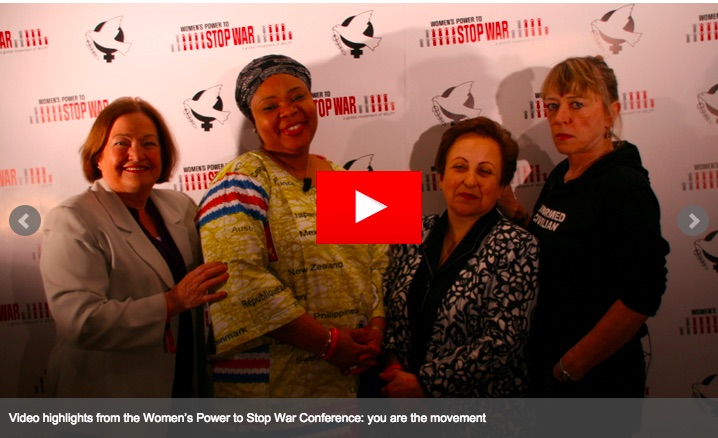
click on the photo to see the video of the WILPF conference: Shown from left to right: Nobel laureates Mairead Maguire, Leymah Gbowee, Shirin Ebadi and Jody Williams

Dr. Aletta Jacobs, a Dutch suffragist who co-founded the group a century ago, said the purpose of the original gathering in 1915 was to empower women “to protest against war and to suggest steps which may lead to warfare being an impossibility.”

Among the women here were four Nobel Peace Prize winners. Shirin Ebadi was awarded the prize in 2003 for advocating for human rights for Iranian women, children and political prisoners. She was the first Muslim woman, and the first Iranian, to receive a Nobel. Nevertheless, she has lived in exile since 2009, and has only seen her husband once since then. “Had books been thrown at people, at the Taliban, instead of bombs, and had schools been built in Afghanistan,” Ebadi said in her keynote address to the WILPF conference this week, “3,000 schools could have been built in memory of the 3,000 people who died on 9/11—at this time, we wouldn’t have had ISIS. Let’s not forget that the roots of the ISIS rest in the Taliban.”

She was joined by her sister laureates Leymah Gbowee, who helped achieve a negotiated peace during the civil wars in Liberia; Mairead Maguire, who won the peace prize in 1976 at the age of 32 for advancing an end to the conflict in her native Northern Ireland; and Jody Williams, a Vermonter who led the global campaign to ban land mines, and who now is organizing to ban “killer robots,” weapons that kill automatically, without the active participation of a human controller.

These four world-renowned Nobel laureates were joined by nearly a thousand deeply committed peace activists from around the globe. Madeleine Rees, the secretary-general of WILPF, recalled the history of the first gathering in 1915, and how it was organized: “It wouldn’t have happened, but for the suffrage movement,” she told me, “because you don’t just start a mass movement. You actually have to have an organizational structure to make that happen. That had started with the suffragette movement. … Every single one of those women who went to The Hague … were demanding the right to vote. They saw, quite rightly, that the absence of women in making decisions in government meant a greater likelihood of war.”

(Continued on right side of page)

Question for this article

Do women have a special role to play in the peace movement?

(Article continued from left side of page)

Kozue Akibayashi is WILPF’s new president. After World War II, the U.S. required that Japan’s Constitution explicitly forbid it from pursuing war to settle disputes with foreign states. “The majority of people in Japan support the peace constitution,” Akibayashi explained. President Barack Obama, however, like George W. Bush before him, is pressuring Japan to eliminate the pacifistic Article Nine from the Japanese Constitution. He hosted Japan’s prime minister, Shinzo Abe, in Washington this week, celebrating Abe as he works to restore Japan’s military to its former offensive capacity. Akibayashi and thousands of others also are protesting the planned expansion of the U.S. military presence on Okinawa.

Africa activist Hakima Abbas was also in The Hague. I interviewed her hours after mass graves were reported in Nigeria, containing victims of the militant group Boko Haram. The story of Boko Haram, she told me, “is an intersection with violent Islamist fundamentalisms, with global capitalism and with militarization … fundamentalisms, though, don’t start and end with Islamic fundamentalisms in Africa. We’ve seen Christian fundamentalisms in Uganda, and the persecution of LGBTQI people.” She then made a connection to the street protests in Baltimore this week: “In your own country,” she told me, “the white supremacist and Christian right fundamentalisms are exacerbated by the gun culture and the promotion of an armed police force, which is killing black women, men, trans people and children. … So fundamentalisms is really something that we have to address globally.”

I asked Shirin Ebadi if she had advice for the people of the world. She replied with a simple yet powerful prescription for peace, laying out the work for WILPF as it enters its second century: “Treat the people of Afghanistan the same as you treat your own people. Look at Iraqi children the same as you look at your own children. Then you will see that the solution is there.”

International Conference: Building Global Support for Women Human Rights Defenders

. WOMEN’S EQUALITY .

an article by Nobel Women’s Initiative

We are very excited to invite you to join us online for our 5th biennial conference, Defending the Defenders! Building Global Support for Women Human Rights Defenders. Over 120 women – including Nobel peace laureates and frontline activists from the Middle East, Africa and Central America—will gather in the Netherlands this week [April 20] to discuss how the international community can protect women human rights defenders across the globe.

defenders

“Women activists are on the frontlines of some of the globe’s most pressing conflicts,” says Jody Williams, Nobel peace laureate (USA) and chair of the Nobel Women’s Initiative. “These women play an essential role in pushing back against those wishing to repress basic human democratic rights.”

Williams will be joined at the conference by sister Nobel peace laureates Shirin Ebadi (Iran), Mairead Maguire (Northern Ireland) and Leymah Gbowee (Liberia), as well as globally-known human rights experts.

Women human rights defenders are targeted for a wide range of violence around the world—from verbal harassment to systematic rape, torture and assassinations. Often these women are targeted for violence because they are defying traditional gender roles and represent a threat to the “status quo”.

Among those at highest risk are women resisting mining and other mega-developments in their communities and women facing new threats from extremist groups such as ISIS. Women are at the forefront of creative and innovative nonviolent action. By listening, learning, and amplifying women’s voices, we hope to bring attention to incredible and important work being done by women front-line defenders, as well as strengthen networks for support and protection.

Stay tuned in the coming days on Facebook, Twitter (#DefendingDefenders), Instagram (@nobelwomen), and our Defending the Defenders Blog as we post photos, videos, facts and quotes and spotlight some of our extraordinary participants!

(Thank you to Janet Hudgins, the CPNN reporter for this article.)

Question for this article:

Protecting women and girls against violence, Is progress being made?

The 47 CPNN articles devoted to this theme suggest that indeed progress is being made.

See comment below about Women’s International League for Peace and Freedom, as well as our recent article A century of women working for peace