Category Archives: WOMEN’S EQUALITY

USA: University of Wisconsin receives UN chair for global work on gender, well-being and peace

. . WOMEN’S EQUALITY . .

An article by Ann Grauvogl, University of Wisconsin – Madison News

The University of Wisconsin—Madison has been awarded a UNESCO Chair on Gender, Well-being and a Culture of Peace, a first in the state of Wisconsin and a first for the university in any area. It creates a global platform for the Department of Gender and Women’s Studies and for the campuswide 4W (Women and Well-being in Wisconsin and the World) Initiative.

wisconsin
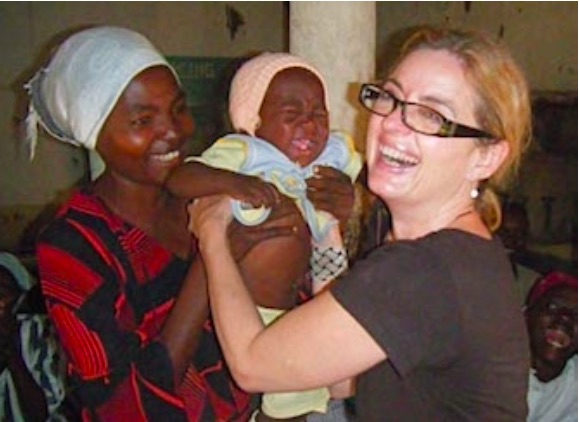
Araceli Alonso in Kenya, 2009. PHOTO COURTESY OF COLLEGE OF LETTERS & SCIENCE

“This recognition by the United Nations Educational, Scientific and Cultural Organization (UNESCO) affirms UW–Madison’s strength in addressing global issues,” says Chancellor Rebecca Blank. “The interdisciplinary ethic of our faculty, staff and students allows us to engage on complex issues from a host of perspectives. That’s a valuable asset to the UNESCO network around the world.”

UNESCO has designated more than 670 chairs worldwide to promote international cooperation and networking among universities. UW–Madison joins a network of 12 other chairs on gender around the world, connecting efforts of women in Europe, Latin America, Africa and the United States.

“The establishment of this chair is a testimony to the role that UW–Madison has played, locally and globally, to advance women in a broad array of fields, including human ecology, gender and women’s studies, nursing and education,” says Lori DiPrete Brown, director of the 4W Initiative and an associate director of the Global Health Institute (GHI). “The robust range of activities of 4W leaders from throughout campus was an important factor in determining the award.”

The Chair Selection Committee recognized UW–Madison’s plans to encourage innovation through technological databases, online portals, North-South collaboration and information sharing.

“The chair will be the first in North America to interrelate gender, well-being and culture of peace through researchers, practitioners and advocates for knowledge exchange and collaboration,” according to a statement from the committee.

(Article continued in right column)

Question related to this article:

Does the UN advance equality for women?

(Article continued from left column)

The chair will be housed in the Department of Gender and Women’s Studies and is created in partnership with the Foundation for a Culture of Peace in Madrid, Spain. The activities of the chair will be integrated with the 4W Initiative and will include an annual summit, a broad range of field activities, and publications related to gender, well-being and a culture of peace.
Araceli Alonso, a senior lecturer in gender and women’s studies and 4W director for Gender, Clinical Practice and the Health Sciences, and Teresa Langle de Paz, co-director of Women’s Knowledge International at the Foundation for a Culture of Peace, will jointly hold the chair.

Alonso also founded the Health by Motorbike Project in Kenya and co-leads 4W’s project to end sex trafficking and exploitation. She has collaborated with other UNESCO chairs on gender and development and welcomes the chance for further collaboration locally, regionally, nationally and globally.

Langle de Paz is also an honorary fellow for the Women’s Research Center at the Gender and Women’s Studies Department.

“The UNESCO chair can take our work at UW–Madison a step further into a global arena fostering transnational cooperation between feminist scholars, gender issues professionals, institutions, networks, policy makers and organizations,” Alonso says. “We expect to create a global learning community and a platform of leaders committed to gender equality and equity, human flourishing and well-being, and a culture of peace that respects all human rights and promotes sustainable development, thinking not only on present generations but also in future ones.”

Karl Scholz, dean of the College of Letters & Science, is thrilled to house the chair in Gender and Women’s Studies.
“This will enhance our efforts to improve the health, education and well-being of women all over the world,” Scholz says. “With this recognition, we will be able to engage more students and scholars from across campus, which truly epitomizes the Wisconsin Idea.”

The designation gives UW–Madison a voice on these issues at an international level, says Soyeon Shim, dean of the School of Human Ecology (SoHE) and 4W lead dean.

“The UNESCO Chair gives the university the credibility and prestige on gender, well-being and a culture of peace, a topic that’s also important to the United Nations,” Shim says.

The chair provides both the opportunity and responsibility for UW–Madison faculty, staff and students to continue their work on issues of gender and well-being. Through research, service, leadership and collaboration with partners from around the world, they are improving access to health care in Kenya and Ethiopia, empowering women farmers in Ghana, collaborating with artisans in Mexico and Ecuador, and working to stop sex trafficking both locally and globally.

“We’re not just dreaming this thing, we’re doing it already,” Shim says.

Education International and other Global Union Federation delegations begin their work at the 60th Session of the UN Commission on the Status of Women

. WOMEN’S EQUALITY .

An article from Education International

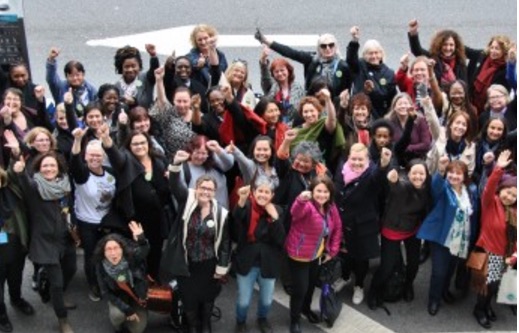
The full labour delegation present in New York, USA, is made up of an unprecedented 150 women union leaders from 34 countries. The Education International (EI) delegation to the 60th session of the UN Commission on the Status of Women (CSW60) has joined the other Global Union Federations (GUFs) delegations for the first week of the Commission’s deliberations (March 14th-18th).
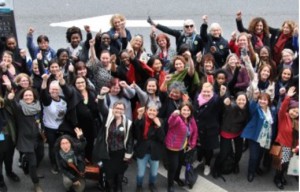
csw unionists
Click on the photo to enlarge

The EI delegation got to work already on Sunday 13th, in conversation with Nora Fyles, Head of Secretariat of the UN Girl’s Education Initiative (UNGEI). Fyles gave a short presentation on ‘Policy Advocacy: UNGEI Speaking Out for Girls’ Education’, which was followed by a conversation with the EI delegates about their respective unions’ advocacy around girls’ education, and other gender and education issues.

Later in the day, EI delegates joined the full labour delegation for a briefing session, in which seasoned and new delegates alike were given information about the first week of CSW60, and the events planned by the GUFs, the ILO and key allies among the thousands of women’s rights organisations that are currently in New York for CSW60.

The CSW60 priority theme is Women’s Empowerment and its Link to Sustainable Development; and the review theme is The Elimination and Prevention of all Forms of Violence against Women and Girls (the Agreed Conclusions from CSW57). The priority theme is auspicious because CSW60 is the first major UN event to take place since the 2030 agenda for sustainable development was agreed, and the new sustainable development goals (SDGs) were adopted in September 2015. CSW60, therefore, presents a unique opportunity to bring the gender and education community for dialogue around the interlinkages between SDG 4 on education, and SDG 5 on gender equality.

On Wednesday March 16th, together with the Mission of Norway to the UN and UNGEI, EI will jointly host a side event entitled ‘Financing for Education: A Key to Empowering Women and Girls’. The EI President, Susan Hopgood, will speak on the panel, as will Ms Tone Skogen, Deputy Minister of Foreign Affairs, Norway, Ms Geeta Rao Gupta, Deputy Executive Director, UNICEF, Ms Meighan Stone, President, Malala Fund and Mr Justin van Fleet, Director, International Commission on Financing Global Education Opportunity. The event will be moderated by Mr Yannick Glemarec, Deputy Executive Director Policy & Programmes, UN Women, and introductory remarks will be offered by Ms Alice Albright, CEO, Global Partnership for Education.

Read the joint official GUF CSW60 statement, and keep up to date with what the labour delegates are up to here.

Follow the GUF delegation at the UNCSW on Twitter: https://twitter.com/unioncsw

(Thank you to Janet Hudgins, the CPNN reporter for this article)

(Click here for a French version of this article)

Question for this article

Does the UN advance equality for women?

The following article by Lyndal Rowlands in the Inter Press Service, suggests that the UN is not making much progress on its commitments for women’s equality:

2015 marks anniversaries for two significant commitments made to increasing women’s participation at peace tables.

Yet despite the Beijing Platform for Action and the Security Council Resolution 1325 both committing to increasing women’s participation in peace building 20 and 15 years ago, respectively, there has been very little progress to report.

The latest available statistics show that women made up only 9 per cent of negotiators at peace tables between 1992 and 2011. That the most recent data is from 2011 shows that more work is needed even in basic areas such as data collection and reporting of women’s participation in peace building.

IPS summarises here four reasons we should value women’s participation at the peace table more, based on discussions at the 59th Commission on the Status of Women (CSW) over the past week.

Beijing Platform for Action Section E

Women and Armed Conflict Diagnosis

Strategic objective E.1. Increase the participation of women in conflict resolution at decision-making levels and protect women living in situations of armed and other conflicts or under foreign occupation. Actions to be taken.

Strategic objective E.2. Reduce excessive military expenditures and control the availability of armaments. Actions to be taken.

Strategic objective E.3. Promote non-violent forms of conflict resolution and reduce the incidence of human rights abuse in conflict situations. Actions to be taken.

Strategic objective E.4. Promote women’s contribution to fostering a culture of peace. Actions to be taken

Strategic objective E.5. Provide protection, assistance and training to refugee women, other displaced women in need of international protection and internally displaced women. Actions to be taken.

Strategic objective E.6. Provide assistance to the women of the colonies and non-self-governing territories. Actions to be taken.
Women Bring Commitment and Experience to the Peace Table
Often the first people invited to participate in formal peace negotiations are the people holding the guns and the last are women who have expertise in building lasting peace.

Zainab Bangura, Special Representative of the Secretary-General on Sexual Violence in Conflict, told a CSW side event on Tuesday last week, “In the Central African Republic, the only community where they were not killing each other was a community where the Christian women said, ‘These Muslim women are our sisters.’

“Why? Because the women in the community said, ‘We have lived together for the last 100 years’,” Bangura said.

In the Phillipines, Irene Santiago was a member of the government panel that negotiated peace with the Moro Islamic Liberation Front. Santiago came to the table with years of experience working with Christian, Muslim and Indigenous women leaders for peace.

Speaking at a CSW side event at the International Peace Institute (IPI) on Thursday, Santiago said that she knew that her years of experience working with civil society for peace stood her in good stead to make a significant contribution to formal peace negotiations, which she did.

Speaking with IPS, Santiago said women’s voices not only have to be heard, but that they also have to be acted on.

“For women. It’s almost never always about themselves, it’s always about our children, our husbands but also about our communities,” Santiago told IPS.

In Africa, women have fought to be included in peacemaking, even when their contributions have not been recognised.

Bineta Diop, Special Envoy on Women Peace and Security to the African Union, says that mediators need to be held accountable when they only invite the people who hold guns to the peace table and ignore women’s contributions.

“I have been involved in many crises where women were knocking at the door and saying we want to be at the table,” Diop said.

Ambassador Anwarul Chowdhury, known as the father of Security Council Resolution 1325, said that the determination of African women to be involved in peace negotiations should be seen as an inspiration by other countries.

Despite serious difficulties, war and conflict, African women have shown continued determination to hold their countries accountable, Chowdhury said.

Gender Equality in Peace Time Prevents Conflict
Also speaking at the IPI, Valerie Hudson, co-author of ‘Sex and World Peace’, said that her research has shown that the way women are treated within a country is one of the most accurate indicators of the quality of relations that country will have with other countries.

Diop agreed with Hudson, saying that countries that are likely to fall into conflict have higher levels of discrimination and inequality.

“Discrimination against women, especially the non-participation and non-inclusion of women in democracy is … one of the root causes of the conflict,” Diop said.

Ambassador Choudhury agreed with these sentiments, telling IPS, “I believe that no country can claim that their country is not in conflict if women’s rights are denied, if women’s equality is not ensured, if women’s participation at all participation levels is not there.

“I think that if we women are violated, if women’s equality of participation is not there we cannot say that we are at peace, we are in conflict with ourselves. This is a conflict which is happening within ourselves and within the countries. We don’t have to go into the traditional description of conflict, civil conflict or fighting with another country,” Chowdhury added.

Dr. Youssef Mahmoud, Senior Adviser at the International Peace Institute also speaking at the IPI event said, “A world where 51 per cent are ignored is a dangerous world for everyone. I can’t imagine why any men would be indifferent to this.”

Women Are Active In Civil Society
Several discussions at the CSW questioned why militaries were the primary actors in peace building, while non-governmental organisations (NGOs) and civil society’s expertise was not called on.

Related IPS Articles

U.S. Honours 10 “Extraordinary Women” for Courage and Leadership
Meet the 10 Women Who Will Stop at Nothing
Women Walk for Peace in the Korean Peninsula
Santiago told IPS that civil society, especially women, have a lot to contribute to humanise, to concretise, and to make peace negotiations relevant to people’s lives.

Winnie Kodi from the Nuba mountains in Sudan told reporters on Monday that civil society was vital to helping indigenous communities like her own that have been affected by conflict. She said that the main way her people were able to have their voices heard was by working together with NGOs and civil society.

Chowdhury told IPS he is advocating for the U.N. and governments to hold more consultations with civil society, saying that the involvement of women and of civil society is very important.

Santiago also called for renewed focus on the important role of NGOs in the area of women, peace and security,

“Again I see that why are we focusing on the UN as the locus of change,” she said. “To me it is not, it is the means, it is an important audience, but it is not the locus of social change.

“Let us form the global civic networks that we need to bring about the local global and civil change that we need” Santiago said.

Women Challenge The Causes of Conflict
Challenging militarism and militarisation was another theme discussed during the first week of the CSW, particularly by civil society groups at the parallel NGO forum.

Choudhury told IPS that increased militarism and militarisation is slowing down efforts for equality. “Increasing militarism and militarisation has really been effecting women in a very negative way. This is something that women should stand up against, we should all stand up against,” Chowdhury said.

Militarisation is also affecting indigenous women and men. Maribeth Biano, from the Asian Indigenous Women’s Network, told reporters on Monday that Indigenous women are hugely affected by militarisation in Indigenous territories.
Amnesty International: 10 ways we’ve defended women’s rights in the past year

. . WOMEN’S EQUALITY . .

An article from Amnesty International

March 8th is International Women’s Day and we’re taking a moment to reflect on how your support has changed women’s lives around the world in the past year. From policy breakthroughs to freedom for courageous women human rights defenders, here are just a few of the ways you’ve defended women’s human rights and helped break down barriers for women and girls:

amnesty

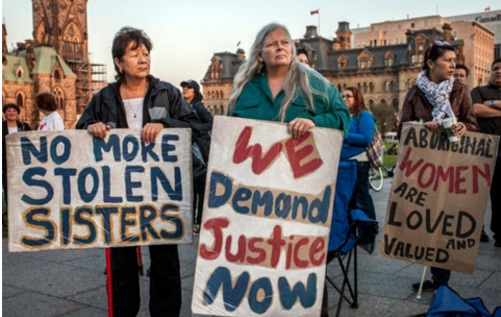
1. The Canadian government announced an inquiry into missing and murdered Indigenous women and girls

For well over a decade, Amnesty International has stood alongside Indigenous women, families who have lost loved ones to violence, and so many others to call for an end to the disturbingly and unacceptably high rates of violence experienced by Indigenous women and girls. We have published reports, written letters, gathered petition signatures, joined vigils, and spoken out in the media, in Parliament and at the United Nations. And throughout it all we have stood with Indigenous women and families and let them know they are not alone in the struggle to end the violence.

Together, with your help, we are making strides. The tireless work of Amnesty supporters has helped generate a groundswell of public support for concrete action to end the violence.

In December, we welcomed the federal government’s announcement of a public inquiry into missing and murdered Indigenous women and girls. The announcement was a major breakthrough after years of government inaction.

So much lies ahead. We need your help to make sure that government commitments truly lead to an end to the violence. And your solidarity is crucial to making sure Indigenous women and families know they are not alone in their struggle to end the violence.

TAKE ACTION: Sign the pledge to stand with Indigenous women and families to end the violence

Learn more: No More Stolen Sisters

2. Burkina Faso has made commitments to end early and forced marriage

In December 2015, Burkina Faso adopted a national strategy and a three-year action plan to prevent and eliminate child marriage in the country. The strategy and plan came after the government committed to address the obstacles that women and girls face when trying to access sexual and reproductive health services and information. And in February, Burkina Faso’s Ministry of Justice, Human Rights and Civic Promotion committed to raise the legal age of marriage for girls to 18 years and to ensure that forced marriage is clearly defined in Burkina Faso’s criminal code. The government also committed to introducing free healthcare for pregnant women in an effort to reduce the number of maternal deaths.

Prior to these announcements, on December 10th, Amnesty International supporters Canada and around the world sent thousands of letters, emails and tweets to the government of Burkina Faso as part of our global Write for Rights letter-writing marathon. The government acknowledged in their February announcement that they have been receiving messages from around the world urging them to take immediate action to end this practice.

While these promises are a step in the right direction, we need your help to ensure these plans turn into real action.

TAKE ACTION: Sign our action calling on Burkina Faso to turn their plans to end early and forced marriage into real action

Learn more: Ending early and forced marriage in Burkina Faso

3. Miscarriage is not a crime: Justice for Guadalupe in El Salvador

In 2007, at just 18 years old, Carmen Guadalupe Vasquez was sentenced to 30 years in prison after suffering a miscarriage. She was wrongly accused of having an abortion, which is outlawed in all circumstances in El Salvador. She was one of 17 women in jail with lengthy sentences for being accused of having an abortion.

In January 2015, thanks to years of hard work by dedicated activists in El Salvador, El Salvador’s Legislative Assembly took a vote on whether to pardon Guadalupe. Amnesty International condemned the outcome of the vote and international pressure led to a re-vote being scheduled. In the days leading up to the re-vote, Amnesty supporters took to the internet to send a wave of messages to Assembly members urging them to release Guadalupe and the other jailed women. Guadalupe was finally pardoned and walked free from prison in February 2015.

Her exoneration is a victory in the long fight for women’s rights, but her story is tragically not unique. El Salvador continues to condemn thousands of women to death or decades behind bars by criminalizing pregnancy-related complications and prohibiting abortion even when a woman’s life depends on it. As part of our My Body My Rights campaign, Amnesty International has been campaigning to end El Salvador’s total ban on abortion.

TAKE ACTION: Sign our action calling for Teodora del Carmen Vásquez, another woman jailed in El Salvador for pregnancy-related complications, to be released now.

Learn more: Read our report on violations of sexual and reproductive rights in Latin America and the Caribbean

4. Five women’s rights defenders released on bail in China

Five Chinese activists decided to mark International Women’s Day in 2015 by launching a campaign against sexual harassment. They had made stickers to distribute, printed with slogans like “Go police, go arrest those who committed sexual harassment!”

Just before March 8th, authorities arrested them on suspicion of “picking quarrels and provoking troubles.” Amnesty International swung into action, mobilizing our letter-writing Urgent Action Network to join the voices of activists from around the world.

The outcry secured the release of the five on April 13, 2015. However, the charges have yet to be removed and they still face a possible five year sentence. In fact, the Chinese government continues to harass and silence women’s rights defenders by threatening and arresting activists, even shutting down women’s rights organizations.

Women’s rights defenders can pay a high price for their dedication to advancing women’s human rights and empowerment. One such defender is Bahareh Hedayat, an Iranian student activist in prison for 10 years on charges including “insulting the president.” Bahareh is with a group known as the One Million Signatures campaign (also known as the Campaign for Equality), a grass-roots initiative to end legal discrimination against women in Iran.

TAKE ACTION: Sign our action calling on Iranian authorities to immediately and unconditionally release Bahareh Hedayat

5. You stood with sisters threatened with sexual punishment in India

In May 2015, 23-year-old Meenakshi Kumari and her 15-year-old sister fled their village in Baghpat, Utter Pradesh, to Delhi, fearing a backlash after their brother, Ravi, eloped with a married woman from a higher caste.

Sadly, their fears were confirmed when just days later their house was ransacked. Two months on, the village’s male-only unelected council (khap panchayat) ruled that Meenakshi and her teenage sister should be raped and paraded naked with their faces blackened as punishment for their brother’s actions.

(Article continued in right column)

Question related to this article:

Protecting women and girls against violence, Is progress being made?

Abortion: is it a human right?

(Article continued from left column)

Meenakshi, a Dalit woman, courageously reported the human rights violations. When Amnesty International India learned about their case, they rallied more than 500,000 Amnesty supporters worldwide to call for their protection.

The authorities took the concerns seriously. On September 16, India’s Supreme Court ordered Delhi police to provide protection for the two sisters and their family. Amnesty International continues to call for justice and reparation for Meenakski and her family. If they are unable to return to their village, they must also receive support to rebuild their lives in another community.

Learn more: Read their story and learn more about Amnesty International India’s work to end gender discrimination in India

6. A Sudanese court overturned the conviction of a teenager sentenced for “indecent dress”

On August 16, 2015 Ferdous Al Toum was found guilty of “indecent or immoral dress” and sentenced to 20 lashes and a fine of 500 Sudanese pounds.

She was arrested as part of a group of 11 young women on June 25th who were leaving a church ceremony at the Evangelical Baptist Church in Khartoum North. The women were all wearing skirts or trousers, yet were accused of “indecent or immoral dress.” Incredibly, Ferdous was charged again for the clothes she wore in the courtroom at her trial. She was sentenced to a large fine for her appearance in court (paid on her behalf by activists and supporters), as well as the lashes.

In light of this news, more than 16,000 Canadians joined Amnesty International supporters from around the world to condemn the sentence. Following an appeal by Ferdous’ lawyers, her conviction was finally quashed by the Court of Appeal on October 14, 2015. She was the second last woman to be released, and eventually all 11 women were freed.

Sudan’s “indecent dress” law applies to women and men on paper, but it is used exclusively against women. Women and girls around the world face discrimination in law and practice simply because of their gender. Women and girls can face harsher punishments for the same “offences,” such as the case of Atena Farghadani. In 2015, Atena, a young painter and activist, drew a cartoon critical of proposed laws that would make it difficult for women to obtain contraception or seek a divorce in Iran. She was arrested for her peaceful activism and sentenced to 12 years and nine months in prison.

TAKE ACTION: Call on Iranian authorities to release Atena Farghadania now!

7. Justice for a Courageous Torture Survivor

In 2012, marines broke into the home of Claudia Medina Tamariz. They took her away to a local naval base. There, Claudia suffered terrible torture, including electric shocks and sexual assault.

The torture was aimed at forcing Claudia to incriminate herself in drug-related crimes. To make the torture stop, Claudia signed a piece of paper put before her. She later discovered it was a “confession” to crimes she had not committed.

More than 300,000 people, including thousands of Canadians, sent letters to the Mexican Attorney General. Claudia is now free. In reviewing her case, a judge confirmed that after her arrest Claudia was tortured and sexually assaulted by marines in order to force her to incriminate herself and others in drug-related crimes. On February 6, 2015, that judge informed her that the last remaining charge was dropped.

Despite everything she’s gone through, Claudia is filled with determination to help others: “After this long process I had to go through I felt the need to become a human rights activist, to show that I’m not a criminal, as authorities portrayed me. I will not allow even one more woman to be tortured in Mexico.”

Torture, including sexual assault, is the preferred crime investigation technique for some Mexican police and military officers. They torture people into signing false statements and use them as evidence to prosecute. Claudia and Amnesty International continue to speak out for other torture survivors in Mexico, like Yecenia Armenta. Police hung Yecenia upside down, asphyxiated and brutally raped her until she signed a “confession,” while still blindfolded, to her husband’s murder. She’s been in prison ever since.

TAKE ACTION: Call on the Mexican authorities to drop the charges against Yecenia, release her immediately and bring her torturers to justice.

Learn more: Amnesty’s Stop Torture campaign

8. Amnesty activists rallied for a domestic violence victim sentenced to death

Li Yan in China made repeated calls to the police about her abusive husband, Tan Yong, who frequently beat her. He stubbed out cigarettes on her face. He locked her, near-naked, on the balcony of their apartment for hours at a time during the freezing Sichuan winter. On one occasion, he cut off her finger.

After repeated ignored requests for help, in late 2010, isolated, afraid and denied protection by the authorities, Li Yan resorted to violence and beat her husband to death with a gun.

She was sentenced to death. But thanks to international support, her sentence has since been commuted to the death sentence with a two-year reprieve. Under the Chinese law, death sentences with a two-year reprieve should be commuted to life imprisonment upon the expiration of the two-year period, as long as the prisoner does not commit another crime during the period of suspension.

This tragic outcome could have been avoided. “The reprieve for Li Yan could prove a landmark verdict for future cases where domestic violence is a mitigating factor. With her case, the highest court in China has sent a clear message that judges must not ignore domestic violence,” said William Nee, China Researcher at Amnesty International.

This may not feel like a landslide victory for Li Yan, but it remains an important moment of shedding light upon the issue of domestic violence in China.

Activists still face serious risks for speaking out about violence against women and other women’s rights issues in China. One such women’s rights activist is Su Changlan, a former teacher in prison since October 2014 for her peaceful activism. She is being held in deplorable conditions and faces life imprisonment simply for calling on the government to respect human rights.

TAKE ACTION: Write a letter to Chinese authorities to immediately and unconditionally release Su Changlan

9. You helped put women’s rights on the Canadian federal election agenda

Amnesty International Canada was a proud member of the Up for Debate campaign to promote women’s rights and gender equality in the lead up to Canada’s federal election in 2015. Our goal was to make sure that all federal political party leaders explained how they would build a more equal Canada for us all, and make meaningful commitments to change the lives of women and girls for the better at home and around the world. And we succeeded!

Learn more: The Up for Debate campaign helped bring meaningful change

10. You helped break the silence around sex, relationships and reproduction in many countries

In 2013, Amnesty International launched its My Body My Rights campaign, founded on the principle that people of all genders have the right to make decisions about our health, body, sexuality and reproductive lives without fear or force.

Thanks to educational materials and training materials produced through the campaign, 100,000 young people have challenged discriminatory attitudes and gender-based violence through workshops, video, theatre, debates, poetry, song and dance. In rural Zimbabwe, activists opened empowerment centres in schools as a safe space for young girls to talk about sex, relationships and pregnancy.

Learn more: Visit our My Body My Rights campaign webpage

(Thank you to Janet Hudgins, the CPNN reporter for this article.)

PORTRAIT: Dr. Denis Mukwege, the man who repairs women in eastern DRC

. . WOMEN’S EQUALITY . .

An article from the United Nations News Centre

In 1999, when a woman appeared at his hospital with genital destroyed by gun shots, the Congolese gynecologist Denis Mukwege first believed it was an isolated case. “But after about six months, I realized that the story was repeated in other patients that were almost identical: ‘I was raped, and then they pierced me with a bayonet! I was raped, and then they burned rubber on my genitals!'” Dr. Mukwege recalled in a recent interview with the UN Radio and the UN News Centre .

Mukwege
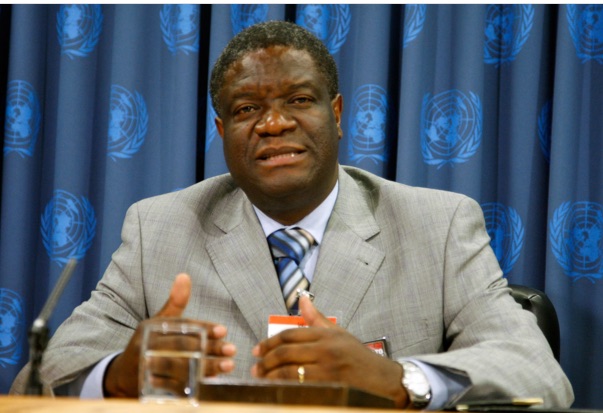
Dr. Denis Mukwege, director and founder of the Panzi Hospital in Bukavu, Democratic Republic of Congo, and winner of the United Nations Prize in the Field of Human Rights. UN Photo / Eskinder Debebe

The practice he had just discovered, born of the bloody conflict between the government at that time and the armed groups in the Democratic Republic of Congo (DRC), would profoundly mark the rest of his career: the use of the destruction of the female genitalia as a weapon of war.

“This situation simply fell on us,” said Dr. Mukwege to explain the decision he took then to dedicate his professional life to reconstructive surgery for women victims of sexual violence – a decision that would put his life and that of his family in danger.

Sixteen years later, the commitment of Dr. Mukwege has allowed him to treat more than 40,000 victims in the hospital that he himself founded in the district of Panzi in Bukavu, his hometown in the South region Kivu, eastern DRC.

The man that the press has dubbed ‘the man who repairs women’ has also gained international recognition for his work, which has earned him numerous awards, including the United Nations Prize in the Field of Human Rights in 2008 and the Sakharov prize in 2014. Now 59 years old, he has been approached several times for the Nobel peace prize.

This exceptional career, Dr. Mukwege says, is primarily the result of the injustices he faced, starting with his early decision to become a doctor.

Denis Mukwege was born in 1955 in Bukavu in a Pentecostal family of nine children. As a teenager, he used to accompany his father, a pastor, in his daily rounds. One day his father was called to the bedside of a sick child.

“After praying, his father began to pack up and prepare to leave,” reminisced Dr. Mukwege. “But I told him, ‘No Daddy! When I am sick, you pray, but you also give me medicine. ‘ ”

In response, his father remarked that he was not a doctor.

“At that time, there was like a click in my head and I told myself: I want to be a doctor to do what my father could not.”

The child, meanwhile, finally succumbed to his illness.

Years later, after completing medical school in Burundi, Dr Mukwege returned to South Kivu to start his career in Lemera Hospital, a hundred kilometers from Bukavu, as a pediatrician.

During this experience, he was shocked by the discovery of the pain of women who, in the absence of proper care, regularly suffered serious genital lesions after giving birth. He decided to leave to study gynecology and obstetrics in France before returning to Lemera in the late 1980s.

The outbreak of war in the Congo DRC (then Zaire) in 1996 would again confront Dr. Mukwege with injustice. South Kivu found himself in the front line of fighting.

One day, arriving at the hospital, Dr. Mukwege found all its patients had been murdered, a drama from which he took a long time to recover.

“It took me two years before I felt I could be useful again. People do not imagine how one feels responsible for the sick. And then someone comes and kills them in their bed!”

At the same time, Dr. Mukwege himself ws nearly killed in an attack. While transporting a patient to evacuate to Sweden, his car was riddled with bullet shots. Fortunately, he and other passengers were not affected.

Feeling unable to continue working in Lemera, Dr. Mukwege returned to Bukavu, where he founded the Panzi hospital in 1999, shortly before the discovery of the extent of sexual violence in eastern DRC.

A report published in June 2002 by the NGO Human Rights Watch echoed the observations made on the ground by Dr. Mukwege.

Entitled ‘The War Within the War: Sexual violence against women and girls in eastern Congo’, this study is based on research conducted in the provinces of North and South Kivu, then controlled since 1998 by Rwandan Hutu armed groups and Burundian rebels fighting against the government of President Laurent-Désiré Kabila (1997 – 2001), the Rwandan army and the Congolese Rally for Democracy (RCD, a Congolese rebel group). According to the report, sexual violence was used frequently and sometimes systematically as a weapon of war by most forces involved in the conflict from the late 1990s.

(Article continued in right column)

(click here for the article in French.)

Question related to this article:

Protecting women and girls against violence, Is progress being made?

What role should men play to stop violence against women?

(Article continued from left column)

In the one town of Shabunda, “the governor of South Kivu estimated 2,500 to 3,000 women and girls were raped between late 1999 and mid-2001,” according to the report, which did not report other data on a regional basis.

Another Human Rights Watch report, dated June 2014, indicated that tens of thousands have been raped or subjected to other forms of sexual violence in eastern DRC over the past two decades. Entitled ‘Democratic Republic of Congo: End impunity for sexual violence’, although the study could not determine theexact number of victims.

According to Dr. Mukwege, one of the difficulties in obtaining detailed data is the fact that sexual violence was and is still a taboo subject for the victims, who are often rejected by their own community.

“The women we care for represent only the tip of the iceberg because many of them are afraid to say they have been raped for fear of being repudiated by their husbands,” he said, adding that although the fighting has now abated in eastern DRC, the use of sexual violence as a weapon of war by armed groups is still relevant.

This taboo is so deeply rooted in Congolese society that the perpetrators, some of whom live near their victims, often enjoy relative impunity. “The woman sees the perpetrtor who lives across the street every morning, but unfortunately he is never made to answer for his actions,” lamented Dr. Mukwege.

Over the years, he has developed an original approach, which he calls “holistic”, to treat victims, taking into account the dimensions of both surgical and psychological, but also the issues of rehabilitation and justice.

“At first we gave only medical care, but we quickly realized that after being treated, the women refused to eat, drink, live and therefore, would also die of some form of suicide,” he said.

The hospital is staffed by a team of psychologists and social workers who work with patients before the reconstructive surgeries.

Once treated, the patients are able to reintegrate into their community while Dr. Mukwege and his team work in collaboration with NGOs that help victims to go to the hospital and provides economic support at their return.

“We found that when they are doing well both physically and psychologically they feel strong enough to be autonomous. At that point the women begin to seek justice” said Dr. Mukwege, who created for this purpose a legal clinic to help women regain their rights and prosecute in court.

His willingness to break the silence surrounding sexual violence against women in eastern DRC, however, brought pressures and threats. He was the target of several failed assassination attempts, one in the office where he made private consultations to patients in Bukavu, which was riddled with bullets. Fortunately, Dr. Mukwege was not present during the attack.

“What am I doing to escape? Not much. Today I have the protection of MONUSCO [Mission to the United Nations Organization Stabilization Mission in the Democratic Republic of Congo], which we appreciate in the hospital, because some members of my staff have also also been kidnapped, tortured and raped, “he said.

Although he feels reassured by the presence of MONUSCO, Dr. Mukwege has admitted that his daily work in Bukavu is performed in difficult conditions and that the silence on sexual violence in DRC is still a reality.

Last September, the Congolese authorities in particular prohibits the dissemination in the country of a documentary film about his background and activities of the Panzi Hospital.

“This is a film that shows the strength of Congolese women, their resilience. […] Women have a much more powerful inner strength than those who would destroy them, “said Dr. Mukwege, expressing his incomprehension at the censorship of the film.

Directed by Thierry Michel and Colette Braeckman, ‘The man who repairs the women – the wrath of Hippocrates’ was screened October 22, 2015 at UN headquarters in New York, in the presence of Dr. Mukwege. A few days earlier, according to press reports, the Congolese government announced the lifting of the decision banning the film in the DRC.

“We can not make progress unless we recognize first that there is a problem. Remaining in the culture of denial is extremely dangerous because it leaves the women to suffer”, he said.

According to Dr. Mukwege, significant progress has been made over the last 15 years. “We have more and more women who not only speak, but who also take a stand and become activists for women’s rights,” he praised.

In July 2014, the President of the DRC, Joseph Kabila, has appointed a Special Adviser in the fight against sexual violence and child recruitment, Jeannine Mabunda Lioko Mudiayi, a sign that attitudes are changing in the country.

The man who repairs women maintains, however, that much remains to be done before we can claim victory. To achieve this, the international community must redouble its efforts to fight against sexual violence related to conflict. Dr. Mukwege calls upon the whole society to consider this matter and not to leave it under the sole prism of women and feminism.

“What is the value of our humanity if people can afford to sell other people to make sexual use, sex slaves,” he said. “Our society must say no and set a red line: if certain acts are committed, it is the entire society that must oppose it.”

(Thank you to Janet Hudgins, the CPNN reporter for this article.)

“A Girl in the River-The Price Of Forgiveness”: A Pakistani Film shedding light on the Taboo of our society

. . WOMEN’S EQUALITY . .

A blog by Aleena Naqvi

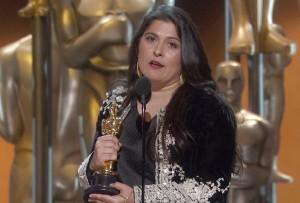
Filmmaker Sharmeen Obaid Chinoy has once again delivered an Oscar worthy documentary and this time she has focused on one of the most important and least debated topic in Pakistan. The documentary named “A Girl in the River – The Price Of Forgiveness”, is based upon the controversial and yet quite common practice of honour killing in Pakistan. [Editor’s note: This film won the Hollywood best documentary short Oscar on February 28. The blog was published on February 14.]

oscar
Video of Oscar award to Filmmaker Sharmeen Obaid Chinoy

It follows the story of an eighteen year old girl Saba who luckily survived a brutal attack by her own father and uncle. She was able to get justice with the help of the local police who arrested and imprisoned the culprits of this gruesome crime. But unfortunately, Saba succumbs to the pressure of the society and forgives the culprits, as a law exists which allows the guilty people to be forgiven by the victims exists in Pakistan.

Surviving an honour killing assault is a very rare thing and it is virtually impossible to find any Pakistani man who has ever been punished for honour killing. It can be said that honour killing is not even considered a crime in this country which is not just sad but shameful as well.

Do you know:According to Pakistan’s Human Rights Commission there were 791 honor killings in the country in 2010. (Source: Wikipedia)

Sharmeen Obaid Chinoy knew the significance of the story she was telling. Pakistan is a country which is not understood very well in the West. The image of this country in the eyes of the West has not been a very promising one and it has often been linked to Islamic extremism, therefore, it was important to portray honour killing for what it really was instead of getting the wrong message across. Honour killing in Pakistan has nothing to do with faith and religion, it is rather a “premeditated, cold-blooded murder” and there are very different forces that are at play in it.

(Article continued in right column)

Question related to this article:

Protecting women and girls against violence, Is progress being made?

(Article continued from left column)

There are certain different factors which play an important role in existence of this crime. They include involvement of the state, the influence of local elders, there is a silent battle between women’s rights and need for family compromise, the financial insecurity and problems versus the fight for justice.

The main objective of this documentary is to tell the story of Saba and make people realize that killing Pakistani women in the name of honour is a crime. People will never try to stop or fight against it if they do not think of it as anything wrong. Sharmeen Obaid says that it essentially forces people to ask themselves questions like whether or not this act stands any good place in our religion at all. Should it be a part of our culture? Being a human how can we ever allow such a brutal and hideous thing to happen in our society? How important is it to stop it and consider it a crime?

The recognition that this Pakistani film has got on the international level is very useful in making people aware of the necessity to fight against it. Chinoy was much surprised by the level of attention that was given to Saba’s case by the services of the government. Their attitude and behavior allows people to challenge the parts of the system that did not work in favor of the victim.

Sharmeen Obaid Chinoy has planned to arrange the screening of the documentary in several colleges and schools all across Pakistan. An Oscar nomination was also able to bring the attention of Prime Minister Nawaz Sharif to this vital matter. Hopefully it will have a lot more impact in this country and will help in prevention of this crime in the near future.

[Editor’s note: Following the Oscar award, Prime Minister Nawaz Sharif praised the award and stated that his government is in the process of pushing a law to stop the killings. He said “Women like Ms. Sharmeen Obaid-Chinoy are not only a pride for the Pakistani nation but are also a significant source of contribution toward the march of civilization in the world.”]

The Senegalese feminist Bineta Diop: United against war in Africa

. WOMEN’S EQUALITY .

An article from L’Actualité (reprinted as non-commercial use)

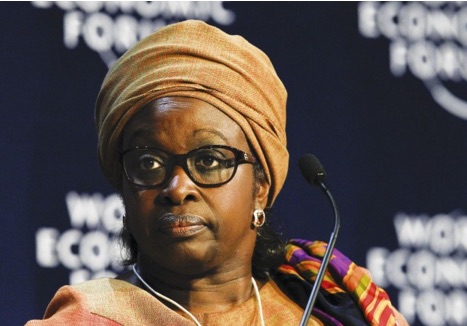
Giving voice to those who have no voice: that is the daily struggle of Bineta Diop. Special Envoy of the African Union (AU) for women, peace and security since 2014. A trained lawyer, she wants to increase women’s participation in the prevention and resolution of conflicts. “Peace and security are still dominated by men,” says the 66-year-feminist, wearing a turquoise robe and turban.

Diop
Bineta Diop. (Photo: EPA/Nic Bothma)

Founder of the association Femmes Africa Solidarité, which marked since 1996 the emergence of women’s movements for peace on the continent, she spends much of her time “on the ground” meeting with refugees and internally displaced, including women whose rights have been violated. From Somalia to South Sudan, Nigeria and Burundi, she collects their stories, lists the emergencies, and defines the actions to be implemented.

She has no fear to confront Heads of State. In 2001, for example, with a delegation of women from Guinea, Liberia and Sierra Leone, she convinced the feared Charles Taylor, then president of Liberia, to participate in a regional summit on peace, thus avoiding the outbreak of war. She has also collaborated on various reconciliation programs in areas of crisis and in post-conflict election observation missions. And ishe s currently working on the establishment of an index to track the progress of the condition of women in every country in Africa.

Ranked among the 100 most influential people in the world by Time magazine in 2011 Bineta Diop remains hopeful despite the violence that still ravage the continent.

“What makes me hopeful is to see that women are able to organize despite everything,” she said. “To see them come together in very difficult conditions, to keep smiling and never give up.”

Actualité interviewed her at the World Summit for Innovation in Education (WISE) in Doha, Qatar, where she gave a lecture.

For 20 years, Femmes Africa Solidarité (FAS) has involved women in prevention and resolution of conflicts. What are the main results?

FAS has allowed women to organize and develop skills to become leaders in the establishment of peace. Violent conflict has a major impact on women, their bodies are often used as a weapon of war, a battlefield. But when it comes to solving problems, they are not invited to the discussion table, contrary to the demands of Resolution 1325 of the United Nations Security Council. The mobilization of women can provide a positive change of attitude, we can be an army without weapons. We can bring together Christian and Muslim women and various ethnic groups to talk and to develop common positions.

How can they manage to override their differences, especially when they have suffered so much conflict, even raped?

While men kill, society makes women responsible for the family, children’s education, care of the old … They therefore have a greater interest in peace and security. They can use their status as mothers and sisters in order to win. FAS provides training throughout the continent to help them understand that the real causes of these conflicts are not religious or ethnic, but related to the sharing of power and resources. Once sensitized, they arrive very quickly to transcend their differences and to put aside their grudges.

(Click here for the original French version)

(Article continued in right column)

Question for this article

Can the women of Africa lead the continent to peace?

(Article continued from left column)

Is religion a motor or a brake for peace, in your eyes?

Religion can be used to ignite conflict, but it is not the source. Men have always used regionalism and ethnicity to defend a political strategy. And now, the Boko Haram and al-Shabaab use Islam to manipulate people. Many listen to them because they are not educated and do not understand the religious texts. And in religion as in politics, women are dominated and have no voice.

What has caused the proliferation of terrorist groups?

The international community and all of us have perhaps made mistakes. Dictators have been overthrown without replacement, which created a political vacuum and space for these groups. And poverty is fertile ground. These groups infiltrating populations are embedded in families. They recruit unemployed youth by promising them paradise and virgins to no end. And they provide communities with what they need: water, electricity, basic education … and everyone closes her eyes. Especially since they are sowing fear.

How can women contribute to their dismantling?

More and more people want to fight against those who take their communities hostage and are not concerned with the interests of the population. The proof is that when their leaders are driven to a village by the military, they are quick to burn everything they had built! To overcome these movements, we must push the state to immediately replace what al-Shabaab and others have set up. People dream of a better world, we must give it to them! But for now, nobody is talking about that. Instead, they talk about military security and intelligence but not the roots of the problem. The State has failed in its responsibility to provide jobs …

In his recent book Africanistan (Fayard, 2015), French scientist Serge Michailof fears that the population explosion in Africa produces the same effects as in Afghanistan. What do you think?

We should not look only at the dark side, there is not chaos throughout Africa. The continent has the resources, and the potential for the greatest economic growth in the world. We have farmland, lakes, oil, sun … and youth who, when properly equipped and motivated, can move mountains. But we need to be better organized. If Africa was not as divided, with 54 countries who look only inward, if we had a comprehensive policy around common interests, we could share our wealth.

Is this the spirit of the Pan-African Vision 2063 action plan, drawn up by the AU?

Absolutely! To achieve it, we consulted everybody: young and old people, women, the private sector … in order to build a prosperous continent, where there may be conflicts, but less violence, and where we can finally benefit from our resources. There is a growing realization: political leaders realize that they involve young people if they want to move forward. And more and more women are involved, are elected, are becoming heads of state. Africa has suffered enough, it is time that men and women of the continent take their destiny in hand, because nobody will do it for them. One objective of the plan is to silence all weapons before 2020, and women certainly have a role to play in that.

Training for Peace

Her work experience in conflict zones has motivated Bineta Diop to create the Pan-African Centre for Gender, Peace and Development in 2005. Located in Dakar, Senegal, the Centre offers training throughout the continent, directly at a community level.

Book review: Hilary Klein’s Compañeras: Zapatista Women’s Stories

. . WOMEN’S EQUALITY . .

A book review by Alicia Swords, North American Congress on Latin America

Hilary Klein (2015) Compañeras: Zapatista Women’s Stories. New York: Seven Stories Press.

When poor, indigenous people and peasants took over land and municipal governments in Chiapas, Mexico on January 1, 1994 just as the North American Free Trade Agreement went into effect, the uprising shook the world. Through individual interviews and collective interviews at women’s assemblies, Hilary Klein’s book, Compañeras, charts the changes in women’s roles, leadership, rights, and power in intimate relationships, families, and communities that the Zapatista movement brought.

zapatista
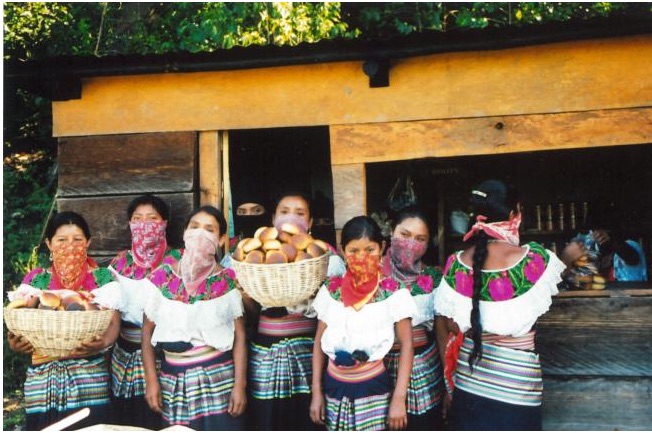
Zapatista collectve bakery, Olga Isabel, Chiapas, Mexico. (Hilary Klein)

The title Compañeras captures the core of Klein’s project, which both describes her subject, Zapatista women and their political relationships, as well as her approach of being a compañera herself by building relationships of trust and mutual support. From 1997 to 2003, Klein worked in collaboration with women’s collectives in Zapatista communities in Chiapas. She co-developed a project called Mujer y Colectivismo, which supported Zapatista women’s cooperatives with leadership development, popular education materials, regional gatherings, and rotating loan funds. Regional authorities asked her to teach basic mathematics to women who needed these skills to run their cooperatives. In times of heavy state repression, she joined human rights delegations to interview women after military attacks on their communities. In the process Klein developed a high degree of trust with women leaders; she “slept in their homes, worked in their cornfields with them, and played with their children” (p. xxii). The richness of the interviews and collective testimony through group interviews is based on thattrust.

Other sympathetic outsiders-with-inside-perspectives and engaged scholar-activists in Chiapas have written about the Zapatistas, including June Nash, Rich Stahler-Sholk, Leandro Vergara-Camus, Mariana Mora, and Shannon Speed, to name a few. Klein’s work in Compañeras reflects this sort of committed engagement at its best.

With so much outside interest, Zapatista authorities developed criteria for engagement and meaningful involvement for scholars. In 2001, Zapatista women authorities in Morelia and La Garrucha asked Klein to conduct a set of interviews in more than two dozen communities to document and teach about the movement’s history from women’s perspectives. It is significant that Compañeras grew out of these interviews, driven by the movement participants’ own desire to teach the history of their organizing. Unlike descriptions of movements intended solely to inform outsiders, Compañeras addresses questions that clearly matter to the Zapatista women themselves, along with questions that matter to outsiders hoping to bring lessons from the Zapatista movement to their own spheres.

Each chapter uses both individual and collective interviews. The first three chapters outline the history and emergence of the Zapatista movement. We learn the history of injustices in Chiapas through interviews with mothers and grandmothers of Zapatista insurgents. Women military commanders describe their experiences of the 1994 uprising, and insurgents discuss the challenges of clandestine organizing. Participants explain the complex relationship between the liberation theology and the Zapatista movement, women’s struggles to rid communities of alcohol, the first above-ground organizing, the 1994 uprising, and the passage of the Women’s Revolutionary Law.

(continued in right column)

Question for this article

Do women have a special role to play in the peace movement?

(continued from left column)

Chapters four and five address how women have changed power dynamics in Chiapas through struggles over land and militarization. Building on historical struggles for land, we see how women participated in the Zapatista land takeovers and current struggles against neoliberal land privatization policies. We learn of the militarization, the failed San Andrés dialogues, and of confrontations with the military in their communities in 1998.

The remaining chapters, six through nine, reveal women’s experiences within the process and structures of the Zapatista movement. “Women who give birth to new worlds” chronicles the evolution of women’s participation and leadership in the Zapatistas’ political structure, economic cooperatives, and regional gatherings, along with changes in the Zapatistas’ own gender analysis. “Zapatista Autonomy” describes a range of women’s experiences in the emerging autonomous systems: Good Government Councils, the community justice system, health care and education. “Transformation and Evolution,”depicts the unevenness of changes in women’s rights and their ability to exercise those rights, acknowledging challenges and gaps between rhetoric and reality. It also highlights new strategies, such as consciousness-raising with men, shifting expectations for men’s involvement in domestic work, and raising children with new gender ideas. “Beyond Chiapas” shows efforts by Zapatista women to connect with women beyond Chiapas to build a broader movement for justice and dignity.

Maps, a timeline, glossary, and a list of suggested readings make this book an accessible introductory resource on the Zapatistas for students, organizers, and scholars. Throughout, Klein’s account reflects deep respect, comprehension, complexity, and nuance. She combines systematic research, a genuine desire for the movement to achieve its goals, and the honesty to carefully examine its shortcomings.

26th Ordinary Session of the AU Assembly concludes with gratitude to Ebola fighters and peace as priorities of the continent

. WOMEN’S EQUALITY .

A press release from the African Union

The two day meeting of the 26th Ordinary session of the Assembly of the African Union officially came to an end today 31 January, 2016 at the African Union Commission Headquarters in Addis Ababa Ethiopia. The closing ceremony witnessed the appreciation ceremony for stakeholders who supported the African Union’s intervention in the Ebola epidemic.

African Union
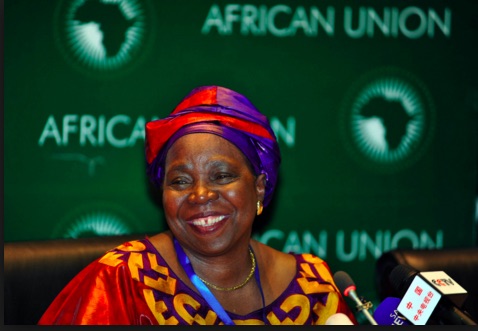
H.E. Dr. Nkosazana Dlamini-Zuma

H.E. Dr. Nkosazana Dlamini-Zuma, Chairperson of the Commission (AUC), appreciated and acknowledged the African heroes against Ebola and formerly closed the AU Support to the Ebola Outbreak in West Africa (ASEOWA) mission. Through the efforts of the AU Commission led by its Chairperson, the African Union sent 855 health workers to the Ebola affected countries. In her remarks, the Chairperson of the AUC thanked the African countries who contributed to the fight against the epidemic. She also saluted the countries which were most affected; Liberia, Sierra Leone and Guinea and the timely response of Mali and Nigeria.

The Chairperson paid tribute to those at the frontline, who paid the ultimate price with their lives, the private sector who initiated the cell phone SMS campaign that enabled citizens to contribute financially, the World Bank, the Red cross, UN agencies as well as the countries that supported the mission. She extended a special appreciation to the young health workers who resigned from their respective jobs and volunteered willingly to assist in the spirit of Pan Africanism and solidarity. Through their efforts, the Chairperson added, the volunteers are now equipped with special skills and expertise that their respective countries will benefit immensely from, and they would also be available in case of any future outbreaks.

Dr Dlamini Zuma, in her conclusion, appealed to Heads of State and government to work together to establish the Centre for Disease Control (CDC) and also expand the Africa Risk Capacity to respond to outbreaks.

H.E. Idriss Deby Itno, Chairperson of the African Union brought the 26th Ordinary session of the African Union to an end. In his remarks the AU Chairperson appreciated the environment and atmosphere of the Summit which was peaceful. He thanked the Assembly for their recommendations in respect of the fight against terrorism in Africa. President Deby appealed to all Member States to take seriously, issues which undermine the development of Africa. Dialogue is the key, he said. In addition, he appealed to the African Union to strengthen its efforts to find ways of bringing peace to Burundi and South Sudan. “We cannot tolerant violence which kills thousands of Africans and leaves them displaced, let us all be vigilant and listen to the cries of our people.”

The Chairperson underscored the absolute need to conclude the reforms of the structure of the AU Commission, to facilitate the efforts of the AU in line with the theme of the Summit 2016, i.e. African Year of Human Rights, with particular focus on the rights of women. He said the theme should be given high priority.

“In the course of my tenure, I will be concrete and dedicated to the AU” the Chairperson pledged. He thanked the AUC Chairperson and all her team for a successful summit, the Prime Minister of Ethiopia for hosting, the media, protocol staff and all those that contributed to the successful completion of the 26th Ordinary session.

Questions for this article:

Iraqi teachers’ campaign strives to end violence against women

. . WOMEN’S EQUALITY . .

An article from Education International

In conjunction with the United Nations’ recent 16 Days of Activism against Gender-Based Violence, Iraqi teachers organised a number of activities under the theme of “Home Peace to World Peace, Peaceful Education for All.”

iraqi
Activities organised during the campaign to end violence against women in an Iraqi school

To bring awareness and generate concrete steps to eliminating violence against women, Iraq’s Kurdistan Teachers’ Union (KTU) launced a series of initiatives to mobilise the public. 

“In addition to these activities, and in coordination with KTU representatives in all schools following KTU guidelines, we raised awareness about the importance of giving equal education opportunities for all,” said KTU President Abdalwahed M. Haje.
Local culture sometimes becomes a barrier to these opportunities, however, and the KTU asked parents to support the effort towards reducing the rate of uneducated children which stands at 12 per cent. The KTU also asked the government and the Education Ministry to provide more tools to reduce the rate of uneducated adults.

Events organised by the KTU included the following: 

• Participating in a large community event in the presence of the President of the Council of Ministers and his deputy, MPs, ministers, women’s organisations, and civil society at the start of the national campaign on 16 November

• Organising five meetings in the governorates of Erbil, Duhok, Sulemanyah, and Kirkuk, in which hundreds of women participated. These meetings emphasised the importance of the campaign, respecting women, enforcing equality, and explaining applied international regulations

• Organising two seminars with key speakers and civil activists Newroz Hawezy and Hero Kamal. A lot of data and statistics on violent acts and solutions to them were presented, as well as human rights regulations. In terms of employment opportunities, it was stressed that education fares well with a ratio of female to male teachers of 53:47

• Setting up two photography exhibitions. The first one in Erbil featured numerous pictures and graphs stressing the role of women in society in the past, and also highlighted the violence they can experience. The second exhibition in Sulemanyah displayed photographs about women’s role in organising their families, management, economic, and agricultural roles. Both exhibitions highlighted that a healthy community is a community with an equal participation for both genders.

(click here for the article in Spanish or here for the article in French.)

Question related to this article:

African women organize to reclaim agriculture against corporate takeover

. WOMEN’S EQUALITY .

An interview with Mphatheleini Makaulele by Simone Adler and Beverly Bell, for Other Worlds Are Possible

Everybody originated with indigenous ways of living and the way of Mother Earth.

The real role of women is in the seed. It is the women who harvest, select, store, and plant seeds. Our seeds come from our mothers and our grandmothers. To us, the seed is the symbol of the continuity of life. Seed is not just about the crops. Seed is about the soil, about the water, and about the forest.

africanwomen
Women organizing as Dzomo la Mupo. Photo courtesy of Mphathe Makaulele.

When we plant our seeds, we don’t just plant them anytime or anywhere. We listen to our elders, who teach us about the ecological calendar. The seed follows this natural ecological flow. When it bears another seed, that one is planted and the cycle continues.

If you cut the cycle of the seed, you cut the cycle of life. We do not understand how something [like genetically modified and chemically treated seeds] can be called seeds if they cannot continue the cycle of life.

In South Africa, we know there is a freedom of plants to germinate and grow. People are now awakened to the word GMO, and many people are trying to bring forward the issue of food sovereignty.

Here in Limpopo Province, in the indigenous region of Vhavenda, we are organized as the Dzomo la Mupo, the Voice of the Earth. I founded it in 2008. The meaning of mupo is the natural creation of the universe, giving space to every being on the Earth. We have led several campaigns to protect our environment, including campaigns against the Australian mining company Coal of Africa, court cases against development on sacred sites, and registering sacred forests as protected areas under the South African Heritage Resources Agency.

The African Biodiversity Network (ABN), [a regional network of individuals and organizations across twelve countries], is also looking at the issues facing Africa, women, and traditional agricultural practice. The ABN works toward deepening these values and is becoming a big voice in Africa and across the world. The ABN is a home for reviving African values of biodiversity, indigenous practices that bring us health, and traditional farming systems.

I live in an environment of mountains, dense forest, and fertile soil. Our mothers, they selected seed from the previous harvest, which they would plant. We had a way of growing seasonal food and of storing seed from season to season.

Mining is wrongly threatening our water, soil, mountains, and seed and food sovereignty. The government is allowing mining in our soil and the dense, thick mountains, including in tropical areas with good soil and pure water. We need to dialogue about the alternatives to save the forest, rivers, plants, everything in mupo, the Earth.

Commercial farming has dominated traditional farming and food sovereignty, too. It looks only at money as the end product. The seeds depend on chemicals and don’t grow following the ecological, natural flow. Chemical seeds and fertilizers make the soil dry like a crust, like plywood. Our soil is damaged and dry. Our natural seeds that germinated on their own no longer grow in that soil. And this problem is causing the loss of natural foods and traditional farming systems, making our food sovereignty vanish.

(Interview continued in right column)

Questions for this article:

Can the women of Africa lead the continent to peace?

(Interview continued from left column)

When the soil is damaged, when the forest no longer has trees to pick fruit from, it affects women first. In Africa, most women are not employed. Our income is the soil where I can grow food, the forest with trees where I can harvest wild, organic fruits, the stream and river where I can fetch clean, pure water. Globally, women who are not employed or educated are experiencing the problem of where to get food and eat the way we have been for generations.

Now, people are depending only on markets [for the food we eat] because their fields are no longer producing natural food, and they have to buy everything, including seeds, resulting in hunger and poverty. People no longer touch the soil for their food; they find the same frozen and packed food in the same shelf in every season.

Not only is this causing a loss of seed and food sovereignty globally, but we women of indigenous ways know that health is affected by the food we eat. We need variety in food. But going to the store year-round and not finding our natural [and seasonal] foods affects our family’s health.

When children and family members are sick, this impacts women first. Women can no longer find the herbs in the forest to cure their sickness because the trees are being cut down and the soil can no longer let the seeds and plants germinate for us to pick the wild greens.

Still, traditional farming is practiced in rural areas, such as -Mahayani in Vhavenda, where there are elder women who have the ancestral knowledge of growing food.

The alternative is to bring back the role of the woman. Young women and girls have to reconnect to the soil and fields of our grandmothers, the forest near our homes, and the indigenous local seeds. Every woman needs to reconnect to the soil. Women also have to teach young girls and young women about seed and food sovereignty and the importance of soil because they’re the ones who will remain to pass that on.

Women are the alternative. We need to revive our technical methods [of farming] through permaculture or agroecology. Even though the soil has been damaged by chemical fertilizers and chemical seeds, there is opportunity to rebuild, harvest, compost, and work the soil to become alive again.

The women of Dzomo la Mupo are bringing food sovereignty to their families. In our home gardens, called muse, and our fields called tsimu, we teach children that food comes from soil, not the market shelves.

Women listen to the ecological calendar and know the seasons for planting, when to select [certain] seeds, and which will produce food. This is the knowledge of women all over the world. Children no longer know about the ecological calendar. What is the future for if we give that up? If we don’t talk about this as women, who will understand?

Women have to fight against the complete destruction of the nearby fields, mountains, and rivers so we can again eat the wild fruit and seasonal food. We are the ones who should defend the remaining indigenous forests from vanishing. Women need to fill the role of talking about [and acting on] the threats to a healthy future generation.

Note: Mphatheleini Makaulele is an award-winning indigenous leader, farmer, and activist, and Director of Dzomo la Mupo, a community organization in rural South Africa. She is also part of the African Biodiversity Network.

(Thank you to Janet Hudgins, the CPNN reporter for this article.)