Category Archives: SUSTAINABLE DEVELOPMENT

‘Major Power Milestone’: US Green Groups Cheer Wind, Solar Overtaking Coal

.. SUSTAINABLE DEVELOPMENT ..

An article by Jessica Corbett from Common Dreams licensed under Creative Commons (CC BY-NC-ND 3.0)

U.S. climate advocates this week are celebrating new federal data  that show wind and solar have generated more power than coal during the first seven months of 2024 and are on track to do so for the entire calendar year.


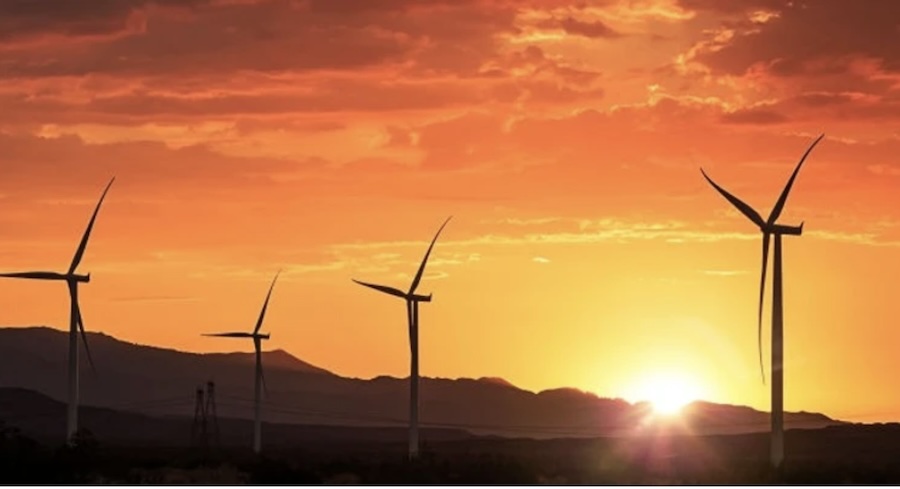
A wind farm is show in front of mountains at sunset. (Photo: Mickey Strider/Loop Images/Universal Images Group via Getty Images)

“This is the kind of news we like to see!” Food & Water Watch said  of the data on social media Tuesday. “Ensuring a livable climate for all depends on us making a swift and just transition to clean energy like wind and solar.”

The group shared reporting from E&E News, which noted that “the milestone had been long expected due to a steady stream of coal plant retirements and the rapid growth of wind and solar. Last year, wind and solar outpaced coal through May  before the fossil fuel eventually overtook the pair when power demand surged in the summer.”

“Renewables’ growth has been driven by a surge in solar production over the last year,” the news outlet continued. “The 118 terawatt-hours generated by utility-scale solar facilities through the end of July represented a 36% increase from the same time period last year, according to preliminary U.S. Energy Information Administration figures. Wind production was 275 TWh, up 8% over 2023 levels. Renewables’ combined production of 393 TWh outpaced coal generation of 388 TWh.”

Sierra Club  executive director Ben Jealous said  in a statement Wednesday that “wind and solar energy has long been the most cost-effective choice for utilities, but now it has also outpaced coal generation as the top source of energy, further demonstrating that clean energy is critical to a reliable and affordable grid.”

“This historic milestone marks a significant win for clean energy advocates, for ratepayers, and for people and communities across the country that simply want to breathe clean air, drink safe water, and worry less about climate disasters like floods and wildfires,” Jealous continued.

(Continued in right column)

Question for this article:

Are we making progress in renewable energy?

(Continued from left column)

“For decades, the Sierra Club has fought to move America Beyond Coal  and onto a clean, reliable, and affordable grid,” he added. “To date, the Beyond Coal campaign has secured the retirement of 385 coal plants and counting, and on August 16th, we celebrate the two-year anniversary of the Inflation Reduction Act, which made historic investments in clean energy and clean energy jobs. Together, families across the country are saving money, enjoying good paying jobs, breathing clean air, and drinking safe water.”

Along with celebrating the federal legislation signed in 2022 by President Joe Biden, Sierra Club highlighted a state law signed the previous year by Democratic Illinois Gov. JB Pritzker.

“Illinoisans should be proud of the work we’ve done to close our largest coal plants and leverage the power of clean energy to drive economic growth while reducing pollution that’s harmful to public health and our planet,” said Jack Darin, director of the Sierra Club’s state chapter. “Thanks to the Climate and Equitable Jobs Act of 2021, Illinois workers are now building the clean energy that is replacing old, dirty fossil fuels and bringing a brighter future to communities across our state.”

Celebrations over the “major power milestone” come as Americans prepare for a November presidential election in which Democratic Vice President Kamala Harris and Minnesota Gov. Tim Walz—who are endorsed by a range of climate groups—are set to face former Big Oil-backed former Republican President Donald Trump and U.S. Sen. JD Vance (R-Ohio).

During an April event in Florida, Trump told fossil fuel executives that if they invested just $1 billion into his campaign, he would gut the Biden-Harris administration’s climate regulations. The Washington Post reported  Tuesday that billionaire Continental Resources founder then “called other oil executives and encouraged them to attend fundraisers and open their wallets.”

While Hamm is reportedly sharing Big Oil’s priorities with the Trump-Vance team, their approach can be summed up by a phrase they’ve said on the campaign trail: “drill, baby, drill.”

Although the Republican candidates have tried to distance themselves by the Heritage Foundation-led Project 2025, the right-wing policy agenda—crafted by many Trump allies—has also alarmed climate campaigners.

Noting the new energy data, Antonia Juhasz, a senior researcher on fossil fuels at Human Rights Watch, said  Tuesday: “This transformation is due in large part to federal government policy which has specifically incentivized renewable energy development and deployment and increased regulation on the harms of fossil fuels. All of which are specifically targeted for removal in Project 2025.”

As Common Dreams reported  earlier Wednesday, an analysis from the think tank Energy Innovation shows that a GOP administration implementing the Project 2025 plan would increase U.S. greenhouse gas emissions by 2.7 billion metric tons by 2030 compared to the current trajectory.

The heat is on: We must rise to the challenge of rising temperatures, urges UN chief

. . SUSTAINABLE DEVELOPMENT . .

An article from The United Nations

The UN chief on Thursday issued an urgent call to action to better protect billions around the world exposed to crippling effects of extreme heat, as global temperature rise continues unabated.

The appeal comes against the backdrop of record temperatures and deadly heatwaves – from the United States to Africa’s Sahel and Europe to the Middle East – that have killed several hundred people this summer.

During the Hajj, for instance, scorching heat claimed over 1,300 pilgrim lives.

“Billions of people are facing an extreme heat epidemic – wilting under increasingly deadly heatwaves, with temperatures topping 50 degrees Celsius around the world. That is 122 degrees Fahrenheit – halfway to boiling,” Secretary-General António Guterres said at a press conference at UN Headquarters in New York.

“The message is clear: the heat is on. Extreme heat is having an extreme impact on people and planet. The world must rise to the challenge of rising temperatures.”

Mr. Guterres also underscored the need to step up protections for workers.

Over 70 per cent of the global workforce, or 2.4 billion people, are at substantial risk of extreme heat, according to new report from the UN International Labour Organization (ILO).

The situation is particularly dire in the Africa and Arab regions, where more than 90 per cent and 80 per cent of workers are exposed, respectively. In Asia and the Pacific  – the world’s most populous region – that figure is three in four workers (75 per cent).

(article continued in right column)

Question for this article:

Despite the vested interests of companies and governments, Can we make progress toward sustainable development?

(Article continued from the left column)

In addition, heat stress at work is projected to cost the global economy $2.4 trillion by 2030, up from $280 billion in the mid-1990s. 

Protect workers

“We need measures to protect workers, grounded in human rights,” Mr. Guterres stressed.

“And we must ensure that laws and regulations reflect the reality of extreme heat today – and are enforced.”

Boost resilience

He also underscored the need to strengthen resilience of economies and societies, citing impacts such as infrastructure damage, crop failures, and increased pressure on water supplies, health systems, and electricity grids.

Cities are particularly vulnerable, experiencing heating at twice the global average rate.

To address these challenges, Mr. Guterres called for comprehensive and tailored action plans based on scientific data are essential for countries, cities and sectors.

“We need a concerted effort to heatproof economies, critical sectors and the built environment.”

Fight the disease

The UN chief reiterated that it is crucial to recognize the myriad symptoms beyond extreme heat, such as hurricanes, floods, droughts, wildfires and rising sea levels.

The core issue is the reliance on fossil fuels and climate inaction, he stated, stressing that governments, especially G20 nations, the private sector, cities and regions, must urgently adopt climate action plans to limit global temperature rise to 1.5°C.

Alongside, countries must urgently phase-out fossil fuels and end new coal projects.

“They must act as though our future depends on it – because it does.”

– – – – – –

If you wish to make a comment on this article, you may write to coordinator@cpnn-world.org with the title “Comment on (name of article)” and we will put your comment on line. Because of the flood of spam, we have discontinued the direct application of comments.
The Summit of the Future

. . SUSTAINABLE DEVELOPMENT . .

An article by Jeffry Sachs* in the Transcend Media Service

The world’s geopolitical system is not delivering what we want or need.  Sustainable development is our declared goal, meaning economic prosperity, social justice, environmental sustainability, and peace.  Yet our reality is continued poverty amidst plenty, widening inequalities, deepening environmental crises, and war.  To get back on track, UN Secretary General Antonio Guterres has wisely called for a Summit of the Future (SOTF)  at the United Nations on September 22-23, a call that has been endorsed by the 193 UN Member states.

The core idea of the Summit of the Future is that humanity is facing a set of unprecedented challenges that can only be solved through global cooperation.  The crisis of human-induced climate change (especially the warming of the planet) cannot be solved by any one country alone.  Nor can the crises of wars (such as in Ukraine and Gaza) or the geopolitical tensions (between the US and China) be settled by one or two countries alone.  Each country, even the major powers including the US, China, Russia, India, and others are part of a complex global structure of power, economics, and politics that requires truly global solutions.

The Summit will revolve around 5 core topics, all of them related to multilateralism, meaning the system by which nations co-exist with the rest of the world.  These topics are: (1) the goal of sustainable development; (2) the goal of peace; (3) the control of new technologies such as artificial intelligence; (4) the empowerment of young people and future generations; and (5) reform of the UN architecture.

The UN Sustainable Development Solutions Network (SDSN), which I direct on behalf of UN Secretary General Antonio Guterres, has issued a statement summarizing the view of leading academics around the world about the reform of the multilateral system.  The SDSN statement on the SOTF  is Chapter 1 of the SDSN’s 2024 Sustainable Development Report.

On the goal of sustainable development, the core challenge is global finance.  Achieving the Sustainable Development Goals (SDGs) – including the fight against poverty, hunger, disease, and environmental degradation – requires sizable public investments.  The main priority public investment areas including education, health care, zero-carbon energy, sustainable agriculture, urban infrastructure, and digital infrastructure.  The problem is that the poorer half of the world — the low-income countries and lower-middle-income countries – lack the access to financing they need to achieve the SDGs.  The most urgent reform of the global system these countries need is access to long-term, low-cost financing.

On the goal of peace, the core challenge today is great-power competition.  The US is in competition with Russia and China.  The US aims for primacy in Europe over Russia, and primacy in Asia over China.  Russia and China resist the US.  The result is war (in Ukraine) or risk of war (in East Asia).  We need a stronger UN-led system in which great-power competition is governed and restrained by the UN Charter rather than by militarism and power politics.  More generally, we are past the era when any single country can or should aspire to primacy or hegemony.  The major powers should live in peace and mutual respect under the UN Charter, without threatening each other’s security.

On the goal of technology, the main challenge is to ensure transparent and responsible governance of the new advanced technologies, including biotechnology, artificial intelligence, and geo-engineering.  Such powerful technologies cannot continue to be managed in secrecy by the militaries and powerful corporations.  They need to be governed by honesty, transparency, and responsibility to the public.

(article continued in right column)

Question for this article:

Despite the vested interests of companies and governments, Can we make progress toward sustainable development?

Sustainable Development Summits of States, What are the results?

(Article continued from the left column)

On the goal of youth and future generations, the major challenge is to ensure that every child can achieve his or her potential through a high-quality education.  Education is essential for a decent job and a life of dignity.  Yet hundreds of millions of children, especially in the poor countries, are either out of school or in sub-standard schools that are not teaching the skills needed for the 21st century.   Without a quality education, these children will face a lifetime of poverty and under-employment or unemployment.  We need a new global financial arrangement to ensure that every child, even in the poorest countries, is given the opportunity for a decent education.

On the goal of reforming the UN system, the key is to give more power to UN institutions and to make them more representative.  The UN today depends too much on a few powerful countries, most on notably the US.  When the US doesn’t pay its dues to the UN, for example, the whole UN system is weakened.  We need to strengthen the UN system by ensuring that it is properly and reliably financed through a new system of international taxes – for example, on CO2 emissions, shipping, aviation, and financial transactions – rather than the contributions of individual governments.

We also should make the UN institutions more representative of the world of 2024 rather than the world of 1945, when the UN was established.  India, for example, should become a permanent member of the UN Security Council.  India is the world’s most populous country, the third largest economy, and a nuclear power as well.  In 1945, India was still a British colony, and so was not given its proper place in the UN system at that time.

Another core recommendation of the SDSN is to introduce a UN Parliamentary Assembly as a new chamber alongside the UN General Assembly (UNGA).  The UNGA gives each member state one vote, with the power of that vote in the hands of the executive branch of each government.  A UN Parliament would represent the peoples of the world rather than the governments.

Most importantly, the Summit of the Future is an invitation to intensive global brainstorming on how to make our deeply interconnected world fit for sustainable development in the 21st century.  It is a great challenge that should be welcomed and joined by people all over the world.  A great debate will open in September and then continue for years to come.
– –

* The author, Jeffrey D. Sachs, Professor of Sustainable Development and Professor of Health Policy and Management at Columbia University, is Director of Columbia’s Center for Sustainable Development and the UN Sustainable Development Solutions Network. He has served as Special Adviser to three UN Secretaries-General [Kofi Annan (2001-7), Ban Ki-moon (2008-16), and currently serves as an SDG Advocate under Secretary-General António Guterres. His books include The End of Poverty, Common Wealth, The Age of Sustainable Development, Building the New American Economy, and most recently, A New Foreign Policy: Beyond American Exceptionalism. Sachs was also an advisor to the last leader of the Soviet Union, Mikhail Gorbachev, as well as to the first president of the Russian Federation, Boris Yeltsin.

– – – – – –

If you wish to make a comment on this article, you may write to coordinator@cpnn-world.org with the title “Comment on (name of article)” and we will put your comment on line. Because of the flood of spam, we have discontinued the direct application of comments.

News from the Culture of Peace Foundation in Nigeria

. . SUSTAINABLE DEVELOPMENT . .

Excerpts from the instagram page of the Culture of Peace Foundation

The Culture of Peace Foundation (CUPEF) brings together changemakers and thought leaders with a common vision to advance culture of peace and non-violence.

A official statement dated October 20, 2023 says “Culture of Peace Foudation was founded with a vision to advance UNESCO culture of peace and non-violence amongst all class of humanity regardless of race, gender, color or creed. The mission of the foundation is to create conditions for the attainment of sustainable peace through human capital development, empowering individuals and communities to cultivate culture of peace and non-violence.


Week one with Paulinho Muzaliwa and Titilope Adedokun CHC agri-technicians training program 2024 in cooperation with Culture of Peace Foundation

A lecture dated October 24, 2023 by Freddy Mutanguha, CEO of Aegis Trust, is publicized on the subject of “Strategizing for our collective future; Dialogues of peace; Dismantling Hate.”

January 13, 2024. Partnership with African University Student Platform for African Youth Conference January 18-20 in Kigali, Rwanda.

January 13, 2024. Farouk Chibuzor Akaolisha, founder and president of the Culture of Peace foundation speaks on NTA Channel 5, Abuja, concerning “Role of Intercultural Communication in Effective Leadership.”

January 20, 2024. The President of Culture of Peace Foundation Farouk Chibuzor met with some stakeholders in Maitama, Abuja at the office of CHC AgriTech Africa LTD to discuss better ways to engage with the state governments in some Northern States for the proposed AgriTech Training and Empowerment Project- a partnership between Culture of Peace Foundation (CUPEF) and CHC AgriTech Africa with commitment to train smallholder farmers in Nigeria on the use of eco-friendly and fast-acting microbiome technology to improve food security and environmental health protection.

March 30, 2024: culture_of_peace_foundation, Maitama, Federal Capital Territory, Nigeria. Are you are a farmer, teacher, student, freelancer, unemployed graduate, civil servant, business person, or even a stay-at-home mom interested in creating new economic opportunities through agriculture, we invite you to register for the CUPEF-CHC Agri-Technicians Training Program to unlock exciting new opportunities in the agro-value chain.

(article continued in right column)

Question for this article:

What is the relation between movements for food sovereignty and the global movement for a culture of peace?

(Article continued from the left column)

May 11, 2024. We are pleased to announce the launch of CHC Agri-Technicians Training Program on Microbiome Technology- a partnership between Culture of Peace Foundation (CUPEF) and CHC AgriTech Africa aimed at promoting food security and economic empowerment of smallholder farmers.

May 28, 2024. The First Session of Train the CHC Agritechnicians Program. Meet Our Distinguished Trainer- Ms Titilope delivered the topic on the “Benefits of Social Media for Farmers”. Titilope, a renowned social entrepreneur and digital expert shared insights on using social media to drive impactful change and empower communities. Creating opportunities for Food Security and Sustainable Agriculture.

May 28, 2024. Paulinho Muzaliwa- Uganda Unidos Projects also shared knowledge and experiences with our participants us on “SOIL HEALTH”. Passionate about Regenerative Agriculture, Paulinho Muzaliwa is a multiple social impact award winner, Founder of UNIDOS Project and a Congolese Nationale living in Uganda as a Refugee.

May 29, 2024. The Second Session was delivered by Mr. Hammed Kayode on the “Art of Story Telling” taking the participants on exciting new experiences on how farmers an adapt a unique storytelling techniques to communicate their businesses and success stories to their target markets and the global community.

June 12: the Third session of CHC Agritechnicians Training Program in collaboration with @chc_agritech_africa_nigltd and @culture_of_peace_foundation featured two amazing Speakers, Earnest Corner and Dominique Edwards, both from the United States of America and Fellows at Western Union Foundation and Watson Institute. Our goal is to raise 100 Certified and Well-trained Agritechnicians that will reach and empower 100,000 farmers in 2024 and we aim to achieve this by collaborating with community leaders, social impact changemakers, farmers cooperatives, NGOs and Community Based Organisations to reach large number of smallholder farmers across communities for increased agricultural productivity and economic empowerment. We are currently working with diverse stakeholders both in the government and the private sector organisations to provide our Agritechnicians with mentorship and best experience in agricultural innovation for increased capacity development and sustainable food security.

– – – – – –

If you wish to make a comment on this article, you may write to coordinator@cpnn-world.org with the title “Comment on (name of article)” and we will put your comment on line. Because of the flood of spam, we have discontinued the direct application of comments.

Working for water and peace in the Tessalit area of Mali

. . SUSTAINABLE DEVELOPMENT . .

An article received CPNN from Bakrene Ag Sidimohamed

To work for peace in the Tessalit area in the North of Mali, we need to develop actions for the control and sharing of water resources.

I. Introduction

The Tessalit region located in the far north of Mali just on the Algerian border is characterized by large-scale livestock activity, 80% of the populations are involved in livestock breeding (breeding of camels, cows, goats and sheep).

Livestock in addition to being a source of nutrition thanks to milk, cheese, butter and meat, is also an income-generating activity through the marketing of animals.

When we talk about livestock we are necessarily talking about pastures and water sources.

From 2012 to 2024 (start of the new instability in northern Mali) the practice of livestock farming increased significantly due to the economic growth of the Tessalit area and the interest of communities in the raising of animals.

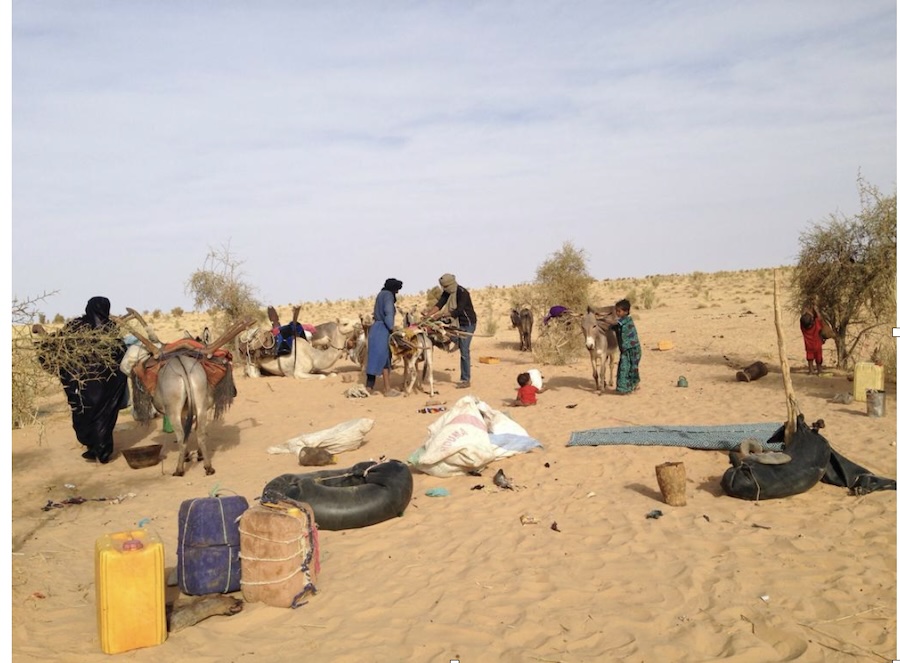
This growth has had a direct and significant impact on the daily use of water points in areas with extensive grazing and especially during periods of extreme heat; thus creating traffic jams of people and their herds at water points for almost 24 hours a day.

This is a problem everywhere, including at very few existing sources created by drilling wells thanks to development partners such as MINUSMA and international NGOs.

Because of the intense competition people often get carried away by their emotions and lose their reasoning, causing disagreements and misunderstandings.

It is generally observed that the owners of water sources and the indigenous communities of a grazing site are disturbed by the regular arrival of other communities in search of water to water their herds and for their own consumption; hence the origin of a large part of inter- and intra-community conflicts.

(article continued in right column)

(Click here for the original article in French

Question for this article:

Scarcity of water: A growing source of conflict?

Can a culture of peace be achieved in Africa through local indigenous training and participation?

(Article continued from the left column)

These conflicts around water sources are regularly fueled by political and ideological oppositions and also external exploitation. Water being the main source of life in the greater SAHARA is regularly used by conflict actors as alibis to fuel tensions between communities and thus weaken the social fabric.

Rational management of water points is the best way to prevent and manage conflicts in the localities of northern Mali.

II. Challenges Related to Water Management

It is noted that several factors explain the insufficiency of water in the Tessalit area: we can speak of low rainfall and an often empty water table, abusive use of water in mining sites during the exploitation and artisanal refining of gold, great desertification linked to climate change and deforestation, the commercialization of water towards cities and above all the significant growth of herds.

Given these different natural and human phenomena, the following practices are needed for the rational and equitable management of water and above all maintaining peaceful coexistence within communities.

III. Recommendations

To restore and consolidate social cohesion around water points, certain actions constitute essential tools for the stability of the area.

° Establish and maintain management committees at public water sources
.
° Ask traditional authorities (fraction leaders, imams) to regularly disseminate awareness-raising messages and human habits favorable to living together.

° Separate water points for domestic use from those for commercial use while instructing gold miners to produce their own sources on their work sites.

° Advocate with development partners for the construction of mini-dams and water reservoirs.

° Organise awareness sessions for economic operators and large breeders
to drill for water in large pasture environments

° Develop citizen management committees at water sources and raise awareness among nomadic populations for the sharing of water resources

– – – – – –

If you wish to make a comment on this article, you may write to coordinator@cpnn-world.org with the title “Comment on (name of article)” and we will put your comment on line. Because of the flood of spam, we have discontinued the direct application of comments.
Earth Day founder Denis Hayes says young climate activists carry the spirit of his generation

. . SUSTAINABLE DEVELOPMENT . .

An article from Radio Canada

Denis Hayes can see activists of the past in today’s youth-led climate campaigns.

The environmentalist, who left Harvard University to co-ordinate the inaugural Earth Day in 1970, came of age during a period of growing understanding about human impacts on the planet. 

“We now have a generation coming up that seems to be very much in the spirit of the 1960s,” Hayes said in an interview with What On Earth host Laura Lynch.


Denis Hayes, co-ordinator of the first Earth Day and pictured here in 2015, reflected on the origins of the global event in an interview with What On Earth host Laura Lynch. (Jordan Stead/The Associated Press)

They care passionately about climate change and “want to do something to influence and really to shape policy, to guarantee themselves the future,” he added.

The scope of the planet’s problems have changed since the inaugural Earth Day where community events were the focus. The impact of carbon emissions are understood today to be global and have led to rapidly rising global temperatures.

A cohort of young climate justice activists — such as Swedish activist Greta Thunberg — connected worldwide via social media are now pushing for faster and more concrete action on an issue they see as an existential threat.

“We have a bunch of young people who are global citizens, digital natives who are comfortable talking with their peers around the world and capable of building an international movement of, I think, real force,” Hayes said.

Earth Day every day

Axcelle Campana, 34, an environmental justice practitioner and master’s student at Portland State University, says Earth Day can be an inspiring day to mark our commitment to the climate.

But there’s a risk that organizations actively contributing to climate change, like large corporations investing in fossil fuel projects, can co-opt that message.

“If we leave a vacuum, I think inevitably there will be a commercialization, and that will be the dominant narrative and the predominant force driving what Earth Day means,” he told Lynch.

`”We have to kind of step up and make it something in order for it to continue to be relevant.”

“When it comes to action, having one day is just simply not enough,” said Lauren Wright, a 19-year-old student and climate activist from Saskatoon. She is one of 15 plaintiffs in a lawsuit against the federal government  claiming it hasn’t done enough to protect youth from the effects of climate change.

Wright says the increasing frequency of significant climate events — including record-breaking wildfire seasons and disastrous hurricanes  — has made it impossible for young people to ignore.

The ability to connect with other youth via social media has also made it easier to share these experiences and mobilize.

“I can see somebody who’s an activist in the Philippines telling their story about what’s happening to them right now, and then I can see something from somebody in the north of Canada who’s talking about how they’re being affected by brownouts,” she said.

Need for agency

Maria Vamvalis isn’t surprised that young people are turning to activism.

The PhD candidate and former public school teacher researches the impact of climate justice in education. 

(article continued in right column)

Question for this article:


Are we seeing the dawn of a global youth movement?

Despite the vested interests of companies and governments, Can we make progress toward sustainable development?

For many of the youth she’s spoken with as part of that work, grappling with these world-sized climate “polycrises” has left them feeling hopelessness over their futures — a shift she’s noticed in over two decades of teaching. 

(Article continued from the left column)

“When they talk about the future, [they say] I’m not going to be living past 50,” she said. “I didn’t have that experience with young people before at all.”

Those feelings can be mitigated when youth are able to directly engage in the challenges — and feel heard.

“Climate justice can become like a social imaginary that enables them to feel a sense of possibility — like if we actually were to centre climate justice, then so many things would change,” said Vamvalis, who teaches an online course on how educators can incorporate climate change education in the classroom with the Accelerating Climate Education Project.

Earth Day, then, can be a moment to reinvigorate a sense of agency for youth worried about the changing climate, she added. 

Wright describes it as a day to “refocus.”

“Earth Day is usually just a day of reflection and education more so than physical action,” she said.

Evolving priorities

When he started Earth Day, Hayes and his peers were focused on smaller scale challenges, such as air pollution from power planets and expansive highways separating communities.

“For years when we were talking about climate change, all we could do was point to lines crossing on a chart sometime out in the future before we got hit with droughts and hurricanes,” he said.

“Whereas if you’ve got a plume coming out of a smokestack and everybody in the neighbourhood is coughing, the debate is much easier to win.”

The way climate activism has changed over five decades reflects a shift in our understanding of changes to the environment itself, said activist Maria Blancas.

“To have a movement that is fighting for the same things … through these different decades, I feel like is really unrealistic,” said Blancas, who was born in Mexico but grew up in Washington state in a farmworker community

“So, for me, it feels like the future issues are probably going to be very different — hopefully, ideally would be different — than what we’re fighting for now.”

Some accuse the younger generation of taking part in an activism fad borne out of social media, Wright says, but the endurance of Earth Day proves otherwise.

“I’m not a young agitator that just came out of the woodwork. There’s been decades and decades of work done by activists and centuries, since time immemorial, of Indigenous land defenders caring for this place,” she said.

Looking forward

Looking ahead to Earth Day in 2050, Campana — who calls himself a “dreamer” — is ambitious.

April 22 is not just a day on the calendar, but a holiday off work and school for folks to get involved in their communities.

“We take commitment to the land and to the earth and to our home seriously enough where we actually provide the space and the time for lots of people to get involved,” he said.

Asked what lessons he would pass on youth activists today, Hayes was bashful.

“I suspect they are not waiting with bated breath for my pearls of wisdom,” he said.

“But I suppose the most important single thing I would say is don’t underestimate yourself…. Somebody is either going to have the torch passed to them, or they’re going to seize the torch, and it might as well be you.”

– – – – – –

If you wish to make a comment on this article, you may write to coordinator@cpnn-world.org with the title “Comment on (name of article)” and we will put your comment on line. Because of the flood of spam, we have discontinued the direct application of comments.
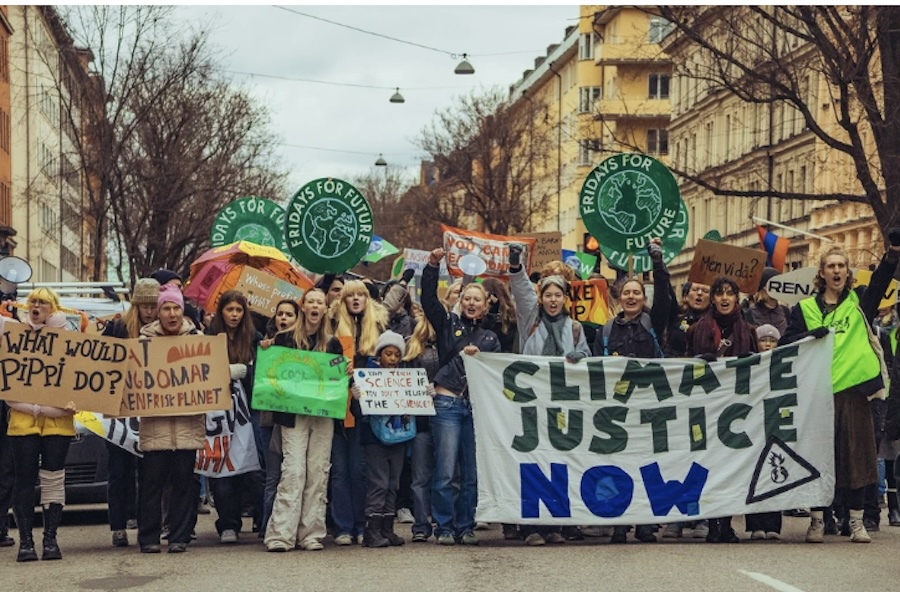
Youth Lead Global Strike Demanding ‘Climate Justice Now’

. . SUSTAINABLE DEVELOPMENT . .

An article by Olivia Rosane from Common Dreams (licensed under Creative Commons CC BY-NC-ND 3.0).

Ahead of Earth Day, young people around the world are participating in a global strike on Friday to demand “climate justice now.”

In Sweden, Greta Thunberg  joined hundreds of other demonstrators for a march in Stockholm; in Kenya, participants demanded that their government join the Fossil Fuel Non-Proliferation Treaty; and in the U.S., youth activists are kicking off  more than 200 Earth Day protests directed at pressing President Joe Biden to declare a climate emergency.


Climate strikers march in Stockholm, Sweden, on April 19, 2024. (Photo: Albin Haglund via Greta Thunberg/X)

“We’re gathered here to fight, once again, for climate justice,” Thunberg told Agence France-Presse at the Stockholm protest, which drew around 500 people. “It’s now been more than five and a half years that we’ve been doing the same thing, organizing big global strikes for the climate and gathering people, youths from the entire world.”

The first global youth climate strike, which grew out of Thunberg’s Fridays for Future school strikes, took place on March 15, 2019. Since then, both emissions and temperatures have continued  to rise, with 2023 blowing past  the record for hottest year. Yet, according to Climate Action Tracker, no country has policies  in place that are compatible with limiting global heating to 1.5°C above preindustrial levels.

“We are many people and youths who want to express our frustration over what decision-makers are doing right now: They don’t care about our future and aren’t doing anything to stop the climate crisis,” Karla Alfaro Gripe, an 18-year-old participant at the Stockholm march, told AFP.

The global strikes are taking place  under the umbrella of Friday’s for Future, which has three main demands: 1. limit temperature rise to 1.5°C, 2. ensure climate justice and equity, and 3. listen to the most accurate, up-to-date science.

“Fight with us for a world worth living in,” the group wrote on their website, next to a link inviting visitors to find actions in their countries.

Participants shared videos and images of their actions on social media.

European strikers also gathered in LondonDublin, and Madrid.

In Asia, Save Future Bangladesh founder Nayon Sorkar posted  a video from the Meghna River on Bangladesh’s Bola Island, where erosion destroyed his family’s home when he was three years old.

“I lost my home to climate change,” Sorkar wrote. “Now I’m fighting so that others don’t lose their homes.”

(article continued in right column)

Question for this article:


Are we seeing the dawn of a global youth movement?

Despite the vested interests of companies and governments, Can we make progress toward sustainable development?

(Article continued from the left column)

Also in Bangladesh, larger crowds rallied  in Dhaka, SylhetFeni, and Bandarban  for climate action.

“Young climate activists in Bandarban demand a shift to renewable energy and away from fossil fuels,” said Sajjad Hossain, the divisional coordinator for Youthnet for Climate Justice Bangladesh. “We voiced urgency for sustainable energy strategies and climate justice. Let’s hold governments accountable for a just transition!”

In Kenya, young people struck specifically to demand that the government sign on to the Fossil Fuel Non-Proliferation Treaty.

“As a member of the Lake Victoria community, the importance of the treaty in our climate strikes cannot be overstated,” Rahmina Paullette, founder of Kisumu Environmental Champions and a coordinator for Fridays for Future Africa, said  in a statement. “By advocating for its implementation, we address the triple threat of climate change, plastic pollution, and environmental injustice facing our nation.”

“Halting fossil fuel expansion not only safeguards crucial ecosystems but also combats the unjust impacts of environmental degradation, ensuring a more equitable and sustainable future for our community and the wider Kenyan society,” Paullette said.

In the U.S., Fridays for Future NYC planned for what they expected to be the largest New York City climate protest since September 2023’s March to End Fossil Fuels. The action will begin at Foley Square at 2:00 pm Eastern Time, at which point more than 1,000 students and organizers are expected to walk across the Brooklyn Bridge to rally in front of Borough Hall.

The strike “is part of a national escalation of youth-led actions in more than 200 cities and college campuses around the country, all calling on President Biden to listen to our generation and young voters, stop expanding fossil fuels, and declare a climate emergency that meaningfully addresses fossil fuels, creating millions of good paying union jobs, and preparing us for climate disasters in the process,” Fridays for Future NYC said in a statement.

The coalition behind the climate emergency drive, which also includes the Sunrise Movement, Fridays for Future USA, and Campus Climate Network, got encouraging news on Wednesday when  Bloomberg  reported  that the White House had reopened internal discussions into potentially declaring a climate emergency.

“We’re staring down another summer of floods, fires, hurricanes, and extreme heat,” Sunrise executive director Aru Shiney-Ajay said in a statement. “Biden must do what right Republicans in Congress are unwilling to do: Stand up to oil and gas CEOs, create green union jobs, and prepare us for climate disasters. Biden must declare a climate emergency and use every tool at his disposal to tackle the climate crisis and prepare our communities to weather the storm. If Biden wants to be taken seriously by young people, he needs to deliver on climate change.”

The coalition is planning events leading up to Monday including dozens of Earth Day teach-ins  beginning Friday to encourage members of Congress to pressure Biden on a climate emergency and Reclaim Earth Day mobilizations on more than 100 college and university campuses to demand  that schools divest from and cut ties with the fossil fuel industry.

– – – – – –

If you wish to make a comment on this article, you may write to coordinator@cpnn-world.org with the title “Comment on (name of article)” and we will put your comment on line. Because of the flood of spam, we have discontinued the direct application of comments.
ASEAN Tourism in the 2025 International Year of Peace and Trust

. . SUSTAINABLE DEVELOPMENT . .

An article by Imtiaz Muqbil from eTurboNews (with links added by CPNN)

With brutal wars raging every day, it’s an interesting move for the UN to declare 2025 the International Year of Peace and Trust. ASEAN Tourism sees a window of opportunities.

2025 will mark the 80th anniversary since the end of World War II and the approval of the UN Charter, a good time to reflect on the state of the world since then.

The UN General Assembly has proclaimed 2025 the International Year of Peace and Trust (IYPT), and called for a fullscale mobilization of efforts to build sustainable peace, solidarity and harmony via political dialogue, mutual understanding and cooperation amongst nations and peoples.

ASEAN 2025

Within ASEAN, 2025 will mark the 50th anniversary since the April 1975 end of the Vietnam War and the last year of the “ASEAN 2025: Forging Ahead Together” master blueprint. That gives the ASEAN tourism, the Industry of Peace, a golden opportunity to take the lead in putting Peace at the heart of the future development agenda, assert the “centrality” of ASEAN, counter efforts to sow socio-cultural divisions and raise the definition of “sustainability” to a whole new level.

Approved on 21 March 2024, the UNGA resolution encourages all UN Member States, UN and other international, regional and subregional organisations, as well as civil society, the private sector, academia and individuals, to “disseminate the advantages of peace and trust, including through educational and public awareness-raising activities.” It invites the UN Educational, Scientific and Cultural Organization (UNESCO) and the UN’s Department of Political and Peacebuilding Affairs to facilitate the implementation of the International Year.

Turkmenistan has proposed hosts an International Forum of Peace and Trust in December 2025, as a culminating event for the Year.

The resolution was sponsored by Armenia, Bahrain, Bangladesh, Belarus, Brazil, Burkina Faso, Cambodia, China, Djibouti, Germany, India, Iran, Israel, Kazakhstan, Lesotho, Liberia, Marshall Islands, Morocco, Nicaragua, Nigeria, Philippines, Qatar, Russian Federation, Rwanda, Singapore, Tajikistan, Timor-Leste, Türkiye, Turkmenistan, Uzbekistan, Vanuatu and Venezuela.
(continued in right column)

Question related to this article:

How can tourism promote a culture of peace?

(continued from left column)

UN Sustainable Development Goals

The move is in line with the UN Sustainable Development Goals agenda as well as the Declaration and Programme of Action on a Culture of Peace.

The first UN Declaration and Programme of Action on a Culture of Peace was adopted by the UNGA in October 1999, exactly 25 years ago next year. In September 2019, the UNGA declared 2021 the first International Year of Peace and Trust. Another resolution in July 2022 declared that IYPT would be held every five years.

Reaffirming the purposes and principles of the UN Charter, especially the determination to save succeeding generations from the scourge of war, the resolution notes that sustainable development, human rights, peace and security are interconnected and mutually reinforcing. It:

The Six pillows of Peace and Trust

1) Acknowledges that peace and trust entail accepting differences and having the ability to listen to, recognize, respect and appreciate others, as well as living in a peaceful and united way,

2) Recognises that peace not only is the absence of conflict, but also requires a positive, dynamic participatory process where dialogue is encouraged and conflicts are solved in a spirit of mutual understanding and cooperation,

3) Recognises the urgent need to promote and strengthen preventive diplomacy and peaceful prevention of conflicts through multilateralism and political dialogue.

4) Emphasises the role of women and youth, children and older persons, especially the active participation of women in the prevention and resolution of conflicts and in activities promoting a culture of peace, including in post-conflict situations.

5) Recognises the importance of advancing equality, tolerance, human development, and promoting human rights, as well as investment in education to promote respect, reconciliation, and a culture of peace and non-violence,

6) Encourages the involvement of civil society organizations worldwide.

Windows of Opportunities for ASEAN Tourism

With escalating geopolitical conflicts and socio-cultural-ethnic polarisation posing a clear and present danger to the safety, security, and stability of Travel & Tourism globally, the IYTP opens a clear window of opportunity for the industry to rethink, refocus and reprioritize its future agenda.

(Editor’s note: The rest of this article is available only by subscription. It begins with the phrase “ASEAN tourism is well placed to take the lead for several reasons:”)

Greta Thunberg, 40+ Other Climate Activists Block Entrance to Swedish Parliament

. . SUSTAINABLE DEVELOPMENT . .

An article by Thor Benson in Common Dreams ( licensed under Creative Commons CC BY-NC-ND 3.0)

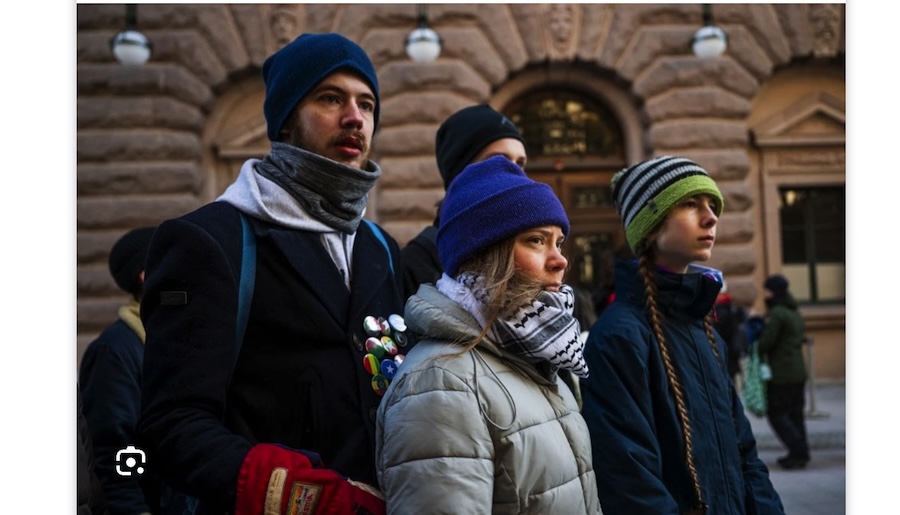
Greta Thunberg and over 40 other activists blocked  the entrance to the Swedish parliament on Monday, demanding action on the climate crisis.

The activists held signs that said “Climate Justice Now,” and Thunberg expressed her dissatisfaction with how the Swedish government is handling the global emergency.

“Sweden is unfortunately not unique in completely ignoring the climate crisis, not treating it as an emergency at all. But actively trying to greenwash, deceive, and lie in order to make it seem like they are doing enough and that they are moving in the right direction, when in fact the exact opposite is happening,” Thunberg said.

Thunberg went on to say that Sweden is “very good at greenwashing,” even though the country has “very high emissions per capita.” She said the country cannot claim to be a climate leader.

(article continued in right column)

Question for this article:


Are we seeing the dawn of a global youth movement?

Despite the vested interests of companies and governments, Can we make progress toward sustainable development?

Local resistance actions: can they save sustainable development?

(Article continued from the left column)

“The climate justice movement has for decades tried to get our message across, and scientists and the most affected people have been sounding the alarm for even longer than that,” she said. “But the people in power have not been listening. They have been actively ignoring and silence those speaking out.”

Thunberg has faced  the risk of going to jail over her climate protests repeatedly in recent years, and she has continued  to sound the alarm that countries are not doing enough to fight the climate crisis.

The Swedish government has been facing intense criticism recently for enacting policies that will likely increase its carbon emissions. Thunberg vowed to continue her resistance to such policies.

“The climate crisis is only going to get worse and so it is all our responsibilities, all of those who have an opportunity to act must do so. We encourage everyone who can to join us and to join the climate justice movement,” Thunberg said.

– – – – – –

If you wish to make a comment on this article, you may write to coordinator@cpnn-world.org with the title “Comment on (name of article)” and we will put your comment on line. Because of the flood of spam, we have discontinued the direct application of comments.
Greenpeace: Here are the REAL culprits of the agricultural crisis in France

. . SUSTAINABLE DEVELOPMENT . .

An article from Greenpeace France (translation by CPNN)

Why are many farmers unable to make a decent living from their work, even though they feed us? To this vital question, at the heart of the social and environmental crisis that the agricultural world is going through, the government has still not answered, preferring to attack ecological standards and favor agro-business, without looking at the root causes. . However, those responsible for this agricultural crisis are known: the massive industrialization of our production system and the ultra-liberal trade policies pursued for decades.

In order to denounce the real culprits of the agricultural crisis, this morning we carried out simultaneous actions in six cities in France, targeting groups in the agro-food industry, agrochemicals, seeds and mass distribution, as well as than the majority agricultural union. So many symbols of a system that profits from free trade agreements and impoverishes farmers, to the detriment of our health and our environment.


Photo Credit : © Micha Patault 2024

Who are the culprits of the agricultural crisis? Here are 5 very concrete examples of this agro-industrial system that we point out:  LDC, Avril, Bayer, Lactalis, E.Leclerc and the FNSEA.

LDC, the poultry giant that defeathers the breeders

Its name is little known, but it controls 40% of the poultry market in France! LDC is the owner, among others, of the Le Gaulois and Maître Coq brands, and it contracts with almost half of the broiler poultry breeders in France, owns slaughterhouses, manufactures animal feed, etc. This all-powerful group in its areas of establishment is capable of depriving breeders of alternative outlets . With its industrialized system, LDC relegates the breeder to the rank of “subcontractor”, a real an uncomfortable situation .

This chicken giant is also developing its activities in Belgium, the United Kingdom and Poland, not hesitating to resort to imports . During a highway blockade in France, breeders discovered Polish chickens imported for LDC in a truck . A real goose that lays golden eggs: LDC generated 5.8 billion euros in turnover in 2022, an increase of 8% compared to 2021. The fortune of the Lambert family, co-founders of the group, is as for it estimated at 825 million euros.

Avril, the big fish of the agro-industry

The fifth French agri-food group, Avril is the perfect example of the clever mix of economic, financial and political interests in the agricultural sector . The chairman of the board of directors of this agro-industrial behemoth is none other than Arnaud Rousseau, recently put in the spotlight as president of the majority agricultural union, the FNSEA (see below).

We are far, very far from small-scale farming. This multinational generates more than half of its turnover abroad, through multiple activities: food production, chemicals, energy, agrofuels, finance, etc. In France, the group is number 1 in the vegetable oils market. (via its Lesieur and Puget brands, among others) and commands 25% of the oleochemicals market share. Its influence is therefore considerable: Avril is very clearly one of the proponents of the policy of industrialization of French agriculture which is fueling the crisis in the agricultural world.

Bayer, the powerful lobby of pesticides and seeds

World number one in seeds and pesticides, Bayer is particularly famous for having bought Monsanto and its famous Round Up, a cocktail based on glyphosate , the most used herbicide in the world, classified as “probably carcinogenic” by the International Center for Research on WHO cancer. Not content with poisoning farmers and the environment, its commercial weight on the seeds and pesticides market makes farmers dependent on its products.

Bayer is also a powerful lobby, whose activities have disastrous consequences on the agricultural world, health and the environment. The German pharmaceutical and agrochemical giant spent more than 7 million euros on its lobbying activities at European level in 2022 alone. For decades, Bayer has actively fought for the development of GMOs and against the ban and reduction of pesticides, not without some success, unfortunately: the regulation of GMOs is now threatened, glyphosate has been re-authorized for 10 years and the European legislative project aimed at reducing the use of pesticides has just been purely and simply withdrawn…

Lactalis, the multinational that butters its bread on both sides

Dairy products are at the heart of the current agricultural crisis. And Lactalis (the world’s leading group in the sector which has joined forces with number 2, Nestlé, within the Lactalis-Nestlé company), bears a heavy responsibility for the impoverishment of the small farmer. In 2022, while consumers paid more for their liter of semi-skimmed milk, breeders saw the amount of their gross margin on this product drop by 4% compared to 2021, while agri-food companies experienced an increase of their gross margins of 64% and those of mass distribution of +188%! An extremely inequitable distribution observed across all dairy products, as denounced by the Foundation for Nature and Man in its report “ Farmers and consumers, big losers from the rise in dairy product prices ”.

(article continued in right column)

(Click here for the original article in French

Question for this article:

Despite the vested interests of companies and governments, Can we make progress toward sustainable development?

What is the relation between movements for food sovereignty and the global movement for a culture of peace?

(Article continued from the left column)

Nearly 20% of dairy farmers live below the poverty line and are extremely dependent on public subsidies to survive. A concern that Lactalis does not experience, whose turnover increased by 28.4% in 2022 compared to 2021, climbing to 28.3 billion euros! Added to this are various scandals: salmonella in infant milk, pollution of waterways, non-compliance with environmental standards, concealment of information. The company, known for its President, Lactel and Galbani brands, is described as a “lawless” firm by the investigative media Disclose, in an edifying investigation into the “milk ogre”.

E. Leclerc, the leader in mass distribution and secrecy

Today six groups control 90% of the mass distribution market. Among them, the leader E. Leclerc, with almost a quarter of market share, has become a dominant player in the lives of French consumers and farmers . In 2022, the French number 1 has increased its turnover, but not its transparency… The E. Leclerc group is regularly suspected of circumventing the French Egalim law in order to obtain lower prices from producers, in particular via a central d Eurelec purchase located in Belgium, where the law is much more flexible.

From their dominant position, the mass distribution giants do not hesitate to compress the prices paid to farmers to make more profits . Producer remuneration thus serves as an adjustment variable, with farmers going so far as to sell at a loss. Also at issue: products imported and sold at very low prices on the shelves of these major brands. Products that Michel Édouard Leclerc would like to sell even cheaper: he has denounced in the past the obligation of a 10% margin on food products from abroad, a measure precisely intended to protect the remuneration of producers.

FNSEA, historical defender of industrial agriculture

With 212,000 claimed members, the FNSEA is the majority agricultural union in France. But far from fighting for the interests and remuneration of small producers, its leaders continue to defend the agro-industrial and productivist model serving the largest farms. The very ones who receive the largest share of subsidies from the European Common Agricultural Policy (CAP). For decades, the FNSEA has ensured true co-management of agricultural policies, hand in hand with successive governments, successfully fighting in favor of industrial agriculture and agro-industry, to the detriment of peasant and organic agriculture. , and against environmental measures.

Its current president, Arnaud Rousseau, is himself at the head of a cereal farm of more than 700 hectares, ten times the average size of a French farm… In 2021, he received more than 170,000 euros from the CAP, or 5.6 times the average amount received by a farm in France. He is also Chairman of the Board of Directors of the agro-industrial group Avril (see above).

Faced with those responsible for the agricultural crisis, what should we do?

If the culprits are known, the solutions are also known to overcome this agricultural crisis, allow farmers to live with dignity from their work and protect the health and environment of all.

Several measures seem essential to us today to meet the expectations of farmers regarding their remuneration, support them in the ecological transition and sustainably transform the agricultural sector. In particular, it is necessary:

° Put an end to Free Trade Agreements , by reviewing the agreements in force and establishing a moratorium on current negotiations (in particular between the European Union and Mercorsur, and with Chile).

° Establish a floor price , i.e. a ban on the sale of agricultural products below cost prices (including costs, labor remuneration and contributions).

° Regulate the margins of processors and large retailers , for better distribution of value.

° Establish a minimum entry price for imported products , particularly for the sectors most in difficulty, to deal with unfair imports on social and environmental levels.

° Reform the European Common Agricultural Policy (CAP) , in particular in order to direct public money as a priority towards the most vulnerable farmers, organic farming operations and towards supporting the agroecological transition.

° Massively increase support for farmers in the agroecological transition.

Environmental standards and the reduction of pesticides are necessary, both for the health of farmers and for that of consumers and the preservation of biodiversity. We must therefore maintain them and help producers in their implementation.

To find out more about the causes and solutions to farmers’ difficulties: The agricultural crisis (and how to get out of it) in 4 questions.