Category Archives: SUSTAINABLE DEVELOPMENT

The International Institute for Peace through Tourism: A personal memoire

. . SUSTAINABLE DEVELOPMENT . .

Excerpts from the reflections by Timothy Marshall, Chairman, IIPT Board of Directors

As we end this year, I have been asked to share some reflections on my journey with our Brother Lou D’Amore. . . When launching IIPT, Brother Lou’s vision was and is to make the world’s largest industry, travel and tourism, the first global peace industry; with the belief that every traveler is potentially an ambassador for peace.


Lou D’Amore, left, and Timothy Marshall, right, with Tukwini Mandela

THE BEGINNING YEARS: LAUNCH OF SUMMITS, CONFERENCES AND CHAPTERS

As the creator and global leader of the ‘Peace Through Tourism’ movement, IIPT launched its first global conference on Sustainable Tourism Development in Vancouver in 1988. The theme was: “Tourism: A Vital Force for Peace”. Eight hundred persons from sixty-eight countries were in attendance; and Pope John Paul II and U.S. President Ronald Reagan were featured in video-taped messages. The Vancouver Conference first introduced the concept of ‘Sustainable Tourism Development’ four years prior to the U.N. Conference on Environment and Development in Rio de Janeiro, Brazil. The Vancouver conference also introduced a new paradigm for a ‘Higher Purpose of Tourism’ which incorporated the Mission of IIPT. Today, we hear this concept espoused all over the globe. However, nearly 40 years ago when IIPT was founded, the industry’s focus was almost exclusively on economics and finance, and these concepts were very foreign.

Approximately 6 months after our first global conference, the first Caribbean conference on socially and environmentally responsible tourism was held in 1989 in the Bahamas. It featured Dr. D’Amore; along with Mr. Stanley Selingut, who established the first Caribbean eco-tourism resort based in St. John, U.S. Virgin Island; as well as representatives from Indonesia and the Pacific, who all gave case studies. This led to two subsequent conferences on eco-tourism in the Caribbean, and a major new focus on sustainable tourism by the Caribbean Tourism Organization . . .

Our first Global Summit was held in Amman, Jordan in 2000. King Abdullah II was our Royal Patron; and Mr. Harvey Golub, Chairman of American Express, and Chairman of WTTC, served as our first Summit Chair. I was asked to convene our first Coalition of Partners meeting which was attended by thirty-two organizations from around the world; each of whom committed to a Millennial Project. Many good initiatives came out of this, and it is our hope to resurrect this body with a new gathering of like-minded NGO’s and other organizations going forward.

Our first African Conference was held in Nelspruit, South Africa in 2002, eight years after Mr. Mandela became President. It included a host of Ministers of Tourism throughout the African continent. . .

PEACE WITH OUR CREATOR

IIPT has played a meaningful role in the spirituality and tourism sector— from a major conference at the site of St. Francis of Assisi’s home in Assisi, Italy… to sacred Himalaya travel and treks in Bhutan… to dedicating a global peace park at Bethany Beyond the Jordan, site of Christ’s baptism in the Jordan River…to the dedication of a global peace park at the martyrs trail in Uganda, where record crowds flocked to Uganda for the 50th anniversary of the canonization of 32 Christian martyrs who were burned to death for their refusal to denounce Christianity. The Uganda Martyrs Trail was dedicated as a legacy of IIPT’s 4th African Conference and is an important tourist attraction. This event has also been designated as a national holiday in Uganda and has become a major event on the global catholic calendar.

(article continued in right column)

Questions related to this article:
 
How can tourism promote a culture of peace?

(article continued from left column)

Through these and other initiatives, IIPT has been fortunate to have interfaith forums at our events around the world. These gatherings have facilitated interfaith and intercultural dialogues. At our second global conference in Montreal, eight different religions gathered at the top of Mount Royal overlooking the City of Montreal. That conference profoundly demonstrated that when we focus on the importance of love, mutual respect, and living in peace, it becomes clear that our similarities are much greater than our differences.

PEACE WITH EACH OTHER

. . . Over the years, we have assembled a wonderful network of industry strategic partner organizations like PATA and the Africa Travel Association who signed an historic MOU at our 2005 Summit in Thailand. This MOU promoted travel between the African and Asian continents. One of our closest partners, Skal International, has joined forces with us to establish peace cities and towns in wonderful places around the world. Under the principle of ‘healing wounds of conflict’, one of our Board members, Don King, led an IIPT initiative to support the Al-Awon Charity in Azraq, Jordan, which provides educational services for 160 Syrian refugee children who, along with their families, fled the conflict in Syria. This special IIPT project is one way that we try to bring our principles to life and make a tangible impact in the lives of people who are hurting.

The theme of our 25th Anniversary celebration at World Travel Market in London was “Building a Culture of Peace Through Tourism”. . . .

‘PEACE WITH NATURE AND THE EARTH’

This can be seen in almost everything we have done; but can most directly be seen through the dedication of over 450 global peace parks in Africa, Asia, Central America, Europe, the Middle East, Australia, the Indian Ocean and the Pacific, Canada, the United States, and Mexico. This initiative was launched in Canada on its 125th Birthday with 350 peace parks across Canada. It has now spread to six of the seven continents around the world. In addition to Victoria Falls, a world heritage site and one of the seven wonders of the world located on the border of Zambia and Zimbabwe, IIPT has dedicated a major global peace park at the renown Puer National Park in China, along with the dedication of a global town of peace in the Danzhai Wanda village of China, which is an international tourism destination dedicated to poverty reduction. . . .

One of our most impactful initiatives regarding peace with nature was the hosting of one of the world’s earliest global summits on Climate Change in Lusaka, Zambia in 2011. This Summit brought together some of the top thought leaders and practitioners from every major sector around the world and led to the adoption of the Lusaka Declaration which is housed at the United Nations.

THE BUILDING OF A WONDERFUL FAMILY

During the month of September 2023, I was pleased to Chair our Global Strategic Planning Retreat in New York where members of the IIPT Family gathered to begin the process of transitioning from Lou’s presidency to Ajay Prakash becoming the newly elected President of the Institute. The weekend began on Friday evening with food and drinks in a beautiful setting on the Hudson River as family members were welcomed to New York and celebrated being together once again. . . .

As I prepare to close these reflections, it seems appropriate to return to our beginning days where the ‘CREDO OF THE PEACEFUL TRAVELER’ became our anchor:

“GRATEFUL FOR THE OPPORTUNITY TO TRAVEL AND EXPERIENCE THE WORLD AND BECAUSE PEACE BEGINS WITH THE INDIVIDUAL, I AFFIRM MY PERSONAL RESPONSIBILITY AND COMMITMENT TO:
– JOURNEY WITH AN OPEN MIND AND HEART,
– ACCEPT WITH GRACE AND GRATITUDE THE DIVERSITY I ENCOUNTER,
– REVERE AND PROTECT THE NATURAL ENVIRONMENT WHICH SUSTAINS ALL LIFE,
– APPRECIATE ALL CULTURES I DISCOVER,
– RESPECT AND THANK MY HOSTS FOR THEIR WELCOME,
– OFFER MY HAND IN FRIENDSHIP TO EVERYONE I MEET,
– SUPPORT TRAVEL SERVICES THAT SHARE THESE VIEWS AND ACT UPON THEM,
– AND BY MY SPIRIT, WORDS AND ACTIONS,
– ENCOURAGE OTHERS TO TRAVEL THE WORLD IN PEACE.”

(Editor’s note: Thank you to Bea Broda for sending us the IIPT End-of-year newsletter that contained this memoire)

– – – – – –

If you wish to make a comment on this article, you may write to coordinator@cpnn-world.org with the title “Comment on (name of article)” and we will put your comment on line. Because of the flood of spam, we have discontinued the direct application of comments.

Slow Peace: Three Lessons from Grassroots Peacebuilders in Colombia

.. SUSTAINABLE DEVELOPMENT ..

An article by Angela Lederach from Peace News (reprinted by permission)

Since 2014, I have had the privilege of learning from grassroots social leaders at the forefront of building peace in Montes de María, Colombia – one of the territories prioritized by the 2016 peace agreement between the FARC (Revolutionary Armed Forces of Colombia) and the government. 


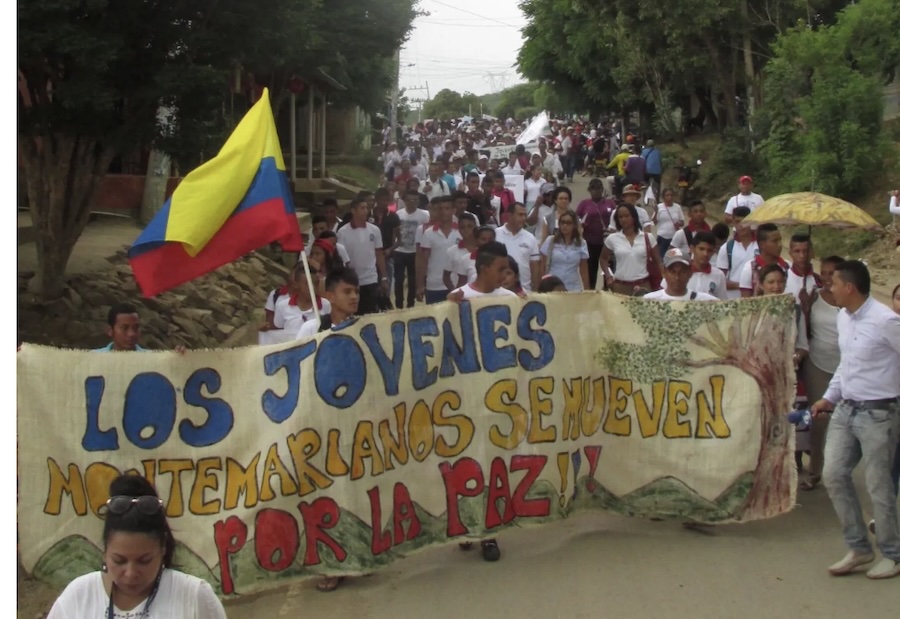
Youth Peace Provokers March for Peace 2016, photo by author

A human rights lawyer who works closely with the Colombian transitional justice tribunal told me in June 2024 that one of the biggest challenges for the Special Jurisdiction for Peace (JEP) was that the peace process was rushed. I have heard grassroots organizers frequently echo the sentiments of this human rights lawyer, admonishing the state for operating with “too much prisa [hurry].” 

As an anthropologist who studies the politics of peacebuilding, I was initially puzzled by the widespread critique of “prisa/hurry”. Indeed, sluggish, bureaucratic delays  have characterized the postaccord implementation  process across rural Colombia. Clearly, when grassroots peacebuilders criticize the state for operating with “too much prisa/hurry,” they are not suggesting that the accords are being implemented rapidly. What claims, then, are campesino peacebuilders making? And what does their approach to “paz sin prisa / peace without hurry” entail?

As I traversed the everyday landscapes of campesino peacebuilding, I began to realize that the call to “slowness” does not negate the pressing needs that animate the collective struggle for peace in Colombia. There is, in fact, a fierce urgency in the campesino call to slow down, take notice, and tend territorial relations of care in the wake of violence. Grassroots peacebuilders do not limit their understanding of time to speed (acceleration and deceleration) or duration (short and long-term frameworks). Instead, slowness is understood as a mode of attention and practice of presence. Slow peace  offers a relational framework that locates peacebuilding as a multigenerational, multispecies, and permanent process to cultivate a more just and livable world.
 
I have identified three lessons for building slow peace. 

First, slow peace is a multigenerational process

In August 2016, I interviewed Jorge, a campesino [small farmer] leader, in his palm-thatched home. Jorge did not begin his life history with the war. Instead, he recounted the ancestral history of the territory, emphasizing how nonviolent resistance and solidarity led to the formation of campesino communities across Montes de María as people sought refuge from enslavement and colonization. He closed our interview with a song he had composed. The war formed neither the opening nor closing stanza. Instead, Jorge sang about the multigenerational “campesino struggle” to “defend life and the right to life.”

Hours later, I learned that the Colombian government and the FARC-EP had reached a peace deal. With no internet or electricity, the historic announcement did not reach Jorge’s house. Jorge’s intimate recollections set against the distant and inaccessible backdrop of the government’s declaration of peace reflect the paradox of proximity that grassroots leaders face. 

Popular depictions of Montes de María, limited only to violence, erase the long histories of campesino organizing. A multigenerational lens challenges linear accounts that locate peace as something that comes after a negotiated agreement. Grafting their work into a wider struggle, campesino peacebuilders articulate an understanding of peace as an active, social process. In giving primacy to everyday life, slowing down widens the lens and focuses the frame of peacebuilding on the historical and material conditions that peace demands.

(Article continued in the right column)

Questions for this article:

What is the relation between the environment and peace

What is happening in Colombia, Is peace possible?

(Article continued from the left column)

Second, slow peace centers social-environmental relations 

“The earth suffered, too,” Jocabeth, a young campesina organizer reflected, detailing her experience of war. The violence of forced displacement disrupted multispecies relations  of care, forged through the daily labor of caretaking forest and soil life in Jocabeth’s community. The violent severing of humans from these ecological relations resulted in the death of the avocado forest, upending the social, economic, and ecological sustenance of her community. For Jocabeth, place-based peacebuilding practices that regenerate multispecies relations are vital for peace. 

As part of an intergenerational social movement, Jocabeth has worked with the Youth Peace Provokers to combine traditional ecological knowledge, reforestation, and agroecology with peace advocacy, nonviolent direct action, and community organizing. Here, slow peace cultivates moral dispositions attuned to the existence of the nearly imperceptible processes of life that persist amid violence – what I call an ethics of attention. As Ricardo Esquivia, the director of the local organization Sembrandopaz  reflected, “the work of the base (grassroots) is to see, feel, and grow the tree held within the seed – to be so close to the ground that you can feel the grass grow.”

Finally, slow peace demands a shift from technical projects to social movements. Campesinos cite the “clash in times” between their community processes and external peace interventions as one of the most difficult challenges they must overcome. Technocratic interventions  that rely on measurable outcomes and helicopter interactions designed to meet donor demands reduce peace to paper. In contrast, slow peace situates peacebuilding as an ongoing political process that prioritizes sustained proximity.

For example, the Regional Space for Peacebuilding in Montes de María  – a broad-based coalition that brings representatives from Afrodescendant, Indigenous, Campesino, youth, women, and LGBTQIA+ movements together – facilitates a sustained, monthly dialogue between these diverse grassroots peace organizations. The coalition has also convened unlikely encounters between community members and generals, paramilitary commanders, FARC representatives, and multinational corporations. These “improbable dialogues” have resulted in the formation of farming cooperatives between former combatants and victims, the return of dispossessed land, and formal apologies. The Regional Space’s approach to sustained dialogue demonstrates how a temporal shift from technical projects to community organizing deepens processes of social repair. The multigenerational, place-based, and permanent commitment to peacebuilding through sustained dialogue – exemplified in the work of the Regional Space – also allows grassroots organizations to build collective power desde la base – from the ground up.

In Montes de María, there is a traditional saying: “Slow down, because there is hurry.” Slowness emerges through an immersion into everyday life where the seeds of peace are continuously cultivated, cared for, and nurtured. “Slow peace” does not offer a prescriptive blueprint. However, reflecting on the relational practices, modes of attention, and quality of presence  that shape peoples’ experiences of time, relations, and power is vital for cultivating sustainable peace – with lessons for peacebuilders globally. 

– – – –

Angela J. Lederach (she/her/hers) is Assistant Professor of Peace and Justice Studies at Chapman University. She is the author of Feel the Grass Grow: Ecologies of Slow Peace in Colombia (Stanford University Press 2023) and co-author of When Blood and Bones Cry Out: Journeys Through the Soundscape of Healing and Reconciliation (Oxford University Press 2010). As a cultural anthropologist and peace studies scholar-practitioner, Lederach has worked on peacebuilding and restorative justice processes in Sierra Leone, Philippines, Colombia, and the United States.

– – – – – –

If you wish to make a comment on this article, you may write to coordinator@cpnn-world.org with the title “Comment on (name of article)” and we will put your comment on line. Because of the flood of spam, we have discontinued the direct application of comments.

Ecuador: culture of peace and democracy through the strengthening of Indigenous Justice

. . SUSTAINABLE DEVELOPMENT . .

An article from Manos Unidas

After almost four years (from March 2021 to November 2024) we have reached the end of the project “Promoting a culture of Peace and Democracy through the strengthening of Indigenous Justice”, developed in Ecuador and co-financed by the European Union and Manos Unidas.


In this project we have had four local partners, the Ecuadorian Central for Agricultural Services (CESA), the Indigenous and Peasant Movement of Cotopaxi (MICC), the Central University of Ecuador (UCE) and the Council of the Judiciary (CJ), the latter being equivalent to the General Council of the Spanish Judiciary.

The reason for this project arose in a context of a serious conflict in Ecuador in 2019, when indigenous peoples and the most vulnerable populations saw their rights and the possibility of having a dignified life increasingly limited (rising prices for basic goods, failures in public services, etc.). One of the most serious situations was the criminalization (arrest and prison sentences) of indigenous leaders for the application of Indigenous Justice. Hence the title of the project is to promote a culture of peace and democracy, seating both parties (indigenous peoples and the State) at the same table, with the support of civil society (CESA and Manos Unidas) and the Academy (UCE).

Let’s put some context to better understand the demands of the peoples and nationalities of Ecuador:

(Article continued in right column)

(Click here for the original Spanish version of this article.)

Question for this article

Indigenous peoples, Are they the true guardians of nature?

(Article continued from left column)

The Ecuadorian Constitution of 2008 explicitly recognizes the rights of indigenous peoples, marking a milestone in the history of the country. In this regard, the Magna Carta establishes several provisions that seek to guarantee equality, justice and respect for the cultural, social and economic diversity of indigenous peoples. Among the most notable points we can point out the recognition of the plurinationality of the State (art. 1); the recognition of collective rights (art. 57), which includes the right to practice and promote their own forms of justice and traditional legal systems within their communities, as long as they do not contravene human rights; and finally, an intercultural justice system is established (art. 171) in which the possibility of indigenous peoples managing their own system of justice and conflict resolution is recognized, based on their traditions and customs, as long as they do not contravene constitutional principles and human rights.

High participation of women

The project has achieved great successes, as more than a thousand people from indigenous organizations have been trained in Indigenous Justice, Gender and New Masculinities and Community Communication, with a participation of women of more than 40%. A manual on Indigenous Justice with a gender perspective has been developed. Three public policies on intercultural dialogue, cooperation and coordination of dialogue systems between ordinary and indigenous jurisdictions have been approved, printing and distributing 3,000 copies of these policies so that they reach all ordinary justice operators in the country. Four courses on strategic litigation have been held in various regions of the country, with the participation of 200 people, and the project has closed with the II International Congress “Beyond Legal Pluralism”, with the collaboration of seven universities and more than 800 participants, including students, academics, professionals and authorities of indigenous peoples and nationalities.

The project was born in an attempt to reduce social tension and resolve cases of criminalization of indigenous leaders in the province of Cotopaxi. Unfortunately, we have been able to resolve few cases and the current context of Ecuador is not easy, but by building bridges we have generated a movement that will transform the entire country. The seed we planted is bearing fruit with the first applications of the policies of cooperation and coordination between ordinary and indigenous justice, allowing judges to delegate their powers to indigenous justice. The Indoamerican University has already committed to holding the third edition of the congress on legal pluralism and we have 20% more women in leadership positions in the communities.

– – – – – –

If you wish to make a comment on this article, you may write to coordinator@cpnn-world.org with the title “Comment on (name of article)” and we will put your comment on line. Because of the flood of spam, we have discontinued the direct application of comments.

After Ending in Overtime, COP29 Called ‘Big F U to Climate Justice’

. . SUSTAINABLE DEVELOPMENT . .

An article by Jessica Corbett from Common Dreams

Critics of the “COP of false solutions” said that instead of much-needed funding, developing nations got “a global Ponzi scheme that the private equity vultures and public relations people will now exploit.”

It was early Sunday by the time the United Nations climate summit wrapped up in Baku, Azerbaijan after running into overtime to finalize deals on carbon markets and funding for developing countries that were sharply condemned by campaigners worldwide.
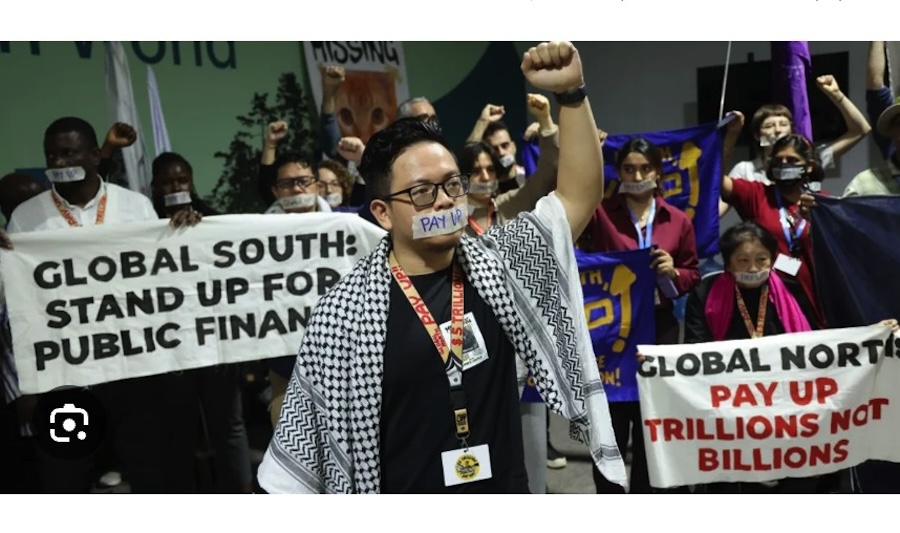
"COP29 was a dumpster fire. Except it's not trash that's burning—it's our planet," declared Nikki Reisch of the Center for International Environmental Law. "And developed countries are holding both the matches and the firehose."

Recalling last year's conference in the United Arab Emirates, Oil Change International global policy senior strategist Shady Khalil highlighted that "the world made a deal at COP28 to end the fossil fuel era. Now, at COP29, countries seem to have been struck with collective amnesia."

"With each new iteration of the texts, oil and gas producers managed to dilute the urgent commitment to phase out fossil fuels," Khalil said. "But let's be clear: Rich countries' failure to lead on fossil fuel phaseout and to put the trillions they have hoarded on the table has done more to imperil the energy transition than any obstructionist tactics from oil and gas producers."

This year's conference began November 11 and was due to conclude on Friday, but parties to the Paris agreement were still negotiating the carbon market rules, which were finalized late Saturday, and the new collective quantified goal (NCQG) on climate finance.

"The carbon markets in Article 6 of the Paris agreement were pushed through COP29 in a take-it-or leave-it outcome," said Tamra Gilbertson of Indigenous Environmental Network, decrying "a new dangerous era in climate change negotiations."

As Climate Home Newsreported, they establish two types of markets: "The first—known as Article 6.2—regulates bilateral carbon trading between countries, while Article 6.4 creates a global crediting mechanism for countries to sell emissions reductions."

The outlet pointed to expert warnings that "the rules for bilateral trades under 6.2 could open the door for the sale of junk carbon credits—one of the weaknesses of the previous crediting mechanism set up by the U.N. known as the Clean Development Mechanism (CDM)."

Jonathan Crook of Carbon Market Watch said in a statement that "the package does not shine enough light on an already opaque system where countries won't be required to provide information about their deals well ahead of actual trades."

"Even worse, the last opportunity to strengthen the critically weak review process was largely missed," he continued. "Countries remain free to trade carbon credits that are of low quality, or even fail to comply with Article 6.2 rules, without any real oversight."

As for Article 6.4, “much lies in the hands of the supervisory body" that's set to resume work in early 2025, said Crook's colleague, Federica Dossi. "To show that it is ready to learn from past mistakes, it will have to take tough decisions next year and ensure that Article 6.4 credits will be markedly better than the units that old CDM projects will generate."

"If they are not, they will have to compete in a low-trust, low-integrity market where prices are likely to be at rock bottom and interest will be low," Dossi added. "Such a system would be a distraction, and a waste of 10 years worth of carbon market negotiations."

Some campaigners suggested that no matter what lies ahead, the embrace of carbon markets represents a failure. Kirtana Chandrasekaran at Friends of the Earth International
said that "the supposed 'COP of climate finance' has turned into the 'COP of false solutions.' The U.N. has given its stamp of approval to fraudulent and failed carbon markets."

"We have seen the impacts of these schemes: land grabs, Indigenous peoples' and human rights violations," Chandrasekaran noted. "The now-operationalized U.N. global carbon market may well be worse than existing voluntary ones and will continue to provide a get out of jail free card to Big Polluters whilst devastating communities and ecosystems."

Chandrasekaran's colleague Seán McLoughlin at Friends of the Earth Ireland was similarly critical of the conference's finance deal, asserting that "Baku is a big F U to climate justice, to the poorest communities who are on the frontlines of climate breakdown."

"COP29 has failed those who have done least to cause climate change and who are most vulnerable to climate breakdown because the process is still in thrall to fossil fuel bullies and rich countries more committed to shirking their historical responsibility than safeguarding our common future," he said. "Now it's back to citizens to demand our governments do the right thing. We must keep demanding the trillions, not billions owed in climate debt and a comprehensive, swift, and equitable fossil fuel phaseout. The struggle for climate justice is not over."

(continued in right column)

Questions for this article:

Sustainable Development Summits of States, What are the results?

(Article continued from the left column)

Campaigners and developing nations fought for $1.3 trillion in annual climate finance from those most responsible for the planetary crisis. Instead, the NCQG document only directs developed countries to provide the Global South with $300 billion per year by 2035, with a goal of reaching the higher figure by also seeking funds from private sources.

The deal almost didn't happen at all. As The Guardiandetailed Saturday: "Developed countries including the U.K., the U.S., and E.U. members were pushed into raising their offer from an original $250 billion a year tabled on Friday, to $300 billion. Poor countries argued for more, and in the early evening two groups representing some of the world's poorest countries walked out of one key meeting, threatening to collapse the negotiations."

While Simon Stiell, executive secretary of U.N. Climate Change, celebrated the NCQG as "an insurance policy for humanity, amid worsening climate impacts hitting every country," Chiara Martinelli, director at Climate Action Network Europe, put it in the context of the $100 billion target set in 2009, which wealthy governments didn't meet.

"Rich countries own the responsibility for the failed outcome at COP29," Martinelli
said. "The talk of tripling from the $100 billion goal might sound impressive, but in reality, it falls far short, barely increasing from the previous commitment when adjusted for inflation and considering the bulk of this money will come in the form of unsustainable loans. This is not solidarity. It's smoke and mirrors that betray the needs of those on the frontlines of the climate crisis."

Also stressing that "it's not even real 'money,' by and large," but rather "a motley mix of loans and privatized investment," Oxfam International's climate change policy lead, Nafkote Dabi, called the agreement "a global Ponzi scheme that the private equity vultures and public relations people will now exploit."

"The terrible verdict from the Baku climate talks shows that rich countries view the Global South as ultimately expendable, like pawns on a chessboard," Dabi charged. "The $300 billion so-called 'deal' that poorer countries have been bullied into accepting is unserious and dangerous—a soulless triumph for the rich, but a genuine disaster for our planet and communities who are being flooded, starved, and displaced today by climate breakdown."

Rachel Cleetus from the Union of Concerned Scientists, who is in Baku, took aim at not only rich governments, but also the host, saying that "the Azerbaijani COP29 Presidency's ineptitude in brokering an agreement at this consequential climate finance COP will go down in ignominy."

Cleetus' group is based in the United States, which is preparing for a January transfer of power from Democratic President Joe Biden to Republican President-elect Donald Trump, who notably ditched the Paris agreement during his first term.

"The United States—the world's largest historical contributor of heat-trapping emissions—is going to see a monumental shift in its global diplomacy posture as the incoming anti-science Trump administration will likely exit the Paris agreement and take a wrecking ball to domestic climate and clean energy policies," Cleetus warned. "While some politically and economically popular clean energy policies may prove durable and action from forward-looking states and businesses will be significant, there's no doubt that a lack of robust federal leadership will leave U.S. climate action hobbled for a time."

"Other nations—including E.U. countries and China—will need to do what they can to fill the void," she stressed. "Between now and COP30 in Brazil next year, nations have a lot of ground to make up to have any hope of limiting runaway climate change."

Ben Goloff of the U.S.-based Center for Biological Diversity called out the departing Biden administration, arguing that it "should be going out with at least a signal of its moral climate commitment, not copping out ahead of the Trump 2.0 disaster."brokering an agreement at this consequential climate finance COP will go down in ignominy.”
Cleetus’ group is based in the United States, which is preparing for a January transfer of power from Democratic President Joe Biden to Republican President-elect Donald Trump, who notably ditched the Paris agreement during his first term.

“The United States—the world’s largest historical contributor of heat-trapping emissions—is going to see a monumental shift in its global diplomacy posture as the incoming anti-science Trump administration will likely exit the Paris agreement and take a wrecking ball to domestic climate and clean energy policies,” Cleetus warned. “While some politically and economically popular clean energy policies may prove durable and action from forward-looking states and businesses will be significant, there’s no doubt that a lack of robust federal leadership will leave U.S. climate action hobbled for a time.”

“Other nations—including E.U. countries and China—will need to do what they can to fill the void,” she stressed. “Between now and COP30 in Brazil next year, nations have a lot of ground to make up to have any hope of limiting runaway climate change.”

Ben Goloff of the U.S.-based Center for Biological Diversity called out the departing Biden administration, arguing that it “should be going out with at least a signal of its moral climate commitment, not copping out ahead of the Trump 2.0 disaster.”

– – – – – –

If you wish to make a comment on this article, you may write to coordinator@cpnn-world.org with the title “Comment on (name of article)” and we will put your comment on line. Because of the flood of spam, we have discontinued the direct application of comments.
16th BRICS Summit adopts Kazan Declaration

. . SUSTAINABLE DEVELOPMENT . .

An article from United News of India

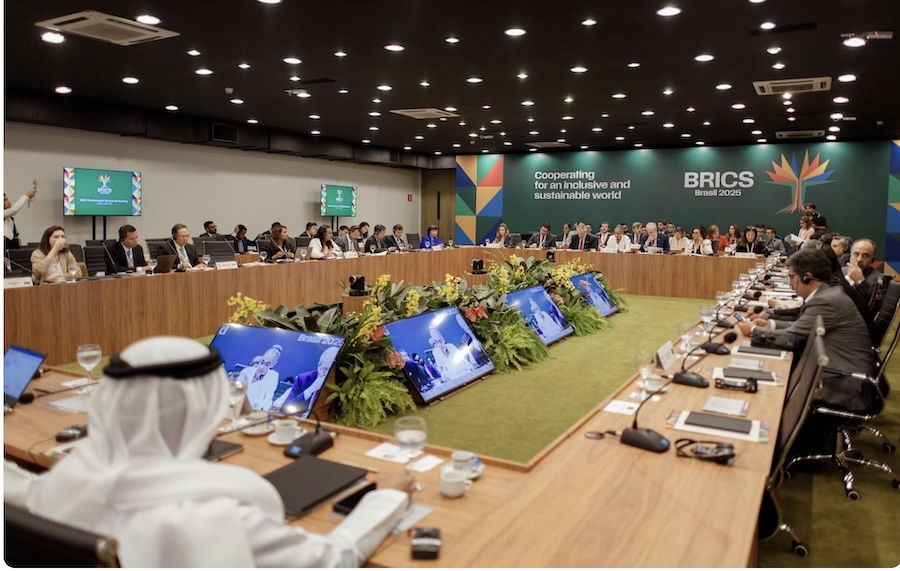
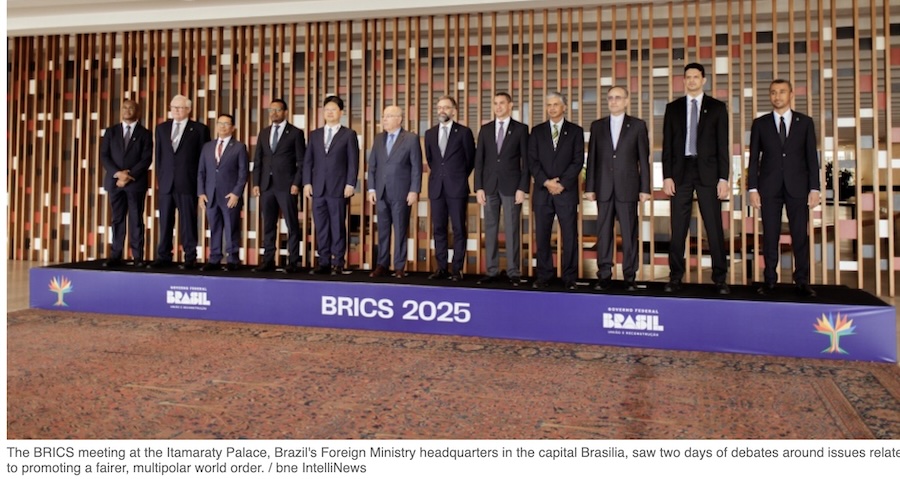
The 16th BRICS Summit saw the leaders adopt the Kazan Declaration: “Strengthening Multilateralism For Just Global Development And Security” on Wednesday (October 23).

(Editor’s note: Click here for the full text of the Kazan Declaration as published by the Kremlin. In case this becomes unavailable, the full text may be found here as published by the government of India. See below for list of countries attending the Summit.)

The leaders reiterated the importance of further enhancing BRICS solidarity and cooperation based on their mutual interests and key priorities and further strengthening our strategic partnership.

Screenshot

They reaffirmed their commitment to the BRICS spirit of mutual respect and understanding, sovereign equality, solidarity, democracy, openness, inclusiveness, collaboration and consensus.

“As we build upon 16 years of BRICS Summits, we further commit ourselves to strengthening cooperation in the expanded BRICS under the three pillars of political and security, economic and financial, cultural and people-to-people cooperation and to enhancing our strategic partnership for the benefit of our people through the promotion of peace, a more representative, fairer international order, a reinvigorated and reformed multilateral system, sustainable development and inclusive growth.”

Under the head Need for reform of global institutions, it said:

The Bretton Woods international financial system’s institutions, including the World Trade Organization, should be reformed to better represent developing countries’ interests.

BRICS opposes “unilateral, prohibitive, discriminatory and protectionist” measures taken under the pretext of fighting global climate change, including carbon emissions adjustment mechanisms and taxes.

BRICS supports comprehensive reform of the United Nations, including the Security Council, to make it more representative, and notes its centrality in the system of relations between nations.

Under New initiatives, it said:

BRICS members recognize the potential of information and communication technologies in bridging the digital divide between nations to aid socio-economic development.

BRICS intends to transform the New Development bank to serve the needs of the 21st century.

BRICS supports the creation of a New Technology Platform to strengthen development cooperation, including by creating high-tech products using domestic technological potential to fuel ” sustainable and inclusive”growth.

The organization agrees to explore the creation of an independent cross-border settlement and depository infrastructure known as BRICS Clear.

BRICS is ready to strengthen cooperation to develop medicines, including vaccines and nuclear medicine projects.

BRICS welcomes the creation a united transport and logistics platform.

The declaration supports Russia’s proposal to create a Grain Exchange to “promote rules-based trade in agricultural products and fertilizers and minimize disruptions.”

(Article continued in the right column)

Question for this article:

What is the contribution of BRICS to sustainable development?

(Article continued from the left column)

Under Expanding cooperation:

The declaration welcomes the expanded use of national currencies for transactions between BRICS members and their trade partners.

The document highlights the importance of expanding cooperation based on common interests and further building up strategic partnerships among BRICS members, and continuing to implement the bloc’s Economic Partnership Strategy.

The bloc welcomes interest shown by countries of the Global South toward BRICS, and calls for greater participation of the least developed nations, especially in Africa, in global processes.

Under Opposing global crises:

The document “condemns”the illegal use of discriminatory and politically motivated sanctions and highlights their negative impact on the world economy.

BRICS is opposed to the deployment of weapons in outer space, and supports strengthening the global non-proliferation and disarmament regimes, and implementing a Security Council resolution on measures to prevent WMDs from falling into the hands of terrorists. It calls for strengthened ties between law enforcement to aid in the fight against narcotics.

Bloc members outlined their positions on the Ukrainian crisis, and took note of proposals for mediation to bring the conflict to a conclusion through negotiations.

BRICS expressed support for Palestine’s full-fledged membership in the UN.

The declaration condemns Israel’s attack on UN employees in Lebanon, and the pager terror attack of September 17.

BRICS welcomes the creation of a Haitian Transitional Presidential Council and electoral council to resolve the crisis plaguing the Caribbean nation.

BRICS expresses concern over the escalating violence and worsening humanitarian situation in Sudan, and called for a ceasefire.

The declaration criticizes the politicization of human rights, and double standards in this area.

It also expressed opposition to all forms of discrimination in sports.

– – –

Editor’s note: A press survey by CPNN found the following participation by countries in the Kazan conference.

Heads of state came from 27 countries representing almost half of the world’s economy. Chief among them were the heads of state from the five original BRICS countries, Brazil, Russia, India, China and South Africa. The President of Brazil spoke by videoconference and was represented in person by the foreign minister. Heads of state also came from all of the BRICS members added last year, Egypt, Ethiopia, Iran and United Arab Emirates.

The summit decided to invite an additional 13 countries as “partner states”. Algeria, Belarus, Bolivia, Uzbekistan, Kazakhstan, Turkey and Vietnam sent their head of state to Kazan. Cuba, Indonesia, Malaysia and Thailand were represented by their foreign minister, or in the case of Malaysia, the minister of the economy. Only Nigeria, and Uganda were not present.  

Eleven other countries sent their heads of state: Armenia, Azerbaijan, Congo, Kyrgyzstan, Laos, Mauritania, Mongolia, Palestine, Tajikistan, Turkmenistan and Venezuela.

To complete the list of the 37 countries at Kazan, four were represented at the ministerial level: Bangladesh, Nicaragua, Sri Lanka and Serbia.

And to complete the list of the 41 dignitaries in the group photograph, there was the Secretary-General of the United Nations, Antonio Guterres, the head of the New Development Bank, Dilma Rousseff, the Secretary-General of the Shanghai Cooperation Organization, and the Chair of the Board of the Eurasian Economic Commission.

– – – – – –

If you wish to make a comment on this article, you may write to coordinator@cpnn-world.org with the title “Comment on (name of article)” and we will put your comment on line. Because of the flood of spam, we have discontinued the direct application of comments.
‘Major Power Milestone’: US Green Groups Cheer Wind, Solar Overtaking Coal

.. SUSTAINABLE DEVELOPMENT ..

An article by Jessica Corbett from Common Dreams licensed under Creative Commons (CC BY-NC-ND 3.0)

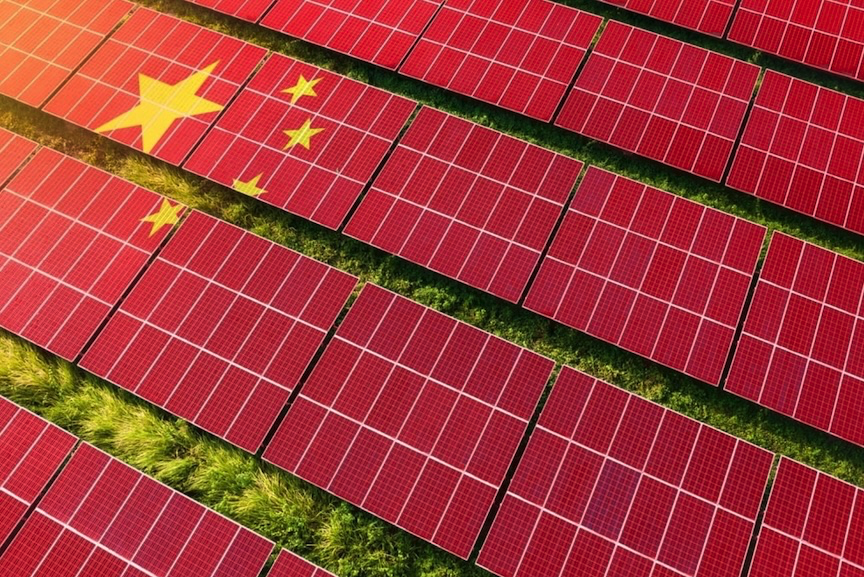
U.S. climate advocates this week are celebrating new federal data  that show wind and solar have generated more power than coal during the first seven months of 2024 and are on track to do so for the entire calendar year.


A wind farm is show in front of mountains at sunset. (Photo: Mickey Strider/Loop Images/Universal Images Group via Getty Images)

“This is the kind of news we like to see!” Food & Water Watch said  of the data on social media Tuesday. “Ensuring a livable climate for all depends on us making a swift and just transition to clean energy like wind and solar.”

The group shared reporting from E&E News, which noted that “the milestone had been long expected due to a steady stream of coal plant retirements and the rapid growth of wind and solar. Last year, wind and solar outpaced coal through May  before the fossil fuel eventually overtook the pair when power demand surged in the summer.”

“Renewables’ growth has been driven by a surge in solar production over the last year,” the news outlet continued. “The 118 terawatt-hours generated by utility-scale solar facilities through the end of July represented a 36% increase from the same time period last year, according to preliminary U.S. Energy Information Administration figures. Wind production was 275 TWh, up 8% over 2023 levels. Renewables’ combined production of 393 TWh outpaced coal generation of 388 TWh.”

Sierra Club  executive director Ben Jealous said  in a statement Wednesday that “wind and solar energy has long been the most cost-effective choice for utilities, but now it has also outpaced coal generation as the top source of energy, further demonstrating that clean energy is critical to a reliable and affordable grid.”

“This historic milestone marks a significant win for clean energy advocates, for ratepayers, and for people and communities across the country that simply want to breathe clean air, drink safe water, and worry less about climate disasters like floods and wildfires,” Jealous continued.

(Continued in right column)

Question for this article:

Are we making progress in renewable energy?

(Continued from left column)

“For decades, the Sierra Club has fought to move America Beyond Coal  and onto a clean, reliable, and affordable grid,” he added. “To date, the Beyond Coal campaign has secured the retirement of 385 coal plants and counting, and on August 16th, we celebrate the two-year anniversary of the Inflation Reduction Act, which made historic investments in clean energy and clean energy jobs. Together, families across the country are saving money, enjoying good paying jobs, breathing clean air, and drinking safe water.”

Along with celebrating the federal legislation signed in 2022 by President Joe Biden, Sierra Club highlighted a state law signed the previous year by Democratic Illinois Gov. JB Pritzker.

“Illinoisans should be proud of the work we’ve done to close our largest coal plants and leverage the power of clean energy to drive economic growth while reducing pollution that’s harmful to public health and our planet,” said Jack Darin, director of the Sierra Club’s state chapter. “Thanks to the Climate and Equitable Jobs Act of 2021, Illinois workers are now building the clean energy that is replacing old, dirty fossil fuels and bringing a brighter future to communities across our state.”

Celebrations over the “major power milestone” come as Americans prepare for a November presidential election in which Democratic Vice President Kamala Harris and Minnesota Gov. Tim Walz—who are endorsed by a range of climate groups—are set to face former Big Oil-backed former Republican President Donald Trump and U.S. Sen. JD Vance (R-Ohio).

During an April event in Florida, Trump told fossil fuel executives that if they invested just $1 billion into his campaign, he would gut the Biden-Harris administration’s climate regulations. The Washington Post reported  Tuesday that billionaire Continental Resources founder then “called other oil executives and encouraged them to attend fundraisers and open their wallets.”

While Hamm is reportedly sharing Big Oil’s priorities with the Trump-Vance team, their approach can be summed up by a phrase they’ve said on the campaign trail: “drill, baby, drill.”

Although the Republican candidates have tried to distance themselves by the Heritage Foundation-led Project 2025, the right-wing policy agenda—crafted by many Trump allies—has also alarmed climate campaigners.

Noting the new energy data, Antonia Juhasz, a senior researcher on fossil fuels at Human Rights Watch, said  Tuesday: “This transformation is due in large part to federal government policy which has specifically incentivized renewable energy development and deployment and increased regulation on the harms of fossil fuels. All of which are specifically targeted for removal in Project 2025.”

As Common Dreams reported  earlier Wednesday, an analysis from the think tank Energy Innovation shows that a GOP administration implementing the Project 2025 plan would increase U.S. greenhouse gas emissions by 2.7 billion metric tons by 2030 compared to the current trajectory.

The heat is on: We must rise to the challenge of rising temperatures, urges UN chief

. . SUSTAINABLE DEVELOPMENT . .

An article from The United Nations

The UN chief on Thursday issued an urgent call to action to better protect billions around the world exposed to crippling effects of extreme heat, as global temperature rise continues unabated.

The appeal comes against the backdrop of record temperatures and deadly heatwaves – from the United States to Africa’s Sahel and Europe to the Middle East – that have killed several hundred people this summer.

During the Hajj, for instance, scorching heat claimed over 1,300 pilgrim lives.

“Billions of people are facing an extreme heat epidemic – wilting under increasingly deadly heatwaves, with temperatures topping 50 degrees Celsius around the world. That is 122 degrees Fahrenheit – halfway to boiling,” Secretary-General António Guterres said at a press conference at UN Headquarters in New York.

“The message is clear: the heat is on. Extreme heat is having an extreme impact on people and planet. The world must rise to the challenge of rising temperatures.”

Mr. Guterres also underscored the need to step up protections for workers.

Over 70 per cent of the global workforce, or 2.4 billion people, are at substantial risk of extreme heat, according to new report from the UN International Labour Organization (ILO).

The situation is particularly dire in the Africa and Arab regions, where more than 90 per cent and 80 per cent of workers are exposed, respectively. In Asia and the Pacific  – the world’s most populous region – that figure is three in four workers (75 per cent).

(article continued in right column)

Question for this article:

Despite the vested interests of companies and governments, Can we make progress toward sustainable development?

(Article continued from the left column)

In addition, heat stress at work is projected to cost the global economy $2.4 trillion by 2030, up from $280 billion in the mid-1990s. 

Protect workers

“We need measures to protect workers, grounded in human rights,” Mr. Guterres stressed.

“And we must ensure that laws and regulations reflect the reality of extreme heat today – and are enforced.”

Boost resilience

He also underscored the need to strengthen resilience of economies and societies, citing impacts such as infrastructure damage, crop failures, and increased pressure on water supplies, health systems, and electricity grids.

Cities are particularly vulnerable, experiencing heating at twice the global average rate.

To address these challenges, Mr. Guterres called for comprehensive and tailored action plans based on scientific data are essential for countries, cities and sectors.

“We need a concerted effort to heatproof economies, critical sectors and the built environment.”

Fight the disease

The UN chief reiterated that it is crucial to recognize the myriad symptoms beyond extreme heat, such as hurricanes, floods, droughts, wildfires and rising sea levels.

The core issue is the reliance on fossil fuels and climate inaction, he stated, stressing that governments, especially G20 nations, the private sector, cities and regions, must urgently adopt climate action plans to limit global temperature rise to 1.5°C.

Alongside, countries must urgently phase-out fossil fuels and end new coal projects.

“They must act as though our future depends on it – because it does.”

– – – – – –

If you wish to make a comment on this article, you may write to coordinator@cpnn-world.org with the title “Comment on (name of article)” and we will put your comment on line. Because of the flood of spam, we have discontinued the direct application of comments.
The Summit of the Future

. . SUSTAINABLE DEVELOPMENT . .

An article by Jeffry Sachs* in the Transcend Media Service

The world’s geopolitical system is not delivering what we want or need.  Sustainable development is our declared goal, meaning economic prosperity, social justice, environmental sustainability, and peace.  Yet our reality is continued poverty amidst plenty, widening inequalities, deepening environmental crises, and war.  To get back on track, UN Secretary General Antonio Guterres has wisely called for a Summit of the Future (SOTF)  at the United Nations on September 22-23, a call that has been endorsed by the 193 UN Member states.

The core idea of the Summit of the Future is that humanity is facing a set of unprecedented challenges that can only be solved through global cooperation.  The crisis of human-induced climate change (especially the warming of the planet) cannot be solved by any one country alone.  Nor can the crises of wars (such as in Ukraine and Gaza) or the geopolitical tensions (between the US and China) be settled by one or two countries alone.  Each country, even the major powers including the US, China, Russia, India, and others are part of a complex global structure of power, economics, and politics that requires truly global solutions.

The Summit will revolve around 5 core topics, all of them related to multilateralism, meaning the system by which nations co-exist with the rest of the world.  These topics are: (1) the goal of sustainable development; (2) the goal of peace; (3) the control of new technologies such as artificial intelligence; (4) the empowerment of young people and future generations; and (5) reform of the UN architecture.

The UN Sustainable Development Solutions Network (SDSN), which I direct on behalf of UN Secretary General Antonio Guterres, has issued a statement summarizing the view of leading academics around the world about the reform of the multilateral system.  The SDSN statement on the SOTF  is Chapter 1 of the SDSN’s 2024 Sustainable Development Report.

On the goal of sustainable development, the core challenge is global finance.  Achieving the Sustainable Development Goals (SDGs) – including the fight against poverty, hunger, disease, and environmental degradation – requires sizable public investments.  The main priority public investment areas including education, health care, zero-carbon energy, sustainable agriculture, urban infrastructure, and digital infrastructure.  The problem is that the poorer half of the world — the low-income countries and lower-middle-income countries – lack the access to financing they need to achieve the SDGs.  The most urgent reform of the global system these countries need is access to long-term, low-cost financing.

On the goal of peace, the core challenge today is great-power competition.  The US is in competition with Russia and China.  The US aims for primacy in Europe over Russia, and primacy in Asia over China.  Russia and China resist the US.  The result is war (in Ukraine) or risk of war (in East Asia).  We need a stronger UN-led system in which great-power competition is governed and restrained by the UN Charter rather than by militarism and power politics.  More generally, we are past the era when any single country can or should aspire to primacy or hegemony.  The major powers should live in peace and mutual respect under the UN Charter, without threatening each other’s security.

On the goal of technology, the main challenge is to ensure transparent and responsible governance of the new advanced technologies, including biotechnology, artificial intelligence, and geo-engineering.  Such powerful technologies cannot continue to be managed in secrecy by the militaries and powerful corporations.  They need to be governed by honesty, transparency, and responsibility to the public.

(article continued in right column)

Question for this article:

Despite the vested interests of companies and governments, Can we make progress toward sustainable development?

Sustainable Development Summits of States, What are the results?

(Article continued from the left column)

On the goal of youth and future generations, the major challenge is to ensure that every child can achieve his or her potential through a high-quality education.  Education is essential for a decent job and a life of dignity.  Yet hundreds of millions of children, especially in the poor countries, are either out of school or in sub-standard schools that are not teaching the skills needed for the 21st century.   Without a quality education, these children will face a lifetime of poverty and under-employment or unemployment.  We need a new global financial arrangement to ensure that every child, even in the poorest countries, is given the opportunity for a decent education.

On the goal of reforming the UN system, the key is to give more power to UN institutions and to make them more representative.  The UN today depends too much on a few powerful countries, most on notably the US.  When the US doesn’t pay its dues to the UN, for example, the whole UN system is weakened.  We need to strengthen the UN system by ensuring that it is properly and reliably financed through a new system of international taxes – for example, on CO2 emissions, shipping, aviation, and financial transactions – rather than the contributions of individual governments.

We also should make the UN institutions more representative of the world of 2024 rather than the world of 1945, when the UN was established.  India, for example, should become a permanent member of the UN Security Council.  India is the world’s most populous country, the third largest economy, and a nuclear power as well.  In 1945, India was still a British colony, and so was not given its proper place in the UN system at that time.

Another core recommendation of the SDSN is to introduce a UN Parliamentary Assembly as a new chamber alongside the UN General Assembly (UNGA).  The UNGA gives each member state one vote, with the power of that vote in the hands of the executive branch of each government.  A UN Parliament would represent the peoples of the world rather than the governments.

Most importantly, the Summit of the Future is an invitation to intensive global brainstorming on how to make our deeply interconnected world fit for sustainable development in the 21st century.  It is a great challenge that should be welcomed and joined by people all over the world.  A great debate will open in September and then continue for years to come.
– –

* The author, Jeffrey D. Sachs, Professor of Sustainable Development and Professor of Health Policy and Management at Columbia University, is Director of Columbia’s Center for Sustainable Development and the UN Sustainable Development Solutions Network. He has served as Special Adviser to three UN Secretaries-General [Kofi Annan (2001-7), Ban Ki-moon (2008-16), and currently serves as an SDG Advocate under Secretary-General António Guterres. His books include The End of Poverty, Common Wealth, The Age of Sustainable Development, Building the New American Economy, and most recently, A New Foreign Policy: Beyond American Exceptionalism. Sachs was also an advisor to the last leader of the Soviet Union, Mikhail Gorbachev, as well as to the first president of the Russian Federation, Boris Yeltsin.

– – – – – –

If you wish to make a comment on this article, you may write to coordinator@cpnn-world.org with the title “Comment on (name of article)” and we will put your comment on line. Because of the flood of spam, we have discontinued the direct application of comments.
News from the Culture of Peace Foundation in Nigeria

. . SUSTAINABLE DEVELOPMENT . .

Excerpts from the instagram page of the Culture of Peace Foundation

The Culture of Peace Foundation (CUPEF) brings together changemakers and thought leaders with a common vision to advance culture of peace and non-violence.

A official statement dated October 20, 2023 says “Culture of Peace Foudation was founded with a vision to advance UNESCO culture of peace and non-violence amongst all class of humanity regardless of race, gender, color or creed. The mission of the foundation is to create conditions for the attainment of sustainable peace through human capital development, empowering individuals and communities to cultivate culture of peace and non-violence.


Week one with Paulinho Muzaliwa and Titilope Adedokun CHC agri-technicians training program 2024 in cooperation with Culture of Peace Foundation

A lecture dated October 24, 2023 by Freddy Mutanguha, CEO of Aegis Trust, is publicized on the subject of “Strategizing for our collective future; Dialogues of peace; Dismantling Hate.”

January 13, 2024. Partnership with African University Student Platform for African Youth Conference January 18-20 in Kigali, Rwanda.

January 13, 2024. Farouk Chibuzor Akaolisha, founder and president of the Culture of Peace foundation speaks on NTA Channel 5, Abuja, concerning “Role of Intercultural Communication in Effective Leadership.”

January 20, 2024. The President of Culture of Peace Foundation Farouk Chibuzor met with some stakeholders in Maitama, Abuja at the office of CHC AgriTech Africa LTD to discuss better ways to engage with the state governments in some Northern States for the proposed AgriTech Training and Empowerment Project- a partnership between Culture of Peace Foundation (CUPEF) and CHC AgriTech Africa with commitment to train smallholder farmers in Nigeria on the use of eco-friendly and fast-acting microbiome technology to improve food security and environmental health protection.

March 30, 2024: culture_of_peace_foundation, Maitama, Federal Capital Territory, Nigeria. Are you are a farmer, teacher, student, freelancer, unemployed graduate, civil servant, business person, or even a stay-at-home mom interested in creating new economic opportunities through agriculture, we invite you to register for the CUPEF-CHC Agri-Technicians Training Program to unlock exciting new opportunities in the agro-value chain.

(article continued in right column)

Question for this article:

What is the relation between movements for food sovereignty and the global movement for a culture of peace?

(Article continued from the left column)

May 11, 2024. We are pleased to announce the launch of CHC Agri-Technicians Training Program on Microbiome Technology- a partnership between Culture of Peace Foundation (CUPEF) and CHC AgriTech Africa aimed at promoting food security and economic empowerment of smallholder farmers.

May 28, 2024. The First Session of Train the CHC Agritechnicians Program. Meet Our Distinguished Trainer- Ms Titilope delivered the topic on the “Benefits of Social Media for Farmers”. Titilope, a renowned social entrepreneur and digital expert shared insights on using social media to drive impactful change and empower communities. Creating opportunities for Food Security and Sustainable Agriculture.

May 28, 2024. Paulinho Muzaliwa- Uganda Unidos Projects also shared knowledge and experiences with our participants us on “SOIL HEALTH”. Passionate about Regenerative Agriculture, Paulinho Muzaliwa is a multiple social impact award winner, Founder of UNIDOS Project and a Congolese Nationale living in Uganda as a Refugee.

May 29, 2024. The Second Session was delivered by Mr. Hammed Kayode on the “Art of Story Telling” taking the participants on exciting new experiences on how farmers an adapt a unique storytelling techniques to communicate their businesses and success stories to their target markets and the global community.

June 12: the Third session of CHC Agritechnicians Training Program in collaboration with @chc_agritech_africa_nigltd and @culture_of_peace_foundation featured two amazing Speakers, Earnest Corner and Dominique Edwards, both from the United States of America and Fellows at Western Union Foundation and Watson Institute. Our goal is to raise 100 Certified and Well-trained Agritechnicians that will reach and empower 100,000 farmers in 2024 and we aim to achieve this by collaborating with community leaders, social impact changemakers, farmers cooperatives, NGOs and Community Based Organisations to reach large number of smallholder farmers across communities for increased agricultural productivity and economic empowerment. We are currently working with diverse stakeholders both in the government and the private sector organisations to provide our Agritechnicians with mentorship and best experience in agricultural innovation for increased capacity development and sustainable food security.

– – – – – –

If you wish to make a comment on this article, you may write to coordinator@cpnn-world.org with the title “Comment on (name of article)” and we will put your comment on line. Because of the flood of spam, we have discontinued the direct application of comments.
Working for water and peace in the Tessalit area of Mali

. . SUSTAINABLE DEVELOPMENT . .

An article received CPNN from Bakrene Ag Sidimohamed

To work for peace in the Tessalit area in the North of Mali, we need to develop actions for the control and sharing of water resources.

I. Introduction

The Tessalit region located in the far north of Mali just on the Algerian border is characterized by large-scale livestock activity, 80% of the populations are involved in livestock breeding (breeding of camels, cows, goats and sheep).

Livestock in addition to being a source of nutrition thanks to milk, cheese, butter and meat, is also an income-generating activity through the marketing of animals.

When we talk about livestock we are necessarily talking about pastures and water sources.

From 2012 to 2024 (start of the new instability in northern Mali) the practice of livestock farming increased significantly due to the economic growth of the Tessalit area and the interest of communities in the raising of animals.

This growth has had a direct and significant impact on the daily use of water points in areas with extensive grazing and especially during periods of extreme heat; thus creating traffic jams of people and their herds at water points for almost 24 hours a day.

This is a problem everywhere, including at very few existing sources created by drilling wells thanks to development partners such as MINUSMA and international NGOs.

Because of the intense competition people often get carried away by their emotions and lose their reasoning, causing disagreements and misunderstandings.

It is generally observed that the owners of water sources and the indigenous communities of a grazing site are disturbed by the regular arrival of other communities in search of water to water their herds and for their own consumption; hence the origin of a large part of inter- and intra-community conflicts.

(article continued in right column)

(Click here for the original article in French

Question for this article:

Scarcity of water: A growing source of conflict?

Can a culture of peace be achieved in Africa through local indigenous training and participation?

(Article continued from the left column)

These conflicts around water sources are regularly fueled by political and ideological oppositions and also external exploitation. Water being the main source of life in the greater SAHARA is regularly used by conflict actors as alibis to fuel tensions between communities and thus weaken the social fabric.

Rational management of water points is the best way to prevent and manage conflicts in the localities of northern Mali.

II. Challenges Related to Water Management

It is noted that several factors explain the insufficiency of water in the Tessalit area: we can speak of low rainfall and an often empty water table, abusive use of water in mining sites during the exploitation and artisanal refining of gold, great desertification linked to climate change and deforestation, the commercialization of water towards cities and above all the significant growth of herds.

Given these different natural and human phenomena, the following practices are needed for the rational and equitable management of water and above all maintaining peaceful coexistence within communities.

III. Recommendations

To restore and consolidate social cohesion around water points, certain actions constitute essential tools for the stability of the area.

° Establish and maintain management committees at public water sources
.
° Ask traditional authorities (fraction leaders, imams) to regularly disseminate awareness-raising messages and human habits favorable to living together.

° Separate water points for domestic use from those for commercial use while instructing gold miners to produce their own sources on their work sites.

° Advocate with development partners for the construction of mini-dams and water reservoirs.

° Organise awareness sessions for economic operators and large breeders
to drill for water in large pasture environments

° Develop citizen management committees at water sources and raise awareness among nomadic populations for the sharing of water resources

– – – – – –

If you wish to make a comment on this article, you may write to coordinator@cpnn-world.org with the title “Comment on (name of article)” and we will put your comment on line. Because of the flood of spam, we have discontinued the direct application of comments.