All posts by CPNN Coordinator

About CPNN Coordinator

Dr David Adams is the coordinator of the Culture of Peace News Network. He retired in 2001 from UNESCO where he was the Director of the Unit for the International Year for the Culture of Peace, proclaimed for the Year 2000 by the United Nations General Assembly.

International Conference: Building Global Support for Women Human Rights Defenders

. WOMEN’S EQUALITY .

an article by Nobel Women’s Initiative

We are very excited to invite you to join us online for our 5th biennial conference, Defending the Defenders! Building Global Support for Women Human Rights Defenders. Over 120 women – including Nobel peace laureates and frontline activists from the Middle East, Africa and Central America—will gather in the Netherlands this week [April 20] to discuss how the international community can protect women human rights defenders across the globe.

defenders

“Women activists are on the frontlines of some of the globe’s most pressing conflicts,” says Jody Williams, Nobel peace laureate (USA) and chair of the Nobel Women’s Initiative. “These women play an essential role in pushing back against those wishing to repress basic human democratic rights.”

Williams will be joined at the conference by sister Nobel peace laureates Shirin Ebadi (Iran), Mairead Maguire (Northern Ireland) and Leymah Gbowee (Liberia), as well as globally-known human rights experts.

Women human rights defenders are targeted for a wide range of violence around the world—from verbal harassment to systematic rape, torture and assassinations. Often these women are targeted for violence because they are defying traditional gender roles and represent a threat to the “status quo”.

Among those at highest risk are women resisting mining and other mega-developments in their communities and women facing new threats from extremist groups such as ISIS. Women are at the forefront of creative and innovative nonviolent action. By listening, learning, and amplifying women’s voices, we hope to bring attention to incredible and important work being done by women front-line defenders, as well as strengthen networks for support and protection.

Stay tuned in the coming days on Facebook, Twitter (#DefendingDefenders), Instagram (@nobelwomen), and our Defending the Defenders Blog as we post photos, videos, facts and quotes and spotlight some of our extraordinary participants!

(Thank you to Janet Hudgins, the CPNN reporter for this article.)

Question for this article:

Protecting women and girls against violence, Is progress being made?

The 47 CPNN articles devoted to this theme suggest that indeed progress is being made.

See comment below about Women’s International League for Peace and Freedom, as well as our recent article A century of women working for peace

Côte d’Ivoire: Ouverture à Yamoussoukro du centre régional ISESCO pour la culture de la paix

. PARTICIPATION DÉMOCRATIQUE .

un article par Abidjan.net

Le ministre de l’Enseignement supérieur et de la Recherche scientifique, Gnamien Konan a procédé jeudi, à l’ouverture officielle à Yamoussoukro du centre régional pour l’éducation à la culture de la paix (CRECP) en présence de M. Najib Rhiati représentant l’organisation islamique pour l’éducation, les sciences et la culture (ISESCO), initiatrice de la création du CRECP en Côte d’Ivoire.

yamoussoukro

Cliquez sur le photo pour l’élargir

Le CREP est logé au sein de la Fondation internationale Félix Houphouët-Boigny pour la recherche de la paix. Il est destiné à promouvoir le dialogue, les droits de l’homme, la justice et la paix pour un monde meilleur. Il a démarré en 2008, mais concrétisé par la signature d’un accord entre la République de Côte d’Ivoire et l’ISESCO en octobre 2013.

(cliquez ici pour une traduction anglaise de cet article.)

(Question pour cet article:)

How can we develop the institutional framework for a culture of peace?

The Houghouët-Boigny Foundation of Yamoussoukro: what is its contribution to the culture of peace?

“Il a pour mission de promouvoir, dans les États africains francophones membres de l’ISESCO, l’éducation à la culture de paix dans les systèmes et programme éducatifs, de renforcer les capacités de leurs formateurs dans le domaine de la culture de la paix, et de faciliter l’intégration de l’éducation à la culture de la paix dans les programmes d’enseignement scolaire et universitaire”, a indiqué Dr Diénéba Doumbia, directeur du département de la recherche de la paix de la Fondation FHB.

Le plan d’action triennal actuel du CREP prévoit un programme continu d’éducation aux valeurs humaines, selon le représentant du directeur général de l’ISESCO, Najib Rhiati.

“Ce programme vise à faire de l’école un espace d’égalité et de fraternité humaine, un espace qui ouvrira la voie à l’instauration d’une vie commune, fondée sur les valeurs de la paix et de la solidarité et établie par les enfants qui formeront une jeunesse capable de construire l’avenir”, a-t-il précisé.

Gnamien Konan, pour sa part, a expliqué que les conflits et tensions sont nés de l’incivisme et de la démission des citoyens du jeu démocratique. ”Cette montée de violences déstabilise nos économies, portent préjudice aux systèmes éducatifs et anéantissent la solidarité légendaire des pays africains”, a-t-il déploré.

Aussi a-t-il engagé les animateurs du CRECP à mener continuellement des réflexions, afin d’imaginer des mécanismes innovants et efficaces et de nouvelles attitudes qui permettront d’éduquer les populations à la culture de la paix, gage d’un développement harmonieux de nos pays.

Yamoussoukro, Côte d’Ivoire: Opening of ISESCO Regional Centre for Culture of Peace

. DEMOCRATIC PARTICIPATION .

an article by Abidjan.net

The Minister of Higher Education and Scientific Research, Gnamien Konan presided Thursday [16 avril] at the official opening in Yamoussoukro of the regional center for education for a culture of peace (CRECP) in the presence of Mr Najib Rhiati representative of the Islamic Organization for Education, Science and Cultural Organization (ISESCO), initiator of the creation of CRECP in Côte d’Ivoire.

yamoussoukro

Click on the photo to enlarge

CREP is housed within the Félix Houphouët-Boigny peace foundation. It is intended to promote dialogue, human rights, justice and peace for a better world. It was conceived in 2008, and formalized by the signature of an agreement between the Republic of Côte d’Ivoire and ISESCO in October 2013.

(click here for the original French version of this article)

(Question for this article:)

How can we develop the institutional framework for a culture of peace?

The Houghouët-Boigny Foundation of Yamoussoukro: what is its contribution to the culture of peace?

“Its mission is to promote, in the French-speaking African states members of ISESCO, education for a culture of peace in educational systems and programs, to enhance the capabilities of their culture of peace trainers, and to facilitate the integration of education for a culture of peace in school and university curricula,” said Dr. Dieneba Doumbia, director of research for peace of FHB Foundation.

The current three-year plan of CREP provides an ongoing program of education in human values, according to the representative of the Director General of ISESCO Najib Rhiati.”This program aims to make the school a space of equality and human brotherhood, a space that will pave the way for the establishment of a common life based on the values ​​of peace and solidarity and established by children who will form a youth able to build the future, ” he said.

Gnamien Konan, for his part, explained that conflicts and tensions are born of lack of civic responsibility and lack of democratic participation. “The resulting violence destabilizes our economies, harms our education systems and destroys the legendary solidarity of African countries,” he lamented.

Also, he has hired CRECP facilitators to continuously conduct discussions in order to devise innovative and effective mechanisms and new attitudes that will educate people to the culture of peace, guaranteeing a harmonious development of our country.

Ecuador: 19 jueces de Paz trabajan en 12 provincias del país

. PARTICIPACIÓN DEMOCRATICA.

un artículo del Redacción Justicia, El Telégrafo (abreviado)

Los funcionarios ayudan en la solución de coflictos en zonas rurales. Este año la cobertura se ampliará a otras 6 localidades ecuatorianas. En la semana atienden a 20 personas.

Ecuador
Haga click en la photo para ampliarla
Los primeros 19 jueces de Paz nombrados fueron capacitados por la Judicatura en un taller de 40 horas. Foto: Cortesía

A principios del año anterior Berta Vaca adquirió un terreno de 2 hectáreas en el sector Las Palmas, provincia de Pastaza, pero a los pocos meses el Municipio de Puyo ocupó alrededor de 10 metros de su propiedad para construir un camino vecinal con dirección a la zona de Marianitas.

Esta acción molestó a la mujer que le pidió explicaciones al dueño original, Claudio Caicedo, quien le indicó que le entregaría la misma extensión en la parte posterior del terreno que le compró, lo cual la apaciguó.

Transcurrieron los días y no se efectuaba el trámite, Vaca cruzó una cadena en el camino para impedir el paso como una protesta, por lo que consideraba un perjuicio.

Esto motivó que los lugareños acudan a Luis Alcócer, posesionado en enero como juez de Paz de la parroquia Veracruz, provincia de Pastaza, donde reside hace 40 años.

El hombre, conocido por cerca de 220 habitantes del sector, contactó de inmediato a la mujer y al vendedor de la propiedad, los citó en la oficina de la junta parroquial y luego de 30 minutos de diálogo se solucionó el problema.

El juez de Paz escribió un acta con el compromiso de que Caicedo resarcie la extensión de terreno, con lo cual la señora Vaca acudió a la Notaría cantonal para que le fijen los nuevos linderos en la escritura. “No fue complicado solo hablamos amigablemente, llegamos a un acuerdo y así evitamos un litigio legal, solucionamos todo por la paz”, manifestó Alcócer.

La directora de Acceso a la Justicia del Consejo de la Judicatura, Patricia Salazar, informó que en diciembre de 2014 se nombraron 19 jueces de Paz para que trabajen en 17 parroquias de 12 provincias del país. “Los jueces son nombrados por la propia comunidad de donde son residentes y la Judicatura los capacita sobre sus competencias, así como la manera de llegar a acuerdos amistosos que se basan esencialmente en la voluntad de las partes”, dijo. . .

Los elegidos son voluntarios y no reciben sueldo, así como tampoco cobran por sus servicios a los usuarios, pero el compromiso es atender 8 horas a la semana a los habitantes de su sector, lo que pueden hacerlo en las oficinas de las juntas parroquiales. “La Judicatura ayuda con el mobiliario, computadora, impresora, así como el acceso a consultas directas con asesores jurídicos de la entidad”, aseguró Salazar.

La funcionaria señaló que los 19 jueces han atendido un promedio de 20 personas a la semana cada uno. “Con esto se evitó que esos vecinos vayan a instancias judiciales, lo que hubiese generado un gasto de tiempo y dinero para el ciudadano y el Estado”, agregó.

Esto ha alentado a la Judicatura a incentivar la participación de más jueces de Paz. “Existen cerca de 2.000 parroquias rurales en el país a las que queremos llegar con este programa y creemos que hasta finales de 2015 tendremos otros 80 jueces de Paz con esta línea de difundir la cultura del diálogo como vía de solución pacífica de los conflictos”. . .

(clickear aqui para la version ingles)

(Question for this article:)

How important is community development for a culture of peace?

This discussion question applies to the following articles:

Ivy Walls: Local Lawyer's Fight to Help His Community
UCONN Celebrates Kwanzaa
Reforming the “Hooker”
A Hartford Community Project Promotes Culture of Peace
La Paloma Sabanera Coffee House and Bookstore
Activities of the Santa Barbara Association for UNESCO
Hope in a Shanty Town: Story of a Woman in Bangkok
Fondation Idolè et la culture de la paix
Fondation Idolè and the Culture of Peace
Despertando almas para el cambio social
Waking Souls for Social Change
Extreme Poverty is Violence – Breaking the Silence – Searching for Peace
Estragia de Centros de Desarrollo Integral Juvenil – Soacha, Colombia
The Centre for the Integral Development of Youth in Soacha, Colombia
Lanzan proyecto para evitar que jóvenes caigan en delincuencia [Honduras]
Project launched to prevent young people from falling into crime [Honduras]
Obreros y sindicatos reviven la Promesa [Puerto Rico]
Assault on Peaceful Co-existence (Nagaland, India)
Peace Promotion Can Work (Chicago)
Peru: Intiwawa Children of the Sun
Reforma Agrária por uma Cultura de Paz (Brasil)
Land Reform for a Culture of Peace (Brazil)
Realizan jornada “Construyendo una Cultura de Paz para mi Comunidad” (República Dominicana)
'Building a Culture of Peace for my Community' (Dominican Republic)
Estudiantes caminan por la paz y la justicia en Siquinalá, Escuintla (Guatemala)
Students march for peace and justice in Siquinalá, Escuintla (Guatemala)

Ecuador: 19 peace judges now working in 12 provinces

. DEMOCRATIC PARTICIPATION .

Redacción Justicia, El Telégrafo (abridged)

Peace judges are officials who help in solving conflicts in rural areas. This year the coverage will be extended to 6 more Ecuadorian cities. At least 20 people attend each week.

Ecuador
Click on the photo to enlarge
The first 19 peace judges were trained for 40 hours by the Judiciary. Photo by Cortesía

For example, early last year Berta Vaca acquired land of 2 acres in the Las Palmas province of Pastaza, but after a few months the Municipality of Puyo took about 10 meters from his property to build a country road in the direction of the area of Marianitas.

This action angered the woman who asked for clarifications to the original owner, Claudio Caicedo, who told him he would give the same extension in the rear of the property he bought her. That calmed her down.

However, the days passed and the procedusre was not done, Vaca put a rope across the road to prevent passage as a protest against what he considered to be an injustice.

This prompted the neighbors to approach Luis Alcócer, who was inaugurated in January as peace judge of Veracruz parish, province of Pastaza, where he has lived for 40 years.

The judge, well known by the 220 inhabitants of the area, immediately contacted the woman and the seller of the property, called them into his office, and after 30 minutes of dialogue the problem was solved.

The peace judge wrote up an agreement that Caicedo extended the property, which señora Vaca expected, and set down the new boundaries in writing. “It was not difficult to talk amicably, so we reached an agreement which avoided a legal dispute, and resolved the problem peacefully,” said Alcócer.

The director of the Justice Council of the Judiciary, Patricia Salazar, reported that as of December, 2014, there were 19 peace judges at work in 17 parishes in 12 provinces of the country. “Judges are appointed by the community of which they are resident and the Judiciary trains them how to reach amicable agreements that are essentially based on the will of the parties,” she said. . .

Peace judges are volunteers and are not paid, nor charge for their services to users, but the commitment is to meet eight hours a week with the inhabitants of their sector, which they can do at the offices of the parish. “The Judiciary helps with furniture, computer, printer and access to direct consultation with legal counsel of the organization,” said Salazar.

The official said the 19 judges are dealing with an average of 20 cases a week. “This has prevented those in conflict from having to go to court, which would have generated a waste of time and money for the citizen and the state,” she added.

This has encouraged the Judiciary to encourage the participation of more peace judges. “There are about 2,000 rural parishes in the country that we want to reach with this program and we believe that by the end of 2015 we will add another 80 judges to this initiative of spreading the culture of dialogue as a means of peaceful settlement of disputes”. ..

(click here for the original Spanish version of this article)

Other articles related to this one:

Côte d’Ivoire: Festival de musique du 21 au 26 avril à Abidjan pour des “élections apaisées” en Afrique

. PARTICIPATION DÉMOCRATIQUE .

une article par Africatime

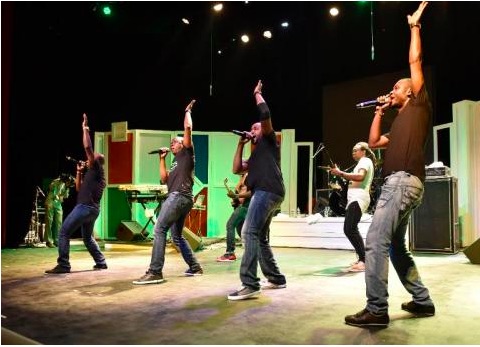
Le Femua, un festival de musique réunissant une dizaine d’artistes africains de renom, se tiendra du 21 au 26 avril à Abidjan en faveur d'”élections apaisées” sur le continent, où plusieurs scrutins se dérouleront cette année, a indiqué l’organisation.

Abidjan
click on photo to enlarge

“On ne peut rester les bras croisés face à une actualité électorale très controversée dans les deux Congo (RDC et Congo -Brazzaville), au Burkina et Togo”, a expliqué à l’AFP Salif Traoré, dit A’Salfo, le leader du groupe ivoirien Magic System.

“La musique va donc fédérer des vibrations pour baisser la tension et faire passer un message sur les élections apaisées”, a espéré A’Salfo, ambassadeur de l’Unesco pour l'”alphabétisation et la culture de la paix” depuis 2012.

Le Festival des musiques urbaines d’Anoumabo (Femua), créé en 2008, réunit pour cette 8e édition une dizaine d’artistes de renom, dont Fally Ipupa (RDCongo), Freshlyground (Afrique du Sud), Joel Sebunjo (Ouganda), Bracket (Nigeria), Philip Monteiro (Cap-Vert), Habib Koité (Mali) ou encore Smarty (Burkina Faso).

Du 21 au 26 avril, le Femua se déroulera essentiellement à Anoumabo, un quartier pauvre d’Abidjan aux ruelles boueuses, où se côtoient habitations précaires et maisons modernes.

“Nous allons lancer un message à partir du ghetto, d’où partent les contestations qui embrasent le pays”, a insisté le chanteur A’Salfo.

Le quartier d’Anoumabo a vu naitre Magic System, groupe star de la musique ivoirienne, qui depuis son succès “Premier Gaou”, enchaîne les tubes en Afrique et en Europe.

Le Nigeria, le plus riche pays d’Afrique vient de vivre une alternance démocratique applaudie par ses habitants et la communauté internationale. Mais le déroulement et l’issue d’autres scrutins africains paraissent plus incertains.

L’ONU s’est ainsi alarmée mercredi de la “direction prise” par le Burundi avant les législatives et la présidentielle prévues en mai et juin. La Côte d’Ivoire, le Burkina Faso, le Togo et la Guinée sont également en année électorale.

(Cliquez ici pour une traduction de cet article en anglais)

Question pour cet article

How should elections be organized in a true democracy?

Latest reader comment:

CPNN receives more and more articles from Africa about initiatives that contest the European model of “winner-takes-all” elections, and demand that elections should only be part of a broader democratic process that seeks consensus and compromise.

This fits with the pre-colonial systems of justice in Africa, when there was no monotheism and no single supreme god, no single supreme law, no single “truth” provided by divine intervention, but rather a compromise among many different “gods,” perspectives and “truths” arrived at through a process of mediation, for example, the “palabra.”

Ivory Coast: Music Festival from 21 to 26 April in Abidjan for “peaceful elections” in Africa

. . DEMOCRATIC PARTICIPATION . .

an article by Africatime

The Femua, a music festival bringing together ten renowned African artists will be held from April 21 to 26 in Abidjan in favor of “peaceful elections” on the continent, where several elections will be held this year, said the organization.

Abidjan
click on photo to enlarge

“We can not sit idly by when there are very controversial elections in both Congo (DRC and Congo -Brazzaville), Burkina Faso and Togo,” according to Salif Traoré (stagnate: A’Salfo) the leader of the Ivorian group Magic System.

“Music unites our vibrations, lowers our blood pressure and get across a message for peaceful elections”, said A’Salfo, who has been an Ambassador of Unesco for “Literacy and Culture of Peace” since 2012.

The festival of urban music in Anoumabo (Femua), created in 2008, brings together for the 8th edition ten renowned artists including Fally Ipupa (DRC), Freshlyground (South Africa), Joel Sebunjo (Uganda), Bracket (Nigeria), Philip Monteiro (Cape Verde), Habib Koité (Mali) and Smarty (Burkina Faso).

From 21 to 26 April, the Femua mainly take place in Anoumabo, a poor neighborhood of Abidjan with muddy streets, and both precarious dwellings and modern homes.

“We will launch a message from the ghetto, where the disputes arise that inflame the country,” insisted the singer, A’Salfo.

The ghetto of Anoumabo saw the birth of Magic System, star group of Ivorian music, which since its first success “Premier Gaou” , has been shown often on the screens of Africa and Europe.

Nigeria, the richest country in Africa has just experienced a democratic change applauded by the people and the international community, but the conduct and outcome of other African elections seem more uncertain.

The UN expressed its alarm Wednesday “about the directions being taken” by Burundi before its parliamentary and presidential planned in May and June. This is also an election year in Ivory Coast, Burkina Faso, Togo and Guinea.

(click here for the original French version of this article)

Latest Discussion

How should elections be organized in a true democracy?

What place does music have in the peace movement?

Latest reader comment:

CPNN receives more and more articles from Africa about initiatives that contest the European model of “winner-takes-all” elections, and demand that elections should only be part of a broader democratic process that seeks consensus and compromise.

This fits with the pre-colonial systems of justice in Africa, when there was no monotheism and no single supreme god, no single supreme law, no single “truth” provided by divine intervention, but rather a compromise among many different “gods,” perspectives and “truths” arrived at through a process of mediation, for example, the “palabra.”

London: Confronting a world at war conference

DISARMAMENT AND SECURITY .

An article by Stop the War Coalition

This crucial post-election conference on Saturday 6 June in London will bring together leading anti-war writers, campaigners and experts from Britain and around the world including Mustafa Barghouti, Medea Benjamin, Tariq Ali and Explo Nani Kofi.

London

Defense policy has become a big issue in this election. Millions of people believe Britain needs a foreign policy u-turn. 14 years of the War on Terror have caused carnage and chaos in the Middle East, Central Asia, Africa and beyond. This is a chance to discuss the causes and consequences of serial war and how we can resist it.

The world is a much more dangerous place than it looked fourteen years ago, before the launch of the War on Terror.  The Middle East is in flames as a result of a series of Western interventions. The War on Terror has in fact spread violence and instability across an arc from Central Asia through the Middle East and into the African continent.

Meanwhile, great power confrontation has returned to Europe as NATO has pushed progressively Eastwards towards the Russian border, triggering crisis and civil war in Ukraine. Confronting a World at War brings together key writers, campaigners and politicians to analyse this alarming situation and to discuss and plan how the anti-war movement should respond.

Sessions include:
• Where did ISIS come from?
• Frontline Ukraine – NATO pushes East
• The return of the neocons
• Divide and conquer? The US and Latin America
• Trident: Scrapping the deadly deterrent
• Saudi Arabia: Frankenstein’s monster in the Middle East
• Back East of Suez

Speakers include Tariq Ali • Medea Benjamin • Lindsey German • Seumas Milne  • Victoria Brittain • Bruce Kent • Jeremy Corbyn MP • Myriam Francois-Cerrah  • Mark Weisbrott • George Galloway MP • Explo Nani-Kofi • Kate Hudson • Jonathan Steele • Andrew Murray • Joe Lombardo • Katy Clark MP • David Edgar • Sabby DalhuLombardo • Myriam Francois-Cerrah • Mark Weisbrot • George Galloway • Kate Hudson • Jonathan Steele • Explo Nani-Kofi • Chris Nineham • Andrew Murray • John Rees • Richard Sakwa • Carol Turner • Sami Ramadani • Judith Orr • Malia Bouattia • Steve Bell • Matt Willgress and others.

Be part of the discussion.

Book your ticket online.

(Thank you to Janet Hudgins, the CPNN reporter for this article.)

(Question for this article:)

20 Innovators Protecting the Planet #EarthDay2015

. SUSTAINABLE DEVELOPMENT .

an article by Sarah Small and Danielle Nierenberg, Food Tank

April 22nd is the 45th anniversary of Earth Day—an important opportunity to highlight solutions to some of the world’s most pressing environmental and social challenges.

earthday
Click on image to enlarge

April 22nd is the 45th anniversary of Earth Day—an important opportunity to highlight solutions to some of the world’s most pressing environmental and social challenges.

On a planet in which hunger and food waste coexist, where crops feed biofuels or animals despite water and food shortages, and where obesity in one country contrasts starvation in another, solutions and innovations to help ensure a vibrant, healthy future are more important than ever.

There are countless organizations and individuals who inspire us at Food Tank by producing creative and innovative solutions to challenges both people and the planet face including soil degradation, loss of biodiversity, climate change, poverty, industrial agriculture practices, land ownership, and food security.

Food Tank is highlighting 20 of our favorite innovators this Earth Day.

Jamila Abass—Abass is co-founder of M-Farm, a technology tool for smallholder farmers to receive information on the retail price of their products in Kenya. Farmers use SMS to buy farm inputs from manufacturers and connect to markets. The tool is innovating the way farmers access information and bring products to the marketplace.

Will Allen—Former professional basketball player, Allen, grew up on a small farm in Maryland where developed roots in farming. After returning to the United States from Belgium, Allen founded Growing Power Inc., a nonprofit organization for urban agriculture and community building. He is an innovator in methods of composting, vermicomposting, and aquaponics. Using these practices he has increased yields in urban growing spaces.

Bruno Follador—Follador is a geographer, biodynamic researcher, and specialist in biodynamic composting and chromatography. A native of San Paolo, Brazil, her first encountered biodynamics at the age of 18. According to Follador, educating and helping eaters to become conscious of their responsibility in a biodynamic system is one of the best ways to heal the food system. His work focuses on life processes and actively improving the health of farms.

Eric Holt-Giménez—An author, lecturer, agroecologist, and food system researcher, Holt-Giménez has been a vocal advocate for campesinos (peasant farmworkers) and a champion of el Movimiento Campesino a Campesino (the Farmer to Farmer Movement). The movement has now spread across Latin America with hundreds of thousands of practicing farmers in over a dozen countries.

John Georges—Georges is an entrepreneur and inventor from Arcadia, Florida. He has taken the challenges growers and farmers face in agricultural irrigation and invented a sustainable and cost effective solution. His product Tree T Pee stimulates root growth, protects trees from frost and reduces fuel, herbicide and fertilizer use, while conserving water in a major way.

Ernst Gotsch—Gotsch developed complex crop systems in the 1970s by experimenting with multi-species consortia, such as planting corn with beans or apples with cherries in Germany and Switzerland. His methods restore degraded soils, produce high yields, and eliminate the use of pesticides. “We should combine the present with the future. It must be economically viable for the present and for the future,” said Gotsch. Currently, Gotsch is developing agroecological practices in Brazil at Fazenda da Toca.

(Article is continued on right side of page)

Question for this article:

How can we encourage people to care for the environment?

(Article continued from left side of page)

Stephanie Hanson—Hanson has been the Director of Policy and Outreach at One Acre Fund since 2009, which provides smallholder farmers in Africa with support, inputs, and training, with the goal of doubling agricultural production on each acre of smallholder farmland.

Selina Juul—Danish food waste expert, Juul, founded The Stop Wasting Food (SWF) movement in 2008 and it is now the largest consumer organization fighting against food waste in Denmark. With more than 18,000 publications and thousands of supporters, Juul is inspiring business like Rema 1000 to reduce the price of food items past sell-by dates instead of throwing them out. An analysis by TNS Gallup for Agriculture showed that in 2013 half of Danes have reduced their food waste.

Byung Soo Kim—Kim pioneered organic farming in South Korea, he started with just 20 chickens and now has more than 4,000. Active in developing co-ops, Slow Food South Korea, Worldwide Opportunities on Organic Farms (WWOOF), and spreading organic farming methods, Kim has empowered others to become interested in organic farming where it previously didn’t exist.

Federica Marra—Winner of the 2012 Barilla Center for Food & Nutrition Young Earth Solutions competition in Italy, Marra created Manna From Our Roofs, an innovative organization that engages young people across the world in food cultivation, preservation, and education.

Pashon Murray—Murray is creating a more sustainable, less wasteful world in Detroit, MI. She is the owner and co-founder of Detroit Dirt, a business that takes food scraps from restaurants, cafeteria, and the Detroit Zoo and turns it into nutrient-rich compost. She is also working with the Idea Lab at the Massachusetts Institute of Technology (MIT) to optimize soil by creating blends for specific growing purposes.

Gary Paul Nabhan—Advocate, writer, and conservationist Nabhan has been honored as a pioneer and creative force in the food movement by The New York Times, TIME magazine, and more. He works with students, academics, and nonprofit to build a climate resilient food shed that covers the United States-Mexico border. Nabhan was one of the first researchers to promote using native foods to prevent diabetes and his accomplishments were featured in Food Tank’s recent short documentary, “A Man in the Maze.”

Nora Pouillon—Pouillon is a pioneer and champion of organic, environmentally conscious cuisine. She opened Restaurant Nora in 1979 and worked with farmers to supply the restaurant with seasonal organic produce. In 1999, Restaurant Nora became the first certified organic restaurant in the United States, a feat accomplished by few since.

Florence Reed—Inspired after serving as a Peace Corps Volunteer in Panama, Reed founded Sustainable Harvest International (SHI) which combats the tropical deforestation crisis in Central America. SHI provides poor farmers with sustainable alternatives to agriculture that do not degrade the environment.

Joel Salatin—A third generation alternative farmer in Virginia, Salatin returned to the farm in 1982, it currently serves more than 5,000 families, 10 retail outlets, and 50 restaurants with beef, poultry, eggs, pork, foraged-based rabbits, turkey, and forestry products. Salatin presents alternatives to conventional food production and inspires his audiences to connect with local food producers.

Sara Scherr—Scherr is the Founder and President of EcoAgriculture Partners, a nonprofit that works with agricultural communities around the world to develop ecoagriculture landscapes that enhance rural livelihoods, have sustainable and productive agricultural systems, and conserve or enhance biodiversity and ecosystem services.

Coach Mark Smallwood—Smallwood is executive director of Rodale Institute, based in Pennsylvania, which has pioneered the organic movement through its research, education and outreach since 1947. Their Farming Systems Trial is the longest running side by side comparison of organic and chemical farming approaches. Through Rodale, Smallwood, demonstrated that yields are the same in the long term, with organic yielding 30 percent higher than chemical in years of drought.

Amber Stott—Stott is on a mission to inspire kids to eat their vegetables in California. After realizing the critical need for knowledge of real food, she founded the Food Literacy Center, a community food education center focused on creating change for a healthier, more sustainable future. After three month of food literacy education, 92 percent of child participants said healthy food tastes good.

Martha Mwasu Waziri—Winner of Oxfam International’s 2012 Female Food Hero contest in Tanzania, Waziri, from the Dodoma Region, reclaimed 18 acres of land that had been eroded by a river using environmentally safe practices. It is now used as productive farmland.

Kanthi Wijekoon—A hero to other women, Wijekoon was arrested while she was trying to escape Sri Lanka to find a better life for her family. The Rural Women’s Front helped her get out of jail and she went on to lead programs reaching more than 600 women a year, increasing daily wages for women rice farmers.

Who are your favorite innovators help safeguard the planet? Share them with us!

Use #FoodTank. Are you creating your own innovations? We want to know what you are up to! Email Danielle at Danielle@foodtank.com and we might highlight your innovation in an upcoming article.

(Thank you to Janet Hudgins, the CPNN reporter for this article.)

Irlande : AAA, ce parti anti-austérité sur les traces de Syriza

. . DEVELOPPEMENT DURABLE . .

un article par Barthélémy Gaillard, Europe1 (abrégé)

Les partis anti-austérité fleurissent en Europe. Après la victoire de Syriza en Grèce et le succès populaire de Podemos en Espagne, c’est au tour de l’Alliance anti-austérité irlandaise (AAA) de faire parler d’elle. . . .

Ireland
Click on photo to enlarge

Il faut dire que la gauche radicale irlandaise a trouvé un terreau fertile dans la politique économique menée par l’actuelle Premier ministre Enda Kenny ces dernières années. Une politique stricte et efficace qui a permis au pays de sortir rapidement de sortir du cercle de l’austérité. Mais à quel prix. Cette politique a réveillé dans la population irlandaise un sentiment contestataire, cristallisé notamment autour de la facturation de l’eau. Historiquement gratuite, l’eau est devenue payante, une des contreparties exigées par la troïka suite au plan de sauvetage de l’Irlande. Conséquence immédiate, des manifestations exceptionnelles dans tout le pays. Ils étaient 120.000 dans les rues en novembre dernier pour témoigner d’un ras-le-bol généralisé. “Il ne s’agit pas que de l’eau, mais de ce qui s’est passé ces cinq dernières années”, expliquait à l’époque un manifestant au journal Le Monde.

Politiquement, les prémices de cet engouement pour la gauche radicale se sont faits sentir lors d’une élection législative partielle : 57% des électeurs ont voté pour des candidats partisans de la gratuité de l’eau. Un désaveu pour la majorité gouvernementale et sa politique économique, dont la population a du mal à mesurer les retombées. Un contexte idéal pour l’AAA, qui martèle sans relâche le même message, porté par son jeune leader Paul Murphy : “Les 99% des gens “ordinaires” voient qu’on fabrique une reprise pour les 1% des riches aux dépens du reste de la population qu’on continue à saigner”

Comme ses frères méditerranéens, l’AAA est porté par un jeune leader charismatique. Si Podemos et Syriza ont Pablo Iglesias (37 ans) et Alexis Tsipras (41 ans), le parti irlandais a Paul Murphy (32 ans). Ce jeune politicien a remporté une victoire surprise lors de législatives à Dublin, coiffant sur le poteau le candidat de la gauche traditionnelle. Comme Podemos s’est appuyé sur la dynamique des Indignados en espagne, l’AAA est né d’un mouvement de contestation populaire (contre la facturation de l’eau en Irlande), ce dont se félicite le jeune leader : “Pour la première fois, le peuple, irlandais a pris conscience de sa force, les gens se sont organisés d’eux-mêmes dans leurs quartiers, sans être instrumentalisés”, se réjouit-il. Lui-même, très engagé dans le collectif contre la fin de la gratuité de l’eau, a été arrêté par la police lundi 9 février, explique le Irish Times (en anglais). De quoi susciter un sentiment de solidarité auprès des manifestants.

Cependant, l’AAA affirme ne pas vouloir devenir une simple copie de Syriza ou de Podemos et va devoir trouver son modèle. Avec une difficulté supplémentaire par rapport à ses alter ego grecs et espagnols, une particularité propre au paysage politique : le Sinn Fein, la branche politique des indépendantistes irlandais, très installé, porte déjà un discours anti-austérité. Et pèse lourd dans les sondages. Trouver sa place sur le spectre politique irlandais, trouver son identité au sein des gauches radicales européennes, tel est le défi que devra relever l’AAA pour s’imposer. Et le plus tôt sera le mieux : les prochaines élections générales se tiendront dans à peine plus d’un an, en avril 2016.

(Cliquez ici pour une traduction anglaise.)

Question for this article:

Movements against governmental fiscal austerity, are they part of the global movement for a culture of peace?

Readers’ comments are invited on this question.