All posts by CPNN Coordinator

About CPNN Coordinator

Dr David Adams is the coordinator of the Culture of Peace News Network. He retired in 2001 from UNESCO where he was the Director of the Unit for the International Year for the Culture of Peace, proclaimed for the Year 2000 by the United Nations General Assembly.

Can UN agencies help eradicate poverty in the world?


This question applies to the following CPNN articles:

United Nations: Guterres urges countries to recommit to achieving SDGs by 2030 deadline

United Nations: Debt-laden countries at risk, as financial markets screech to a halt

Global Solutions Lab: Eliminating Urban Poverty

Latin America and the Caribbean could be first developing region to eradicate hunger

Amérique latine et Caraïbes: première région en développement susceptible d’éradiquer la faim

América Latina y el Caribe podría ser la primera región en desarrollo en erradicar el hambre

Developing Nations Seek Tax Body to Curb Illicit Financial Flows

UN: Consensus Reached on New Sustainable Development Agenda to be adopted by World Leaders in September

Les Etats membres de l’ONU s’accordent sur le nouveau programme de développement

ONU: Líderes mundiales logran consenso sobre la nueva Agenda para el Desarrollo Sostenible

– – – – Links for the following articles published prior to 2015 do not work because they were made by a version of PERL programming that is no longer supported. With three easy steps, you can find the article by its number. First, click on it before returning to this page. Your browser will say that the article is not available but in the address listed you can see that it was located at ViewArticle=xxxx where xxxx is the number of the article. Returning to this page, then click here for the listing of all years. Then click on the year that contains the number for the article you seek. It will send you to the page where you can easily search for the article by its title. – – – –

WFP Launches Major Study Into Brazil's Success In Buying From Smallholder Farmers

Oxfam agrees with IMF on 'Redistribution, Inequality, and Growth'

Tackling Economic Poverty in Afghanistan

Report on the UN Millennium Development Goals: we can eliminate world poverty by 2030

The Hungry Know No Peace

Barcelona demonstration calls for the reception of refugees

TOLERANCE AND SOLIDARITY .

An article from the Huffington Post Spanish edition (Translated by CPNN and reprinted with respect to the principles of ” Fair use “)

“Enough excuses! Let’s go now!” Under this motto, tens of thousands of people have taken to the streets of Barcelona as convened by the organization “Casa Nostra, Casa Vostra” to demand that Spanish authorities put in place immediately a plan to welcome the thousands of refugees that arrive each day to Europe fleeing the horror of war.

The demonstration, attended by some 160,000 people according to the police and around 500,000 according to the organizers, started in the Plaza Urquinaona of the Catalan capital and marched to the promenade via the Via Laietana and Doctor Aiguader Street. The idea is to march to the Mediterranean Sea, where last year 5,000 people died while trying to reach the European continent.


(Click on the photo to enlarge)

The protest emulates the historic mobilization of Barcelona in 2003 against the war in Iraq. The organizers asked participants to dress in blue to give the image of a blue tide moving from the center of the city to the sea.

The first block of the march was formed by the thousands of volunteers of the “Volem Acollir” (We want to welcome) campaign, followed by members of refuge and immigration related groups, then a third block formed by other social organizations and a fourth by political and institutional representatives.

Up to 900 organizations joined the initiative (mostly Catalan, but also from other parts of Spain) and more than 70,900 people have signed their manifesto, including personalities from the political, cultural and associative world.

The mayor of Barcelona, ​​Ada Colau, present in the mobilization, expressed confidence that the city “will become the capital of hope, the defense of human rights and peace.”

(Article continued in right column)

(Click here for the original Spanish version of this article)

Question for this article

The refugee crisis, Who is responsible?

(Article continued from left column)

Speaking to reporters, the mayor said she is “excited” by the massive turnout, and she stressed that the demonstration is a message for the states of Europe to establish “safe routes” for immigrants. She also pointed out that the demonstration may inspire more events in other European cities with calls for “hope and life.”

The Minister of the Presidency of the Generalitat, Neus Munté, called on the European Union to go “beyond” its asylum policies and establish safe corridors for refugees. He assured that Catalonia is prepared to welcome the refugees and that it considers the demonstration this Saturday as a “unanimous cry” to highlight the situation of refugees.

The first secretary of the PSC, Miquel Iceta, stated that the western countries have caused the crisis of the refugees by its interventions in the Middle East. He stated that “nobody is innocent”, and demanded that we not allow the modern crusaders to cause the death of people in the Mediterranean. “The refugees are simply fleeing from hunger and war,” he insisted, and he called for all voices to be united to encourage institutions to make welcome policies.

Parliament President Carme Forcadell also called on the European Union institutions to change their “harmful” policies on refugees with the aim of welcoming more people and recalled that in February 2016 the Parliament adopted two declarations against the EU agreement with Turkey. “We hope that the demonstration will help other cities and states in Europe to do the same so that we can change these policies that go against the spirit of the EU,” he said.

For her part, the CUP deputy in the Parlament Gabriela Serra lamented that the Mediterranean has become a sea formed by “a mantle of 5,000 dead.” She expressed a deep indignation towards all institutions for their inaction: “Starting with ours.” “We are here to ask for action and we say that the Spanish government is failing,” she said, and she criticized the fact that of the 4,500 refugees that the State has promised to host, only 200 have arrived.

The deputy of Ciudadanos in the Parlament Sonia Sierra demanded the establishment of a common European policy for the reception of refugees, and she called for assistance to Italy and Greece to improve the conditions of the refugees there. She criticized the host agreements reached by the European Union with Turkey because they violate human rights, according to her, and she pointed out that the central government has breached its reception commitments.

How effective are mass protest marches?

A study, described in CPNN, finds that nonviolent resistance, including mass protest marches, are more effective than violent resistance in both the short term and the long term. The analysis, stemming from a research project on Nonviolent Resistance and Democratic Consolidation, is based on 101 democratic transitions that occurred within the time period of 1945 to 2006. Using data from the Varieties of Democracy Database the researchers analyze improvements for civil society organizations (CSOs, i.e. interest groups, labor unions, religious organizations, social movements, and classic NGOs) after democratic transitions. They compare cases where democratization was induced by an NVR campaign (like Poland and Benin) with transition cases that did not feature an NVR campaign (i.e. violent or elite-led transitions). The four aspects of CSOs that were evaluated include: (1) independence from government, (2) freedom from repression, (3) consultation of CSOs for policymaking, and (4) participation in CSOs.

This question applies to the following recent articles in CPNN:

2 October: 3rd World March for Peace and Nonviolence officially launched in the Spanish Congress of Deputies

Honduras: A massive march cries out for peace in Olancho

Indian farmers call off lengthy protest after govt assurances

Thousands demonstrate in France to stop violence against women

VIEW Reactions to India’s decision to repeal farm laws

Successful start of the Latin American March for Nonviolence, Multiethnic and Pluricultural

USA: Women Rally for Abortion Justice Amid ‘Unprecedented Attack’ on Reproductive Rights

Belarus: Women at the forefront of human rights struggle

Irate farmers storm Delhi on tractors as tear gas deployed and internet cut off in scramble to defend Indian capital

France: Thousands protest against bill to curb filming of police

‘Stop Lukashenko’: Hundreds of Thousands Protest Against Belarusian Leader for Eighth Straight Day

Tens of thousands march in southern India to protest citizenship law

A Worldwide Revolution Is Underway

Kazakhstan: Protests of presidential vote bring 500 arrests

Czech Republic: Prague crowds demand PM Andrej Babis step down

Sudan: top UN official demands cessation of violence and rape against civilians by security forces

Hong Kong protesters march demanding leader resign

Brazil: general strike highlights Bolsonaro’s weakness

Celebrating arrests, but still pushing for change, protesters rally in Algeria

Israeli woman hold mass rallies to protest rising violence against women

France: More people marched in the demonstration #NousToutes than in the demonstration of the “Yellow Jackets”

How Nonviolent Resistance Helps to Consolidate Gains for Civil Society after Democratization

Philippine Catholics march against Duterte’s deadly war on drugs

Live long and protest: the power of mass action is alive in Romania

USA: Women’s marches fight back against inauguration of Trump

Nonviolence Highlights in 2016

40,000 Create Human Chains to Protest Violence in Honduras

March of Hope gathers 20,000 in historic Jerusalem rally

Colombia: Youth for Peace: Mass marches in 16 cities across the country

Papua New Guinea: Thousands march to ‘make a stand for peace’

– – – – Links for the following articles published prior to 2015 do not work because they were made by a version of PERL programming that is no longer supported. With three easy steps, you can find the article by its number. First, click on it before returning to this page. Your browser will say that the article is not available but in the address listed you can see that it was located at ViewArticle=xxxx where xxxx is the number of the article. Returning to this page, then click here for the listing of all years. Then click on the year that contains the number for the article you seek. It will send you to the page where you can easily search for the article by its title. – – – –

Marching Past the Republican Convention
A Weekend of Peaceful Protests
The World Starts the New Year with a Call for Peace
London Unites to Save Jobs and Services
Trabajadores de la salud realizan caminata para promover cultura de paz en Pisco
Health Workers Hold a Walk for a Culture of Peace in Pisco
Caminata por la paz en la capital de Honduras
Peace March in the Capital of Honduras
Marche de la Paix, 11 aout Biterrois (France)
Peace March, 11 August, Biterrois (France)

Philippine Catholics march against Duterte’s deadly war on drugs

…. HUMAN RIGHTS ….

An article from Deutsche Welle

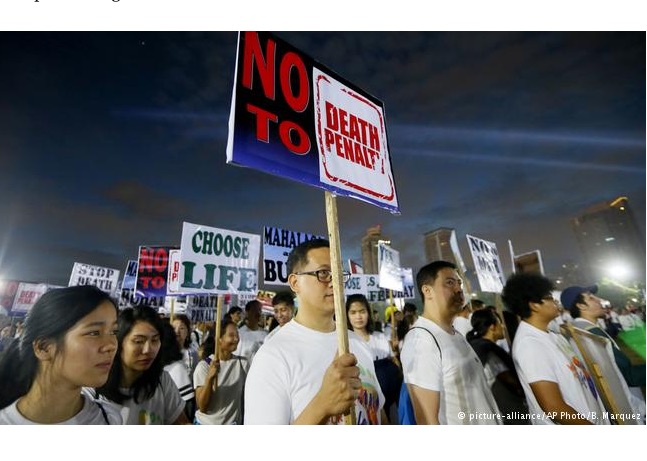
Thousands of demonstrators marched alongside Catholic Church leaders in the Philippines capital of Manila on Saturday [February 18] to protest President Rodrigo Duterte’s deadly war on drugs and attempts to reinstate the death penalty.


(c) picture-alliance/AP photo/B.Marquez
(click on image to enlarge)

According to police estimates, at least 10,000 people joined the “Walk for Life” march, making it the largest rally yet against Duterte’s brutal crackdown against drug dealers and users. It also marked the largest show of opposition from the Roman Catholic Church against the government’s anti-drugs campaign, which has seen more than 7,600 mostly poor people killed in the past seven months.

“We have to stand up. Somehow this is already a show of force by the faithful that they don’t like these extrajudicial killings,” Manila bishop Broderick Pabillo said. “I am alarmed and angry at what’s happening because this is something that is regressive. It does not show our humanity.”

The Catholic Church is one of the Philippines oldest and most influential institutions in a country where about 80 percent of the population identifies as Catholic, a legacy of the country’s time as a Spanish colony.

(Article continued in the right column)

Questions related to this article:

How effective are mass protest marches?

(Article continued from the left column)

Duterte on a collision course with Catholic Church

As one of the nation’s most powerful institutions, the Catholic Church has in the past played a crucial political role in the Philippines. In 1986, it helped lead a revolution that toppled dictator Ferdinand Marcos. Then, in 2001, it supported an uprising against then- president Joseph Estrada before he was subsequently ousted over corruption charges.

The Church initially refused to voice its opposition to Duterte’s anti-drugs campaign but its opposition has grown increasingly vocal since the end of last year, with the number of casualties continuing to rise.

“It is obvious that there is a spreading culture of violence. It is saddening to see, sometimes it drives me to tears how violent words seem so natural and ordinary,” the country’s highest-ranking Church official, Manila Cardinal Luis Tagle, said. “In your surroundings, in your neighborhood, there are so many lives that must be saved. They will not be saved by mere discussion.”

Duterte was elected president in May on the back of a strong anti-crime and anti-drug platform, claiming he would save generations of Filipinos from the drug menace. Since being elected to office, he has often attacked the church, once describing it as “the most hypocritical institution” for speaking out against his campaign. The President has also scolded a number of local bishops, accusing them of corruption and sexual abuse.

Duterte has also asked Congress to revive the death penalty by public hanging, which has also put him on a collision course with the Church. “Execution is murder,” Archbishop Socrates Villegas, who heads the country’s bishops, said. “We cannot teach that killing is wrong by killing those who kill.”

Latin America and the Caribbean could be first developing region to eradicate hunger

. . SUSTAINABLE DEVELOPMENT . .

An article from FAO – Food and Agriculture Organization of the United Nations

Latin America and the Caribbean could be the first developing region to completely eradicate hunger if its governments further strengthen their implementation of a food security plan developed by the CELAC bloc, FAO’s Director-General José Graziano da Silva said today [25 January 2017].

Speaking at the Summit of Presidents and Heads of State and Government of the Community of Latin American and Caribbean States (CELAC) in Punta Cana, Dominican Republic, Graziano da Silva stated that, “CELAC’s Food Security, Nutrition and Hunger Eradication Plan (FNS) represents the crystallization of governments’ political will to eradicate hunger before 2025.”

Approved by CELAC in 2015, the plan promotes comprehensive public policies to reduce poverty, improve rural conditions, adapt agriculture to climate change, end food waste and face disaster risks.

In his address, FAO’s Director-General noted that the CELAC FNS plan is fully in line with high-level global commitments such as the Paris Agreement on Climate Change and the Sustainable Development Goals (SDG).

And the region has made an even more ambitious commitment, he noted: to eradicate hunger by the year 2025, five years before the target established by SDG 2: Zero Hunger.

“This region has all the necessary conditions to achieve this, starting with the great political commitment that sustains the CELAC FNS Plan,” explained Graziano da Silva.

The plan is already bearing fruit throughout the region: Bolivia, Chile, El Salvador, Guatemala, Honduras, Nicaragua and Venezuela relied on it to diagnose their food and nutrition security policies, while Peru used it as a base for the creation of laws regarding food donation and to minimize food losses and waste.

Tackling the double burden of malnutrition

The integral nature of CELAC’s FNS Plan allows countries to not only address hunger but also obesity, which affects 140 million people in the region according to the FAO / PAHO report Panorama of Food and Nutrition Security.

Malnutrition generates enormous economic and social costs, as public health systems must now cope with increasing levels of diabetes, hypertension and heart disease, as well as the consequences of child stunting, wasting and undernourishment.

(Article continued in the right side of the page)

( Click here for the French version of this article or here for the Spanish version.)

Question for this article:

Can UN agencies help eradicate poverty in the world?

(Article continued from the left side of the page)

According to the FAO, one of the worrying trends in the region is the increase in female obesity: the rates of obesity for women are ten percentage points higher than that of men in more than twenty countries in the region.

As a way to o confront this situation, Graziano da Silva highlighted the CELAC FNS Plan’s Gender Strategy, which will ensure that the plan benefits women and men equally and which is already being implemented as a pilot program in four countries: El Salvador, Paraguay, the Dominican Republic and Haiti.

Strengthening family farming to tackle climate change

According to FAO’s Director-General, the impacts of climate change have the potential to reverse the gains made in the fight against hunger and extreme poverty in the region.

“Agriculture is the sector most affected by climate change and one of its main victims are small family farmers, men and women, many of whom struggle daily for their survival,” said Graziano da Silva.

Together with CELAC, FAO is developing a plan of action for family agriculture and rural territorial development that promotes sustainable intensification of production, public procurement and food supply systems, rural services and greater opportunities for rural youth.

FAO is supporting CELAC in putting together a Regional Strategy for Disaster Risk Management for Agriculture and Food Security, which supports resilience and adaptation of farmers through sustainable farming techniques and resource management.

Graziano da Silva stressed that eleven countries in the region have already adhered to the Port State Agreement, which seeks to eradicate illegal, unreported and unregulated fishing, and called on all countries to join in taking care of the sustainability and conservation of their fishery resources.

Peace, food security and sustainable development

In Colombia, the CELAC FNS Plan has supported the creation of a strategy aimed at rehabilitating the livelihoods of vulnerable communities in the central area of the country.

According to FAO’s Director-General, the peace process in Colombia illustrates the indissoluble link between peace, food security and sustainable development, an issue that is at the heart of the 2030 Sustainable Development Agenda.

“There will be no social stability or peace as long as there is hunger, poverty and inequality. Nor can we move forward if we continue to exploit our natural resources. Sustainability is a pre-condition for development,” said Graziano da Silva.

(Thank you to Sergio Tripi and the Good News Agency for calling our attention to this article.)

Restaurants Will Test If The U.S. Can Stomach ‘A Day Without Immigrants’

…. HUMAN RIGHTS ….

An article by Carolina Moreno and Liz Martinez for the Huffington Post (reprinted according to the principle of “fair use”)

Restaurant owners across the country are hoping the way to the nation’s conscience is through its stomach as they prepare to close their businesses in solidarity with immigrants on Thursday.

The restaurateurs are doing their part to support the grassroots movement dubbed “A Day Without Immigrants,” which asks immigrants not to go to work, open their businesses or buy any products for a full day on Feb. 16. The goal is to impress on President Donald Trump the importance of immigration.


Newscast about Day without Immigrants

“I’m happy about it,” said Benjamin Miller, co-owner of El Compadre and South Philly Barbacoa restaurants in Philadelphia. “[I’m] glad to see that chefs are stepping up and taking agency and using their power to advocate for people who are more vulnerable. The most we as chefs risk are fines, but these people risk losing their families. They have a lot more to lose.”

Miller’s wife and business partner, Cristina Martinez, is especially invested in the cause because she is an undocumented immigrant currently unable to apply for a green card, despite being married to a U.S. citizen. The couple will close El Compadre on Thursday. (Their other restaurant opens only on weekends.)

It’s no surprise that restaurateurs are taking a stand against the Trump administration’s immigration crackdown, which has led to an uptick in raids by Immigration and Customs Enforcement authorities. An estimated 1.2 million undocumented immigrants work in food preparation and serving jobs in the United States, according to 2012 Pew Research Center data.

Some high-profile names in the restaurant business have signed on to the effort, including Spanish-born chef José Andrés, who was sued by Trump after he pulled out of plans to open a restaurant in the new Trump hotel in Washington, D.C. Andrés announced on Twitter that he will be closing all five of his D.C. area restaurants on Thursday in solidarity.

The Blue Ribbon restaurant group has also vowed to close seven of its restaurants in New York City.

“This is not a casual decision,” Blue Ribbon partner Eric Bromberg told Eater New York, adding that closing their doors will definitely impact their bottomline. “But there are times in life when money isn’t the most important thing.”

Two other notable chefs with Philadelphia locations, Stephen Starr and Ecuadorian-American Jose Garces, have not said they will shut down for the day, but they are promising not to fire or otherwise punish any employee who decides to participate in “A Day Without Immigrants.”

(Article continued in the right column)

Questions related to this article:

The post-election fightback for human rights, is it gathering force in the USA?

(Article continued from the left column)

“We recognize the immigrant community is an essential part of the hospitality industry. … We support the right for hospitality industry employees to have their voices heard,” Garces said in a statement to HuffPost. “We are in close communication with any employees who plan to participate Thursday and doing our best to mitigate against any potential impact to our guests’ experience. We will not take any adverse action with any employee who chooses to participate.”

Any decision not to open even for a day is particularly difficult for those who own small businesses. Melissa Silva-Diaz, CEO and owner of the El Burrito Mercado in St. Paul, Minnesota, decided to close her family-owned eatery on Thursday after hearing about the day of protest from customers and workers.

“We had employees and a couple of customers send us the image of ‘Un Día Sin Inmigrantes,’” Silva-Diaz, whose parents are from Aguascalientes, Mexico, said on Wednesday. “I began to ask around and I asked employees, and some said they were planning on not working. That triggered a conversation. We had a meeting yesterday. We had a healthy discussion about it. I asked each individually what they wanted to do. I reached out to other businesses. Everyone was talking about it. Then we took a vote and unanimously we decided to do it.”

She acknowledged that many of her customers aren’t happy about the decision. But she said, “That’s what we want to do, to bring people awareness and get them talking.”

Juan Ramirez, manager of Taquerias Los Jaliscienses in Austin, Texas, understands firsthand the struggles that many undocumented immigrants face. The 54-year-old worked in the fields harvesting potatoes and wheat when he arrived from Mexico decades ago and gained legal status after the Reagan administration granted a major amnesty in 1986.

“I feel we are nothing without immigrants,” Ramirez said. “We are all in the same boat. Why not row together to move forward?”

Ramirez said that his Austin restaurant will be closed on Thursday and that he supports his employees 100 percent. He also noted that many workers were concerned about having enough money to pay their bills, yet they were willing to make the sacrifice.

While mobilizing around immigrants is nothing new, Miller noted, the Trump administration’s immigration directives have lit a fire under the community.

“This is part of a movement that has a long history,” the Philly restaurant owner said. “I feel like this subject is not just about Trump. There were plenty of deportations under Obama. … This political climate is mobilizing more people.”

Miller also hopes consumers will do their part to ensure that “A Day Without Immigrants” makes a strong statement.

“As a patron tomorrow, don’t go to restaurants,” Miller said, addressing all Americans. “Don’t spend money in restaurants. If you go to a restaurant and it’s closed, don’t go to another one. Stay home tomorrow. Cook for yourself. Show solidarity with immigrants. Restaurants not participating, they will feel the impact that immigrants make every day.”

USA: Army veterans forming human shield to protect NoDAPL protesters at Standing Rock

…. HUMAN RIGHTS ….

An article from RT.com

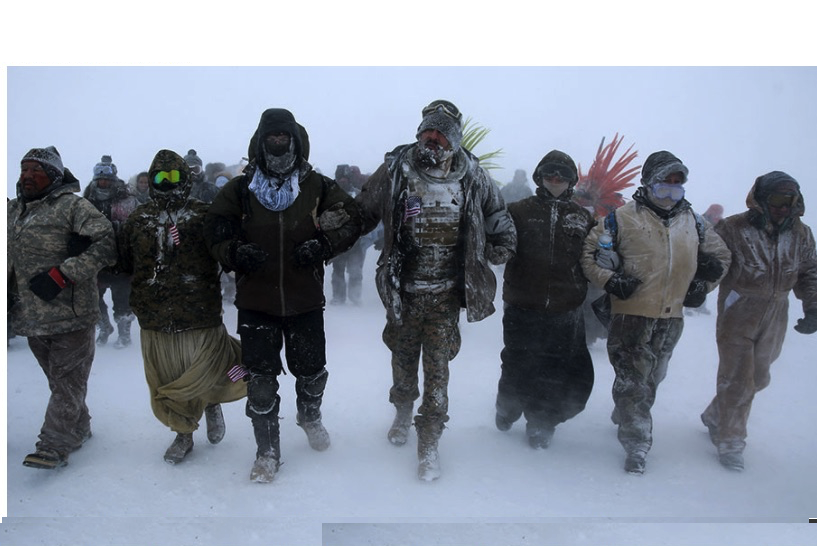
US veterans are returning to Standing Rock to support and protect Native American protesters as the Dakota Access Pipeline continues to meet resistance despite President Trump’s executive order to continue construction of the $3.7 billion pipeline.

The veterans are gathering in Cannon Ball, North Dakota, with many on their way.


Veterans march with activists outside the Oceti Sakowin camp in December © Stephen Yang / Reuters
(click on image to enlarge)

“We are prepared to put our bodies between Native elders and a privatized military force,” Air Force veteran Elizabeth Williams told the Guardian. “We’ve stood in the face of fire before. We feel a responsibility to use the skills we have.”

The Standing Rock Sioux Tribe has vowed to fight the president’s order to push ahead with the pipeline despite the US Army Corps of Engineers stating it would cancel its planned environmental impact study and grant a permit for construction of the final phase of the pipeline beneath Lake Oahe to go ahead.

The protest camps are being prepared for flooding that is expected to come as temperatures increase. The veterans’ presence will present a challenge to law enforcement wishing to remove water protectors from the area.

(Article continued in the right column)

Questions related to this article:

The post-election fightback for human rights, is it gathering force in the USA?

(Article continued from the left column)

Previous clashes between security officials and protesters have been violent, with police deploying water cannons, rubber bullets and teargas at protesters. Private contractors also set dogs on the demonstrators.

The Veterans Stand group is fundraising for the protesters who continue to resist the pipeline being built by Energy Transfer Partners, and has raised close over $220,000 so far. It said the increase in “turmoil and uncertainty” at Standing Rock has inspired them to act.

More than 1,000 veterans came to Standing Rock in December. Whilst there, they apologized to Native Americans for the US government’s treatment of the country’s indigenous people. Veterans Stand doesn’t expect the same veteran presence as before, but it will provide support to the camps through its fundraising.

“The biggest misconception is that Veterans Stand wants to do anything aggressive in response,” Veterans Stand founder Michael Wood Jr told CNN. “People want to do something and they just don’t know what to do. We just want to give people a platform.”

“We’re not coming as fighters, but as protectors,” Jake Pogue, a Marine Corps vet, told the Guardian. “Our role in that situation would be to simply form a barrier between water protectors and the police force and try to take some of that abuse for them.”

“Finally, it’s the US military coming on to Sioux land to help, for the first time in history, instead of coming on to Sioux land to kill natives,” veteran Dan Luker said.

Africa: The Festival of Amani strengthens our ability to live together

. EDUCATION FOR PEACE .

An article from Radio Okapi (translated by CPNN)

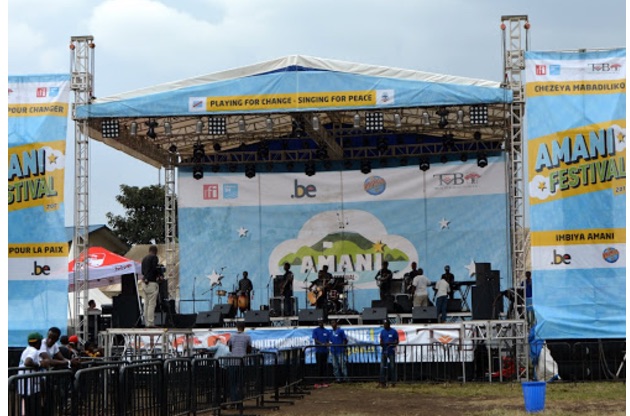
The 4th edition of the Amani Festival ended on Sunday (February 12th) in Goma (North Kivu). Over its three days, more than 30,000 people from all walks of life took part in this great cultural event for the promotion of peace in the Great Lakes region. Music, dance, exhibition of works of art, promotion of entrepreneurship … there was a diversity that pleased everyone.

The organizers of the festival are pleased with the success of this event, which they believe is contributing to peace building efforts in the region.

“Our goal is to reinforce our ability to live together. And in a post-conflict region, like the [Great Lakes] region, where many of the young people who attended the festival have lived through traumatic times, the festival fits in with its theme of being able to encourage living together” explained Vianney Bisimwa, the festival administrator.

The event provided an opportunity to strengthen the links between people and to help alleviate the trauma that the young people have lived through, he continued.

When people gather at this festival, they do not see themselves as ethnic groups, or other forms of identity differences, but “on the contrary, they look at each other in relation to what they have in common. It means the love of music and dance and the attachment to entrepreneurship. ”

One of the positive results of the festival, according to Vianney Bisimwa, are opportunities in the entrepreneurship sector:

“We have previously seen the success of the project CIGOM, a project funded by the Amani festival, which engages in the production of chalk. And we have many artists who, after the festival, have undertaken [some projects]. ”

[Note: For CPNN articles about the previous three editions of the Amani festival, see here for 2016, here for 2015 and here for 2014.]

(Click here for the original French version of this article)


Question related to this article:

The European Union, the Colombian Government and the civil society work together in the project: “Community Radios for Peace and Coexistence”

FREE FLOW OF INFORMATION

An article by Radios Comunitarias para la Paz (translated by CPNN)

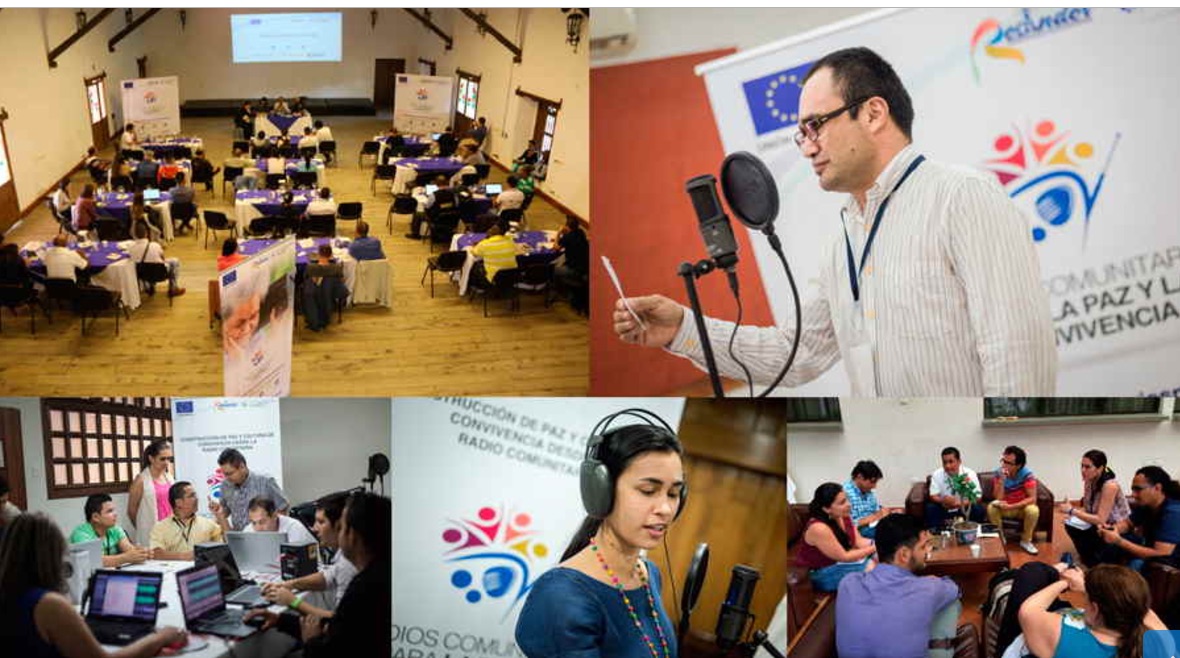
With the presence of the Ambassador in Colombia of the European Union, the High Commissioner for Peace, the Minister of Culture and the Vice-Minister of ICT, an ambitious project of support for community radio is being launched on Thursday 9 February. It seeks to strengthen community radio as a relevant actor in the construction of peace and coexistence.


The project “Community Radios for Peace and Coexistence”, is funded by the Delegation of the European Union (EU) and implemented by the Cooperative Network Of Community Media of Santander, Resander. The project has the support of the Presidency of the Republic through the Conversación más Grande del Mundo, the Office of the High Commissioner for Peace (OACP), the Ministry of Culture and the Ministry of Information and Communication Technologies .

This project is in addition to other initiatives that recognize the community radios as protagonists of peace building in the territories, and who have confidence in the potential that this sector has. This has been expressed by the European Union Delegation in Colombia, whose Ambassador Ana Paula Zacarías is convinced of the fundamental role that community radio plays in building a stable and lasting peace: “Peace is in the regions and it is there The community broadcasters have their goals, their broadcasts and their audiences. They contribute to strengthening the social fabric and reconciliation, “said the diplomat.

In order to strengthen community radio broadcasters as relevant actors in the construction of a territorial peace and, taking advantage of the celebration of Journalist’s Day, it will open with the program: “This is how peace sounds in the territories”, which will support 50 community stations, granting them more than 600 million pesos for the production and broadcast of radio programs with contents on a culture of peace and coexistence. This figure is in addition to the more than one billion pesos that the project will deliver to the community radio sector during 2017.

(Article continued in right column)

(Click here for the original Spanish version of this article

Question related to this article:

What is happening in Colombia, Is peace possible?

Journalism in Latin America: Is it turning towards a culture of peace?

How can peace be promoted by radio?

(Article continued from left column)

The launch will coincide with the National Meeting of Regional Networks of Community Radios that will gather in Bogota, about 70 percent of the representatives of more than 600 community stations in the country.

This launch is also the opening of the 5th Workshop: Building Peace and Culture of Coexistence from the Community Radio in which radio broadcasters from the center of the country and six journalists from stations located in Transitional Zonal Transitional Areas (ZVTN) will participate. Representatives of community stations in Anorí, Ituango, Remedios (Antioquia), San José del Guaviare, El Retorno (Guaviare) and Policarpa (Nariño) will be present, whose communication work is vital not only for the implementation of the Final Peace Agreement, but also to achieve the reconstruction of the social fabric of territories and to emerge from the conflict.

Community Radio is an actor and agent of local change. Its journalists know the region in which they live and understand it in all its dynamics. It is also a first-hand amplifier of the concerns, needs, visions and dreams of the communities on this path that Colombia has begun towards reconciliation and peace building. This is evidenced by the 90 second micro-pedagogical messages that have produced about 140 community radio broadcasters throughout the country in the IV workshops that this project has done so far.

 “The philosophy and the missionary aspects of community radio, as an actor of development close to the communities from the communication in the territories, constitutes great potential in this post-conflict era in Colombia,” says Fernando Tibaduiza, Manager of the project.

it is very important to have the assistance of the European Union, Resander and the Colombian Government as allies, in launching and making visible this joint work, which strengthens communication from the local level for the construction of a peaceful Colombia.

For more information contact Luisa Fernanda López, luisalopez@radioscomunitariasparalapaz.co, 3003077819

You can download all the press material (photos, videos, announcements, profiles etc.) at this link>

Live long and protest: the power of mass action is alive in Romania

. . . EDUCATION FOR PEACE . . .

A Blogpost by Irina Bandrabur for Greenpeace

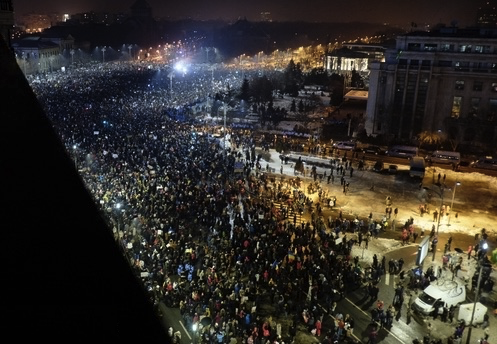
At the beginning of this month, the biggest mass protest in Romania since the fall of communism in 1989 unfolded across the country. Hundreds of thousands of people in the capital, Bucharest, and every major city in Romania took to the streets against a decree that would have decriminalised abuses of public office. After a week of peaceful protests, the government withdrew the controversial law


Photo (c) Mihai Stoica / Greenpeace
Click on photo to enlarge

You don’t see mobilisation like this every day, but it happens when the stakes are high – and it can be extremely powerful. Previous mass demonstrations highlighted cyanide open-pit mining in Rosia Montana (2013), forest protection (2015) and again corruption, after a horrible fire in a nightclub that could have been prevented if the people responsible had applied the law (Colectiv, autumn 2015).

Greenpeace Romania joined protesters because we believe the consequences of the emergency ordinance decree would have affected our work to protect the environment. It would have indirectly allowed companies to choose less costly and environmentally-damaging alternatives for their projects without fear of legal repercussions. The recently-passed executive order also threatened the already limited checks and balances against environmental crimes.

(Article continued in right column)

Questions for this article:

Can peace be guaranteed through nonviolent means?

How effective are mass protest marches?

(Article continued from left column)

The reasons that hundreds of thousands of people so vocally rejected this decree may vary in tone from one to the next, but we knew the country needed to stand together against corruption: in a country that decriminalises corruption, there is no protection against environmental crimes.

Crowds all over Romania braved a bitter winter chill to protest. With creativity and humour on the banners displayed they inspired many more to join in and add their own – or even fly in from other countries where they now live – to show solidarity. Because of the pressure exerted by the large number of people that took to the streets to protect democracy, the Government repealed the ordinance.

Each time people demonstrate for something is a reminder that we must act together to protect our fundamental rights and that we have the power to change unjust actions. We are experiencing challenging times and the clock is ticking on the health of the planet. Now, more than ever, we need to unite in the fight to protect our planet from the threats posed by climate change.
Protests are going on, all over the world. If you are reading this and you feel that all might be lost, remember that someone, somewhere is just now realising that it’s time to act and is not giving up hope. There’s simply too much to lose now. We resist and insist on the fact that holding political office does not give anyone the right to exploit it to legitimise environmental, or any other kind of abuse. We are used to hard fights and improbable victories. We are stronger together. Take action now and get involved in a local active group to make your voice heard.