Tag Archives: Europe

Paris: Nuit Debout (Night Standing in Place)

. . SUSTAINABLE DEVELOPMENT . .

For CPNN by Kiki Chauvin

“They turn off the lights, but we light up our brains! ”

The citizen movement “Nuit Debout” (Night Standing in Place) was born on March 31 following a demonstration against the projeted law of El Khomri a contested reform of the labor code and the release of the film by François Ruffin ” “Thank you, boss”.

nuit
(Click on photo to enlarge)
Photograph: Ian Langsdon/EPA

The gathering, which is more or less spontaneous, is run by men and women who have rapidly organized themselves in geneal assemblies ”made with the means at hand ” and by their own skills.

La Place de la Republique has become an area of ​​freedom, where everyone, each person can speak and participate in debates and in the work of organizational or thematic commissions such as logistics (responsible for the smooth running of the gathering), communication, coordination, reception and mediation (reception and security). The Democracy Commission, is a center for debate and responsible for the voting system. Topics such as labor law, unemployment, insecurity, ender equality, the “Panama papers’’ scandal and whistleblowers are debated.
                        
The movement, which continues to grow, is surprisingly young, even though it includes some people of all ages.

The modus operandi is based on humanist, peaceful values. It is the exchange of ideas and sharing of anger in a framework of respect for others, listening and self-disciplined speech. People listen to each other in the debates and they are translated into sign language.

(Article continued in right column)

(Click here for the original article in French.)

Question for this article:

Movements against governmental fiscal austerity, are they part of the global movement for a culture of peace?

(Article continued from left column)

Although this movement is not like the traditional manifestations of Paris, its members are determined to show their insubordination by civil disobedience without adhering to political parties or official bodies.

They are determined to take back the language of revolt that has been stolen by a political class in France that has become “professional” and that has taken over the public space. They have given form to the slogan of the World Social Forum born in Brazil, “Otro mundo es posible” (Another world is possible).

This form of movement is a first in France, but it is similar to what happened in 2011 with the Arab Spring and Occupy Wall Street in the USA and the Indignados in Spain.

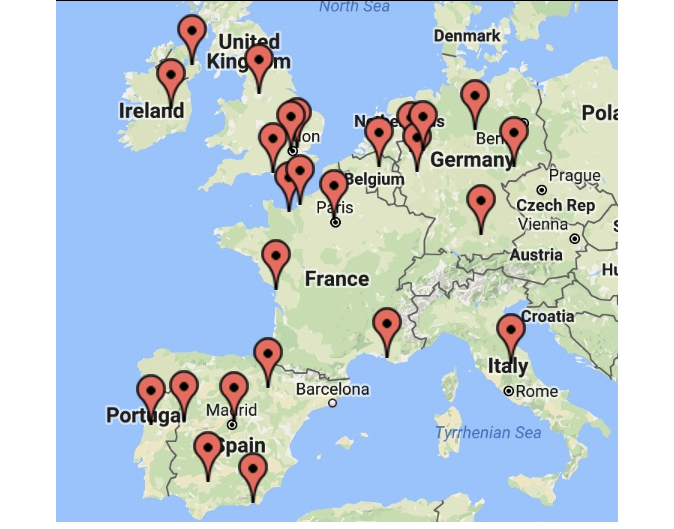
The mobilization is growing everywhere, in sixty French cities but also in other countries including Belgium, Germany, the Netherlands, Spain, Canada, ….

The appearance of groups of thugs in parallel around the Place de la Repulique appears to be an attempt to discredit and disturb the security of the movement which, conversely, acts without violence.

 Despite its innovative breath of fresh air and its optimistic tone of hope, one can question the result that will be achieved by this movement. Even if its aim is clearly progressive, is there not a risk of its horizontal confinement, a kind of “inbreeding” that may occur if it does not succeed in involving other social strata (workers, rural, suburban ..), moving to other “public places”, going out to the people?

In any case, the movement brings us an important message, and as described by the sociologist Albert Ogien: “It is a modern form of political action, comparable to the strikes and sit-ins of previous generations, but quite new in France ../.. ”

Disarm! World Congress 2016 of International Peace Bureau

DISARMAMENT & SECURITY .

Announcement by the International Peace Bureau

The World Congress of the International Peace Bureau will take place at the Technical University of Berlin, Germany, 30 September-03 October 2016:

ipb

OBJECTIVES OF CONGRESS

Bringing together a wide variety of experts, advocates and speakers from around the globe;

Including talks, presentations, roundtables, panel discussions, workshops, information booths, exhibitions, cultural activities;

High point in the recently-launched Global Campaign on Military Spending;

Apart from the Global Day of Action on Military Spending (mid-April), preparatory events will be held in major cities around the world over the coming year.

SPEAKERS

Speakers will come from a wide range of disciplines and backgrounds, including both the highest levels of society and grassroots voices, creative thinkers and cultural figures:

Nobel and Alternative Nobel Prize winners;
– elder statesmen/women;
– the social sciences, economics and politics in particular;
– the peace movement and other civil society sectors;
– parliamentarians, religious leaders, journalists, community organizers and artists…

(continued in right column)

(Click here for a version of this article in Spanish.)

Question for this article:

Does military spending lead to economic decline and collapse?

(continued from left column)

GENERAL OBJECTIVE OF CAMPAIGN

In 2014 the world’s governments spent over $1,700 billion on the military sector. We believe this money must instead be spent on:

Climate change mitigation/adaptation, preserving biodiversity;

Humanitarian programs to support the most vulnerable;

Peace: disarmament, conflict prevention & resolution, human security;

Public services / Social justice, human rights, gender equality and green job-creation;

Sustainable development, production and consumption patterns, anti-poverty programs, UN Sustainable Development Goals (SDGs).

We strongly believe the absolutely necessary ‘great transformation’ of global human society can only be achieved when also reallocating military expenditure and handling conflict differently. After all, we are facing a crisis of civilization, which is more far-reaching than an ecological and economic crisis alone.

We are living on one single Planet Earth but exploiting its resources as if we had three.

We witness how our predominant economic and developmental model has failed to provide justice, livelihood and human security for all. We now also face the resurgence of militarism and confrontational politics.

Hence, we view this priority shift in government spending as one element in a much broader global transformation towards a green, socially just and peaceful society!

The aim of this congress is to bring the issue of military spending, often seen as a technical question, into broad public debate and to strengthen the global community of activism.

Hence, we aim at wide support that goes far beyond peace organizations, such as from development, environment, faith, human rights, social welfare, women, workers’ and youth organizations.

(Thank you to Alicia Cabezudo for sending this announcement to CPNN)

Spain: The Second Latin American Congress makes Vila-real the international capital of police mediation

EDUCATION FOR PEACE .

An article from the Castellón Journal (translated by CPNN)

The town of Vila-real has again become these days the “world capital of police mediation” thanks to the second edition of the Ibero-American Congress of Police Mediation held until Friday [April 15] ]at the Municipal Auditorium Músic Rafael Beltrán Moner with more than 400 congressmen and 40 speakers. The mayor, José Benlloch, the president of the Generalitat, Ximo Puig, the rector of the Universitat Jaume I, Vicent Climent, and the chief of the local police, José Ramón Nieto, inaugurated this morning the congress, organized by the city of Vila-real collaboration with the UJI, which aims to “deepen the values ​​of dialogue and agreement” as effective and efficient tools for conflict resolution and “peace-building”.

mediacion
The mayor, the president of the Generalitat and the rector of the Universitat Jaume I inaugurate an event that brings together more than 400 delegates and 40 speakers

Benlloch highlighted especially the role of local police in Vila-real, through the Unit of Police Mediation and the Department of Police Mediation of the University which are consolidating “a methodology still in its infancy but which has already shown its full potential “. “The police unit that was born as a pioneer in 2004, has given new answers to different realities. Today it marks the way forward for police forces around the world,” says the mayor. To further strengthen this discipline, from the theoretical and practical level, Benlloch advocates a reform of regional laws concerning local police that “gives greater means to our bodies of municipal security, who are closest to the problems of people, that incorporate a culture of mediation as an intrinsic part of their work”; this is a reform on which, he points out, the Generalitat of Valencia has been working in recent months.
   
(Article continued in right column)

(click here for the Spanish version)

Questions for this article:

Mediation as a tool for nonviolence and culture of peace

Where are police being trained in culture of peace?

(Article continued from left column)

The president of the Consell stressed in his speech the support of the Regional Administration for the practice of mediation as an example of “social innovation” that addresses conflict resolution as “diversity management ensuring equal between the parties”. “Police mediation extends the value of the police at the municipal level, with the added value of proximity,” says Puig, for whom the Second Latin American Congress of Police Mediation “is a demonstration of the role of local goverment to participate in global debates. The City of Vila-real has opened a fundamental debate about police mediation as prevention with the training of security forces for dialogue and consensus.”

In the same vein, the rector of the Universitat Jaume I stressed the importance of meetings such as the Ibero-American Congress to consolidate a discipline that is “still emerging” and to “advance values ​​such as respect, freedom and justice, which are the values of peaceful coexistence. ” Rector Climent considers the Congress and the work done by the Department of Police Mediation of the city Vila-real to be a “reference in the international arena, as an example of” inter-agency collaboration, through the transfer of innovative knowledge.”

After the inaugural presentations, the mayor of Vila-real delivered the first lecture of the conference, which in its first day featured speakers such as Peter Blasco, on behalf of the NGO Messengers for Peace, the inspector general commissioner of the National Police of Panama, General Willington Zambrano, and the human rights activist Mamadou Dia. The morning session, included the award of the Josep Redorta prize to deepen the implementation of mediation in police forces in Latin America, while on Friday the Alternative Nobel Laureate and founder of les Peace Studies, Johan Galtung, spoke at the closing session.

Costello students take part in UK Peace Jam

EDUCATION FOR PEACE .

An article from the Costello School

Twelve Year 10 Costello students attended a pioneering conference at Winchester University exploring human rights for indigenous people. They welcomed a special guest, Nobel Peace Laureate Rigoberta Menchú Tum from Guatemala. In 1992, Rigoberta Menchú Tum was awarded the Nobel Peace Prize in recognition of efforts to improve the rights of the Mayan of Guatemala and native people everywhere. She was the first indigenous person to receive the award. During the 30 years of dictatorship, war and violence that followed the 1954 military takeover 200,000 Guatemalans were murdered. Rigoberta helped her father organise resistance, and, despite losing both her parents, two brothers, a sister-in-law and three nieces and nephews to the violence, persevered with the search for a peaceful way to resist military oppression.

peace-jam

The two-day conference held at The University of Winchester, and organised by Peace Jam UK, welcomed around 250 delegates including secondary school students from all over the UK.

Throughout the weekend, the Peace Jam conference discussed Nobel Peace Prize winners and various themes including identity, difference, power, privilege, peace and non-violence in an increasingly complicated world.

Early on in the conference the audience were invited to ask Rigoberta questions and Joe Duerden made a real impression when he asked Rigoberta “As the next generation of humans, how can we tell our world leaders to treat our world with peace rather than violence?

Students were also given the opportunity to present their local community projects to an audience, as part of the One Billion Acts of Peace movement – a fundamental element of the academic Peace Jam programme. Some of the students learnt about a scheme called “Roll out the Barrels”,

In Africa and developing countries around the world, women and children carry their own weight in water, in dirty jerry cans and containers, not just from a local pump (a few hundred yards away) but sometimes over 6 miles or even further, just to survive – “Roll out the barrels” provides a simple solution!

Other students visited Hyde Gate Residential home and spent time talking to residents and taking part in activities with them whilst others went onto the streets of Winchester to talk to young people about the Street Reach Community Project.

The Conference had a huge impact on all the students and they are setting up a Costello Peace Jam group in the summer term with the aim to launch our own contribution to the Billion Acts of Peace campaign! For as Rigoberta told the students, “We all have energies and if we combine these energies we can make a difference!

All of the Costello students would like to say a HUGE thank you to the Basingstoke and Deane Rotary Club who so kindly sponsored their trip and without whom this opportunity may not have been possible!

Question for this article:

GLOBAL YOUTH RISING: Empowering passionate activists and peace workers from around the world– JULY 2016

TOLERANCE AND SOLIDARITY .

A press release from Ilona Traista, Global Youth Rising

Join us for a global gathering that brings together activists, peace workers and others who are working to make the world a better place as we come together to discuss key issues such as what’s happening in Syria, Iraq, Libya and Yemen and we work to create solid collaborative movements and plans of action for tackling these issues. PATRIR, in co-ordination with several partners including National Peace Academy, PAX, UNOY, the World Peace Initiative, IAHV and Building Bridges for Peace, is now accepting applications for GLOBAL YOUTH RISING – a summer camp and global gathering.

rising
Video of Global Youth Rising Peace Summer Camp 2016

This 10 day event this July will bring together passionate, motivated organizations, youth activists and peace workers from around the world to learn, share, collaborate and gain practical skills, tools and inspiration to empower them to achieve real and meaningful change in the world.

There are few forums in the world where people passionate about creating change can come together; Global Youth Rising aims to change this, bringing together extraordinary and dedicated activists, practitioners and global trainers who will facilitate trainings and workshops on a range of important topics including: tackling violent extremism and discrimination; healing from trauma (especially for those working with refugee/asylum seeking populations); building effective action in our communities; using arts and creativity for social transformation; fostering inner peace and well-being; building solidarity with citizens’ peace movements and activists in Syria, Yemen, Libya, Iraq and Ukraine; peace education; environmental justice and environmental movements; and practical peacebuilding skills (e.g. using social and digital media for activism).

As well as trainers from PATRIR, PAX, Peace Revolution, IAHV, National Peace Academy, UNOY and an alliance of other organizations, this is a horizontal forum where participants and organizations will be able to share their own experiences from their own communities and countries or work internationally, learning from each other and working to create solid international movements and projects.

The camp and global gathering will also include morning well-being sessions, including yoga, breathing techniques and meditation; the opportunity for non-formal learning such as forum theatre, strategy sessions on building movements, discussions, peace circles and film nights. Participants will also have the chance to explore the beautiful Transylvanian countryside and take part in excursions including mountain hiking and white-water rafting!

The Global Youth Rising summer camp & global gathering 2016 is the perfect opportunity to come together with dedicated activists from around the world and deepen your skills, knowledge, capacities and passion for real change — or to support youth and youth organisations in your community for the experience of a lifetime.

Dates are 10-20th July 2016 in Romania.
Deadline for Applications: May 30. (May 5th for those requiring a visa)

Question for this article

United Kingdom: Thousands call for Britain’s nuclear deterrent Trident to be scrapped

DISARMAMENT & SECURITY .

An article from Deutsche Welle

Opposition Labour party leader Jeremy Corbyn was among those marching against the renewal of the Trident nuclear weapons program. Critics say there is growing opposition to the Cold War-era submarine fleet. “If a nuclear war took place there would be mass destruction on both sides of the conflict. Everyone should think about the humanitarian effects on people across this globe if they’re ever used,” Corbyn told the estimated 10,000-strong crowd gathered in London’s Trafalgar Square on Sunday.

trident
Click on image to enlarge

Corbyn, who has been a member of the Campaign for Nuclear Disarmament (CND) since he was 16, said he had been elected Labour leader on a manifesto in which standing against the renewal of Trident was a key component.

Waving placards and banners, the protesters called on the government to cancel plans to replace the current generation of submarines that carry the nuclear warheads.

Organizers described the rally as the largest anti-nuclear demonstration in a generation, claiming that up to 60,000 people attended. Previously the largest protest was held in 1983, against the deployment of Cruise missiles at Greenham Common.

Scotland’s First Minister Nicola Sturgeon, also addressed the crowd, saying that Trident, which is based at a naval base near Glasgow on the west coast of Scotland, was “immoral” and “impractical.”

A decision is expected to be taken later this year on replacing the ageing submarines which carry the Trident missiles at an estimated cost of 39 billion euros ($43 billion).

The British government wants to replace the four existing vessels with four so-called Successor submarines, the first of which would enter service in the early 2030s.

Prime Minister David Cameron says the renewal is vital to safeguard Britain’s security.
But the opposition Labour party is deeply divided on the issue between leftwingers like Corbyn, who want to scrap it, and some centrists who want to keep it.

US Defense Secretary Ash Carter waded into the debate on Saturday, saying that Britain must renew Trident if it is to maintain its “outsized” role in world affairs.

Carter said the submarine fleet helped the “special relationship” Britain enjoyed with the United States, the BBC said on its website.

“It’s important that the military power matches that standing and so we’re very supportive of it,” he added.

Question for this article:

Romania: Systemic Peacebuilding, Conflict Transformation & Post-War Recovery and Reconciliation

. EDUCATION FOR PEACE .

An email received by CPNN from PATRIR

The Advanced Certificate Program in Systemic Peacebuilding, Conflict Transformation & Post-War Recovery and Reconciliation (PCTR) will be held in Cluj-Napoca, Romania 20-24 June 2016. The program is accredited by COTIPSO [Certificate of Training in United Nations Peace Support Operations].

patrir

“I will not hesitate to unreservedly recommend this programme for all actors in the peacebuilding field. I dare say that without it you stand the risk of missing the mark, with it your chance of success in your endeavours are quite significantly enhanced!”

— Paul Ebikwo, African Union/United Nations Mission in Darfur (UNAMID), Sudan

By bringing together experienced practitioners and policymakers from governments, the United Nations, regional authorities (EU, AU, OAS, ASEAN), and national and international organisations and agencies, PCTR fosters a unique opportunity to interchange experience and practical learning with those working in conflict situations worldwide. Internationally noted as one of the best-evaluated programmes in the field, PCTR is unique in thoroughly addressing all three phases of violence and war – the before, during and after periods – grounded in rigorous professional training and practical operational experiences.

PCTR is a five-day intensive programme which provides experts, practitioners and policymakers with a forum for reflection and targeted, relevant professional development goals within a dynamic and stimulating environment. Given the issues it addresses, the programme is relevant for those working in political, gender, security, human rights, development, and humanitarian fields, as well as donors and diplomats specialising in areas affected or threatened by war, armed conflict or in post-war situations. PCTR draws upon a network of global experience, systematically weaving together key operational and policy lessons identified as good practices. The direct, needs-based skills and knowledge-intensive approach of the PCTR is suitable for senior and executive level field staff, and those in leadership roles in governments and organisations. It has also proved pertinent for those employed as staff and field practitioners within national and international aid and development organisations. The programme’s focus on practical experiences and skills that can be utilised in the field, and its emphasis on modules in systemic peacebuilding, and assurance that prevention works; also, its attention to conflict intelligence, peace consolidation and applied peacebuilding methodologies have received strong feedback from participants during the programme and for years to come.

Question for this article:

Where is peace education taking place?

(Article continued from left column)

View our full course outline for a comprehensive overview of this exciting and innovative programme.

HOW TO REGISTER: 

You may apply online or download an Application form.

After submitting an application, IPDTC will contact you within ten working days regarding an admission decision.

Course places are limited, so apply today!

Participant Contributions:

Full contribution for OECD Participants: €845

Full contribution for non-OECD Participants: €595

Discount Category I (-10%): Early Payment [by 16 May 2016] or Multiple Participants (3+ staff members from any Department, Agency or Organisation)

Discount Category II (-15%): Category I options paired together (Both Early Payment and Multiple Participants)

Deadline for Applications:

9 May 2016 for applicants who REQUIRE A ROMANIAN VISA, and
30 May 2016 for applicants who DO NOT REQUIRE a Romanian visa

Netherlands: The Peaceable School

EDUCATION FOR PEACE .

Excerpts from the Manual for the Peaceable School, submitted to CPNN by John Zant

This programme, The Peaceable School, was designed in 1999 for use in Dutch primary schools to improve the social and emotional climate in school and classroom, by teaching pupils and teachers how to resolve conflicts constructively and by promoting pupil participation and community- building. The Peaceable School is widely spread in The Netherlands: by 2007, approximately 300 primary schools have implemented the programme (a yearly increase of approximately 50 schools). . .

zant

The Peaceable School has become a programme that strives to make school and class into a democratic community in which everyone feels responsible and involved, with the resolution of conflicts as its starting point. This programme teaches pupils, teachers and parents skills for resolving conflicts, other than by (physical or verbal) violence.

The programme includes a series of lessons for all age groups (including activities for children in Pre-school), intensive training for teachers, classroom observation and coaching and workshops for parents (see section 4). Besides training in conflict-resolution skills, all those involved learn to live with each other in a positive way by setting high standards of behaviour towards each other.

Increasing the responsibility of the pupils for their class and the school is key to this: the school as a community. Pupils learn to be responsible for the resolution of problems in the class and at school. Peer mediation is the most obvious result.

In this programme, peer mediation does not stand alone, but is part of an extensive curriculum. Through the weekly lessons, the pupils gradually work towards a climate in which the resolution of conflicts, other than by violence, becomes normal. Only when all the pupils know what mediation is and have practised it, does the school train a number of them specially as mediators.

Research results of surveys of similar programmes in the U.S. are encouraging. Evaluation research shows a significant reduction of incidents, suspensions, insults, punishments, etc. in all the schools that have implemented conflict resolution and peer mediation (Metis Associates, Inc., The Resolving conflict creatively programme: 1988-1989. Summary of significant findings. New York, 1990). Nearly all the schools report improvement in the general school climate. A large survey of 15 schools in New York, in which 5000 7 to 11-year-old pupils were followed, shows a significant decline in aggressive behaviour and a significant rise in achievement in reading and arithmetic by pupils who had followed more than 25 lessons from the curriculum (Aber J.L., Brown J., and C.C. Henrich, Teaching Conflict Resolution: an effective school-based approach to violence prevention. The National Center for Children in Poverty. New York, 1999).

After two years, nearly all the schools working with The Peaceable School in The Netherlands report a considerable change in the culture. Simple measurements (with thermometers, check-lists, observation) show progress in the actual and sensed feeling of security in almost all the schools.

Question for this article:

Spain: DemosPaz, a new Institute of UAM and the Foundation Culture of Peace

EDUCATION FOR PEACE .

A blog by Montserrat Ponsa (translated by CPNN)

On Friday 19 February 2016, I was honored to attend one of those unforgettable events that make history. At 10.30 h in the morning, the Rector of the UAM [Universidad Autónoma de Madrid] José María Sanz Martínez and the President of Fundación Cultura de Paz Federico Mayor Zaragoza signed an agreement to establish the Joint Institute for Human Rights, Democracy, Culture of Peace and Nonviolence between the UAM and the Culture of Peace Foundation. It will be known as DemosPaz.

mayor inauguration
video of inauguration

The audience was impressive as it was attended by the deans and professors of different faculties, Social Council, friends and colleagues from the world of human rights and peace.

At the podium in addition to the Rector and Federico Mayor were the Dean of the Faculty of Law Yolanda Valdeolivas, the Dean of the Faculty of Science José María Carrascosa, and the dean of Philosophy and Lettersw, José María Cascón.

Their speeches touched us by their emotion. It was not a mere formal act. It was a unanimous decision involving all members of the Rectorate, the Governing Council and the Social Council.

The function of the University, said Yolanda Valdeolivas, is the promotion of knowledge and life styles to be sustainable. Hence the need to work with society, given that peace is more than the absence of war. It is a question of values and attitudes gained through dialogue. Both the UAM and the Culture of Peace Foundation share the rigorous methodology that has always been promoted by Federico Mayor Zaragoza. This agreement with the UAM will enable us to enlarge this and to share it with others.

The Dean of Philosophy Jose Maria Cascón said all the faculties of the university wish to be involved. This brings to an end the neoliberalism and ultra liberalism from the days of Margaret Thatcher and Ronald Reagan, a capitalism that is difficult to reconcile with peace. He criticized the discussions taking place these days in Brussels among those who run the world, calling it shameful. They continue to blame the poor. Our enthusiasm, coincides with the basic principle of this new Institute, to combat the neo-liberal ideology. Hence, the Joint Institute for Human Rights, Democracy, Culture of Peace and Nonviolence, and the ambition and enthusiasm of our Rector, our Deans, and Federico Mayor Zaragoza.

(Article continued in right column)

(click here for the Spanish version)

Question for this article:

What is the relation between peace and education?

(Article continued from left column)

The Dean of Science José María Carrascosa, said it was an honor to participate in this event, and to share the energy of Dr. Federico Mayor Zaragoza, with whom I had the pleasure of working at the Center for Molecular Biology Severo Ochoa. He was pleased that the UAM is supporting this new field of multidisciplinary research. Science has contributed much to life, but the lack of control of some advances has enabled death and atomic destruction, hence the need to achieve our goal which is peace.

Federico Mayor Zaragoza spoke emotionally, saying he was happy and grateful to the UAM, one of the most important centers of the world, for its clear mission: to change from the culture of force and imposition, teaching how to think, to create a philosophy of life, to be free and educated. They undertake intergenerational responsibility on a daily basis with the clear premise that all human lives are equal. He emphasized that we must all share and change from confrontation to discussion. Economics must be subordinated to social justice to ensure a decent life for everyone, a life free from fear. He welcomed the opportunity to work together for the triumph of human rights, especially for those who have not yet known these rights.

Closing the ceremony the Rector José Maria Sanz, thanked Mr Mayor for the confidence he has shown in the UAM: offering us the opportunity for innovation so that, in this 21st Century, research can generates knowledge that transfer to society values that are different from those of the past. His proposal gives us the opportunity to enter this frontier of knowledge, training, and debate. It will allow us to incorporate new areas into UAM, as well as in the society in general. We must focus on interdisciplinary culture in all areas of knowledge, to end inequality, poverty and violence. The UAM will be the engine to offer and go for the opposition values, that build the society of well-being for all without discrimination. The DemosPaz Institute should not only be for UAM but national and international in scope.

The audience was moved by the words we heard. No doubt there will be a beaufiful future for this initiative. No doubt it will achieve great things!

France expects to have 1000 kilometers of solar routes within 5 years!

. . SUSTAINABLE DEVELOPMENT . .

An article from Ubergizmo (translated by CPNN)

As we have mentioned previously, solar roads and streets could well redefine the way we produce energy. These roads covered with solar panels can produce energy to feed urban facilities, or even vehicles driving on the road. The minister of environment and energy, Ségolène Royal, intends to build 1000 km within 5 years.

solaires

The minister intends to comply with a commitment made during the COP21, and the French company Colas, a subsidiary of Bouygues, seems to have what is needed. By applying photovoltaic panels 7 mm thick directly on the surface, it becomes possible to capture energy from the sun, in the cities.

After five years of development, in collaboration with the National Solar Energy Institute (Ines), these “Wattway” panels seem to adhere well to conventional routes and can withstand the wear of trucks even in difficult weather.

Thanks to these panels, urban areas can take advantage of “renewable energy closer to the places where electricity consumption is highest and where demand is growing steadily”. And in remote areas, solar highways “will create local production and sustainable energy in place”.

What can be done with the electricity generated? public lighting, illuminated signs, street cars, homes, offices, everything is possible. According Colas, 1 km of Wattway solar road can power public lighting of a town of 5000 inhabitants. To be continued !

(Thank you to Janet Hudgins, the CPNN reporter for this article.)

( Click here for the French version of this article.)

Question for this article: