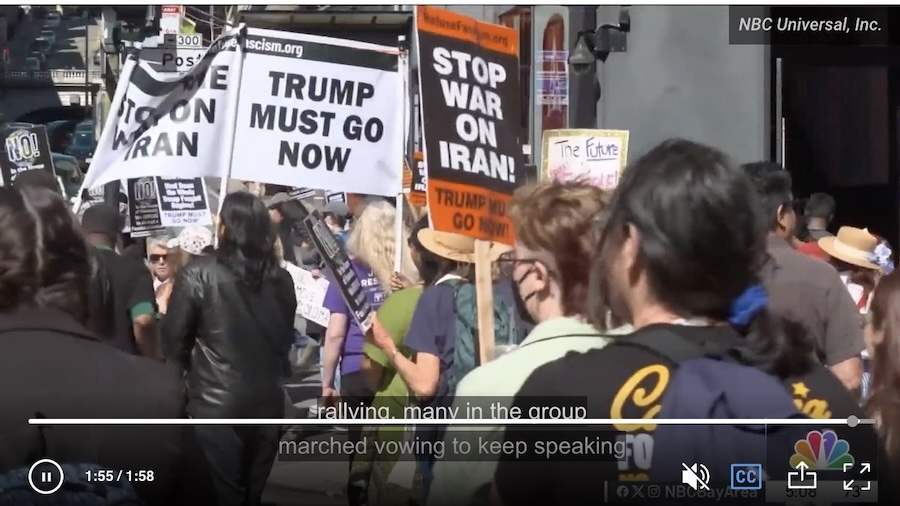
Tag Archives: North America

USA: “ICE Out For Good” Rallies in all 50 states

. . HUMAN RIGHTS . .

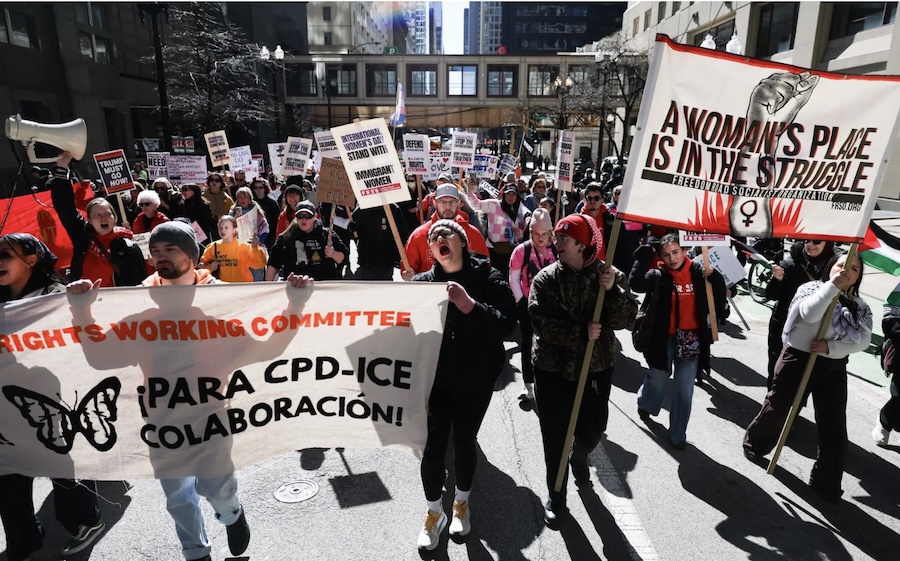
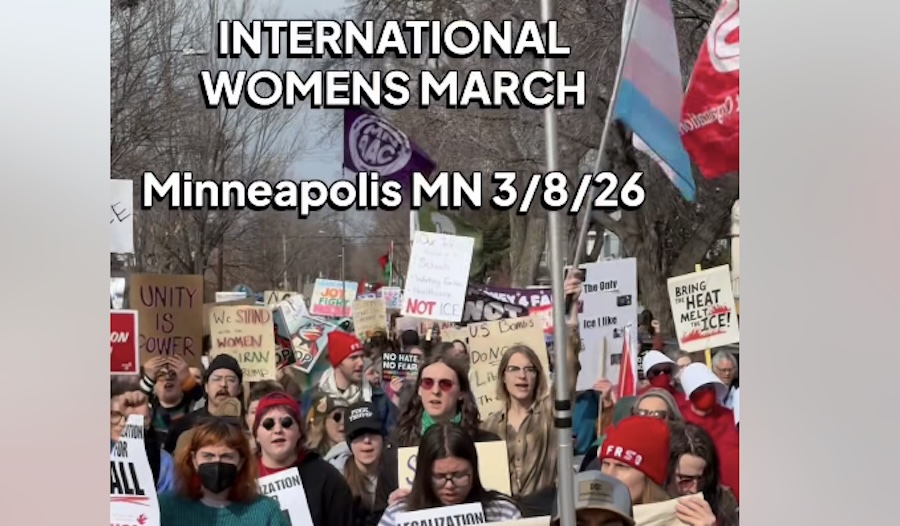
Protesting the newest atrocity by Trump’s masked police, Americans took to the streets in all 50 states. The police, called ICE (Immigration and Customs Enforcement) killed demonstrator Renee Nicole Good on January 7.

To go to the source, click on the city name. To enlarge a photo and read its text, click on it.

ALABAMA: Birmingham


ALASKA: Fairbanks

ARIZONA: Tempe


ARKANSAS: Fort Smith

CALIFORNIA: Los Angeles

COLORADO: Denver


CONNECTICUT: Hartford

DELAWARE: Talleyville

DISTRICT OF COLUMBIA: Washington, DC

FLORIDA: Miami

GEORGIA: Atlanta

HAWAII: Honolulu

IDAHO: Boise


ILLINOIS: Chicago


INDIANA: Columbus

IOWA: Iowa City


KANSAS: Lawrence

KENTUCKY: Louisville

LOUISIANA: Kenner


MAINE: Portland


MARYLAND: Baltimore

MASSACHUSETTS: Boston


MICHIGAN: Detroit


MINNESOTA: Minneapolis

MISSISSIPPI: Jackson

MISSOURI: Springfield

Question related to this article:

The struggle for human rights, is it gathering force in the USA?

(article continued from left column)

MONTANA: Bozeman


(article continued in right column)

NEBRASKA: Omaha

NEVADA: Las Vegas

NEW HAMPSHIRE: Merrimack

NEW JERSEY: Roxbury

NEW MEXICO: Tijeras

NEW YORK: New York City

NORTH CAROLINA: Durham

NORTH DAKOTA: Bismarck

OHIO: Cincinnati

OKLAHOMA: Oklahoma City

OREGON: Portland

PENNSYLVANIA: Philadelphia

RHODE ISLAND: Providence

SOUTH CAROLINA: Columbia

SOUTH DAKOTA: Sioux Falls

TENNESSEE: Memphis

TEXAS: Houston


UTAH: Salt Lake City

VERMONT: Burlington

VIRGINIA: Abingdon

WASHINGTON STATE: Seattle

WEST VIRGINIA: Clarksburg

WISCONSIN: Milwaukee

WYOMING: Jackson

– – – – –

If you wish to make a comment on this article, you may write to coordinator@cpnn-world.org with the title “Comment on (name of article)” and we will put your comment on line. Because of the flood of spam, we have discontinued the direct application of comments.

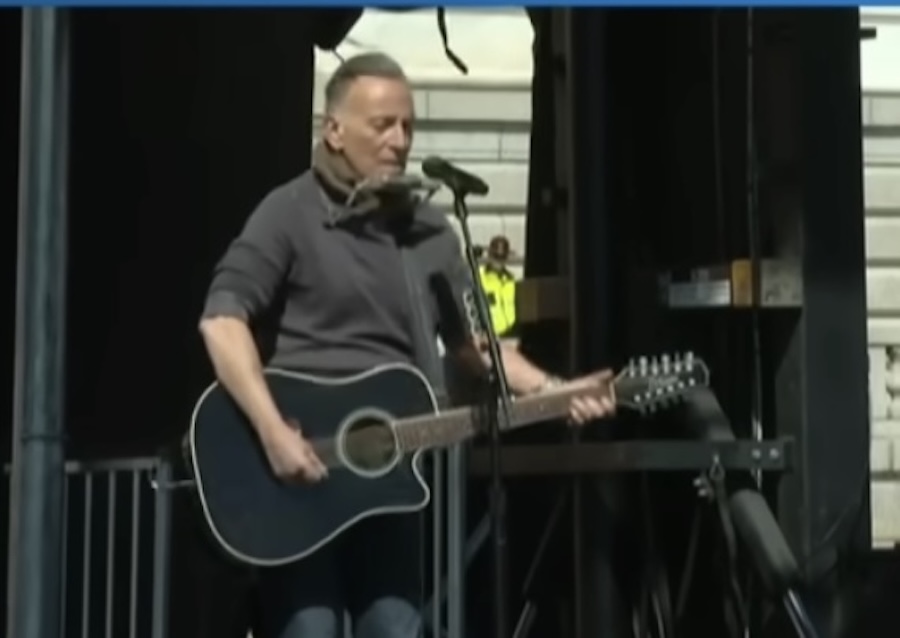
Los Angeles Pershing Square – ICE Out For Good Rally – 1-10-2026

. HUMAN RIGHTS .

Frames from video

Video of rally in Los Angeles against the ICE (United States Immigration and Customs Enforcement) police that descended by parachute to Minneapolis, terrorized the people and killed Nicole Good. Can you make an estimate of the rally size from the following successive frames of the video?

Hundreds of rallies were held across the United States as shown on this map:


° ° ° ° °

° ° ° ° °

° ° ° ° °

(Article continued in the right column)

Questions related to this article:

The struggle for human rights, is it gathering force in the USA?

(Article continued from the left column)

° ° ° ° °

° ° ° ° °

° ° ° ° °


(Editor’s note: We estimate 200 demonstrators in each frame. Combining the 7 frames, that would be about 1500 demonstrators.)
– – – – – –

If you wish to make a comment on this article, you may write to coordinator@cpnn-world.org with the title “Comment on (name of article)” and we will put your comment on line. Because of the flood of spam, we have discontinued the direct application of comments.

“We’re Going to Run the Country:” Preparing an Illegal Occupation in Venezuela

. . HUMAN RIGHTS . .

An article by Michelle Ellner in Countercurrents

I listened to the January 3 press conference with a knot in my stomach. As a Venezuelan American with family, memories, and a living connection to the country being spoken about as if it were a possession, what I heard was very clear. And that clarity was chilling.

The president said, plainly, that the United States would “run the country” until a transition it deems “safe” and “judicious.” He spoke about capturing Venezuela’s head of state, about transporting him on a U.S. military vessel, about administering Venezuela temporarily, and about bringing in U.S. oil companies to rebuild the industry. He dismissed concerns about international reaction with a phrase that should alarm everyone: “They understand this is our hemisphere.”

For Venezuelans, those words echo a long, painful history.

Let’s be clear about the claims made. The president is asserting that the U.S. can detain a sitting foreign president and his spouse under U.S. criminal law. That the U.S. can administer another sovereign country without an international mandate. That Venezuela’s political future can be decided from Washington. That control over oil and “rebuilding” is a legitimate byproduct of intervention. That all of this can happen without congressional authorization and without evidence of imminent threat.

We have heard this language before. In Iraq, the United States promised a limited intervention and a temporary administration, only to impose years of occupation, seize control of critical infrastructure, and leave behind devastation and instability. What was framed as stewardship became domination. Venezuela is now being spoken about in disturbingly similar terms. “Temporary Administration” ended up being a permanent disaster.

Under international law, nothing described in that press conference is legal. The UN Charter prohibits the threat or use of force against another state and bars interference in a nation’s political independence. Sanctions designed to coerce political outcomes and cause civilian suffering amount to collective punishment. Declaring the right to “run” another country is the language of occupation, regardless of how many times the word is avoided.

Under U.S. law, the claims are just as disturbing. War powers belong to Congress. There has been no authorization, no declaration, no lawful process that allows an executive to seize a foreign head of state or administer a country. Calling this “law enforcement” does not make it so. Venezuela poses no threat to the United States. It has not attacked the U.S. and has issued no threat that could justify the use of force under U.S. or international law. There is no lawful basis, domestic or international, for what is being asserted.

But beyond law and precedent lies the most important reality: the cost of this aggression is paid by ordinary people in Venezuela. War, sanctions, and military escalation do not fall evenly. They fall hardest on women, children, the elderly, and the poor. They mean shortages of medicine and food, disrupted healthcare systems, rising maternal and infant mortality, and the daily stress of survival in a country forced to live under siege. They also mean preventable deaths,  people who die not because of natural disaster or inevitability, but because access to care, electricity, transport, or medicine has been deliberately obstructed. Every escalation compounds existing harm and increases the likelihood of loss of life, civilian deaths that will be written off as collateral, even though they were foreseeable and avoidable.

What makes this even more dangerous is the assumption underlying it all: that Venezuelans will remain passive, compliant, and submissive in the face of humiliation and force. That assumption is wrong. And when it collapses, as it inevitably will, the cost will be measured in unnecessary bloodshed.  This is what is erased when a country is discussed as a “transition” or an “administration problem.” Human beings disappear. Lives are reduced to acceptable losses. And the violence that follows is framed as unfortunate rather than the predictable outcome of arrogance and coercion.

(continued in right column)

Question related to this article:

Can Trump control Venezuela?

What is really happening in Venezuela?

(continued from left column)

To hear a U.S. president talk about a country as something to be managed, stabilized, and handed over once it behaves properly, it hurts. It humiliates. And it enrages.

And yes, Venezuela is not politically unified. It isn’t. It never has been. There are deep divisions, about the government, about the economy, about leadership, about the future. There are people who identify as Chavista, people who are fiercely anti-Chavista, people who are exhausted and disengaged, and yes, there are some who are celebrating what they believe might finally bring change.

But political division does not invite invasion. 

Latin America has seen this logic before. In Chile, internal political division was used to justify U.S. intervention, framed as a response to “ungovernability,” instability, and threats to regional order, ending not in democracy, but in dictatorship, repression, and decades of trauma.

In fact, many Venezuelans who oppose the government still reject this moment outright. They understand that bombs, sanctions, and “transitions” imposed from abroad do not bring democracy, they destroy the conditions that make it possible. 

This moment demands political maturity, not purity tests. You can oppose Maduro and still oppose U.S. aggression. You can want change and still reject foreign control. You can be angry, desperate, or hopeful, and still say no to being governed by another country.

Venezuela is a country where communal councils, worker organizations, neighborhood collectives, and social movements have been forged under pressure. Political education didn’t come from think tanks; it came from survival. Right now, Venezuelans are not hiding. They are closing ranks because they recognize the pattern. They know what it means when foreign leaders start talking about “transitions” and “temporary control.” They know what usually follows. And they are responding the way they always have: by turning fear into collective action.

This press conference wasn’t just about Venezuela. It was about whether empire can say the quiet part out loud again, whether it can openly claim the right to govern other nations and expect the world to shrug.

If this stands, the lesson is brutal and undeniable: sovereignty is conditional, resources are there to be taken by the U.S., and democracy exists only by imperial consent.

As a Venezuelan American, I refuse that lesson.

I refuse the idea that my tax dollars fund the humiliation of my homeland. I refuse the lie that war and coercion are acts of “care” for the Venezuelan people. And I refuse to stay silent while a country I love is spoken about as raw material for U.S. interests, not a society of human beings deserving respect.

Venezuela’s future is not for U.S. officials, corporate boards, or any president who believes the hemisphere is his to command. It belongs to Venezuelans.

– – – – – –

If you wish to make a comment on this article, you may write to coordinator@cpnn-world.org with the title “Comment on (name of article)” and we will put your comment on line. Because of the flood of spam, we have discontinued the direct application of comments.
United States: The Resistance Moves Left

. HUMAN RIGHTS .

An article from Jacobin (abridged to half of the original which, as you can see by clicking here, is over 10,000 words)

Interview with Eric Blanc , Waleed Shahid , Leah Greenberg.

How the socialist left and the anti-Trump Resistance are slowly but surely learning to work together.

“Welcome to the Resistance.” During the first Trump administration, socialists loved to invoke this as a joke. The liberal resistance, socialists charged, was interested only in performative displays of opposition, blaming Russia for everything, and naively hoping Democratic Party adults in the room would take charge and turn back the clock to pre-2016 business as usual. Everything though has changed pretty dramatically since Donald Trump took office for a second time.

Again, much of the liberal base is in open revolt against a leadership that has so clearly failed to stop the inexorable march of far-right politics. But this time, liberals are voting for Zohran Mamdani, shifting left on Palestine, and becoming increasingly favorable to socialism as the solution to the problem of MAGA.

Daniel Denvir, host of the Jacobin Radio podcast The Dig, spoke to organizer and New York City Democratic Socialists of America (NYC-DSA) activist Eric Blanc, progressive political strategist Waleed Shahid, and co–executive director of the Indivisible Project Leah Greenberg about how and why liberals and “the Resistance” have radicalized. This transcript has been edited for length and clarity.

DANIEL DENVIR

A big part of what the socialist left has been trying to do is to make the case to the liberal Democratic base that the only way to address the root causes of MAGA and of Trump is by confronting neoliberalism and the forever wars, and by overthrowing the Democratic establishment.

And what seems really significant right now is that these left-populist, democratic socialist politics — the kind we see in Zohran Mamdani’s coalition as well as in Bernie’s Fighting Oligarchy Tour — are breaking through in a really powerful way. How did the liberal base, which had placed their faith in the Democratic establishment to protect them from Trump, become so radicalized over the last twelve months?

LEAH GREENBERG

I don’t think you can separate the reaction that the liberal base has had in this moment from the broader societal dynamics that we have been seeing unfold. In Trump 1.0, there was at least a pretty solid pretense by corporate actors, by a lot of different institutions across society, that they were attempting to hold some set of things around the norms of liberal democracy, protect some set of vulnerable populations, and so on.

We can all be really clear that was not out of the goodness of their hearts. But it did create a pretty significant contrast. And what we’ve seen this time around is just a total elite institutional collapse in the face of Trumpism starting, basically, immediately after he was elected.

So I think for folks who believed what the Democratic leadership was telling them — that this was an “oncoming fascism,” that it was going to be a direct personal threat to them and their communities and their neighbors — to watch this combination of Democratic leadership fecklessness going quiet to the extent that they were having really internal circular arguments about blaming the groups instead of any kind of meaningful accounting about what had happened, and then simultaneously watching a bunch of other institutions across society — everybody from Jeff Bezos and Mark Zuckerberg to Target and basically every corporation you could name — immediately rush to bend the knee, created a much more clear illustration that the project to consolidate MAGA political power and the project to consolidate corporate power were one and the same. That set the stage for a lot of what has unfolded since.

WALEED SHAHID

If you look at universities, law firms, the federal government, media, and employees of organizations affected by Big Tech consolidation, there’s a tangible difference between 2017 and 2025 in terms of the kinds of upper-middle-class or middle-class white-collar workers that are probably ideologically or effectively liberal — but are really being squeezed by this administration, being attacked by this administration. Not just in terms of rhetoric but also in terms of policy.

J. D. Vance, Donald Trump, and Elon Musk really hate this liberal class. They have fan fiction about replacing the liberal class with robots and artificial intelligence. And I just think that there’s a way in which that class is being squeezed, and the party and the elected representatives who are supposed to represent that class not really having the fight in them to represent that in a big way.

ERIC BLANC

I agree with Leah that the main thing is that not only is Trump way worse this time, but also institutions are fighting way less. That contradiction is a deeply radicalizing dynamic.

It does, I think, predate the election though. For instance, the inability of the Democratic Party establishment to push out Joe Biden and the whole age debacle, which we’ve sort of forgotten all about, really did expose to a lot of the liberal base that, contrary to the rhetoric, the motivations of the people on top seem to be much more about ego and career than about fighting fascism. That really was a very eye-opening experience.

Then there’s just a general dynamic where, because the authoritarian drive of this new administration is so deep, liberals for positive and maybe limited reasons really feel the attack on democracy as core to their politics in a way that maybe other segments of the population don’t to the same extent.

So there’s a radicalizing in response to events, in a way that if you don’t actually think that the system was working as well, as many leftists or maybe like non-college-educated workers do, maybe even attacks on democracy aren’t as at the forefront in your mind. But if you really do believe, and I think liberals are right to believe, in the importance of defending liberal democracy, then it just seems like an all-hands-on-deck moment to them more than any other part of the population.

DANIEL DENVIR

Joshua Cohen had an interesting post recently where he described the liberal revolt against the Democratic Party establishment as a relatively autonomous revolt that the organized socialist left is in a good position to channel, organize, and help lead — but does not, and maybe cannot, actually control. What do you make of this argument, and what are its implications for how the socialist left should think about building bridges with this liberal insurgency?

WALEED SHAHID

Two of the main mass mobilizations that have been successful in the past year have been the Tesla takedown protests and No Kings, which to me are two different iterations of what maybe is called “the autonomous liberal revolt.” I think that these efforts show that people are looking to express their anger and frustration and want to be able to do it in a way that feels not necessarily ideological or even socialist, but as a part of a fight against Donald Trump and fascism.

I think that the third most successful mobilization that had national impact was Zohran’s election. Where the rubber meets the road is obviously in elections because there are very few places where people who are socialists or even social democrats can win an election with just people who identify with those terms. You have to build a coalition across ideology and across demographics. Often the people — some of the younger populist socialist candidates — embody that fight against authoritarianism much better than the Democratic establishment.

LEAH GREENBERG

Pulling from that argument, around why there’s this crisis of faith right now, the fundamental proposition of Biden 2020 was that Trumpism was a temporary insanity that could be fixed by electing the most run-of-the-mill, most persuasive candidate. You’d get him in, the adults would be back in charge, things would be okay, and this fever would break. That was the promise. And a lot of people went for it or even grudgingly went for it. And so I think the basic issue that is happening right now is that there is no follow-on proposition or no follow-on promise from Democratic elected leadership that explains this moment.

It’s clearly not a temporary fever. MAGA is a force in American politics, and it is going to be a force for an extended period of time. How do you actually fundamentally get out of this situation where every four years, every election is a referendum on democracy and is a threat of authoritarian consolidation? I don’t think Democratic leadership has offered a meaningful theory that replaces the “this is a temporary fever” framing. Someone being able to successfully make a convincing proposition about this is actually how we shift our politics in a direction that doesn’t involve constant confrontations with the worst 30 percent of American society — I think that’s going to be the way that you break through.

ERIC BLANC

What I’d add to that is that this is in many ways a surprising dynamic for the Left, which is to say that the liberal vote is in many ways a surprising development for the socialist left. I don’t think that people were exactly prepared to see not just a repeat of Resistance 1.0, and it’s part of the reason we’re having this conversation today. There has been a shift toward trying to make sense of it, but I think we probably have to go further to be really concrete. For instance, DSA only just recently joined the No Kings coalition and I think that’s a good sign that people are trying to figure out how we work with this sort of broader liberal resistance movement.

But there was also a tendency sometimes to be a little bit condescending toward the No Kings protest, for instance. So when we’re thinking about how we relate to the liberal resistance, I think this is a good thing to keep in mind. Our major task right now isn’t only to differentiate ourselves from liberals — especially liberals who are out there fighting — but to engage with them and to be the best builders for No Kings rallies.

WALEED SHAHID

One other thing I’d add to the trajectory of Democratic Party liberalism: the Democratic Party establishment warning liberals about the threat of fascism is where immigration becomes a huge issue in the story, where, contrary to popular belief, white liberals tend to be a very big demographic in favor of immigrant rights in this country.

Just this past week from the right and left wing of Democratic Party liberalism, both David Brooks and Michelle Goldberg in the New York Times had columns about immigrant rights. Goldberg’s column was about immigrant rights groups that you should donate to for the holidays. David Brooks had a column about a church in Connecticut that’s helping undocumented immigrants and people seeking asylum from combating ICE [Immigration and Customs Enforcement].

I think that now, because the elected officials aren’t leading the fight on immigration as much, that creates such a huge opening for this class of people who really care about inclusion and pluralism and protecting the vulnerable to have autonomous ways of engaging that are filling a vacuum that isn’t being provided by the leadership class of their party.

LEAH GREENBERG

If I may offer the reverse, mirror image of that, I think the two early signs of the disjuncture between the base and elected leadership were H. R. 9495, the nonprofit-killer bill, which they tried to move in a bipartisan fashion immediately after the election, and then the Laken Riley Act in January. A very firm memory I have is trying to communicate to Democratic electeds that our base was genuinely alarmed and upset and did not understand why we would be offering Donald Trump more power around enforcement, on nonprofits, more power to go after immigrants and consolidate a secret police force — and getting somewhere between dismissal and contempt in reaction. And people saying, you know, not only do we disagree, but we disagree and this is why we lost the election.

Then by mid-February, when the calls and the volume and the anger was boiling over, having a lot of those people be like, “Why is everyone so mad?” Our reaction was, “We’ve been telling you this has been building. There’s actually just a consistent gap between the communications you’ve made to people about what you care about and the things you’re doing. And that’s coming back to attack you.” . . . .

DANIEL DENVIR

One really remarkable thing is that for the recent No Kings protest, there was a breakthrough agreement to have a Palestinian speaker and have a whole Palestinian liberation contingent in the No Kings protest. I think this was debated and decided among a group of grassroots liberal Resistance organizers in Rhode Island, and there was some dissension. But they ultimately came to a solid decision to coalesce with specifically Jewish Voice for Peace. That represents not just this breakthrough between the socialist left and left-liberal Resistance, but it was also a fundamentally intergenerational coalition because it was much more gray-haired people sitting on one side and much more millennial and Zoomer on the other.

(Article continued in the right column)

Questions related to this article:

The struggle for human rights, is it gathering force in the USA?

(Article continued from the left column)

LEAH GREENBERG

I think that mirrors a lot of where we’ve ended up in terms of the national framing. In the first No Kings march in June, I marched next to Ruwa Romman of Georgia who was one of the speakers. And we have tried to be really intentional about balancing the fact that No Kings is not an entity that has a platform — it doesn’t have a set of policy ideas that it’s advancing; it is a broad front against authoritarianism — and also being really clear about inclusion of voices that recognize the Palestine movement.

So there is a continued negotiation, and there’s a continued process of building together at the local level that has been ongoing, and it’s in different places, in different contexts. I do really think that that knitting together of the intergenerational context and the broad front is really important.

There are so many different threads that I want to respond to here. First, in terms of the 2020 cycle, we had a really extended conversation with our leaders in 2020 around whether we were we going to endorse in a presidential cycle. Should we endorse? Who are we for?

We have some data out of that that suggests that the top candidate among our folks was Warren, very strong. There was a strong but smaller Bernie faction. There were some folks who were kind of scattered around the different moderate candidates. Things shaped up in the later stages pretty quickly in a way that limits our ability to say who went where as different candidates came in and dropped out. But the bigger dominant feeling for folks was that they didn’t really think that a presidential endorsement was the top priority for locally based organizing hubs that often had a very strong foot in a local race or a congressional race or a broader suite of activism that they couldn’t disrupt in order to have some effect on the presidential race.

That was where people ended pretty consistently. We respected that very much on a national level after having that conversation. And so we have some sense of where people’s optimal politics are.

Also, people had a really different take on primaries overall during the first Trump term than they do this time around. That’s where people were, just practically speaking, on abundance. I think this has been one of the places where there is just a huge gap, as you put it, between the conversation that is preoccupying elite commentators and the conversation that is happening among grassroots activists and rank-and-file folks.

Because immediately after the election, I think there’s this very confusing moment where Abundance, which is a book that was intended for a Kamala Harris term or a second Biden term, gets kind of rebranded as an answer to why we lost and gets sucked into this super toxic discourse around the recriminations post-2024 and this extended set of arguments and discussions around remaking the party.

I can’t stress enough how much none of that was of interest to people who were freaking out about fascism — which is actually unfortunate in a lot of ways. As somebody who has a lot of enthusiasm for abundance politics myself, I think that conflation set the stage for a number of things that were not super healthy. And while I think you’ve done a lot of work trying to untangle those currents and appreciate that, the functional impact was that I think a lot of people who might well have been open to various parts of that argument mostly perceived it as kind of irrelevant to the questions of the day, which were, “What are we actually going to do to protect fundamental rights, to fight back against this massive onslaught?”

ERIC BLANC

The depth of youth radicalization that’s continued really puts a lie to one of the major talking points that happened after Trump’s reelection in 2024, which you might remember when there was this move from the establishment to fight against the groups and to say, “We need to pivot to the center, drop fighting for immigrants and trans people.” Part of the argument was, young people are making this dramatic shift to the center — if we don’t meet them — . . . . .

DANIEL DENVIR

One big shift that I’ve noticed between the first and second Trump administrations in terms of ordinary members of the liberal Resistance is a stronger emphasis on fighting the Trump regime, rather than derogatorily speaking about or demonizing ordinary Trump voters.

Notably, Zohran launched his campaign by standing on a street corner and asking people why they’d given up on Democrats and why they voted for Trump. And he went on about a year later to win those neighborhoods back.

Leah, you’ve touched on this, but we’re seeing this really powerfully right now through the anti-oligarchy framing, which was first put forward by Bernie and then AOC and these rallies and has become the dominant left and liberal way to interpret what’s happening right now. What it’s doing, I think very powerfully, is connecting the dots between economic and political authoritarianism.

But that really wasn’t part of the mainstream discussion or liberal Resistance discourse during Trump 1.0. What is it about the conditions of Trump’s second administration that have allowed for this anti-oligarchy framework to become perhaps the dominant one? And what sort of political work does that framing do?

LEAH GREENBERG

There are two pieces. First, the mask is fully off. You have a bunch of corporations that had a frame around corporate social responsibility, a frame around, for example, doing meaningful work to protect the 2020 election from sabotage. If you go and you look at the list of corporations that tried to donate to protect that election compared to who has donated to the Trump ballroom, I think the degree to which corporations have been very visibly avid and enthusiastic collaborators with the Trump and MAGA agenda — how even the corporations that people ostensibly think of as “good corporate citizens” have behaved, have gotten rid of their DEI policies, have trashed their climate policies, have donated to the Trump ballroom or to the inauguration — there is no meaningful, credible argument that delinks the consolidation of corporate power in this country from the consolidation of right-wing white Christian nationalist power. I think that is a revealing reaction.

The other thing is that there was no meaningful Democratic leadership interpretation of what was happening in the first four months. There was this powerful Fighting Oligarchy tour with Bernie and AOC making a really clear connection between what was happening on the corporate power side and what was happening in Washington. I think the fact that the act of stepping into that leadership vacuum was very important for linking those two things together.

Now, there’s sometimes a framing that suggests that there’s a lot of daylight between a No Kings and a “No Oligarchs” frame. I think that that’s not particularly valid on the ground. What we’ve experienced is that there’s a lot of openness to an overarching story about corporate power. Bernie spoke at our most recent No Kings in Washington; he was the headliner. We do see people really making those connections. We see a lot of enthusiasm among our own folks for corporate campaigns, for theories of how you actually dissuade this kind of corporate collaboration and enablement. . . .

DANIEL DENVIR

Just look at Zohran — a huge victory — and at the way, generally speaking, NYC-DSA has been able to effectively build out their organization as a party-like formation with power and political independence, which is the gold standard for what the socialist left has been trying to do for a decade.

On the other hand, this proliferation of left insurgent campaigns is, by necessity, larger and broader than DSA and thus beyond its full control. Eric, how can DSA simultaneously stick to its focus and also help lead this broader set of currents? How does DSA help guide this broader front without liquidating its own identity and independence, which has been really important for the revival of left politics in this country?

ERIC BLANC

It was an overall huge step forward that after Bernie 2016, DSA started moving toward a new type of left politics electorally, which was different than really what was the dominant trend before then, which was just to support any progressive and sort of anything goes.
The reason that that was limited was not just about the politics, although that’s part of it, but it also just didn’t build your organization. It didn’t build an independent identity. It didn’t build power from below. You couldn’t get volunteers to be excited time and time again afterward. So New York City DSA in particular, but also [chapters] elsewhere throughout the country, were right to build a socialist wing and to develop a huge amount of volunteer infrastructure out of that.

I would flag that it’s still quite uneven across the country. There are a lot of DSA chapters that still just do progressive endorsements.

DANIEL DENVIR

Katie Wilson — who is a more than sufficiently left-wing challenger, she’s a socialist as far as I can tell — did not get Seattle DSA’s endorsement for reasons I don’t know about.

ERIC BLANC

I think there’s a difficulty in DSA now in how you respond to new terrain, where there are genuine left fighters who certainly aren’t DSA cadre, maybe they call themselves socialists or don’t, but they’re not necessarily sharing our politics.

There are also a lot of good and hard debates that need to be happening right now to figure out how we relate to someone like Graham Platner in Maine. How could you not want to go all in in Maine around someone like Graham Platner? My response in the internal debates in DSA on this stuff is — keep in mind, DSA arose out of, and we’re still basically in, the Bernie moment, right? Bernie was not a DSA cadre member. Our growth came largely out of, and in response to, Trump’s election but then also the Bernie moment, which was much bigger than DSA.

I think that there’s a possibility and necessity to walk and chew gum at the same time. What I mean by that is it makes sense for an organization like DSA to primarily focus on running socialist candidates. But particularly when there’s high-profile, very important battles in which you have essentially a Berniecrat running, I do think you need to be more flexible.

WALEED SHAHID

I was someone who worked hard to get DSA to endorse Cynthia Nixon and also, on the other side, to get Cynthia Nixon to be open to the DSA endorsement. Same with AOC; same with Jamaal Bowman. Endorsements go both ways.

I think it’s a genuinely difficult problem in the American political system because elected officials in this country are much bigger than any organization or even party. We have a uniquely individually driven political system where every elected official ultimately ends up becoming their own small business owner and running their own brand.

DANIEL DENVIR

Following up on some points that Waleed made earlier, why is the Democratic establishment the way that it is? Why do it and its favorite media mouthpieces so stubbornly cling to convention even as conditions become so clearly entirely unconventional? Why are they so resolutely in denial of or hostile to their base? Why do they insist on concepts like “popularism” when they just mean moderation and triangulation?

WALEED SHAHID

I was recently on a panel with someone from the WelcomePAC, which is one of these PACs that are political outfits attempting to elect “heterodox Democrats.” So what they mean by heterodox is anti-trans, often pro-life Democrats, anti-choice Democrats, pro-fossil-fuel Democrats, people who are a little bit more right-wing on immigration.

The moderator asked me and this other person, “Do either of you feel welcome in the Democratic Party?” Both of us said no. Then she asked, who is the Democratic Party for then? It was a challenging question where I’m like, I think that who the Democratic Party is for is embodied in the politics of the leadership of the party, which is, how do you create the math equations that will get you to 50 percent? How do I manage the coalition in a way and manage the groups and manage the message in such a polished way so that adds up to 50 percent — rather than just being a person a leader in the world and trying to mold a consensus?

It reminds me of the Whig Party in the nineteenth century where it doesn’t really add up. . . . The politics of the leadership and the politics of the establishment class is vote for me, because what else are you gonna do?

ERIC BLANC

I would add that I think Trump winning is not an existential threat to them, but the left insurgents taking over the Democratic Party is an existential threat to that establishment class. That explains a lot of their behavior, because the reality is if we can both defeat Trump and do that in a way that is closer to Bernie politics than to fifty years of neoliberalism, all of them just lose their jobs. But it also proves them wrong about saying that the way you win is pivoting to the center.

LEAH GREENBERG

The vast majority of Democratic elected are lawyers with degrees from Ivy League institutions or business owners. They are not themselves in any meaningful way credible representatives of the working class. The fact that that was often not even part of the conversation suggests some of the deeper problems.

CONTRIBUTORS

Eric Blanc is an assistant professor of labor studies at Rutgers University. He blogs at the Substack Labor Politics and is the author of We Are the Union: How Worker-to-Worker Organizing is Revitalizing Labor and Winning Big.

Waleed Shahid is the director of the Bloc and the former spokesperson for Justice Democrats. He has served as a senior adviser for the uncommitted campaign, Alexandria Ocasio-Cortez, and Jamaal Bowman.

Leah Greenberg is co–executive director of the Indivisible Project.

Daniel Denvir is the author of All-American Nativism and the host of The Dig on Jacobin Radio.

– – – – – –

If you wish to make a comment on this article, you may write to coordinator@cpnn-world.org with the title “Comment on (name of article)” and we will put your comment on line. Because of the flood of spam, we have discontinued the direct application of comments.

New York: Mamdani’s Win Proves That Hope Is Power

.. DEMOCRATIC PARTICIPATION ..

An article by Frances Moore Lappé and Corinna Rhum from Common Dreams

Zohran Mamdani’s stunning victory on Tuesday is a bright light in this otherwise terrifying political time, and the messages propelling his political ascendance offer many lessons. One particularly is music to our ears—indeed, it’s a song we’ve long been singing. We’ll let the words from his acceptance speech  speak for themselves:

“Tonight we have spoken in a clear voice. Hope is alive. Hope is a decision that tens of thousands of New Yorkers made day after day, volunteer shift after volunteer shift, despite attack ad after attack ad. And, while we cast our ballots alone, we choose hope together: hope over tyranny. Hope over big money and small ideas. Hope over despair. We won because New Yorkers allowed themselves to hope that the impossible could be made possible.”

Right on!

Mr. Mamdani’s message is both powerful and incisive. To launch his campaign to become mayor of our largest city required hope—and great courage. A long-shot candidate—a 34-year-old South Asian Muslim and democratic socialist assemblyman—he is a departure from mayoral convention.

Nevertheless, he, and a dedicated team of volunteers, took the plunge, pouring heart and soul into one of the most impressive grassroots campaigns. Mr. Mamdani’s candidacy was an act of hope—rooted not only in a belief in the necessity of his ideas and capacity to govern but also of hope that the political landscape would embrace a leader like him.

We must challenge ourselves to hope! Why not run for office with a bold, hope-infused platform? Volunteer for a candidate we believe in? And cast our votes for a different and better future?

(continued in right column)

Questions related to this article:

How can culture of peace be developed at the municipal level?

The struggle for human rights, is it gathering force in the USA?

(continued from left column)

And that hope turned into victory—justifying itself. Adamantly and consistently, he worked to convince voters that a better New York is achievable—that hope need not be an abstract and ephemeral feeling but rooted in actual political possibility.

Doing so, Mr. Mamdani championed the concerns New Yorkers—but, really, most Americans—feel acutely: our affordability crisis in housing, food, and healthcare; the burden of wages failing to keep up with cost of living; the immense struggle required just to survive. At every step of his campaign, he addressed these deep structural problems with real, innovative policy solutions. He didn’t ask voters to find hope from his politicking. Rather, he offered real grounds for belief.

We have long said that hope is power. Mr. Mamdani’s political success is evidence of this truth.

So perhaps the most important takeaway from Mr. Mamdani’s campaign is this: Hope grounded in possibility is the fuel for democracy. We find this a particularly powerful line from Mr. Mamdani’s acceptance speech: “We won because we insisted that no longer would politics be something that is done to us. Now, it is something that we do.” This sentiment is, indeed, the crux of hope’s power. When we believe, the door to action opens. We become agents capable of making real the changes we so desperately. As Mr. Mamdani says, politics is not done to us, but what we do.

This spirit is contagious and key to fighting back successfully against the Trump administration’s fascist policies and reversing widespread democratic backsliding. We must challenge ourselves to hope! Why not run for office with a bold, hope-infused platform? Volunteer for a candidate we believe in? And cast our votes for a different and better future?

Organizations including Run for Something empower us to step up and consider ourselves as changemakers, and several other national groups such as Common Cause and Indivisible provide clear paths for citizen action. Who knows what may come from taking the next hopeful step in your community, whether its electoral or any other form of advocacy.

Remember hope is not for “wimps.” It requires courage to do what we thought we could not do. The root of the word courage is the French word for heart, “coeur.” So, when you step up and feel yours pounding, don’t doubt. It’s just your heart cheering you on!

Leading with hope, we can build the engaged and just “living democracy” we want and know is essential. We can become proud of our country again.
– – – – – –

If you wish to make a comment on this article, you may write to coordinator@cpnn-world.org with the title “Comment on (name of article)” and we will put your comment on line. Because of the flood of spam, we have discontinued the direct application of comments.
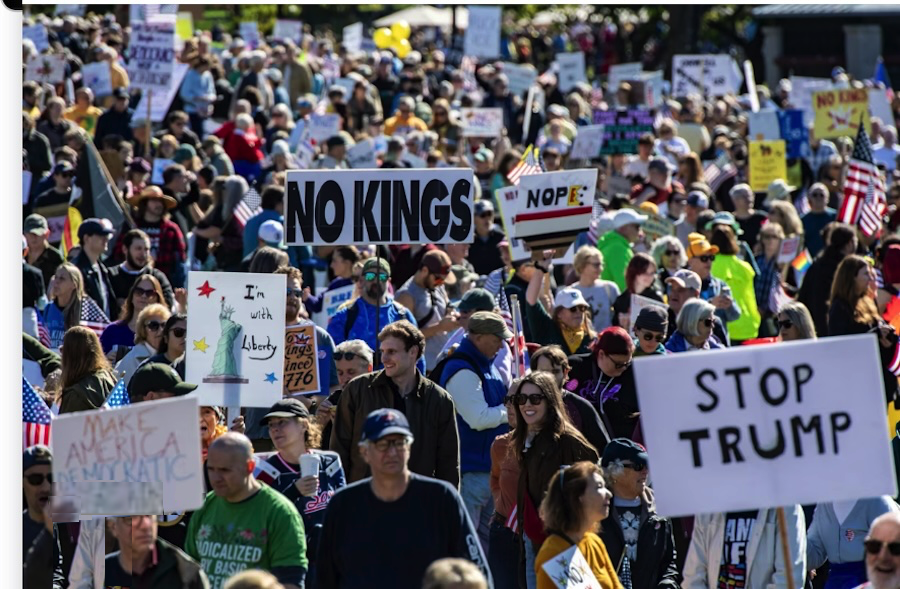
Starting the swing back in Connecticut

. HUMAN RIGHTS .

We received the following photo from a friend in Connecticut, with the comment, “there’s a start of the swing back here.  We are still hopeful that we will see, eventually, that sanity, compassion and peace outweigh the current dissolution of our society.”


(click on image to enlarge)

Questions related to this article:

The struggle for human rights, is it gathering force in the USA?

– – – – – –

If you wish to make a comment on this article, you may write to coordinator@cpnn-world.org with the title “Comment on (name of article)” and we will put your comment on line. Because of the flood of spam, we have discontinued the direct application of comments.
Bernie Sanders: We Must Fight Like Hell Against Trump’s Authoritarianism

. HUMAN RIGHTS .

An article by Bernie Sanders in Common Dreams (reprinted  under Creative Commons CC BY-NC-ND 3.0)

Make no mistakes about it, we are living in dangerous and unprecedented times as we combat Trump‘s oligarchy, authoritarianism, kleptocracy, and his horrific attacks against working families.


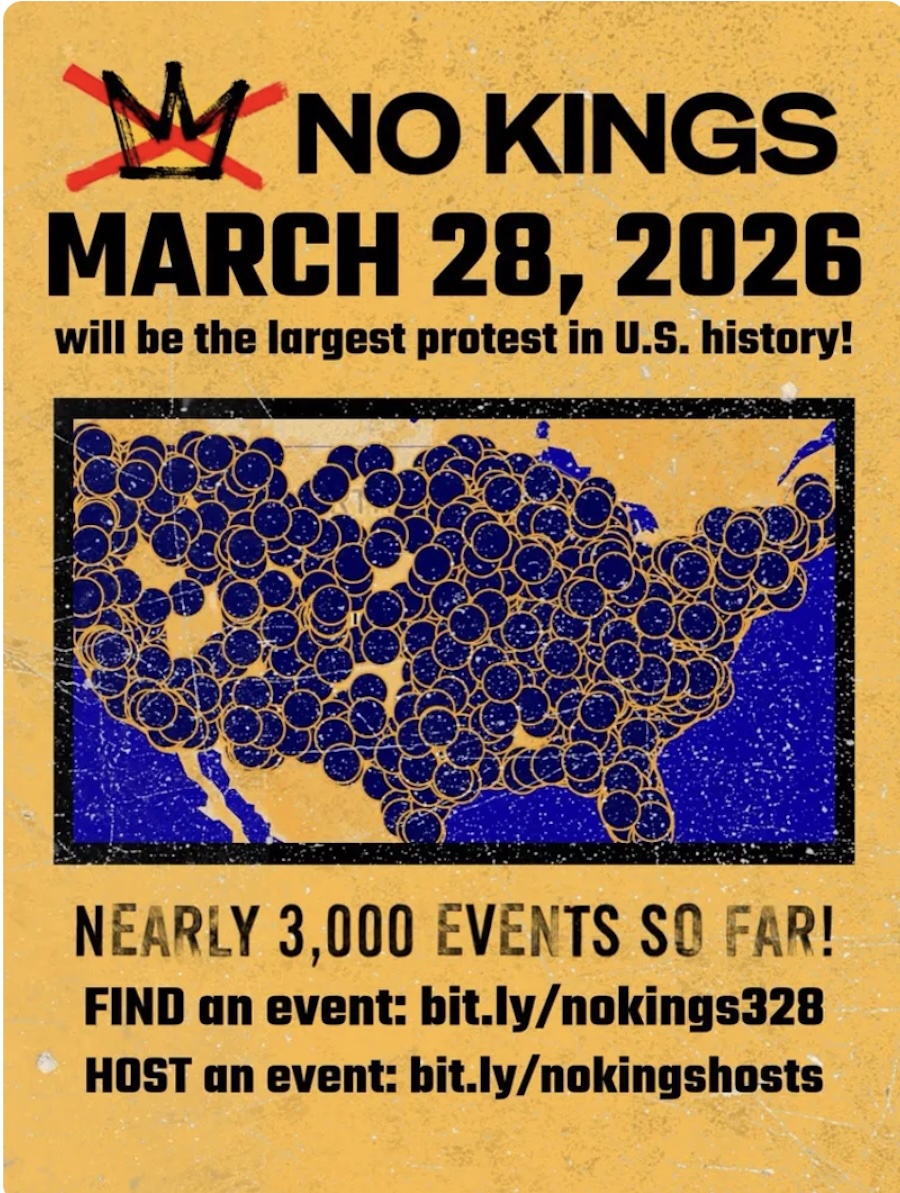
Demonstrators march through downtown protesting the agenda of the Trump Administration on September 30, 2025 in Chicago, Illinois. (Photo by Scott Olson/Getty Images)

We have more income and wealth inequality than we’ve ever had; we have more corporate control of the media than we’ve ever had; we have more billionaire money buying elections than we’ve ever had.

We have a major housing and educational crisis, people are going to the grocery store and can’t afford the food their families need, and we have a health care system that is completely broken.

Meanwhile, we have a president who is a pathological liar, who has little regard for the rule of law, who is suing media outlets that criticize him, threatening to jail his political opponents and talking about the military invading U.S. cities as practice.

History has always taught us that real change never takes place from the top on down. It always occurs from the bottom on up. It occurs when ordinary people get sick and tired of oppression and injustice—and fight back.

And on Tuesday night, as you know, the government shut down because—for the first time in modern history—Donald Trump and the Republican Party are approaching a budget conversation that requires 60 votes with a take it or leave it approach.

I will not take it.

I will not allow Donald Trump and the Republican Party to take away health care from 15 million people by making the largest cut to Medicaid and the Affordable Care Act in history.

I will not allow Donald Trump and the Republican Party to increase health insurance premiums by 75 percent, on average, for over 20 million Americans who get their health care through the Affordable Care Act.

I will not allow Donald Trump and the Republican Party to fund this by giving a $1 trillion tax break to people like Jeff Bezos, Elon Musk, and the other oligarchs in the top 1 percent.

(Article continued in the right column)

Questions related to this article:

The struggle for human rights, is it gathering force in the USA?

(Article continued from the left column)

I will not allow Donald Trump and the Republican Party to undermine modern medicine and the health and well-being of our children by rejecting the scientific evidence regarding vaccines.

I will not allow Donald Trump and the Republican Party to allow this country to be moved toward authoritarianism by putting federal troops on city streets without a request from a governor or mayor.

I was asked ahead of the vote if I would just continue to vote NO over and over again until these issues are addressed, and you are damn right I will.

Donald Trump and my colleagues in the Republican Party may not stay up late at night worrying about people who can’t afford health care, the medicine they need to survive, groceries and an education for their children, but I do.

Republicans will not have my vote to fund the government unless they find a sense of morality and do the right thing on health care, income and wealth inequality, and stopping Donald Trump’s march toward authoritarianism.

I want the Republicans to go back to their districts and ask their constituents whether or not they believe it’s a good idea to take away health care from millions of Americans to give Bezos and Musk a tax break.

I suspect they will not like the answer they hear.

So no. Republicans will not have my vote to fund the government unless they find a sense of morality and do the right thing on health care, income and wealth inequality, and stopping Donald Trump’s march toward authoritarianism.

Until that happens it is important for all of us to stand up and make our voices heard.

Will it be easy? Of course not.

Is it possible? Only if everyone does their part.

Let me remind you, history has always taught us that real change never takes place from the top on down. It always occurs from the bottom on up. It occurs when ordinary people get sick and tired of oppression and injustice—and fight back. That is the history of the founding of our nation, the abolitionist movement, the labor movement, the civil rights movement, the women’s movement and more.

Sisters and brothers, we are living in dangerous times. Maybe more dangerous than any point in American history since the Civil War.

But this is a struggle that, for ourselves and future generations, we cannot lose.

Let us go forward together in solidarity

– – – – – –

If you wish to make a comment on this article, you may write to coordinator@cpnn-world.org with the title “Comment on (name of article)” and we will put your comment on line. Because of the flood of spam, we have discontinued the direct application of comments.

As Trump Escalates Attacks on Dissent, Oct. 18 ‘No Kings’ Protests Set to Be Even Bigger Than June

. HUMAN RIGHTS .

An article by Jessica Corbett from Common Dreams (reprinted  under Creative Commons CC BY-NC-ND 3.0)

As President Donald Trump and his allies continue to target immigrants, journalists, and anyone else critical of the increasingly authoritarian administration, organizers are gearing up  for another round of “No Kings” rallies across the United States, which they expect will draw even more demonstrators than a similar day of action  in June.


Protestors march during a “No Kings” demonstration on June 14, 2025 in Los Angeles, California. (Photo by Jay L Clendenin/Getty Images)

“Sustained, broad-based, peaceful, pro-democracy grassroots movements win. Trump wanted a coronation on his birthday, and what he got instead was millions of people standing up to say NO KINGS,” Indivisible co-founder and co-executive director Ezra Levin said in a Tuesday statement. “No Kings Day on June 14 was an historic demonstration of people power, and it’s grown into a broad, diverse movement.”

“While Trump escalates his attack with occupations of American cities and secret police forces terrorizing American communities, normal everyday people across this country are showing up every single day with courage and defiance. On October 18, we’re going to show up in the largest peaceful protest in modern American history,” he added. “Millions will come together in more cities than ever to say collectively: No kings ever in America.”

Indivisible is planning next month’s peaceful protests alongside groups including the ACLU, American Federation of Teachers, Common Defense, 50501, Human Rights Campaign, League of Conservation Voters, MoveOn, National Nurses United, Public Citizen, Service Employees International Union, and United We Dream.

Organizers announced  the second Not Kings mobilization earlier this month. As a federal government shutdown loomed on Tuesday, they said that over 2,110 protests are now planned across all 50 states—more than those that drew over 5 million people to the streets in June.

(Article continued in the right column)

Questions related to this article:

The struggle for human rights, is it gathering force in the USA?

(Article continued from the left column)

“We the People of the United States of America reject the Trump regime’s repeated assaults on our freedoms,” said 50501 national press coordinator Hunter Dunn. “This administration has invaded our cities, dismantled our social services, and tossed hard-working Americans into concentration camps. He has sacrificed our Constitution on the altar of fascism. On October 18th, the American people will gather together to practice two time-honored American traditions: nonviolent protest and anti-fascism.”

Trump has deployed the National Guard in Los Angeles, California, and Washington, DC, and this week is moving to do the same in Portland, Oregon, and Chicago, Illinois—where US Immigration and Customs Enforcement (ICE) agents are already carrying out the deadly  “Operation Midway Blitz” as part of Trump’s national push for mass deportations. The administration is also specifically targeting pro-Palestinian foreign students, which a federal judge on Tuesday rebuked  with what one reporter called “the most scathing legal rebuke of the Trump era.”

Also on Tuesday, during an unusual gathering of US military leadership in Virginia, Trump declared that the country is “under invasion from within” and generals should use American cities as “training grounds,” while Defense Secretary Pete Hegseth pledged to overhaul the inspector general process: “No more frivolous complaints, no more anonymous complaints, no more repeat complaints, no more smearing reputations, no more endless waiting, no more legal limbo, no more sidetracking careers, no more walking on eggshells!”

Meanwhile, Jacob Thomas, a military veteran and communications director for Common Defense, said that “as veterans and patriots who swore an oath to protect and defend the Constitution and the freedoms that it enshrines, we are appalled at the lengths President Trump and his billionaire buddies have gone to to strip our neighbors and communities of the rights, dignity, and freedoms owed to everyone residing in this country.”

“We must all do our part to fight back against his authoritarianism and military occupation of cities,” he continued. “We cannot allow a wannabe dictator to destroy our democracy, gut veteran healthcare, keep people from accessing the ballot box, and tank our economy. We must all join together in solidarity to fight back and secure our freedoms. Two hundred and fifty years ago, Americans stood up to a tyrant king, generations later our great-grandparents defeated fascism abroad. Now it is up to us to defeat fascism at home.”

– – – – – –

If you wish to make a comment on this article, you may write to coordinator@cpnn-world.org with the title “Comment on (name of article)” and we will put your comment on line. Because of the flood of spam, we have discontinued the direct application of comments.
What would a general strike in the US actually look like?

. HUMAN RIGHTS .

An article by Jeremy Brecher from Waging Nonviolence

Something is in the air: A perception that American democracy and livable conditions for working people may only be saved by the kind of large-scale nonviolent direct action variously called “general strikes,” “political strikes,” or, as I will refer to all of them, “social strikes.”

Calls for mass disruptive action are coming from unlikely places, like Anthony Romero, executive director of the ACLU, an organization normally associated with legal action through the courts. When Romero was asked in a recent interview what would happen if the Trump administration systematically defied court orders, he replied, “Then we’ve got to take to the streets in a different way. We’ve got to shut down this country.”

Similarly senior Democratic Rep. Jim McGovern said, “We can’t just sit back and let our democracy just fall apart. What we need to think about are things like maybe a national strike across this country.”

Some in organized labor are also entering the fray. Sara Nelson, head of the Association of Flight Attendants, recently said that American workers — no matter what they do or what sector they are in — now have “very few options but to join together to organize for a general strike.” (She led the organizing for a national general strike that successfully deterred Trump’s attempt to shut down the government in his first term.)

Meanwhile, online, there are even more ad hoc efforts demonstrating the tactic’s appeal right now. For instance, more than 300,000 people have signed cards pledging to participate in a general strike.

Calling for general strikes is a staple of the radical toolkit. (I’ve made questionable efforts to call two or three myself over the past half-century.) But why has the idea of such mass actions suddenly appeared on the lips of such a wide range of people? There are three principal reasons:

1. The wide range of people being harmed by the MAGA juggernaut gives credibility to actions based on wide public participation.

2. The demolition of key institutions of democracy, constitutionalism and the rule of law is threatening to leave few alternatives to popular uprising.

3. The fecklessness of the leadership of the Democratic Party, as sublimely illustrated by Sen. Chuck Schumer’s passage in March of the devastating MAGA budget, has led to despair about resistance within the institutions of government.

These inescapable realities are forcing people to think in unaccustomed ways.

I use the term “social strikes” to describe mass actions people take to exercise power by withdrawing cooperation from and disrupting the operation of society. The goal of a social strike is to affect not just the immediate employer, but a political regime or social structure. Such forms of mass direct action provide a possible alternative when institutional means of action prove ineffective. In all their varied forms they are based on Gandhi’s fundamental perception that “even the most powerful cannot rule without the cooperation of the ruled.”

(Article continued in the right column)

Questions related to this article:

The struggle for human rights, is it gathering force in the USA?

(Article continued from the left column)


What are social strikes?

Social strike is a broad term that encompasses a wide range of activities that use the withdrawal of cooperation and mass disruption to affect governments and social structures. While the U.S. has a tradition of social and labor movements using mass action and local general strikes, it does not have a tradition of using people power for the defense of democracy. However, in other countries where democratic institutions have been so weakened or eliminated that they provide no alternative to tyranny, such methods have been used effectively.

Tyrannical regimes from Serbia to the Philippines to Brazil and many other places have been brought down by nonviolent revolts that made society ungovernable. More recent examples include the “popular impeachment” of the governor of Puerto Rico in 2019 after the leaking of scurrilous discussions in a chat group by top government leaders and the massive uprisings that removed the president of Korea as he instigated a coup last December. In March 2025 alone there were general strikes in Belgium, Argentina, Serbia and Korea — all directed against government austerity policies or, in the case of Korea, unconstitutional seizure of government power.

Various kinds of social strikes have occurred in U.S. history. The U.S. has seen at least half-a-dozen phases of intense class conflict like those Rosa Luxemburg called “periods of mass strike.” These often involved popular action that went far beyond, though usually included, the withdrawal of labor power that conventionally define a strike. Mass strikes have included general strikes, mass picketing, occupation of workplaces and government buildings, nonviolent direct action, shutdowns of commerce, blocking of traffic and other disruption of everyday activities. Mass strikes have often been met with severe repression and at times involved violent conflict with company guards, police, state militias and the U.S. Army.

The U.S. has also seen a handful of actions that fit the classical definition of a “general strike” as a coordinated work stoppage by trade unions in many different sectors.

The closest the U.S. has come to a national general strike was in 1886, when a strike for the eight-hour day became a general strike in Chicago and some other locations. Since then there have been a handful of general strikes in individual cities, for example the Seattle general strike in 1919 and the general strikes in Oakland and Stamford, Connecticut in 1946. They have all been sympathetic strikes to support particular groups of workers in struggles with their employers.

Such union-called general strikes, however, have been a rarity in U.S. labor history. American unions are bound by laws specifically designed to prevent them from taking part in strikes about issues outside their own workplace, such as sympathy strikes and political strikes. In most cases their contracts include “no-strike” language that bans them from striking during the contract. Unions that violate these prohibitions are subject to crushing fines and loss of bargaining rights. Their leaders can be — and have been — packed off to jail.

Historically, American unions have often opposed their members’ participation in strikes that union officials have not authorized because they wished to exercise a monopoly of authority over their members’ collective action. In labor movement jargon, such unauthorized actions were condemned as “dual unionism.” U.S. unions have often disciplined and sometimes supported the firing and blacklisting of workers who struck without official authorization. As a result, unions have often deterred their members from participating in mass strike actions even when the rank and file wanted to.

– – – – – –

If you wish to make a comment on this article, you may write to coordinator@cpnn-world.org with the title “Comment on (name of article)” and we will put your comment on line. Because of the flood of spam, we have discontinued the direct application of comments.
‘We Are All DC’: Tens of Thousands March to White House

. HUMAN RIGHTS .

An article from Common Dreams

The heart of Washington, D.C., pulsed with defiance on Saturday (September 6) as tens of thousands of demonstrators surged down 16th Street toward the White House. It was the city’s first major organized protest since President Donald Trump declared a state of emergency and unleashed federal troops onto its streets.

(Article continued in the right column)

Questions related to this article:

The struggle for human rights, is it gathering force in the USA?

(Article continued from the left column)

Banners waved and voices rose in unison at the “We Are All D.C.” march, a massive show of resistance led by a coalition that included Free DC, defenders of local self-rule, Democracy Forward, and the American Civil Liberties Union. Their message was clear: the federal occupation of the capital must end.

– – – – – –

If you wish to make a comment on this article, you may write to coordinator@cpnn-world.org with the title “Comment on (name of article)” and we will put your comment on line. Because of the flood of spam, we have discontinued the direct application of comments.