Tag Archives: Latin America

Brazil: Interfaith event held at the Federal Public Prosecutor’s Office celebrates a culture of peace in Paraíba.

TOLERANCE & SOLIDARITY .

An article from Federal Prosecutor’s Office in Paraíba (translation by CPNN)

An interfaith event was held at the headquarters of the Federal Public Prosecutor’s Office (MPF) in João Pessoa, on Friday (6), and brought together representatives of different religious traditions, authorities and family members of singer Preta Gil, in compliance with a condition foreseen in a non-prosecution agreement (ANPP). The process originated from statements made by Father Danilo César de Sousa Bezerra during a homily at the Parish of Areial (PB), broadcast online. For the MPF, the practice of religious racism, foreseen by Law No. 7,716/1989, was established, as it went beyond the field of theological criticism and directly affected religions of African origin, with concrete effects on their communities.
.


 Video of the Umbanda Hymn being sung (Click on image to go to the music)

According to federal prosecutor Janaina Andrade, responsible for monitoring the agreement before the 16th Federal Court of Paraíba, the condition established in the Non-Prosecution Agreement (ANPP) for holding an interfaith ceremony was fulfilled, with the priest’s participation in the ceremony and the apology from the Catholic Church in Paraíba to the Afro-Brazilian religious communities and the family of singer Preta Gil, “further promoting reconstruction and a culture of peace.”

“In our assessment, the closing of the event, with everyone holding hands while the Umbanda Hymn was sung by Mãe Renilda, who has been committed to the religion for 54 years, effectively achieves the reparation sought in the ANPP, building a new path of peace and respect for the Afro-Brazilian faith,” the prosecutor highlighted.

“Beyond the constitutional mandate of secularism, religious freedom needs to be experienced, protected, and fostered daily by all of society,” stated Janaína Andrade. According to her, the moment of peace reconstruction established by the Catholic Church in Paraíba and religious leaders of African origin, as well as with the family of singer Preta Gil, needs to go beyond the fulfillment of a judicial obligation.


“May this interfaith event resonate throughout the country to combat religious racism, which manifests not only in hate speech and oral discourse, but also, for example, from pulpits. May this moment also foster collective reflection on respect, preventing the destruction of sacred sites and images, as recently occurred in João Pessoa,” she added. For her, this moment should also allow for respect for the sculptural works of leading religious figures, such as the sculpture of Mãe Stella de Oxóssi, which was destroyed in Salvador.

“Brazilian society needs to know the history of the enslaved people who came from Africa to Brazil, especially the lack of public policies for slaves considered freed by the Golden Law, who were pushed to peripheral areas,” added the public prosecutor. She further added that “it is necessary to understand the Brazilian cultural importance of the Afro-Brazilian religious communities and to dissociate the image of religions of African origin from evil.”

Paulo Vasconcelos Jacobina, Deputy Attorney General of the Republic, also spoke at the hearing, highlighting the importance of the Gil Family’s participation and the priest’s gesture. “Justice that truly changes things for the better. Our expectation is that this event will teach us, as a community and as a legal community, that things can be transformed into better things through dialogue, forgiveness, and understanding,” said the Deputy Attorney General.

Tolerance and harmony – In his speech during the event, singer Gilberto Gil, father of Preta Gil, who was the target of religious racism, expressed gratitude for the act of reparation. “Our thanks for the act of reparation for this aggression, this act of injustice perpetrated against us, our entire family, our friends, and relatives. I am pleased that reparation is being made, that the aggression, the injustice, is being acknowledged,” said Gil. ” To the priest, his parish, and all those involved in religious life, we also express our gratitude for the rapprochement that is being proposed, that is being made, which I hope will be absolutely sincere and profound, as it is on our part,” he added. 


Finally, he declared, “May understanding, harmony, and the harmonization of our habits and ways be in tune with this civilizing gesture of comprehension, repentance, and satisfaction with the prospect of a better future in our multiple, broad relationships, all of us as individuals and as a society,” he said. “May we move forward from here with more understanding and less intolerance,” Gilberto Gil concluded.


Also present remotely, Flora Gil highlighted the importance of the meeting as a possible path forward in the face of the harmful effects of religious intolerance. She emphasized that “intolerance only hinders progress” and that, in the current context, “being tolerant is the best path in the world we live in,” wishing health, peace, and blessings to all participants.


Representing the Archdiocese of Paraíba and the National Conference of Bishops of Brazil (CNBB) – Northeast Region, Father Euclides Marinho stated that the event symbolizes a milestone in the dialogue between religions and in the recognition of shortcomings that require reparation. For him, the meeting expresses “a movement of fraternity,” demonstrating that religion can and should be “a sign to the world of good values, of unity, of fraternity, and of justice.” During the event, Father Euclides honored the family of the deceased singer by performing the song ‘Drão’, written by Gilberto Gil. He was accompanied by the guitarist Davi Franca.

According to Mãe Renilda de Oxóssi, president of the Independent Federation of Afro-Brazilian Cults of the State of Paraíba and coordinator of the Terreiro Women’s Network, the act represented a historic moment for people of African descent. With more than fifty years of religious experience, she stated that she had never witnessed a similar initiative. “I have never seen an act like this. I am seeing it today and I was very happy that someone asked forgiveness in person from people of African descent. Unprecedented,” she celebrated.

Check out the video of moments from the event and Mother Renilda’s speech about ‘forgiveness’.

(Article continued in right column)

(Click here for the original Portuguese version of this article)

Question(s) related to this article:

Are we making progress against racism?

Latin America, has it taken the lead in the struggle for a culture of peace?

(Article continued from left column)

Reparation – The spiritual leader Rafael Barbosa assessed the meeting as an example to be followed. For him, “this was a very important moment that the Public Prosecutor’s Office is offering us, and which also serves as a reference for the entire community.”

For Pastor Estevam Fernandes, of the First Baptist Church of João Pessoa, the event fulfilled an essential educational role. He described the meeting as “a historic and symbolic afternoon,” in which it became evident that “tolerance overcomes intolerance, forgiveness overcomes difficulties, and mutual respect builds paths to peace.”

Ronaldo Sales, from the Borborema Ecumenical Center for Biblical Studies, highlighted the forward-looking nature of symbolic reparation. According to him, forgiveness and repentance should be understood as a commitment to the future. For Sales, the act inaugurates “the beginning of a process of changing mindsets regarding religions of African origin,” emphasizing the importance of public visibility of gestures of dialogue.

Along the same lines, Alexandra Andrade, from the Borborema Ecumenical Center for Biblical Studies, the Raízes e Gira project, and the Coordination of Affirmative Actions, Diversity and Human Rights (Cadidh) of the Pro-Rectorate for Community Affairs at UFCG, assessed the meeting as a necessary first step. For her, the event signals the importance of going beyond simple tolerance and advancing in education and awareness. “May today be the first step so that we can bring about this education, this awareness, and this respect, planting love among people, regardless of faith,” she stated.


Gustavo Araújo, representative of the Raízes e Gira project, emphasized that religious diversity and freedom of belief are assets of Brazilian society. For him, the act reaffirms the need to promote “increasingly religious freedom and non-discrimination,” highlighting the MPF’s initiative as fundamental in this process.

Iranilza, a Potiguara indigenous woman with a doctorate in religious studies, assessed that the meeting broadens social understanding of the country’s cultural and religious plurality. According to her, “today’s event promotes this dialogue so that all religions and cultures are respected,” especially in a secular state that still faces challenges in this area.

The ombudsman of the Public Prosecutor’s Office, Marcílio Franca, highlighted the procedural nature of building respect for religious diversity. For him, the act represents “a very important step in this journey,” emphasizing that more diverse and plural societies are better able to confront violence and promote social peace.


Also participating in the event, among others, were the chief prosecutor of the MPF unit in Paraíba, Bruno Galvão Paiva; the Federal Prosecutor José Guilherme Ferraz, coordinator of the collective guardianship area in the unit; the state secretary of the MPF, João Monteiro de Lima Netto, as well as employees and interns of the agency; representing the Presidency of the Court of Justice of Paraíba, the judge Graziela Queiroga Gadelha; the Public Prosecutor for Citizenship in João Pessoa, Fabiana Maria Lobo; Jadiele Berto, representing the State Secretariat for Women and Human Diversity; the coordinator for the Promotion of Racial Equality of the City Hall of João Pessoa, Carla Uedler; Francimar Fernandes, president of the Association for Support to Afro-descendant Settlements of Paraíba (AACADE – PB); and the professor from UFPB, Alessandra França.

The case – The interfaith act stems from an investigation based on statements made by Father Danilo during a homily held in July 2025 at the Parish of São José, in the municipality of Areial (PB), and broadcast on digital platforms. The statements constituted the crime of religious racism, as defined in article 20, § 2º-A, of Law nº 7.716/1989, because they went beyond the realm of theological criticism and directly affected religions of African origin, with concrete effects on their communities.

During the course of the investigation, the Federal Public Prosecutor’s Office (MPF) collected testimonies from religious leaders and representatives of civil society, who reported significant social impacts resulting from the statements, such as increased hostility, the distancing of worshippers from religious centers, and the worsening of situations of fear, embarrassment, and stigmatization. The accounts revealed consequences that went beyond the individual level, reaching the daily lives and symbolic security of historically vulnerable religious communities.

Given the body of evidence gathered and the legal classification of the conduct, the Federal Public Prosecutor’s Office (MPF) deemed it appropriate to enter into a Non-Prosecution Agreement (ANPP), an instrument provided for in Brazilian criminal law for situations where there is no physical violence and the minimum sentence is less than four years, provided that the agreement proves sufficient for the reprobation and prevention of the crime. The decision to propose the ANPP was also based on the understanding of the Criminal Chamber (2CCR) of the MPF, as well as doctrinal works.

Commitments made – The ratification hearing was held on January 21, 2026 (Religious Freedom Day), in the 16th Federal Court of Paraíba. The agreement established a series of obligations aimed at holding the investigated party accountable, preventing new discriminatory conduct, and repairing the damages caused, with an emphasis on measures of an educational, symbolic, and social nature.

Among the agreed-upon conditions are participation in courses on racial literacy and religious intolerance, totaling 60 hours of training, as well as the reading and writing of handwritten reviews of works dedicated to racial issues and religions of African origin. The works are: “Justice is a Black Woman,” authored by public prosecutor Lívia Sant’Anna Vaz and federal prosecutor Chiara Ramos; and “Afro-Paraíba Cults: Jurema, Umbanda and Candomblé,” by author Valdir Lima, who is also a Candomblé priest. In addition, the production of a handwritten review of the documentary “Obatalá, the Father of Creation,” which pays homage to Mother Carmen and highlights the historical and cultural importance of Candomblé for Brazil, is also included. The agreement also provides for the payment of financial compensation to the Association for the Support of Afro-descendant Communities (Aacade).

The ANPP establishes specific deadlines for fulfilling the obligations assumed and provides that, in case of unjustified non-compliance, the criminal action may be resumed, taking advantage of the formal confession given by the investigated party at the time of judicial approval of the agreement.

Case No. 0806480-46.2025.4.05.8200

– – – – – –

If you wish to make a comment on this article, you may write to coordinator@cpnn-world.org with the title “Comment on (name of article)” and we will put your comment on line. Because of the flood of spam, we have discontinued the direct application of comments.
Brazil: “Culture of Peace” Reinforces Message of Unity and Social Awareness in Music

… EDUCATION FOR PEACE …

An article from Tribuna

Singer and songwriter Nando Borges has released the song “Culture of Peace,” a composition co-written with Tenison Del Rey and Gerson Guimarães, which proposes a profound reflection on coexistence, respect, and collective responsibility. The song is as a call for social awareness, valuing dialogue, empathy, and non-violence as paths to build a more just society.

Click on image to go to the music on YouTube

(article continued in right column)

Question for this article:

What place does music have in the peace movement?

(article continued from left column)

His history marked by cultural and social engagement, Nando Borges—one of the forerunners of Axé Music—uses his voice and his art to broaden debates that go beyond entertainment. “Culture of Peace” is born from his commitment, uniting an engaging melody and strong lyrics that resonate with the current moment in the country and the world, engaging with the global movement of the UN and UNESCO.

“Culture of Peace” is now available on digital platforms. The song also reinforces the importance of music as an instrument of social transformation, bringing art, citizenship, and education closer together. Cultural actions that defend human values, inclusion, and respect are themes that have always been present in Nando Borges’ artistic journey.

(Click here for the Portuguese version of this article)

– – – – – –

If you wish to make a comment on this article, you may write to coordinator@cpnn-world.org with the title “Comment on (name of article)” and we will put your comment on line. Because of the flood of spam, we have discontinued the direct application of comments.
Brazil: Pelourinho celebrates culture of peace and diversity, in a Sunday of free programming during Bahia Summer

. . DEMOCRATIC PARTICIPATION . .

An article from the Government of Bahia

Sunday (25) was a day of celebration and encouragement of a culture of peace in Pelourinho, with a free cultural program integrated into the project Summer in Bahia by the Government of Bahia, through the Secretariat of Culture (Secult-BA). With attractions for all ages, the squares of the Historic Center were filled with the public, reaffirming the territory as a space of diversity, respect and living culture.

Photo: Ascom/Secult-BA

Largo Tereza Batista vibrated with the powerful female percussion of the Banda Didá, which enchanted the audience and welcomed Daniela Mercury as a special guest. Meanwhile, at Largo Pedro Archanjo, the BeatBom group enlivened the night with a diverse and vibrant repertoire, engaging the audience.

Children’s programming also had its place throughout the day. At Largo Pedro Archanjo, Tio Paulinho led games and activities for children and their families. At Largo Quincas Berro D’Água, the Afro Ibéji Cultural Contest celebrated the beauty of children, strengthening self-esteem and Black identity from childhood. At Terreiro de Jesus, the Pedro Calmon Foundation brought the Mobile Library (BIBEX), with reading and storytelling.

(Article continued in right column)

(Click here for the original article in Portuguese.)

Question related to this article:

Can festivals help create peace at the community level?

(Article continued from left column)

Hey! Here comes GANDHY! – At Largo do Pelourinho, the 6th edition of the Cultural Festival of Peace, promoted by the Filhos de Gandhy, transformed the space into a great manifesto for peace and respect for differences. The event brought together special guests such as Daniela Mercury, Gabriel Mercury, Afrocidade, Gerônimo Santana, and Orisun, bringing to the public the strength of afoxé, ancestry, and the message of peace that marks the trajectory of the bloco.

For singer Gerônimo Santana, Gandhy continues to be an inspiration over the decades. He performed classics such as “É D’Oxum” and “Jubiabá” and spoke about his relationship with afoxé: “I’ve been participating in Gandhy since 1982. It’s not the first time I’ve participated, and Gandhy is an inspiration to all of us by uniting people, promoting peace and tranquility,” the artist highlighted.

The Secretary for the Promotion of Racial Equality, Ângela Guimarães, reinforced the significance of the festival and the State’s commitment to a culture of peace: “This Cultural Festival of Peace carries a very strong message of respect, coexistence, and celebration of our ancestry. The Government of Bahia is keen to embrace this call, in defense of a plural and peaceful Historic Center. We are very happy to see Largo do Pelourinho packed, in a space where there is no room for racism or religious intolerance,” she stated.

With 40 years of Gandhy, it’s always time to be enchanted. Marivaldo Alves recounts his strong identification with the afoxé: “Listening to this Gandhy music moves me so much, it means so much to me. Every young person should know it!”, he recommends.
– – – – – –

If you wish to make a comment on this article, you may write to coordinator@cpnn-world.org with the title “Comment on (name of article)” and we will put your comment on line. Because of the flood of spam, we have discontinued the direct application of comments.
Brazil: Culture of Peace Strengthened Through the Work of the Center for Conflict Prevention and Resolution of the Legislative Assembly of Ceará

. . DEMOCRATIC PARTICIPATION . .

An article from the Legislative Assembly of the State of Ceará

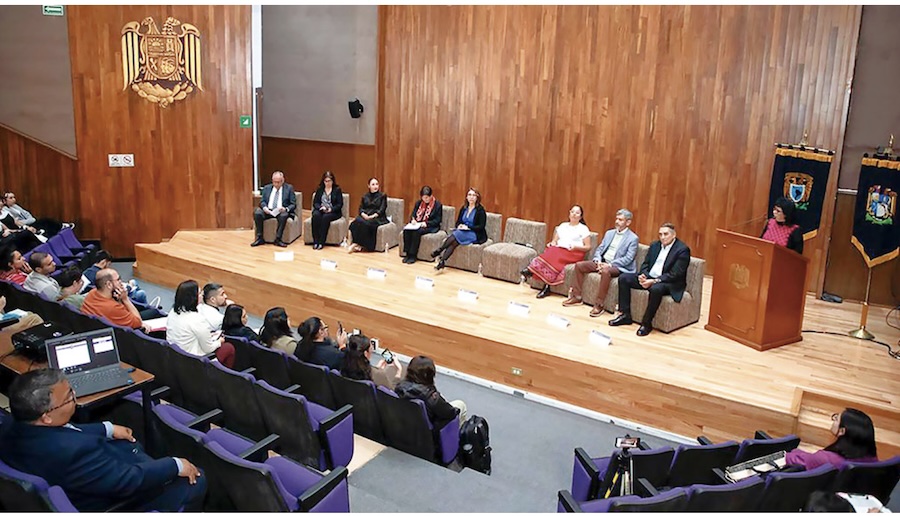
Building a culture of peace is an increasingly present issue in society and demands continuous collective mobilization and awareness. The Legislative Assembly of the State of Ceará (Alece), in accordance with the principles established by the United Nations (UN), seeks to strengthen the culture of peace. This work is mainly carried out through the Center for Conflict Prevention and Resolution (CPRC).

In search of peaceful solutions

The coordinator of the CPRC at Alece, Jussara Queiroz, explains that the work of the agency is guided by the promotion of peaceful, responsible, and humanized solutions. Conflict is understood as an opportunity for transformation, learning, and reconstruction of relationships, through mediation, conciliation, and legal advice.

In taking stock of the CPRC’s achievements in 2025, the coordinator reveals that the Center received the trust of many people who sought its services, resulting in the opening of 639 cases. Each service provided by the sector, according to her, represents the conscious choice for dialogue and the joint construction of solutions, reaffirming the importance of self-composition methods as effective instruments of social pacification.

Strengthening relational skills

“I also highlight the relevance of preventive actions, which enable the strengthening of relational skills, the expansion of listening capacity, and the adoption of practices based on Nonviolent Communication,” points out Jussara Queiroz. According to her, this is a contribution to healthier and more effective relationships, through workshops, discussion groups, and lectures.

(Article continued in right column)

(Click here for the original article in Portuguese.)

Question related to this article:

How can we develop the institutional framework for a culture of peace?

Mediation as a tool for nonviolence and culture of peace

(Article continued from left column)

The coordinator emphasizes that the Center for Conflict Prevention and Resolution reaffirms its commitment to a culture of peace, the prevention of violence, and the promotion of dialogue as a legitimate and necessary path to conflict resolution, in accordance with the principles of human dignity and social justice.

Areas of operation of the CPRC

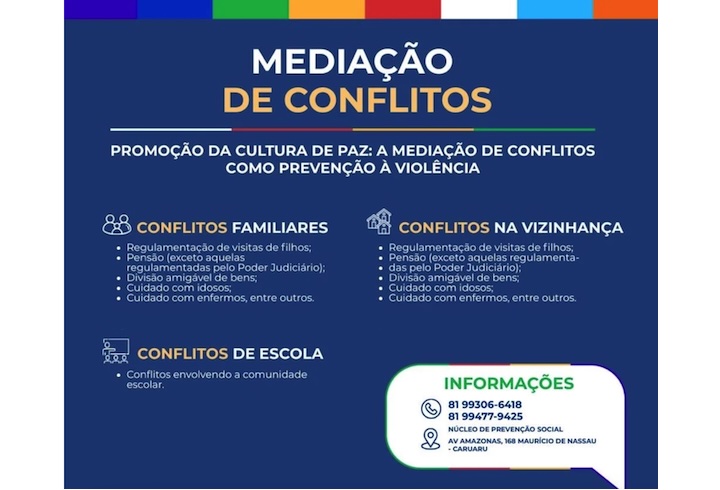
The CPRC works to prevent or resolve family issues, neighborhood issues, condominium issues, real estate issues, and other situations that can be mediated for conciliation.

The work is done through mediation, conciliation, and legal advice. Among the preventive actions are lectures, workshops, discussion groups, and peacebuilding circles.

Service

Hours of operation: Monday to Friday, from 8 am to 12 pm and from 1 pm to 5 pm. Address: Avenida Pontes Vieira, nº 2.348, 3rd floor, room 305, Edifício Deputado Francisco das Chagas Albuquerque (annex III), Dionísio Torres, Fortaleza/Ceará. Telephone: (85) 2180-6513 WhatsApp: (85) 98132-7434 Email: cprc@al.ce.gov.br Virtual scheduling: https://forms.gle/BgXvZ3mh9FBPudML7

Edited by: Samaisa dos Anjos Internal Communication of Alece Email: comunicacaointerna@al.ce.gov.br Page: https://portaldoservidor.al.ce.gov.br/

– – – – – –

If you wish to make a comment on this article, you may write to coordinator@cpnn-world.org with the title “Comment on (name of article)” and we will put your comment on line. Because of the flood of spam, we have discontinued the direct application of comments.
‘We Are Sailing to Cuba’: Humanitarian Coalition Announces Flotilla to Break US Blockade

DISARMAMENT & SECURITY .

An article by Brett Wilkins from Common Dreams (republished according to Creative Commons CC BY-NC-ND 3.0)

As the Trump administration tightens an already devastating economic embargo of Cuba by targeting the island's fuel imports in a bid to topple the country's socialist government, a coalition of progressive groups on Thursday announced plans for a flotilla to deliver food, medicine, and other essential supplies to the besieged Cuban people.


Members of CodePink protest the United States embargo of Cuba and Cuba’s inclusion on the US state sponsors of terrorism list in Los Angeles on October 29, 2022. (Photo by CodePink/X)

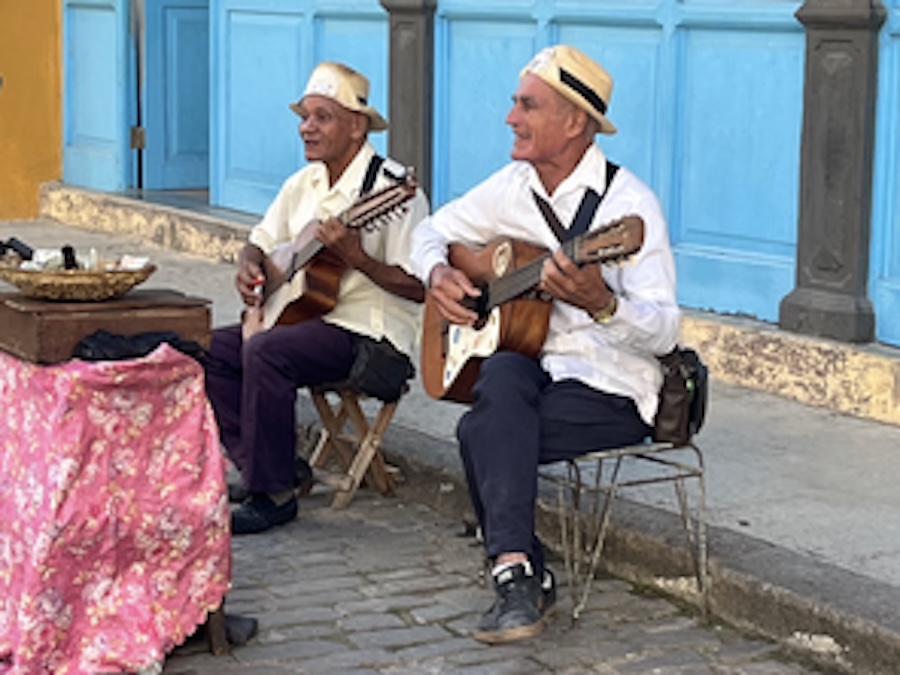
Members of Progressive International, CodePink, and other direct action and advocacy groups plan to set sail for Cuba next month in the Nuestra América—or Our America—Flotilla, which they said is inspired by the Global Sumud Flotilla missions to break Israel's illegal blockade of Gaza amid the ongoing genocide in the Palestinian exclave.

"We are sailing to Cuba, bringing critical humanitarian aid for its people," the flotilla organizers said on their website. "The Trump administration is strangling the island, cutting off fuel, flights, and critical supplies for survival. The consequences are lethal, for newborns and parents, for the elderly and the sick."

"That is why we are launching the Nuestra América Flotilla, setting sail from across the Caribbean Sea in solidarity with the Cuban people," the organizers continued. "And we are asking for your support, to help us prepare the mission and purchase the food and medicine that we will bring to the Cuban people."

"Together, we can break the siege, save lives, and stand up for the cause of Cuban self-determination," they added.

(Continued in right column)

Question related to this article:
 
How can the blockade of Cuba be stopped?

(Continued from left column)

The announcement of the flotilla came as the Trump administration ratchets up pressure on Cuba's socialist government by further suffocating the island's economy via an oil embargo similar to the one imposed on Venezuela before last month's US invasion and abduction of Venezuelan President Nicolás Maduro.

At the time, President Donald Trump threatened the leaders of Colombia, Cuba, and Mexico that they could be next.

Trump reversed former President Joe Biden's eleventh-hour move in January 2025 to remove Cuba from the US state sponsors of terrorism list, a designation utterly divorced from reality. Trump officials have cited Cuba's baseless inclusion on the list as justification for measures taken against the country's government and people.

The US embargo on Cuba dates to the early 1960s when the Eisenhower and Kennedy administrations responded to the successful revolution that overthrew a brutal US-backed dictatorship with a blockade accompanied by a decadeslong campaign of state-sponsored terrorism against the Cuban people that left thousands dead and more than $1 trillion in economic damages, according to the Cuban government.

Every year since 1992—with the exception of the Covid-19 pandemic year of 2020—the United Nations General Assembly has voted overwhelmingly to condemn and call for an end to the US blockade of Cuba.

Progressive International co-general coordinator David Adler told El País' Veronica Garrido Thursday, "The US government is drowning the Cuban people, who are running out of light, have no food, no medicine, no energy."

"I do not exaggerate when I say that we are seeing in Cuba the same playbook that Israel applied to the people of Gaza: an encirclement, an act of collective punishment that violates every aspect of international law,” he continued.

"We hope that [the flotilla] will be a mechanism of popular pressure to the governments of the world that have the responsibility, before international law, to protect the fundamental rights of the Cuban people and export the energy required by the island,” Adler said.

“There is nothing illegal about what we are doing," he added. "We are coming to a sovereign country and delivering humanitarian aid. We are ready to take risks in the name of humanity and the fundamental right of the Cuban people.
– – – – – –

If you wish to make a comment on this article, you may write to coordinator@cpnn-world.org with the title “Comment on (name of article)” and we will put your comment on line. Because of the flood of spam, we have discontinued the direct application of comments.
Morelos, Mexico: UAEM Promotes a Culture of Peace Within Its Community

… EDUCATION FOR PEACE …

An article from the Autonomous University of the State of Mexico

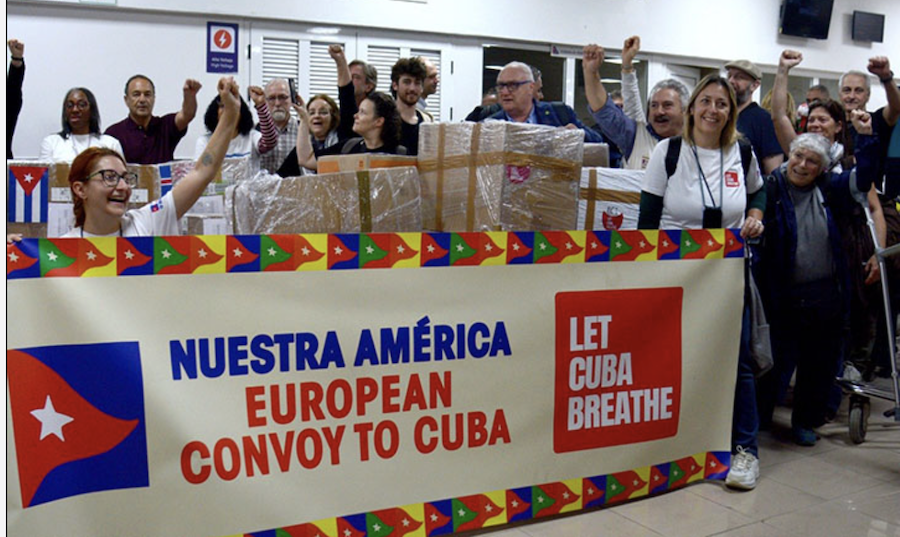
Promoting a culture of peace within the Autonomous University of the State of Morelos (UAEM) is a fundamental pillar for strengthening coexistence, respect, and non-violence in academic, administrative, and student spaces, said Fernando Mendoza Vergara, head of the Training Department of the Gender, Equality, and Non-Discrimination Unit.

On the occasion of the School Day of Non-Violence and Peace, commemorated on January 29, Fernando Mendoza emphasized that educating for peace in higher education institutions is a shared need for all universities in the country, as these are spaces where professionals and citizens with social responsibility are trained.

(Continued in right column)

(Click here for the Spanish original of this article)

Question for this article:

Where is peace education taking place?

Is there progress towards a culture of peace in Mexico?

(Continued from left column)

Mendoza Vergara explained that UAEM actively participates in generating strategies and tools aimed at reducing and eradicating violence within university spaces, based on the development of skills that allow for the transformation of conflicts through dialogue and peaceful coexistence.

He noted that, at his unit, the training area’s work focuses on fostering educational processes for faculty, administrative staff, academics, and students, with the goal of strengthening relationships based on respect, equality, and human dignity.

The university official emphasized the importance of differentiating concepts such as educating for peace, building peace, and fostering a culture of peace, the latter understood as a set of values, attitudes, and daily practices that guide how people relate to themselves and others. He also highlighted that the university has promoted awareness, visibility, and training campaigns, aligned with regulatory frameworks such as Mexican Standard 025 on Labor Equality and Non-Discrimination. These processes require the commitment of each academic and administrative unit to move toward certification.

He emphasized that many violent behaviors have been normalized within the institutional culture, making awareness-raising crucial for the university community to identify practices that violate the integrity of individuals and to consciously transform them.

Finally, he invited those aspiring to join UAEM to adopt a proactive attitude, respect for diversity, and a commitment to peaceful coexistence, as essential elements for strengthening Morelos’s leading university.

– – – – – –

If you wish to make a comment on this article, you may write to coordinator@cpnn-world.org with the title “Comment on (name of article)” and we will put your comment on line. Because of the flood of spam, we have discontinued the direct application of comments.
Sinaloa, Mexico: UAIM promotes the Culture of Peace

… EDUCATION FOR PEACE …

A post on the Facebook page of Mochicahui Unit UAIM (translation by CPNN)

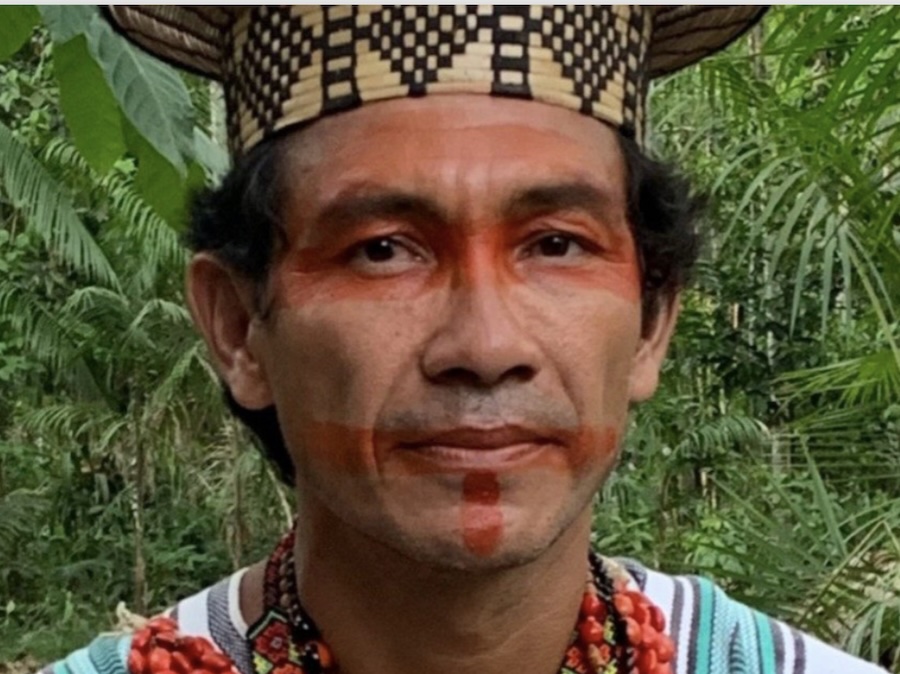
A workshop titled “Culture of Peace,” led by Dr. Gerardo Pérez Viramontes, an expert in culture of peace and conflict resolution and an active member of international research networks in the field, was held for senior management at the Autonomous Indigenous University of Mexico (UAIM) located in Mochicahui, state of Sinaloa.

Lasting two days, this initiative aimed to strengthen institutional leadership through reflection, dialogue, and the development of practices geared toward harmonious coexistence and the peaceful resolution of conflicts.

(Continued in right column)

(Click here for the Spanish original of this article)

Question for this article:

Where is peace education taking place?

Is there progress towards a culture of peace in Mexico?

(Continued from left column)

At the opening of the workshop, Rector Jesús Rodolfo Cuadras Sainz welcomed the participants, emphasizing the importance of leadership involvement in promoting harmonious coexistence and the peaceful resolution of conflicts. “If we, as administrators, are not capable of resolving our own conflicts, how can we set an example for the university community?” he stated. He also emphasized that a culture of peace is a legal and educational commitment already established in the UAIM Organic Law and the General Education Law.

For his part, Dr. Pérez Viramontes pointed out that peace is not an abstract concept, but a process that requires will, projects, and tools to be consolidated. He noted that UAIM, as a cultural institution, has the responsibility to promote practices that strengthen sustainable reconciliation in divided societies, which will allow it to consolidate its institutional commitment to fostering a culture of peace and reaffirm its role as an educational institution that seeks to train leaders capable of promoting harmonious coexistence and respect at all levels of university life.

The course addressed fundamental topics such as the deconstruction of violence, the regulation and transformation of conflicts, the identification of mediations and pacifist empowerment, as well as reflecting on new epistemologies applied to the culture of peace and sustainable reconciliation in divided societies.

– – – – – –

If you wish to make a comment on this article, you may write to coordinator@cpnn-world.org with the title “Comment on (name of article)” and we will put your comment on line. Because of the flood of spam, we have discontinued the direct application of comments.
Peru: Peace Promoter Training Program

… EDUCATION FOR PEACE …

An announcment from the Peruvian State government (translation by CPNN)

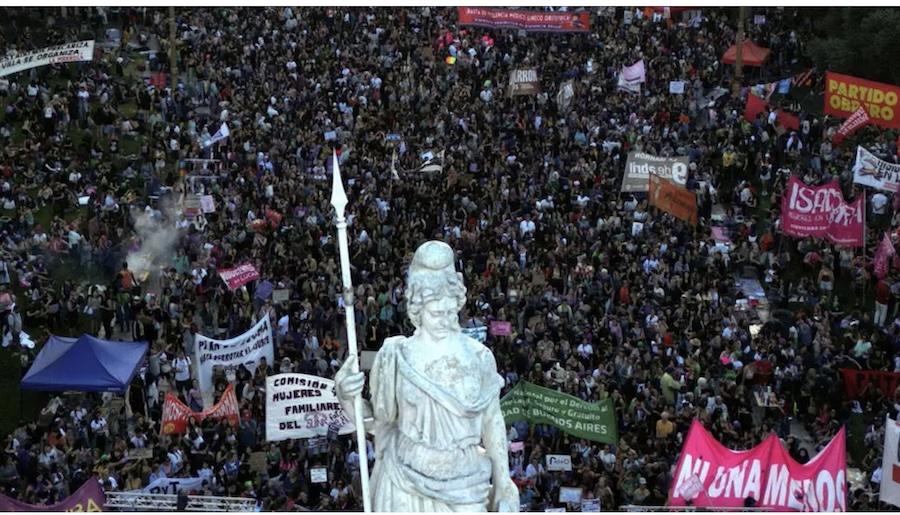
The Ministry of Women and Vulnerable Populations (MIMP) invites women and men over 18 years of age, university students, professionals, community leaders, committed neighbors, and the general public who wish to contribute to spreading a culture of peace in their neighborhoods, communities, and workplaces, with the goal of building a more just and respectful environment in families, schools, and community spaces.

Three free sessions will be held, aimed at acquiring knowledge, skills, and tools that, upon completion of the program, will allow participants to exercise positive leadership based on what they have learned:

Session 1: Culture of Peace, Areas of Action.

Session 2: Tools for Positive Coexistence / Basic Concepts in Human Rights

Session 3: Basic Concepts on Equal Opportunities for Men and Women, Gender Equity, and Constructive Conflict Management / Replication Session Project

Dates: February 5, 12, and 19, 2026
Time: 2:00 p.m. to 6:00 p.m.
Format: In-person
Location: Auditorium of the National Comprehensive Program for Family Welfare – INABIF

Av. San Martín 685, Pueblo Libre
Certificate: 15 hours of instruction (3 sessions of 4 hours each) and 3 additional hours.

General Objective

To promote a culture of peace as a cross-cutting theme for healthy, respectful, empathetic, and violence-free coexistence, through the participation of committed citizens who, based on the skills and abilities acquired in the culture of peace training module, can replicate what they have learned in their community, family, neighborhood, workplace, school, university, etc.

Content by Session

Session 1 | Thursday, February 5

Culture of Peace and its Areas of Action
° Concept of Peace and Culture of Peace
° Components of a Culture of Peace

Session 2 | Thursday, February 12

Tools for Positive Coexistence
° Self-Esteem
° Empathy
° Communication: Concept, Channels, and Techniques

Human Rights
° Concept and Characteristics
° Identifying Rights

(Continued in right column)

(Click here for the Spanish original of this article)

Question for this article:

Where is peace education taking place?

(Continued from left column)

Session 3 | Thursday, February 19

Equal opportunities between men and women and gender equity
° Concept
° Inequality between men and women
° Stereotypes
° Building equality from within our families

Constructive conflict management
° Concept
° Conflict analysis

Replica session project
Prepared by the participant

Methodology

The activity will be developed through participatory workshops that will include diagnostic tests, interactive activities, group work, and plenary sessions. These spaces will promote the exchange of ideas, the resolution of doubts by the participants, and the reinforcement of the key ideas of the topic. A PowerPoint presentation will also be used as a visual aid.

This is a space for collective construction that integrates theory and practice around the proposed topic, valuing and leveraging the experience of the participants.

The workshops are facilitated by specialists from the Directorate of Displaced Persons and Culture of Peace.

At the end of the workshop, participants must conduct a follow-up session on one of the topics covered. (Minimum 1 hour)

Why should you not miss this workshop?
° You will learn and strengthen your soft skills.
° You will be able to be an agent of change in your community by sharing what you have learned.
° You will recive an official Certificate from the Ministry of Women and Vulnerable Populations.

Evaluation and Accreditation

Certificates of participation, worth 15 hours of instruction, will be awarded to those who:

° Register and attend all three scheduled sessions.
° Participate in the diagnostic (pre-workshop) and evaluation (final) tests.
° Achieve a final average grade of 14 points or higher, considering both the test and class participation.
° Conduct at least one follow-up session of 1 hour on one of the topics covered in the workshops.

Registration

Register by February 1st or until all available spaces are filled, using the following link: https://facilita.gob.pe/t/43068

On Monday, February 2nd, we will confirm your participation via email, WhatsApp message, or phone call to the number you provided on the pre-registration form.

Organized by:
Directorate of Displaced Persons and Culture of Peace
General Directorate of Population, Development, and Volunteering

– – – – – –

If you wish to make a comment on this article, you may write to coordinator@cpnn-world.org with the title “Comment on (name of article)” and we will put your comment on line. Because of the flood of spam, we have discontinued the direct application of comments.
Mexico: Al Sharpton and Rigoberta Menchú to Join Mérida Peace Conference

DISARMAMENT & SECURITY .

An article by Carlos Rosado van der Gracht from Yucatan Magazine

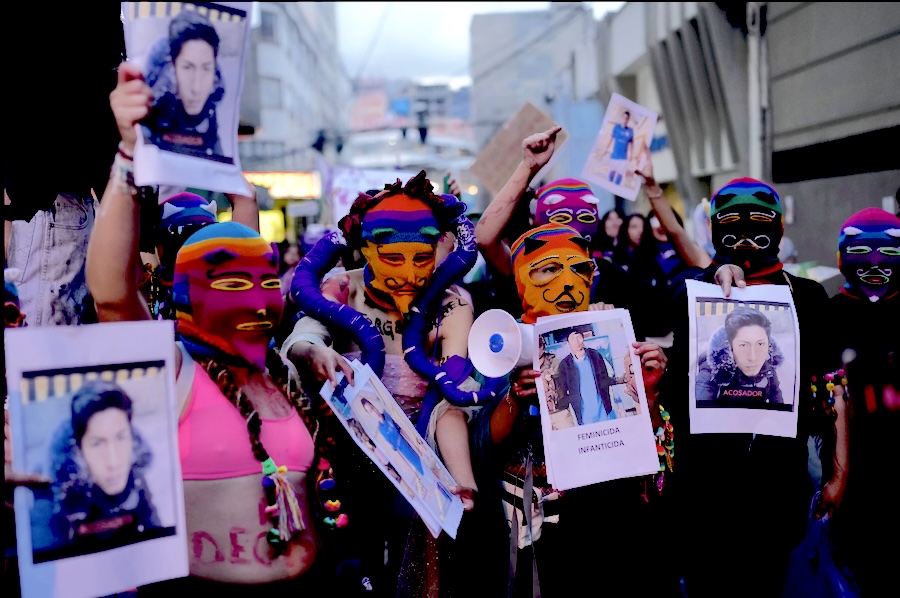
The International Peace Conference in Mérida will feature prominent voices such as Nobel Peace Prize laureate Rigoberta Menchú Tum and civil rights leader Alfred Charles Sharpton Jr., better known as Al Sharpton, the firebrand TV pundit and activist.

This regional gathering, organized by UADY, The World House Project Inc., and the Yucatán state government, will take place at the Siglo XXI convention center.

Over three days starting Feb. 4, civic, business, academic, government, and student leaders, as well as activists, will discuss actions to address today’s challenges in peace and justice through dialogue, education, and strategic action.


The conference aims to build a global network for civic awareness and create social infrastructure focused on promoting peace and justice. It will also invite analysis of significant challenges and opportunities for international peace.

Rigoberta Menchú will share her vision for building peace through human rights and social justice. Johnny J. Mack, founder of The World House Project, will present a talk on the World House vision and the metalogic of nonviolence.

Additionally, Rosa Wolpert Kuri, a UNESCO representative, will give the presentation “Without Education, There Is No Peace.” Other experts, including Francisco Javier Gorjón Gómez, Roberto José Beltrán Zambrano, Alberto Manuel Athié Gallo, and Fernando de la Mora Salcedo, will address key topics such as a culture of peace, nonviolent action in the 21st century, and current global scenarios.

The sessions aim to identify three main focus areas: Direct Action, which uses peaceful tactics to mobilize people, challenge injustice, and create pressure for change; Cultural Transformation, which shifts mindsets and social norms through art, storytelling, education, and spiritual leadership; and Structural Change, which reforms policies, systems, and institutions to build equity, justice, and peace.

The conference will also feature a Youth for Peace Agenda. This includes keynote speeches, panel discussions, workshops, intergenerational dialogues, and cultural activities with performances by the UADY Ballet, the University Regional Orchestra, and other musical groups.

Members of the general public may attend the conference by completing the online registration and paying the participation fee of MX$2,800 via bank deposit or transfer, or MX$2,910 via PayPal. Deadline is Feb. 2. Visit https://conferenciadepaz.uady.mx/.

About Rigoberta Menchú

Rigoberta Menchú grew up in a small Mayan village in Guatemala. As a young woman, she experienced injustice and violence during her country’s long civil war, in which family members were killed. Her courageous work for social justice and peace was recognized globally when she received the Nobel Peace Prize in 1992. She used this honor to bring even more attention to the struggles of Indigenous communities everywhere. Today, she continues to travel and teach, emphasizing that lasting peace must be built on a foundation of human rights, dignity, and fairness for all people.

Menchú remains one of the Maya world’s loudest voices on social justice, enduring peace and cultural preservation.

(Continued in right column)

Question related to this article:
 
The Nobel Peace Prize: Does it go to the right people?

(Continued from left column)

The Program

World House Project 2026 International Peace Conference

The World House Project 2026 International Peace Conference takes place over three days at the Centro de Convenciones Siglo XXI, bringing together global thought leaders, activists, and students to explore pathways toward peace and justice. The conference halls were renamed for the occasion.

Wednesday, February 4

The conference opens with a special youth-focused morning session, the JuventudES Paz Agenda, exclusively for high school students from 7:30 a.m. to 2:30 p.m. in the Mahatma Gandhi Hall (Chichén Itzá 6).

General registration begins at 3 p.m. at the Rigoberta Menchú Tum Passage, followed by the Opening Ceremony at 4 p.m. in the Martin Luther King Jr. Hall (Chichén Itzá 4 and 5).

The inaugural keynote at 5 p.m. features Master Joaquín Díaz Mena, Governor of the State of Yucatán, presenting the “Allies for Life Program.” This is followed at 6 p.m. by Reverend Al Sharpton, who delivers the day’s second keynote address.

Concurrent with the opening sessions, the Mandalas Peace Hub hosts a Human Rights Journey from 4 p.m. to 6 p.m. in the Malala Yousafzai Hall (Uxmal 4) and Nelson Mandela Hall (Chichén Itzá 2 and 3).

The first day concludes with a cultural performance at 7 p.m. featuring the UADY Ballet and University Folk Orchestra in Nelson Mandela Hall.

Thursday, February 5

The day begins at 9 a.m. with a keynote address by Dr. Rigoberta Menchú Tum in Martin Luther King Jr. Hall, followed by three consecutive morning sessions: Dr. Francisco Javier Gorjón Gómez speaks on “Peace from Peace: Foundation for Building Peace” at 10 a.m., and Dr. Roberto José Beltrán Zambrano presents “The Right Time for Peace: Culture of Peace and Nonviolent Action in the 21st Century” at 11 a.m.

After a midday break from noon to 1 p.m., Dr. Johnny J. Mack delivers his keynote “Vision of the World House and the Metalogic of Nonviolence” at 1 p.m.

The afternoon shifts to interactive formats with panel discussions, presentations, and workshops running from 2 p.m. to 7 p.m. in Mahatma Gandhi Hall. Simultaneously, an Intergenerational Dialogue for the Next Generation takes place from 3 p.m. to 6 p.m., also in Mahatma Gandhi Hall, while the Mandalas Peace Hub continues its Human Rights Journey programming in both Malala Yousafzai and Nelson Mandela Halls.

The evening features a cultural performance by the musical group Polifonía and collaborating artists at 7 p.m. in Nelson Mandela Hall.

Friday, February 6

The final day opens at 9:30 a.m. with Master Rosa Wolpert Kuri from UNESCO presenting “Without Education There Is No Peace” in Martin Luther King Jr. Hall.

At 10:30 a.m., Master Alberto Manuel Athié Gallo addresses “Where Are We Going? Between Uncertainty, Surprise, Emerging Doubts, and the New World Order,” followed at 11:30 a.m. by Master Fernando de la Mora Salcedo speaking on “Mexico, the World, and the Culture of Peace.”

The conference concludes with a panel discussion at 12:30 p.m. titled “Where Are We Going in Building Peace and Justice in Latin America? Next Collective Steps,” featuring Master Rosa Wolpert Kuri, Master Héctor Dada Sánchez, and Dr. José Luis Espinoza Navarrete, moderated by Dr. Celia Rosado Avilés.

The closing ceremony takes place at 1 p.m., bringing the three-day international gathering to its conclusion.

– – – – – –

If you wish to make a comment on this article, you may write to coordinator@cpnn-world.org with the title “Comment on (name of article)” and we will put your comment on line. Because of the flood of spam, we have discontinued the direct application of comments.
Mexico: Pablo Lemus and Rigoberta Menchú Agree on Actions to Build a New Culture of Peace in Jalisco

FREE FLOW OF INFORMATION .

An article by Samantha Lamas in Cronica (translation by CPNN)

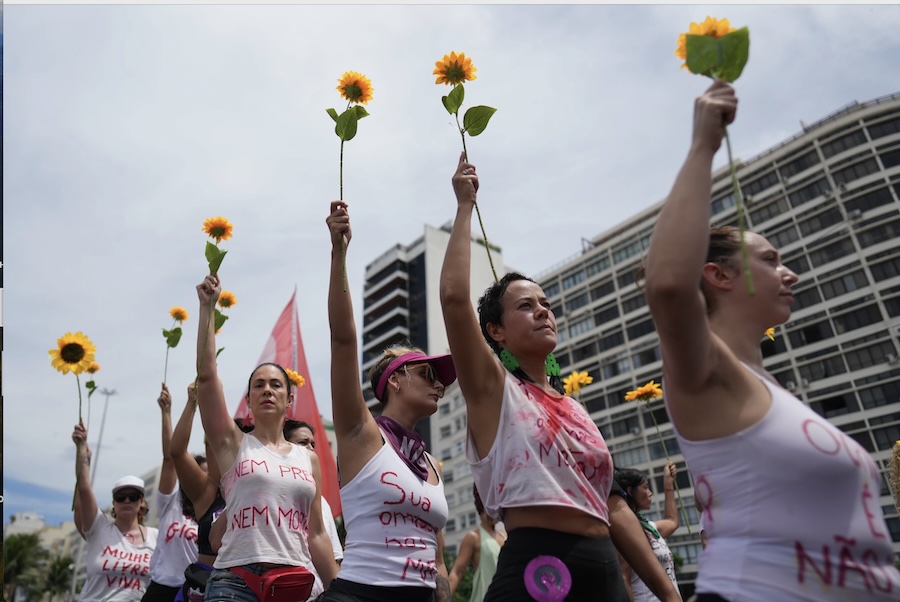
With the aim of strengthening the construction of a new culture of peace in Jalisco, the Governor of the State, Pablo Lemus Navarro, and Rigoberta Menchú Tum, Nobel Peace Prize laureate, have signed a agreement to collaborate actions focused on priority sectors of the state.

The agreement, signed between the Government of Jalisco and the Rigoberta Menchú Tum Foundation, outlines the development of a proactive and forward-thinking strategy that will prioritize the needs of Indigenous communities—primarily in the northern region of the state—as well as women and children.


Rigoberta Menchú and Pablo Lemus (Courtesy)

(article continued in right column)

(Click here for the original Spanish version of this article.)

Question related to this article:

Is there progress towards a culture of peace in Mexico?

(article continued from left column)

During the meeting, the state governor expressed his appreciation for Rigoberta Menchú’s career and emphasized the importance of initiating a collaborative effort with her foundation. “It is an honor for me to welcome you to Jalisco and to begin working together with you and your foundation; it is something that excites me and that we had dreamed of for our state,” he stated.

Lemus Navarro stressed that this agreement will allow progress in addressing the needs of Indigenous communities and in promoting a culture of peace with a social and inclusive focus. “We are going to begin working together for Indigenous communities, for the women of our state, and for a new culture of peace, for which you and your foundation are a global leader,” he added.

Rigoberta Menchú Tum, winner of the 1992 Nobel Peace Prize, is internationally recognized for her work in defending human rights, promoting reconciliation, and fostering intergenerational respect. During her remarks, she thanked the Mexican people and the Government of Jalisco for demonstrating the political will to promote peace as a path to dialogue and the vindication of rights, especially for women and indigenous communities.

“I believe in peace as a culture, as education, and as dialogue. I believe in peace as the transmission of experiences and knowledge to our youth, to our communities who must become the next generation of our society,” she stated.

Finally, Menchú Tum emphasized that the value of the agreement will lie in the implementation of a simple and productive agenda, with clear actions, aimed at generating concrete results for the benefit of the people of Jalisco.
– – – – – –

If you wish to make a comment on this article, you may write to coordinator@cpnn-world.org with the title “Comment on (name of article)” and we will put your comment on line. Because of the flood of spam, we have discontinued the direct application of comments.