FREE FLOW OF INFORMATION .
.
A survey by CPNN
The following 74 events in 30 African countries include those listed in Google during the weeks of September 16-28 this year under the key words “International day of peace” and “Journée internationale de la paix.” The events also include some listed on the facebook page for the International Cities of Peace.
About 52 events are listed on the maps of One Day One Choir and Montessori schools singing for peace, but there is no indication which took place this year and which took place only in previous years.
For events in North Africa see the page of events in the Arab States .

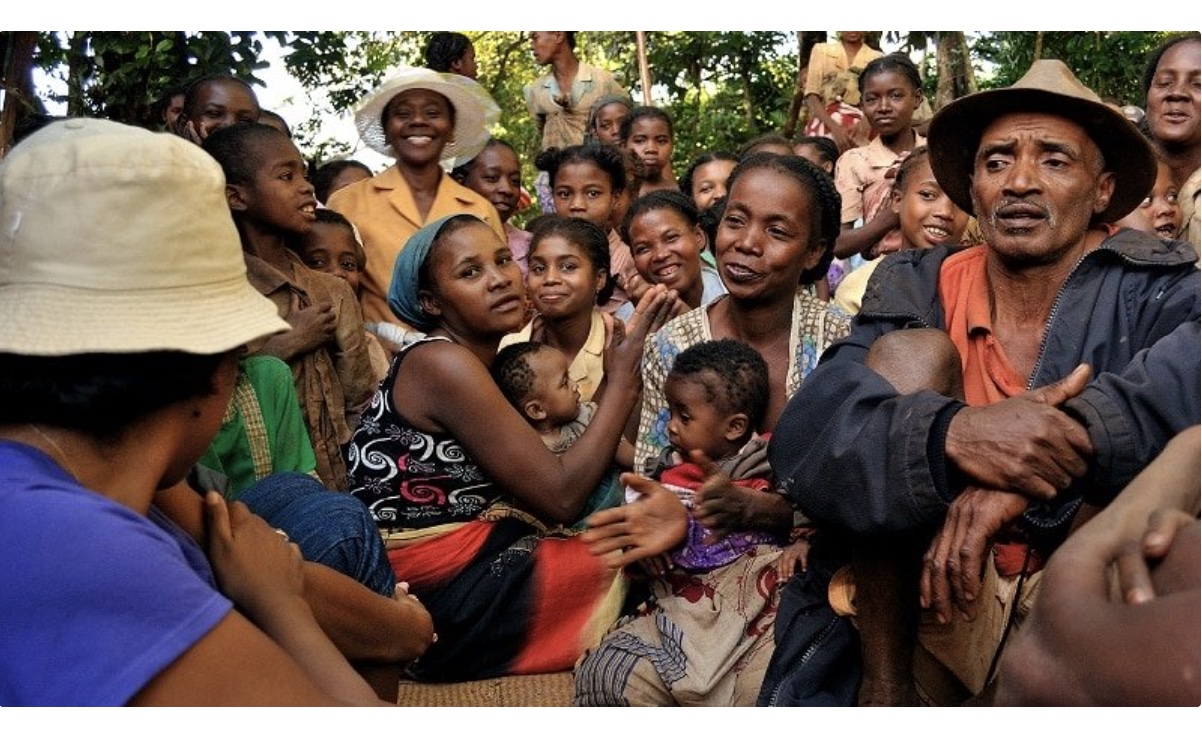
Celebration in Monrovia, Liberia, with emphasis on women and youth’s role in mediation, conflict resolution, and early warning.
Here are excerpts from the articles.
AFRICAN UNION
The African Union (AU) Youth for Peace Africa Programme, the Deutsche Gesellschaft für Internationale Zusammenarbeit (GIZ), and the United Nations Office to the African Union (UNOAU) have launched a serious game known as “Mission55 Conflict in Anaka”, to commemorate the International Day of Peace (Peace Day) 2022. The game, which the AU and GIZ developed, aims to raise awareness, educate and inform the public, particularly youth, on the mandate of the AU to promote good governance, peace and security in Africa.
BENIN, COTONOU
English International School. We celebrated World Peace We celebrated World Peace Day at school on Friday, 20th September. Under beautiful skies, our march over to the school field was symbolic. Sitting down on the grass, in the formation of the peace symbol, we observed a minute of silence. Some of the poems that the children wrote on that day are now on display in the school hall. (with photos)
BURKINA FASO, OUAGADOUGOU
The non-governmental organization (NGO) PAX celebrates, in collaboration with various structures, and for the first time, the Week of Peace in Burkina Faso. The climax of the commemoration will take place on September 21 with the “Night of Peace”, organized in collaboration with the NGO Diakonia, the National Democratic Institute (NDI), the Center for Democratic Governance (CGD) and the institutions and ministerial departments. This last activity will mobilize at least 300 people, equipped with lighted candles, who will stand around the monument to national heroes (located in Ouaga 2000) in a circle, they will carry out the During this sequence, the Monument to National Heroes will be illuminated with a play of lights with the sign “Peace”.
BURUNDI, BUGABIRA
As part of the celebration of the International Day of Peace, the Charles Nkazamyampi Foundation (CN Foundation), organized in collaboration with the representation of the European Union in Burundi, sports activities in Bugabira commune of the province of Kirundo. . . . Prizes were awarded. After the match between the Bugabira High School team and the Star FC team, prizes were awarded to the best athletes and players.
CAMEROON, DOUALA
Prelude to the International Day for Peace to be celebrated on September 21, some civil society organisations based in Douala have been meeting to sensitize the population on the importance of peace. The meeting that brought together civil society organizations including Peace Watch, Bringing Hearts Together amongst others was aimed at coming out on better ways on how to carry out sensitization campaign to push the peace agenda.
CAMEROON, YAOUNDÉ, ACTIVITIES FOR WOMEN AND GIRLS
The NGO Women International League for Peace and Freedom, with the support of the UN Women agency, organized a series of activities aimed at making the voices of women and girls heard in the country, on the occasion of this day that is celebrated this Wednesday, September 21, 2022. . . . During this day, the students took part in workshops led by the officials of this non-governmental organization, with the assistance of the public administrations involved in the education of young people.
CAMEROON, YAOUNDÉ, TOWN HALL
The Minister of Youth Affairs and Civic Education, Mounouna Fousou, this September 21, 2022, presided over the ceremony of the 41st edition of the International Day of Peace, at the Yaounde Town Hall (Hotel de Ville). . . . During the ceremony, training certificates will be presented to the participants of the Ambassadors for Peace training worksops and a call for peace will be made by religious, traditional rulers and youth leaders.
CENTRAL AFRICAN REPUBLIC, BANGASSOU
The city of Bangassou, like other cities in the Central African Republic, celebrated the International Day of Peace on September 21, 2022, under the theme “Ending racism, building peace”. A day organized by MINUSCA in collaboration with prefectural authorities, community leaders and civil society. . . . A football match was also played for the occasion. It opposed the staff of MINUSCA and young people from the three districts of the city of Bangassou. A match for cohesion and mutual acceptance.
CENTRAL AFRICAN REPUBLIC, BANGUI, MINUSCA
In Bangui, activities to celebrate the International Day of Peace were organized by the National Council of Central African Youth, with the support of MINUSCA, announced during a press briefing broadcast on Radio Guira FM , Guy Karema, the communication officer at MINUSCA, pointing out that this year, Central African youth wanted to combine the celebration of International Youth Day, normally celebrated on August 12, with Peace Day, to make it a single celebration, dubbed: “Month of Youth and Peace in the Central African Republic”, under the theme: “Youth, peacebuilding, local governance and empowerment”.
CENTRAL AFRICAN REPUBLIC, BANGUI, URU
As part of the holiday, which is celebrated on September 21, the non-governmental organization URU held a seminar for young Central Africans. For two days, the participants of the event discussed the principles of building and developing a peaceful state.
CENTRAL AFRICAN REPUBLIC, OBO
The International Day of Peace was celebrated on September 21 in Obo in the presence of local and administrative authorities, community leaders and international and national organizations. This commemoration took place at the town hall of the city. (with audio podcast)
CHAD, KANEM
On September 21 of each year, the International Day of Peace is celebrated around the world. . . .On this day, the Association of Student Peace Ambassadors of Kanem in partnership with the PAMELOT / GIZ project is organizing a ceremony to celebrate this day.. . . In his opening remarks, the Secretary General of the Kanem Province SATADJIM SUCCÈS NOËL, representing the governor, stressed that this occasion challenges our collective conscience to achieve real peace. On the sidelines of this day, a mixing football match between the young people of the region will be organized.
CHAD, N’DJAMÉNA
The United Nations System Coordination Office in Chad and the Ministry in charge of National Reconciliation and Dialogue celebrated the International Day of Peace on September 21, 2022 in a hotel in N’Djamena. Placed under the theme “end racism, build peace”, this day which is celebrated today, began on Monday with mobilizations of Chadian society in favor of living together through artistic, cultural and literary activities, children and young people to express the urgency and the need for peaceful cohabitation.
COMORES
The International Day of Peace was celebrated in Ndzuani on Wednesday, September 21. The official ceremony took place in Dar-nadjah, the governorate palace of the island, in the presence of the governor and other personalities such as the Ambassador of the United Republic of Tanzania, or the Honorary Consul of the Comoros to the Ivory Coast. Several other representatives of public institutions and non-governmental organizations also took part. . . . On the sidelines of this celebration, a “memorandum of understanding on the promotion of communal peace and security”, was signed between NGO Salam and the association of Mayors of Ndzuani
CÔTE D’IVOIRE
“Côte d’Ivoire has chosen national cohesion”, declared Kouadio Konan Bertin, Minister of Reconciliation and National Cohesion, on the occasion of the International Day of Peace, celebrated on September 21 each year. Before an audience of personalities, including Kobenan Kouassi Adjoumani, Minister of State, Minister of Agriculture and Rural Development, representing Prime Minister Patrick Achi, he said he was working to achieve a truly reconciled Côte d’Ivoire. . . . This ceremony was also enhanced by the presence of the American, Swiss, Gabonese, Egyptian, Chinese and Belgian ambassadors residing in Côte d’Ivoire. . . . The artistic note was provided by the humorous duo Zongo and Tao, and the group Les Galiets, who returned to Abidjan after ten years of exile.
CÔTE D’IVOIRE, BOUAKÉ
The representative of the prefect of the Gbêke region, invited the populations and particularly the young people, to a change of behavior in order to guarantee peace, a guarantee of development. It was this Wednesday, September 21 in Bouaké, on the occasion of the commemoration of the International Day of Peace initiated by the APCI (Alliance for Peace in Côte d’Ivoire). This ceremony was marked by a conference delivered by the President of the National Youth Council on the theme: “The culture of freedom together for lasting peace and united youth”.
DR CONGO, LUCHA
On the occasion of the international day of peace, through peaceful demonstrations in Tshilenge, Beni, Kindu, Goma, Kisangani, Kananga, Tshikapa and Kinshasa, LUCHA is mobilizing to show its solidarity with the compatriots of Bunagana and other entities of the ‘East of our country living under occupation of the M23 and other armed groups . . . . LUCHA reiterated the call for the dismantling of MONUSCO, which is ineffective on the ground, as well as the end of the state of siege, which is unable to put an end to armed violence. In several cities, the demonstrations took place normally and the memorandum was read and deposited with the local authority. Nevertheless in Beni and Goma, it was fiercely repressed by the security services, which paradoxically do nothing against the attackers.
DR CONGO, LINGWALA, KINSHASA
Civil society organizations working in the protection of human rights and for the consolidation of peace, led by the spokesperson of the National Dynamics for Peace, Unity and Security (DYNUPS), Bénie Neze , on Wednesday invited the DRC government to provide the DRC Armed Forces (FARDC) with the financial and logistical means to face the enemy and maintain peace across the country. It was during a sit-in in front of the People’s Palace, in the commune of Lingwala in Kinshasa, on the occasion of the International Day of Peace,
DR CONGO, KINSHASA, MONUSCO
On the occasion of the International Day of Peace, celebrated on September 21 each year, Monusco, through its Division of Strategic Communication and Public Information, in partnership with the club of Interuniversity Elites, organized a training and sharing session on September 21, 2022. It was at the Pullman Grand Hotel marquee, with the theme, at the international level: ”Ending racism. Building peace”. . . . Several great speakers took part in this conference.
DR CONGO, KINSHASA, WOMEN
The International Day of Peace, celebrated on September 21 of each year, was an auspicious occasion in this year 2022, for the women of Kinshasa, grouped within the National Dynamics for Peace, Unity and Security (DYNUPS ), to demand peace throughout the national territory, in the East, in Ituri, in Kwamouth, etc. They organized a sit-in in front of the Congolese parliament, before submitting their Memorandum to the Office of the Speaker of the Lower House, Christophe Mbosso.
DR CONGO, KOLWEZI
Zambia and Congo DR are celebrating the peace day together in Kolwezi town in Congo DR.
DR CONGO, NORTH KIVU
The Provincial Youth Division of North Kivu organized a conference-debate this Wednesday, September 21, 2022 in the city of Goma, on the occasion of the commemoration of the International Day of Peace. In an interview granted to 7SUR7.CD at the end of this activity, Guy Kibira Ndoole, head of this division, invited the young people of North Kivu to show solidarity in order to defeat the attempts to destabilize the country, with in particular the occupation of the town of Bunagana by M23 rebels. . . Peace is a rare commodity in the province of North Kivu in particular and generally in the East of the DRC. Many young people even enlist in armed groups and commit a significant number of crimes.
GABON, PORT-GENTIL
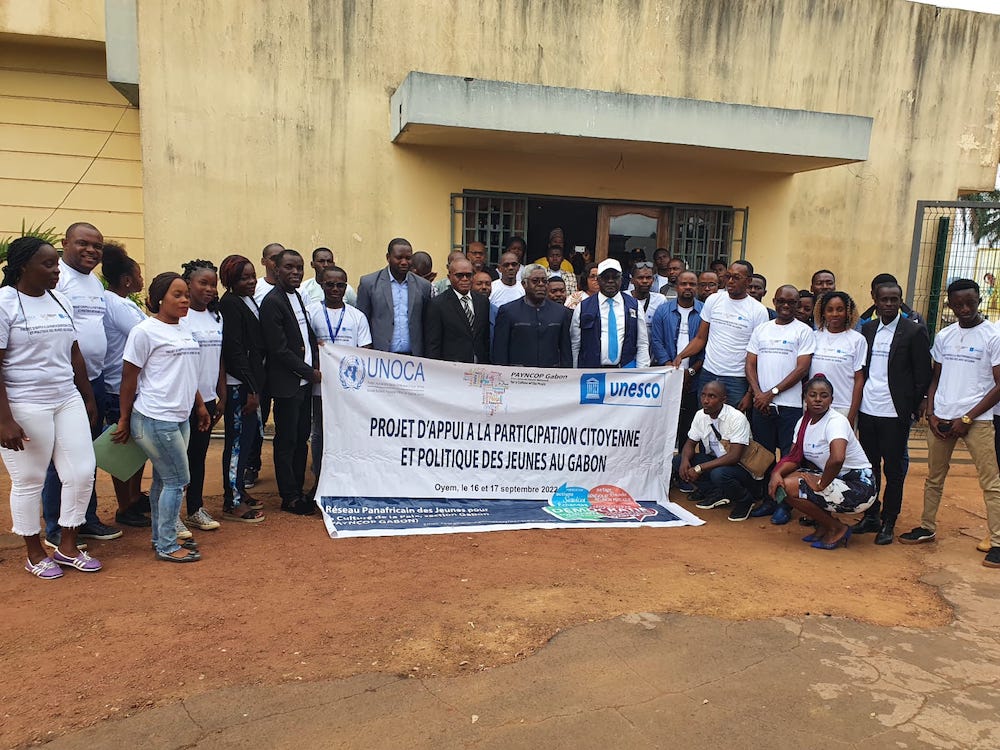
It is within the framework of the celebration of the International Day of Peace that the National Coordination of PAYNCoP Gabon organized the consultative workshop for young people on political and civic participation in Port-Gentil. This workshop is part of the project to support the civic and political participation of young people in Gabon . . . This activity was punctuated by two highlights: the formal phase and discussion workshops. During their exchanges, the young people were able to recall that ” The International Day of Peace makes it possible to sensitize the various actors on the need to preserve peace “. They will strive to sensitize other young people to cultivate this lasting peace in the country and to be ambassadors of peace, in Africa, as everywhere else.
GAMBIA
The West Africa Network for Peacebuilding (WANEP-The Gambia) with funding from the UN Peacebuilding Secretariat yesterday organised a stakeholders’ dialogue in commemoration of the International Day of Peace. . . . The event attracted key stakeholders including The Gambia Federation for the Disable and marginalised constituents of society. It was celebrated through a stakeholders’ dialogue, panel discussion, social media campaigns and peace pledges made by various stakeholders as a sign of their commitment to promote peace and fight discrimination and racism.
GHANA, LIONS CLUB
The District 418 Ghana of Lions Clubs International joins the world in commemorating the International Day of Peace by highlighting the importance of promoting the Peace Poster Contest for children in Ghana as a means of maintaining, sustaining peace and security.. . . .the Peace Poster Contest is open for registration now and over 600,000 children would be sharing their visions of peace through the art of painting. Children of age between 11 and 13 years from various schools can take part in this contest and there is also a prize to be won by the overall winner with some consolation prizes for all participants in the Peace Poster Contest
GHANA, ACCRA
FOCUS: Intl Peace Day. ACTION DETAILS: The administration of Union Internationale des Voyageurs UIV has established ongoing project to register the mechanism in the country starting from Ghana before the end of the year to enable us to work through partnerships and cover more locations in combating crime against mankind as terrorism war, conflicts, corruption and discrimination among societies and communities.
GHANA, KUMASI
Kumasi: World Peace Day marked with calls to eschew ethnocentrism.This year’s World Peace Day was observed under the theme, “Ending Ethnocentrism and Discrimination for Sustainable Peace” and brought together various faith-based organisations, youth wings of political parties, students of senior high schools and colleges of Education and civil society organisations. Participants discussed challenges and priorities to support their active participation in peace building with respect to diversity.
GUINEA, MAMOU
International Day of Peace | Citizens of Mamou express their messages of peace! to the microphone of Rarili News — “Peace must reign. (Alpha Ousmane Diallo) — “Long live peace, long live peace” (Monique) — “Life is hard right now, we would like this transition to end in good conditions. (Ismael Traoré) — “I would like there to be more peace and justice in the country, that is what is best for us, for peace in Guinea” (Mamadou Saidou Baldé)
GUINEA-BISSAU
Under the motto “Ending racism and building peace”, the National Civil Society Movement for Peace, Democracy and Development (MNSCPDD-GB), in collaboration with the Collective of Peace-Promoting Organizations, celebrated yesterday the “International Day of Peace ”, through the Declaration of Support for Peace in Guinea-Bissau. According to the organization, the country commemorates the date in a difficult context, marked by political cleavages and the collapse of the foundations of Guinean democracy.
KENYA, MALINDI
Due to the plight of the senior citizens, a number of humanitarian non-governmental organizations dedicated yesterday’s International Peace Day to the elders under siege, holding a peace walk to sensitize the public on the need to protect elders. They walked from the Malindi DCC’s office next to the County Assembly of Kilifi through Malindi town to Moi area of Sabaki Sub-Location, where 28 elders rescued from murderers are being housed by the Malindi District Cultural Association (MADCA). The murderers are hired to kill old persons suspected to be practicing necromancy.
KENYA, NAIROBI
CONTACT: Isaac Omondi. FOCUS: Intl Peace Day. ACTION DETAILS: We shall be organizing Football for Peace’One Day One Goal’. Additionally, there will be a clean-up in the locality to collect garbage from households and around the area.
LIBERIA, UNIVERSITY OF LIBERIA
The Kofi Annan Institute for Conflict Transformation (KAICT) at the University of Liberia (UL) and its partners on Wednesday, 21 September 2022 held celebrations in observance of the International Day of Peace.KAICT held the program in collaboration with Alpha Phi Alpha Fraternity, Incorporated Liberia, and the Mano River Union on UL’s Capitol Hill campus. The event brought together several participants both national and international partners, to discuss the way forward for Liberia to maintain the peace it enjoys after nearly 14 years of civil war.
LIBERIA, MONROVIA
This year Liberia joined other countries of the world to celebrate the International Day of Peace, amidst social media reports of planned violence ahead of the 2023 General and Presidential elections. . . The celebration, supported by the UN Women and UNFPA, sought to raise awareness of the importance of sustaining the peace in the region and the Sahel with emphasis on women and youth’s role in mediation, conflict resolution, and early warning.
(Survey continued in right column)
Question related to this article:
What has happened this year (2022) for the International Day of Peace?
(Survey continued from left column)
LIBERIA, TARR TOWN
On the 21st September 2022, LEGAL/ SoSNoL Celebrate World International Peace Day with Tarr Town Local Community Structure to launch the community Watch Group to see that Safety and Security will be in Tarr Town Community.
MALAWI, LILONGWE
ORGANIZATION: Center for Enlightenment and Development – DATES PLANNED: September 23, September 25, October 2 – ACTION DETAILS:”EMPOWER WOMEN WITH KNOWLEDGE TO END GBV AT ALL LEVELS” We target young women to fully understand their rights and how they can form Nonviolence circles to spread the message. All women influential community leaders and professionals have been invited to demonstrate how important it is to have women know their rights. Young women from different colleges are preparing different activities to showcase how nonviolence brings harmony and peace of mind.
MALI, BAMOKO
The Board of Directors of the School of Peacekeeping, Alioune Blondin BEYE (EMP-ABB), composed of 11 member countries and ECOWAS countries, celebrated the International Day of Peace, Wednesday, September 21, 2022 , at the Peacekeeping School, Alioune Blondin BEYE in Bamako. . . . After the opening ceremony, a tree dedicated to Peace was planted in the middle of the EMP-ABB, by all the officials, panelists and participants in this day whose objective is to evaluate the doctrines and approaches governing the Peace Operations, faced with the complexity of the current environment. Two panels, as well as cultural and sporting activities were on the menu for this day
MAURITIUS, BRAHMA KUMARIS
Calendar of events organized by the Brahma Kumaris Mauritius in the context of the International Day of Peace 2022
MAURITIUS, MAHEBOURG
This year, the theme is to combati inequalities, racism, discrimination and intolerance that exist in all societies. In Mauritius, the Emmanuel Anquetil SSS college is launching this initiative with the aim of instilling these values in young people.
MAURITIUS, PORT LOUIS
In the context of the International Day of Peace, celebrated every September 21, the Cardinal Jean Margéot Institute organized a conference-debate on Monday September 05, 2022. The resulting resolution demanded the authorities, inter alia, to pursue and intensify efforts to combat any systemic violence within the Republic of Mauritius, by consolidating a national education system aimed at promoting the integral human development of the Mauritian child; to contain situations and conditions that lead to violence against girls and women; and to tackle, the poverty and misery that still plague the lives of tens of thousands of citizens of the Republic.
MAURITIUS, MORCELLEMENT ST. ANDRÉ
As part of the International Day of Peace, around twenty associations from the Morcellement St. André region and surrounding schools took part in a collective march aimed at promoting peace. The Vice-President of the Republic and the Minister of Labor also took part.
NIGER
Like the international community, Niger celebrated the International Day of Peace this Wednesday, September 21, 2022 under the theme “Ending racism. building peace”. It is the High Authority for the Consolidation of Peace (HACP) which had the honor of organizing this event at the General Seyni Kountché stadium with the support of its partners including the UNDP and the Peace building fund (PBF). Several sports and cultural activities were on the program.
NORTHERN STATES OF NIGERIA
The Network of Peace Journalists in Northern Nigeria has mobilised over 100,000 Citizens and Journalists to mark the 2022 World Peace Day through creative initiatives in Nigeria. Ahead of the 21st September 2022 event, the Network under Interfaith Mediation Center Kaduna and Mercy Corp said it’s doing this through Social media and other broadcast stations on the need to boost the ‘Christian and Muslims relationship’ across the 19 Northern States of Nigeria. The media organisation also has plans to take Peace campaigns to schools, communities, markets and football view centres. “We are going to use Facebook, Instagram, and Twitter to educate youths on the role of promoting peaceful co-existence and religious tolerance among different faith base organisations.”
NIGERIA, ABUJA, ECOWAS
Dr Omar Touray who is the President of the Economic Community of West African States, (ECOWAS), has made an open call for some more stakeholders’ collaboration which would be geared towards the promotion of peace, equality and the process of ending racism as well. The president made the call at an occasion which had been marking the World Peace Day and the launching of a documentary on the ECOWAS Conflict Prevention Framework, (ECPF), at the ECOWAS commission, yesterday in Abuja.
NIGERIA, ABUJA, NATIONAL DEFENSE COLLEGE
The National Secondary Schools Security Awareness Programme was organised by the Alumni Association of the National Defence College (AANDEC) on Wednesday in Abuja. The programme was in collaboration with Office of the National Security Adviser, NDC and Ufuk Dialogue to commemorate the 2022 International Day of Peace.. . . .The News Agency of Nigeria (NAN) reports that 15 secondary schools comprising nine public and six private schools in FCT were selected for the programme. A student each from the schools made presentation on peace during the event.
NIGERIA, ABUJA, SUSO
Speak Up, Stand Out (SUSO) Project Nigeria on Friday called for support for youths to be drivers of the implementation process of the Youth, Peace and Security (YPS) agenda in the country. Mr Rafiu Lawal, a SUSO activist, made the call at a news conference to commemorate the International Day of Peace with the theme “End Racism, Build Peace” in Abuja.
NIGERIA, ANAMBRA STATE
The 2022 World Peace Day Celebration took place Friday September 23 at the United Nations Peace and Positive Living Awareness Center with culture of peace awareness, peace awards, appointments, investitures and paper presentations.
NIGERIA, BENIN CITY
Faculty of Peace Organisation will be hosting its Annual World Peace Day conference on the 21st of September, 2022 and it will be held in Benin City, Edo State.
NIGERIA, CALABAR
The Nigeria Security and Civil Defence Corps (NSCDC), has stressed the need for politicians to eschew all forms of hate speeches and violence ahead of the 2023 general elections. Mr Samuel Fadeyi, the Cross River Commandant of the corps, gave the advice on Wednesday in Calabar during a peace walk to commemorate the 2022 International Day of Peace.
NIGERIA, CROSS RIVER
Cross Riverians have been urged to conduct themselves peacefully before, during, and after the forthcoming general election. The State Technical Committee of the Vote Not Fight, Election No Be War campaign made the call during a press briefing to mark the 2022 International Peace Day. (with video)
NIGERIA, DUTSE
NSCDC state commandant, Musa Alhaji Malah led the officers and men of the command to a peace walk across the streets of Dutse, the Jigawa State capital in commemoration of the International Peace Day, 2022.
NIGERIA, EFFURUN
A humanitarian-driven non-governmental organisation, Shadrack Agediga Foundation, SAF, on Wednesday, September 21, 2022, joined the rest of the world to mark the ‘International Day of Peace’. . . . The celebration took place at Canewood Hotel, Effurun, Delta state with a lecture delivered by Professor Andy Atare Otite. He spoke on the theme: End Ethnic Intolerance And Build Peace.
NIGERIA, EGBEDA
THE National Association of Seadogs, NAS, also known as Pyrates Confraternity, has called for an end to racism and ethnocentrism. The Cap’n of Hawkins Deck in Alimosho Local Government Area of Lagos State, Mr Shola Ajayi, made the call during a roundtable discourse to mark the 2022 International Day of Peace.
NIGERIA, KADUNA STATE
As the International Day of Peace is celebrated worldwide, Kaduna state Governor Malam Nasiru El-Rufa’i has advocated for the peaceful conduct of the 2023 general elections. He made the call at an event organised by the Kaduna state peace commission to commemorate the 2022 international day of peace in Kaduna.
NIGERIA, LAGOS
ORGANIZATION: Peace Mindset Ambassadors. FOCUS: Intl Peace Day, Racial Justice. ACTION DETAILS: Building a community of peacemakers- Bringing people from different spheres of influence to create a culture of Peace.
NIGERIA, OYO STATE
The Oyo State Command of the Nigeria Security and Civil Defence Corps (NSCDC), on Tuesday, marked the International Day of Peace in all the Local Government Areas in the state.
The event took place in schools and marketplaces to sensitise citizens on the importance of embracing peace, as well as tolerating one another in society, for sustainable development and to move the nation forward.
NIGERIA, PLATEAU STATE
Community and religious leaders in Jos South Local Government Area of Plateau State have agreed to live in peace and harmony, eschew all forms of bitterness and rancour, and push for the advancement of the state and the nation in general. The leaders made the pledge when the Christian Rural Development Associations (CRUDAN) commemorated the International Day for Peace. . . . Highlights of the event were songs presentation, drama, and short display by Christian and Muslim leaders to emphasise the significance of peace in the world.
NIGERIA, SANGO-OTA
Dr. Kelicha Ochonogor, has urged Nigerians to shun discrimination and embrace peaceful co-existence. She made this call to commemorate the 2022 International World Peace Day, held at Covenant University Sango-Ota, Ogun State. . . . Ochonogor unveiled her new book, “United Nations partnership with God”. . . . She stated that the book was published to project harmony and partnership amongst people.
NIGERIA, TARABA STATE
The Speaker of Taraba State House of Assembly, Professor Joseph Albasu Kunini has reiterated the importance of peace, stating that it is an inevitable part of every society and no nation, no matter how great, can progress without peace. Kunin,i said this on Tuesday in a message to mark this year’s International Day of Peace.
NIGERIA UYO
It was a gathering of great minds from all walks of life earlier today at Onyema Ugochukwu Auditorium, Town Campus University of Uyo, Uyo, the Akwa Ibom State capital as great scholars assembled to mark this year’s world peace day. In his opening address, the President of Peace International Interdisciplinary Research Institute (PIIRI) said that the 2022nd International Peace Day Conference was organized to provide a premier interdisciplinary platform for participants to present and discuss the most recent innovations, trends, concerns, practical challenges and recommend solutions for adoption in the field of Global Peace and Security for sustainable development of a better society and the world at large.
REUNION, LA LIGUE DES DROITS DE L’HOMME
This Tuesday, September 21, 2022, the League of Human Rights in Reunion mobilized against racism and discrimination. A total of ten people were present. This year, the theme of this day is to “end racism”. (with video)
REUNION, CHAMPS FLEURI
In a press release, the Réunionnais Movement for Peace, the Human Rights League, the Réunion-Palestine Solidarity Association and the Chagos-Réunion Solidarity Committee invite all those who wish to come together and take action. to speak, this Wednesday, September 21, 2022, at 5.30 p.m., at the Human Rights Square, in Champ Fleuri.
REUNION, MAHÉ DE LABOURDONNAIS
This September 21, the day of peace is celebrated around the world. For this event, students from the 5th Kahlo carried out this work. We therefore invite you to view this video in the hope that peace spreads around you.
RWANDA
Speaker of Parliament Donatille Mukabalisa has urged youth to stand up and fight hate speech and Genocide ideology in the quest to build sustainable peace and unity. She was speaking at a youth parliamentary dialogue organised by the Ministry of National Unity and Civic Engagements (MINUBUMWE) working together with Never Again Rwanda (NAR) and partners. The dialogue was organised in line with the celebration of the International Day of Peace which is observed every year on September 21. It brought together over 500 participants including youths from different districts, parliamentarians, peacebuilding actors, policymakers, and development partners to discuss strategies and approaches to uphold unity as they tackle hate speech in different forms as a hindrance to Rwandan unity.
SIERRA LEONE
As Sierra Leone joins the world in commemorating the International Day of Peace yesterday 21st September, 2022, the country’s two main political parties,the ruling Sierra Leone People’s Party (SLPP) and the main opposition All People’s Congress (APC) have committed to upholding peace. His Excellency President Dr. Julius Maada Bio expressed his government’s commitment to peace, citing the Bintumani-III Conference as one which was inclusive and provided the opportunity for citizens and stakeholders to voice their frustration about the failure of governments to fulfil the recommendations of the 2004 Truth and Reconciliation Commission (TRC) Report.
SOUTH AFRICA, CAPETOWN
At the Table Bay Hotel in Cape Town, South Africa, Heavenly Culture, World Peace, Restoration of Light (HWPL) celebrated the eighth anniversary of the September 18th HWPL World Peace Summit. Building a Culture of Peace as Global Citizens was the event’s theme. . . . The occasion began with a speech of congratulations from Councillor Mzwakhe Nqavashe, chair of the City of Cape Town’s Portfolio Committee on Safety and Security, who stated that the city is dedicated to creating peace and a society free from ongoing fear and anxiety.
SOUTH SUDAN, JUBA
In South Sudan, the world’s youngest nation and a place where the quest for sustainable peace is very much ongoing, International Peace Day, that special day to reiterate the wish for global harmony to rein supreme between and within countries, is likely to mean more than in most other locations. An indication of that significance could be found at the Nyakuron Cultural Centre in the capital: Most everyone with a say in the future of South Sudan was present. A list of them would include First Vice President Riek Machar and numerous other senior government officials, diplomats, a myriad of international entities, national civil society organizations, representatives for women and youth, and, most importantly, ordinary citizens craving that elusive peace more than most.
SOUTH SUDAN, COUNCIL OF CHURCHES
The South Sudan Council of Churches joined South Sudan in celebrating the day with the THEME “End Ethnic Discrimination; Build Peace in Diversity.” . . . Eighty participants from different sectors graced the International Day of Peace celebrations at ECS guest house, i.e., church, youth peace ambassadors, women peace committee, women link, partners, and church leader Rev. Canon Emmanuel Nattania.
TANZANIA, ZANZIBAR
ORGANIZATION: Zanzibar Peace, Truth & Transparency Association (ZPTTA NGO) – NUMBER OF PLANNED ACTIONS: 4
TOGO, WANEP
As part of the International Day of Peace, celebrated every September 21, 2022, the West Africa Network for Peacebuilding (WANEP-TOGO), with the help of its financial partner UNDP-Togo, is organizing a series of community dialogues from the 21 to September 23 in 6 municipalities in the Savannah and Maritime regions. On the program, actions to raise awareness of the values and foundations of peace; distribution of kits to 23 groups of young people and women; radio broadcasts and transmission of advocacy topics to local authorities.
TOGO, LOMÉ, CNDH
As part of the commemoration of the International Day of Peace, the National Human Rights Commission (CNDH) organized on September 21, 2022 at the Maison des Jeunes d’Amandahomé in Lomé, an awareness-raising meeting on aimed at young people from the Gulf and AgoèNyivé prefectures. The meeting focused on the theme: “Contribution of young people to the consolidation of peace”. It was organized in partnership with the National Youth Council (CNJ),
TOGO, LOMÉ, DEBATE
The Ministry of Grassroots Development, Youth and Youth Employment organized, on Wednesday September 21 in Lomé, a conference-debate with youth leaders around the theme “Strengthening social cohesion to build peace”. It is part of the activities of the International Day of Peace observed every September 21st.
UGANDA, KAMPALA
Prospective City of Peace in Kampala during the International Peace Day celebrations.
UGANDA, LIRA CITY
ORGANIZATION: Facilitation for Integrated Community Rural Development – FOCUS: Intl Peace Day – ACTION DETAILS: Peace Marching campaigns in Lira City, Uganda
WESTERN SAHARA, UN MISSION
On 21 September, MINURSO celebrated the International Day of Peace under this year theme: “End Racism, Build Peace”. MINURSO personnel at the Mission HQ in Laayoune, Tindouf Liaison Office and the Teams Sites west and east of the berm commemorated the Day raising the UN flag. A military parade was held at MINURSO HQ in the presence of the SRSG Alexander Ivanko alongside the senior officers as well as MINURSO civilian and military personnel. SRSG read the Secretary-General’s message on the occasion, recalling particularly that “peace is a noble and necessary pursuit, and the only practical pathway to a better, fairer world for all people.”