Mailed Bulletin English May 1 2015

. . THE ANTI-AUSTERITY SPRING . .

A few years ago we had the Arab spring. This year one might say we have the “Anti-austerity spring.”

It hit the major news media with the astonishing electoral victory of the Syriza political party in Greece. As the historian Frances Fox Piven reminds us, the victory reflects not only a political party but also a social movement against government austerity policies. As she puts it: “unlike a lot of American leftists, Syriza doesn’t say there are two different tracks—there are political parties and then there are movements. Instead, they work together. . . you see a dynamic in which movements can create space for a political party, especially a political party of the left.”

The electoral success of Syriza has encouraged other European political parties to take up the struggle against austerity. In Spain, Podemos has rapidly become a major political force. As Ryan Rappa and Irene Pañeda Fernández explain, “Podemos, like Syriza, rose out of widespread frustration with fiscal austerity, endemic corruption, and the failure of longstanding political parties to do anything about it.” Also like Syriza, it arose out of a social movement, the 2011 “15-M” anti-austerity movement . In France, the new anti-austerity political party, Nouvelle Donne, has grown out of a social movement named after the 1930’s New Deal of the American President at that time: “Le Collectif Roosevelt”. An especially interesting article describes a meeting in Paris where representatives of Syriza and Podemos described their tactics to a young audience of activists with Nouvelle Donne.

In Ireland, the new anti-austerity political party is the AAA (the Irish anti-austerity Alliance). Like Syriza (Alexis Tsipras, 41) and Podemos (Pablo Iglesias, 37), its leader is a dynamic young political figure, Paul Murphy, who is even younger (32).

Piven reminds us that political parties will have to make concessions, while social movements can remain militant. In that regard, CPNN carries reports from anti-austerity social movements in Germany and Canada. In Frankfurt, Germany, there have been demonstrations called “Blockupy”, inspired by the Occupy Wall Street movement a few years ago in the US. And in Montreal, Canada, the students have held demonstrations and launched a major student strike against austerity policies.

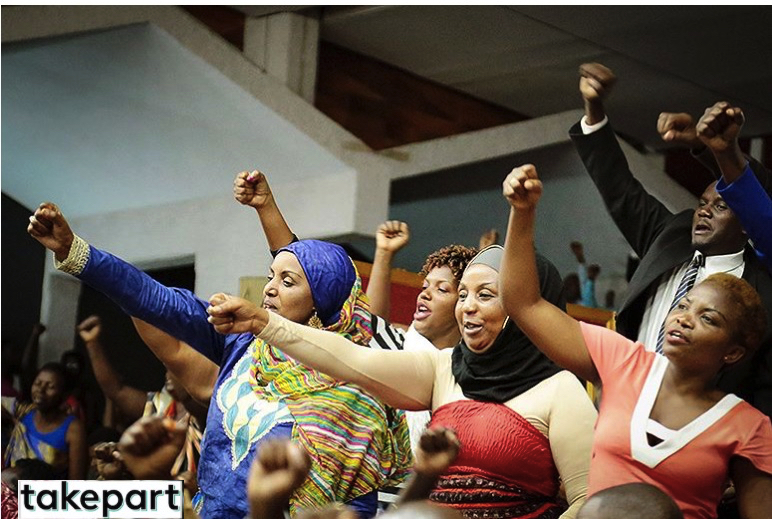
The anti-austerity movements were well represented last month at the World Social Forum where progressive social movements meet each year. This was the second year that the Forum took place in Tunisia, showing that the Arab spring is not completely dead!

We are reminded by Raffaele Morgantini and Tarik Bouafia that Europe is just confronting what Latin American countries, especially Argentina, Bolivia, Ecuador and Venezuela have been dealing with for decades now. Over the years, they turned against the imposed austerity policies of the World Bank and IMF. Because of this, they have been denounced by the major mass media who follow the line of the big international banks and their governmental partners, and they have been subjected to sabotage by the same imperialist forces that controlled their countries a few decades ago.

We have posed the question, “Movements against governmental fiscal austerity, are they part of the global movement for a culture of peace?” and we hope that CPNN readers will respond. Considering the reversals that followed the Arab spring, and the crushing of the Occupy Wall Street movement in the United States, the anti-austerity movement may not have a smooth road ahead of it. But taking a lead from Latin America, it may also be strong enough to prevail. If so, it will provide a good model for the global movement for a culture of peace.

      
HUMAN RIGHTS


WACC-SIGNIS Human Rights Award 2014 goes to “Taxi”

WOMEN’S EQUALITY


International Conference: Building Global Support for Women Human Rights Defenders

DISARMAMENT AND SECURITY


London: Confronting a world at war conference

SUSTAINABLE DEVELOPMENT


Latin America in perspective: Between successes and new challenges

FREE FLOW OF INFORMATION


World Social Forum in Tunis: Another world is possible, without the 1%

DEMOCRATIC PARTICIPATION


Closing of the World Social Forum: Citizens of the world versus terrorism and oppression

TOLERANCE AND SOLIDARITY


USA: Discipline Reformers Get A “Restorative” Lesson

EDUCATION FOR PEACE


Nonviolent Peaceforce: Women’s Peacekeeping Teams incorporated into South Sudan communities

African Women Mayors Join Forces to Fight for Clean Energy

. DEMOCRATIC PARTICIPATION .

An article by A. D. McKenzie, Inter Press Service (reprinted by permission)

When some 40,000 delegates, including dozens of heads of state, descend on Paris for the United Nations Climate Change Conference later this year, a group of African women mayors plan to be there and make their voices heard on a range of issues, including electrification.

mayors-english
Paris Mayor Anne Hidalgo with African women mayors who are calling for greater attention to communities without electricity, given the inextricable link between climate change and energy. Credit: A.D. McKenzie

The mayors, representing both small and big towns on the continent, are calling for greater attention to communities without electricity, given the inextricable link between climate change and energy.

“In my commune, only one-fifth of the people have access to electricity, and this of course hampers development,” Marie Pascale Mbock Mioumnde, mayor of Nguibassal in Cameroon, told a recent meeting of women mayors in Paris.

Mbock Mioumnde was one of 18 women mayors at last month’s meeting, hosted by Paris mayor Anne Hildalgo and France’s former environment minister Jean-Louis Borloo, who now heads the Fondation Énergies pour l’Afrique (Energy for Africa Foundation).

Organisers said the meeting was called to highlight Africa’s energy challenges in the run-up to COP 21 (the 21st session of the Conference of the Parties to the 1992 United Nations Framework Convention on Climate Change), which will take place from Nov. 30 to Dec. 11 and which has the French political class scrambling to show its environmental credentials.

Mbock Mioumnde told IPS in an interview that clean, renewable energy was a priority for Africa, and that political leaders were looking at various means of electrification including hydropower and photovoltaic energy and, but not necessarily, wind power – a feature in many parts of France.

“We plan to maintain this contact and this network of women mayors to see what we can accomplish,” said Mbock Mioumnde. “As mayors we’re closer to the population, and when we work together, there’s hope.”

Hidalgo, the first woman to hold the office of Paris mayor, said she wanted to support the African representatives’ appeal for “sustainable electrification”, considering that two-thirds of Africa’s population, “particularly the most vulnerable, don’t have access to electricity.”

Currently president of the International Association of Francophone Mayors (AIMF), Hidalgo said it was essential to find ways to speed up electrification in Africa, using clean technology that respects the environment and the health of citizens.

The mayors meeting in Paris in April also called for the creation of an “African agency devoted to this issue” that would be in charge of implementing the complete electrification of the continent by 2025.

Present at the conference were several representatives of France’s big energy companies such as GDF Suez – an indication that France sees a continued business angle for itself – but the gathering also attracted NGOs which have been working independently to set up solar-power installations in various African countries.

“I’m happy that women are organising on this issue. We need solidarity,” said Hidalgo, who has been urging Paris residents to become involved in climate action, in a city that has come late to environmental awareness, especially compared with many German and Swiss towns.

(Article continued on right side of this page)

(Click here for an article in French about this event.)

Latest Discussion

How can culture of peace be developed at the municipal level?

(Article continued from left side of this page)

“The Climate Change Conference is a decisive summit for the planet’s leaders and decision-makers to reach an agreement,” Hidalgo stressed.

Climate change issues have an undeniable gender component because women are especially affected by lack of access to clean sources of energy.

Ethiopian-born, Kenya-based scientist Dr Segenet Kelemu, who was a winner of the 2014 L’Oréal-UNESCO Awards for Women in Science, spoke for example of growing up in a rural village in Ethiopia with no electricity, no running water and no indoor plumbing.

“I went out to collect firewood, to fetch water and to take farm produce to market. Somehow, all the back-breaking tasks in Africa are reserved for women and children,” she told a reporter.

This gender component was also raised at a meeting May 7-8 in Addis Ababa, where leaders of a dozen African countries agreed on 12 recommendations to improve the regional response to climate change.

The recommendations included increasing local technological research and development; reinforcing infrastructure for renewable energy, transportation and water; and “mainstreaming gender-responsive climate change actions”.

The meeting was part of a series of ‘Climate Vulnerable Forum (CVF)’ workshops being convened though June 2015 in Asia, Latin America, the Pacific and the Middle East.

The CVF was established to offer a South-South cooperation platform for vulnerable countries to deal with issues of climate change.

In Paris, Hidalgo’s approach includes gathering as many stakeholders as possible together to reach consensus before the U.N. summit. With Ignazio Marino, the mayor of Rome, Italy, she also invited mayors of the “capitals and big towns” of the 28 member states of the European Union to a gathering in March.

The mayors, representing some 60 million inhabitants, stressed that the “fight against climate change is a priority for our towns and the well-being of our citizens.”

Hidalgo’s office is now working on a project to have 1,000 mayors from around the world present at COP 21, a spokesperson told IPS. The stakes are high because the French government wants the summit to be a success, with a new global agreement on combating climate change.

Borloo, who was environment minister in the administration of former president Nicolas Sarkozy, used to advocate for France’s “climate justice” proposal, aimed at giving financial aid to poor countries to combat climate change.

Calling for a “climate justice plan” to allow poor countries to “adapt, achieve growth, get out of poverty and have access to energy,” Borloo was a key French player at COP 15 in Copenhagen in 2009, but that conference ended in disarray. The question now is: will a greater involvement of women leaders and mayors make COP 21 a success?

(Thank you to Janet Hudgins, the CPNN reporter for this article.)
Appel des maires africains pour une électrification durable de l’Afrique

. PARTICIPATION DÉMOCRATIQUE .

Un article par le Mairie de Paris

Vendredi 17 avril, Anne Hidalgo maire de Paris et et Jean-Louis Borloo, ont réuni les Maires des capitales et des grandes villes africaines à l’Hôtel de Ville. À quelques mois de la COP 21, ils ont accompagné ensemble « l’Appel des Maires africains pour une électrification durable ».

mayors-french
Les maires des capitales et des grandes villes africaines se sont réunis le 17 avril dernier à l’Hôtel de Ville de Paris, à l’invitation d’Anne Hidalgo et de Jean-Louis Borloo. Six mois avant la COP 21, ils ont lancé ensemble un appel à la communauté internationale pour une électrification durable de l’Afrique.

Depuis le début de son mandat, Anne Hidalgo s’engage à promouvoir l’action des villes qui, au plus près des citoyens, mettent en œuvre chaque jour des solutions pour lutter contre le changement climatique.

» Le discours d’Anne Hidalgo au format pdf

Dans ce contexte, plus d’une vingtaine de maires des capitales et des grandes villes africaines, ainsi que plusieurs ONG, ont répondu à l’invitation d’Anne Hidalgo, maire de Paris et présidente de l’Association internationale des Maires Francophones (AIMF), et de Jean-Louis Borloo, président de la Fondation Énergies pour l’Afrique.

>> Revivez cette journée en vidéo

Cette rencontre, qui intervient quelques mois avant la tenue à Paris de la Conférence internationale sur le Climat (COP 21)se veut un temps fort d’échanges et de travail sur les moyens d’accélérer l’électrification du continent africain, en faisant appel à des technologies propres, respectueuses de l’environnement et de la santé des habitants.
Ils accompagneront ensemble l’Appel des maires africains pour une électrification durable, qui vise à sensibiliser les acteurs internationaux aux enjeux énergétiques en Afrique, alors que 2/3 des habitants, et en particulier les plus vulnérables, n’ont pas accès à l’électricité. Ils demanderont notamment la création d’une agence africaine dédiée à cette question, qui serait en charge de mettre en œuvre l’électrification complète du continent d’ici 2025.

» Télécharger le texte d’appel au format pdf

(Cliquez ici pour un article en anglaise sur cet événement.)

Latest Discussion

How can culture of peace be developed at the municipal level?

Readers’ comments are invited on this question.

6 sencillas herramientas para proteger tu privacidad online (y ayudarte a combatir la vigilancia masiva)

. LIBERTAD DE INFORMACIÓN .

Un artículo de Tanya O’Carroll, Amnistía Internacional

A medida que las agencias de inteligencia bucean cada vez más en nuestras comunicaciones digitales, hemos recopilado una lista de sencillas herramientas que pueden ayudarte a proteger tu privacidad y hacer que tus llamadas, correos electrónicos, textos y chats sean más seguros.

privacy

Cuando nos encontramos ante el enorme poder de organismos como la Agencia de Seguridad Nacional (NSA) estadounidense o la Jefatura de Comunicaciones del Gobierno (GCHQ) británico, es fácil tener la sensación de que hay poco que podamos hacer para protegernos. Sin embargo, existen varias maneras muy efectivas de recuperar el control sobre tus comunicaciones privadas online.

Las seis herramientas que enumeramos a continuación, concebidas pensando en la seguridad, son alternativas a las aplicaciones, sitios y software que se suelen utilizar. Con ellas, podrás tener una mayor confianza en que tus comunicaciones digitales siguen siendo privadas.

Nota: Ninguna herramienta ni medio de comunicación es seguro al 100 por 100, y los gobiernos tienen muchas maneras de interceptar y recopilar nuestras comunicaciones. Si eres activista o periodista, debes utilizar estas herramientas como parte de un plan general de seguridad, no por sí solas. Además, esta lista no es en absoluto exhaustiva: recomendamos echar también una ojeada a Security-in-a-Box (de Tactical Technology Collective y Front Line Defenders) y Surveillance Self-Defense (de Electronic Frontier Foundation).

1. TextSecure – para mensajes de texto

TextSecure es una aplicación gratuita y fácil de usar para Android (iPhone tiene una aplicación compatible llamada Signal). Se parece mucho a WhatsApp, y cifra tus textos, imágenes y archivos de vídeo y audio. Es una aplicación de código abierto y proporciona cifrado de extremo a extremo. Esto significa que sólo tú y la persona a la que envías tus mensajes podréis leerlos. (Más abajo encontrarás una explicación de los términos técnicos.)

2. Redphone – para llamadas de voz

Redphone es otra aplicación gratuita de código abierto para Android (para iPhone es la misma aplicación antes mencionada, Signal, que combina llamadas de voz y mensajes), que cifra tus llamadas de voz de extremo a extremo. Todas las llamadas se realizan por Internet, así que sólo pagas por wifi o datos, en lugar de por tarificación telefónica.

3. meet.jit.si – para llamadas de vídeo y mensajería instantánea

meet.jit.si es un servicio gratuito de código abierto que protege tus llamadas de vídeo, videoconferencias, mensajes instantáneos y transferencias de archivos. Se ejecuta directamente en tu navegador, sin necesidad de descargar nada, y te permite invitar a múltiples personas a unirse a una videoconferencia. Se parece a Google hangouts, pero hace que tus llamadas y chats estén cifrados de extremo a extremo. Existe también una versión de escritorio llamada Jitsi, que se puede descargar para Windows, Linux, Mac OS X y Android.

(El artículo continúa en el lado derecho de la página)

( Clickear aquí para la version inglês y aquí para la version francês)

Question related to this article:

How can we protect our online privacy?

(Artículo continúa de la parte izquierda de la página)

4. miniLock – para intercambio de archivos

Este plug-in, gratuito y de código abierto, para tu navegador web te permite cifrar archivos –incluidos archivos de vídeo, anexos de correo electrónico y fotos– y compartirlos con tus amistades con suma facilidad. Puedes cargar y enviar tu archivo a contactos seleccionados utilizando su identidad miniLock exclusiva, lo que significa que tu archivo sólo puede ser descargado por la persona con la que lo has compartido.

5. Mailvelope – para un correo electrónico más seguro

Es un complemento gratuito para tu navegador web, que proporciona un cifrado de extremo a extremo de tus correos electrónicos. Puede configurarse para que funcione con casi cualquier proveedor de correo electrónico basado en la web, incluidos Gmail, Yahoo y Outlook. Es de código abierto y utiliza cifrado OpenPGP.

6. SpiderOak – para intercambio y almacenamiento en la nube

Este servicio te ayuda a mantener una copia de seguridad de tus archivos, sincronizar dispositivos múltiples y compartir archivos de manera privada con personas en las que confías. Hace un cifrado completo de extremo a extremo de tus datos, lo que significa que, a diferencia de otros servicios de intercambio y almacenamiento en la nube como Dropbox, ni siquiera la propia empresa puede ver tus documentos en sus servidores. SpiderOak cobra 12 dólares estadounidenses al mes por cada cuenta personal. Todavía no es de código abierto.

Guía rápida de términos técnicos

Cifrado (o encriptación)

Es una manera de codificar algo de manera que se disfraza su forma original. El cifrado actual, si se implementa bien, puede ser prácticamente irrompible. Al realizar un proceso de cifrado o descifrado de un contenido, para la autenticación se utiliza una contraseña compleja, conocida como clave. Muy a menudo, esta clave obra en poder de la empresa que proporciona servicios tales como correo electrónico o alojamiento de sitios web. Eso significa que la empresa tiene pleno acceso a tus datos. Los gobiernos pueden obligarla a entregarles esta información, o pueden tratar de acceder ilegalmente al servidor de la empresa para tener acceso directo.

Cifrado de extremo a extremo

Con el cifrado de extremo a extremo, la clave sólo la conoces tú, y en ningún momento sale de tu dispositivo. Esto significa que tus comunicaciones se mantienen exclusivamente entre tú y las personas con las que te comunicas. Para la empresa que transmite tu comunicación –o para cualquiera que intente interceptarla–, tus mensajes serán una larga cadena aleatoria de números y letras. Pueden saber con quién te has comunicado pero no podrán acceder al contenido.

Código abierto

Muy a menudo, el código que compone el software informático es un código propietario, lo cual significa que quien lo ha desarrollado tiene acceso exclusivo a él. El código abierto está a disposición de todo el que quiera verlo y analizarlo. Aunque pueda parecer contraproducente, en general se considera que esta es la mejor manera de hacer seguro un software. Ayuda a garantizar que ese software no hace nada indeseable, como proporcionar una “puerta trasera” a las agencias de inteligencia, y que cualquier punto débil en cuanto a la seguridad puede ser descubierto y solucionado.

Six outils simples pour protéger votre vie privée en ligne (et vous aider à vous défendre contre la surveillance de masse)

LIBERTÉ DE L’INFORMATION

Un article par Tanya O’Carroll, Amnesty International

Alors que les services de renseignement surveillent de plus en plus étroitement nos communications numériques, nous avons dressé une liste d’outils simples qui pourront vous aider à protéger votre vie privée ainsi que la confidentialité de vos appels, courriels, SMS et discussions en ligne.

privacy

Alors que les services de renseignement surveillent de plus en plus étroitement nos communications numériques, nous avons dressé une liste d’outils simples qui pourront vous aider à protéger votre vie privée ainsi que la confidentialité de vos appels, courriels, SMS et discussions en ligne.

On a parfois le sentiment qu’on ne peut rien faire face à l’immense pouvoir des organisations comme l’Agence nationale de sécurité américaine (NSA) ou son équivalent britannique, le Quartier général des communications du gouvernement (GCHQ). Pourtant, il existe des moyens efficaces de reprendre le contrôle de vos communications privées en ligne.

Les six outils ci-dessous constituent des solutions de remplacement pour les applications, sites et logiciels que vous utilisez d’ordinaire. Ils vous permettront d’avoir l’esprit plus tranquille et de préserver votre vie privée lorsque vous utiliserez des moyens de communication numériques.

Remarque : aucun outil ni moyen de communication n’est sûr à 100 %, et les gouvernements qui interceptent et récupèrent nos communications peuvent le faire de nombreuses façons. Si vous êtes militant-e ou journaliste, nous vous recommandons d’intégrer ces outils à une stratégie de sécurité globale et non de les utiliser seuls. Par ailleurs, cette liste n’est en aucun cas exhaustive. Nous vous conseillons de consulter le site de Security-in-a-Box (projet du Tactical Technology Collective et de Front Line Defenders) ainsi que le site de Surveillance Self-Defense (projet de l’Electronic Frontier Foundation).

1. TextSecure : pour les SMS

TextSecure est une application simple à utiliser et gratuite pour les smartphones Android (il existe une application compatible avec iPhone dénommée Signal). Elle ressemble beaucoup à WhatsApp et chiffre vos SMS, photos et fichiers vidéo et audio. Il s’agit d’une application open source qui chiffre les données de bout en bout. Cela signifie que seuls vous et le destinataire de vos SMS pourront lire ces SMS. (Voir le petit guide ci-après pour obtenir des explications sur les termes techniques.)

2. Redphone : pour les appels vocaux

Redphone est une autre application open source pour les smartphones Android qui chiffre vos appels vocaux de bout en bout (pour les iPhone, la même application Signal se charge de chiffrer les SMS et les appels vocaux). Tous les appels sont effectués via Internet, vous ne payez donc que votre connexion Wi-Fi ou les données consommées au lieu de votre crédit téléphonique.

3. meet.jit.si : pour les appels vidéo et les messages instantanés

meet.jit.si est un service open source et gratuit qui permet de sécuriser vos appels vocaux et vidéo, vos conférences vidéo, vos messages instantanés et vos transferts de fichiers. Il s’exécute directement dans votre navigateur sans que vous ayez besoin de télécharger quoi que ce soit. Il vous permet en outre d’inviter plusieurs personnes à participer à un appel vidéo. Ce service ressemble quelque peu à Google Hangouts, mais vos appels et discussions en ligne sont chiffrés de bout en bout. Il existe également une version bureautique dénommée Jitsi que vous pouvez télécharger pour votre système Windows, Linux, Mac OS X ou Android.

(Voir suite sur colonne de droite. . . )

(Cliquez ici pour une version anglaise de cet article ou ici pour une version espagnole.)

Question related to this article:

How can we protect our online privacy?

(. . . suite)

4. miniLock : pour le partage de fichiers

Ce module d’extension open source et gratuit s’installe sur votre navigateur et vous permet de chiffrer vos fichiers (vidéos, courriels, pièces jointes, photos, etc.) et de les partager très facilement avec vos amis. Vous pouvez transférer et envoyer vos fichiers aux contacts que vous aurez sélectionnés en utilisant leur identifiant unique miniLock. Ainsi, vos fichiers ne pourront être téléchargés que par les personnes avec lesquelles vous les aurez partagés.

5. Mailvelope : pour les courriels

Ce module complémentaire gratuit pour votre navigateur web permet de chiffrer vos courriels de bout en bout. Vous pouvez le configurer pour qu’il soit compatible avec presque tous les fournisseurs de messagerie web, notamment Gmail, Yahoo et Outlook. Il s’agit d’un logiciel open source qui utilise le chiffrement OpenPGP.

6. SpiderOak : pour le partage et le stockage dans le cloud

Ce service vous aide à sauvegarder vos fichiers, synchroniser les données entre plusieurs appareils et partager vos fichiers de manière confidentielle avec des personnes de confiance. Il chiffre vos données de bout en bout, ce qui signifie que, contrairement à d’autres services de partage et stockage dans le cloud tels que Dropbox, même la société qui offre le service ne peut pas voir vos documents sur ses propres serveurs. SpiderOak facture 12 dollars par mois (environ 11 euros) pour un compte personnel. Son code source n’est pas encore ouvert.

Petit guide des termes techniques

Chiffrement : il s’agit d’un procédé visant à dissimuler la forme d’origine de données. Les techniques de chiffrement moderne, lorsqu’elles sont correctement mises en œuvre, permettent de rendre des données presque indéchiffrables. Lorsque du contenu est chiffré ou déchiffré, un mot de passe complexe, appelé « clé », est utilisé pour l’authentification. Très souvent, cette clé est détenue par l’entreprise qui fournit des services, de messagerie web ou d’hébergement de sites web par exemple. Cela signifie que l’entreprise en question bénéficie d’un accès non restreint à vos données. Les gouvernements peuvent contraindre ces entreprises à divulguer cette information ou essayer de pirater leurs serveurs pour y accéder directement.

Chiffrement de bout en bout : avec le chiffrement de bout en bout, la clé n’est connue que de vous-même et ne quitte jamais votre appareil. Vos communications restent ainsi entre vous et vos correspondants uniquement. Pour l’entreprise qui transmet vos communications, ou pour quiconque essaierait de les intercepter, vos messages ressembleront à une longue chaîne de lettres et de nombres aléatoires. Ils peuvent savoir avec qui vous communiquez, mais ils ne pourront pas accéder au contenu de vos communications.

Open source : la plupart du temps, le code qui compose les logiciels est propriétaire, c’est-à-dire que l’entité ou la personne qui l’a développé est la seule à y avoir accès. En revanche, tout le monde peut voir et analyser un code dit « open source ». Bien que cela puisse sembler paradoxal, l’open source est considéré comme la méthode la plus efficace pour rendre un logiciel sûr. Il permet en effet de vérifier que le logiciel ne fait rien de préjudiciable à l’utilisateur, comme fournir une porte dérobée aux services de renseignement, et de veiller à ce que tout défaut de sécurité puisse être décelé et corrigé.

6 simple tools to protect your online privacy (and help you fight back against mass surveillance)

FREE FLOW OF INFORMATION

An article by Tanya O’Carroll, Amnesty International

As intelligence agencies hoover up more and more of our online communications, we’ve compiled a list of some simple apps and tools to help protect your privacy and make your calls, emails, texts and chats more secure.

privacy

Faced with the enormous power of agencies such as the NSA and GCHQ, it can feel like there is little we can do to fight back. However, there are some great ways you can take control of your private communications online.

The six tools below, which have been designed with security in mind, are alternatives to the regular apps and software you use. They can give you more confidence that your digital communications will stay private.

Note: No tool or means of communication is 100% secure, and there are many ways that governments are intercepting and collecting our communications. If you’re an activist or journalist, you should use these tools as part of a comprehensive security plan, rather than on their own. Additionally, this list is by no means comprehensive – we recommend checking out Security-in-a-Box (from Tactical Technology Collective and Front Line Defenders) and Surveillance Self-Defense (from the Electronic Frontier Foundation) too.

1. TextSecure – for text messages

TextSecure is an easy-to-use, free app for Android (iPhones have a compatible app called Signal). It looks a lot like WhatsApp and encrypts your texts, pictures, video and audio files. The app is open-source and provides end-to-end encryption. That means only you and the person you are sending to will be able to read the messages. (See below for an explanation of technical terms.)

2. Redphone – for voice calls

Redphone is another free, open-source app for Android (for iPhones it’s the same Signal app, which combines voice calls and messaging) which encrypts your voice calls end-to-end. All calls are over the internet, so you only pay for wifi or data rather than using your phone’s credit.

3. meet.jit.si – for video calls and instant messaging

meet.jit.si is a free and open-source service to secure your voice calls, video calls, video conferences, instant messages and file transfers. It runs directly in your browser with no need to download anything and allows you to invite multiple people to join a video call. It’s a bit like Google hangouts, but your calls and chats are encrypted end-to-end. There is also a desktop version called Jitsi which you can download for Windows, Linux, Mac OS X and Android.

4. miniLock – for file sharing

This free and open-source plug-in for your web browser lets you encrypt files – including video, email attachments and photos – and share them with friends really easily. You can upload and send your file to selected contacts by using their unique miniLock id, meaning your file can only be downloaded by the person you share it with.

(Article continued on right side of page)

(Click here for a version in French of this article or here for a version in Spanish.)

Question related to this article:

How can we protect our online privacy?

(Article continued from left side of page)

5. Mailvelope – for more secure email

This is a free add-on for your web browser which provides end-to-end encryption for your emails. It can be configured to work with almost any web-based email provider, including Gmail, Yahoo and Outlook. It’s open source and uses OpenPGP encryption.

6. SpiderOak – for cloud sharing and storage

This service helps you back-up your files, sync between multiple devices and share files privately with people you trust. It fully encrypts your data end-to-end which means that, unlike other cloud sharing and storage services such as Dropbox, even the company itself cannot see your documents on its servers. SpiderOak charges $12 each month for a personal account. It’s not yet open-source.

Quick guide to technical terms

Encryption: This is a way of coding something that disguises the original form. Today’s modern encryption, when well implemented, can be virtually unbreakable. When encrypting and decrypting content, a complex password – known as a key – is used for authentication. Very often this key is held by the company that provides services such as email or website hosting. That means that the company has full access to your data. Governments can compel the company to hand over this information or can try to hack into a company’s server to get direct access.

End-to-end encryption: With end-to-end encryption, the key is only known to you and never leaves your device. This means your communications stay between you and your correspondents only. To the company transmitting your communication – or anybody else who tries to intercept it – your messages will look like a long string of random numbers and letters. They can know who you communicated with but will not be able to access the contents.

Open-source: Very often the code that makes up computer software is proprietary, meaning that whoever developed it has sole access to it. Open-source code is available for anyone to see and analyse. While it might seem counter-intuitive, this is widely considered to be the best way to make software secure. It helps ensure it doesn’t do anything nasty, like providing a ‘back door’ for intelligence agencies, and that any security weaknesses can be discovered and patched up.

Les femmes dans les parlements : regard sur les 20 dernières années

. PARTICIPATION DÉMOCRATIQUE .

D’un rapport par L’Union Parlementaire

On a assisté au cours des vingt dernières années à une augmentation impressionnante de la proportion des femmes parlementaires dans le monde; la moyenne mondiale a presque doublé sur cette période et la quasi-totalité des régions ont réalisé des progrès substantiels vers l’objectif de 30 % de femmes à des postes de prise de décision.

parliamentarians

En 1995, les déléguées présentes à la quatrième Conférence mondiale de l’ONU sur les femmes ont signé, unanimement, le Programme d’action de Beijing. Celui-ci a été qualifié de « nouveau programme pour l’émancipation des femmes » avec pour mission de supprimer tous « les obstacles à la participation active des femmes à toutes les sphères de la vie publique et privée ».

Le programme fixait un objectif de 30 % de femmes aux postes de prise de décision, proposant une large palette de stratégies pour y parvenir, parmi lesquelles la discrimination positive, le débat public, la formation et le mentorat à l’intention de femmes leaders.

Au cours des 20 dernières années, les pays du monde ont enregistré des avancées substantielles dans la réalisation de cet objectif de 30 %. Au plan mondial, la moyenne de représentation des femmes dans les parlements nationaux a presque doublé, passant de 11,3 % en 1995 à 22,1 %

Au plan mondial

• La représentation moyenne des femmes dans les parlements du monde a presque doublé entre 1995 et 2015, passant de 11,3 % en 1995 à 22,1 % en 2015. Cette proportion a progressé dans près de 90 % des 174 pays pour lesquels des données sont disponibles pour ces deux années.

• Sur la même période, le nombre des chambres uniques ou basses comprenant plus de 30 % de femmes parlementaires a grimpé de 5 à 42 tandis que le nombre de celles comprenant plus de 40 % de femmes passait d’une seule à 13. En 2015, quatre chambres ont dépassé la barre des 50 %, l’une d’entre elles comprenant même plus de 60 % de femmes.

• Les pays en tête du classement se sont diversifiés : les 10 premiers, parmi lesquels figuraient huit pays européens en 1995, comprennent maintenant quatre pays en Afrique sub-saharienne et trois pays en Europe et trois pays sur le continent américain. . .

• Outre l’évolution des conditions politiques, un facteur a joué un rôle essentiel dans ces changements : la mise en place de quotas électoraux par sexe. Alors qu’ils ne concernaient qu’un petit nombre de pays en 1995, on en trouve dans plus de 120 pays en 2015. . .

L’influence des femmes au Parlement

Des travaux de recherche étayés par des entretiens avec des parlementaires hommes et femmes présentés dans l’enquête de l’UIP Egalité en politique, montrent que la présence des femmes a, de fait, imposé des changements dans les parlements. Des thèmes nouveaux, tels que la violence faite aux femmes ou la santé des femmes, sont désormais à l’ordre du jour : il n’est pas sûr que sans les femmes ces questions auraient reçu l’attention qu’elles méritent. Les femmes parlementaires contribuent aussi, au moins dans certains cas, à l’établissement d’un climat politique plus collaboratif, tant au sein des partis qu’entre eux. En outre, la présence de femmes met les autres femmes en confiance et les incite à prendre contact avec leurs représentant(e)s, ce qui renforce la communication et la responsabilité démocratiques.

(Cliquez ici pour une version anglaise de cet article.)

Latest Discussion

Women in parliaments. Do they enhance democratic communication and accountability?

Readers’ comments are invited on this question.

Women in Parliament: 20 years in review

. DEMOCRATIC PARTICIPATION .

From a report by Inter-Parliamentary Union (excerpts)

The past 20 years have witnessed an impressive rise in the share of women in national parliaments around the world, with the global average nearly doubling during that time – and all regions making substantial progress towards the goal of 30 per cent women in decision making.

parliamentarians

In 1995, delegates to the United Nations (UN) Fourth World Conference on Women unanimously signed the Beijing Platform for Action. Described as a “new agenda for women’s empowerment,” its mission statement called for the removal of all “obstacles to women’s active participation in all spheres of public and private life”. The Platform set a 30 per cent target for women in decision-making, to be achieved through a wide range of strategies, including positive action, public debate, and training and mentoring for women as leaders.

Over the last 20 years, countries around the world have made substantial progress towards this 30 per cent goal. The global average of women in national parliaments has nearly doubled, from 11.3 per cent in 1995 to 22.1 per cent in 2015 (+10.8 points). 2014, however, saw little progress in the percentage of women in national parliaments worldwide, with the global average rising only by 0.3 points, begging the question: have we reached the glass ceiling?

Global highlights

• Worldwide, women’s average share of parliamentary membership nearly doubled between 1995 and 2015, from 11.3 per cent in 1995 to 22.1 per cent in 2015. Their share gained ground in almost 90 per cent of the 174 countries for which 1995 and 2015 data are available.

• Over the same period, the number of single and lower houses with more than 30 per cent women parliamentarians grew from five to 42, and those with more than 40 per cent from one to 13. By 2015, four houses of parliament surpassed the 50 per cent threshold, one moving beyond 60 per cent women parliamentarians.

• The world’s highest ranking countries have become more diverse: the top 10, dominated by eight European countries in 1995, now include four in Sub-Saharan Africa and three each in the Americas and Europe.

• Far fewer single and lower houses elect less than 10 per cent women, dropping from 109 in 1995 to 38 in 2015. The number of all-male single and lower houses fell from 10 to five.

• In addition to shifting political circumstances, a crucial factor driving these changes has been the adoption of electoral gender quotas, which have spread from a small number of States in 1995 to more than 120 in 2015.

• After notable increases in recent years, growth in women’s average share of parliaments worldwide levelled off in 2014, rising only 0.3 points to 22.1 per cent. Women won 2147 of the 10,265 seats up for election or renewal in 2014. .

The impact of women in parliament

Scholarly studies, supported by interviews with male and female parliamentarians in the IPU Equality in Politics survey, indicate that women’s presence has changed parliaments around the world in tangible ways. New issues like violence against women or women’s health concerns, which might not otherwise have received the attention they deserve, are making it onto the political agenda. Women in parliament also contribute, at least in some contexts, to a more collaborative political environment, both within and across parties. Their presence emboldens more women citizens to contact their representatives, enhancing democratic communication and accountability.

(Click here for a french version of this article.)

Latest Discussion

Women in parliaments. Do they enhance democratic communication and accountability?

Editor’s comment: The latest statistics on percentages of women in parliaments have been posted by IPU on their website. Here are the top fifteen:
Rwanda 63.8%
Bolivia 53.1%
Cuba 48.9%
Seychelles 43.8%
Sweden 43.6%
Senegal 42.7%
South Africa 41.9%
Ecuador 41.6%
Finland 41.5%
Iceland 41.3%
Namibia 41.3%
Nicaragua 41.3%
Spain 41.1%
Mozambique 39.6%
Norway 39.6%

The permanent members of the Security Council are far down the list:

36: United Kingdom 29.4%
44: France 26.2%
54: China 23.6%
71: United States 19.4%
95: Russian Federation 13.6%

Readers’ comments are invited on this question.

5 brave ways activists are fighting for LGBTI rights worldwide

… HUMAN RIGHTS …

An article by Azmina Dhrodia, Amnesty International (abridged)

Around the world, people face violent attacks and threats simply because of who they are or who they have sex with. But some brave activists are still standing up for their rights. To mark the International Day against Homophobia, Transphobia and Biphobia (IDAHOT) on 17 May, we celebrate the courageous activism of lesbian, gay, bisexual, transgender and intersex (LGBTI) people worldwide.

lgbt
click on photo to enlarge

1. Pushing to end hate crimes in Greece

. . . On this international day of action, activists from Greece and around the world are using the hashtag #KostasZabi to send support to the couple on social media, and to tell the Greek government to end hate crimes and stand against homophobia and racism. Greek activists, including Kostas and Zabi, will organize a ‘kiss-in’ in front of Parliament to highlight their case and the situation for LGBTI people in the country.

2. Ending homophobic violence in Cameroon

In Cameroon same-sex sexual conduct is punishable by up to five years in prison and a fine, and LGBTI people suffer violence, police harassment and even arrest and detention. . .

In 2011, Stéphane, a 36-year old gay man, was dragged away from his house by a group of men, stripped, beaten and tortured for hours. Four years later, the men who attacked him have not faced justice. But that has not stopped Stéphane. “Today my fight is so that my younger brothers or my friends don’t suffer discrimination like this,” he tells us. “I am alive today and I want to be an example, a living example. I will keep telling my story for as long as I can.”

3. Standing up for LGBTI rights in Tajikistan

Across Central Asia, homophobia and transphobia is on the rise. Police blackmail gay men, threatening to ‘out’ them to family and colleagues unless they agree to pay a bribe. Lesbian women face violence and abuse from within their families, and may be forced to marry against their will.

One example is Komil, a gay man from Tajikistan who was kidnapped, tortured, beaten and humiliated by police, and was eventually forced to flee the country. “Can you understand spending your whole life hiding that you are gay just to stay alive?” he tells us. “I am not a politician. I am a simple person who just wants a tiny piece of his own happiness. That is all.” With the help of his friends, he is rebuilding his life, and now speaks out for LGBTI rights in the region.

4. Celebrating EuroPride in Latvia

Latvia will be the first post-Soviet country to host EuroPride – a Europe-wide event dedicated to promoting LGBTI rights. In 2015, the event also celebrates a decade since Riga held its first Pride event: when 70 activists marched for their rights in spite of threats of violence and hostility from several thousand protestors. . . .

5. Campaigning for transgender rights in Norway

John Jeanette Remø Solstad is a 65-year-old transgender Norwegian woman who wants to change her legal gender from ‘male’ to ‘female’. . . .

In April 2015, an expert group appointed by the Norwegian government stated that the current practice is a violation of fundamental human rights, and stressed the need for change. “this is everything I have dreamt of and hoped for,” she told us. “It was worth the fight. It took a long time, but when the results of our work finally came, it felt great.”


Question related to this article:

The struggle against homophobia, Is progress being made in your community?

It would seem from articles on CPNN that progress is being made in some communities. In particular this is true in the United States according to the article by Danny B and in Bulgaria according to the article by Diana Tashkova.

Seed laws that criminalise farmers: resistance and fightback

. . SUSTAINABLE DEVELOPMENT . .

An article from Grain (abridged)

Seeds are under attack everywhere. Under corporate pressure, laws in many countries increasingly put limitations on what farmers can do with their seeds and with the seeds they buy. Seed saving, a thousand-year-old practice which forms the basis of farming, is fast becoming criminalised. What can we do about this? . . .

seedsClick on photo to enlarge
“No to seed privatisation… For a better world!” – Demonstration in Guatemala in defence of biodiversity and against control of seeds by industrial agriculture. (Photo: Raúl Zamora)

Social movements worldwide, especially peasant farmers organisations, have resisted and mobilised to prevent such laws being passed. In many parts of the world, the resistance continues and can even count some victories. To strengthen this movement, it is very important that as many people as possible, especially in the villages and rural communities that are most affected, understand these laws, their impacts and objectives, as well as the capacity of social movements to replace them with laws that protect peasants’ rights.

Today’s seed laws promoted by the industry are characterised by the following:

a) They are constantly evolving and becoming more aggressive. Through new waves of political and economic pressure – especially through so-called free trade agreements, bilateral investment treaties and regional integration initiatives – all the ‘soft’ forms of ownership rights over seeds were hardened and continue to be made more restrictive at a faster pace. Seed laws and plant variety rights are being revised again and again to adapt to the new demands of the seed and biotechnology industry.

b) Laws that grant property rights over seeds have been reinforced by other regulations that are supposed to ensure seed quality, market transparency, prevention of counterfeits, etc. These regulations include seed certification, marketing and sanitary rules. By means of these regulations, it becomes mandatory, for instance, for farmers to purchase or use only commercial seeds tailored for industrial farming. Or the regulations make it a crime to give seeds to your son or exchange them with a neighbour. As a result, seed fairs and exchanges – a growing form of resistance to control over seeds – are becoming illegal in more and more countries.

c) In strengthening privatisation, these laws have been disregarding basic principles of justice and freedom and directly violating the Universal Declaration of Human Rights. These seed laws have imposed the rule that anyone accused of not respecting property rights over seeds is assumed to be guilty, thus violating the principle that people are innocent until proven guilty. In some cases, measures can be taken against accused wrongdoers without their being informed of the charges. These seed laws are even making it an obligation to report alleged transgressors; they are legalising searches and seizures of seeds on grounds of mere suspicion (even without a warrant) and allowing private agencies to conduct such checks.

d) These laws are being drafted in vague, incomprehensible and contradictory language, leaving much room for interpretation. In most cases, the laws are being moved through legislative chambers in secrecy or by means of international agreements that cannot be debated nationally or locally. . .

(Article continued on right side of page)

Question for this article:

What is the relation between movements for food sovereignty and the global movement for a culture of peace?

(Article continued from left side of page)

Experience shows that people do not want these laws, once the misinformation and secrecy used to push the laws through have been countered by information campaigns and mobilisation on the part of social organisations. Most people reject the idea that a company can take ownership of a plant variety and prohibit farmers from reproducing their seeds. They find it completely absurd. People also generally do not agree that the work that farmers do to feed the world should suddenly become a crime. Wherever resistance has been strong enough, the legal plunder embodied in these laws has been stopped. . .

Africa:

Ghana: students and trade unions join farmers to oppose a restrictive seed law

Mozambique: farmers resist by developing local seed systems

Niger: farmers’ victory against the piracy of a local onion

The Americas

Brazil: large-scale development of creole seeds

Chile: victory against the privatisation of seeds

Colombia: mass protests for farmers’ seeds and food sovereignty

Costa Rica: major mobilisations make UPOV a household name

Mexico: people struggle against GM maize

Venezuela: a bottom-up law to defend farmers’ seeds

Asia

India: defending seeds sovereignty

Filipino farmers continue to mobilise and protest, vowing that they will go on opposing the advance of GMOs.

South Korea: women farmers campaign for native seeds

Thailand: resisting free trade agreements in order to protect local seeds

Europe

Austria: fighting for legislation in favour of biodiversity and farmers’ rights

France: Associations and small enterprises working together have enabled several thousand French farmers to stop using industrial seeds for many of their crops. They have initiated ‘peasant seed houses’ where communities select, reproduce, and preserve peasant seeds collectively.

Germany: a victory for the defence of farm-based seeds and a campaign to save the “Linda” potato

Greece: the crisis brings peasant seeds back to the fields

Italy: Farmers are organising in direct production and consumption networks and gardening collectives. One of their goals is not to become dependent on the seed industry. Their seeds are exchanged locally through large yearly exchanges