The Gambia: ‘African countries must unite’

TOLERANCE & SOLIDARITY .

An article from The Point

Omar Sompo Ceesay, Governor Upper River Region, has said that African countries must unite because the present generation is quite confident that the destiny of Africa lies in their hands and minds. Governor Ceesay made these remarks on Thursday during the opening of the 26th Edition of SAFRA [la Semaine de l’Amitié et de la Fraternité], which is currently underway in Basse. The quest for African unity had been inspired by the spirit of Pan Africanism focusing on liberation, political and economic independence, he said.

SAFRA
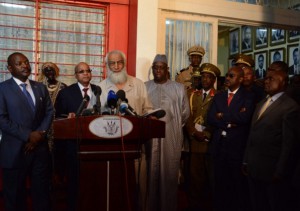
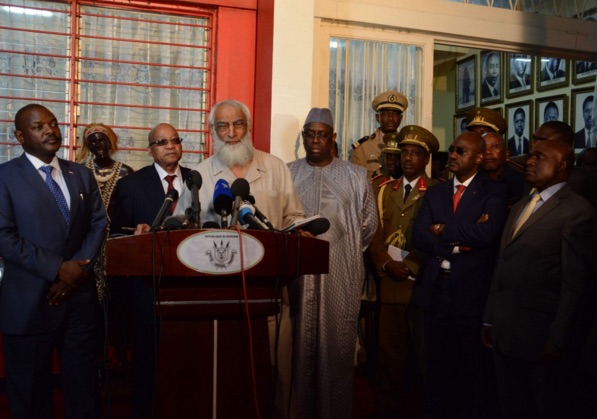
Governors, mayors’, and officials of Safra member countries. Photo from Daily Observer

Ceesay called upon ECOWAS and the African Union to work for the establishment of SAFRA as a person-to-person mechanism in order to create awareness, which would lead to full economic integration.

SAFRA, he added, is a first step mechanism used in the control and prevention of conflict, and to adopt resolutions nurturing a culture of peace and tolerance for African children and youth.

It was of great joy to see people from far and near come together to celebrate life, dreams, aspirations and forge forward for the betterment of our various states in order to experience peace and stability, he continued.

The Governor expressed appreciation to the founders of SAFRA for their success in the fight against all forms of discrimination, and for free movement of people, goods and services.

Governor Ceesay reminded delegates that the gathering is meant to invest in youths, who are indispensable characters of fortitude and patriotism.

He thanked everyone that had in one way or the other contributed in the hosting of the event in his region.

Alieu K. Jammeh, Youth and Sports Minister, in declaring the event open, described SAFRA as a brilliant initiative conceived to not only promote regional integration, but also encourage positive youth civic engagement.

He added that the theme for this year’s confab is: “Cooperation for peace, integration and sustainable development within SAFRA countries and by extension ECOWAS as a sub-region.”

The rationale behind the SAFRA convergence is to bring together participants, mostly young people from different member countries, to discuss pertinent issues and strategies to promote and sustain sub-regional peace and integration, particularly among its future leaders and parents, he went on.

(This article is continued in the column on the right.)

Question related to this article:

Solidarity across national borders, What are some good examples?>

(This article is continued from the column on the left.)

“We must build our country and educate our children by instilling a culture Young people are expected to engage and instill a sense of responsibility among them to foster regional integration, discuss broader socio-economic and cultural issues relevant to the development of member states and communities, in a bid to create and sustain regional peace for today, tomorrow and for generations yet unborn.

The SAFRA initiative in promoting sub-regional integration, peace, trade, youth and sports development through culture, sports and profession is in line with the Gambia government’s development priorities and, indeed, in line with our national youth policy and the Ministry of Youth and Sports strategic plan, the minister continued.

The Gambia government under President Yahya Jammeh would continue to prioritise youth issues in its development priorities and projects, he further stated.

“We have establishments of various institutions, facilities and programmes that are all meant and geared towards developing our young people,” and giving them opportunities for self-fulfillment, as well as giving young people platforms through which they could harness their skills and talents, and also expose them.

He also said that they are working hard to ensure that young people are well provided for and nurtured, so that they could contribute their quota to national development, their own development and well-being.

“The sub-region is faced with youth challenges, and collective efforts are needed to combat, for example, youth irregular migration.

“I do not see any illegality or irregularity in migration because it has been in existence from the day we all came down on earth.

“It is to our benefit for people to move out and go and get education or economic empowerment, and come back to the country to contribute their ideas to improve the country’s welfare, but of course we know not all the people who go or intend to go end up doing positive things,” he went on.

The minister called upon those people to think of themselves first, where they come from and value those places.

“SAFRA is being held for 26 years now, and we are still not able to have close interaction or integration between our countries,” he observed.

Antinio Queba Banjai, Conselheiro do Primeiro-Ministro from Ginuea Bissau, in his remarks, commended President Jammeh in facilitating dialogue between the Bissau-Guinean actors in the cyclical political crises that have marked their country, and the support expressed on several occasions to solving some of the most burning issues of the Bissau-Guinean people.

USA: Renewable Energy Soars in 2015

.. SUSTAINABLE DEVELOPMENT ..

An article by Nathaniel Greene, Natural Resources Defense Council , published by Ecowatch

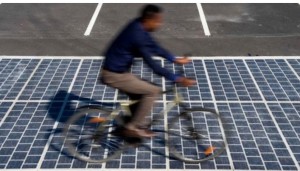
2015 has been a big year for renewable energy in the U.S., with solar and wind power growing like crazy—providing more than 5 percent of the nation’s electricity for the first time—and the country’s first offshore wind power project finally under construction.

renewable-rev
(Click on image to enlarge)
These U.S. Department of Energy graphs show how the prices of wind and solar power have plummeted as installation has soared. We saw more of the same in 2015 and can expect similar growth in 2016 and beyond, thanks to Congress’s renewal last week of key clean energy tax incentives. Photo credit: U.S. DEP

The truth is, 2015 has been one in a series of very good years for these pollution-free, renewable resources—years that are helping us get on track for the low-carbon future we need and need now.

With its dizzying price declines and impressive job gains, this growth in solar and wind power has come, in large part, as the result of smart federal policies—smart federal policies that Congress wisely renewed and reinstated last week.

These policies don’t just help level the playing field for clean energy—fossil fuels have received federal subsidies for almost a century, after all—they also drive renewable energy demand, thereby speeding economies of scale, spurring competition in the marketplace and investment in new technologies. The production tax credit (PTC) for wind power, the solar investment tax credit (ITC) and the ITC for offshore wind power will keep us on the right track.

Together, these tax credits will help our country go a long way toward realizing the bold clean energy goals of a large majority of the American public, 69 percent of whom endorse federal subsidies for renewable energy.

Just how good is our clean energy situation getting? Well, recently, the U.S. Department of Energy released these very happy-making charts (below) that emphasize renewable energy’s huge growth and equally huge price declines in recent years.

In 2015, those particularly excellent trends continued. Though we won’t have complete data until next spring, the country will likely install 7.4 gigawatts of solar energy through Dec. 31 of this year. That’s enough to juice up more than 1.6 million homes and a full 24 percent rise over 2014. Wind power is also flying, with almost 3.6 gigawatts—1 million homes-worth—coming online in the first three quarters of this year and more than 13,000 megawatts now under construction.

This year also found several regions where pollution-free, solar and wind energy became cost-competitive with conventional power. That power, fired by coal and natural gas, masquerades as cheap but actually foists expensive public health and environmental problems on us all.

(Continued on right side of page)

Question for this article:

Are we making progress in renewable energy?

(Article continued from left side of page)

2015 had some especially good news about offshore wind power, too. Not only did construction begin on the Block Island Wind Farm, off the Rhode Island coast, but the U.S. Department of Energy reported in September that a total of 13 offshore wind power projects are in advanced phases of development. With federal policies that supplement the offshore wind power ITC—its current timetable is too short for most offshore wind power projects—we can help get many of those projects off of their drawing boards and into the water.

In 2015, solar and wind energy employment also soared. In January, the National Solar Jobs Census reported that solar jobs had climbed to almost 174,000, up by more than 31,000 over the previous year, with another 36,000 solar jobs projected in 2015. (Industry jobs are up by a mind-boggling 80,000 since 2010.) In August, the Department of Energy reported that wind energy jobs jumped to 73,000, up from 50,500 over the previous year, thanks to a short-term extension of the PTC.

Also in August, the U.S. Environmental Protection Agency’s Clean Power Plan to cut carbon emissions from the nation’s electric sector introduced its Clean Energy Incentive Program, designed to bring more clean energy online faster; it will begin in 2020, two years before the Clean Power Plan as a whole. Overall, the Clean Power Plan can jumpstart enough renewable energy to supply, by 2030, about 12 percent of the nation’s electricity. And we can push those deployment graph slopes further upward—we can install even more wind and solar power—now that the PTC, the solar ITC and the offshore wind power ITC have been secured. They’ll help us keep that momentum going until the Clean Energy Incentive Program kicks in. As they have already, incentives that increase deployment lower clean energy prices. And the cheaper renewable energy is, the more it will become of the energy source of choice, replacing polluting power.

This year has seen amazing advances in renewable energy. Here are just some of them:

• New wind power technologies, like taller turbine towers, more powerful rotors and digital innovations, that can soon make every part of the country a wind power producer.

• Huge solar growth.

• Exponential increases in energy storage that can capture excess wind and solar power and use it when it’s needed most.

• Department of Energy funding for potentially revolutionary technologies, like a morphing wind turbine blade that can increase generating capacity 10 times and a new kind of offshore wind power that produces electricity much in the way a lightning cloud does, by sending an electrical charge through water vapor.

• And, let’s not forget those billions in new clean energy research and development capital pledged by some of the world’s wealthiest individuals at the Paris climate talks just three weeks ago.

In 2015, we’ve made so much progress in solar and wind power. And now, with the help of smart, federal clean energy incentives, we’re on track for much, much more. 2016 promises to double the total amount of solar installed in the U.S. (think about that: double!). There are more than 13,000 megawatts of wind power in the works, too and much more likely to come, now that Congress has extended the PTC. Thanks to the perceptive heads in Congress who worked out a bipartisan agreement, there’s no end to that progress now.

15 Indigenous Rights Victories That You Didn’t Hear About in 2015

….. HUMAN RIGHTS …..

An article by John Ahni Schertow, IC Magazine, a publication of the Center for World Indigenous Studies

Good news. Sometimes, it comes in the form of a cancelled hydro dam that spares 20,000 people from the burden of displacement. Other times, it takes the shape of a simple court admission that Indigenous Peoples do actually make the best conservationists.

indigenous
Mapuche “Not Guilty” (Photo: Ruben Curricoy Nañko)

In this day in age such stories are incredibly rare. They are even more difficult to find amidst the constant deluge of media that doesn’t matter. That makes them all the more valuable.

Indigenous rights victories give us all pause to celebrate, to reflect and to rejuvenate our own quests for justice.

May we encounter 10,000 more victories just like these in 2016!

1. JUSTICE FOR THE OGON

In a landmark decision last week, the Dutch Court of Appeals ruled that four Ogoni farmers from Nigeria can take their case against Shell to a judge in the Netherlands. Alali Efanga, one of the Ogoni farmers who, along with Friends of the Earth Netherlands, brought the case against Shell, said the ruling “offers hope that Shell will finally begin to restore the soil around my village so that I will once again be able to take up farming and fishing on my own land.”
The ruling by the Court of Appeals overturns a 2013 decision in favor of Shell, who, in another big hit to the multinational oil giant, agreed to clean up two massive oil spills in the Ogoni community of Bodo following a three-year legal battle in London.

2. WAMPIS AUTONOMY

The Wampis nation, who made international headlines in 2009 when they stood up to the government of Peru alongside their brethren the Awajun, took an unprecedented step foward by establishing the first Autonomous Indigenous Government in Peru’s history. Spanning a 1.3 million hectare territory – a region the size of the State of Connecticut – the newly created democratically-elected government brings together 100 Wampis communities representing some 10,613 people.

Speaking of the challenges that the Wampis Nation will now face, the newly elected Pamuk (first President) Wrays Pérez Ramirez, told Intercontinental Cry by phone: “We know that it will be difficult to get the National Government to support us and recognize our territory. It will seem unacceptable to the Government to have to consult us regarding any activity that could affect our territory. We know that it is going to be hard work but we are prepared. We are not going to stay silent not least when we have legal backing from national and international legislation regarding our right to self-determination and free, prior and informed consent. It will be difficult, but not impossible.”

3. PROTECTED LANDS

After five years of legal contests and what felt like a lifetime of uncertainty, Colombia’s Constitutional Court confirmed that Yaigojé Apaporis, an indigenous resguardo (a legally recognized, collectively owned territory), has legitimate status as a national park.

Comprising a million hectares of the Northwestern Colombian Amazon, the pristine forest region of Yaigojé Apaporis is home to numerous endangered species including the giant anteater, jaguar, manatee and pink river dolphin. It is also home to the Makuna, Tanimuka, Letuama, Barasano, Cabiyari, Yahuna and Yujup-Maku Indigenous Peoples, who share a common cosmological system and rich shamanistic traditions. Together these populations act as Yaigojé’s guardians, a role that was strengthened in 1988 when they successfully established the Yaigojé Apaporis resguardo over their traditional territory.

In the late 2000s Canadian mining multinational Cosigo Resources started trying to exploit a legal loophole in Colombia that would let them mine for gold inside the resguardo. The Constitutional Court’s decision brought a welcomed end to that dishonest effort.

4. INDIGENOUS PASSPORTS

On October 12, 2015, the day of Indigenous Resistance, Kichwa lawyer Carlos Pérez Guartambel entered Ecuador with a Kichwa passport, sending out a clear reminder to the international community that indigenous nations are not simply “bands” or informal groups whose rights stem from the good graces of UN member states, but actual nations.

Ecuador’s immigration authorities did not know what to do. After 30 minutes of hesitation, they decided to accept the Kichwa passport as a form of ID, stamped Guartambel’s immigration card (not the passport) and allowed him to enter Ecuador. Within a few hours, however, Ecuadoran state officials reversed themselves and denied the validity of the Kichwa passport. This can be seen in a video released by the Department of Immigration in the Ministry of the Interior. Minister Serrano ridiculed the Kichwa passport as a “fantasy” on Twitter, posting a montage of the Kichwa passport with the portrait of a cartoon character.

Later that afternoon, the Council of Government of ECUARUNARI, an organization founded in 1972 by 18 Indigenous Peoples and representing 14 different nationalities, met in Quito to distribute over 300 passports, including one to Salvador Quishpe, the Governor of the Amazon Province of Morona-Chinchipe. During the passport ceremony, the Kichwa leadership insisted that Indigenous passports were as valid as ancestral medicine, inter-cultural education, and Indigenous justice–all recognized in Ecuador.

5. “NOT GUILTY”

After more than three years of preparation, an Argentinian court vindicated three Mapuche land rights defenders in a first-of-its kind inter-cultural trial.

The case began in the Mapuche community of Winkel Newen on December 28, 2012, when Officer of the Court Veronia Pelayes, representatives of the Apache Oil Company and a contingent of police arrived with an eviction notification. The community defended itself by throwing stones, one of which hit and injured Pelayes and damaged a vehicle. It was this incident that lead to an accusation of “attempted homicide” against Relmu Ñamku and charges of “serious damages” for Mauricio Rain and Martin Velasquez Maliqueo. In the case of Ñamku, the public prosecutor called for a 15-year prison sentence — disproportionate given that eight years is the norm for manslaughter cases.

“The public prosecutor and oil companies in Zapala had a clear political intention with this trial, for it to be an ‘ejemplary punishment’ to intimidate and discipline other indigenous communities who defend their rights against the advance of oil exploitation in their territories,” said writer Maristella Svampa and law professor Roberto Gargarella.

Their attempt failed and instead this historic trial marks an important step in curbing attempts to criminalize indigenous leaders defending their territory.

6. WHAT’S IN A NAME?

The highest mountain in the United States recovered its original indigenous name, Mount Denali, for all official purposes, after a decades-long dispute. The name “Denali” has its origin in the language of the Koyukon people, who inhabit the area north of the summit. In the Koyukon language, “Denali” means “the tall one.” The 6,168-metre high mountain was officially known until now at federal level as Mount McKinley, in honor of an American president assassinated in 1901.

It is hoped that the U.S. government will restore the indigenous names of other monuments, parks and places including Devil’s Tower, the Yosemite National Park, the Grand Canyon, Mount St. Helens, and Mount Rainier to name a few.

7. BIOCULTURAL RIGHTS

Indigenous custodians from Benin, Uganda, Kenya and Ethiopia issued a challenge for the African Commission on Human and Peoples’ Rights to protect sacred sites, governance systems and custodians in a ‘decisive policy and legislative response’ to the new scramble for Africa and its impact on Indigenous territories.

(Article continued in right column)

Question for this article

Indigenous peoples, Are they the true guardians of nature?

(Article continued from left column)

In their statement, the custodians describe the centrality of sacred sites to their existence, writing that “Sacred natural sites are where we come from, the heart of life. They are our roots and our inspiration. We cannot live without our sacred natural sites, and we are responsible for protecting them.”

“We are deeply concerned about our Earth because she is suffering from increasing destruction despite all the discussions, international meetings, facts and figures and warning signs from Earth… the future of our children and the children of all the species of Earth are threatened. When this last generation of elders dies, we will lose the memory of how to live respectfully on the planet, if we do not learn from them now,” say the custodians.

8. TWO CENTURIES IN THE MAKING

Nearly 300 Poqomchi’ Maya families that make up the Primavera communities in the Guatemalan department of Alta Verapaz won a significant victory after negotiating a settlement with the Guatemalan Minister of the Interior, the Secretary of Agrarian Affairs, and representatives from Maderas Filips Dias/Eco-Tierra, a logging business that was seeking to harvest the land’s forests.

“This is a major victory, especially under these conditions of corruption,” said Rony Morales from the Union of Veracruz Campesino Organizations (UVOC), which worked closely with the communities to obtain this victory. “The fact [that] a community can finally win their land at no cost to the community is very important. For the other indigenous communities in San Cristobal Verapaz and the valley [of] Polochic that are in this same process, they have found hope in this victory.”

The Maya families struggled for over two centuries for the rights to their land, which was privately held for years as the Finca Primavera. They faced intimidation, nearly 25 assassinations, and over 50 arrest orders in response to their claims on the land.

9. BYE BYE HERAKLES

Herakles Farms, a New York based investment firm and the parent company of SG Sustainable Oils Cameroon (SGSOC) formally abandoned its plan to establish oil palm plantations astride the Iconic Korup National Park and Rumpi Hills Forest Reserve in Cameroon.

Supported by an “eco-friendly” non-profit owned by Bruce Wrobel, former Managing Director of Sithe Global and Founder of Herakles Capital Corporation, the oil palm project would have brought disastrous pollution resulting from pesticides, fertilizers and herbicides and sewage disposal; adversely affecting the health of animals in the Korup Park that depend on the water.

The project would have also degraded the livelihoods of the Baka, Bakola, Bedzang and Bagyeli –so-called ‘Pygmy’ peoples–who are are heavily dependent on the region for subsistence.

10. THE LAND IS OURS

After 18 years of continuous struggle, the Enxet Sur Indigenous community of Yexwase Yet finally received legal title to 10,030 hectares of their ancestral land in the Chaco region of Paraguay.

The hard-fought victory was tested just a few weeks after the President of Paraguay handed the title over to the community. A retired Paraguayan football star and his family attempted to move on to part of the 10,030 hectares claiming he had recently purchased it to build a cattle ranch estate.

“We called the police and the State prosecutor immediately and they told the footballer to leave, that he had no right to be there,“ Gabriel Fernandez, one of the leaders of Yexwase Yet, told Intercontinental Cry. “For once it was someone else being evicted. Now the land is really ours.”

11. NUCLEAR WASTE FREE

After a four-year, hard-fought campaign to keep the province of Saskatchewan free of nuclear waste, last Spring, the Nuclear Waste Management Organization (NWMO) announced that Creighton was no longer a contender in the organization’s siting process. It was the last of three Saskatchewan communities in the running to host a deep geological repository for the long term storage of spent fuel bundles from Canada’s nuclear reactors in Ontario, Québec and New Brunswick.

“This announcement is the culmination of four years of research, sacrifice, networking and hard work by a group of dedicated people with one goal: to keep nuclear waste out of Saskatchewan,” said Candyce Paul, a founding member of the Committee for Future Generations.

“The powerful Nuclear Waste Management Organization with all their money and all their experts could not beat back the duty we have to protect our future generations,” said Paul.

12. MAUNA KEA

The Hawaii state Supreme Court invalidated the permit allowing construction of the hugely controversial Thirty Meter Telescope atop the sacred mountain known as Mauna Kea.
The court said the state Board of Land and Natural Resources erred when it issued the permit before a contested case hearing was held for the $1.4 billion project.

The struggle to defend Mauna Kea, however, doesn’t end there. Officials behind the Thirty Metre Telescope (TMT) have said that they are now considering their next steps. Indigenous activists and allies, meanwhile, patiently wait for them to make their move.

13. PULLING ANCHOR

Cermaq, the Norwegian-based salmon farming company (that was recently purchased by the Japanese conglomerate Mitsubishi) pulled anchor on a new salmon farm inside Ahousaht territory north of Tofino in British Columbia.

Soon after dropping anchor on the salmon farm a group of five Ahousaht men stepped forward to tell Cermaq to get lost, vowing that they would risk arrest rather than see another salmon farm in their territory.

Ever since salmon farms started appearing on Ahousaht lands in 1999, the Ahousaht have observed an alarming decline in shellfish, salmon and herring populations. Aware of this, the group of activists, who came to be known as the Yaakswiis warriors, stated that the Cermaq salmon farm was not legal because the Ahousaht people had not been consulted, nor did they provide their consent.

14. MONSANTO LOSES AGAIN

Following a monumental win against the controversial ‘Monsanto law’ in Guatemala last year, the notorious biotech firm took another big hit after Mexico’s Supreme Court suspended a permit to grow genetically modified soybeans across 250,000 hectares on the Yucatán peninsula.

The judgement stemmed from a constitutional law in Mexico that requires the consideration of indigenous communities affected by development projects. According to the Supreme Court, Monsanto failed to consult the region’s famous Maya beekeepers who filed the case against Monsanto. The beekeepers warned early on that Monsanto’s plan would require the use of “glyphosate, a herbicide classified as probably carcinogenic.” Given that bees are extremely sensitive to their environment, the beekeepers explained that Monsanto’s project jeopardize their communities, their livelihoods and the environment.

The judge commented in the ruling that co-existence between honey production and GM soybeans is simply not possible.

15. BARAM DAM SHELVED

After maintaining a blockade for two straight years, Indigenous Peoples in Sarawak, Malaysia can finally breathe a sigh of relief. The Sarawak government decided to shelve the controversial Baram hydroelectric dam.

Commenting on the surprising move, Sarawak’s Chief Minister Tan Sri Adenan Satem stated that they decided to put the dam on hold out of respect for the views of the affected communities, adding: “If you don’t want the dam, fine. We will respect your decision.”

Had the project gone ahead, it would have flooded 20,000 Indigenous men, women and children from their homes.

In New York, Filipina Trafficking Survivors Launch a Co-op—And They Own Their Jobs

…. HUMAN RIGHTS ….

An article by Abigail Savitch-Lew, Yes! Magazine (abbreviated and reprinted according to provisions of Creative Commons)

In 2013, Judith Daluz was a nanny making $650 a week, waiting for her four children to arrive from the Philippines. With her hard-earned savings, she had started paying $1,500 a month for a one-bedroom apartment in the New York borough of Queens that she hoped would be big enough for all of them. She hadn’t seen her children in years. In 2006, Daluz had been trafficked to the United States as a domestic worker. Now, as a free, documented worker, she was able to bring her children to live with her—but worried about how she would support them.

Filipina
About half of the worker-owners of the Damayan Cleaning Cooperative are trafficking survivors. (Judith Daluz is front row, on right). Photo courtesy of Damayan Cleaning Cooperative.

Organizers at the Damayan Migrant Workers Association, a member-led organization helping Filipino workers understand and protect their rights, realized that many of its members had similar concerns. Established in 2002, the grassroots organization, led by Filipino survivors of human trafficking and other low-wage workers, has helped dozens escape abusive conditions, recover stolen wages, and pursue T visas, which allow trafficking survivors to remain in the United States. But many of Damayan’s members, once freed from forced labor, found themselves in another troubling, if less shocking situation: Even with better working conditions, they often had little job security and earned a pittance.

In June 2014, members of Damayan’s board heard that New York’s city council had set aside $1.2 million to fund a Worker Cooperative Business Development Initiative. The city directed money to 11 organizations with experience incubating cooperatives in low-income communities of color, allowing them to expand their reach to new entrepreneurs. It was the largest investment in cooperatives by any city government in U.S. history. In the last year, the initiative has helped facilitate the launch of 21 new cooperatives, provided guidance for 19 new worker-owned businesses that will open in 2016, and assisted 26 existing cooperatives. By the end of 2016, there will be 66 new worker-owned cooperatives in New York City. One of them is the new Damayan Cleaning Cooperative.
With support from an organization participating in the city’s initiative, Damayan launched its worker-owned cooperative in September—a natural next step from their anti-trafficking and anti-exploitation work. Damayan’s members envisioned an enterprise that both protects their rights as workers and is guided not by profit but by their needs and those of the community.

“They’ve already played the … capitalist global economy game. And that’s what they got,” said Tiffany Williams, director of the Break the Chain anti-trafficking campaign at the Institute for Policy Studies. “Why not create something that will be more egalitarian, more restorative?”

In 2006, Daluz left the Philippines to work as a housekeeper for a foreign diplomat living in an apartment on New York’s Upper West Side. Her employer promised her $1,800 a month—a salary that would help pay for one son’s college degree and another’s epilepsy medication. When she was about to depart, she learned he had decreased her pay to $500 a month. She boarded the plane anyway, thinking $500 was better than nothing at all.

Once she arrived, she was forbidden to speak to anyone outside the diplomat’s family, forced to work seven days a week, 18 hours a day, and subjected to abuse by the diplomat’s daughter. She washed dishes, scrubbed the family’s sheets and clothes in the bathroom tub, cleaned all four bedrooms and every strip of the window blinds, and took care of the daughter. The family kept Daluz’s passport and threatened to deport her if she reported mistreatment.

Because diplomats have immunity to civil and criminal prosecution, their employees are particularly vulnerable to abuse. In 2008, just after Daluz left her employers, the U.S. Government Accountability Office identified 42 cases of alleged abuse of diplomats’ household workers. The U.S. Justice Department is often hesitant to bring charges, Williams said, though there are rare exceptions. (In 2012, the Department to Justice helped a Damayan member secure more than $24,000 in back wages from the Ambassador for Mauritius.)

Even without the factor of diplomatic immunity, domestic workers are at risk for exploitation. Thanks to exemptions written into midcentury labor laws that some scholars believe were designed to exclude African Americans, domestic labor is one of the most poorly protected occupations in the United States. Household workers are still not offered the same federal protections as other workers for safety, medical leave, and sick days. In many states, home-care workers for the disabled and elderly were exempted from minimum wage and overtime laws until this year. Moreover, the nature of the work (including living with employers—often unofficially, behind closed doors, and with limited exposure to other people) makes workers susceptible to wage theft, abuse, and assault. Sixteen percent of the 377 labor trafficking cases reported this year by the National Human Trafficking Resource Center involved domestic workers.

(Article continued on right side of page.)

(Article continued from left side of page.)

Labor exploitation boosts profits in economic sectors beyond domestic work. Other members of Damayan came to the United States through nonagricultural guest worker visas like H-2, a program the Southern Poverty Law Center calls a “modern day system of indentured servitude”; and J-1, a source of cheap labor for hotels, food chains, and amusement parks. Many sectors—from hospitality to agriculture—benefit from the labor of migrants who have few protections, even when not technically trafficked, according to Williams. “[They are] just as vulnerable, are just as much suffering,” she said. . .

Recognizing a growing need for better work opportunities, Damayan’s members began seeking new solutions. They found an organization with an innovative strategy that was helping to empower the residents of the low-income Latino and Chinese neighborhood of Sunset Park, Brooklyn. 

Since 2006, the Center for Family Life, a program of the SCO Family of Services, a social services organization based in Sunset Park, has supported the growth of eight worker-owned cooperatives, including Si Se Puede! Women’s Cooperative, We Can Do It! Inc., and a child-care service called Beyond Care. The initiative started when women in one of the center’s English language classes reflected on their lack of access to the job opportunities provided through the center’s employment program. This inspired the center to research the Oakland-based organization Prospera (formerly WAGES), which has helped Latina women build cooperatives since the mid-1990s. The Center for Family Life and its members grew excited about the opportunities this alternative model could bring to the impoverished immigrant community of Sunset Park.

“In contrast to typical hierarchical and profit-driven businesses that really drive the money back to those with access and wealth, co-ops really place both the group of workers and the community at the center,” said Rachel Isreeli, the Center for Family Life’s worker cooperative developer. A traditional business might seek to maximize profits by paying less, requiring workers to use subpar equipment, or using so-called “flexible scheduling” to require shifts only when demand is high. In contrast, cooperative worker-owners are their own bosses, following standards set according to their own priorities.

The model was also attractive to Damayan for another reason: Participation in cooperative development could allow worker-owners to cultivate new leadership and social skills. Immigrants could build self-esteem, applying old skills many had been unable to use since arriving in the United States. And cooperatives could provide flexibility to worker-owners, who could speak their own language, control their schedules to accommodate child care, and build business practices according to their own values. For many of the women who brought experience in home care, nannying, or housecleaning, cooperatives also provided a path to less isolating, more empowered domestic work, creating a forum for workers to share information about bad clients. . .

Since its official launch on September 27, 2015, Damayan Cleaning Cooperative has acquired the contracts for The Nature Conservancy and the Brooklyn Community Foundation, which canceled an existing, cheaper contract in order to support Damayan’s business. 

“Your mission and your values [should] really reflect how you operate as an organization,” said Brooklyn Community Foundation Executive Director Cecilia Clarke, who sees her partnership with Damayan as an opportunity to bring “opportunities to those with least access”—including the nearly 40 percent of Brooklynites who are foreign-born. 

The cooperative hopes to gather enough contracts to allow each member to work at least 20–40 hours a week. In the long term, the members hope they can provide employment for other people in the community, including those who were initially interested in the enterprise but couldn’t make the time commitment. Daluz also thinks it might be interesting to expand the cooperative beyond office cleaning.

Perhaps most importantly for the individual workers, the Damayan Cleaning Cooperative adopted a wage requirement of $15 an hour, ensuring that all future contracts will give members as decent a livelihood as possible. (As of December 31, the statewide minimum wage will be $9 an hour). Though Daluz currently makes $16 an hour, she hopes she will one day be able to work full time for the cooperative, then take on additional work for “extra money.” Even with a higher wage, caring for four kids in New York City is not cheap. . .

“You feel free—you feel this is your business,” Daluz says. 

She speaks in metaphors and uses her hands to depict a plant that grows, then wilts with death. “This is a plant nearly grown up,” she says. “At the end it’s going to go away.” It’s a symbol, she explains, for the transience of human life, and therefore, the necessity of devoting one’s limited time to others.

“We’re not living forever. You make life easy, happy, [then others] are going to walk through your life in a nice way,” she says. “We can help other people in our community, people doing what we did before … slavery.”

* * *

Note: Abigail Savitch-Lew wrote this article for YES! Magazine. Abigail is a reporter based in Brooklyn. Her work has appeared in City Limits, Dissent Magazine, Jacobin, and The Nation.

Thank you to Janet Hudgins, the CPNN reporter for this article.

Boletín español el 01 de enero 2016

COP21 ¿HACIA ATRÁS O EL INICIO?

Hay muchas opiniones contradictorias acerca de los resultados del Acuerdo Climático de París, por eso CPNN se dirigió a dos de las autoridades más independientes y científicas, James Hanson, ex científico de la NASA, que alertó al mundo sobre el cambio climático en 1988, y Naomi Klein, autora canadiense, activista social, y cineasta conocida por sus análisis políticos y su crítica de la globalización corporativa (ver artículo CPNN sobre su más reciente libro Esto lo cambia todo).

Según James Hanson, el acuerdo es un completo fraude, desviándonos de la verdadera causa del calentamiento global, que es la continua dependencia en el petróleo y el carbón. Su investigación más reciente indica que si no reducimos radicalmente esta dependencia, “el nivel del mar podría llegar a ser de hasta cinco metros más alto en la última parte de este siglo [lo que] inundaría muchas de las ciudades del mundo, como Londres, Nueva York, Miami y Shanghai.

Según Naomi Klein, el acuerdo de París nos lleva hacia atrás. Por lo menos el Acuerdo de Kyoto de 1997 tenía obligaciones legales, mientras que el acuerdo de París no las tiene. Klein nos recuerda la relación entre la dependencia del petróleo y las guerras desastrosas de los últimos años: “¿Pensamos que Irak hubiera sido invadido si su principal producto exportado fuera el espárrago? Probablemente no. Queríamos que el petróleo de Irak… Esto ha desestabilizado toda la región, que ya era particularmente inestable antes por cuenta de guerras y golpes de estado por el petróleo y el apoyo a las dictaduras anteriores”.

Pero había otros actores en París, además de representantes de los gobiernos nacionales. Las ciudades en el mundo estaban allí, al igual que los sabios indígenas, las mujeres africanas y las organizaciones no gubernamentales como Greenpeace. ¿Serán ellos capaces para suceder donde los gobiernos nacionales han fracasado?

ICLEI, “la primera red de más de 1.000 pueblos y ciudades en el mundo para el desarrollo sostenible” se comprometió a continuar con sus propias acciones “para hacer sus ciudades y regiones sostenibles, eco-móvil, con bajas emisiones de carbono, con de la biodiversidad, los recursos eficiente, productiva, saludable y feliz, con una economía verde y la infraestructura inteligente.” “Nuestro Programa de Acciones de Transformación (TAP) en el año 2015 presentó 125 planes de acción locales que tienen el potencial de contribuir para mantener el calentamiento global por debajo de 2 ° C”

Una reunión de sabios indígenas en París emitió un comunicado diciendo, entre otras cosas, que “Todos somos responsables y todos somos capaces de crear un nuevo camino hacia adelante con nuevas fuentes de energía que no dañan las personas o la tierra. Todos estamos obligados a actuar ahora para proteger lo que queda de lo sagrado de agua y la vida.

No podemos esperar las soluciones de los funcionarios del gobierno y de la empresa. Todos deben ser responsables y hacer algo para restaurar una relación sana con los demás y la Madre Tierra

Wanjira Mathai, la hija de Nobel de la Paz Wangari Maathai, trajo noticias a París acerca de un nuevo movimiento llamado AFR100 – la Iniciativa para la restauración de la de los paisajes forestales en África – [que] tiene como objetivo restaurar 100 millones hectáreas (386.000 millas cuadradas) de deforestadas y degradadas del paisaje en África en 2030.

Y Kumi Naidoo, Director de Greenpeace, sin dejar de reconocer las deficiencias del Acuerdo de París, lo ve como el comienzo de un largo camino. Es la nueva generación que debe asumir el desafío: “Necesitamos un cambio sustancial, estructural, sistémica – y este cambio sólo podemos ser guiados por los jóvenes, que no están infectados por la polución política del pasado.”

Esto nos lleva a otro acuerdo del mes pasado, que no ha recibido mucha atención, pero que fue dirigida por los de la nueva generación que buscan “un cambio sustancial, estructural, sistémica”.

Romeral Quintilla Ortiz nos cuenta cómo ella y otros miembros de UNOY (La Red de Jóvenes Constructores de la Paz) lanzaron una campaña para desarrollar “un marco global que reconoce y garantiza el papel de los jóvenes en la paz y la prevención la violencia”. Ellos desarrollaron alianzas con actores clave, como el Enviado Personal del Secretario General sobre la Juventud, Search for Common Ground, Visión Mundial y agencias de la ONU, como el PNUD, entre otros. Como se describió anteriormente en CPNN hace dos años, llegaron a la ONU en Nueva York para cabildear por la iniciativa.

En el 9 de diciembre, como resultado de sus esfuerzos, el Consejo de Seguridad de la ONU aprobó la resolución 2250 sobre la Juventud, Paz y Seguridad. La resolución pide a los Estados miembros a “facilitar un clima propicio para los jóvenes para prevenir la violencia, y crear políticas que apoyan a los jóvenes el desarrollo socio-económica y la educación para la paz con el fin de dotar a los jóvenes con la capacidad de participar en los procesos políticos.”

Acogiendo con satisfacción la aprobación de la resolución, Romeral y UNOY ahora piden a todos los jóvenes Constructores de Paz a unirse a ellos en los próximos pasos.


DESAROLLO SUSTENTABLE

Naomi Klein
Naomi Klein: We are going backwards, COP21 is the opposite of progress

IGUALDAD HOMBRES/MUJERES

girls

Eight ways 2015 was a momentous year for girls

DESARME Y SEGURIDAD

palestine
2015 Black Solidarity Statement with Palestine

DERECHOS HUMANOS

canada
Reconciling Canada: Hard truths, big opportunity

LIBERTAD DE INFORMACIÓN

forum
Brasil: Evento fará balanço de ações dos últimos 15 anos do Fórum Social Mundial

PARTICIPACIÓN DEMOCRATICA

cities
ICLEI Declaration to the Ministers at COP21, Paris, France

TOLERANCIA Y SOLIDARIDAD

Chad
Chad: Commemoration of the National Day of peace, peaceful coexistence and national harmony

EDUCACIÓN PARA PAZ

pedagogical
América Latina: Movimiento Pedagógico: nueva fase, nuevo impulso

Bulletin français 1 janvier 2016

COP21: RECUL OU DEBUT D’UN LONG CHEMIN?

Il y a eu beaucoup d’opinions contradictoires à propos des résultats de l’Accord climatique de Paris. Par conséquent, CPNN à choisi deux des autorités les plus indépendantes et scientifiques :

– James Hanson, ancien scientifique de la NASA, qui dès 1988 a alerté le monde sur le changement climatique,

– Naomi Klein, auteure canadienne , activiste sociale, et cinéaste connue pour ses analyses politiques et ses critiques de la mondialisation des entreprises (voir CPNN a propos de son plus récent livre, Cela change tout ). >.

Selon James Hanson, l’accord est une fraude complète, nous détournant de la véritable cause du réchauffement climatique qui est la dépendance continue du pétrole et du charbon. Selon ses plus récentes recherches, si nous ne réduisons pas radicalement cette dépendance, “le niveau de la mer pourrait bientôt être jusqu’à cinq mètres plus haut avant la fin du siècle. Beaucoup de villes du monde, y compris Londres, New York , Miami et Shanghai, seraient inondées.

Selon Naomi Klein, l’accord de Paris nous ramène en arrière. Au moins l’Accord de Kyoto de 1997 avait des obligations légales, tandis que l’accord de Paris n’en a pas. Klein nous rappelle le rapport entre la dépendance du pétrole et les guerres désastreuses de ces dernières années: “Pensons-nous que l’Irak aurait été envahie si son principal produit d’exportation avait été les asperges? Probablement pas. Nous voulions le pétrole de l’Irak… Cela a déstabilisé toute la région, ce qui n’a pas été particulièrement stable pour commencer en raison de précédentes guerres, des coups d’ état pour le pétrole et pour le soutien aux dictatures”.

Mais il y avait d’autres acteurs à Paris, en plus des représentants des gouvernements nationaux. Les villes du monde étaient là, tout comme des Sages, indigènes, des femmes africaines et des organisations non gouvernementales telles que Greenpeace. Es-ce qu’ils peuvent réussir où les gouvernements nationaux sont défaillants.

ICLEI, “le premier réseau de plus de 1000 villes et métropoles dans le monde pour le développement durable” a promis de continuer leurs actions “pour faire vivre leurs villes et leurs régions en développement durable, éco-mobile, avec de faibles émissions de carbone, de la biodiversité, des ressources efficaces et productives, saines et heureuses, avec une économie verte et intelligente, des infrastructures ” . “Notre pilote du Programme des Actions de Transformation (TAP) 2015 a présenté 125 plans d’action locaux qui ont le potentiel pour contribuer à maintenir le réchauffement climatique en dessous de 2 ° C”.

Une réunion des Sages, indigènes, à Paris a publié une déclaration disant, entre autres, que «Nous sommes tous responsables et nous sommes tous capables de créer une nouvelle voie avec de nouvelles sources d’énergie qui ne nuisent pas aux personnes ou à la Terre. Nous sommes tous obligé d’agir maintenant pour protéger ce qui reste de la sacralité de l’eau et de la vie. Nous ne pouvons plus attendre des solutions de responsables gouvernementaux et d’entreprise. Nous devons tous prendre les mesures et la responsabilité de rétablir une relation saine avec l’autre et la Terre-Mère ».

Wanjira Mathai, fille de Wangari Maathai, Nobel de la Paix, a apporté des informations à Paris au sujet d’un nouveau mouvement appelé AFR100 – l’Initiative de restauration des paysages forestiers d’Afrique – Ce mouvement vise à restaurer 100 millions d’hectares (386.000 miles carrés) de paysages dégradé et déboisés en Afrique d’ici 2030.

Et Kumi Naidoo, directeur de Greenpeace, tout en reconnaissant les lacunes de l’Accord de Paris, le considère comme le début d’un long chemin. Il est la nouvelle génération qui doit relever le défi: «Nous avons besoin de changement substantiel, structurel, systémique – et ce changement ne peut être mené que par les jeunes, qui ne sont pas infectés par la pollution politique du passé.”

Cela nous amène à considérer un autre accord de ce mois passé, qui n’a pas reçu des gros titres, mais qui a été dirigé par ceux de la nouvelle génération qui cherchent “du changement substantiel, structurel, systémique.” Romeral Ortiz Quintilla nous raconte comment elle et d’autres de UNOY (Le Réseau des Jeunes Bâtisseurs de la Paix) a lancé une campagne pour développer “un cadre global qui reconnaît et garantit le rôle des jeunes dans la paix et la prévention de la violence.” Ils ont développé des partenariats avec des acteurs clés tels que, l’Envoyé spécial du Secrétaire général sur la jeunesse, Search for Common Ground, World Vision et les agences des Nations Unies telles que le PNUD, entre autres. Comme elle le décrivait dans CPNN il y a deux ans, ils sont venus à l’ONU à New York pour faire du lobbying pour leur initiative.

Le 9 Décembre, à la suite de leurs efforts, le Conseil de sécurité des Nations unies a adopté la résolution 2250 sur la jeunesse, la paix et la sécurité. La résolution appelle les États membres à «faciliter un environnement propice pour les jeunes pour prévenir la violence, et de créer des politiques qui soutiennent le développement socio-économique des jeunes et l’éducation pour la paix leur donnant la capacité de participer aux processus politiques.

“Se félicitant de l’adoption de la résolution, Romeral et l’UNOY appellent maintenant chaque jeune artisan de la paix à se joindre à eux d pour les prochaines étapes.


DÉVELOPPEMENT DURABLE

Naomi Klein
COP21 vue par Naomi Klein : « Le changement climatique génère des conflits »

ÉQUALITÉ HOMMES/FEMMES

girls

Eight ways 2015 was a momentous year for girls

DISARMAMENT ET SECURITÉ

palestine
2015 Black Solidarity Statement with Palestine

DROITS DE L’HOMME

canada
Reconciling Canada: Hard truths, big opportunity

LIBERTÉ DE L’INFORMATION

forum
Porto Alegre, Brazil: Fifteenth anniversary of the World Social Forum

PARTICIPATION DÉMOCRATIQUE

cities
ICLEI Declaration to the Ministers at COP21, Paris, France

TOLERANCE ET SOLIDARITÉ

Chad
Tchad: Commémoration de la Journée nationale de la paix, de la cohabitation pacifique et de la concorde nationale

ÉDUCATION POUR LA PAIX

pedagogical
Amerique Latine: Mouvement pédagogique: nouvelle phase, nouvel élan

English bulletin January 1, 2016

COP21: GOING BACKWARDS OR BEGINNING ?

There are many contradictory opinions about the results of the Paris Climate Agreement, so CPNN turned to two of the most independent and scientific authorities, James Hanson, the former Nasa scientist, who first alerted the world to climate change in 1988, and Naomi Klein, Canadian author, social activist, and filmmaker known for her political analyses and criticism of corporate globalization (see CPNN review of her most recent book, This Changes Everything).

According to James Hanson the agreement is a complete fraud, diverting us from the real cause of global warming. which is the continued reliance on oil and coal. According to his most recent research, if we do not radically cut this reliance, “the sea level could soon be up to five meters higher than it is today by the latter part of this century [which] would inundate many of the world’s cities, including London, New York, Miami and Shanghai.

According to Naomi Klein, the Paris agreement takes us backwards. At least the Kyoto Accord of 1997 included binding language, while the Paris Accord does not. And Klein makes the link between the reliance on oil and the disastrous wars of recent years: “Do we think Iraq would have been invaded if their major export had been asparagus [as journalist Robert Fisk once asked]? Probably not. We wanted that prize in the west, Iraq’s oil. . . This destabilized the whole region, which was not particularly stable to begin with because of earlier oil wars and coups and support for dictatorships.”

But there were other actors in Paris in addition to the representatives of national governments. The cities of the world were there, as were indigenous elders, African women and non-governmental organizations such as Greenpeace, and perhaps they can pick up where the national governments are failing.

ICLEI, “the world’s leading sustainability network of over 1,000 cities, towns and metropolises” pledged to continue their own actions “to make their cities and regions sustainable, low-carbon, resilient, eco-mobile, biodiverse, resource-efficient and productive, healthy and happy, with a green economy and smart infrastructure.” “Our pilot of the Transformative Actions Program (TAP) 2015 has brought forward 125 applications to demonstrate ambitious, crosscutting, and inclusive local action plans that have the potential to contribute to keeping global warming below 2°C.”

A meeting of indigenous elders in Paris released a statement saying, among other things, that “We are all responsible and we are all capable of creating a new path forward with new sources of energy that do not harm the people or the Earth. We are obligated to all take action now to protect what is left of the Sacredness of Water and Life. We can no longer wait for solutions from governmental and corporate leaders. We must all take action and responsibility to restore a healthy relationship with each other and Mother Earth.”

Wanjira Mathai, daughter of Nobel Peace Laureate Wangari Maathai, brought news to Paris about a new movement called AFR100 — the African Forest Landscape Restoration Initiative — [that] aims to restore 100 million hectares (386,000 square miles) of degraded and deforested landscapes in Africa by 2030.

And Kumi Naidoo, the Director of Greenpeace, while recognizing the shortcomings of the Paris Agreement, sees it as the beginning of a long road. It is the new generation that must take up the cause: “We need substantial, structural, systemic change – and this change can only be led by the youth, who are not infected by the political pollution of the past.”

That leads us to another agreement this past month that did not receive headlines, but which was led by those of the new generation who seek “substantial, structural, systemic change.”

Romeral Ortiz Quintilla tells us how she and others from the United Network of Young Peacebuilders launched a campaign to develop “a global framework that would recognize and guarantee the role of youth in peacebuilding and violence prevention.” They developed partnerships with key stakeholders such as the Secretary-General’s Envoy on Youth to the Peacebuilding Support Office, Search for Common Ground, World Vision and UN agencies such as UNDP, among others. As described previously in CPNN, two years ago, they came to the UN in New York to lobby for the effort.

On December 9, as a result of their efforts, the UN Security Council adopted resolution 2250 on Youth, Peace & Security. The resolution calls on Member States to “facilitate an enabling environment for youth to prevent violence, and to create policies which support youth socio-economic development and education for peace equipping youth with the ability to engage in political processes.”

Welcoming the adoption of the resolution, Romeral and UNOY now call on every young peacebuilder to join them in the next steps.


SUSTAINABLE DEVELOPMENT

Naomi Klein
Naomi Klein: We are going backwards, COP21 is the opposite of progress

WOMEN’S EQUALITY

girls

Eight ways 2015 was a momentous year for girls

DISARMAMENT AND SECURITY

palestine
2015 Black Solidarity Statement with Palestine

HUMAN RIGHTS

canada
Reconciling Canada: Hard truths, big opportunity

TOLERANCE AND SOLIDARITY

Chad
Chad: Commemoration of the National Day of peace, peaceful coexistence and national harmony

DEMOCRATIC PARTICIPATION

cities
ICLEI Declaration to the Ministers at COP21, Paris, France

FREE FLOW OF INFORMATION

forum
Porto Alegre, Brazil: Fifteenth anniversary of the World Social Forum

EDUCATION FOR PEACE

pedagogical
Latin America: Pedagogical Movement: new phase, new impetus

Huge Win for Africa’s Wildlife

. SUSTAINABLE DEVELOPMENT .

From an email and article by the African Wildlife Foundation

This sixth Forum on China-Africa Cooperation (FOCAC), held Dec. 4–5, marked the first time the illegal ivory trade was featured on the forum’s agenda. Leading up to the forum, the China-Africa Wildlife Conservation Council, an African Wildlife Foundation (AWF) and Aspen Institute initiative comprised of Chinese and African civil society leaders and celebrities, worked tirelessly to position wildlife issues as a priority to be included on the traditionally development-focused diplomatic agenda.

wildlife
Members of the China-Africa Wildlife Conservation Council discuss ways to work together to protect Africa’s wildlife and wild lands. Photo credit: Rodger Bosch/AWF

“Because the role that China plays in [the FOCAC] agenda is significant and by all accounts game-changing, it has a responsibility as well as an opportunity to help ensure Africa’s elephants, rhinos and other wildlife have a future in the modern Africa rising up before us,” says AWF CEO Dr. Patrick Bergin. This high-level dialogue is focused on strengthening the collaboration on economic development between China and 50 African countries, and the inclusion of the illegal ivory trade positions wildlife trafficking as a focus of ongoing relations between China and African countries.

The China-Africa Wildlife Conservation Council is a group of civil society and business leaders convened by the African Wildlife Foundation and the Aspen Institute to serve as a people-to-people platform for supporting China-Africa cooperation on wildlife and wild lands conservation, sustainable economic development, and governance. This Council exists as a cultural and economic exchange to deepen cooperation and support the governments of China and the African states in the joint commitment to protecting and African wildlife and expanding wild lands conservation as the foundation of a sustainable human economy in Africa.

Following two years of work, the group met the week of December 3 for a three-day field visit and roundtable in Kruger National Park, facilitated by the African Wildlife Foundation (AWF) and the Aspen Institute. Chinese film star Wang Baoqiang and Tanzanian singer-songwriter Alikiba joined the delegation.

(Continued on right side of page)

Question for this article:

What is the relation between the environment and peace?

(Article continued from left side of page)

Following the roundtable, the Council has released a statement supporting the governments of China and the African states in their active commitment to conserve Africa’s wildlife, recommending that China strengthen its ongoing collaboration with African countries to conserve natural wild land habitats by expanding the continent’s protected area system. The group has also recommended that the FOCAC Declaration and Action Plan explicitly reference the need to set aside and protect large areas for terrestrial and marine conservation. (See “Statement from the China-Africa Wildlife Conservation Council” for more detail.)

“In the lead up to this year’s FOCAC, we have held a number of meetings in Beijing, Nairobi and Kigali, where we have discussed extensively the illegal wildlife trade that is fueling the poaching in Africa,” said Dr. Patrick Bergin, African Wildlife Foundation CEO. “This trip gave dialogue participants a chance to see and hear firsthand about the devastation that poaching has wrought on Kruger’s rhino population.” As of August this year, South Africa had lost 749 rhinos, the majority from Kruger.

For many of the participants from China, including actor Wang Baoqiang, the trip to Kruger was their first time visiting a national park in Africa. “I have always loved being out in nature, and I enjoyed seeing Africa’s elephants, rhinos and other wildlife for the first time,” said Wang. “The upcoming summit in South Africa highlights the strong relationship between China and Africa, and I am happy to be a part of the discussions around how all Chinese and Africans can work together to ensure sustainable development in Africa.”

Singer-songwriter Alikiba, who is a wildlife ambassador in his native Tanzania, noted that celebrities as well as government leaders and conservationists have a role to play in protecting wildlife. “My country has lost many of its elephants in the last few years due to poaching, and we must all find ways to work together to stop the killing and safeguard our wild lands,” said Alikiba. “As a musician and artist, I am using my platform to bring attention to this crisis and inspire people to get involved.”

Key outputs from the initiative to date have included:

A formal recommendation—supported by former Presidents Festus Mogae of Botswana and Benjamin Mkapa of Tanzania—promoting the protection of Africa’s wildlife and wild lands as a priority in the continent’s development agenda was integrated into the African Union’s final Vision 2063 document.

A formal proposal to include topics of wildlife and wild lands protection within the 6th Forum on China–Africa Cooperation (FOCAC) was submitted to the African Ambassadors Group in Beijing, along with supporting technical information to serve as a resource for submitting these issues into the formal FOCAC process.

A proposal to include wildlife on the diplomatic agenda of FOCAC was also submitted directly to South Africa’s Departments of Environmental Affairs and Tourism. In response, the Department of Environmental Affairs requested the submission of formal commitments for inclusion in the FOCAC action plan.

(Thank you to Janet Hudgins, the CPNN reporter for this article.)

Chad: Commemoration of the National Day of peace, peaceful coexistence and national harmony

. TOLERANCE & SOLIDARITY .

An article in the Journal du Tchad (translated by CPNN)

The 2015 edition of the National Day of Peace was marked by a rally and ecumenical prayers at the palace of the President of the Republic.. President Idriss Deby attended this morning (Tuesday, December 12, 2015) at the prayer collective organized by the three religious groups in Chad. It was in the presence of Prime Minister Kalzeubé Payimi Deubet along with many personalities and numerous faithful.

Tchad
© Rights Reserved

For this 2015 edition, it was a Chad in miniature, represented by its three religions (Muslim, Protestant and Catholic), which made an appointment at the Palace of January 15 to celebrate the National Day of Peace, peaceful coexistence and national harmony. All together, moved by a patriotic instinct and a burning desire to live together, the followers of the three faiths sang the national anthem in its French and Arabic versions. The symbolism was strong.

Setting the tone for the ceremony, the Reverend Father Paolino, coordinator of the religious platform, quoted a verse from the holy Bible: “Happy are those who make peace, because God will call them his sons “. Peace requires the involvement of all without exception. Religion should not be an excuse to kill in the name of God. One must not allow religion to becomes a pretext to destabilize. “All religions bring the message of peace and love.” The phenomenon of religious extremism concerns us more than ever especially when extremists use religion to contradict the will of God: that of the sacredness of human life “Thou shalt not kill.” The Reverend Father Paolino adding that “we must all act to make Chad a true model of peaceful coexistence and religious tolerance.”

(This article is continued in the column on the right.)

(click here for the original French version of this article.)


Question related to this article:

How can different faiths work together for understanding and harmony?

(This article is continued from the column on the left.)

“We must build our country and educate our children by instilling a culture of peace, dialogue, tolerance and mutual respect. May God grant us the grace to be a big happy Chadian family, with the same ideals and the same strength of character that is humility,” said the Secretary General of the Entente of Evangelical Missions and Churches of Chad (EEMET), Pastor Souina Potiphar. He subsequently listed some possible solutions to help resolve some conflicts through dialogue, negotiation or arbitration and the introduction of a peace-building program in our primary schools, secondary and higher.

“God is peace, source of all good for humans. Peace is stronger than war. Peace is a guarantee of integral development, harmonious and sustainable, “added the representative of the Episcopal Conference of Chad, Bishop Henry Coudray.

Closing the intervention of religious leaders, the president of Chad Supreme Council for Islamic Affairs, Sheikh Dr. Hassan Hissein Abakar deplored the rise of religious extremism and its corollaries. “God preserve us from this cancer that corrodes our society.” He urged his compatriots to be vigilant to this phenomenon which threatens to destroy the social fabric.

Dr Sheikh Hassan Hissein Abakar later thanked the Head of State to have agreed to finance the construction of a “Centre for Peace and peaceful coexistence.” “God is with you and with everyone,” he concluded.

“God bless and protect Chad and its authorities” was the prayer of the leaders of the three faiths as they raised their voices towards the Most High.

In his speech, the President of the Republic, Idriss Deby Itno, congratulated and encouraged the religious leaders and their followers for their efforts for peace in Chad. “The experience of Chad for peaceful coexistence is cited as an example. I say bravo, bravo and thank you. We must do everything so that the demons of division fail. ” Referring to the terrorist threat, the Head of State said that “Chad will not perish. It will be the winner. We must remain united and vigilant,”

The ceremony featured the reading of Quranic and Bible verses, recitals and poems calling for peace and virtue for Chad.

Tchad: Commémoration de la Journée nationale de la paix, de la cohabitation pacifique et de la concorde nationale

. TOLÉRANCE & SOLIDARITÉ .

Un article du Journal du Tchad

L’édition 2015 de cette journée a été marqué par un rassemblement et des prières œcuméniques au palais du 15 janvier Le Président de la République Idriss Deby Itno a assisté ce matin (mardi 12 décembre 2015), au palais du 15 janvier, à la prière collective organisée par les trois confessions religieuses au Tchad. C’est en présence du Premier ministre Kalzeubé Payimi Deubet, de plusieurs personnalités et de nombreux fidèles.

Tchad
caption: © Droits reservés

Pour cette édition 2015, c’est le Tchad en miniature, représenté dans ses trois confessions religieuses (musulmane, protestante et catholique), qui s’est donné rendez-vous au Palais du 15 janvier pour célébrer, la Journée nationale de la paix, de la cohabitation pacifique et de la concorde nationale. Comme un seul homme, mû par un instinct patriotique et un désir ardent de vivre en commun, les fidèles des trois confessions religieuses ont entonné l’hymne national dans sa version française et arabe. La symbolique est forte.

Donnant le ton à la cérémonie, le Révérend Père Paolino, Coordinateur de la plate-forme religieuse, a, dans son mot de circonstance, cité un verset biblique tiré du livre saint: « heureux ceux qui créent la paix autour d’eux, car Dieu les appellera ses fils». La paix nécessite l’implication de tous sans exclusion aucune. La religion ne doit pas être un prétexte pour tuer au nom de Dieu. L’on ne doit pas permettre à ce que la religion devienne un prétexte pour déstabiliser. «Toute religion est message de paix et d’amour». Le phénomène de l’extrémisme religieux nous interpelle plus que jamais surtout lorsque les extrémistes se servent de la religion pour contredire la volonté de Dieu : celle de la sacralité de la vie humaine «Tu ne tueras point». Le Révérend Père Paolino d’ajouter que «nous devons tous agir pour faire du Tchad un véritable modèle de cohabitation pacifique et de tolérance religieuse».

(Voir suite sur colonne de droite.)

(cliquez ici pour la version anglaise de cet article.)

Question related to this article:


How can different faiths work together for understanding and harmony?

(. . suite)

«Nous devons construire notre pays et éduquer nos enfants en leur inculquant la culture de la paix, du dialogue, de la tolérance et du respect mutuel. Puisse Dieu nous accorder la grâce d’être une grande famille Tchadienne unie, avec le même idéal et cette même force de caractère qu’est l’humilité», a poursuivi pour sa part, le Secrétaire général de l’Entente des Eglises et Missions Evangéliques au Tchad (EEMET), Pasteur Souina Potifar.

Le SG de l’EEMET a, par la suite, énuméré, quelques pistes de solutions devant permettre de régler certains conflits par le dialogue, la négociation ou l’arbitrage ainsi que l’introduction d’un programme de construction de la paix dans nos établissements d’enseignement primaire, secondaire et supérieur.

«Dieu est paix, source de tout bien pour l’Homme. La paix est plus forte que la guerre. La paix est gage d’un développement intégral, durable et harmonieux», a renchéri de son côté, le représentant de la Conférence Episcopale du Tchad, Mgr Henry Coudray.

Clôturant l’intervention des leaders religieux, le président du Conseil supérieur des affaires islamiques du Tchad, Dr Cheikh Hissein Hassan Abakar a relevé pour le déplorer, la montée de l’extrémisme religieux et ses corollaires. «Que Dieu nous préserve de ce cancer qui ronge notre société et a invité ses compatriotes à être vigilants face à ce phénomène qui risque de détruire le tissu social».

Dr Cheikh Hissein Hassan Abakar devait par la suite remercier, le Chef de l’Etat pour avoir marqué son accord de financer la construction d’un «Centre pour la paix et la cohabitation pacifique». « Dieu est avec vous et il est avec tous », conclut-il.

«Que Dieu bénisse le Tchad, ses autorités et les prennent en garde», c’est par cette prière chère à tous, que les leaders des trois confessions religieuses ont élevé leurs voix en direction du Très Haut.

Prononçant son discours, le Président de la République Idriss Deby Itno a félicité et encouragé, les leaders religieux et leurs fidèles pour les multiples efforts de construction de la paix au Tchad. « L’expérience du Tchad en matière de cohabitation pacifique est citée comme un label. Je vous dis bravo, bravo et merci. Il faut tout faire pour que les démons de la division échouent». Faisant allusion à la menace terroriste, le Chef de l’Etat a déclaré que «le Tchad ne périra point. Il en sortira vainqueur. Nous devons rester unis et vigilants», a souligné le Chef de l’Etat.

La cérémonie a été ponctuée par la lecture des versets coraniques, bibliques, des récitals et des poèmes magnifiant, la paix et ses vertus pour le Tchad.