Colombia: The Challenge of Territorial Peace

. . DEMOCRATIC PARTICIPATION . .

An article by Antonio Madariaga Reales, Executive Director, Corporación Viva la Ciudadanía (translated by CPNN)

Hope returns, uncertainty diminishes and peacemaking is becoming possible. That is the first result of the hectic week in which the final peace agreement was endorsed in exhausting parliamentary sessions, in Tuesday in the Senate and Wednesday in the House. On Thursday the process began that must lead to the transfer in the veredales zones and points of normalization by the members of the Farc-EP, including the abandonment of their weapons It is called D-day: on Friday the Commission of Follow-up, Impulse and Verification of the Implementation of the Agreement was installed.

What is clear then is that we have to think of the most democratic and efficient way of implementing the agreements. In this regard, the first thing that appears on the horizon is the need to think about territorial peace. We must give content to that expression, coined by Sergio Jaramillo and today common place in the debate about the peace accords.

Territorial peace requires the design, implementation and monitoring of public policies, with citizen participation. It means a human rights approach, institutional means to execute the policy, some plans and budgets to develop it and transparency which implies – of course – monitoring and social control.

It has to be concrete. The prioritization categories used by the Fundación Pares include local infrastructure: tertiary roads and river navigability, 24-hour lighting and sewage and aqueducts, immediate response on issues of local justice administration and rural security, alternative projects that allow control and mitigation of the effects of illegal economies, physical security and guarantee of participation for human rights defenders. Priorities include local social leaders and additional actions focusing on Unsatisfied Basic Needs (NBI), United Nations supervision of Farc-EP, and local capacities for development, poverty alleviation and humanitarian needs. Counting the municipalities where there will be veredales zones and points of normalization, we have the number of 297 municipalities that should be the priority and that are in, amazingly enough (!), 25 of the 32 departments . Hence the question: how to have national policies which recognize and allow regional diversity, and are implemented in the territories themselves?

(Article continued in the right column)

(Click here for the original version of this article in Spanish.

Question related to this article:

What is happening in Colombia, Is peace possible?

(Article continued from the left column)

To achieve all this, it is essential to map out and convene all relevant actors in the territory, from a transparent and efficient central state institution that develops actions aimed at the appropriation of the agreements by these actors. The actions must include dissemination and pedagogy and identify how they are put in the agreements, and from there their place and proposals in the implementation process. What is needed is that the national government and the president in particular take the decision to tour the country and deliver the New Agreement to all citizens. It is not sufficient just to have the act of the Teatro Colón.

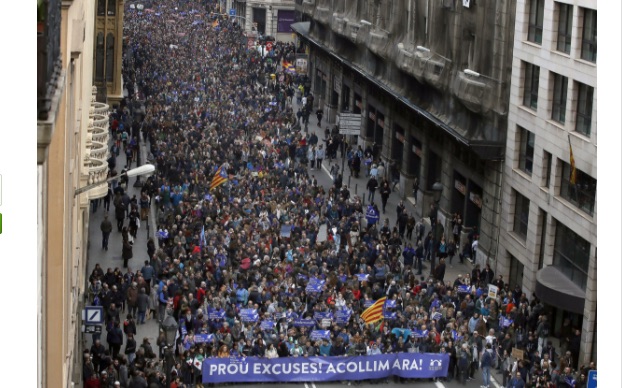
It must be accompanied by a pact of transparency that establishes rules that make it possible for public monitoring of the process. This has been one of the elements most demanded by diverse groups of young people that have mobilized recently in defense of the peace accords.

In turn, it will be necessary to adapt existing institutional structures of these municipalities to incorporate participatory planning and budgeting as a method for their work.

If we add to this a battery of indicators of effective enjoyment of rights, as developed by the Constitutional Court from sentence T-025, we will have a powerful set of institutional and social tools for implementation.

There will be a need to qualify and extend citizen participation. As we said in a previous approach to this issue, what is at issue is to build and / or strengthen a Social and Democratic State at all levels of national life and in all corners of the country. This requires a strong civil society, with high levels of organization and public involvement, that is to say, an active citizenship.

Let us not be naive. All this will be the flower of a single day if the Democratic Center cannot continue to hold majorities in the national congress, departments and municipalities, as well as the Presidency in 2018. If we are not to lose the peace process,, we will have to defend it at the voting booth.

(Thank you to Amada Benavides, the CPNN reporter for this article)

English bulletin December 1, 2016

ELECTIONS – WHAT COMES NEXT ?

We’ve seen two shocking election results recently: the defeat of the referendum for the peace accords in Colombia, and the election of Donald Trump in the USA based on a racist and xenophobic campaign. What does it mean?

It means that voters in the two countries are alienated from their governments – quite simply, they do not trust the government. And they are angry.

So what comes next? Do we slide back into war or into fascism? Or do we return to the people, listen to their fears and anger, and organize them in the sense that Martin Luther King told us?: “The supreme task is to organize and unite people so that their anger becomes a transforming force.

CPNN, this month, finds ample evidence that the fightback to defend peace and human rights is underway in both countries. It begins at the local level, as it must be if it is to be sustainable. And it is being led by young people, as it must be if it is to have the energy to succeed.

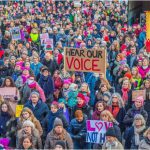
Already, there are plans for a massive march of women to take place in Washington on the day after the inauguration. We “will send a bold message to our new administration on their first day in office, and to the world that women’s rights are human rights. We stand together, recognizing that defending the most marginalized among us is defending all of us.”

Thousands of students have staged walk-outs on college campuses across the United States, signalling their commitment to maintain “sanctuary campuses” to protect immigrant students. At the same time, the mayors of the largest American cities have pledged to maintain their policy of refusing to work with federal deportations These include Boston, Chicago, Los Angeles and New York. Not to mention entire states that are part of the sanctuary movement, including California and New York.

If you are out on the street talking to people, there is a new sense of urgency and commitment to get involved. “We’ve got a lot more work to do, now that Trump has been elected . . . more than ever, we need to work together for peace.”

People, especially youth, are training in methods of nonviolence, realizing that they will be put to the test in the coming times. For example, in Tucson, Arizona, students are taking the Kingian Nonviolence training program, which aims to “institutionalize and internationalize nonviolence.”

In Colombia, young people are training “to build capacities and to form ‘ Leaders animators’ in the territory who can then promote a political culture of pardon and reconciliation.” Also, there is the development of Municipal Peace Councils, the Municipal Councils of Transitional Justice . . . to form the network of peacebuilding strategy at the municipal level.” This month, CPNN articles about these initiatives come from the Colombian departments of Magdalena Centro, Cesar, Valle de Cauca and Antioquia, some of the most populous of Colombia’s 32 deparments.

Traditional peace and justice organizations, such as Search for Common Ground, Pace e Bene, Nonviolent Peaceforce and American Civil Liberties Union are deeply involved. But the energy is coming from young people to an extent that we have not seen since the revoluionary 60’s. It is they who will determine the direction and the power of the movement.


HUMAN RIGHTS

sanctuary-campuses

USA: ‘Sanctuary campus’ protests demand universities protect immigrants

WOMEN’S EQUALITY


Enough is enough: Oxfam seeks to end violence against women and girls once and for all

DEMOCRATIC PARTICIPATION


Tabling for peace in the USA: A new sense of urgency

SUSTAINABLE DEVELOPMENT

renewable

47 of the world’s poorest countries are aiming to hit 100% renewable energy

TOLERANCE AND SOLIDARITY


Niger: Niamey opens a forum on the culture of peace through religious dialogue in the subregion

FREE FLOW OF INFORMATION


Antioquia, Colombia: Young people united by a Territorial Peace!

DISARMAMENT AND SECURITY


The International Society Culture of Peace: Solidarity concerts in Athens and Mytilini / Lesbos

EDUCATION FOR PEACE


Mexico: Sixteenth National Congress of Mediation inaugurated in Tlalnepantla

47 of the world’s poorest countries are aiming to hit 100% renewable energy

. .. SUSTAINABLE DEVELOPMENT .. .

An article by Josh Hrala in Science Alert

As the world’s leading superpowers struggle to make the transition from fossil-based energy systems to more sustainable options, 47 of the world’s poorest nations have pledged to skip fossil fuels altogether and jump straight to using 100 percent renewable energy instead.

The ambitious goal was laid out by members of the Climate Vulnerable Forum (CVF) during the final day of the UN Climate Change Conference in Morocco last week, which discussed ways for countries to hit the targets set by the Paris Agreement late last year.

cvf

The idea, in a nutshell, is to have some of the world’s poorest countries skip from pre-industrialisation practices to renewables, allowing them to basically avoid the ‘messy part‘ in the middle where a need for more energy to support economic growth spurs fossil fuel use to dangerously high levels.

In economics, this sort of skipping is known as ‘leapfrogging’ and it occurs when a society skips a step of development that other countries have taken.

One of the best examples of this process is mobile phones in rural Africa.

In many African nations, people in remote areas ended up skipping the landline step, with only one land line per 33 people, and moved straight to mobile technology. Now one in 10 people have a cell phone – a transition that some have called a revolution.

Members of the CVF hope to perform the same kind of ‘leapfrogging’ with regards to energy.

The 47 members of the CVF – which includes nations like Bangladesh, Ethiopia, and Haiti – say they’ll “strive to meet 100 percent domestic renewable energy production as rapidly as possible, while working to end energy poverty and protect water and food security, taking into consideration national circumstances”.

The goal is to have all of these systems in place some time between 2030 and 2050, and the members have committed to presenting a detailed plan to the UN by 2020.

(Article continued in right column)

Question for this article:

Are we making progress in renewable energy?

(Article continued from left column)

The announcement comes at a time when countries around the world are trying to come up with a way to uphold the Paris Agreement set at the end of last year, which aims to keep global temperature levels from rising 1.5 degrees Celsius above pre-industrial levels.

“The commitments made by the Climate Vulnerable Forum today are both impressive and inspirational,” EU climate commissioner Miguel Arias Canete told Matt McGrath from the BBC.

“They have once again shown their moral leadership in this process with real-world commitments to action. These countries are already living the terrifying reality of climate change today and their very existence is on the line. The EU stands with them and their commitment to greater ambition in the years ahead.”

While large, more economically powerful countries are applauding the efforts, members of the CVF are questioning why some of the world’s super-powers are so reluctant to change course to protect our shared planet.

“We don’t know what countries are still waiting for to move towards net carbon neutrality and 100 percent renewable energy,” Edgar Gutierrez, Costa Rica’s minister for the environment, told the BBC.

“All parties should start the transition, otherwise we will all suffer.”

Another worry is that the world’s richest countries will stop providing financial support for the Paris Agreement.

The US had pledged to contribute US$3 billion to the US$100 billion pool the agreement hopes to amass by 2020, but so far, it’s only pitched in US$500 million.

These funds are supposed to provide developing countries with the capital they need to get started in changing their infrastructure, but if the richest countries refuse to pay – a threat recently made by US President-elect Donald Trump – it could seriously hinder or destroy the goals set in Paris.

Only time will tell how the situation will play out, but it’s definitely a step forward for the 47 countries of the CVF, and hopefully it will spur on other countries to take the same action.

Is there a renewed movement of solidarity by the new generation?

. . . Tolerance & Solidarity . . .

In view of the leadership being taken by youth for the fightback in the United States, Colombia (and elsewhere), we need to be prepared to listen to them and accept their leadership in the coming times.

Here are some recent articles in CPNN on youth leadership and solidarity:

United States: Indivisible, the team that organized the No Kings demonstrations

Madagascar: The Massive Awakening of the Youth of Toamasina

‘We’re taking responsibility’: Sixty teens announce refusal to serve in Israeli army

Geneva has become an incubation hub for citizen initiatives

Culture of Peace against violence in Mexico

Kashmiri students run out of essentials, money; Khalsa Aid, J&K Students Assn extend help

Berlin: Hundreds of thousands march against racism

The People of Mexico Give the World an Example of Solidarity

2016 WFUNA Young Leader is Zimbabwean

Global Survey on Youth, Peace and Security

Global Youth Rising 2016 – Reflections

Georgia: Training Report: “Education for Peace – Developing Competences for Peace Education in the Youth Field”

GLOBAL YOUTH RISING: Empowering passionate activists and peace workers from around the world– JULY 2016

UN Security Council adopts resolution on Youth, Peace and Security

For articles prior to 2015, click here.

Enough is enough: Oxfam seeks to end violence against women and girls once and for all

. . WOMEN’S EQUALITY . .

A press release from Oxfam

Gender inequality is both the cause and the consequence of violence against women and girls, said Oxfam today, as the agency launches a new global campaign called “Enough: Together We Can End Violence Against Women and Girls” to stop one of the most prolific human rights violations.

oxfam

A third of women will experience violence at some point in their life. Violence against women and girls knows no boundaries of geography or culture – it is a global crisis. However, marginalized women, including poor women and girls, are the most vulnerable to violence.

Women and girls face violence throughout their lives: more than 700 million women alive today were married as children, 200 million women and girls have undergone female genital mutilation – with the majority of girls being cut before the age of 5 – and 30 percent of women will experience intimate partner violence. Studies have found higher rates of violence among women experiencing multiple discriminations, including indigenous women, lesbian and bisexual women, and women with disabilities.

This violence is the most extreme form of gender discrimination, rooted in inequality and in a belief that it is acceptable to treat women and girls this way.

Winnie Byanyima, Oxfam International’s Executive Director, said: “At every minute of every day, violence is devastating the lives of millions of women and girls around the world. Violence keeps women and girls living in poverty, and women and girls living in poverty are the most exposed to violence. From child marriage to female genital mutilation to murder, violence against women and girls is deep rooted across the world. It is a vicious circle, but it can be broken as what has been learned can be unlearned. Enough is enough.”

To end these devastating practices against half the world’s population, Oxfam is kick-starting campaigns in Morocco, Indonesia, India, Pakistan, Guatemala, South Africa and Zambia to coincide with the UN designated International Day for the Elimination of Violence Against Women. More than 30 countries will join Oxfam’s campaign over time, mobilizing citizens and decision-makers to challenge the discrimination that drives this abuse against women and girls.

“In Morocco, there are many types of violence against women: physical, psychological, economic and legal, especially in the context of divorce,” said Saida*, speaking to Oxfam. “I got divorced because my husband obliged me to do so as I did not accept him getting married to a second wife. I was forced to leave my home, which was officially owned by my husband, with my little girl. Despite the laws, mentalities change very slowly. Neither the lawyer nor the judge helped me.” With Oxfam’s support, Saida took part in life skills workshops to learn how to support herself and her daughter. She now advises other women on how to claim their rights.

(Article continued in right column)

Question related to this article:

Protecting women and girls against violence, Is progress being made?

(Article continued from left column)

“Girls face struggles in all phases of their life. Girls are not allowed to get an education like boys,” said 12-year-old pupil Komal from Hamirpur in India’s Uttar Pradesh. According to 2015 Indian government data, this region accounted for the highest number of violent incidents against women and girls nationally, and over 40 percent of females here are illiterate. Until a few years ago, girls here were usually pulled out of school to care for their siblings, support their parents in farming or to do household chores. Through Oxfam’s work, local girls are now in school and many are doing combat sports, like wrestling. “Withthe support of my teacher, my parents let me compete and I won the silver medal in a state competition. I proved to my community that girls can succeed,” said Komal.

In Indonesia, child marriage and domestic violence are common and tolerated. Cheper, who married a child bride, now campaigns to end child marriage and violence against women in his community. He told Oxfam: “Growing up, my mother was often beaten by my father. I wanted to take my father to the police because he bit my mother, but I did not do that. The local community considered it common.” Women are usually excluded from village meetings, but through Cheper’s work, this is changing, as well as his wife now having plans to work outside the home.

“Women’s rights organizations and movements have long been challenging the acceptance and prevalence of violence against women and girls, but as it is so unjustly ingrained in societies across the world, more of us need to take action. Oxfam is committed to ending this crisis once and for all, for the benefit of everyone, as women’s rights are human rights,” said Oxfam’s Byanyima, who is also a member of the UN High-Level Panel on Women’s Economic Empowerment.

“I’m calling for people to stand up and speak out against the violence. Men need to stand up too and say that violence against women and girls is not acceptable – in institutions and in the whole of our country.” With 17 percent of women in Zambia experiencing sexual violence in their lifetime, 20-year-old university student, Nalishebo Kashina, is another of the many across the world taking action to stand up for women and girls.

Similarly in Guatemala, where indigenous women face violence and racism, women are tackling the root causes of violence. Maria Morales Jorge, who was part of setting up the Institute for the Defence of Indigenous Women, told Oxfam: “We all have the opportunity to change and reject any violence and oppression. We should all have the chance to be happy.”

Oxfam’s campaign aims to challenge and replace the long held misconception that men are superior to women and girls. To achieve this, Oxfam will support individuals and communities to understand the drivers of violence and build their capacity to say “Enough” to harmful attitudes and behaviors. Oxfam will also work to ensure women’s rights organizations and movements are supported, and to increase and implement laws and policies aimed at ending violence against women and girls.

“Before I thought marriage was everything in life: the present and the future. Now, I believe that life is much more than a husband. Life is also to have a job, to travel and to study,” said Moroccan woman survivor of violence and women’s rights advocate, Saida.

To kick-start the “Enough: Together We Can End Violence Against Women and Girls” campaign, Oxfam in Morocco, Indonesia, India, Pakistan, Guatemala, South Africa and Zambia will host a series of campaigning events. These will include film festivals, competitions for school children to design posters calling for an end to child marriage, decorating rickshaws to have positive messages on gender equality, performances of feminist songs and street theatre shows. Join Oxfam’s Enough: Together We Can End Violence Against Women and Girls” campaign.

Global Survey on Youth, Peace and Security

TOLERANCE AND SOLIDARITY .

From the website of the Youth4peace survey

The United Network of Young Peacebuilders and Search for Common Ground, on behalf of the inter-agency Working Group on Youth and Peacebuilding, are looking for your help!

We want to map youth organisations and initiatives building peace and preventing violence, to identify what they are doing, what impact they have made and their needs and goals for the future. If you are active, volunteering or professionally, within youth organisation or initiative working on topics related to peace and security, we would be very grateful if you could take 30 minutes to answer this Global Survey on Youth, Peace and Security.

survey

The survey findings will contribute to the Progress Study on Youth, Peace and Security mandated by UN Security Council Resolution 2250 and as such your answers will inform the future development of youth participation in peace and security.

[editor’s note: See CPNN article, UN Security Council adopts resolution on Youth, Peace and Security]

Note on data protection:

The information you provide will be kept anonymous and will only be used for purposes of aggregation for analysis by UNOY Peacebuilders and Search for Common Ground. If you want, you can also indicate that you accept having your contact information shared publicly. This is completely up to you, we will not share your information if you do not want us to. If you do accept sharing your contact information, we will include information about your organisation in a database of youth peace organisations and initiatives currently under development.

Instructions

This survey should be filled by one person per organization or initiative. Before you start, please check with your colleagues to make sure they haven’t already completed the survey on behalf of your organization or initiative. Given that the survey covers a range of topics related to your organization’s work, it may be helpful to seek input from your colleagues.

The survey consists of five brief sections:

Section 1: Profile
Section 2: Areas of Work and Methods
Section 3: Results and Impact
Section 4: Challenges and Issues
Section 5: Recommendations

For any questions on the survey, please contact Imre Veeneman, Program manager at UNOY Peacebuilders at survey@unoy.org.

Take part in the survey HERE.

Thank you for your participation!

Question for this article

Film: Truth, Deception and the Spirit of I.F. Stone

FREE FLOW OF INFORMATION

A film review from allgovernmentslie.com

Independent journalists Jeremy Scahill, Glenn Greenwald, and Michael Moore expose government lies and corporate deception, inspired by the legendary investigative journalist I.F. Stone.

All Governments Lie: Truth, Deception, and the Legacy of I.F. Stone, is a
theatrical documentary created by a team of Emmy Award-winning filmmakers, who subscribed to I. F. Stone’s newsletter in their teens.

izzy-4
A copy of I.F.Stone’s weekly, copied from the website for I.F.Stone’s archives
(click on photo to enlarge)

“I. F. Stone’s Weekly” inspired us then, and compels us now to tell the story of a new wave of independent, investigative, adversarial journalists following in Stone’s footsteps.

We hope this film will inspire the next generation of independent journalists, many of whom are now in college, to carry on I.F. Stone’s legacy of speaking truth to power.

This film will change the way you look at the mainstream media or “MSM”. Giant media conglomerates are increasingly reluctant to investigate or criticize government policies – particularly on defense, security and intelligence issues.

They are ceding responsibility for holding governments and corporations accountable to the independent journalists and filmmakers who risk their careers, their freedom and their lives in war zones – to expose the truth.

With government deception rampant, and intrusion of state surveillance into private life never more egregious, independent voices like Glenn Greenwald, Jeremy Scahill, and Amy Goodman are crucially important. All three are inspired by the iconoclastic rebel journalist named I. F. Stone, whose fearless, independent reporting from 1953 to 1971 filled a tiny 4-page newsletter which he wrote, published, and carried to the mailbox every week.

Stone is little known today, but All Governments Lie will reveal the profound influence he’s had on contemporary independent journalists like Greenwald, Scahill, Goodman and others.

Latest Discussion

Tabling for peace in the USA: A new sense of urgency

. .DEMOCRATIC PARTICIPATION. .

by David Adams, City of New Haven Peace Commission

There is a new sense of urgency in the conversation with people passing by and stopping at the table for the Peace Commission at the Farmer’s Market in New Haven. “We’ve got a lot more work to do, now that Trump has been elected,” this is a common refrain. “Now, more than ever, we need to work together for peace.”

tabling
First two pages of Peace Commission brochure
Click on image to enlarge

We are getting the same reaction of urgency in the interview of local activists as we compile the annual report for the Commission, The State of the Culture of Peace in New Haven. It is not only a discussion of what happened in the city during 2016, but even more so, what we need to be doing in 2017 and beyond. As one person remarked, “When the going gets tough, the tough get going.”

The Peace Commission has been part of city government in New Haven for almost 30 years now, but there is the feeling that we have to increase our outreach and involve new people, new ideas, and, above all, new actions. It is no longer enough to hold a few ceremonies a year for Hiroshima Day and International Peace Day. We need to be out there on the front lines for the defense of human rights, for the development of restorative justice and sanctuary cities and affordable housing, which are necessary if we are to have peace in our community.

The new brochure that we are handing out (see image above) includes a letter from our mayor that invites New Haveners to join the Commission and contribute new ideas and actions to promote all of the aspects of the culture of peace: human rights, peace education, sustainable development, democratic participation, equality of women, tolerance and solidarity, free flow of information, and disarmament and public safety.

The brochure ends by saying that we want to “make New Haven a model for cities across America and around the globe to change the world from its cuture of war and violence to a cutlure of peace and nonviolence.

Questions for this article:

Colombia: Processes of pardon and reconciliation in the Magdalena Centro Department

FREE FLOW OF INFORMATION

An article from the Magdalena Centro Development Program for Peace (translated by CPNN)

The Development Program for Peace of Magdalena Centro (PDPMC), now in its eleventh year of management in the territory, has focused its institutional capacity to favor scenarios that seek the construction of peace from different spheres, involving all the people. With them, strategies and work dynamics have been developed with the aim of promoting the recovery of the trust, networks and social fabrics that were broken down by the violence that they had to suffer.

magdalena

In this way, the PDPMC in coordination with the Foundation for Reconciliation, dynamizes in the territory the Schools of Pardon and Reconciliation (ESPERE), helping participants reinterpret the painful events that have limited the enjoyment of their lives, so that they can overcome the suffering and the painful memory of what happened.

The strategies of ESPERE are key elements that seek to rescue the individual from their pain, to restore security and confidence in themselves and in their relationships with others. This exercise also seeks to build capacities and to form “Leaders animators” in the territory who can then promote a political culture of pardon and reconciliation.

These exercises allow them to go forward in their process of overcoming the violent past to the point of feeling and calling themselves victorious; It provides needed support that can serve as a first impulse, contributing a grain of sand, so that they can overcome and then contribute from the Magdalena Centro to the construction of peace in Colombia.

The goal is that the people can involve strategies of pardon and reconciliation as elements of their life, understanding that if they are promoted as ways of living, they will humanize the everyday acts of people, valuing and seeking primarily the preservation of life.

As an end result, the PDPMC has the firm hope and confidence of not hearing more stories of violence; always with the conviction that peace is better than war, as well as dialog and the collective construction of solutions to the natural confrontations of people, recognizing that human processes build on differences to develop individual and collective relations.

(Click here for a Spanish version of this article

Question related to this article:

Colombia: Juntos por la Paz, the youth collective that dialogues about peace in the Department of Cesar

FREE FLOW OF INFORMATION

An article from El País Vallenat (translated by CPNN)

85 students from eight public educational institutions in La Jagua de Ibirico, Becerril and El Paso and two corregimientos, La Victoria de San Isidro and La Loma, held the 2016 closing event of the collective Juntos por La Paz, an initiative of the Prodeco Group that trains young students in peace issues in the context of the Colombia Postconflict peace process.

cesar

The closing event of the year was held at the auditorium Centro Virtua of La Jagua de Ibirico, and was attended by young students and the presence of Amaury Padilla, director of the Development and Peace Program of Cesar, who was in charge of a workshop on care and self-care in peacebuilding.

Throughout the year, students were formed into working groups for the production of a radio program to combat disinformation about the process of Peace Talks held between the FARC-EP and the National Government and to promote values ​​for peace.

In total, 20 radio programs were produced. They were broadcast on Energy 96.7 and half of these (10) in Caracol Radio Valledupar. For this, it was necessary to consult more than 15 sources of information, including Governors, Mayors; Representatives of National and Local Government and professionals in different social areas, such as psychologists, pedagogues and teachers. In their work as program reporters, a total of 25 interviews were conducted.

The students also held two days of reading and studying the first final agreement between the National Government of Colombia and the FARC EP. This promoted responsible and informed voting on the referendum.

Thanks to their participation in the group, the young people started activities to promote healthy coexistence inside and outside their educational institution, activities that included civic marches, socialization meetings with adults and parents and play for children.

(Click here for a Spanish version of this article

Question related to this article: