Conférence internationale sur la paix : Médina Baye Peace initiative lance « une contribution de l’islam à l’avènement d’une paix mondiale durable »

. TOLÉRANCE & SOLIDARITÉ .

Un article de Dakar Actu

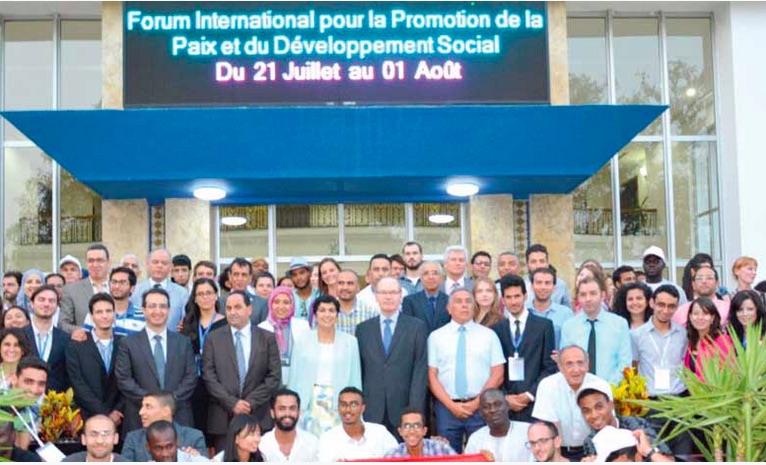
Les 28 et 29 juillet prochains, 500 délégués sont attendus à Dakar, dont de hautes personnalités venus du monde entier, pour un dialogue multiconfessionnel et multiculturel sur la paix.

dakar
Photo de Dakar Actu

Cette conférence internationale sur « islam et paix » a pour but de promouvoir les échanges autour de la problématique de la paix dans le monde, de favoriser les contributions des femmes et des jeunes dans l’avènement d’une paix mondiale durable. Elle vise aussi à identifier et à définir les rôles et responsabilités autour de la promotion de la culture de paix, de partager les bonnes pratiques du vivre ensemble.

L’événement est organisé par le programme initiative de Médina Baye pour la paix, à travers l’association Jamhiyatu Ansaarud-Din du Sénégal (JAD), avec le soutien actif du gouvernement sénégalais. Son Excellence Macky Sall, président de la République du Sénégal, est d’ailleurs le parrain officiel de la conférence et sera présent à l’événement.

Parmi les 500 participants attendus à Dakar figurent des savants et érudits de différentes religions, des universitaires et chercheurs, des chefs religieux et guides spirituels, des décideurs politiques et des membres de la société civile, des représentants d’organisations internationales, des militants et acteurs de la paix dans le monde ainsi que des partenaires techniques et financiers.

« Il s’agit d’une formidable occasion de rétablir l’image de l’Islam qui est sans rapport avec celle qu’en donnent certains de ses soi-disant adeptes, ni avec celle que ses détracteurs s’évertuent à en donner », a tenu à souligner Cheikh Mouhamd Khouraichi Ibrahim Niass, président de la section sénégalaise de la JamhiyatuAnsaarud-Din.

« Grace à la réflexion, au dialogue entre les communautés, nous allons démontrer comment l’Islam peut contribuer à l’avènement d’une paix mondiale durable », a-t-il ajouté.

(Cliquez ici pour un article en anglais concernant ce sujet.)

Question related to this article:


How can different faiths work together for understanding and harmony?

This discussion question applies to the following articles:

Creating Harmony in the World: Working through Our Faiths in Dialogue
Alternate Focus: Balance in Media Coverage in Middle East
The Parliament of the World's Religions (Barcelona, Spain)
Asian Religious Leaders Urge Religions To Teach Peace
Living Faiths Together – Tool kit on inter-religious dialogue in youth work
Sharing the right to Jerusalem's past
The Doha Pre-Forum of the United Nations Alliance of Civilizations
Peace For Childrens in Primary Schools in Iraq
Dialogue in Nigeria — a new DVD teaching-tool for peacemakers
4th Annual International Conference on Religion, Conflict and Peace
First Religious Youth Service Project in Pakistan
World Harmony Day at the UN Highlights the Culture of Peace
Report of Diversity Talk Series 2013, in Lahore, Pakistan
Journée d'étude à Tunis: Religions et cultures au service de la paix
Workshop in Tunis: Religions and cultures in the service of peace
Out of the spotlight, Moroccan Islamic party promotes interfaith dialogue
Muslim and Christian youth come together in Mombasa, Kenya
Greeting of Peace from United Social Welfare Society, Pakistan
Interfaith Cultural Study Tour to Nepal: Pakistan Youth Explore the Mysteries of Nepal
One Nation, One Blood (Pakistan)
Teachings of Peace
Overview of the Book, Paganism an Introduction to Earth-Centered Religions
La líder de un movimiento interreligioso Dena Merriam recibirá el 31 Niwano Peace Prize
Dena Merriam, Founder and leader of The Global Peace Initiative of Women to receive the Niwano Peace Prize
Pakistan: Scholars adopt charter of peace, support coexistence
Lebanese dialogue aims to strengthen unity in diversity
Un an du “Projet Revalorisation du Vivre Ensemble – REVE” au Niger
A Year-long Project for “Living Together – REVE” in Niger

United Cypriot economy to focus on shipping, tourism, education

DISARMAMENT AND SECURITY .

An article from Daily Sabah

The economic vision after a solution to the Cyprus issue was officially announced as part of the ongoing comprehensive negotiations between the Turkish Republic of Northern Cyprus and Greek Cyprus, and focuses on tourism, shipping and education. The Turkish Cypriot Chamber of Commerce and Greek Cypriot Chamber of Commerce and Industry (KEBE) held a joint event themed with their vision of the Cyprus economy after a solution. Representatives from the Istanbul Chamber of Commerce and Athens Chamber of Commerce attended the event as well. After the opening speeches, Turkish Cyprus President Mustafa Akıncı and Greek Cyprus President Nicos Anastasiades shared their visions about the Cyprus economy after a possible solution between two sides is reached.

cyprus
Greek Cypriot President Anastasiades (L) and Turkish Cypriot President Akıncı (R) shake hands at a meeting attended by representatives of the respective chambers of commerce.

Akıncı said in his speech that the Cyprus economy can provide for the welfare of its citizens, but this requires creating an economy that is resistant against crises and shocks, competitive and capable of being directed to different fields. “My vision of the Cyprus economy after a solution takes the welfare and prosperity of all Cypriots into account without looking at ethnic origin or background,” Akıncı emphasized.

Akıncı also touched on the economic benefits of the solution between the two sides. He stressed that Cyprus will have the potential to become a shipping center in the eastern Mediterranean and all Cypriot ships will be able to enter Turkish harbors after a solution is reached. He highlighted that a solution would provide endless opportunities for the tourism sector, which is a driving power of both economies on the island and they should devise a joint strategy of cooperation in this field.

One of the first steps to be taken in Cyprus is to establish a Federal Competition Board just like the one that exists in many European countries, Akıncı said. He added that they should invest in education at first to help foster a culture of peace and raise a new generation of children who can speak both Turkish and Greek as their mother tongues. Akıncı said that they were working to create a federation of two societies and two regions described in a joint declaration made on Feb. 11, 2014. “We have to transform our country and we need to do this with no delay. We have to cooperate to transform from the current situation to a Cyprus we want, but we have to work hard. We owe this to the younger generations,” Akıncı concluded.

Greek leader Nicos Anastasiades said the common future of the two societies is based on a united Cyprus as a EU member, which respects democratic principles, human rights and fundamental freedoms.

Anastasiades reiterated from the joint declaration that “the status quo is unacceptable and its prolongation will have negative consequences for the Greek and Turkish Cypriots.” He also mentioned the positive impacts of a settlement. “My vision is to reach a settlement that will end the anachronism related to the current situation and provide hope and the prospect of a better future for all Cypriots, in particular for the younger generations,” noted the Greek leader.

(Article continued in right column.)

Question related to this article:
 
Can Cyprus be reunited in peace?

(Article continued from left column.)

He said that a settlement would secure the full utilization of the great potential and prospect for economic growth, development and prosperity for all Cypriots. He also stated that a settlement between the two sides would provide a significant improvement to the investment climate and increase the attraction of large foreign investments and multinational companies. Stressing that it will be easier to access international finance and reach out to markets presently unexploited across the world, Anastasiades said the economic sectors that are now experiencing problems would be stimulated and this would have positive results on other sectors.

“We have committed ourselves to doing our utmost so this opportunity is not lost. We owe it to our children and the future generations of this country. We owe it to the people of Cyprus and their longing to live in a modern and thriving European country. And to this effort, the business community, as well as civil society, has an important role to play, and we call for your support and positive contribution towards this end,” Anastasiades concluded.

Carta abierta de las ONG a los Estados miembros de la Asamblea General sobre el proceso de selección del Secretario General de la ONU

. FREE FLOW OF INFORMATION .. LIBERTAD DE INFORMACIÓN .

Una carta por las 13 ONG que aparece a la derecha

Para: los Jefes de Estado y de Gobierno, los Ministros de Asuntos Exteriores, los representantes permanentes ante las Naciones Unidas

Excelencias:

La elección del nuevo Secretario General en 2016 será una de las decisiones más importantes que la Asamblea General tomará en los próximos diez años. El nuevo Secretario General tendrá que ocuparse de un mundo enfrentado sumido en guerras civiles cada vez más peligrosas, desastres humanitarios y medioambientales, terrorismo, regresión, crisis económica y financiera y desigualdad. La necesidad de una dirección global y una cooperación internacional es más imperiosa de lo que nunca ha sido. Es primordial que el candidato mejor capacitado sea elegido para convertirse en Secretario General de las Naciones Unidas.

1for7

La importancia y complejidad del puesto ha cambiado radicalmente durante los últimos 69 años, como también han cambiado las amenazas y dificultades a las que se enfrenta todo el sistema de las Naciones Unidas. La dirección de los sucesivos Secretarios Generales de la ONU (en calidad de directores generales, diplomáticos, mediadores y representantes de los objetivos y principios de la ONU) ha sido fundamental para perfilar la labor de las Naciones Unidas. Han sido portavoces internacionales públicos y críticos sobre cuestiones clave de paz y seguridad, desarrollo y derechos humanos.

El procedimiento que la Asamblea General adoptó en 1946 para elegir al Secretario General de la ONU está muy anticuado y no es compatible con la selección del mejor candidato posible. Está muy lejos de los modernos procesos de contratación de cargos internacionales de alto nivel y de los propios principios e ideales de la ONU. Por ejemplo, hacemos hincapié en el hecho de que ninguna mujer ha sido elegida para convertirse en Secretaria General de la ONU y muy pocas han sido consideradas seriamente para ocupar dicho puesto.

Durante los últimos veinte años, muchas organizaciones internacionales, como la ONU, han llevado a cabo mejoras y reformas de los mecanismos procesales para fomentar la transparencia y responsabilidad en las designaciones de altos funcionarios. Es imprescindible que el proceso de selección del próximo Secretario General se modifique para cumplir los altos principios por los que han abogado de forma insistente la Asamblea General de la ONU, los expertos de la ONU y la sociedad civil. Un proceso de selección más abierto e inclusivo en el que participaran todos los Estados miembros de las Naciones Unidas ayudaría también a revitalizar a la ONU y a reforzar su autoridad global.

Un grupo de organizaciones de la sociedad civil fuertemente comprometidas a defender la Carta de las Naciones Unidas y sus valores ha acordado una serie de principios y realizado propuestas que forman la base de una reforma urgente y factible. Las propuestas son realistas y no es necesario modificar la Carta de las Naciones Unidas. Muchas ya han sido respaldadas por gran parte de los Estados miembros de la ONU.

Consisten, entre otras, en la publicación de unos criterios de selección formales, una nominación de candidatos y un calendario claro del proceso de selección que permita una evaluación adecuada de los candidatos, como la presentación de un listado oficial de candidatos y la presentación de declaraciones sobre el proyecto del candidato.

Creemos que todos los Estados miembros de la Asamblea General pueden y deben desempeñar un papel más destacado y significativo en el proceso de designación.

Por ejemplo, la Asamblea General debería celebrar sesiones abiertas que permitan a los Estados miembros y, según los procedimientos de la Asamblea General, a otras partes interesadas relevantes, reunirse con los nominados y evaluar sus candidaturas. La Asamblea debería pedirles a los candidatos que no hicieran promesas sobre la designación específica de altos funcionarios antes de la decisión de la Asamblea sobre la designación del Secretario General.

Además, se le podría pedir al Consejo de Seguridad que presentara o recomendara a más de un candidato a la Asamblea General. Otra recomendación es que el mandato sea un periodo único y no renovable de siete años, lo que ayudaría al Secretario General a plantearse un programa a más largo plazo sin la interrupción de la campaña de reelección.

(El artículo continúa en el lado derecho de la página)

( Clickear aquí para la version inglês o aquí para la version francês)

Question(s) related to this article:

What is the United Nations doing for a culture of peace?

(Artículo continúa desde la parte izquierda de la página)

Las propuestas se describen en la plataforma política adjunta para una nueva campaña global: 1 para 7 mil millones – Encontrar al mejor dirigente de la ONU. Todos los días, más organizaciones e individuos de todo el mundo se suman a esta campaña. Pueden consultar los documentos de referencia relevantes en www.1for7billion.org/background

Dado que las Naciones Unidas está preparando la celebración del 70 aniversario de la Carta de las Naciones Unidas el año que viene, esperamos que los Estados miembros de la Asamblea General y del Consejo de Seguridad aprovechen esta oportunidad histórica para iniciar una serie clave de reformas básicas, como las que se describen en nuestro documento, a fin de garantizar que el candidato mejor capacitado sea elegido para convertirse en el próximo Secretario General de las Naciones Unidas.

Atentamente,*

Dinah Musindarwezo, Executive Director
African Women’s Development and Communication Network (FEMNET)

Salil Shetty, Secretary-General
Amnesty International

Ricken Patel, Executive Director
Avaaz

Danny Sriskandarajah, Secretary-General
CIVICUS: World Alliance for Citizen Participation

Yasmeen Hassan, Global Director
Equality Now

Evelyn Balais-Serrano, Executive Director
Forum-Asia

Jens Martens, Director Global Policy Forum

John Burroughs, Executive Director
Lawyers Committee on Nuclear Policy

Roberto Bissio, Coordinator
Social Watch

Chee Yoke Ling, Director
Third World Network

Eleanor Blomstrom, Program Director
Women’s Environment and Development Organization (WEDO)

William R. Pace, Executive Director
World Federalist Movement-Institute for Global Policy

Bonian Golmohammadi, Secretary-General
World Federation of United Nations Associations

*Desde el inicio de la campaña 1 para 7 mil millones en noviembre de 2014, decenas de ONG de todo el mundo se han unido en nuestra petición de un proceso de selección más abierto e inclusivo. Visite www.1for7billion.org/ngo-supporters si quiere ver un listado completo y actualizado de nuestros apoyos.

Lettre ouverte des ONG aux États membres de l’Assemblée générale sur le processus de sélection du Secrétaire général de l’ONU

LIBERTÉ DE L’INFORMATION

Une lettre par les 13 ONGs listés à droite

À l’attention de : Chefs d’État et de gouvernement, Ministres des Affaires étrangères, Représentants permanents auprès des Nations Unies

Excellences,

La sélection du nouveau Secrétaire général en 2016 sera l’une des décisions les plus importantes que l’Assemblée générale fera au cours des dix prochaines années. Le nouveau Secrétaire général devra aborder un monde confronté à des guerres civiles de plus en plus dangereuses, des catastrophes humanitaires et environnementales, au terrorisme, au développement régressif, aux crises économiques et financières, et à l’inégalité. Un leadership mondial et une coopération internationale sont plus que jamais nécessaires. Il est essentiel que le candidat le plus qualifié soit choisi pour devenir Secrétaire général de l’ONU.

1for7

L’importance et la complexité du poste a radicalement changé au cours des 69 dernières années, tout comme les menaces et les défis auxquels l’ensemble du système des Nations Unies est confronté. Le leadership des Secrétaires généraux de l’ONU successifs – en tant que principaux officiers administratifs, diplomates, médiateurs et représentants des buts et principes des Nations Unies – a joué un rôle fondamental dans l’élaboration du travail des Nations Unies. Ils ont fourni une opinion publique essentielle sur la scène internationale sur les questions clés de paix et de sécurité, du développement et des droits humains.

La procédure que l’Assemblée générale a adoptée en 1946 pour sélectionner le Secrétaire général de l’ONU est clairement obsolète et n’est pas adaptée pour la sélection du meilleur candidat possible. Elle satisfait de loin aux pratiques de recrutement modernes pour les nominations de hauts fonctionnaires internationaux, ainsi qu’aux propres normes et idéaux de l’ONU. Nous soulignons, par exemple, qu’aucune femme n’a jamais été sélectionnée pour devenir Secrétaire général de l’ONU, et que très peu ont été sérieusement prises en considération.

Au cours des vingt dernières années, de nombreuses organisations internationales, dont l’ONU, ont apporté d’importantes améliorations et de réformes aux mécanismes de procédure afin d’améliorer la transparence et la responsabilité des nominations de haut niveau. Il est impératif que le processus de sélection du prochain Secrétaire général de l’ONU soit modifié afin qu’il réponde aux normes plus élevées en faveur desquelles l’Assemblée générale de l’ONU, les experts de l’ONU et la société civile ont constamment plaidé. Un processus de sélection plus ouvert et inclusif engageant tous les États membres de l’ONU permettra également de revitaliser les Nations Unies et de renforcer son autorité dans le monde.

Un groupe d’organisations de la société civile fortement engagées à respecter la Charte de l’ONU et ses valeurs ont convenu d’un ensemble de principes et fait des propositions qui constituent la base d’une réforme urgente et crédible. Les propositions sont réalistes et ne nécessitent pas de modification de la Charte de l’ONU. Un grand nombre d’entre elles ont déjà été approuvées par une majorité d’États membres de l’ONU.

Ils comprennent la publication de critères de sélection formels, un appel à candidatures et un calendrier précis pour le processus de sélection qui permet une évaluation adéquate des candidats, y compris à travers une liste officielle des candidats et la présentation des déclarations de vision des candidats.

Nous estimons que tous les États membres de l’Assemblée générale peuvent et doivent jouer un rôle plus important et significatif dans le processus de nomination. Par exemple, l’Assemblée générale devrait tenir des sessions ouvertes qui permettent aux États membres et, conformément aux procédures de l’Assemblée générale, aux autres parties prenantes, de répondre aux candidats et d’examiner leur candidature. L’Assemblée devrait demander que les candidats s’engagent à ne pas faire de promesses en matière de nomination spécifique de haut niveau en amont de la décision de l’Assemblée sur la nomination du Secrétaire général.

En outre, le Conseil de sécurité pourrait être invité à présenter ou à recommander plus d’un candidat à l’Assemblée générale. Une autre recommandation est qu’il ne soit prévu qu’un seul mandat d’une période de sept ans non renouvelable, ce qui aiderait le Secrétaire général à poursuivre un programme à long terme sans avoir à être interrompu par une campagne de réélection.

(Voir suite sur colonne de droite. . . )

(Cliquez ici pour la version anglaise de cet article ou ici pour la version espagnole.)

Question(s) related to this article:

What is the United Nations doing for a culture of peace?

(. . . suite)

Les propositions sont décrites dans la plate-forme politique ci-jointe pour une nouvelle campagne mondiale : 1 pour 7 milliards – Trouver le meilleur dirigeant de l’ONU. Un plus grand nombre d’organisations et d’individus du monde entier rejoignent cette campagne jour après jour. Les documents d’information pertinents sont disponibles sur www.1for7billion.org/background.

Alors que les Nations Unies s’apprêtent à célébrer le 70e anniversaire de la Charte de l’ONU l’année prochaine, nous espérons que les États membres de l’Assemblée générale et du Conseil de sécurité saisiront cette occasion historique de lancer un ensemble clé de réformes fondamentales, y compris celles qui sont décrites dans notre document, afin de veiller à ce que le candidat le plus qualifié soit choisi afin de devenir le prochain Secrétaire général des Nations Unies.

Veuillez agréer, vos Excellences, nos sentiments respectueux, *

Dinah Musindarwezo, Directrice exécutive
African Women’s Development and Communication Network (FEMNET)

Salil Shetty, Secrétaire général
Amnesty International

Ricken Patel, Directeur exécutif
Avaaz

Danny Sriskandarajah, Secrétaire général
CIVICUS: World Alliance for Citizen Participation

Yasmeen Hassan, Directrice internationale
Equality Now

Evelyn Balais-Serrano, Directrice exécutive
Forum-Asia

Jens Martens, Directeur
Global Policy Forum

John Burroughs, Directeur exécutif
Lawyers Committee on Nuclear Policy

Roberto Bissio, Coordinateur
Social Watch

Chee Yoke Ling, Directrice
Third World Network

Eleanor Blomstrom, Directrice de programme
Women’s Environment and Development Organization (WEDO)
William R. Pace, Directeur exécutif
World Federalist Movement-Institute for Global Policy

Bonian Golmohammadi, Secrétaire général
World Federation of United Nations Associations

* Depuis le lancement de la campagne « 1 pour 7 milliards » en novembre 2014, des dizaines d’ONG du monde entier ont rejoint notre appel à un processus de sélection plus ouvert et inclusif. Rendez-vous sur 1for7billion.org/ngo-supporters/ pour une liste complète et à jour de ceux qui nous soutiennent.

NGO Open letter to Member States of the General Assembly on the Selection Process of the UN Secretary-General

FREE FLOW OF INFORMATION

A letter by 13 NGOs listed in the right column

To: Heads of State and Government, Ministers of Foreign Affairs, Permanent Representatives to the United
Nations

Excellencies,

The selection of the new Secretary-General in 2016 will be one of the most important decisions the General Assembly will make in the next ten years. The new Secretary-General will have to address a world confronted with increasingly dangerous civil wars, humanitarian and environmental disasters, terrorism, regressive development, economic and financial turmoil, and inequality. The need for global leadership and international cooperation is greater than ever. It is crucial that the best and most highly qualified candidate is selected to become UN Secretary-General.

1for7

The importance and complexity of the office has changed radically during the last 69 years, as have the threats and challenges to the entire UN system. The leadership of successive UN Secretaries-General – as chief administrative officers, diplomats, mediators, and representatives of the UN purposes and principles – has been fundamental in shaping the work of the United Nations. They have provided a critical public international voice on key issues of peace and security, development, and human rights.

The procedure the General Assembly adopted in 1946 to select the UN Secretary-General is significantly outdated, and is not compatible with selecting the best possible candidate. It falls far short of modern recruitment practices for high-level international appointments, as well as of the UN’s own standards and ideals. We highlight, for instance, that no woman has ever been selected to become UN Secretary-General, and that few have been seriously considered.

In the last twenty years, many international organisations, including the UN, have made major improvements and reforms in procedural mechanisms to enhance the transparency and accountability of high-level appointments. It is imperative that the selection process for the next UN Secretary-General is changed to meet the higher standards that the UN General Assembly, UN experts and civil society have persistently called for. A more open and inclusive selection process engaging all UN Member States will also help to revitalize the UN and enhance its global authority.

A group of civil society organisations strongly committed to upholding the UN Charter and its values has agreed on a set of principles and made proposals that form the basis for urgent and credible reform. The proposals are realistic and do not require an amendment of the UN Charter. Many of them have already been endorsed by a majority of UN Member States.

They include publication of formal selection criteria, a call for nominations and a clear timetable for the selection process that enables adequate assessment of candidates, including through an official list of candidates and the submission of candidate vision statements.

We believe that all Members States of the General Assembly can and should play a more prominent and meaningful role in the appointment process.

For example, the General Assembly should hold open sessions that enable Member States, and, in accordance with General Assembly procedures, other relevant stakeholders, to meet the nominees and consider their candidacies. The Assembly should request that candidates undertake not to make promises on specific senior appointments in advance of the Assembly decision on the Secretary-General appointment.

Furthermore, the Security Council could be requested to present or recommend more than one candidate to the General Assembly. Another recommendation is for a single term of a non-renewable period of seven years, which would help the Secretary-General to pursue a longer-term agenda without the disruption of re-election campaigning.

(Article continued in the right column.)

(Click here for the French version of this article or click here for the Spanish version.)

Question(s) related to this article:

What is the United Nations doing for a culture of peace? – See comments below

(Article continued from left column)

The proposals are described in the attached policy platform for a new global campaign: 1 for 7 Billion – find the best UN leader. More organisations and individuals from around the world are joining this campaign every day.

As the United Nations is preparing to celebrate the 70th anniversary of the UN Charter next year, we hope that Member States of the General Assembly and the Security Council will seize this historic opportunity to initiate a key set of basic reforms, including those outlined in our document, to ensure that the best and most qualified candidate is selected to become the next Secretary-General of the United Nations.

Yours sincerely,

Dinah Musindarwezo, Executive Director
African Women’s Development and Communication Network (FEMNET)

Salil Shetty, Secretary-General
Amnesty International

Ricken Patel, Executive Director
Avaaz

Danny Sriskandarajah, Secretary-General
CIVICUS: World Alliance for Citizen Participation

Yasmeen Hassan, Global Director
Equality Now

Evelyn Balais-Serrano, Executive Director
Forum-Asia

Jens Martens, Director
Global Policy Forum

John Burroughs, Executive Director
Lawyers Committee on Nuclear Policy

Roberto Bissio, Coordinator
Social Watch

Chee Yoke Ling, Director
Third World Network

Eleanor Blomstrom, Program Director
Women’s Environment and Development Organization (WEDO)

William R. Pace, Executive Director
World Federalist Movement-Institute for Global Policy

Bonian Golmohammadi, Secretary-General
World Federation of United Nations Associations

Landmark Climate Statement Signed in Ontario

. . SUSTAINABLE DEVELOPMENT . .

A news release from the Office of the Premier

Ontario and 22 other states and regions have signed the first-ever Pan-American action statement on climate change. The Climate Action Statement highlights the urgency of combatting climate change, affirms that state, provincial and municipal governments are leaders in achieving impactful global climate action and acknowledges the need to work together to continue reducing greenhouse gas pollution.

climate
Sub-jurisdictional leaders convene on stage at Ontario’s Climate Summit of the Americas. (Twitter image: @environmentont)

Ontario Premier Kathleen Wynne led the signing today at the Climate Summit of the Americas. The statement includes commitments to:

* Support carbon pricing;
* Ensure public reporting;
* Take action in key sectors;
* Meet existing greenhouse gas reduction agreements.

Signatories include representatives of states and regions from across the Americas, including Brazil, Mexico, the U.S. and Canada.

The statement builds on recent agreements, including California’s Under 2 Memorandum of Understanding, which stresses the need for immediate action to limit global warming to 2°C, and the Compact of States and Regions, which commits partner jurisdictions to annual public reporting of greenhouse gas emissions. The statement calls for greater national action at the United Nations Conference of the Parties in Paris, and support for regional measures.

It also builds on Ontario’s actions to address climate change, which include the announcement of a cap and trade program to limit the main sources of greenhouse gas pollution, the establishment of a 2030 mid-term target for greenhouse gas pollution reduction, the closure of all coal-fired power plants and the largest infrastructure investment in Ontario’s history, which includes the electrification of the province’s commuter rail network.

Combatting climate change is part of the government’s economic plan to build Ontario up. The four-part plan includes investing in people’s talents and skills, making the largest investment in public infrastructure in Ontario’s history, creating a dynamic, innovative environment where business thrives and building a secure retirement savings plan.

Quick Facts

Combatting climate change creates new economic opportunities in renewable energy and clean technologies. Ontario’s environmental sector has 3,000 firms, employs 65,000 people, and is worth an estimated $8 billion in annual revenues and $1 billion in export earnings.

According to the Conference Board of Canada, every $100 million invested in Ontario in climate-related technologies is estimated to generate an increase of $137 million in GDP and 1,400 new jobs.

A Canada2020 poll shows that 84 per cent of Canadians believe that prosperous countries such as Canada have an obligation to show international leadership in reducing greenhouse gas emissions.

(Article continued in right column)

Question for this article:

Reflection on the Climate Summit of the Americas: A new sense of empowerment & collaboration from sub-nationals across the continent

. . SUSTAINABLE DEVELOPMENT . .

An article by Mike Morrice, Sustainability Colab

Typically, I’m not too interested in large meetings of political leaders discussing climate change. Time and again it’s been proven that gatherings of this kind don’t produce much of an outcome, and I’m disinterested in words without action. Having been at the Climate Summit of the Americas (CSOTA) this past week though, I can say this: something has changed. A new rallying cry has emerged, amongst states and provinces across the continent. Whether from the Governor of California, the Premier of Quebec, or the Environment Minister from my home province of Ontario, the message at CSOTA was the same: subnational jurisdictions are ready to act, regardless of the political will (or lack thereof) coming from their federal governments. And they want to act together.

climate
Sub-jurisdictional leaders convene on stage at Ontario’s Climate Summit of the Americas. (Twitter image: @environmentont)

Seven years ago, I was deeply frustrated with the lack of international and federal action on climate change. Though I was also convinced communities across the country could show the leadership I knew was desperately needed.

The tension between the two led me to start Sustainable Waterloo Region (SWR). In doing so, space was created in my community for businesses to learn from one another’s sustainability journeys. Other communities similarly began to take action through groups like the C40 and FCM’s Partners for Climate Protection Program. States and provinces were a mixed bag. Some like BC led by implementing North America’s first carbon tax, others like Ontario joined the Western Climate Initiative though didn’t actively pursue putting a price on carbon.

In the intervening years, so much has changed. Ontario has phased out coal-fired electricity and introduced the Green Energy Act to spur an unprecedented take-up of renewable energy in this province. Cities emerged as a leading voice on climate change and a source of hope for many, and my energy has continued to be focused here. Having started Sustainability CoLab to share the program we piloted at SWR, 12% of the workforces Niagara and Waterloo Regions are now setting targets to reduce their carbon impact by almost 60,000 tonnes, while organizations across the province are launching similar programs, from the Climate-Wise Business Network in York Region to Carbon 613 in Ottawa.

The federal government, however, has continued to give little attention to the climate crisis. If anything, they’ve dug their heels in, continually positioning a false choice between the economy and the environment. It’s a damaging and unfortunate narrative that has cast Canada as a villain on the international stage.

(Article continued in right column)

Question for this article:

Despite the vested interests of companies and governments, Can we make progress toward sustainable development?

(Article continued from left column)

And so it’s on this backdrop that #CSOTA felt like a public declaration for a new, more collaborative and more empowered approach from subnational jurisdictions across the continent.

Time and again I heard: there is no need for us to wait for others to act. There’s no time to waste. And collectively, regions and states stated their readiness to harness their considerable influence.

Tangibly, the Summit produced 22 state and region signatories to a Climate Action Statement, itself linking to action in several areas, including commitments to join any one of the “Under 2 MOU”, to sign the Compact of States and Regions, and to support carbon pricing. The Under 2 MOU is of particular significance, underscoring an interest both in limiting warming to 2oC and to bringing GHG emissions down to 2 tonnes per capital. Both are ambitious and needed goals.

One sign that I’m optimistic these politicians are serious about their promises goes beyond the words they used to describe the crisis, which ranged from metaphors evoking the sinking of the Titanic to post-WWII nation building.

Their actions speak louder: In her opening address, I expected Premier Kathleen Wynne to be as passionate and persuasive as she was; in her words: “we have to find a better way to build prosperity”. Just two days before the opening of the Pan Am games in her province’s capital, I wouldn’t have been surprised if after her keynote she ducked out to attend a myriad of other public events, ceremonies, you name it. Instead, she stayed for the next day and a half of open and closed sessions, concluding with the signing of the Climate Action Statement. In her words and her actions she was clear: the Premier wants Ontario to lead by example and she’s strongly encouraging others to join in.

16 Successful Projects Highlighting Permaculture Use

. . SUSTAINABLE DEVELOPMENT . .

An article by Danielle Nierenberg, Savannah Knell, and Emily Nink for Foodtank

Permaculture is an innovative ethics and design based process used to make agriculture more sustainable, restore soil, conserve water, and redirect waste streams. The process is inspired by the everyday relationships found in nature. The primary goal of adopting permaculture principles is to empower individuals to be their own producers and move away from being dependent consumers. These techniques are practiced in very different ways globally based on climate and resources particular to the region. While there is variety in the methodology of permaculture practices, the holistic approach remains constant. The easy to remember primary ethics of permaculture include earth care, people care, and resource share. 

permaculture

Permaculture is an innovative ethics and design based process used to make agriculture more sustainable, restore soil, conserve water, and redirect waste streams. The process is inspired by the everyday relationships found in nature. The primary goal of adopting permaculture principles is to empower individuals to be their own producers and move away from being dependent consumers. These techniques are practiced in very different ways globally based on climate and resources particular to the region. While there is variety in the methodology of permaculture practices, the holistic approach remains constant. The easy to remember primary ethics of permaculture include earth care, people care, and resource share. 

There has recently been a call for research on the long-term benefits and participation rates of individuals adopting the principles. According to Scott Pittman, the director of the National Permaculture Institute, approximately 100,000 to 150,000 students have completed the certificate course with around 50,000 students from the United States. There is a wide body of literature confirming many success stories of permaculture being implemented around the globe. According to Appleseed Permaculture, over 1,000,000 people are now certified in permaculture in more than 140 countries with more than 4,000 projects on the ground. 

The use of permaculture has been instrumental in combating malnutrition in Malawi. Never Ending Food is an organization dedicated to Permaculture and nutrition, Africa. Stacia and Kristof Nordin focus on designing systems for sustainable living. The organization has been facilitating various sessions and Permaculture Design Courses throughout Malawi. Because Malawi has a 12-month growing season, access to water, and a large genetic base of local food crops, the incorporation of permaculture has the potential to produce large amounts of food throughout the year and bring about positive agricultural change. By making low-cost improvements to family farms, Malawian families can increase their overall household food security. To increase awareness about the benefits of permaculture, the Kusamala Institute of Agriculture and Ecology implemented the Red Soil Project to create a means for farmers to share knowledge and experience about the process. The International Fund for Agricultural Development (IFAD) reported that permaculture is a viable solution to help combat food insecurity for the 15 percent of the global population that’s malnourished. Permaculture farmers in Malawi have on average, better food security, larger diet diversity, and higher crop yield compared to conventional farmers. 

The Worldwide Permaculture Network has published an extensive database on which to understand better what projects exist all over the world. The site allows you to search for projects based on keywords, climate zone, and types of projects to better filter your results. Currently, the site features 1957 permaculture projects around the globe. 

To get a better sense of what projects are happening across the globe, Food Tank highlights 16 successful projects featuring permaculture use: 

1. Ferme MiKu Valley Farm – MiKu is located in rural Eastern Ontario, Canada and is a successful demonstration and educational site. The farm spans 68 acres and is home to a small livestock group, expanding market gardens, food forest development, and an educational site with a permaculture design. They welcome wwoofers in three seasons to help promote their practice of permaculture and gain hands on experience.

2. Findhorn Ecovillage – The Findhorn Foundation community is an experiment in conscious living, an education center, and ecovillage located on the west coast of Scotland in the United Kingdom. The Foundation prides itself on being sustainable not only with regard to environmental terms, but also in social, economic, and spiritual terms. Findhorn offers a permaculture design course to provide a comprehensive introduction to permaculture principles, design practices, and their application. 

3. Green Beat Farm – Green Beat is a demonstrative, productive, experimental, and educational farm built on permaculture principles located in Tulum, Mexico. The farm produces vegetables and microgreens for local restaurants, Hotels, and community members. Main crops produced include Arugula, Chard, Kale, Mustard Greens, and Broccoli. Green Beat additionally hosts a large volunteer program that welcomes individuals from all over the globe. 

(continued in right column)

Question for this article:

The role of organic farming, Can it help preserve the planet and end world hunger?

(Article continued from the left column)

4. Habiba Organic Farm – Located in Nuweiba, Eygpt, Habiba Organic Farm is a former piece of desert on a Bedouin settlement turned into fertile land. The primary interest of Habiba farmers is to experiment to develop appropriate farming techniques for the Sinai Peninsula. This area has previously been difficult in which to grow viable crops. The farm has been successful in introducing a number of crops that can thrive in desert conditions. 

5. Happy Food Farm – Based in Nanning, China, this farm grows fruit, vegetables, and flowers, and breeds fish and chicken. The farm is almost entirely self-sustained on the fruits and vegetables it grows. Furthermore, the farm has a dedicated practice to teaching local children about the benefits of permaculture and has developed educational programming. 

6. IDEP Foundation – IDEP is a local Indonesian NGO based in Bali, Indonesia. The organization develops and delivers training, community programs, and media related to sustainable development through the permaculture method and disaster management. Their work throughout the foundation covers four areas that make up the cycle of resilience including permaculture, disaster preparedness, emergency response, and community recovery. 

7. Institute of Permaculture El Salvador – This permaculture movement is a grassroots organization of sustainable farmers and makes up an alliance of three local permaculture associations: The Ecological Association of Permaculturists of Suchitoto, The Ecological Association of Indigenous Kakawira Farmers, and The Association of Permaculturists of Torola. Their mission is to promote permaculture for the development of a healthier, wiser, and more ecologically sustainable society. 

8. Koanga Institute – Koanga is home to New Zealand’s largest heritage organic seed collection. The Institute provides a home for the Permaculture Research Institute of Wairoa, New Zealand and is internationally known for producing competent and knowledgeable students and teachers. Workshops are geared toward individuals who are interested in living sustainably and empowering change in their communities. 

9. Permaculture Association of South Australia – PASA is a non-profit organization whose primary purpose is to promote, practice, and represent permaculture in South Australia. The organization focuses on the following permaculture ethics: Care for the Earth, Care of People, Limiting Consumption, and Fair Distribution of Resources. PASA provides a means for local groups to be connected to one another and find out about projects in South Australia, Australia, and the rest of the globe. 

10. Permaculture in Ukraine – This NGO aims to unify the efforts of those who have successfully applied permaculture techniques in their households and to give them an opportunity to share experiences and support others. Their mission is to spread knowledge and promote the idea of permaculture in society. Future goals include establishing the School of Permaculture in Ukraine in order to provide permaculture instruction at a high level, taking into consideration local conditions and needs.

11. Permaculture Institute of North America – PINA supports students and experienced practitioners of permaculture in North America and Hawaii. The primary goals of PINA include maintaining professional standards in permaculture design, teaching, and practice. The grassroots organization additionally supports permaculture education through a certification process that recognizes exceptional achievement and excellence.

12. Permaculture Institute Thailand (PIT) – The Institute brands themselves as a Thailand permaculture support organization that encourages, supports, and facilitates all forms of education, demonstration, and farmers associated with practicing permaculture. The mission of PIT is to spread the ethics, principles, and theory throughout Thailand, to encourage a sustainable livelihood, and to address the local issues of poverty. 

13. Philly Permaculture – This organization serves as a local forum for all things permaculture based in Philadelphia, Pennsylvania. They are showing several videos about mushrooms and will explore and discuss how mushrooms can be used as a healing agent in addition to a main ingredient in vegetarian based recipes. They will also be covering basic cultivation techniques. Each month they select a different educational film to watch and discuss how to incorporate what they learned into their permaculture practices. 

14. Regenerative Kitchen Garden & Food Forest – Located in Anjuna, India, this project focuses on ecosystem regeneration of land that for 20 years had vegetation systematically burnt. The regenerative mission consisted of diversifying the crops by planting five coconut trees, neem trees, and legumes. 

15. Senegal Permaculture Project – This project is based in Sare Suma, Senegal and was implemented at under the request of a local Senegalese landowner to encourage sustainability and local growth. The project is focused on using a local 11-acre farm as a demonstration and educational site for fellow villagers. The permaculture systems demonstrated will include harvesting water, planting trees, permaculture guilds, building soil fertility, and animals in a permaculture system. 

16. Third Millennium Alliance – The Alliance emphasizes a holistic approach to preserve the last remnants of Ecuador’s coastal Pacific Forest and to empower local communities to restore and preserve what was lost. Their practices encourage economic and environmental sustainability in the region for the local communities. To date, they have planted over 20,000 trees and developed an experimental fruit tree orchard with over 50 species of food trees, a vegetable garden, and a tree nursery. 

(Thank you to Janet Hudgins, the CPNN reporter for this article.)
Boletín español, el 01 de julio 2015

. . . RECHAZAR EL TERRORISMO SIN VIOLENCIA

Los medios de comunicación comerciales, siempre buscando noticias sobre violencia, se complacen en contarnos sobre todas las atrocidades cometidas por Boko Haram y el estado islámico, los sucesores de Al Qaeda. Ellos nos dan la impresión de que hemos encontrado un nuevo enemigo y que no tenemos más remedio que ir a la guerra. Ellos no dejan mucho espacio para planteamientos no militares contra el terrorismo. Sin embargo, existen estos planteamientos, como vemos este mes en los artículos de CPNN.

Vamos a empezar con la estrategia general de “un programa cultural para rechazar el extremismo y la violencia” por Ismail Serageldin. Su propuesta no es ni abstracta ni académica. Se basa en la amplia experiencia de la organización que dirige, la Biblioteca de Alejandría, Egipto. Él trae “semillas de esperanza” para una transformación cultural en el mundo árabe como una alternativa al fanatismo y el “terrorismo bárbaro desplegada por las fuerzas del llamado “Estado islámico” en Irak y Siria.”

Según los “Elders:, “Tal vez hay otra opción que la opción militar, pero al mismo tiempo, siempre es importante entender como las operaciones militares no pueden tener éxito en el tratamiento de este tipo de fuerzas si no hay una estrategia social y política en áreas donde estas fuerzas no están activos.” Si la fuerza debe ser utilizada, debe ser “después que haber construido un programa político y social sobre qué hacer a continuación”.

Los “Elders” son claros cuando piden planteamientos no violentos. Las intervenciones militares en el pasado han sido una de las principales causas del aumento del terrorismo en los últimos años. Escuche lo que dijo Mary Robinson, “Creo que muchos problemas se derivan de una guerra increíblemente perjudicial e injustificada en Irak. La humillo, causó “shock and awe” en todos los niveles. Creo que esta guerra rompió una confianza que va a ser muy difícil de restaurar”.

Serageldin es muy claro que una de las principales causas del éxito del Estado terrorista islámico está “la invasión estadounidense de Irak en 2003 y la posterior mala gestión de líneas étnicas y religiosas en esta sociedad. Esto ha dado un golpe traumático en la confianza de los musulmanes. Para ellos, esa invasión directa por Estados Unidos y sus aliados en Irak y Afganistán, fue como una humillación. Además, el asesinato sistemático de civiles utilizando drones en Pakistán, Afganistán, Yemen y otros lugares sirven para inflamar los sentimientos de victimización que alimentaron la “desesperación emocional” de la mayorías de musulmanes”.

De acuerdo con el especialista en construcción de la paz ‘John Paul Lederach, lo que se necesita es una política no violenta de compromiso con las personas de los grupos que se han llamados como terroristas, en lugar de una política de aislamiento. Por ejemplo, tenemos que colaborar con las mujeres de Siria, en el corazón de los países aterrorizados. Ellos están promoviendo actualmente una cultura de paz a través de sus compromisos. Luchan para detener el matrimonio infantil, para unir a los refugiados y las comunidades de acogida, escucha a los grupos marginados, reabrir las escuelas, ayudar a las familias sobrevivir, reformar los tribunales corruptos, inmunizar a los niños, desarmar los jóvenes y movilizar un movimiento para paz. Un excelente ejemplo de este compromiso es la obra de Nonviolent Peaceforce, tal como se describe en el artículo: “actualización urgente de Sudán del Sur.”

El ministro de Relaciones Exteriores de Sierra Leona habla con sabiduría en su discurso ante la Organización de la Conferencia Islámica. Frente a una “creciente ola de insurgencias terroristas y disturbios en todo el mundo, debemos esforzarnos por tomar iniciativas que van desde la acción humanitaria a la mediación con el fin de apoyar y promover la cultura de paz y la tolerancia entre los pueblos”.

En Benin, la conferencia para una “movilización general contra el peligro de Boko Haram” concluyó que “La fuerza militar no será suficiente para aniquilar el movimiento yihadista. Lo necesario es restablecer la confianza entre los fieles de diferentes religiones para que juntos construyan una mejor sociedad y de paz movilizando el entusiasmo en torno a las tareas concretas reconocido por todos”.


TOLERANCIA Y SOLIDARIDAD

benin

Benin encourages interfaith dialogue against Boko Haram

IGUALDAD HOMBRES/MUJERES


Argentina: Multitudinaria marcha contra la violencia de género frente al Congreso

DESARME Y SEGURIDAD


Gaza prepares to welcome Freedom Flotilla III

DERECHOS HUMANOS


Truth and Reconciliation Commission: Canada guilty of cultural genocide against Indigenous peoples

LIBERTAD DE INFORMACIÓN


FARC-EP y Gobierno colombiano crearán Comisión de la Verdad

PARTICIPACIÓN DEMOCRATICA


The Challenge: A Cultural Program to Reject Extremism and Violence

DESAROLLO SUSTENTABLE


FAO: La cifra de víctimas del hambre baja de los 800 millones: el próximo objetivo es la erradicación

EDUCACIÓN PARA PAZ


Colombia: La cátedra de la paz

Bulletin Français 1 juillet 2015

. . . AFFRONTER LE TERRORISME SANS VIOLENCE

Les médias commerciaux, toujours avides de gros titres sur la violence, se complaisent à raconter toutes les atrocités commises par Boko  Haram et par l’Etat islamique,  héritiés d’Al-Qaida. 

Commençons  par la stratégie globale pour “un programme culturel afin de rejeter l’extrémisme et la violence” par Ismail Serageldin.  Sa  proposition est ni académique ni abstraite. Elle est basée sur la vaste expérience de l’organisation qu’il dirige, la Bibliothèque d’Alexandrie, en Egypte.   Il nous apporte “des graines d’espoir” pour une  transformation culturelle dans le monde arabe comme une alternative au fanatisme et ” au terrorisme barbare affiché par les forces du soi-disant  ‘Etat islamique’ en Irak et en Syrie.”

Selon les Elders, «Peut-être n’y a t-il pas d’autre choix que l’option militaire, mais en même temps, il est toujours important de comprendre. Ainsi les opérations militaires ne peuvent jamais réussir à  faire face à ces sortes de forces s’il n’y a pas une stratégie sociale et  politique mise en œuvre dans les zones où ces forces ne sont pas actives.  “Si la force doit être utilisée, elle doit l’être “après qu’un programme politique et social ait été construit sur ce qu’il faut faire par la  suite.”

Tout en appelant à des approches non-violentes, les Elders sont clairs. Les interventions militaires dans le passé ont été une cause majeure de l’augmentation du terrorisme au cours des dernières années.  Ecoutons ce que dit l’Elder Mary Robinson, «Je pense que beaucoup de problèmes découlent d’une guerre injustifiée et incroyablement néfaste en Irak. Elle a humilié, provoqué “le choc et l’effroi” à tous niveaux et en tous sens. Je pense que cette guerre a cassé une confiance qu’il va être très difficile de rétablir  “.

Serageldin dit clairement que la cause majeure du succès de l’État islamique terroriste “tient dans l’invasion américaine de l’Irak en 2003 et la mauvaise gestion ultérieure des clivages ethniques et religieux tendus dans cette société. Tout ceci a porté un coup traumatisant pour la confiance en soi des musulmans.  Ils ont considéré l’invasion directe par l’Amérique et par ses alliés d’Irak et d’Afghanistan, comme une  humiliation.  En outre, l’assassinat systématique de civils par l’utilisation de drones au Pakistan, en Afghanistan, au Yémen et ailleurs a servi à enflammer les sentiments de victimisation qui ont nourri le “désespoir émotionnel “des majorités musulmanes.

Malgré le fait que les petits cultivateurs produisent la plupart de la nourriture consommée par l’humanité, ils son menacés par l’agriculture intensive. Ainsi, les entreprises multinationales essayent d’imposer la production par monoculture pour l’exportation et mettent un monopole sur les graines. Ces multinationales sont soutenues par des lois gouvernementales et par des subventions se situant de plus en plus au niveau international.

Selon le spécialiste de la consolidation de la paix, John Paul Lederach, ce qui est nécessaire est une politique d’engagement non-violent avec les gens dans les groupes qui ont été fichés comme terroristes, plutôt qu’une politique d’isolement.  Par exemple, nous devons nous engager avec les femmes de Syrie, au coeur du pays terrorisé. Elles sont en train de promouvoir une culture de la paix à travers leurs engagements. Elles luttent pour stopper le mariage des enfants, pour unir réfugiés et communautés d’accueil, écouter les groupes marginalisés, rouvrir les écoles, aider les familles à survivre, réformer les tribunaux corrompus, vacciner les enfants, désarmer les jeunes et mobiliser un mouvement pour la paix.   Un excellent exemple de cet engagement est le travail de la Nonviolent Peaceforce, comme il l’est décrit dans l’article : “mise à jour urgente du  Soudan du Sud.”

Le ministre des Affaires étrangères de la Sierra Leone cède à  la voix de la sagesse lors de son discours à l’Organisation de la Conférence islamique. Face à une “une vague croissante d’insurrections terroristes et de troubles à travers le monde”, nous devons nous efforcer de prendre des initiatives allant de l’action humanitaire à la médiation en vue d’accompagner et de promouvoir la culture de la paix et de la tolérance entre les peuples.”

Et au Bénin, la conférence pour une “mobilisation générale contre le danger de Boko Haram” a conclu que “La force militaire ne suffira pas à annihiler ce mouvement djihadiste . . Il s’agit d’établir des rapports de confiance entre les fidèles de différentes religions en vue de mieux construire ensemble une société de développement et de paix et mobiliser les ardeurs autour de tâches concrètes reconnues prioritaires par tous .”


TOLERANCE ET SOLIDARITÉ

benin

Le Bénin encourage le dialogue interreligieux contre Boko Haram

ÉQUALITÉ HOMMES/FEMMES


Argentina: Massive march against gender violence in front of the Congress

DISARMAMENT ET SECURITÉ


Gaza prepares to welcome Freedom Flotilla III

DROITS DE L’HOMME


Truth and Reconciliation Commission: Canada guilty of cultural genocide against Indigenous peoples

LIBERTÉ DE L’INFORMATION


Colombia: FARC and the Government Will Create a Truth Commission

DÉVELOPPEMENT DURABLE


FAO: Le nombre de personnes souffrant de la faim passe sous la barre des 800 millions. Prochain objectif: l’éradication

PARTICIPATION DÉMOCRATIQUE


The Challenge: A Cultural Program to Reject Extremism and Violence

ÉDUCATION POUR LA PAIX


Colombia: Teaching peace