Category Archives: South Asia

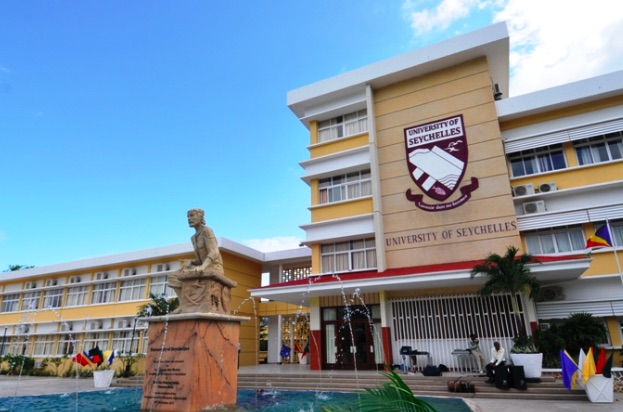
Seychelles set to become hub for peace studies

… EDUCATION FOR PEACE …

An article from Seychelles Nation

The University of Seychelles has announced that it is considering setting up an international centre for peace studies and diplomacy with the expert guidance and experience of Seychelles’ founding President Sir James Mancham. In fact the idea of Seychelles hosting an international centre for peace studies and diplomacy is an initiative of Sir James.

Seychelles

The University of Seychelles (UniSey) has said this is an ambitious and timely project that will add to the reputation of Seychelles as a peaceful nation making a further contribution to global society. “And it will support the university’s drive to develop niche areas of research and course opportunities,” added the UniSey.

Why peace studies?

The subject of peace studies is as intriguing as it is important:

* it is about war as well as peace;

* it embraces terrorism along with national confrontations;

* it is an academic study but also highly practical;

* it ranges from the boundaries of religion to the hard edge of geopolitics;

* it encourages abstract debate but cannot shy away from problem-solving;

* it draws on a variety of disciplines but belongs to none; and

* it addresses contrasting instances of conflict in different parts of the world.

Given the ubiquitous nature of national and international conflicts – and consequent attempts to resolve them – it is hardly surprising that peace studies has taken its place on the world stage. There is much to be understood, much to be done. But the ground is by no means saturated, the need to do more by no means met. The new centre will have an important role to play.

Why Seychelles?

Politically, the Republic of Seychelles is a small island state that is a friend of other nations and a threat to none; its neutrality is a key consideration. Indeed, neutrality made possible a much-lauded attempt by the President, James Michel, to broker an agreement between opposing factions in Madagascar at a time of political deadlock.

Socially, the country has an enviable record of ethnic harmony. It is widely regarded as a peaceful society. Where better to locate an international centre for peace studies?

Geographically, it is located in the Indian Ocean, just a few hours from the African continent and the Middle East, two regions where national and regional conflicts are too often in evidence.

Environmentally, Seychelles is a mecca for tourists who value the exceptional quality of its islands and turquoise seas. As a tranquil backcloth to negotiations on war and peace, it is hard to imagine a more conducive setting.

(Continued in right column)

Question for this article:

Where is peace education taking place?

(Continued from left column)

But there is another reason too why this is an ideal location. For many years, the first President of the Republic of Seychelles, Sir James Mancham, has forged links with a wide range of international organisations and he, himself, is a renowned spokesperson for peace and reconciliation. Only recently he was awarded the prestigious Africa Peace Award 2016.

For all these reasons, Seychelles lends itself to this innovative proposal to establish a permanent centre for peace studies in the Indian Ocean.

What is proposed?

The mission of the centre will be to offer an international hub for the study of peace and to play an active role in conflict resolution as well as the training of diplomats.

The vice-chancellor of the University of Seychelles will be personally responsible for its development, helped by a project manager who will, initially, research the field and prepare the ground for the formation of the centre. Funds will be sought externally for specialist appointments and for the provision of a well-appointed office suite, located within the Anse Royale campus of the university.

The early appointment of a professor of peace studies and the support of visiting academics will provide specialist guidance to develop an appropriate programme of research and activities.

Although the centre will be located at Anse Royale it is anticipated that high-level talks might be arranged in secluded surroundings on one of the nation’s many islands.

What activities will take place?

The proposed professor of peace studies will provide both academic leadership and proven negotiating skills.

The centre will be a hub of information and also a meeting place for practitioners and scholars alike. Conferences will be a feature of the centre’s activities.

Under the auspices of the UniSey, it will offer a Master’s Degree in peace studies for local as well as international students, together with opportunities for doctoral and post-doctoral research.

Increasingly, consultancy will play a key role in the work of the centre, with assignments to undertake different aspects of conflict resolution.

How will it be funded?

The involvement of the vice-chancellor and the appointment of the project manager will be provided by the UniSey, while Sir James Mancham will be on hand with expert advice.

Applications will be made to external funding agencies to enable the appointment of a specialist professor peace studies and for the provision of suitable accommodation.

How will it be managed?

A Board of Trustees – to be chaired by Sir James Mancham – will be appointed, with responsibility to ensure that the mission of the centre is maintained and that funds are spent wisely and responsibly. The Trustees will also be responsible for the appointment and strategic monitoring of the performance of the professor. On a day-to-day basis, the centre and its employees will be directly accountable to the vice-chancellor of the UniSey.

(Thank you to the Global Campaign for Peace Education for calling this article to our attention)

There’s a Place in India Where Religions Coexist Beautifully and Gender Equality Is Unmatched

TOLERANCE & SOLIDARITY .

An article in the Huffington Post by Chandran Nair, Global Institute for Tomorrow (reprinted according to the principle of “fair use”)

Back in the summer of 2015, the heart of a Hindu man was transported across Kerala for a Christian patient in dire need of a new one. Funds were raised by a Muslim businessman to pay for the operation and performed by the state’s top heart surgeon: a Christian. The entire state became engrossed as the story unfolded. An Indian Navy helicopter and an ambulance — both dispatched by Kerala’s Chief Minister Oommen Chandy — sped the heart from Thiruvananthapuram to Kochi.

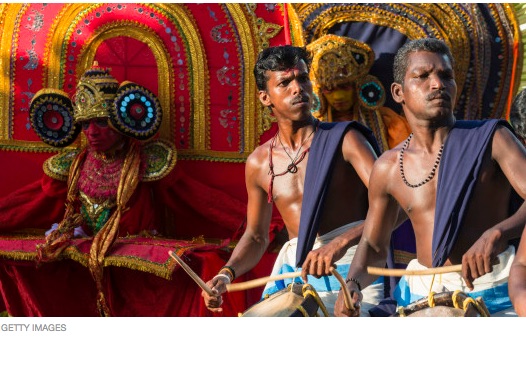
Kerala
Photo by Frank Bienewald via Getty Images

Kerala is known by the motto “God’s Own Country.” Some may think the moniker is presumptive, but anyone who has seen its forests, its backwaters, its beaches and its bounty of agricultural produce and spices will know it is well deserved.

Over centuries, people from many different communities and cultures traveled through and lived in Kerala — Jewish and Christian migrants, Arab merchants, European traders and colonizers. The city of Kochi has India’s oldest active synagogue and the oldest European church, both from the sixteenth century.

But perhaps “God’s Own Country” deserves a new and highly relevant interpretation. Kerala is a symbol of religious coexistence — not simply tolerance — in a world that is struggling with new strains of virulent intolerance and violence. The state has a unique mix of three of the world’s largest religions: roughly 30 percent Muslims, 20 percent Christians and 50 percent Hindus. This split is unique in India — not many other places have such significant populations of both Christians and Muslims living with a not too large majority of Hindus — and perhaps unique even globally.

Given this mix, the rarity of communal violence is striking; a few small-scale incidents are exceptions to a norm of stability and coexistence. The various religions have evolved to integrate and include their neighboring faiths; for example, the Hindu Edappara Maladevar Nada Temple has a shrine dedicated to Kayamkulam Kochunni, a popular nineteenth-century Muslim “Robin Hood.” Keralites believe themselves to be, first and foremost, Indian Malayalis.

Some may say this tolerance is no surprise, given the long histories of both Christians and Muslims in Kerala. But one need only look at Eastern Europe or the Middle East, where long-standing bonds within a once diverse community were ruptured within a single generation.

So what might explain this peaceful and secular coexistence? There are many possible reasons but one striking thing about Kerala that may offer an explanation is its near-universal provision of not just basic needs, but also public and social services. Kerala’s literacy rate — 94 percent — is in the same range as much richer areas like the Gulf, China and Europe. The state’s infant mortality rate is 12 per 1,000 births, compared to 40 per 1,000 births for India as a whole. Kerala’s toilet coverage is almost universal — 97 percent. Earlier this year, Kerala became the first state in India to achieve 100 percent primary education.

(Article continued in right column)

Question related to this article:


How can different faiths work together for understanding and harmony?

(Article continued from left column)

It should also be noted that Kerala has a level of gender parity unmatched by any other state in India and, in fact, many places around the world. Kerala is one of only two Indian states where women outnumber men; all other Indian states have more men — sometimes significantly so. While India as a whole has significantly lower female literacy than male literacy, Kerala’s rates are roughly equal. Kerala also boasts the largest women-empowering network in the country: the Kudumbashree Mission, which boasts over four million members.

By global standards, Kerala is by no means rich: it has an average income of about $1,300. However, in many important social indicators, it outperforms not just other Indian states, but several other countries with higher per capita incomes — like Malaysia, with an average income of about $11,000, and the UAE, with an average income of about $44,000.

Kerala’s government has very effectively made the provision of social services one of the central pillars of policy and thus development towards social cohesion. Chief Minister Chandy noted three reasons for his state’s success: education, health and infrastructure. In all of these areas, the government has actively strived to improve services to a global standard, even though he acknowledged that infrastructure in areas such as transportation still had much room for improvement.

When the basic needs of life — food, water, sanitation, housing, education, healthcare — are denied, resentment against the “other” can fester. Racial, ethnic and religious divisions can be exploited and can erupt into communal violence — in both the developing and developed worlds. Whether it is Myanmar, the Dominican Republic, Paris or Baltimore or elsewhere, resentment between groups is driven, in part, by a feeling that of being denied access to basic economic and social rights. Part of the backlash against immigrants and “foreign” groups is a misdirected “solution” to a real problem: stagnating incomes and lessening job opportunities for the working classes.

But when social needs are provided on a universal basis, there is less cause for grievances that can be nurtured or exploited. No group feels like they are being left behind. The burden is shared and the work of reducing the drudgery of daily life to uplift people becomes a collective responsibility. There is clear evidence that this focus on needs, and its community-based approach often led by volunteers, is part of what makes Kerala a success.

This is not to say that Kerala is perfect — it still has a long way to go before it really sees high development measured according to global standards. But it may be a model of how to keep multiethnic and multi-religious communities stable in the long-term.

Rather than platitudes about multiculturalism or a hope that rising incomes will make everyone forget their cultural roots, an aggressive and universal expansion of social services may instead be the answer to communal tensions. It could make all of India — not just Kerala — “God’s Own Country.”

“A Girl in the River-The Price Of Forgiveness”: A Pakistani Film shedding light on the Taboo of our society

. . WOMEN’S EQUALITY . .

A blog by Aleena Naqvi

Filmmaker Sharmeen Obaid Chinoy has once again delivered an Oscar worthy documentary and this time she has focused on one of the most important and least debated topic in Pakistan. The documentary named “A Girl in the River – The Price Of Forgiveness”, is based upon the controversial and yet quite common practice of honour killing in Pakistan. [Editor’s note: This film won the Hollywood best documentary short Oscar on February 28. The blog was published on February 14.]

oscar
Video of Oscar award to Filmmaker Sharmeen Obaid Chinoy

It follows the story of an eighteen year old girl Saba who luckily survived a brutal attack by her own father and uncle. She was able to get justice with the help of the local police who arrested and imprisoned the culprits of this gruesome crime. But unfortunately, Saba succumbs to the pressure of the society and forgives the culprits, as a law exists which allows the guilty people to be forgiven by the victims exists in Pakistan.

Surviving an honour killing assault is a very rare thing and it is virtually impossible to find any Pakistani man who has ever been punished for honour killing. It can be said that honour killing is not even considered a crime in this country which is not just sad but shameful as well.

Do you know:According to Pakistan’s Human Rights Commission there were 791 honor killings in the country in 2010. (Source: Wikipedia)

Sharmeen Obaid Chinoy knew the significance of the story she was telling. Pakistan is a country which is not understood very well in the West. The image of this country in the eyes of the West has not been a very promising one and it has often been linked to Islamic extremism, therefore, it was important to portray honour killing for what it really was instead of getting the wrong message across. Honour killing in Pakistan has nothing to do with faith and religion, it is rather a “premeditated, cold-blooded murder” and there are very different forces that are at play in it.

(Article continued in right column)

Question related to this article:

Protecting women and girls against violence, Is progress being made?

(Article continued from left column)

There are certain different factors which play an important role in existence of this crime. They include involvement of the state, the influence of local elders, there is a silent battle between women’s rights and need for family compromise, the financial insecurity and problems versus the fight for justice.

The main objective of this documentary is to tell the story of Saba and make people realize that killing Pakistani women in the name of honour is a crime. People will never try to stop or fight against it if they do not think of it as anything wrong. Sharmeen Obaid says that it essentially forces people to ask themselves questions like whether or not this act stands any good place in our religion at all. Should it be a part of our culture? Being a human how can we ever allow such a brutal and hideous thing to happen in our society? How important is it to stop it and consider it a crime?

The recognition that this Pakistani film has got on the international level is very useful in making people aware of the necessity to fight against it. Chinoy was much surprised by the level of attention that was given to Saba’s case by the services of the government. Their attitude and behavior allows people to challenge the parts of the system that did not work in favor of the victim.

Sharmeen Obaid Chinoy has planned to arrange the screening of the documentary in several colleges and schools all across Pakistan. An Oscar nomination was also able to bring the attention of Prime Minister Nawaz Sharif to this vital matter. Hopefully it will have a lot more impact in this country and will help in prevention of this crime in the near future.

[Editor’s note: Following the Oscar award, Prime Minister Nawaz Sharif praised the award and stated that his government is in the process of pushing a law to stop the killings. He said “Women like Ms. Sharmeen Obaid-Chinoy are not only a pride for the Pakistani nation but are also a significant source of contribution toward the march of civilization in the world.”]

Center for Peace Building and Reconciliation in Sri Lanka, to receive the Niwano Peace Prize

EDUCATION FOR PEACE .

A press release from the Niwano Peace Foundation

While a relatively small island of twenty-two million people, Sri Lanka is a diverse country, home to multiple religions, ethnic groups, and languages. The country has suffered decades of violence and a civil war, which was ended only in 2009. Making things worse, Sri Lanka was hit by the deadly Indian Ocean tsunami of 2004. The end of the war brought new hope for sustainable peace, but the challenges to its achievement remain large.

niwano
Photo from project Defusing tensions and promoting peace in Sri Lanka by the Center for Peace Building and Reconciliation

The Centre for Peace Building and Reconciliation was founded in 2002 by Dishani Jayaweera and Jayantha Seneviratne, who are also life partners and Sinhala Buddhists by birth. The CPBR is a non-profit organization promoting peacebuilding, peace-making and non-violent conflict transformation. It supports personal and societal transformation within and between ethnic, religious, linguistic and regional communities in Sri Lanka, working at all the grassroots, local and national levels. To achieve goals of national reconciliation, the CPBR focuses those considered to hold the greatest influence and promise for transformation: religious leaders, women, and young people.

The presentation ceremony will take place in Tokyo, Japan, on Thursday, May 12th, at 10:30 a.m. In addition to an award certificate, the CPBR’s representative will receive a medal and twenty million yen.

To avoid undue emphasis on any particular religion or region, every year the Peace Foundation solicits nominations from people of recognized intellectual and religious stature around the world. In the nomination process, some 600 people and organizations, representing 125 countries and many religions, are asked to propose candidates. Nominations are rigorously screened by the Niwano Peace Prize International Selection Committee, which was set up in May of 2003 on the occasion of the 20th Anniversary of the Niwano Peace Prize. The Committee presently consists of ten religious leaders from various parts of the world, all of whom are involved in movements for peace and inter-religious cooperation. Here are some comments by members of the Committee on the selection of the CPBR for this year’s award:

– I support this organization because there is evidence in its work that positive results are achieved under trying and challenging circumstances. I am inspired and encouraged by the fact that it is locally led, and that its approach to peace building combines the energy and creativity of the youth, with the invaluable wisdom of clergy and the elders. (Ms. Nomfundo Walaza)

– I’ve been aware of the long war in Sri Lanka that ended in 2009. Despite that sadly conflicts have flared up from time to time because of the lack of reconciliation work between the religious communities. CPBR works to build trust and social ties that is key to reconciliation and peace engaging youth and religious leaders. Two Sinhala Buddhists set up the Center with compassion for humanity based on their Buddhist beliefs. (Shaykh Ibrahim Mogra)

India: Aaghaz-e-Dosti conducted three Aman Chaupal sessions in Pakistan

TOLERANCE AND SOLIDARITY .

An article from Aaghaz-e-Dosti

Aaghaz-e-Dosti team members Devika Mittal (Convener of Aaghaz-e-Dosti India) and Madhavi Bansal (Bangalore Co-ordinator), during their recent visit to Lahore interacted in three Aman Chaupals (peace sessions) with students of Punjab University, Excellent Education Centre and Resource Academia School.

indo-pak
Aaghaz-e-Dosti members with Peace Activists and members of Khudi Pakistan

With these three Aman Chaupals, Aaghaz-e-Dosti, a cross-border youth-led peace initiative, has completed 18 aman chaupal sessions its inception three years back. Aman Chaupal is among the major initiatives of Aaghaz-e-Dosti. Aman Chaupals are informal sessions in schools and colleges in India and Pakistan wherein peace activists/ journalists/ academicians from across the border interact with students. It is a form of peace education that specially focuses on breaking stereotypes through providing an opportunity to students of one country to interact with an eminent personality or expert of the other country.

Aman Chaupals have received great response from students, schools, guests, media and common people who know about it. These sessions are special in its approach of providing ample freedom in interaction. We had taken the name chaupal with its essence that this term is known to both countries and it also brings a kind of revival of the tradition where people in villages used to gather at one place to talk and to discuss things of importance, said Devika Mittal, Convener of Aaghaz-e-Dosti India.

Aliya Harir (Convener from Pakistan) says that people in Pakistan are always in favor of peace. Peace is a common thing that we all want. She also said that government of both sides are also doing their best efforts to bring people but they always needs people’s effort to support and suggest governments to make it in more effective ways.

Aman Chaupals in Lahore were coordinated by Namra Nasyr, Wasiqa Khan, Naseem Nasir, Raza Khan and Rab Nawaz (Khudi Pakistan). In the three sessions, there were questions on the similarities between India and Pakistan, questions revolving around the popular culture, on media, politics and on the role of people in improving Indo-Pak relations.

“Aman Chaupal sessions in Excellent Education Centre and Punjab University were very helpful in breaking some popular stereotypes about India and Indians. There were questions around the current happenings and in this context, it was essential to have genuine voices from India, which otherwise remain unrepresented and ignored as compared to the voices embedded with hatred and politics”, said Namra Nasyr, Lahore Co-ordinator of Aaghaz-e-Dosti.

In addition to these Aman Chaupals, guests (Devika Mittal and Madhavi Bansal) also interacted with other peace activists of Khudi Pakistan and several other peace initiatives.

Question for this article

How can a culture of peace be cultivated between India and Pakistan?

Readers’ comments are invited on this question and article. See below for comments box.

UNHCR names Afghan refugee teacher Aqeela Asifi its 2015 Nansen Refugee Award winner

. . WOMEN’S EQUALITY . .

An article by UNHCR. The UN Refugee Agency

Afghan refugee teacher Aqeela Asifi, who has dedicated her life to bringing education to refugee girls in Pakistan, has won the 2015 UNHCR Nansen Refugee Award. Aqeela Asifi, 49, is being recognised for her brave and tireless dedication to education for Afghan refugee girls in the Kot Chandana refugee village in Mianwali, Pakistan – while herself overcoming the struggles of life in exile. Despite minimal resources and significant cultural challenges, Asifi has guided a thousand refugee girls through their primary education.

Nansen
Profile of Aqeela Asifi, 2015 Nansen Refugee Award winner

Afghanistan is the largest, most protracted refugee crisis in the world. Over 2.6 million Afghans currently live in exile and over half of them are children. Access to education is vital for successful repatriation, resettlement or local integration for refugees. Yet globally it’s estimated that only one in every two refugee children are able to go to primary school and only one in four attend secondary school. And for Afghan refugees in Pakistan this falls further, with approximately 80 per cent of children currently out of school.

UN High Commissioner for Refugees, António Guterres paid tribute to the efforts of the winner of the global humanitarian award: “Access to quality and safe education helps children grow into adults who go on to secure jobs, start businesses and help build their communities – and it makes them less vulnerable to exploitation and abuse. Investing in refugee education will allow children to play a part in breaking the cycle of instability and conflict. People like Aqeela Asifi understand that today’s refugee children will determine the future of their countries, and the future of our world.”

UNHCR has released a contextual report Breaking the cycle: Education and the future for Afghan refugees, to coincide with today’s announcement. The report outlines the challenges that children, especially refugee girls, face in accessing education in Pakistan.

Asifi is a former teacher who fled from Kabul with her family in 1992, finding safety in the remote refugee settlement of Kot Chandana. Asifi was dismayed by the lack of schooling for girls there. Before she arrived, strict cultural traditions kept most girls at home. But she was determined to give these girls a chance to learn. Slowly but surely she convinced the community, and began teaching just a handful of pupils in a makeshift school tent. She copied out worksheets for the students by hand on sheets of paper. Today the tent school is a distant memory and over a thousand children are attending permanent schools in the village thanks to her early example.

(Article continued in right column)

Questions related to this article:

Gender equality in education, Is it advancing?

Is peace possible in Afghanistan?

(Article continued from left column)

She believes that instilling a belief in the power of education for girls in this generation will transform the opportunities of the next. “When you have mothers who are educated, you will almost certainly have future generations who are educated,” she said. “So if you educate girls, you educate generations. I wish for the day when people will remember Afghanistan, not for war, but for its standard of education.”

“Access to education is a basic human right. Yet for millions of refugee children it is a lifeline to a better future which they have been heartbreakingly denied,” said UNHCR Goodwill Ambassador, Khaled Hosseini.

“I have met many young refugees who have been torn from everything that makes them feel safe: their homes, their families, their friends and their schools. Investing in their education is an investment in their future, giving them hope and the chance to one day be a part of rebuilding their broken home countries.

“UNHCR is working to give all refugee children the chance to go to school. Aqeela Asifi has shown us all that with courage change can happen. We must continue her fight.”

Since the fall of the Taliban in 2001 5.7 million Afghans have returned home, yet insecurity still remains. UNHCR has embarked on a strategy to assist remaining Afghan refugees to return home and a key element of this is ensuring they can access quality education. A ministerial level meeting in early October in Geneva will seek to advance this strategy with key regional partners.

UNHCR’s Nansen Refugee Award honours extraordinary service to the forcibly displaced, and names Eleanor Roosevelt, Graça Machel and Luciano Pavarotti among its laureates. The 2015 ceremony will be held on 5 October in Geneva, Switzerland. Speakers and performers at the event will include UNHCR Honorary Lifetime Goodwill Ambassador Barbara Hendricks, UNHCR Goodwill Ambassador Ger Duany, Unicef Goodwill Ambassador and singer Angelique Kidjo and visual artist Cedric Cassimo.

(Thank you to the Good News Agency for bring this to our attention.)

Kashmir: KPN to celebrate International Day of Peace at Nageen today

DISARMAMENT & SECURITY .

An article by Reyaz Rashid, Kashmir Images

In bid to give peace a chance to prevail in Kashmir and make people aware about benefits of using methods of non-violence to achieve peace with justice, Kashmir Peace Network (KPN) – which had made Srinagar city a member of International Cities of Peace with 120 members around the world – is celebrating International Day of Peace at ‘Samad’s Island of Peace’ in Nageen on Monday.

kashmir

As part of 4th annual celebration of UN mandated ‘Peace One Day’ on September 21 – the International Day of Peace — KPK like other 120 member cities around the world would gather people, particularly students from high schools, colleges and universities to participate in the event in which one billion people around the world will participate.

“We have seen enough violence and bloodshed, let us give peace a chance here. We want to make people aware of the benefits using non-violence to accomplish peace with dignity, prosperity and justice,” said Executive Director KPN, Bashir Ahmed Ghakhroo, grandson of Abdul Samad Ghakhroo.

During the ‘Peace One Day’ event, students will speak on peace-related topics and peace-building measures in conflict zones like Kashmir. The students would also deliberate upon topics like ‘The Right of People to Peace’, ‘Our Individual Responsibility Towards Peace in Kashmir ‘, ‘Towards Peace and Prosperity in Kashmir’, the organizers said.

“Our organization endeavours to involve people in seminars, workshops on peace leadership training so that people can become ambassadors of peace,” added Ghakhroo.

“KPN wants to put forth real image of people of Kashmir who basically believe in peaceful and non-violent means of resolving issues and problems. The organization wants to develop Samad Peace Academy,” informed the organizers.

“We want to sow the seeds of peace in Kashmir by our small peace-building efforts and we hope our efforts would bear fruit of peace in future,” added Ghakhroo.

The organization has appealed the people to join in the Peace One Day celebrations to give peace a chance.

Question for this article:

Afghan Girl, Sakina, Buries Toy Gun and Says…

DISARMAMENT & SECURITY .

An article by Dr. Hakim, Voices for Creative Nonviolence

Ten-year-old Sakina, an Afghan street kid, had this to say, “I don’t like to be in a world of war. I like to be in a world of peace.” On 27th August 2015, Sakina and Inam, with fellow Afghan street kids and the Afghan Peace Volunteers, held a mock funeral for weapons and celebrated the establishment of a green space in Kabul.

afghan
Sakina breaks a toy gun

Dressed in long black coats, they broke and buried toy guns in a small spot where, over the past two years, they have been planting trees.

Sakina breaks a toy gun before burying it. Inam and other street kids await their turn.

Inam, a bright-eyed ten year old, caught the group’s energetic desire to build a world without war. “I kept toy guns till about three years ago,” he acknowledged with a smile.

On the same day, Nobel Laureate Oscar Arias Sanchez, ex-President of Costa Rica, was in Mexico for the Arms Trade Treaty’s First Conference of States Parties.

In his statement at the Conference, he told the story of an indigenous Guatemalan woman who thanked him for negotiating a peace accord 28 years ago. The mother had said, “Thank you, Mr. President, for my child who is in the mountains fighting, and for the child I carry in my womb.”

No mother, Guatemalan or Afghan, wants her children to be killed in war.

Oscar Arias Sanchez wrote: “I never met them, but those children of conflict are never far from my thoughts. They were [the peace treaty’s] true authors, its reason for being.”

I’m confident that the children of Afghanistan were also in his thoughts, especially since he had a brief personal connection with the Afghan Peace Volunteers in 2014, having been part of a Peace Jam video message of solidarity to the Volunteers, wearing their Borderfree Blue Scarves which symbolize that “all human beings live under the same blue sky”.

I thank Mr Oscar Arias Sanchez for his important work on the Arms Trade Treaty, though I sense that an arms trade treaty isn’t going to be enough.

Afghan children are dying from the use of weapons.

To survive, they need a ban against weapons. Regulations about buying and selling weapons perpetuate a trade that is killing them.

I saw Inam and other child laborers who work in Kabul’s streets decisively swing hammers down on the plastic toy guns, breaking off triggers, scattering nozzles into useless pieces and symbolically breaking our adult addiction to weapons.

(Article continued on the right column)

Question for this article:

“Put down the gun and take up the pen”, What are some other examples?

Is peace possible in Afghanistan?

(Article continued from the left column)

Children shouldn’t have to pay the price for our usual business, especially business from the U.S., the largest arms seller in the world. U.S. children suffer too, with more U.S. people having died as a result of gun violence since 1968 than have died in all U.S. wars combined. U.S. weapon sellers are killing their own people; by exporting their state-of-the-art weapons, they facilitate the killing of many others around the world.

After burying the toy guns, surrounded by the evergreen and poplar trees which they had planted, the youth shed their black coats and donned sky-blue scarves.

Another world was appearing as Sakina and Inam watched young friends plant one more evergreen sapling.

Inam knew that it hasn’t been easy to create this green space in heavily fortified Kabul.

The City Municipality said they couldn’t water the trees (though it is just 200 metres away from their office). The Greenery Department weren’t helpful. Finally, the security guards of the Afghan Independent Human Rights Commission just across from the garden, offered to help, after the Volunteers had provided them with a 100-metre water hose.

Rohullah, who coordinates the environment team at the Borderfree Nonviolence Community Centre, expressed his frustration. “Once, we had to hire a private water delivery service to water the tree saplings so they wouldn’t shrivel up. None of the government departments could assist.”

Sighing, he added ironically, “We can’t use the Kabul River tributary running just next to the Garden, as the trash-laden trickle of black, bracken water is smelly and filthy.”

Meanwhile, in the rest of the country, according to figures from the National Priorities Project, a non-profit, non-partisan U.S. federal budget research group, the ongoing Afghan War is costing American taxpayers US $4 million an hour.

It is the youth and children who are making sense today, like when Nobel Laureate Malalai Yousafzai said recently that if the whole world stopped spending money on the military for just 8 days, we could provide 12 years of free, quality education for every child on the planet.

“I don’t like to work in the streets, but my family needs bread. Usually, I feel sad,” Inam said, looking away, “because I feel a sort of helplessness.”

Oscar Arias Sanchez said at the Arms Trade Treaty’s First Conference, “And we must speak, today – in favour of this crucial treaty, and its swift and effective implementation. If we do, then when today’s children of conflict look to us for guidance and leadership, we will no longer look away in shame. We will be able to tell them, at long last, that we are standing watch for them. We are on guard. Someone is finally ready to take action.”
That morning, I heard the voices of Sakina, Inam and the Afghan youth ring through the street, “#Enough of war!”

It wasn’t a protest. It was the hands-on building of a green spot without weapons, and an encouraging call for others to do so everywhere.

Through their dramatic colours and clear action, they were inviting all of us, “Bury your weapons. Build your gardens.”

“We will stand watch for you!”

(Thank you to Janet Hudgins, the CPNN reporter for this article.)

India: No More Hiroshima: No More Nagasaki: Peace Museum  

DISARMAMENT & SECURITY .

An article by Dr. Balkrishna  Kurvey, Indian Institute for Peace, Disarmament & Environmental Protection

On the eve of Hiroshima & Nagasaki Atomic bombing, Hiroshima Day was observed in the Raman Science Center, Nagpur. on 6th August 2015.  This is renowned Science Center of Government of India, Ministry of Culture. The theme was ” Environmental Impact of  Atomic Bomb Explosion”

Kurvey4

Selected High school Students from Nagpur were invited.
To catch them young, we are targeting youngsters who will be future citizens of the country to inculcate the idea of a Nuclear Weapon Free World.

Photographic exhibition  of Hiroshima & Nagasaki bombing was also displayed for the public from 6th to 9th August 2015 in the Raman Science Center.

Hiroshima Day was also arranged in Department of Environmental Science, Sardar Patel Mahavidyalaya (College), Chandrapur, India. This  prestigious teaching Institute of Central India  has more than 7200 students. Students of graduate, post-graduate, Ph.D. and some medical students attended the seminar. The theme was “Nuclear Weapons Disarmament and Environmental Protection  and Peace”  

I based my address on the study carried out by International Physicians for for Prevention of Nuclear war & Physicians For Social responsibility “Two Billion People  at Risk”, December 2013. 

In a  limited regional nuclear war between  India and Pakistan, if 150 Hiroshima type Bombs were used, what will be environmental consequences in Asia  in particular and world in General was the theme of the talk.

Unfortunately, there is mistrust, misunderstanding and animosity between India and Pakistan. Any fanatic military officer or political leader could start a nuclear war. Also due to misunderstanding or zealous military officials, nuclear war could be startes. 20 million people would be killed. Great cities of the sub-continent would be destroyed and much of South Asia would be blanketed with radioactive fallout. Climate experts show clearly that even this limited nuclear conflict would affect weather pattern throughout the world. Due to soot and debris injected in the atmosphere 74% of the sun light would be obstructed. Nuclear Winter would emerge. Ozone depletion would increase the incidence of cancer globally. Due to cold and darkness, crops could not be grown and because of non-availability of food grains,  1 billion people in global south would die of starvation and 1 billion others would suffer. Agriculture would be affected in the western hemisphere.

This would be the result of only a limited regional Nuclear War in South Asia. If the superpowers engage in nuclear war, it would be doomsday. Planet earth will suffer untold consequences and the human race would face extinction.

Public education and awareness is the key as there is no medicine. Prevention is the only way to safeguard the  human race.

Participants  and teachers asked many question, which were aptly answered.

Question for this article:

The Peace Gong E-book on promoting peace through inter-cultural dialogue and respect for diversity

EDUCATION FOR PEACE .

by Syeda Rumana Mehdi and Kanupriya Gupta

Inviting young people below 21 years of age to share short stories, poems, posters and paintings for the Peace Gong E-book.

new peace gong

“Tolerance, inter-cultural dialogue and respect for diversity are more essential than ever in a world where people are becoming more and more closely interconnected.”- Kofi Annan

The former UN Secretary General has rightly underlined the centrality of tolerance, promotion of inter-cultural dialogue and mutual respect for global peace. At a time when various parts of the world is hungering for peace and the phenomenon of racism, xenophobia, extremism and various other forms of violence are stirring the very edifice of a peaceful global society, all efforts needs to be made to promote voices of compassion and love.

All cultures of the world inherently promote the ethereal values of compassion, respect, tolerance and mutual understanding. It is only when negative elements try to exploit situations leading to self-destruction and conflicts. This is the challenge the whole humanity faces.

Promoting dialogues amongst different cultures, sharing unique stories of respect for diversity and nonviolence, bringing out the transient nature of peace in every culture will go a long way in challenging divisive forces. As Kofi Annan says people are becoming more and more closely interconnected, we need to share these stories so that we can promote mutual understanding.

In this context, The Peace Gong plans to bring together an E-book comprising of short stories, poems, posters and paintings which draws how different cultures promote the values of mutual respect, tolerance, dialogues and humanism. As the book would be aimed at youth, it can be a unique melting pot of stories and poems by young people from different cultures on peace and nonviolence.

Those below 21 years of age can send their entries. The entries can be sent to thepeacegong@gmail.com

Short stories should not be more than 1000 words in length.
Paintings and posters should be in jpg format.

A small undertaking should be sent by the writers/poets/painters that their work is original and not plagiarized.

Contributors should also send a few lines about themselves and their education along with their email and a photograph.

We plan to put together this E-book by October 2, 2015 the International Day of Nonviolence.

(Article continued in right column.)

Question for this article:

Peace-building Stories, literacy development with peace-building

(article continued from left column.)

The Peace Gong is a children’s newspaper brought out from India aiming to promote voices of young people from different cultures.

The Guiding Principles are: “Let every dream become Martin Luther King’s dream, let every step towards peace become Mahatma Gandhi’s Salt March and let every obstacle in your path become Nelson Mandela’s painful twenty-seven years in prison. Promise yourself that you will contribute your best to make the phenomenon of violence outdated, promise yourself that you will try to motivate your friends to walk on the path of nonviolence.”